Languages
15York Minster Audio Guide
York Minster is a landmark in York, United Kingdom. Explore it with Stanza's GPS-triggered offline audio guide — available in 15 languages.
Quick Facts
29
Stops
15
Languages
100%
Offline
📍 York, United Kingdom · 53.9619°N, -1.0819°E
About York Minster
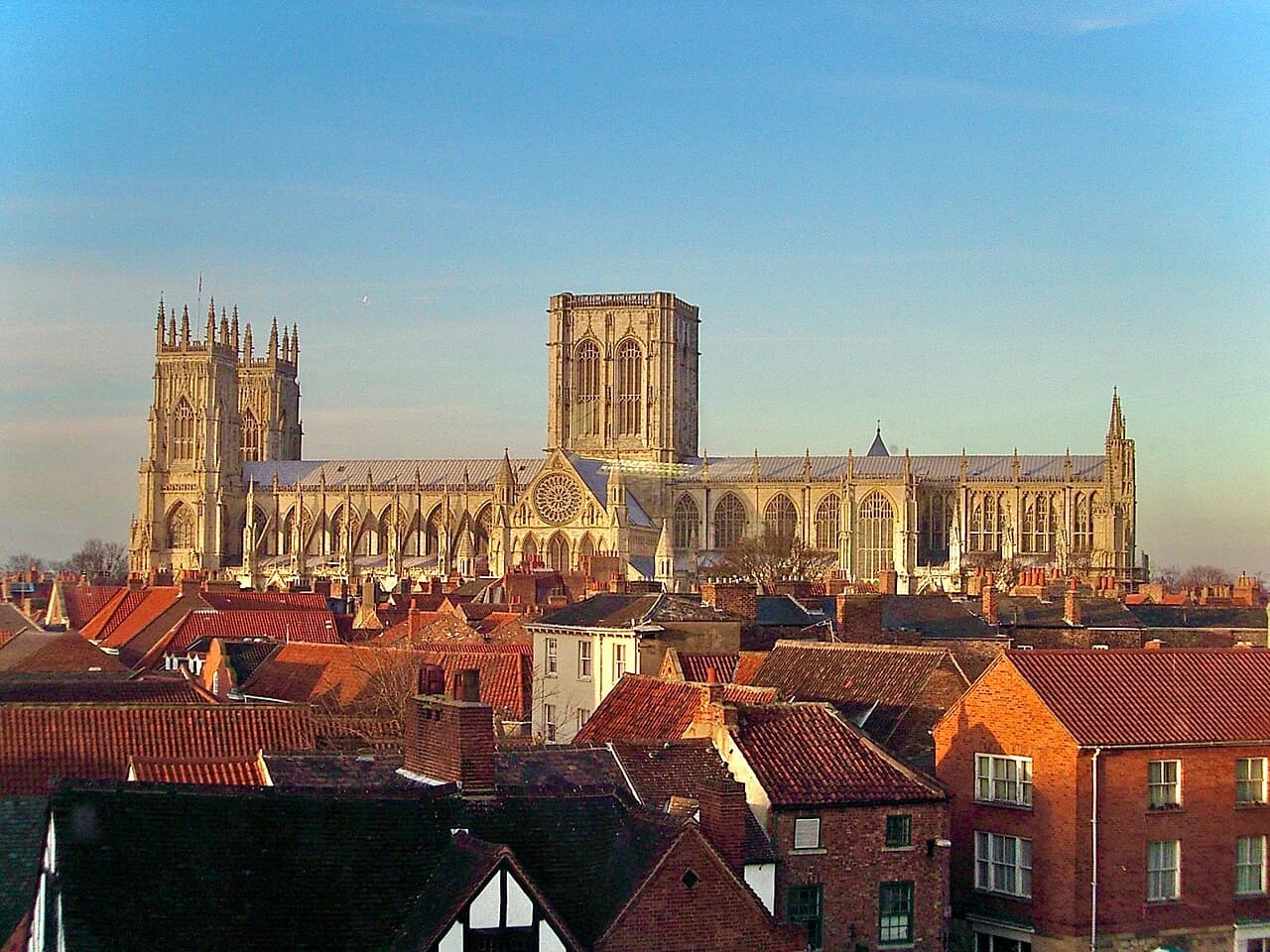
York Minster is a magnificent Gothic cathedral located in York, England. It serves as the seat of the Archbishop of York and is renowned for its stunning stained glass and architectural grandeur.
York Minster is also known as Cathedral and Metropolitical Church of St Peter, Cathedral and Metropolitical Church of Saint Peter in York, York Minster Cathedral.
This self-guided audio tour features 29 narrated stops organized across 7 sections. As a cathedral, York Minster offers a unique cultural experience in the heart of York, United Kingdom.
The Stanza audio guide is available in 15 languages and works entirely offline — download the complete tour including audio narration, maps, and images before your visit. As you walk through York Minster, GPS-triggered narration plays automatically at each point of interest.
Last updated:
What you will hear
The Nave: England�s Widest Gothic Space
Entering the main body of the cathedral to appreciate the Early English and Decorated Gothic styles.
The Nave
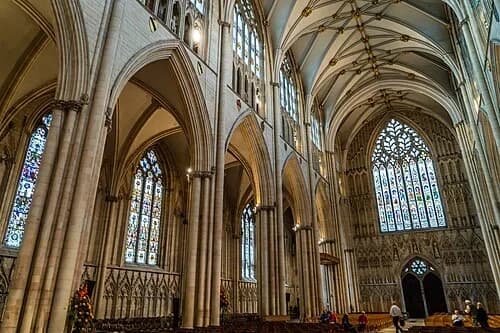
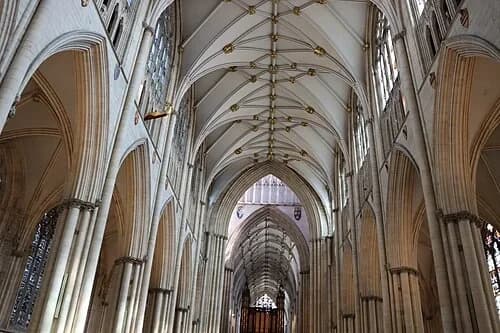
Stepping into the Nave, the physical experience of the space is immediately overwhelming. This is the widest Gothic nave in England, measuring an impressive 30 meters across. This section of the cathedral represents the 'Decorated' Gothic style, which favored more ornate tracery and grander proportions than the earlier styles found elsewhere in the building. One of the most striking features is the color of the stone. The interior is crafted from Magnesian Limestone, quarried nearby. This specific type of stone gives the walls and pillars a creamy, pale quality that is excellent at reflecting light. Even on a typical grey Yorkshire day, the Nave can feel bright and airy, a deliberate choice by medieval builders intended to symbolize the light of heaven. As you walk down this central aisle, notice how the clusters of columns draw your eye upward. The vast width of the space was an engineering challenge that pushed 14th-century builders to their limits, requiring thick walls and massive foundations to support the weight of the structure while maintaining the delicate, decorative aesthetic required by the fashion of the time.
The Vaulted Ceiling
Looking up into the heights of the Nave, you are met with a complex and beautiful web of intersecting ribs and gilded bosses. These golden points of light mark the junctions where the structural ribs meet, often featuring carvings of saints, heraldry, or foliage. However, this ceiling hides a clever secret of medieval engineering. While the ceiling appears to be made of heavy stone to match the walls, it is actually a wooden vault. Because the Nave is so exceptionally wide at 30 meters, a traditional stone vault would have exerted too much outward pressure, potentially causing the walls to buckle and collapse. To solve this 14th-century engineering dilemma, the builders used timber, which was far lighter and more flexible. They then carefully painted the wood to mimic the appearance of the Magnesian Limestone used for the walls and pillars. This workaround allowed the architects to achieve the soaring, vaulted aesthetic they desired without compromising the structural integrity of the cathedral. This masterpiece above you is a testament to the ingenuity of the masons and carpenters who understood how to balance the limits of their materials with the grand vision of their patrons.
The West Front and the Heart of Yorkshire
Looking back towards the main doors to see the famous 'Heart of Yorkshire' window and its intricate stone tracery.
The Great West Door
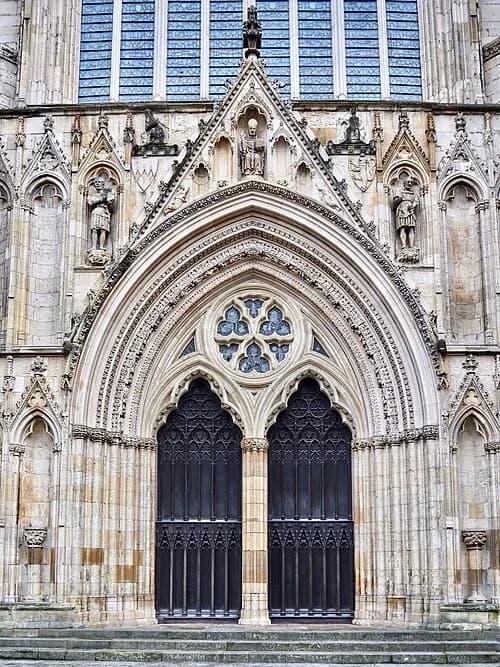
The Great West Door serves as the primary ceremonial entrance to York Minster, and its design is meant to prepare the visitor for the majesty within. As you look at the exterior of the doorway, notice the deeply recessed arches that create a sense of depth and shadow. This 'double doorway' design is a classic feature found in major French and English Gothic cathedrals, allowing for a grander entrance while maintaining structural support for the massive wall of the West Front. Surrounding the doors is a dense gallery of stone carvings. Set into intricate niches, you can see the figures of archbishops and saints, each carefully rendered with individual features and vestments. These statues were more than just decoration; for a medieval audience that was largely illiterate, these carvings were a visual reminder of the holy figures who guarded the church. The level of detail in the robes, the expressions on the faces, and the delicate canopies above each figure highlight the exceptional skill of the 14th-century stone masons. Although centuries of weathering have softened some of the finer details, the doorway remains a powerful example of how architecture and sculpture were integrated to create a sense of sacred drama.
The Astronomical Clock
A modern addition to the North Transept serving as a poignant memorial for the Second World War.
York Minster Astronomical Clock
Albert Richardson · 1955
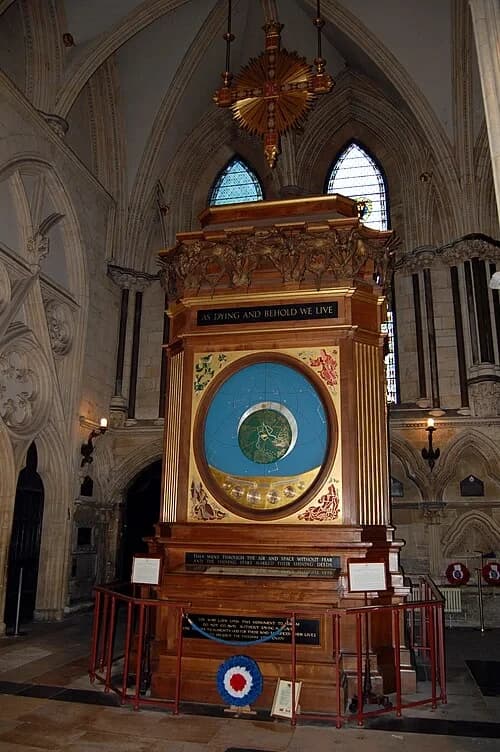
The York Minster Astronomical Clock is a fascinating 1955 addition to the cathedral�s interior. While it may look older due to its ornate wooden casing, it was actually built as a memorial to the Allied airmen who died while operating from bases in the North of England during the Second World War. The clock is a tribute to the navigators and pilots who used the stars to find their way through the dark skies of Europe. The clock�s face features a detailed celestial map that shows the stars exactly as they would appear in the sky directly above York. Beyond simply telling the time, the mechanism tracks the positions of the sun and the moon across the zodiac. It is a brilliant blend of modern engineering and traditional craftsmanship, fitting perfectly into the cathedral's long history of scientific and spiritual inquiry. Above the clock, you can see a plaque commemorating the airmen, and the entire structure serves as a functional piece of art that connects the terrestrial world of York with the vast expanse of the cosmos. It reminds us of those who navigated by these very stars, and whose sacrifice is honored within the sacred walls of the Minster.
The Octagonal Chapter House
A 13th-century engineering marvel with a self-supporting wooden roof and expressive stone carvings.
Medieval Grotesques
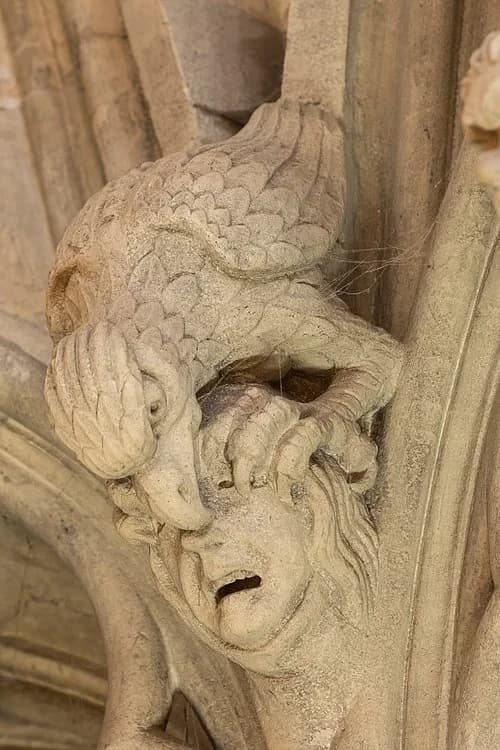
Throughout the Minster, but especially in the harder-to-reach corners and high up on the walls, you will find carvings known as grotesques. Unlike gargoyles, which function as water sprouts, grotesques are purely decorative�though their imagery is often far from pretty. One particularly striking example shows a fierce bird of prey sinking its talons and beak into a human face, which is contorted in a silent scream of agony. These carvings highlight the incredible creative freedom that medieval masons were granted once they had completed the essential structural work. While much of the cathedral�s art is focused on the divine, grotesques often explored the darker side of the human condition. They were frequently used as moral allegories, illustrating the terrifying consequences of sin or the constant presence of temptation and danger in the world. However, many were likely just artistic flourishes, intended to amuse or shock other masons and the few people who would ever see them from the floor far below. These visceral, earthy images provide a fascinating contrast to the serene statues of saints and kings found elsewhere, showing the full breadth of the medieval worldview, which balanced high spiritual ideals with a very real and sometimes brutal understanding of life.
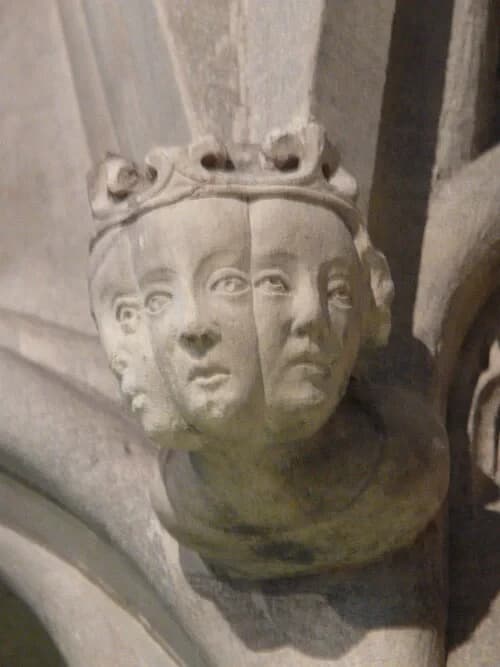
Stone Head Carvings
As you examine the stone canopies above the stalls in the Chapter House, you will notice a series of small, incredibly lifelike stone heads. These are not just generic decorations; many historians believe they were modeled after real people who lived in York during the 13th century. There is an extraordinary range of emotion and personality captured in these miniature sculptures, providing a rare glimpse into the medieval imagination. Take a moment to look closely at the different faces. You will see some figures laughing, some grimacing in pain or frustration, and others who appear to be caught in the middle of a gossiping conversation. Some heads lean out from the stonework, looking down at the seats below as if they are listening to the Chapter�s debates. This playfulness and humor were a common feature of Gothic art, allowing masons to show off their skill and inject a bit of local character into the sacred space. These faces humanize the grand architecture of the Minster, reminding us that it was built and inhabited by people with the same quirks and expressions as we have today. Finding your favorite face among the dozens that line the room is one of the simple joys of visiting the Chapter House.
The Great East Window
Created between 1405 and 1408 by John Thornton, this window depicts the beginning and end of the world.
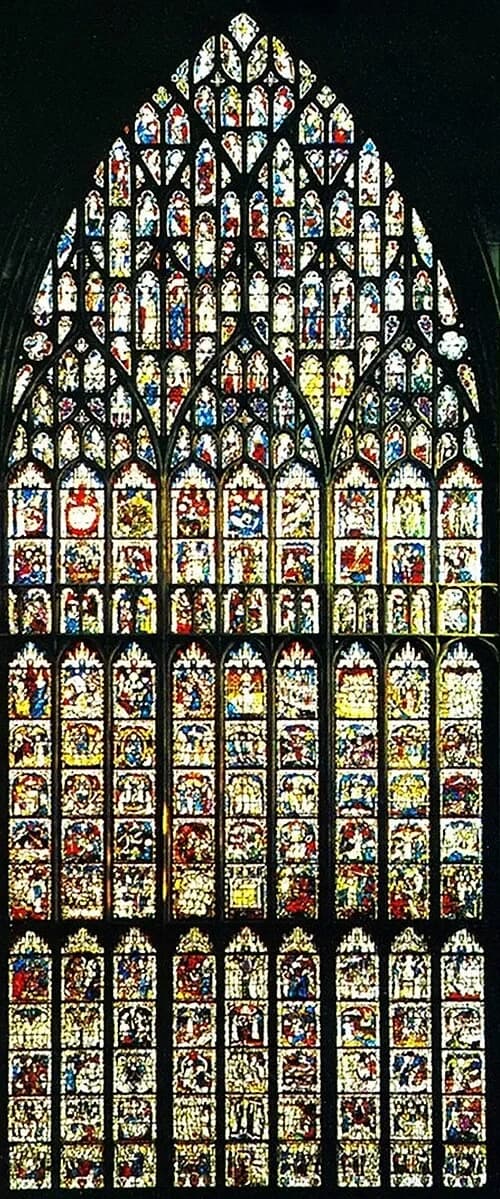
The Great East Window
Rising behind the High Altar is one of the greatest artistic achievements of the Middle Ages: the Great East Window. To understand its scale, imagine a professional tennis court stood on its end; that is the staggering amount of glass you are looking at. It remains the largest expanse of medieval stained glass in the world, a shimmering wall of color that dominates the entire eastern end of the cathedral. This masterpiece was created between 1405 and 1408 by a master glazier named John Thornton of Coventry. For the high price of fifty-six pounds�a fortune at the time�Thornton and his workshop produced this intricate work in just three years. The window serves as a vast, illuminated book for those who could not read. At the top, it depicts the beginning of the world as told in the Book of Genesis, while the lower panels portray the end of the world from the Book of Revelation. By placing the beginning and the end of time in a single window, Thornton created a visual representation of the entire Christian universe, reminding every visitor of their place within a much larger, divine story.
The Undercroft and Roman Foundations
Descending beneath the floor to see the remains of the Roman military headquarters discovered in 1967.
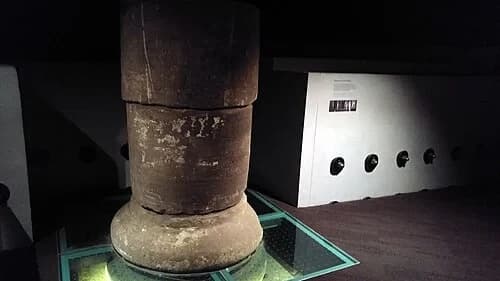
The Roman Principia
The history of this site goes much deeper than the medieval stones around you. In 1967, a major engineering project to save the central tower led to an incredible discovery beneath the Minster's floor. As workers excavated the ground, they revealed the remains of the Roman military headquarters, known as the Principia. This was the nerve center of the Roman city of Eboracum, the site from which York eventually grew. This weathered column stands as a silent witness to those ancient origins. It was once part of a massive hall where Roman officers planned campaigns and administered the northern reaches of their empire. The fact that the cathedral was built directly over the Roman headquarters is no coincidence; it shows how the site has remained the seat of authority in York for nearly two thousand years, transitioning from military might to spiritual leadership. Standing here in the Undercroft, you are physically positioned between the Roman foundation of the city and the Gothic grandeur of the cathedral above, seeing firsthand how the layers of history are literally stacked one on top of the other.
Minster Yard and Constantine the Great
Concluding outside to see the statue of the Emperor who was proclaimed here in 306 AD, marking the Minster's ancient lineage.
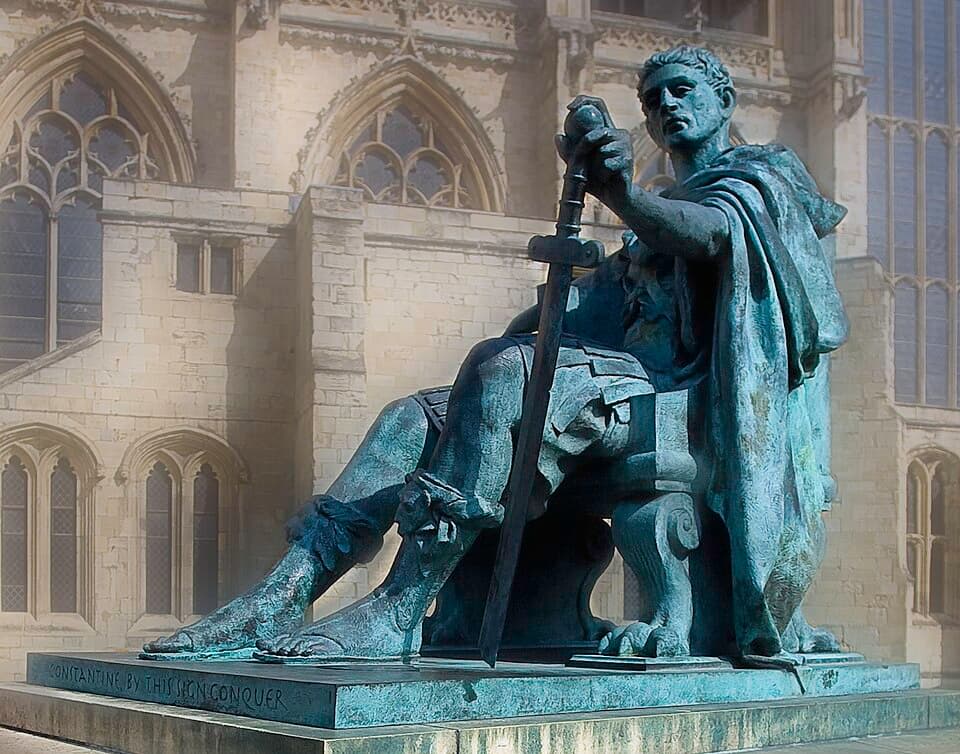
Constantine the Great
The figure depicted here represents one of the most influential leaders in human history: Constantine the Great. His connection to this site is direct and profound. In 306 AD, Constantine was stationed in the Roman military headquarters of Eboracum�the very ground where York Minster now stands. Upon the death of his father, Constantius, his loyal troops proclaimed him Emperor right here in York. Constantine�s rise to power began on this spot, but his legacy reached far beyond the city walls. He is best known for the Edict of Milan, which legalized Christianity across the Roman Empire and eventually led to it becoming the state religion. This monumental shift transformed Christianity from a persecuted minority faith into the dominant cultural and spiritual force in the Western world. Without the events that took place on this exact site nearly two thousand years ago, the history of Europe�and the existence of great cathedrals like this one�would have been entirely different. This statue serves as a permanent memorial to that pivotal moment when York stood at the center of the world stage.
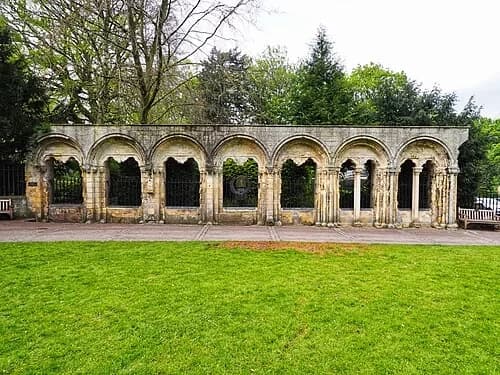
The Archbishop's Palace Ruins
As you step into the Minster gardens, these elegant 12th-century stone arches offer a glimpse into a time when the Archbishops of York lived with the splendor of princes. These are the remains of the original Archbishop's Palace, once a sprawling complex that served as the administrative and residential heart of the northern church. In the medieval period, the Archbishops were much more than just religious leaders; they were powerful secular lords who held vast lands, raised their own armies, and advised kings. The refinement of these surviving arches, with their delicate carvings and graceful proportions, hints at the immense wealth and status required to maintain such a residence. Over the centuries, much of the palace was dismantled or repurposed, leaving only these fragments as a romantic ruin. Today, they provide a peaceful contrast to the massive scale of the Minster, reminding us that the cathedral was once surrounded by a bustling community of officials, scholars, and courtiers who managed the spiritual and political affairs of Northern England from this very spot.
Want to hear the rest?
Download the Stanza app to unlock all 29 stops and full GPS-guided navigation.
Frequently Asked Questions
How long does the York Minster audio tour take?
The York Minster audio guide includes 29 narrated stops. Most visitors spend 45 minutes to 1.5 hours exploring the complete tour, though you can listen at your own pace and skip or revisit any stop.
Is the York Minster audio guide available in my language?
Stanza supports 15 languages: English, Spanish, French, German, Italian, Portuguese, Russian, Japanese, Chinese, Korean, Arabic, Hindi, Polish, Dutch, Hebrew. Check the guide in the app to confirm the languages currently available for this tour.
Can I use the audio guide offline at York Minster?
Yes! Download the complete York Minster tour — including all audio, maps, and images — before your visit. The Stanza app works completely offline, so you don't need WiFi or mobile data at the venue.
How much does the York Minster audio guide cost?
The Stanza app is free to download. The current listed price for the York Minster audio guide is $1.99; app-store region and currency may affect the final price.
How do I use the Stanza audio guide at York Minster?
Download the free Stanza app, search for "York Minster", and download the tour. When you arrive at the venue, the app uses GPS to detect your location and automatically plays the relevant narration as you move between points of interest — completely hands-free.
What makes the Stanza audio guide different from other York Minster tours?
Stanza offers GPS-triggered narration that plays automatically as you walk through York Minster — no need to manually select stops. The tour is available in 15 languages, works fully offline, and includes 29 expertly narrated stops with images and historical context.
What other audio guides are available near York Minster?
Stanza offers multiple audio guides in York, United Kingdom and nearby areas. After downloading the app, browse the map to discover all available tours near York Minster. Each guide can be downloaded for offline use.