
Stanza · Audio guide
Glamis CastleAudio guide
A place to remember. A story to take with you.
Glamis Castle is a historic fortress and royal residence in Angus, Scotland, famously known as the childhood home of Queen Elizabeth The Queen Mother. It is considered one of Scotland's most significant…
Download Stanza, then search for “Glamis Castle”.
About the tour
One guide. Your kind of visit.
Glamis Castle is a historic fortress and royal residence in Angus, Scotland, famously known as the childhood home of Queen Elizabeth The Queen Mother. It is considered one of Scotland's most significant castles, with a history dating back to the 14th century.
Ready when you are.
- 01Get the free Stanza app.
iOS & Android
- 02Find your guide.
“Glamis Castle”
- 03Download before you go.
Works offline
Audio guide / 21 narrated stops
Inside the guide
Get to know a few of the stories before you go. Open a stop to read more.
01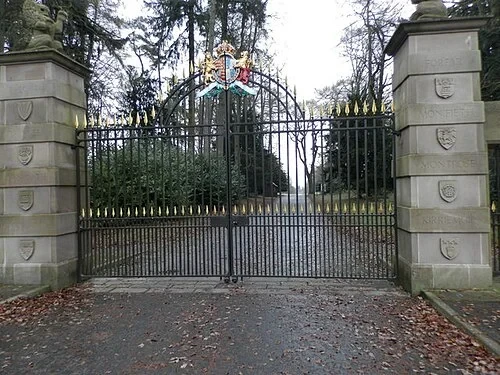 The Main Gates and Long AvenueThe Strathmore Gates
Welcome to one of the most storied ancestral seats in Scotland—the home of the Earls of Strathmore and Kinghorne. As you stand before the Strathmore Gates, you are at the threshold of an estate of staggering proportions. The grounds surrounding Glamis Castle span approximately 57 square kilometers, or roughly 14,000 acres, of fertile Tayside land. These impressive stone gate pillars, topped with the family’s coat of arms, have greeted royalty and visitors for generations, marking the entrance to a domain that has been central to Scottish history for centuries. The Strathmore name is synonymous with this landscape, and the gates serve as a formal introduction to their long-standing prominence. Beyond this entrance, the estate transitions from a working agricultural landscape into the carefully managed parkland that frames the castle itself. Look at the intricate heraldic details carved into the stone, which announce the prestige of the noble family who have called this place home since the late 14th century. This grand arrival sets the stage for the architecture and legends we are about to explore, moving from the open fields into the heart of a royal residence.
Douglas Nelson · CC BY-SA 2.0
02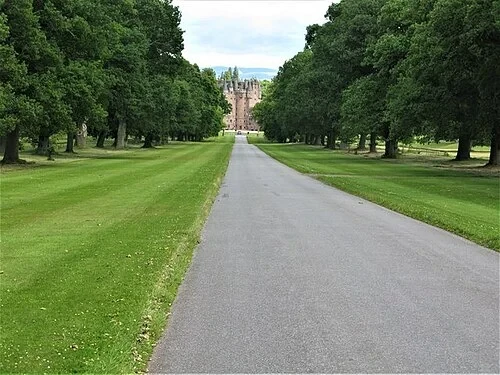 The Main Gates and Long AvenueThe Grand Avenue
The mile-long Grand Avenue offers one of the most celebrated views in the British Isles. Lined with ancient trees that have stood for centuries, this straight approach perfectly frames the distant turrets of Glamis Castle, creating a sense of unfolding drama as you draw closer. This specific perspective is so iconic that it has been featured on the reverse side of the Royal Bank of Scotland’s ten-pound notes since 1987. Approaching the castle this way allows you to appreciate the deliberate planning of the landscape, where nature is used to amplify the grandeur of the architecture. The avenue was designed to build anticipation, leading the eye directly toward the central tower and its cluster of conical roofs. While the castle is now known as a residence of quiet dignity and royal childhood memories, this impressive approach reminds us of its original status as a powerful seat of influence. Walking or driving down this path, you are following in the footsteps of kings and queens who have made this same journey over hundreds of years. The trees provide a living canopy that changes with the seasons, but the silhouette of the castle ahead remains a constant, formidable presence.
G Laird · CC BY-SA 2.0
03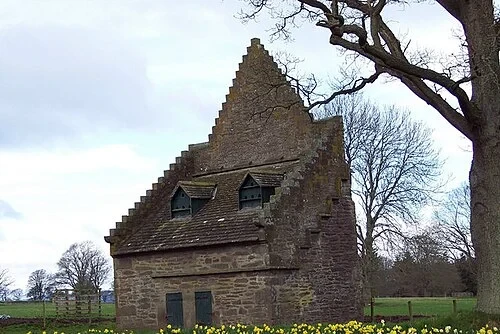 The Historic DovecotThe Dovecot
The practical history of a great estate is often found in its functional outbuildings, such as this dovecote, known in Scotland as a 'doocot.' For centuries, these structures were a sign of status and a necessity for survival, providing a year-round source of fresh meat and eggs for the castle's residents and guests. While the castle we see today is defined by its 17th-century layers, the foundations of the site date back much further, to 1372. This doocot reflects a time when self-sufficiency was paramount, and the ability to keep pigeons through the winter ensured that the Earl’s table was always well-provisioned. The design of these buildings was often as carefully considered as the main residence, as they needed to be secure from predators and easily accessible for harvesting. At Glamis, the doocot sits within the landscape as a reminder of the hundreds of staff and family members who once depended on the land for their daily meals. Its sturdy stone walls have survived many winters, standing as a quiet witness to the everyday rhythms of estate life that supported the grand ceremonies held within the castle walls.
Listen in the appTrish Steel · CC BY-SA 2.0
04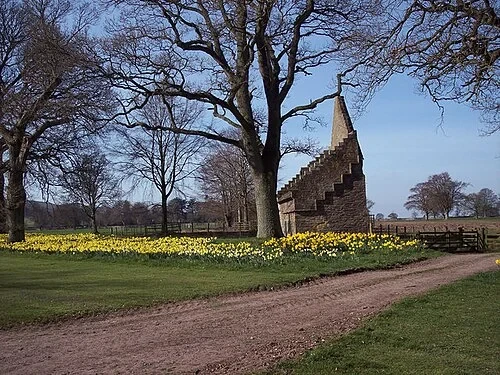 The Historic DovecotThe Doocot Path
Walking along the Doocot Path reveals how functional estate buildings were integrated into the romantic landscape of Glamis. The grounds here are extensive, and a full exploration typically takes visitors between 60 and 90 minutes. As you walk, pay attention to the architectural details of the dovecote, particularly the crow-stepped gables. This stair-like effect on the roofline is a classic feature of Scottish secular architecture, adding a decorative flourish to even the most utilitarian structures. This path offers a sensory experience of the estate, where the rustle of leaves and the open views of the parkland provide a backdrop to the history of the Bowes-Lyon family. The integration of these buildings into the wider landscape was a hallmark of 17th and 18th-century design, where the goal was to create a cohesive and picturesque environment. Even as the estate evolved from a defensive site to a comfortable home, elements like the doocot were preserved for their utility and their aesthetic contribution to the grounds. This area serves as a transition point, where the working life of the estate meets the leisure and beauty of the surrounding gardens.
Listen in the appTrish Steel · CC BY-SA 2.0
05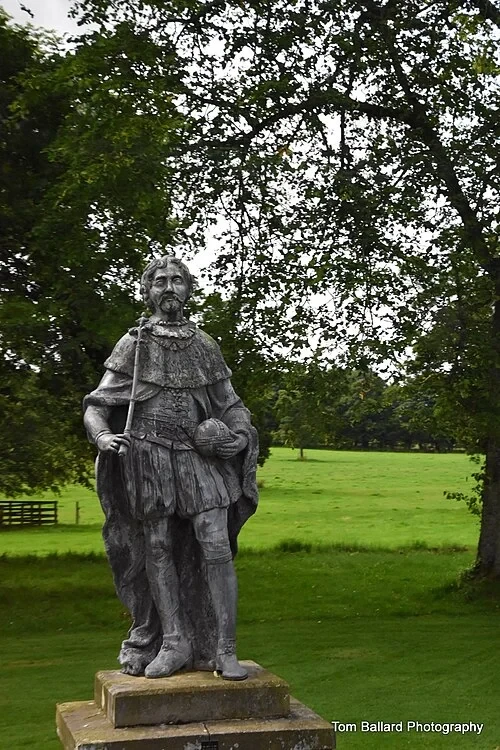 The Royal StatuesStatue of King James VI
Glamis Castle has enjoyed centuries of royal patronage, and this statue of King James VI of Scotland—who also became James I of England—stands as a physical reminder of those deep ties. The King was a frequent guest here, and his presence helped cement the castle's status as one of the most important residences in the country. This statue marks an important turning point in the site's history. It was during the 17th century that Glamis underwent a major remodeling, transforming from a grim, defensive fortress into the elegant, multi-turreted palace you see today. The royal connection was the catalyst for this change, as the owners sought to create an interior and exterior worthy of their prestigious visitors. The transition reflected the changing political landscape of Scotland, where power was expressed through architectural grandeur rather than just thick walls and battlements. As you look at the statue, consider the hundreds of years of royal intrigue and celebration that have taken place within these walls. The likeness of James VI serves as a gateway to understanding how the family balanced their local influence with their loyalty to the monarchs in Edinburgh and London.
Listen in the appTom Ballard · CC BY 2.0
06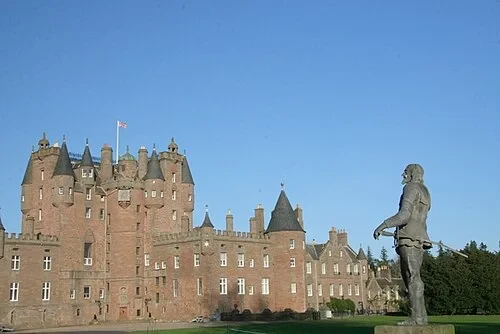 The Royal StatuesStatue of King Charles I
The statue of King Charles I occupies a prominent position on the lawn, set against the backdrop of the massive 17th-century expansions that define the castle’s silhouette. While historical accounts sometimes incorrectly credit the English architect Inigo Jones with the redesign of Glamis, the work was actually the vision of the King's Master Mason, William Schaw. Under his direction, the castle took on its grand, French-influenced character. The presence of the Stuart kings in statue form reinforces the family's public declaration of loyalty to the crown during a turbulent period of British history. Charles I, in particular, was a figure of great significance to the Earls of Strathmore, and his likeness here serves as a permanent mark of their political and personal allegiances. These statues were not just decorations; they were symbolic statements visible to every visitor who approached the front door. The remodeling overseen by Schaw added the numerous towers and ornate details that give Glamis its fairy-tale appearance today. By placing these royal figures on the lawn, the family ensured that their connection to the Stuart lineage was the first thing anyone would notice when arriving at their ancestral home.
Listen in the appDan · CC BY-SA 2.0
07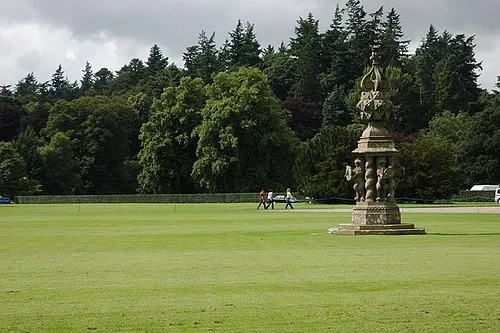 The Great SundialThe Sundial
Standing on the sprawling front lawn is one of the most complex and famous sundials in all of Scotland. Created in the early 1600s, this masterpiece is far more than a simple timekeeper; it is a sophisticated scientific instrument and a decorative work of art. In an era before mechanical clocks were common or reliable, such dials were essential for synchronizing the rhythms of the household. This specific sundial is a 'must-see' feature of the estate, representing the intellectual and cultural interests of the Earls of Strathmore during the Scottish Renaissance. Its geometric complexity is a marvel of masonry, designed to catch the light at every possible angle as the sun moves across the sky. Positioned centrally in front of the castle, it served as a focal point for the formal gardens that once existed here. The dial reflects a time when science, art, and nature were viewed as deeply interconnected. It remains in its original location, continuing to tell the time just as it did four centuries ago, provided the Scottish weather cooperates. The sheer scale and detail of the sundial indicate the wealth and sophistication of the family who commissioned it to grace their front lawn.
Listen in the appPhilip Halling · CC BY-SA 2.0
08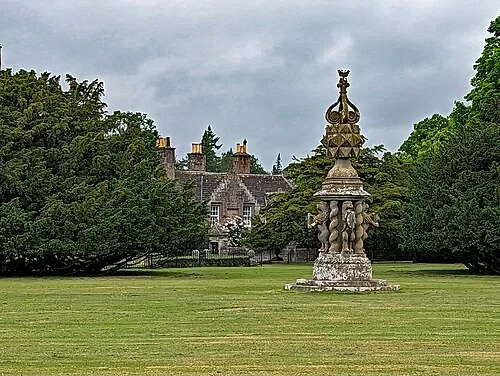 The Great SundialThe Lion Pillars
The sundial is supported by a remarkably detailed base, featuring intricate carvings that reward closer inspection. Look for the lions holding shields, which represent the heraldry of the Strathmore family. The lion has long been a symbol of strength and nobility for the Bowes-Lyon lineage, appearing throughout the estate in stone and metal. This monument is incredibly dense with information; the dial itself features over 80 different faces, each calibrated to tell the time with mathematical precision. The craftsmanship required to carve these geometric shapes into stone, ensuring every angle was correct for astronomical calculation, is extraordinary. As the light moves throughout the day, the shadows cast by the carvings shift, highlighting different faces and bringing the stone lions to life. This interaction between light and geometry was a deliberate part of the design, meant to showcase both the skill of the mason and the owner's mastery over their environment. The sundial remains one of the finest examples of its kind in Europe, surviving centuries of exposure to the elements while retaining its sharp lines and symbolic power. It stands as a testament to a period when the measurement of time was a grand, public display of knowledge.
Listen in the appPaulT (Gunther Tschuch) · CC BY-SA 4.0
09 The Castle Facade and Tower HouseGlamis Castle Facade
The facade of Glamis Castle is a striking example of how a building can evolve over centuries. What began as a medieval L-plan tower house was transformed into this grand, French-influenced chateau style during the 17th century. To understand the scale of this structure, consider its key dimensions: the prominent towers measure 7 meters in diameter and rise 4 meters above the parapets, dominating the skyline with their conical roofs. Despite the elegant exterior, the building’s origins as a defensive site are still visible in its construction. The lower stone walls are incredibly thick, measuring a full meter in depth to withstand potential sieges. This combination of French elegance and Scottish grit creates the unique atmosphere that Glamis is famous for. The transition from a rugged fortress to a palace involved adding the numerous windows, turrets, and decorative stonework you see today. The architect, William Schaw, successfully blended the old, thick-walled tower with new, more symmetrical wings to create a harmonious whole. This facade has greeted centuries of royal visitors, and its mix of military strength and aristocratic grace remains its defining characteristic, making it one of the most photographed buildings in Scotland.
Listen in the appPhoto: Worldfootage · CC BY-SA 4.0
10 The Castle Facade and Tower HouseThe Tower House
The upper reaches of the castle, with their maze of small windows and high turrets, are the setting for one of Scotland's most enduring and chilling legends: the 'Monster of Glamis.' According to the ghost story, a deformed Strathmore heir was born in the 19th century and kept secret from the world for his entire life. Tradition holds that he was hidden away in a bricked-up room deep within the thick walls of the tower house, known only to the Earl, his heir, and the estate factor. This dark tale has contributed to Glamis being widely considered one of the most haunted castles in the country. Whether the story is rooted in fact or was a Victorian invention, the architecture itself makes it easy to believe. The complex layout of the old tower, with its hidden passages and rooms that don't seem to align with the exterior windows, creates a perfect environment for such mysteries. Visitors often try to count the windows from the outside and compare them to the rooms on the inside, searching for the legendary 'lost room.' This air of Gothic mystery is a core part of the castle’s identity, blending the real history of the Bowes-Lyon family with the spectral tales that cling to these ancient stones.
Listen in the appAndrew Abbott · CC BY-SA 2.0
Glamis Castle
Frequently asked questions
How much does the guide cost?
Free app download. Listed guide price: $3.99. Guide price shown in the app. Audio guide only. Venue admission is separate.
Can I listen without internet?
Yes. Download the guide’s audio, images, and maps in the app before your visit. Your downloaded content is then available offline.
Can I listen in my language?
Stanza supports 15 languages. Check the app for the languages available for this guide.
Do I need to follow a schedule?
No. This is a self-guided experience. Choose your stops, pause whenever you like, and return to a story at your own pace.
At your own pace
Explore Glamis Castle.
Download Stanza, then search for “Glamis Castle”.
Free app download · Guide price shown in the app
Keep exploring
Nearby audio guides
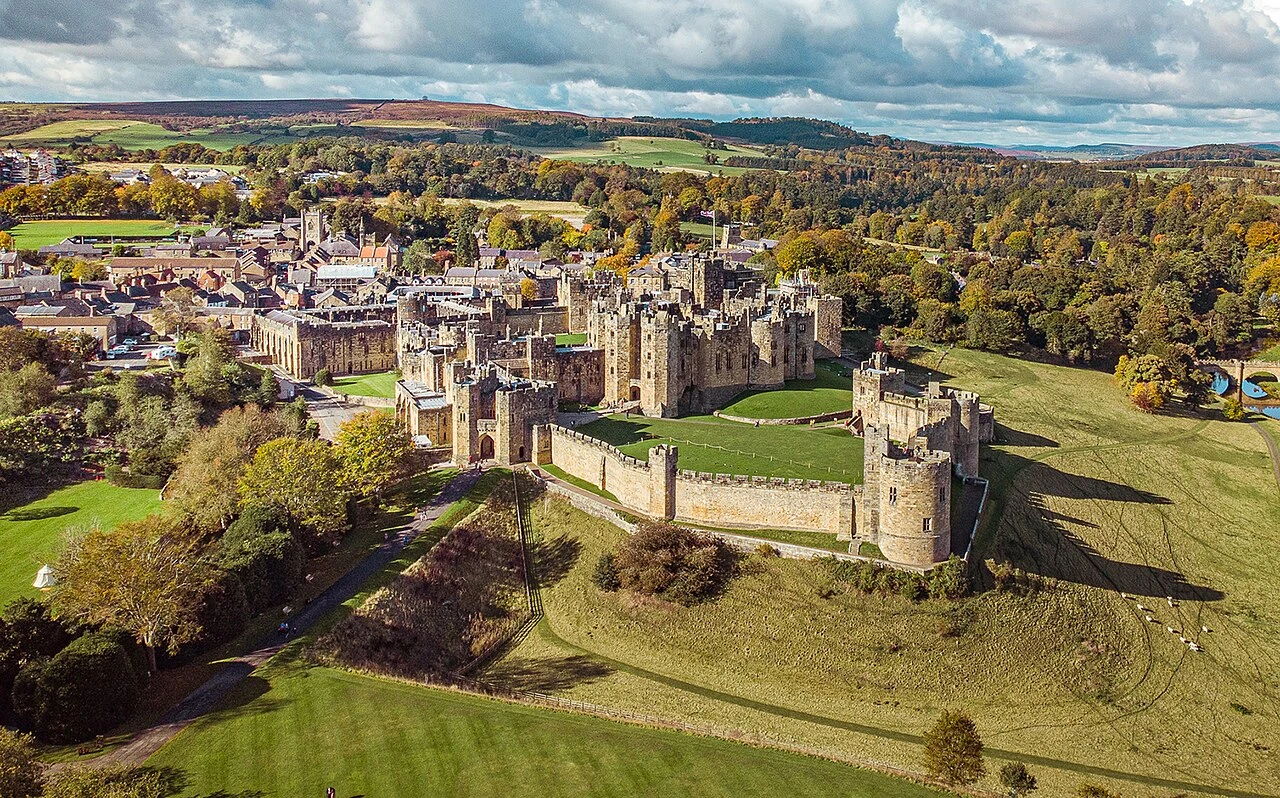
Alnwick
Alnwick Castle
Content & sources
Clementp.fr · CC BY-SA 4.0
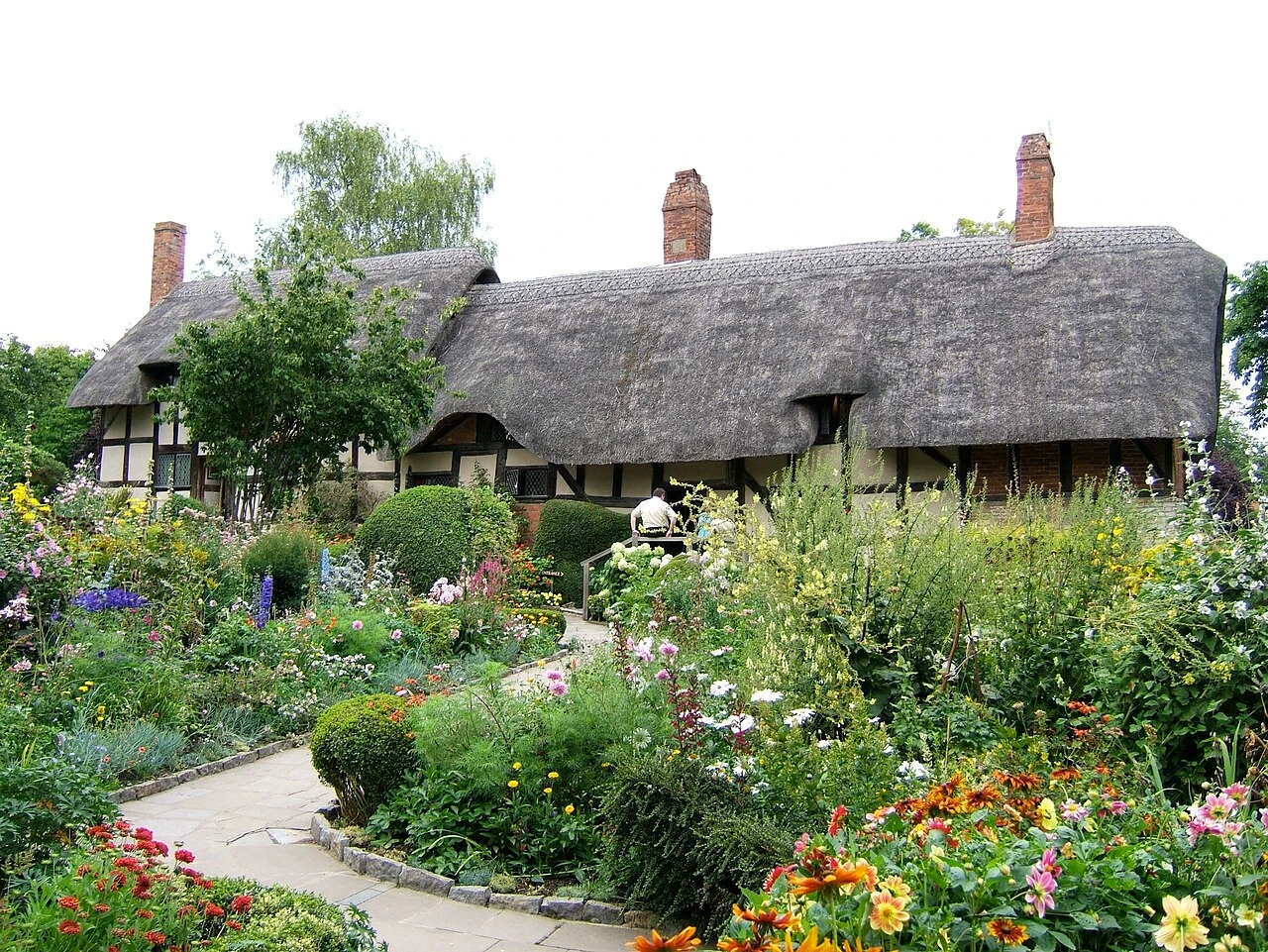
Stratford-on-Avon
Anne Hathaway's Cottage
Content & sources
Richard Peat · CC BY-SA 2.0
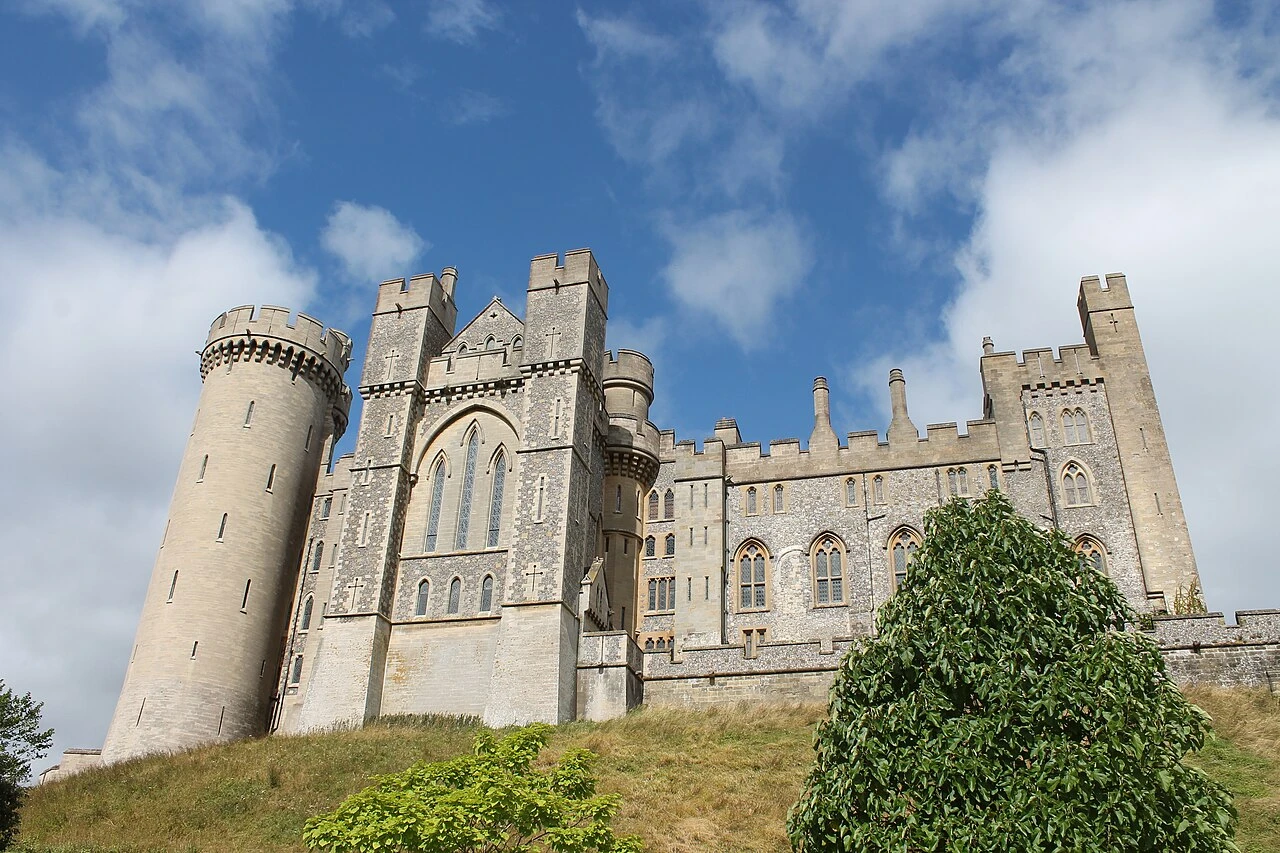
Arun
Arundel Castle
Content & sources
Photo: Egjoni98 · CC BY-SA 4.0
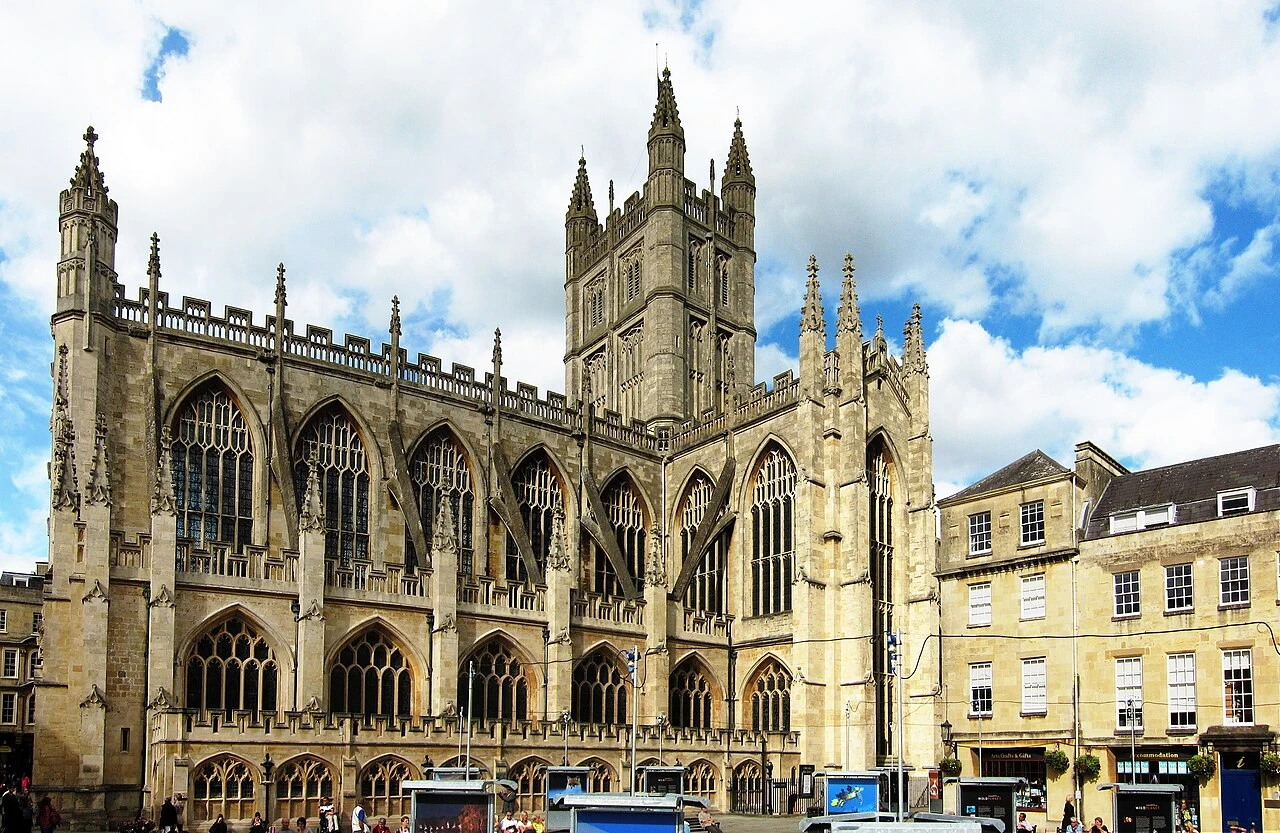
Bath
Bath Abbey
Content & sources
Photo: Velvet · CC BY-SA 3.0