Languages
15Stirling Castle Audio Guide
Stirling Castle is a landmark in Stirling, United Kingdom. Explore it with Stanza's GPS-triggered offline audio guide — available in 15 languages.
Quick Facts
30
Stops
15
Languages
100%
Offline
📍 Stirling, United Kingdom · 56.1239°N, -3.9478°E
About Stirling Castle
Stirling Castle is a major historic castle located in Stirling, Scotland. It served as one of the most important royal palaces in Scotland for centuries, witnessing many key events in Scottish history.
This self-guided audio tour features 30 narrated stops organized across 7 sections. As a castle, Stirling Castle offers a unique cultural experience in the heart of Stirling, United Kingdom.
The Stanza audio guide is available in 15 languages and works entirely offline — download the complete tour including audio narration, maps, and images before your visit. As you walk through Stirling Castle, GPS-triggered narration plays automatically at each point of interest.
Last updated:
What you will hear
The Forework and Outer Defences
Covers the castle's formidable gatehouse and artillery defences. Uses the verified POI images for the Forework and Outer Defences.
Outer Defences and Esplanade
As you cross the wide, open parade ground known as the Esplanade, you can see how the castle’s architecture changed to meet new threats. By the 18th century, the era of knights and arrows had passed, replaced by the devastating power of gunpowder. These thick, angled outer walls were specifically engineered to withstand sustained cannon fire. Unlike the tall, thin walls of the Middle Ages, these massive stone embankments are low and reinforced with earth to absorb the impact of heavy iron balls. This area became especially critical during the Jacobite uprisings of 1715 and 1745, when supporters of the exiled Stuart kings attempted to reclaim the throne. The castle served as a vital government stronghold, and the Esplanade provided a clear field of fire for defenders, ensuring no rebel force could approach without being exposed to a hail of musketry and grapeshot. The wide space also allowed for the drilling of large numbers of infantry and the maneuvering of heavy artillery pieces. Looking at the sheer scale of these fortifications today, it is easy to see why the castle remained one of the most important military garrisons in the British Isles long after it ceased to be a royal residence.
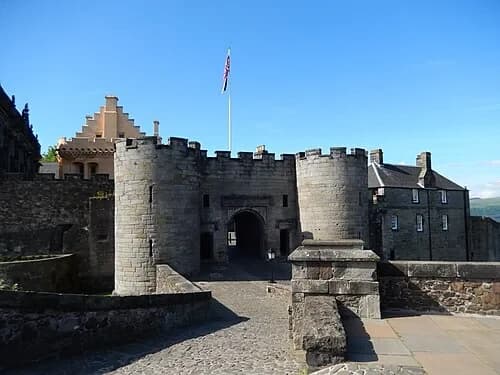
The Forework Gatehouse
Standing before the Forework, you are looking at the primary defense of the castle. This gatehouse was commissioned by King James IV around the year 1500. Originally, it was much taller and more elaborate, featuring four massive round towers topped with conical roofs, designed to both impress royal visitors and intimidate potential enemies. However, its strength was tested long before the current structures were completed. In 1304, during the Wars of Scottish Independence, King Edward I of England—known as 'Longshanks'—besieged the castle for three months. To break the resistance, he ordered the construction of the 'Warwolf,' believed to be the largest trebuchet ever built. This massive siege engine was so large it reportedly took 50 carpenters five days to assemble. Edward was so determined to see it in action that he refused the Scottish garrison’s surrender until he had fired at least one shot from the Warwolf, which successfully battered down these heavy defenses. Although the Gatehouse has been lowered over the centuries to better accommodate artillery, you can still feel the sheer weight of its history. Imagine the noise and chaos of a medieval siege as you pass through these heavy stone arches, which have witnessed the rise and fall of dynasties.
The Great Hall
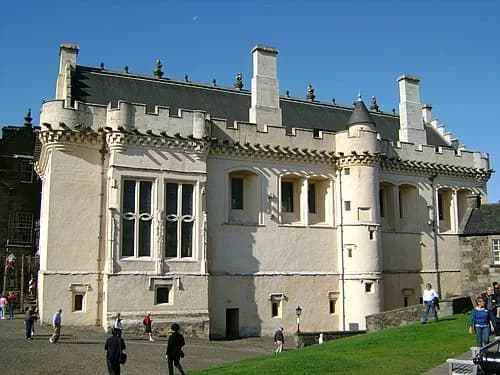
Showcases the largest secular medieval banquet hall in Scotland. Highlights the golden limewash and the hammerbeam roof.
The Great Hall Exterior
Dominating the courtyard is the Great Hall, a masterpiece of Renaissance-influenced architecture commissioned by King James IV around 1503. Its most immediate feature is the vibrant golden-yellow color. This is a traditional lime-based wash known as 'Royal Gold.' When the building was restored in 1999, historians returned it to this original medieval finish to reflect how it would have looked at its peak. In a grey, northern climate, this brilliant color was a powerful visual statement designed to broadcast the King’s immense wealth and international status to everyone for miles around. Inside, this structure contains the largest secular medieval banquet hall in Scotland, built to host the most important state occasions, from royal christenings to parliaments. The exterior is adorned with intricate stone carvings and large windows that would have flooded the interior with light—a true luxury at the time. The Great Hall was the public face of the Stewart dynasty, a place where the King could demonstrate his power through pageantry and feast. Its scale and beauty were intended to place the Scottish court on an equal footing with the great monarchies of France and England, showing that Stirling was a place of sophisticated European culture, not just a rugged military fortress.
The King's Rooms
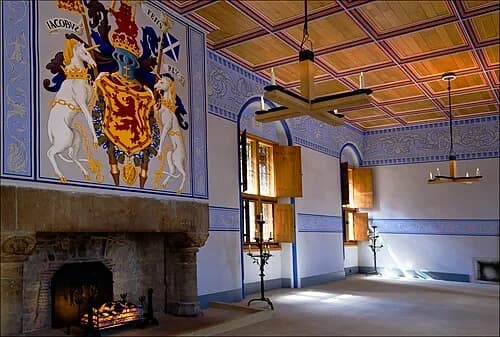
Explores the lavish lifestyle of King James V. Highlights the heraldic ceiling bosses and restored decor.
The King's Outer Hall
Walking into the King’s Outer Hall, you step back into the vibrant, colorful world of the mid-16th century. For many years, these rooms were cold, grey stone spaces, but a major £12 million restoration project completed in 2011 has completely transformed them. Using evidence from historical records and fragments of original material, a team of experts meticulously recreated the decor as it would have looked in the 1540s. Notice the brilliantly painted walls and the elaborate wooden ceiling. In the Renaissance, royal apartments were not meant to be understated; they were designed to dazzle. The use of bright colors and intricate patterns was a display of wealth and taste. This hall was a semi-public space where courtiers would wait for an audience with the King. The atmosphere here would have been one of anticipation and protocol. The vivid colors on the walls and the finely carved details of the ceiling help us imagine the sensory richness of the Stewart court. This room was the first in a series of chambers that led deeper into the King's private world, and its grandeur was meant to prepare visitors for the majesty of the monarch they were about to meet. It is a rare chance to see royal history not as a ruin, but as a living, breathing space.
The Queen's Presence and Tapestries
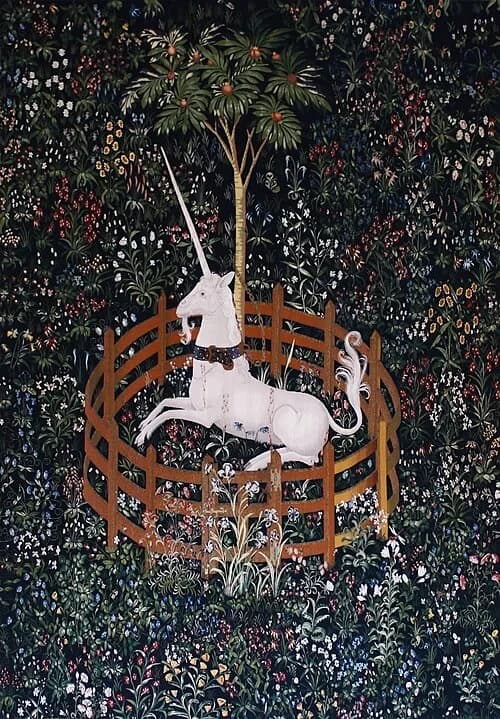
Focuses on the Queen's chambers and the recreated 'Hunt of the Unicorn' tapestries, which took a decade to weave.
The Captive Unicorn Tapestry
In the mid-16th century, the walls of the Royal Palace would have been draped in magnificent tapestries to provide both insulation and a stunning visual display of wealth. The centerpiece of this room is 'The Captive Unicorn,' part of a famous seven-panel series titled 'The Hunt of the Unicorn.' While the original medieval tapestries were lost to time, what you see here is the result of an extraordinary modern undertaking. A dedicated team of expert weavers spent over thirteen years at the castle recreating the entire series. They utilized authentic 16th-century techniques, working on traditional looms and using hand-dyed wools and silks to achieve the vibrant colors and intricate details seen in the original designs. The unicorn itself was a powerful symbol for the Scottish monarchy, representing purity and untameable strength. In this specific scene, the creature rests within a circular wooden enclosure, surrounded by a lush background of hundreds of individual flowers. Its presence here serves as a bridge between the mystical beliefs of the Renaissance and the very real political ambitions of the Stewart dynasty, which adopted the unicorn as a national emblem.
The Chapel Royal
The site of Mary, Queen of Scots' coronation. Features the verified POI for the Chapel Royal and its 17th-century friezes.
Modern Chapel Altar Cloth
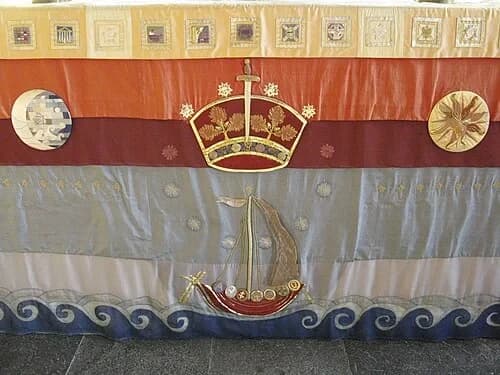
While much of the Chapel Royal is a window into the past, this beautifully crafted altar cloth brings us into the present. It is a stunning example of modern textile art, designed to honor the chapel's long history while ensuring it remains a vibrant, living place of worship. Look closely at the embroidered symbols. You’ll see a crown and a ship, motifs that have deep roots in Scottish royal heraldry. The crown represents the authority of the monarch, while the ship is a traditional symbol for the Lord of the Isles and Scotland’s maritime heritage. The way these elements are rendered—using contemporary techniques and a rich palette of colors—demonstrates how tradition can be reinterpreted for a new generation. The inclusion of such a high-quality piece of modern craftsmanship follows the medieval practice of gifting precious textiles to the church. It reminds us that Stirling Castle is not just a museum of the past, but a site that continues to be shaped by those who care for it today. The cloth provides a focal point within the chapel, bridging the centuries between the coronations of the past and the ceremonies of the present.
The Regimental Museum
Housed in the King's Old Building, this covers the castle's long history as a military barracks. Includes the Regimental Museum POI.
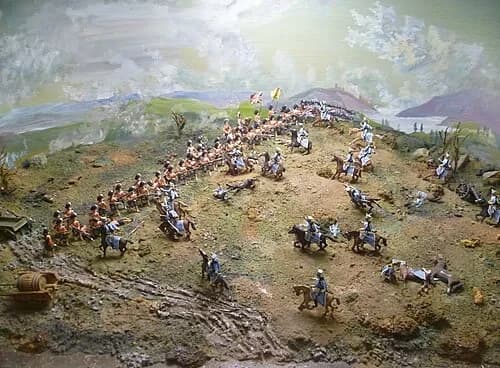
The Thin Red Line
One of the most famous stories in the history of the Argyll and Sutherland Highlanders is captured in this detailed diorama. It depicts the 93rd Highlanders at the Battle of Balaclava in 1854, during the Crimean War. Facing a massive charge by Russian cavalry, the regiment’s commander, Sir Colin Campbell, decided not to form a traditional four-rank deep defensive square. Instead, he lined his men up just two ranks deep. A war correspondent for The Times described the scene as a 'thin red streak topped with a line of steel,' a phrase that was later immortalized as 'The Thin Red Line.' This bold tactic was successful; the Highlanders held their ground, and the Russian cavalry was forced to retreat. This moment became a defining symbol of Scottish bravery and discipline. The phrase 'The Thin Red Line' has since entered the English language as a metaphor for any outnumbered group standing firm against overwhelming odds. For the people of Stirling, this story is a source of immense pride, cementing the regiment's place as an iconic part of the castle’s and the nation's military heritage.
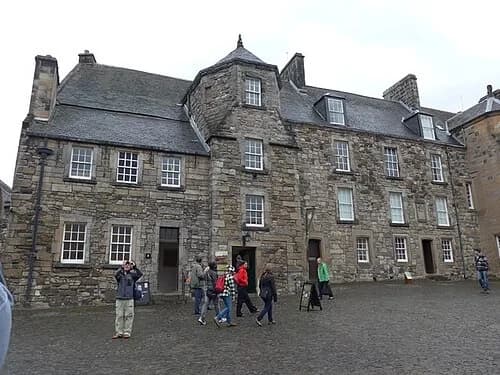
The Regimental Museum
Known as the King's Old Building, this structure stands on the highest part of the castle rock. Its history changed dramatically in 1603 when King James VI of Scotland became James I of England and moved the royal court to London. With the departure of the monarchs, the castle’s primary role shifted from a royal palace to a major military garrison and barracks. For centuries, this building echoed with the sounds of marching boots rather than courtly music. Today, it serves a new purpose as the Regimental Museum of the Argyll and Sutherland Highlanders. The museum chronicles the long and distinguished history of this celebrated regiment, which has been associated with Stirling Castle since the 1880s. Inside, you can explore the lives of the soldiers who were stationed here, from their rigorous training on the castle grounds to their service in conflicts around the globe. The transition of this building from a royal residence to a military museum mirrors the broader evolution of Stirling Castle itself—from a seat of power for the Stewart kings to a symbol of Scotland’s enduring military identity.
The Wall Walk: Key to Scotland
Explains the castle's strategic position overlooking the River Forth. Includes views of the Wallace Monument and Stirling Bridge.
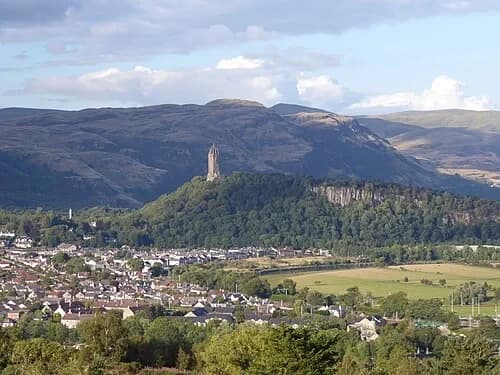
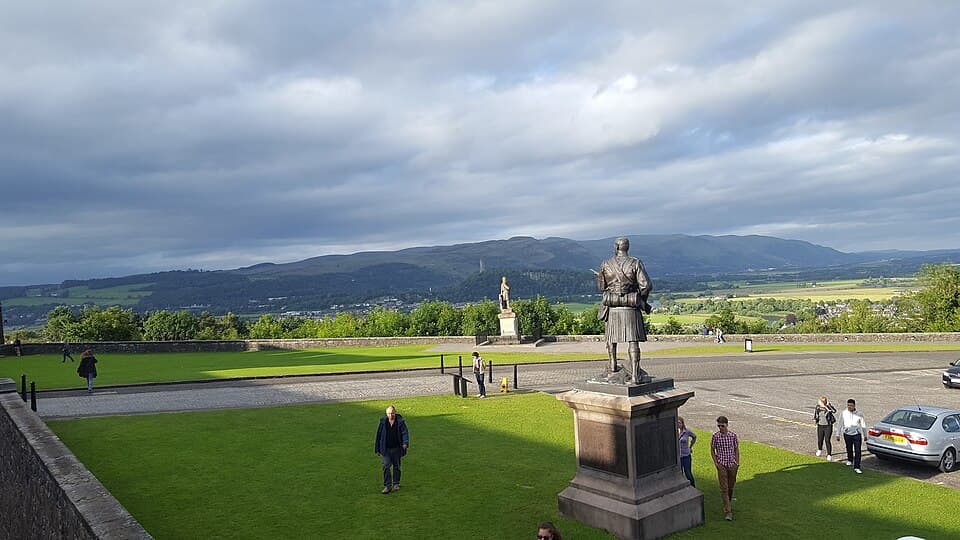
View of Wallace Monument
Looking out from the castle ramparts, your eye is immediately drawn to the tall Gothic tower standing proudly on the summit of Abbey Craig. This is the National Wallace Monument, completed in 1869 to honor Sir William Wallace. From this vantage point, you are overlooking the site of one of his greatest triumphs: the Battle of Stirling Bridge in 1297. At the time, Wallace and his forces were positioned on the very hill where the monument now stands. They watched as the English army began to cross the narrow wooden bridge below. Wallace waited until the English forces were divided by the river before launching a devastating attack that secured a major victory for the cause of Scottish independence. This landscape is a literal map of the Wars of Independence. The monument serves as a permanent reminder of Wallace's sacrifice and the enduring spirit of the Scottish people. It connects the high walls of Stirling Castle to the fields below, where the fate of the nation was decided over seven hundred years ago.
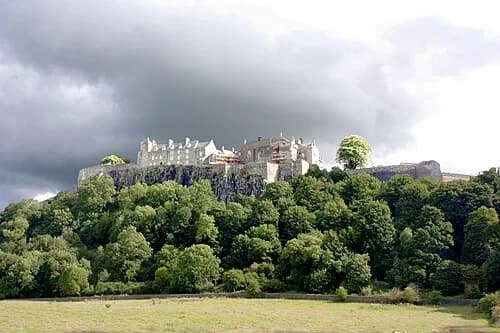
Siege of Stirling Castle
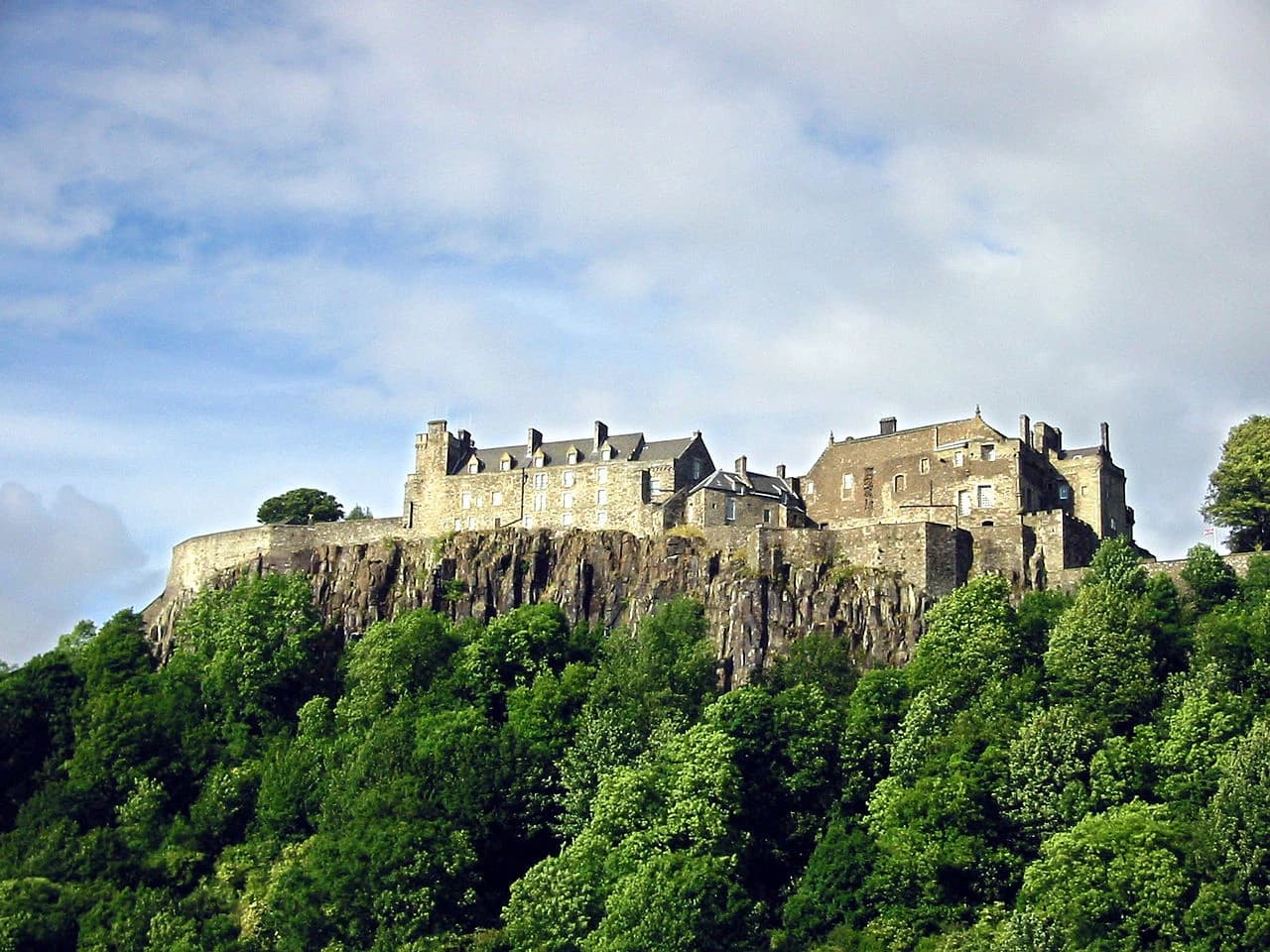
When viewed from the surrounding plains, the silhouette of Stirling Castle is truly awe-inspiring. It is here that you can best appreciate how the human-made structures of the Renaissance palace and the Great Hall seem to grow organically out of the sheer cliffs of the volcanic rock. This was no accident; it was a deliberate architectural statement of the Stewart dynasty’s ambition and permanence. By building on such an imposing natural pedestal, the kings of Scotland ensured that their seat of power dominated the horizon for miles in every direction. The contrast between the rugged, dark stone of the cliff and the refined masonry of the buildings above created a visual metaphor for the monarch’s role in bringing order and civilization to a wild land. Throughout the Middle Ages and the Renaissance, this view would have sent a clear message to friends and foes alike: the crown was unshakeable, elevated above the common world, and deeply rooted in the very bedrock of Scotland. Even today, the castle's profile remains one of the most iconic images of the nation’s history and identity, standing as a testament to those who sought to dominate this strategic landscape.
Want to hear the rest?
Download the Stanza app to unlock all 30 stops and full GPS-guided navigation.
Frequently Asked Questions
How long does the Stirling Castle audio tour take?
The Stirling Castle audio guide includes 30 narrated stops. Most visitors spend 45 minutes to 1.5 hours exploring the complete tour, though you can listen at your own pace and skip or revisit any stop.
Is the Stirling Castle audio guide available in my language?
Stanza supports 15 languages: English, Spanish, French, German, Italian, Portuguese, Russian, Japanese, Chinese, Korean, Arabic, Hindi, Polish, Dutch, Hebrew. Check the guide in the app to confirm the languages currently available for this tour.
Can I use the audio guide offline at Stirling Castle?
Yes! Download the complete Stirling Castle tour — including all audio, maps, and images — before your visit. The Stanza app works completely offline, so you don't need WiFi or mobile data at the venue.
How much does the Stirling Castle audio guide cost?
The Stanza app is free to download. The current listed price for the Stirling Castle audio guide is $3.99; app-store region and currency may affect the final price.
How do I use the Stanza audio guide at Stirling Castle?
Download the free Stanza app, search for "Stirling Castle", and download the tour. When you arrive at the venue, the app uses GPS to detect your location and automatically plays the relevant narration as you move between points of interest — completely hands-free.
What makes the Stanza audio guide different from other Stirling Castle tours?
Stanza offers GPS-triggered narration that plays automatically as you walk through Stirling Castle — no need to manually select stops. The tour is available in 15 languages, works fully offline, and includes 30 expertly narrated stops with images and historical context.
What other audio guides are available near Stirling Castle?
Stanza offers multiple audio guides in Stirling, United Kingdom and nearby areas. After downloading the app, browse the map to discover all available tours near Stirling Castle. Each guide can be downloaded for offline use.