Stanza · Audio guide
Holyrood Palace Audio Guide
A place to remember. A story to take with you.
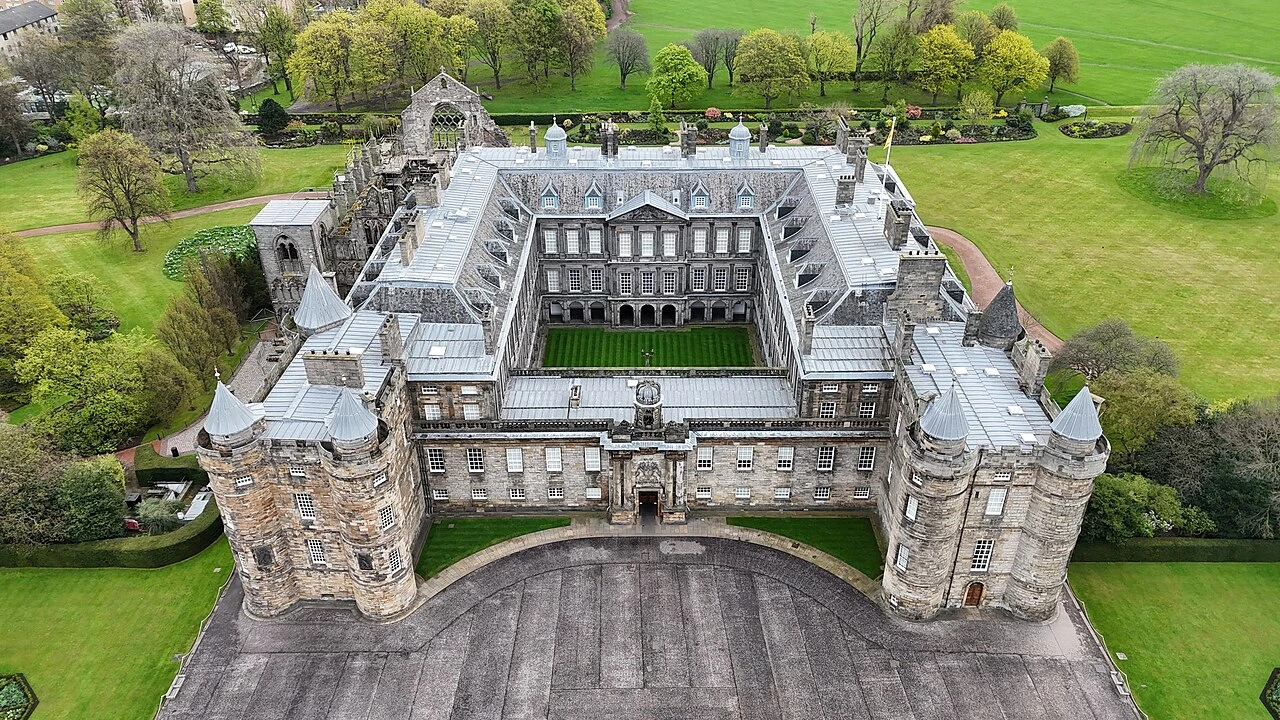
Holyrood Palace is the official residence of the British monarch in Scotland. This historic palace serves as a royal residence and a significant cultural landmark.
Download Stanza, then search for “Holyrood Palace”.
About the tour
One guide. Your kind of visit.
Holyrood Palace is the official residence of the British monarch in Scotland. This historic palace serves as a royal residence and a significant cultural landmark.
Ready when you are.
- 01Get the free Stanza app.
iOS & Android
- 02Find your guide.
“Holyrood Palace”
- 03Download before you go.
Works offline
Audio guide / 16 narrated stops
Inside the guide
Get to know a few of the stories before you go. Open a stop to read more.
01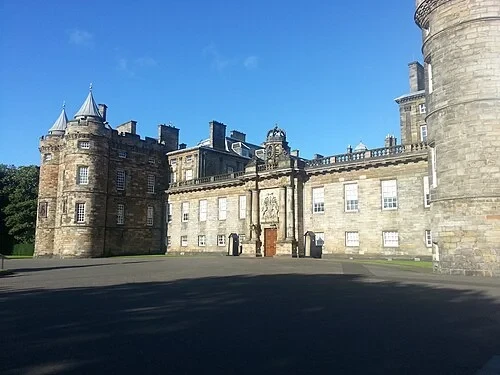 The Palace Forecourt and Fountain
The Palace Facade
The striking facade reveals a building of two distinct eras. On the left stands the North-west tower, a rugged 16th-century structure built by James the Fifth. Its pepper-pot turrets and heavy masonry contrast sharply with the rest of the building, which achieved its elegant, classical symmetry in 1678. This later reconstruction was commissioned to create a residence fit for a modern monarch, resulting in a palace that covers approximately 87,120 square feet of floor space. Today, it remains the setting for state ceremonies and official entertaining. During the summer months, the King resides here for Royal Week, a tradition that celebrates Scottish culture and history. The central entrance, framed by sturdy columns and topped with a royal crest, leads to the inner heart of the palace. Here, the architecture shifts from the defensive style of the medieval Stuarts to the grand, orderly proportions of the late 17th century. This building's orientation and massive scale reflect its importance as the primary seat of the crown in the city of Edinburgh.
Photo: Orhunkaradag · CC BY-SA 3.0
02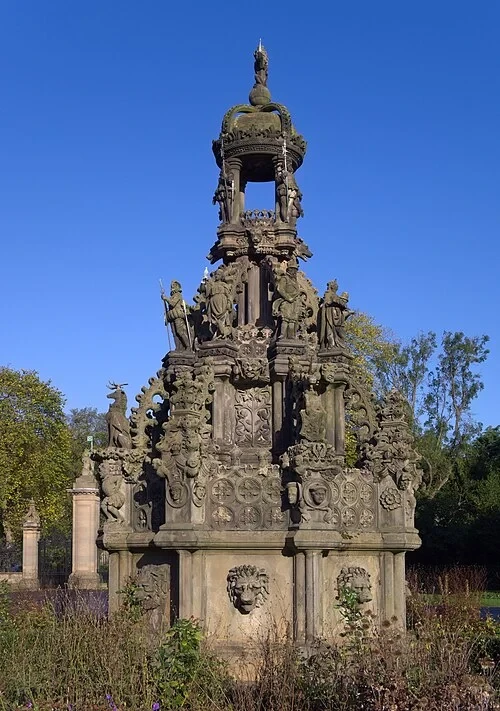 The Palace Forecourt and Fountain
The Forecourt Fountain
This ornate structure was commissioned by Queen Victoria in 1859. While it looks ancient, it is actually a carefully researched revival, modeled after the mid-16th-century fountain at Linlithgow Palace. Its design reflects the Victorian fascination with Scotland’s historic architecture and the Stuart dynasty. Look closely at the three tiers to discover a gallery of carved figures. These represent various historical Scottish monarchs and legendary figures from the nation's folklore, including characters that would have been familiar to Mary, Queen of Scots. The intricate stonework shows hunters, musicians, and heraldic beasts, all densely packed into the structure's octagonal form. At the very top, a crown-shaped canopy protects a smaller figure, emphasizing the fountain’s royal associations. Water would originally have played through the mouths of the many carved lions and grotesque heads surrounding the base. This addition significantly changed the look of the palace entrance, replacing a utilitarian space with a grand ornamental centerpiece that prepared visitors for the splendors waiting inside the state apartments. The crisp details of the carving remain remarkably well-preserved against the open sky.
Daniel Kraft · CC BY-SA 3.0
03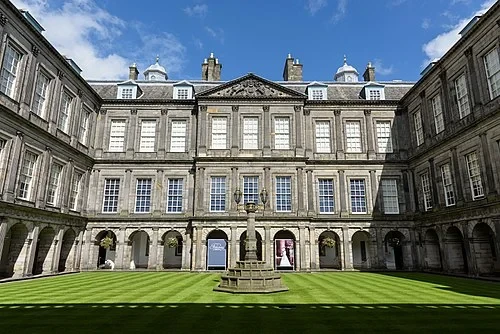 The Inner Quadrangle
The Central Quadrangle
In the 1670s, King Charles the Second commissioned Sir William Bruce to reconstruct the palace. Bruce was a pioneer of the classical style in Scotland, and this quadrangle is among his greatest achievements. The palace as a whole measures about 230 feet by 230 feet, and this courtyard at its heart is defined by its strict adherence to the classical orders of architecture. Vertical columns on the walls show a specific progression. On the ground floor, you see the simple, sturdy Doric order. The middle level features the more decorative Ionic style with its characteristic scrolls, and the top floor displays the highly ornate Corinthian order, topped with acanthus leaf motifs. This progression was a standard rule of Roman architecture, here applied to give the courtyard a sense of rising grandeur. The arcaded walkways on the ground floor provide sheltered passage around the square, while the uniform rows of windows above suggest the rhythmic layout of the royal apartments. In the center, a tiered stone structure stands on the lush green lawn, echoing the circular elements found elsewhere in the palace. This quadrangle served as a private outdoor space for the royal court, hidden away from the public gaze.
Listen in the appPhoto: XtoF · CC BY-SA 4.0
04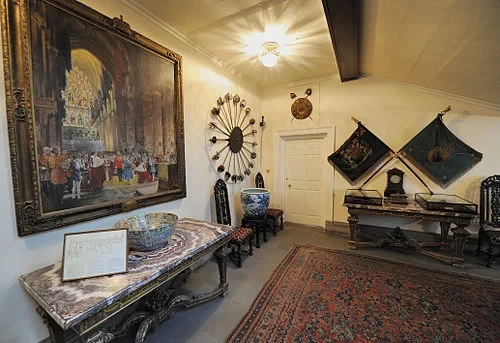 The Great Stair
The King's Stairwell
The King’s Stairwell was designed to impress visitors as they ascended to meet the monarch. The most striking visual element here is the display of shields, swords, and muskets arranged in decorative patterns across the walls. These pieces reflect the deep military history associated with the Royal Company of Archers, the King's Body Guard in Scotland. The geometric arrangements of blades and bucklers create a rhythm that draws the eye upward toward the ceiling. There, you can see 17th-century Baroque plasterwork, characterized by heavy molding and swirling floral motifs that frame a central painted scene. This style of decoration was popular during the reign of Charles the Second, intended to convey the power and sophistication of the restored monarchy. The staircase itself is wide and shallow, designed for the slow, dignified movement required for courtly processions. The stone walls and high ceilings would have amplified the sound of boots and the clatter of ceremonial guards. This space acts as a threshold, moving guests from the functional ground floor of the palace into the lavish and politically significant rooms used for official state business and royal receptions.
Listen in the appPhoto: Saffron Blaze · CC BY-SA 3.0
05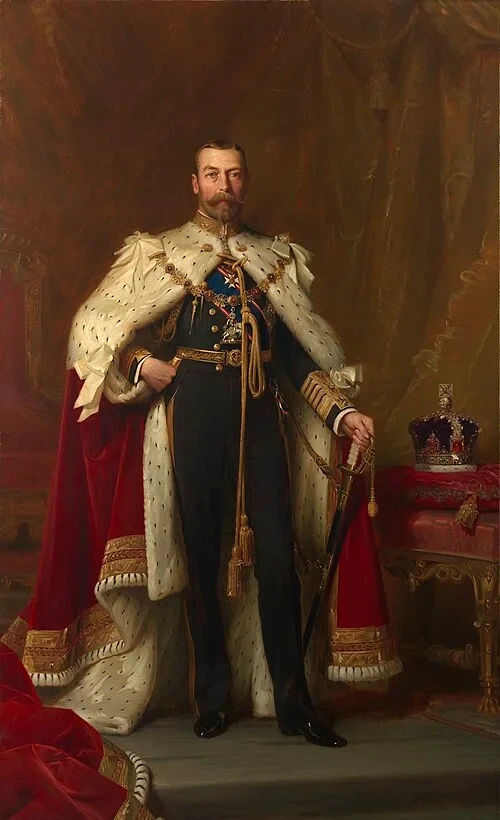 The State Apartments and Throne Room
King George the Fifth Portrait
King George the Fifth and his wife, Queen Mary, were essential figures in the modern history of Holyroodhouse. When they came to the throne in the early 1900s, the palace had become more of a museum than a residence. They took a personal interest in restoring the interiors and gardens, ensuring the building could once again serve as a functional home for the monarch during visits to Scotland. In this painting, the King is depicted in full coronation robes, heavily embroidered with gold and lined with ermine. He holds a scepter, and beside him on a velvet cushion sits the crown, emphasizing the dignity of his office. The rich red drapes and classical architecture in the background suggest the continuity of the monarchy. George the Fifth’s efforts turned Holyrood back into a center of Scottish life, initiating the modern tradition of 'Royal Week' where the monarch hosts garden parties and investitures. His legacy is felt in the very rooms you walk through today, which blend the ancient history of the Stuarts with the practical requirements of a working 20th-century royal palace.
Listen in the appMoussa Ayoub · Public domain
06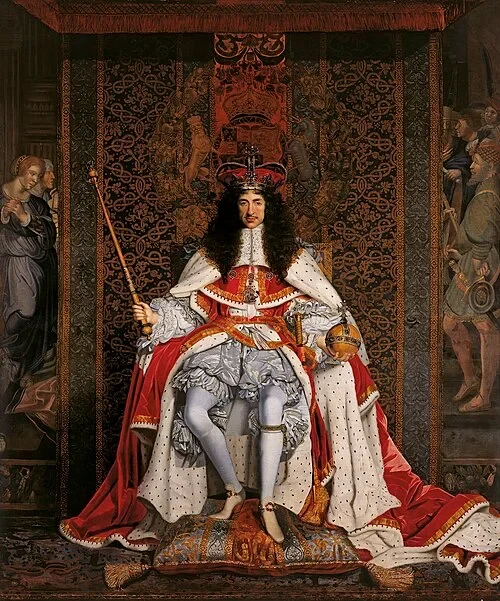 The State Apartments and Throne Room
King Charles the Second Portrait
Although King Charles the Second commissioned the massive reconstruction that gave Holyrood Palace its current classical look, he never actually set foot inside the finished building. His investment in the site was a powerful political statement, intended to reassert royal authority in Scotland following the restoration of the monarchy in 1660. This portrait showcases the peak of Baroque fashion and royal messaging. The King is seated beneath a grand canopy of state, holding the orb and scepter. His clothing is extraordinarily elaborate, featuring voluminous white breeches, silk stockings, and a heavy robe lined with spotted ermine. The intricate patterns of the background tapestry and the lace at his neck speak to the wealth and luxury of his court. With the palace rebuilt in this grand style, Charles ensured that even in his absence, Holyrood itself would proclaim the Stuart dynasty's right to rule. The image belongs to the Restoration period, when the arts and architecture were used as tools of propaganda to heal the divisions of the preceding civil wars.
Listen in the appJohn Michael Wright · Public domain
07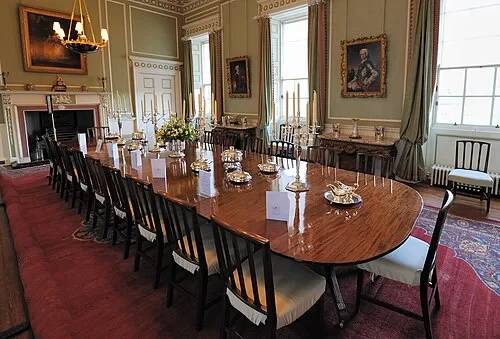 The Royal Dining Room
The Royal Dining Room is a space defined by ceremony and tradition. Its role was cemented in 1822 during the historic visit of King George the Fourth, the first reigning British monarch to visit Scotland in nearly two centuries. This visit, famously organized by author Sir Walter Scott, revived royal interest in the palace and the city of Edinburgh. When set for a formal luncheon during 'Royal Week' every summer, the long mahogany table is decorated with pieces from a massive 3,000-piece silver service. The room’s decor is restrained but elegant, with sage-green walls that provide a backdrop for the gilded frames of royal portraits. High windows let in soft light, reflecting off the polished wood and silver. Look for the marble-topped sideboards and the ornate chandelier hanging above the table. While it feels quiet now, imagine it filled with dignitaries, the air humming with conversation and the clinking of fine cutlery. This room bridges the gap between the historical palace and its modern function.
Listen in the appPhoto: Saffron Blaze · CC BY-SA 3.0
08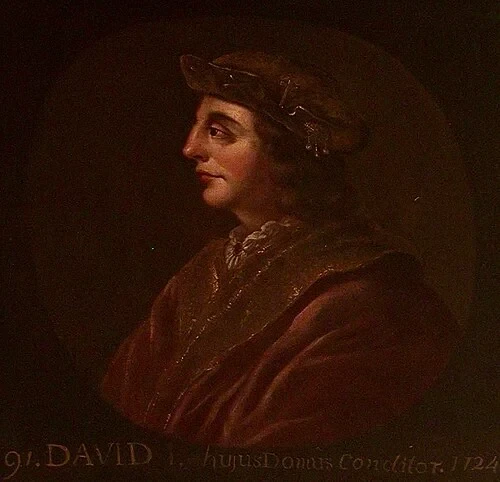 The Great Gallery
King David the First Portrait
In the Great Gallery, you are surrounded by the history of the Stuart dynasty, but this portrait takes us back to the very beginning. It depicts David the First, the king who founded Holyrood Abbey in 1128. According to legend, David was hunting in the nearby forest on the Feast of the Cross when he was thrown from his horse and confronted by a large stag. As the king reached out to protect himself, a glowing 'rood'—or cross—miraculously appeared between the stag's antlers, and the animal vanished. In gratitude for his survival, David founded an abbey on the spot, naming it Holyrood. This painting is part of a series of 96 royal likenesses commissioned by King Charles the Second in the 17th century. The goal of this massive project was to prove the ancient and unbroken lineage of the Stuart family, stretching back centuries. While many of the portraits are artistic imaginings rather than true life studies, they served a vital role in royal propaganda. The dark frame and the simple, noble features of the king emphasize the status of the man who first brought a royal presence to this site.
Listen in the appJacob de Wet II · Public domain
09 The Great Gallery
Robert the Bruce Portrait
Of all the rooms in the palace, the Great Gallery is the largest, and it has long served as a space for both political propaganda and grand celebrations. This portrait of Robert the Bruce is a key part of that story. By including the hero of the Wars of Independence in this collection of royal portraits, the Stuart monarchs were claiming his prestige as their own ancestor. The room itself became famous for a different kind of gathering in 1745. During the Jacobite Rising, Bonnie Prince Charlie occupied Holyrood for six weeks. He used the Great Gallery to hold lavish balls and receptions, attempting to win over the hearts of the Edinburgh elite and create the image of a restored Stuart court. This portrait would have looked down upon those dancers, a silent witness to a final, desperate attempt to reclaim the throne. The painting shows the king in armor, clutching a staff and shield, looking across a distant landscape. It portrays him as a defender of the realm, a theme that resonated deeply throughout centuries of Scottish history. The gallery’s repetitive rows of paintings create a sense of deep history for anyone walking its length.
Listen in the appJacob de Wet II · Public domain
10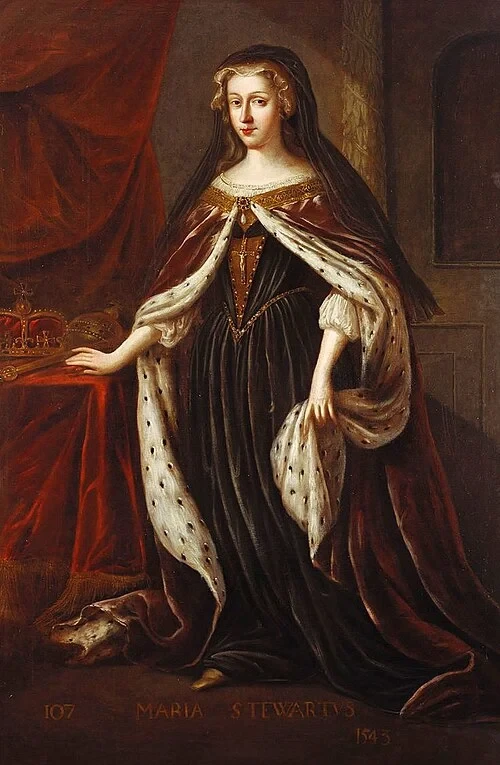 Mary, Queen of Scots' Historic Apartments
Mary Stewart Portrait
Mary Stewart, better known as Mary, Queen of Scots, is perhaps the most famous figure associated with Holyrood Palace. She returned to Scotland from France in 1561 at the age of 18, a young, Catholic queen taking charge of a country in the midst of the Protestant Reformation. This portrait reflects the poise she maintained throughout her difficult reign. In her six years living here, Mary faced immense political and personal challenges. The palace became the stage for high-stakes diplomacy, religious conflict, and deep personal tragedies. In this painting, she wears traditional black robes, but her ermine-lined cloak and the crown sitting on the table beside her are clear reminders of her status. Her face is pale and her expression serious, hinting at the pressures of ruling a fractured nation. The apartments you are about to enter were her private world, where she met with advisors and hosted small suppers. Her story is woven into the fabric of the building, turning these stone rooms into a lasting record of her time in Edinburgh. She remains one of history's most debated monarchs.
Listen in the appWilliam Allan · Public domain
- 11
Lord Darnley Portrait
Henry Stuart, Lord Darnley, was Mary’s second husband, a man whose ambition and vanity caused friction in the 16th-century Scottish court.
- 12
David Rizzio Portrait
David Rizzio was Mary’s Italian secretary and confidant, whose influence at the Scottish court made him a target for a deadly conspiracy.
- 13
The Murder of Rizzio
Relive the palace’s most dramatic night, where a deadly conspiracy culminated in a brutal murder within the Queen's private chambers.
- 14
The Abbey Ruins
The hauntingly beautiful ruins of Holyrood Abbey stand as a landmark of the palace's medieval origins and centuries of royal ceremony.
- 15
The Abbey Arcades
The graceful pointed arches of the abbey nave lead to the Royal Vault, a final resting place for several of Scotland’s monarchs.
- 16
The Garden Sundial
This intricate 1633 sundial, commissioned for the coronation of Charles I, features a remarkable 20-sided icosahedron at its summit, capable of telling time across dozens of individual faces.
Holyrood Palace
Frequently asked questions
How much does the guide cost?
Free app download. Listed guide price: $2.99. Guide price shown in the app. Audio guide only. Venue admission is separate.
Can I listen without internet?
Yes. Download the guide’s audio, images, and maps in the app before your visit. Your downloaded content is then available offline.
Can I listen in my language?
This audio guide is available in 15 languages, including English.
Do I need to follow a schedule?
No. This is a self-guided experience. Choose your stops, pause whenever you like, and return to a story at your own pace.
At your own pace
Explore Holyrood Palace.
Download Stanza, then search for “Holyrood Palace”.
Free app download · Guide price shown in the app
Keep exploring
Nearby audio guides
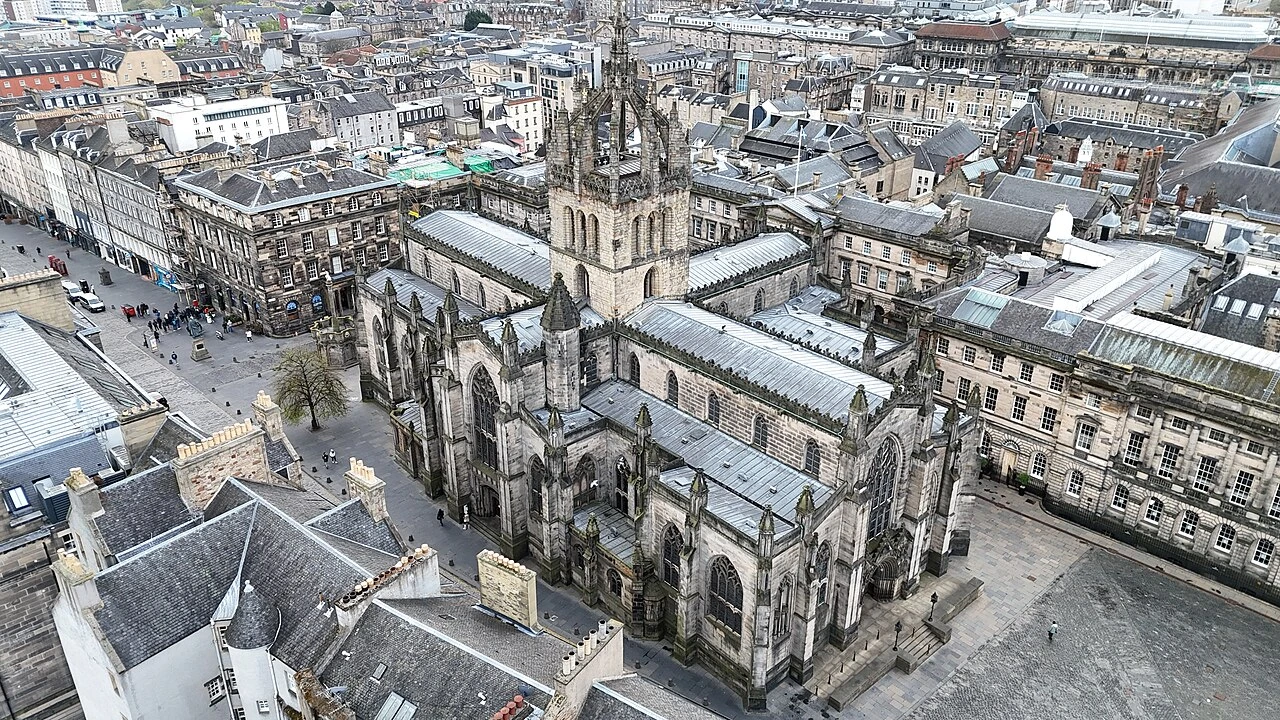
City of Edinburgh · 1 km
St Giles' Cathedral
Content & sources
Photo: 瑞丽江的河水 · CC BY-SA 4.0
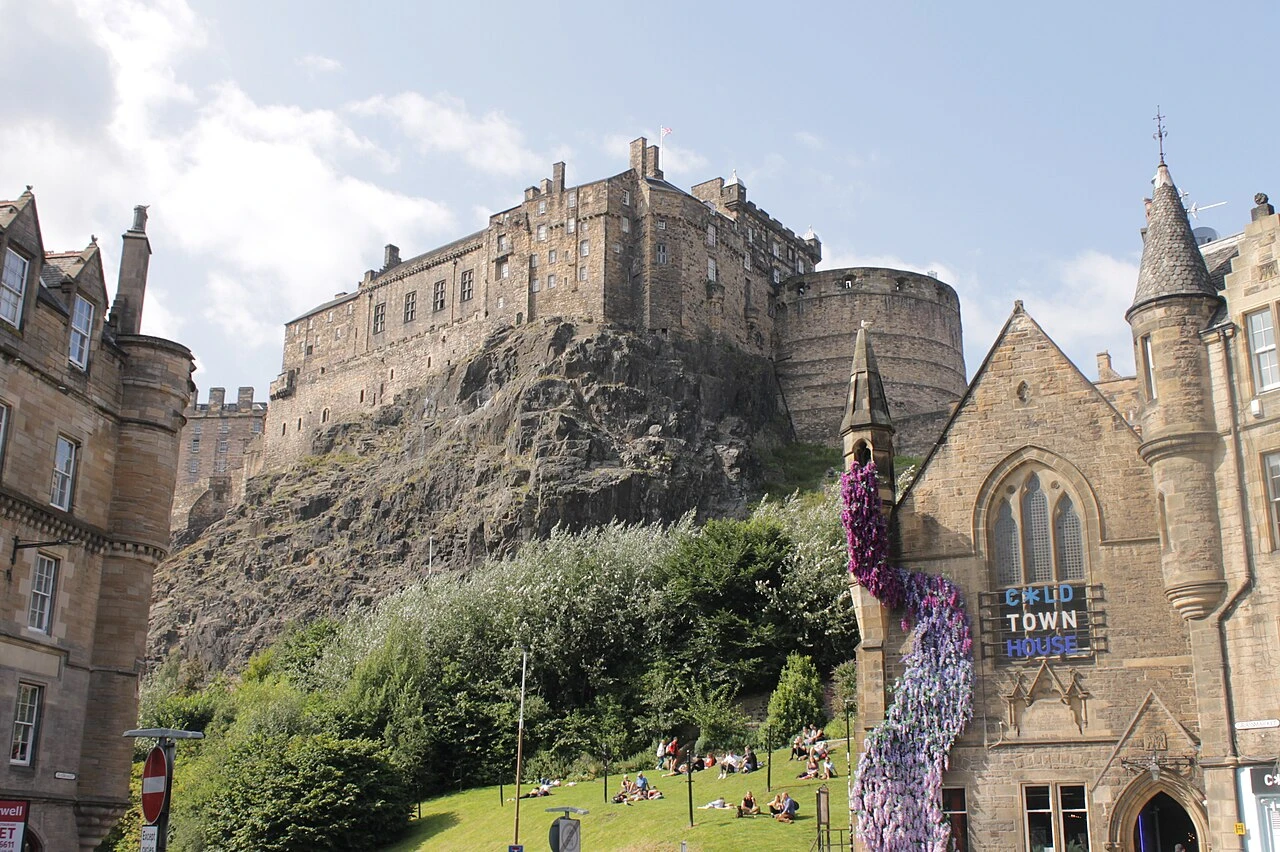
City of Edinburgh · 2 km
Edinburgh Castle
Content & sources
Photo: Stephencdickson · CC BY-SA 4.0
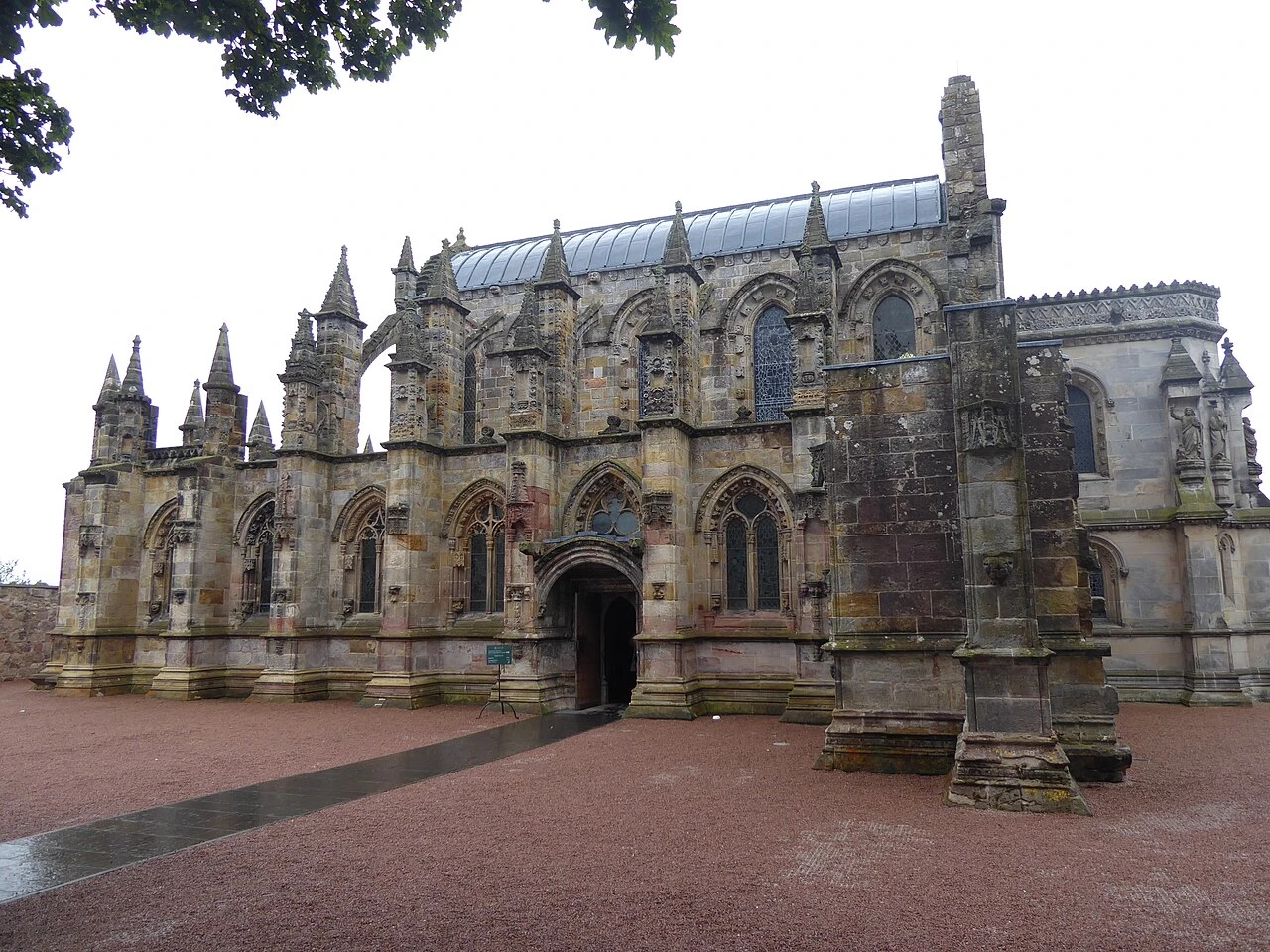
Roslin · 11 km
Rosslyn Chapel
Content & sources
Photo: Syrio · CC BY-SA 4.0
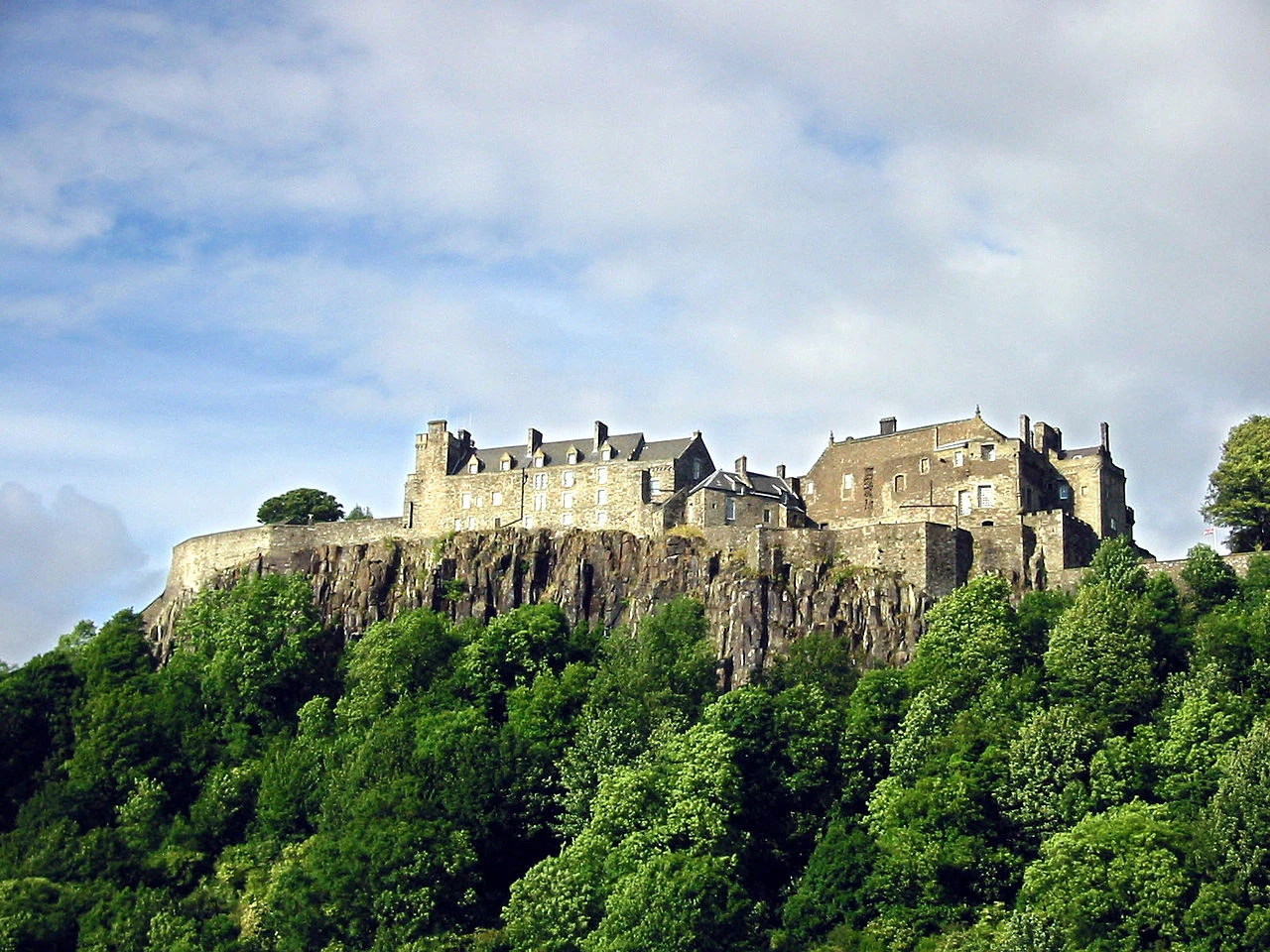
Stirling · 52 km
Stirling Castle
Content & sources
Photo: Citypeek · CC BY-SA 3.0
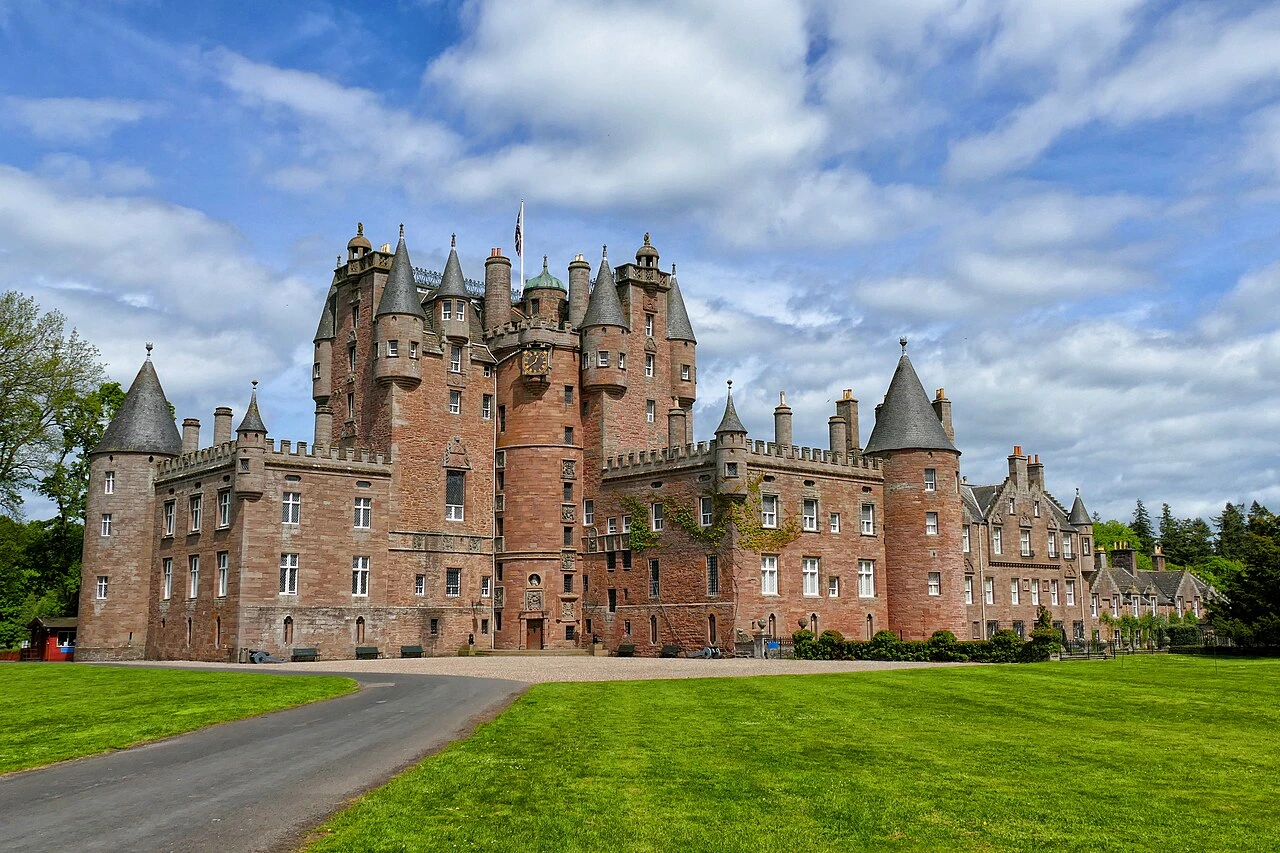
Forfar · 75 km
Glamis Castle
Content & sources
Photo: Worldfootage · CC BY-SA 4.0