Languages
15St Giles' Cathedral Audio Guide
St Giles' Cathedral is a landmark in City of Edinburgh, United Kingdom. Explore it with Stanza's GPS-triggered offline audio guide — available in 15 languages.

Quick Facts
22
Stops
15
Languages
100%
Offline
📍 City of Edinburgh, United Kingdom · 55.9494°N, -3.1908°E
About St Giles' Cathedral
St Giles' Cathedral is a historic Church of Scotland cathedral located on the Royal Mile in Edinburgh, Scotland. It serves as a significant religious landmark and a prominent example of Gothic architecture.
St Giles' Cathedral is also known as St. Giles' Cathedral, Edinburgh Cathedral, High Kirk of Edinburgh, High Kirk of St. Giles, and 1 other names in various languages.
This self-guided audio tour features 22 narrated stops organized across 7 sections. As a cathedral, St Giles' Cathedral offers a unique cultural experience in the heart of City of Edinburgh, United Kingdom.
The Stanza audio guide is available in 15 languages and works entirely offline — download the complete tour including audio narration, maps, and images before your visit. As you walk through St Giles' Cathedral, GPS-triggered narration plays automatically at each point of interest.
Last updated:
What you will hear
The High Street and Crown Steeple
Establishing the cathedral's presence on the Royal Mile. Includes the iconic crown steeple and the surrounding historic monuments in Parliament Square.
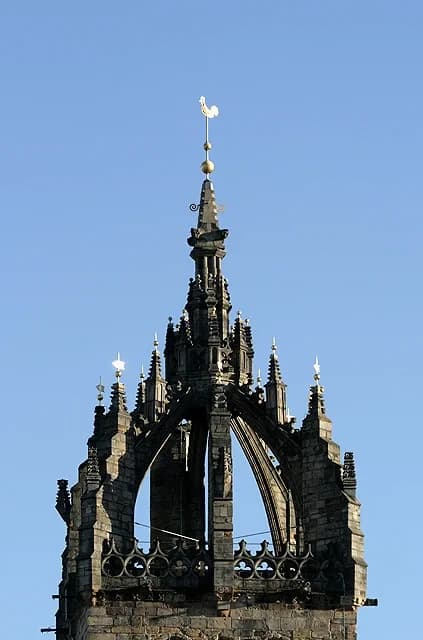
The Crown Steeple
Welcome to one of the most significant landmarks in Scotland. Standing before you is St Giles' Cathedral, the historic High Kirk of Edinburgh. Its most recognizable feature is undoubtedly the magnificent 15th-century crown steeple, which rises 145 feet�or approximately 44 meters�above the Royal Mile. This architectural marvel is famous for its eight unique flying buttresses that form a �crown� shape against the sky. This design wasn't just aesthetic; it was a potent symbol of the imperial power and prestige of the Stewart monarchs who once ruled this land. As you begin your journey, consider the immense history beneath your feet. While much of what we see today reflects later additions and restorations, this site has been a center of worship since King David I founded the original church here in 1124. Over the centuries, it has witnessed the turmoil of the Reformation, the fire of English invasions, and the quiet dignity of royal ceremonies. The steeple itself survived the city's many transformations, remaining a steadfast sentinel over the Old Town. Take a moment to appreciate the intricate stonework and the golden weathercock perched at the very top, catching the light as it has for generations of Edinburgh residents and visitors alike.
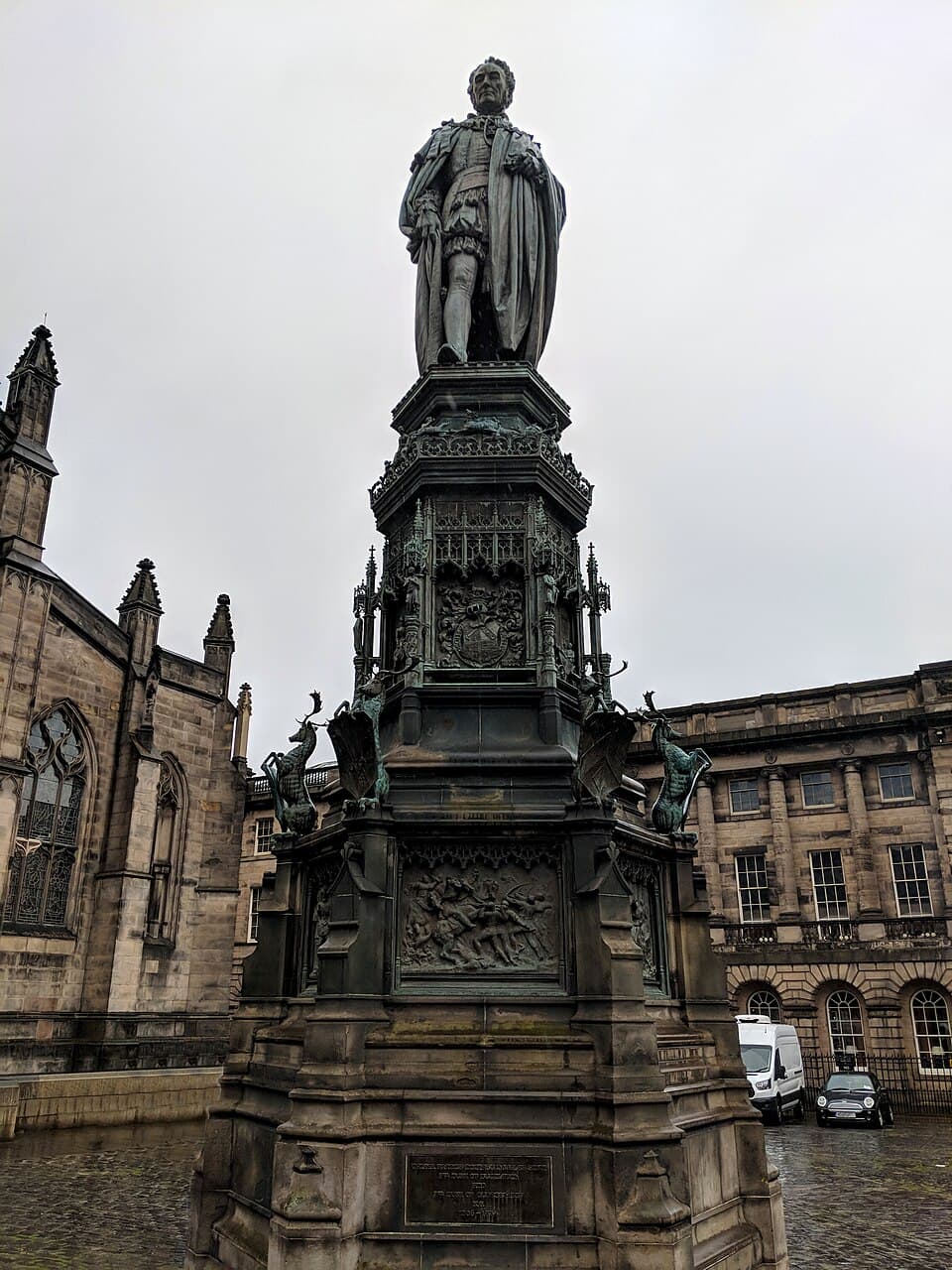
Duke of Buccleuch Statue
Standing in the bustling space of Parliament Square, you will find this imposing monument dedicated to the 5th Duke of Buccleuch. The figure stands atop an elaborate Gothic-style pedestal, reflecting the Victorian era's fascination with medieval aesthetics. While the Duke was a major landowner and influential nobleman, his connection here is primarily through his role as a key patron during the massive 19th-century �beautification� of the cathedral district. During the mid-to-late 1800s, architects William Burn and William Hay led a significant restoration project. Before their work, the exterior of St Giles had become cluttered and worn by centuries of use and neglect. These Victorian architects aimed to return the building to an idealized Gothic grandeur, stripping away later accretions and refining the stonework. This monument serves as a reminder of that period of civic pride and architectural transformation. Notice the detailed carvings on the pedestal beneath the figure; they represent scenes from the Duke's life and the history of his family. This statue and the refined cathedral exterior you see now are largely the product of this 19th-century vision, which sought to harmonize the ancient structure with the burgeoning Victorian city around it.
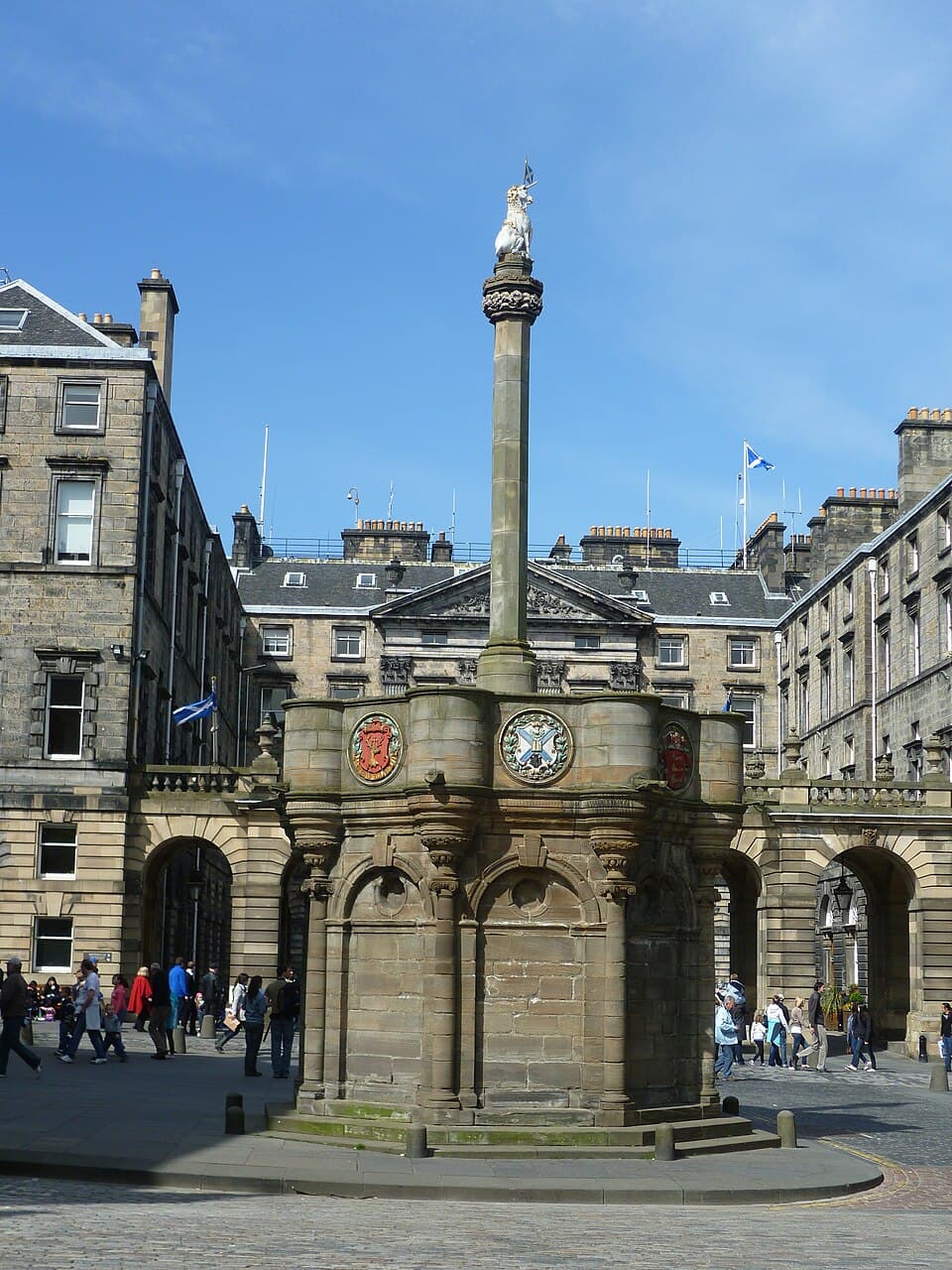
The Mercat Cross
Nearby, the Mercat Cross stands as a pillar of Edinburgh�s civic and political history. Historically, this was the city's nerve center�the place where the community gathered to hear royal proclamations, news of distant battles, or the announcement of new laws. It was also, more somberly, the site of public punishments and executions, serving as a visceral reminder of the law's reach. As you look up, you�ll see the proud figure of a unicorn perched atop the central pillar, clutching a shield. The unicorn is the national animal of Scotland, symbolizing strength and purity. While the ornate octagonal structure at the base is a Victorian-era replacement, much of the long central shaft is significantly older. It has survived the religious and political upheavals that have swept through the Royal Mile since the Middle Ages. In the 19th century, the cross was moved and rebuilt, but it remains the spot where the official voice of the city is heard. Even today, when a new monarch is announced or a general election is called, the town heralds come to this very spot to read the proclamations to the public. It is a living link to the ancient traditions of Scottish governance.
The West Doorway Entrance
The main visitor entrance, showcasing the elaborate 19th-century Gothic restoration and the symbolic carvings of the entrance portal.
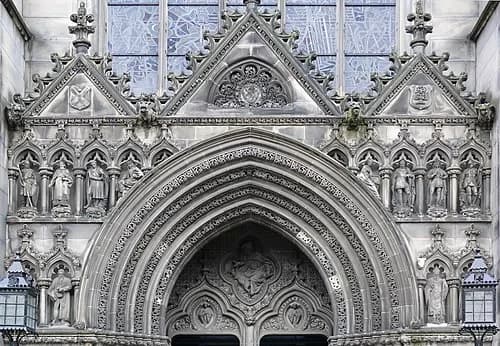
The Entrance Portal Sculptures
Take a closer look at the detailed sculptures surrounding the West Doorway's arch. These carvings are far more than mere decoration; they serve as a visual chronicle of the Scottish church. If you scan the figures, you will see a parade of early saints, bishops, and influential theologians who shaped the spiritual life of the nation from its earliest Christian days through to the modern era. The exceptional craftsmanship visible in this stonework was a key part of the 19th-century mission to restore the cathedral�s dignity. For centuries after the Reformation, the interior of St Giles had been partitioned by thick stone walls into several smaller, separate meeting houses for different congregations. During that time, the building also served variously as a prison, a police office, and even a grocery store. The exterior suffered as well, losing much of its medieval ornamentation. The creation of these sculptures in the 1880s signaled the building's rebirth as a unified national monument. Each figure is carved with distinct personality and symbolic attributes, reflecting a renewed pride in Scotland�s religious heritage. This elaborate stone Bible around the portal was designed to re-establish the sense of awe and grandeur that had been lost during the building's more utilitarian centuries.
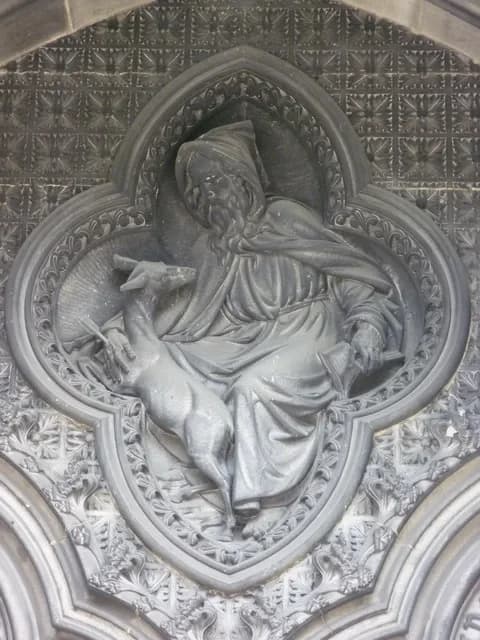
Relief of Saint Giles
Resting in the center of the archway is a relief depicting the cathedral�s namesake, Saint Giles. A 7th-century hermit who lived in the forests of southern France, Giles is often shown as he is here: as an elderly man accompanied by a deer. According to tradition, Giles lived in solitude, and his only companion was a female deer, or doe, whose milk sustained him. The carving captures the most famous moment of his legend. One day, a royal hunting party pursued the doe into Giles's cave. As the hunter fired an arrow, the saint reached out to protect the animal, and the arrow pierced his hand instead. The king, moved by the hermit�s compassion and holiness, became his patron and built a monastery for him. This act of protection made the doe a lasting symbol of the saint�s mercy. Over time, the doe was adopted by the city of Edinburgh as one of its primary heraldic symbols, appearing on the city's coat of arms and in various locations throughout the Old Town. This small but significant sculpture connects the cathedral's deep spiritual roots to the very identity of the city that grew up around it.
John Knox and the Reformation
Dedicated to the cathedral's role as the headquarters of the Scottish Reformation, featuring the statue of John Knox and the memorial to the riot that changed history.
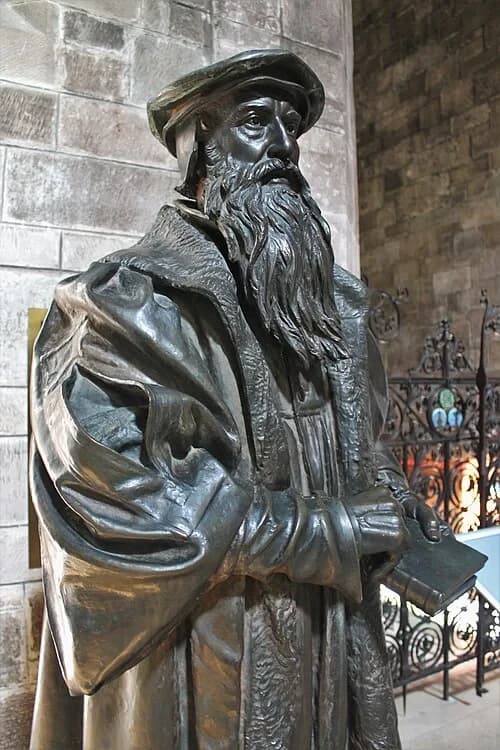
Statue of John Knox
Standing tall within the cathedral is the figure of John Knox, arguably the most influential religious figure in Scottish history. Knox was the minister of St Giles from 1559 until his death, and it was from the pulpit here that he delivered the fiery, uncompromising sermons that helped trigger the Scottish Reformation. The statue captures his formidable character: his face is set in a stern expression, and he firmly clutches a Bible in his left hand while his right hand is raised, as if mid-exhortation. His leadership was instrumental in breaking Scotland�s ties with the Roman Catholic Church and the French monarchy, leading to the establishment of the Presbyterian Church of Scotland. Under his influence, the interior of the cathedral was radically changed�altars were removed, and the elaborate decorations of the medieval era were stripped away in favor of a simpler, word-focused worship. This monument serves as a reminder of a period of intense religious and political transformation that permanently reshaped the cultural fabric of Scotland. While his legacy is complex, his presence is essential to understanding how the building evolved from a Catholic institution into the High Kirk of the Reformed faith.
The Crossing and Central Communion Table
The heart of the cathedral where major national events occur, including the presentation of the Honours of Scotland and the lying-in-state of Queen Elizabeth II.
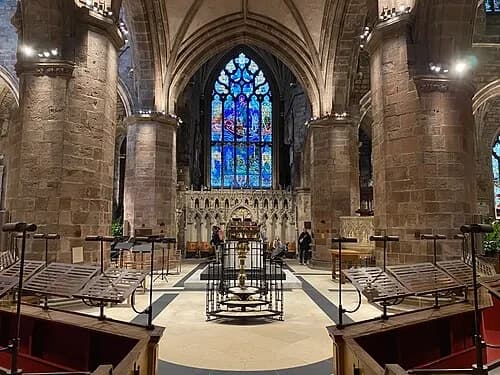
The Holy Table
You are now standing at the crossing, the architectural heart of the cathedral where the transepts meet the nave. Before you is the Holy Table, the central focus of Presbyterian worship, used for the celebration of Communion. While it is a place of daily spiritual significance, this spot has also been the setting for some of the most historic moments in modern British history. In 2022, following her death at Balmoral Castle, the coffin of Queen Elizabeth II was brought here. She lay in state for twenty-four hours, allowing tens of thousands of people to file past in a quiet act of national mourning. It was the first time a British monarch had lain in state in Scotland since the 17th century. Just a year later, in 2023, the cathedral hosted another major royal event: a Service of Thanksgiving for the coronation of King Charles III. During this ceremony, the Honours of Scotland�the nation's crown, scepter, and sword�were presented to the King, symbolizing the deep historic bonds between the Scottish church and the Crown. This simple table serves as a point of intersection between the sacred and the secular, and between the long-standing traditions of the past and the unfolding history of the present day.
The Thistle Chapel
The climax of the visit: the official chapel of the Order of the Thistle, renowned for its dense Arts and Crafts carvings and heraldic splendor.
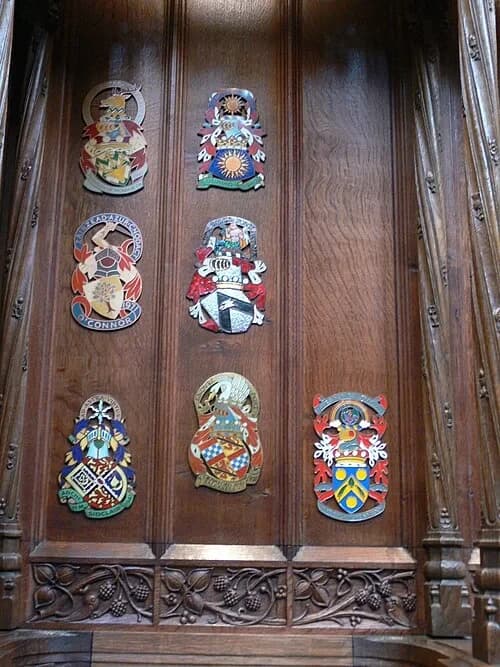
Heraldic Stall Plates
Notice the small, vibrant splashes of color affixed to the backs of the wooden stalls. These are the heraldic stall plates, crafted from colorful enamel, representing the individual knights of the Most Ancient and Most Noble Order of the Thistle. In a room filled with dark, intricate woodwork, these plates stand out as bright markers of personal history. Each plate displays a unique coat of arms, a complex visual language of symbols and colors that identifies a specific member of the Order. The tradition of these plates is deeply rooted in the history of Scottish chivalry. While many other personal items belonging to a knight are removed when they pass away, these enamel plates are permanent. They serve as a lasting record of membership, creating a chronological archive of those who have held Scotland�s highest honor. As you scan the rows, you are looking at a lineage of leadership and service that spans generations. The craftsmanship involved in these small artifacts is remarkable, requiring precise work to ensure the heraldic colors remain vivid and accurate for centuries to come. It�s a quiet way the chapel maintains a connection to its past members while remaining a living space for the present.
The Choir and Preston Aisle
Exploring the medieval heart of the church, including the intricate stone vaulting of the Preston Aisle and the hanging heraldic banners.
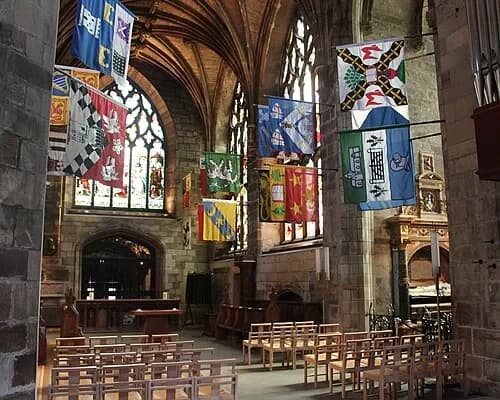
The Preston Aisle
Moving into the Preston Aisle, you enter a space that dates back to the mid-15th century. This area was added to the cathedral specifically to house a precious sacred relic: an arm bone of Saint Giles. While the relic itself is long gone, the architectural grandeur remains. Take a moment to appreciate the complex 'rib' vaulting of the ceiling. The stone ribs crisscross in a decorative pattern that was highly advanced for its time, demonstrating the exceptional skill of medieval Scottish masons. Nearby, you can find the 'Town's Pillar.' It is easily identified by the heraldic carvings it bears, which include the city�s coat of arms. This pillar is a significant historical marker, proving the deep and enduring medieval connection between the church and Edinburgh's civic government. In centuries past, the cathedral was not just a place of worship but the very heart of the city�s administrative and legal life. The Preston Aisle reflects this dual importance, serving as both a sanctuary for a holy relic and a symbol of the city's investment in its most prominent landmark. The heavy stone pillars and the delicate patterns above create a sense of grounded strength, inviting you to imagine the many roles this space has played over the last five hundred years.
The Heart of Midlothian
Concluding the tour just outside the West Door at the site of the old Tolbooth prison, marked by a famous heart-shaped mosaic.
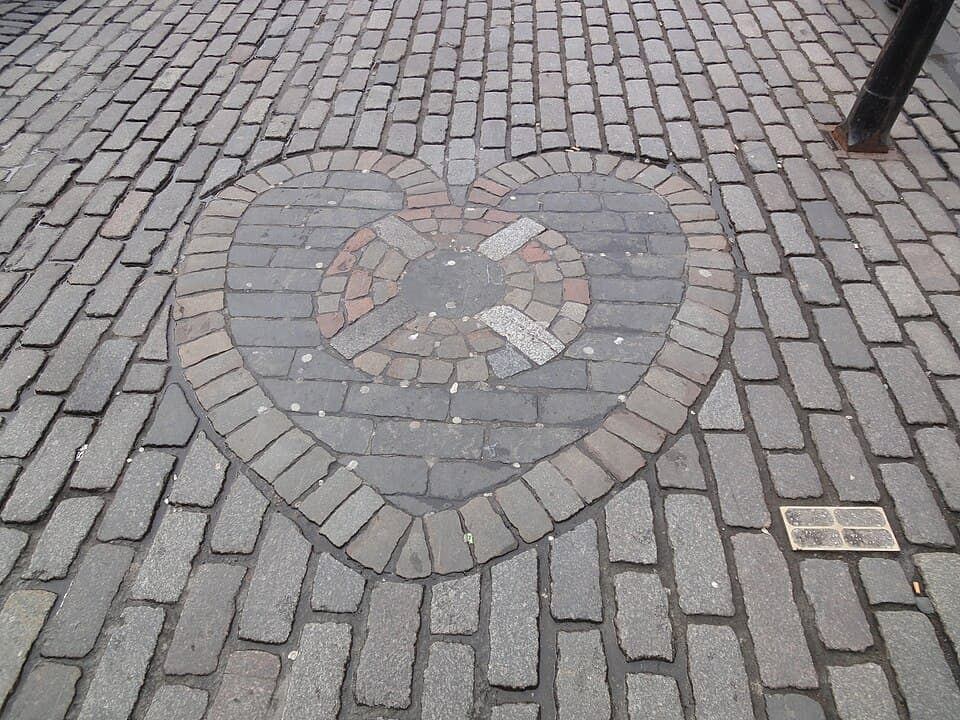
Heart of Midlothian Mosaic
As you step outside the West Door and onto the cobblestones, look down to find a heart-shaped pattern in the pavement known as the Heart of Midlothian. While it might look like a simple decorative mosaic, it marks a grim and notorious chapter of Edinburgh's past. This was the site of the Old Tolbooth, a massive building that served as the city�s administrative center, a tax office, and most infamously, its main prison and site of execution. For centuries, the Tolbooth was a place of misery, and its demolition in the early 19th century was celebrated by many. Today, you might notice locals spitting on the heart as they walk by. While it seems like a strange habit, it is an old tradition said to bring good luck. Historically, however, it was an act of pure contempt. Prisoners entering the jail would spit at its doorstep to show their defiance and hatred for the institution that was about to claim their freedom. Over time, the meaning shifted from a gesture of protest to a superstitious ritual. The mosaic remains a powerful, grounded reminder of the harsh justice once dispensed on this very spot, nestled right at the threshold of the city's most sacred space.
Want to hear the rest?
Download the Stanza app to unlock all 22 stops and full GPS-guided navigation.
Frequently Asked Questions
How long does the St Giles' Cathedral audio tour take?
The St Giles' Cathedral audio guide includes 22 narrated stops. Most visitors spend 45 minutes to 1.5 hours exploring the complete tour, though you can listen at your own pace and skip or revisit any stop.
Is the St Giles' Cathedral audio guide available in my language?
Stanza supports 15 languages: English, Spanish, French, German, Italian, Portuguese, Russian, Japanese, Chinese, Korean, Arabic, Hindi, Polish, Dutch, Hebrew. Check the guide in the app to confirm the languages currently available for this tour.
Can I use the audio guide offline at St Giles' Cathedral?
Yes! Download the complete St Giles' Cathedral tour — including all audio, maps, and images — before your visit. The Stanza app works completely offline, so you don't need WiFi or mobile data at the venue.
How much does the St Giles' Cathedral audio guide cost?
The Stanza app is free to download. The current listed price for the St Giles' Cathedral audio guide is $2.99; app-store region and currency may affect the final price.
How do I use the Stanza audio guide at St Giles' Cathedral?
Download the free Stanza app, search for "St Giles' Cathedral", and download the tour. When you arrive at the venue, the app uses GPS to detect your location and automatically plays the relevant narration as you move between points of interest — completely hands-free.
What makes the Stanza audio guide different from other St Giles' Cathedral tours?
Stanza offers GPS-triggered narration that plays automatically as you walk through St Giles' Cathedral — no need to manually select stops. The tour is available in 15 languages, works fully offline, and includes 22 expertly narrated stops with images and historical context.
What other audio guides are available near St Giles' Cathedral?
Stanza offers multiple audio guides in City of Edinburgh, United Kingdom and nearby areas. After downloading the app, browse the map to discover all available tours near St Giles' Cathedral. Each guide can be downloaded for offline use.