Languages
15Edinburgh Castle Audio Guide
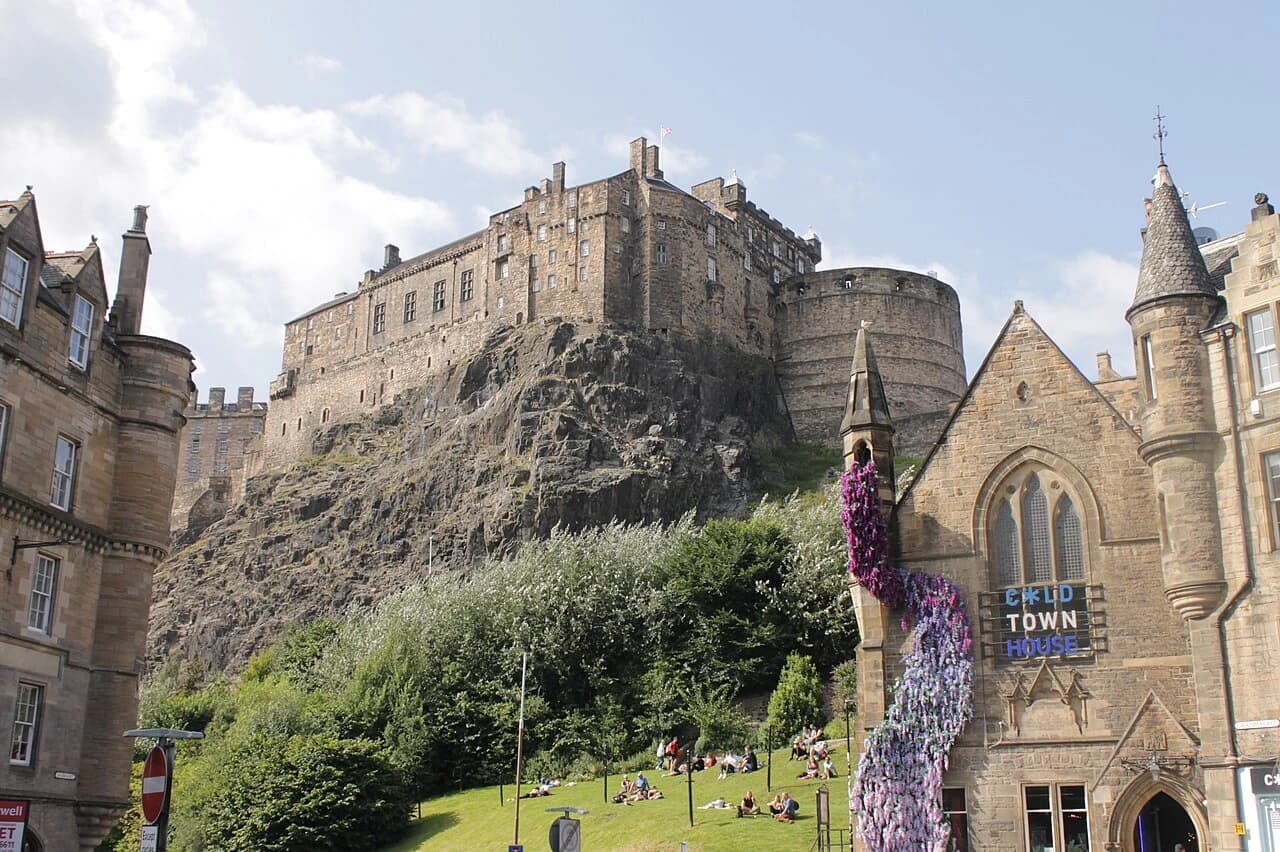
Edinburgh Castle is an archaeological site in City of Edinburgh, United Kingdom. Explore it with Stanza's guided offline audio tour — narrated in 15 languages.
Quick Facts
35
Stops
15
Languages
100%
Offline
📍 City of Edinburgh, United Kingdom · 55.9487°N, -3.2007°E
About Edinburgh Castle
Edinburgh Castle is a historic fortress that dominates the skyline of Edinburgh, Scotland, from its perch on Castle Rock. A former royal residence and military stronghold, it is now one of Scotland's most famous tourist attractions and a UNESCO World Heritage Site.
This self-guided audio tour features 35 narrated stops organized across 9 sections. As a castle, Edinburgh Castle offers a unique cultural experience in the heart of City of Edinburgh, United Kingdom.
The Stanza audio guide is available in 15 languages and works entirely offline — download the complete tour including audio narration, maps, and images before your visit. As you walk through Edinburgh Castle, GPS-triggered narration plays automatically at each point of interest.
Last updated:
What you will hear
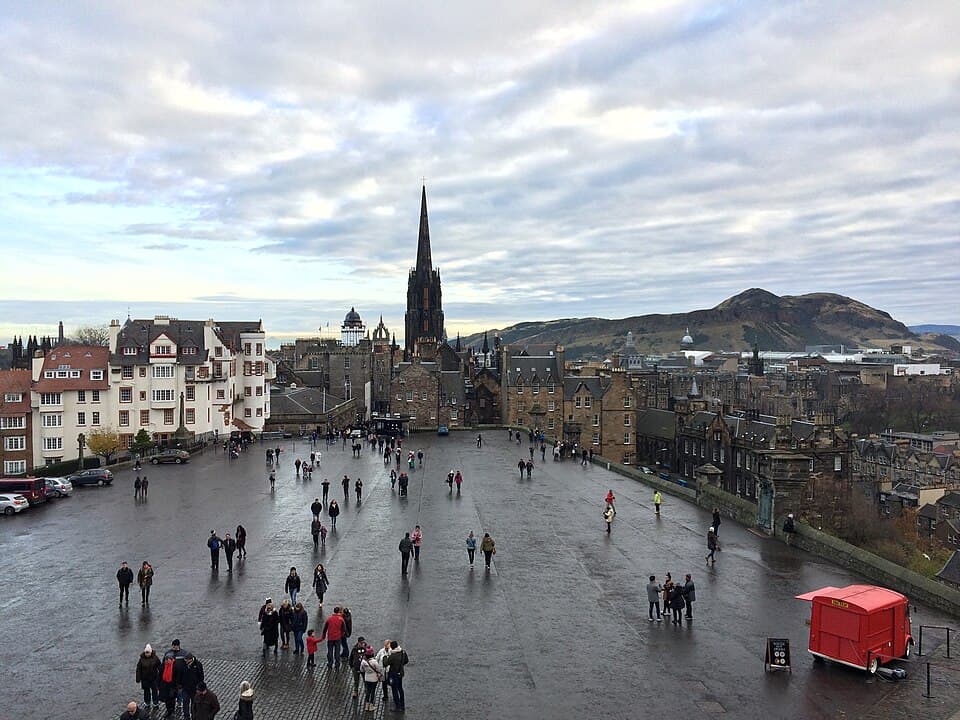
Edinburgh Castle Esplanade
The grand approach to the castle, famous for hosting the Royal Edinburgh Military Tattoo and offering panoramic views of the city.
Edinburgh Castle Esplanade
Welcome to one of the most iconic historical sites in the world. As you stand here on the Esplanade, you are literally standing on top of geological history. This vast, level approach sits upon a volcanic plug known as Castle Rock, which cooled over 350 million years ago. Its sheer, precipitous cliffs made it a natural choice for a fortress, providing defenders with an almost invincible vantage point over the surrounding plains. For centuries, this area was far less welcoming than it is today. In the 16th and 17th centuries, the esplanade was a site of public executions, where convicted criminals and those accused of witchcraft met their end before the city’s crowds. Today, the atmosphere is entirely different. Every August, this space is transformed by grandstands for the Royal Edinburgh Military Tattoo. In this spectacular event, military bands from across the globe perform against the dramatic backdrop of the castle walls. As you walk toward the main gate, take a moment to imagine the contrast between the silence of the ancient volcanic rock beneath your feet and the centuries of human drama that have played out on this very ground, from royal processions to the dark days of medieval justice.
Gate House, Edinburgh Castle
The main entrance to the fortress, built in the 19th century and flanked by statues of Scottish heroes Robert the Bruce and William Wallace.
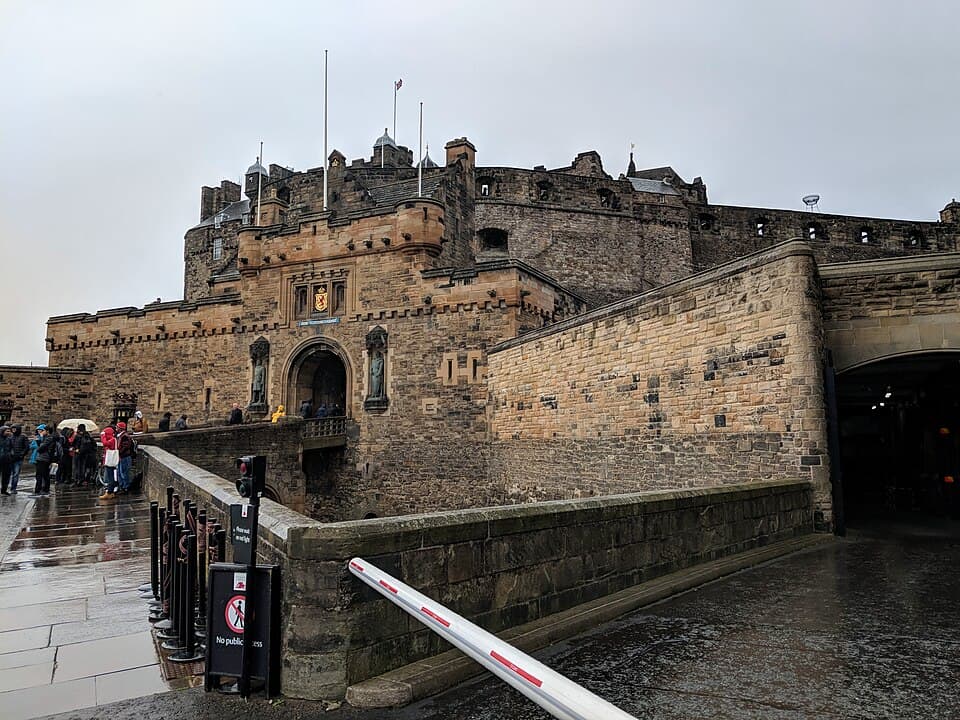
The Gate House
The imposing structure before you is the Gate House, which serves as the primary portal into the castle’s interior. While it looks medieval, this entrance was actually completed in 1888 during a period of romantic Scottish nationalism. It was designed to replace a much simpler entrance and to give the castle a more dramatic, fortress-like appearance for visitors. Take a close look at the two bronze figures standing guard in the niches on either side of the archway. On the left is Robert the Bruce, the king who secured Scottish independence at the Battle of Bannockburn. On the right is William Wallace, the legendary knight who led the resistance during the Wars of Scottish Independence and was immortalized in the film Braveheart. These men are revered as the "Guardians of Scotland." Their presence here emphasizes that this site is the symbolic heart of the Scottish nation. Above the arch, you’ll see the Royal Scots coat of arms, featuring a lion rampant. As you walk through, notice the thickness of the walls and the heavy iron-studded doors. Even though this specific building is a Victorian interpretation, it was designed to harmonize with the older, more rugged defenses that have protected this rock for over a thousand years. It serves as a transition from the public Esplanade into the historical and military core of the fortress.
Argyle Battery, Edinburgh Castle
A major artillery battery providing a strategic vantage point over the north of the city towards the Firth of Forth.
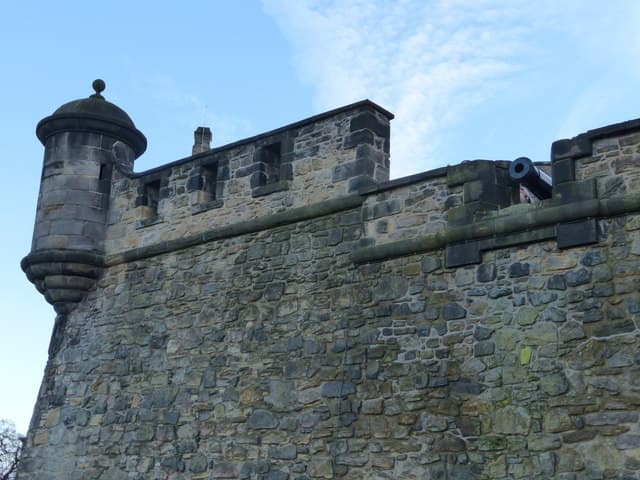
The Argyle Battery
The open terrace you see here is the Argyle Battery, named after the Duke of Argyll. It was constructed in the 1730s as part of a major upgrade to the castle's defenses following the Jacobite risings. The battery holds a line of six heavy iron cannons. These specific guns were manufactured during the Napoleonic Wars in the early 19th century. At that time, there was a genuine fear that French forces under Napoleon might attempt an invasion of the British Isles, and Edinburgh Castle's defenses were kept at a high state of readiness. These cannons are muzzle-loaders, meaning they had to be loaded with gunpowder and iron shot from the front. They were positioned here to cover the northern approaches to the city, providing a clear line of fire toward the Firth of Forth. While they look menacing, they haven't fired a shot in anger for over two centuries. Today, their role is entirely ceremonial and educational. They provide a vivid sense of what life was like for the gunners who once lived and worked on these ramparts. Notice the sturdy iron carriages and the small piles of stone or iron balls nearby. Standing among these massive weapons, you can appreciate the scale of the firepower required to defend such a significant strategic position.
One O'Clock Gun
A world-famous tradition where a field gun is fired almost every day at precisely 1:00 PM to provide a time signal.
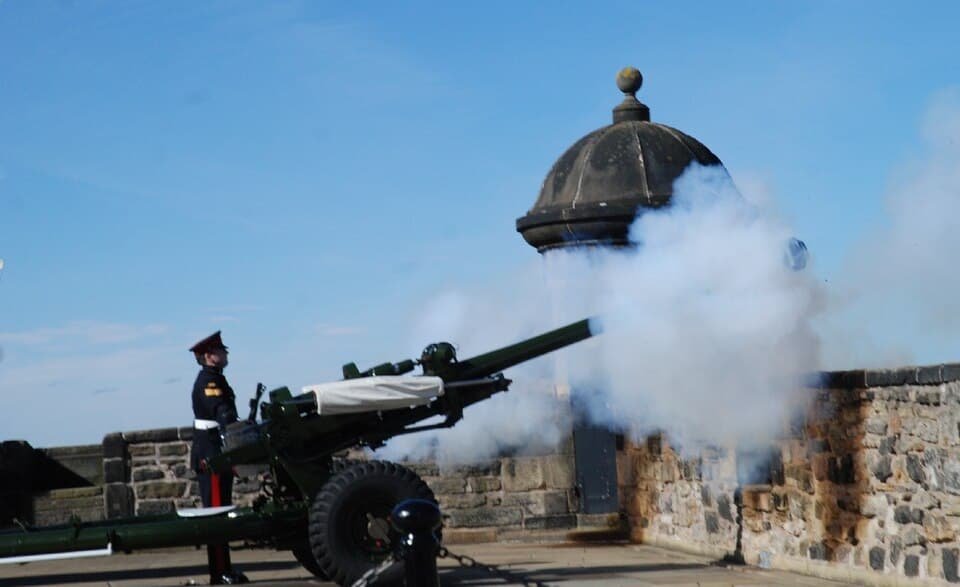
The 105mm Field Gun
While the One O’Clock Gun tradition dates back to the mid-19th century, the weapon used today is a far cry from the heavy iron cannons of the Victorian era. This is a 105mm L118 Light Gun, a versatile and highly mobile artillery piece currently in service with the British Army. It is operated by a specialist crew from the Royal Artillery, who maintain a strict military protocol for every firing. Despite the modern technology, the procedure remains a display of traditional military discipline. The gun is loaded with a blank charge, which contains no projectile but produces the famous, earth-shaking report and a dramatic cloud of white smoke. If you are here when it fires, you will notice the precise coordination of the soldiers and the sharp, sudden sound that can be heard for miles around. Using a modern field gun for this historic duty reflects the castle’s ongoing status as a working military station. It bridges the gap between the fortress's ancient history and its contemporary role in the British armed forces. The gun itself is a testament to the evolution of ballistics, moving from slow-loading, inaccurate iron tubes to this sleek, high-precision machine. It ensures that the "voice" of the castle remains as loud and clear today as it was over 160 years ago.
National War Museum
Located in former military buildings, this museum explores Scotland's military history through artifacts, paintings, and personal accounts.
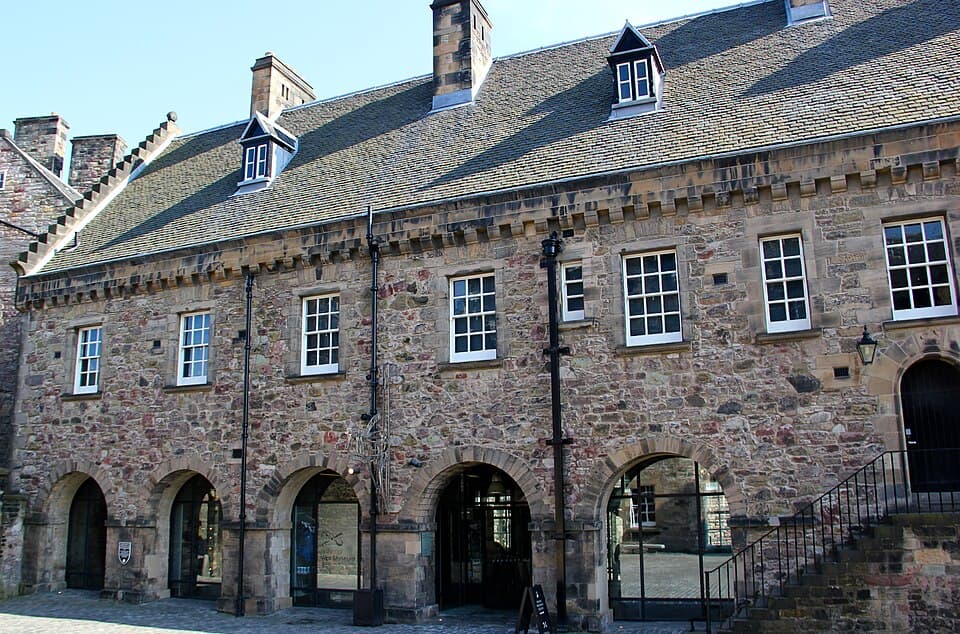
National War Museum
The rugged stone building you see here has a history that reflects the changing needs of the castle. It was originally constructed in the mid-18th century as an ordnance store—a secure warehouse for the vast amounts of gunpowder, shot, and weapons needed to maintain the fortress. Today, its purpose has shifted from storage to storytelling. It now houses the National War Museum, a branch of the National Museums Scotland. Inside, the museum covers over 400 years of Scottish military life, from the Highland clans to the global conflicts of the 20th and 21st centuries. The transformation of this space into a museum is symbolic of the castle's wider shift from an active combat zone to a site of national heritage and education. The thick walls that once protected explosives now protect rare uniforms, medals, and personal letters. By walking through these halls, visitors can trace the evolution of the Scottish soldier, seeing how equipment and tactics changed as the nation moved from internal strife to being a key part of the British Empire's military might. It is a somber and enlightening space that honors the professional and personal lives of those who have defended these lands throughout the centuries.
Governor's House, Edinburgh Castle
A handsome 18th-century residence used by the Governor of the Castle, standing as a fine example of Georgian architecture.
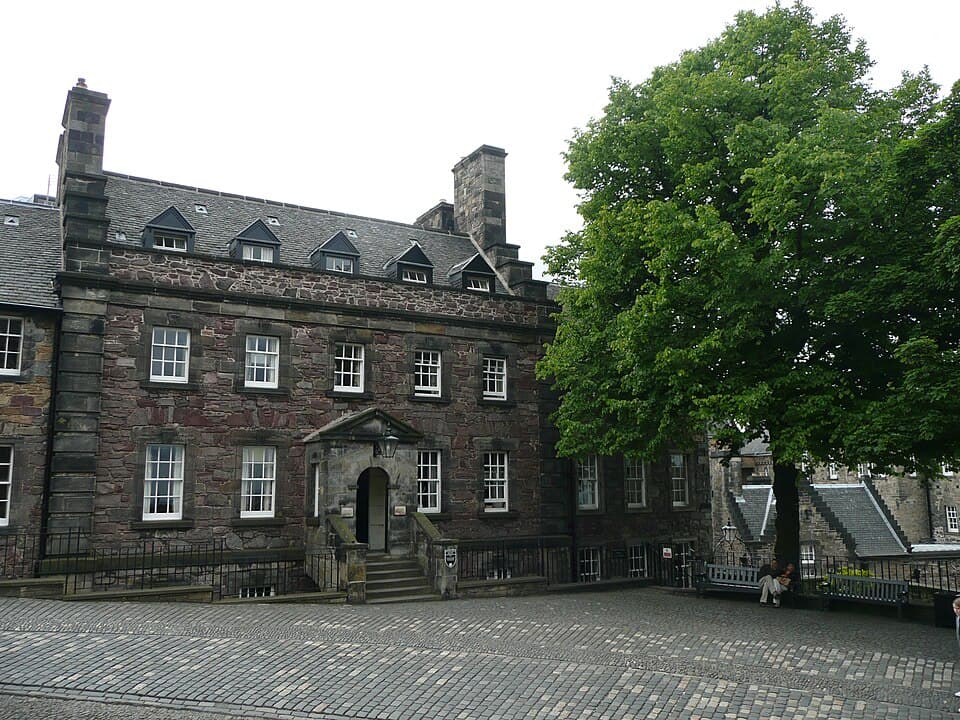
Governor's House, Edinburgh Castle
Nestled within the rugged walls of the fortress is the Governor's House, a fine example of Georgian architecture completed in 1742. At a time when much of the castle was dominated by utilitarian barracks and heavy stone defenses, this house was built to provide a high-ranking officer with a residence befitting his status. Notice the perfect symmetry of the facade, the classical proportions of the windows, and the central doorway. This "Palladian" style was the height of fashion in the mid-18th century, representing order, reason, and social standing. It stands in sharp contrast to the irregular, medieval structures found elsewhere on the rock. Interestingly, the building is still in use today for its original purpose. It serves as the official residence of the Governor of Edinburgh Castle and houses the officers' mess, where senior military personnel dine and socialize. Because it remains a working military facility, the interior is generally not open to the public, but the exterior provides a wonderful glimpse into the domestic side of the castle's 18th-century life. It reminds us that for the garrison officers, the castle wasn't just a place of work or defense—it was a community where social hierarchy and refined living were maintained, even within a high-security military zone.
Foogs Gate, Edinburgh Castle
The inner gate leading into the 'Upper Ward' or Citadel, the highest and oldest part of the castle.
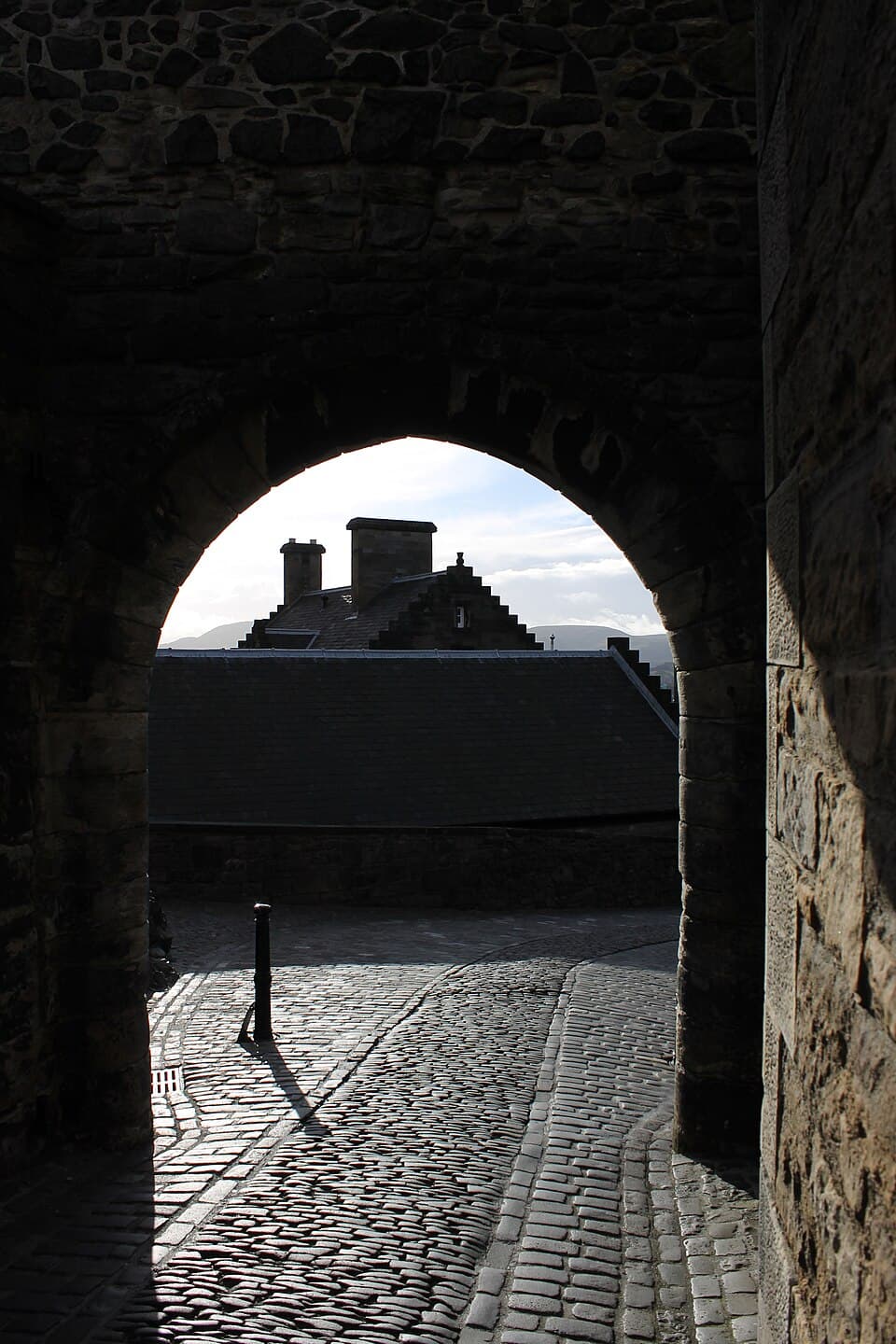
The Citadel Cobblestones
As you walk through the arch of Foogs Gate and ascend toward the summit, take a moment to look down at the ground. You are walking on the original "Citadel Cobblestones." These aren't just decorative; they were a critical piece of military engineering. Because the slope is so steep, ordinary smooth paving would have been treacherous, especially in the wet and icy conditions common in Edinburgh. These stones were intentionally laid in a rough, ribbed pattern to provide maximum traction. Imagine the immense effort it took to haul heavy iron cannons, barrels of gunpowder, and cartloads of supplies up this incline. Teams of horses and groups of soldiers would have relied on the grip provided by these worn stones to prevent their loads from sliding backward. Over the centuries, millions of footsteps—from medieval kings and queens to modern-day tourists—have smoothed and shaped these rocks. You can see the deep grooves and the varying colors of the stone, each one a testament to the passage of time. Walking on these cobblestones provides a visceral connection to the physical labor of the past. It’s a reminder that every part of this castle, even the ground itself, was carefully considered to ensure the fortress remained functional and defensible in the most challenging conditions.
St Margaret's
The oldest surviving building in Edinburgh, this small Romanesque chapel was built around 1130 by King David I.
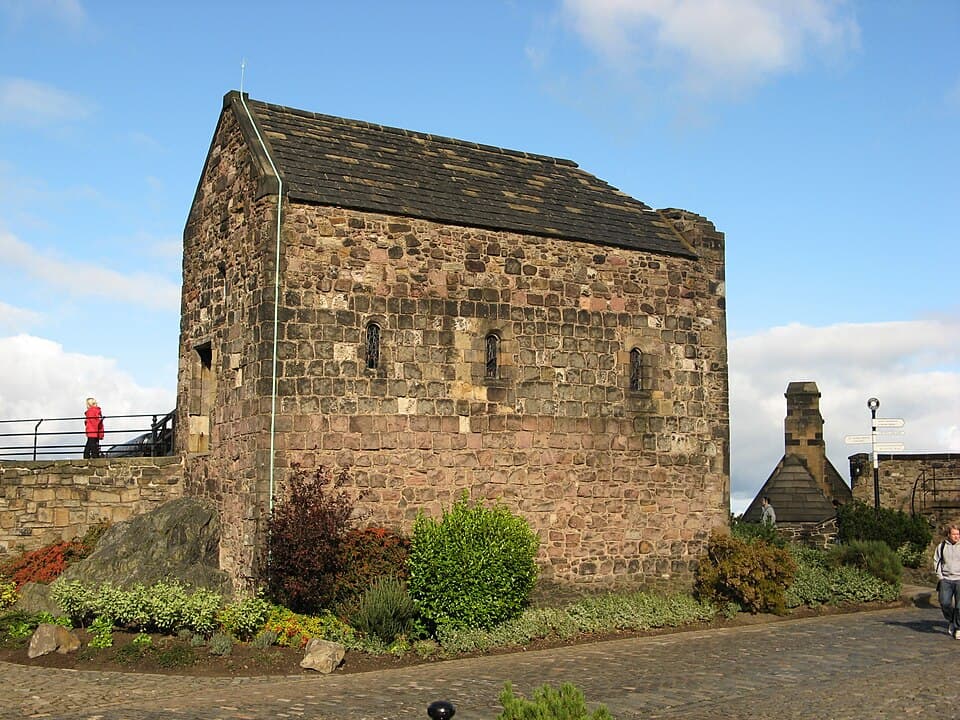
St Margaret's
Standing before you is a true survivor. This modest structure is St Margaret's Chapel, the oldest building not just in the castle, but in all of Edinburgh. It dates back to approximately 1130, built by King David I as a private place of worship for the royal family. He dedicated the sanctuary to his mother, Queen Margaret, who was later canonized for her piety and charity. Despite its prestigious royal origins, the building is remarkably humble. Its dimensions are so petite that it can only accommodate about 20 people at a time. This intimacy was intentional, providing a secluded space for the monarch to pray away from the bustle of the garrison. Over the centuries, the chapel served many roles, even being used as a gunpowder store during the 16th century. It was only in the Victorian era that its significance was rediscovered and the building was restored to its original purpose. Today, its thick stone walls offer a quiet refuge from the winds that whip across the castle rock, standing as a quiet testament to the enduring history of the Scottish monarchy.
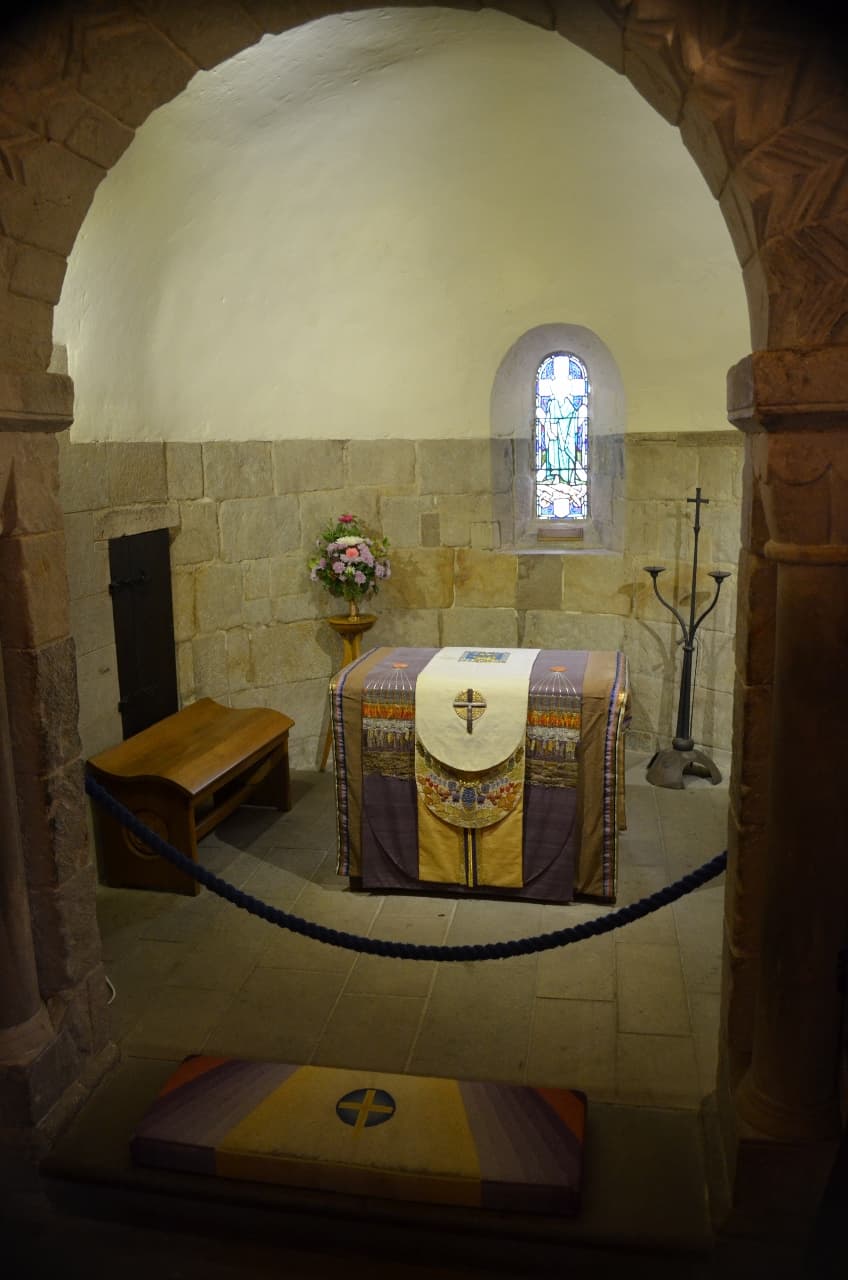
The Chapel Interior
Step inside and you are immediately enveloped by the simple, somber beauty of the Romanesque architectural style. This style, prevalent during the 12th century, is characterized by its heavy masonry and rounded features. Notice the beautifully carved chancel arch that separates the nave from the altar area. Its rounded shape and chevron patterns are quintessential Romanesque details, drawing the eye toward the most sacred part of the chapel. While the stone structure is ancient, look toward the light to see more recent additions. The stained glass windows were crafted in the 20th century, replacing earlier glass lost to time. These vibrant panels depict St. Margaret herself, along with other revered Scottish figures like St. Columba and St. Andrew. The play of light through these windows adds a touch of color to the otherwise monochromatic stone interior. Even today, this ancient room is not a static museum piece; it remains a consecrated space and is a highly sought-after location for intimate wedding ceremonies. To stand here is to be part of a continuous thread of human experience—from medieval kings to modern couples—all sheltered by these same sturdy arches.
Edinburgh Castle, Half Moon Battery
A massive curved defensive wall built in the 1570s following the 'Lang Siege' to protect the castle's eastern approach.
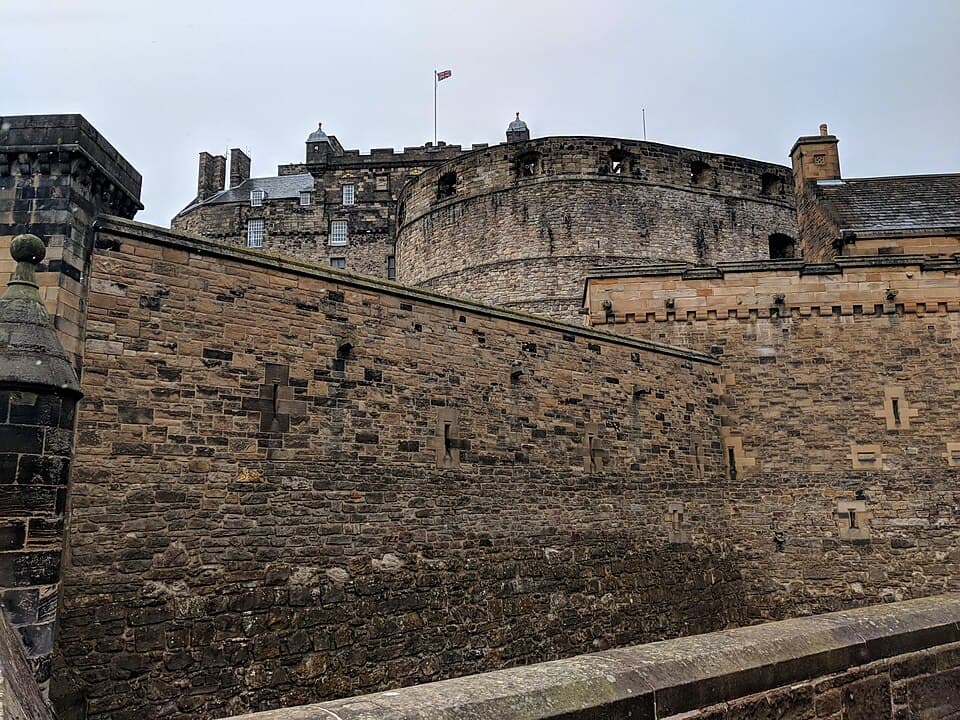
The Half Moon Wall
Look up at the imposing curve of the Half Moon Wall. This formidable structure was built in the late 16th century following the devastating 'Lang Siege' of 1573. During that conflict, heavy artillery fire from the city below battered the castle, ultimately leading to the collapse of the original defensive landmark, David’s Tower. To prevent such a breach from happening again, military engineers designed this specific semi-circular shape to provide a wide, sweeping field of fire for the castle’s own cannons. Standing over the site where the old tower once stood, the wall was engineered to be exceptionally thick to withstand direct hits from modern artillery. It guards the castle’s eastern side, which, despite the sheer cliffs of the rock, was historically the most accessible point for an invading army. As you examine the stonework, imagine the labor required to haul these massive blocks into place at the summit. Today, it remains one of the most recognizable features of the castle's silhouette, a silent testament to the shift from medieval towers to the heavy, low-profile artillery fortifications required in the age of gunpowder.
Want to hear the rest?
Download the Stanza app to unlock all 35 stops and the complete guided audio tour.
Frequently Asked Questions
How long does the Edinburgh Castle audio tour take?
The Edinburgh Castle audio guide includes 35 narrated stops. Most visitors spend 45 minutes to 1.5 hours exploring the complete tour, though you can listen at your own pace and skip or revisit any stop.
Is the Edinburgh Castle audio guide available in my language?
Stanza supports 15 languages: English, Spanish, French, German, Italian, Portuguese, Russian, Japanese, Chinese, Korean, Arabic, Hindi, Polish, Dutch, Hebrew. Check the guide in the app to confirm the languages currently available for this tour.
Can I use the audio guide offline at Edinburgh Castle?
Yes! Download the complete Edinburgh Castle tour — including all audio, maps, and images — before your visit. The Stanza app works completely offline, so you don't need WiFi or mobile data at the venue.
How much does the Edinburgh Castle audio guide cost?
The Stanza app is free to download. The current listed price for the Edinburgh Castle audio guide is $4.99; app-store region and currency may affect the final price.
How do I use the Stanza audio guide at Edinburgh Castle?
Download the free Stanza app, search for "Edinburgh Castle", and download the tour. When you arrive at the venue, the app uses GPS to detect your location and automatically plays the relevant narration as you move between points of interest — completely hands-free.
What makes the Stanza audio guide different from other Edinburgh Castle tours?
Stanza offers GPS-triggered narration that plays automatically as you walk through Edinburgh Castle — no need to manually select stops. The tour is available in 15 languages, works fully offline, and includes 35 expertly narrated stops with images and historical context.
What other audio guides are available near Edinburgh Castle?
Stanza offers multiple audio guides in City of Edinburgh, United Kingdom and nearby areas. After downloading the app, browse the map to discover all available tours near Edinburgh Castle. Each guide can be downloaded for offline use.