Languages
15Glastonbury Abbey Audio Guide
Glastonbury Abbey is a landmark in Glastonbury, United Kingdom. Explore it with Stanza's GPS-triggered offline audio guide — available in 15 languages.
Quick Facts
30
Stops
15
Languages
100%
Offline
📍 Glastonbury, United Kingdom · 51.1467°N, -2.7150°E
About Glastonbury Abbey
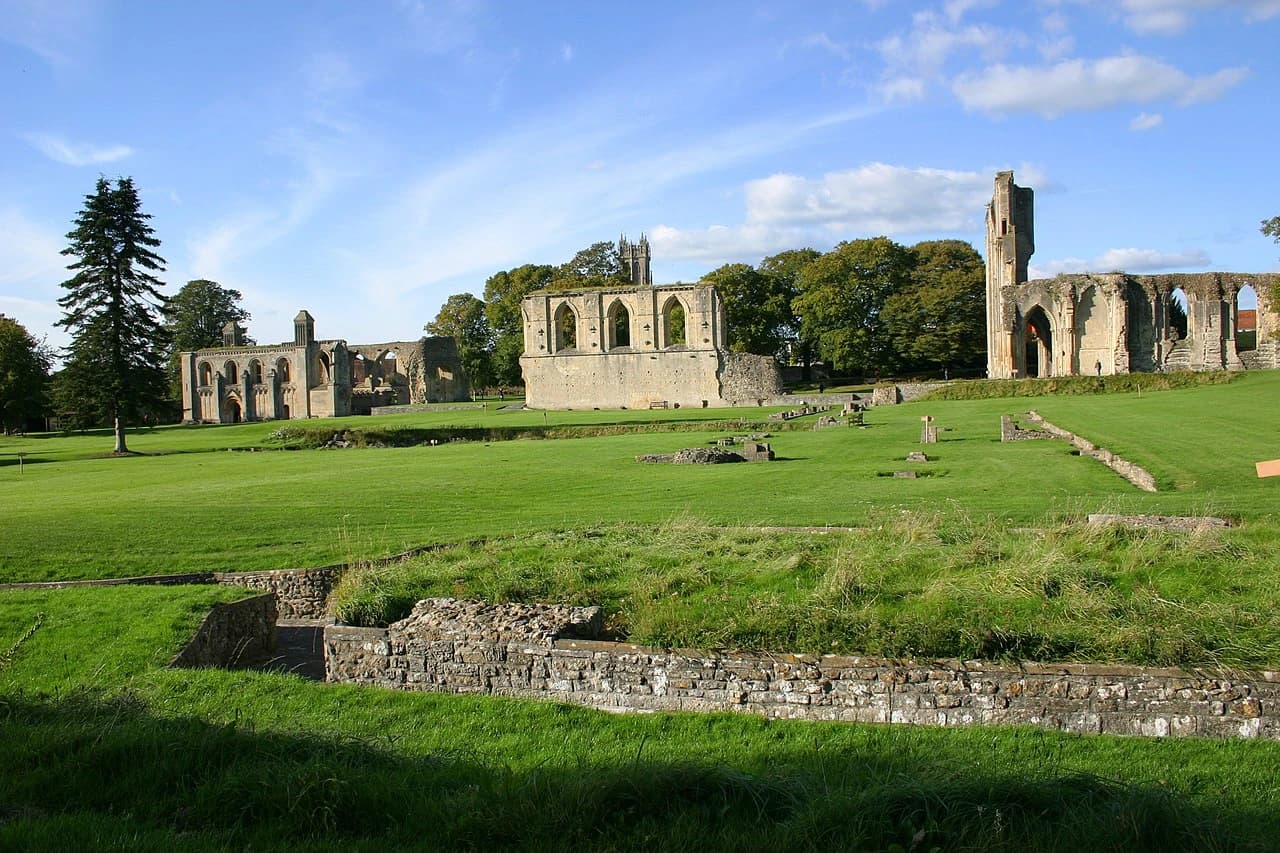
Glastonbury Abbey was a former Benedictine abbey located in Somerset, England. It is now recognized as both a charitable organization and a history museum.
This self-guided audio tour features 30 narrated stops organized across 6 sections, including The Abbey Gatehouse, The Abbey Museum and Sacred Art, The Lady Chapel and Holy Well, The Great Church Nave, The High Altar and the Martyr’s View, The Glastonbury Thorn. As a abbey, Glastonbury Abbey offers a unique cultural experience in the heart of Glastonbury, United Kingdom.
The Stanza audio guide is available in 15 languages and works entirely offline — download the complete tour including audio narration, maps, and images before your visit. As you walk through Glastonbury Abbey, GPS-triggered narration plays automatically at each point of interest.
Last updated:
What you will hear
The Abbey Gatehouse
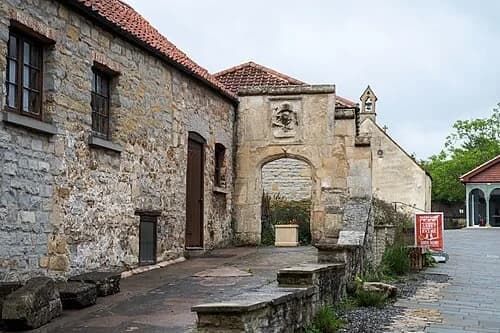
Starting at the 14th-century entrance, this stop establishes the abbey's role as a major pilgrimage destination. Images show the exterior approach and the transition into the parkland.
Inner Gatehouse Court
Entering this court, you are stepping into an area that was once the busy arrival point for pilgrims traveling from across medieval Europe. They came to pay respects at what was traditionally considered the oldest church in England. While many of the ruins visible today date from the 12th century and later, the site’s monastic history begins much earlier. A monastery was first founded here in the 8th century. Historical records indicate that King Ine of Wessex commissioned a stone church on this site in 712, replacing earlier timber structures. This court served as a staging area where travelers would be received, their needs assessed, and their entrance into the more sacred parts of the abbey managed. The atmosphere would have been a mix of languages and social classes, all united by their religious destination. While the buildings around this space have changed or vanished over the centuries, the layout still reflects the controlled movement required for a large monastic community. Notice the thickness of the stone walls that define the boundaries of this inner court.
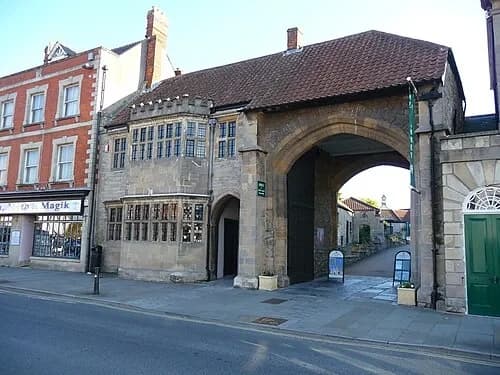
The Main Entrance
The robust stone construction of this gatehouse is a rare example of a monastic building that escaped complete destruction during the 1539 suppression under King Henry VIII. When the monastery was closed and many of its sacred buildings were dismantled or left to decay, this structure was spared because it served a practical, administrative function. It continued to be used for local governance and record-keeping, ensuring its preservation while the great church itself was stripped of its value. You can see the heavy, defensive nature of the stonework, designed to protect the abbey’s immense wealth and maintain order at its primary point of contact with the outside world. The gatehouse acted as a filter, allowing the monks to maintain their enclosure while still managing the complex logistics of their vast estates. Its survival provides a clear look at the architectural style of the 14th century, characterized by its solid, unadorned strength and precise masonry. Small windows and thick walls suggest a space that was as much a fortress as it was an entryway.
The Abbey Museum and Sacred Art
Located near the entrance, the museum houses artifacts and models that reconstruct the abbey's former glory. I have included verified paintings to illustrate the site's enduring legacy in art.
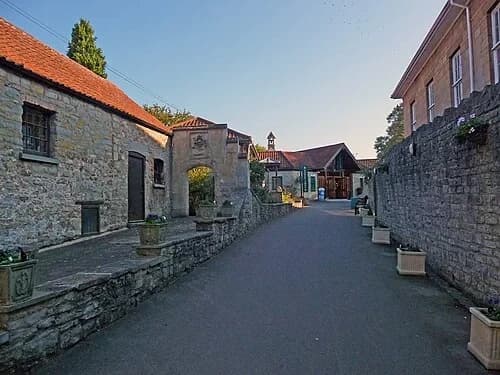
The Abbey Museum
The path ahead leads toward the Abbey Museum, where you can view a wide array of artifacts recovered during archaeological excavations. These objects provide a tangible link to the daily lives of the people who lived and worked here over several centuries. The development of this site was not a single event but a process that spanned more than 700 years. One of the most influential figures in its history was Dunstan, who became abbot in the 10th century and later served as the Archbishop of Canterbury. Under his leadership, the abbey saw significant expansion and a strengthening of monastic discipline that set the stage for its later wealth and power. The museum displays range from domestic pottery used in the kitchens to ornate architectural fragments that once decorated the Great Church. These pieces help reconstruct a picture of a community that was both a center of deep religious devotion and a massive economic engine. As you move toward the museum, look for the changes in the terrain that mark where various monastic buildings once stood.

Resurrection
Januarius Zick · panel, oil paint
Spiritual devotion was the foundation of everything that happened within these walls, and religious art like this painting of the Resurrection depicts the core beliefs that governed monastic life. The monks who lived here followed a strict, unwavering schedule known as the Rule of Saint Benedict. Their days and nights were divided into precise segments dedicated to prayer, work, and study. They would rise in the middle of the night for the first of eight daily services, returning to the church at regular intervals until the final prayers before sleep. This constant cycle of worship was intended to keep the community focused on their spiritual goals and the themes shown in the artwork. Beyond the church, monks engaged in manual labor, such as gardening or manuscript illumination, and spent significant time in silent study and contemplation in the cloisters. The life was one of discipline and communal effort, where personal identity was submerged into the identity of the abbey. This painting serves as a reminder of the internal, quiet world that existed behind the grand architecture and political power of the institution.
The Lady Chapel and Holy Well
The spiritual heart of the abbey, built on the site of the legendary 'Old Church'. This area covers the intricate Romanesque architecture and the subterranean Holy Well.
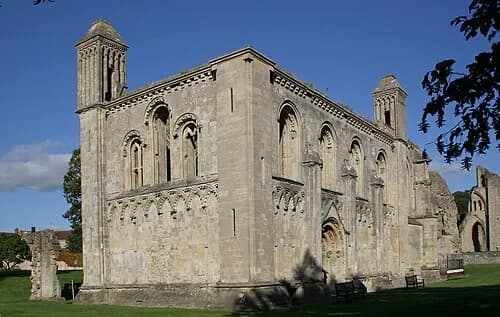
The Lady Chapel
The Lady Chapel is one of the most significant surviving structures on the site, consecrated in 1186. Its construction was a direct response to a devastating fire in 1184 that razed the ancient 'Old Church,' which tradition claimed was the earliest Christian site in Britain. To honor that heritage, the new chapel was built exactly on the same footprint. As you look at the exterior, notice the rounded Romanesque arches, which were characteristic of the period just before the transition to pointed Gothic styles. The facade is notable for its intricate decorative stone carvings, featuring patterns and figures that would have once been even more vibrant and detailed. This chapel was built with incredible speed and craftsmanship to provide the monks with a place to continue their devotions while the rest of the Great Church was being reconstructed. The quality of the stonework reflects the abbey's determination to rebuild its spiritual heart with even greater splendor than before. Small, narrow windows and thick buttresses give the building a sense of permanence and strength, standing as a primary example of high-quality late 12th-century masonry.
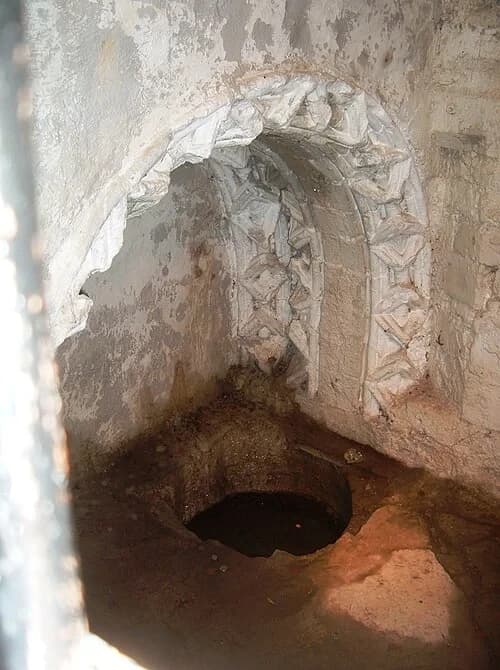
The Holy Well
Beneath the floor of the Lady Chapel lies a subterranean well, a feature that predates the 12th-century stone architecture you see around it. This water source is central to the earliest Christian traditions associated with Glastonbury, with legends suggesting it was a site of baptism and worship long before the first monastery was established. The well is accessed through a small opening surrounded by an intricately carved stone arch, demonstrating the importance the medieval builders placed on this ancient feature. Water has always played a significant role in the spiritual identity of the site, and the inclusion of the well within the chapel's foundations ensured that these ancient traditions were physically integrated into the new building. The cool, dark space of the well chamber contrasts with the open ruins above, providing a direct link to the site's hidden history. Even today, the presence of the well adds a layer of mystery and continuity to the abbey, connecting the high medieval period back to the origins of the faith in Britain. You can see the precision of the stone joints in the arch, which has protected the well opening for over eight centuries.
The Great Church Nave
Here, the scale of the 220-foot-long church becomes apparent. The towering arches represent the wealth and power of the Benedictine monks.
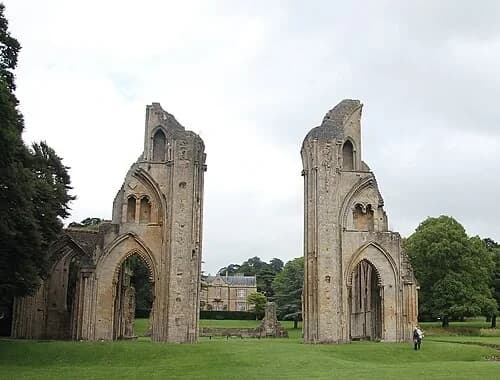
Arches of the Great Church
The sheer height and mass of these surviving pillars give a clear indication of the immense scale of the Great Church. These structures were designed to support a massive central crossing tower that would have dominated the skyline for miles around. Their construction represents the extraordinary architectural ambition of the Norman abbots, particularly figures like Herlewin in the early 12th century. They aimed to create a monastery that could rival the most magnificent cathedrals of continental Europe in both size and sophistication. As you look up, you can see the points where the arches began to spring from the pillars, hinting at the complex network of stone vaulting that once covered the nave and transepts. The precision required to balance such enormous weights on these vertical supports was at the cutting edge of medieval engineering. While only fragments remain, the verticality of the pillars continues to draw the eye upward, just as it was intended to do for the monks and pilgrims who stood here centuries ago. The stone itself shows signs of weathering, yet the core of the pillars remains evidence of the skill of the masons who shaped them.
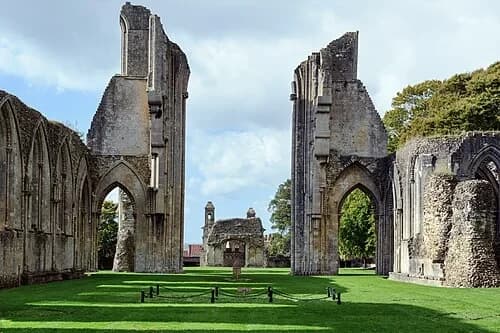
The Great Nave
This long stretch of grass marks the exact location of the Great Nave, which once extended 220 feet from the entrance to the crossing. In its prime, this space was enclosed by high stone walls and a vaulted roof, creating a vast and resonant environment for religious services. The change you see today is a result of the 1539 suppression. After the monastery was closed, the most valuable materials were the first to be removed. Workers stripped the lead from the roof to be melted down and sold, leaving the interior of the church exposed to the wind and rain. Without the protection of the roof, the stone structure began a slow process of decay and collapse. The grass floor beneath your feet covers what would have been a paved stone interior, possibly decorated with the tombs of prominent benefactors. Looking down the length of the nave, you can imagine the rows of pillars that would have lined each side, creating aisles and guiding the gaze toward the high altar. The empty space serves as a stark reminder of how quickly a massive and permanent structure could be dismantled once its original purpose was removed.
The High Altar and the Martyr’s View
The sacred center of the church and the location of the final Abbot's tragedy. From here, visitors can see Glastonbury Tor, where Richard Whiting was executed.
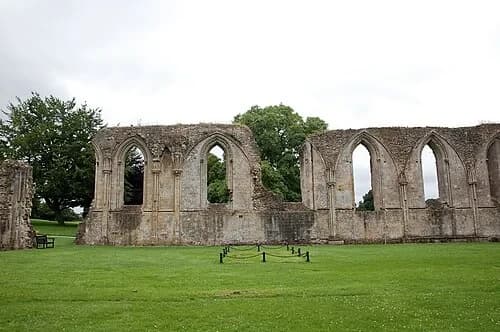
The High Altar
In the liturgical center of the Great Church, you are standing where the high altar once rose as the most sacred spot in the monastery. During the Middle Ages, every eye in the vast nave would have been focused here as the monks performed elaborate daily masses. While only the foundation remains today, the surrounding transept walls provide a glimpse into the architectural scale of the church. These walls would have stretched much higher than they appear now, supporting a massive roof that enclosed the sanctuary in a space designed for religious ceremony. The monks' lives revolved around the activities at this altar, which served as the physical and spiritual anchor for the entire community. The height of the surviving stonework hints at the vertical ambition of the medieval builders, who sought to create a setting that reflected the divine significance of the sacraments performed on this very spot. Every detail of the church’s design, from the orientation to the acoustic properties of the stone, was optimized for the services conducted here.
The Glastonbury Thorn
A living legend, this hawthorn tree is said to have sprung from the staff of Joseph of Arimathea. It remains a symbol of the site's ancient Christian roots.
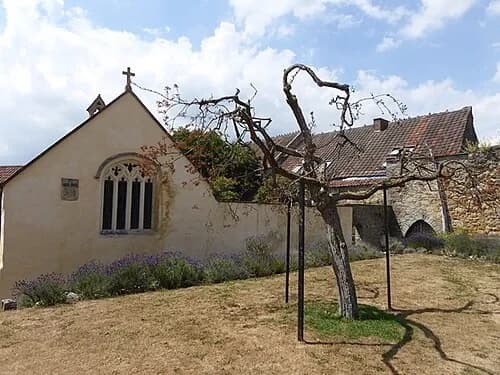
The Glastonbury Thorn
This specific type of hawthorn tree is central to one of the most famous legends of Glastonbury. According to tradition, the original Holy Thorn sprouted from the staff of Joseph of Arimathea when he struck it into the ground upon arriving in Britain. Biologically, this tree is a rare variety of Crataegus monogyna, which is unique for flowering twice every year: once in the spring and again in the middle of winter. This unusual blooming pattern was seen by medieval pilgrims as a miraculous sign. While the original tree is long gone, its descendants have been carefully grafted and replanted across the abbey grounds and the town for centuries. The winter flowering, which often occurs around Christmas, continues to be a point of fascination and local pride. It connects the natural landscape of the abbey to the deep mythological roots that claim Glastonbury as one of the oldest Christian sites in England. The presence of the thorn reminds us how tightly intertwined religious stories and natural wonders became in the minds of those who visited this site over the last millennium.
Want to hear the rest?
Download the Stanza app to unlock all 30 stops and full GPS-guided navigation.
Frequently Asked Questions
How long does the Glastonbury Abbey audio tour take?
The Glastonbury Abbey audio guide includes 30 narrated stops. Most visitors spend 45 minutes to 1.5 hours exploring the complete tour, though you can listen at your own pace and skip or revisit any stop.
Is the Glastonbury Abbey audio guide available in my language?
Stanza supports 15 languages: English, Spanish, French, German, Italian, Portuguese, Russian, Japanese, Chinese, Korean, Arabic, Hindi, Polish, Dutch, Hebrew. Check the guide in the app to confirm the languages currently available for this tour.
Can I use the audio guide offline at Glastonbury Abbey?
Yes! Download the complete Glastonbury Abbey tour — including all audio, maps, and images — before your visit. The Stanza app works completely offline, so you don't need WiFi or mobile data at the venue.
How much does the Glastonbury Abbey audio guide cost?
The Stanza app is free to download. The current listed price for the Glastonbury Abbey audio guide is $0.99; app-store region and currency may affect the final price.
How do I use the Stanza audio guide at Glastonbury Abbey?
Download the free Stanza app, search for "Glastonbury Abbey", and download the tour. When you arrive at the venue, the app uses GPS to detect your location and automatically plays the relevant narration as you move between points of interest — completely hands-free.
What makes the Stanza audio guide different from other Glastonbury Abbey tours?
Stanza offers GPS-triggered narration that plays automatically as you walk through Glastonbury Abbey — no need to manually select stops. The tour is available in 15 languages, works fully offline, and includes 30 expertly narrated stops with images and historical context.
What other audio guides are available near Glastonbury Abbey?
Stanza offers multiple audio guides in Glastonbury, United Kingdom and nearby areas. After downloading the app, browse the map to discover all available tours near Glastonbury Abbey. Each guide can be downloaded for offline use.