Languages
15Royal Pavilion Audio Guide
Royal Pavilion is a landmark in Hove, United Kingdom. Explore it with Stanza's GPS-triggered offline audio guide — available in 15 languages.
Quick Facts
25
Stops
15
Languages
100%
Offline
📍 Hove, United Kingdom · 50.8224°N, -0.1377°E
About Royal Pavilion
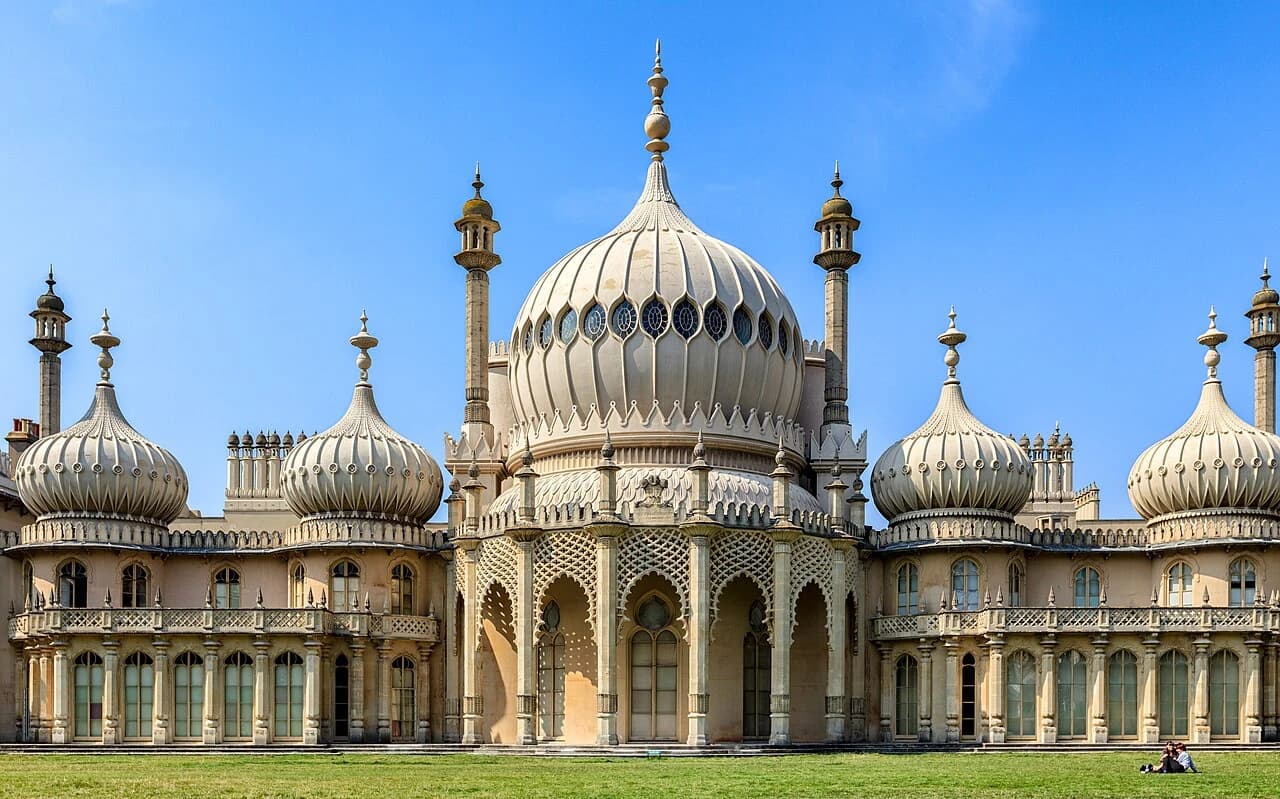
The Royal Pavilion is a former royal residence built as a seaside pleasure palace for King George IV. It is renowned for its unique Indo-Saracenic architectural style and lavish Chinoiserie interiors.
Royal Pavilion is also known as Brighton Pavilion, The Royal Pavilion.
This self-guided audio tour features 25 narrated stops organized across 7 sections. As a palace, Royal Pavilion offers a unique cultural experience in the heart of Hove, United Kingdom.
The Stanza audio guide is available in 15 languages and works entirely offline — download the complete tour including audio narration, maps, and images before your visit. As you walk through Royal Pavilion, GPS-triggered narration plays automatically at each point of interest.
Last updated:
What you will hear
King George IV and the Regency Vision
This stop introduces the man behind the palace. The statue and surrounding facade highlight the Prince Regent's personal taste for luxury and exoticism.

Statue of George IV
Francis Legatt Chantrey · 1828 · bronze, granite
Standing on its pedestal, this figure captures the likeness of King George IV, the monarch who transformed a modest farmhouse into the spectacular palace you see today. Long before he was king, George served as the Prince Regent, earning the nickname the 'First Gentleman of Europe' for his sophisticated manners and exquisite, if expensive, tastes. However, his private life was often the subject of public gossip. Perhaps his most famous scandal was his secret and illegal marriage to Maria Fitzherbert in 1785. Because she was a Catholic and the marriage lacked royal consent, it was never legally recognized, yet George remained deeply attached to her for many years. His life was a constant pursuit of the finest things, from art and fashion to elaborate banquets and ambitious building projects. While his spending habits often brought him into conflict with Parliament, his passion for design left a lasting mark on British culture. This statue presents him in a dignified manner, but history remembers him as a complex individual whose personal extravagances and social transgressions were as grand as the architecture he commissioned.
The Indo-Saracenic Fantasy
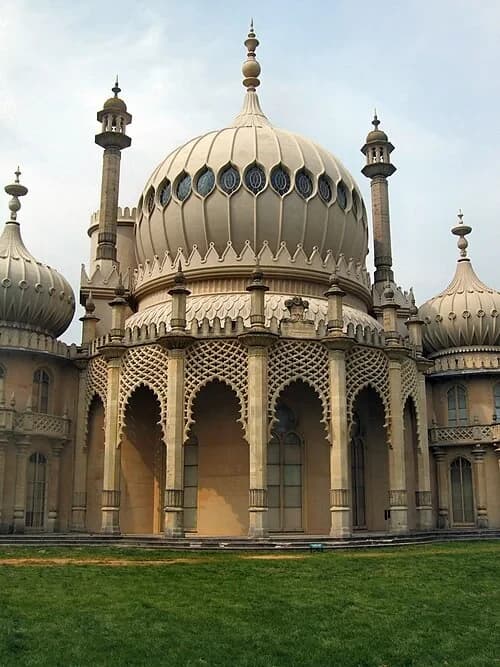
The exterior is a unique blend of Mughal and Islamic styles. These images showcase the signature onion domes and minarets designed by John Nash.
Islamic Influences
The exterior of the palace is rich with Islamic architectural motifs, most notably the slender minarets that rise into the sky and the intricate screen work covering the windows. These features were not merely decorative; they were made possible by John Nash's innovative use of iron frames. By utilizing a hidden internal structure of iron, Nash could support these tall, thin towers and heavy stone screens in ways that traditional masonry could not achieve. This engineering allowed for a much higher level of detail and a lightness of form that characterizes the Indo-Saracenic style. The stone screens, or jalis, were designed to filter light and provide privacy, echoing the functional beauty of palaces in India and the Middle East. At the Royal Pavilion, they serve to heighten the sense of mystery and exoticism for those looking in from the outside. The combination of industrial-age technology with centuries-old aesthetic traditions created a building that was both ancient in appearance and thoroughly modern in its construction. This successful integration of global influences helped define the specific, eclectic luxury that King George IV desired for his seaside retreat.
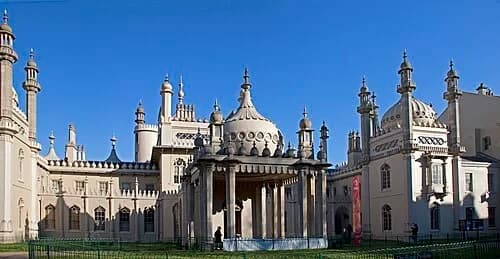
The Royal Pavilion Facade
The building you see today did not appear overnight; it evolved through three distinct stages over nearly four decades. It began as a small farmhouse, was transformed into a neoclassical villa, and finally became the elaborate orientalist palace designed by John Nash. The result is a striking horizontal facade punctuated by minarets and domes that create a unique, dreamlike skyline. However, its survival was never guaranteed. After the royal family moved their primary residences elsewhere, the building faced the threat of demolition. In a landmark decision in 1850, the town of Brighton stepped in and purchased the entire palace from the government for £53,000. This act of preservation by the local community saved the structure for future generations, allowing it to remain the centerpiece of the city. The facade’s intricate details and sweeping proportions reflect the height of Regency ambition, combining elements from various cultures into a singular, cohesive vision. Its silhouette remains one of the most recognizable in the United Kingdom, standing as a physical record of George IV’s changing tastes and the enduring civic pride of the people of Brighton.
The Entrance Hall
Stepping inside, the transition from the exotic exterior to the interior begins. This area shows the original design intent for the royal entryway.
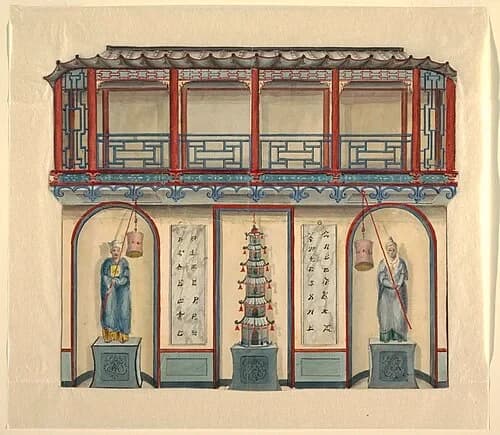
Sketch of the Entrance Hall
Before the exterior underwent its final transformation into the Indo-Saracenic style, the interiors were already embracing a trend known as Chinoiserie. This was a uniquely European aesthetic that drew inspiration from Chinese art and motifs, often blending them with traditional Western design. In this historical drawing, you can see the early plans for the entrance, featuring pagodas, figures in traditional Chinese dress, and elaborate lanterns. These elements were intended to create an immediate atmosphere of opulence and wonder for arriving guests. Chinoiserie was highly popular among the British elite during the 18th and early 19th centuries, representing a fascination with the 'East' as a land of luxury and mystery. The figures and architectural shapes depicted here were not necessarily accurate representations of Chinese culture but were part of a decorative fantasy curated for the King’s pleasure. This sketch serves as an important record of how the design evolved, showing that the exotic themes that dominate the Pavilion today were established from the very beginning of its interior decoration. It provided a roadmap for the transition from the sunny English gardens to the stylized world found within.
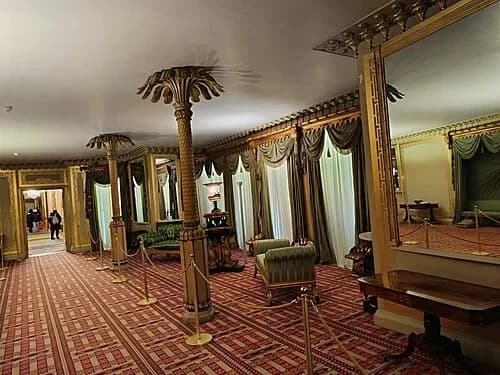
The Entrance Hall
Moving inside, the Entrance Hall serves as a calm transition between the exterior grounds and the more vibrant state rooms beyond. The space is characterized by its soothing sea-green color scheme, creating a refreshing atmosphere. The most striking features of this room are the columns shaped like palm trees. While they look like naturalistic carvings, they are actually made of cast iron, a material that was revolutionary for domestic decoration at the time. This choice allowed for the creation of slender, elegant supports that could hold the weight of the structure while maintaining a whimsical, exotic appearance. By painting and detailing the iron to resemble palm trunks and fronds, the designers successfully combined industrial innovation with a sense of decorative play. This hall established a theme that repeats throughout the palace: the use of modern materials to bring a royal fantasy to life. The palm motif was particularly popular in Regency design as a symbol of far-off, tropical locales. It sets the stage for the increasingly elaborate Chinese-inspired decor that visitors would encounter as they progressed deeper into the King's private world.
The Banqueting Room
This is the height of Regency opulence. The images focus on the massive chandelier and the tented ceiling, a structural marvel of the era.
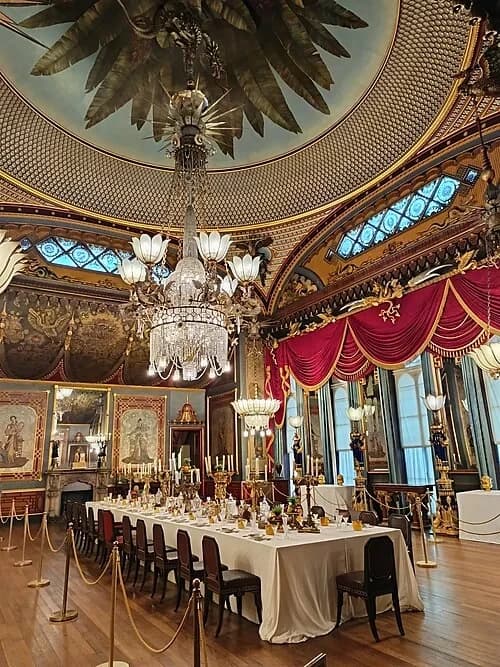
The Banqueting Room
The Banqueting Room was the ultimate stage for George IV’s legendary hospitality. Here, dining was transformed into an elaborate form of social theater, intended to impress and overwhelm guests. A typical royal banquet could feature more than twenty-four courses, ranging from elaborate fish dishes to complex pastries, served over several hours. The setting was carefully orchestrated to maximize this effect, with a massive table often laden with fine silver and porcelain. The King was known to be a dedicated host, personally overseeing many of the details to ensure his guests were treated to a spectacle of taste and luxury. The atmosphere was one of intense social interaction, where the elite of the Regency era gathered to see and be seen. The layout of the room, with its high ceilings and rich decorations, was designed to handle the heat and activity of such a large-scale event while maintaining a sense of regal grandeur. Every element, from the placement of the chairs to the lighting above, contributed to a carefully curated experience of royal power and sophisticated pleasure that defined the King's time in Brighton.
The Great Kitchen
The kitchen was a state-of-the-art facility for its time. These images highlight the copper cookware and the scale of food preparation required for royal guests.
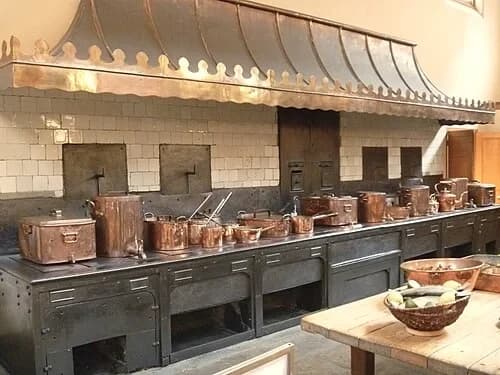
Copper in the Kitchen
The kitchen at the Royal Pavilion was not just a place for work; it was a showpiece of modern technology that George IV proudly displayed to his guests. A key feature of this culinary hub was the vast collection of over five hundred copper pots and pans, which you can see arranged on the shelves today. During the 19th century, copper was the preferred material for high-end cooking because of its excellent heat conductivity and durability. Keeping such a large collection polished and ready for use required constant labor, serving as a visual testament to the kitchen's high standards of cleanliness and efficiency. This facility was considered 'state-of-the-art' for its time, designed to meet the demands of the King’s enormous and complex banquets. By allowing visitors to tour the kitchen, the King was demonstrating that his palace was at the forefront of modern living, where even the behind-the-scenes logistics were handled with a sense of order and grandeur. The sheer volume of equipment speaks to the scale of production required to serve a court that valued gourmet dining as one of the highest forms of social expression.
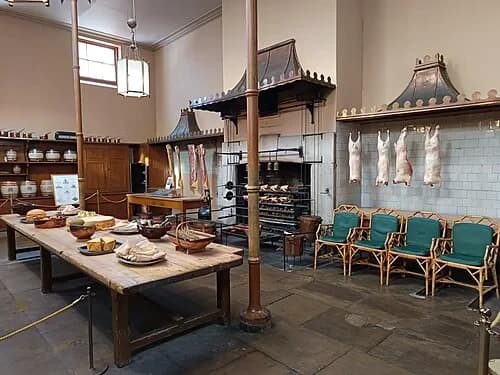
The Great Kitchen
The Great Kitchen is filled with features that were revolutionary in the 1820s. Notice the clockwork spits near the hearths, which used a system of pulleys and weights to rotate meat automatically, ensuring an even roast—a major advancement over hand-turning. The room also features four cast-iron columns shaped like palm trees, mirroring the decorative themes found in the state rooms and proving that even functional spaces were subject to the King's aesthetic vision. George IV was a true gourmet who spared no expense on his kitchen staff. He famously employed Antonin Carême, one of the first 'celebrity chefs' in history. Carême is a foundational figure in French haute cuisine, credited with inventing the modern 'toque' hat and categorizing the four 'mother sauces' that still form the basis of professional cooking today. Under his direction, the kitchen became a laboratory for culinary excellence, producing dishes that were as much works of art as they were meals. The high ceilings and large windows were practical additions, designed to vent the heat and smoke generated by the massive cooking fires. This space remains a testament to a time when culinary science and royal luxury were inextricably linked.
The Music Room
Designed for the King's love of music, this room features dramatic golden dragons and another spectacular tented ceiling.
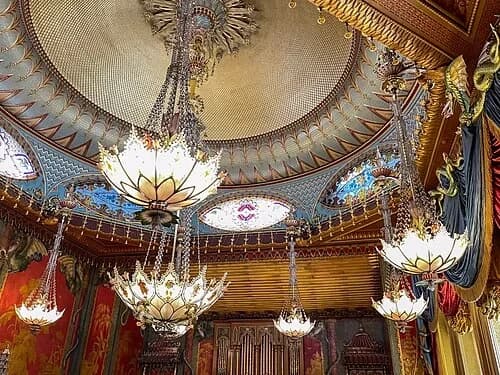
The Music Room Ceiling
The ceiling of the Music Room is one of the most impressive structural achievements within the palace. To create this vast, open space without the need for supporting columns, architect John Nash employed a pioneering technique using laminated timber and iron connectors. This allowed for the construction of a wide, 'tented' dome that seems to float effortlessly above the room. The decorative finish is equally remarkable, featuring thousands of individual plaster scales, each one carefully gilded to create a shimmering, skin-like texture that covers the entire interior of the dome. This effect was designed to catch the light from the chandeliers, creating a sense of movement and brilliance as guests looked upward. The scale pattern reinforces the room’s draconic and serpentine motifs, adding to the feeling of being inside a fantastical, exotic structure. By combining these advanced engineering methods with meticulous handcrafted detail, Nash created a space that was both a technical triumph and a masterpiece of interior design. It reflects the Regency era’s fascination with pushing the boundaries of what was possible in architecture, all to serve the King’s desire for a truly unique and awe-inspiring environment for his musical performances.
The North Gallery
Also known as the Chinese Gallery, this long corridor connected the state rooms and featured elaborate hand-painted wallpaper.
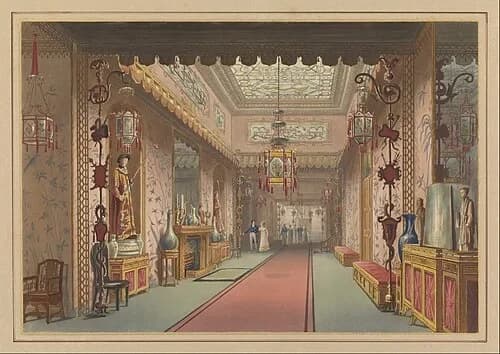
The Gallery in Bloom
Looking at this historical illustration allows us to see how the gallery functioned during its prime. While the grand state rooms were for public display and formal events, this corridor offered a more discreet setting. It was the perfect environment for palace gossip, political maneuvering, and private conversations away from the main festivities. The illustration highlights the vibrant 'sea-pink' color scheme that was a hallmark of the Regency interior. This specific shade of pink, paired with the blue and green accents of the wallpaper, created a warm and inviting atmosphere. You can also see the elaborate Chinese-style lanterns hanging from the ceiling, their tassels and painted glass panels adding to the exotic feel of the space. These lanterns provided a soft, localized light that suited the intimate nature of the corridor. Comparing the artwork to the room today, it is clear how much care has been taken to preserve the original aesthetic. The furniture, including the bamboo-style chairs and benches, was designed to be both stylish and functional, providing spots for guests to linger and exchange the latest news from London.
Want to hear the rest?
Download the Stanza app to unlock all 25 stops and full GPS-guided navigation.
Frequently Asked Questions
How long does the Royal Pavilion audio tour take?
The Royal Pavilion audio guide includes 25 narrated stops. Most visitors spend 45 minutes to 1.5 hours exploring the complete tour, though you can listen at your own pace and skip or revisit any stop.
Is the Royal Pavilion audio guide available in my language?
Stanza supports 15 languages: English, Spanish, French, German, Italian, Portuguese, Russian, Japanese, Chinese, Korean, Arabic, Hindi, Polish, Dutch, Hebrew. Check the guide in the app to confirm the languages currently available for this tour.
Can I use the audio guide offline at Royal Pavilion?
Yes! Download the complete Royal Pavilion tour — including all audio, maps, and images — before your visit. The Stanza app works completely offline, so you don't need WiFi or mobile data at the venue.
How much does the Royal Pavilion audio guide cost?
The Stanza app is free to download. Free and paid audio guides are available; current prices are shown in the app.
How do I use the Stanza audio guide at Royal Pavilion?
Download the free Stanza app, search for "Royal Pavilion", and download the tour. When you arrive at the venue, the app uses GPS to detect your location and automatically plays the relevant narration as you move between points of interest — completely hands-free.
What makes the Stanza audio guide different from other Royal Pavilion tours?
Stanza offers GPS-triggered narration that plays automatically as you walk through Royal Pavilion — no need to manually select stops. The tour is available in 15 languages, works fully offline, and includes 25 expertly narrated stops with images and historical context.
What other audio guides are available near Royal Pavilion?
Stanza offers multiple audio guides in Hove, United Kingdom and nearby areas. After downloading the app, browse the map to discover all available tours near Royal Pavilion. Each guide can be downloaded for offline use.