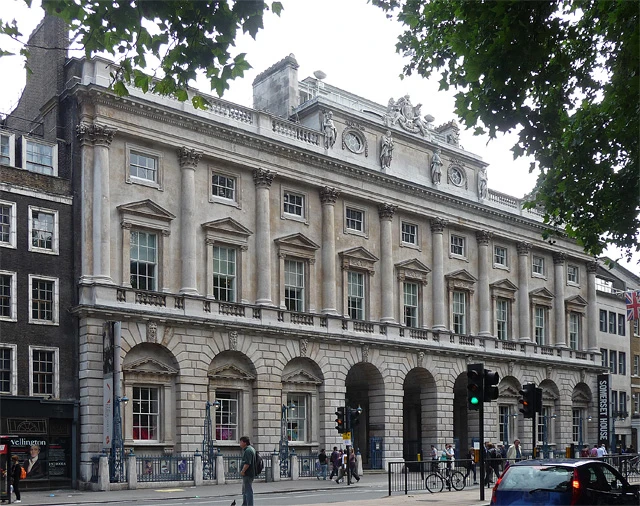
Stanza · Audio guide
Courtauld Institute of ArtAudio guide
A place to remember. A story to take with you.
The Courtauld Institute of Art is a public university and a higher education institution in London, specializing in the study of art history and conservation.
Download Stanza, then search for “Courtauld Institute of Art”.
About the tour
One guide. Your kind of visit.
The Courtauld Institute of Art is a public university and a higher education institution in London, specializing in the study of art history and conservation.
Ready when you are.
- 01Get the free Stanza app.
iOS & Android
- 02Find your guide.
“Courtauld Institute of Art”
- 03Download before you go.
Works offline
Audio guide / 439 narrated stops
Inside the guide
Get to know a few of the stories before you go. Open a stop to read more.
01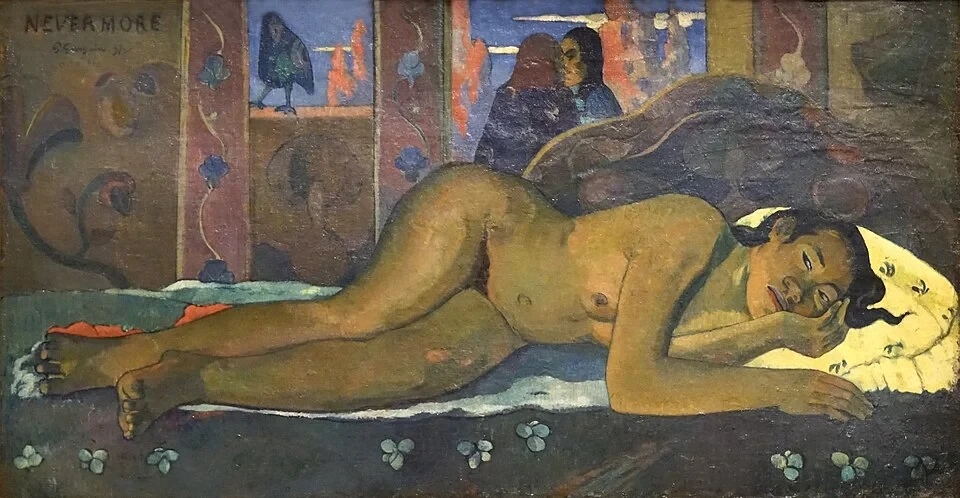 Nevermore
In 1897, Paul Gauguin painted this reclining nude during his second stay in Tahiti. The subject is Pahura, Gauguin's young Tahitian partner. She lies across a patterned bed, her gaze uneasy and alert rather than sleeping. The title, inscribed in the upper left, directly references Edgar Allan Poe’s famous poem, "The Raven." Just behind the girl, a dark, raven-like bird perches on a shelf, reinforcing a sense of melancholy or foreboding. Two mysterious figures talk in the doorway in the background, their presence adding to a mood of suspicion or surveillance. Gauguin used flat areas of color and heavy outlines to break away from European naturalism. He intended the painting to capture a sense of innocence lost under French colonial rule. The rich purples, ochres, and deep blues create a somber, heavy atmosphere. Unlike traditional Western nudes of the period, the figure here is not presented as an object of simple beauty. Instead, she appears burdened by anxiety. Gauguin wrote that he wanted to suggest "a certain long-vanished barbarian luxury." He painted this work while mourning the death of his daughter, Aline, which may explain the pervasive sense of grief. The dark bird serves as a silent witness to this fading world. The artist's signature and the year are clearly inscribed just below the title in the upper left corner.
Jean-Pierre Dalbéra from Paris, France · CC BY 2.0
02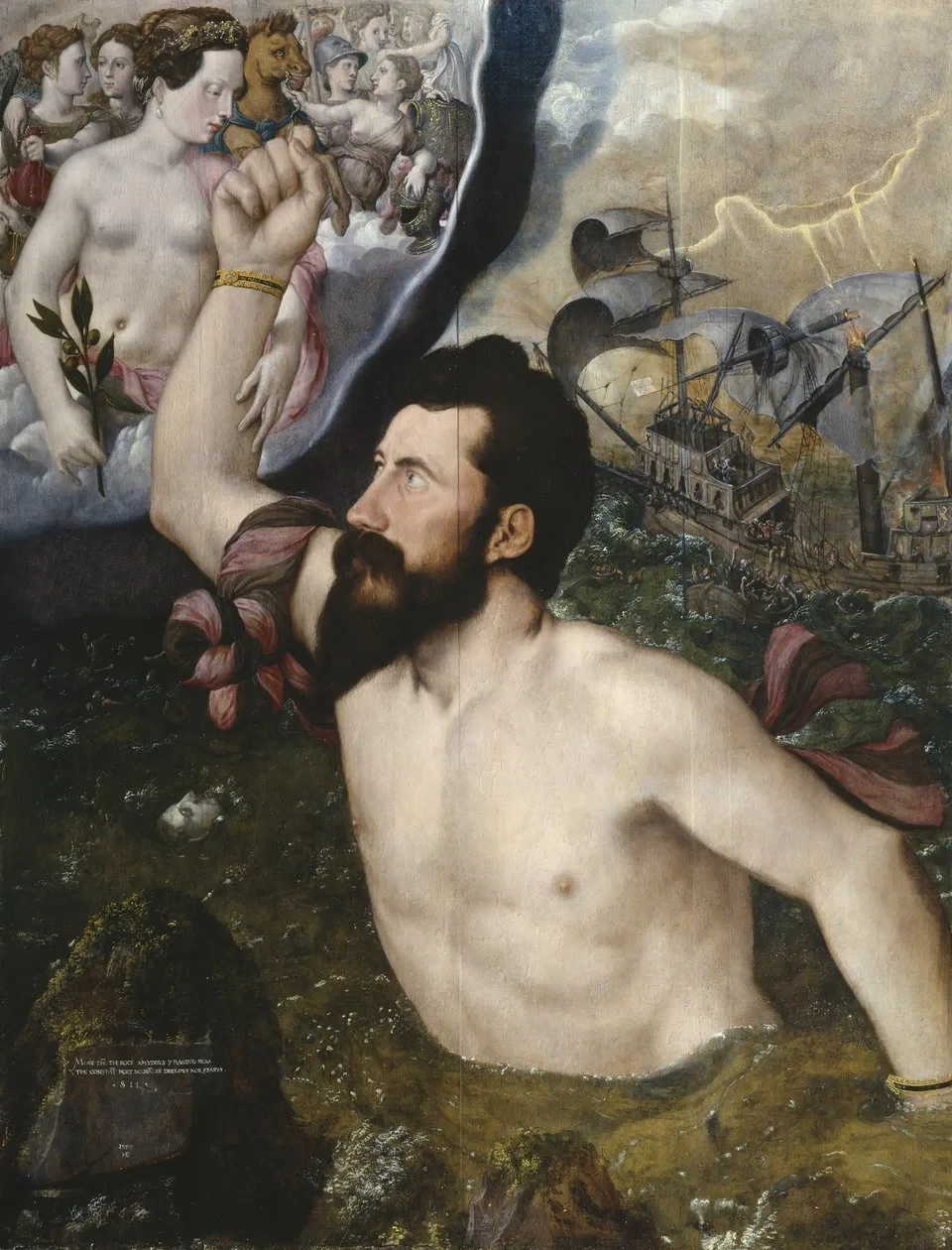 Allegorical Portrait of Sir John Luttrell
This complex portrait from 1550 shows the English soldier and adventurer Sir John Luttrell. He emerges from turbulent, dark water, his bare torso and muscular arm raised in a gesture of endurance. To the right, a ship founders in a violent storm, struck by lightning. This scene likely refers to Luttrell’s military service at sea during the wars with Scotland. In the upper left corner, a group of celestial figures offers a stark contrast to the chaos below. A woman holding an olive branch represents Peace, looking down at the struggling knight. Luttrell's arm is wrapped in a pink-and-black sash, a symbol of his military rank or personal allegiance. The painting functions as an allegory of survival and the hope for peace after conflict. Hans Eworth, a Flemish artist working in England, captured Luttrell’s determined expression with great detail. Notice the golden bracelet on his wrist and the small inscription on the rock at the bottom left, which commemorates his resilience.
Hans Eworth · Public domain
03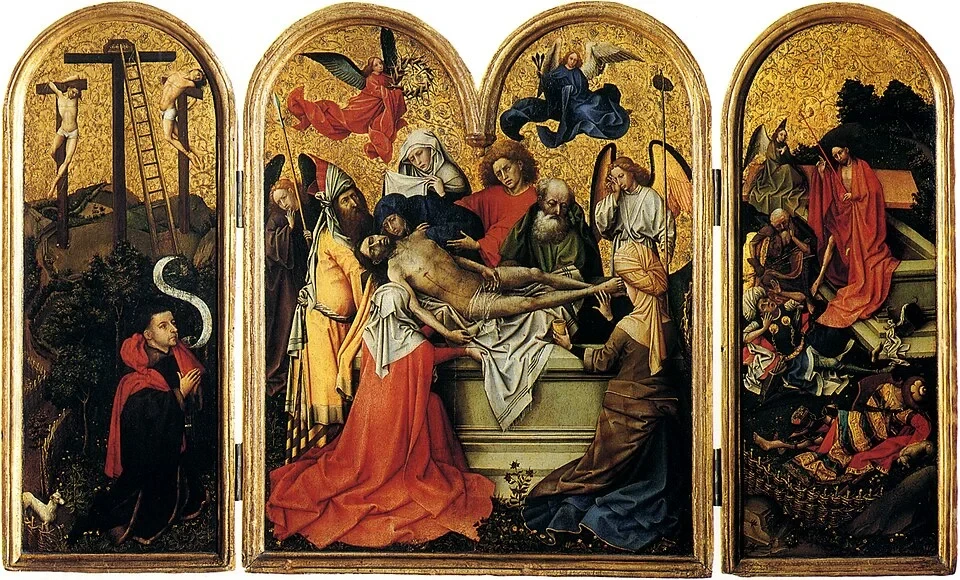 Triptych with the Entombment of Christ
Known as the Seilern Triptych, this three-paneled altarpiece is a landmark of Early Netherlandish painting. In the central panel, the body of Christ is carefully lowered into a stone tomb. Surrounding him are grieving figures, including Mary Magdalene, who kneels at the foot of the grave. The artist, Robert Campin, achieved extraordinary detail through the relatively new medium of oil paint. You can see individual tears on the faces and the delicate texture of the translucent veils. The background is a shimmering gold pattern, a traditional medieval element, yet the figures themselves have a modern, sculptural weight. The left panel shows the donor of the painting kneeling in prayer before the empty crosses of Calvary. On the right, Christ rises from the tomb, a scene representing the Resurrection. The small scale of the work suggests it was intended for private devotion rather than a large church. Small flowering plants at the base of the tomb provide a touch of symbolic life amidst the scene of mourning.
Listen in the appRobert Campin · Public domain
04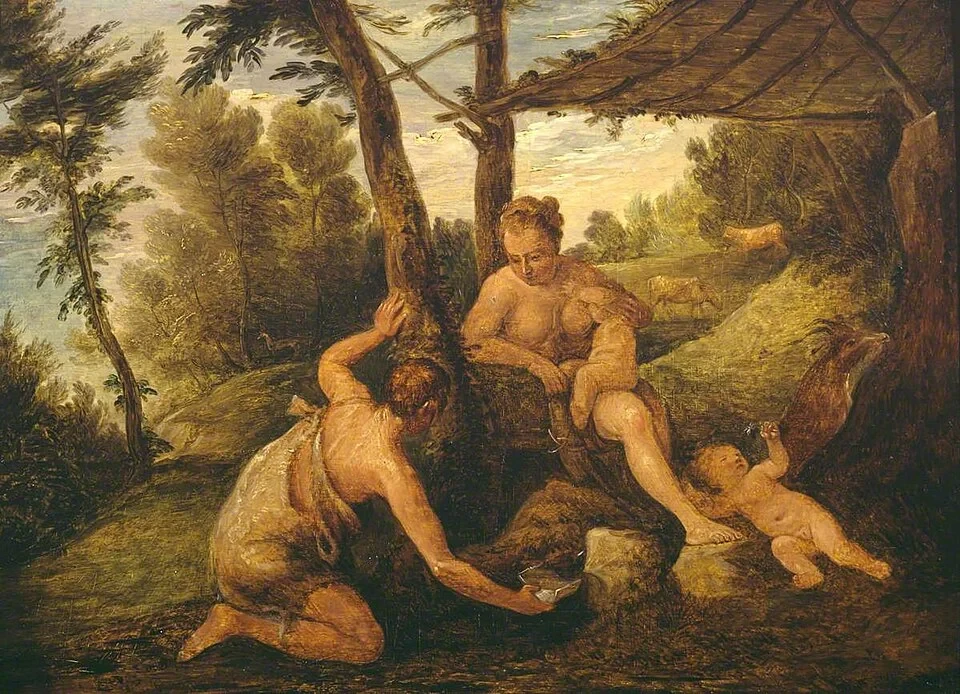 Adam and Eve after the Expulsion
This small panel is a copy of a larger work by the Italian master Paolo Veronese. David Teniers the Younger, a Flemish painter, created it as part of an ambitious project to document the vast art collection of Archduke Leopold Wilhelm. The scene depicts Adam and Eve in the harsh reality of life outside the Garden of Eden. Adam is shown working the land, leaning against a tree as he uses a primitive tool. Eve sits nearby, cradling one of her children, while another child lies on the ground nearby. The lush paradise of their past has been replaced by a rustic, rugged landscape. Teniers captures the scene with quick, fluid brushstrokes that differ from the polished style of the original Italian source. In the distance, cattle graze on a hillside under a hazy, clouded sky. This miniature version allowed the Archduke to keep a visual record of his most prized possessions in a portable format.
Listen in the appDavid Teniers the Younger / After Paolo Veronese · Public domain
05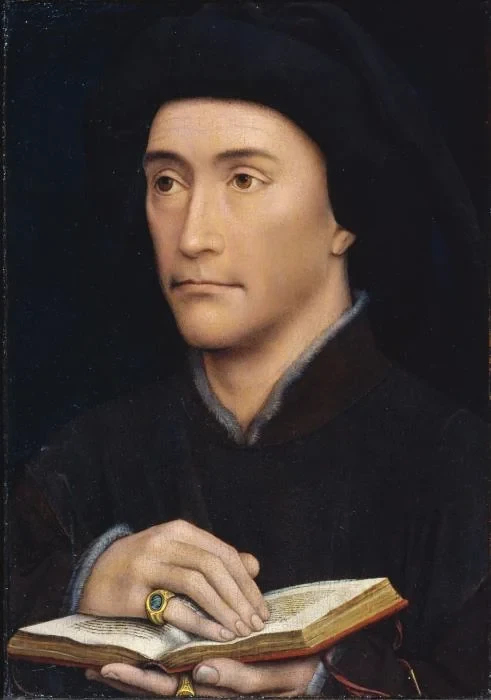 Portrait of a Man
This intimate portrait dates from around 1430 and is attributed to Rogier van der Weyden, one of the most influential painters of the Northern Renaissance. The subject is thought to be Guillaume Fillastre, a prominent church official and diplomat. He is shown in a three-quarter view, a standard pose that allows the artist to capture the planes of the face in light and shadow. The man wears a dark, fur-lined robe and a simple black chaperon hat. He holds a small, open book, signaling his literacy and high social standing. A striking green ring is visible on his finger as he rests his hand on the book's pages. Van der Weyden’s technique is precise, focusing on the individual character of the sitter’s features, from the slight stubble on his chin to the thoughtful expression in his eyes. The plain dark background ensures the viewer's entire focus remains on the dignity and intellect of the man himself.
Listen in the appRogier van der Weyden · Public domain
06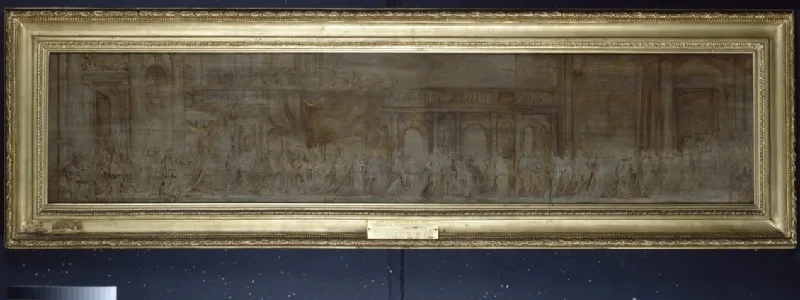 Charles I and the Knights of the Garter in Procession
This exceptionally wide and narrow painting is a sketch for a massive tapestry cycle that was never completed. Created in 1638, it shows King Charles I leading a formal procession of the Knights of the Garter. The scene is set against a grand classical backdrop with soaring arches and columns. Anthony van Dyck used a monochrome palette of brown and grey tones, focusing on the composition and the play of light rather than full color. Despite its small height, the painting contains dozens of figures, each rendered with a sense of rhythm and movement. The King is visible near the center, distinguished by his horse and regal posture. The project was intended to decorate the walls of the Banqueting House at Whitehall Palace in London. This oil sketch provides a rare glimpse into the ambitious scale of courtly commissions in 17th-century England and Van Dyck's ability to organize a complex crowd.
Listen in the appAnthony van Dyck · Public domain
07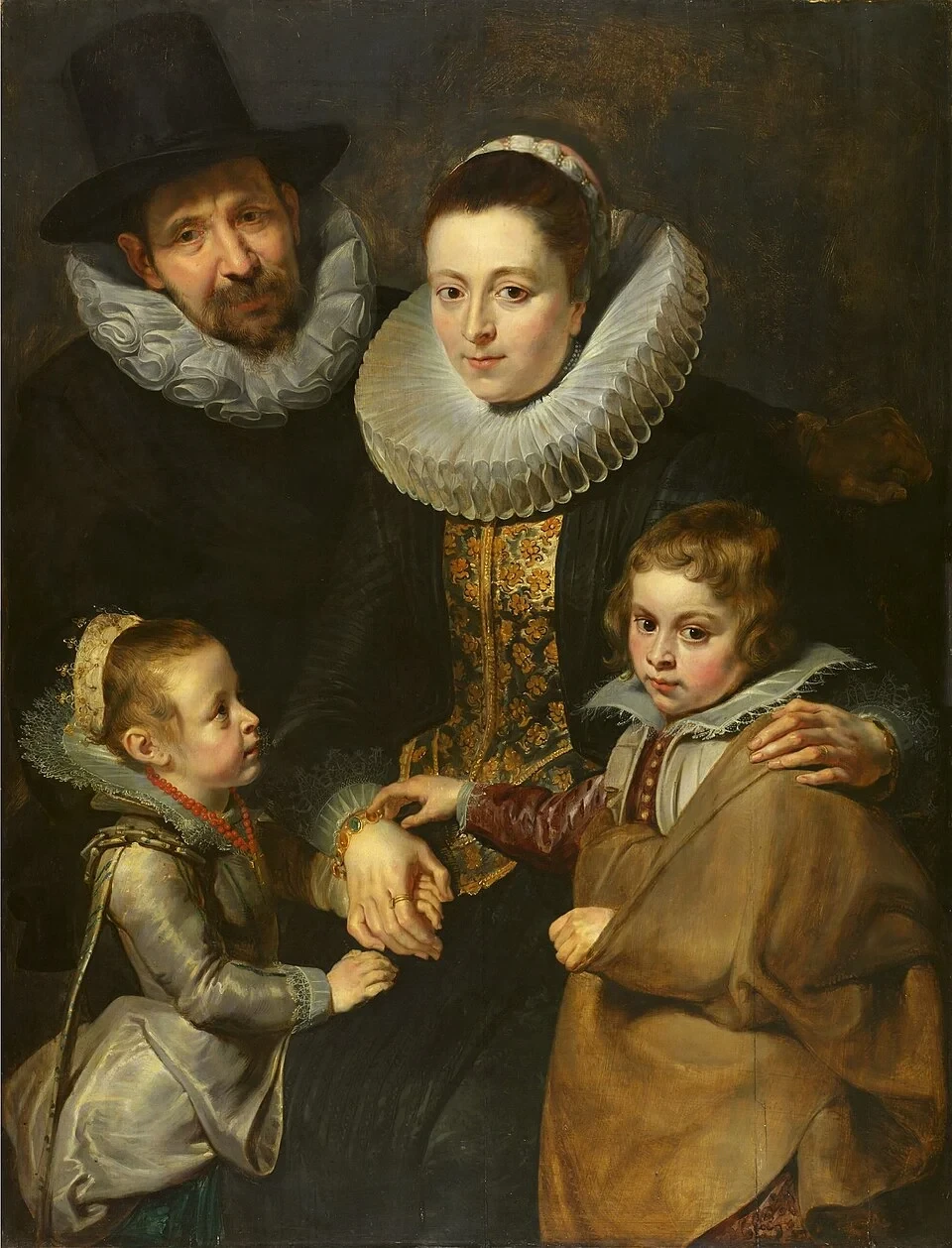 Portrait of Jan Brueghel the Elder and his Family
This warm and affectionate portrait celebrates the friendship between two great artists. Peter Paul Rubens painted his close colleague Jan Brueghel the Elder alongside Brueghel’s wife, Catharina van Marienberghe, and their two children. The composition is tight and intimate. Catharina occupies the center, wearing an elaborate lace ruff that showcases Rubens’s skill in rendering delicate textures. Jan Brueghel stands behind her, looking out with a calm, steady gaze. Their daughter, Elisabeth, stands at the bottom left, wearing a heavy gold chain, while their son, Paschasius, rests his hand on his mother’s arm. The dark background pushes the family forward, emphasizing their status and domestic harmony. Rubens avoids formal stiffness, capturing instead a sense of genuine connection between the sitters. This painting remained in the Brueghel family for generations, serving as a private memorial to their prosperous and artistic life in Antwerp. Notice the subtle way Rubens uses the children's gazes to draw the viewer into the family circle.
Listen in the appPeter Paul Rubens · Public domain
08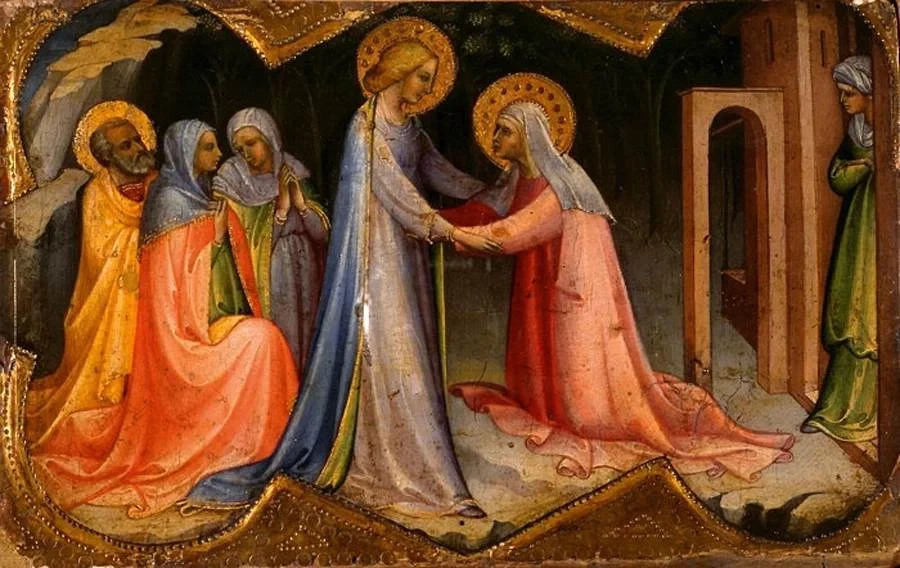 The Visitation
This small, vibrant panel illustrates the biblical story of the Visitation, when the Virgin Mary visited her cousin Elizabeth. Both women are pregnant—Mary with Jesus and Elizabeth with John the Baptist. They meet in the center of the composition, their hands clasped in a gesture of mutual support. Lorenzo Monaco was a monk and a leading painter in early 15th-century Florence. His style is characterized by elegant, flowing lines and bright, decorative colors. The elongated figures and the rhythmic folds of their colorful robes are typical of the International Gothic style. Notice how the mountain on the left and the architectural structure on the right frame the central encounter. Gold leaf is used for the halos, catching the light and emphasizing the sacred nature of the event. The small size of the panel suggests it was originally part of a larger altarpiece, likely a predella, which is the decorative base. An attendant figure watches from the doorway on the far right.
Listen in the appLorenzo Monaco · Public domain
09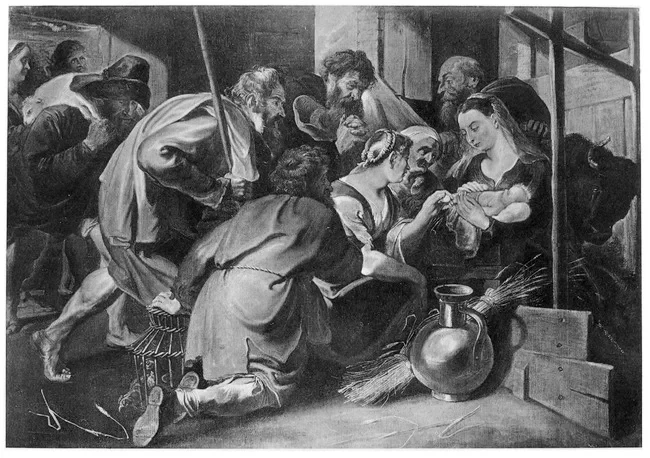 The Adoration of the Shepherds
Painted when Anthony van Dyck was only nineteen years old, this work displays the incredible talent of the young Flemish artist. The scene depicts the moment shepherds arrive to pay homage to the newborn Christ. The composition is crowded and energetic, with figures leaning in from the left to catch a glimpse of the child. Light radiates from the infant, illuminating the faces of the Virgin Mary and the rugged, weathered shepherds. This "divine light" serves as the primary source for the entire scene, creating deep shadows and dramatic highlights. You can see the influence of Rubens, Van Dyck’s mentor, in the muscular figures and the bold brushwork. However, Van Dyck’s own style emerges in the sensitive, almost elegant expressions of the figures. A large earthenware jug and a bundle of straw sit in the foreground, adding a touch of rustic realism to the miraculous event. Even the ox in the background is rendered with a heavy, physical presence.
Listen in the appAnthony van Dyck · Public domain
10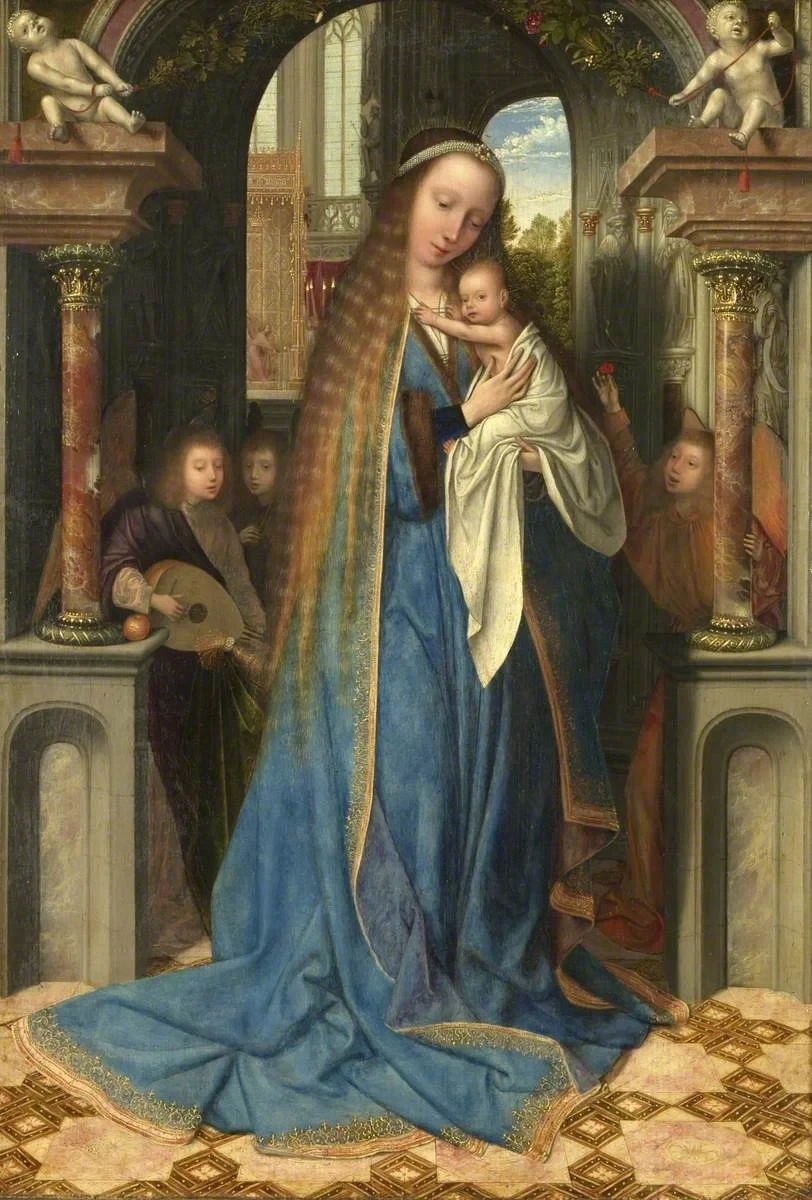 Virgin and Child
This refined painting from around 1500 shows the Virgin Mary holding the infant Christ. She stands beneath a grand Renaissance arch decorated with sculpted cherubs and garlands. Beyond the arch, a glimpse of a meticulously detailed landscape and a Gothic cathedral suggests the transition from the medieval world to the Renaissance. The Virgin has strikingly long, flowing hair that cascades down her blue robe, a traditional symbol of her purity. The child reaches out to touch her, a gesture that humanizes the divine figures. Quinten Metsys was a founder of the Antwerp school of painting, and this work shows his ability to blend Italian influence with the traditional detail of Northern art. The marble columns on either side are painted with a swirling, variegated texture to mimic real stone. The tiled floor provides a clear sense of depth, drawing the viewer’s eye toward the sacred pair. To the left, an angel plays a lute, adding a celestial musical element to the scene.
Listen in the appQuinten Metsys · Public domain
Courtauld Institute of Art
Frequently asked questions
How much does the guide cost?
Free app download. Listed guide price: $0.99. Guide price shown in the app. Audio guide only. Venue admission is separate.
Can I listen without internet?
Yes. Download the guide’s audio, images, and maps in the app before your visit. Your downloaded content is then available offline.
Can I listen in my language?
Stanza supports 15 languages. Check the app for the languages available for this guide.
Do I need to follow a schedule?
No. This is a self-guided experience. Choose your stops, pause whenever you like, and return to a story at your own pace.
At your own pace
Explore Courtauld Institute of Art.
Download Stanza, then search for “Courtauld Institute of Art”.
Free app download · Guide price shown in the app
Keep exploring
Nearby audio guides
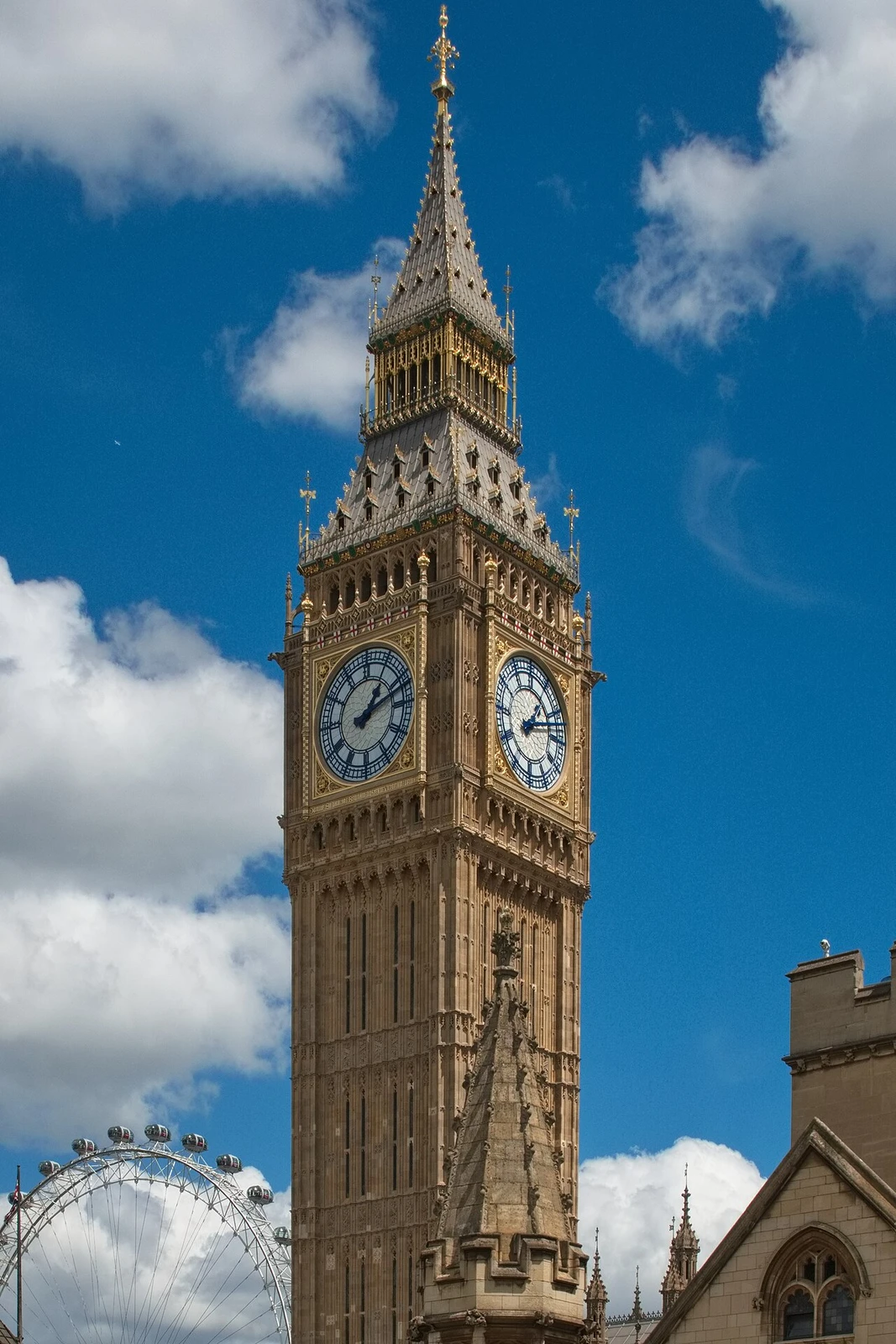
London
Big Ben
Content & sources
Dave Bezaire · CC BY-SA 2.0
London
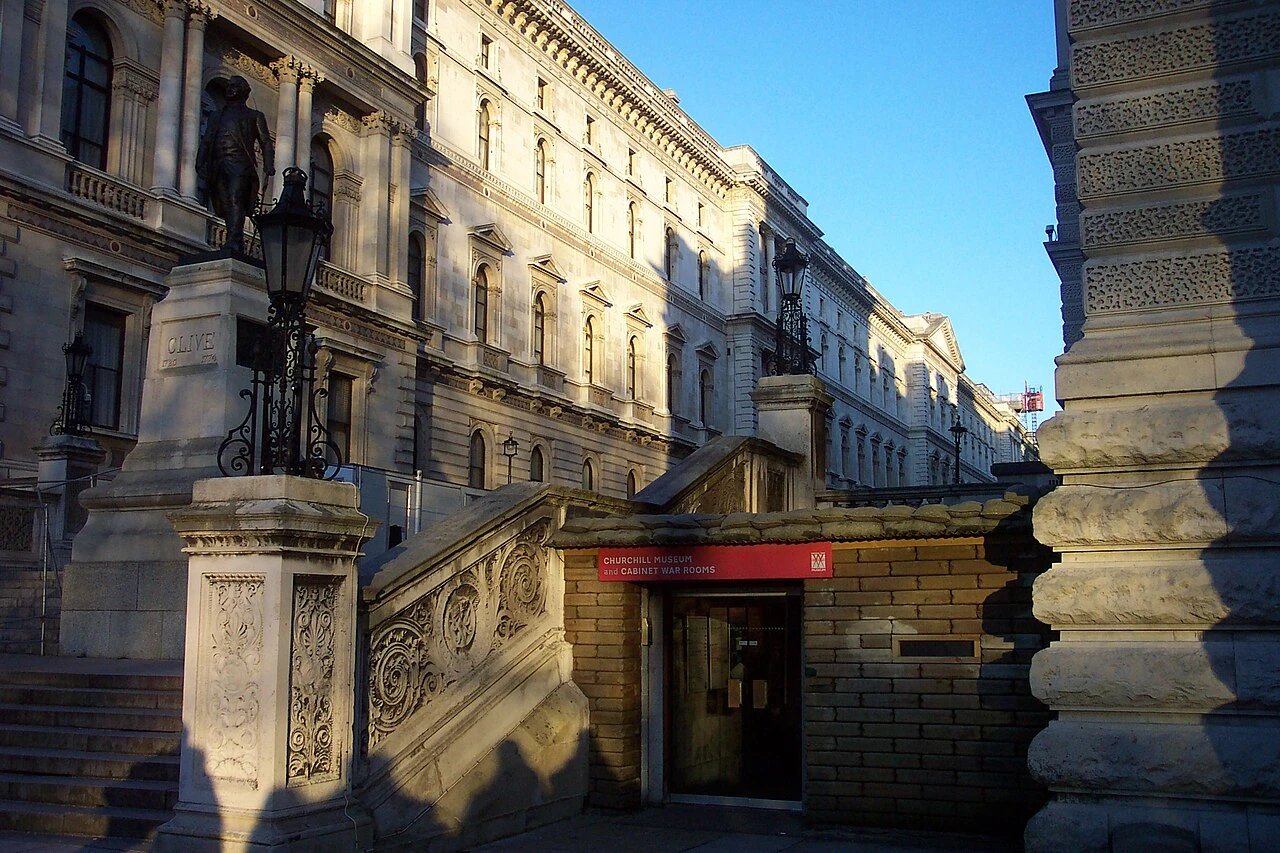
Churchill War Rooms
Content & sources
en:User:Jdhowens90 · CC BY-SA 3.0
London
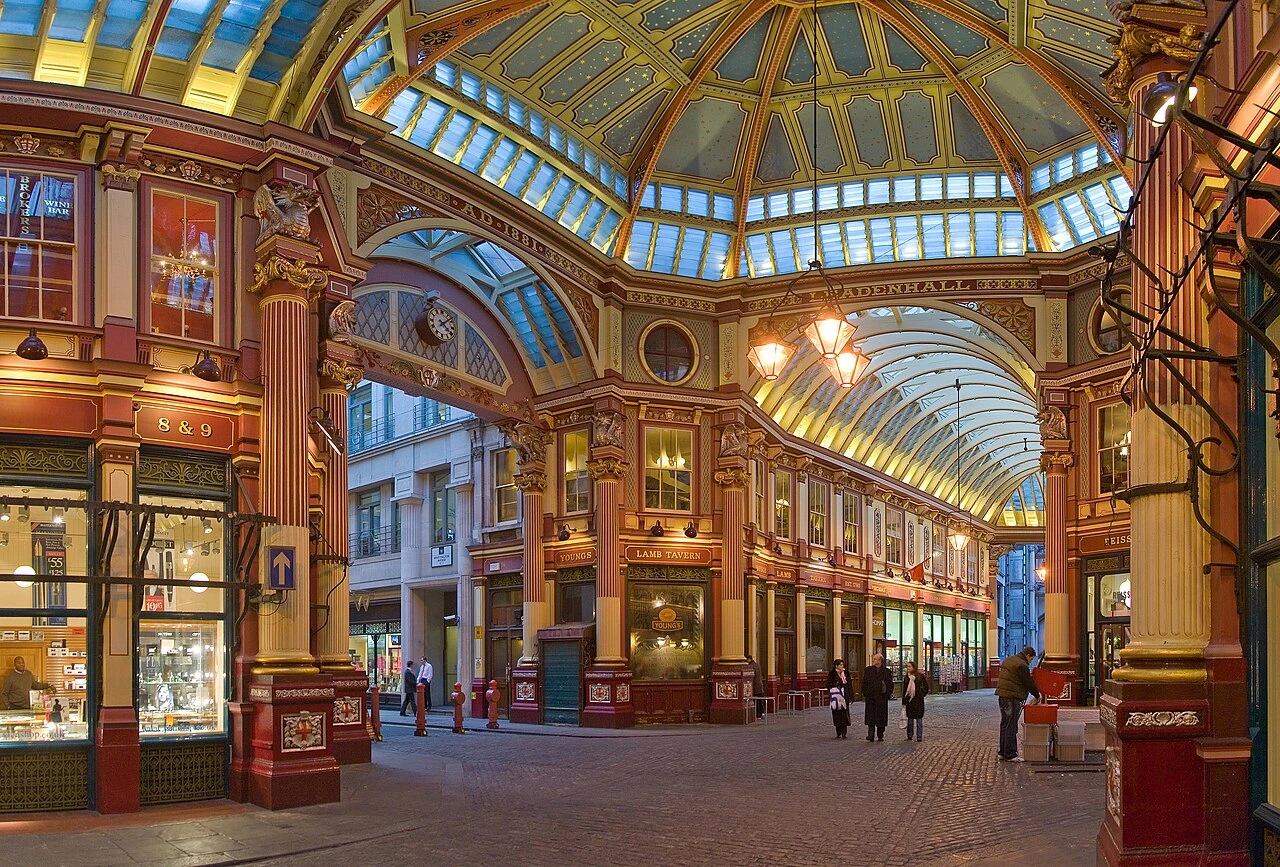
Leadenhall Market
Content & sources
Diliff · CC BY 2.5
London
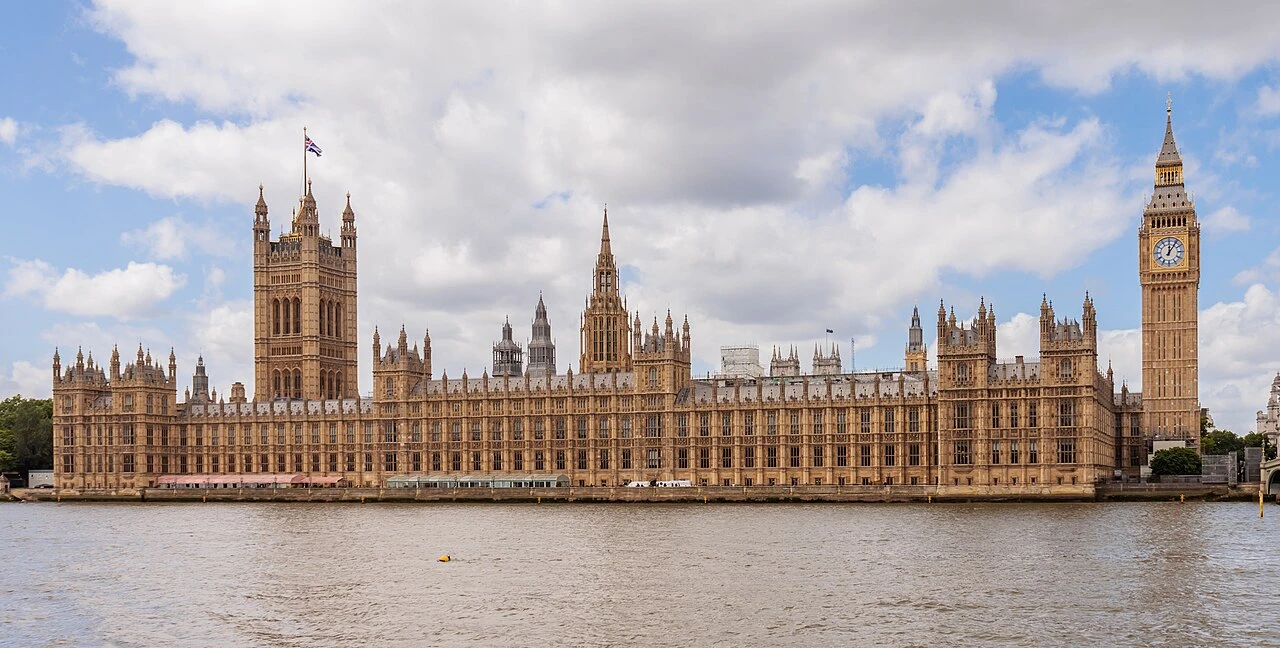
Palace of Westminster
Content & sources
Terry Ott from Washington, DC Metro Area, United States of America · CC BY 2.0