Stanza · Audio guide
Leadenhall MarketAudio guide
A place to remember. A story to take with you.
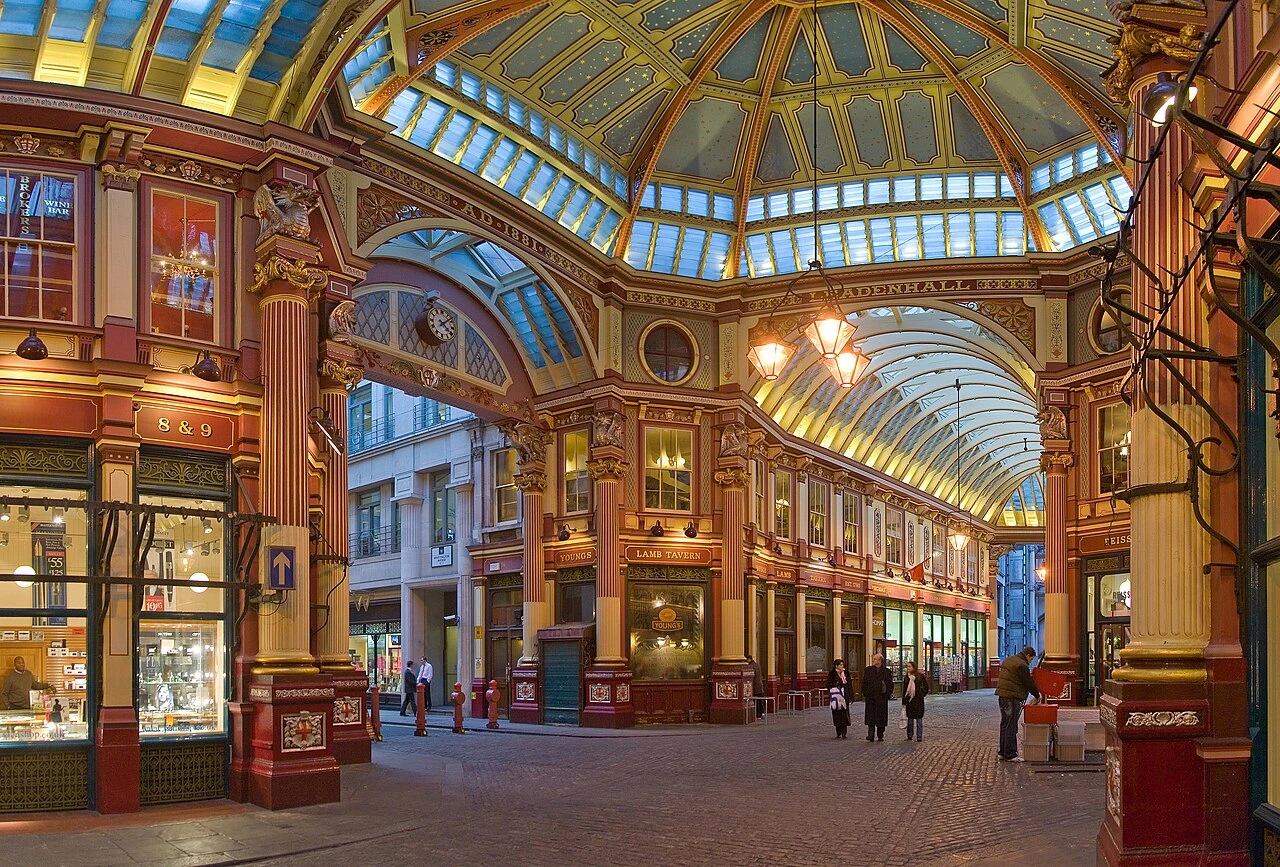
Leadenhall Market is a covered market located on Gracechurch Street in London. It is a historic site known for its ornate Victorian architecture.
Download Stanza, then search for “Leadenhall Market”.
About the tour
One guide. Your kind of visit.
Leadenhall Market is a covered market located on Gracechurch Street in London. It is a historic site known for its ornate Victorian architecture.
Ready when you are.
- 01Get the free Stanza app.
iOS & Android
- 02Find your guide.
“Leadenhall Market”
- 03Download before you go.
Works offline
Audio guide / 12 narrated stops
Inside the guide
Get to know a few of the stories before you go. Open a stop to read more.
01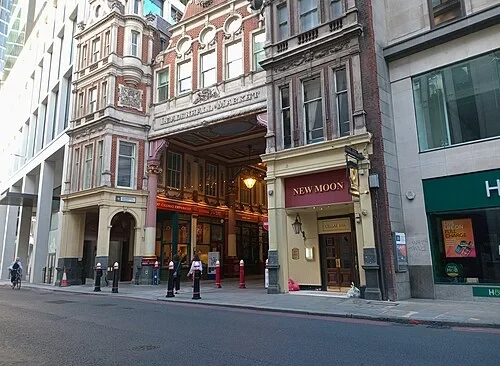 Gracechurch Street Main EntranceGracechurch Street Entrance
This site has been a center of commerce since the 14th century, but the structure you see today is a product of late 19th-century ambition. Designed by Sir Horace Jones—the prominent City Architect also responsible for Tower Bridge and Smithfield Market—this entrance was intended to signal the immense wealth and prestige of the City of London. Jones replaced a much simpler, less decorative market building with this elaborate design, featuring sweeping arches and intricate detailing. The scale of the entrance was a practical necessity for the heavy carts of the Victorian era, yet its ornamentation turned a functional gate into a civic statement. As you pass through, notice how the design bridges the gap between the busy street outside and the sheltered world of the market. This entrance serves as a portal into a space where medieval traditions were refined by Victorian engineering. The stone carvings and classical motifs on the facade were carefully chosen to reflect the stability and success of the British Empire at its peak.
David Howard · CC BY-SA 2.0
02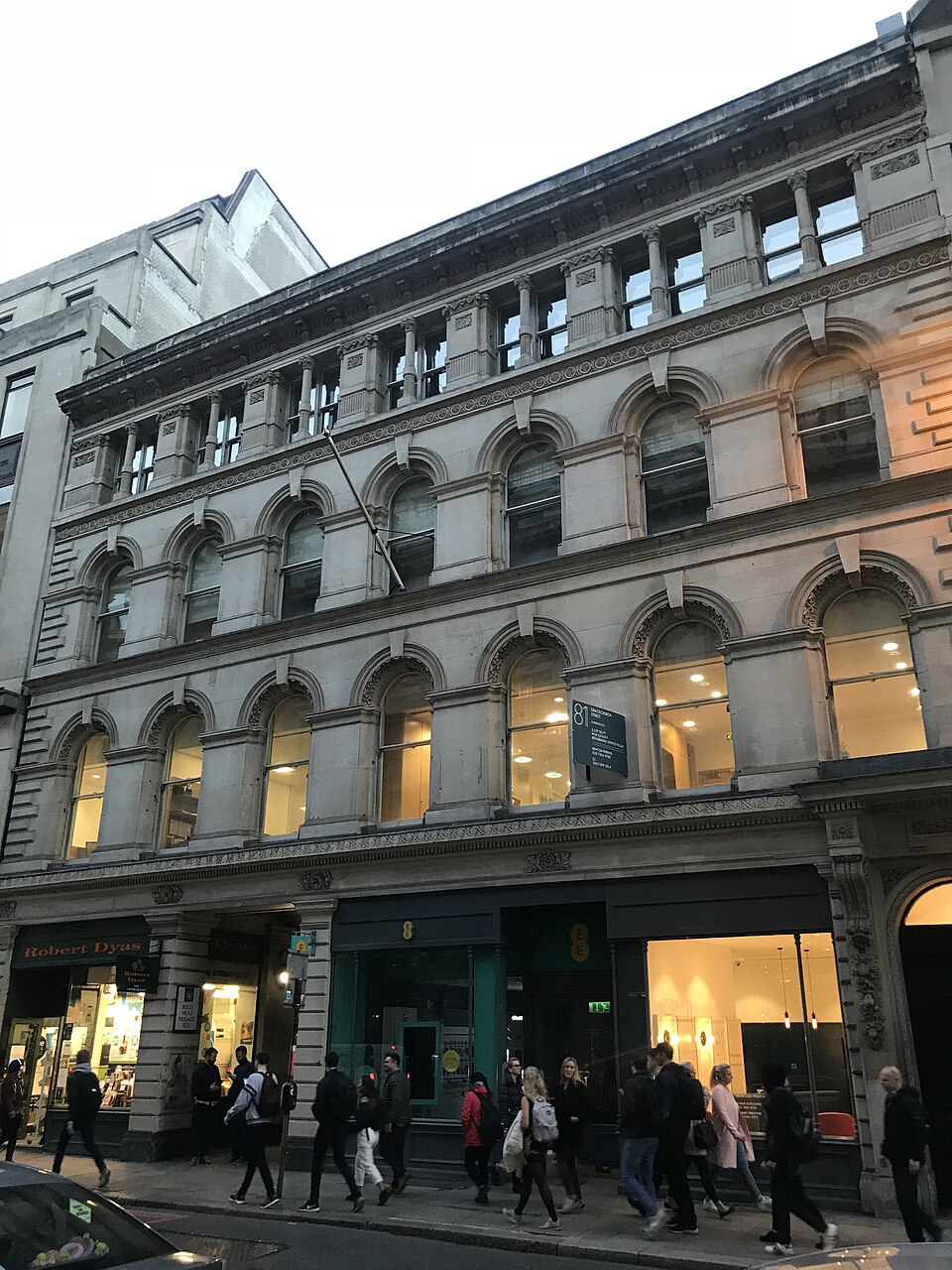 Gracechurch Street Main EntranceThe Grand Gabled Blocks
The tall, narrow gables of these buildings were a deliberate choice by the architect to maintain the traditional aesthetic of the surrounding streets. By using red brick and Portland stone, the design harmonizes with the older architecture found throughout this part of London. These facades perform a clever architectural trick: they appear as standard, albeit grand, office or residential blocks, effectively hiding the modern iron and glass market structure that lies just behind them. Look closely at the window frames to find intricate stone carvings that add a layer of texture and detail to the brickwork. This style was highly popular during the late Victorian period for its perceived connection to northern European commercial history. The verticality of the gables helps the market feel integrated into the dense urban fabric of the square mile. Rather than building a singular, monolithic warehouse, the design breaks the structure down into these familiar-looking units. This approach ensured that the market's modernization enhanced the City's character rather than disrupting it.
Photo: Henryrothery · CC BY-SA 4.0
03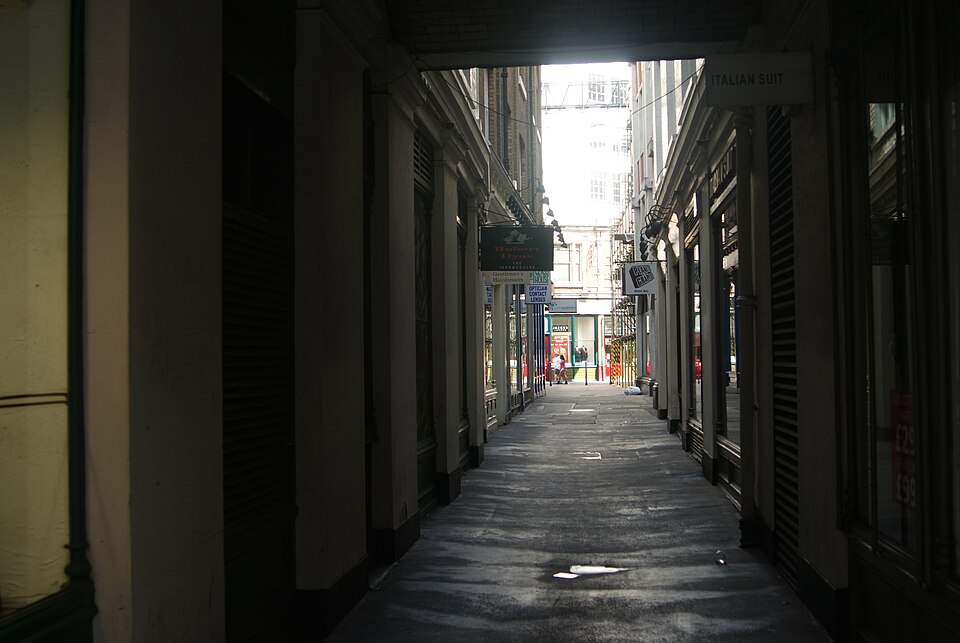 Bull's Head Passage: Roman Roots and WizardryBull's Head Passage
Long before the Victorian ironwork arrived, this specific location served as the center of the Roman capital of Britain. Directly beneath these cobblestones lie the remains of the Roman Basilica and Forum, a massive complex that functioned as the administrative and commercial hub of the ancient city. At its height, the Basilica was an architectural titan, roughly the size of a modern football stadium. It was the place where legal cases were heard, business deals were struck, and the politics of the province were decided. The choice of this site for a market in the 14th century was no coincidence; it simply continued a tradition of trade that had existed for over a thousand years. While the Roman structures were eventually dismantled or built over, the geography of power and commerce remained fixed. This passage offers a physical link to that distant past, reminding us that the City's status as a global financial center is built upon layers of history. The persistence of trade here from Roman times to the present day is a defining characteristic of Leadenhall’s identity.
Listen in the appRobert Lamb · CC BY-SA 2.0
04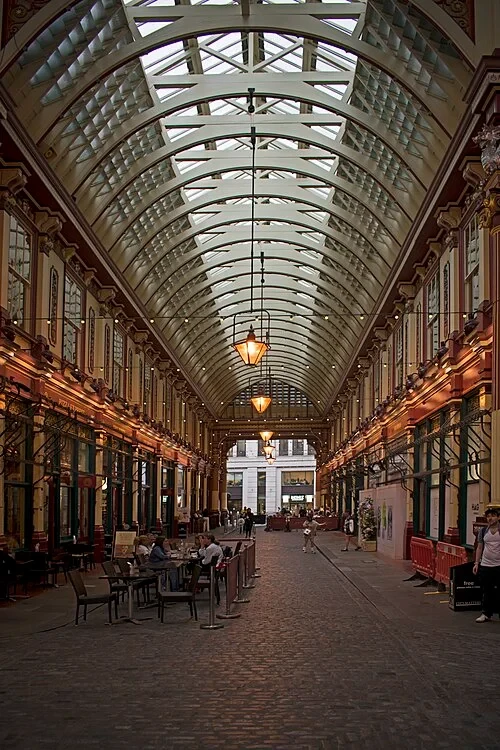 Bull's Head Passage: Roman Roots and WizardryThe Victorian Arcades
The character of these Victorian arcades is defined by their deep colors and the intimate scale of the shop windows. It was this timeless quality that attracted filmmakers, who used this specific passage to represent the area near the Leaky Cauldron pub in the first film. The entrance to a local optician's shop famously served as the door to the magical inn. One reason the market is so favored by cinematographers is the specific way light interacts with the glass-and-iron roof. During the day, the high vaulted ceiling diffuses the sunlight, creating soft shadows and a glowing atmosphere that feels removed from the modern skyscrapers outside. The architecture here encourages a slower pace, inviting a closer look at the traditional details of the storefronts. Each unit retains its original proportions, contributing to a sense of continuity that spans generations. The interplay between the dark woodwork and the brightly painted metal supports provides a visual depth that works exceptionally well on camera, capturing the essence of an idealized Victorian London.
Listen in the appPhoto: Ymblanter · CC BY-SA 4.0
05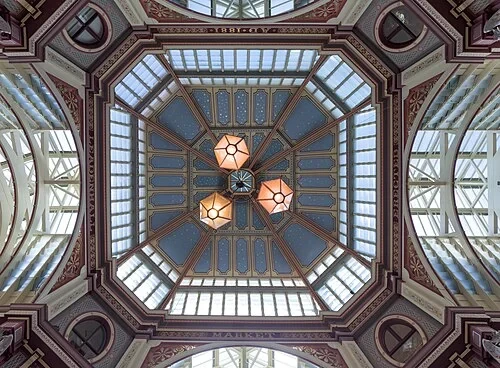 The Central Octagon and Victorian RoofThe Central Octagon
The intersection of the market's main avenues is topped by a grand octagonal dome that serves as both a visual centerpiece and a functional lung for the building. This skylight was a sophisticated piece of Victorian engineering, utilizing cast-iron supports to hold a massive amount of glass. Its primary purpose was to maximize natural light for the market traders below, who needed clear visibility to display their goods. If you look at the base of the dome, you can find the date '1881' integrated into the ornate ironwork, marking the year this structure was completed. The design incorporates small openings to allow for ventilation, ensuring that the air within the market remained fresh despite the presence of perishable goods. The geometry of the octagon creates a sense of openness and verticality, drawing the eye upward away from the busy shops. This central hub is the point where the different arms of the market meet, reflecting a master plan that combined aesthetic beauty with the practical needs of a nineteenth-century commercial center.
Listen in the appDaniel Lu (User:dllu) · CC BY-SA 4.0
06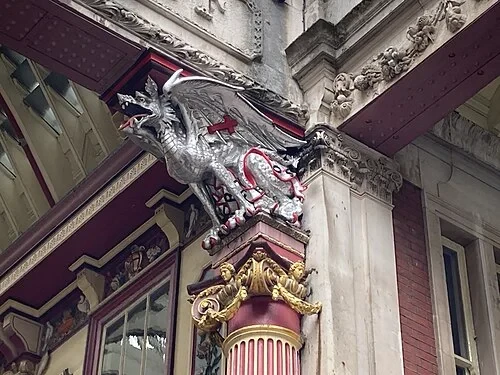 The Central Octagon and Victorian RoofCity Dragon Heraldry
The vibrant color scheme throughout the market—comprising rich green, maroon, and cream—was meticulously reintroduced during a major restoration in 1991. This project was so successful in reviving the market's Victorian character that it earned a prestigious Civic Trust Award. A key feature of the decorative scheme is the presence of these silver-painted dragons. In heraldry, the dragon is the protector of the City, and its image appears at every major entrance to the square mile. Here, they are integrated into the ironwork as part of the market’s decorative finish. These figures emphasize the market’s status as a City-owned institution, tied directly to the authority and traditions of the Corporation of London. The choice of silver for the dragons makes them stand out against the deeper tones of the painted metal. Their placement atop columns and arches suggests a watchful presence over the daily activities of the shops and bars below. This attention to heraldic detail is typical of the Victorian desire to imbue public buildings with symbolic meaning.
Listen in the appMatt Brown · CC BY 2.0
07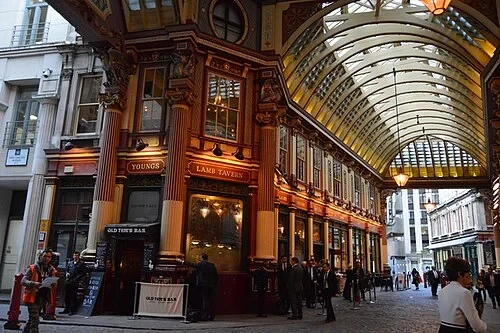 The Lamb TavernThe Lamb Tavern
While much of what you see in Leadenhall dates from the 1880s, the Lamb Tavern is a significant exception, having established its presence here over a century earlier. Historically, it was the primary meeting spot for the market’s butchers and poultry sellers, who would gather here to settle accounts or escape the cold. In more recent decades, its clientele has shifted to include insurance brokers from the nearby Lloyd’s of London building, maintaining its reputation as a place where business and social life overlap. A unique aspect of the tavern is the 'standing room only' culture that spills out onto the cobblestones. On weekday evenings, the narrow passages are often packed with people enjoying a drink in the open air, a tradition that mirrors the bustling atmosphere of the original Victorian market. The building itself features traditional etched glass and dark wood, retaining the feel of an authentic city pub. Its endurance through centuries of change highlights the market's role not just as a place for trade, but as a vital community hub.
Listen in the appN Chadwick · CC BY-SA 2.0
08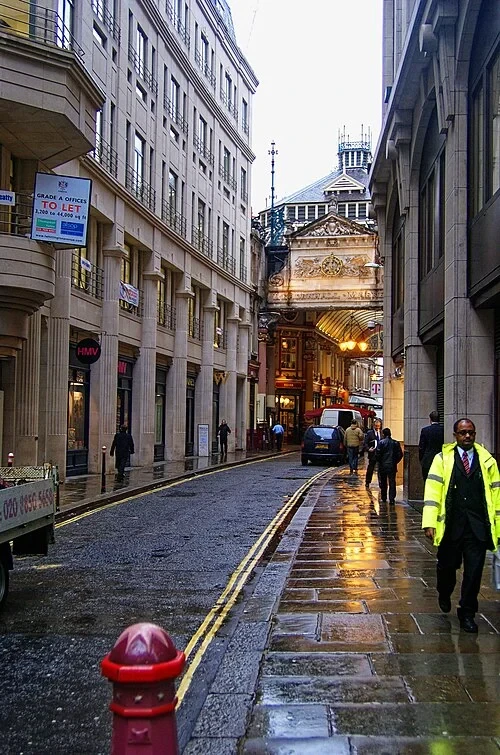 Whittington Avenue: Old Meets NewWhittington Avenue Entrance
The avenue is named after one of the City’s most famous historical figures, whose wealth and influence helped shape the development of Leadenhall in the early 15th century. Above the archway, an elaborate stone pediment displays the City of London’s coat of arms, flanked by detailed carvings. These agricultural motifs—including representations of livestock and grain—are a direct reference to the market’s historical specialization in meat and corn. The pediment serves as a visual record of the site's function before it transitioned into the modern shopping and dining destination it is today. Dick Whittington’s legacy is woven into the very fabric of the City, and his support for public works like this market ensured its survival through the centuries. The architecture here combines classical grandeur with these very specific local symbols, reminding us that the City is a place built on trade and the success of its merchants. The scale of the archway reflects the importance of this thoroughfare for the delivery of goods to the heart of the market.
Listen in the appPhoto: Txllxt TxllxT · CC BY-SA 4.0
09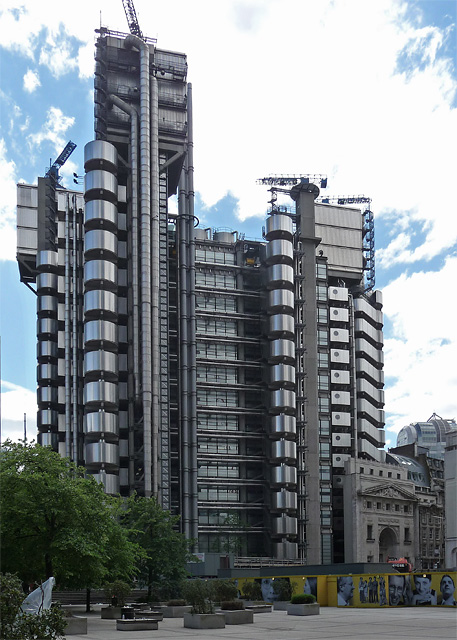 Whittington Avenue: Old Meets NewLloyd's of London Building
From this vantage point, you can witness one of London’s most famous architectural juxtapositions. On one side, you have the ornate, traditional craftsmanship of Sir Horace Jones’s 19th-century market. Directly opposite sits the Lloyd’s of London building, designed by Richard Rogers and completed in 1986. Known for its radical 'Inside-Out' philosophy, the Lloyd’s building places its service pipes, elevators, and ducts on the exterior to maximize the internal space for its massive trading floor. This clash of styles captures the unique personality of the City of London, where cutting-edge global finance operates within a framework of ancient traditions. While the market represents the physical trade of the past, the high-tech tower across the street represents the intangible insurance and finance trades of the present. Both buildings were revolutionary in their own time—Jones used cast iron to push the limits of Victorian commercial space, just as Rogers used steel and glass to redefine the modern office. They stand as neighbors, showing how the City constantly reinvents itself without ever fully discarding its heritage.
Listen in the appStephen Richards · CC BY-SA 2.0
10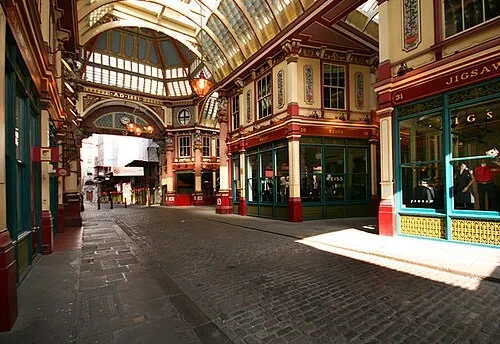 Lime Street Passage and the Legend of Old TomLime Street Passage
This passage showcases the results of a dedicated effort to protect the market's historic integrity. In 1972, the entire site was awarded Grade II* listing status, a designation that prevented it from being demolished for modern office development. Following this, a major restoration project in the early 1990s saw workers carefully stripping away layers of thick, dull paint that had accumulated over the decades. By doing so, they rediscovered the original Victorian color palette chosen by Sir Horace Jones. Today, the shops maintain their traditional wooden signage and dark green frames, creating a uniform and historically accurate appearance. This commitment to detail extends to the cobblestone flooring and the iron brackets that hold the signs. The restoration was not just about aesthetics; it was about ensuring the market could continue to function as a viable commercial space in the 21st century. Walking through this passage, you can appreciate the craftsmanship of the original Victorian builders, whose work was brought back to life by dedicated modern conservationists.
Listen in the appPeter McDermott · CC BY-SA 2.0
Leadenhall Market
Frequently asked questions
How much does the guide cost?
Free app download. Listed guide price: $0.99. Guide price shown in the app. Audio guide only. Venue admission is separate.
Can I listen without internet?
Yes. Download the guide’s audio, images, and maps in the app before your visit. Your downloaded content is then available offline.
Can I listen in my language?
Stanza supports 15 languages. Check the app for the languages available for this guide.
Do I need to follow a schedule?
No. This is a self-guided experience. Choose your stops, pause whenever you like, and return to a story at your own pace.
At your own pace
Explore Leadenhall Market.
Download Stanza, then search for “Leadenhall Market”.
Free app download · Guide price shown in the app
Keep exploring
Nearby audio guides
London
Big Ben
Content & sources
Dave Bezaire · CC BY-SA 2.0
London
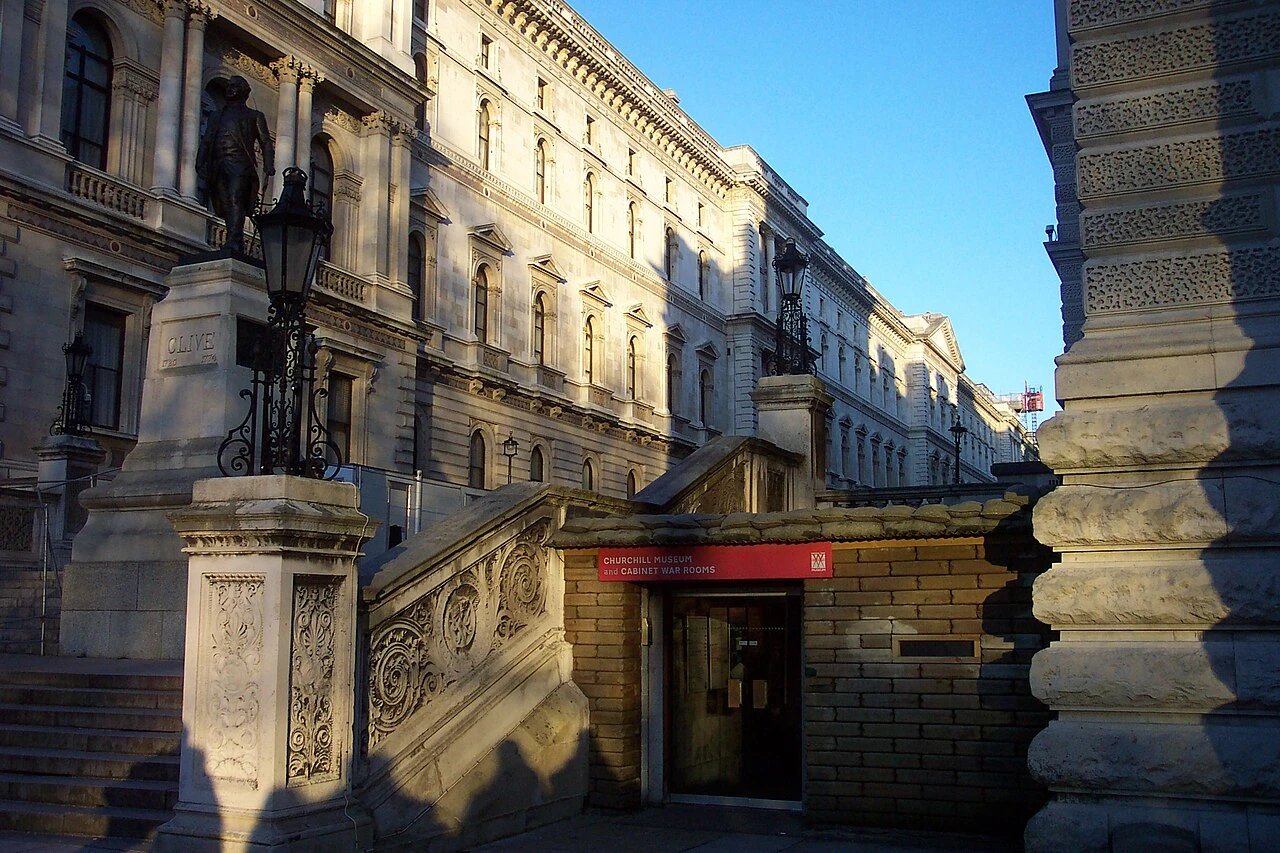
Churchill War Rooms
Content & sources
en:User:Jdhowens90 · CC BY-SA 3.0
London
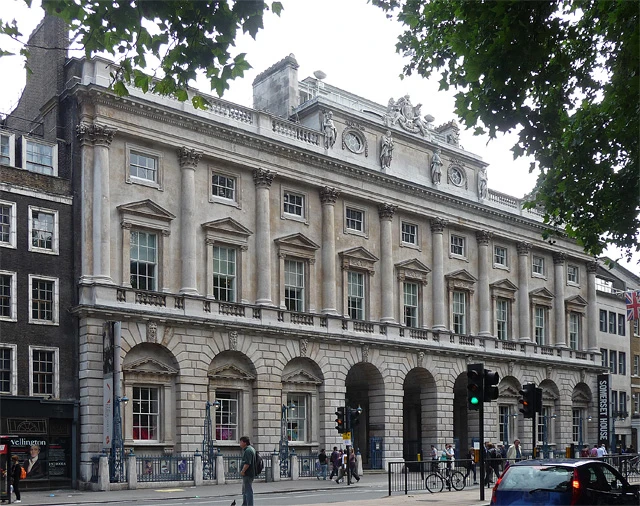
Courtauld Institute of Art
Content & sources
Stephen Richards · CC BY-SA 2.0
London
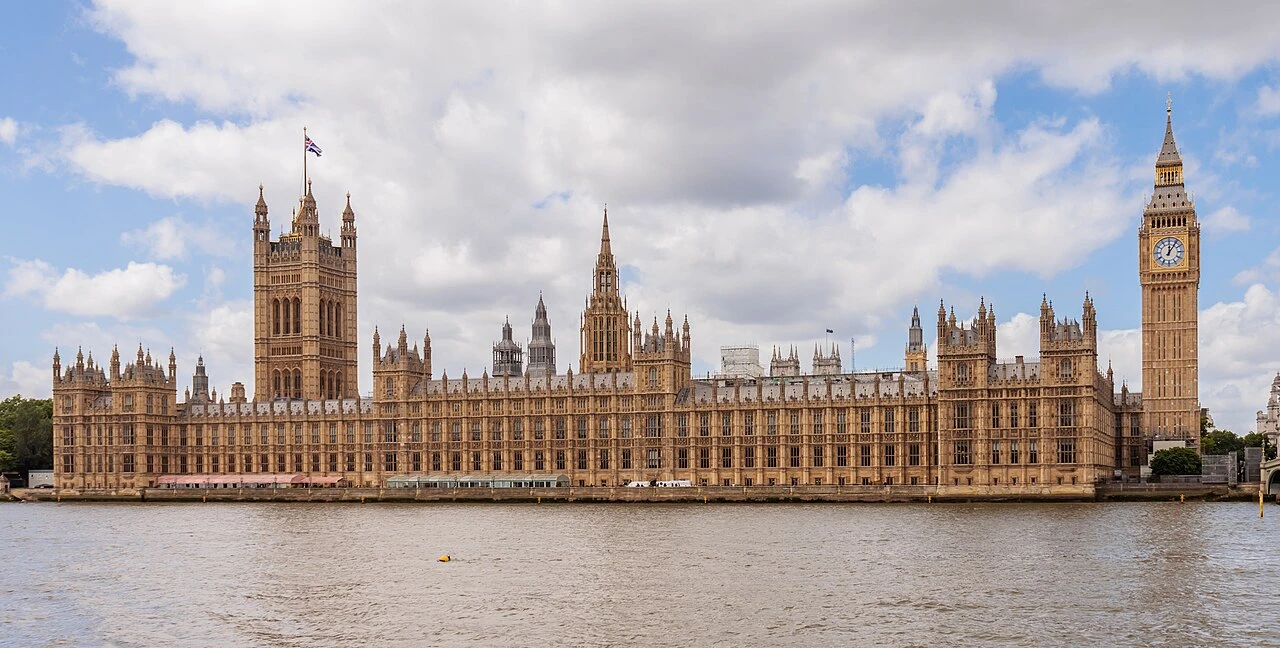
Palace of Westminster
Content & sources
Terry Ott from Washington, DC Metro Area, United States of America · CC BY 2.0