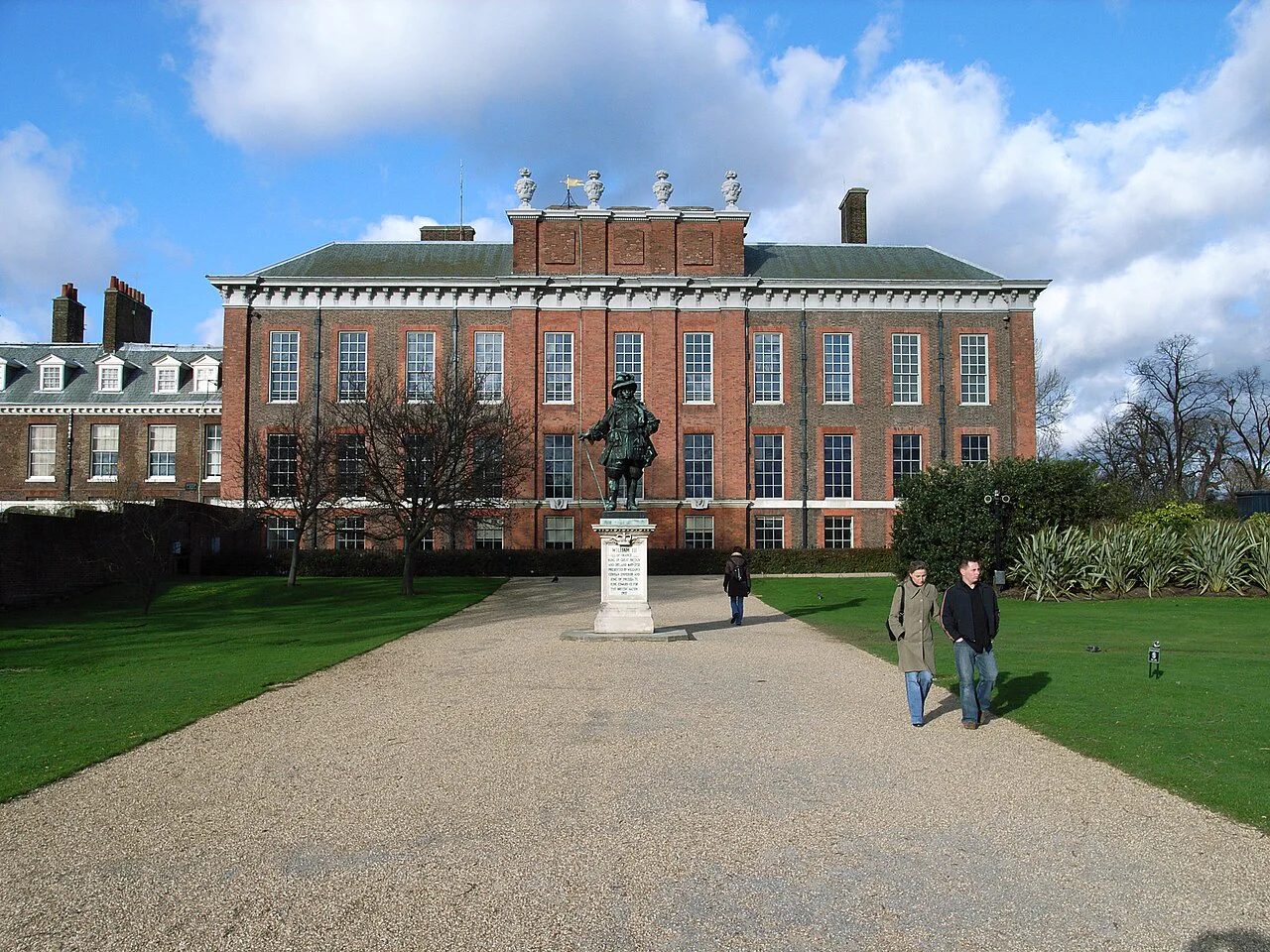
 Stanza / Audio guide
Content & sources
Stanza · Audio guide
Kensington Palace Audio Guide
A place to remember. A story to take with you.
Kensington Palace is a royal residence situated within Kensington Gardens in London, England. It has served as a residence for the British royal family since the 17th century.
Download Stanza, then search for “Kensington Palace”.
About the tour
One guide. Your kind of visit.
Kensington Palace is a royal residence situated within Kensington Gardens in London, England. It has served as a residence for the British royal family since the 17th century.
Ready when you are.
- 01Get the free Stanza app.
iOS & Android
- 02Find your guide.
“Kensington Palace”
- 03Download before you go.
Works offline
Audio guide / 15 narrated stops
Inside the guide
Get to know a few of the stories before you go. Open a stop to read more.
01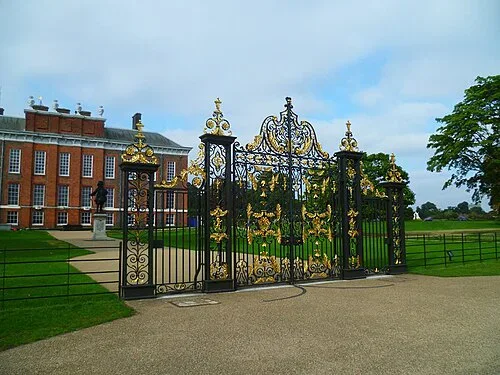 Palace Gates and Queen Victoria Statue
The Golden Gates
Welcome to Kensington Palace, a working royal residence inside Kensington Gardens, open to the public in its State Rooms. The royal family still lives here, behind the gardens, while visitors pass through these gilded gates. The gates carry a story of their own. When Diana, Princess of Wales, died on 31 August 1997, they became the focus of mourning for the world. More than a million bouquets were laid before them. In places the flowers piled five feet deep, stretching out into Kensington Gardens. Inside are the State Rooms, holding the stories of William and Mary, the Georgian kings, and Queen Victoria.
Shazz · CC BY-SA 2.0
02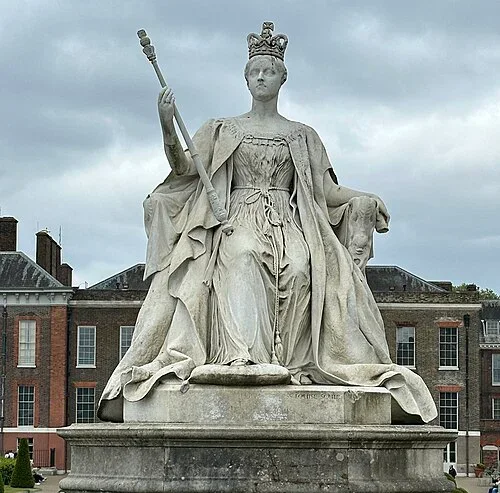 Palace Gates and Queen Victoria Statue
Statue of Queen Victoria by Princess Louise
The seated figure by the gates is Queen Victoria, and she is the reason this palace still stands. By the end of the nineteenth century the State Rooms were badly neglected, the brickwork decaying and the woodwork rotten. There were calls for the palace to be demolished. Victoria refused, declaring that while she lived, the palace in which she was born should not be destroyed. Parliament was persuaded, and in 1897 it paid for a restoration that took two years. On the Queen's birthday, 24 May 1899, the restored State Rooms opened to the public. The sculptor was her daughter, Princess Louise, who lived here herself and modelled the queen in her studio at the palace. Mother and daughter, queen and sculptor, both residents of this palace.
Photo: APK · CC BY 4.0
03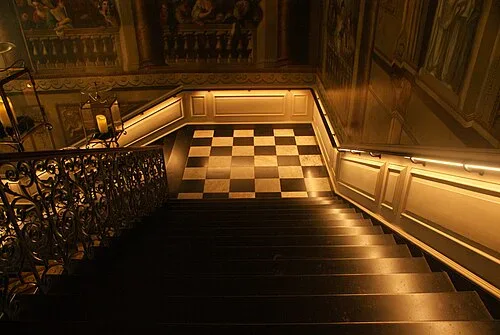 The King's Grand Staircase
The courtiers of George the First climbed this staircase on their way to attend the King. Its walls are painted with forty-five figures from his court, gathered on landings that exist only in paint. Among them are the King's Turkish servants, Mahomet and Mustapha, and Peter, known as the wild boy. The painter William Kent put himself in as well, beside his mistress. This was Kent's final commission for the palace, the last work of his years decorating these rooms. Since every figure is drawn from the real household, the stair works like a group portrait of the Georgian court.
Listen in the appRobert Lamb · CC BY-SA 2.0
04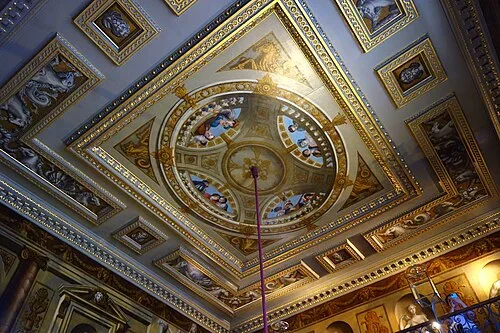 The King's Grand Staircase
 Ceiling
Overhead, the painting plays its trick. Painted figures lean on a balustrade that seems to open onto the sky, though nothing up there is real. The technique is called trompe-l'oeil, French for deceiving the eye. George the First hired Kent, then an unknown, in 1722. Over the following years Kent decorated the royal apartments and hung their pictures across the palace. The ceiling above the stair was part of that single, palace-wide scheme.
Listen in the appPhoto: Daderot · CC0
05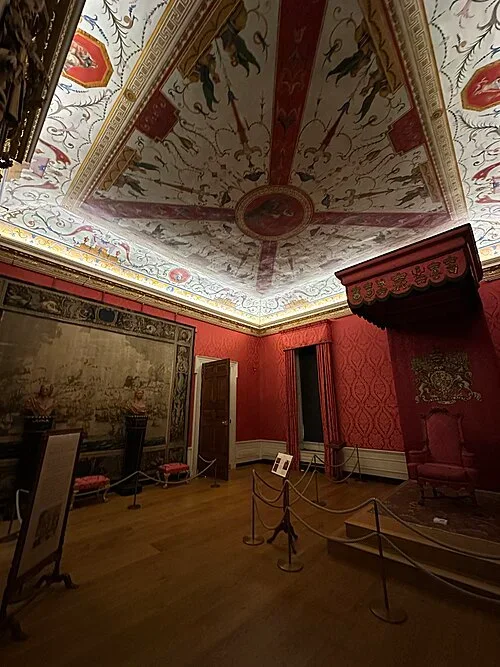 The King's Presence Chamber
The Presence Chamber
The rooms beyond the staircase were built as a stage for royal ceremony. This one is the Presence Chamber, where the monarch received his ministers. A throne stands under a canopy of red velvet, and the fireplace beside it is carved from limewood. Ministers came here to make their case to the King in person. The sequence of rooms acted as a filter, and reaching the Presence Chamber meant reaching the King himself. The painted ceiling overhead was designed for exactly such formal occasions.
Listen in the appPhoto: APK · CC BY 4.0
06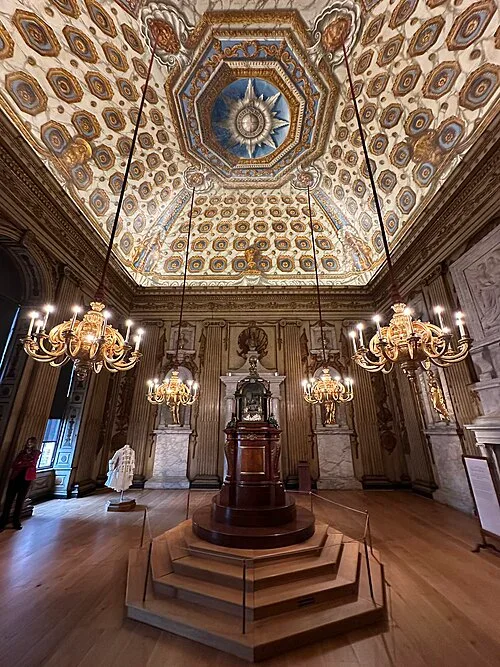 The Cupola Room
George the First spent lavishly on new state rooms, and this was judged the most splendidly decorated in the palace. It was Kent's first commission for the King, begun in 1722. The domed ceiling is a honeycomb of octagonal coffers painted in gold and blue. The pattern closes on a flat centre panel bearing the Star of the Order of the Garter. In 1819 the room gained a quieter claim on history. A month after her birth at the palace, Princess Victoria was christened here.
Listen in the appPhoto: APK · CC BY 4.0
07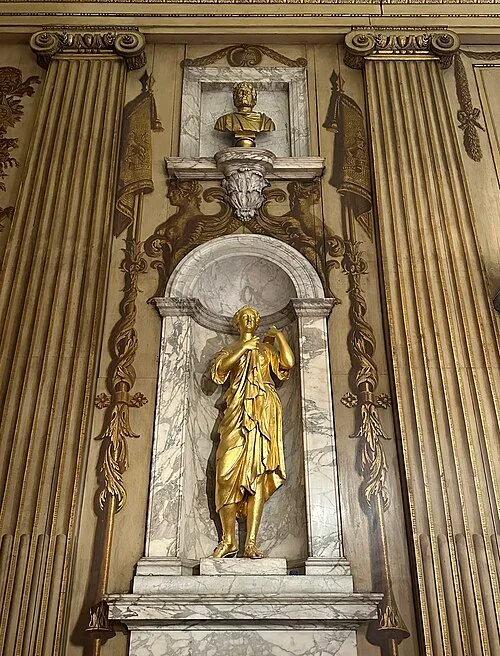 The Cupola Room
Gilded Figures of the Cupola Room
Up close, this room is a play of materials. White marble pilasters and niches stand out against woodwork painted brown and gold. Above them, gilded figures shine against the pale marble. Kent built the whole scheme on such contrasts, paint against marble against gold. The gold warms the room, and the marble cools it.
Listen in the appPhoto: APK · CC BY 4.0
08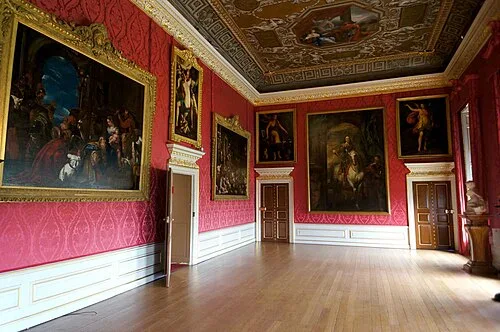 The King's Gallery
This long gallery was a place to pace. Courtiers walked and took exercise here among the paintings of the Royal Collection, between walls of red damask. It is also where the palace's life as a reigning monarch's home comes to its end. George the Second was the last reigning monarch to use Kensington Palace, and he left much of its running to his wife Caroline. One of her favourite entertaining spaces nearby was the Privy Chamber. After Caroline's death, George neglected many of the rooms, and the palace fell into disrepair. He died here on 25 October 1760. After him, the palace passed to minor royalty.
Listen in the appAndrew and Annemarie · CC BY-SA 2.0
09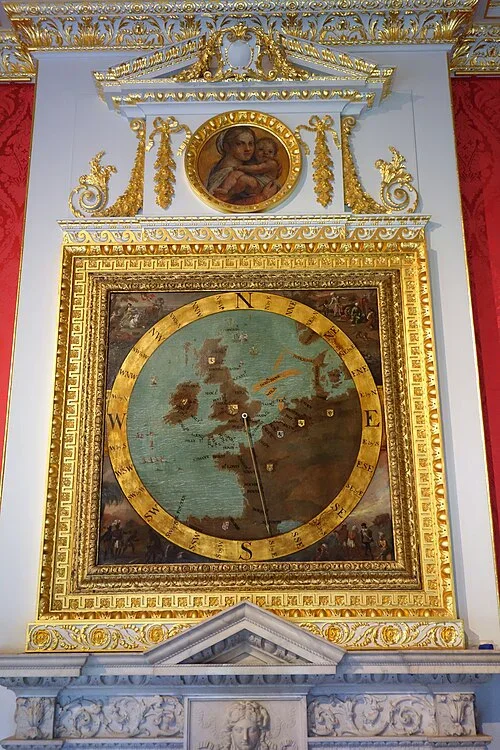 The King's Gallery
The 1694 Wind-Dial
Above the fireplace hangs a survivor from the palace's first royal tenants. This wind-dial of 1694 has a dial by Robert Morden, with the mechanism probably by Thomas Tompion. Around a painted map of the coasts of Europe run the letters of the compass. It belongs to the age of William the Third, the king who chose this house for the sake of his lungs. A court that watched the weather as closely as politics could read the wind without stepping outside. Few objects in the palace carry an exact year. This one does.
Listen in the appPhoto: Daderot · CC0
10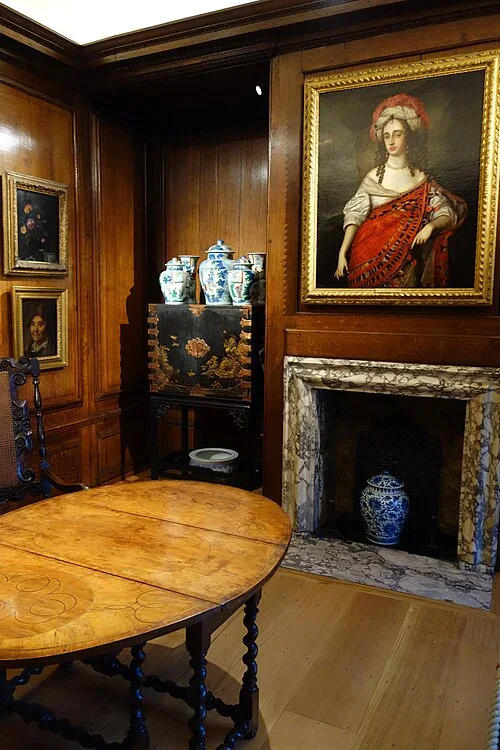 The Queen's State Apartments
The Queen's Dining Room
The reason this palace exists comes down to a pair of lungs. In the summer of 1689, the newly crowned William and Mary went looking for a home away from the Thames. The river's fog and floods threatened William's fragile health. They bought Nottingham House from the Earl of Nottingham for twenty thousand pounds, and sent Christopher Wren to enlarge it. This panelled room is one of the domestic corners they made for themselves. Here the King and Queen took their meals together in private, far from the ceremony of the state rooms. The panelling is seventeenth century, and the room keeps the intimacy it was built for.
Listen in the appPhoto: Daderot · CC0
- 11
The Queen's State Apartments
Mary II's own world of carpets, needlework and friends, and the shallow steps built for Queen Anne.
- 12
Queen Victoria's Birth Room
The room where Victoria was born in 1819, and the strict Kensington System that made her childhood lonely.
- 13
The Privy Council Dress
The faded black silk gown Victoria wore when she was woken as queen and held her first Privy Council.
- 14
The Sunken Garden
Two centuries of garden design, from Wise's great baroque parterre to the Edwardian Sunken Garden of 1908.
- 15
Statue of Diana, Princess of Wales
Diana's home in the palace where she raised her sons, and the bronze that closes the story.
Kensington Palace
Frequently asked questions
How much does the guide cost?
Free app download. Listed guide price: $1.99. Guide price shown in the app. Audio guide only. Venue admission is separate.
Can I listen without internet?
Yes. Download the guide’s audio, images, and maps in the app before your visit. Your downloaded content is then available offline.
Can I listen in my language?
This audio guide is available in 15 languages, including English.
Do I need to follow a schedule?
No. This is a self-guided experience. Choose your stops, pause whenever you like, and return to a story at your own pace.
At your own pace
Explore Kensington Palace.
Download Stanza, then search for “Kensington Palace”.
Free app download · Guide price shown in the app
Keep exploring
Nearby audio guides
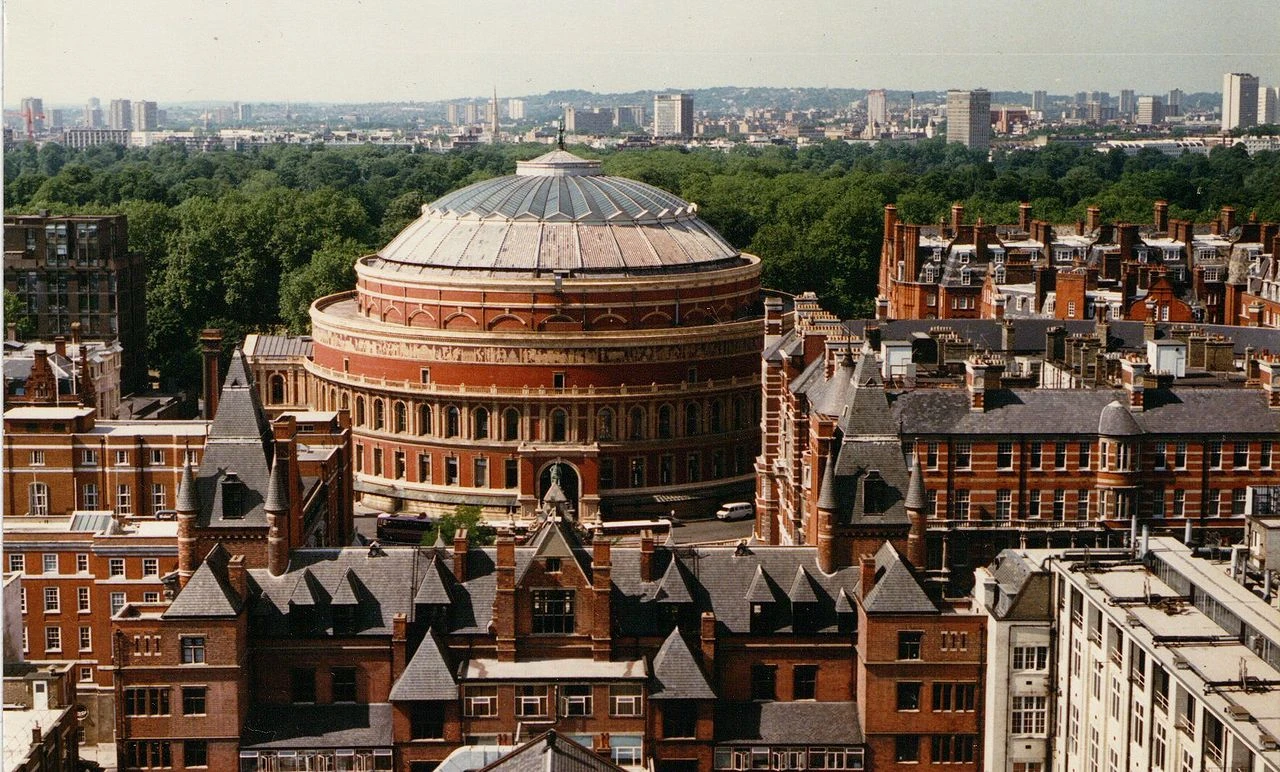
London · 1 km
Royal Albert Hall
Content & sources
Sandpiper · Public domain
London · 3 km
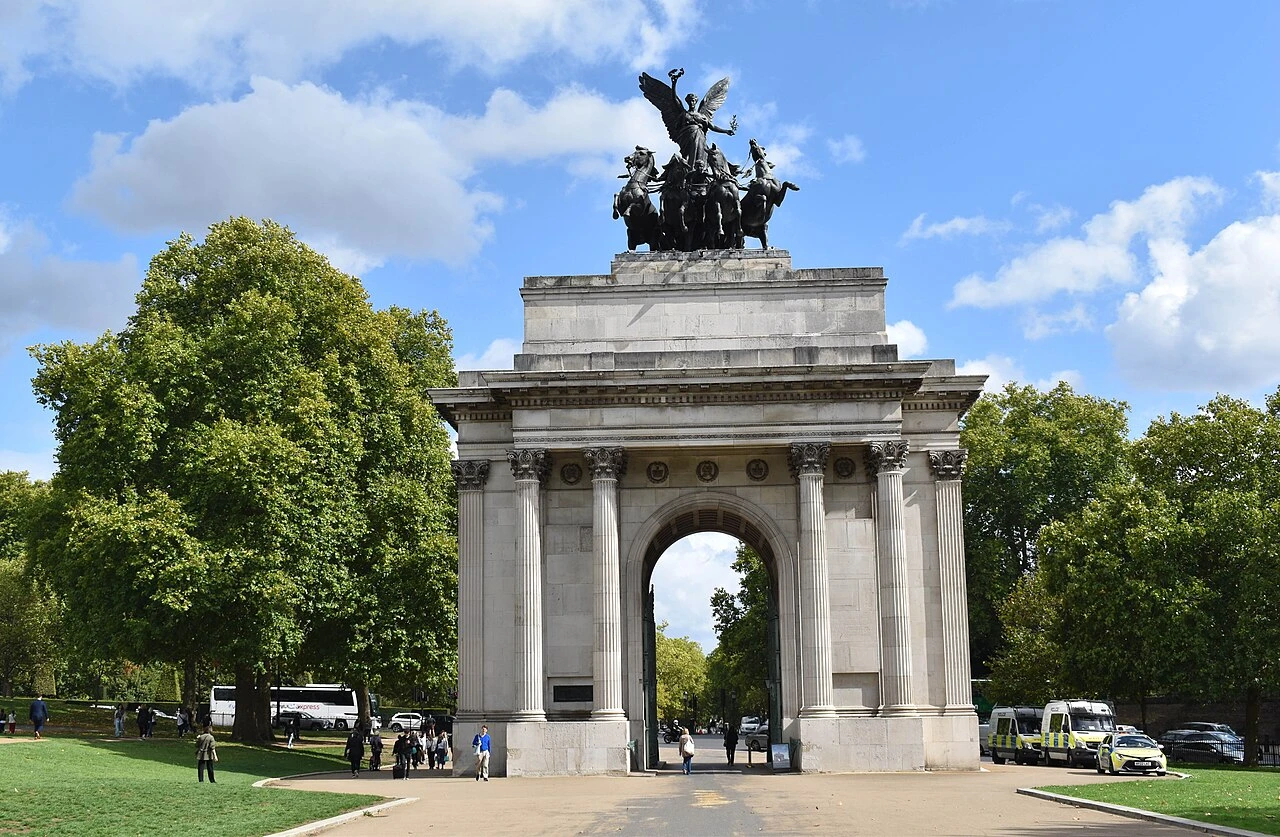
Wellington Arch
Content & sources
Photo: Canaan · CC BY-SA 4.0
London · 3 km
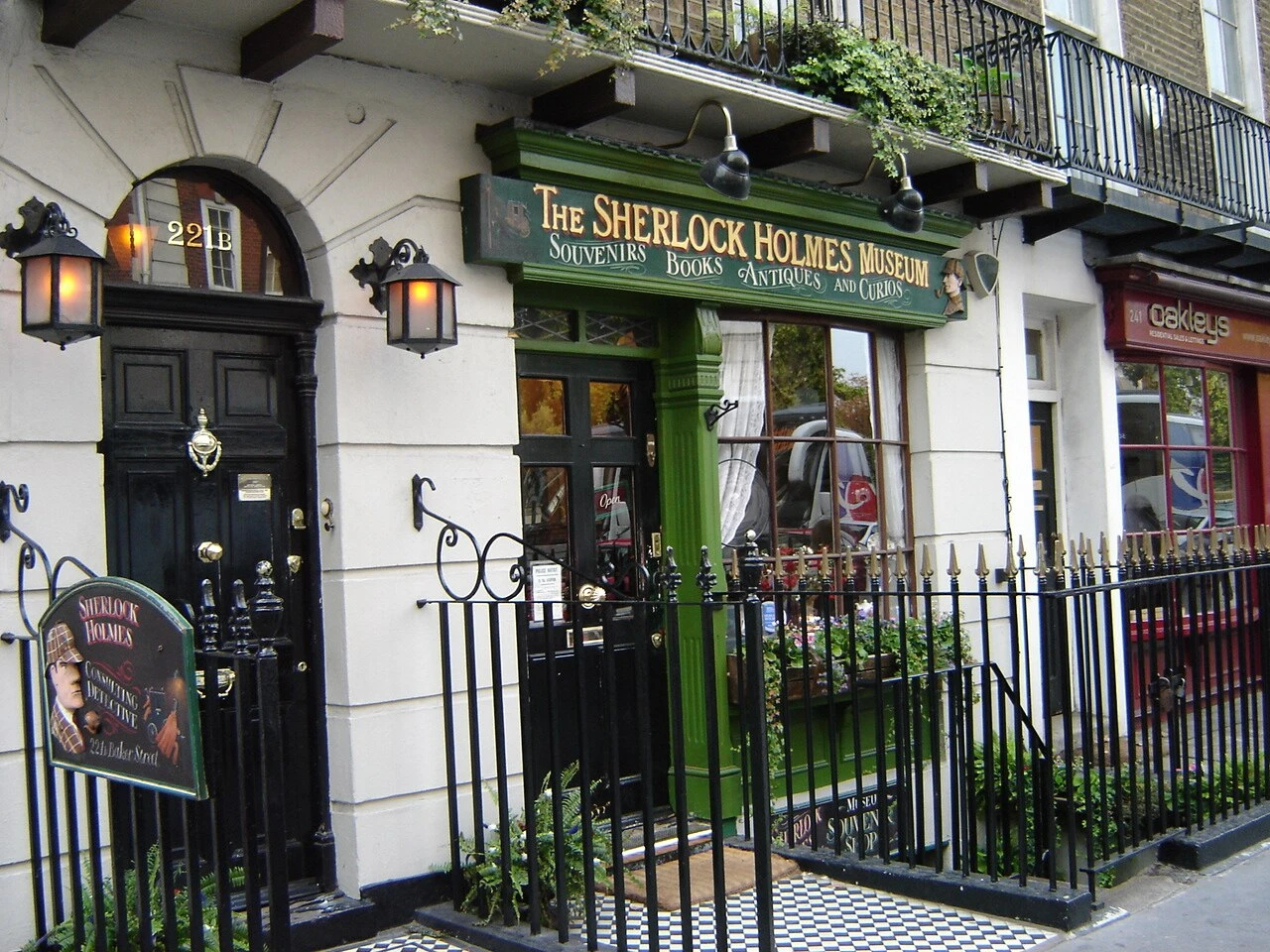
Sherlock Holmes Museum
Content & sources
Jordan 1972 (talk) · Public domain
London · 3 km
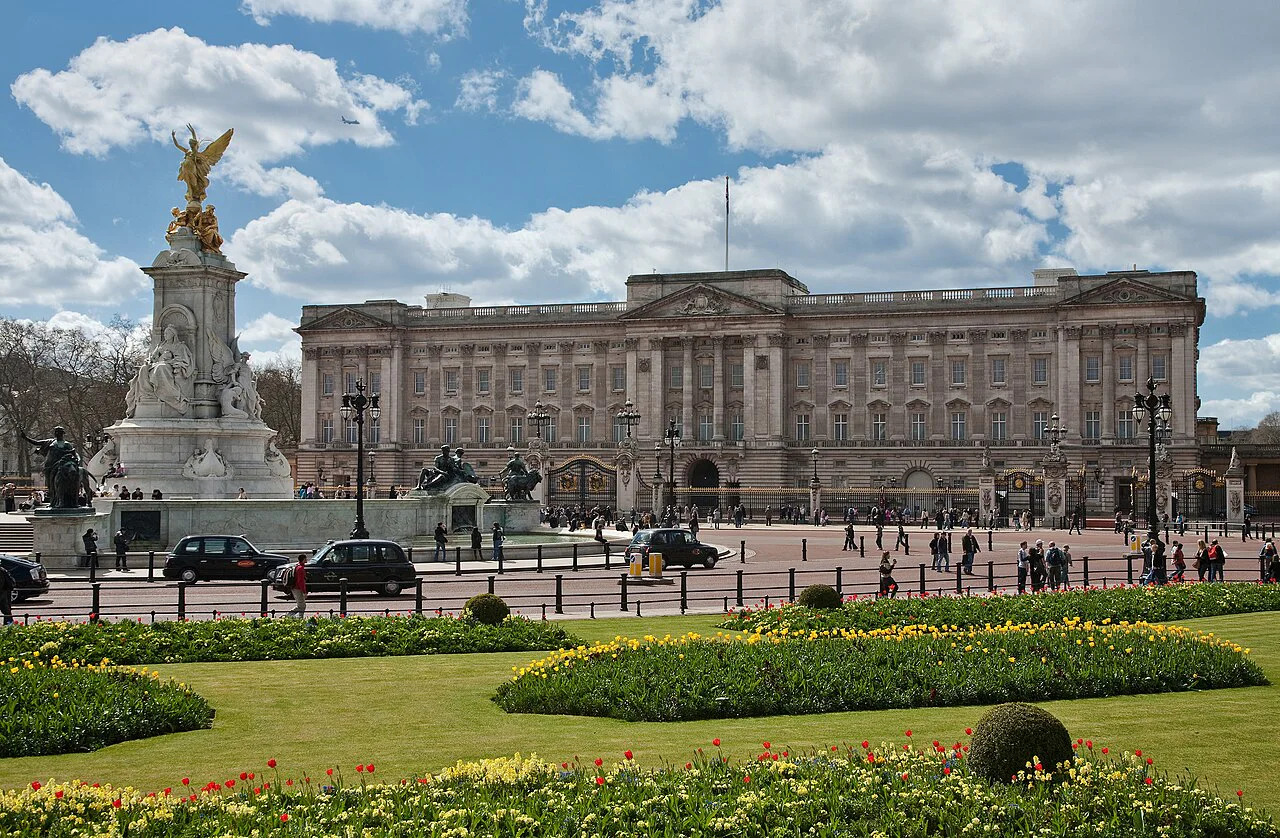
Buckingham Palace
Content & sources
Photo: Diliff · CC BY-SA 3.0