Languages
15Leeds Castle Audio Guide
Leeds Castle is a landmark in Maidstone, United Kingdom. Explore it with Stanza's GPS-triggered offline audio guide — available in 15 languages.
Quick Facts
29
Stops
15
Languages
100%
Offline
📍 Maidstone, United Kingdom · 51.2489°N, 0.6300°E
About Leeds Castle
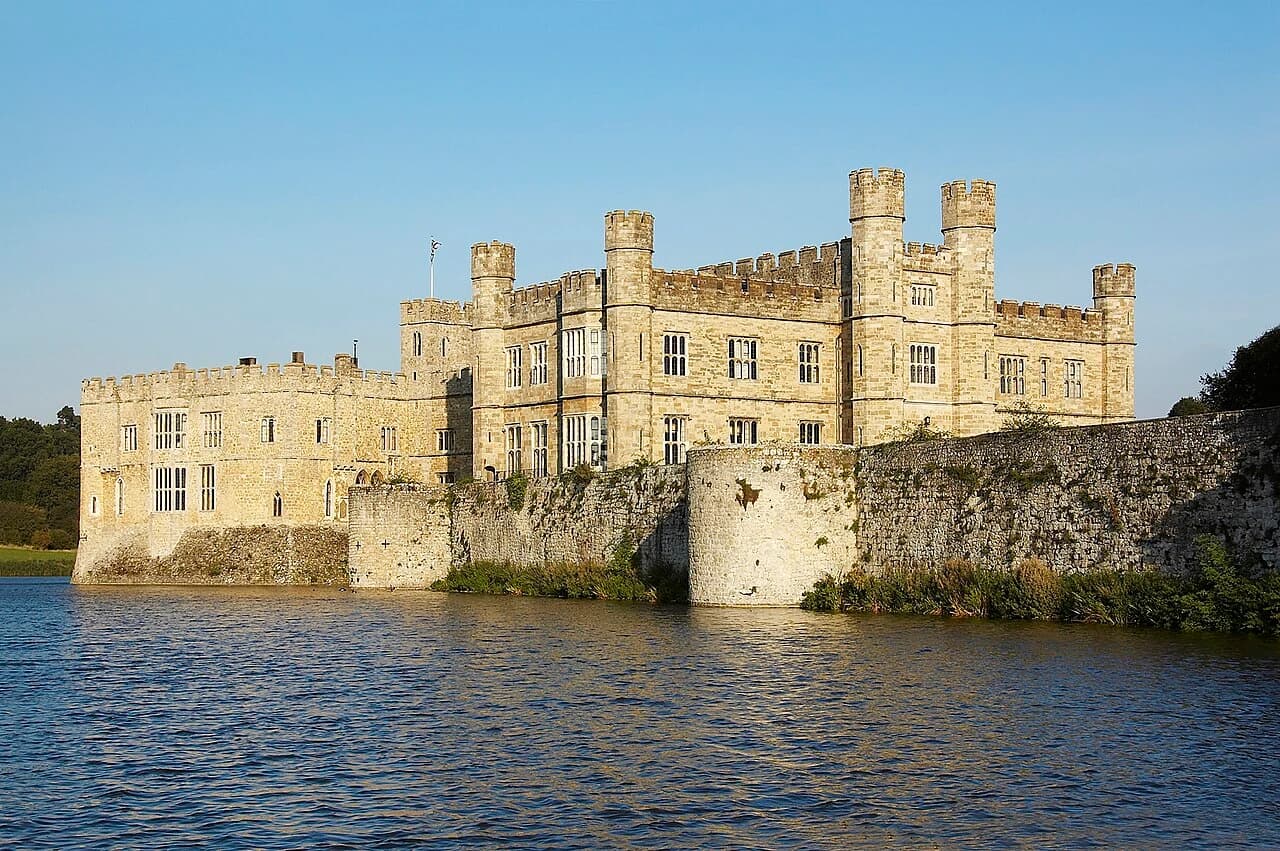
Leeds Castle is a historic castle located in Kent, England, renowned for its picturesque setting on two islands within a lake. It has served as a Norman stronghold, a royal residence for six medieval queens, and a palace for Henry VIII.
This self-guided audio tour features 29 narrated stops organized across 6 sections, including The Barbican and Gatehouse, The Front Lawn and Moat View, The Banqueting Hall and Tudor Splendor, The Gloriette and Royal Apartments, Lady Baillie's 1930s Salon, Reflections on the Great Water. As a castle, Leeds Castle offers a unique cultural experience in the heart of Maidstone, United Kingdom.
The Stanza audio guide is available in 15 languages and works entirely offline — download the complete tour including audio narration, maps, and images before your visit. As you walk through Leeds Castle, GPS-triggered narration plays automatically at each point of interest.
Last updated:
What you will hear
The Barbican and Gatehouse
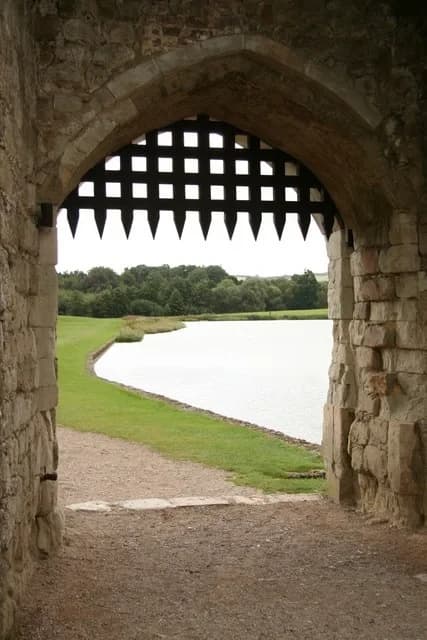
The tour begins at the defensive threshold, featuring the verified ruins of the barbican and the main gatehouse that has guarded the island for centuries.
The Barbican Portcullis
The heavy portcullis standing before you is a quintessential symbol of medieval defense. This vertical sliding gate was used to seal off the entrance quickly in times of danger. Beyond its mechanical function, this specific spot is tied to a dramatic moment in English history: the Siege of Leeds Castle in 1321. At that time, the castle was held by Lady Badlesmere, the wife of the castle's governor. When Queen Isabella, wife of King Edward II, sought entry while traveling on a pilgrimage to Canterbury, Lady Badlesmere refused her. In a bold act of defiance, she ordered her archers to fire from these very defenses, resulting in the deaths of several members of the Queen's party. This insult could not go unpunished. King Edward II arrived with a massive force to lay siege to the castle. Lady Badlesmere held out for several days, but the sheer size of the royal army eventually forced a surrender. She was subsequently imprisoned in the Tower of London. The portcullis serves as a silent witness to such power struggles, illustrating the era when a castle's walls and gates were the final line of defense against royal wrath.
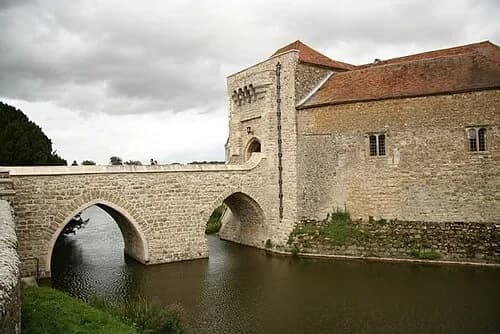
The Gatehouse Bridge
Crossing the bridge allows for a close examination of the castle's architectural layers, reflecting its 1,200-year evolution. This structure represents the physical transition from a rugged medieval fortress to an elegant royal palace. If you look closely at the stonework, you can see the contrast between the various periods of construction. The lower, more weathered stones form the ancient foundations that have supported the castle through centuries of change, while the upper sections reflect later renovations and stylistic updates. This site has undergone a remarkable transformation, moving from the initial timber fort of the 9th century to the stone Norman stronghold of the 12th century, and eventually into the favored residence of royalty. For centuries, the bridge was a vital link between the mainland and the secure islands. As the need for defense waned in later centuries, the architecture became less about repelling enemies and more about displaying the wealth and status of its owners. This span is not just a walkway over the water; it is a timeline in stone, showing how a single location can adapt to the needs of different eras while maintaining its essential character as a prestigious island retreat.
The Front Lawn and Moat View
This area provides the iconic 'floating' view of the castle across the moat, where visitors can appreciate its unique position on two natural islands.
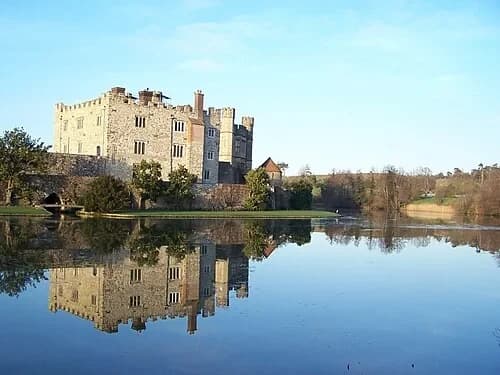
The Floating Palace
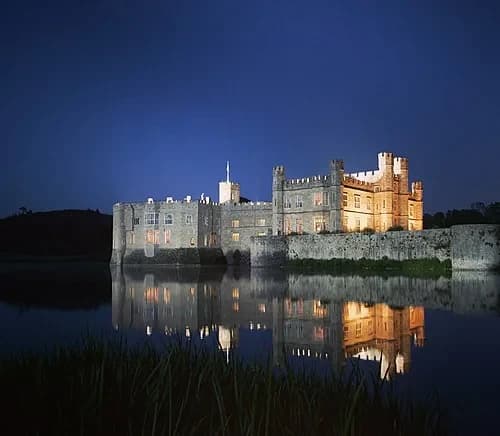
Leeds Castle is famously known as 'the loveliest castle in the world,' a title it owes largely to the breathtaking visual effect of its stone walls rising directly out of the water. This unique appearance is not entirely natural; it is a masterpiece of landscape engineering. The River Len was purposefully dammed to create the 'Great Water,' an expansive lake that surrounds the islands. This wide expanse of water creates a mirrored surface, reflecting the towers and battlements and doubling the castle's visual impact. This 'floating' effect was highly prized by the castle's many royal and noble inhabitants, who sought to blend defensive security with unparalleled beauty. On a calm day, the reflection is almost perfect, blurring the line between the solid stone and the liquid depths. This aesthetic choice transformed the site from a purely functional military garrison into a scenic marvel. As you look across the water, you can appreciate why this location was chosen by six medieval queens and later by 20th-century socialites. It is a place where architecture and nature exist in a carefully managed harmony, designed to impress and enchant anyone who approaches the estate.
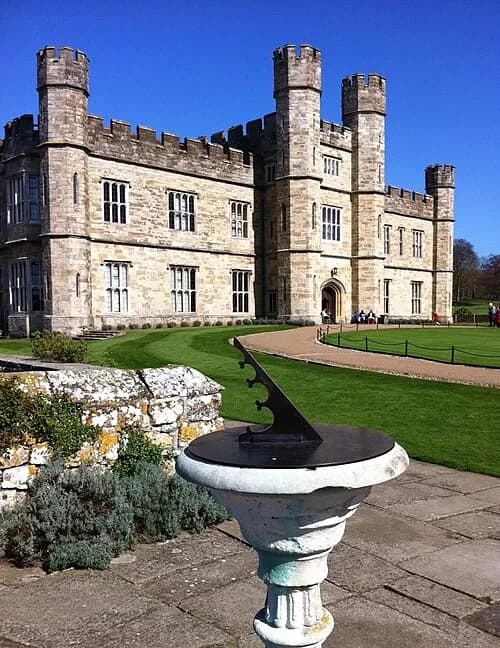
The Fairfax Sundial
Standing on the grounds is a quiet but significant artifact known as the Fairfax Sundial. This object serves as a physical link to a fascinating chapter of the castle's history: its ownership by the Culpeper and Fairfax families during the 17th and 18th centuries. These families were not just prominent in English society; they were also major players in the American colonies. At one point, the Fairfax family owned millions of acres in Northern Virginia, an area roughly equivalent to the size of modern-day Wales. Thomas Fairfax, the 6th Lord Fairfax, eventually emigrated to Virginia in 1747 to manage these vast estates, becoming the only resident peer in the American colonies. He was a mentor and employer to a young George Washington, who worked as a surveyor on the Fairfax lands. This sundial stands as a symbol of that colonial bridge, connecting the ancient stone of a Kentish castle to the burgeoning history of the United States. It reminds us that the stories of Leeds Castle often reached far beyond the borders of England, influenced by the wealth and political power generated in the New World. It is a small marker of a global legacy that once centered on these very grounds.
The Banqueting Hall and Tudor Splendor
Entering the main house, this area highlights the 16th-century transformation led by Henry VIII for Catherine of Aragon.
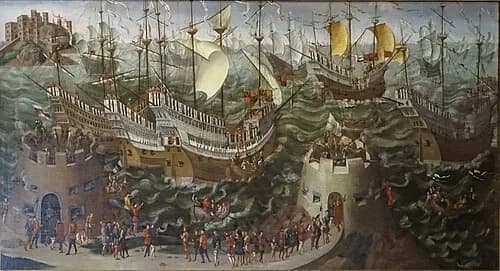
Field of the Cloth of Gold
This large-scale painting depicts one of the most famous diplomatic events in European history: the Field of the Cloth of Gold. In June 1520, King Henry VIII of England and King Francis I of France met in a valley near Calais for a summit intended to strengthen the bond between their two nations. The name of the event comes from the staggering amount of cloth of gold—an expensive fabric woven with silk and gold thread—used for the tents and costumes of the participants. The painting captures the incredible scale of the encampment, showing a sea of ornate tents and thousands of followers, soldiers, and courtiers. The event was a masterpiece of pageantry, featuring tournaments, feasts, and displays of wealth that were meant to impress. Although the diplomatic goals were not fully realized, the meeting became a legend of the Tudor age. Its presence here at Leeds Castle is highly appropriate, as the castle was one of Henry VIII's own favored residences during this peak of his power. This artwork illustrates the royal status of the castle and the high-stakes political world in which its owners moved, where every detail was designed to project authority and magnificence on the world stage.
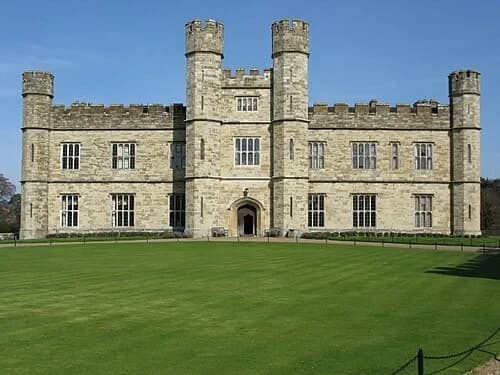
The Grand Entrance
As you stand before the main entrance of the castle, you are following in the footsteps of hundreds of thousands of visitors. In 2019 alone, over 539,000 people passed through these grounds to explore its secrets. This doorway serves as a portal between two very different worlds. On one hand, it leads into the heart of a medieval royal residence that was home to six queens and transformed by King Henry VIII. On the other hand, it opens into the world of 1930s high society, shaped by its last private owner, Lady Baillie. The entrance marks the transition from the rugged outdoor landscape of moats and stone walls to the refined interior spaces of a luxury country house. Inside, you will find a blend of historic architecture and exquisite 20th-century interior design. This mix of eras is what makes Leeds Castle unique; it is a living history that has been continuously inhabited and updated for over a thousand years. As you prepare to enter, imagine the varied guests who have crossed this threshold—from medieval monarchs and their entourages to Hollywood stars and world leaders. The grand entrance is your invitation to discover how the castle has served as a fortress, a palace, and a home.
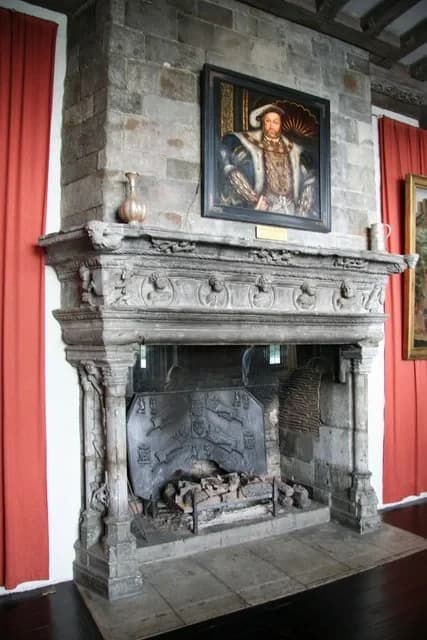
The Banqueting Hall Fireplace
The Banqueting Hall is one of the most significant rooms in the castle, and its centerpiece is the magnificent stone fireplace. This grand feature dates from the early 16th century, specifically the period around 1519 when King Henry VIII undertook a major renovation of Leeds Castle. He transformed the medieval fortress into a comfortable royal residence for his first wife, Catherine of Aragon. The fireplace is adorned with elaborate carvings that reflect the craftsmanship of the Tudor era, featuring heraldic motifs and intricate patterns that would have been a display of royal status during grand feasts. Mounted above the fireplace is a striking portrait of Henry VIII himself, a dominant presence in a room that he helped define. During his reign, the castle was a frequently visited royal retreat. The banqueting hall served as the social heart of the palace, a place where the king and queen would host important guests and celebrate festive occasions. The fireplace would have provided essential warmth, but its primary role was as a statement of power and luxury. Today, it remains one of the finest examples of Tudor interior architecture within the castle, offering a glimpse into the opulent world of one of England's most famous monarchs.
The Gloriette and Royal Apartments
The oldest part of the castle, the Gloriette, contains the intimate rooms used by six medieval queens of England.
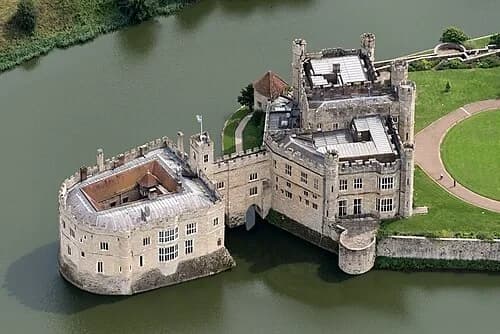
The Gloriette and Inner Island
The structure you see here is known as the 'Gloriette,' the oldest part of the stone castle. It is situated on the smaller and more secure of the two islands that make up the site. Its name is derived from a Spanish word for a pavilion or summer house, reflecting its role as a more private, royal retreat. Built primarily in the late 13th century during the reign of King Edward I, the Gloriette contains the most historic royal apartments within the entire complex. Because of its position on the inner island, the Gloriette was the final redoubt of the castle's defenses. If an enemy breached the main island and the gatehouse, the inhabitants could withdraw here across a narrow, easily defensible span. Inside these thick stone walls are the chambers that once housed medieval queens and kings, designed to offer both security and a level of comfort that was rare for the period. The building's irregular shape follows the natural contours of the small island it sits upon, creating a maze of intimate rooms and narrow corridors. Today, the Gloriette stands as a testament to the medieval heart of Leeds Castle, a sanctuary that has survived centuries of change and conflict.
Lady Baillie's 1930s Salon
This area showcases the French-inspired luxury of the 20th-century heiress Olive, Lady Baillie, who hosted Hollywood royalty here.
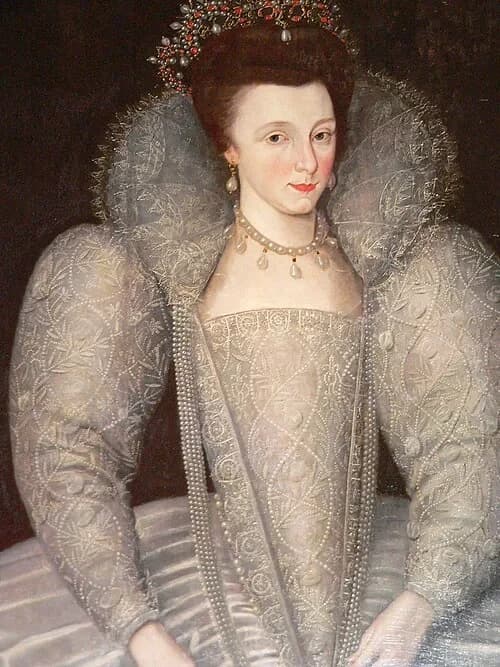
Portrait of Elizabeth Wriothesley, Countess of Southampton (née Vernon)
Marcus Gheeraerts the Younger · 1595 · oil paint
This portrait of Elizabeth Wriothesley, the Countess of Southampton, offers a fascinating glimpse into the status and wealth of the castle's past inhabitants during the Elizabethan era. Notice the extraordinary detail in her clothing, which was a clear statement of her high social standing. She wears an elaborate ruff of fine, intricate lace, a hallmark of the period that required immense skill and expense to produce and maintain. Her gown is heavily adorned with pearls and delicate embroidery, illustrating the vast resources available to the nobility. Even her hairstyle is a work of art, intricately styled and pinned with jewels. Portraits like this were far more than just likenesses; they were powerful tools for displaying prestige, lineage, and political connections. The sheer volume of the sleeves and the rigidity of the bodice reflect the formal, structured fashion of the time, designed to project an image of power and untouchable grace. As you look at the Countess, consider how the walls of Leeds Castle have, for centuries, been decorated with such images of the people who shaped its history, each one leaving a permanent visual record of their time, influence, and personal style within these ancient stone walls.
Reflections on the Great Water
The tour concludes with a panoramic view of the 'Loveliest Castle in the World' as it sits reflected in the lake formed by the River Len.
The Legacy of Lady Baillie
As our tour comes to an end, it is worth reflecting on how Leeds Castle came to be the public treasure it is today. Much of the credit goes to Olive, Lady Baillie, the castle's last private owner. Upon her death in 1974, she made the visionary decision to leave the castle, its contents, and the surrounding estate to a private charitable trust: the Leeds Castle Foundation. Her primary goal was to ensure that 'The Loveliest Castle in the World' would never again fall into private hands but would instead be preserved and remain open to the public forever. This act of generosity has allowed millions of people to walk through these halls and explore these gardens, experiencing for themselves the rich tapestry of English history contained within these walls. The trust continues to manage the estate with great care, balancing the needs of conservation with the goal of providing an engaging and educational experience for all. Lady Baillie’s legacy is visible in every carefully restored room and every blooming garden bed, ensuring that the magic and history of Leeds Castle continue to inspire and delight visitors from around the world for centuries to come.
Want to hear the rest?
Download the Stanza app to unlock all 29 stops and full GPS-guided navigation.
Frequently Asked Questions
How long does the Leeds Castle audio tour take?
The Leeds Castle audio guide includes 29 narrated stops. Most visitors spend 45 minutes to 1.5 hours exploring the complete tour, though you can listen at your own pace and skip or revisit any stop.
Is the Leeds Castle audio guide available in my language?
Stanza supports 15 languages: English, Spanish, French, German, Italian, Portuguese, Russian, Japanese, Chinese, Korean, Arabic, Hindi, Polish, Dutch, Hebrew. Check the guide in the app to confirm the languages currently available for this tour.
Can I use the audio guide offline at Leeds Castle?
Yes! Download the complete Leeds Castle tour — including all audio, maps, and images — before your visit. The Stanza app works completely offline, so you don't need WiFi or mobile data at the venue.
How much does the Leeds Castle audio guide cost?
The Stanza app is free to download. The current listed price for the Leeds Castle audio guide is $1.99; app-store region and currency may affect the final price.
How do I use the Stanza audio guide at Leeds Castle?
Download the free Stanza app, search for "Leeds Castle", and download the tour. When you arrive at the venue, the app uses GPS to detect your location and automatically plays the relevant narration as you move between points of interest — completely hands-free.
What makes the Stanza audio guide different from other Leeds Castle tours?
Stanza offers GPS-triggered narration that plays automatically as you walk through Leeds Castle — no need to manually select stops. The tour is available in 15 languages, works fully offline, and includes 29 expertly narrated stops with images and historical context.
What other audio guides are available near Leeds Castle?
Stanza offers multiple audio guides in Maidstone, United Kingdom and nearby areas. After downloading the app, browse the map to discover all available tours near Leeds Castle. Each guide can be downloaded for offline use.