Stanza · Audio guide
Isca Augusta Audio Guide
A place to remember. A story to take with you.
Isca Augusta was the site of a Roman legionary fortress and settlement. The site includes the Caerleon Amphitheatre and its remains lie beneath the town of Caerleon.
Download Stanza, then search for “Isca Augusta”.
About the tour
One guide. Your kind of visit.
Isca Augusta was the site of a Roman legionary fortress and settlement. The site includes the Caerleon Amphitheatre and its remains lie beneath the town of Caerleon.
Ready when you are.
- 01Get the free Stanza app.
iOS & Android
- 02Find your guide.
“Isca Augusta”
- 03Download before you go.
Works offline
Audio guide / 13 narrated stops
Inside the guide
Get to know a few of the stories before you go. Open a stop to read more.
01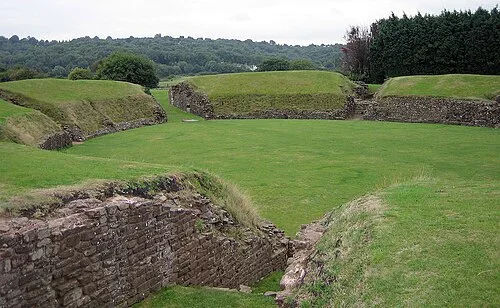 Caerleon Roman Amphitheatre
Caerleon Amphitheatre Arena
Welcome. This tour covers Isca Augusta, a Roman legionary fortress whose remains lie beneath the fields and streets of Caerleon. The name Isca comes from the local Brythonic language, and it means water. It refers to the River Usk. The fortress was founded in 74 or 75, during the last campaigns of the governor Sextus Julius Frontinus. His soldiers were fighting the Silures of South Wales, who had resisted Rome for over a generation. Isca became the headquarters of the Second Augusta legion. It was one of only three permanent legionary fortresses in later Roman Britain. Unlike Chester and York, its remains have stayed relatively undisturbed. That makes Isca uniquely important for studying how Rome conquered and settled Britain. The amphitheatre, or arena, could hold around six thousand spectators. Besides the usual gladiator contests, it was probably used for displays and training by the soldiers. Local people once knew it as King Arthur's Round Table, because of its rounded shape. There is no known link between the site and King Arthur.
Photo: Joris · CC BY 2.0
02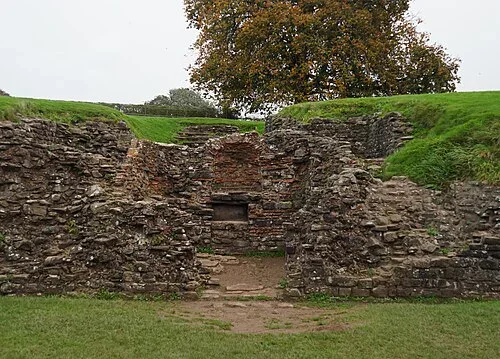 Caerleon Roman Amphitheatre
Amphitheatre East Entrance
The first amphitheatre at Caerleon went up around 80. Fire destroyed it in the early second century. A second building went up around 138. About sixty years later, that one was destroyed as well. The third and last version was rebuilt during the campaigns of Septimius Severus and Caracalla in Britain. The arena had eight entrances, and passages like this one let crowds and performers in and out. Reddish brick shows among the stone of the central wall. The building fell out of use around the middle of the fourth century, as the fortress was being evacuated.
Photo: Otter · CC BY-SA 4.0
03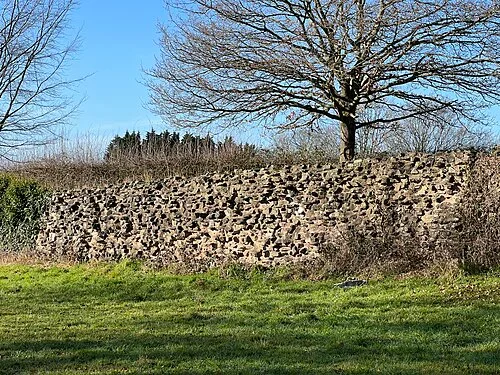 Roman Fortress Defences and Ramparts
Roman Fortress Wall at Caerleon
An inscription naming the emperor Trajan dates the replacement of the fortress walls to 99 or 100. Before that, the ramparts were earth and timber. Now a stone face was built along their front. The stone wall was five to five and a half feet thick. Behind it lay a clay bank, and in front ran a single ditch. The aim was to strengthen the defences in a province with hostile neighbours. Grass grows at the foot of the stone today. In places, the wall still stands twelve feet high.
Listen in the appJonathan Hutchins · CC BY-SA 2.0
04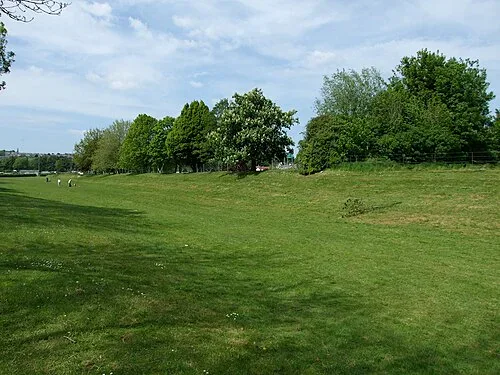 Roman Fortress Defences and Ramparts
Grassy Bank Beside Open Ground
Grass covers the slopes now, but Isca began as a fortress of the typical legionary shape, like a playing card. Its first defences were an earth bank and a palisade, a fence of upright logs. Inside stood the buildings a legion needed: a headquarters, the legate's residence for the legion's commander, houses for the tribunes, a hospital, workshops, barrack blocks and granaries. In the new fortress of 75, almost everything was earth and timber. The one building believed to have been of stone from the start was the bath house. Outside the fortress lay the area called the canabae. In the late twentieth century, archaeologists found a complex of very large monumental buildings there, between the River Usk and the amphitheatre. Nobody had known that part of the site existed before.
Listen in the appAlun Salt from Radnorshire, UK · CC BY-SA 2.0
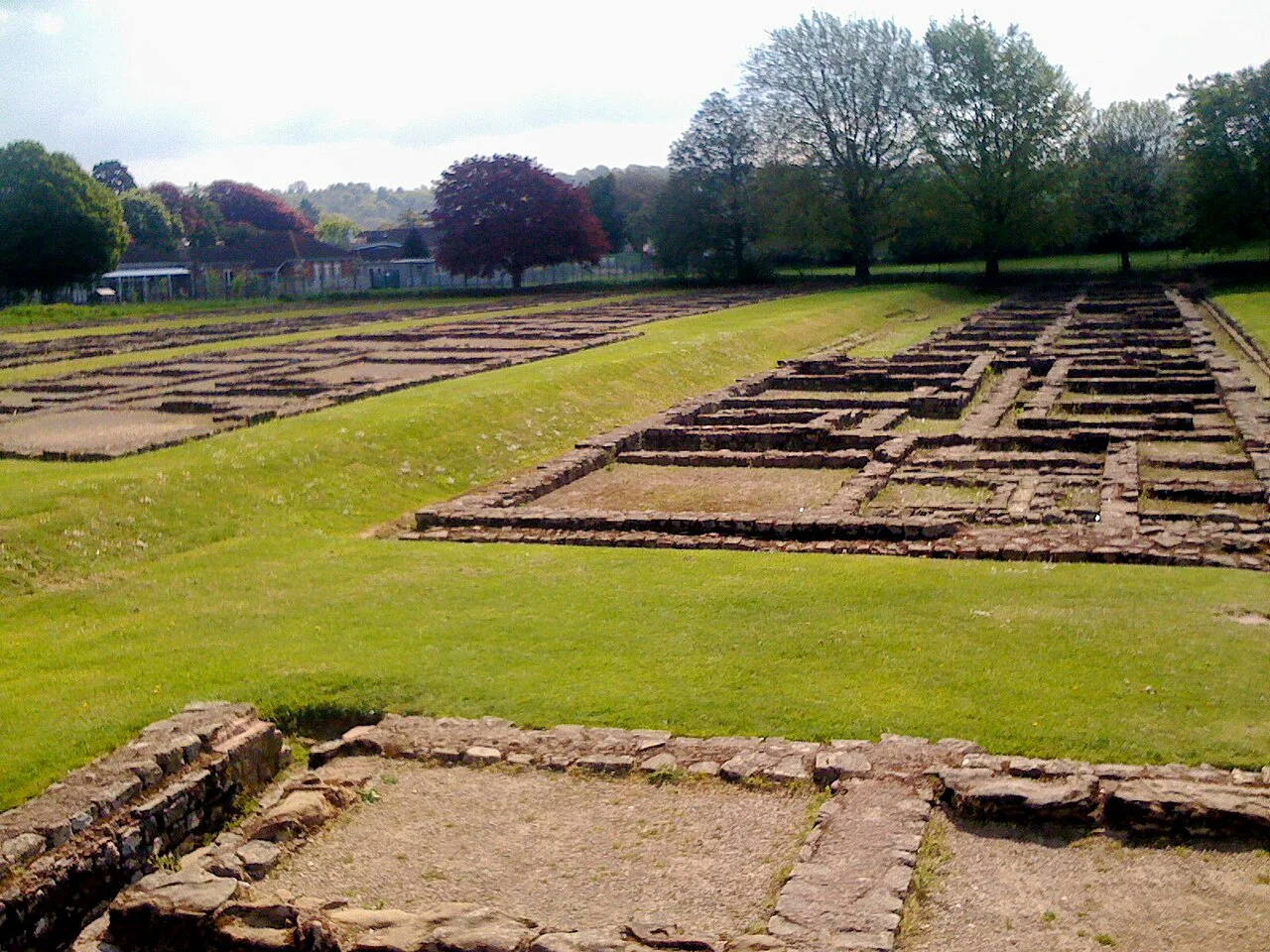
05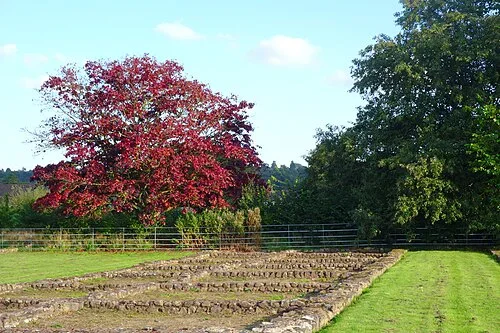 Prysg Field Legionary Barracks
Barrack Foundations in Autumn
Low stone foundations in neat rows mark where soldiers lived at Prysg Field. They form a grid of rectangular rooms, with a tree in full red autumn leaf behind them. Prysg Field Barracks is described as the only Roman legionary barracks visible in Europe. The men who lived here were organised in small groups of eight, each called a contubernium, a word that first meant tent-mates. On campaign the eight shared a tent, a millstone, a mule and a cooking pot. Ten of these groups made up a century, about eighty men under a centurion, and the legion was built from such centuries.
Listen in the appPhoto: WelshDave · CC BY-SA 4.0
06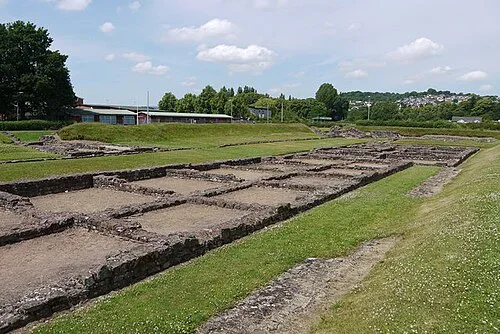 Prysg Field Legionary Barracks
Barrack Block Foundations
When Septimius Severus seized power in the 190s, he had Isca refurbished. The legion was in residence then, rebuilding itself after heavy losses on the Continent. Stone walls that survive outline the rooms of a barrack block. Under Caracalla, the barrack blocks were re-roofed and otherwise repaired. By the late third century, most of the fort lay empty. Historians think a caretaker squad kept the facilities going. Some reoccupation and rebuilding went on as late as the 270s.
Listen in the appNigel Mykura · CC BY-SA 2.0
07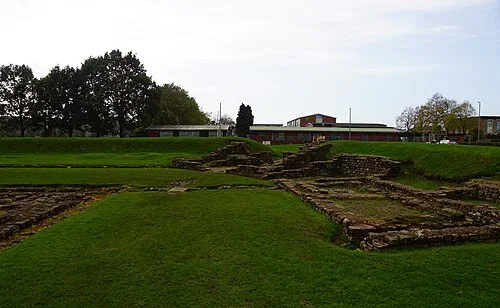 Prysg Field Legionary Barracks
Prysg Field Barracks with Modern Buildings Beyond
In the late third century, the fortress's main military buildings are thought to have been pulled down. This was done under Carausius or Allectus, two men who seized power in Britain for themselves. The legion was needed to repel a possible invasion from the Continent. The stone may have been used to build defences on the south coast. In time the fortress was probably taken over by people from the settlement around it. Later still, the basilica of the baths, a big hall, was used as a cattle pen.
Listen in the appPhoto: Otter · CC BY-SA 4.0
08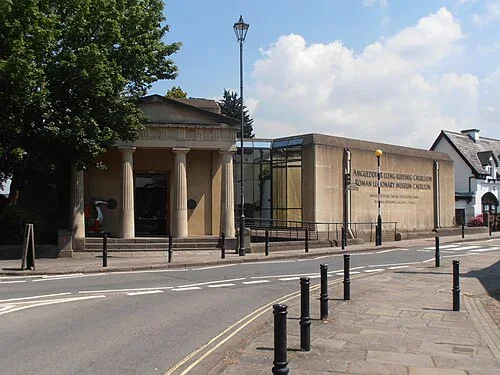 National Roman Legion Museum
The columned entrance is older than the rest of the museum. The first museum here was the Antiquarian Museum of 1850, designed by H. F. Lockwood of Hull. It was a plain building of Bath stone with a Doric portico, and its builders reused stone from Caerleon's Old Market House. It was listed as a historic building in 1951, but in 1987 it was largely demolished during a rebuilding and enlargement. Only the portico survives. The modern building beside it replaced the rest. Inside are finds from excavations across Caerleon and from Burrium, the Roman town at Usk, among them Roman currency, weapons and items of uniform. The museum is part of Amgueddfa Cymru, Museum Wales.
Listen in the appHam · CC BY-SA 3.0
09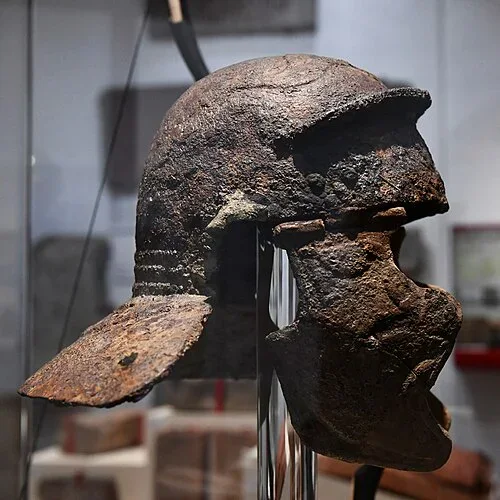 National Roman Legion Museum
Early Iron Legionary Helmet
Corrosion has roughened the surface of this helmet, but its shape is still clear. A broad flap at the back guards the neck, and cheek pieces hang down at the sides. A helmet like this is the kind of protection a Roman legionary wore. Each legion had over five thousand professional soldiers, heavily armed and highly disciplined. They signed up for at least twenty years. The Second Augusta, the legion based at Isca, took part in the invasion of Britain. That invasion came under the emperor Claudius, in 43.
Listen in the appMichael Garlick · CC BY-SA 2.0
10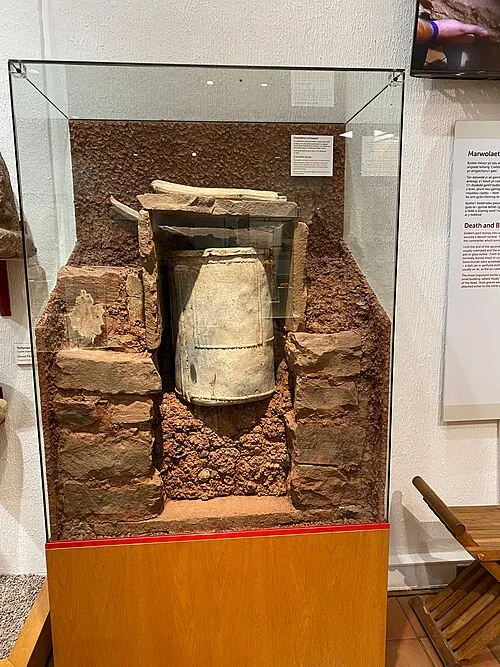 National Roman Legion Museum
Pipe Burial Display
A pipe stands upright in a pit, with brick walls rising on either side of it. This case shows how a burial of this kind was arranged. The real grave was found in 1927, when building work across the River Usk from the fortress exposed a stone-lined tomb. Inside was a lead canister holding cremated bone from an adult, and a piece of linen with traces of frankincense from the funeral rites. The archaeologist Mortimer Wheeler studied the find and took the canister to the Caerleon museum. The pipe reached up to the ground surface. Relatives could pour blood or wine down it, to feed the soul of the dead person. Pipe burials are uncommon in Britain.
Listen in the appPhoto: UndercoverClassicist · CC BY-SA 4.0
- 11
Swimming Pool (Natatio) in the Fortress Baths
The natatio, the large swimming pool of the fortress bath house, now lit with blue light.
- 12
Underfloor Heating Pillars in the Fortress Baths
How Roman bath houses were warmed from below, through a hollow space under the floor.
- 13
The Gorgon's Head and the Martyrs Aaron and Julius
A carved gorgon's head on a round basin, and the protective images Romans often placed in baths.
Isca Augusta
Frequently asked questions
How much does the guide cost?
Free app download. Listed guide price: $0.99. Guide price shown in the app. Audio guide only. Venue admission is separate.
Can I listen without internet?
Yes. Download the guide’s audio, images, and maps in the app before your visit. Your downloaded content is then available offline.
Can I listen in my language?
This audio guide is available in 15 languages, including English.
Do I need to follow a schedule?
No. This is a self-guided experience. Choose your stops, pause whenever you like, and return to a story at your own pace.
At your own pace
Explore Isca Augusta.
Download Stanza, then search for “Isca Augusta”.
Free app download · Guide price shown in the app
Keep exploring
Nearby audio guides
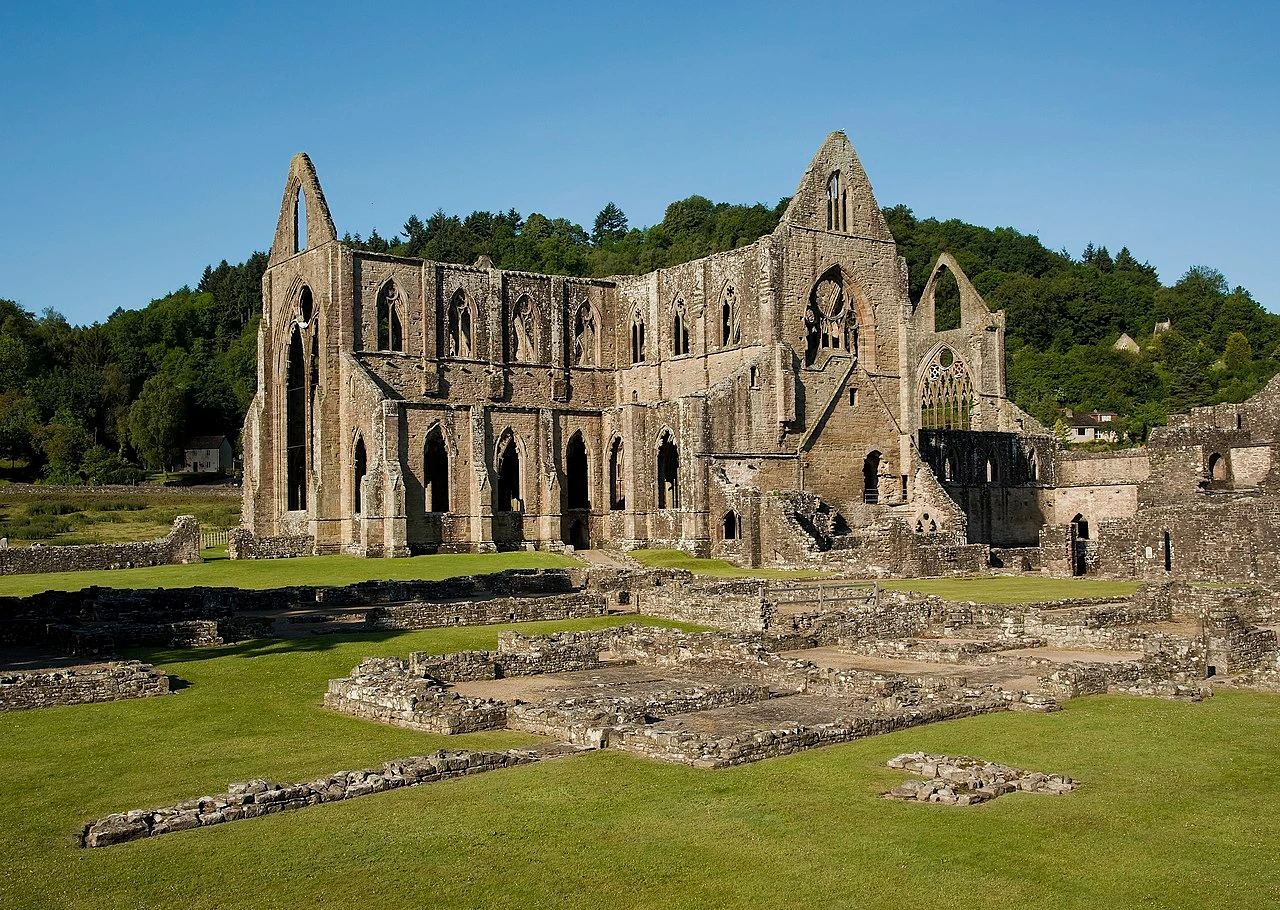
Tintern · 22 km
Tintern Abbey
Content & sources
Photo: Saffron Blaze · CC BY-SA 3.0
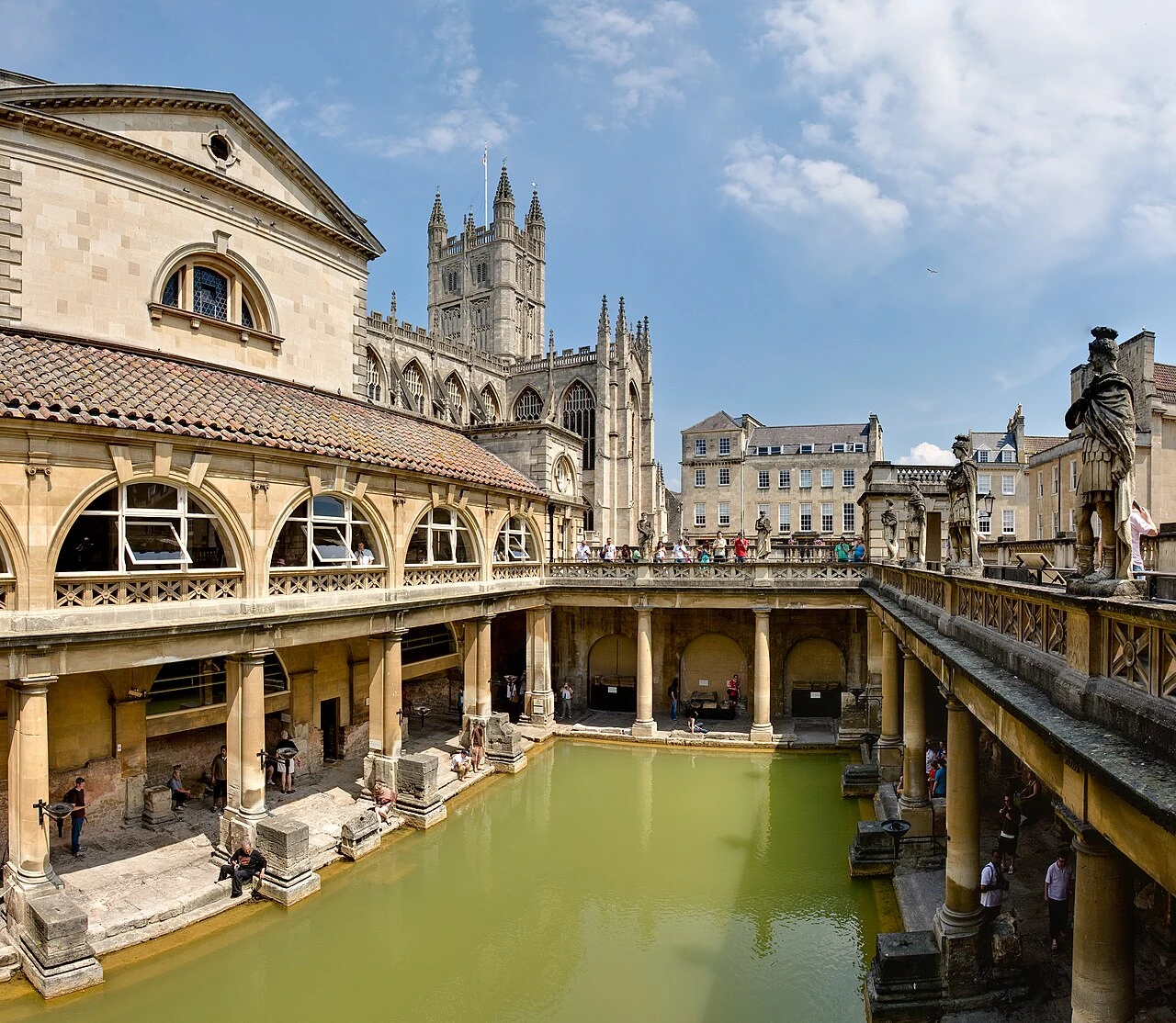
Bath · 49 km
Roman Baths
Content & sources
Photo: Diliff · CC BY 2.5
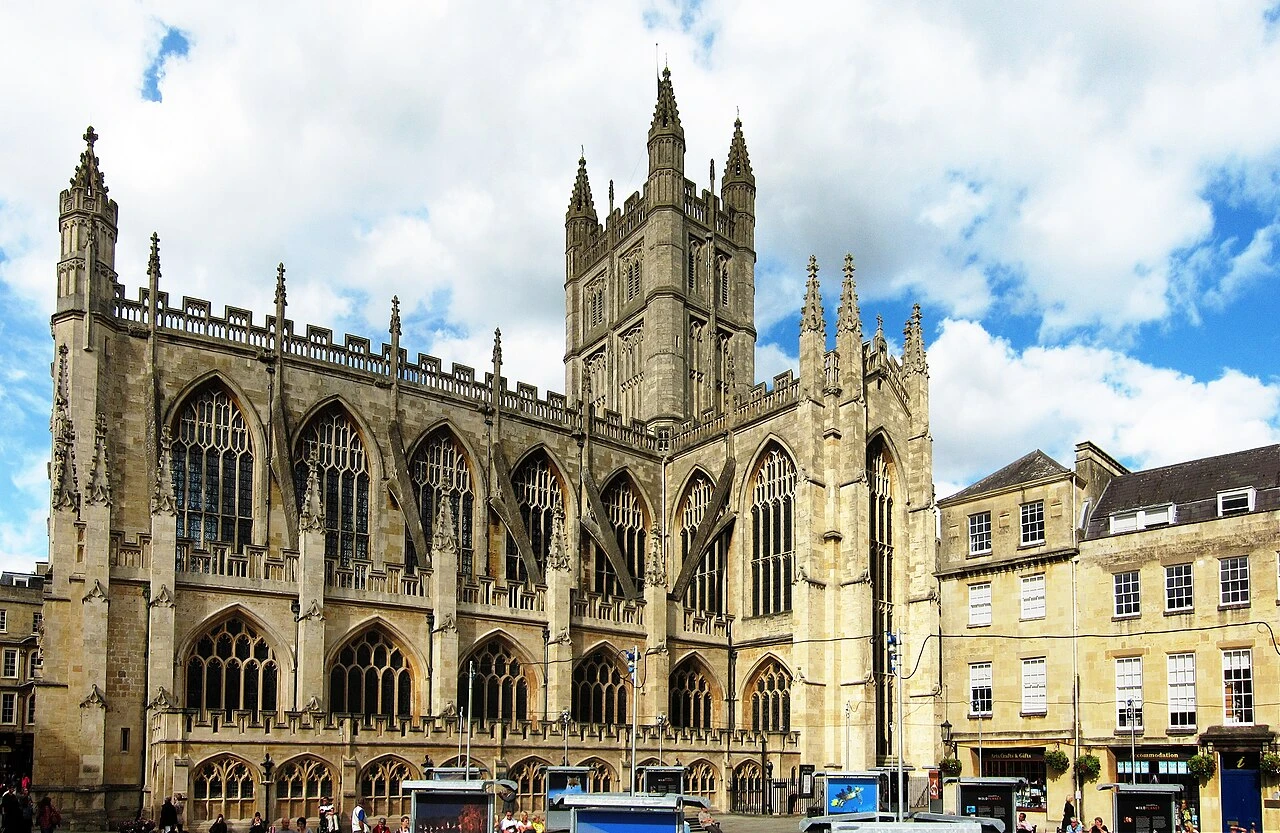
Bath · 49 km
Bath Abbey
Content & sources
Photo: Velvet · CC BY-SA 3.0
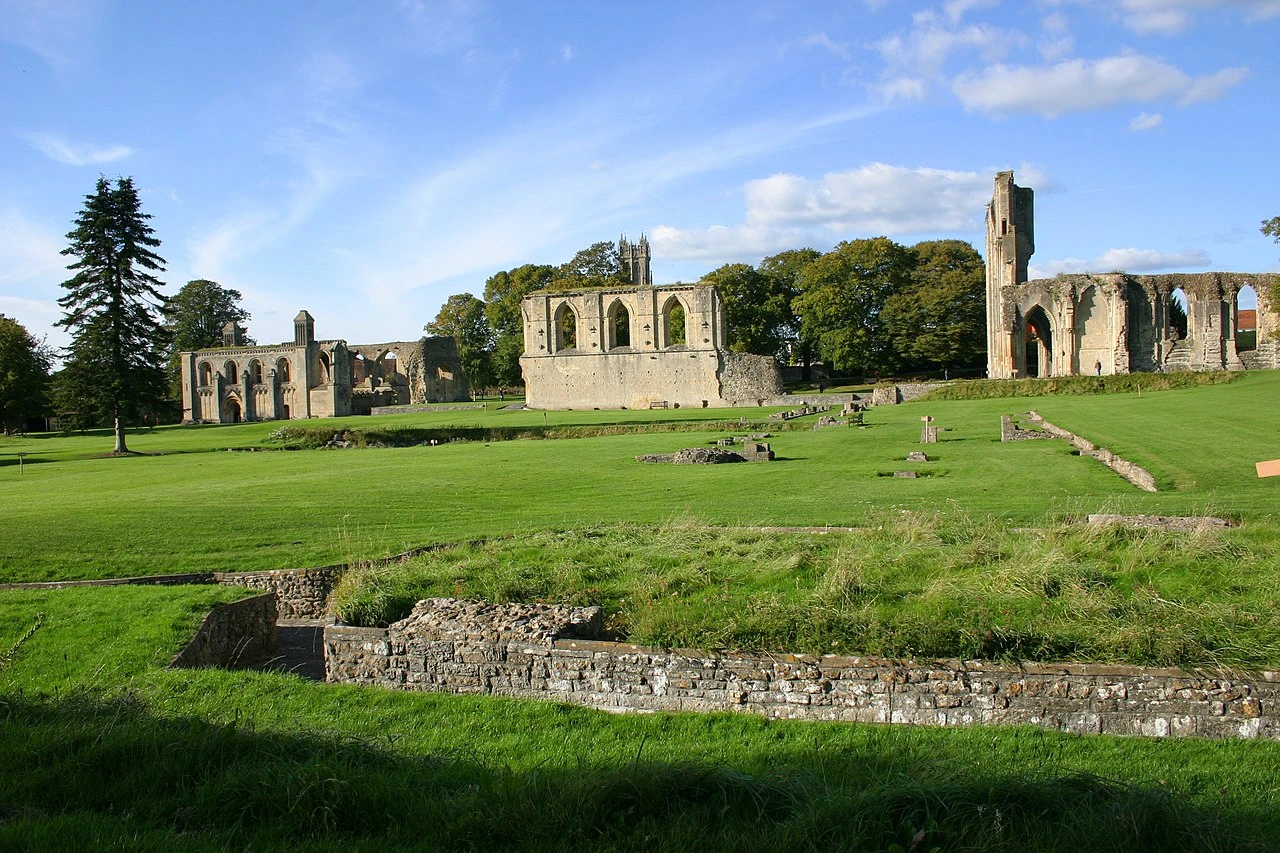
Glastonbury · 54 km
Glastonbury Abbey
Content & sources
Photo: Gerd Eichmann · CC BY-SA 4.0