Languages
15Roman Baths Audio Guide
Roman Baths is a museum in Bath, United Kingdom. Explore it with Stanza's visual scanner and offline audio guide — available in 15 languages.
Quick Facts
27
Stops
15
Languages
100%
Offline
📍 Bath, United Kingdom · 51.3809°N, -2.3595°E
About Roman Baths
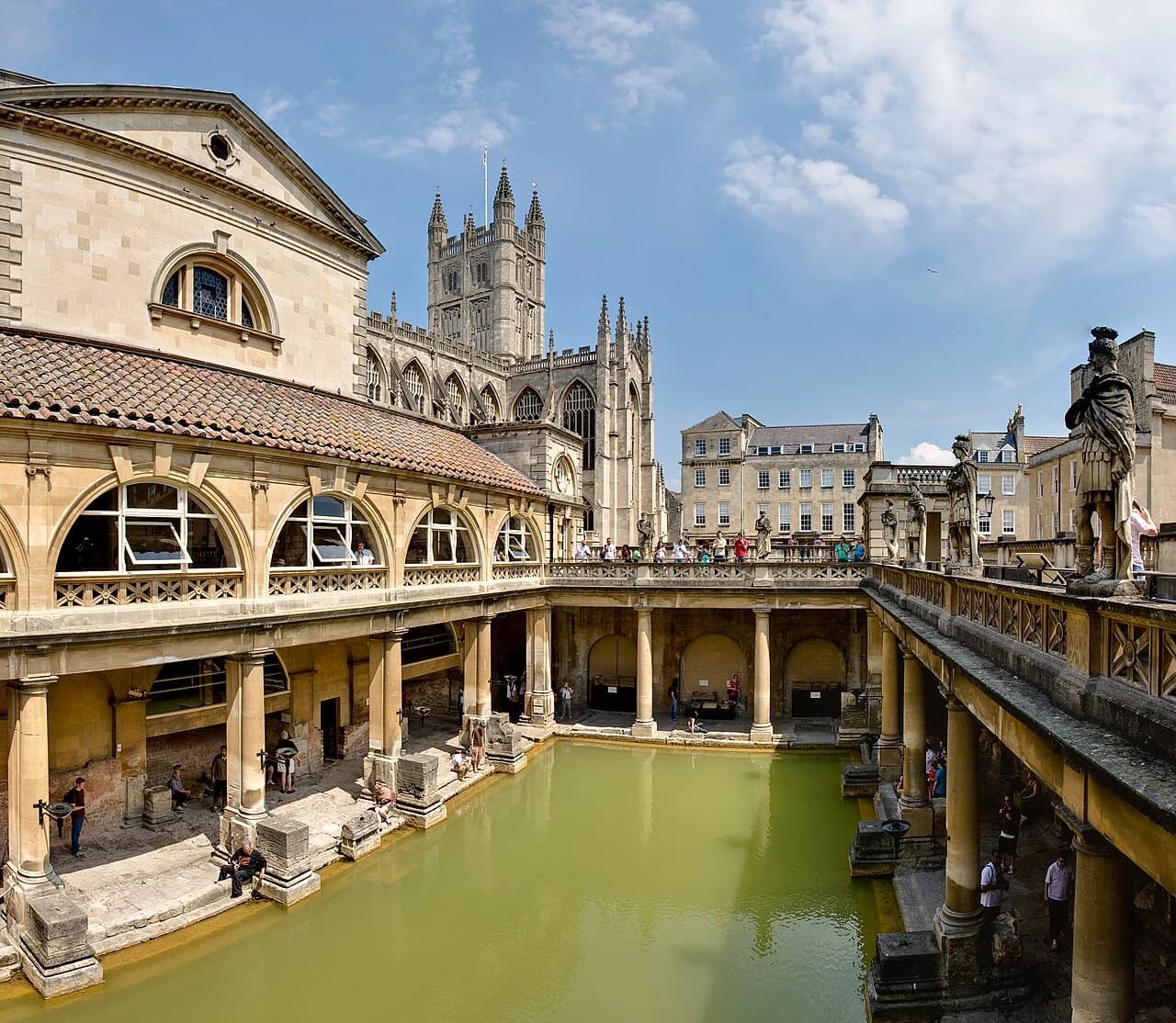
The Roman Baths is a well-preserved ancient Roman bathing house and temple complex located in the city of Bath, United Kingdom. It now functions as a museum and popular tourist attraction, exhibiting artifacts and the original structures.
Roman Baths is also known as Roman Baths and Pump Room, The Roman Baths and Pump Room, The Roman Baths, Roman Baths Museum.
This self-guided audio tour features 27 narrated stops organized across 7 sections. As a archaeology museum, Roman Baths offers a unique cultural experience in the heart of Bath, United Kingdom.
The Stanza audio guide is available in 15 languages and works entirely offline — download the complete tour including audio narration, maps, and images before your visit. As you walk through Roman Baths, GPS-triggered narration plays automatically at each point of interest.
Last updated:
Artworks on display
The Victorian Reception Hall
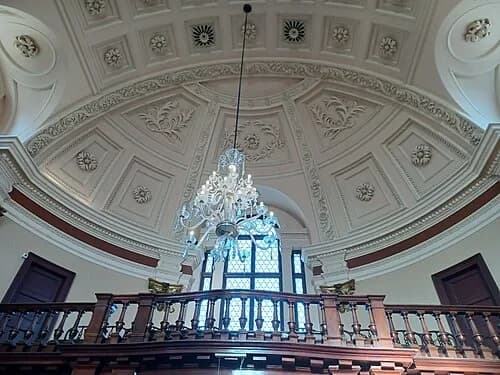
Step inside to see the grand Victorian interior that serves as the gateway to the ancient world. Focus on the ornate domed ceiling.
Victorian Reception Hall
As you enter the reception area, the atmosphere shifts to one of Victorian luxury. The neoclassical interior was a deliberate choice by the architects to honor the Roman roots of the site while maintaining the high standards of 19th-century public architecture. Look for the intricate plasterwork that adorns the walls and the high, domed ceiling above. These decorative elements reflect a fascination with classical antiquity that was common during the 1890s. This hall was designed to impress visitors immediately upon arrival, serving as a grand staging area before they descended to the ancient levels. The symmetry and use of columns in this space are meant to evoke the feeling of a Roman temple, creating a thematic bridge between the different centuries represented here. By the time this hall was built, many of the major Roman discoveries had already been made, and the city wanted a space that felt worthy of the world-class artifacts it was about to display. The lighting and proportions of the room were carefully considered to create a sense of awe and expectation. It remains one of the finest examples of late Victorian civic interior design in the region, standing as a monument to the era that rediscovered Bath’s ancient past.
The Great Bath Terrace
Head to the upper terrace for the first grand view of the Great Bath. Include the Victorian statues of Roman emperors and the view of Bath Abbey.
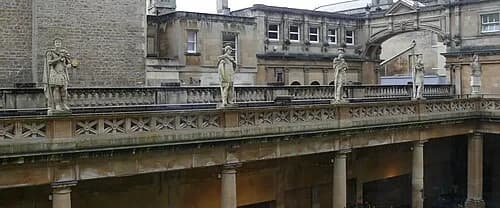
Statues of the Emperors
Lining the edge of the terrace are several statues of prominent Roman figures, including emperors like Julius Caesar and Hadrian. While they look quite weathered and ancient, these figures were actually commissioned in the 1890s for the museum's grand opening. They were carved by the sculptor G.A. Lawson to provide a sense of the Roman Empire's vast scale and the powerful men who once governed Britain. Each statue represents a different aspect of Roman influence; for example, Julius Caesar was the first Roman general to lead an expedition to Britain, while Hadrian is remembered for the famous wall that marked the northern frontier of the empire. These figures were placed here to help Victorian visitors visualize the people who might have walked through the baths two millennia ago. Because they have been exposed to the elements for over a century, the local limestone has aged naturally, giving them a softened appearance that blends in with the older ruins below. They serve as a tribute to the historical figures associated with Roman Britain, even if they are a modern addition to the site. Take a moment to see how many you can identify by the inscriptions on their bases, as they stand like guardians over the thermal waters.
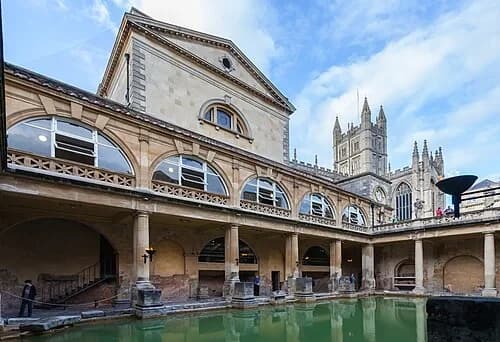
The Great Bath Terrace
The first view from the upper terrace is often the most memorable. Looking down, the Great Bath sits at the center of the complex, its thermal waters appearing a distinct green color due to the growth of algae in the sunlight. In Roman times, this pool would have been covered by a massive vaulted roof, creating a dark, steamy, and intimate environment. Today, the roof is gone, offering a unique juxtaposition of history. In the background, the soaring Gothic towers of Bath Abbey rise above the Roman stonework. This visual contrast spans over fifteen hundred years of history in a single frame. The terrace where you are standing was built in the 1890s specifically to give visitors this panoramic perspective. The green water below is still fed by the same natural hot spring that the Romans used, maintaining a temperature that allows steam to rise into the air on cooler days. This area serves as a primary introduction to the scale of the original complex, which extended far beyond the visible pool into a series of heated rooms, changing areas, and temples. The height of the terrace provides a clear view of the massive stone blocks that form the pool's edge, highlighting the durability of Roman engineering.
The Sacred Spring and King Bladud
View the steaming source of the geothermal water. Integrate the legend of King Bladud, whose statue overlooks the spring.
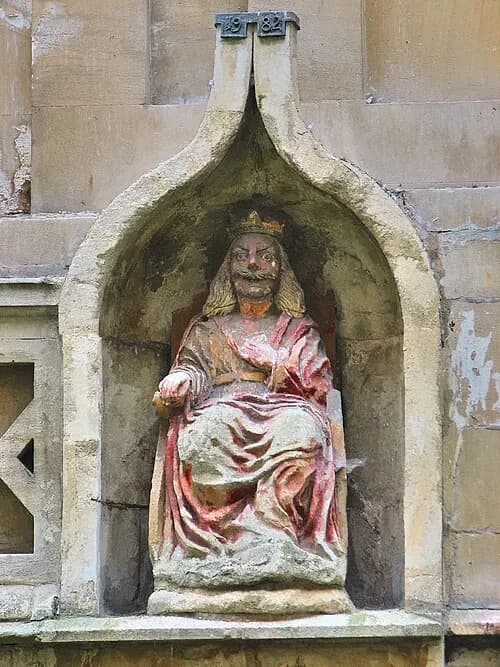
Statue of King Bladud
In a niche overlooking the Sacred Spring sits a statue of a figure from British legend: King Bladud. According to traditional folklore, Bladud was a pre-Roman British king who contracted leprosy and was forced to live as a swineherd. While wandering this area, he noticed that his pigs, which also suffered from skin diseases, were cured after wallowing in the warm, mineral-rich mud produced by the springs. Following their lead, Bladud bathed in the waters himself and was miraculously healed. He eventually returned to his throne and founded the city of Bath around the springs. While this story is legendary rather than historical, it highlights the long-standing belief in the water's medicinal properties that predates the Roman arrival. The statue shows Bladud seated in a regal pose, a reminder of the mythological origins of the city. The Romans likely heard similar local stories when they arrived and decided to formalize the site by building their temple and baths here. Even today, the story of Bladud and his pigs remains a popular part of Bath's local identity. The figure occupies a prominent spot, watching over the steam as it rises from the spring he supposedly discovered.
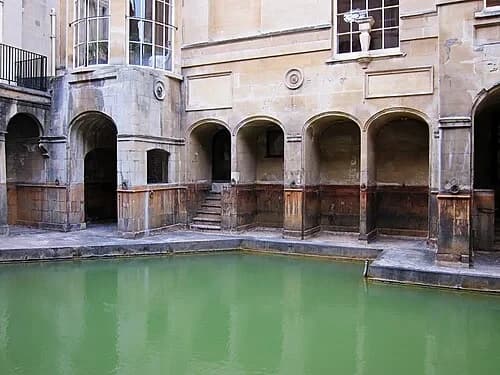
The Sacred Spring
You are now looking at the Sacred Spring, the very reason this entire complex exists. Every day, it produces an astonishing 1,170,000 litres of water, which rises to the surface at a constant temperature of 46 degrees Celsius. To the Romans, this was not just a geological phenomenon; it was a direct link to the divine. They believed the goddess Sulis Minerva inhabited the spring, and they treated the water with immense reverence. The spring is the only one in the UK with such high temperatures, and its constant flow has never failed throughout recorded history. In ancient times, the area around the spring was surrounded by a decorative wall and likely featured a small shrine. Visitors would come here to offer prayers and throw votive gifts into the depths. The water is rich in minerals, which gives it a slightly sulfuric smell and contributes to the orange staining seen on some of the surrounding stones. Today, the water is still channeled from here to the various baths in the complex, just as it was in the first century AD. The rising steam creates a mist that often hangs over the water, adding to the mysterious and ancient atmosphere that has drawn people to this spot for thousands of years.
The Temple Pediment and Gorgon Head
Descend into the temple precinct. Focus on the massive Gorgon head pediment, a unique fusion of Roman and Celtic art.
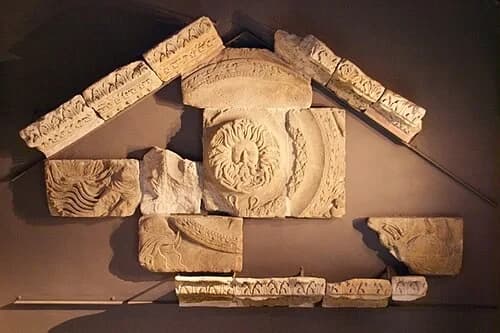
The Gorgon's Head
This impressive display features the reconstructed pediment of the Temple of Sulis Minerva, the most important religious structure in ancient Aquae Sulis. Originally, this massive stone carving would have been 7.9 metres wide, sitting high above the entrance to the temple. It was supported by four large columns, greeting worshippers as they approached the sacred area. What you see today is a painstaking puzzle put together by archaeologists using fragments found during excavations in the 18th and 19th centuries. The central image is a powerful and somewhat mysterious face that has become a symbol of the Roman Baths. In a traditional Roman temple, you might expect to see a more conventional representation of a god, but this pediment shows a unique blend of cultures. The fragments are mounted on a wall that provides a sense of the original scale and height. Notice the detail in the surrounding carvings, which include oak leaves and acorns, symbols often associated with strength and the natural world. This architectural centerpiece highlights the importance the Romans placed on the temple, ensuring that anyone visiting the baths would also pay their respects to the goddess who provided the healing waters.
The Gilded Head of Minerva
The most famous artifact in the museum. This gilded bronze head represents the goddess Sulis Minerva, the patron of the springs.
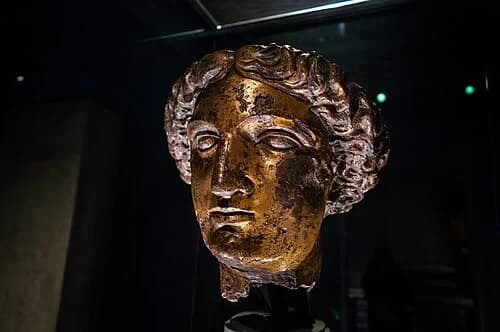
Gilded Head of Minerva
This remarkable artifact is the gilded head of the goddess Sulis Minerva. It is one of the most important Roman finds in Britain, not only for its beauty but for what it revealed about this site. When it was discovered in 1727 during a sewer excavation, it provided the first major clue that a significant Roman temple complex was hidden beneath the city of Bath. The head was originally part of a larger-than-life-size bronze statue that would have stood in the temple's inner sanctum. For the Romans, the presence of the statue meant the goddess herself was watching over the springs. The size and quality of the carving suggest that the statue was a very high-status commission, likely created by a skilled craftsman elsewhere in the empire and transported here. While the rest of the body has never been found, this head survives as a testament to the religious devotion of the people who visited Aquae Sulis. Its discovery sparked a centuries-long interest in excavating the baths, eventually leading to the museum you are walking through today. It remains a central highlight of the collection, representing the divine patron of the thermal waters.
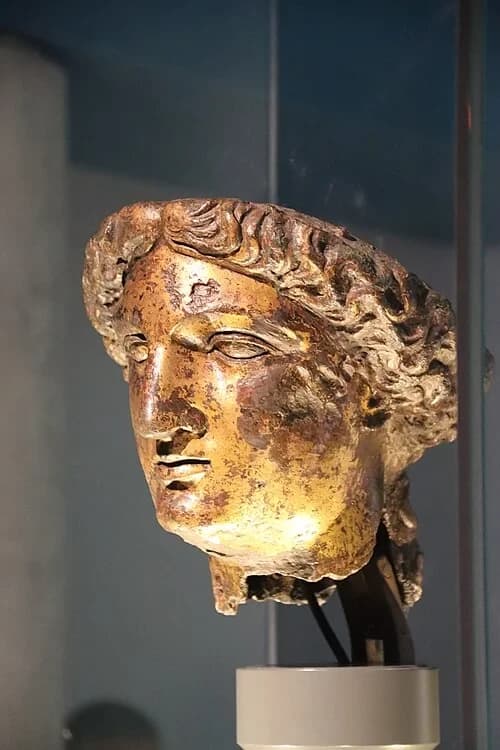
Minerva's Golden Glow
Looking closely at the surface of the Minerva head, you can see the remains of the gilding that once covered the entire piece. To create this effect, Roman artisans would apply thin layers of gold leaf over the bronze. In the dimly lit interior of the temple, illuminated only by flickering oil lamps and candlelight, this head would have appeared to glow with a divine, golden light. This technique was used to emphasize the goddess's status and power. Sulis Minerva was a unique deity created by the Romans; they took the local Celtic goddess Sulis and identified her with their own goddess of wisdom and war, Minerva. This was a common Roman practice used to integrate conquered people into their society. The hairstyle of the goddess, with its carefully arranged waves, reflects the fashions of the mid-first century AD, providing a useful date for when the statue was likely created. The expression is serene yet authoritative, typical of how high-ranking Roman gods were depicted. This golden head was the focal point for thousands of pilgrims who traveled from across Europe to seek healing at the springs, believing that a gift or prayer offered here might earn them the goddess's favor.
The Great Bath (Lower Level)
Walk along the edge of the central pool. Focus on the Roman engineering, the lead lining, and the social function of the baths.
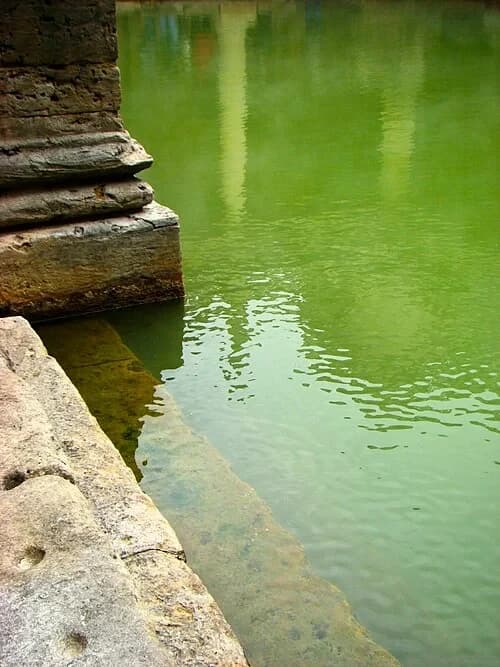
Worn Roman Steps
Take a moment to look closely at the steps leading down into the Great Bath. You will notice that the surfaces are remarkably worn and uneven, with deep indentations and smoothed-down edges. These marks were not carved by masons; they are the result of thousands of Roman feet entering and leaving the pool over several centuries. This physical wear provides a visceral, human connection to the past. It is easy to look at the massive stones and feel that the Roman era is distant and abstract, but these worn steps remind us that real people once stood exactly where you are standing. These bathers came from across the Roman Empire, seeking the legendary healing properties of the hot water. The stones have been polished by the passage of time and the constant flow of mineral-rich water, creating a texture that is unique to this site. These indentations represent the everyday life of the city, from the soldiers stationed nearby to the local families who lived in the surrounding town. This subtle detail is one of the most powerful reminders of the continuous human history that has centered around these thermal springs since the first century AD.
The Hypocaust Heating System
Explore the archaeological remains of the Roman underfloor heating. Explain how the hot rooms (Caldarium) were kept warm.
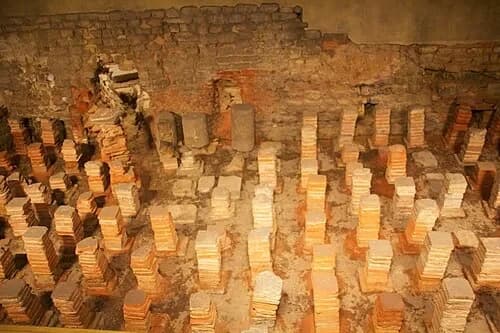
Stacks of Pilae
The rows of square brick pillars before you are known as pilae. Each stack was meticulously constructed using baked clay tiles to support the heavy concrete and mosaic floors of the bathing rooms. The engineering behind these stacks was surprisingly precise; by adjusting the height of the pilae, Roman builders could control the temperature of the room above. Shorter stacks meant a smaller void and less heat, while taller stacks allowed more hot air to circulate, creating the intense heat needed for the caldaria. Maintaining this system was an immense logistical challenge. Teams of workers had to feed furnaces twenty-four hours a day with a constant supply of timber. Estimates suggest that several tons of wood were burned daily to keep the thermal currents moving. The scale of these ruins demonstrates the massive investment in infrastructure required to provide the luxury of heated bathing to the residents of Aquae Sulis. Over time, the weight of the floors and the passage of centuries have caused some stacks to tilt or crumble, but many remain in their original positions, marking the grid of the ancient heating network.
Want to hear the rest?
Download the Stanza app to unlock all 27 artworks and the visual scanner feature.
Frequently Asked Questions
How long does the Roman Baths audio tour take?
The Roman Baths audio guide includes 27 narrated stops. Most visitors spend 45 minutes to 1.5 hours exploring the complete tour, though you can listen at your own pace and skip or revisit any stop.
Is the Roman Baths audio guide available in my language?
Stanza supports 15 languages: English, Spanish, French, German, Italian, Portuguese, Russian, Japanese, Chinese, Korean, Arabic, Hindi, Polish, Dutch, Hebrew. Check the guide in the app to confirm the languages currently available for this tour.
Can I use the audio guide offline at Roman Baths?
Yes! Download the complete Roman Baths tour — including all audio, maps, and images — before your visit. The Stanza app works completely offline, so you don't need WiFi or mobile data at the venue.
How much does the Roman Baths audio guide cost?
The Stanza app is free to download. The current listed price for the Roman Baths audio guide is $0.99; app-store region and currency may affect the final price.
How do I use the Stanza audio guide at Roman Baths?
Download the free Stanza app, search for "Roman Baths", and download the tour. When you arrive at the venue, the app uses GPS to detect your location and automatically plays the relevant narration as you move between points of interest — completely hands-free.
What makes the Stanza audio guide different from other Roman Baths tours?
Stanza offers GPS-triggered narration that plays automatically as you walk through Roman Baths — no need to manually select stops. The tour is available in 15 languages, works fully offline, and includes 27 expertly narrated stops with images and historical context.
What other audio guides are available near Roman Baths?
Stanza offers multiple audio guides in Bath, United Kingdom and nearby areas. After downloading the app, browse the map to discover all available tours near Roman Baths. Each guide can be downloaded for offline use.