 Stanza / Audio guide
Content & sources
Stanza · Audio guide
Althorp Audio Guide
A place to remember. A story to take with you.
Althorp is a Grade I listed stately home and estate in West Northamptonshire that has been held by the Spencer family for more than 500 years. It served as the home of Lady Diana Spencer from her parents'…
Download Stanza, then search for “Althorp”.
About the tour
One guide. Your kind of visit.
Althorp is a Grade I listed stately home and estate in West Northamptonshire that has been held by the Spencer family for more than 500 years. It served as the home of Lady Diana Spencer from her parents' divorce until her marriage to Charles, Prince of Wales.
Ready when you are.
- 01Get the free Stanza app.
iOS & Android
- 02Find your guide.
“Althorp”
- 03Download before you go.
Works offline
Audio guide / 12 narrated stops
Inside the guide
Get to know a few of the stories before you go. Open a stop to read more.
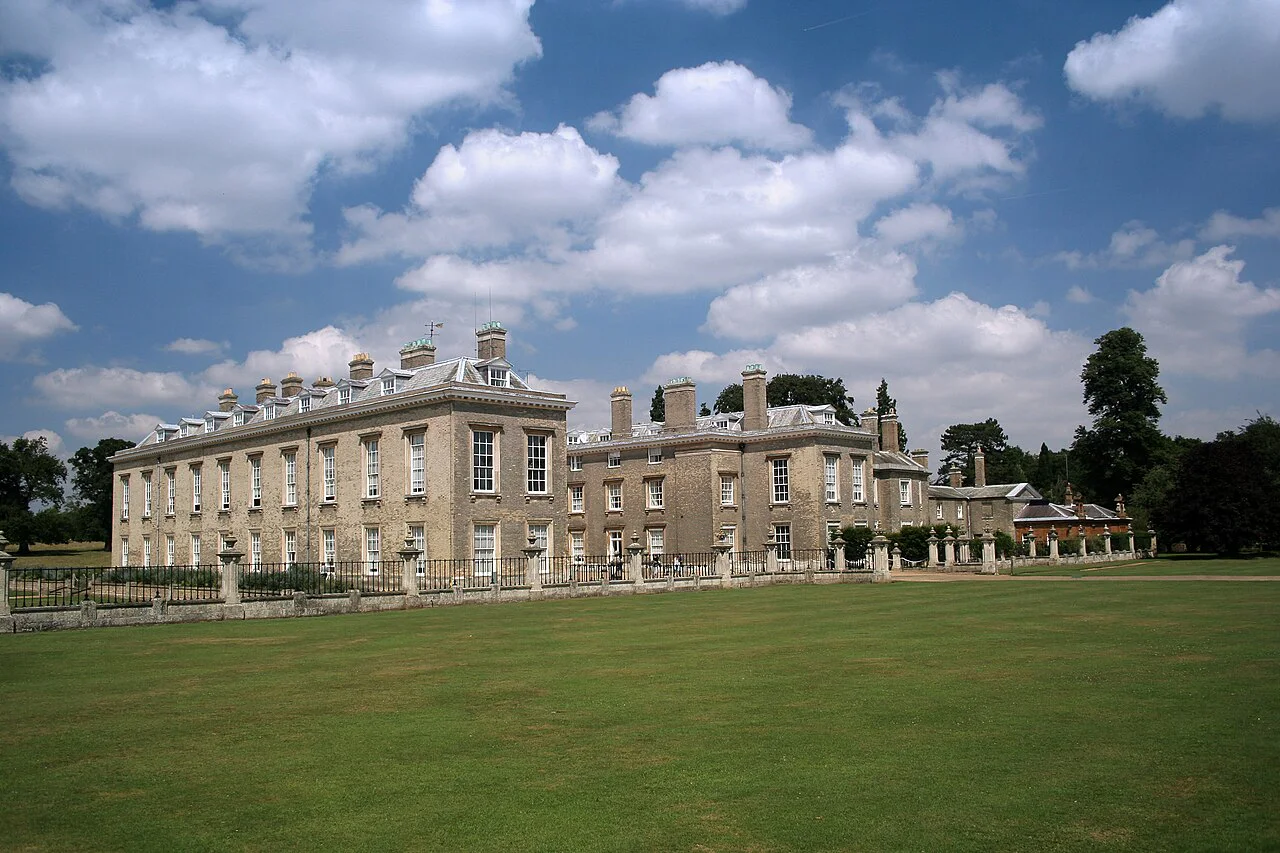
01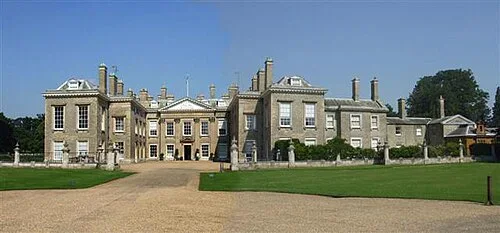 The South Front and Neoclassical Facade
The Main Front of Althorp House
Welcome to Althorp, the country house in Northamptonshire that the Spencer family has held for more than five hundred years. Its estate covers about thirteen thousand acres. Diana, Princess of Wales, lived here before her marriage. Rows of tall windows run across the front, and chimneys rise above the roofline. In 1788, the architect Henry Holland was commissioned to alter the house radically. By one account, the house before that was a classically beautiful red-brick building in the Tudor style. Holland added mathematical tiles to the outside, encasing the old brick. Mathematical tiles are flat tiles hung on the outside of a wall to give the wall a smooth, finished face. He also added four Corinthian pilasters to the front. These are flat columns set against the wall, with the carved leafy tops of the Corinthian style. The face seen today is largely Holland's work.
Kenneth Allen · CC BY-SA 2.0
02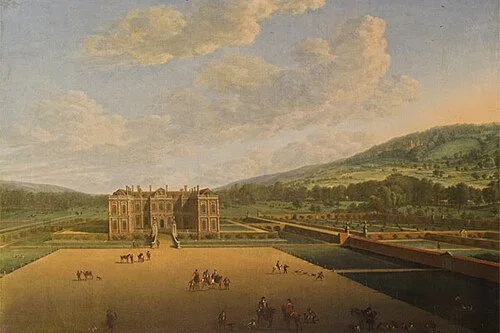 The South Front and Neoclassical Facade
Portrait of Althorp in 1677
In the Domesday Book of 1086, this place was a small hamlet called Olletorp. By 1377 it had grown into a village of more than fifty people. By 1505, though, no tenants were living there at all. In 1508 the Spencer family bought the estate, paying with money from its sheep-rearing business. In the 1660s, by most accounts, Robert Spencer hired the French landscape architect André Le Nôtre to lay out the park and grounds, though one account notes that no document confirms it. A painting dated 1677 shows the estate more than a century before the grand front was added. It is attributed to Johannes Vorstermans. The house in it is smaller than the one standing today. Riders and walkers cross a broad, level forecourt, and long straight garden features run beside the house. Behind the house, a wooded hill rises.
Johannes Vorstermans · Public domain
03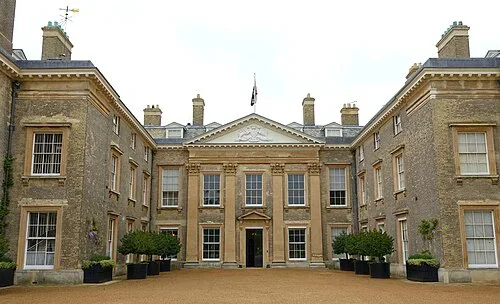 Courtyard Entrance and Wootton Hall
The Courtyard Front and Entrance Doorway
A central doorway, set under a pediment, marks this courtyard front, with a flag flying above it. Potted shrubs stand on either side. The grand entrance hall, Wootton Hall, sits on the central south side of the house. It takes its name from the painter John Wootton. In 1733, the family commissioned him to paint a number of huge canvases. He worked in his studio in Marylebone. The canvases reflected the family's love of riding and fox hunting. At that time, Wootton was considered the finest painter of horses in the country. The architectural historian Sir Nikolaus Pevsner called the hall the noblest Georgian room in the county. Its ceiling rises two storeys, and the room is perfectly proportioned. The paintings still hang on the walls.
Listen in the appPhoto: Daderot · CC0
04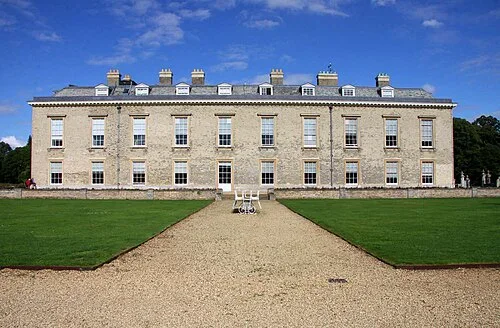 The West Wing and The Long Library
The West Front of Althorp House
The long west front is evenly arranged, with rows of tall windows and small dormers rising from the roof. A gravel path runs straight to the centre, with lawns on either side. Five rooms in the west wing once combined to form the Long Library. Books rose from floor to ceiling along much of its length, about two hundred feet. George John, the second Earl Spencer, inherited Althorp in 1783. By the 1830s the library was vast: over a hundred thousand books by one count, about forty thousand by another. It became one of the largest private libraries in Europe. In later life his collecting became an obsession, and he tried to acquire every book ever published in Britain. In 1812, George fought a bidding war with his cousin, the Duke of Marlborough. The prize was Boccaccio's Decameron, dated 1471. Only three copies were known. The Duke won with a bid of two thousand, two hundred and sixty pounds. He later sold the book to George for seven hundred and fifty pounds. In 1892, the fifth Earl Spencer, known as the Red Earl, sold much of the collection to Enriqueta Rylands. She was building the University of Manchester Library.
Listen in the appSteve Daniels · CC BY-SA 2.0
05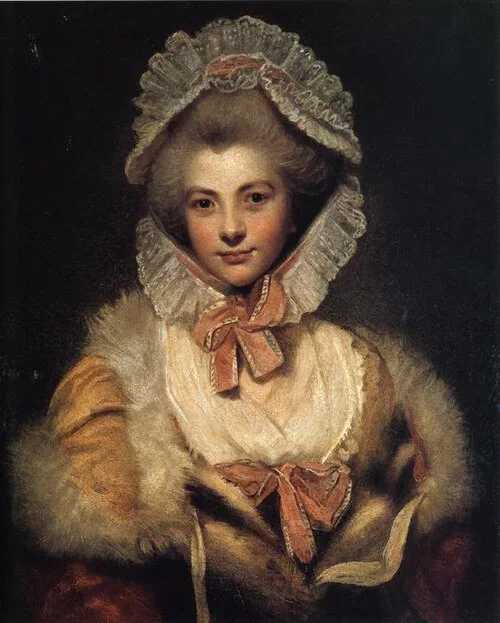 The West Wing and The Long Library
Portrait of Lavinia Bingham, Countess Spencer
Sir Joshua Reynolds painted Lavinia Bingham, Countess Spencer, in the early 1780s. Her clothes do much of the work. She wears a frilled white cap and a wide lace ruff, with pink ribbons tied at her throat and waist. Her sleeve is gold-yellow and trimmed with fur, and a dark red garment shows beneath. Portraits like this were meant to show a sitter at her best, well dressed and composed. Her expression is calm, with only the faintest smile. The fur and fine lace were costly, and they signal her standing.
Listen in the appJoshua Reynolds · Public domain
06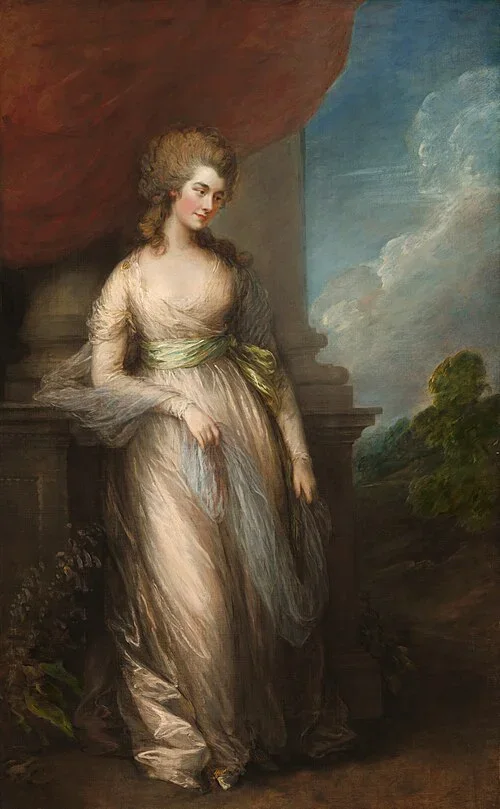 The State Parlours and South Drawing Room
Georgiana, Duchess of Devonshire
Georgiana, Duchess of Devonshire, was one of Britain's most prominent socialites in the late eighteenth century. In this portrait, she leans on a stone pedestal in a pale gown with a green sash, before a red curtain. Her father, John Spencer, later the first Earl Spencer, entertained on a grand scale at Althorp. He served as Member of Parliament for Warwick from 1756 to 1761. Winning a seat meant, in effect, bribing voters to back his candidate rather than a rival's. In one campaign alone, he spent one hundred and twenty thousand pounds. Althorp became known for its festivities, and the political and cultural elite came to its parties. At dinners and picnics in the gardens, he hired musicians to play French horns. There were donkey races, sack races, and dance contests, where the first prize was a guinea. The current owner, Charles Spencer, calls these contests a 'Hooray Henry Olympics'.
Listen in the appThomas Gainsborough · Public domain
07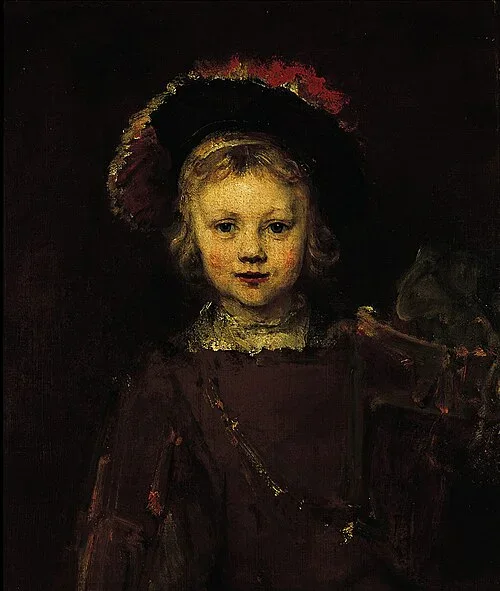 The State Parlours and South Drawing Room
Unfinished Portrait of a Boy
A fair-haired boy looks out from beneath a dark hat with reddish trim. His collar is pale lace, and his dark costume sinks into the shadows. The painting is attributed to Rembrandt and dated to the 1650s. Portraits of children were a recognised genre in seventeenth-century Dutch painting. Light falls mainly on his face, the brightest part of the canvas.
Listen in the appRembrandt · Public domain
08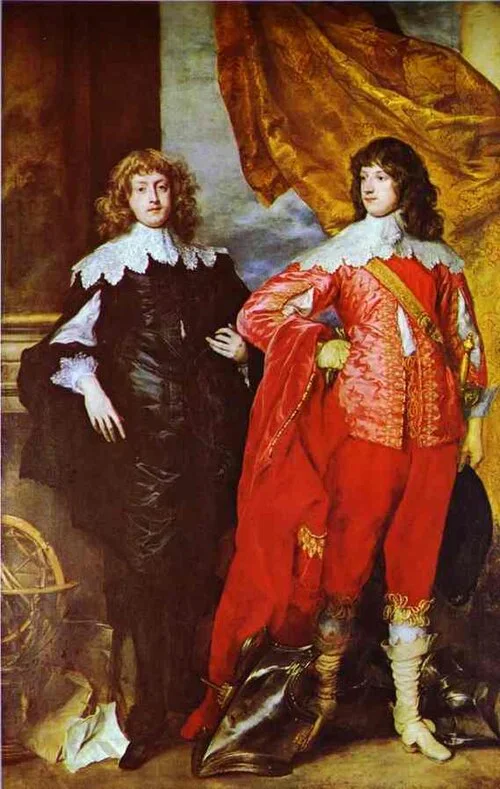 The Tudor Picture Gallery
War and Peace
Anthony van Dyck painted War and Peace in the 1630s. Its title sets war against peace. One man, in black with a white lace collar and cuffs, stands beside a sphere on a stand. The other, in red with a sash, rests his hand at his hip, with armour at his feet. Gold drapery hangs behind them, and the clothes seem to echo the title. The gallery where it hangs runs about one hundred and fifteen feet along the first floor of the west wing. Its oak panelling is one of the best surviving examples of Tudor woodwork in the house. Horace Walpole once wrote that he felt quite at home in the gallery, and he surprised the housekeeper with how well he knew the portraits. The painting was once the most valuable item at Althorp. Albert Spencer was so protective of it that he had the nearest tall window in the gallery turned into a door, with hinges. If there were a fire, the canvas could be lifted safely outside.
Listen in the appAnthony van Dyck · Public domain
09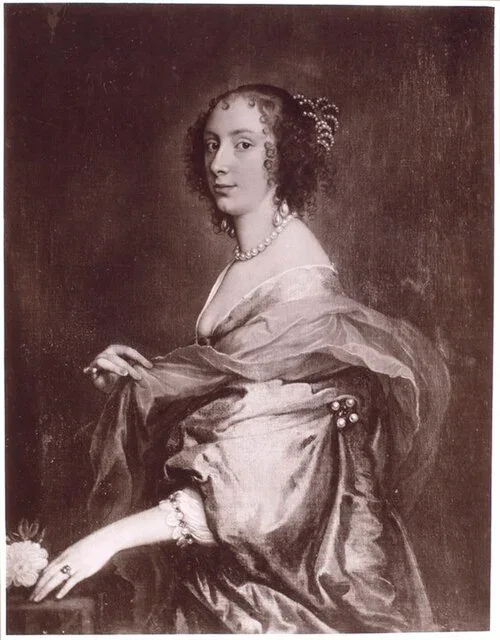 The Tudor Picture Gallery
Portrait of a Lady, Believed to Be Penelope, Lady Herbert
A woman with curled hair looks steadily out of a dark background. Pearls appear in her hair and at her throat, and a sheer wrap falls over her gown. The work is attributed to Anthony van Dyck and dated 1638. It is believed to show Penelope, Lady Herbert. Another name, the so-called Countess of Morton, is also attached to her, and the two do not agree. Names given to old portraits are often revised as scholars learn more. One hand rests on a ledge, and the pearls at her throat catch the eye.
Listen in the appAnthony van Dyck · Public domain
10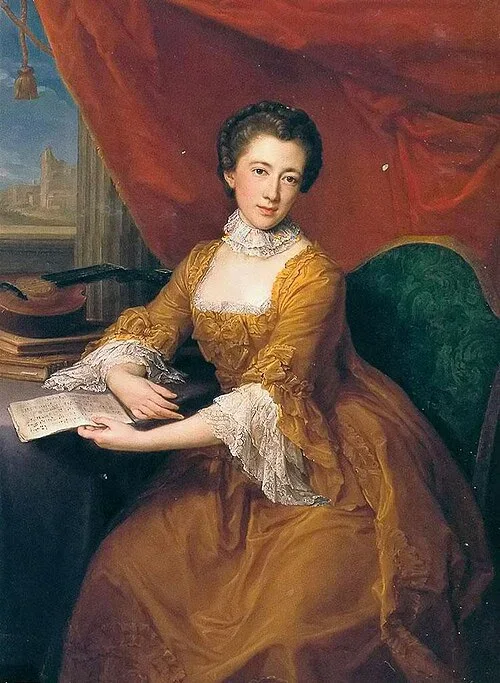 The Oak Bedroom and Secret Wedding Suite
Portrait of Lady Margaret Georgiana Poyntz
John Spencer celebrated his twenty-first birthday in December 1755 with a ball at Althorp. During the ball, in the oak bedroom, he married Margaret Georgiana Poyntz in secret. She was only eighteen. The couple told no one for several days. The bride later recalled, 'We both behaved very well, spoke distinctly and loudly, but I trembled so much I could hardly stand.' The Spencers also held a celebration in a shed on the village green at Brington. About five thousand guests were invited. The party drank some eleven thousand pints of beer. Pompeo Batoni painted Margaret Georgiana Poyntz some years later, around 1764. She sits in amber silk with lace cuffs, a sheet of music in her hands, and a red drape behind her.
Listen in the appPompeo Batoni / Formerly attributed to Thomas Gainsborough · Public domain
- 11
The Roger Morris Stable Block
A stable block built for thirty to forty horses, with baths for riders coming in from the hunt.
- 12
Althorp House and Park from the Air
The estate seen from above, and the island in the Round Oval lake where Diana, Princess of Wales, is buried.
Althorp
Frequently asked questions
How much does the guide cost?
Free app download. Listed guide price: $0.99. Guide price shown in the app. Audio guide only. Venue admission is separate.
Can I listen without internet?
Yes. Download the guide’s audio, images, and maps in the app before your visit. Your downloaded content is then available offline.
Can I listen in my language?
This audio guide is available in 15 languages, including English.
Do I need to follow a schedule?
No. This is a self-guided experience. Choose your stops, pause whenever you like, and return to a story at your own pace.
At your own pace
Explore Althorp.
Download Stanza, then search for “Althorp”.
Free app download · Guide price shown in the app
Keep exploring
Nearby audio guides
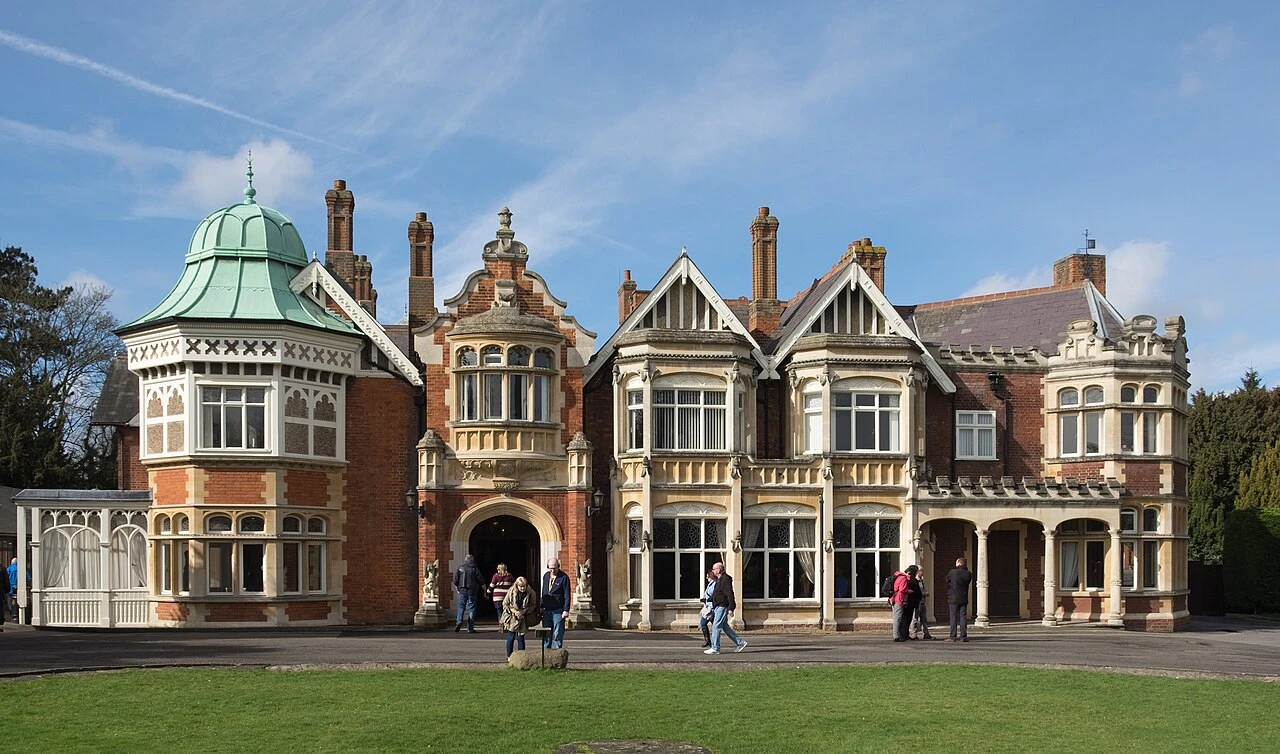
Milton Keynes · 36 km
Bletchley Park
Content & sources
Photo: DeFacto · CC BY-SA 4.0
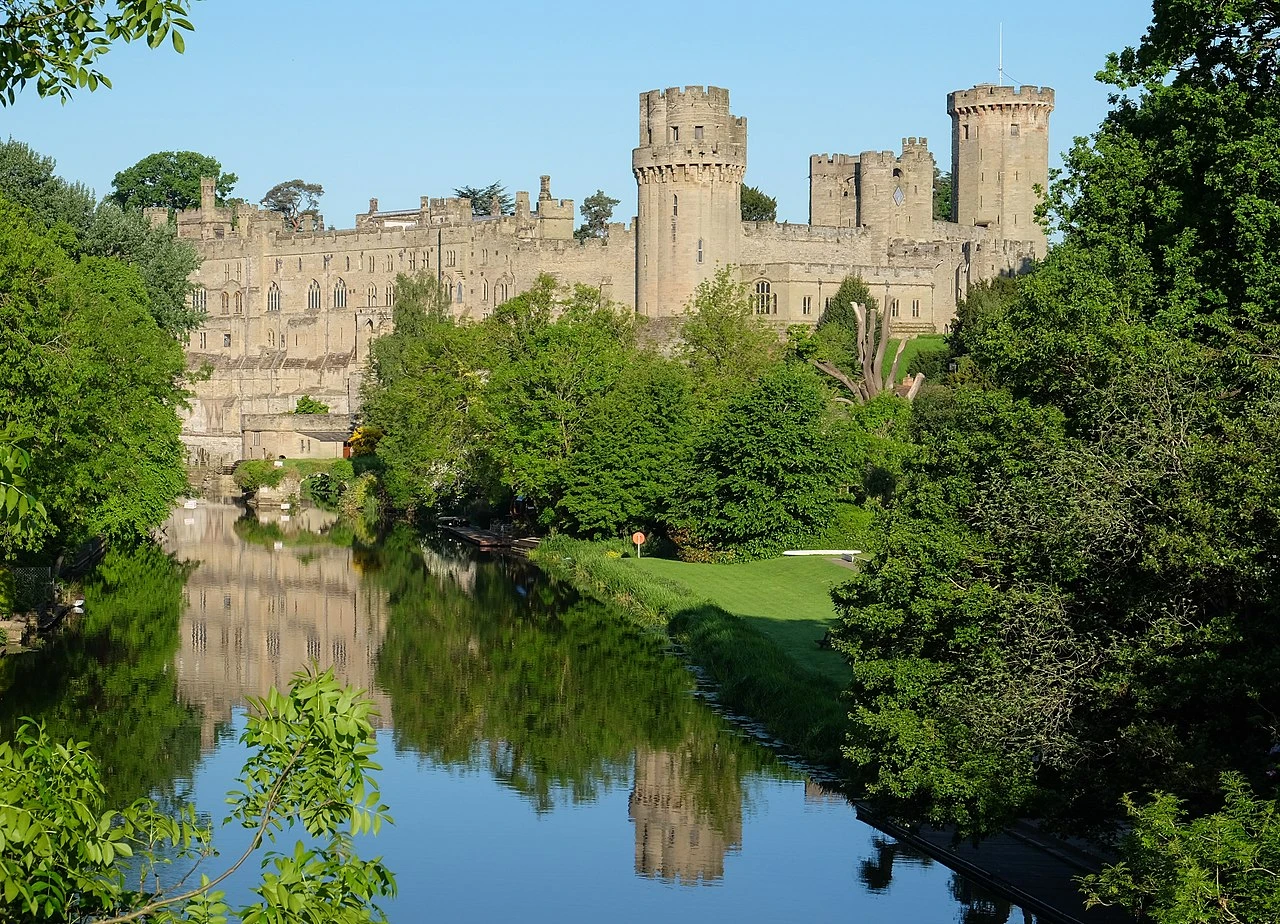
Warwick · 40 km
Warwick Castle
Content & sources
Photo: DeFacto · CC BY-SA 4.0
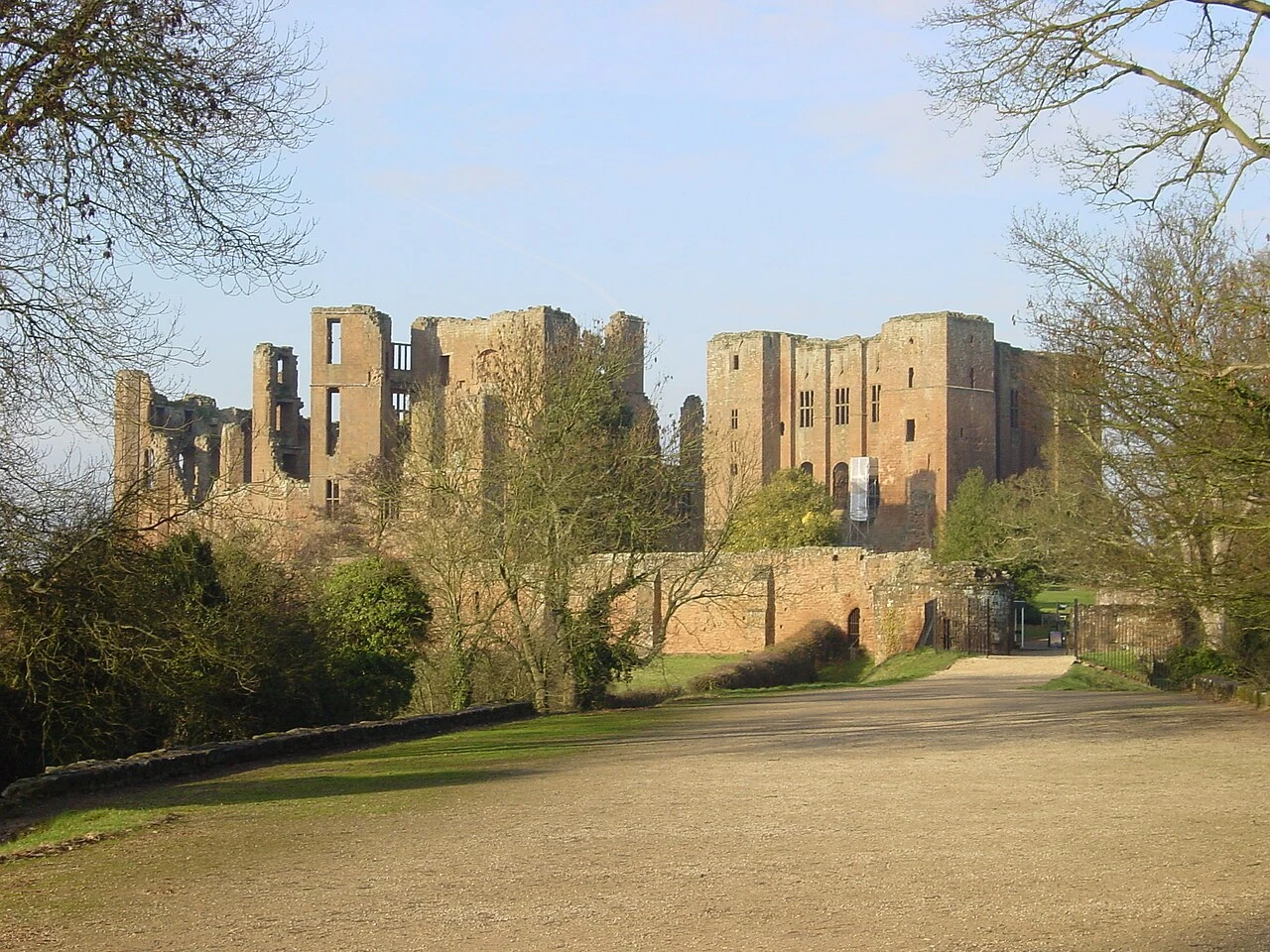
Kenilworth · 41 km
Kenilworth Castle
Content & sources
Photo: Jdforrester · CC BY 1.0
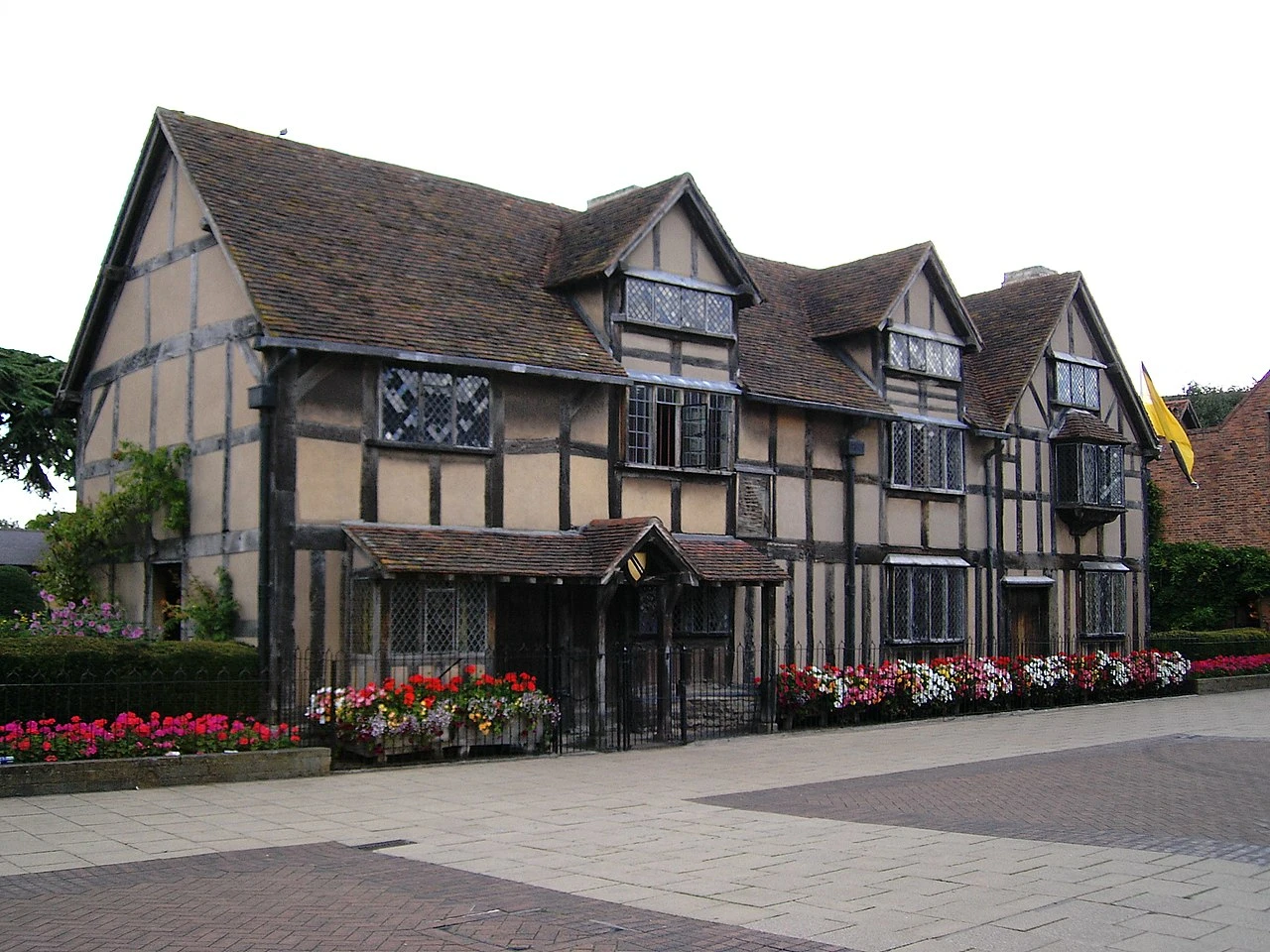
Stratford-on-Avon · 49 km
Shakespeare's Birthplace
Content & sources
Stuart Yeates [1] · CC BY-SA 2.0