Languages
15Skara Brae Audio Guide
Skara Brae is an archaeological site in Orkney Islands, United Kingdom. Explore it with Stanza's guided offline audio tour — narrated in 15 languages.
Quick Facts
13
Stops
15
Languages
100%
Offline
📍 Orkney Islands, United Kingdom · 59.0487°N, -3.3417°E
About Skara Brae
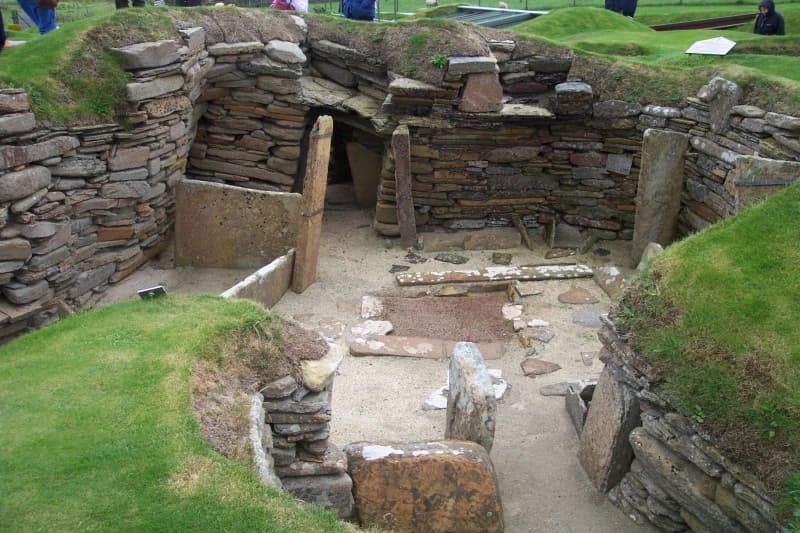
Skara Brae is a remarkably well-preserved Neolithic settlement located on the Bay of Skaill on the west coast of Orkney, Scotland. Dating from roughly 3180 BC to 2500 BC, it offers a unique glimpse into the life of prehistoric communities.
Skara Brae is also known as Skara Brae, settlement, mounds and other remains.
This self-guided audio tour features 13 narrated stops organized across 7 sections. As a archaeological site, Skara Brae offers a unique cultural experience in the heart of Orkney Islands, United Kingdom.
The Stanza audio guide is available in 15 languages and works entirely offline — download the complete tour including audio narration, maps, and images before your visit. As you walk through Skara Brae, GPS-triggered narration plays automatically at each point of interest.
Last updated:
What you will hear
The Visitor Centre and Neolithic Context
Start at the official entrance to understand the site's discovery and the culture of the people who built it. This area uses the verified POI and museum reconstructions to set the scene.
Neolithic Stone Axe
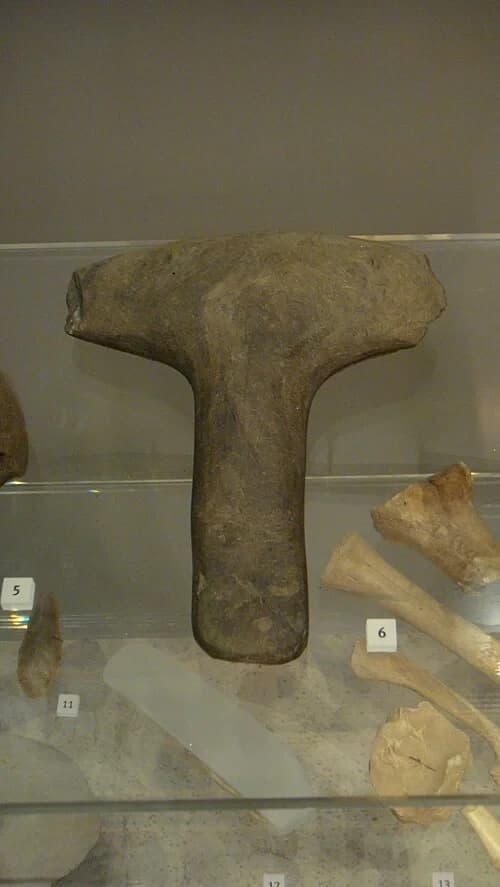
Crafted with remarkable precision, this stone axe reveals much about the technical skill of the people who once called this coast home. Far from being primitive, the inhabitants of Skara Brae were sophisticated builders and artisans who belonged to what archaeologists call the 'Grooved Ware Culture.' This name comes from the distinctive, decorated pottery found throughout the site, which shares stylistic links with other Neolithic communities across the British Isles. This tool wasn't just for survival; it was essential for the construction of the very stone village you are visiting. Notice the smooth finish and the balanced weight of the object. These people understood the properties of the local stone and how to manipulate it into effective, durable implements. The presence of such specialized tools and artistic pottery suggests a society with shared cultural values and a level of craftsmanship that challenges old-fashioned notions of 'cavemen.' Instead, we find a community of skilled individuals who were deeply connected to their environment and to a wider network of Neolithic cultures extending far beyond the shores of Orkney.
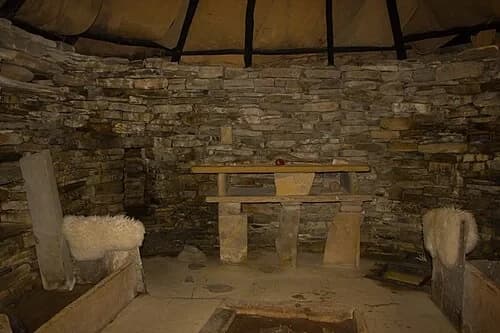
The Neolithic Life Reconstruction
Welcome to the start of our journey at Skara Brae, where you can get a rare hands-on look at a life forgotten for millennia. This full-scale replica, located right here in the visitor center, is designed specifically for you to touch and explore. While the original site outside is fragile, here you can walk inside a Neolithic home as it would have looked over five thousand years ago. To put the timeline in perspective, this village was established around 3180 BC. That makes these stone homes older than both the Great Pyramids of Giza and the monumental stones of Stonehenge. Notice the central hearth in the middle of the floor—the literal heart of the home—and the distinctive stone furniture built directly into the walls. This reconstruction sets the stage for the incredible 'Scottish Pompeii' you’re about to see. By stepping into this space, you begin to understand how a group of people thrived in the harsh Orkney climate long before the dawn of modern civilization. Feel the cold stone and imagine the warmth of a flickering central fire as you prepare to head out to the ancient remains themselves.
The Coastal Approach to the Scottish Pompeii
As you walk from the museum toward the village, the scale of the preservation becomes clear. This area introduces the 'Scottish Pompeii' concept and the site's unique coastal setting.
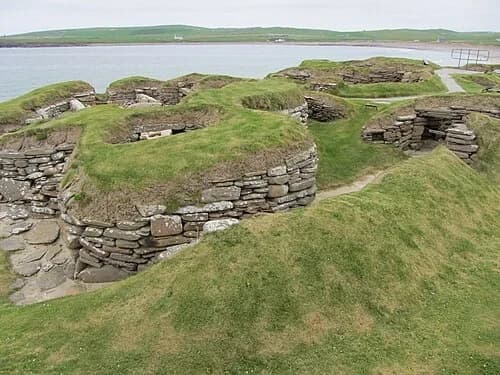
The Discovery Site
Imagine the scene in 1850 when a fierce North Atlantic storm battered the Bay of Skaill. The winds were so powerful that they stripped away meters of grass and sand dunes, revealing something extraordinary: the stone walls of a long-lost village. This dramatic event brought Skara Brae back into the light after it had been hidden for several millennia. William Watt, the local laird of Skaill House, recognized the importance of the find and personally oversaw the first archaeological excavations. What he uncovered was a world frozen in time, perfectly preserved by the very sand that had eventually buried it. Because the village was abandoned and quickly covered, the stone furniture, hearths, and even small personal items remained exactly where they were left five thousand years ago. It is this incredible preservation that gives us such a vivid window into Neolithic life. Standing here today, it is easy to see why this site is often called the 'Scottish Pompeii.' The village serves as a silent witness to a community that lived and worked right here on the edge of the sea long before written history began.
The Village Cluster and Midden Insulation
Observe the village as a whole. The houses weren't built on the surface but were sunk into 'midden'—ancient layers of refuse that provided incredible insulation and structural support.
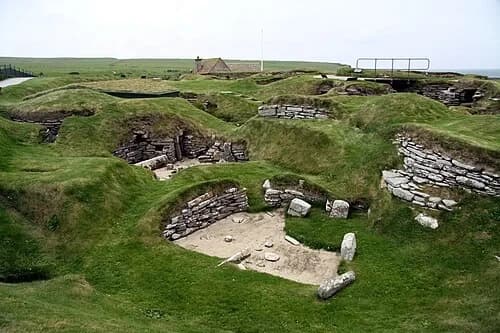
The Village Cluster
The layout of this village reveals a clever solution to the harsh Orkney weather through a technique known as 'midden' construction. Unlike modern homes built on the surface, these houses were actually sunk into massive mounds of domestic waste. This 'midden' consisted of layers of discarded shells, animal bones, and organic refuse that had accumulated over many years. While it might sound unappealing today, this material provided exceptional insulation, keeping the inhabitants warm and protected from the biting North Atlantic winds. The dense pack of the midden also added structural stability to the stone walls. At its height, the village was a small, intimate community consisting of about ten houses. Researchers believe it likely supported a population of no more than fifty people at any given time. This clustering suggests a highly cooperative society where neighbors lived in close proximity, sharing resources and protection within their semi-subterranean world. The choice to build into the earth rather than on top of it was a testament to Neolithic engineering, allowing a small group of people to thrive in a landscape where timber was scarce and the weather was often unforgiving.
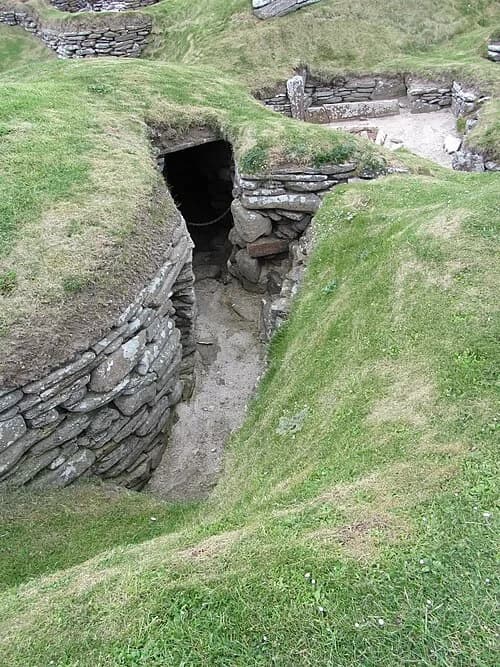
The Covered Passageways
Connecting the individual homes is a network of narrow, low-roofed tunnels that formed the village's social arteries. These covered passageways were originally capped with heavy stone slabs and further insulated with layers of midden. This design allowed the villagers to move freely between houses, visit neighbors, or reach the central areas without ever having to step outside into the rain or wind. As you look at these paths, notice their height—they stand only about 1.2 meters tall. Navigating them would have required constant crouching, creating a sense of cramped, intimate spaces. This physical layout fostered a very tight-knit communal life where privacy was a luxury and social interaction was inevitable. Imagine the muffled sounds and the smell of peat smoke drifting through these low stone corridors as people moved through the heart of their village. These tunnels weren't just functional routes; they were the physical manifestation of a society that prioritized collective living and mutual support. In the dark winter months, these passages would have been vital for maintaining the social fabric of the community, ensuring that no house was truly isolated from the rest.
House 1: A Neolithic Masterpiece
This is the most iconic dwelling on the site. It perfectly illustrates Neolithic domestic life with its stone-built furniture that has survived for over 5,000 years.
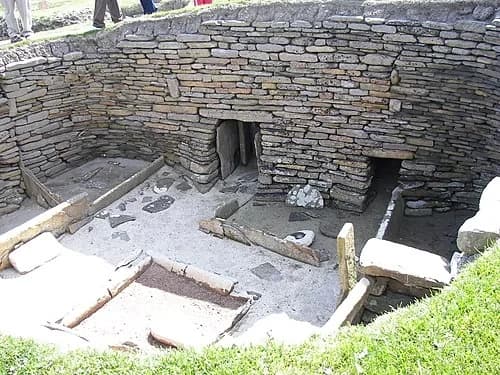
House 1 Standard Dwelling
House 1 provides a clear look at the standard domestic blueprint followed by almost every dwelling in the village. Each home featured a roughly square main room measuring approximately 40 square meters. In the center of the room sat a stone-lined hearth used for cooking and heating, serving as the focal point of family life. The walls themselves are remarkably well-preserved, showing how the inhabitants maximized their limited living space. Access to the house was through a small, low doorway that could be securely sealed from the inside using a heavy stone slab. This provided both security and a way to trap warmth inside during the cold Orkney nights. Some doorways even show holes in the stone jams where a wooden or bone bar could be slotted to lock the 'door' in place. Inside, the division of space was remarkably consistent across the village, suggesting a deeply ingrained cultural tradition for how a home should be organized. From the central fire to the furniture built directly into the structure, every element was designed for efficiency and survival in a world where every scrap of heat and every bit of stone counted.
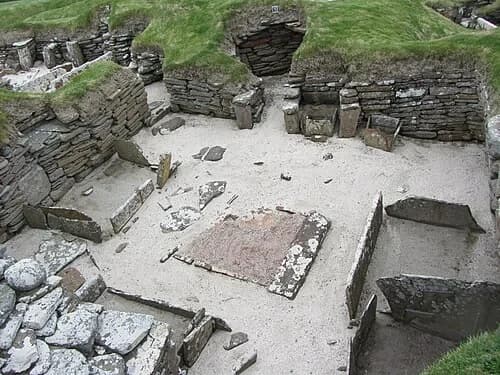
Neolithic Sleeping Quarters
On either side of the central hearth, you will see large stone boxes that served as the village's sleeping quarters. These beds were originally filled with heather, straw, or bracken to provide much-needed padding and were likely covered with thick animal furs for warmth. Interestingly, archaeological research into the floor deposits here uncovered the earliest known record of the human flea in Europe, providing a gritty detail about the realities of Neolithic life. There is also a persistent theory regarding the layout of these beds: the larger bed, usually positioned on the right side of the house, is often thought to have been reserved for the head of the household. The smaller beds may have been for children or other family members. This consistent internal geography suggests a highly structured domestic life with specific roles and designated spaces for everyone. While the stone may look cold and uncomfortable today, when filled with soft bedding and warmed by the central fire, these would have been cozy sanctuaries against the harsh climate outside. These beds are a reminder that the basic human need for a safe, comfortable place to rest hasn't changed in over five millennia.
The World's Earliest Indoor Plumbing
Skara Brae's engineering was remarkably advanced. Each house was connected to a sophisticated drainage system, including what archaeologists believe were indoor toilets.
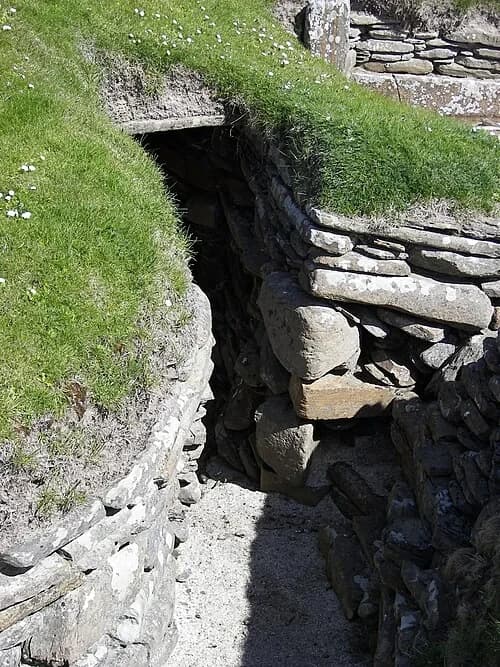
Dry-Stone Architecture
The construction of these walls showcases an impressive level of Neolithic engineering known as 'dry-stone' walling. This technique involves carefully stacking flat flagstones without the use of any mortar or binding agent. The stability of the structures relies entirely on the precise fitting of the stones and the weight of the layers above. If you look closely at the upper sections of the walls, you can see the builders used a method called corbelling. By slightly overlapping each subsequent layer of stone inward, they narrowed the open space toward the top of the room. This reduced the span that needed to be covered by a roof. While the stone walls remain, the original roofs have long since vanished. Evidence suggests they were likely constructed using a frame of whalebone or timber, which was then covered with layers of turf, thatch, or even animal hides. This combination of heavy stone and organic roofing would have created a durable, weatherproof shelter. The precision visible in the masonry, with stones fitted so tightly that even thousands of years later they remain standing, is a testament to the skill and patience of the ancient masons who built this community.
House 8: The Industrial Workshop
House 8 stands apart from the others. It lacks the standard beds and dressers, suggesting it served as a communal workshop for tool making and heat-based crafts.
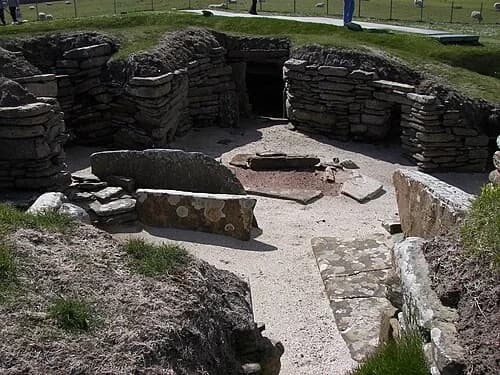
The Industrial Workshop
House 8 stands apart from the rest of the village, both in its location and its internal features. Unlike the standard dwellings we've seen, this structure is isolated and lacks the usual furniture like beds or a stone dresser. When archaeologists excavated this area, they discovered a wealth of heat-cracked stones and a significant amount of debris from tool-making, including flint chips and stone fragments. These findings suggest that House 8 wasn't a home at all, but rather a dedicated communal workshop. It represents a rare example of a specialized industrial building from the Neolithic period, where members of the community would gather to manufacture the tools and items needed for the village. The presence of heat-cracked stones indicates that high-temperature processes, perhaps related to tool production or even early experimentation with materials, took place here. This specialized space points to a structured society where certain tasks were centralized and performed outside the domestic sphere. The mystery of why this building was placed separately from the main cluster continues to intrigue researchers, offering a glimpse into the organized labor and community-focused activities that sustained Skara Brae for centuries.
The Bay of Skaill and the Future of the Site
Conclude your tour by looking out at the bay. The same sea that revealed Skara Brae in 1850 now threatens to reclaim it through erosion and rising sea levels.
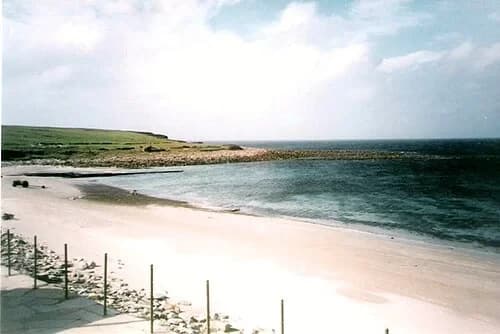
The Bay of Skaill
Our journey through Skara Brae concludes here, overlooking the beautiful but dangerous waters of the Bay of Skaill. While the shifting sands of this bay preserved this Neolithic village for five millennia, eventually leading to its designation as a UNESCO World Heritage Site in 1999, the environment is now its greatest threat. The very sea that provided food and resources for the ancient inhabitants is now slowly reclaiming the land. Rising sea levels and the increasing frequency of violent North Atlantic storms are causing significant coastal erosion, eating away at the shoreline that protects these ancient homes. If you look down toward the beach, you can see the massive protective seawall. This modern engineering project is currently the only barrier standing between the 5,000-year-old stone walls and the relentless Atlantic tides. It is a stark reminder of the site's vulnerability in a changing climate. As you look out over the water, consider the irony that the same natural forces that once dramatically revealed the village to the world in 1850 are now the primary reason its future remains so uncertain. The battle to preserve this window into our distant past continues every day against the power of the sea.
Want to hear the rest?
Download the Stanza app to unlock all 13 stops and the complete guided audio tour.
Frequently Asked Questions
How long does the Skara Brae audio tour take?
The Skara Brae audio guide includes 13 narrated stops. Most visitors spend 45 minutes to 1.5 hours exploring the complete tour, though you can listen at your own pace and skip or revisit any stop.
Is the Skara Brae audio guide available in my language?
Stanza supports 15 languages: English, Spanish, French, German, Italian, Portuguese, Russian, Japanese, Chinese, Korean, Arabic, Hindi, Polish, Dutch, Hebrew. Check the guide in the app to confirm the languages currently available for this tour.
Can I use the audio guide offline at Skara Brae?
Yes! Download the complete Skara Brae tour — including all audio, maps, and images — before your visit. The Stanza app works completely offline, so you don't need WiFi or mobile data at the venue.
How much does the Skara Brae audio guide cost?
The Stanza app is free to download. The current listed price for the Skara Brae audio guide is $2.99; app-store region and currency may affect the final price.
How do I use the Stanza audio guide at Skara Brae?
Download the free Stanza app, search for "Skara Brae", and download the tour. When you arrive at the venue, the app uses GPS to detect your location and automatically plays the relevant narration as you move between points of interest — completely hands-free.
What makes the Stanza audio guide different from other Skara Brae tours?
Stanza offers GPS-triggered narration that plays automatically as you walk through Skara Brae — no need to manually select stops. The tour is available in 15 languages, works fully offline, and includes 13 expertly narrated stops with images and historical context.
What other audio guides are available near Skara Brae?
Stanza offers multiple audio guides in Orkney Islands, United Kingdom and nearby areas. After downloading the app, browse the map to discover all available tours near Skara Brae. Each guide can be downloaded for offline use.