 Stanza / Audio guide
Content & sources
Stanza · Audio guide
Sandringham House Audio Guide
A place to remember. A story to take with you.
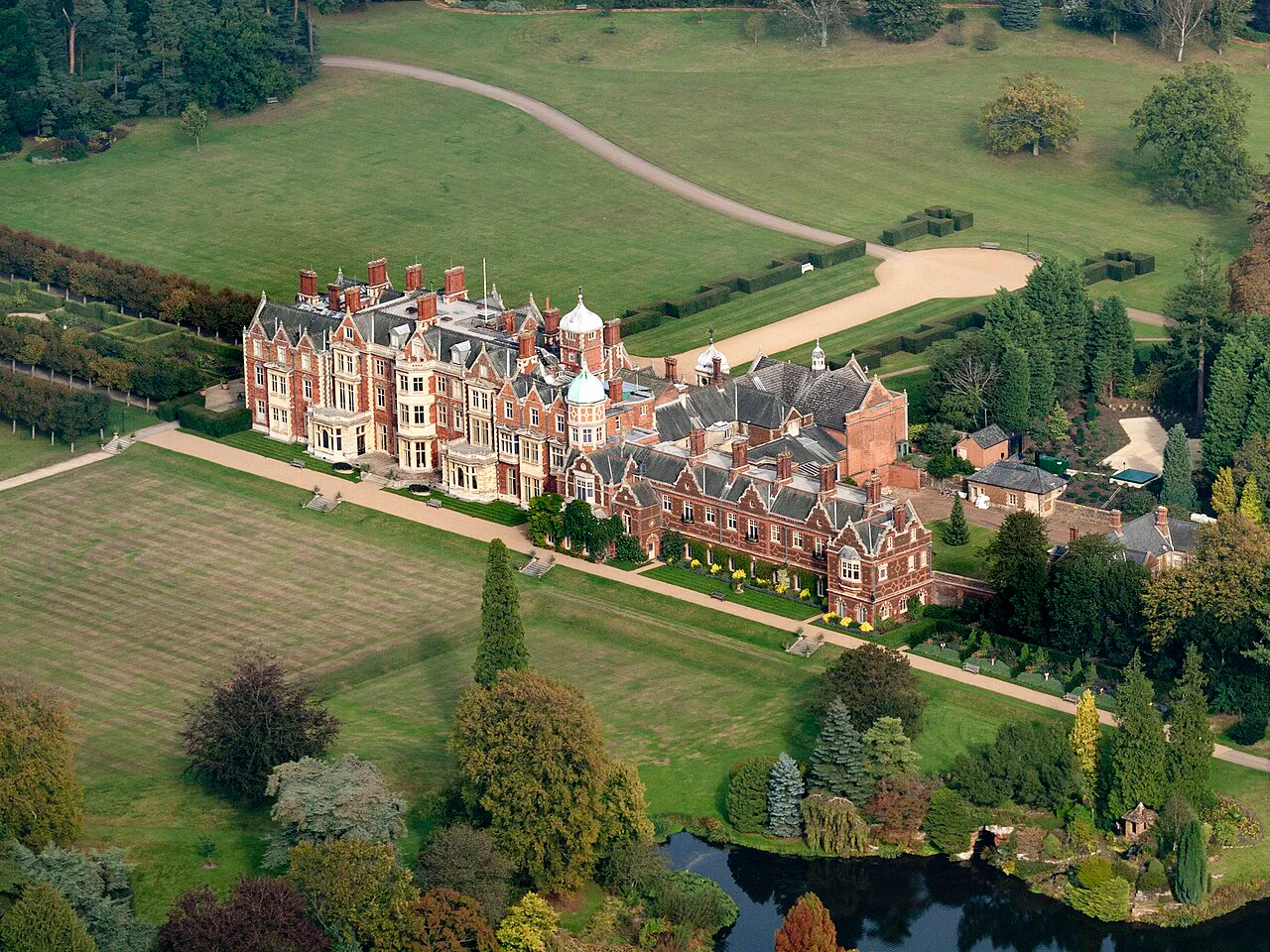
Sandringham House is a country house located in the parish of Sandringham, Norfolk. It is a royal residence of Charles III and holds historical significance as the place where George V and George VI died.
Download Stanza, then search for “Sandringham House”.
About the tour
One guide. Your kind of visit.
Sandringham House is a country house located in the parish of Sandringham, Norfolk. It is a royal residence of Charles III and holds historical significance as the place where George V and George VI died.
Ready when you are.
- 01Get the free Stanza app.
iOS & Android
- 02Find your guide.
“Sandringham House”
- 03Download before you go.
Works offline
Audio guide / 13 narrated stops
Inside the guide
Get to know a few of the stories before you go. Open a stop to read more.
01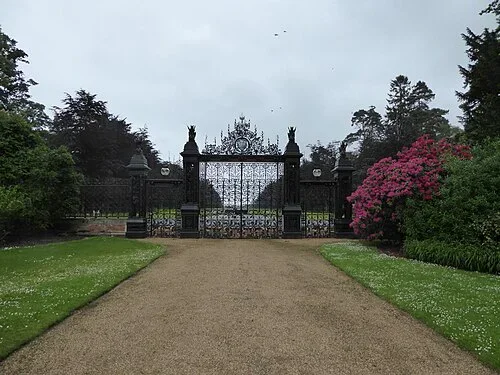 The Norwich Gates
 and Estate Approach
Sandringham is not a palace in the usual sense. It is a private country house, and the monarch owns it personally. Buckingham Palace, Holyrood Palace and Windsor Castle belong to the Crown instead. The first house on this site was soon found too small for the Prince of Wales, later Edward the Seventh, and his new wife. In 1865 he commissioned an architect called Humbert to pull down the old hall and build something much larger. The new red-brick house was complete by late 1870. A plaque in the entrance hall credits the couple with building it. Today the estate covers about twenty thousand acres. It spreads across seven villages, and its shoots are among the finest in England. In 1977, to mark her Silver Jubilee, Elizabeth the Second opened the house and grounds to the public for the first time.
Chris Holifield · CC BY-SA 2.0
02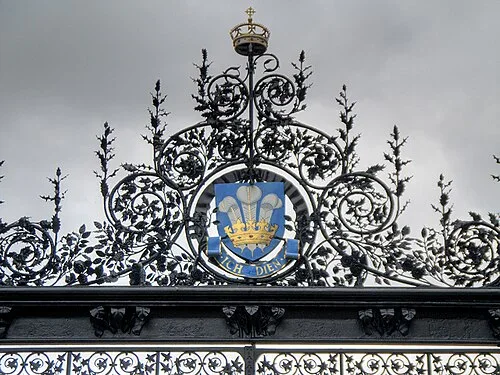 The Norwich Gates
Norwich Gates Detail: The Central Crest
These gates were a wedding present for Edward and Alexandra from the gentry of Norfolk, the county's landowning families. The ironwork is a tangle of curling scrolls and leaves, wound around a round shield at the centre. A small crown sits on a slender stem above the shield. Thomas Jeckyll designed the gates, and the local firm of Barnard, Bishop and Barnard made them.
David Dixon · CC BY-SA 2.0
03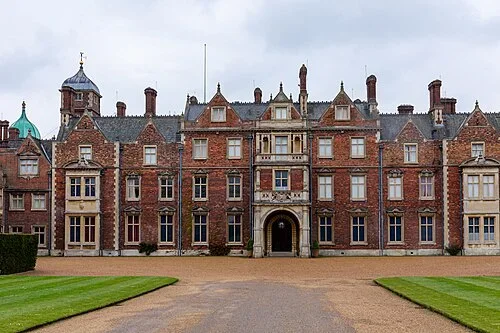 The East Front and Porte-Cochère
The East Front
The front of Sandringham House is red brick, with stone trim, gabled porches and tall chimneys. The style is called Jacobethan, a blend of Elizabethan and Jacobean design. The style drew its inspiration mostly from nearby Blickling Hall. The critic Nikolaus Pevsner called the style frenetic. Within little more than a decade of its completion, the house was too small again. In 1883 Colonel Robert Edis added the Bachelors' Wing, following the same style. His additions used matching brickwork and Ketton stone. Norfolk carrstone, a local stone, also appears, especially in his work. In 1891 a fire broke out in the second-floor bedrooms. Maids had lit every fire to warm the rooms before the prince arrived. Edis was called back to rebuild, and he kept to the old style. In the 1960s, plans to pull the house down and replace it were drawn up. They were never carried out.
Listen in the appPhoto: Balon Greyjoy · CC BY-SA 4.0
04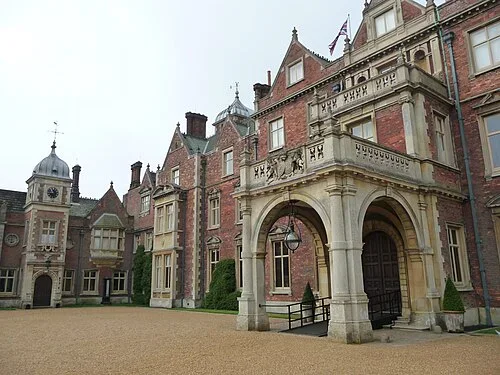 The East Front and Porte-Cochère
The Porte-Cochere
The covered carriage entrance is called a porte-cochère, a porch big enough to shelter a carriage and its passengers. Its stone arches carry an ornate parapet above them. House guests usually came by train to Wolferton station, about two and a half miles away. Royal trains ran from St Pancras to King's Lynn, and then on to Wolferton. The station served the house from 1862. It closed in 1969. After that, the Queen and her guests generally came by car from King's Lynn. Guests arrived under this porch and walked straight into the saloon. There was no ante-room where they could take off their hats and coats, an arrangement later found to be inconvenient. A clock tower with a domed top rises alongside.
Listen in the appPhoto: Immanuel Giel · CC BY-SA 4.0
05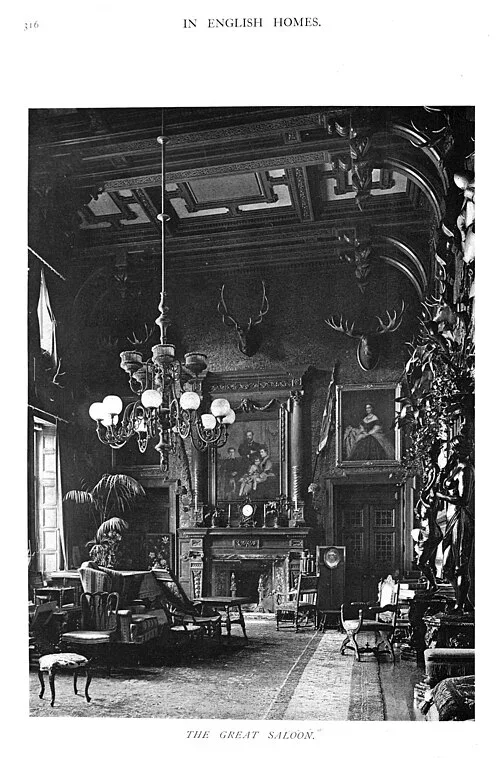 The Saloon
The Great Saloon
Edward the Seventh had his house guests weighed twice, once on arrival and again on departure. The idea was to show that his lavish hospitality had made them put on weight. The room still contains a weighing machine. The saloon is the largest room in the house, and its main reception room. It holds portraits by Franz Xaver Winterhalter, a favourite painter of the royal family. Antlers are mounted high on the walls. There is also a minstrels' gallery for musicians. Because the saloon was also the family's living room, its furniture had to be moved out for every dance. In 1884 a new ballroom was added, and Alexandra was delighted with it. She wrote that it “avoids pulling the hall to pieces each time there is a ball.”
Listen in the appCharles Latham (1847-1912) · Public domain
06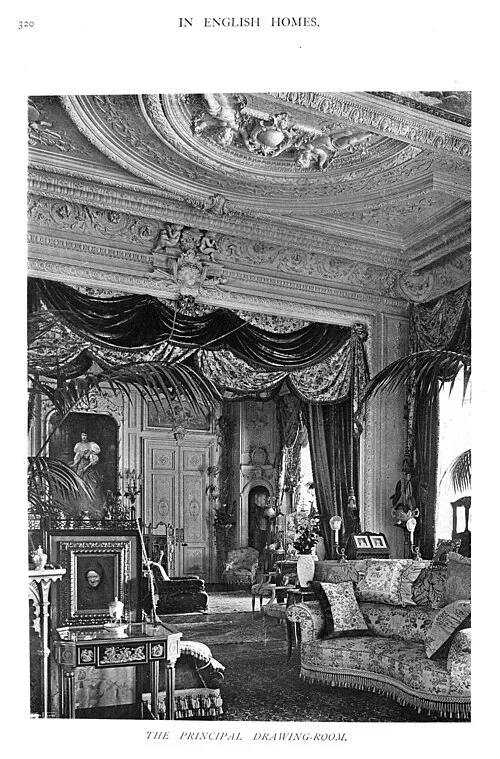 The Principal Drawing Room
One critic called this room the nearest Sandringham gets to pomp. Its ceiling is painted and richly moulded, with garlands and figures in the plasterwork. On one of her visits, Queen Victoria wrote in her journal about the evening. After dinner, the party went to “the very long and handsome drawing room with painted ceiling and two fireplaces.” The room holds portraits of Queen Alexandra and her daughters, and white marble statues complete the effect. Altogether, it has been described as a tour de force of fashionable late-Victorian decoration. The dining room was decorated differently. Its walls are hung with Spanish tapestries, some of them by Goya, a gift from the King of Spain. The oak panelling was painted light green for Queen Mary, who had been inspired by a visit to a Scottish castle.
Listen in the appCharles Latham (1847-1912) · Public domain
07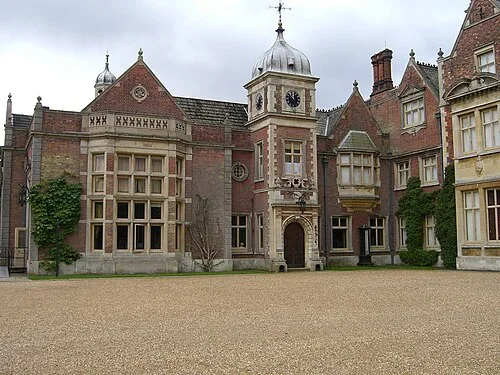 The Ballroom Wing
The Clock Tower Front
Prince Albert Victor died of pneumonia at Sandringham House on the fourteenth of January 1892. He was the eldest son of the Prince of Wales, and he held the title Duke of Clarence and Avondale. The clock tower commemorates him. Its inscription is in Latin, and it translates as “the hours perish and will be charged to our account.” Clock faces look out from the tower, and a domed cupola rises above them. The estate also kept a special time of its own, called Sandringham Time, through the reigns of Edward the Seventh and George the Fifth. In 1936, at the start of the next reign, it went back to official British time.
Listen in the appPJMarriott · CC BY 3.0
08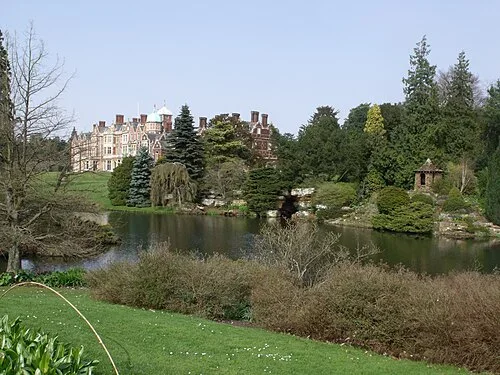 The Formal Gardens and Upper Lake
The Upper Lake and The Nest
The gardens cover forty-nine acres, and most were laid out from the 1860s, with later changes. Edward the Seventh sought advice on them from two men, one of them Ferdinand de Rothschild. Rothschild was a friend and adviser to the King throughout his life. The original lake was filled in to make room for parterres, the formal flowerbeds laid out in patterns that were fashionable then. Those have since been removed. Two new lakes were dug farther from the house instead. Their banks are edged with rockeries of Pulhamite, an artificial stone. A summerhouse called The Nest stands above the Upper Lake. It was given to Queen Alexandra in 1913 by the comptroller of her household. Alexandra liked the Norfolk countryside around the house, because it reminded her of Denmark, her native land.
Listen in the appElliott Brown · CC BY 2.0
09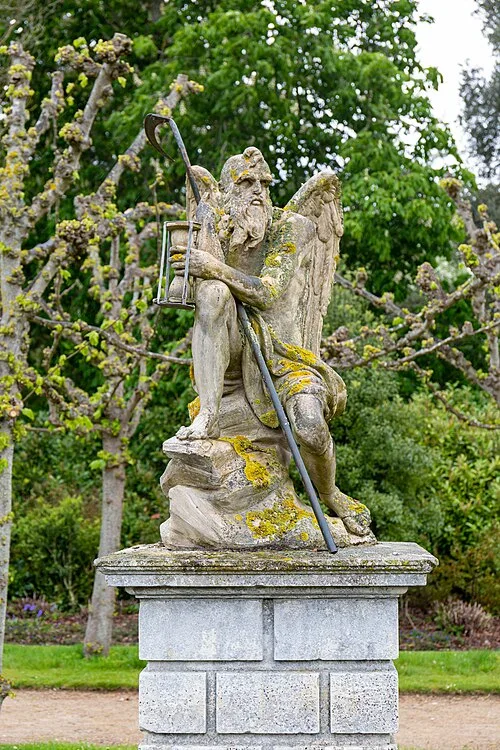 The Formal Gardens and Upper Lake
Father Time Statue
Father Time sits on a rock, a bearded old man with wings and a scythe propped beside him. The statue dates from the eighteenth century. Queen Elizabeth, later known as the Queen Mother, bought it, and it was installed in 1951. Its stone is patched with yellow lichen. After the Second World War, Geoffrey Jellicoe simplified the gardens north of the house for the King and Queen. In the 1960s, Sir Eric Savill remodelled other areas for the Queen and her husband. In 2023 the present King created an environmentally friendly topiary garden with more than five thousand yew trees.
Listen in the appPhoto: Balon Greyjoy · CC BY-SA 4.0
10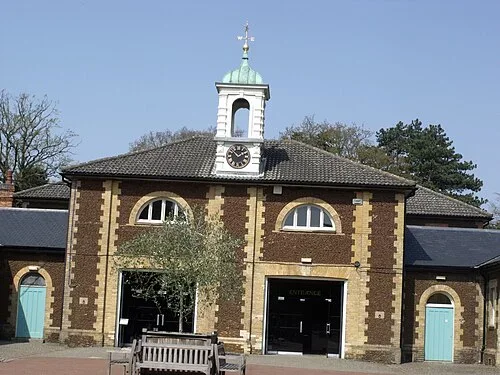 The Royal Transport Museum
The Coach House Museum Entrance
Before it became a museum, this building was the estate's coach house and stable yard. The architect Humbert designed the stables and garaging at the same time as the main house. Today it holds the estate museum, with displays on royal life and estate history. The museum also has an extensive collection of royal motor vehicles. The estate's own fire brigade was founded in 1865 and ran independently until 1968. Its 1939 fire engine, made by Merryweather and Sons for the brigade, is in the museum.
Listen in the appElliott Brown · CC BY 2.0
- 11
The 1900 Daimler
A maroon 1900 Daimler once owned by Edward the Seventh, kept among the museum's royal motor vehicles.
- 12
York Cottage
A house built for guests that became George the Fifth's family home, and a verdict on it from his son.
- 13
St Mary Magdalene Church
The parish church beside the house, where royal Christmas services are held and where estate men once kept watch over a king's coffin.
Sandringham House
Frequently asked questions
How much does the guide cost?
Free app download. Listed guide price: $0.99. Guide price shown in the app. Audio guide only. Venue admission is separate.
Can I listen without internet?
Yes. Download the guide’s audio, images, and maps in the app before your visit. Your downloaded content is then available offline.
Can I listen in my language?
This audio guide is available in 15 languages, including English.
Do I need to follow a schedule?
No. This is a self-guided experience. Choose your stops, pause whenever you like, and return to a story at your own pace.
At your own pace
Explore Sandringham House.
Download Stanza, then search for “Sandringham House”.
Free app download · Guide price shown in the app
Keep exploring
Nearby audio guides
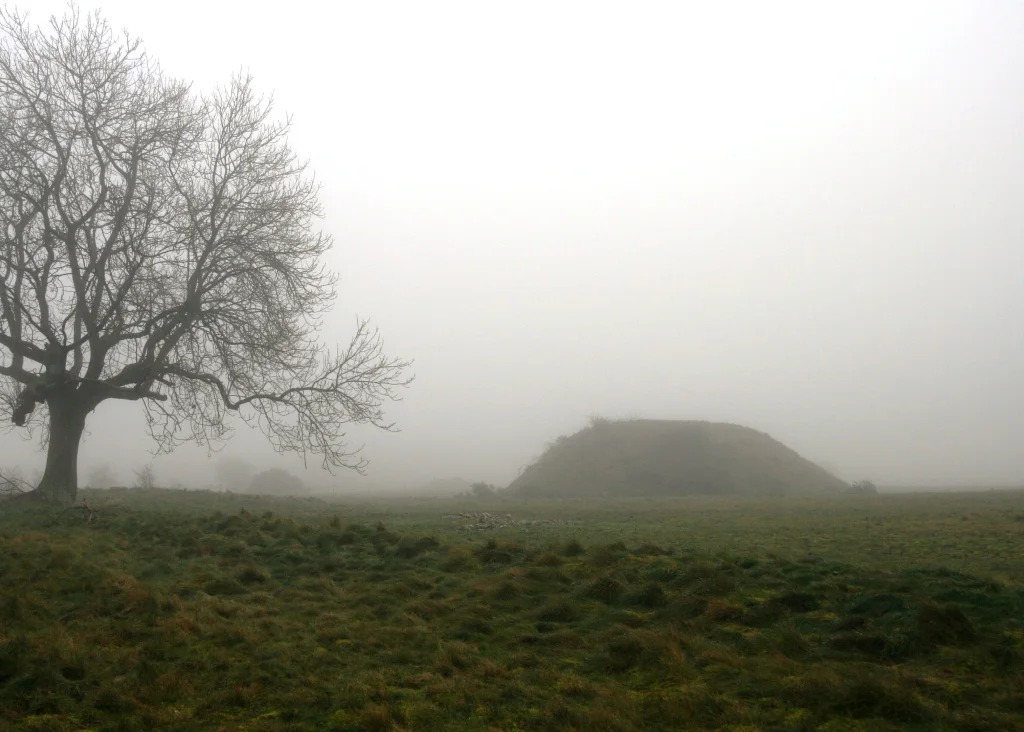
Sutton · 99 km
Sutton Hoo
Content & sources
User:Amitchell125 · CC BY 3.0
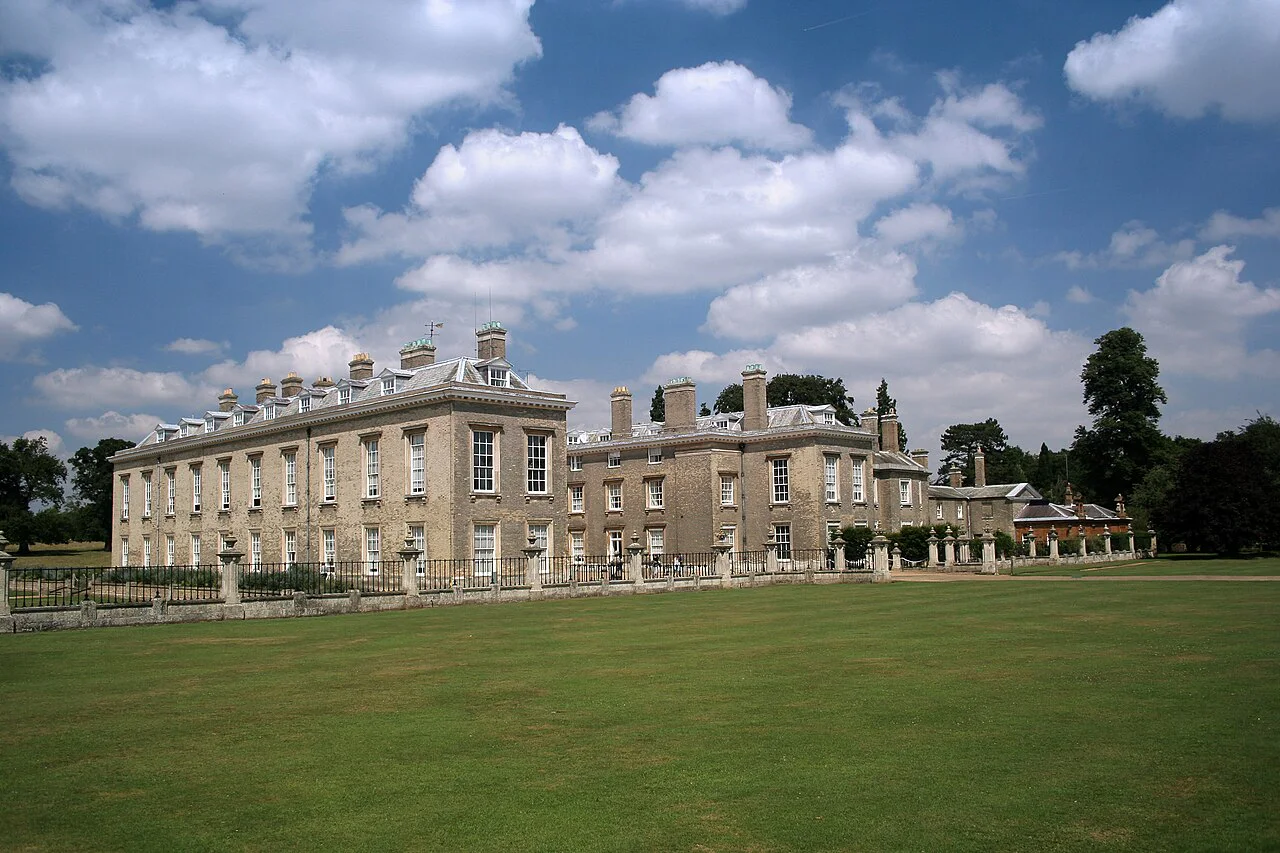
Northampton · 119 km
Althorp
Content & sources
Andrew Walker (walker44) · CC BY-SA 3.0
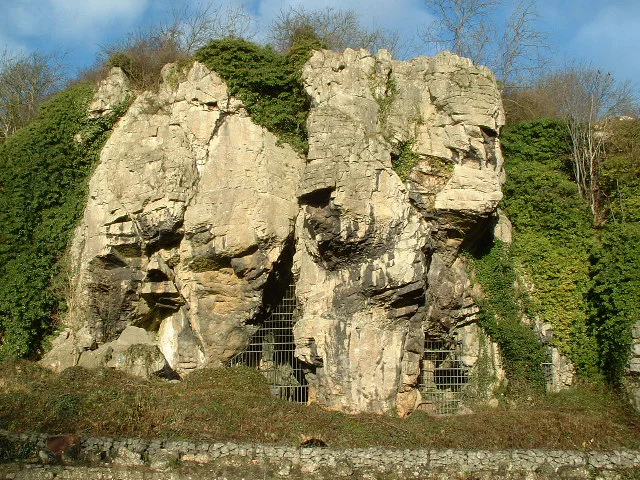
Elmton with Creswell · 124 km
Creswell Crags
Content & sources
Nigel Homer · CC BY-SA 2.0
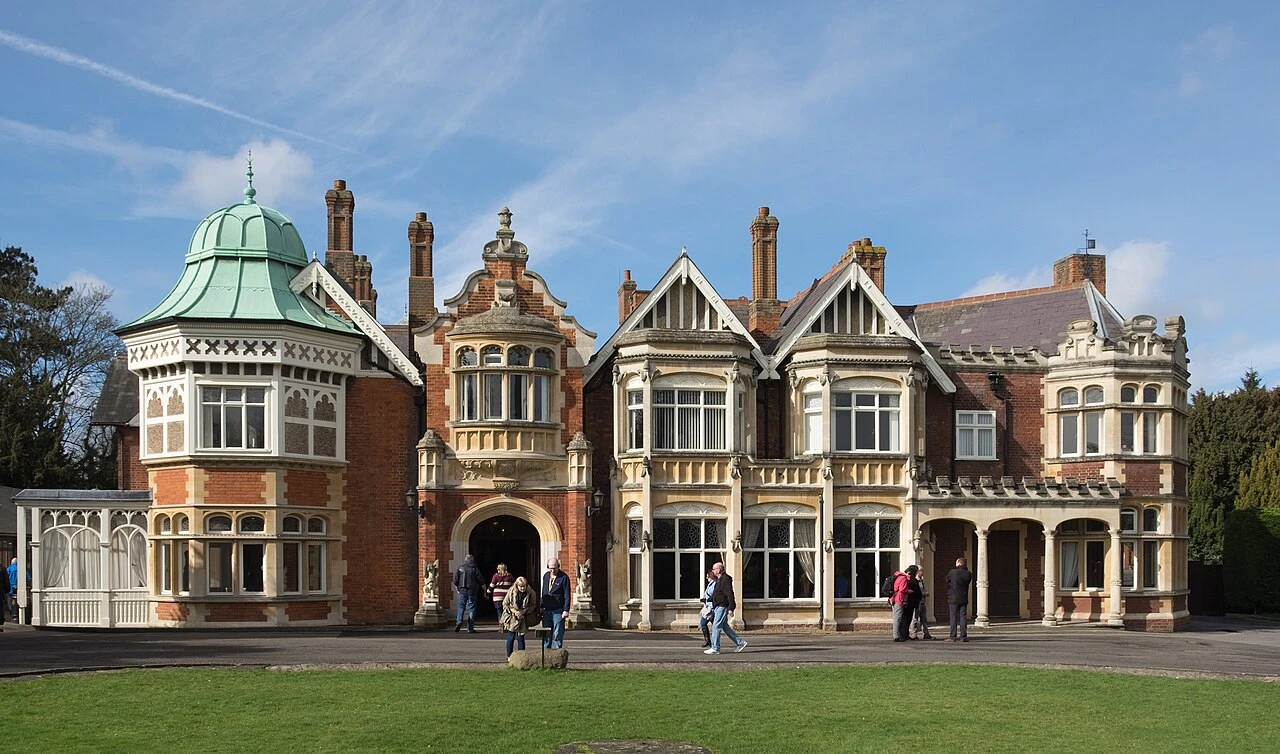
Milton Keynes · 126 km
Bletchley Park
Content & sources
Photo: DeFacto · CC BY-SA 4.0