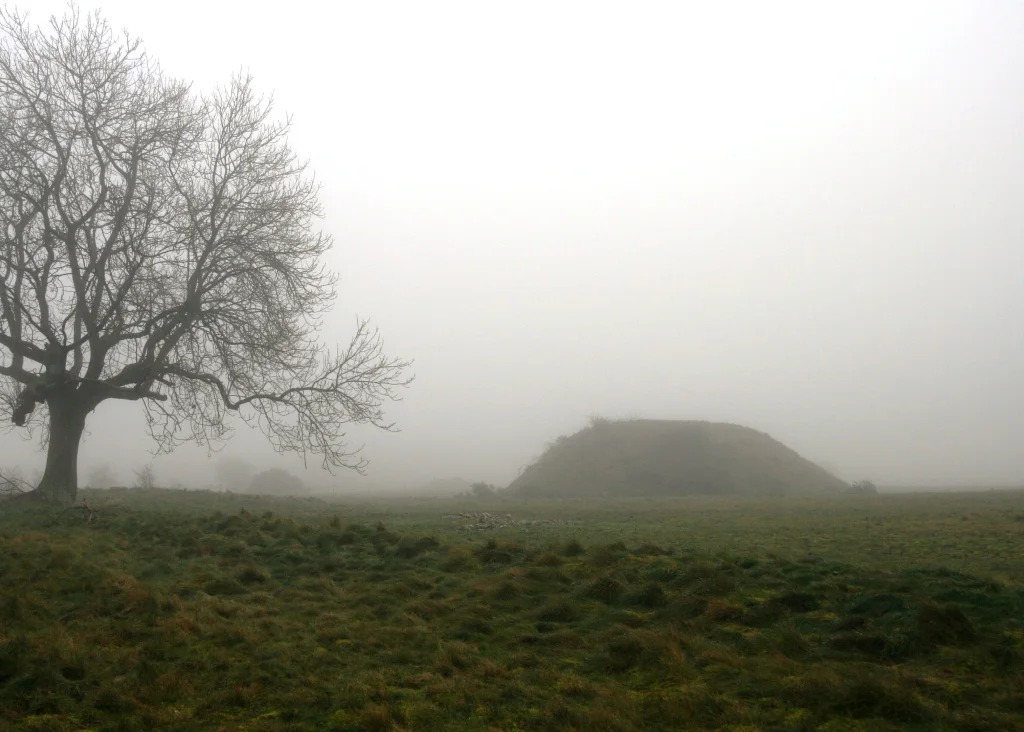
Stanza · Audio guide
Sutton Hoo Audio Guide
A place to remember. A story to take with you.
Sutton Hoo is the site of two Anglo-Saxon cemeteries dating from the 6th to 7th centuries near Woodbridge. The site is significant because it illuminates the culture of the Anglo-Saxons during a period that…
Download Stanza, then search for “Sutton Hoo”.
About the tour
One guide. Your kind of visit.
Sutton Hoo is the site of two Anglo-Saxon cemeteries dating from the 6th to 7th centuries near Woodbridge. The site is significant because it illuminates the culture of the Anglo-Saxons during a period that lacks historical documentation.
Ready when you are.
- 01Get the free Stanza app.
iOS & Android
- 02Find your guide.
“Sutton Hoo”
- 03Download before you go.
Works offline
Audio guide / 15 narrated stops
Inside the guide
Get to know a few of the stories before you go. Open a stop to read more.
01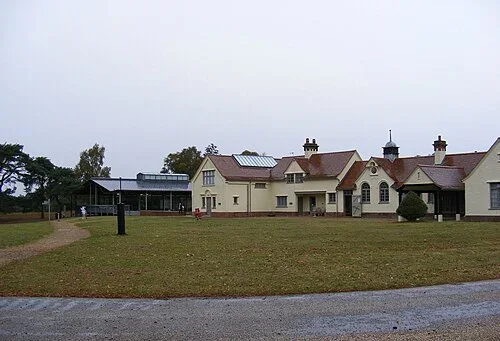 Visitor Centre and Arrival
Arrival at Sutton Hoo
Welcome to Sutton Hoo, in the corner of Suffolk near Woodbridge. Behind these buildings lies a hill-spur above the tidal estuary of the River Deben, and on it rise a group of about twenty earthen mounds. They mark two Anglo-Saxon cemeteries, in use through the sixth and seventh centuries, in the years after Roman rule in Britain ended. For a long time they looked like nothing more than grassy bumps on a ridge. Then, in 1939, digging here uncovered a ship burial that had never been disturbed, filled with treasure. It became one of the most significant archaeological finds ever made in England. The period it came from left almost no written records, so this one grave changed how a whole age is understood. The site is now in the care of the National Trust, and most of the objects found here are held by the British Museum. The tour follows the story from the diggers who opened the mounds to the treasures they lifted from the sand.
Geographer · CC BY-SA 2.0
02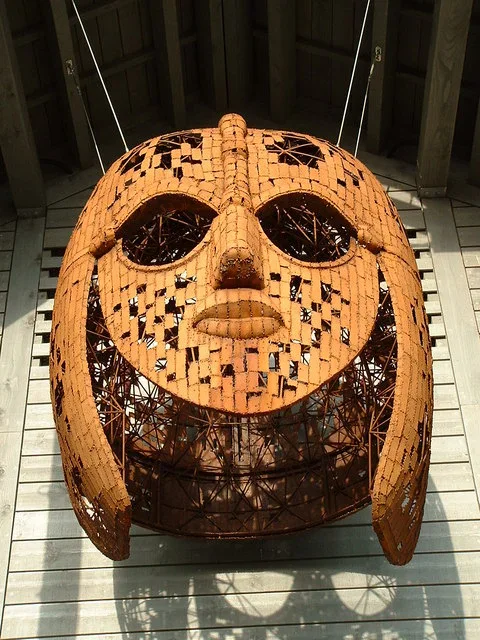 Visitor Centre and Arrival
The Face of Sutton Hoo
A vast face hangs overhead, staring down with hollow eyes. It is carbon steel, made in 2002 by the sculptor Rick Kirby, and it greets visitors at the entrance complex. Its features echo the most famous object ever found here, the buried helmet, though this is a modern work of art rather than a copy. The face is riveted together from flat plates, so light and shadow play across it as the sky changes. When the ship burial was discovered, its helmet became the image people reached for, the face of an age that had left almost no portraits behind. That is why a face greets you here at all. A find from a single grave grew into a national icon, and this sculpture is its modern echo. The real helmet, battered and beautiful, waits later in the tour.
Keith Evans · CC BY-SA 2.0
03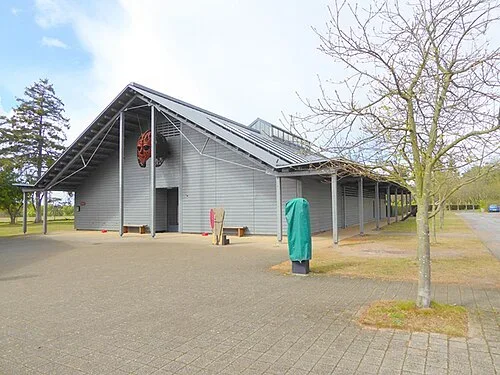 Exhibition Hall and the Ghostly Sand Bodies
The Exhibition Hall: Eighty Years of Digging
This long grey hall holds the site's displays, including a full recreation of the burial chamber and its contents. It also holds a story about digging itself. Work here began in June 1938, and archaeologists have returned again and again since. Rupert Bruce-Mitford of the British Museum studied the records from the first campaign and concluded that questions remained unanswered. So in 1965 a British Museum team began a fresh investigation, working until 1971. They re-exposed the impression of the buried ship and found it had suffered some damage, because it had never been filled back in after 1939. Then came a third campaign, larger still. In 1982 Martin Carver was appointed to run the excavation, backed by the British Museum, the Society of Antiquaries and the Ashmolean. His research design set out to explore the politics, social organisation and ideology of the place, not simply to hunt for objects. Despite objections that the money could be better spent elsewhere, the project went ahead in 1983 and ran until 1992. Half a century on, the digging had turned from treasure hunting into a long argument with the soil.
Listen in the appOliver Dixon · CC BY-SA 2.0
04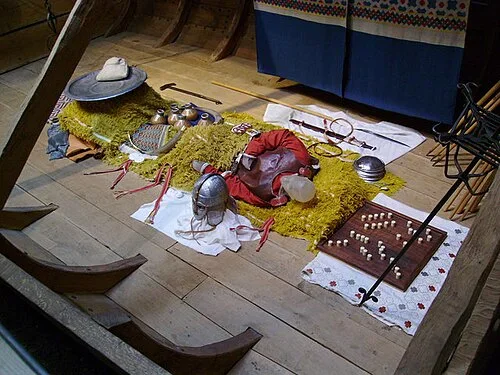 Exhibition Hall and the Ghostly Sand Bodies
Inside the Burial Chamber
The chamber was laid out with care, and this recreation shows where everything rested. At the head lay a helmet, wrapped in cloths. To the head's right stood a nested set of ten silver bowls, placed upside down, probably made in the Eastern Empire during the sixth century. Beneath them were two silver spoons of a type that usually carried the names of the Apostles. One is engraved in Greek with the name PAULOS, Paul. The matching spoon was altered, using the lettering habits of a Frankish coin-die cutter, to read SAULOS, Saul. One theory suggests the spoons, and perhaps the bowls too, were a baptismal gift for the person buried here, though that remains a suggestion rather than a certainty. Elsewhere in the chamber lay a sword, a shield and drinking vessels. In the south-west corner, objects had been hung up and were later found pressed together. There sat a Coptic bronze bowl from the eastern Mediterranean, and above it a six-stringed Anglo-Saxon lyre in a beaver-skin bag. Then, long afterwards, the roof collapsed violently under the weight of the mound, crushing the whole arrangement into a seam of earth.
Listen in the appWilliam McLaughlin · CC BY-SA 2.0
05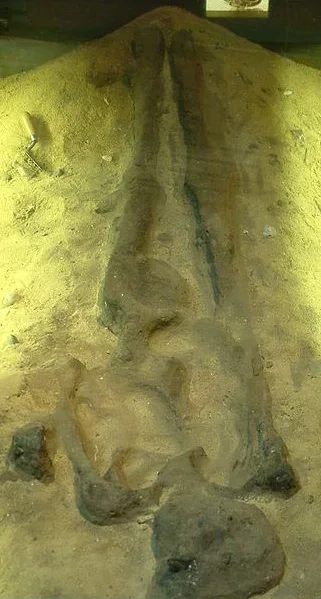 Exhibition Hall and the Ghostly Sand Bodies
Ghosts in the Sand
The soil here is brutally acidic, and it destroyed almost everything organic that entered it. Yet the same chemistry left a strange gift. Where a body lay, its flesh stained the sand, fixing the outline in place long after the bones had gone. As the diggers worked, they removed the sand in thin layers, and the emaciated figures of the dead slowly emerged. Casts were taken of several of these so-called sand bodies, and one is preserved for display. Not everyone here died a natural death. The cemetery also holds the remains of people who died violently, some by hanging and some by decapitation. Their graves were dug later than the great royal mounds, in the margins of a place that had once been reserved for the powerful. Who they were, and why they were buried among the kings, the soil has never fully said.
Listen in the appRussell Scott [1] · CC BY-SA 2.5
06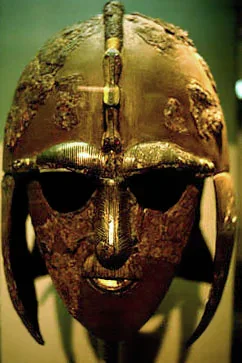 The Royal Treasures
The Sutton Hoo Helmet
Helmets from this age are extremely rare finds, and this one nearly stayed lost. It rusted in the grave, and when the chamber roof collapsed it was shattered into hundreds of tiny fragments. The fragments were catalogued and organised, piece by piece, until they could be reassembled into the face that now stands for the whole site. Outwardly it looks very much like helmets from the Swedish burial grounds of Vendel and Valsgärde, where excavations from the 1880s onward revealed boat burials furnished with swords, shields and helmets. The similarities are strong enough to suggest Swedish cultural influence here. But the Sutton Hoo helmet is a product of better craftsmanship, and it differs in its bones. Its iron skull is a single vaulted shell, and it has a full face mask, a solid neck guard and deep cheekpieces. Those features have been used to argue for an English origin for its basic structure. Its decoration was rare too: apart from a fragment from a burial at Caenby, in Lincolnshire, no other figural plaques like its own were known in England until the Staffordshire Hoard surfaced in 2009. The original helmet is now in the British Museum in London.
Listen in the appPhoto: Tkgd2007 · Public domain
07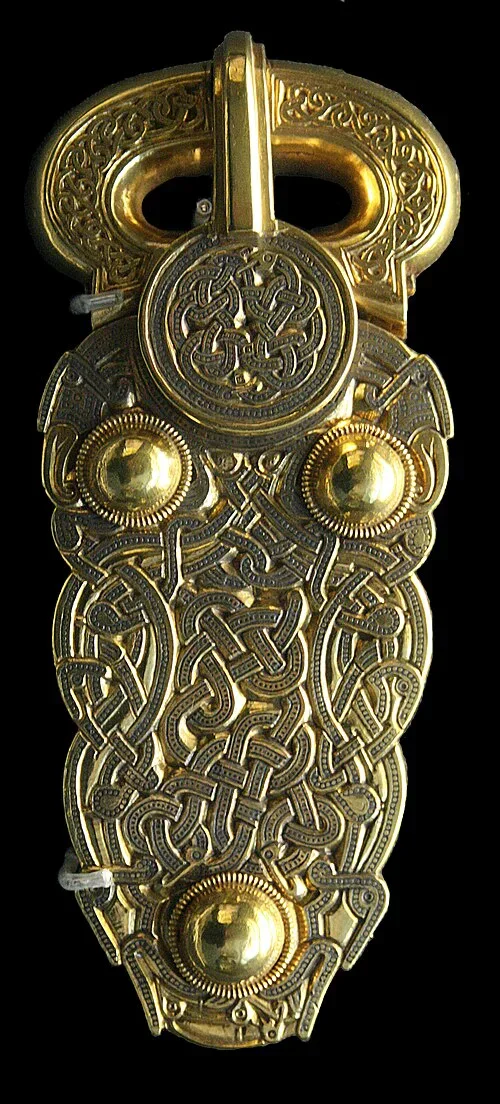 The Royal Treasures
The Great Gold Buckle
Cast an eye over this buckle for a moment; the original is in the British Museum in London. It is made in three parts, and the plate is a long ovoid of meandering but perfectly symmetrical outline. Across its front run ribbon animals, densely interwoven and interpenetrating, carved in chip-carving so the creatures seem to devour one another's limbs. The gold surfaces were punched to receive niello, a black inlay that throws the pattern into relief. The tongue-plate and the hoop are solid, ornamented throughout, and expertly engineered. The plate itself is the surprise. It is hollow, with a hinged back that opens into a hidden chamber inside the buckle. Such spaces are called secret chambers, and this one may have held a relic, though what it actually contained is unknown. A belt fitting, built with a hidden compartment and this much artistry, was made for someone who expected every object on his body to speak for him.
Listen in the appMichel wal · CC BY-SA 3.0
08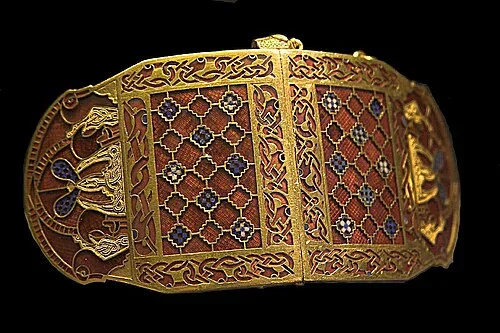 The Royal Treasures
Clasps of a Master Goldsmith
Each shoulder clasp is made of two matching curved halves, hinged on a long removable pin with a chain. Their surfaces are panels of interlocking stepped garnets and chequered millefiori insets, ringed by interlaced ribbon animals in the Germanic style. The rounded ends carry garnet-work of interlocking wild boars in filigree surrounds. On the underside are lugs for fixing to a stiff leather cuirass, body armour worn in the Roman manner, with the clasps holding its two halves close to the torso. The cuirass itself, possibly worn in the grave, did not survive. No other Anglo-Saxon cuirass clasps are known, and the originals are now in the British Museum in London. These fittings, with the rest of the gold and garnet set, are the work of a master goldsmith of the highest level in Europe, with access to an East Anglian armoury full of pattern sources. Together they let the wearer appear imperial. The art historian George Henderson called the ship treasures the first proven hothouse for the incubation of the Insular style. From this kind of work grew the art of gospel books, shrines and dynastic objects, drawing on Irish, Pictish, Anglo-Saxon and Mediterranean sources at once.
Listen in the appRob Roy User:Robroyaus on en:wikipedia.org · CC BY-SA 2.5
09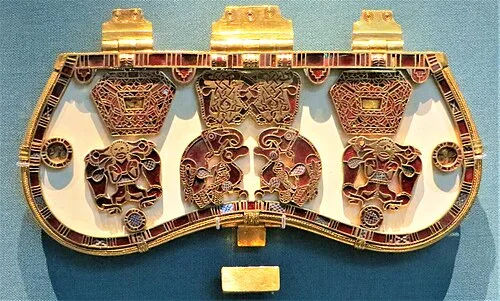 The Royal Treasures
The Purse Lid and the Coins
The purse lid, now in the British Museum in London, covered a leather pouch that has long since vanished. Its gold frame is kidney-shaped, set with paired garnet plaques showing birds, wolves devouring men, geometric motifs and interlaced animals. The maker took these images from the ornament of the Swedish-style helmets and shield mounts, translating them into gold and garnet. The pouch it once covered held the key to the whole burial. Inside were thirty-seven gold coins called tremisses, each struck at a different mint in Frankish territory, deliberately collected. There were also three blank coins and two small ingots. Why collect them? Perhaps they were payment for the afterworld, like the Roman obolus, perhaps a funeral tribute, perhaps a statement of allegiance. No one has settled it. What is certain is their value as a clock. Analysis of the Merovingian coins by Gareth Williams, the British Museum's curator of early medieval coinage, narrowed the date of the burial to between 610 and 635. A purse of small gold coins, in other words, fixed the moment this man was laid in the ground.
Listen in the appJononmac46 · CC BY-SA 3.0
10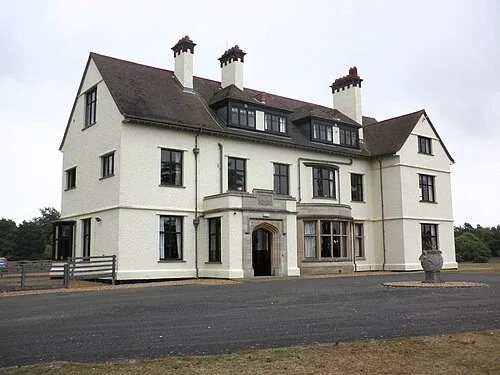 Tranmer House
: The Lady and the Digger
Tranmer House was built in 1910, a short distance from the mounds. In 1926 the estate was bought by Colonel Frank Pretty, a retired officer who had recently married. He died in 1934, leaving his widow Edith and their young son Robert. After her loss, Edith became drawn to Spiritualism, a movement that claimed the living could reach the dead. In 1937 she decided to excavate the mounds. Through Ipswich Museum she hired Basil Brown, a self-taught Suffolk archaeologist, at a wage of thirty shillings a week with accommodation. Edith hoped he would start at Mound 1, the largest, but it looked as if earlier diggers had disturbed it, so in June 1938 he opened three smaller mounds instead. They yielded only fragments, robbed long before, though at Mound 2 he found iron ship-rivets and a disturbed chamber burial. In May 1939 he returned to Mound 1, helped by Edith's gardener John Jacobs, her gamekeeper William Spooner and estate worker Bert Fuller. On the third day of the trench they found an iron rivet, and Brown knew at once it came from a ship. Within hours, more rivets surfaced still in position. The excavation of the ship burial was completed in late summer 1939, just before war broke out. When it did, the grave-goods went into storage.
Listen in the appRoger Cornfoot · CC BY-SA 2.0
- 11
The Royal Burial Ground
From the tower: a royal cemetery, the kingdom of the East Angles, and the argument over which king lies here.
- 12
Mound 2: Robbed and Restored
Mound 2: robbed twice, dug in 1938, and rebuilt to the height its builders gave it.
- 13
Mound 1: The Great Ship Burial
On Mound 1: a twenty-seven-metre ship hauled uphill, a body dissolved, and the phosphate that pointed to it.
- 14
The River and the World of Beowulf
The Deben below, the North Sea beyond, and the poem of Beowulf that suddenly had a homeland in England.
- 15
The Ship Rises Again
Curving steel ribs where the ship once lay, and the full-size oak replica now rising in a Woodbridge shed.
Sutton Hoo
Frequently asked questions
How much does the guide cost?
Free app download. Listed guide price: $1.99. Guide price shown in the app. Audio guide only. Venue admission is separate.
Can I listen without internet?
Yes. Download the guide’s audio, images, and maps in the app before your visit. Your downloaded content is then available offline.
Can I listen in my language?
This audio guide is available in 15 languages, including English.
Do I need to follow a schedule?
No. This is a self-guided experience. Choose your stops, pause whenever you like, and return to a story at your own pace.
At your own pace
Explore Sutton Hoo.
Download Stanza, then search for “Sutton Hoo”.
Free app download · Guide price shown in the app
Keep exploring
Nearby audio guides
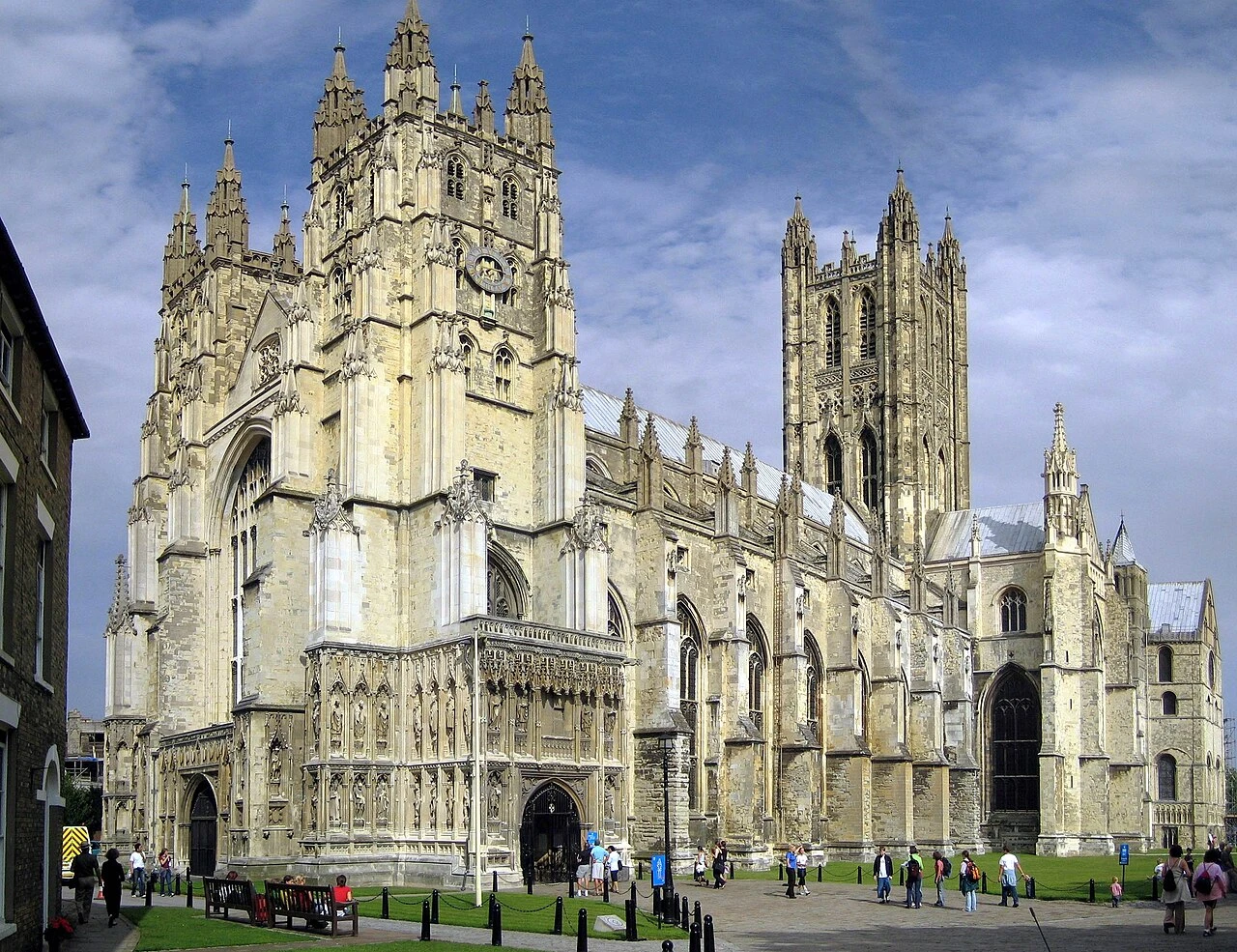
Canterbury · 92 km
Canterbury Cathedral
Content & sources
Hans Musil · CC BY-SA 4.0
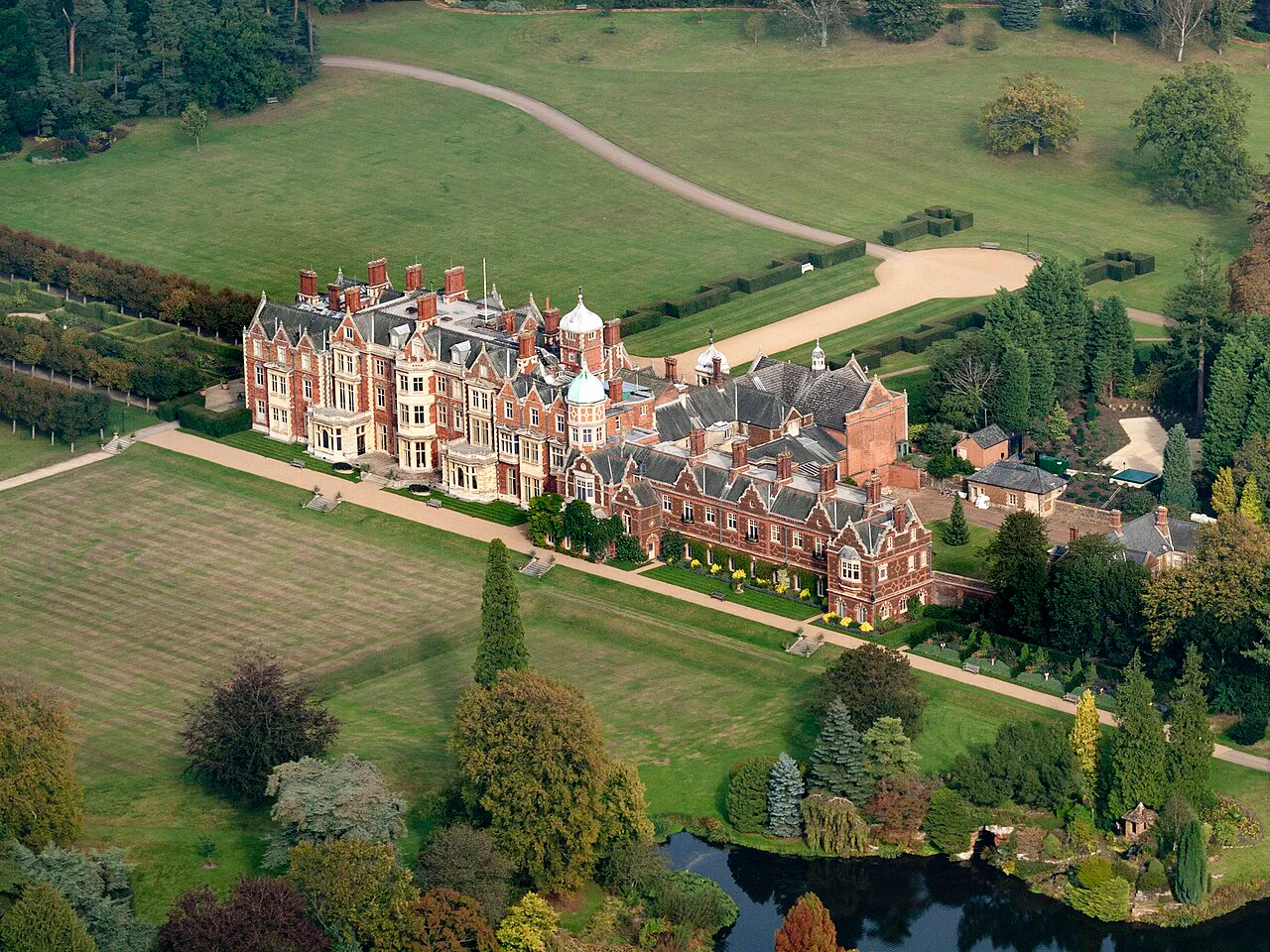
Sandringham · 99 km
Sandringham House
Content & sources
John Fielding from Norwich, UK · CC BY 2.0
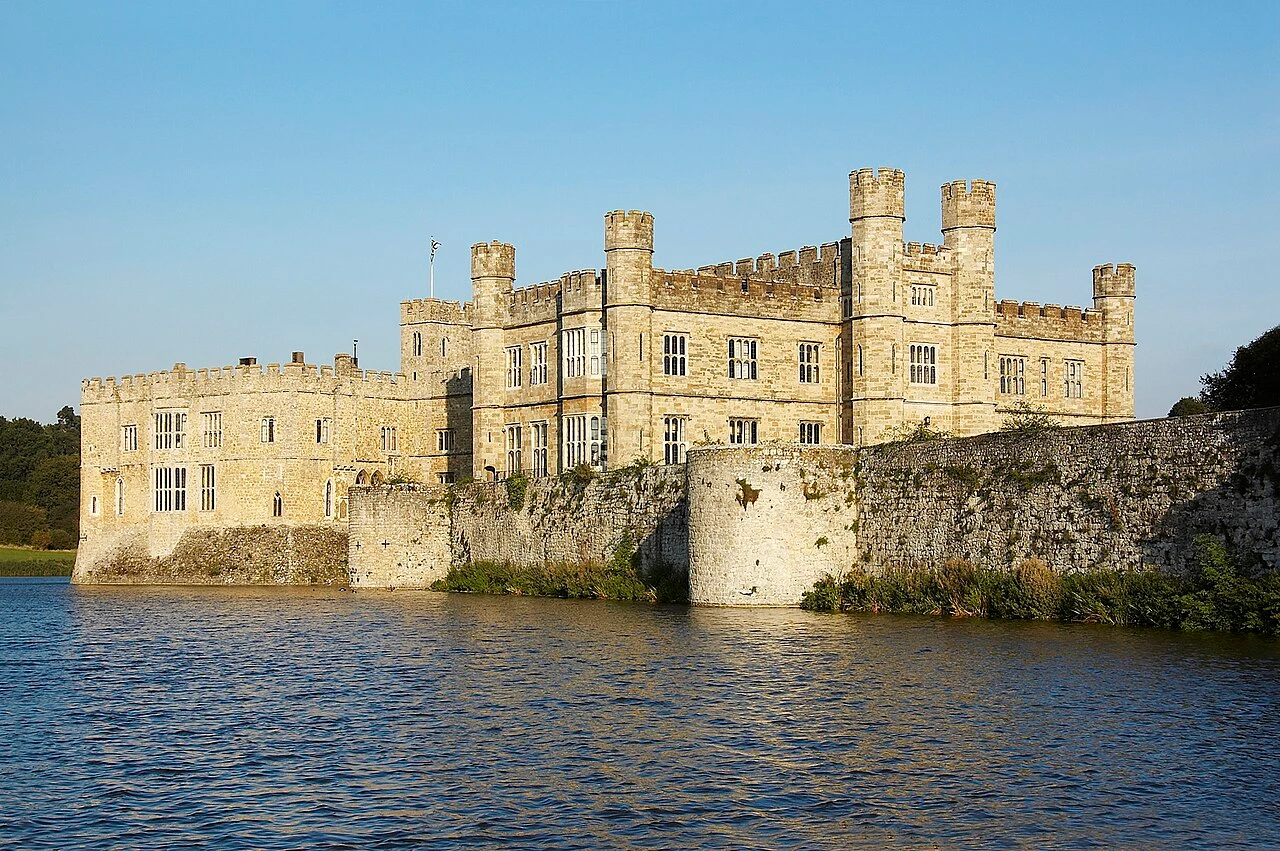
Maidstone · 106 km
Leeds Castle
Content & sources
Photo: Misterzee · CC BY 3.0
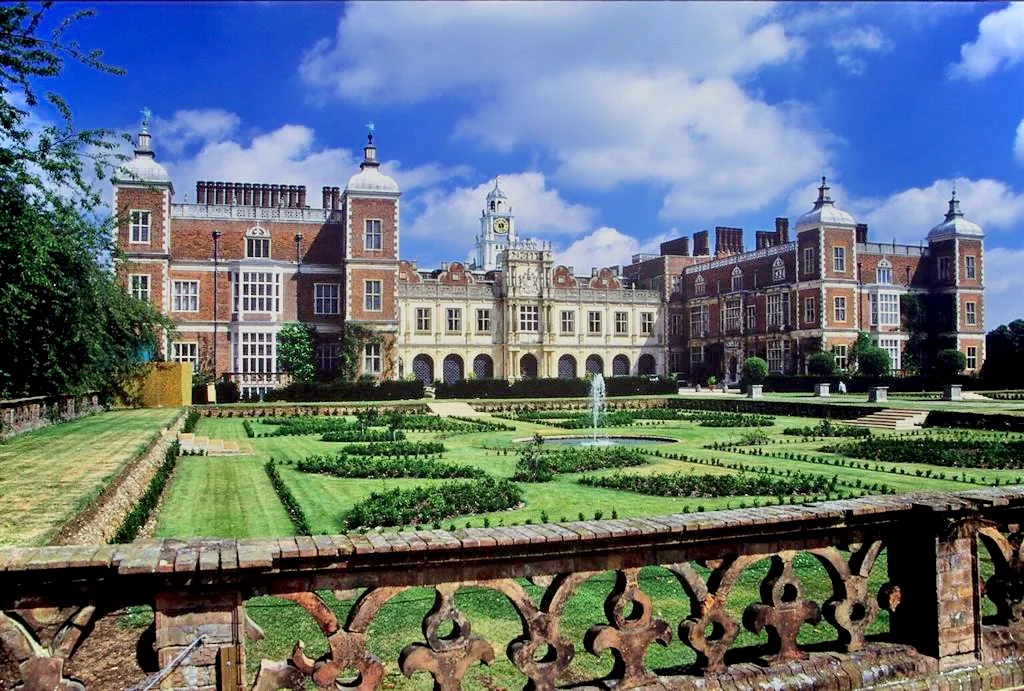
Hatfield · 112 km
Hatfield House
Content & sources
Allan Engelhardt · CC BY-SA 2.0