Languages
15Canterbury Cathedral Audio Guide
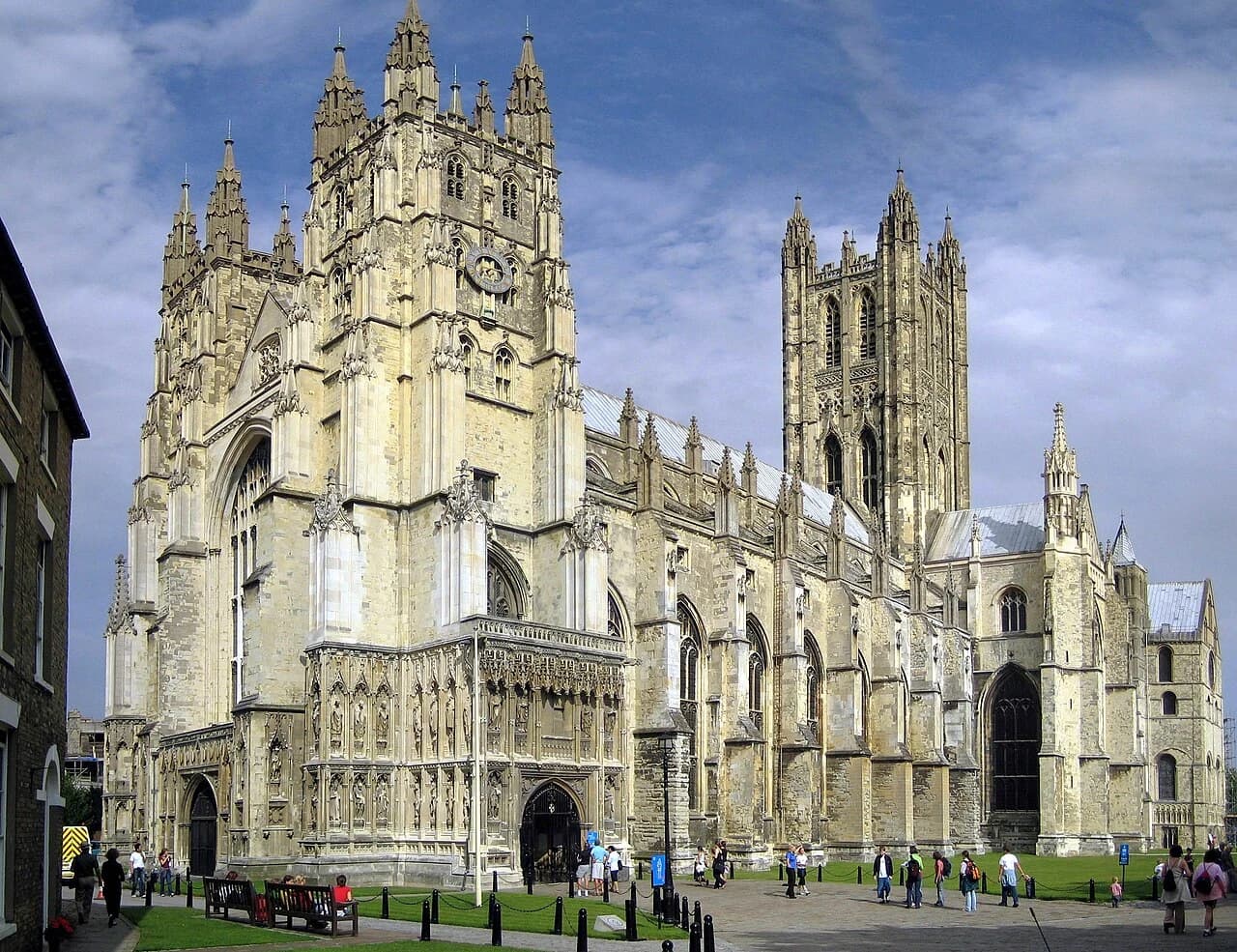
Canterbury Cathedral is a landmark in Canterbury, United Kingdom. Explore it with Stanza's GPS-triggered offline audio guide — available in 15 languages.
Quick Facts
17
Stops
15
Languages
100%
Offline
📍 Canterbury, United Kingdom · 51.2798°N, 1.0830°E
About Canterbury Cathedral
Canterbury Cathedral is a historic Anglican cathedral in Canterbury, Kent, England. Founded in 597, it serves as the mother church of the Anglican Communion and the seat of the Archbishop of Canterbury.
Canterbury Cathedral is also known as Cathedral and Metropolitical Church of Christ at Canterbury.
This self-guided audio tour features 17 narrated stops organized across 7 sections. As a cathedral, Canterbury Cathedral offers a unique cultural experience in the heart of Canterbury, United Kingdom.
The Stanza audio guide is available in 15 languages and works entirely offline — download the complete tour including audio narration, maps, and images before your visit. As you walk through Canterbury Cathedral, GPS-triggered narration plays automatically at each point of interest.
Last updated:
What you will hear
The Cathedral Nave
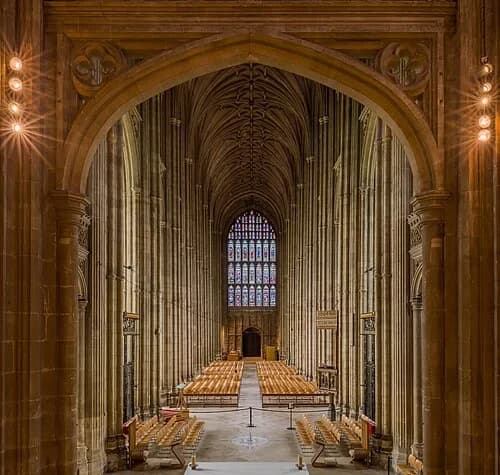
The vast Gothic Nave. I used the high-quality Diliff wide shot to show the scale and architectural innovation of the 14th-century rebuilding.
The Gothic Nave
The sheer scale of this interior immediately illustrates the power and ambition of the medieval church. Reaching a total length of 160 meters, the nave was rebuilt in the late 14th century to replace an earlier, heavier Norman structure. This style is known as Perpendicular Gothic, characterized by its emphasis on vertical lines and light. As you look down the central aisle, notice how the slender pillars rise toward the ceiling like stone trees. They draw your gaze upward to the lierne vaulting, where a complex network of ribs creates a delicate, web-like pattern across the roof. This architectural shift was not just about aesthetics; it allowed for much larger windows, flooding the space with natural light that would have felt miraculous to a medieval visitor. The distance from the entrance to the far altar serves to emphasize the cathedral's role as a journey's end. The rhythmic repetition of the arches and the height of the ceiling were intended to create a sense of awe and spiritual uplift for every person entering through the great west doors.
The Martyrdom
The site of Becket's 1170 murder. The stop includes the modern sculpture and a medieval stained glass depiction of the event as an illustrative context.
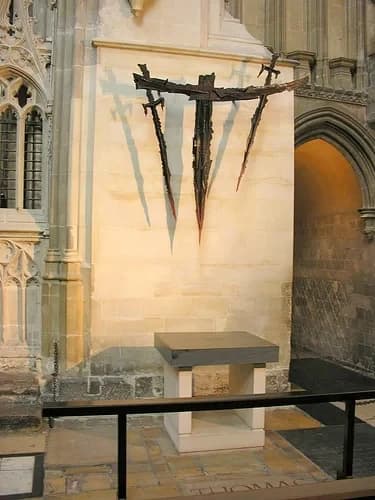
The Martyrdom Site
On the evening of December 29, 1170, this specific spot witnessed a crime that shocked the entirety of medieval Europe. Four knights, believing they were acting on the frustrated wishes of King Henry II, confronted and murdered Archbishop Thomas Becket right here. The event transformed the cathedral into one of the world's most popular pilgrimage sites almost overnight. Today, the space is marked by the modern sculpture 'The Altar of the Sword's Point.' The piece consists of two jagged metal blades representing the weapons that killed the Archbishop, accompanied by a third blade-like shape that casts a long, sharp shadow onto the stone floor. This stark, contemporary work contrasts with the ancient walls, serving as a visceral reminder of the violence that occurred in this sacred space. The murder led to Becket's nearly immediate canonization as a saint and brought a stream of kings, queens, and commoners to Canterbury to seek his intercession. This quiet corner is the focal point of the cathedral’s history, marking the exact moment the building became a site of international devotion.
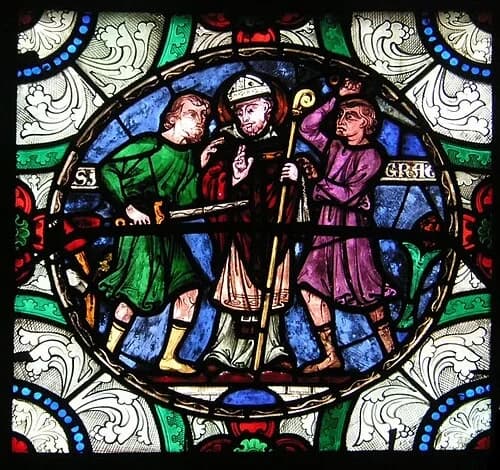
Becket's Murder in Glass
Medieval stained glass functioned as much more than decoration; it was a visual narrative for the millions of pilgrims who could not read. This specific panel depicts the shocking assassination of Thomas Becket with surprising detail. You can see the four knights clad in their traditional chainmail armor, swords drawn and ready to strike. The Archbishop is shown at the altar, calm and defenseless, while a monk witness stands nearby, capturing the horror of the moment. These windows were created in the 12th and 13th centuries to keep the story of the martyrdom alive and to educate the masses about the events that had occurred just a few steps away in the nave. The craftsmanship involved in creating these small, vibrant scenes was immense, using lead to hold the glass fragments together while acting as an outline for the figures. By placing this story in the windows, the church ensured that every visitor, regardless of their education or language, would understand the sacrifice Becket made and the gravity of the crime committed by the knights of the crown.
The Crypt
The oldest part of the cathedral. I've included the Romanesque architecture along with the verified frescoes and the modern Gormley sculpture to show the space's long history.
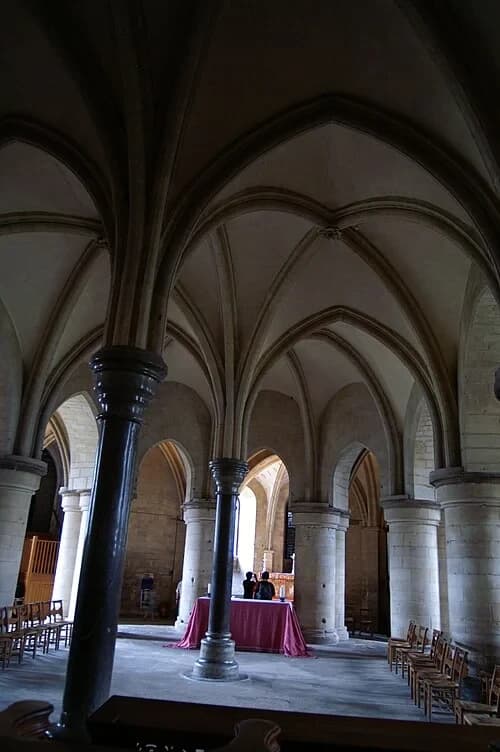
The Romanesque Crypt
Descending into the crypt takes you back to the very foundations of the medieval building. This is the oldest surviving part of the cathedral, dating from the early 12th century. The atmosphere here is noticeably different from the light-filled nave above. The Romanesque, or Norman, style is defined by its thick, sturdy walls, rounded arches, and massive columns that support the weight of the structure. Notice the heavy, geometric carvings on the column capitals, which are characteristic of this period. For 50 years after his death, this quiet, dimly lit space served as the initial resting place for Thomas Becket. His body was housed here in a simple tomb that became the destination for the first waves of pilgrims before his remains were eventually moved to a more magnificent shrine upstairs. The crypt feels grounded and permanent, a stark contrast to the airy Gothic extensions built later. Its low-vaulted ceilings and forest of stone pillars create an intimate, subterranean environment that has remained largely unchanged for nearly nine hundred years, preserving the original footprint of the Norman cathedral.
The Quire and Rood Screen
The liturgical heart of the cathedral. This stop showcases the 15th-century screen and the innovative Gothic quire designed by William of Sens.
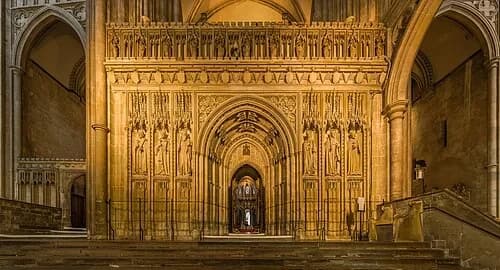
The Royal Screen
Standing between the public nave and the more private quire is the Royal Screen, also known as the pulpitum. This elaborate stone barrier was completed in the 15th century and served a dual purpose: it protected the monks' privacy during their frequent daily services while simultaneously reinforcing the close relationship between the Church and the English Crown. Carved into its ornate niches are six life-sized statues of English kings, each holding symbols of their power. This display of royal lineage was a powerful statement of authority in a time when the cathedral was one of the most important political centers in the country. The screen is a masterpiece of late medieval stonework, featuring delicate tracery and complex architectural details that would have been brightly painted in the Middle Ages. Beyond its role as a decorative wall, the screen supported a gallery where singers could perform, and it still houses the great organ. Its presence creates a distinct boundary within the cathedral, moving the visitor from the wide, open spaces of the nave into the more intimate and richly decorated liturgical heart of the building.
The Chair of Saint Augustine
The ceremonial seat of the Archbishop of Canterbury. It is essential for explaining the cathedral's role as the Mother Church of the Anglican Communion.
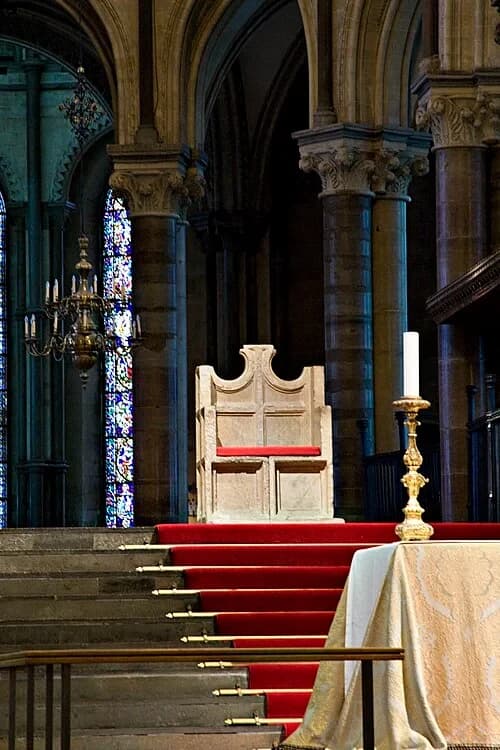
St. Augustine’s Chair
This ceremonial seat, known as St. Augustine’s Chair, is one of the most important artifacts in the cathedral. Despite its name, it was actually carved from Purbeck marble around the year 1200, rather than belonging to the original 6th-century saint. However, it serves as a powerful symbol of continuity. For over eight hundred years, every Archbishop of Canterbury has sat in this chair during their enthronement ceremony. By using this ancient seat, each new leader is symbolically connected to the lineage of St. Augustine, who founded the cathedral in 597. The chair represents the cathedral’s status as the Mother Church of the Anglican Communion, a global network of millions of worshippers. Its simple, unadorned design emphasizes the weight of history and the gravity of the office rather than ostentatious wealth. It is typically brought out for major occasions and placed in a prominent position, serving as a reminder of the long-standing traditions that define the English church. This solid stone throne is the physical manifestation of the Archbishop's authority and the cathedral's role as the seat of the primate of all England.
Trinity Chapel and Royal Tombs
The site where Becket's golden shrine once stood. I've paired an overview of the chapel with the tombs of King Henry IV and the Black Prince.
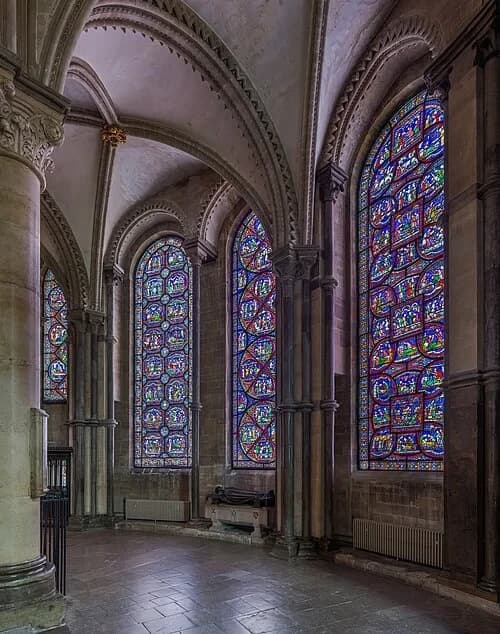
The Miracle Windows
The Trinity Chapel is home to a series of extraordinary 12th-century stained glass panels known as the 'Miracle Windows.' These act as medieval 'comic strips,' depicting the various healings and divine interventions attributed to Thomas Becket after his martyrdom. You can see scenes of the blind receiving sight, the sick being cured, and the poor being helped, all through the intercession of the saint. These vibrant displays were carefully placed around the site of Becket’s former shrine to inspire the pilgrims who had traveled long distances to seek his aid. The intense reds and deep blues were created by adding metallic oxides to the glass while it was still molten, a technique that has allowed the colors to remain brilliant for over eight centuries. During the Middle Ages, these windows would have been one of the few sources of such vivid color for visitors, making the stories they told seem even more miraculous. They provide a fascinating look at the daily lives, clothing, and beliefs of medieval people, capturing their hopes and their deep devotion to the man they considered their greatest protector.
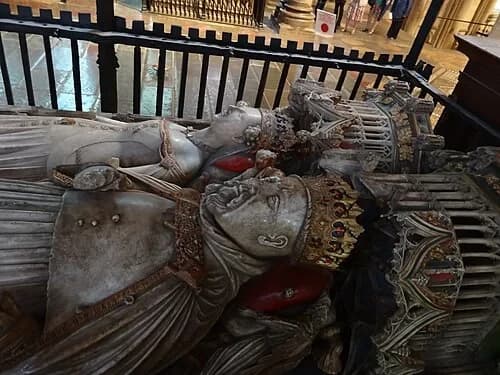
Tomb of Henry IV and Joan of Navarre
1430
Near the site of Becket’s shrine lies the tomb of King Henry IV and his queen, Joan of Navarre. Henry IV is the only English monarch buried here; he specifically requested this location because of his personal devotion to St. Thomas Becket. The tomb is a fine example of medieval craftsmanship, featuring life-sized effigies of the king and queen carved from alabaster. Notice the incredible level of detail in their clothing, from the intricate folds of their royal robes to the delicate jewels on their crowns. At their feet, small heraldic animals support their figures, a traditional feature of royal monuments. Alabaster was a highly prized material for tombs because it was soft enough to allow for fine carving but could be polished to a smooth, marble-like finish. Originally, these figures would have been brightly colored and gilded, making them an even more impressive sight for pilgrims passing by. By placing his final resting place so close to the martyr’s shrine, the king sought to secure a permanent spiritual connection to the saint, hoping for his favor in the afterlife. The monument stands as a rare piece of royal history within these walls.
The Great Cloister
The center of monastic life. The images focus on the architectural rhythm of the arches and the unique heraldic shields on the ceiling.
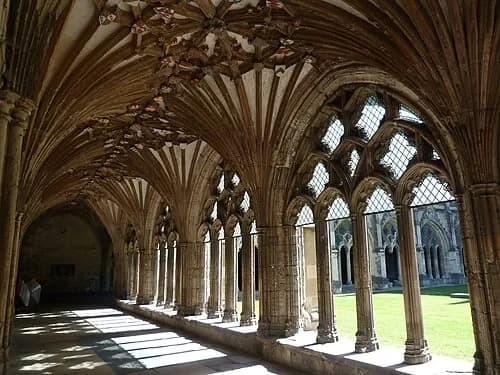
The Great Cloister
The Great Cloister served as the heart of the monastery that once surrounded the cathedral. For the Benedictine monks who lived here until the 16th century, this was where they spent much of their day. It was a space for exercise, silent study, and meditation. As you look through the arches, you can see the delicate stone tracery that frames the view of the central open-air garth, or garden. This walkway connected the various parts of the monastery, including the dormitory, the refectory, and the church itself. The architecture here is primarily in the Perpendicular Gothic style, rebuilt in the late 1300s. The cloister provided a sheltered environment that was separate from the public areas of the cathedral, allowing the monks to follow their strict schedule of prayer and labor in peace. Even today, the space retains a sense of quiet and seclusion, away from the grand scale of the nave. The stone benches along the walls were used by the monks during their reading hours, and the surrounding walls are still marked with the burials and memorials of those who served the cathedral over the centuries.
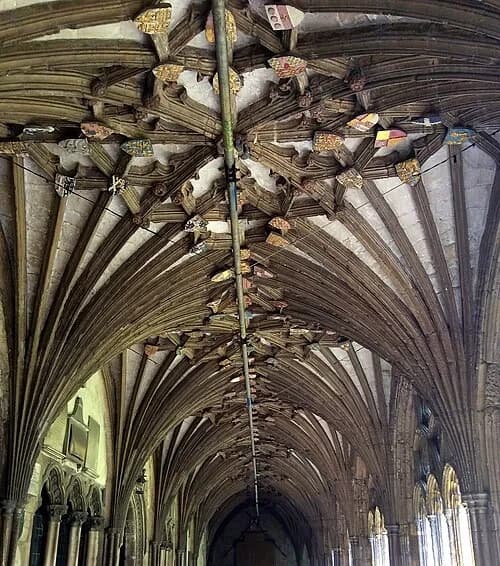
Heraldry of the Ceiling
Look upward at the ceiling of the Great Cloister to discover a massive display of medieval heraldry. There are over 800 stone shields, known as roof bosses, carved and painted at the intersections of the vaulting ribs. These shields represent the many noble families, bishops, and wealthy patrons who donated the funds needed to rebuild the cathedral after the catastrophic fire of 1174. In a time when few people could read, heraldry was an essential visual language used to identify family lineages and social status. By having their family crests permanently carved into the stone of the cloister, these donors ensured that their generosity would be remembered by the monks and future generations. The shields feature a wide variety of symbols, including lions, eagles, and geometric patterns, each with its own specific meaning. During the recent restoration work, many of these shields were cleaned and repainted in their original vibrant colors, providing a rare and direct link to the individuals who helped shape the building we see today. It is one of the largest collections of medieval heraldic art in Europe, turning the ceiling into a historical record of the cathedral's most important supporters.
Want to hear the rest?
Download the Stanza app to unlock all 17 stops and full GPS-guided navigation.
Frequently Asked Questions
How long does the Canterbury Cathedral audio tour take?
The Canterbury Cathedral audio guide includes 17 narrated stops. Most visitors spend 45 minutes to 1.5 hours exploring the complete tour, though you can listen at your own pace and skip or revisit any stop.
Is the Canterbury Cathedral audio guide available in my language?
Stanza supports 15 languages: English, Spanish, French, German, Italian, Portuguese, Russian, Japanese, Chinese, Korean, Arabic, Hindi, Polish, Dutch, Hebrew. Check the guide in the app to confirm the languages currently available for this tour.
Can I use the audio guide offline at Canterbury Cathedral?
Yes! Download the complete Canterbury Cathedral tour — including all audio, maps, and images — before your visit. The Stanza app works completely offline, so you don't need WiFi or mobile data at the venue.
How much does the Canterbury Cathedral audio guide cost?
The Stanza app is free to download. The current listed price for the Canterbury Cathedral audio guide is $2.99; app-store region and currency may affect the final price.
How do I use the Stanza audio guide at Canterbury Cathedral?
Download the free Stanza app, search for "Canterbury Cathedral", and download the tour. When you arrive at the venue, the app uses GPS to detect your location and automatically plays the relevant narration as you move between points of interest — completely hands-free.
What makes the Stanza audio guide different from other Canterbury Cathedral tours?
Stanza offers GPS-triggered narration that plays automatically as you walk through Canterbury Cathedral — no need to manually select stops. The tour is available in 15 languages, works fully offline, and includes 17 expertly narrated stops with images and historical context.
What other audio guides are available near Canterbury Cathedral?
Stanza offers multiple audio guides in Canterbury, United Kingdom and nearby areas. After downloading the app, browse the map to discover all available tours near Canterbury Cathedral. Each guide can be downloaded for offline use.