Stanza · Audio guide
Verulamium Audio Guide
A place to remember. A story to take with you.
Verulamium was a town in Roman Britain located southwest of the modern city of St Albans. The major ancient Roman route Watling Street passed through the city.
Download Stanza, then search for “Verulamium”.
About the tour
One guide. Your kind of visit.
Verulamium was a town in Roman Britain located southwest of the modern city of St Albans. The major ancient Roman route Watling Street passed through the city.
Ready when you are.
- 01Get the free Stanza app.
iOS & Android
- 02Find your guide.
“Verulamium”
- 03Download before you go.
Works offline
Audio guide / 14 narrated stops
Inside the guide
Get to know a few of the stories before you go. Open a stop to read more.
01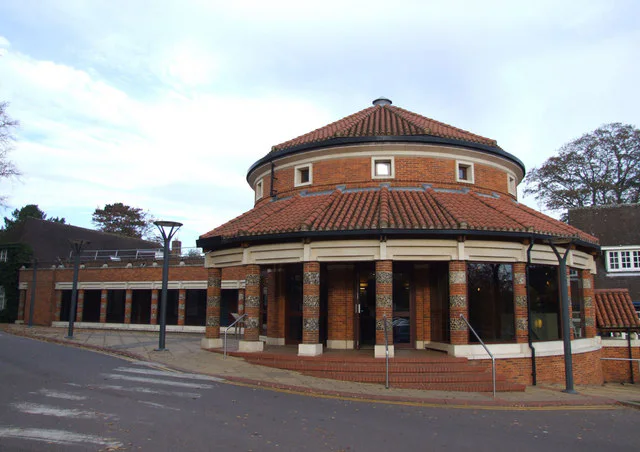 Verulamium Museum: Arrival and Pre-Roman Verlamion
Verulamium Museum Entrance
Welcome to Verulamium, the Roman town that once stood southwest of the modern city of Saint Albans. Watling Street, a major Roman road, ran through the town, and London was about a day's walk away. Around AD 50 Verulamium was given the rank of municipium, which gave its citizens Latin rights. That was a lesser kind of citizenship than a colonia had. It ranked as the third-largest Roman town in Britain. At its centre was the forum, in a town laid out on a grid like a chessboard. The forum was the second largest in Roman Britain, and the museum now stands on the site it once occupied. Some fragments of a building inscription have been pieced together from a few surviving letters. They name the Emperor Vespasian and the governor Agricola. The inscription dates the forum's completion to AD 79.
Dave Skinner · CC BY-SA 2.0
02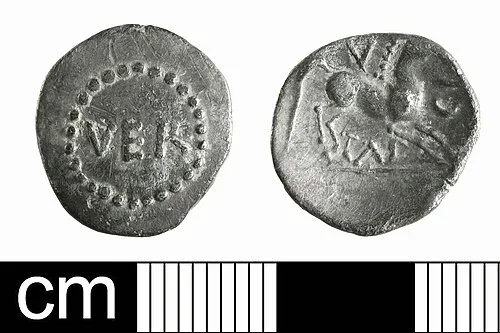 Verulamium Museum: Arrival and Pre-Roman Verlamion
Iron Age Silver Unit of Tasciovanus
Before the Romans arrived, the Catuvellauni, a British tribe, had a central settlement in this area called Verlamion. Tasciovanus, the Catuvellauni's leader, probably founded it and had coins minted here. Verlamion is one of the earliest named places in Britain. Its coins carry the name in several spellings, including VER and VERLAMIO. A small silver coin linked to Tasciovanus shows the letters VER inside a ring of dots. The later Roman town did not sit on the centre of the older one. The earlier town seems to have been much larger, and its ditches have turned up across the land to the west and north.
St. Albans District Council, Julian Watters, 2015-01-05 15:57:35 · CC BY-SA 2.0
03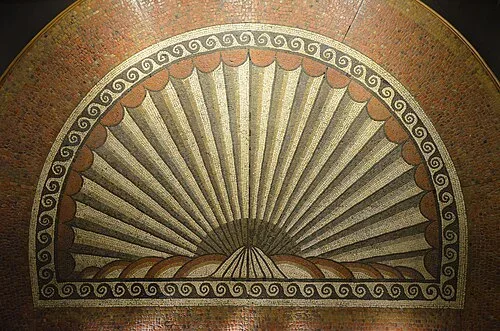 Verulamium Museum: Master Mosaics and Domestic Luxuries
The Shell Mosaic
The Shell Mosaic takes its name from the fan at its centre. Bands of light and dark mosaic tiles spread out from a point near the bottom, like the ribs of an open shell. A border of curling scrolls frames the design, and a row of red-brown scallops runs along the base. The mosaic was found in house II.1 at Verulamium. It dates to around AD 150. The museum holds one of the best collections of Roman mosaics in England. It was founded after excavations that Mortimer Wheeler and his wife, Tessa, carried out in the 1930s.
Listen in the appCarole Raddato from FRANKFURT, Germany · CC BY-SA 2.0
04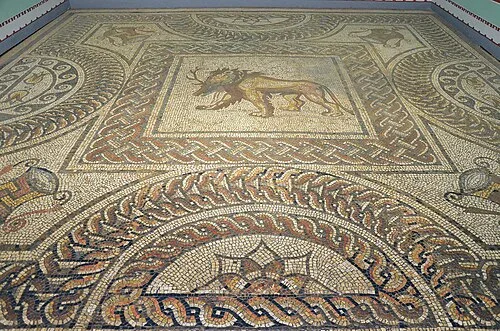 Verulamium Museum: Master Mosaics and Domestic Luxuries
The Lion's Mosaic
A lion strides across the centre of this mosaic, inside a framed field of golden tiles. A plaited border of interlaced bands surrounds that field. The wider design carries leaf-like scrolls and round medallions near its edges. Unlike the fan of the Shell Mosaic, which spreads out from a single point, this design centres on one animal.
Listen in the appCarole Raddato from FRANKFURT, Germany · CC BY-SA 2.0
05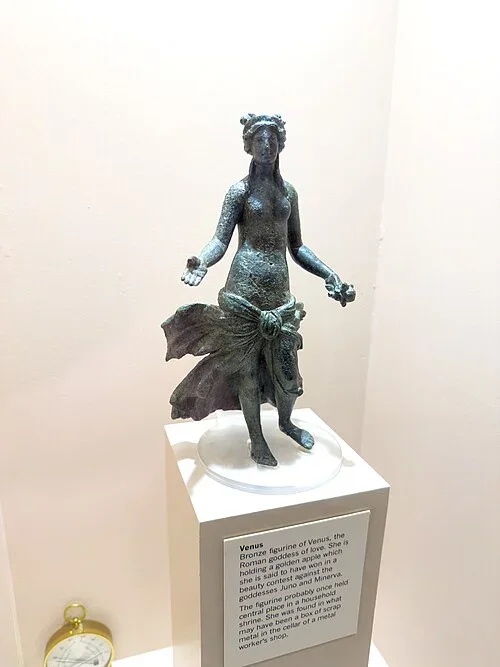 Verulamium Museum: Master Mosaics and Domestic Luxuries
Verulamium Venus (Bronze Figurine)
The Verulamium Venus is a bronze figure of a goddess, made in the second century. Her green-tinged surface shows a cloth draped low around her hips. She is usually called Venus, the Roman goddess of love, but it is not certain whether she is Venus or Persephone. She probably once held the central place in a shrine kept in a house. The story goes that she won a golden apple in a beauty contest against the goddesses Juno and Minerva.
Listen in the appPhotograph by Mike Peel (www.mikepeel.net). · CC BY-SA 4.0
06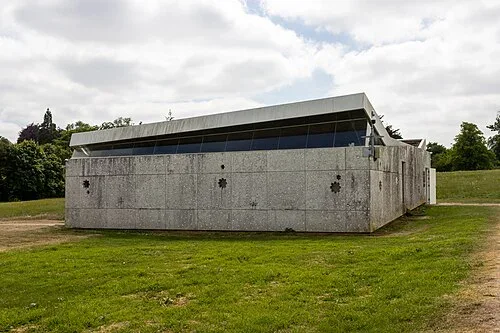 The Hypocaust Pavilion and In Situ Mosaic
Modern Building in Verulamium Park
A modern building stands here in Verulamium Park, on ground that was once part of the Roman city. A large part of that city has never been excavated. Much of it lies under parkland and farmland, and the two have fared very differently. The parkland has protected its walls, which show up clearly. The farmland is privately owned, and it covers what was half the city. Ploughing has done a lot of damage there, and pieces of mosaic floor have turned up on the surface. Radar surveys show buildings under the fields only as smudges, not as clear walls. Part of the city has been built over, including a small settlement around the Anglo-Saxon Saint Michael's Church. Much of the site and its surroundings is now a scheduled monument, which gives legal protection to important remains.
Listen in the appPhotograph by Mike Peel (www.mikepeel.net). · CC BY-SA 4.0
07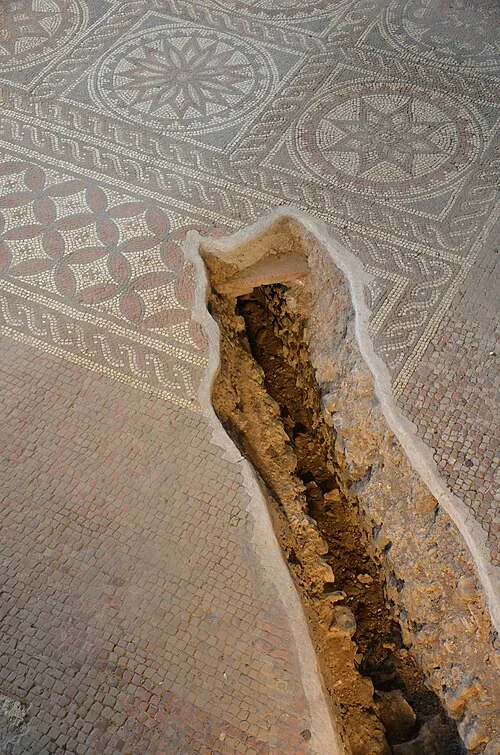 The Hypocaust Pavilion and In Situ Mosaic
Excavated Section Beside the Mosaic Floor
A narrow cut runs down through the ground beside the mosaic. In AD 61, the forces of Boudica, queen of the Iceni, sacked and burnt Verulamium. Archaeologists have found a black layer of ash in the ground, which confirms the Roman account of the attack. The earliest mention of the town comes from the Roman writer Tacitus, in connection with the revolt. Life seems to have returned quickly, and most houses were rebuilt in timber.
Listen in the appCarole Raddato from FRANKFURT, Germany · CC BY-SA 2.0
08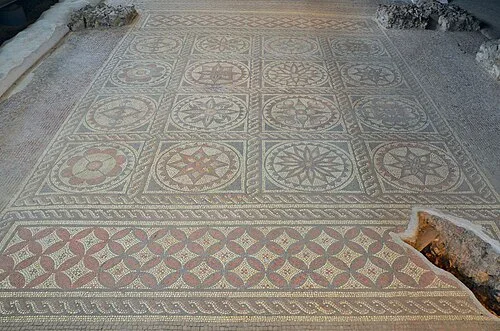 The Hypocaust Pavilion and In Situ Mosaic
Mosaic with Floral Panels
The mosaic floor was laid over a hypocaust, an underfloor heating space. It is laid out in a grid of square panels, many holding a rosette or a star-shaped medallion. A border of red and white geometric motifs frames the whole design. Some larger stone houses in the town also had mosaics and underfloor heating.
Listen in the appCarole Raddato from FRANKFURT, Germany · CC BY-SA 2.0
09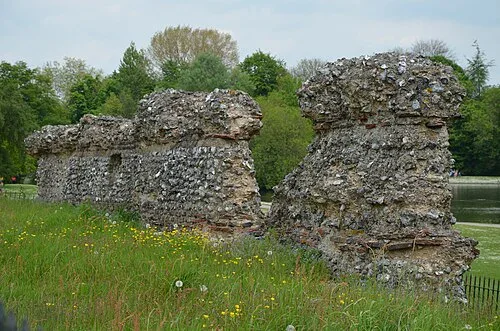 The South Defensive Walls and London Gate
Roman City Walls, Verulamium
The town lay behind a deep ditch and a wall. By the early third century, the enclosed area covered about fifty hectares. The wall ran all the way round, except where the River Ver protected the town. Some stretches of it still survive today. Francis Bacon, the philosopher and statesman, once built a house inside these walls, which he called Verulam House. No trace of that house survives. The diarist John Aubrey, writing in the seventeenth century, described the house in detail. He also wrote, 'At Verulam is to be seen, in some few places, some remains of the wall of this Citie.'
Listen in the appCarole Raddato from FRANKFURT, Germany · CC BY-SA 2.0
10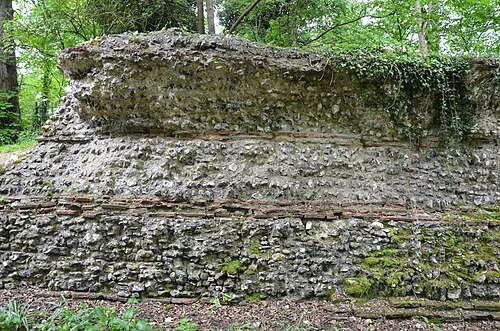 The South Defensive Walls and London Gate
Roman City Walls: Flint and Tile Courses
The wall here is built mostly of flint, broken into rough rubble. Through the flint run level bands of red Roman tile, one above another. Those bands give the wall its striped look. The town itself was rebuilt in stone rather than timber at least twice over the next century and a half. A complete tile kiln turned up at Park Street, about ten kilometres away. It was found in the 1970s, a sign that tiles were made close by.
Listen in the appCarole Raddato from FRANKFURT, Germany · CC BY-SA 2.0
- 11
Foundations of the London Gate
A Latin contract from a wax tablet found in London, for loads of provisions sent from Verulamium.
- 12
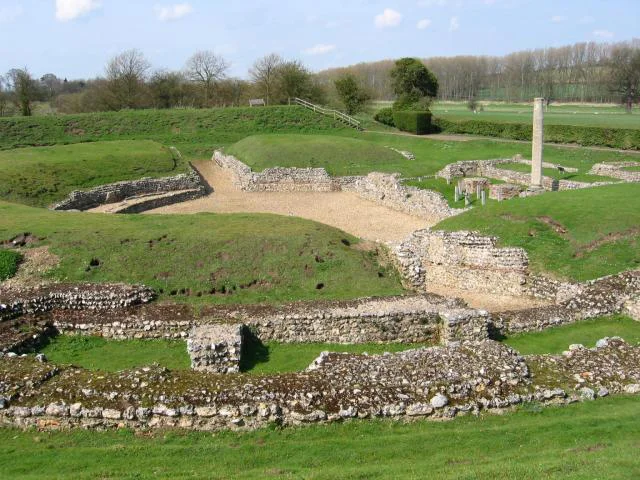
Roman Theatre: Curved Banks and Central Area
Curved banks around a central area, in a theatre claimed to be Britain's only fully excavated stage theatre.
- 13
Roman Theatre: Overview of Walls and Banks
A theatre probably linked with a temple next door, and two fires that damaged it.
- 14
St Albans Cathedral Through Old Roman Wall
How Roman stone and the story of Alban shaped the medieval abbey built outside the old walls.
Verulamium
Frequently asked questions
How much does the guide cost?
Free app download. Listed guide price: $0.99. Guide price shown in the app. Audio guide only. Venue admission is separate.
Can I listen without internet?
Yes. Download the guide’s audio, images, and maps in the app before your visit. Your downloaded content is then available offline.
Can I listen in my language?
This audio guide is available in 15 languages, including English.
Do I need to follow a schedule?
No. This is a self-guided experience. Choose your stops, pause whenever you like, and return to a story at your own pace.
At your own pace
Explore Verulamium.
Download Stanza, then search for “Verulamium”.
Free app download · Guide price shown in the app
Keep exploring
Nearby audio guides
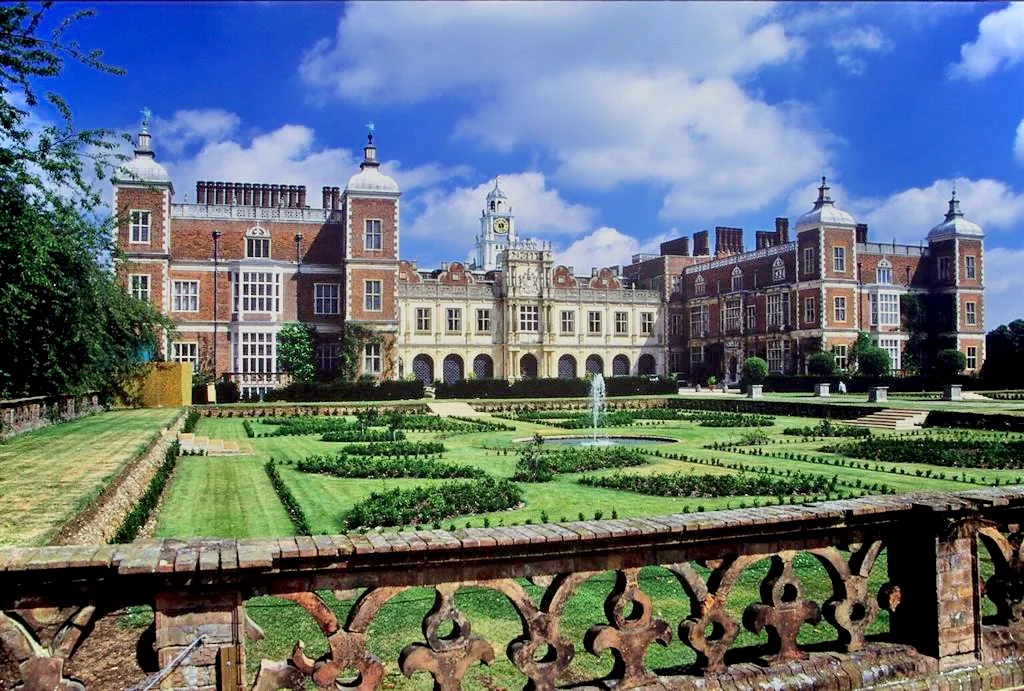
Hatfield · 10 km
Hatfield House
Content & sources
Allan Engelhardt · CC BY-SA 2.0
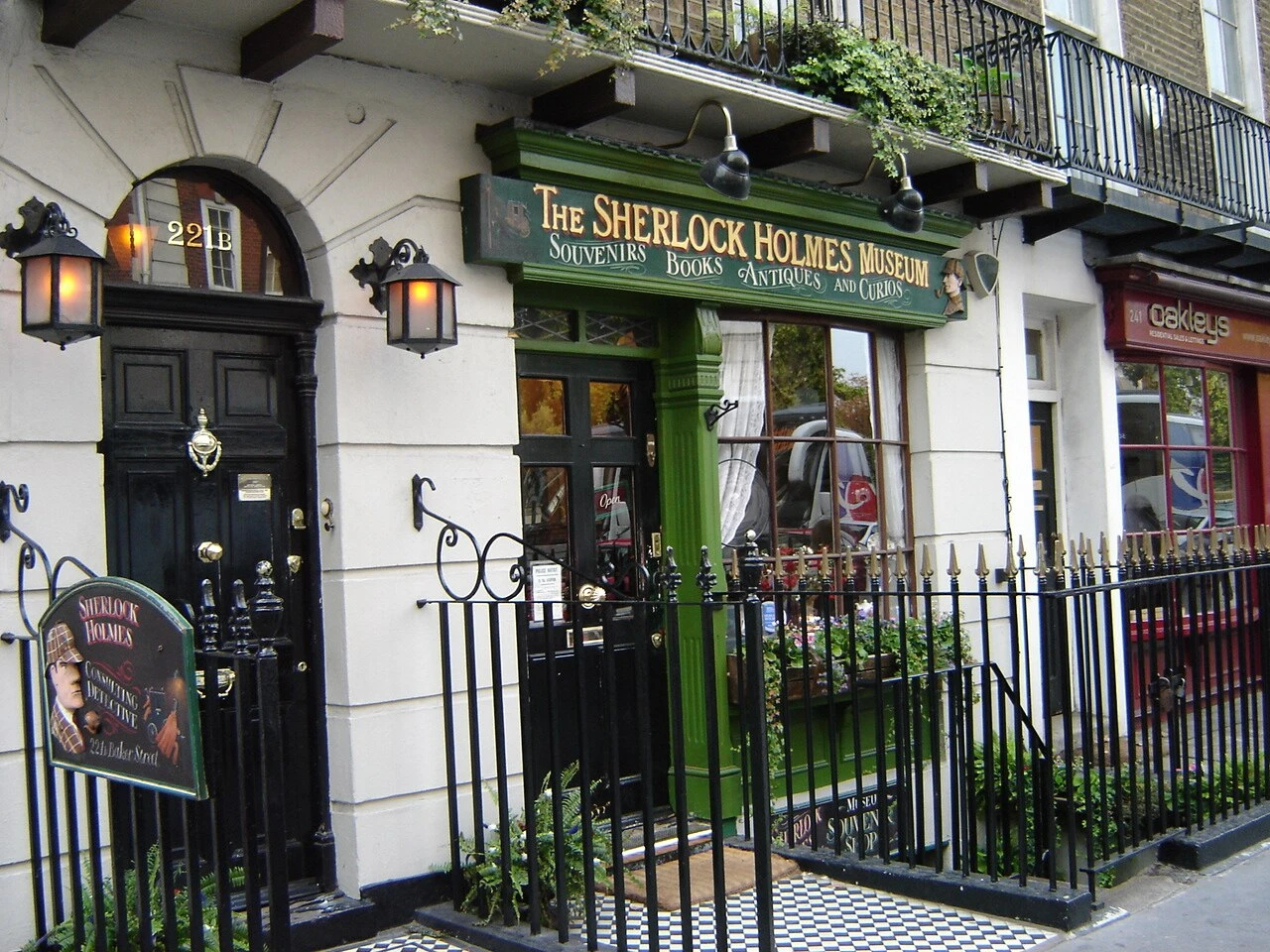
London · 29 km
Sherlock Holmes Museum
Content & sources
Jordan 1972 (talk) · Public domain
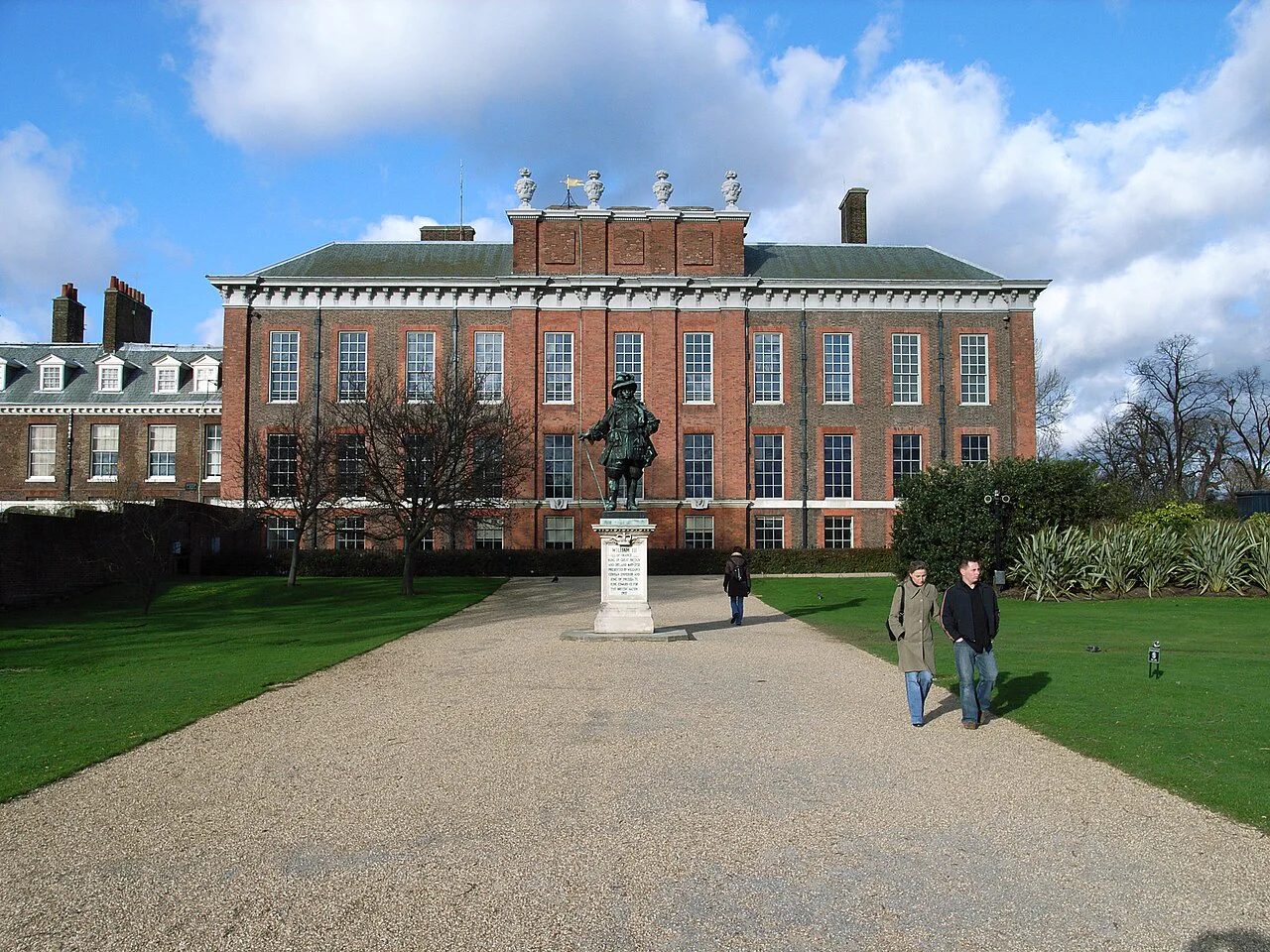
London · 30 km
Kensington Palace
Content & sources
Steve Cadman from London, U.K. · CC BY-SA 2.0
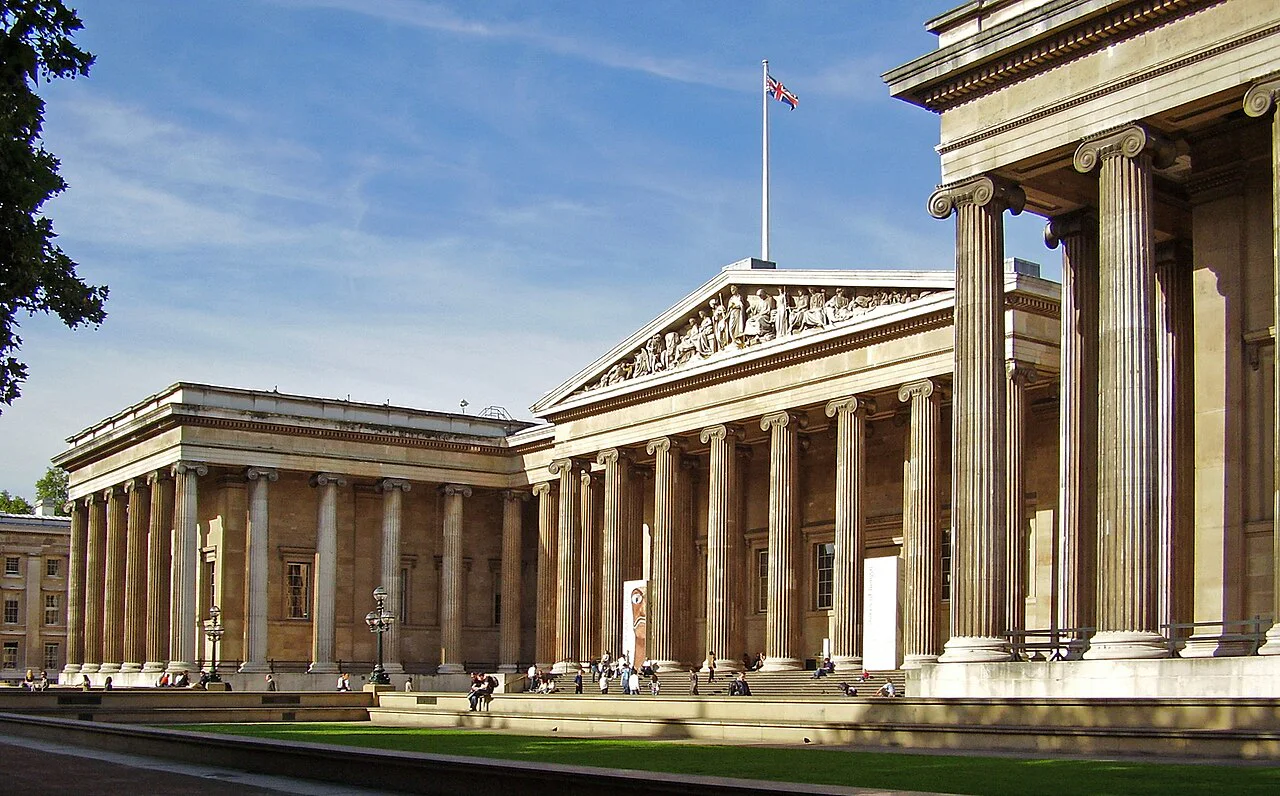
London Borough of Camden · 30 km
British Museum
Content & sources
Ham · CC BY-SA 3.0