 Stanza / Audio guide
Stanza · Audio guide
ʻIolani Palace Audio Guide
A place to remember. A story to take with you.
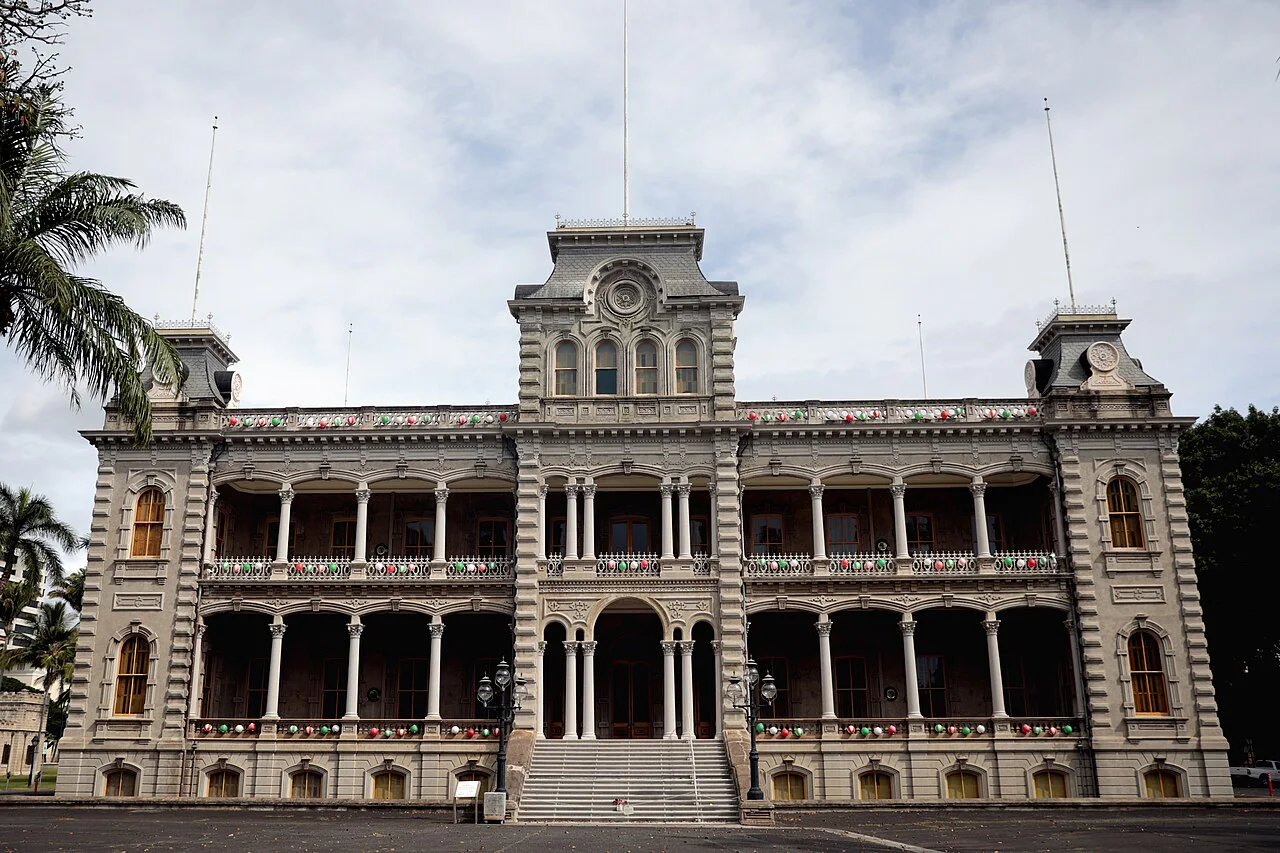
ʻIolani Palace was the royal residence of the rulers of the Kingdom of Hawaiʻi. It is the only royal palace on US soil and is now a museum.
Download Stanza, then search for “ʻIolani Palace”.
About the tour
One guide. Your kind of visit.
ʻIolani Palace was the royal residence of the rulers of the Kingdom of Hawaiʻi. It is the only royal palace on US soil and is now a museum.
Ready when you are.
- 01Get the free Stanza app.
iOS & Android
- 02Find your guide.
“ʻIolani Palace”
- 03Download before you go.
Works offline
Audio guide / 14 narrated stops
Inside the guide
Get to know a few of the stories before you go. Open a stop to read more.
01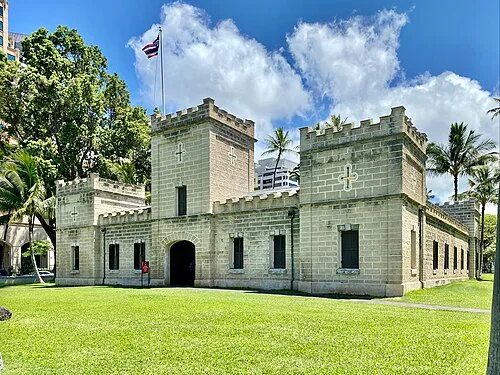 Palace Grounds and ʻIolani Barracks
ʻIolani Barracks
Welcome to ʻIolani Palace, in downtown Honolulu, and to the ʻIolani Barracks, now the visitors center. This tour covers the building's rooms, its royal story, and the grounds outside. Kalākaua was the first monarch to travel around the world. In Europe he took note of the customs of other royal courts. He decided that adopting some of them would help his kingdom be seen as legitimate in their eyes. He also dreamed of a palace fit for a modern state. By the time Kalākaua became king, the old palace was in poor shape, with ground termites doing serious damage. So he ordered it torn down. The new palace was inspired by the grand palaces of Europe. It was built directly across the street from Aliʻiōlani Hale. The barracks building was moved from its original spot northeast of the palace.
w_lemay · CC BY-SA 2.0
02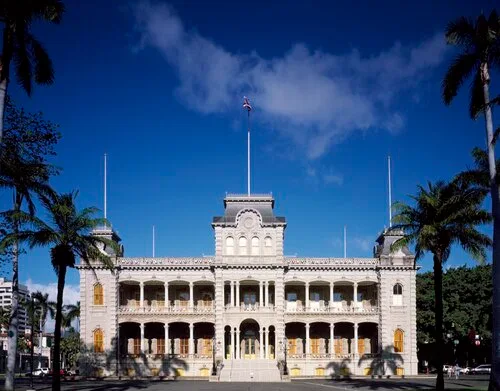 Palace Grounds and ʻIolani Barracks
Front Façade of ʻIolani Palace
ʻIolani Palace is the only royal palace on American soil. Its style is called American Florentine, and it is said to be seen nowhere else in the world. The cornerstone was laid on the last day of 1879. Thomas J. Baker designed the structure, with Charles J. Wall and Isaac Moore adding details. It was completed in November 1882. It cost more than three hundred and forty thousand dollars, a vast fortune at the time. Two floors of columns line the front, creating a covered veranda, or lānai, on each level. Towers rise at the corners and in the center. The central towers reach about seventy-six feet.
Carol M. Highsmith · Public domain
03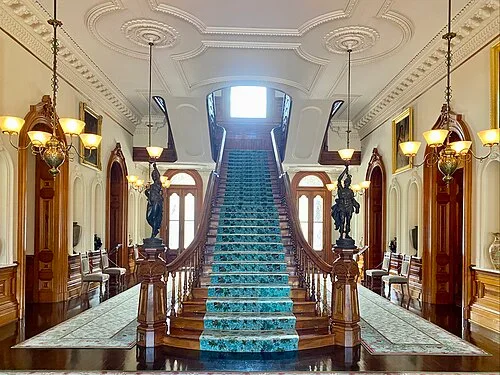 The Grand Hall and Koa Staircase
Grand Hall
The grand hall is the hub of the palace's first floor. Three state rooms open off it. The throne room sits in the southeast corner. The Blue Room and the state dining room adjoin the hall as well. At the far end, the grand staircase rises, with two lamps hanging on long chains beside it. Gilt-framed paintings hang along the walls between the doorways. Ornamental plaster decorates the ceiling and walls.
Listen in the appw_lemay · CC BY-SA 2.0
04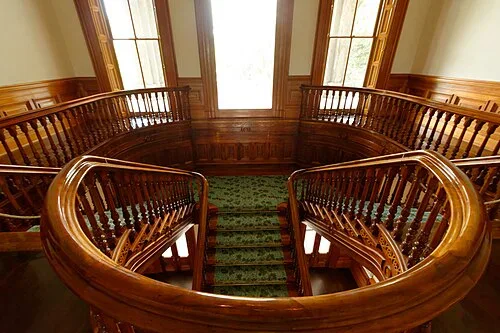 The Grand Hall and Koa Staircase
Grand Staircase
Wood shapes the grand staircase, from the long curving handrail to the slim spindles beneath it. The rail sweeps around the open stairwell in one smooth line. Green carpet covers the steps, and tall windows light the stairwell above them. The staircase is the route up to the second floor, where the monarchs had their private rooms.
Listen in the appDaniel Ramirez from Honolulu, USA · CC BY 2.0
05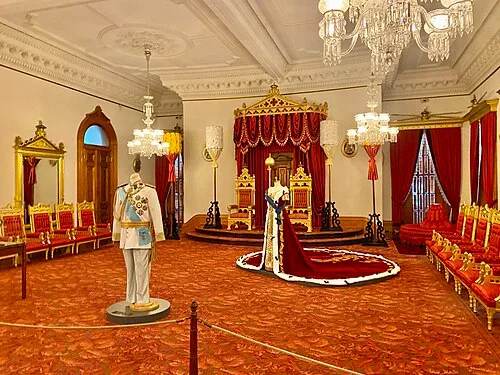 The Throne Room
Throne Room
The first palace held only ceremonial rooms, including a throne room, a reception room, and a state dining room. The new palace kept a throne room for ceremony as well. Red chairs with gilded frames line its walls, and crystal chandeliers hang overhead. Figures in royal costume stand among the chairs. But this room later took on a very different role. In 1895, after the second Wilcox rebellion, Queen Liliʻuokalani went on trial. The trial was held in the former throne room.
Listen in the appw_lemay · CC BY-SA 2.0
06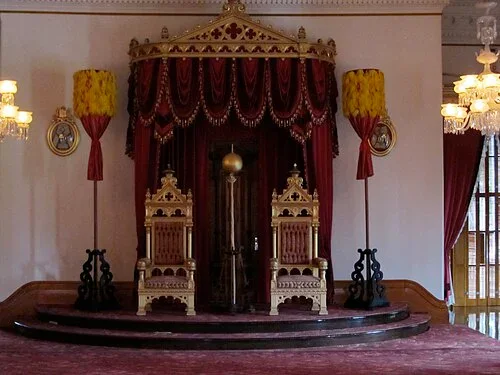 The Throne Room
Hawaiian Thrones
Two gilded thrones sit side by side on a raised platform, beneath a canopy of red and gold. A gold ball rises on a tall pole between them. Small oval portraits hang on the walls nearby. When Queen Liliʻuokalani died in 1917, the territorial governor, Lucius E. Pinkham, gave her a state funeral. It was held in the throne room itself, the same room where she had been tried.
Listen in the appdaryl_mitchell from Saskatoon, Saskatchewan, Canada · CC BY-SA 2.0
07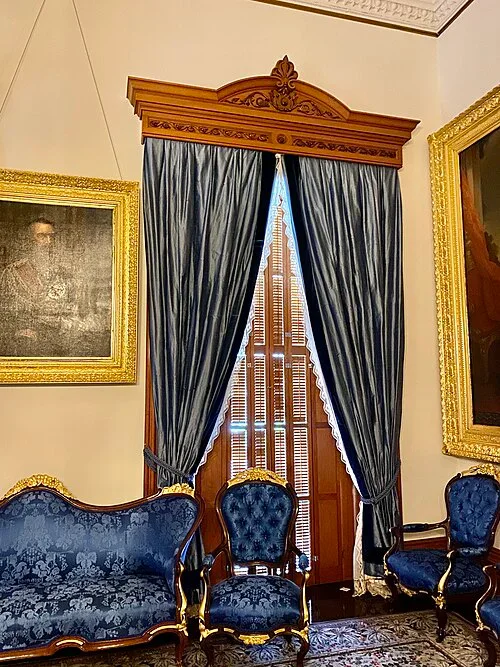 The Blue Room and State Dining Room
Blue Room
The Blue Room was less formal than the throne room, a place where guests were welcomed with music. Blue drapes hang at the tall windows, and blue upholstered chairs with gilded frames sit around the room. The room also held a large portrait of King Louis Philippe of France, painted in 1848. It had a koa wood piano as well. Queen Liliʻuokalani played her own compositions on it for guests.
Listen in the appw_lemay · CC BY-SA 2.0
08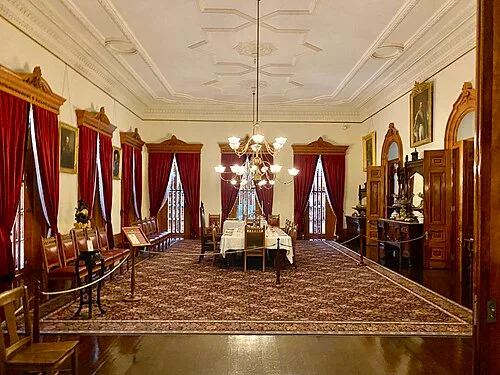 The Blue Room and State Dining Room
State Dining Room
A long table fills the middle of this room, with red drapes at the tall windows and portraits on the walls. In this state dining room, the palace's story turned. In 1893 the Committee of Safety overthrew the monarchy. Troops of the new Provisional Government took control of the palace. A few months later, government offices moved in, and the palace became the Executive Building of the Republic of Hawaiʻi. In those years, the senate met in this former dining room. The representatives sat in the room that had once been the throne room. In August 1898, troops from the warship Philadelphia came ashore and raised the American flag at the palace. The flag raising marked the annexation of Hawaiʻi under the Newlands Resolution. Queen Liliʻuokalani and other Hawaiian nobles did not attend. They stayed at Washington Place instead.
Listen in the appw_lemay · CC BY-SA 2.0
09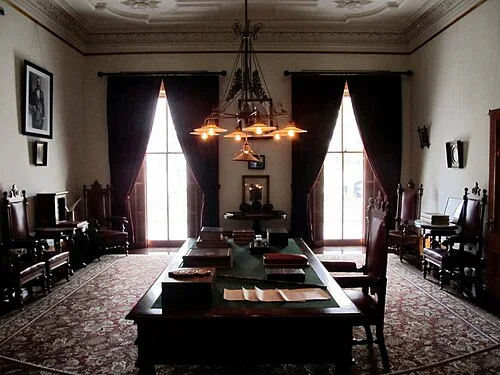 Royal Suites and King's Library
Kalākaua's Library
In the earlier palace the monarchs slept in separate houses around the grounds. Kamehameha the Third slept in a cooler grass hut around the palace. Later, Kamehameha the Fourth built a separate house on the east side. The new palace changed that. Upstairs are the private library and bedrooms of the monarchs, under the same roof as the state rooms. This room is known as Kalākaua's library. A long dark table stands in the middle, covered with papers and books, beneath a hanging lamp. Dark drapes frame the tall windows.
Listen in the appdaryl_mitchell from Saskatoon, Saskatchewan, Canada · CC BY-SA 2.0
10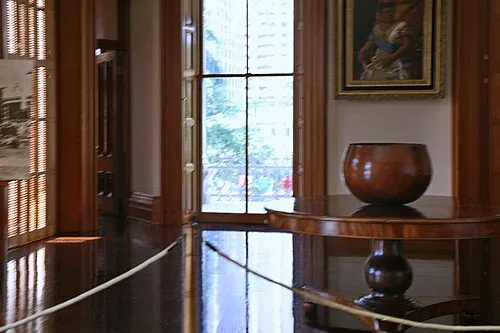 The Imprisonment Room and Royal Quilt
Imprisonment Room (Quilt Room)
Queen Liliʻuokalani was imprisoned for nine months in a small room on the palace's upper floor. That came after a rebellion in 1895. The room is now called the Imprisonment Room. A window looks out over city buildings and trees, and a turned wooden bowl rests on a pedestal table beside it. In the evenings she walked the lānai while she was held in the palace.
Listen in the appCliff · CC BY 2.0
- 11
Queen Liliʻuokalani Quilt
A crazy quilt made by Queen Liliʻuokalani, still in the room where she was held.
- 12
Crown of Hawaii (1882)
A gold crown ordered from London for Kalākaua, and the research that later prepared the palace's rooms for restoration.
- 13
Keliʻiponi Hale
The pavilion made for a formal coronation, and the bandstand it later became on the palace grounds.
- 14
Pohukaina Burial Site
A sacred burial ground near the palace, with an early royal tomb and many chiefs who still remain there.
ʻIolani Palace
Frequently asked questions
How much does the guide cost?
Free app download. Listed guide price: $0.99. Guide price shown in the app. Audio guide only. Venue admission is separate.
Can I listen without internet?
Yes. Download the guide’s audio, images, and maps in the app before your visit. Your downloaded content is then available offline.
Can I listen in my language?
This audio guide is available in 15 languages, including English.
Do I need to follow a schedule?
No. This is a self-guided experience. Choose your stops, pause whenever you like, and return to a story at your own pace.
At your own pace
Explore ʻIolani Palace.
Download Stanza, then search for “ʻIolani Palace”.
Free app download · Guide price shown in the app
Keep exploring
Audio guides — United States
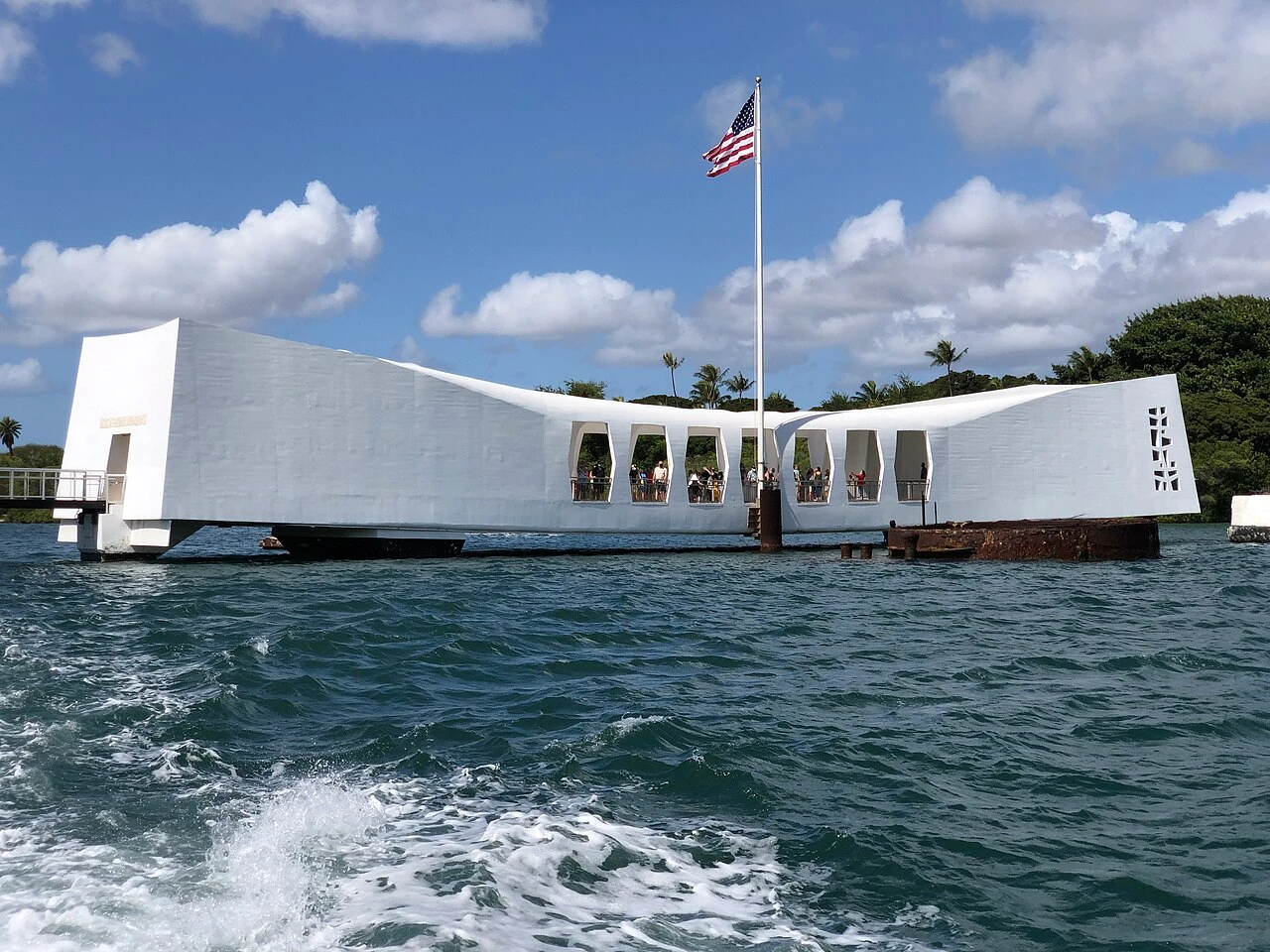
Waipahu · 11 km
USS Arizona Memorial
Content & sources
Photo: Famartin · CC BY-SA 4.0
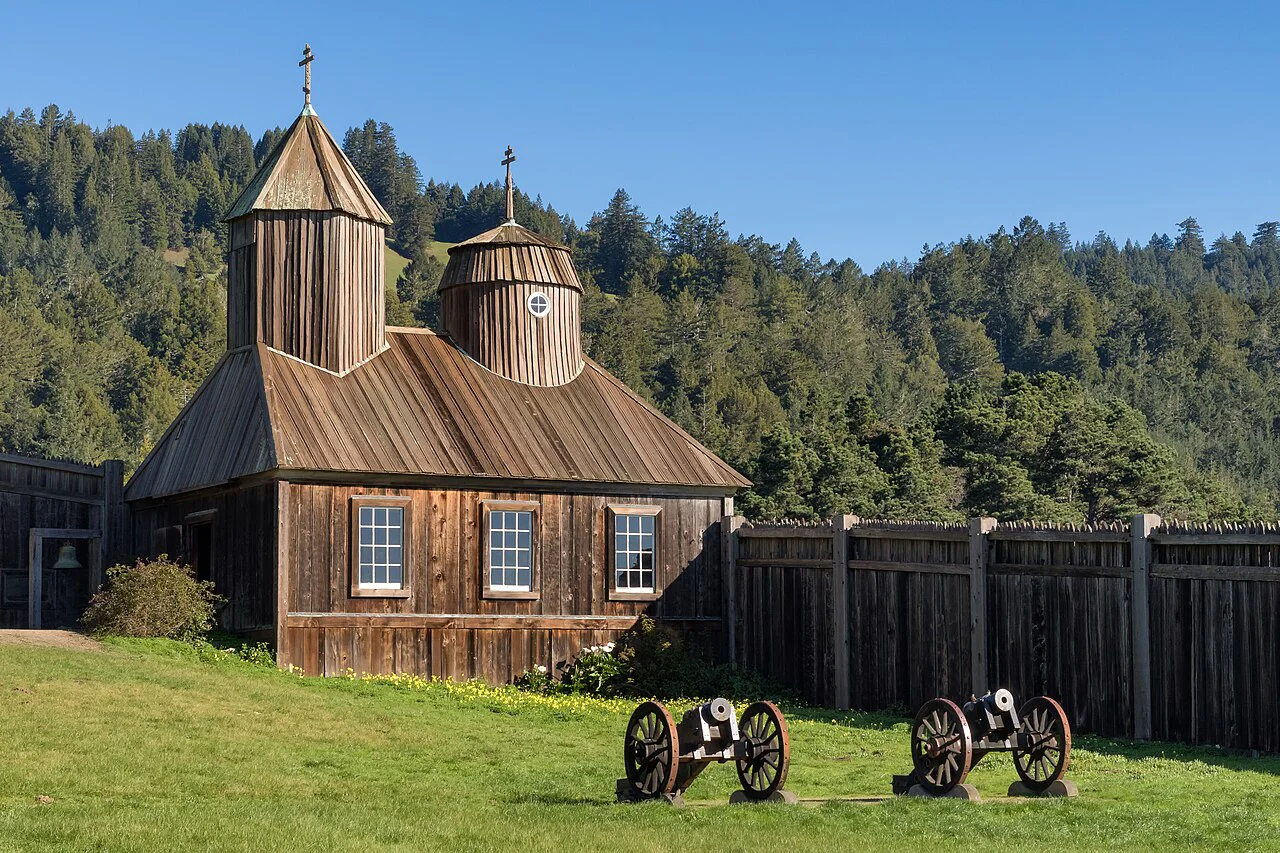
Sonoma County
Fort Ross, California
Content & sources
Photo: Frank Schulenburg · CC BY-SA 4.0
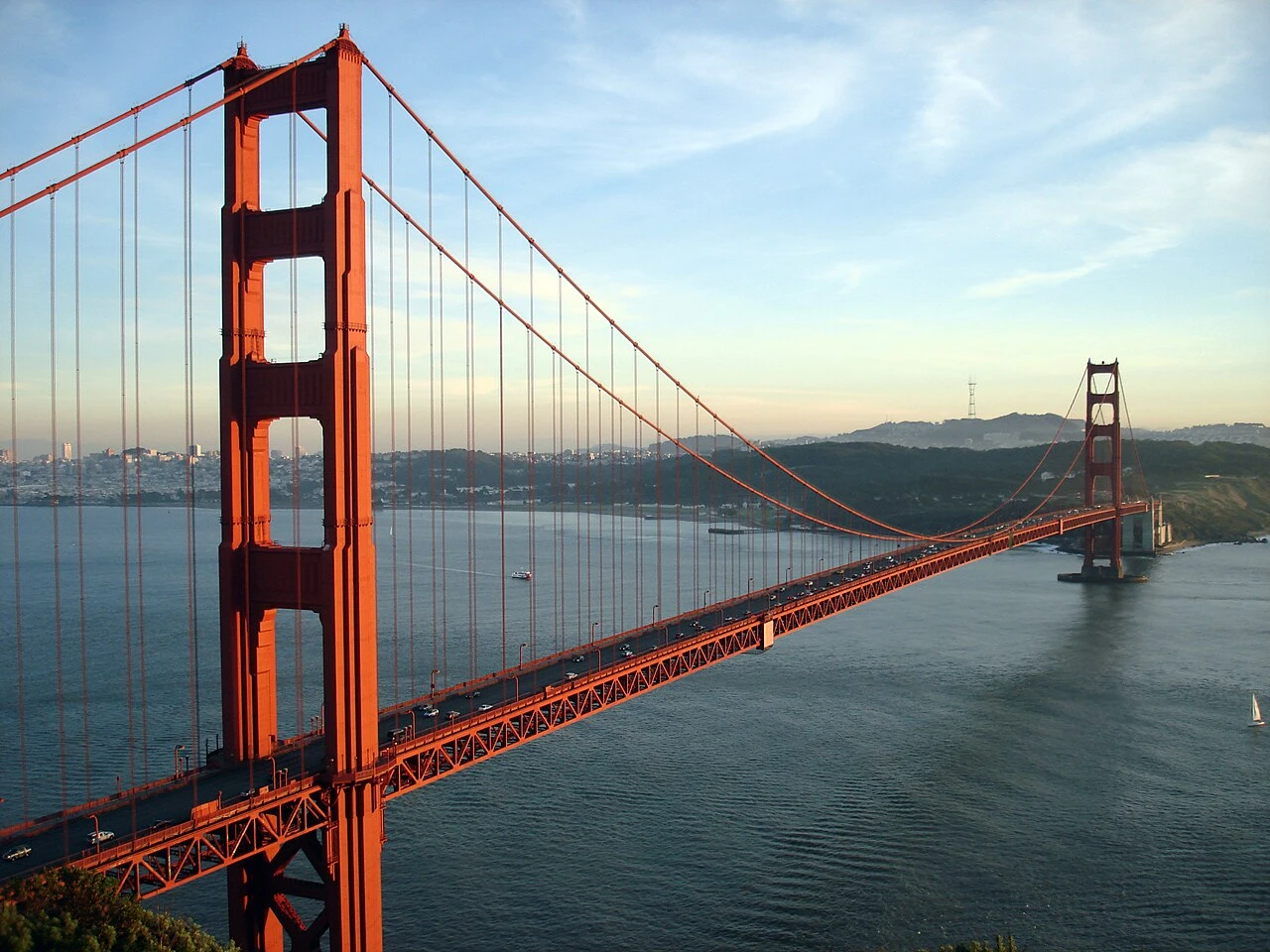
San Francisco
Golden Gate Bridge
Content & sources
Rich Niewiroski Jr. · CC BY 2.5
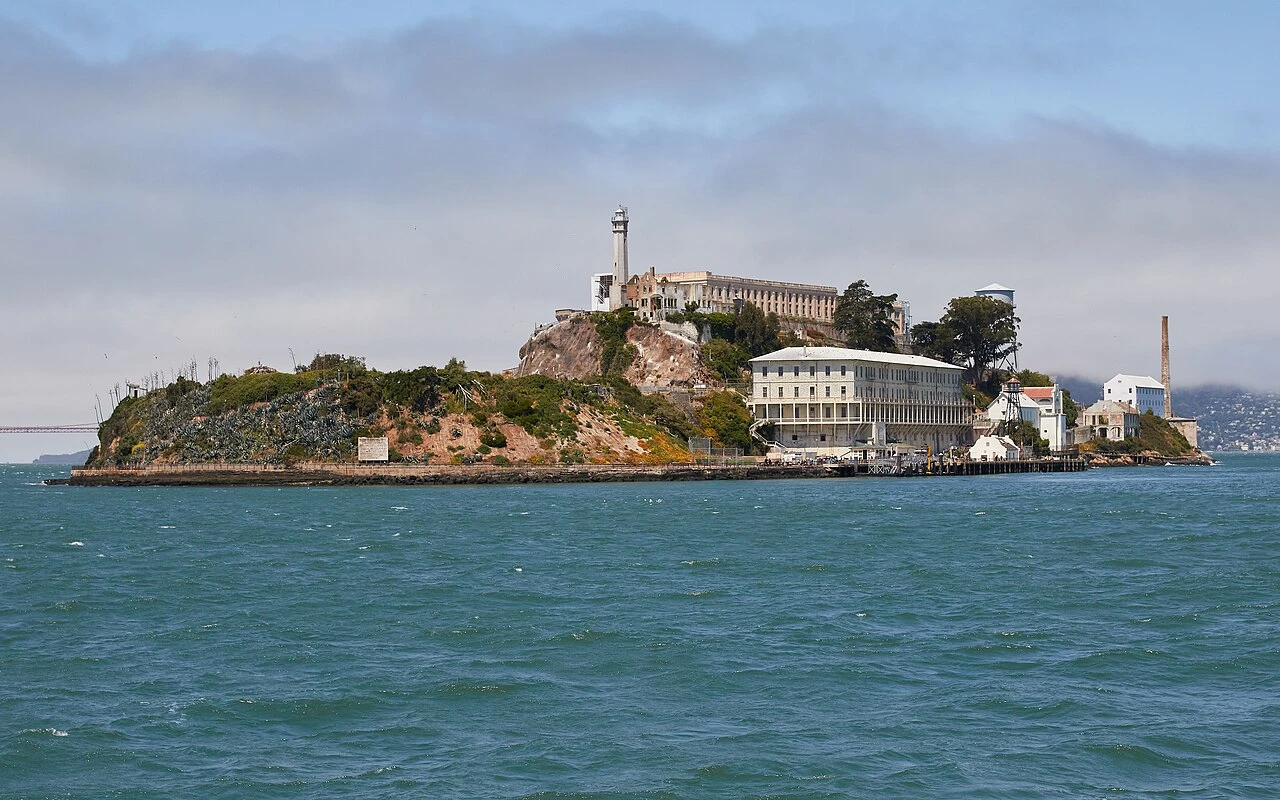
San Francisco
Alcatraz Island, Alcatraz
Content & sources
Photo: Frank Schulenburg · CC BY-SA 4.0