Languages
15USS Arizona Memorial Audio Guide
USS Arizona Memorial is a landmark in Waipahu, United States. Explore it with Stanza's GPS-triggered offline audio guide — available in 15 languages.
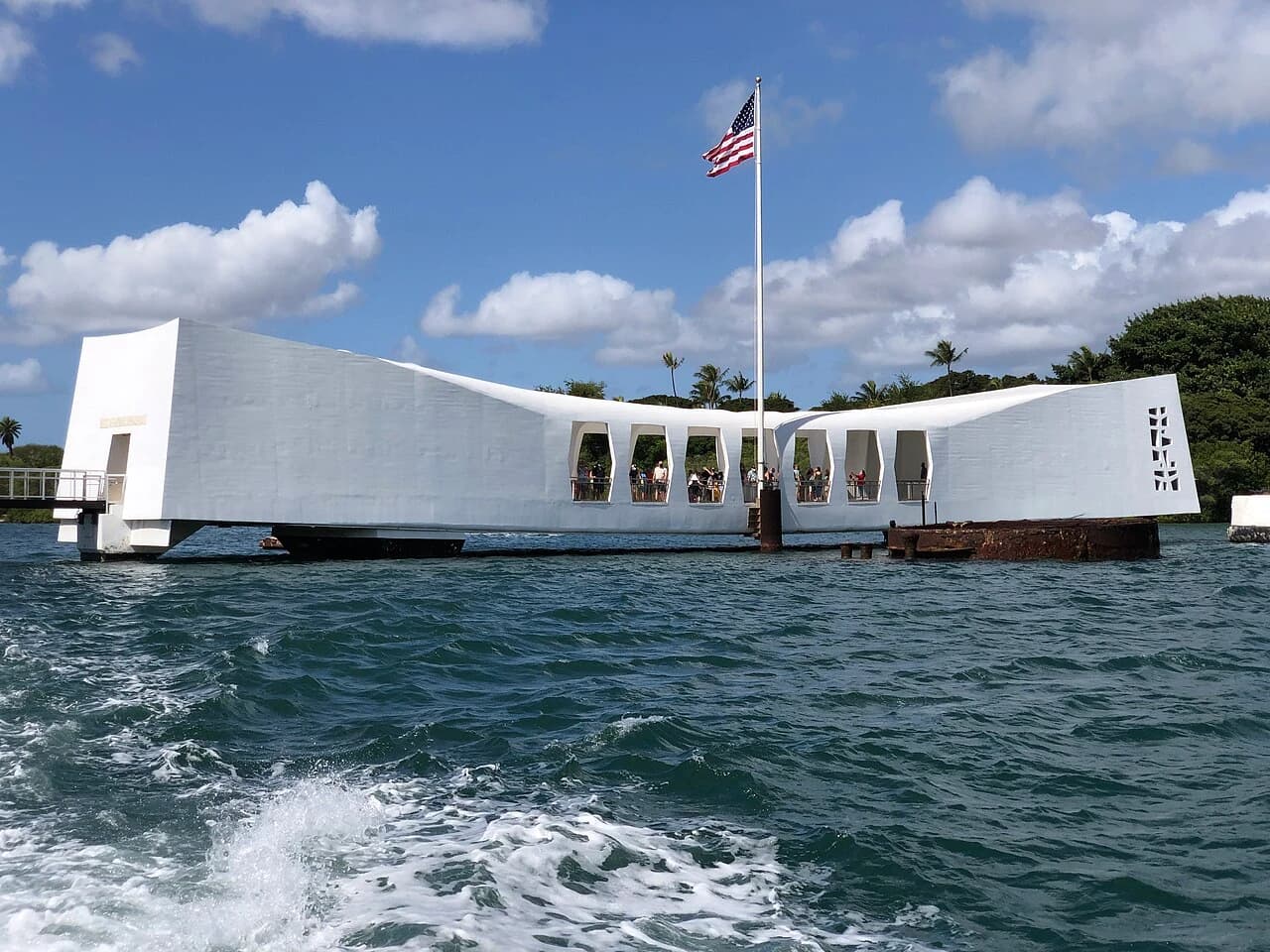
Quick Facts
21
Stops
15
Languages
100%
Offline
📍 Waipahu, United States · 21.3649°N, -157.9500°E
About USS Arizona Memorial
The USS Arizona Memorial marks the final resting place of the sailors and marines killed aboard the USS Arizona during the 1941 attack on Pearl Harbor. It is a National Memorial of the United States accessible only by boat.
This self-guided audio tour features 21 narrated stops organized across 7 sections. As a war memorial, USS Arizona Memorial offers a unique cultural experience in the heart of Waipahu, United States.
The Stanza audio guide is available in 15 languages and works entirely offline — download the complete tour including audio narration, maps, and images before your visit. As you walk through USS Arizona Memorial, GPS-triggered narration plays automatically at each point of interest.
Last updated:
What you will hear
The Visitor Center: Prelude to History
Establish the beginning of the journey at the Visitor Center using the ship's massive anchor and bell to provide scale and historical weight before the boat transit.
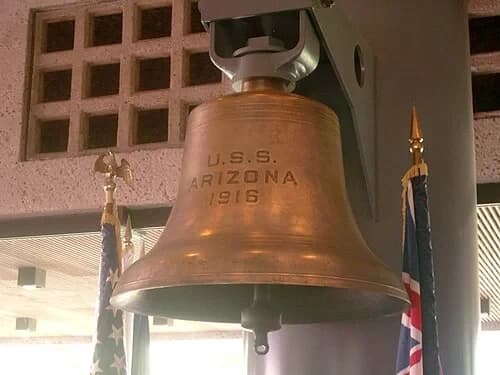
The Ship's Bell
Cast in 1916 for the vessel's original commissioning, this bronze bell is one of only two recovered from the sunken battleship. For decades, its sharp, metallic toll regulated daily life at sea, marking the passage of time and signaling important events for the crew. Today, it remains a functional part of the memorial’s operations rather than a silent museum piece. It is still used during special ceremonies and to pay final respects to deceased veterans, acting as a bridge between the living and the 1,177 shipmates who did not survive the 1941 attack. The clarity of its sound over the water provides a hauntingly beautiful connection to the ship’s active years before the tragedy. Its presence here allows visitors to contemplate the human element of naval service, reminding us that the artifacts on display were once integral to the identity and heartbeat of a powerful vessel in the United States fleet. The bell's surface still bears the ship's name and the date of its launch into service.
The Shuttle Boat Transit
Capture the solemn approach to the memorial, which is only accessible by U.S. Navy shuttle boat, emphasizing the transition from land to the sacred site.
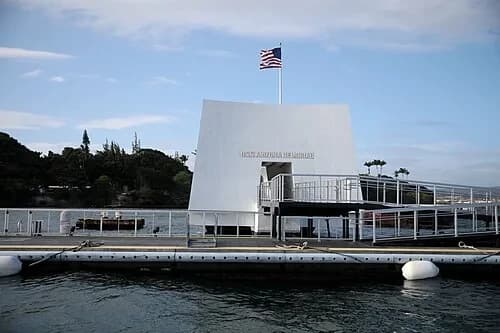
Entrance to Memorial
Viewed from the water, the memorial’s profile is distinct and intentional. Architect Alfred Preis designed the 184-foot structure with a specific geometric symbolism in mind. Notice how the roof and sides dip slightly in the center while rising to full height at either end. Preis explained that this "sag" in the middle represents the initial shock and crushing defeat felt on the day of the attack, December 7, 1941. However, the strong, upward-reaching ends of the building signify the ultimate victory and strength of the United States at the war's conclusion. This architecture creates a visual narrative of resilience, translating a complex historical experience into concrete form. As the boat docks, the stark white facade stands out against the blue of the sky and the dark shadow of the ship below. It is a structure that does not seek to overwhelm the site, but rather to frame the tragedy and the recovery that followed in a way that is both modern and deeply symbolic. The central dip sits directly over the midship area of the wreck.
The Floating Bridge: Architecture of Victory
Focus on Alfred Preis's design, which symbolizes initial defeat and ultimate victory. This stop also mentions the funding efforts, including the Elvis Presley benefit concert.
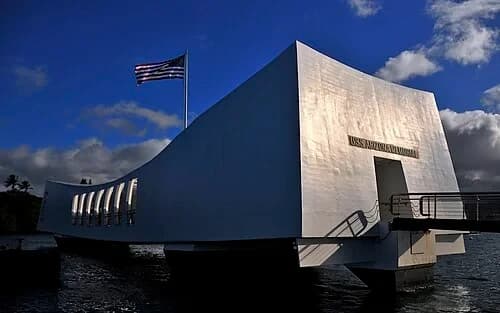
White Concrete Facade
The USS Arizona Memorial was formally dedicated on Memorial Day, May 30, 1962. While the bridge structure itself is the most recognizable feature, the entire site covers approximately 10.5 acres within Pearl Harbor. The architect designed the interior to accommodate up to 200 people at a single time, a necessary consideration given the site’s immense popularity. Today, it remains one of the most visited locations in Hawaii, with more than two million people arriving from around the globe annually to pay their respects. The clean, white concrete surfaces provide a stark contrast to the rusted iron of the ship below, creating a sense of order and serenity. Maintaining such a high-traffic site over an active wreck requires constant care and coordination between the National Park Service and the U.S. Navy. Despite the large number of daily guests, the design helps maintain a feeling of space and solemnity, allowing each visitor a chance to engage with the history at their own pace. The building's bright exterior serves as a beacon in the harbor, visible from many points around the shoreline.
The Assembly Room and the 21 Windows
Explore the central gathering space and the symbolism of its 21 windows, which provide light and views of the harbor.
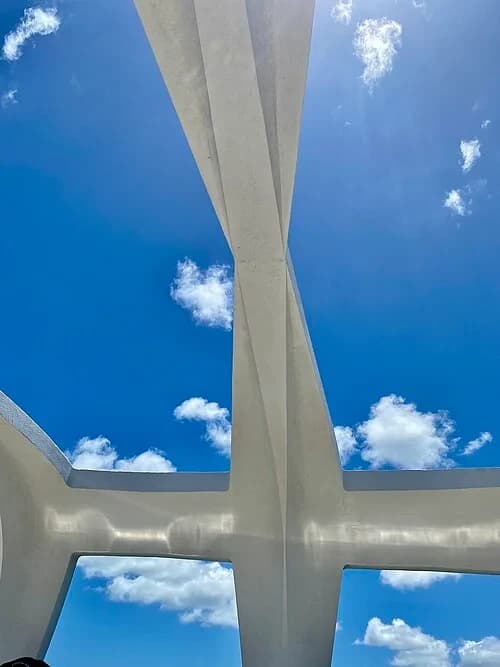
Open Ceiling Windows
The central assembly room features a unique open-air design with seven large rectangular windows on each side and an additional seven along the ceiling. In total, there are 21 of these openings. This specific number has led to a popular and widely accepted theory that they represent a perpetual 21-gun salute, the highest military honor rendered to a fallen sailor or head of state. Beyond their symbolic potential, these cutouts serve the practical purpose of providing natural light and constant cross-ventilation, allowing the harbor’s breeze to move freely through the space. The effect is one of openness, preventing the interior from feeling enclosed or oppressive. Looking through these frames, the sky and water are always visible, integrating the natural environment into the architecture of the shrine. This creates a space that feels alive and connected to the elements, rather than a static, indoor museum, emphasizing the building’s role as a living monument in the middle of a working military harbor. The sunlight creates ever-changing patterns across the floor as the day progresses.
The Flagpole and Mainmast
Highlight the American flag flying over the wreck, marking it as an active military cemetery and a site of ongoing service.
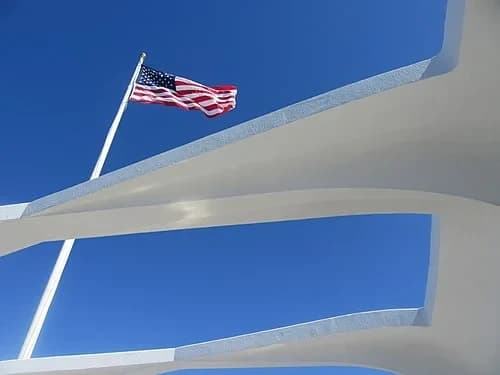
Flag and Mainmast
The flagpole at the center of the memorial is not an independent structure; it is attached directly to the severed mainmast of the USS Arizona. After the attack, much of the ship's superstructure was removed to clear the harbor, and the mainmast was cut off just above the waterline. By mounting the flag to this original piece of the ship, the memorial maintains a literal and symbolic bond with the battleship. Despite being submerged, the USS Arizona remains a commissioned vessel of the United States Navy. This is a rare and significant status for a shipwreck, entailing that the flag is raised and lowered with full military honors every day. Flying the Stars and Stripes here serves as a continuous act of service and a mark of respect for the 1,177 crew members lost. It signifies that while the ship no longer sails, its role in the nation’s history and its status as a sacred military site remain active and unchanged. The base of the pole is anchored firmly into the heavy steel that once rose high above the deck.
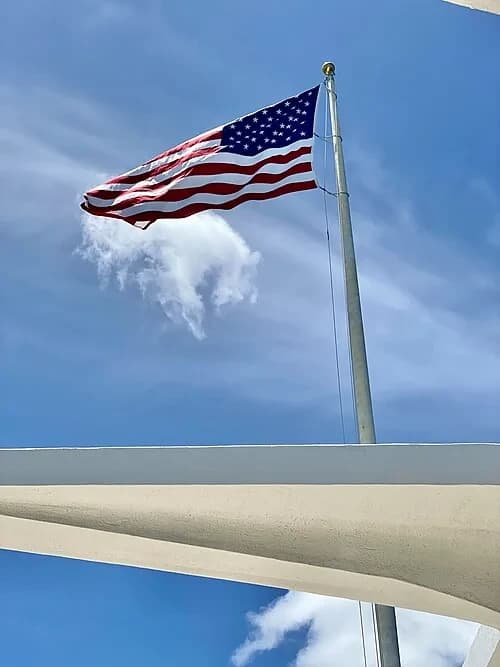
The Stars and Stripes
The American flag flying over the memorial marks the location of the world's largest mass grave from the December 7, 1941, attack. Entombed in the compartments of the ship directly below you are the remains of 1,102 sailors and Marines who could not be recovered in the aftermath of the sinking. For the U.S. Navy personnel who maintain the flag daily, this duty is a significant point of honor. Every morning at 08:00 and every evening at sunset, sailors perform the ceremonies of colors, ensuring that the flag continues to wave over their fallen comrades. This presence serves as a constant vigil, marking the site as a place of active military mourning rather than just a historical landmark. The flag is a visual anchor for the site, drawing the eye upward toward the sky even as the presence of those below remains at the forefront of the visitor's mind. It is a living tribute to the lives lost in these waters, maintained with the same precision as on any active ship in the fleet.
The Sunken Hull: Turret III
Directly view the most visible remains of the battleship, the barbette of Turret III, which protrudes from the water's surface.
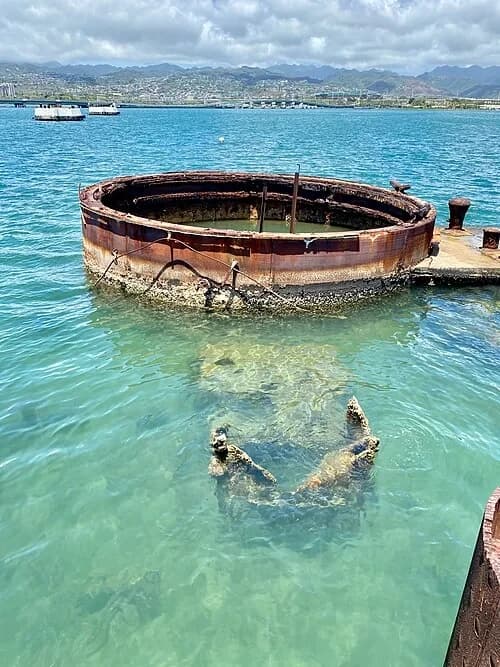
Turret III Barbette
As you look out over the water, you will notice a large, rusted circular ring rising above the surface. This is the barbette—the heavy steel cylindrical foundation—for the ship's third gun turret. Originally, this structure supported massive 14-inch guns that were capable of firing projectiles for miles. Following the sinking, the Navy removed the actual gun barrels to repurpose them for coastal defense batteries elsewhere on the island. However, the thick, armored barbette was too massive and deeply integrated into the ship’s hull to be easily moved. It remains exactly where it was positioned on that Sunday morning in 1941. Seeing the weathered metal exposed to the air and sea provides a visceral sense of the ship’s physical presence. It serves as one of the few visible indicators of the battleship’s anatomy above the water line, illustrating the strength and size of the vessel that once served as a flagship of the Pacific Fleet. The rough texture of the rust shows the decades of exposure to the salty harbor air.
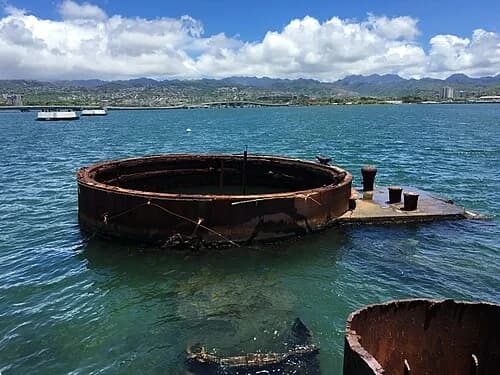
The Sunken Deck
Looking down into the water from the memorial’s edge, the remains of the ship’s deck come into view. Over eighty years of submersion have transformed the steel surfaces into a complex artificial reef. Barnacles, coral, and various forms of marine life have claimed the wreckage, blurring the lines between the man-made vessel and the natural harbor floor. While the water often appears clear, the ship is undergoing a slow and inevitable process of deterioration. The National Park Service and the U.S. Navy continuously monitor the structural integrity of the hull, using specialized equipment to track how the salt water is affecting the metal. This scientific oversight ensures that the site remains stable as a grave for as long as possible. The sight of the sunlit deck beneath the waves is one of the most powerful experiences at the memorial, offering a direct look at the physical reality of the battleship’s final resting place. Small fish can often be seen darting between the shadows created by the ship's irregular, rusted surface.
The Black Tears of the Arizona
Explain the phenomenon of the oil leaks, known as 'black tears,' which continue to rise from the ship more than 80 years after the attack.

The Black Tears
Visitors often notice a shimmering, rainbow-colored sheen floating on the surface of the water around the memorial. This iridescent pattern is caused by bunker C fuel oil that has been slowly leaking from the ship’s tanks since 1941. These droplets have become known as the "Black Tears of the Arizona." As the oil rises from the depths, it spreads across the surface, creating shifting, colorful shapes that are constantly transformed by the wind and current. When the ship was hit, it was carrying a full load of approximately 1.5 million gallons of fuel. While much of it burned in the subsequent fires or was released during the initial sinking, a significant amount remains trapped within the deteriorating hull. The presence of this oil is a literal, physical leak from the past, ensuring that the ship remains an active, changing part of the harbor’s environment rather than a static relic of the war. These colorful patterns are most visible on days when the harbor waters are relatively calm.
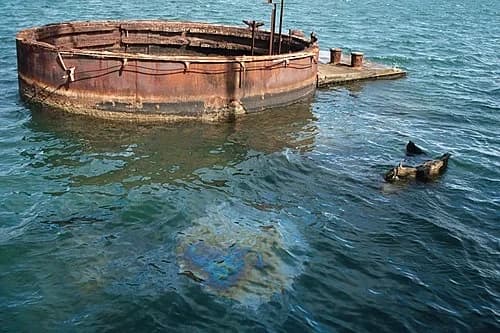
Surface Oil Leaks
The amount of oil escaping from the USS Arizona is remarkably consistent, with estimates ranging between two and nine quarts leaking into the harbor daily. Environmental scientists and park rangers keep a close watch on these leaks to ensure they do not pose a major threat to the local ecosystem, though for many, the oil has a significance that goes beyond environmental data. A poignant belief held by many survivors and regular visitors is that the oil will only stop leaking when the last survivor of the USS Arizona passes away and is reunited with their shipmates. This lore adds a layer of human emotion to the physical degradation of the ship. Currently, the droplets continue to rise to the surface, a small but persistent reminder of the fuel that once powered the great battleship. Watching the small bubbles reach the surface provides a quiet moment to consider the passage of time and the lingering presence of the event that occurred here. Each small bubble represents a tiny fraction of the fuel that remains trapped deep within the hull's compartments.
Want to hear the rest?
Download the Stanza app to unlock all 21 stops and full GPS-guided navigation.
Frequently Asked Questions
How long does the USS Arizona Memorial audio tour take?
The USS Arizona Memorial audio guide includes 21 narrated stops. Most visitors spend 45 minutes to 1.5 hours exploring the complete tour, though you can listen at your own pace and skip or revisit any stop.
Is the USS Arizona Memorial audio guide available in my language?
Stanza supports 15 languages: English, Spanish, French, German, Italian, Portuguese, Russian, Japanese, Chinese, Korean, Arabic, Hindi, Polish, Dutch, Hebrew. Check the guide in the app to confirm the languages currently available for this tour.
Can I use the audio guide offline at USS Arizona Memorial?
Yes! Download the complete USS Arizona Memorial tour — including all audio, maps, and images — before your visit. The Stanza app works completely offline, so you don't need WiFi or mobile data at the venue.
How much does the USS Arizona Memorial audio guide cost?
The Stanza app is free to download. Free and paid audio guides are available; current prices are shown in the app.
How do I use the Stanza audio guide at USS Arizona Memorial?
Download the free Stanza app, search for "USS Arizona Memorial", and download the tour. When you arrive at the venue, the app uses GPS to detect your location and automatically plays the relevant narration as you move between points of interest — completely hands-free.
What makes the Stanza audio guide different from other USS Arizona Memorial tours?
Stanza offers GPS-triggered narration that plays automatically as you walk through USS Arizona Memorial — no need to manually select stops. The tour is available in 15 languages, works fully offline, and includes 21 expertly narrated stops with images and historical context.
What other audio guides are available near USS Arizona Memorial?
Stanza offers multiple audio guides in Waipahu, United States and nearby areas. After downloading the app, browse the map to discover all available tours near USS Arizona Memorial. Each guide can be downloaded for offline use.