 Stanza / Audio guide
Content & sources
Stanza · Audio guide
Fort Ross, California Audio Guide
A place to remember. A story to take with you.
Fort Ross is a former Russian establishment on the west coast of North America that served as the hub of the southernmost Russian settlements from 1812 to 1841. It was the first multi-ethnic community north…
Download Stanza, then search for “Fort Ross, California”.
About the tour
One guide. Your kind of visit.
Fort Ross is a former Russian establishment on the west coast of North America that served as the hub of the southernmost Russian settlements from 1812 to 1841. It was the first multi-ethnic community north of the Spanish missions in California and is now a designated National Historic Landmark.
Ready when you are.
- 01Get the free Stanza app.
iOS & Android
- 02Find your guide.
“Fort Ross, California”
- 03Download before you go.
Works offline
Audio guide / 13 narrated stops
Inside the guide
Get to know a few of the stories before you go. Open a stop to read more.
01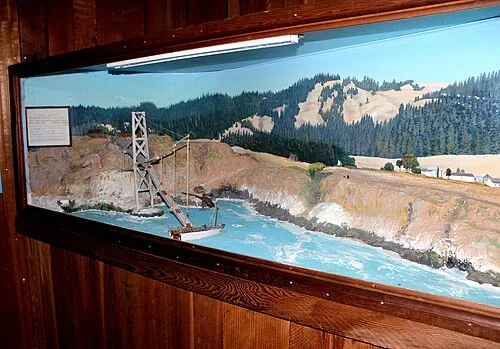 Visitor Center & Historic Overview
Visitor Center Diorama of the Coastal Cove
Fort Ross was a Russian outpost on the coast of Sonoma County, about a hundred and forty-five kilometers northwest of San Francisco. The Russian-American Company ran it. One of its two purposes was to grow food for the company's colonies in Alaska. Fur trading was the other part of its business. The Russian settlement here began in 1812. The fort was sold in 1841. It was the hub of the southernmost Russian settlements in North America. The display in the visitor center shows a cove cut into high bluffs. Surf breaks over the rocks, and a tall lattice frame stands at one side. A small boat rests near the shoreline, and a few small buildings sit on a hill in the distance.
MARELBU · CC BY 3.0
02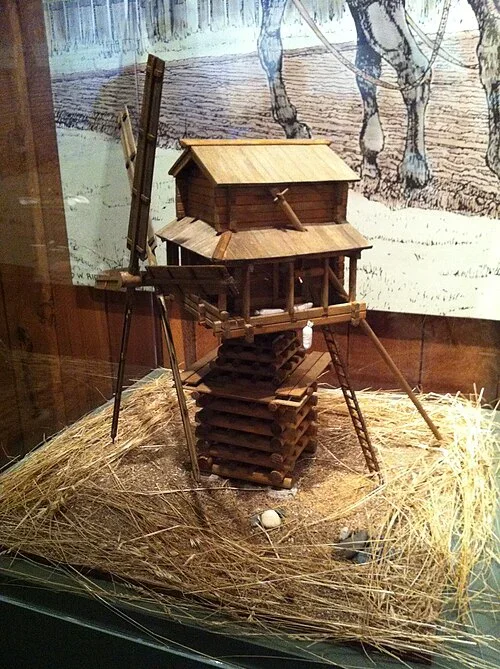 California's Earliest Windmills
Windmill Replica Model
California's first windmills were built by Russian settlers at Fort Ross. Until then, the mills in California were powered by water or by animals. The Russians called their mill a stolbovki, a name from a word for a thick vertical pole. A huge center post was sunk into the ground, and it supported a crosswise pole. The wings faced into the wind and turned that pole. Archaeologists are still searching for the center post. The post would have left a clear dent in the earth. This model, shown behind glass, is a museum's interpretation of the design. It sits on straw, with a stacked-log base and a shingled upper house. A tall pole rises at one side, and a ladder stands at the other. In October 2012 the park built and dedicated a working windmill near its parking lot. Its parts were made in Russia and shipped to California. It was built completely by hand, using methods believed to match the original. It has been pointed out that it copies a later mill from the Vologda region, and it only slightly resembles the windmill shown in a painting made at the fort in 1841.
Photo: Acekid21 · CC BY-SA 3.0
03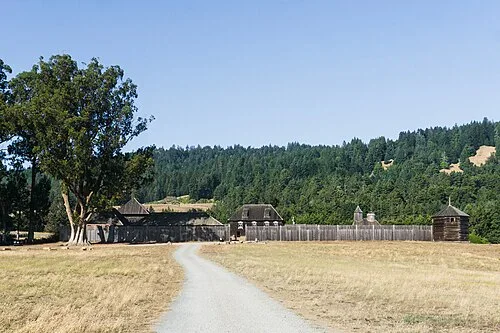 The Fort Palisade & Main Entrance Gate
Fort Ross Stockade from the Approach Path
Ivan Kuskov's party reached Port Rumiantsev in March 1812. He had twenty-five Russians with him. Eighty Native Alaskans came along as well. From the bay, they went north to found the settlement. There they built a walled compound of timber buildings. The Russian managers brought glass windows, stoves and all-wood housing into Alta California. The palisade standing today, a wall of upright posts, has been rebuilt more than once. The wall runs past roofed buildings, with a tower at its far end and a wooded ridge rising behind. According to one account, the state highway cut right through the fort until 1972, when it was moved east.
Listen in the appAlexey Komarov · CC BY-SA 4.0
04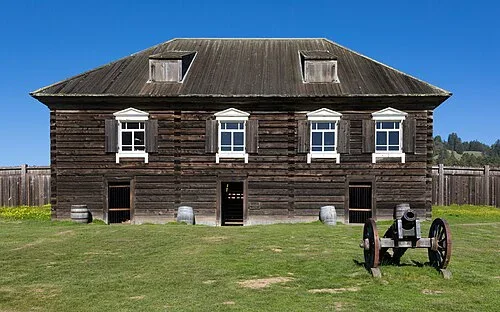 Kuskov House & Colonial Headquarters
Kuskov House Exterior
In 1808 Alexander Baranov sent Ivan Kuskov south along the coast. Kuskov was to bury possession plaques at several points, with a ceremony, to mark Russian claims to the land. When he came back to Bodega Bay, American ships were already hunting otters there. The otters had grown scarce. So Kuskov and his men explored, and they chose a place about fifteen miles north. The Kashaya Pomo called it Metini. The two-story log house, with white-framed windows and dormers in its roof, is linked with Kuskov. An 1841 inventory named it the old commandant's house. Barrels stand on the grass, and a cannon on a wheeled carriage rests nearby. The house standing today is a reconstruction, built to the plans of 1817 and completed in 1983.
Listen in the appPhoto: Frank Schulenburg · CC BY-SA 4.0
05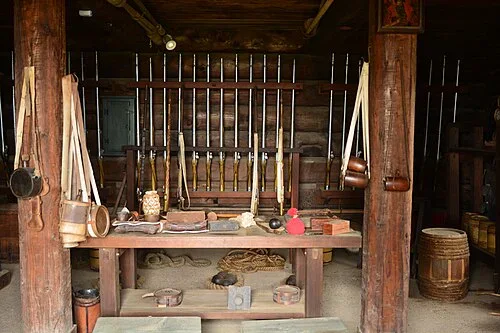 Kuskov House & Colonial Headquarters
Kuskov House Interior
Long guns hang in rows on racks along the back wall of this room in the Kuskov House. Leather straps and pouches dangle from the wooden posts beside them. On a low counter sit small containers and tools, and tubs and barrels stand nearby. Frontier posts like this one relied on firearms and on gear that could be carried into the field. The house is a reconstruction, so this room is a display rather than an original interior. Upstairs, another room is set up like the study used by the Russian naturalist Ilya Voznesensky at the fort in 1841.
Listen in the appJoe Mabel · CC BY-SA 4.0
06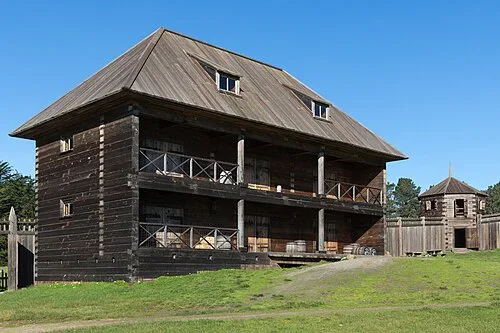 The Magasin Trade Warehouse
The Old Magasin
The Old Magasin stands for the trade that brought the Russians here. Russian hunters first came to California on American ships, and Alaska Native hunters came with them. For about twenty years, Spanish, American and British ships hunted sea otters along this coast. Then Russian hunters joined in. In 1809 one company ship, the Kad'yak, returned to New Archangel in Alaska. It carried beaver skins and eleven hundred and sixty otter pelts. By 1817 the otters had been almost wiped out in this area. The two-story log building has a railed gallery across its upper floor and dormer windows in its roof. In 1818 the fort began building its own ships. The first was the Rumiantsev, and four were built here in all.
Listen in the appPhoto: Frank Schulenburg · CC BY-SA 4.0
07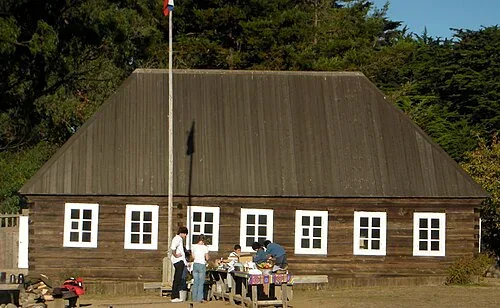 The Rotchev House (Original 1836 Residence)
Rotchev House Exterior
The Rotchev House is the only building at the fort that survives from the Russian years. Aleksandr Rotchev, the last manager, lived here with his family. The company called it the Administrator's House. From the 1940s, many people called it the Commandant's House. That name held through the 1970s. Its long front has a steep roof and a row of white-framed windows, and a flagpole stands beside it. A fire in 1970 damaged the roof. Accounts differ on when the first building here went up, and in 1836 the house was renovated from an older structure. In December 1841 Rotchev sold the fort and its land to John Sutter, a Mexican citizen of Swiss origin. The 1838 trade agreement with the Hudson's Bay Company had met the Alaskan colonies' agricultural needs. After that, Fort Ross was no longer needed to feed Alaska. The sale price was thirty thousand dollars. Some Russian historians argue that the money was never paid. A recent biography of Sutter says the debt was settled in 1849, in notes and gold.
Listen in the appPhoto: APL · Public domain
08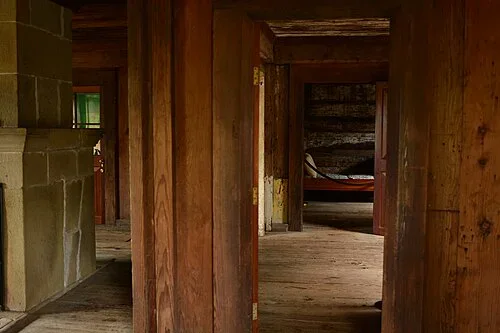 The Rotchev House (Original 1836 Residence)
Rotchev House Interior
The inside of the Rotchev House is still being restored, and the work follows recent research. Federal grants have helped partly restore the outside. The indoor work aims to show a more cosmopolitan and refined colonial life. Here, cosmopolitan means a mix of peoples and cultures from many places. Some older work from the Cold War period contains interpretive errors. Research with Russian archives is meant to correct them. Heavy timber posts frame a view through one room after another. A stone-faced wall rises beside the posts, and plank floors lead toward a doorway deeper in. The house has seven small rooms and a larger hall. Which of them show this refined life is still being worked out.
Listen in the appJoe Mabel · CC BY-SA 4.0
09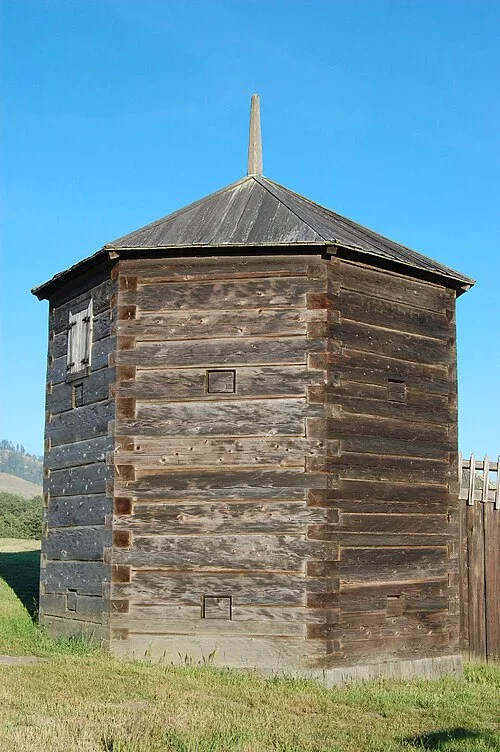 Blockhouse Watchtowers & Defense Systems
Corner Blockhouse Watchtower
Two blockhouses stand at opposite corners of the fort's wall. This one is polygonal and built of logs, with a steep roof and a pointed finial at the top. A tower at a corner gave its watchers height above the wall. Small square openings are cut into the logs, and a window sits at one side. The openings let people look out over the ground beyond, and they could also be used for firing. A wall of posts runs away from the tower's side. The openings are set at several heights up the logs.
Listen in the appEugene Zelenko · CC BY-SA 4.0
10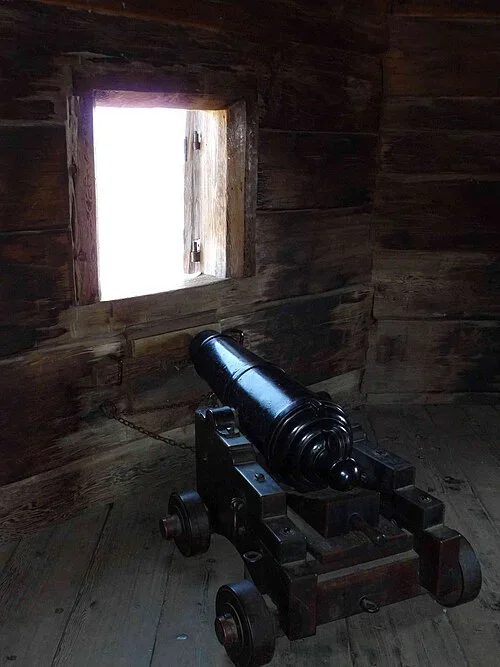 Blockhouse Watchtowers & Defense Systems
Cannon Inside a Corner Blockhouse
A dark metal cannon sits on a wheeled carriage inside a small room with log walls. A chain is fastened to the carriage. The gun points toward a window, and its shutter stands open. Colonial posts sometimes placed guns in corner towers, where they could cover the approaches to the walls. It is not clear which gun this is, whether it was ever fired, or when it was placed in the tower.
Listen in the appJürgen Regel, Marian… · CC BY 3.0
- 11
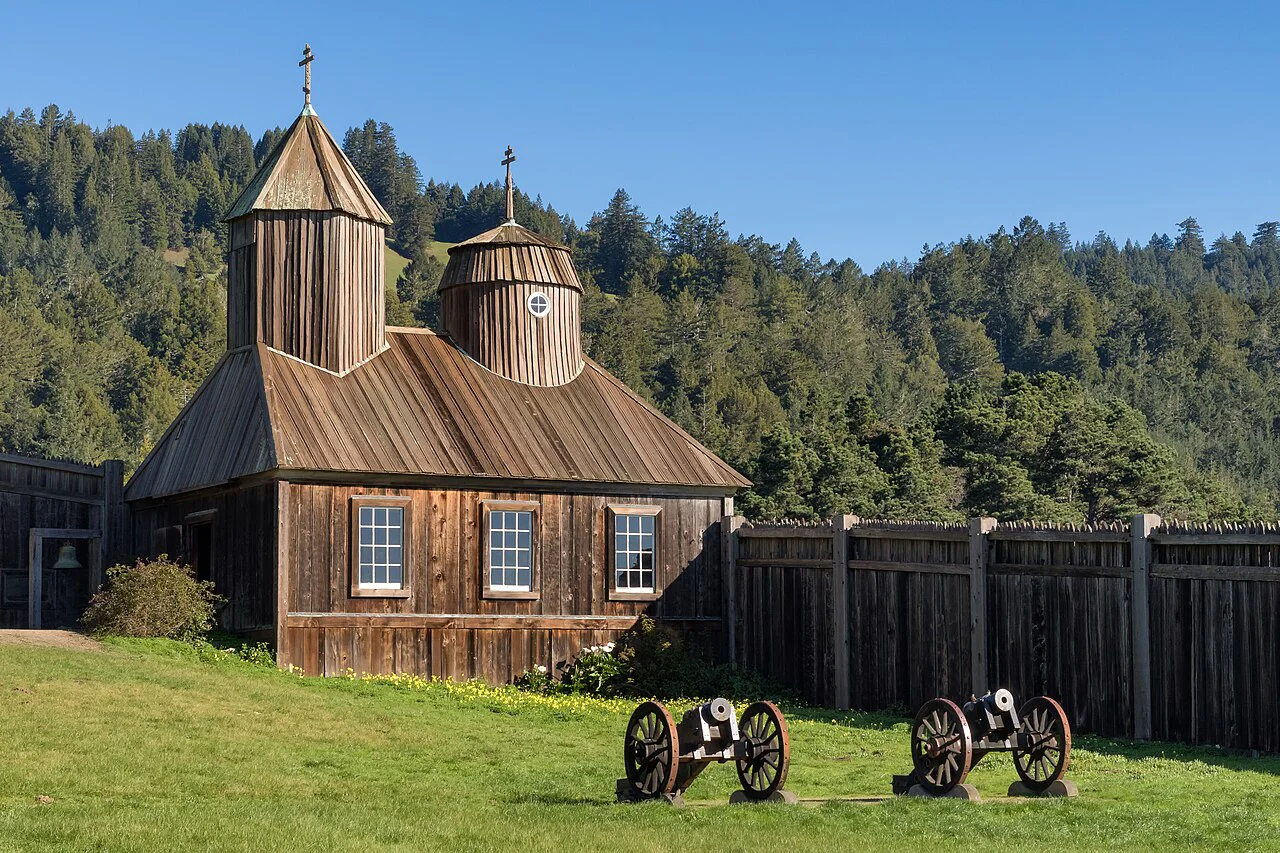
Holy Trinity St. Nicholas Chapel
The chapel built into the fort's wall, where Russian Orthodox services are still held three times a year.
- 12
Chapel Interior and Altar Area
The worship room inside the chapel, with paneled walls, a candle chandelier and a pair of lecterns.
- 13
Chapel and Coastline View
The Kashaya Pomo's seasonal home at Metini, and the 1817 treaty made with local chiefs near the fort.
Fort Ross, California
Frequently asked questions
How much does the guide cost?
Free app download. Listed guide price: $0.99. Guide price shown in the app. Audio guide only. Venue admission is separate.
Can I listen without internet?
Yes. Download the guide’s audio, images, and maps in the app before your visit. Your downloaded content is then available offline.
Can I listen in my language?
This audio guide is available in 15 languages, including English.
Do I need to follow a schedule?
No. This is a self-guided experience. Choose your stops, pause whenever you like, and return to a story at your own pace.
At your own pace
Explore Fort Ross, California.
Download Stanza, then search for “Fort Ross, California”.
Free app download · Guide price shown in the app
Keep exploring
Audio guides — United States
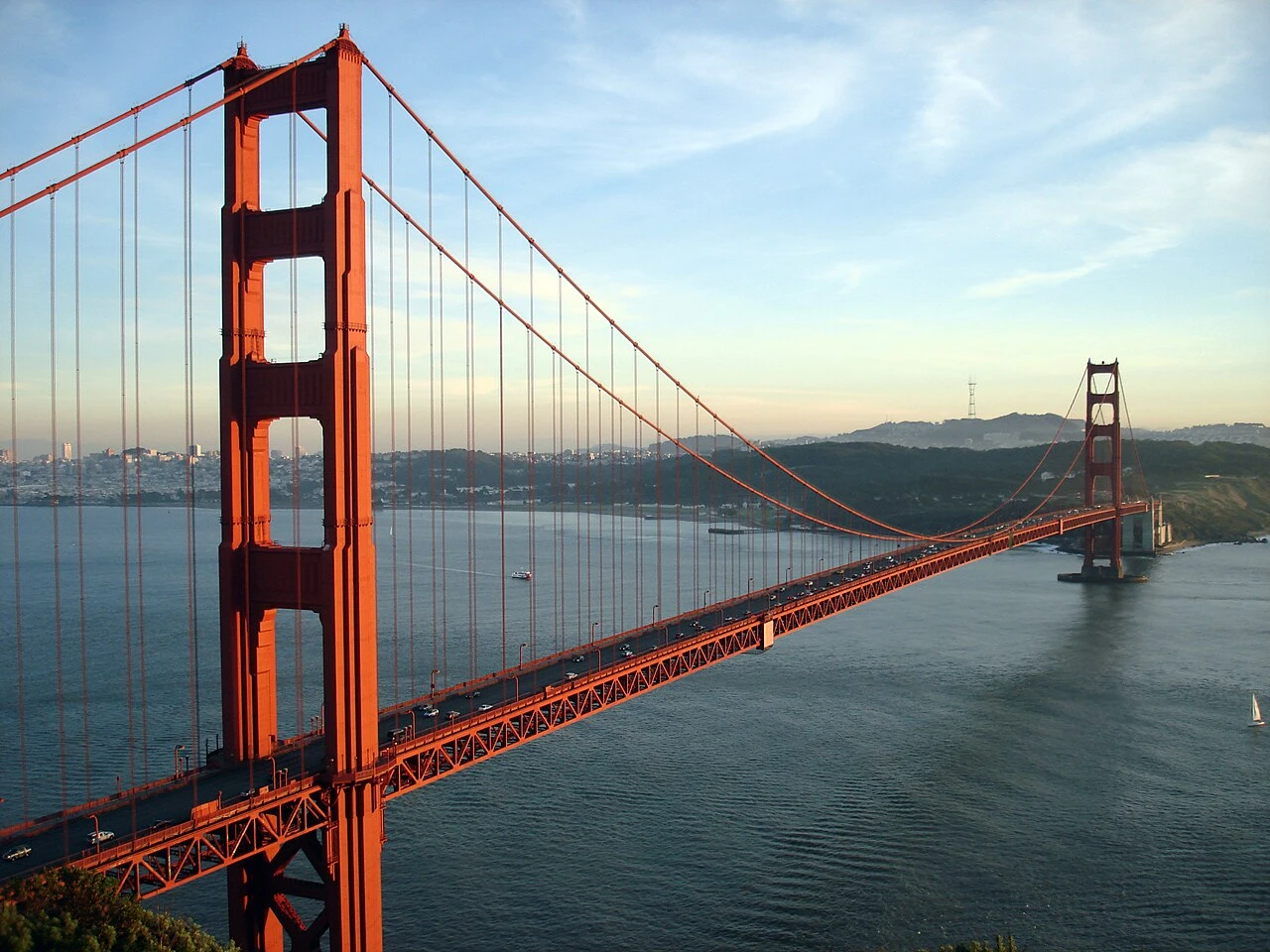
San Francisco · 102 km
Golden Gate Bridge
Content & sources
Rich Niewiroski Jr. · CC BY 2.5
San Francisco · 105 km
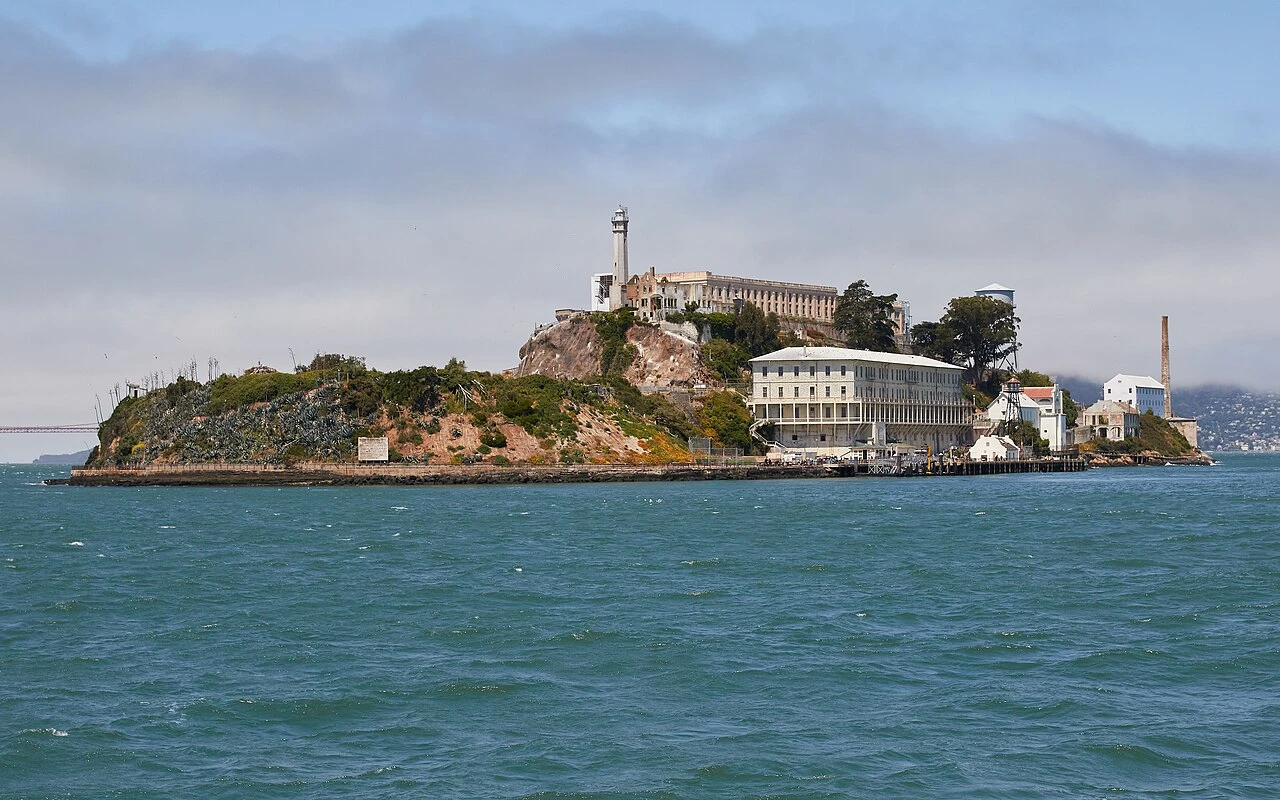
Alcatraz Island, Alcatraz
Content & sources
Photo: Frank Schulenburg · CC BY-SA 4.0
San Francisco · 108 km
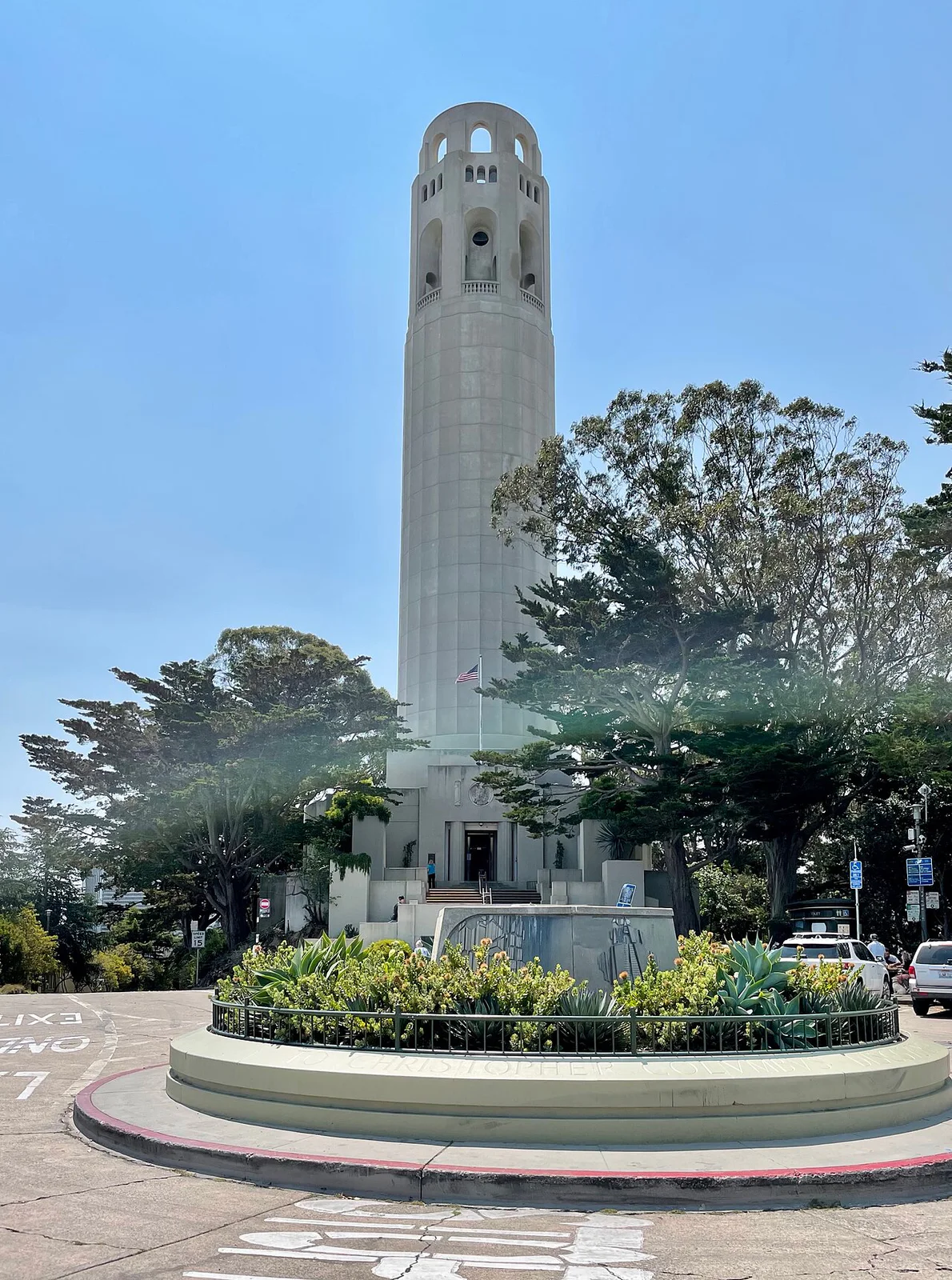
Coit Tower
Content & sources
Photo: Chris6d · CC BY-SA 4.0
San Jose
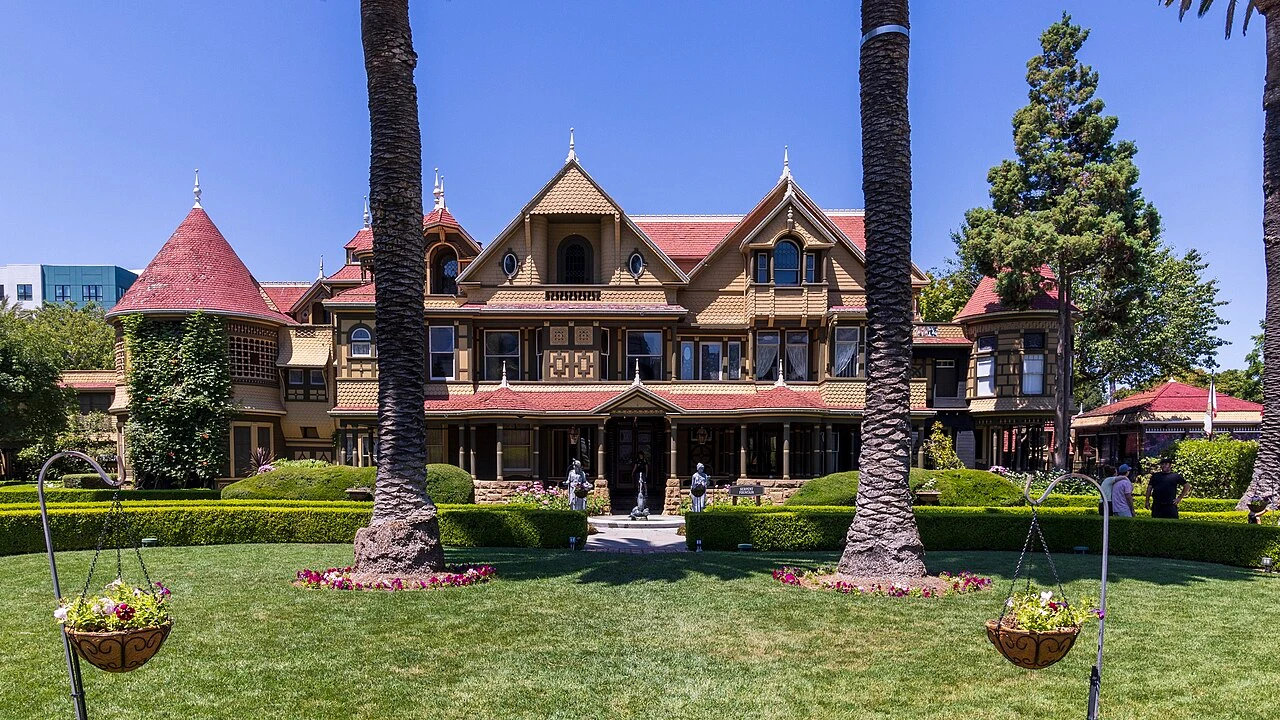
Winchester Mystery House
Content & sources
Photo: The wub · CC BY-SA 4.0
Seattle
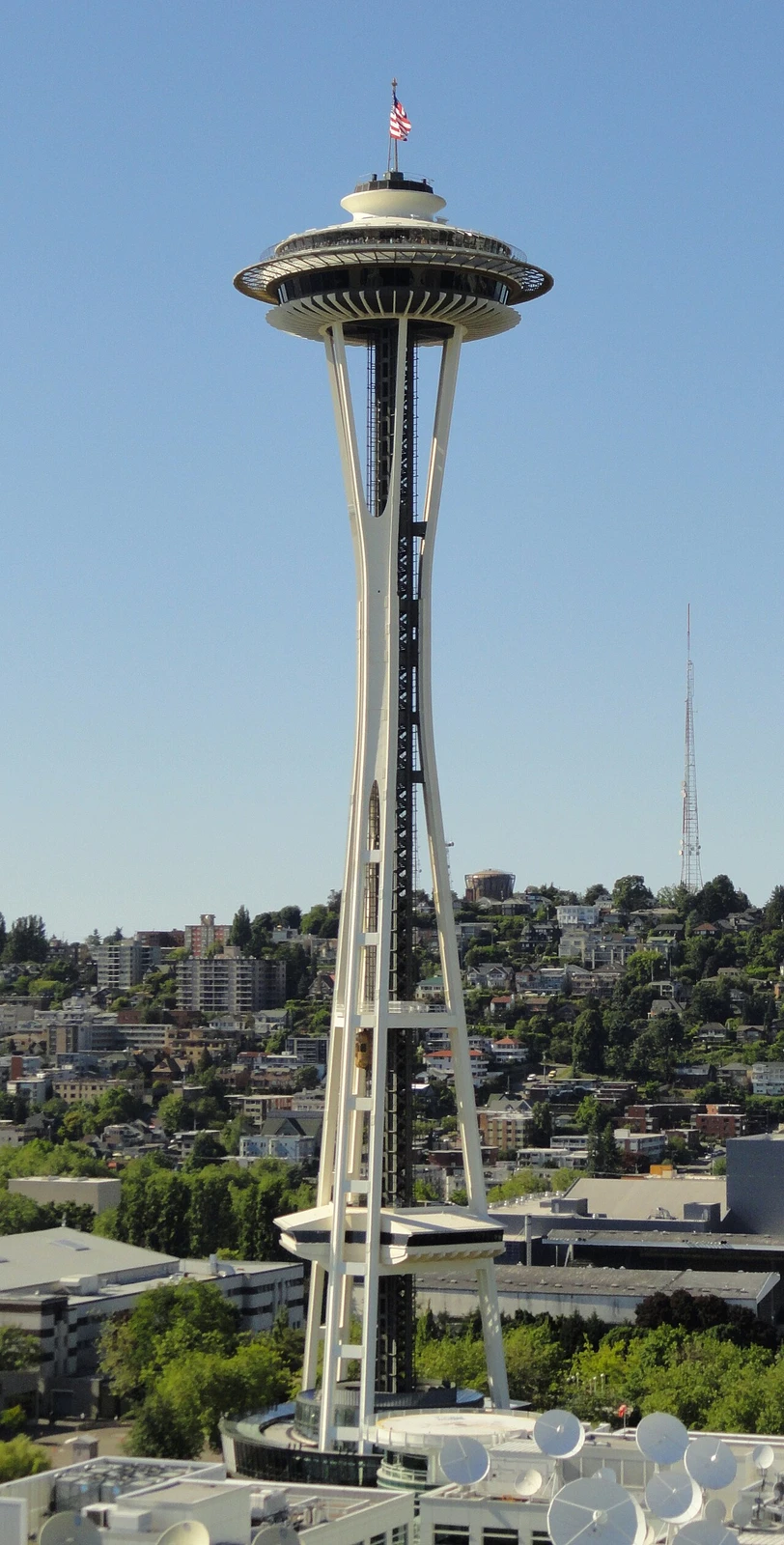
Space Needle
Content & sources
Photo: Jordon Kalilich · Public domain