Stanza · Audio guide
J. Paul Getty Museum Audio Guide
A place to remember. A story to take with you.
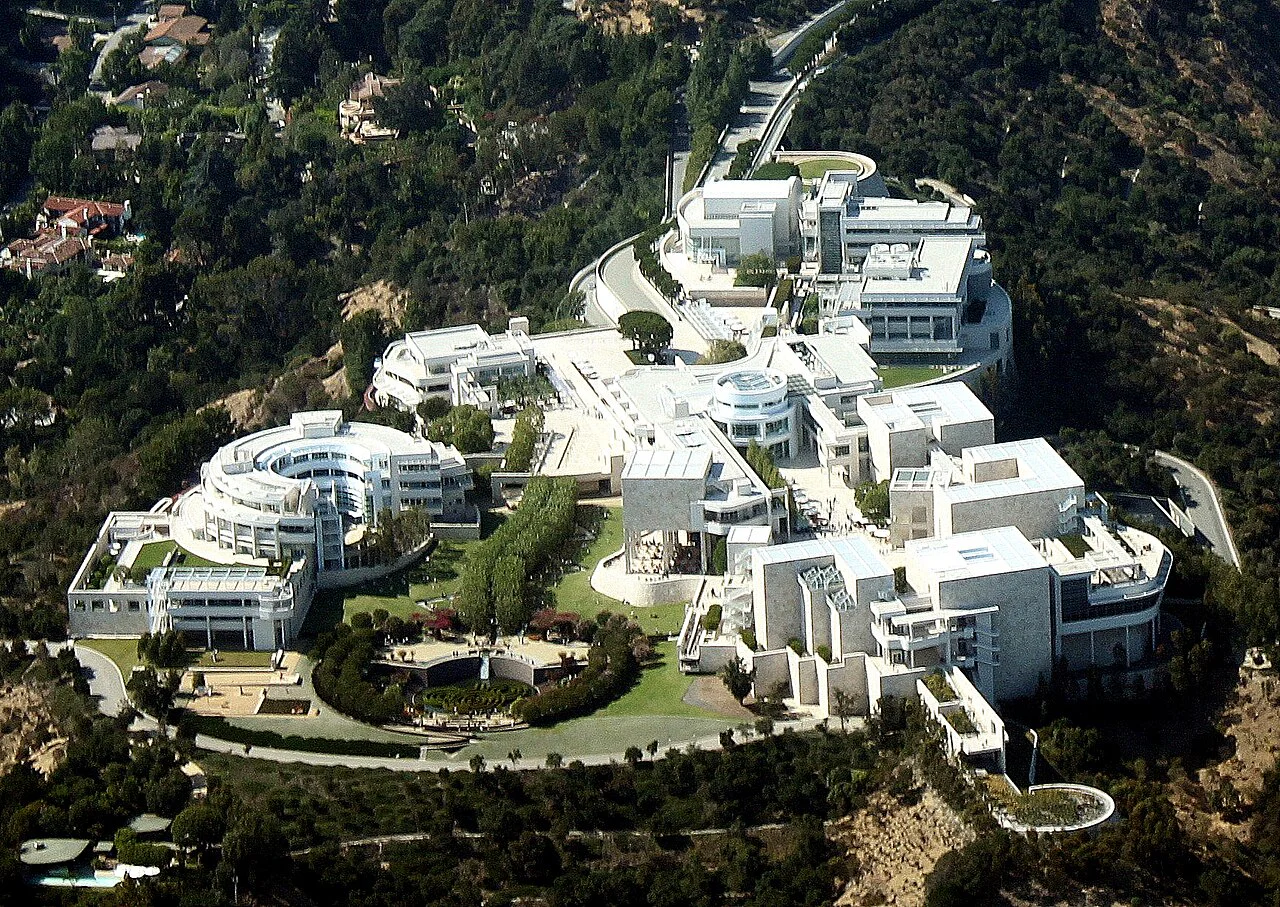
The J. Paul Getty Museum is an American art museum located in Los Angeles, California. It is operated by the J. Paul Getty Trust, which is the world's wealthiest art institution.
Download Stanza, then search for “J. Paul Getty Museum”.
About the tour
One guide. Your kind of visit.
The J. Paul Getty Museum is an American art museum located in Los Angeles, California. It is operated by the J. Paul Getty Trust, which is the world's wealthiest art institution.
The J. Paul Getty Museum guide tells the stories of 143 artworks, including Irises (Vincent van Gogh), Christ's Entry Into Brussels in 1889 (James Ensor), La Promenade (Pierre-Auguste Renoir), Young Man at His Window (Gustave Caillebotte), Spring (Édouard Manet), Victorious Youth (J. Paul Getty Museum), The Abduction of Europa (Rembrandt), and Turin–Milan Hours (Jan van Eyck). 3 of the most famous are longer stories that move across the picture detail by detail, set to music. Every artwork is free to hear in the Stanza app until 1 January.
Ready when you are.
- 01Get the free Stanza app.
iOS & Android
- 02Find your guide.
“J. Paul Getty Museum”
- 03Download before you go.
Works offline
Audio guide / 143 artworks
Inside the guide
Get to know a few of the stories before you go. Open a stop to read more.
01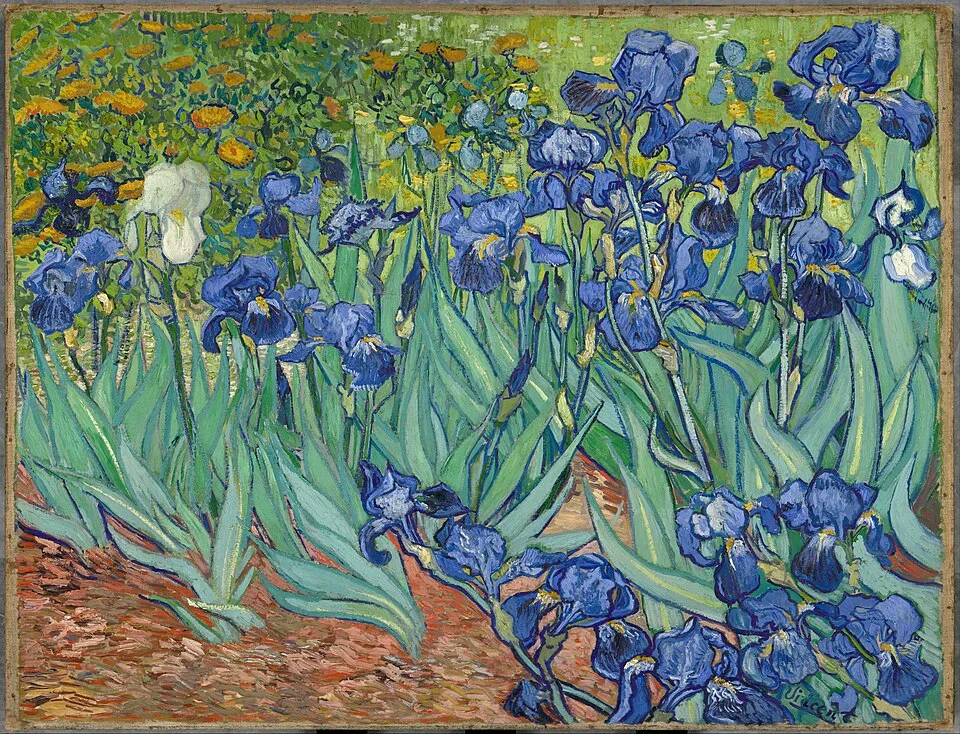
Irises
Blue flowers pile up to the edge of the canvas, the leaves sway, and there is not a soul in sight. Now think about where this garden was. Behind a wall, at an asylum. Vincent van Gogh painted Irises in 1889, in the weeks after he checked himself in. In those first months, that walled garden was almost all the nature he could reach. So go close. Every petal is outlined in dark blue, then packed with thick, curling strokes of paint. The surface is rough, and the paint seems to move. And here is what you cannot see. Under this blue, there was violet. He mixed red into the blue. The red has faded, and only the blue is left. Then look at the white iris. One pale flower among all that blue, and your eye goes straight to it. Lower down, the leaves lean like blades, pointing every which way. Nothing here is still. It is life in motion, rooted in the earth. Down in the corner, flowers run right off the edge. The garden does not fit the canvas. Japanese artists often focused close on the foreground, and he collected their prints. The earth is red-orange. Colour theory mattered deeply to him, and opposite colours set side by side make each other burn brighter. And among the flowers, his own name, painted in blue. He saw the picture as a study. He was hopeful, too. He wrote that his strength for work would soon come back. A walled garden, a man trying to get well, and a blue that was once violet.
Listen in the appVincent van Gogh · Public domain
02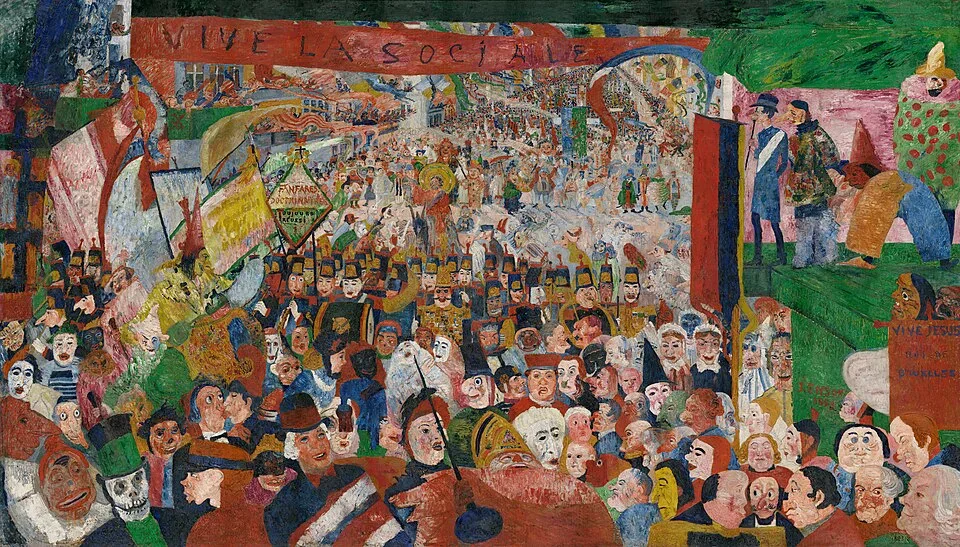
Christ's Entry Into Brussels in 1889
Drums. Flags. A whole city shoving forward, shoulder to shoulder. The best party in town. But stay with the faces. They are hardly faces at all. Ensor painted this carnival of Christ's arrival in Brussels in 1888. A parade for a king. So where is he? Right in the middle, small, almost hidden. A man on a donkey, a yellow halo, a red coat, one hand raised. Palm Sunday remembers Jesus riding into Jerusalem. Ensor drops that day into a carnival. And almost no one turns to him. The face under the halo looks a lot like Ensor's own. Around him, a marching band in blue coats and tall hats, playing hard. Round eyes, red cheeks, pale masks of faces. Their eyes look out at us, not at the man on the donkey. Over the street hangs a red banner, its slogan in French. On the right, another banner cries long live Jesus, King of Brussels. Blue letters on red, beside the painter's name. Now the skull. A green top hat, a grey bone face, a wide grin. Even Death has come to the party. Down here, the crowd presses close. Some eyes are shut. Some slide sideways. Some meet only each other. Hardly anyone looks up the street. His own artists' group, Les Vingt, the Twenty, turned this painting down. It stayed in his house in Ostend. A king arrives, and the party never turns its head. Go back to the middle. Find the small man on the donkey. Then ask who in this crowd is really looking.
Listen in the appJames Ensor · Public domain
03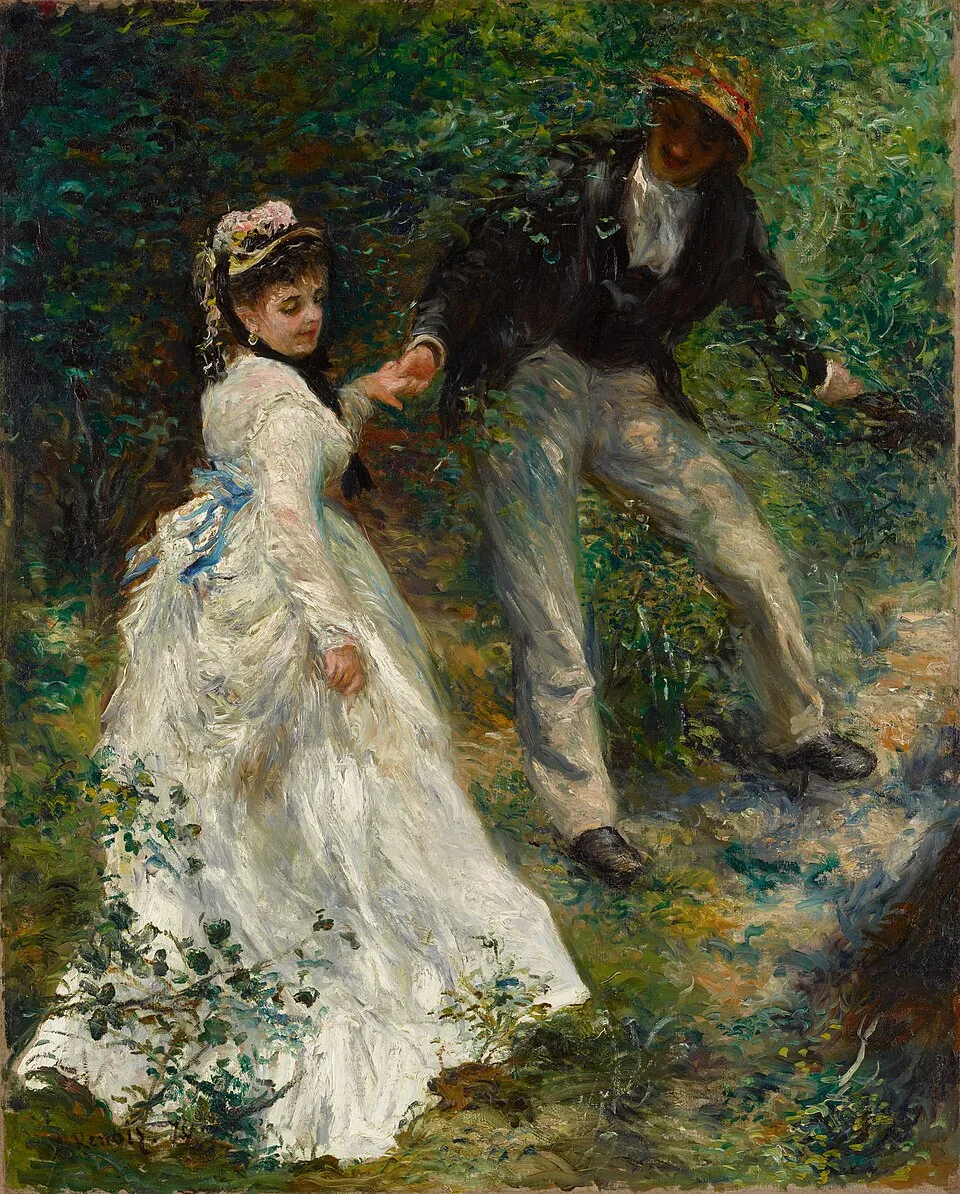
La Promenade
Two people on a path, with leaves all around. She glides. He leans in after her. Pierre-Auguste Renoir, La Promenade, 1870. The hands first. Hers rests in his, fingers loose, barely held. He does not grip. She does not pull away. Now her face. Eyes down on the path, a small smile, pink flowers on her hat, a gold earring catching the light. The walk seems to be heading toward something private. His face is half lost in shadow under a straw hat. Her dress seems white. It is not. It is cream and grey, touched with blue, laid on in quick loose strokes. At her waist, a loose splash of blue ribbon. Now his legs, mid-stride. The trousers pick up the greens and blues of the path. The path flickers around his shoes. The edge between man and ground is soft. And his other hand? It disappears into the branches. For years Renoir had tried to make people belong to a landscape. Here, at last, they do. Lovers walking in the woods was a popular old theme. Renoir paints it with a light, delicate touch, and Monet's influence shows. The two of them are as much leaf as lovers.
Listen in the appPierre-Auguste Renoir · Public domain
04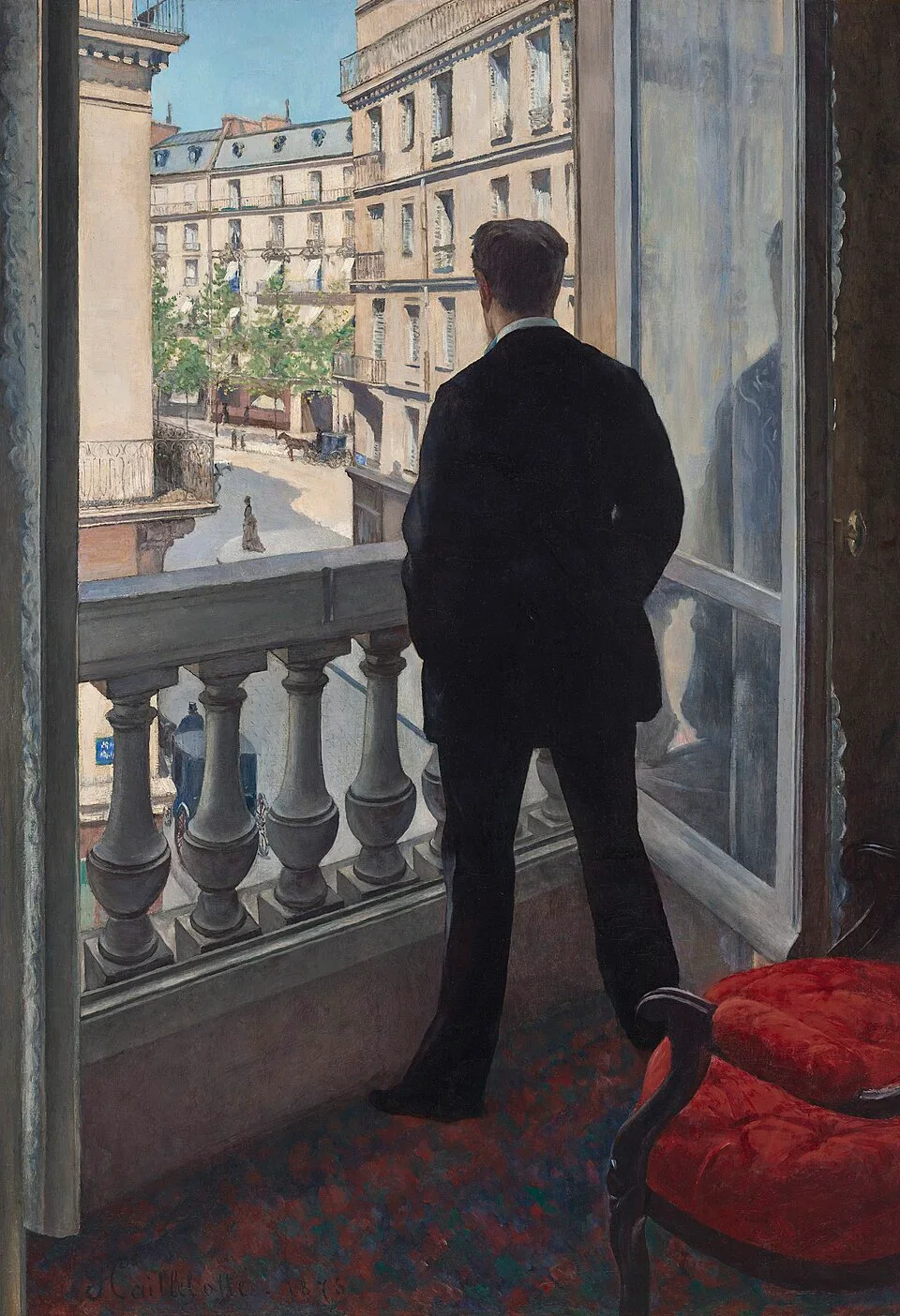
Young Man at His Window
The room behind this man is almost empty. A chair stands at his back, as if he has only just risen from it. Now he waits at the open window with his hands in his pockets, his back turned to us. We never see his face. He is not gazing at countryside or sky. He looks out at a new boulevard in Paris, seen from a floor above the street. Caillebotte put his figure slightly off center, so the dark shape of the man and the bright street beyond seem to compete for attention. When the picture was shown in 1876, some found it too exact, too much like a photograph. The young man is René, the painter's younger brother, standing in the window of their family home. René died suddenly that same year. A woman is crossing the street below. Whether he is watching her, or knows her, nobody can say.
Listen in the appGustave Caillebotte · Public domain
05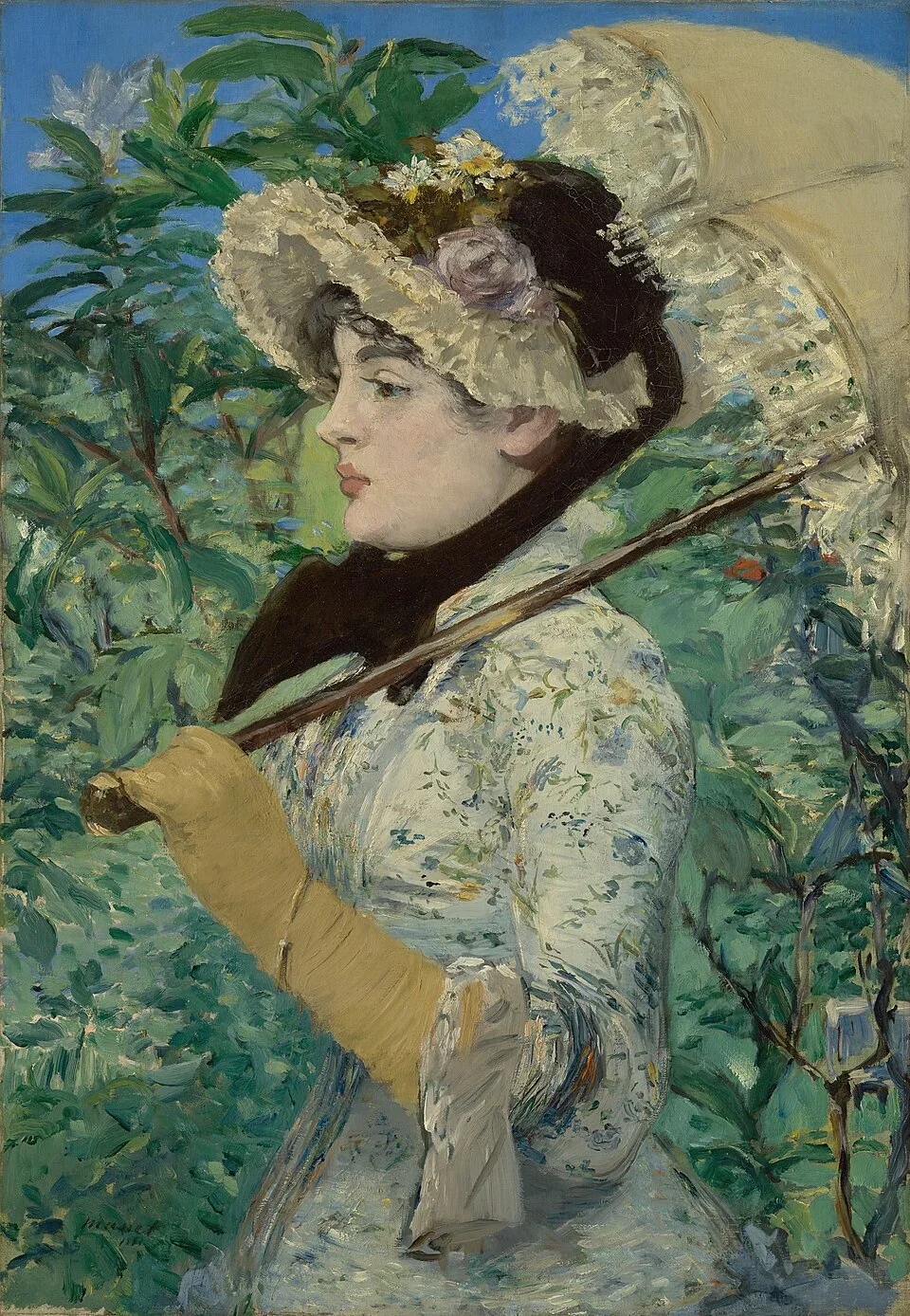
Spring
A young woman stands in profile, a parasol resting on her shoulder the way a soldier carries a rifle. Her dress is white, printed with blue and yellow flowers. Flowers are tied onto her hat too. Behind her, thick green leaves, and a patch of blue sky. Everything here says one word, spring. But she is no goddess and no symbol. She is Jeanne Demarsy, a girl of about sixteen who later became an actress, dressed in the latest Paris fashion of around 1880. Manet's friend Antonin Proust came up with the plan, the four seasons each shown by a stylish Parisian woman. This was the first. Manet lived to finish only one more, Autumn. He died in 1883. The picture hung at the Salon of 1882, his last great public success. And that same year it was reproduced in color, the first work of art ever published that way.
Listen in the appÉdouard Manet · Public domain
06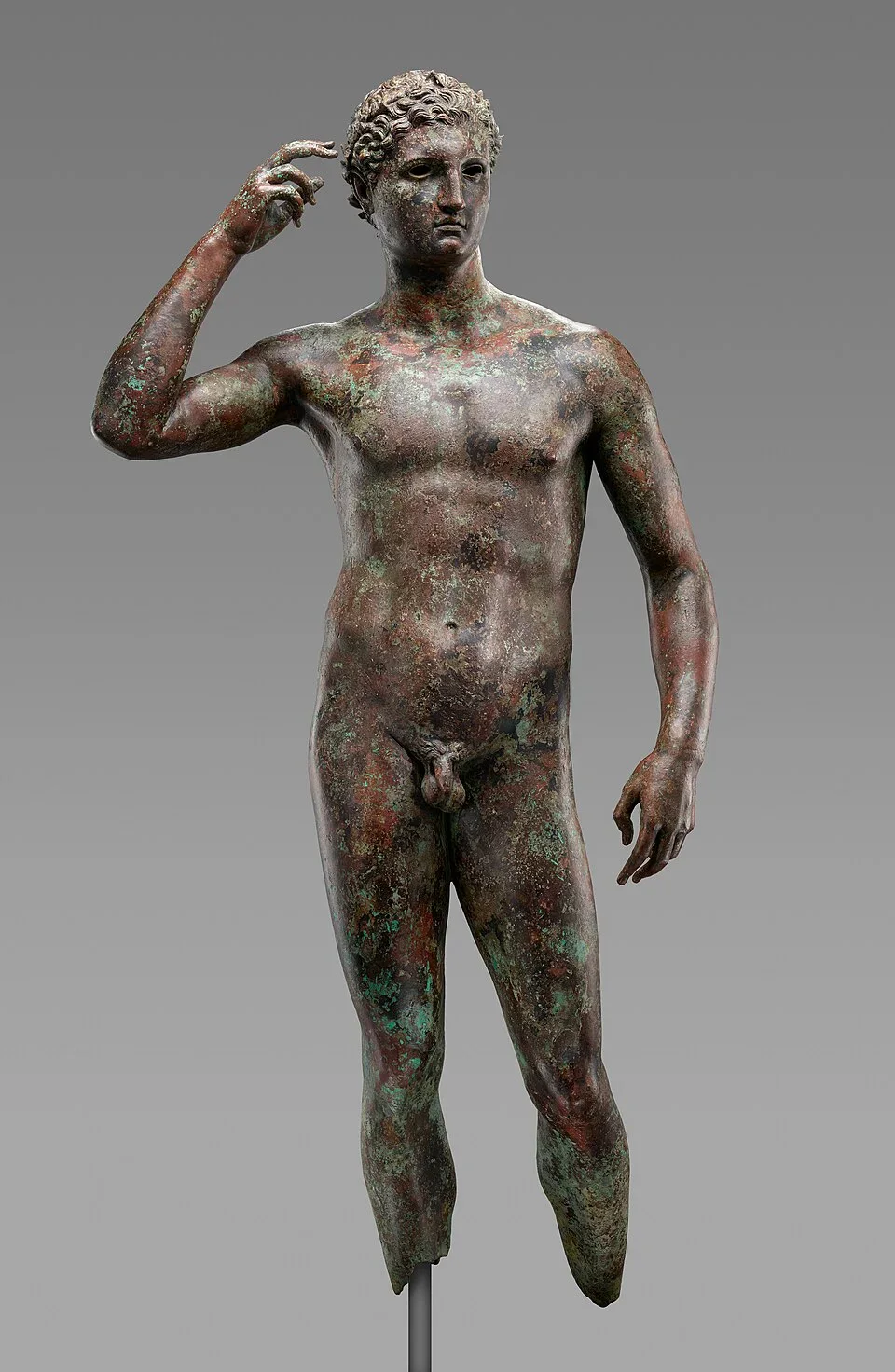
Victorious Youth
His right hand is raised to his head, fingers just touching the wreath in his hair. He is crowning himself. That olive wreath was the prize at Olympia, and this slim young man has just won it. His body is not particularly muscular. He was probably a runner, and his reward is this wreath, which he sets on his own head. Inside the statue, the core held fibers of flax. In the second century, flax grew in Greece only around Olympia. So this may be an Olympic statue. He may also have held a palm branch in his left arm, the other gift for a victor. As for who made him, he may be by Lysippos, but no one knows for sure. He may have gone down at sea with a ship carrying him west. In the summer of 1964 a fishing trawler off Fano caught him in its nets.
Listen in the appJ. Paul Getty Museum · CC0
07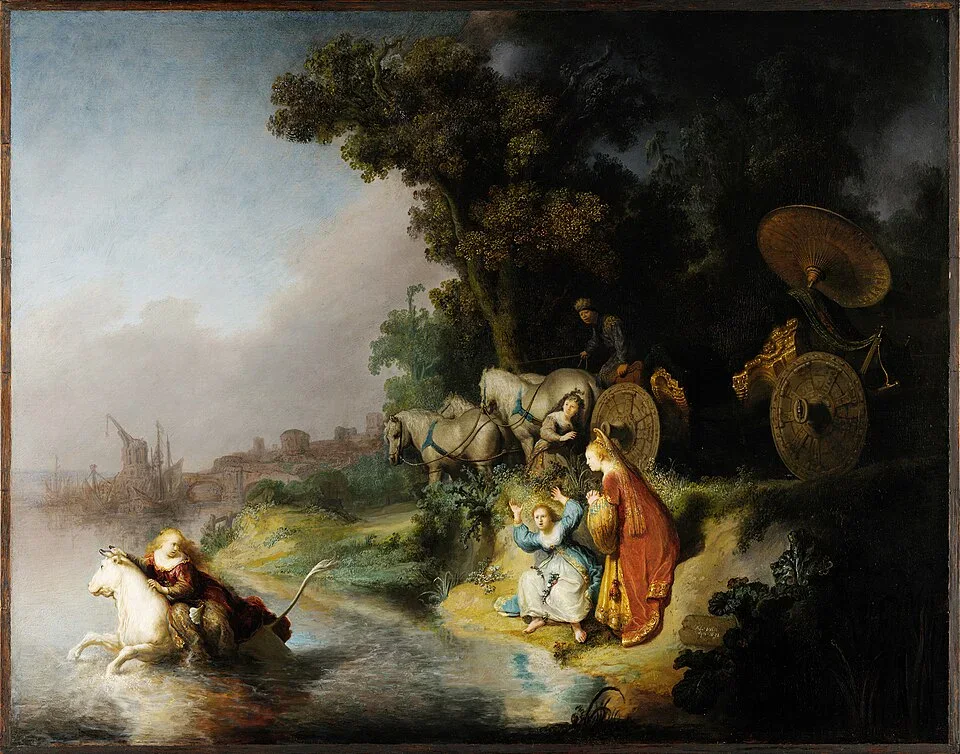
The Abduction of Europa
A man who had spent years trading in Asia paid for this picture. Jacques Specx set up a Dutch trading post in Japan in 1609. He served as governor of Batavia, today's Jakarta, and came home to Holland in 1633. He asked Rembrandt for the story of Europa, and the choice was hardly an accident. You can see why in front of you. Europa rides a bull through the water while her friends stay behind on the shore, their faces full of horror. In one old reading of the myth, that bull is really the name of a ship, carrying a princess from her eastern home to the west. Behind her lies a harbor town, and a crane stands in it, a tool that did not exist in Ovid's day. It looks like a Dutch port. To the right, in the shadows, wait a non-European coach and its driver, marking this shore as eastern and strange. A princess carried from Asia to Europe, who gives the continent her name. That was Specx's own career, retold as a myth.
Listen in the appRembrandt · Public domain
08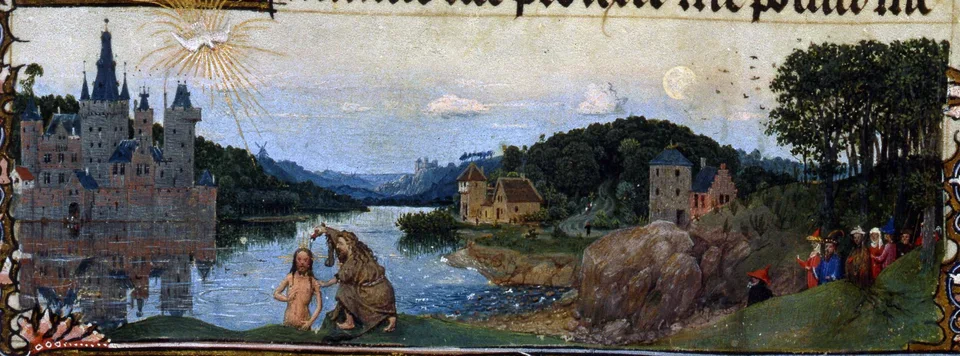
Turin–Milan Hours
Most books this old have lived one quiet life in one library. This page has lived several, and it is lucky to exist at all. The book it came from was begun around 1380 or 1390 for a great lord of the French court, whose name is now lost. Painters kept working on it for almost sixty years, and eleven different hands can be told apart in its pictures. Then the book was split up, and its parts went separate ways. The part that ended up in Turin burned in a fire in 1904. Forty of its miniatures were destroyed, or nearly so. All that is left of them are black-and-white photographs, published in 1902, two years before the flames. This page had already gone, and was in a private collection in Belgium. And notice the foliage running around the edge. It was probably painted at the very beginning, decades before the picture it frames.
Listen in the appJan van Eyck · Public domain
09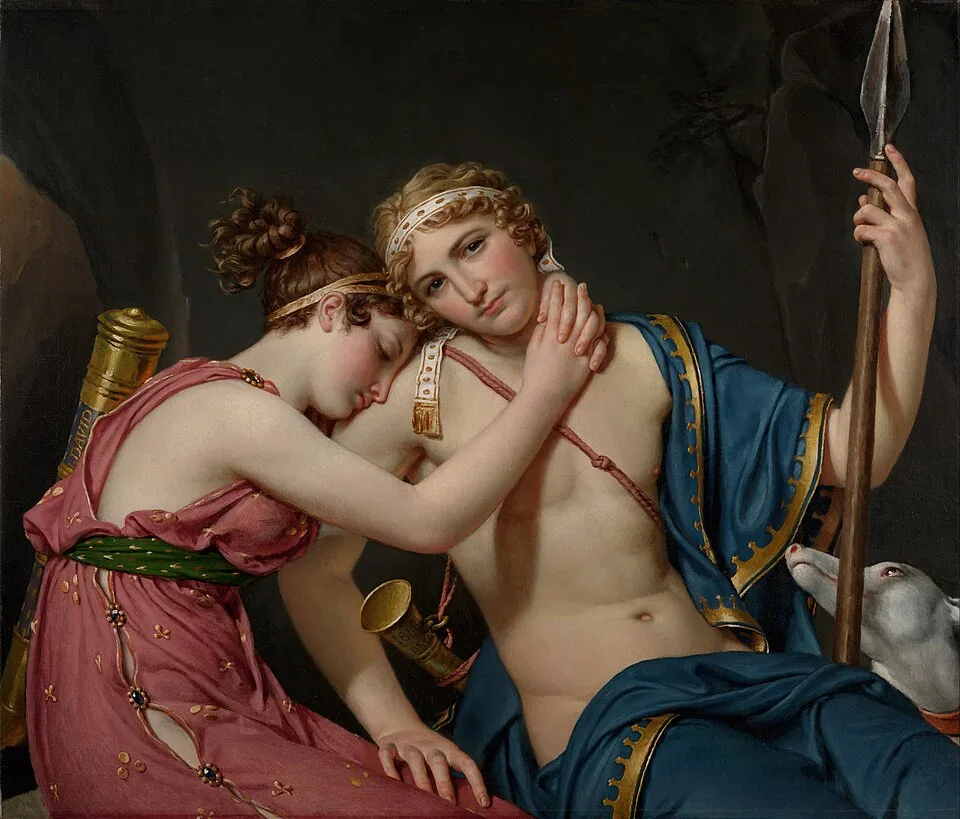
The Farewell of Telemachus and Eucharis
A young man is leaving, and the woman beside him will not let go. She has thrown her arms around his neck and rests her hand on his face. He stares straight out at us, full of regret. Beside them a dog looks up at him too. The gold quiver and the hunting horn tell you these two are hunters, on an island where they fell in love. He is Telemachus, son of Odysseus, and he is giving her up to go and search for his father. Here is the strange part. The scene comes from a 1699 novel by Fénelon, but David did not paint any single event from it. Jacques-Louis David painted the feeling between the two instead, in 1818 in Brussels, where he had gone into exile in 1816. It was his last painting of a couple from mythology, and he used live models for both lovers. What no one knows is whether David chose this subject himself, or whether a patron suggested it to him.
Listen in the appJacques-Louis David · Public domain
10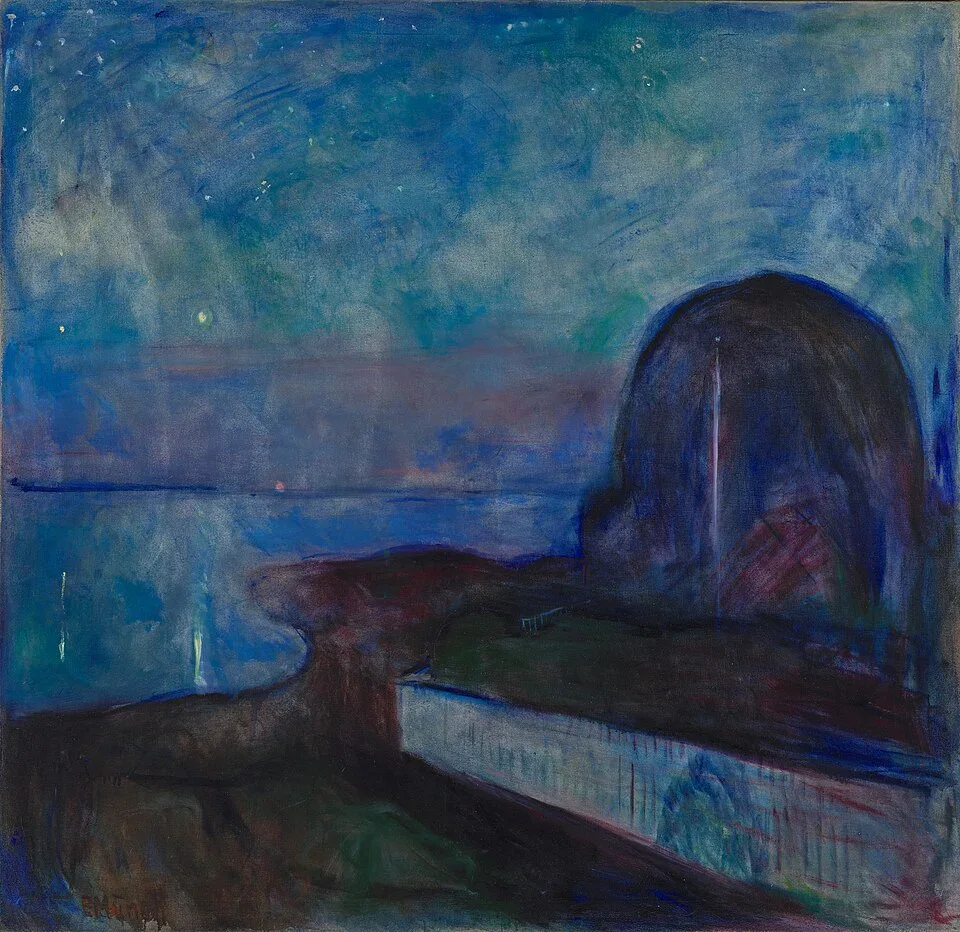
Starry Night
This is not a view from the shore. It is a view from a window, the window of a hotel in the small Norwegian resort of Åsgårdstrand. Edvard Munch spent his summers in this resort from the late 1880s. From this window he shows us the coastline at night. To the left, the sea. To the right, a large dark tree standing in a garden behind a white fence. And this was the hotel where he fell in love for the first time. So the quiet night you are looking at belongs to his first love.
Listen in the appEdvard Munch · Public domain
- 11
Allegory of Fortune
Salvator Rosa · 1658–1659
- 12
The Royal End
Paul Gauguin · 1892
- 13
Getty Kouros
J. Paul Getty Museum · -529
- 14
Modern Rome – Campo Vaccino
J. M. W. Turner · 1839
- 15
Waiting
Edgar Degas · 1880–1882
- 16
Portrait of Anne, Countess of Chesterfield
Thomas Gainsborough · 1777–1778
- 17
The Laundress (La Blanchisseuse)
Jean-Baptiste Greuze · 1761
- 18
Portrait of Alfonso d'Avalos, Marchese del Vasto, in Armor with a Page
Titian · 1533
- 19
The Rue Mosnier Dressed with Flags
Édouard Manet · 1878
- 20
Adoration of the Child
Gentile da Fabriano · c. 1420–1422
- 21
Coronation of the Virgin
Gentile da Fabriano · c. 1420
- 22
Madonna and Child with Two Donors
Lorenzo Lotto · 1533–1535
- 23
Head of Christ
Antonio da Correggio · 1521
- 24
The Musicians' Brawl
Georges de La Tour · 1620–1630
- 25
A Woman Preparing Bread and Butter for a Boy
Pieter de Hooch · 1660–1663
- 26
Portrait of Madame Brunet
Édouard Manet · 1861–1863
- 27
Danaë
Orazio Gentileschi · c. 1621–1623
- 28
Valley of the Shadow of Death
Roger Fenton · 1855
- 29
Rembrandt Laughing
Rembrandt · c. 1628
- 30
Spring
Lawrence Alma-Tadema · 1894
- 31
Portrait of a Halberdier, Francesco Guardi?
Pontormo · 1529
- 32
Venus and Adonis
Titian · 1555–1560
- 33
Jeanne Kéfer
Fernand Khnopff · 1885
- 34
Boy with a Dragon
Pietro Bernini, Gian Lorenzo Bernini · c. 1617
- 35
Lucretia
Artemisia Gentileschi · c. 1627
- 36
The Adoration of the Magi
Andrea Mantegna · c. 1495–1505
- 37
Getty Tondal
Simon Marmion · 1475
- 38
Lansdowne Heracles
Unknown Artist · c. 125
- 39
Portrait of Omai
Joshua Reynolds · c. 1775–1776
- 40
The Eternal Feminine
Paul Cézanne · 1877
- 41
Pictura (An Allegory of Painting)
Frans van Mieris the Elder · 1661
- 42
The Surprise
Jean-Antoine Watteau · c. 1718
- 43
Mischief and Repose
John William Godward · 1895
- 44
Bullfight, Suerte de Varas
Francisco Goya · 1824
- 45
Man with a Hoe
Jean-François Millet · 1860–1862
- 46
Female Figure
Giambologna · 1571–1573
- 47
Moses and the Messengers from Canaan
Giovanni Lanfranco · 1621–1625
- 48
St. Sebastian Thrown into the Cloaca Maxima
Ludovico Carracci · 1612
- 49
Spinola Hours
Alexander Bening, Master of the Prayer Books of around 1500, Master of the Dresden Prayer Book, Master of the Lübeck Bible, Gerard Horenbout · 1510–1520
- 50
The Grand Canal in Venice from Palazzo Flangini to Campo San Marcuola
Giovanni Antonio Canal · c. 1738
- 51
Saint John the Evangelist
Frans Hals · 1625
- 52
Hours of Louis XII
Jean Bourdichon · 1498–1499
- 53
Two Watermills and an Open Sluice
Jacob van Ruisdael · 1653
- 54
Elijah Receiving Bread from the Widow of Zarephath
Giovanni Lanfranco · 1621–1624
- 55
Interior with an Easel, Bredgade 25
Vilhelm Hammershøi · 1912
- 56
A Harvest of Death, Gettysburg, Pennsylvania
Timothy H. O'Sullivan / Alexander Gardner · 1863
- 57
Hedwig Codex
Unknown Artist · 1353
- 58
Stele of Meli-Šipak
V. Scheil · -1179
- 59
Alexander the Great and Campaspe in the Studio of Apelles
Giovanni Battista Tiepolo · c. 1740
- 60
The Ransom
John Everett Millais · 1860–1862
- 61
A Young Girl Defending Herself against Eros
William-Adolphe Bouguereau · c. 1880
- 62
Portrait of James Christie (1730 - 1803)
Thomas Gainsborough · 1778
- 63
The Baptism of Christ
Paolo Veronese · 1580–1588
- 64
Mummy of Herakleides
J. Paul Getty Museum · 120–140
- 65
Portrait of Isabella of Portugal
Unknown Artist · c. 1450
- 66
Northumberland Bestiary
Unknown Artist · 1250–1260
- 67
Georgia O'Keeffe - Torso
Alfred Stieglitz · 1918
- 68
Pasha and Bayadère
Roger Fenton · 1858
- 69
Statue of Venus
J. Paul Getty Museum · 100
- 70
Waiting for the Verdict
Abraham Solomon · 1857
- 71
The Drawing Lesson
Jan Steen · c. 1665
- 72
Double Portrait
Michiel Sweerts · 1661–1662
- 73
Portrait of Julien de la Rochenoire
Édouard Manet · 1882
- 74
Portrait of Pope Gregory XV
Guercino · 1622–1623
- 75
An Old Man in Military Costume
Rembrandt · 1630–1631
- 76
Portrait of the Sisters Zénaïde and Charlotte Bonaparte
Jacques-Louis David · 1821
- 77
Portrait of Thomas Howard, 21st Earl of Arundel
Anthony van Dyck · 1620–1621
- 78
Prayer Book of Cardinal Albrecht of Brandenburg
Simon Bening · c. 1525–1530
- 79
Christ and the Adulteress
Valentin de Boulogne · 1620s
- 80
Portrait of a Jeweler
Lorenzo Lotto · c. 1509
- 81
Saint Andrew
Masaccio · 1426
- 82
The Miracle of the Holy House of Loreto
Giovanni Battista Tiepolo · 1743
- 83
Irmengard Codex
Unknown Artist · 1053
- 84
Dejanira (Autumn)
Gustave Moreau · c. 1872–1873
- 85
Mythological Scene
Dosso Dossi · c. 1524
- 86
Penelope Unraveling Her Web
Joseph Wright of Derby · 1785
- 87
A Centennial of Independence
Henri Rousseau · 1892
- 88
The Banquet of Cleopatra
Gerard Hoet · early 18th century
- 89
Portrait of the Marquesa de Santiago
Francisco Goya · 1804
- 90
Portrait of a Man
Francesco Salviati · 1557
- 91
Bacchante with an Ape
Hendrick ter Brugghen · 1627
- 92
Madonna and Child in a Window
Martin Schongauer · c. 1485–1490
- 93
St. Matthew Writing His Gospel
Carlo Dolci · c. 1670
- 94
Portrait of Anthony Valabrègue
Paul Cézanne · 1869–1871
- 95
Portrait of Gabriel Bernard de Rieux
Maurice Quentin de La Tour · 1739–1741
- 96
The "Piebald" Horse
Paulus Potter · c. 1652
- 97
The Entry of the Animals into Noah's Ark
Jan Brueghel the Elder · 1613
- 98
Joseph and Potiphar's Wife
Guido Reni · c. 1630
- 99
The Calydonian Boar Hunt
Peter Paul Rubens · c. 1611–1612
- 100
Portrait of the Marquise de Miramon, née, Thérèse Feuillant
James Tissot · 1866
- 101
Diana and Her Nymphs Bathing
Jean-François de Troy · 1722
- 102
The Marlborough Antinous
The J. Paul Getty Museum
- 103
I Was Thinking of You
Marguerite Gérard, Jean-Honoré Fragonard · c. 1785–1787
- 104
Llangattock Hours
Master of the Llangattock Hours · 1450
- 105
The Dream of Pope Sergius
Unknown Artist · 1437–1440
- 106
An Allegory of Fortune
Dosso Dossi · 1530–1538
- 107
The Death of Cleopatra
Gerard Hoet · early 17th century
- 108
Perseus Confronting Phineus with the Head of Medusa
Sebastiano Ricci · 1705–1710
- 109
Study of John the Evangelist and an Angel
El Greco · 1596–1599
- 110
Virgin and Child with Saint John the Baptist and Mary Magdalene
Parmigianino · c. 1535–1540
- 111
Head of a Woman
Michiel Sweerts · c. 1654
- 112
Daniel and Cyrus Before the Idol Bel
Rembrandt · 1633
- 113
A Faun and His Family with a Slain Lion
Lucas Cranach the Elder · c. 1526
- 114
Portrait of Albert Cahen d’Anvers
Pierre-Auguste Renoir · 1881
- 115
The Fountain of Love
Jean-Honoré Fragonard · c. 1785
- 116
Euclid
Jusepe de Ribera · 1630–1635
- 117
Head of a Young Woman
Adélaïde Labille-Guiard · 1779
- 118
Portrait of Louise-Antoinette Feuardent
Jean-François Millet · 1841
- 119
Ahimelech Giving the Sword of Goliath to David
Arent de Gelder · 1680s
- 120
Portrait of Suzanne Le Peletier de Saint-Fargeau
Jacques-Louis David · 1804
- 121
Still Life with Peaches, a Silver Goblet, Grapes, and Walnuts
Jean-Baptiste-Siméon Chardin · 1759–1760
- 122
David with the Head of Goliath
Guido Cagnacci · c. 1645–1650
- 123
Musical Group on a Balcony
Gerard van Honthorst · 1622
- 124
The Madonna of the Cherries
Quinten Metsys · c. 1529
- 125
Peacock
Unknown Artist · 100
- 126
Virgin and Child with Saint Elizabeth and Saint John the Baptist
Bronzino · c. 1540–1545
- 127
Spring in the Alps
Giovanni Segantini · 1897
- 128
The Wedding Feast at Cana
Lavinia Fontana · c. 1575–1580
- 129
Two Boys with a Bladder
Joseph Wright of Derby · 1767
- 130
The Accademia Clementina Bologna, with a Nude Being Positioned by the Drawing Master, the Farnese Hercules beyond
Giampietro Zanotti · c. 1739
- 131
The Death of Samson
Unknown Artist · c. 1650
- 132
Stammheim Missal
Unknown Artist · 1160–1170
- 133
Calyx krater with Rape of Europa
Asteas · 349 BC
- 134
The Shade of Samuel Invoked by Saul
Bernardo Cavallino · 1650–1656
- 135
Man in Korean Costume
Peter Paul Rubens · c. 1617
- 136
Hunting on the Lagoon
Vittore Carpaccio · c. 1490–1495
- 137
The Italian Comedians
Jean-Antoine Watteau · c. 1720
- 138
St. Bartholomew
Rembrandt · 1661
- 139
Still Life with Apples
Paul Cézanne · 1894
- 140
Shepherd with a Flute
Giovanni Girolamo Savoldo · c. 1540
- 141
The Alchemist
Cornelis Pietersz Bega · 1663
- 142
Cloudy Sky - Mediterranean Sea
Unknown Artist · 1857
- 143
Before and After
William Hogarth · 1730–1731
J. Paul Getty Museum
Frequently asked questions
How much does the guide cost?
Free app download. Free until 1 January. Listed guide price: $2.99. Audio guide only. Venue admission is separate.
Can I listen without internet?
Yes. Download the guide’s audio, images, and maps in the app before your visit. Your downloaded content is then available offline.
Can I listen in my language?
In English for now. More languages soon.
Do I need to follow a schedule?
No. This is a self-guided experience. Choose your stops, pause whenever you like, and return to a story at your own pace.
Which artworks are in the J. Paul Getty Museum audio guide?
143 artworks, including Irises (Vincent van Gogh), Christ's Entry Into Brussels in 1889 (James Ensor), La Promenade (Pierre-Auguste Renoir), Young Man at His Window (Gustave Caillebotte), Spring (Édouard Manet), Victorious Youth (J. Paul Getty Museum), The Abduction of Europa (Rembrandt), and Turin–Milan Hours (Jan van Eyck). The full list is on this page.
Is this the museum’s official audio guide?
No. Stanza is an independent audio guide app and is not affiliated with J. Paul Getty Museum. Museum admission is separate.
At your own pace
Explore J. Paul Getty Museum.
Download Stanza, then search for “J. Paul Getty Museum”.
Free app download · Guide price shown in the app
Keep exploring
Nearby audio guides
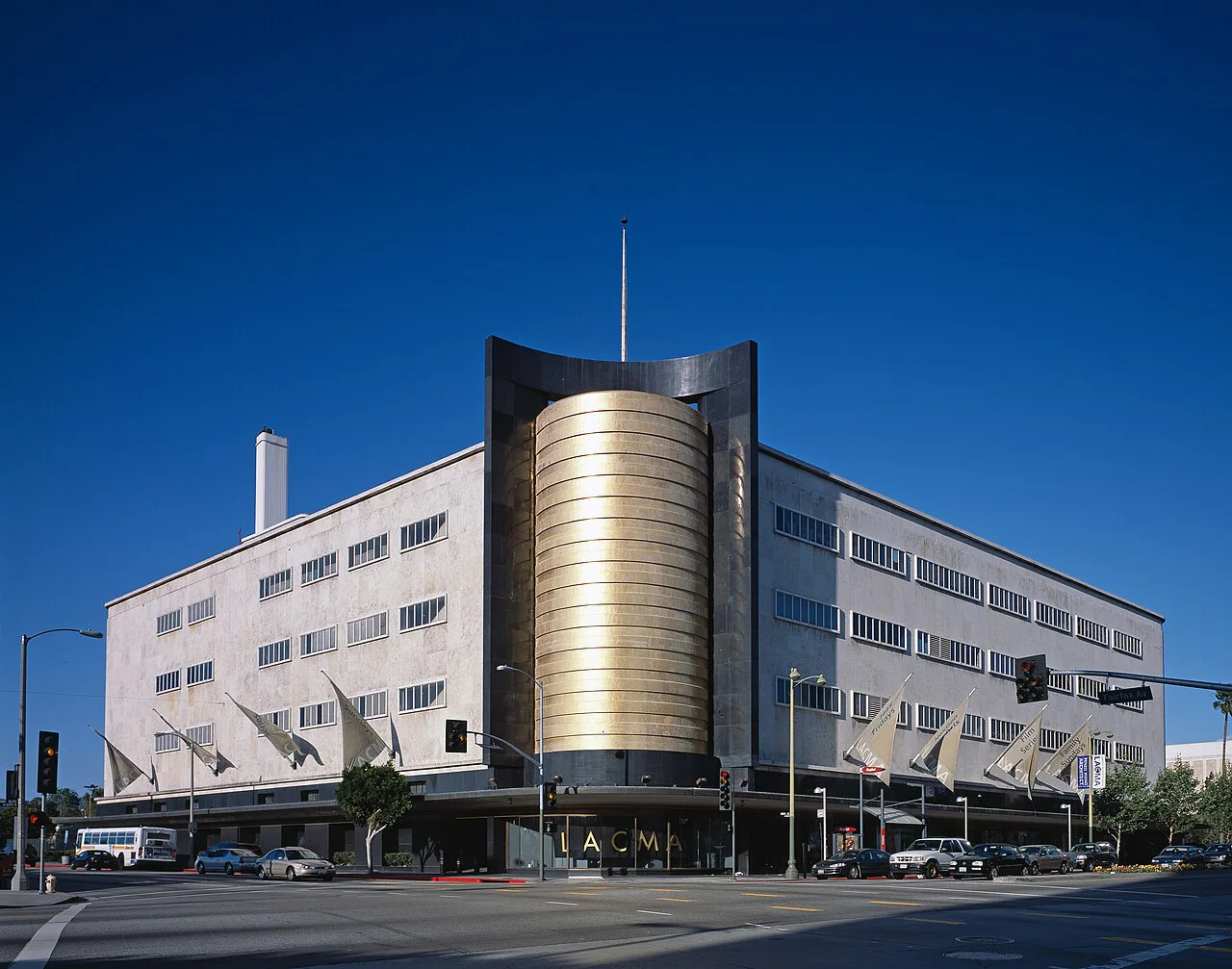
Los Angeles · 11 km
Los Angeles County Museum of Art
Content & sources
Carol M. Highsmith · Public domain
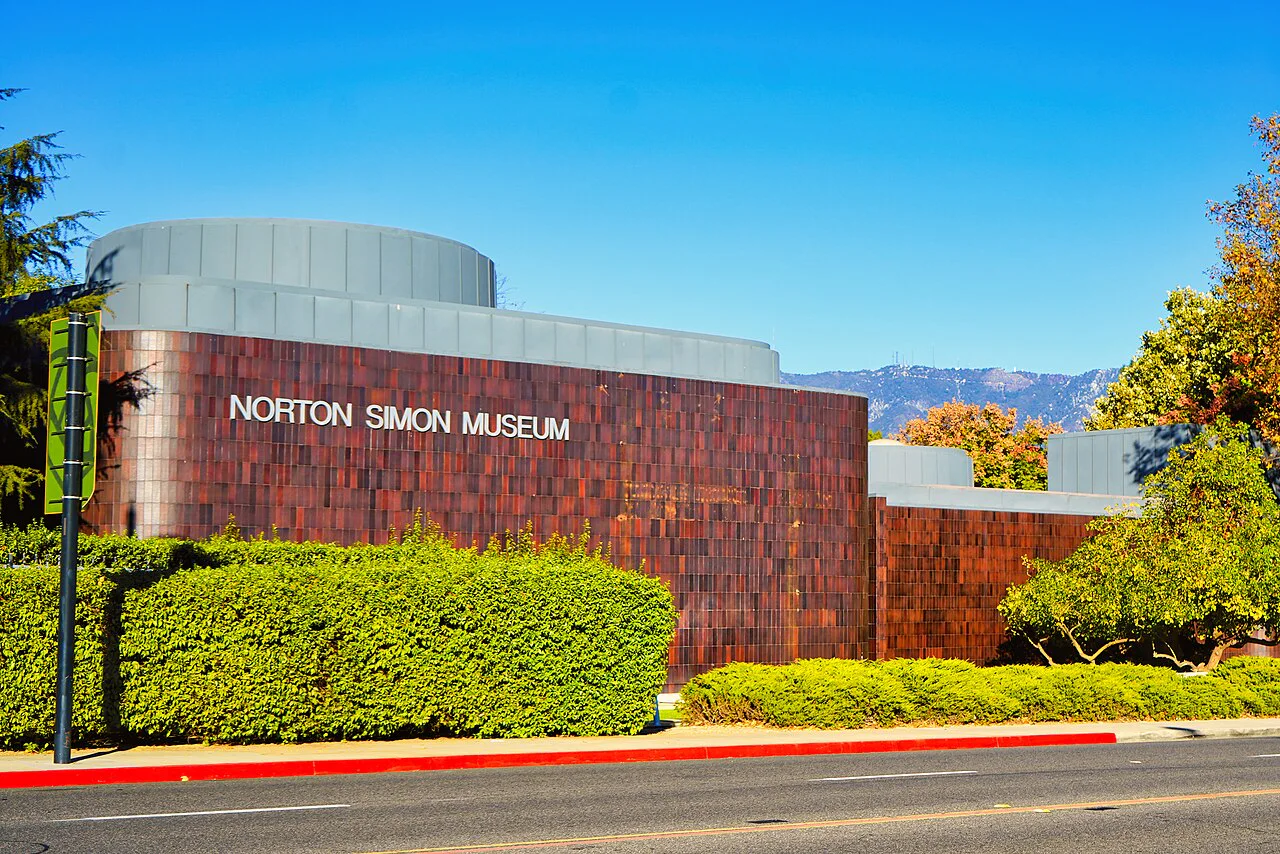
Pasadena · 30 km
Norton Simon Museum
Content & sources
Tony Mariotti from Los Angeles, United States · CC BY 2.0
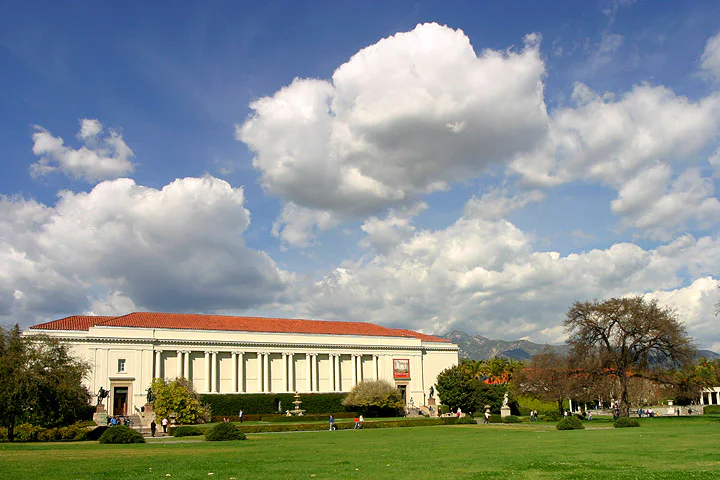
San Marino · 34 km
Huntington Library
Content & sources
By Aaron Logan · CC BY 1.0
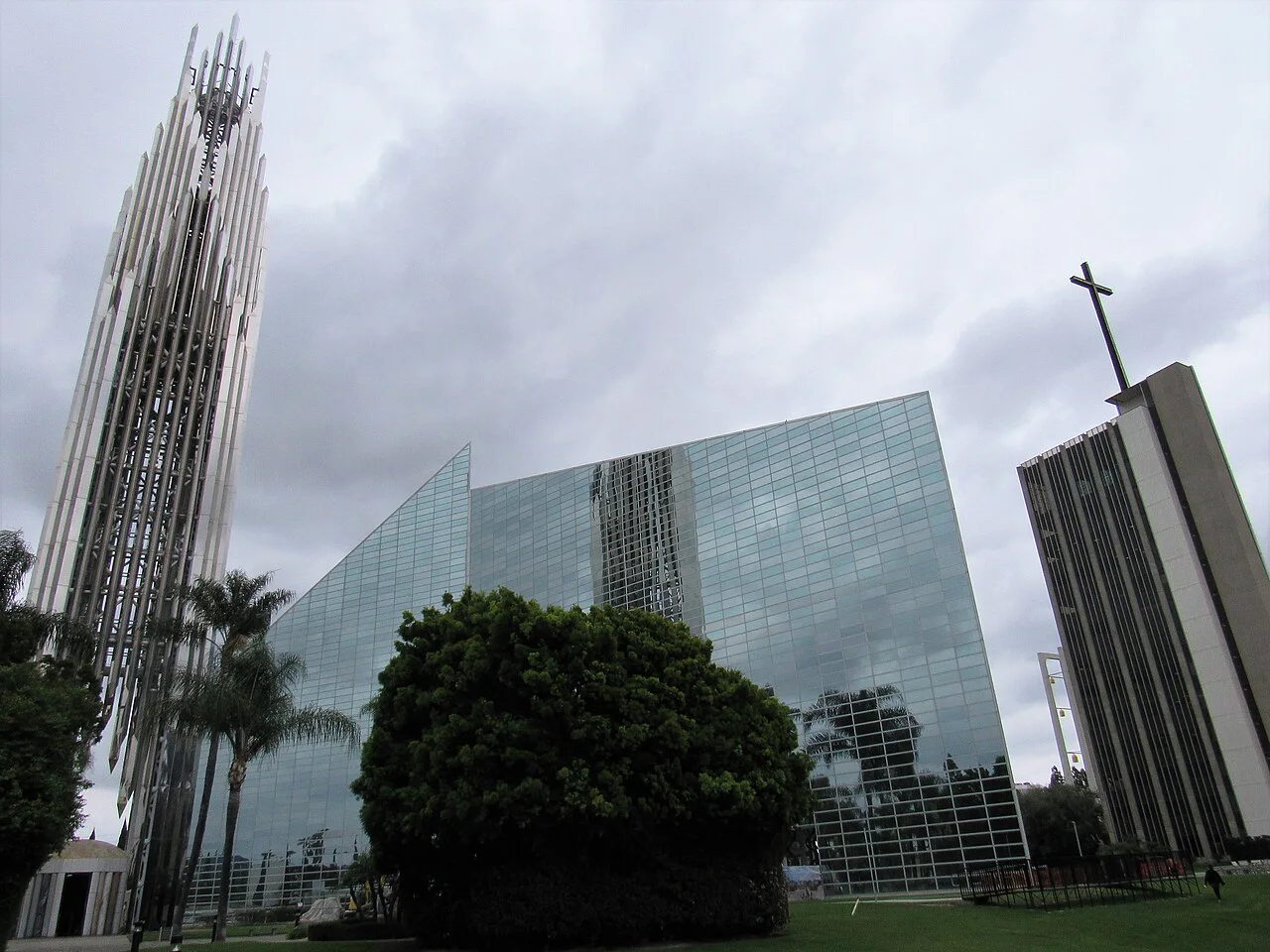
Garden Grove · 62 km
Christ Cathedral
Content & sources
Photo: Farragutful · CC BY-SA 4.0
Art museums
More art museum audio guides
Los Angeles · 81 artworks
Los Angeles County Museum of Art
Content & sources
Carol M. Highsmith · Public domain
Pasadena · 29 artworks
Norton Simon Museum
Content & sources
Tony Mariotti from Los Angeles, United States · CC BY 2.0
San Marino · 12 artworks
Huntington Library
Content & sources
By Aaron Logan · CC BY 1.0
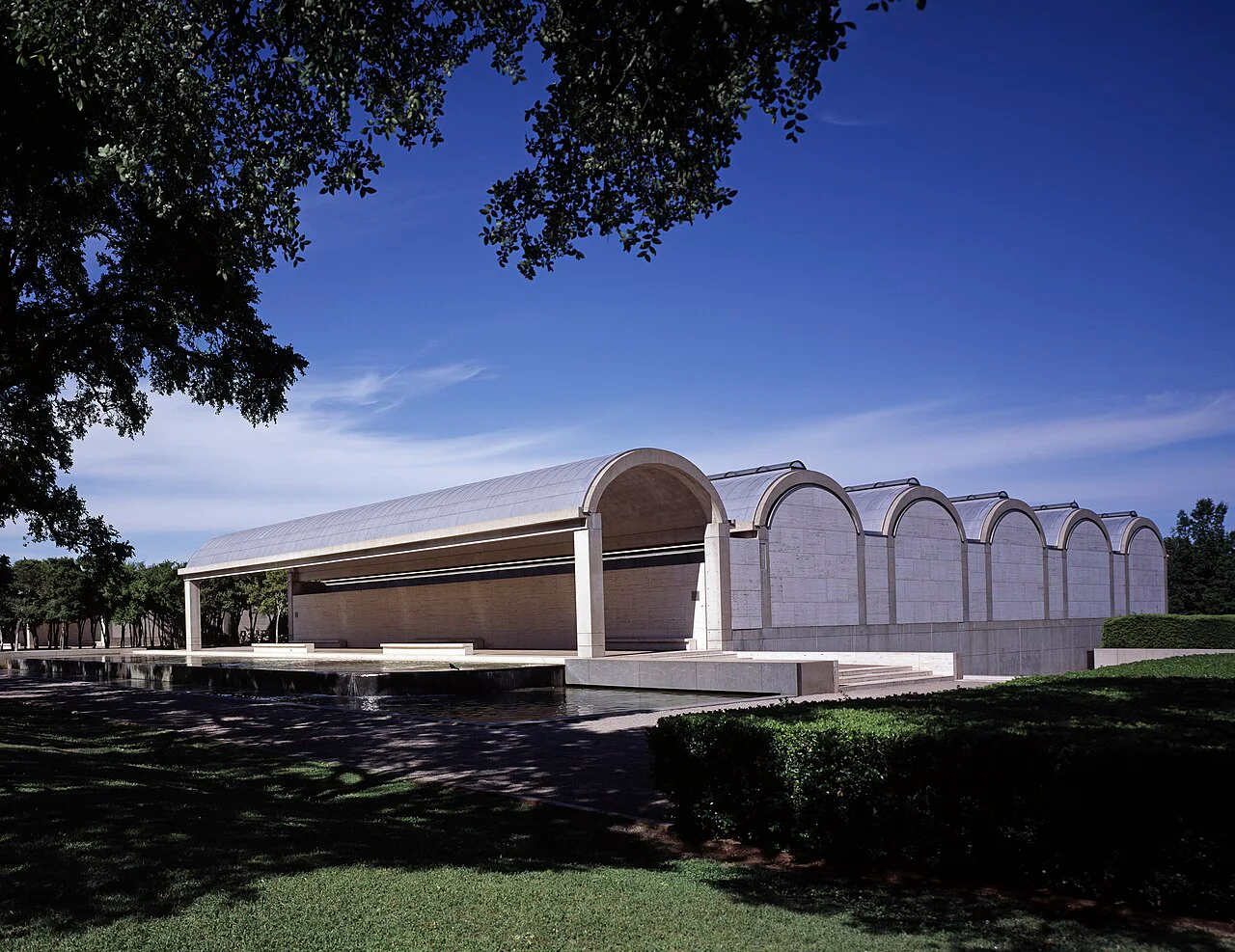
Fort Worth · 39 artworks
Kimbell Art Museum
Content & sources
Carol M. Highsmith · Public domain
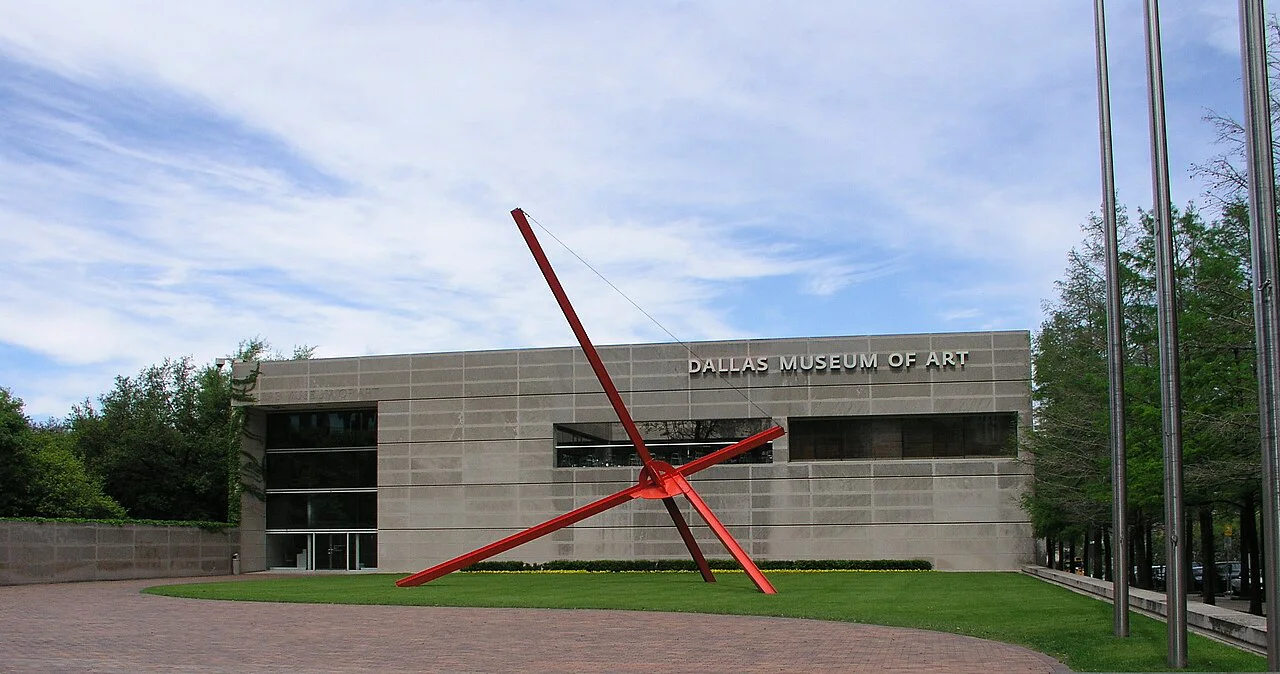
Dallas · 31 artworks
Dallas Museum of Art
Content & sources
KeithJonsn at English Wikipedia · CC BY-SA 3.0
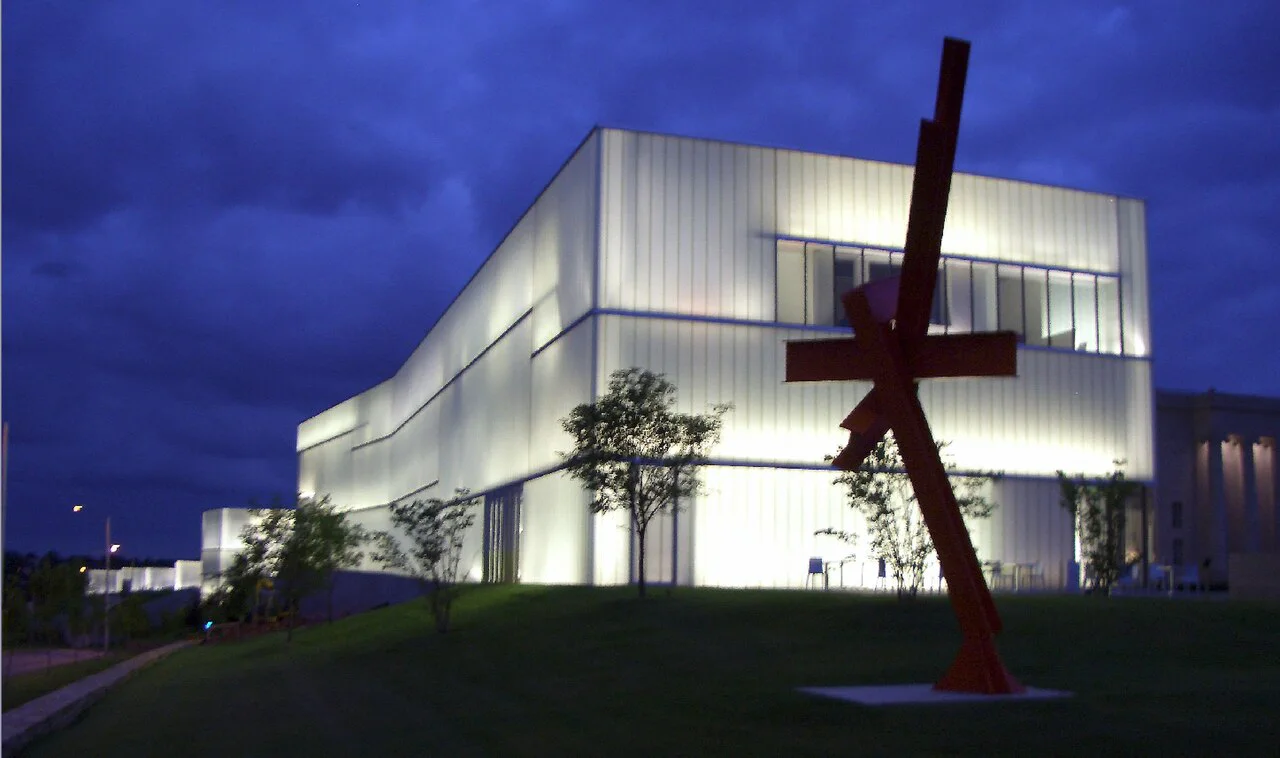
Kansas City · 34 artworks
Nelson-Atkins Museum of Art
Content & sources
User:Charvex · Public domain