 Stanza / Audio guide
Content & sources
Stanza · Audio guide
Virginia Museum of Fine Arts Audio Guide
A place to remember. A story to take with you.
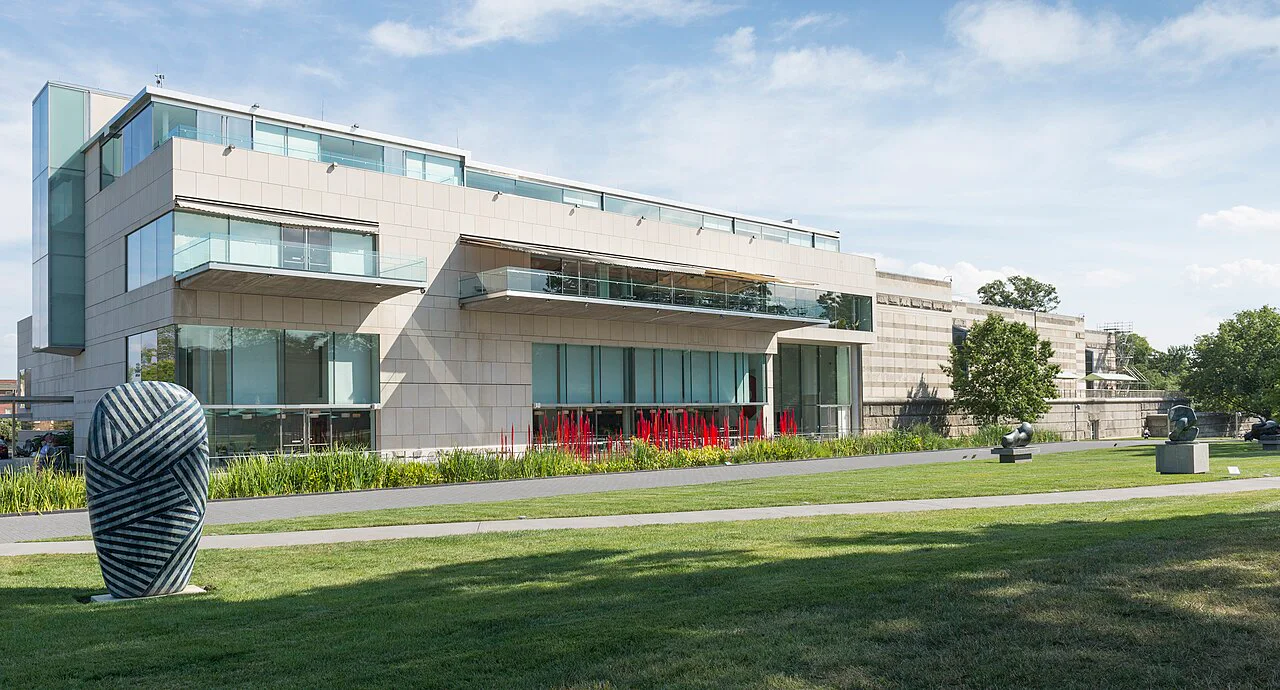
The Virginia Museum of Fine Arts is an art museum in Richmond, Virginia, United States, which opened in 1936. The museum is owned and operated by the Commonwealth of Virginia.
Download Stanza, then search for “Virginia Museum of Fine Arts”.
About the tour
One guide. Your kind of visit.
The Virginia Museum of Fine Arts is an art museum in Richmond, Virginia, United States, which opened in 1936. The museum is owned and operated by the Commonwealth of Virginia.
The Virginia Museum of Fine Arts guide tells the stories of 24 artworks, including Peter the Great (Michael Perkhin), Pallas and Arachne (Peter Paul Rubens), Shahnameh of Shah Tahmasp (Unknown Artist), Pelican (Michael Perkhin), Rock Crystal (Michael Perkhin), Red Cross with Imperial Portraits (Henrik Wigström), Venus and Cupid (Sleeping Venus) (Artemisia Gentileschi), and Tsarevich (Henrik Wigström). Every artwork is free to hear in the Stanza app until 1 January.
Ready when you are.
- 01Get the free Stanza app.
iOS & Android
- 02Find your guide.
“Virginia Museum of Fine Arts”
- 03Download before you go.
Works offline
Audio guide / 24 artworks
Inside the guide
Get to know a few of the stories before you go. Open a stop to read more.
01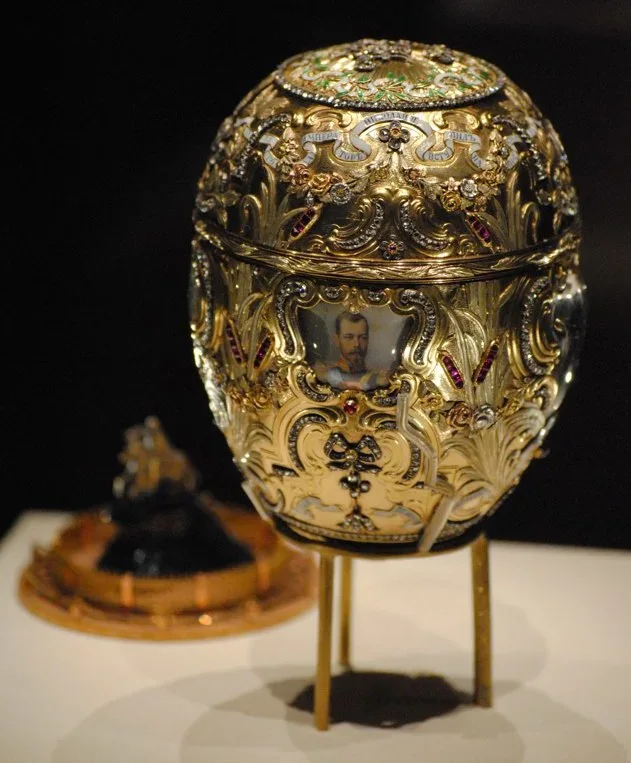
Peter the Great
On the bank of the Neva, a log cabin has just gone up. Peter the Great has founded a new capital, and he means it to face west, to bring European ways into Russia. That cabin is painted on the back of the egg. On the front is the Winter Palace, the tsar's official residence. Above the paintings sit the dates 1703 and 1903. Michael Perkhin made this in Fabergé's Saint Petersburg workshop in 1903, for the two-hundredth anniversary of the city's founding. Nicholas the Second gave it to his wife, Alexandra. When the lid is lifted, a mechanism inside raises a miniature of Peter's monument on the Neva, the Bronze Horseman. A legend from the nineteenth century says that no enemy will take Saint Petersburg while the horseman stands in the middle of the city. No one knows whether Peter really built that first cabin himself.
Listen in the appChuck Redden from Petersburg, VA, United States of America · CC BY 2.0
02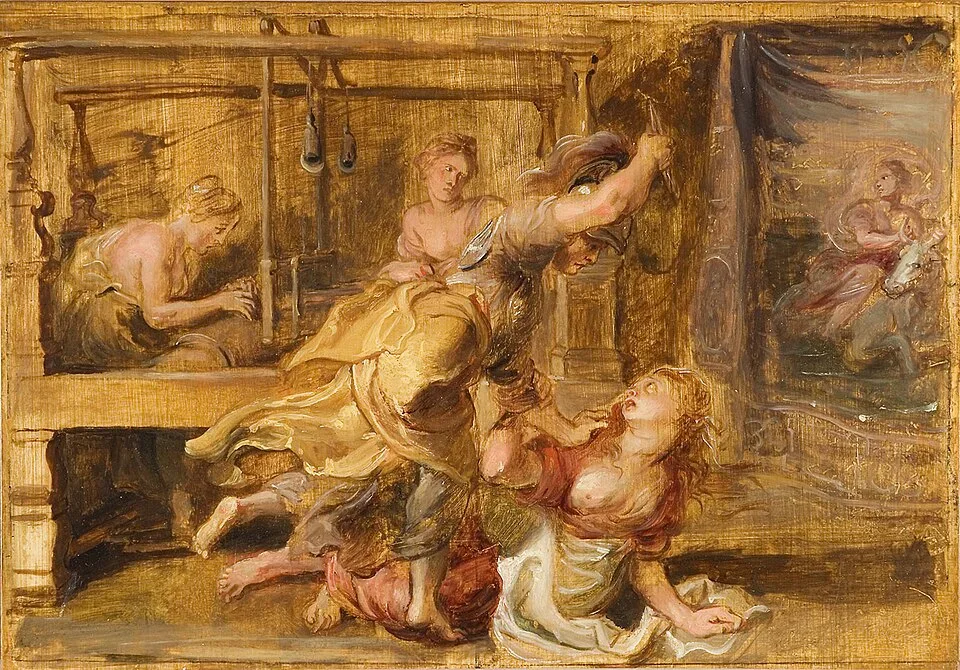
Pallas and Arachne
A girl is being punished by a goddess. Between them was a weaving contest. Arachne is the girl, and she won. Athena challenged her and lost. The punishment came anyway. Arachne would not credit the gods for Athena's skill, and had woven something more beautiful than Athena's own. Rubens made this as a study for one painting in a series made for the Torre de la Parada, now lost. The scene outlived it. Mazo, who was Velázquez's son-in-law, made a copy of it, and Velázquez painted that copy into the background of Las Meninas. There the contest between a goddess and a girl sits inside one of the most studied paintings in western art. A tapestry hangs in the background, only partly in view. It shows Titian's Rape of Europa, the very subject Arachne wove for the contest.
Listen in the appPeter Paul Rubens · FAL
03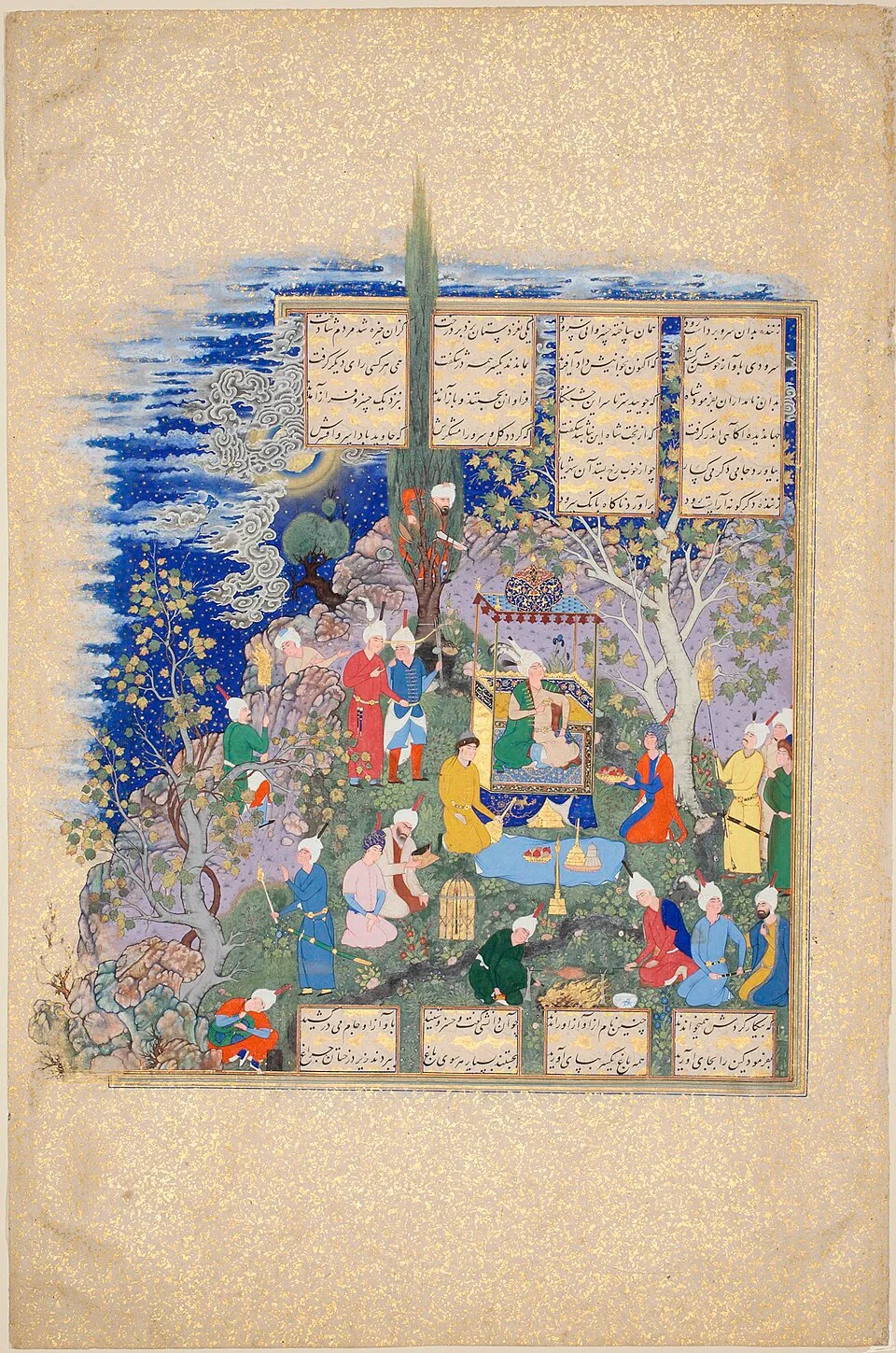
Shahnameh of Shah Tahmasp
No one knows who painted this page. It came from the imperial workshop in Tabriz, where many artists worked on one enormous book. Of its hundreds of paintings, only three carry a signature, and only one a date. The letters are set in nastaliq, a Persian script, and the margins are dusted with gold. Shah Ismail had just taken Tabriz when the book was begun. He wanted it to announce him as a ruler to be obeyed, with kings who were strong and beyond question. Ismail died in 1524. His son Tahmasp was eleven when he took the throne. His advisers likely pushed it close to completion by the mid 1530s. It was finished and sent to the Ottoman Sultan Selim the Second in 1568, with thirty four camels and other gifts. It stayed in Istanbul for centuries. Then in the 1970s the book was broken up. Its paintings were sold one by one to avoid taxes. Seventy eight were given to the Metropolitan Museum of Art, and others went into collections around the world. In 1994 the remains were traded to Tehran for a Willem de Kooning painting that Shahbanu Farah had bought and the Islamic Republic considered distasteful.
Listen in the appKhalili Collections · CC BY-SA 3.0 igo
04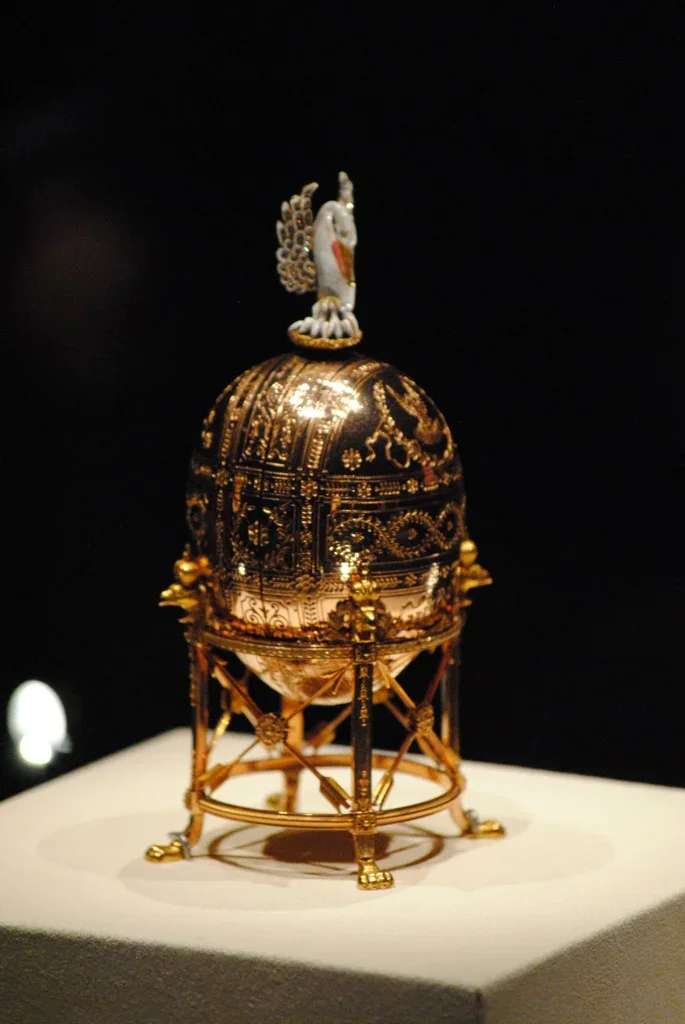
Pelican
The pelican on top of this egg has been turned. In old photographs from Russia, the bird faces another way. What faces you now is its side, not its front. The change was probably made in the United States in the 1930s, after the egg was sold to Armand Hammer. Photographs from 1937 and 1939 already show the new position. The bird is feeding its chicks in the nest, a sign of a mother's care. Nicholas the Second gave this egg to his mother, the Dowager Empress Maria Feodorovna, at Easter in 1898. Perkhin made it in Fabergé's workshop. On the gold are the dates 1797 and 1897. They mark a hundred years since an empress of the same name founded an institution to educate and care for the poor. Its emblem was a pelican feeding its own blood to its young. The Dowager Empress who received the egg was that institution's patron. The egg opens into eight paintings on ivory of the institutions she supported. The ninth panel becomes the stand that holds the others upright. It is the piece that once showed the pelican's face.
Listen in the appChuck Redden from Petersburg, VA, United States of America · CC BY 2.0
05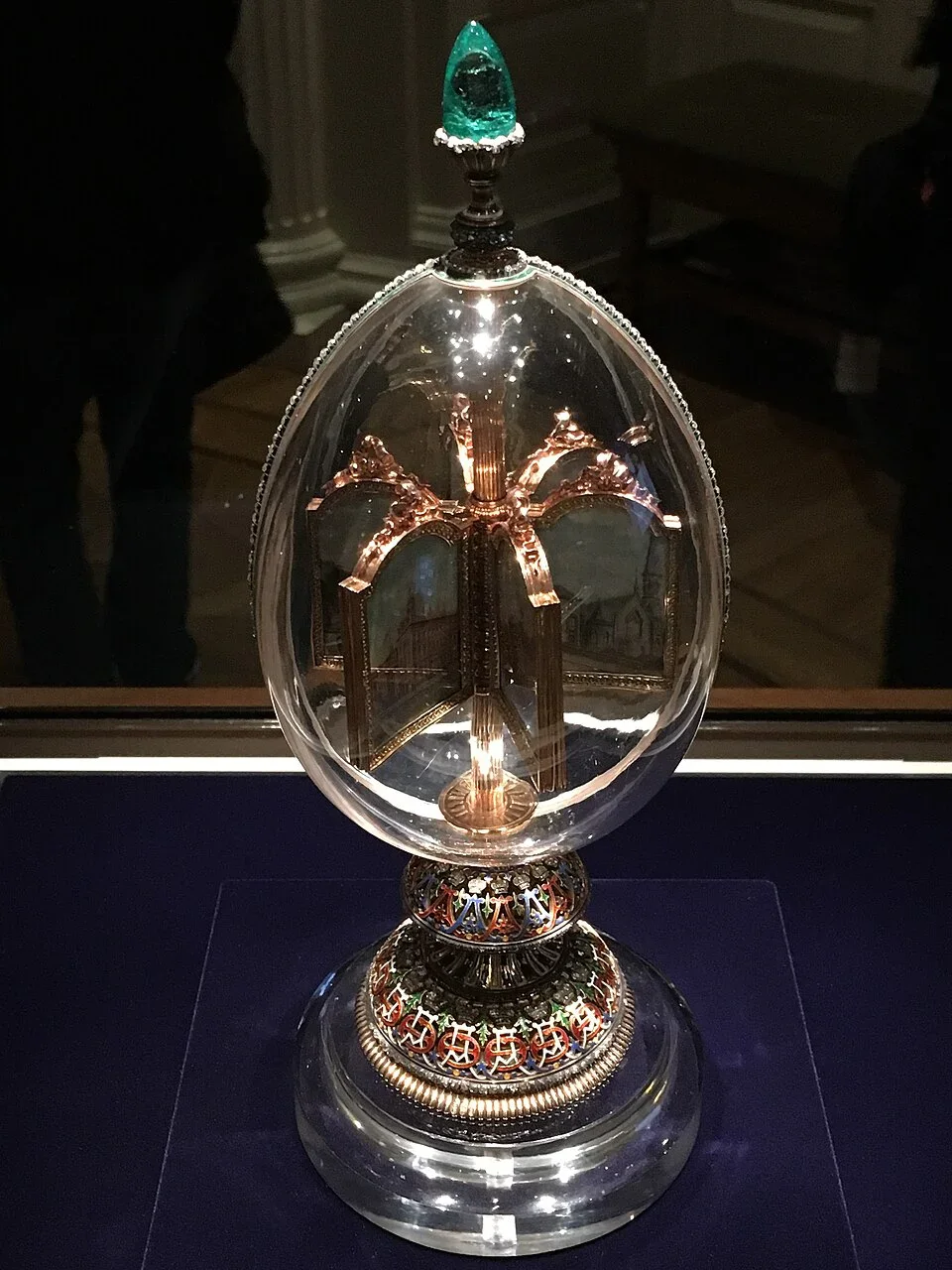
Rock Crystal
The emerald set into the top of this egg is a button. Press it, and the twelve paintings inside begin to turn. A hook folds each gold frame backward, the way you turn pages in a book, so two can be seen fully at once. The frames are attached to a gold shaft that runs straight through the egg. Mikhail Perkhin oversaw the making in Fabergé's workshop. Nicholas the Second gave the egg to his wife Alexandra at Easter in 1896, the year they suddenly came to the throne. They had married in 1894, and the paintings show places that mattered to her. Each one held a memory for them from their courtship. Among them is the palace where she was born, and the castle in Scotland where she spent childhood holidays. Another shows the house on the Isle of Wight where Nicholas came to see her while they were engaged. The Winter Palace in Saint Petersburg is there too, where they married. Around the base run her monograms. One is her monogram as Princess Alix of Hesse Darmstadt, the other as Empress of Russia. Each has a diamond crown above it, from its own royal house. Ten of the twelve paintings are signed by Johannes Zehngraf.
Listen in the appHemant Bedekar · CC BY 2.0
06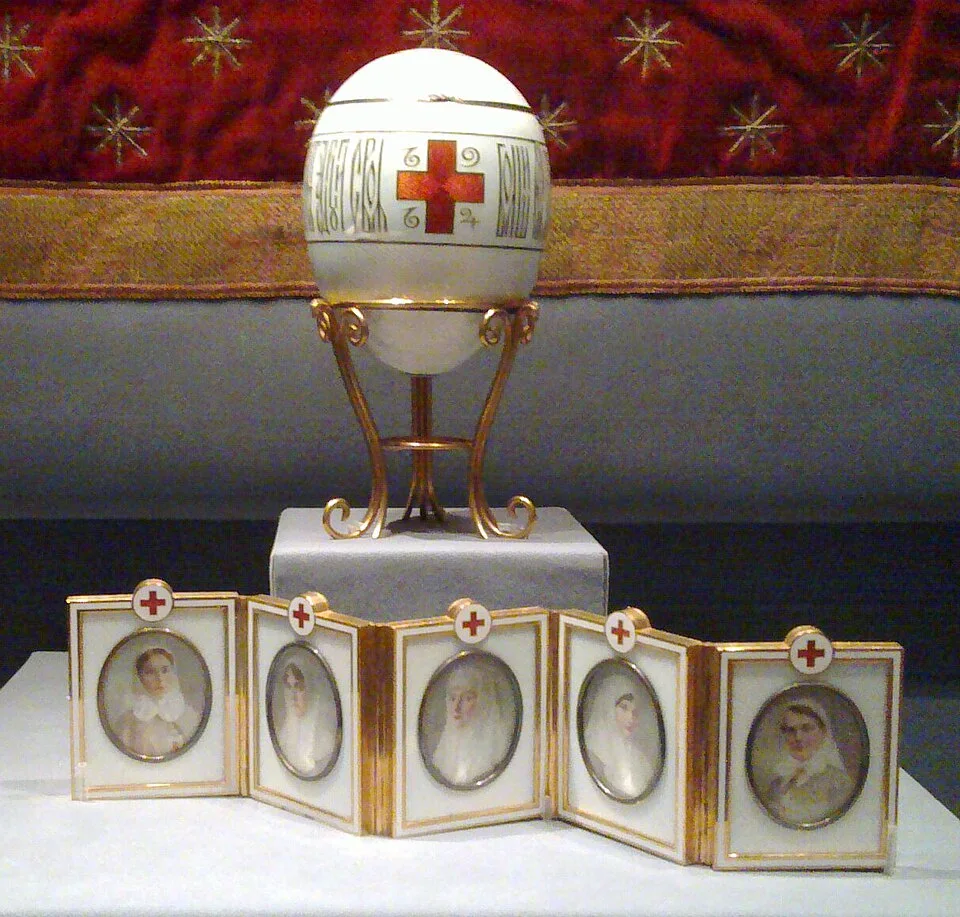
Red Cross with Imperial Portraits
Silver under white enamel, its shell is divided into bands of different patterns trimmed with gold. Two red crosses sit on opposite sides, one marked 1914, the other 1915. Between them runs a line about there being no greater love than to lay down your life for your friends. On top sits the monogram of the woman it was made for. Inside is a folding screen of five oval miniatures, Romanov women in Red Cross uniform. The frames, in mother of pearl and gold, fold flat into a shell lined with velvet. Three of them are the Tsar's wife Alexandra and his daughters Olga and Tatiana. When war came, they enrolled as trainee nurses and the palaces became hospitals. His sister Olga Alexandrovna and a cousin, Maria Pavlovna, are there as well. Tsar Nicholas the Second gave it to his mother, Maria Feodorovna, at Easter in 1915. The Fabergé workmaster Henrik Wigström made it. She had served the Red Cross in the war of 1877 and became its president in 1894. The egg was meant as a tribute to her. When the revolution ended the dynasty, she was one of the few in her immediate family to escape the Red Army. In April 1919 she fled to her native Denmark, leaving the egg behind.
Listen in the appdiaper · CC BY 2.0
07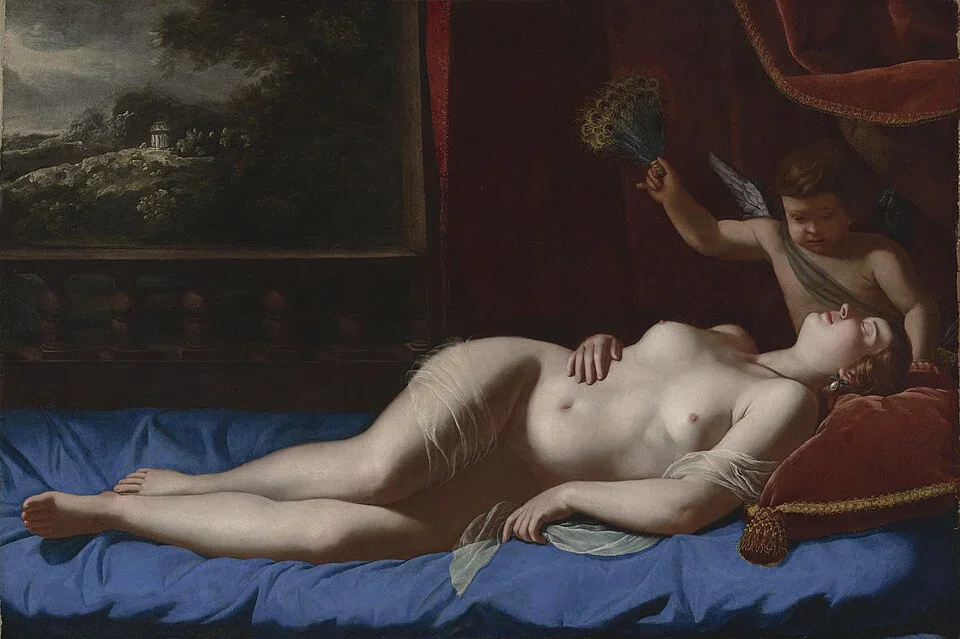
Venus and Cupid (Sleeping Venus)
Venus is settling onto the blue bed covering, her hand coming to rest on her side, her legs laid gently together. In a moment she will be asleep. Her son Cupid fans her with richly colored peacock feathers and watches her with adoration. All she wears is a thin wisp of transparent linen around her thigh. For centuries, painters made pictures of a woman asleep and bare, there for anyone to look at. A woman painter almost never took that subject on. Artemisia Gentileschi did. Full cheeks, heavy lids, a prominent nose, a small chin that juts out. Those are her own features, on the face of the goddess. It was a change from her earlier work, and the blue may tell you why. She painted the covering in two layers of lapis lazuli, a pigment so costly that she was probably working for someone rich and important. And through the window, moonlight falls on a landscape with a temple dedicated to her. The woman who cannot look back at you may not have been left exposed after all. She may rest inside a sacred place of her own.
Listen in the appArtemisia Gentileschi · Public domain
08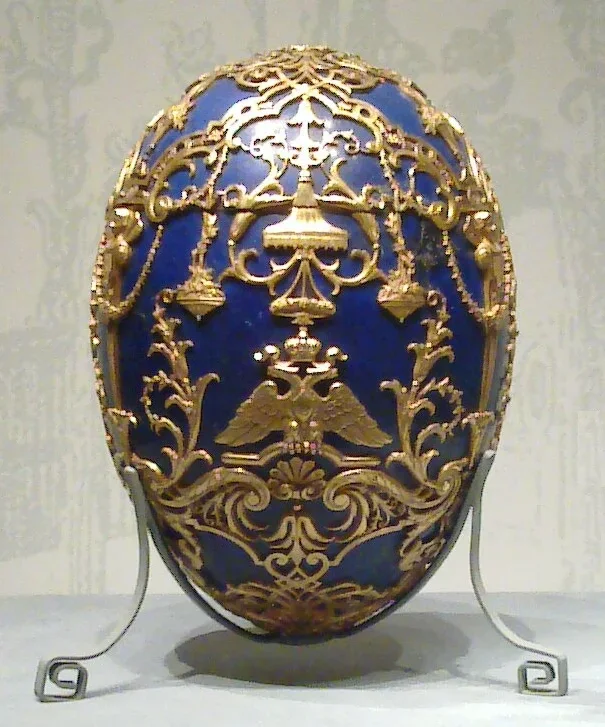
Tsarevich
At the base of the blue shell is a second diamond, a partner to the one at the top. Between them they carry Alexandra's initials, the imperial crown and the year 1912. So the egg was made for her. Henrik Wigström oversaw the work in Fabergé's workshop. Inside, a platinum frame shaped like a double headed eagle holds a portrait of her son Alexei, in a sailor suit he liked. The eagle holds the orb and sceptre of the Romanov crown jewels, and the whole frame lifts out of the shell. The picture here is an archival photograph. The original watercolor was double sided, and it has been damaged. Only the family knew that Alexei had hemophilia. He came so close to dying that the court had already drawn up his death certificate. He lived. Fabergé knew the secret, and had this made for Alexandra to mark the miracle of her son's survival.
Listen in the appdiaper · CC BY 2.0
09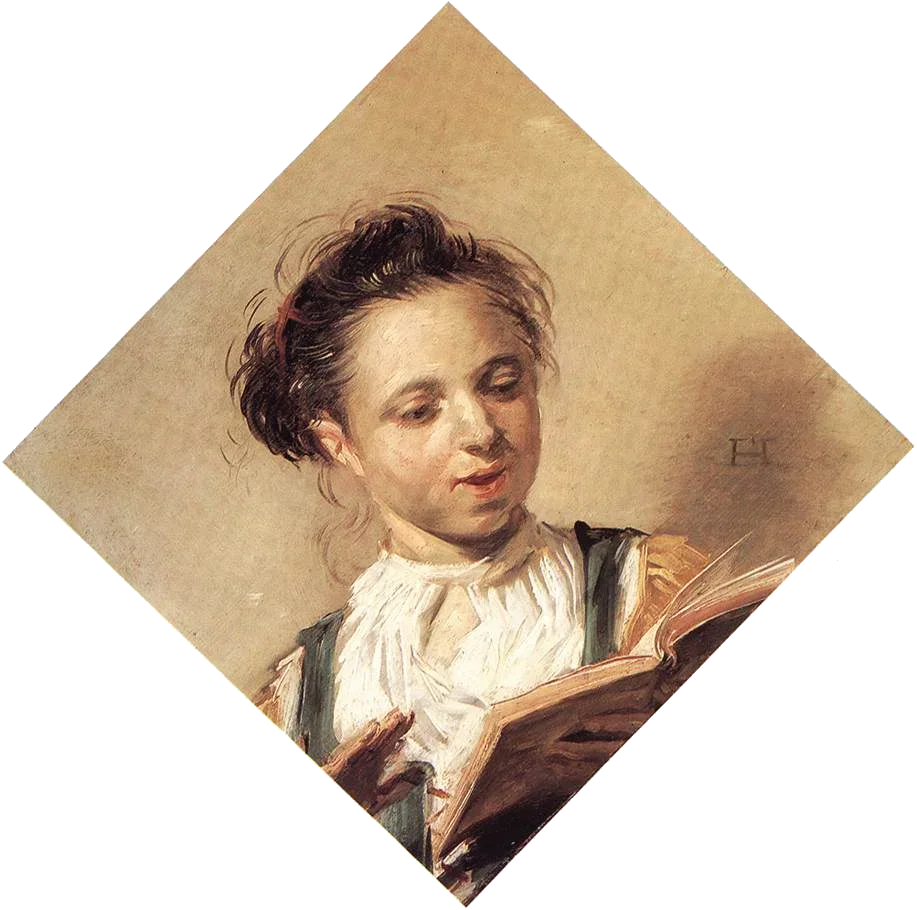
Girl Singing
This girl is not dressed for a portrait. No lace, no embroidery, nothing to mark her best clothes. Her hair is tied back loosely, with strands spilling out in almost every direction, and her chemise comes apart a little below the collar. Her head is bare. In Haarlem then, loose hair and a bare head on a respectable young woman could bring a rebuke. So this may be a private moment at home, not a public one. Hals worked from slightly below her face, so her eyes are visible as she turns down toward the book in her left hand. Her lips are parted, her right hand keeps time, and the page she sings from lifts up instead of lying flat. She is caught in the act of singing. The frame serves it too. It hangs from a corner, a diamond shape that was unusual for him. Her brow, mouth, shoulders, fingertips and music page almost follow two sides of the diamond. Her nose and one visible ear nearly echo the other two. That makes her seem to move inside the frame. Whether she was one of his own children is still not known.
Listen in the appFrans Hals · Public domain
10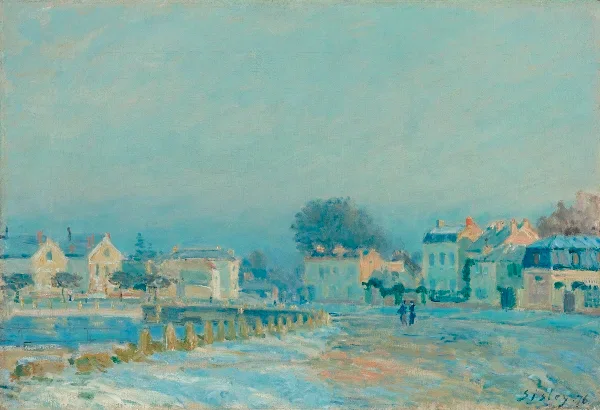
The Watering Pond at Marly with Hoarfrost
What draws a painter to a frozen horse trough? On the left is the ramp where horses enter the water in summer. Now the road is iced over, and the pond and the frost give back a pale blue that answers the slate roofs. The village houses sit at the centre. This pond is the last remnant of the cascades and basins in Louis the Fourteenth's gardens at Marly. André Le Nôtre laid them out, with water pumped in from the Seine. The château was destroyed under the French First Empire. The horse statues that once adorned the basin were moved to the Place de la Concorde in Paris. By Sisley's day the basin had become a trough for watering village horses and washing linen. He had a house nearby with a window onto it, and he painted this pond about twenty times, through one season after another. Its everyday use was what interested him, not its royal past. To get this view he set his easel below the terrace and came down to the water along the road that crosses the foreground. In this one he narrowed the pond a little and shifted the ramp, and the houses, not the water, came to hold the centre.
Listen in the appAlfred Sisley · Public domain
- 11
Portrait of a Creole Woman with Madras Tignon
Charles Jean-Baptiste Colson · 1833–1837
- 12
General Nicolas Philippe Guye
Francisco Goya · 1810
- 13
Progress (The Advance of Civilization)
Asher Brown Durand · 1853
- 14
Portrait of Joseph Hyacinthe François de Paule de Rigaud, Comte de Vaudreuil
Élisabeth Louise Vigée Le Brun · 1784
- 15
Rumors of War
Kehinde Wiley · 2019
- 16
A Gust of Wind (Judith Gautier)
John Singer Sargent · 1883–1885
- 17
Tropical Landscape: American Indian Struggling with a Gorilla
Henri Rousseau · 1910
- 18
Chester Beatty Akbarnama
Muhammad Husayn Kashmiri · 1596–1603
- 19
Madame Errázuriz
John Singer Sargent · 1883–1884
- 20
Taunus Road
Ernst Ludwig Kirchner · 1916
- 21
A Man Docking His Skiff
Gustave Caillebotte · 1878
- 22
The Artist’s Studio, Rue Visconti, Paris
Frédéric Bazille · 1867
- 23
Young Woman Watering a Shrub
Berthe Morisot · 1876
- 24
Boy playing a violin
Frans Hals · 1625–1630
Virginia Museum of Fine Arts
Frequently asked questions
How much does the guide cost?
Free app download. Free until 1 January. Listed guide price: $0.99. Audio guide only. Venue admission is separate.
Can I listen without internet?
Yes. Download the guide’s audio, images, and maps in the app before your visit. Your downloaded content is then available offline.
Can I listen in my language?
In English for now. More languages soon.
Do I need to follow a schedule?
No. This is a self-guided experience. Choose your stops, pause whenever you like, and return to a story at your own pace.
Which artworks are in the Virginia Museum of Fine Arts audio guide?
24 artworks, including Peter the Great (Michael Perkhin), Pallas and Arachne (Peter Paul Rubens), Shahnameh of Shah Tahmasp (Unknown Artist), Pelican (Michael Perkhin), Rock Crystal (Michael Perkhin), Red Cross with Imperial Portraits (Henrik Wigström), Venus and Cupid (Sleeping Venus) (Artemisia Gentileschi), and Tsarevich (Henrik Wigström). The full list is on this page.
Is this the museum’s official audio guide?
No. Stanza is an independent audio guide app and is not affiliated with Virginia Museum of Fine Arts. Museum admission is separate.
At your own pace
Explore Virginia Museum of Fine Arts.
Download Stanza, then search for “Virginia Museum of Fine Arts”.
Free app download · Guide price shown in the app
Keep exploring
Audio guides — United States
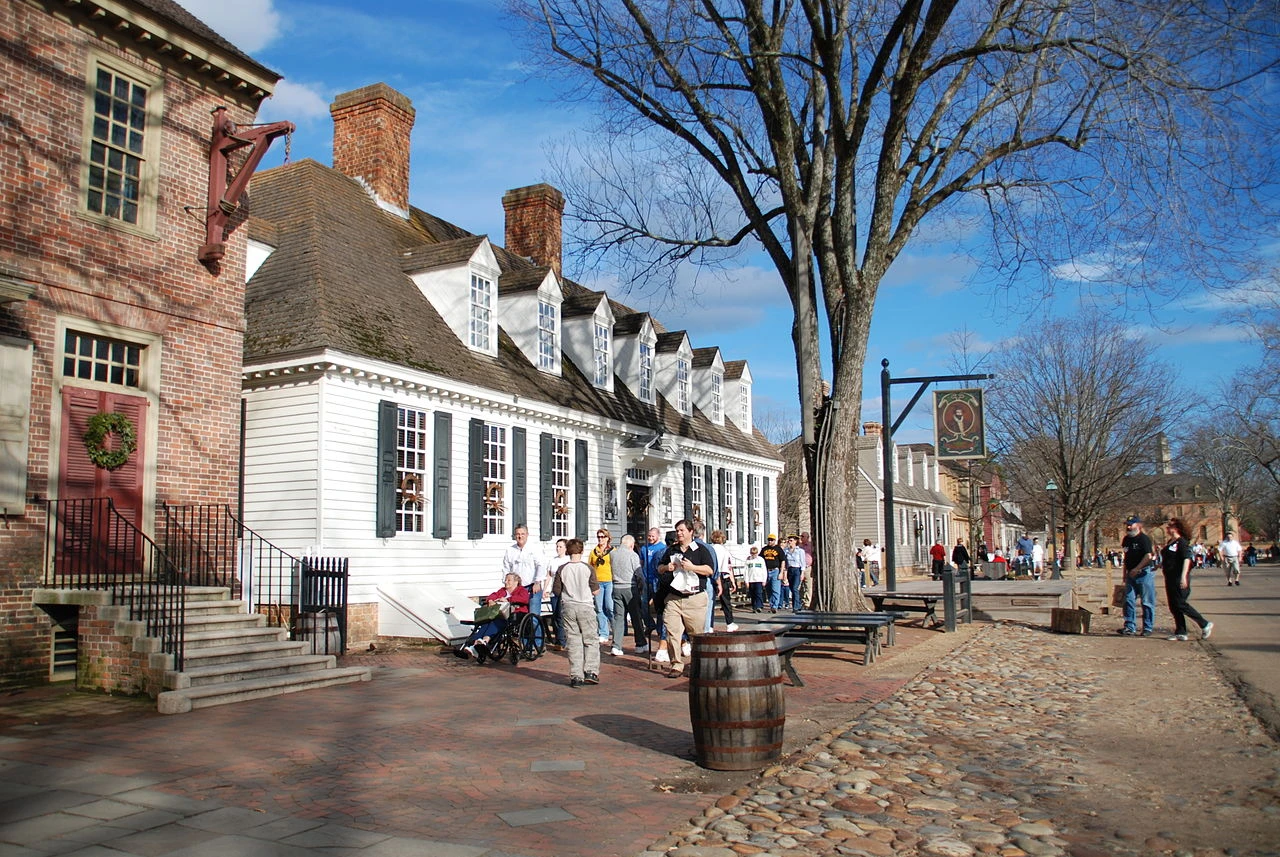
Williamsburg · 75 km
Colonial Williamsburg
Content & sources
Humberto Moreno · CC BY 2.0
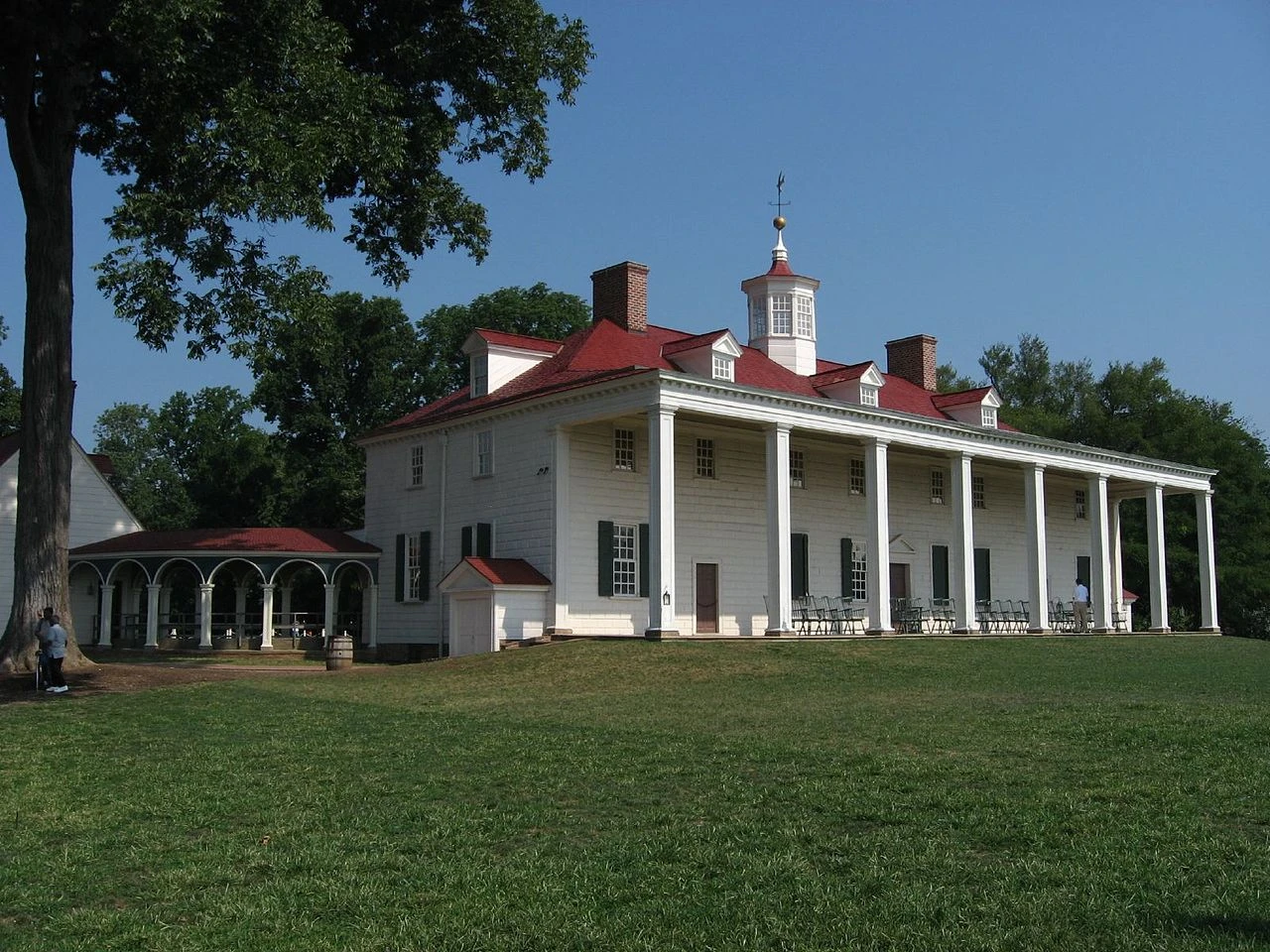
Mount Vernon · 132 km
Mount Vernon
Content & sources
Ken Lund from Reno, Nevada, USA · CC BY-SA 2.0
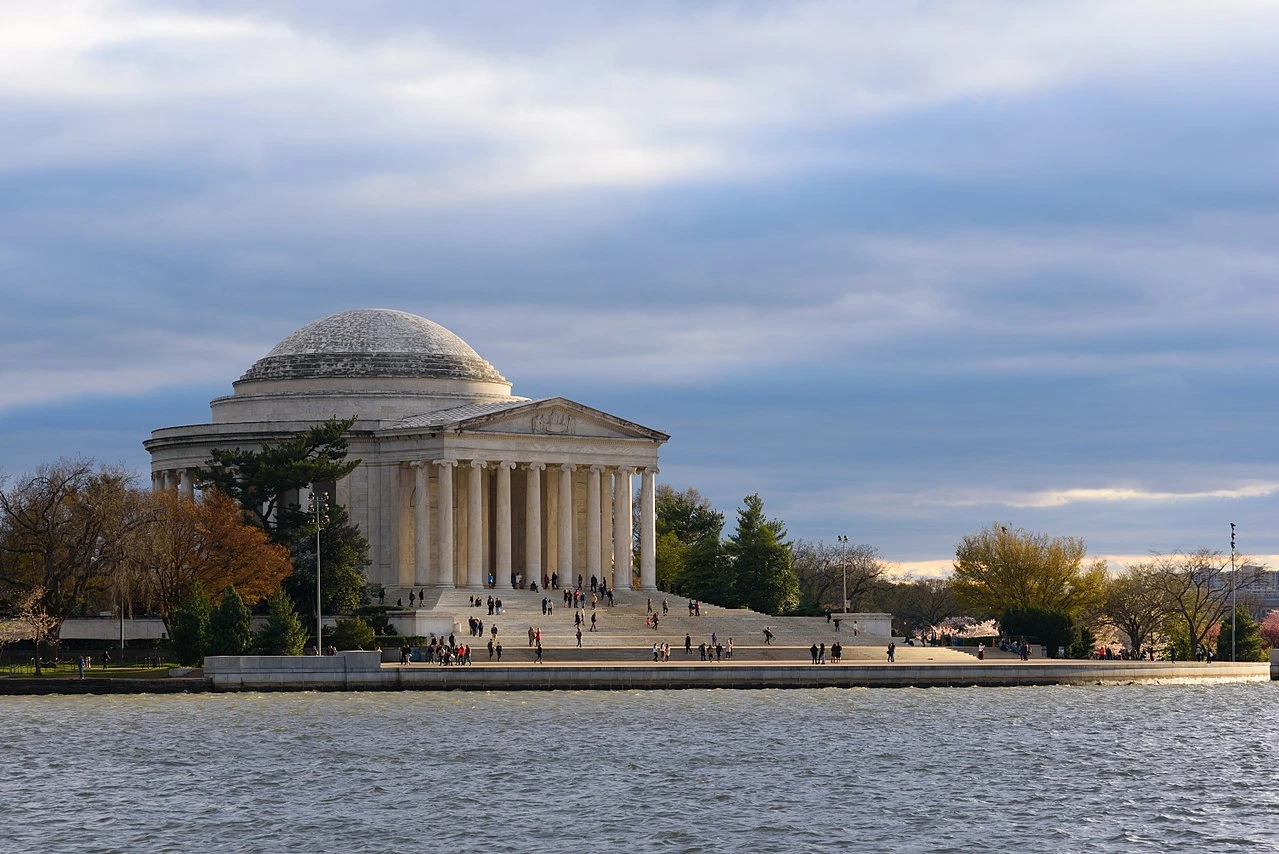
Washington
Jefferson Memorial
Content & sources
Photo: King of Hearts · CC BY-SA 4.0
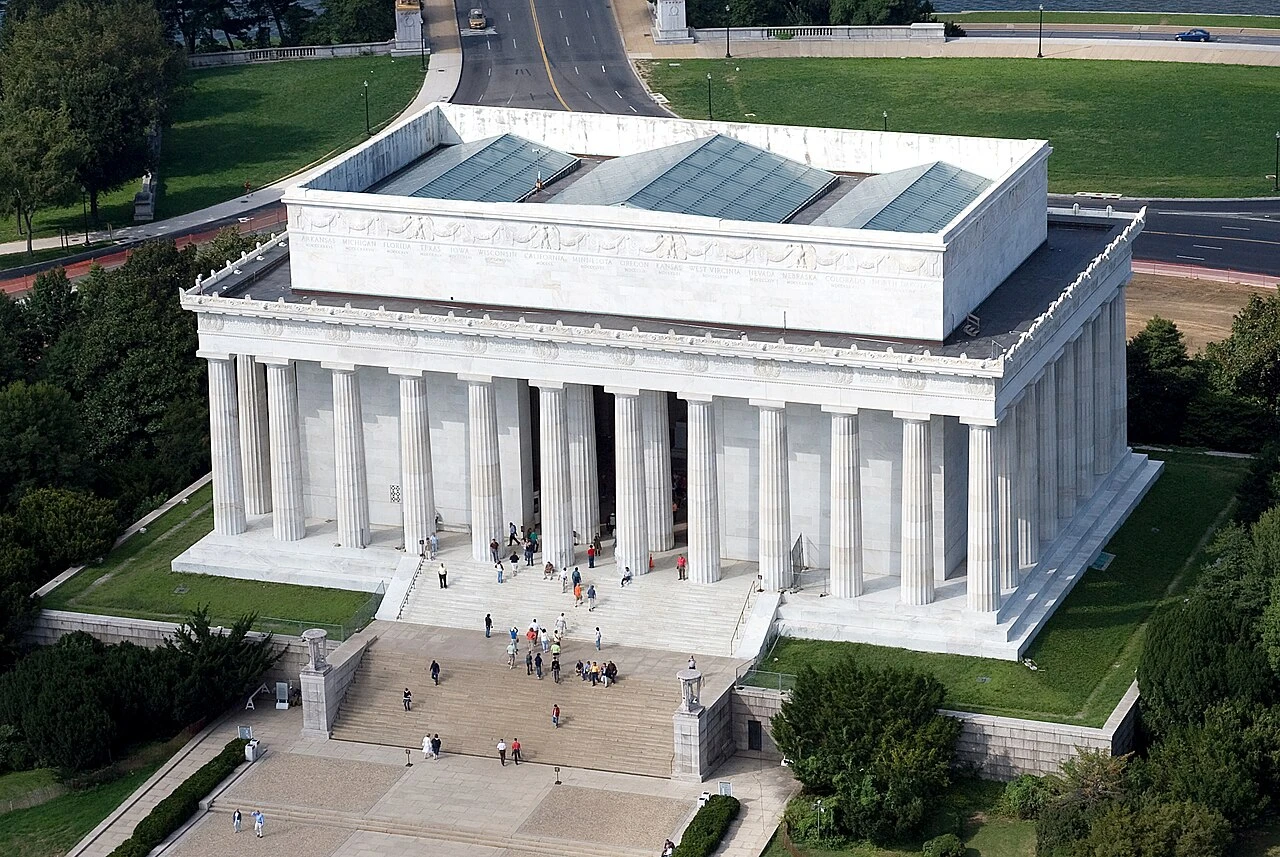
Washington
Lincoln Memorial
Content & sources
Aerial_view_of_Lincoln_Memorial_-_east_side.jpg: Carol M. Highsmith derivative work: upstateNYer · Public domain
Art museums
More art museum audio guides
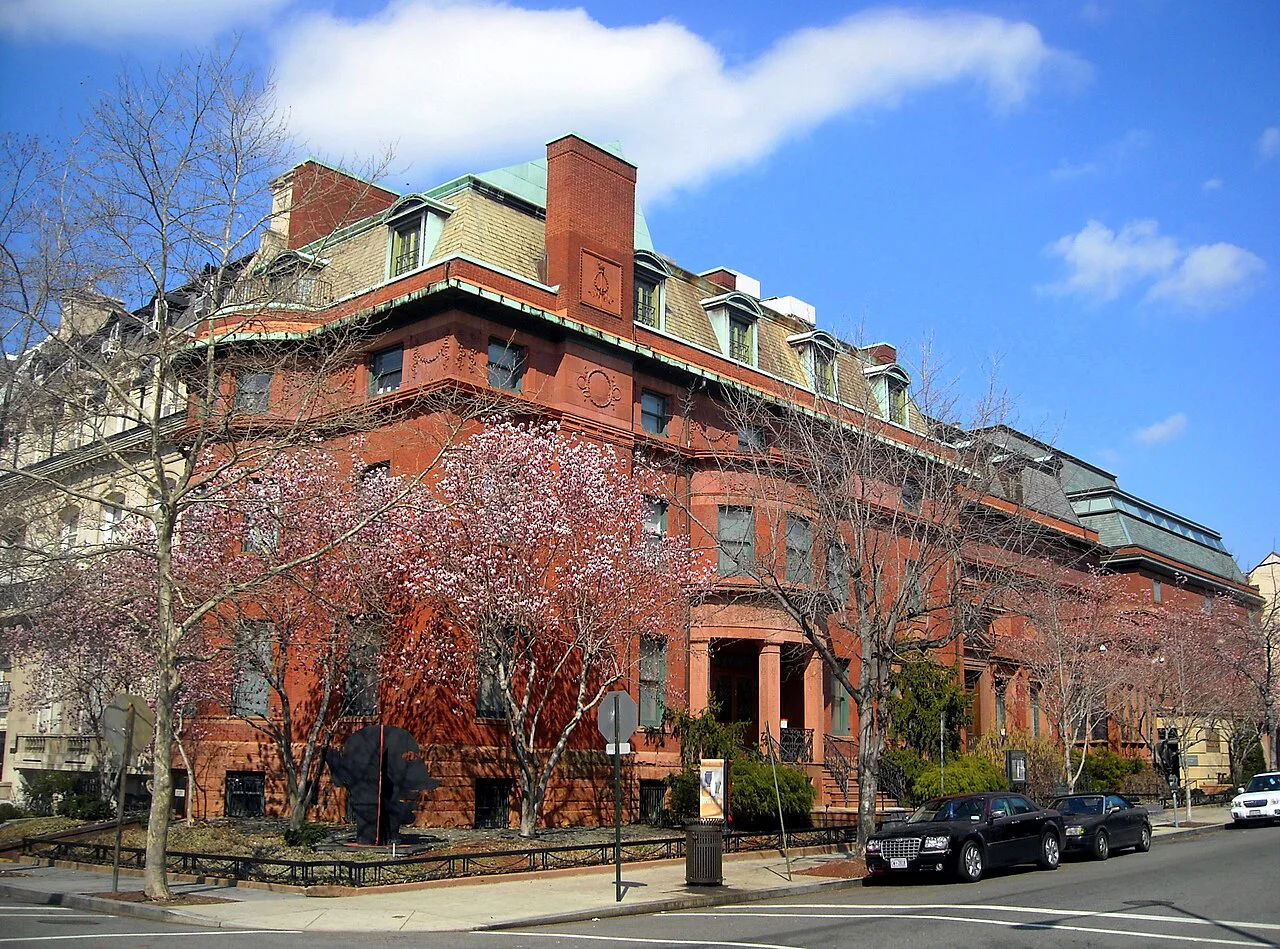
Washington, D.C. · 15 artworks
The Phillips Collection
Content & sources
APK · CC BY-SA 3.0
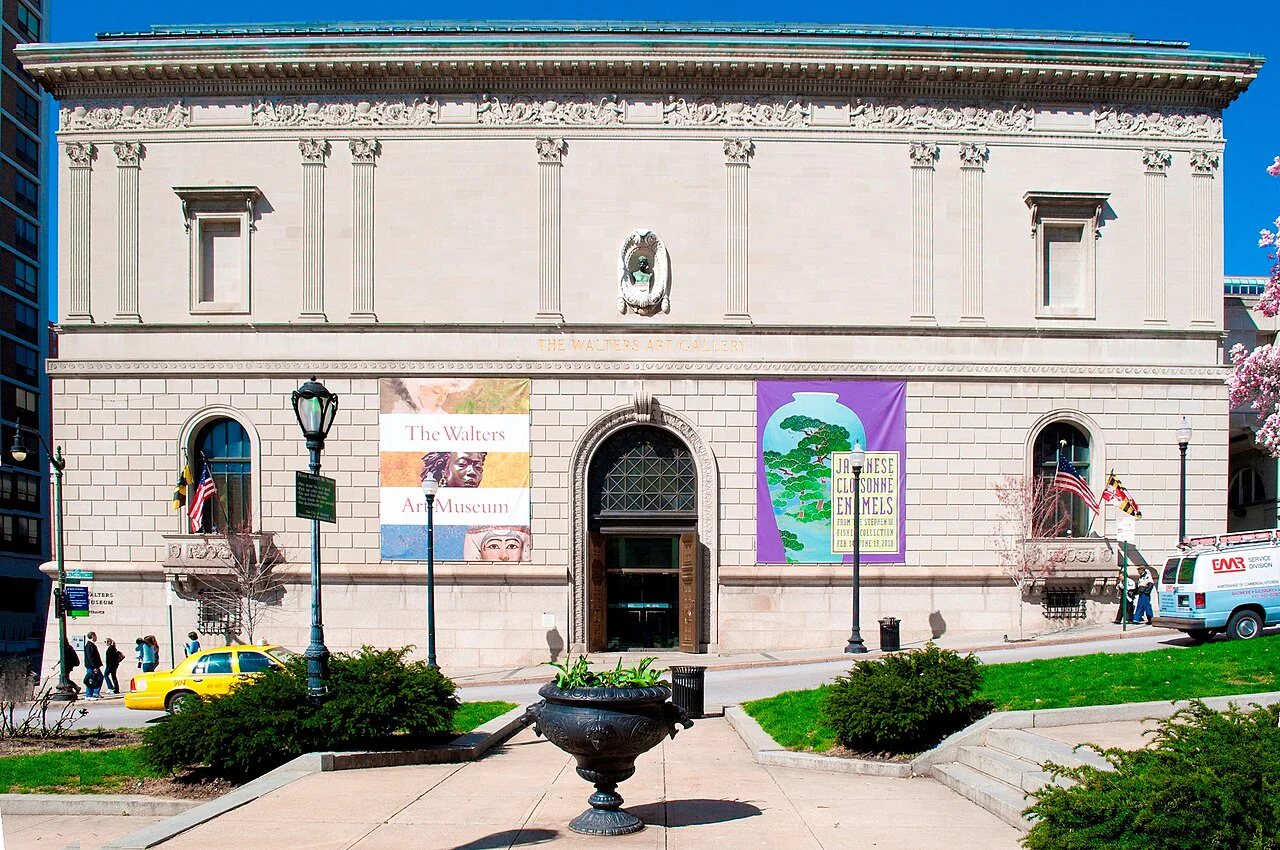
Baltimore · 60 artworks
Walters Art Museum
Content & sources
Dylan k · CC BY-SA 3.0
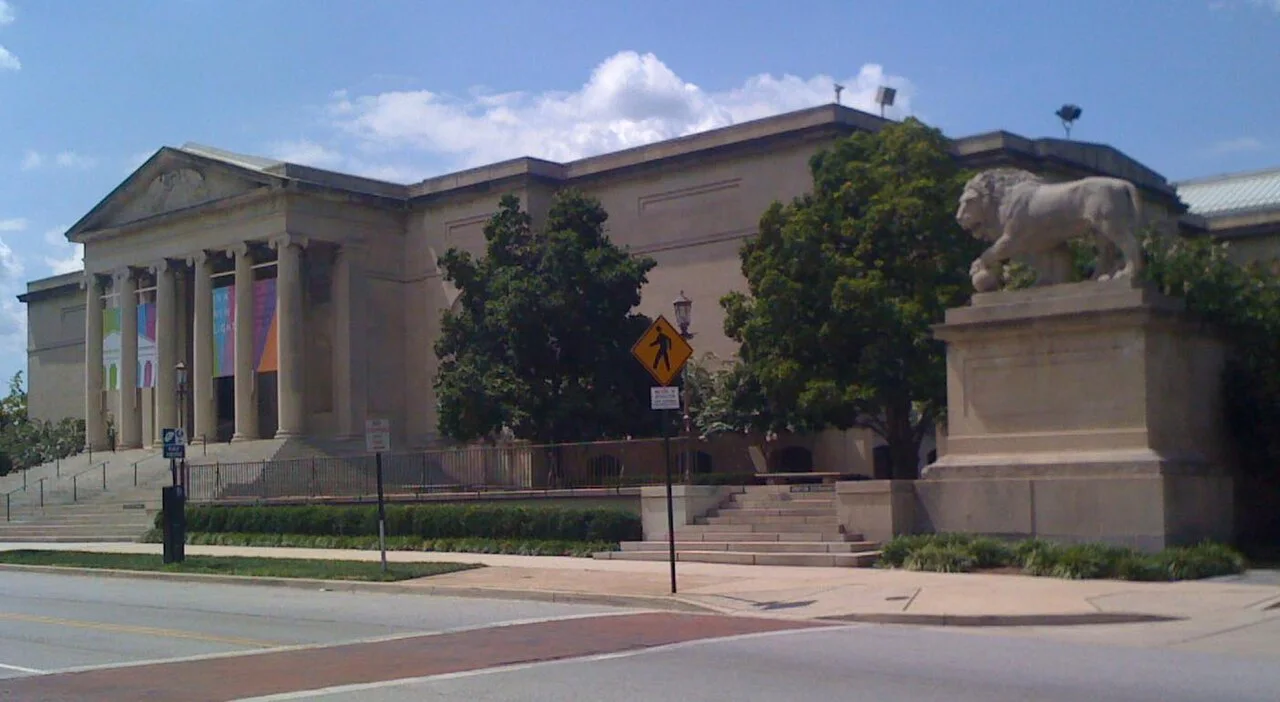
Baltimore · 19 artworks
Baltimore Museum of Art
Content & sources
«Marylandstater» «reply» at English Wikipedia. · Public domain
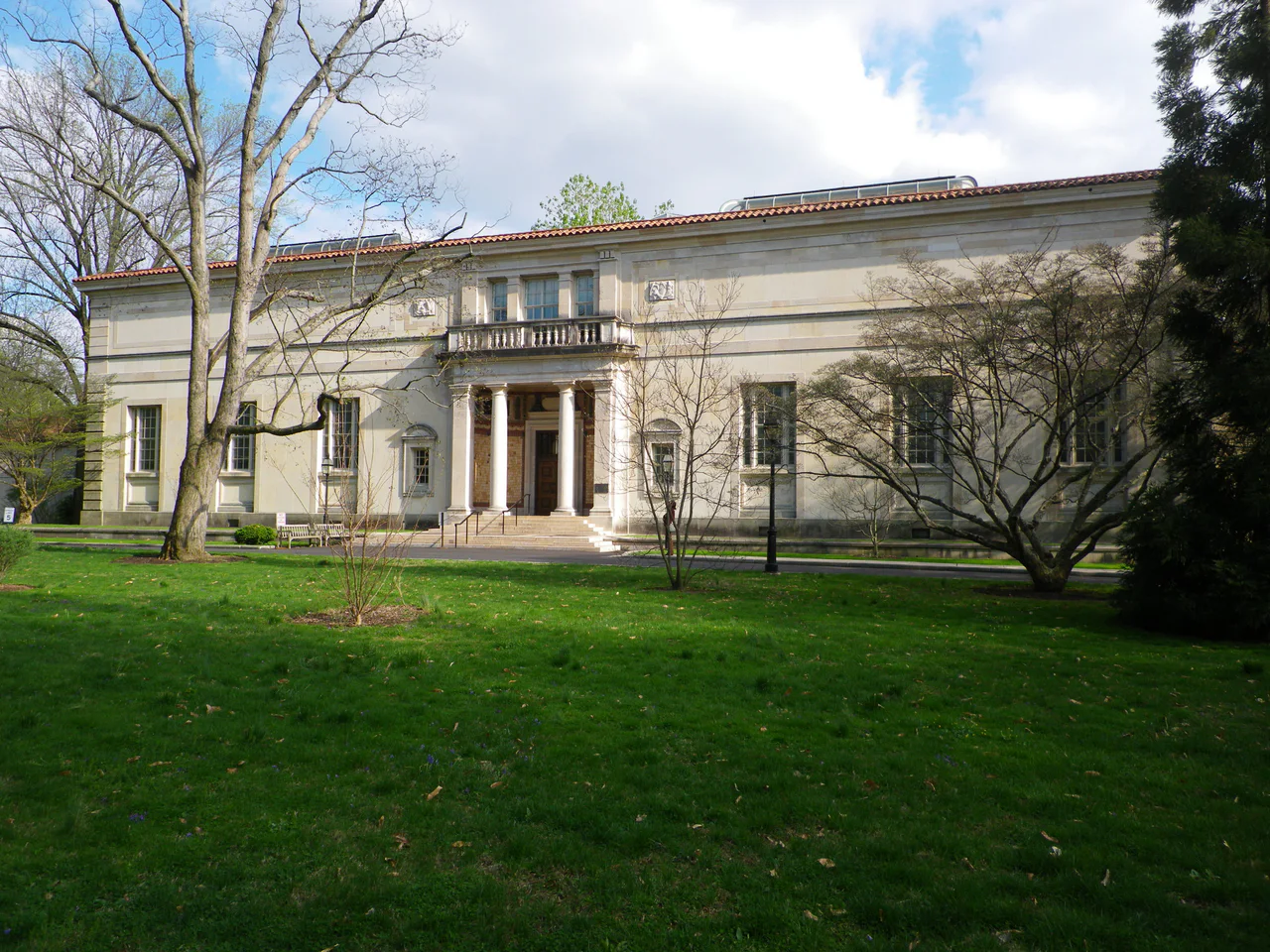
Philadelphia · 38 artworks
Barnes Foundation
Content & sources
Photo: Dmadeo · CC BY-SA 3.0
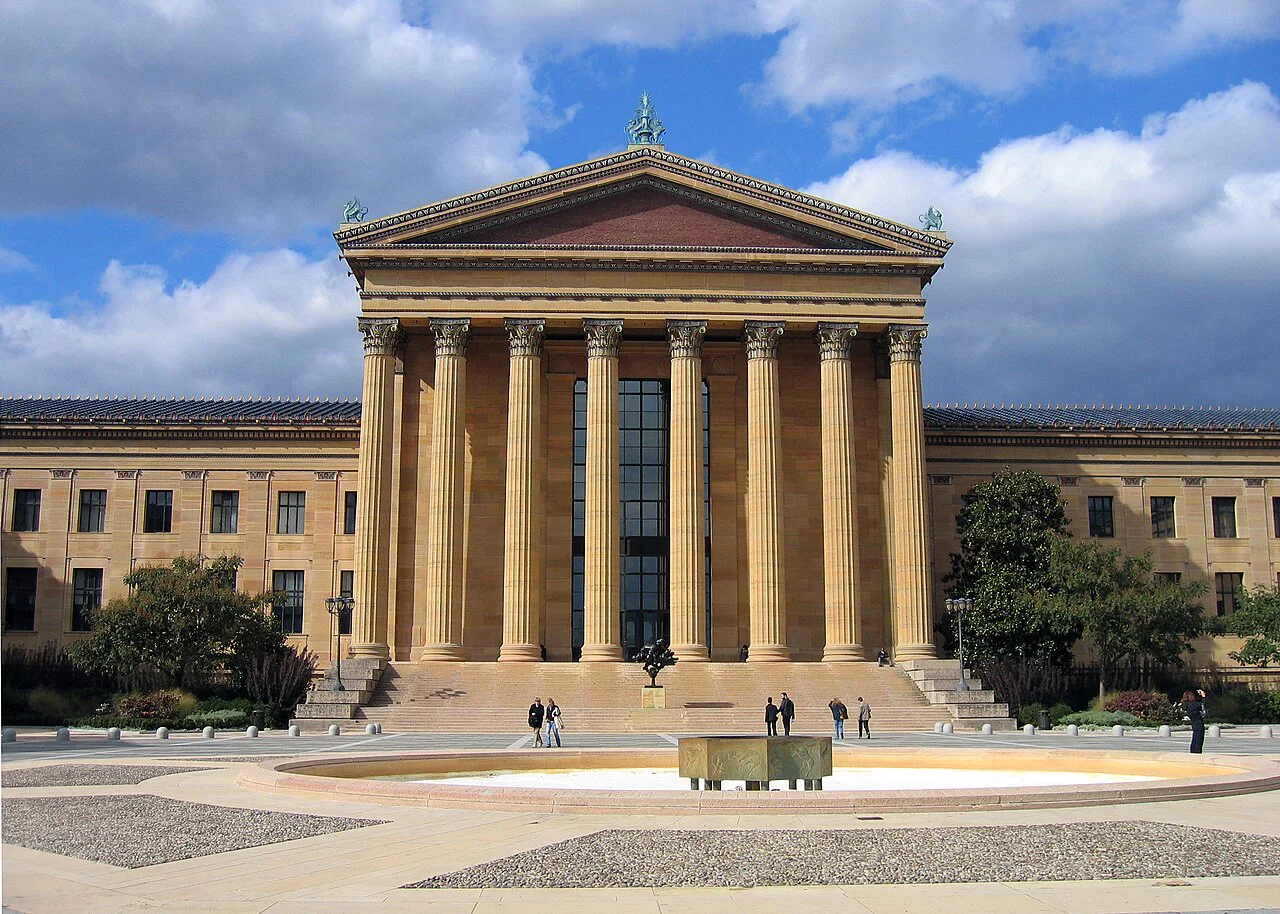
Philadelphia · 133 artworks
Philadelphia Museum of Art
Content & sources
Photo: Rgordon6~commonswiki · Public domain
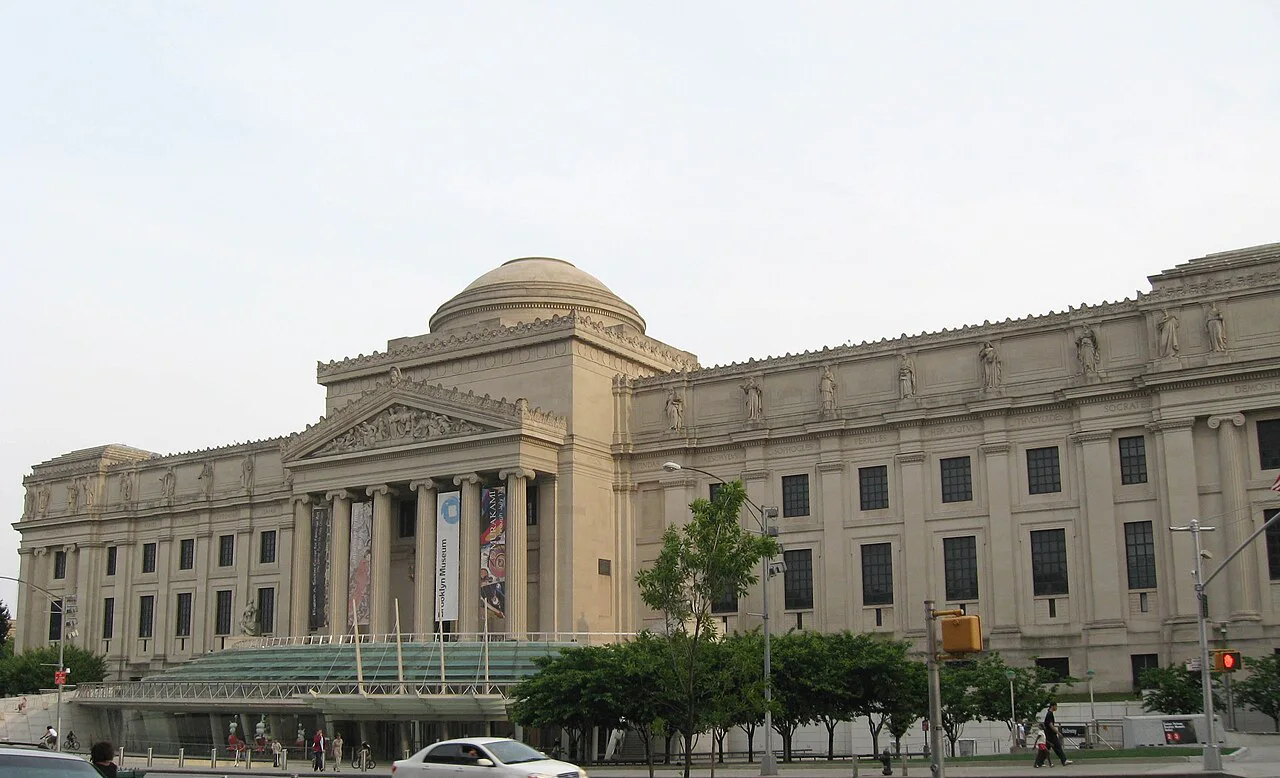
New York City · 50 artworks
Brooklyn Museum
Content & sources
Jim.henderson · Public domain