Languages
15Jefferson Memorial Audio Guide
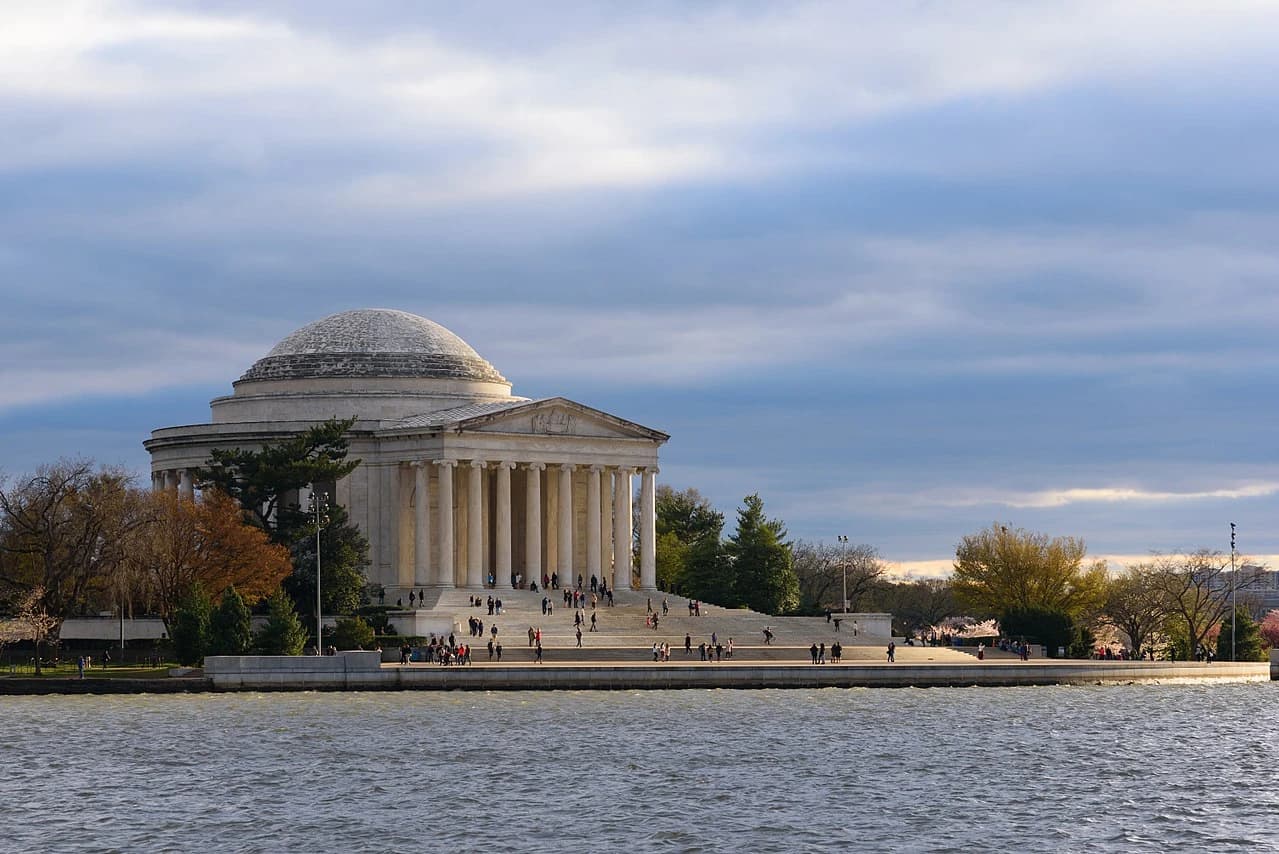
Jefferson Memorial is a landmark in Washington, United States. Explore it with Stanza's GPS-triggered offline audio guide — available in 15 languages.
Quick Facts
13
Stops
15
Languages
100%
Offline
📍 Washington, United States · 38.8814°N, -77.0367°E
About Jefferson Memorial
The Jefferson Memorial is a presidential memorial in Washington, D.C., dedicated to Thomas Jefferson, an American Founding Father and the third president of the United States. It features a neoclassical rotunda with a large bronze statue of Jefferson.
Jefferson Memorial is also known as Thomas Jefferson Memorial, JEFM, THJE.
This self-guided audio tour features 13 narrated stops organized across 6 sections, including The Grand Staircase and Portico, The Committee of Five Pediment, The Bronze Statue of Thomas Jefferson, The Declaration of Independence Panel, Religious Freedom and Tyranny, The Symbolic Axis. As a memorial, Jefferson Memorial offers a unique cultural experience in the heart of Washington, United States.
The Stanza audio guide is available in 15 languages and works entirely offline — download the complete tour including audio narration, maps, and images before your visit. As you walk through Jefferson Memorial, GPS-triggered narration plays automatically at each point of interest.
Last updated:
What you will hear
The Grand Staircase and Portico
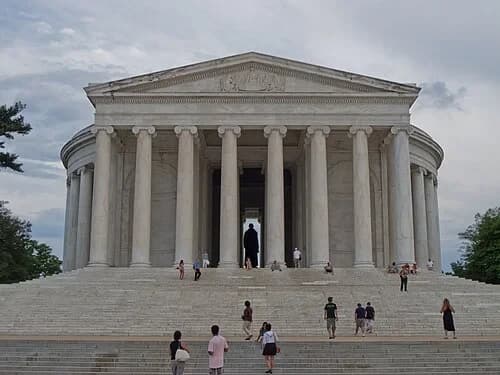
Focusing on John Russell Pope's Neoclassical design inspired by the Roman Pantheon and Jefferson's own architectural works.
The Grand Portico
Leading the design of this massive project was architect John Russell Pope, a prominent figure in the neoclassical movement who also designed the National Gallery of Art. Construction on this site began on December 15, 1938, with the first shovels of earth turned during a period of global uncertainty. The project moved forward through the early years of World War II, finally reaching completion in 1943. The dedication ceremony was held on a date of immense historical significance: April 13, 1943. This day marked the exactly 200th anniversary of Thomas Jefferson's birth in Virginia. At the time, the nation was heavily involved in the war, which influenced the tone of the opening, focusing on the defense of the democratic ideals Jefferson helped establish. Looking at the entrance, the scale of the portico reflects the architectural ambition of the mid-20th century, seeking to create a permanent space for public memory. The building was constructed primarily of marble and granite, materials chosen for their durability and classical associations. The completion of this portico finalized the southern anchor of the National Mall's cross-axis, fulfilling a decades-old plan for the capital's development.
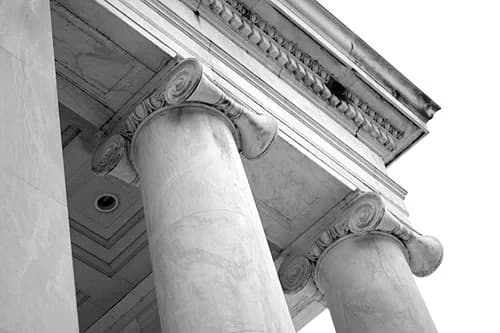
The Ionic Capitals
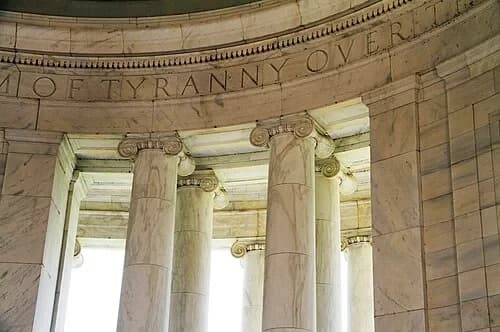
The structural elegance of the memorial is defined by its circular colonnade, which consists of 26 massive Ionic columns. Each of these columns stands 14 feet high, a height calculated to provide both the necessary structural support for the dome above and a sense of balanced proportion to the viewer. You can recognize the Ionic style by the distinctive scrolls, or volutes, at the top of each capital. These elements were carved with precision to ensure uniformity across the entire exterior. Unlike the more ornate Corinthian style or the simpler Doric, the Ionic order was often associated with grace and scholarly pursuit in classical tradition, making it a fitting choice for a memorial dedicated to a man of letters and science. These columns create a transitional space between the outdoor environment and the interior rotunda, allowing for a constant flow of air and light. The spacing between them was carefully designed to allow visitors to look out across the Tidal Basin from almost any point inside. This colonnade isn't just decorative; it distributes the immense weight of the stone dome down into the deep foundations, ensuring the structure remains stable on the reclaimed marshland.
The Committee of Five Pediment
Explaining the sculpture above the entrance which depicts the men responsible for drafting the Declaration of Independence.
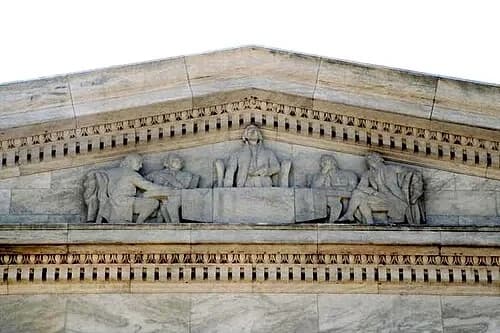
The Committee of Five
Look up at the triangular pediment above the portico to see a group of figures carved in relief. This sculpture depicts the 'Committee of Five,' the group appointed by the Second Continental Congress to draft the Declaration of Independence. The figures include Thomas Jefferson, John Adams, Benjamin Franklin, Roger Sherman, and Robert R. Livingston. In the center of the composition, Jefferson stands prominently, holding the draft of the document he primarily authored. He is shown presenting this draft to the other committee members for their review before it was sent to the full Congress. The sculptor, Adolph A. Weinman, captured the men in a moment of collaborative intellectual labor, emphasizing the civilian nature of the American Revolution. Notice the variations in the men's poses and clothing, intended to reflect their individual personalities and the gravity of their task. By placing this specific scene at the very front of the building, the architects ensured that every visitor first encounters the collaborative act that founded the nation. The arrangement is symmetrical, fitting the classical constraints of the pediment while clearly establishing Jefferson as the primary architect of the American message.
The Bronze Statue of Thomas Jefferson
The 19-foot focal point of the interior. Includes the story of the missing statue in 1943 due to WWII metal shortages.
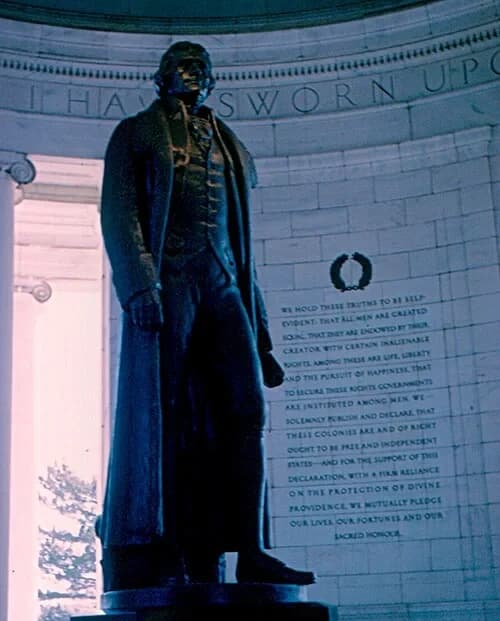
Statue of Thomas Jefferson
Standing 19 feet tall and weighing 10,000 pounds, the central statue of Thomas Jefferson is a massive presence within the rotunda. However, the bronze figure you see today was not present during the 1943 dedication. Because of severe metal shortages during World War II, the sculptor, Rudulph Evans, could not obtain the bronze needed for the final casting. Instead, the memorial opened with a plaster version that was carefully painted to mimic the appearance of bronze. This temporary statue remained in place for four years while the war concluded and metal supplies stabilized. The permanent bronze version was finally cast and installed in 1947, replacing its plaster predecessor. Jefferson is depicted in mid-stride, wearing a long fur-collared coat that was a gift from his friend, the Polish patriot Tadeusz Kościuszko. In his hand, he holds a scroll representing the Declaration of Independence. The statue sits atop a pedestal of black granite, which provides a stark contrast to the surrounding white marble. The scale of the figure was designed so that Jefferson's head is roughly level with the inscriptions on the walls, literally placing his likeness among the words he authored.
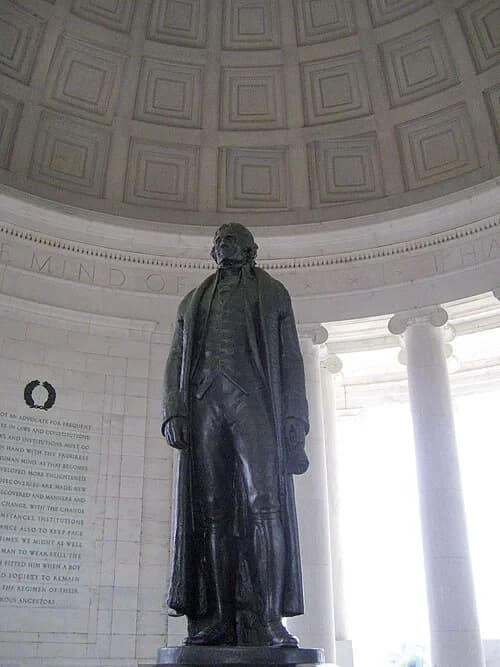
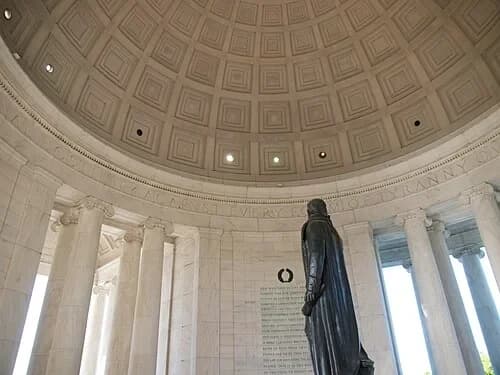
The Coffered Dome
Looking up at the interior of the dome, you will see a pattern of recessed square panels known as coffering. This design choice, inspired by the Pantheon in Rome, serves two purposes. Aesthetically, it creates a sense of depth and rhythm in the massive ceiling. Structurally, it is an engineering cleverness that significantly reduces the total weight of the dome without sacrificing its strength. This weight reduction was critical because the memorial is built on 'made land'—soil that was dredged from the Potomac River to create the Tidal Basin. To prevent the massive structure from sinking or shifting in the soft soil, the entire memorial rests on deep foundations. These foundations consist of concrete-filled steel cylinders that extend 90 feet down through the fill material to reach the solid bedrock beneath. The dome itself measures approximately 165 feet in diameter, creating a vast, echoing space that amplifies the scale of the statue below. The interaction of light and shadow within these recessed coffers changes throughout the day as the sun moves across the sky, highlighting different sections of the stonework and emphasizing the geometry of the circular room.
The Declaration of Independence Panel
Exploring the southwest wall which contains the most famous lines of the American founding document.
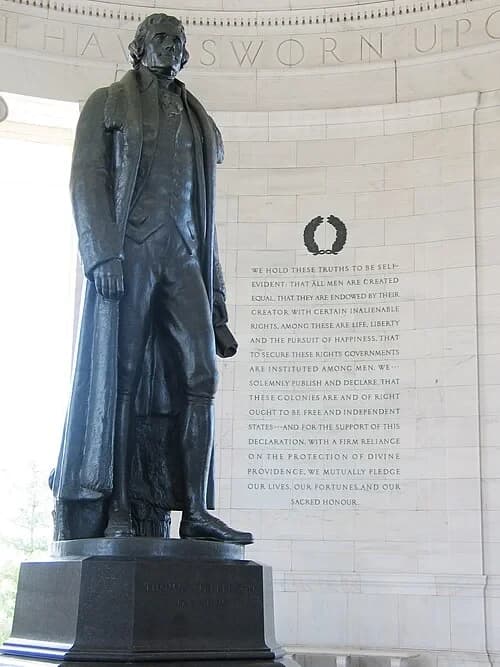
The Declaration Panel
On the southwest wall of the memorial, a large panel displays excerpts from the Declaration of Independence. The text begins with the immortal phrase, 'We hold these truths to be self-evident: that all men are created equal.' When Thomas Jefferson wrote these words in 1776, he was establishing a radical new basis for government founded on natural rights rather than the divine right of kings. The inscription continues to outline the purpose of government: to secure the rights of 'Life, Liberty, and the pursuit of Happiness.' Jefferson argued that governments derive their just powers from the consent of the governed, a principle that remains a cornerstone of democratic thought. The font used for these inscriptions was carefully selected for legibility and classicism, ensuring the words remained the focal point of the space. While Jefferson's personal life and the era in which he lived were full of contradictions regarding these ideals, the placement of this specific text here emphasizes the transformative power of the ideas themselves. The panel serves as the primary educational element of the interior, inviting visitors to read the foundational logic of the American experiment in the author's own edited words.
Religious Freedom and Tyranny
Focusing on Jefferson's commitment to the separation of church and state and his opposition to all forms of oppression.
Religious Freedom Panel
The northwest wall of the rotunda features a panel dedicated to the Virginia Statute for Religious Freedom. Jefferson considered this document one of his three most significant lifetime achievements, even requesting it be mentioned on his tombstone over his service as President. The text inscribed here emphasizes his belief that 'Almighty God hath created the mind free' and that efforts to influence it through legal punishments or civil incapacitations are a departure from the plan of the holy author of our religion. He argued that no person should be compelled to frequent or support any religious worship, place, or ministry. This statute was revolutionary for its time, as it sought to completely separate the church from the state, a concept that later became a fundamental part of the United States Constitution. Jefferson’s focus here was on the 'freedom of the mind,' a theme that recurs throughout the memorial. He believed that forced belief was a form of tyranny and that a healthy democracy required a citizenry free to reach their own conclusions. The inscription captures the legal language he used to dismantle the established church in Virginia, setting a precedent for religious liberty across the entire country.
The Frieze Inscription
Running in a continuous circle just below the dome's base is a prominent frieze carrying a powerful inscription. The text reads: 'I have sworn upon the altar of God eternal hostility against every form of tyranny over the mind of man.' These words were not taken from a public speech or a legal document, but from a private letter Jefferson wrote to Dr. Benjamin Rush in 1800. At the time, Jefferson was embroiled in a bitter political struggle, and he used this phrase to express his unwavering belief that a person’s thoughts and beliefs should be entirely free from government or religious coercion. By placing this vow in such a prominent, elevated position, the designers highlighted what many consider the core of Jefferson’s philosophy: intellectual liberty. The circular nature of the inscription means there is no beginning or end, suggesting the 'eternal' nature of the promise he described. The large, clear letters are deeply carved into the stone, making them visible from across the rotunda even in low light. This vow serves as a framework for the other panels in the room, connecting his legal achievements to his personal moral convictions regarding the sanctity of human thought.
The Symbolic Axis
Concluding the tour by looking out through the columns to see how the memorial aligns with the Washington Monument and White House.
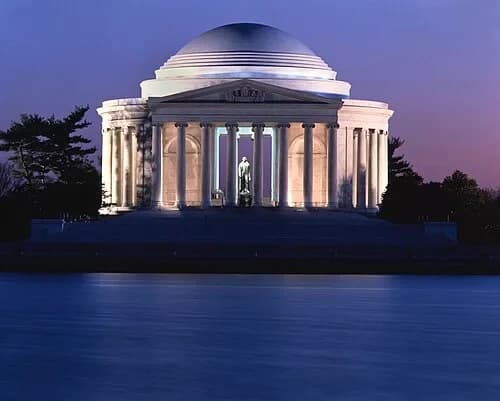
Legacy at Twilight
The Jefferson Memorial remains open 24 hours a day, and many find that its atmosphere changes significantly after sunset. As the crowds thin, the quiet of the Tidal Basin takes over, and the interior is illuminated by a series of hidden lights that cast a soft glow on the statue and the inscriptions. This provides a more contemplative environment to consider the dual nature of the site. While the marble and bronze are physically immovable, the ideas carved into the walls have been the subject of intense debate and reinterpretation for over two centuries. The memorial stands as a place where the public can engage with the complexities of Jefferson's legacy—a man who articulated the highest ideals of liberty while holding hundreds of people in enslavement. As the sun sets and the white stone reflects the twilight colors, the space invites a deeper reflection on how these founding words continue to be tested and refined by each new generation. The glow from the dome is visible from across the city, acting as a quiet landmark in the night. Whether seen in the bright sun of spring or the cool shadows of a winter evening, the site remains a dedicated space for the public to encounter the history and the ongoing arguments of American democracy.
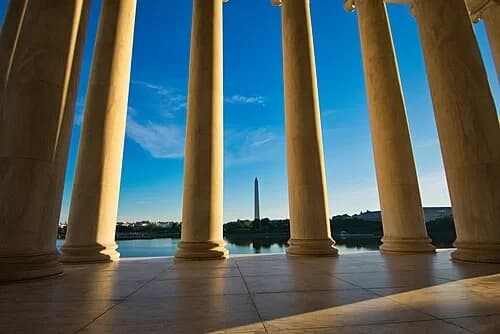
The Symbolic Axis
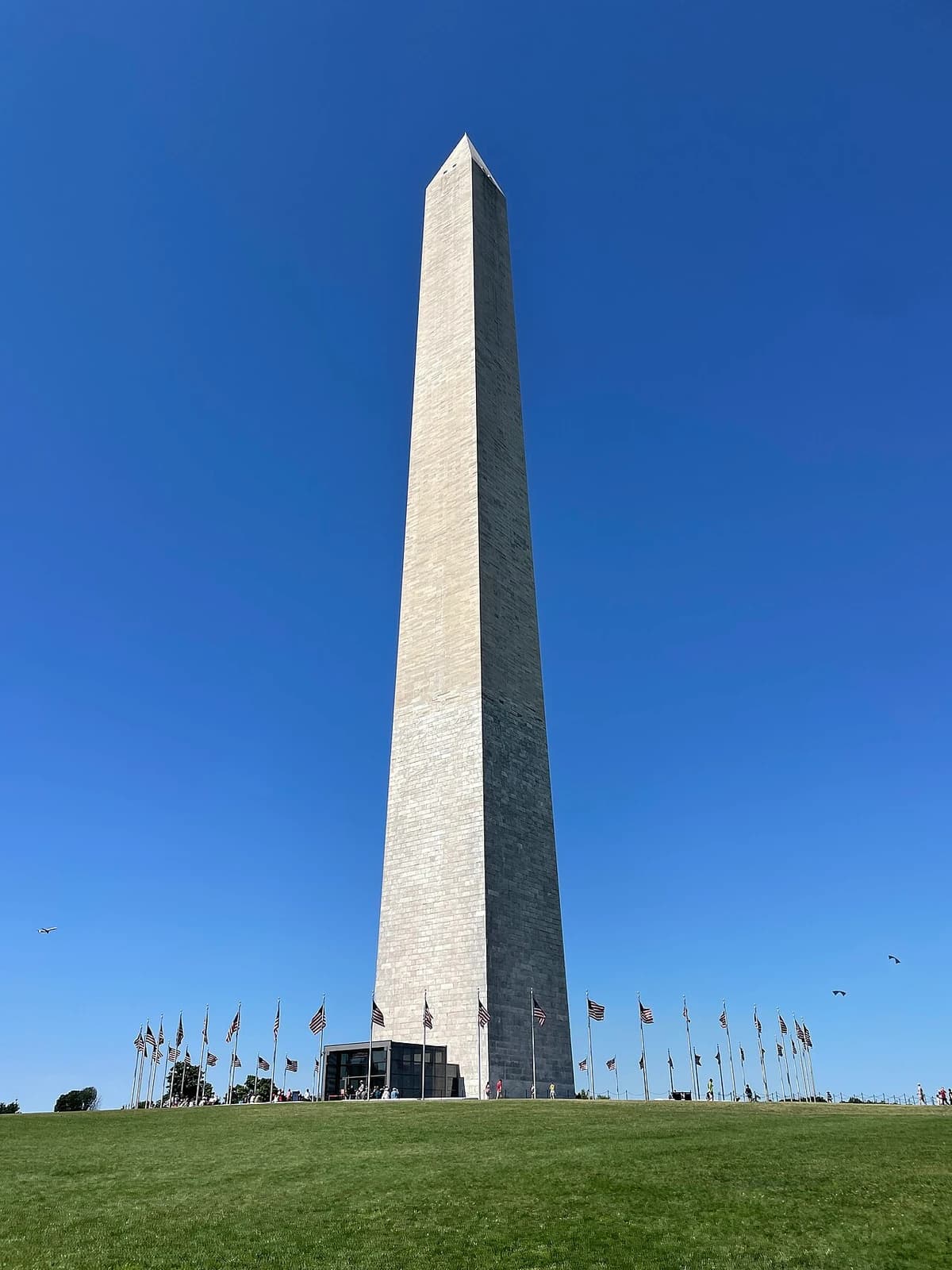
If you stand between the columns and look toward the north, you will see the Washington Monument rising in the distance across the Tidal Basin. This visual connection is not a coincidence; it was a central feature of the McMillan Plan of 1902, which sought to reorganize the city's monumental core. The planners wanted to create a clear link between the man who authored the nation's founding principles and the commander who successfully defended them on the battlefield. On exceptionally clear days, if you look slightly past the Washington Monument, you can even catch a glimpse of the White House. This arrangement creates a symbolic triangle in the heart of the capital, connecting the executive branch, the memory of the first president, and the philosopher of democracy. This axis reminds visitors that the ideas inside this memorial are not isolated; they are part of a larger, interconnected history of the American government. The open colonnade acts like a series of picture frames, capturing the changing skyline of the city and anchoring the memorial within the physical geography of the nation's power. This intentional vista ensures that as you reflect on Jefferson's words, you are simultaneously looking at the ongoing life of the republic he helped create.
Want to hear the rest?
Download the Stanza app to unlock all 13 stops and full GPS-guided navigation.
Frequently Asked Questions
How long does the Jefferson Memorial audio tour take?
The Jefferson Memorial audio guide includes 13 narrated stops. Most visitors spend 45 minutes to 1.5 hours exploring the complete tour, though you can listen at your own pace and skip or revisit any stop.
Is the Jefferson Memorial audio guide available in my language?
Stanza supports 15 languages: English, Spanish, French, German, Italian, Portuguese, Russian, Japanese, Chinese, Korean, Arabic, Hindi, Polish, Dutch, Hebrew. Check the guide in the app to confirm the languages currently available for this tour.
Can I use the audio guide offline at Jefferson Memorial?
Yes! Download the complete Jefferson Memorial tour — including all audio, maps, and images — before your visit. The Stanza app works completely offline, so you don't need WiFi or mobile data at the venue.
How much does the Jefferson Memorial audio guide cost?
The Stanza app is free to download. The current listed price for the Jefferson Memorial audio guide is $1.99; app-store region and currency may affect the final price.
How do I use the Stanza audio guide at Jefferson Memorial?
Download the free Stanza app, search for "Jefferson Memorial", and download the tour. When you arrive at the venue, the app uses GPS to detect your location and automatically plays the relevant narration as you move between points of interest — completely hands-free.
What makes the Stanza audio guide different from other Jefferson Memorial tours?
Stanza offers GPS-triggered narration that plays automatically as you walk through Jefferson Memorial — no need to manually select stops. The tour is available in 15 languages, works fully offline, and includes 13 expertly narrated stops with images and historical context.
What other audio guides are available near Jefferson Memorial?
Stanza offers multiple audio guides in Washington, United States and nearby areas. After downloading the app, browse the map to discover all available tours near Jefferson Memorial. Each guide can be downloaded for offline use.