Stanza · Audio guide
Timken Museum of Art Audio Guide
A place to remember. A story to take with you.
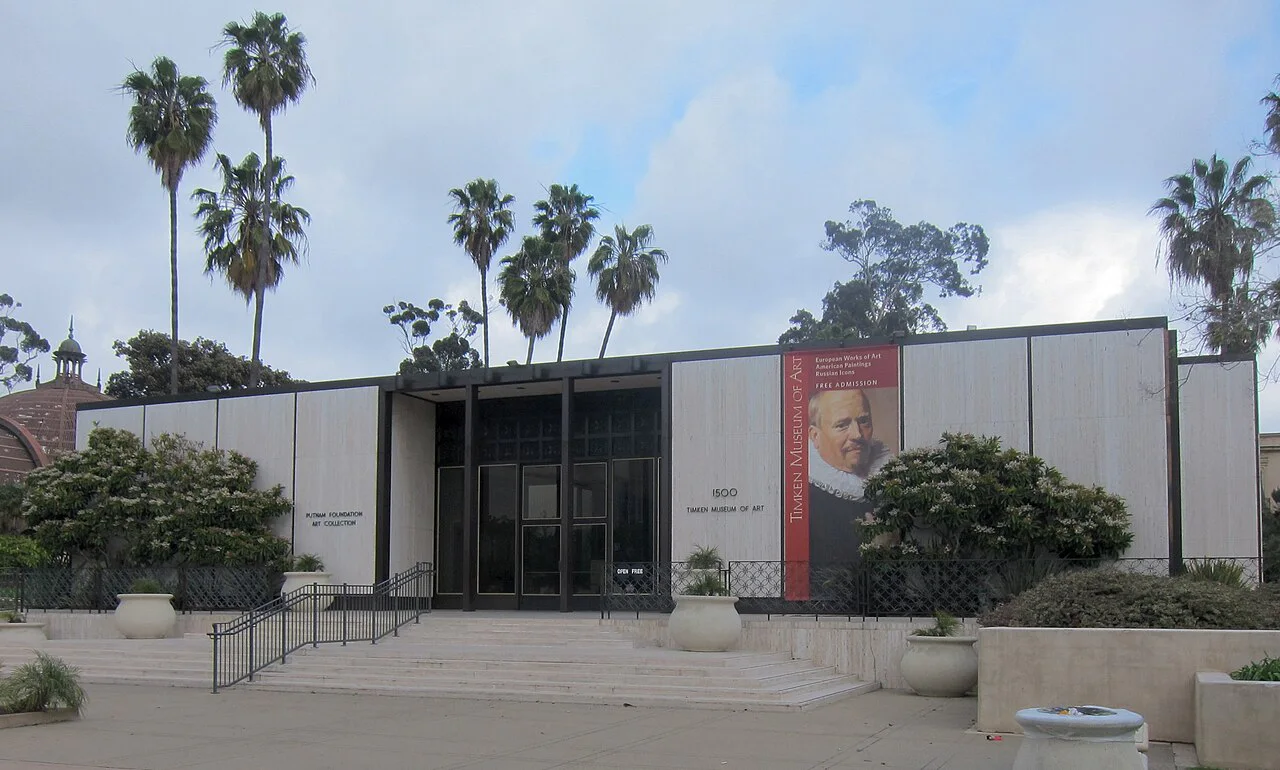
The Timken Museum of Art is a fine art museum in Balboa Park in San Diego, California, close to the San Diego Museum of Art. It was established in 1965.
Download Stanza, then search for “Timken Museum of Art”.
About the tour
One guide. Your kind of visit.
The Timken Museum of Art is a fine art museum in Balboa Park in San Diego, California, close to the San Diego Museum of Art. It was established in 1965.
The Timken Museum of Art guide tells the stories of 19 artworks, including Parable of the Sower (Pieter Bruegel the Elder), Saint Bartholomew (Rembrandt), Portrait of Cooper Penrose (Jacques-Louis David), Portrait of a Man (Frans Hals), Fidelia and Speranza (Benjamin West), Madonna and Child with St. Elizabeth, the Infant St. John the Baptist (Paolo Veronese), View of Volterra (Jean-Baptiste Camille Corot), and Death of the Virgin (Petrus Christus). Every artwork is free to hear in the Stanza app until 1 January.
Ready when you are.
- 01Get the free Stanza app.
iOS & Android
- 02Find your guide.
“Timken Museum of Art”
- 03Download before you go.
Works offline
Audio guide / 19 artworks
Inside the guide
Get to know a few of the stories before you go. Open a stop to read more.
01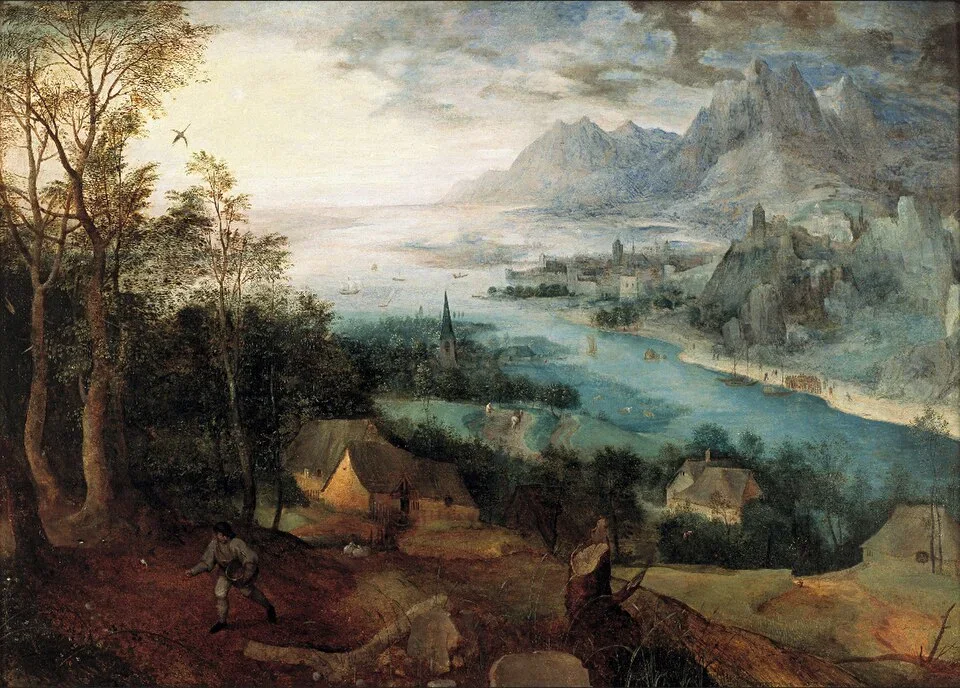
Parable of the Sower
A crowd has gathered near a few boats on the right bank of the river. Jesus is preaching, but his figure almost disappears into the landscape. The sacred story sits inside an ordinary riverside, with a Flemish village along the water. Pieter Bruegel chose Jesus's first parable for one of his first large landscapes, which is also among his earliest signed works. In the story, a farmer scatters seed wherever it falls. Birds eat some. Some falls on stone or among thorns and comes to nothing. Some finds good ground and grows. Perhaps this tale of scattered seed is where his own love of landscape began. The mountains in the upper right grew out of sketches. He left Antwerp in 1553 to study in Italy, and on the way home crossed the Alps and drew what he saw. He joined those peaks to the Brabant countryside he knew, so this is no real place. What is still not certain is whether the peasant sowing in the lower left is really the sower of the parable.
Listen in the appPieter Bruegel the Elder · Public domain
02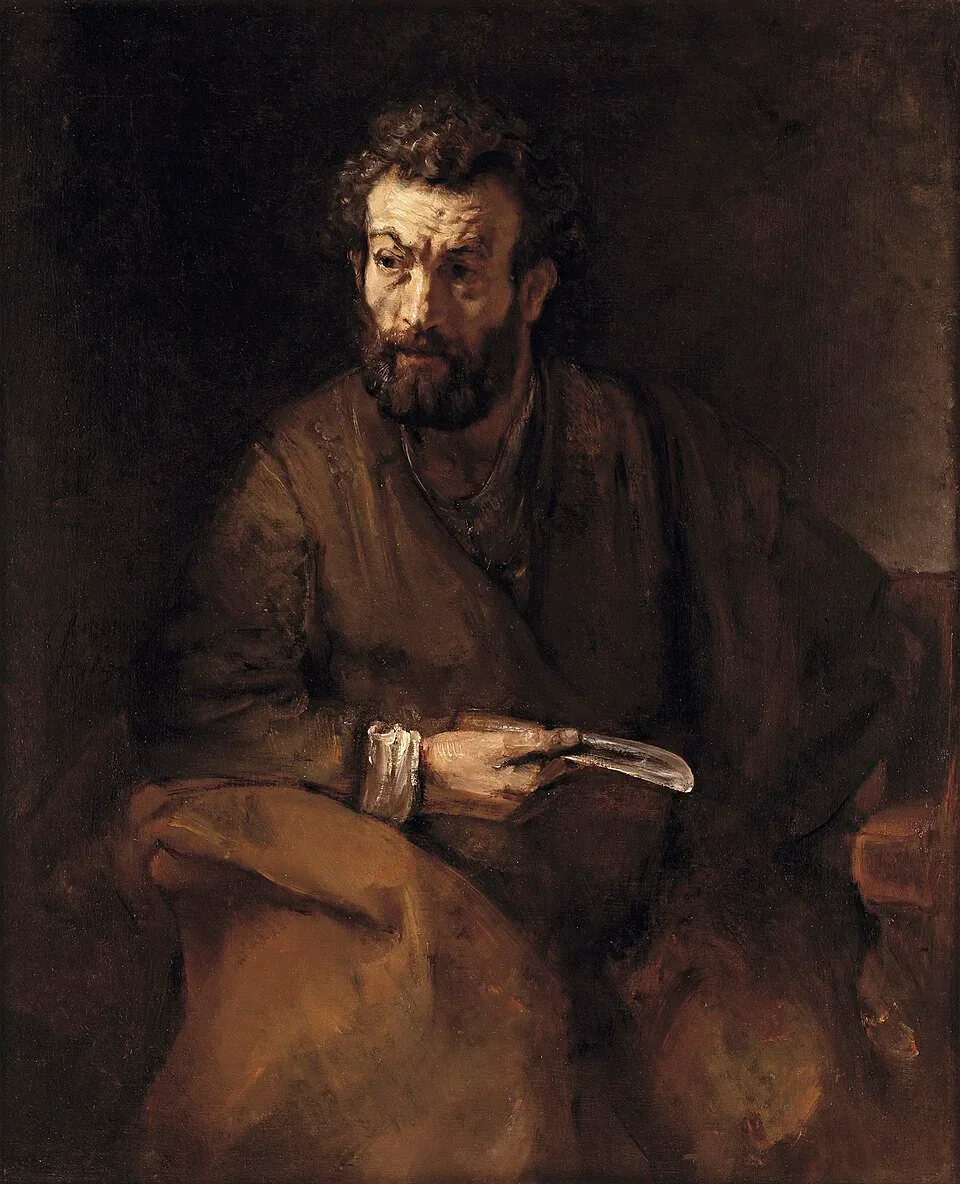
Saint Bartholomew
Why is a saint holding a butcher's knife? Because it is his own attribute, the tool that will one day be used to torture him. The face is serious, a man sure of his faith and ready to give his life for it. Like his master, he simply waits for his hour. But the knife was not always there. At some point an owner had a book painted over it. Perhaps this picture, like the other Saint Bartholomew at the Getty, was found too unpleasant, and that is why the book went on top. Then in 1912 the covering paint was taken off, and the knife Rembrandt had painted was there again.
Listen in the appRembrandt · Public domain
03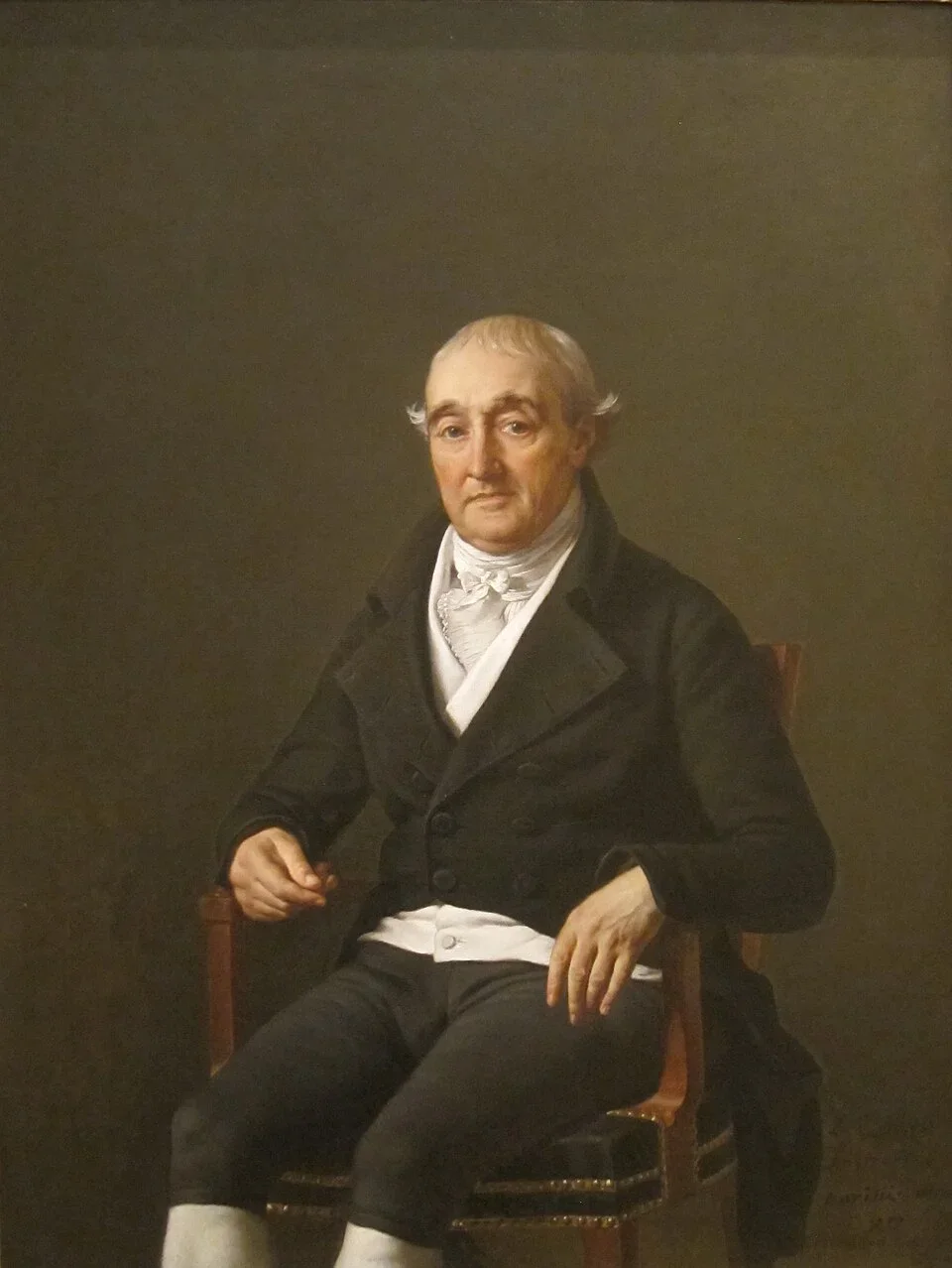
Portrait of Cooper Penrose
This is Cooper Penrose, painted by Jacques-Louis David. He was an Irish Quaker, a businessman and landowner who had done well for himself. The Peace of Amiens made the trip possible, and in 1802 he went to Paris and sat for David. In the portrait, there is more space above his head than was common in French portraits of the time. It cost five thousand gold francs, a great sum in those days. His own sober congregation criticized him for his taste for luxury.
Listen in the appJacques-Louis David · CC0
04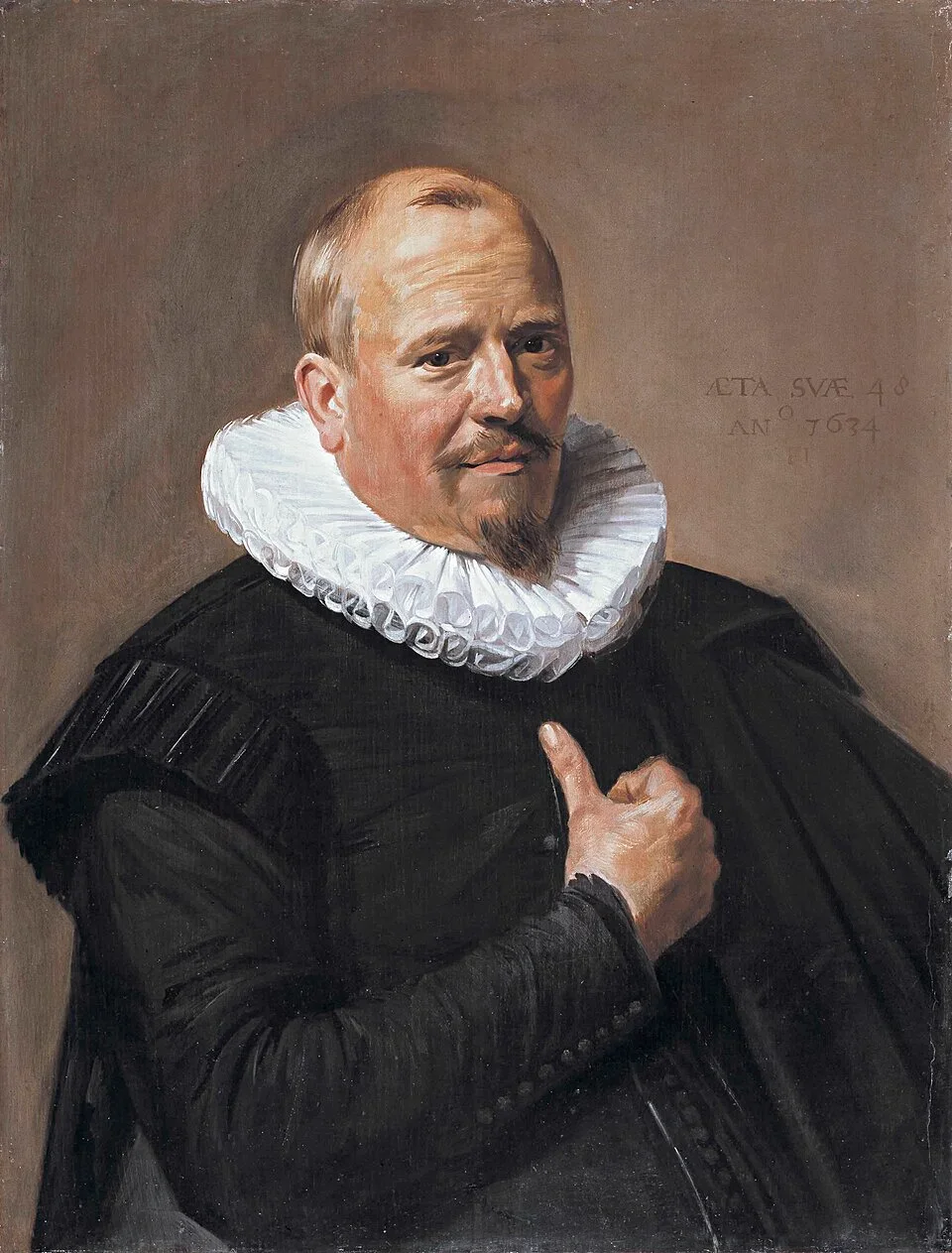
Portrait of a Man
A man faces you with his right hand against his chest and his thumb held high. His black jacket and white pleated ruff tell you he was well off. A black coat is slung over his shoulder. The piercing eyes and ruddy face keep the picture from feeling gloomy. Beside his face, a Latin inscription gives his age as forty-eight and the year as 1634. There is a second portrait, painted that same year and almost the same size. It shows a woman. It was made with the same materials, and its own inscription gives the year and her age. She was twelve years younger, and her picture is in Detroit. The two did not stay together. In 1873 the husband's portrait went to an auction in Amsterdam. The wife's stayed with a private collector in Cologne until 1912, then went onto the market as well. In 1955 the Putnam Foundation bought this portrait, and it came here to San Diego. Frans Hals painted the two as husband and wife, meant to hang together.
Listen in the appFrans Hals · Public domain
05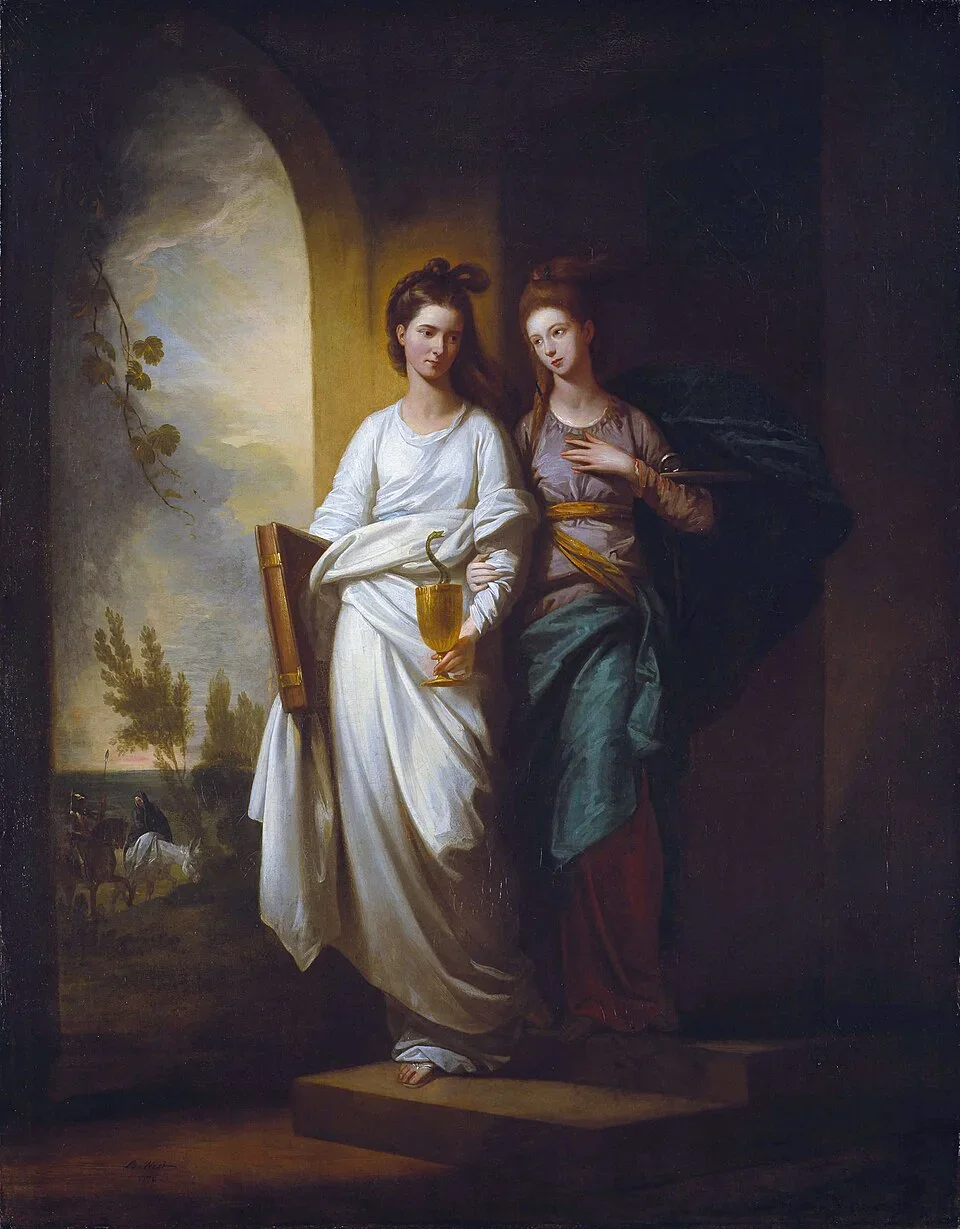
Fidelia and Speranza
A knight is coming through a dark landscape toward a doorway, with a woman guiding him. He has sinned, and she is taking him to be healed. At the entrance, two sisters wait on the steps, and they are the first he will meet. One holds the New Testament. She is Fidelia, faith. The other carries an anchor. She is Speranza, hope. The anchor shows what hope does, holding the soul steady. This scene comes from a poem by Edmund Spenser, The Faerie Queene. The woman is Una, who stands for the church, and the doorway is the House of Holiness, where the knight will be converted. Benjamin West was an American who admired classical sculpture and the old masters. He dressed the two sisters in clothes from ancient times. Dark clouds are drawing back across the landscape, and light is growing around the door. It is a new dawn breaking for the knight. That light shows in the eyes of Speranza, who faces the doorway. Fidelia's eyes are turned away. Whether the cup of wine is the chalice of Saint John is still not known.
Listen in the appBenjamin West · Public domain
06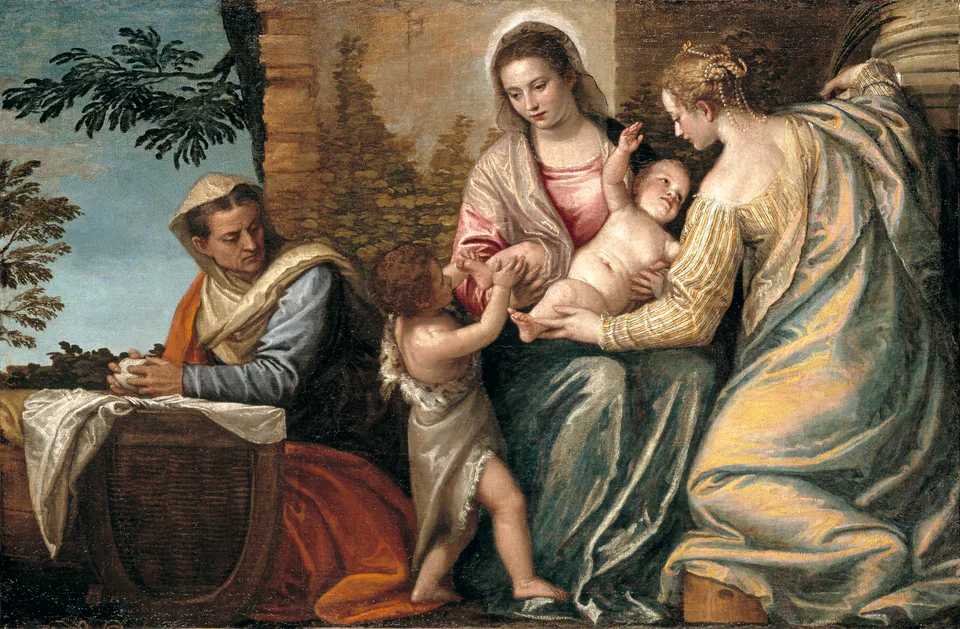
Madonna and Child with St. Elizabeth, the Infant St. John the Baptist
At the far right, a hand lifts toward the child at the center. It belongs to Saint Catherine of Alexandria, who kneels with her back to us, richly dressed. Her hand makes the gesture painters used when they showed her Mystic Marriage. Catherine was a princess and a scholar who became a Christian while still young. Across the picture, the infant John stretches his arms toward Mary and her son. Mary holds the child on her knees in the middle. Veronese plays light across the figures, letting one flow into the next as warm colors set against cool. Near the crib on the left is a woman with an anxious look. That is Elizabeth, John's mother and Mary's cousin.
Listen in the appPaolo Veronese · Public domain
07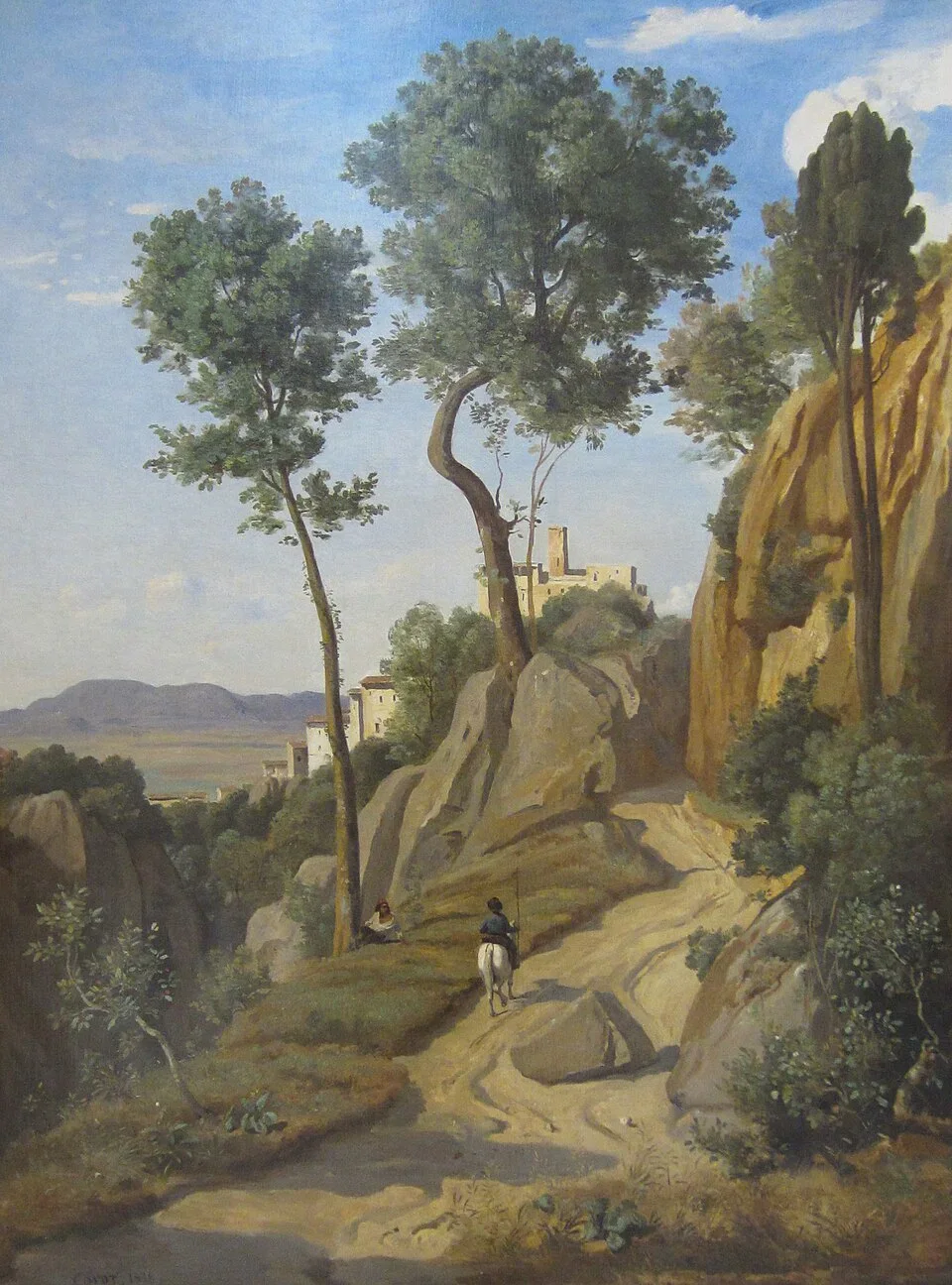
View of Volterra
Corot did not paint this in Volterra. He painted it in Paris, from oil sketches made during a month there. Volterra lies southwest of Florence. He had gone there in 1834, on his second trip to Italy, and made at least five sketches. From those came two larger paintings, and this is one, finished in 1838. Working so far from the place, he let the town become only a view. His attention went instead to the light and the countryside around it. What is still not known is whether any of this is a real spot in Volterra.
Listen in the appPhoto: Another Believer · CC BY-SA 4.0
08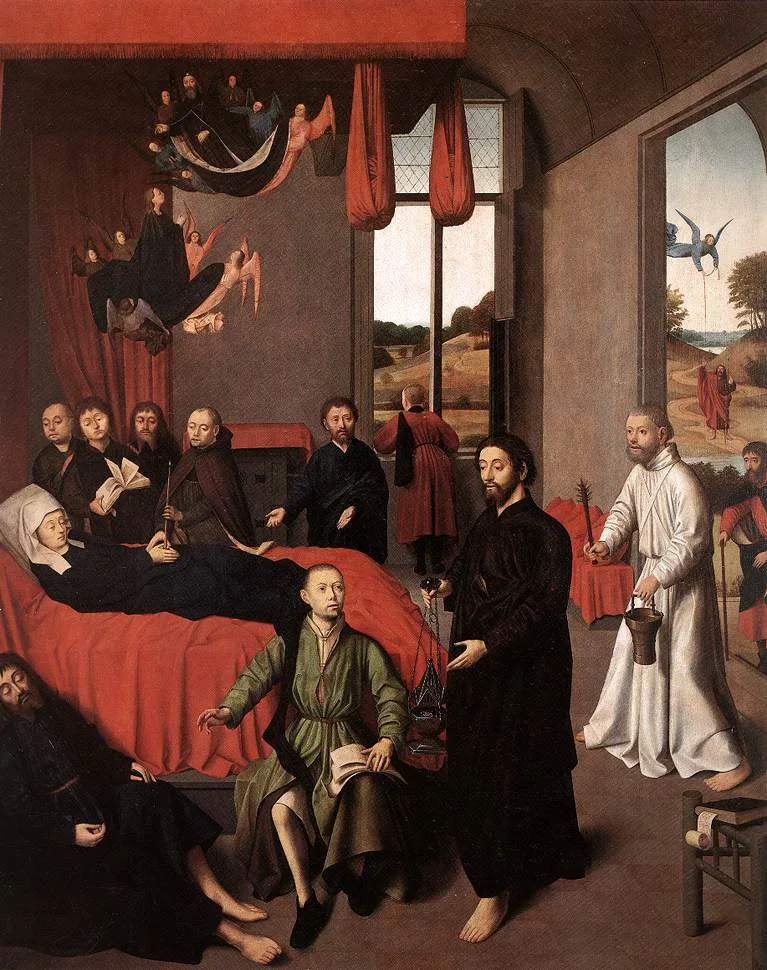
Death of the Virgin
The Virgin has just died. Her eyes are closed, her hands joined around a lit candle, a sign of her faith. Already angels carry a smaller, younger figure of her up toward Christ, who has come down to fetch her. Petrus Christus set her death and her welcome in heaven together, and lined up the heads of the two Virgins and Christ. Behind the bed, one apostle turns a book's pages, as if looking for the story of what he sees. Another stretches his arms out before him, palms open toward heaven, as if telling the doubters they can believe. None of this is told in the New Testament. Belief in her death and rise to heaven rests on writings outside the Bible. One of them is the Golden Legend, written in Latin between 1261 and 1266.
Listen in the appPetrus Christus · Public domain
09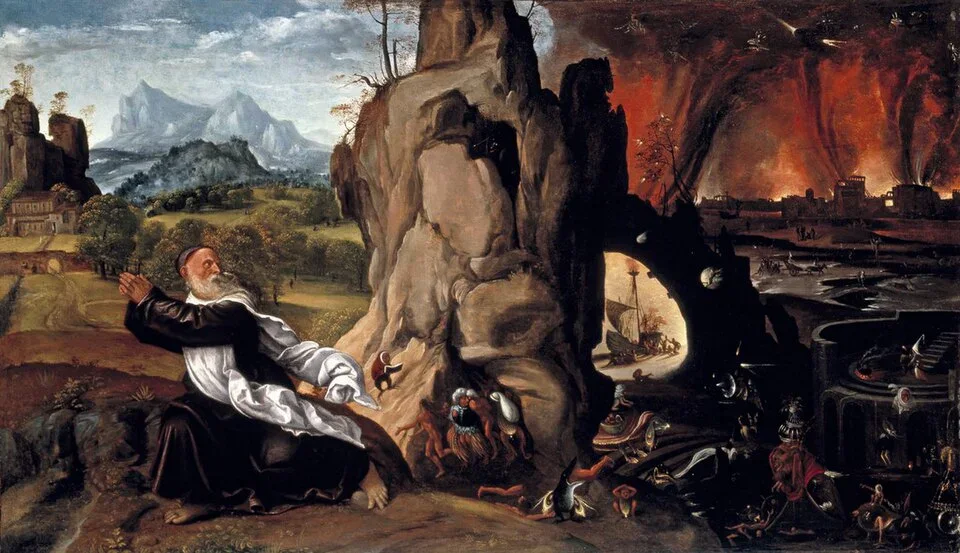
Torment of St. Anthony
Saint Anthony runs with his hands pressed together in prayer. As he flees, those joined hands point toward a monastery. He is after a way out, and he is already on his way. That gesture does two jobs at once. It recalls his role as the founder of monastic life, and it says that religious life is the escape from demonic temptation. Savoldo made this for a private study, a small room set aside for thought. He was paying homage to Hieronymus Bosch. He would have seen Bosch's pictures of hell in Venice, in Cardinal Domenico Grimani's collection. From a triptych of hermit saints, he took the figure of the saint fleeing to the left, away from demons. The hell he leaves behind is here too. Fire burns in it, and a labyrinth of circles. That is what he is running from, and the reason his hands point where they do.
Listen in the appGiovanni Girolamo Savoldo · Public domain
10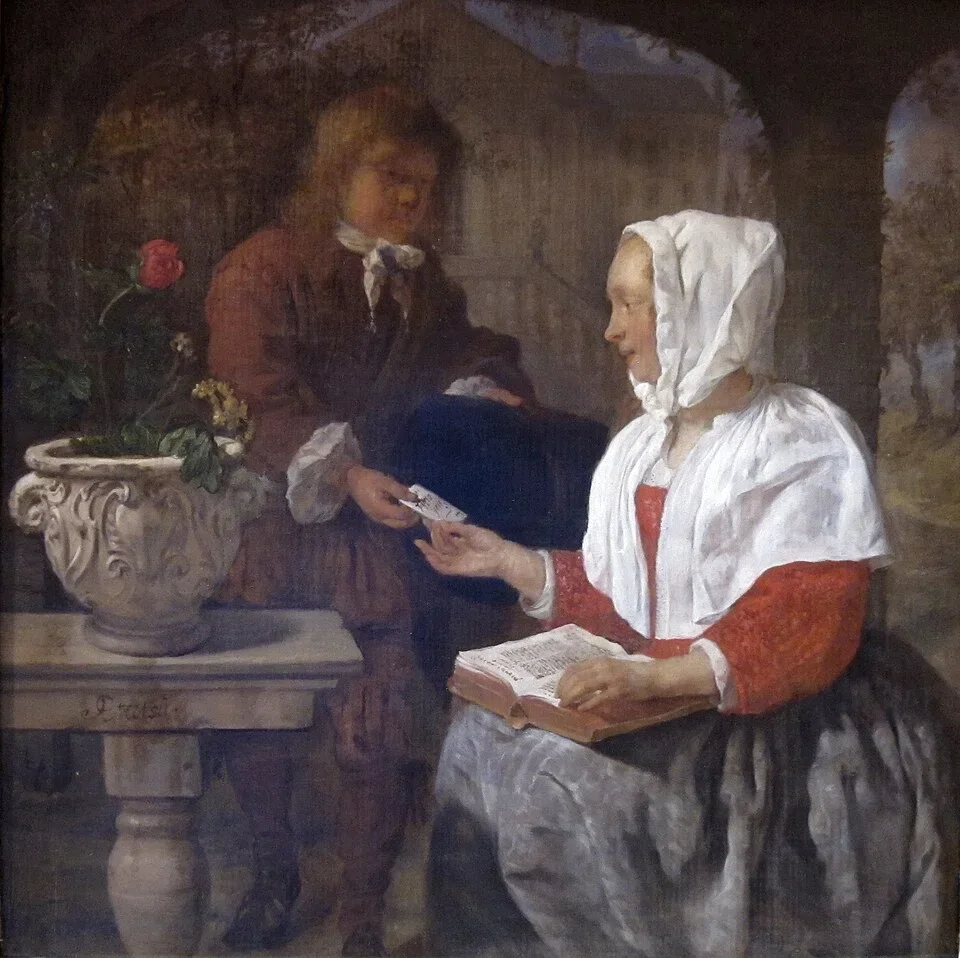
A Girl Receiving a Letter
A girl sits under an arcade with a book on her lap. A boy has just handed her a letter. The letter is most likely from a lover. The vase of flowers in front of her is probably a symbol. And the arcade shows a classical Palladian villa, a sign of elegance and wealth. But this picture was not made to stand alone. Its companion is now in a museum in Montpellier, where a man holds a pen and writes a letter, with a maidservant nearby. He writes, and she reads. Metsu painted the two panels to match, the same size and the same subject. The young man and woman may be the painter himself and his wife. Letter writing had become fashionable in Europe in that century, after the postal service was established.
Listen in the appGabriel Metsu · Public domain
- 11
Lovers in a Park
François Boucher · 1758
- 12
Portrait of Mrs. Thomas Gage
John Singleton Copley · 1771
- 13
A Seaport at Sunset
Joseph Vernet · 1749
- 14
Blind Man's Buff
Jean-Honoré Fragonard · c. 1775–1780
- 15
Christ Healing the Blind
Philippe de Champaigne · 1657
- 16
Cho-looke, the Yosemite Fall
Albert Bierstadt · 1864
- 17
The Return of the Prodigal Son
Guercino · 1651–1655
- 18
Christ on the Cross
Bartolomé Esteban Murillo · 1660–1670
- 19
Saint Francis in meditation
Francisco de Zurbarán · c. 1635
Timken Museum of Art
Frequently asked questions
How much does the guide cost?
Free app download. Free until 1 January. Listed guide price: $0.99. Audio guide only. Venue admission is separate.
Can I listen without internet?
Yes. Download the guide’s audio, images, and maps in the app before your visit. Your downloaded content is then available offline.
Can I listen in my language?
In English for now. More languages soon.
Do I need to follow a schedule?
No. This is a self-guided experience. Choose your stops, pause whenever you like, and return to a story at your own pace.
Which artworks are in the Timken Museum of Art audio guide?
19 artworks, including Parable of the Sower (Pieter Bruegel the Elder), Saint Bartholomew (Rembrandt), Portrait of Cooper Penrose (Jacques-Louis David), Portrait of a Man (Frans Hals), Fidelia and Speranza (Benjamin West), Madonna and Child with St. Elizabeth, the Infant St. John the Baptist (Paolo Veronese), View of Volterra (Jean-Baptiste Camille Corot), and Death of the Virgin (Petrus Christus). The full list is on this page.
Is this the museum’s official audio guide?
No. Stanza is an independent audio guide app and is not affiliated with Timken Museum of Art. Museum admission is separate.
At your own pace
Explore Timken Museum of Art.
Download Stanza, then search for “Timken Museum of Art”.
Free app download · Guide price shown in the app
Keep exploring
Audio guides — United States
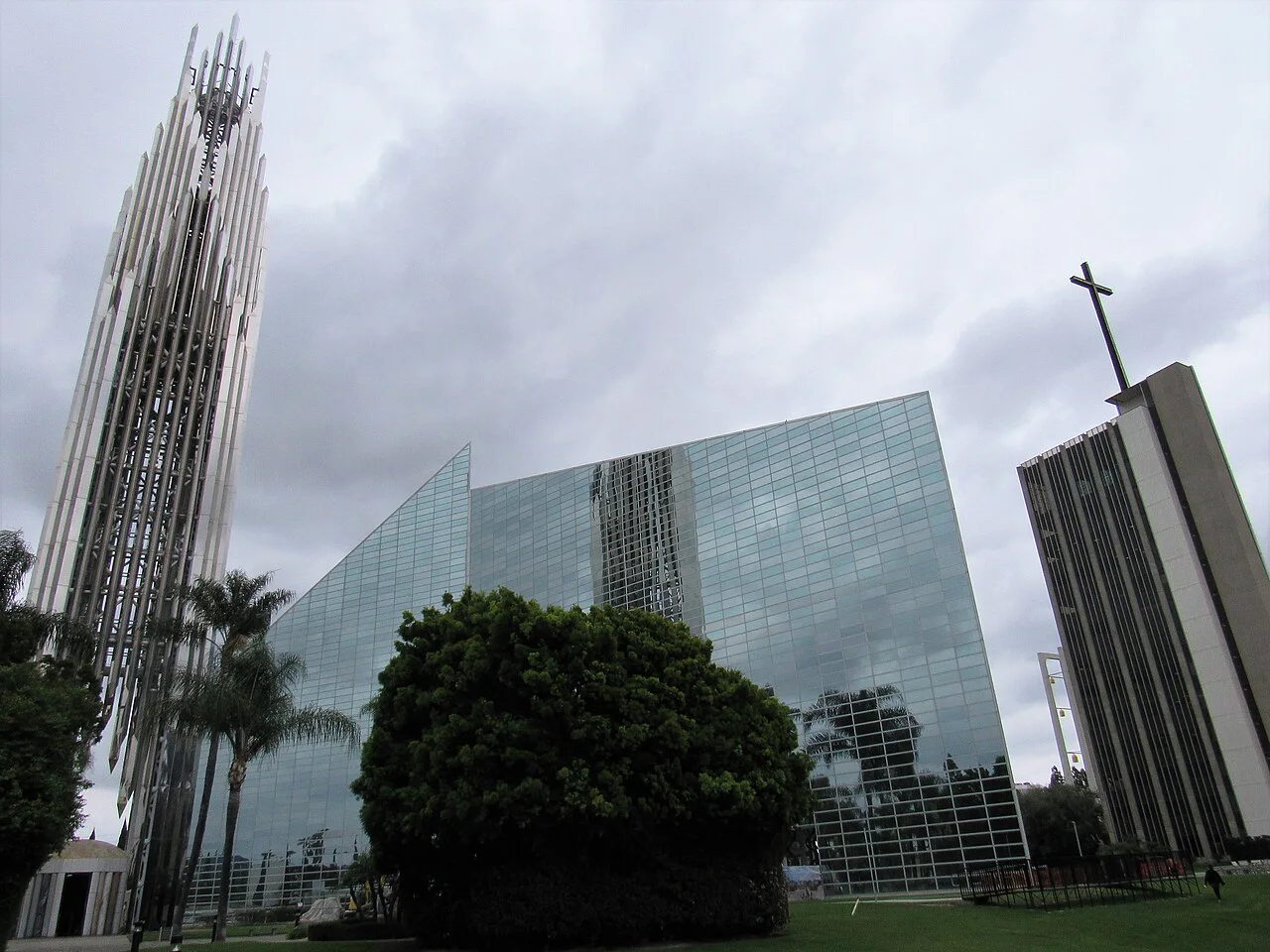
Garden Grove · 136 km
Christ Cathedral
Content & sources
Photo: Farragutful · CC BY-SA 4.0
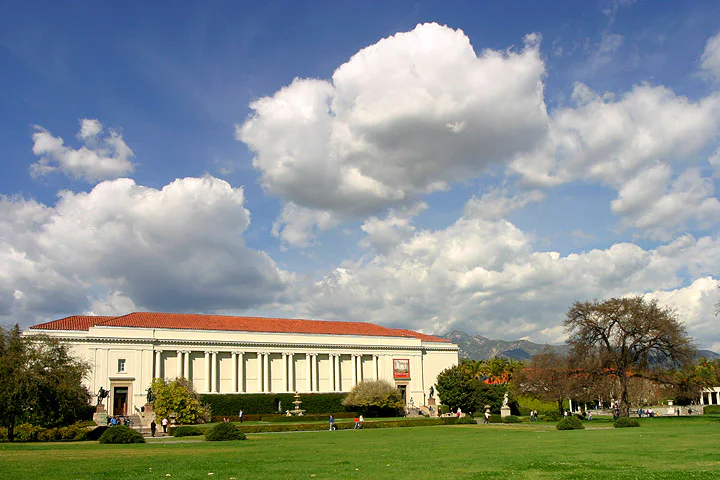
San Marino
Huntington Library
Content & sources
By Aaron Logan · CC BY 1.0
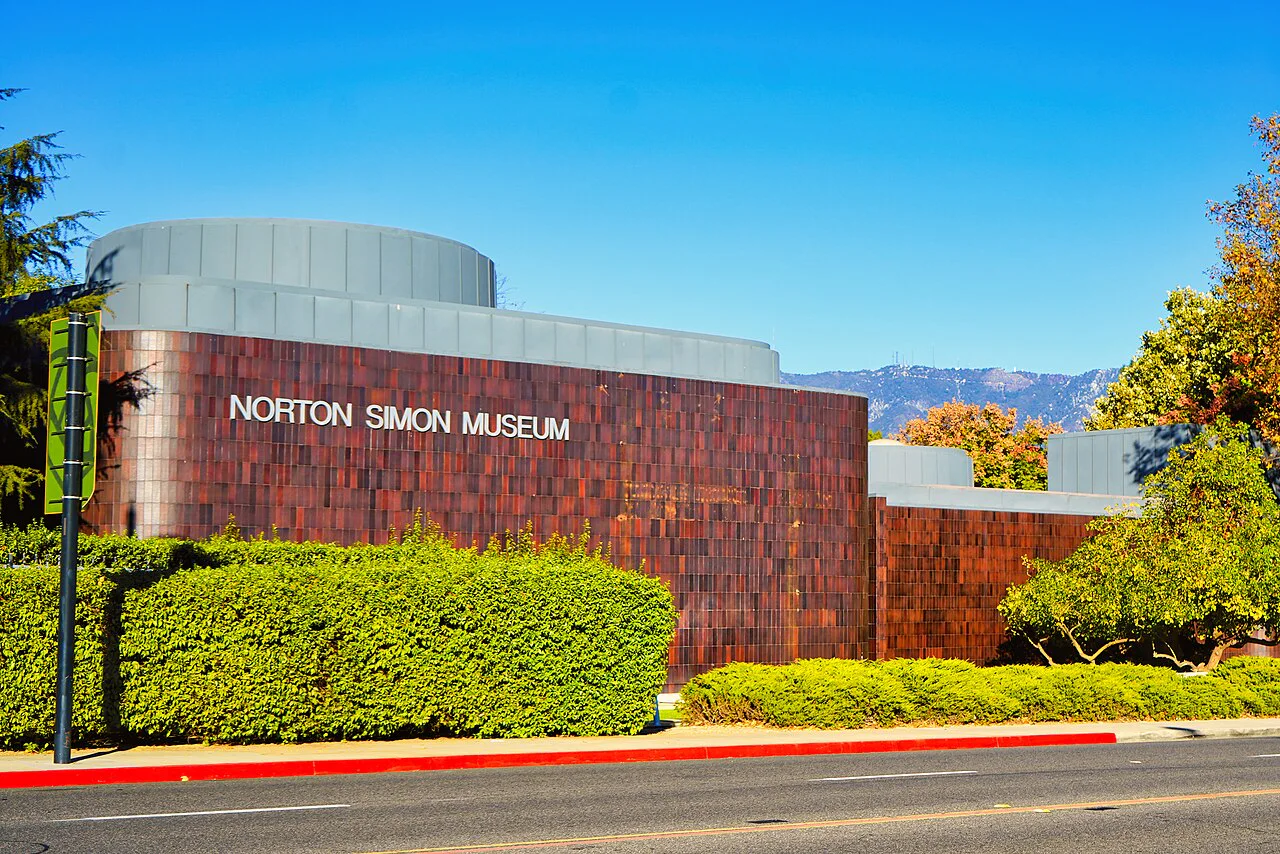
Pasadena
Norton Simon Museum
Content & sources
Tony Mariotti from Los Angeles, United States · CC BY 2.0
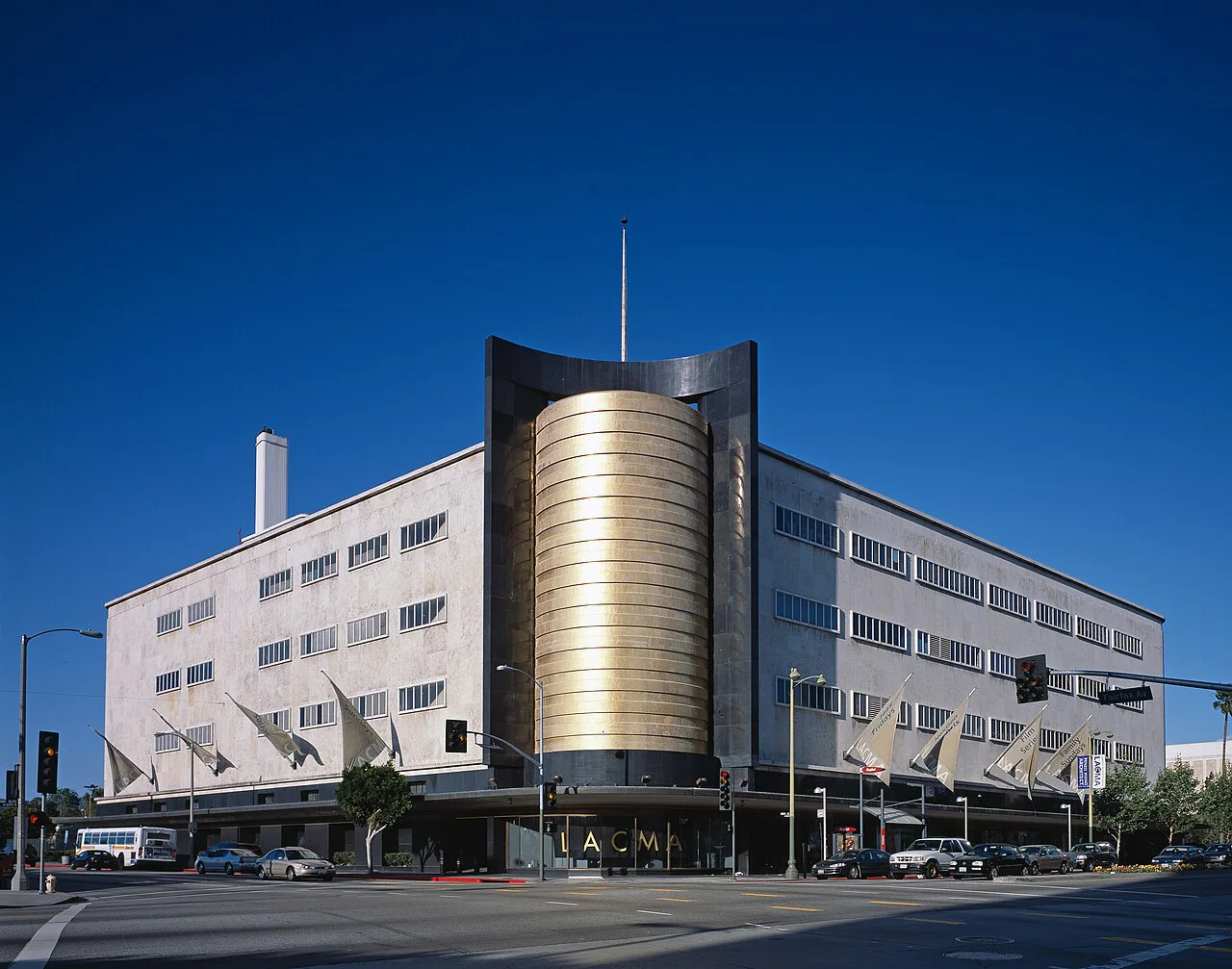
Los Angeles
Los Angeles County Museum of Art
Content & sources
Carol M. Highsmith · Public domain
Art museums
More art museum audio guides
San Marino · 12 artworks
Huntington Library
Content & sources
By Aaron Logan · CC BY 1.0
Pasadena · 29 artworks
Norton Simon Museum
Content & sources
Tony Mariotti from Los Angeles, United States · CC BY 2.0
Los Angeles · 81 artworks
Los Angeles County Museum of Art
Content & sources
Carol M. Highsmith · Public domain

Los Angeles · 143 artworks
J. Paul Getty Museum
Content & sources
Jelson25 · Public domain
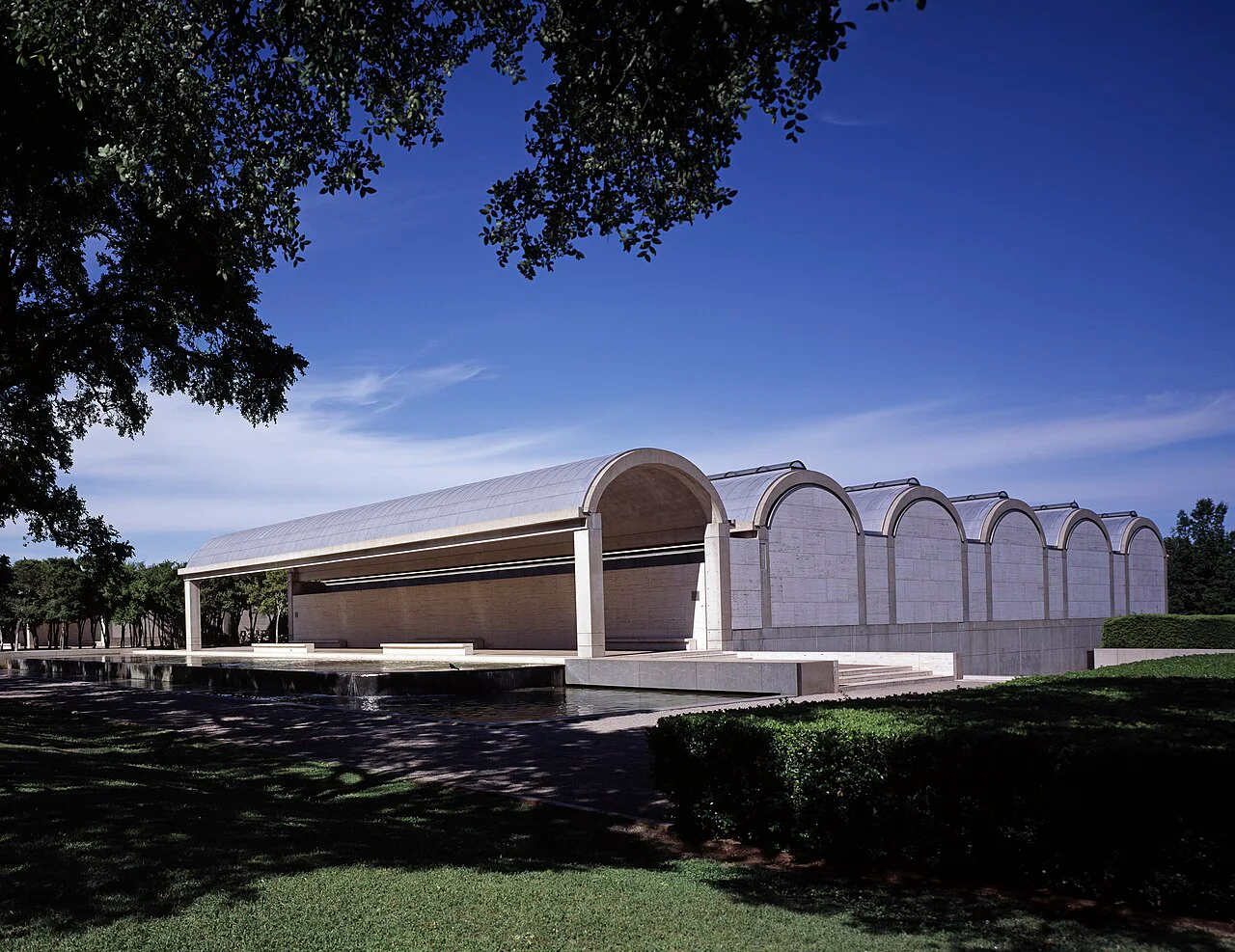
Fort Worth · 39 artworks
Kimbell Art Museum
Content & sources
Carol M. Highsmith · Public domain
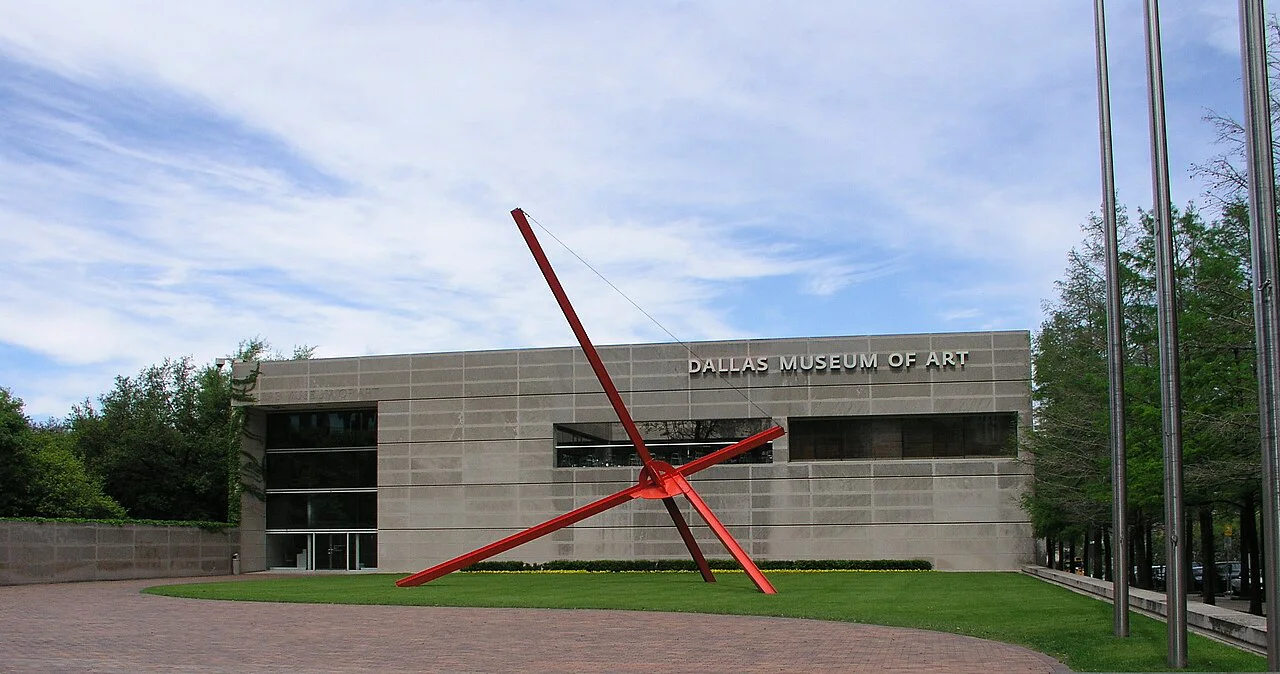
Dallas · 31 artworks
Dallas Museum of Art
Content & sources
KeithJonsn at English Wikipedia · CC BY-SA 3.0