Languages
15Fort Sumter Audio Guide
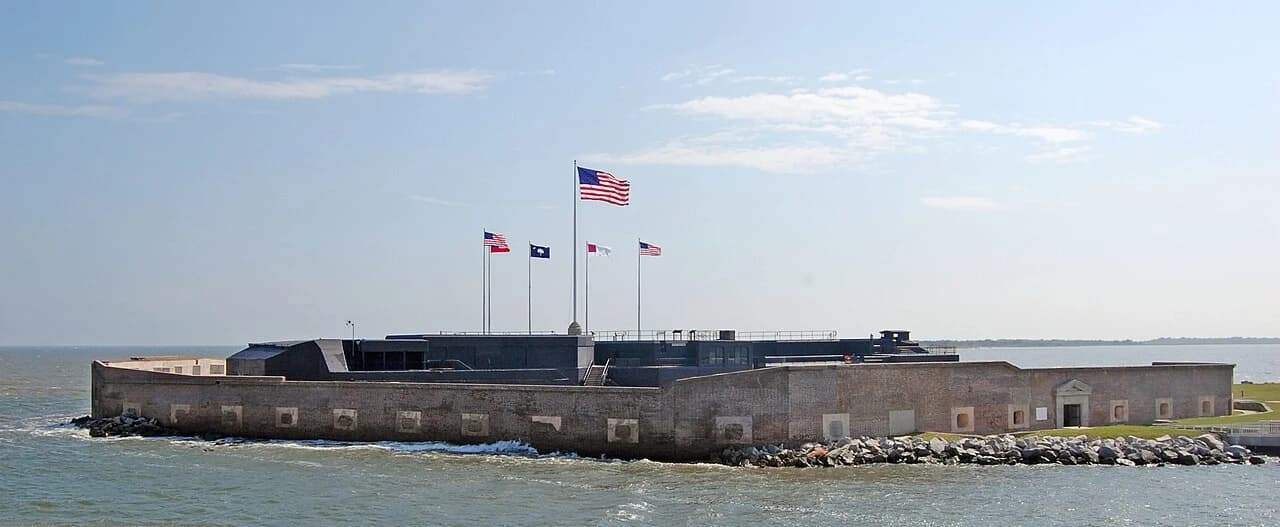
Fort Sumter is a landmark in Sullivan's Island, United States. Explore it with Stanza's GPS-triggered offline audio guide — available in 15 languages.
Quick Facts
14
Stops
15
Languages
100%
Offline
📍 Sullivan's Island, United States · 32.7525°N, -79.8744°E
About Fort Sumter
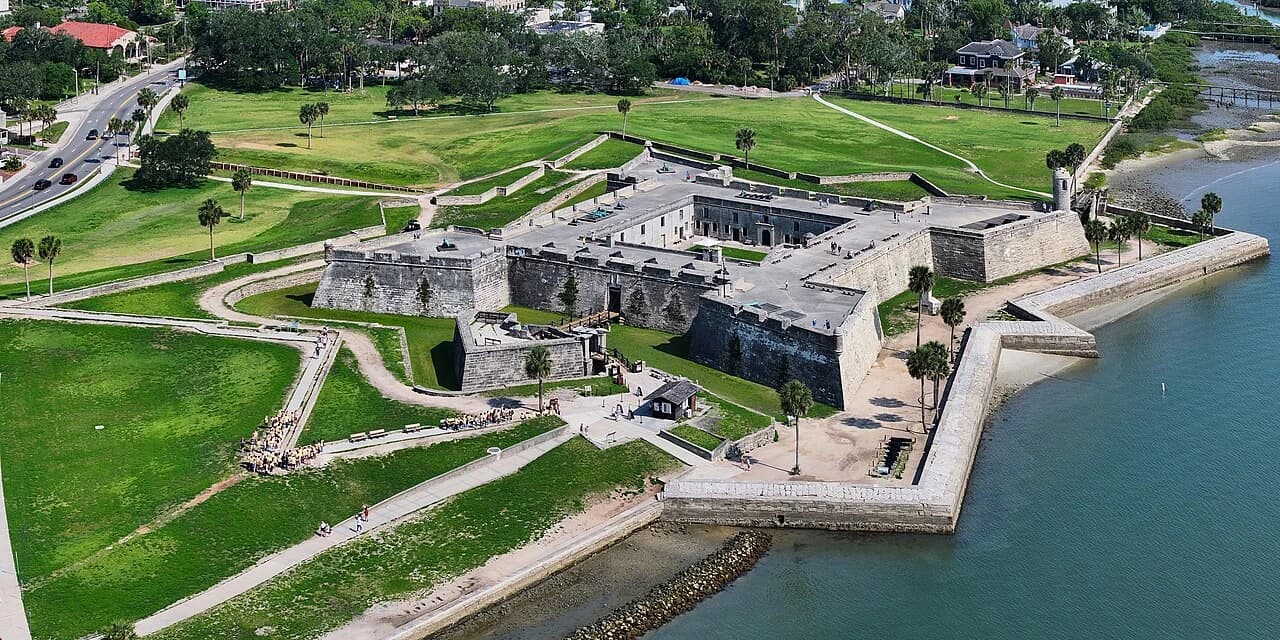
A historic sea fort located in Charleston, South Carolina. It is notable as the site where the first shots of the American Civil War were fired.
This self-guided audio tour features 14 narrated stops organized across 6 sections, including Arrival at the Island Fortress, The Parade Ground and Garrison Monument, The First Bombardment and Casemates, Fort Sumter Museum, Battery Huger, The Barbette Tier and Flagpole. As a fort, Fort Sumter offers a unique cultural experience in the heart of Sullivan's Island, United States.
The Stanza audio guide is available in 15 languages and works entirely offline — download the complete tour including audio narration, maps, and images before your visit. As you walk through Fort Sumter, GPS-triggered narration plays automatically at each point of interest.
Last updated:
What you will hear
Arrival at the Island Fortress
Establishes the setting and the fort's isolated position in Charleston Harbor as visitors arrive by ferry.
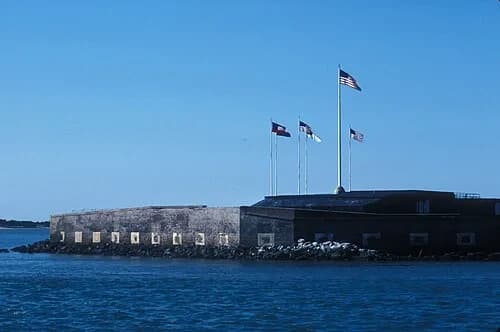
The Island Fortress
Welcome to one of the most significant military sites in American history, standing isolated in the center of Charleston Harbor. Construction of this fortress began in 1829 on a completely man-made island, a feat achieved by depositing thousands of tons of granite onto a shallow sandbar. The strategic placement was intended to protect the city of Charleston from naval invasion, following the hard-learned lessons of the War of 1812. The finished masonry walls stood approximately 50 feet above the low tide mark and were roughly five feet thick, designed to withstand the heaviest naval artillery of the era. Despite decades of work, the fort was still partially unfinished when political tensions reached a breaking point in 1860. This isolated, artificial island soon became the primary flashpoint for the American Civil War, as its presence in the harbor served as a powerful symbol of federal authority that South Carolina sought to challenge. The surrounding waters, which you can see stretching toward the horizon, once bristled with the imminent threat of conflict as both sides prepared for the inevitable confrontation.
The Parade Ground and Garrison Monument
The central hub of the fort, where the daily life of the soldiers took place and where the Garrison Monument now honors the defenders.
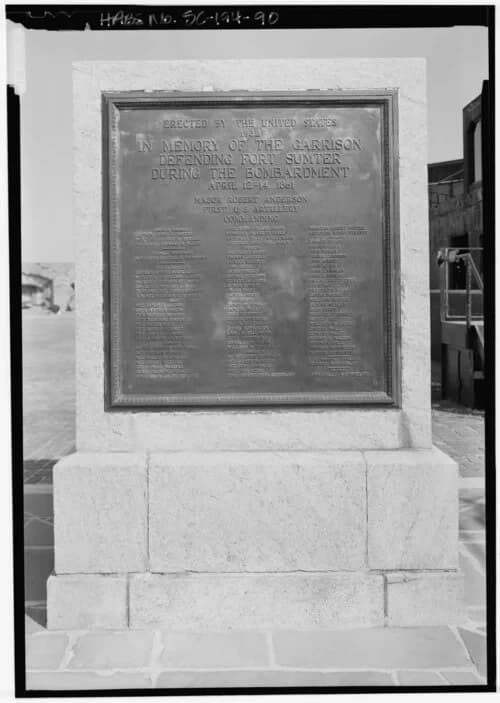
Garrison Monument
1932 · granite
This plaque commemorates the human element of the conflict, specifically the 85 men who formed the Union garrison under Major Robert Anderson. These soldiers defended the fort during a relentless 34-hour bombardment that began in the early hours of April 12, 1861. While the history books often focus on strategic movements and political outcomes, this list of names brings the focus back to the individuals who lived through the smoke and heat within these walls. Remarkably, despite the intensity of the engagement and the thousands of shells fired, no one was killed on either side during the actual battle. The only fatalities occurred after the surrender was finalized; during a 100-gun salute intended to honor the United States flag before it was lowered, a pile of cartridges accidentally exploded, killing two Union soldiers. This monument ensures that the specific identities of the defenders, from the officers down to the private soldiers, are recognized alongside the famous events they were part of in the spring of 1861.
The First Bombardment and Casemates
Focuses on the 34-hour battle that started the Civil War and the physical damage sustained by the brick walls.
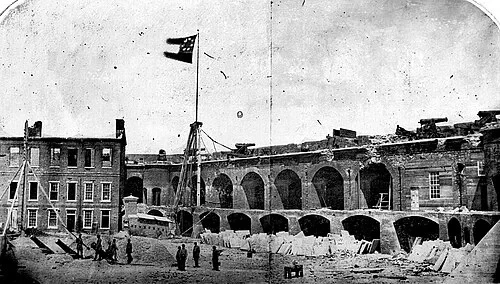
Battle of Fort Sumter
Archival images of the fort capture the significant damage sustained within the walls following the Union surrender in April 1861. You can see the charred remains of the barracks and the temporary sandbag fortifications that were hastily erected during the final hours of the fight. Once the Confederate forces took possession of the fort, they occupied it for nearly four years, from 1861 to 1865. During this occupation, they faced even more intense shelling from Union naval and land batteries. To survive, the Confederate garrison utilized enslaved workers to reinforce the existing brick walls with massive amounts of sand, timber, and debris. This improvised reinforcement actually made the fort more resilient; as the bricks were pulverized by incoming fire, they mixed with the sand to create an almost indestructible sloping earthwork that was far harder to breach than the original masonry. This transformation from a neat, vertical brick fortress to a jagged, reinforced mound of earth and rubble explains why the fort was never successfully retaken by force despite years of heavy Union effort.
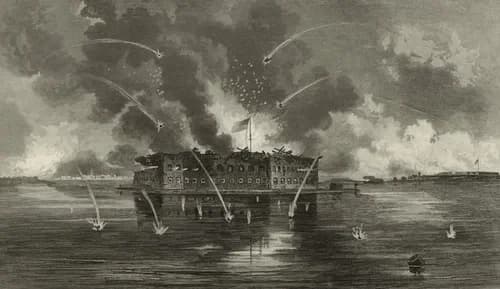
The First Shot
The peace of Charleston Harbor was shattered at 4:30 in the morning on April 12, 1861, when the first mortar shell was launched toward this island. The shot was fired by Lieutenant Henry S. Farley from a position at nearby Fort Johnson, signaled by a shell bursting directly over Fort Sumter. This single event marked the official beginning of the Civil War. For the next 34 hours, a continuous bombardment rained down on the garrison, with 43 Confederate guns and mortars firing from various points around the harbor, including Fort Moultrie and a floating battery. The Union soldiers inside were forced to take cover in the casemates as the barracks caught fire and the air became thick with smoke. They returned fire selectively to conserve their limited ammunition, but their smoothbore guns were largely ineffective against the distant Confederate batteries. By the time Major Anderson agreed to surrender the following day, the fort had been hit hundreds of times, forever changing the course of American history and the lives of those caught in the harbor that morning.
Fort Sumter Museum
Provides a deeper look at the fort's original 1829 design and the symbolic importance of the garrison flag.
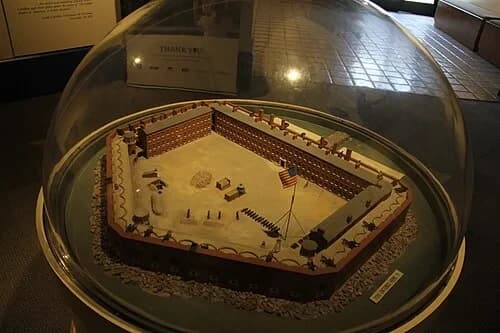
The Original Vision
Within the museum, detailed models reveal the original architectural ambition for the fort before the realities of wartime shortages intervened. The structure was initially designed as a three-story, pentagonal fortress intended to house a garrison of up to 650 men. The model shows the intended symmetry and the tiers of gun ports that were meant to cover every possible angle of approach from the sea. When the war broke out in 1861, however, the reality was quite different. The third tier was still largely unfinished, and several gun ports remained empty or were covered with temporary materials. This lack of military preparedness was a common theme across many coastal fortifications at the time, as the young nation struggled with the costs and logistics of maintaining such massive structures. The model provides a helpful 'before' picture, allowing you to visualize the clean lines and impressive height the fort would have possessed had it been completed as planned, rather than the battered and modified structure that emerged from the years of heavy bombardment that followed.
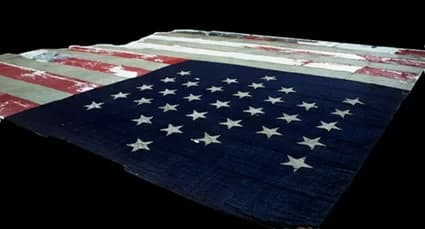
The Garrison Flag
This flag, which once flew over these ramparts, became one of the most potent symbols of Union resolve during the conflict. When Major Anderson surrendered the fort in April 1861, he famously insisted on lowering the flag with a full salute and taking it with him as he evacuated. Throughout the war, this specific flag was displayed at massive patriotic rallies in Northern cities to help raise funds and recruits for the Union cause. It served as a sacred relic, reminding the public of the first battle and the work that remained to be done. The flag's journey became a narrative of the war itself—from a symbol of initial defeat to a focal point for national mobilization. It was eventually returned to the fort at the end of the conflict, having traveled thousands of miles and been seen by millions of citizens. Its frayed edges and weathered fabric are a testament to its long history, representing the persistence of the Union through four years of the most difficult struggle in its history.
Battery Huger
The massive concrete addition from the late 19th century that represents the fort's continued role in coastal defense through the Spanish-American War.
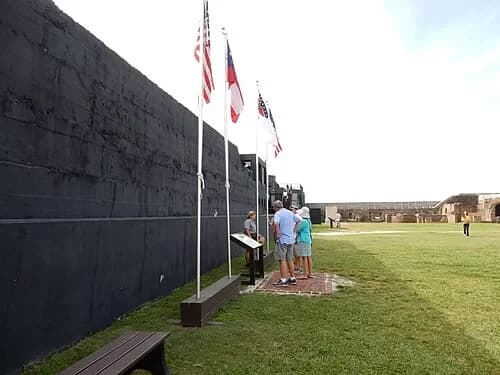
Battery Huger
1890s
The massive black concrete structure rising in the center of the fort is Battery Huger, which was built in 1898 during the Spanish-American War. This addition represents a completely new era of coastal defense, moving away from the brick masonry of the mid-19th century toward reinforced concrete. Battery Huger was designed to house long-range 12-inch rifles, which were far more powerful and accurate than the cannons of the Civil War era. Its construction was a significant undertaking that unfortunately required the demolition of much of the original interior ruins of Fort Sumter to create space for its foundation and magazine. While it looks out of place compared to the surrounding brickwork, it served a vital role in protecting Charleston Harbor during a time of international tension. The battery stands as a reminder that the fort remained an active military installation long after 1865, adapting to new threats and changing technologies. The contrast between the dark, smooth concrete and the rough, red brick illustrates the rapid transition in military engineering that occurred at the turn of the century.
The Barbette Tier and Flagpole
The highest point of the tour, offering panoramic views of the harbor and the site where the flag was triumphantly raised again in 1865.
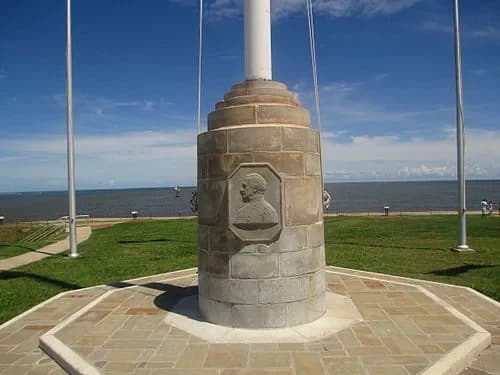
Flagpole Monument
1928
The base of the flagpole marks a place to consider the complex personal choices of Major Robert Anderson, who commanded this garrison in 1861. Anderson found himself in an incredibly difficult position; as a Kentuckian and a former slaveholder, he had personal sympathies with the South and its culture. However, he remained deeply loyal to his Union commission and his oath of office. His decision to consolidate his forces at Fort Sumter and endure the initial bombardment made him an instant national hero in the North, where he was viewed as a man of principle who stood his ground against overwhelming odds. After his eventual surrender, Anderson's health declined, but his reputation remained untarnished. His struggle highlights the deeply personal nature of the conflict, where families and loyalties were often divided. Despite his background, he chose to uphold the authority of the federal government, an act that transformed him into a powerful symbol of the Union's determination during the opening days of the war. His name remains central to the story of this island.
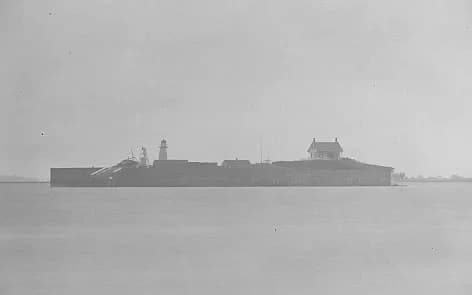
The Fort's Second Life
Following the Civil War, the fort's military importance shifted, leading to its unlikely use as a lighthouse station for several years in the late 19th century. Historical documents from that period show a lighthouse tower and a keeper's dwelling standing directly on the ramparts, high above the harbor. This phase of the fort's history demonstrates how the site adapted to peacetime needs when its defensive capabilities were no longer the primary concern. For the lighthouse keepers and their families who lived here, the island was a place of isolation and duty, much as it had been for the soldiers, but their mission was to guide ships safely through the harbor rather than to keep them out. This peaceful interlude lasted until the late 1890s, when the threat of the Spanish-American War prompted the government to re-fortify the site with modern concrete batteries. The presence of the lighthouse illustrates the varied roles this small patch of land has played over nearly two centuries, serving both as a focal point for war and a beacon for safe passage.
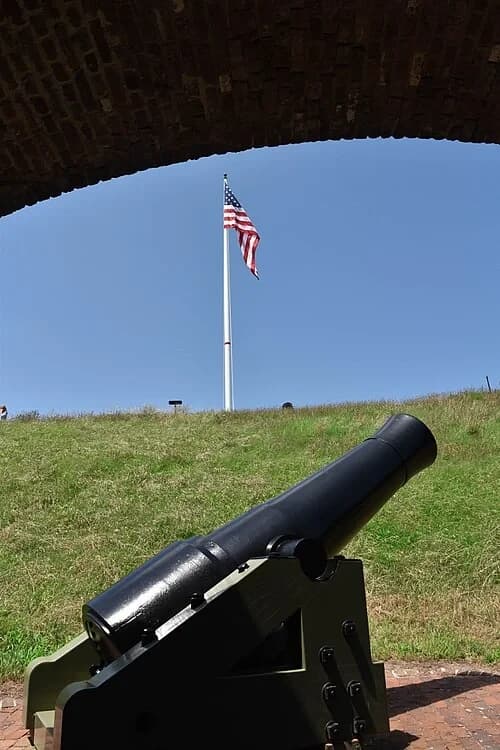
Raising the Colors
As you look up at the flag flying today, remember the triumphant ceremony held here on April 14, 1865. This date was exactly four years to the day after Major Anderson had surrendered the fort. In a moment of deep symbolic significance, the now-General Anderson returned to the ruins of the fortress he had once defended. In front of a large crowd of dignitaries and former soldiers, he raised the original tattered garrison flag back over the island, marking the formal restoration of federal authority in Charleston Harbor. The event was meant to be a high point of national celebration, but the mood of the country was shattered just hours later when news arrived that President Abraham Lincoln had been assassinated in Washington. This final historical chapter of the war at Fort Sumter connects the site's beginning to its end, showing how the flag became a thread that pulled through the entire four-year conflict. The ceremony here was one of the last major public acts of the war, closing the circle that began with the first mortar shot in 1861.
Want to hear the rest?
Download the Stanza app to unlock all 14 stops and full GPS-guided navigation.
Frequently Asked Questions
How long does the Fort Sumter audio tour take?
The Fort Sumter audio guide includes 14 narrated stops. Most visitors spend 45 minutes to 1.5 hours exploring the complete tour, though you can listen at your own pace and skip or revisit any stop.
Is the Fort Sumter audio guide available in my language?
Stanza supports 15 languages: English, Spanish, French, German, Italian, Portuguese, Russian, Japanese, Chinese, Korean, Arabic, Hindi, Polish, Dutch, Hebrew. Check the guide in the app to confirm the languages currently available for this tour.
Can I use the audio guide offline at Fort Sumter?
Yes! Download the complete Fort Sumter tour — including all audio, maps, and images — before your visit. The Stanza app works completely offline, so you don't need WiFi or mobile data at the venue.
How much does the Fort Sumter audio guide cost?
The Stanza app is free to download. The current listed price for the Fort Sumter audio guide is $1.99; app-store region and currency may affect the final price.
How do I use the Stanza audio guide at Fort Sumter?
Download the free Stanza app, search for "Fort Sumter", and download the tour. When you arrive at the venue, the app uses GPS to detect your location and automatically plays the relevant narration as you move between points of interest — completely hands-free.
What makes the Stanza audio guide different from other Fort Sumter tours?
Stanza offers GPS-triggered narration that plays automatically as you walk through Fort Sumter — no need to manually select stops. The tour is available in 15 languages, works fully offline, and includes 14 expertly narrated stops with images and historical context.
What other audio guides are available near Fort Sumter?
Stanza offers multiple audio guides in Sullivan's Island, United States and nearby areas. After downloading the app, browse the map to discover all available tours near Fort Sumter. Each guide can be downloaded for offline use.