Stanza · Audio guide
莫高窟 Audio Guide
A place to remember. A story to take with you.
The Mogao Caves are a system of 500 temples located near Dunhuang, China. They contain some of the finest examples of Buddhist art spanning a period of 1,000 years.
Download Stanza, then search for “莫高窟”.
About the tour
One guide. Your kind of visit.
The Mogao Caves are a system of 500 temples located near Dunhuang, China. They contain some of the finest examples of Buddhist art spanning a period of 1,000 years.
Ready when you are.
- 01Get the free Stanza app.
iOS & Android
- 02Find your guide.
“莫高窟”
- 03Download before you go.
Works offline
Audio guide / 14 narrated stops
Inside the guide
Get to know a few of the stories before you go. Open a stop to read more.
01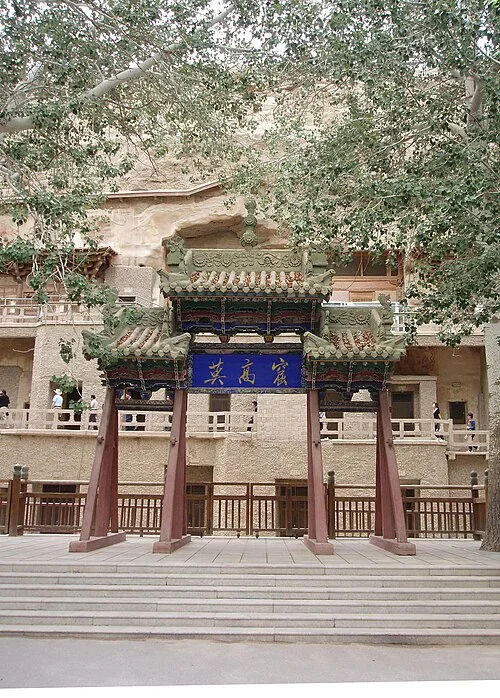 The Desert Oasis and Cliffside Sanctuary
The Entrance Gateway to the Mogao Caves
Welcome to the Mogao Caves, in the desert of Gansu province in northwest China. They are also known as the Thousand Buddha Grottoes. The green-painted timber gateway carries the site's name in Chinese characters, Mo gao ku. Beyond it lies a cliff of cave temples, about twenty-five kilometers from the oasis town of Dunhuang. Dunhuang sat at a crossroads of the Silk Road, where goods and religions moved between China, Central Asia and India. The story this tour follows begins in the fourth century, when hermit monks first hollowed out meditation cells in the cliff. For roughly a thousand years after that, worshippers kept cutting, painting and sculpting. What grew here became one of the great treasuries of Buddhist art anywhere in the world.
Photo: Fanghong · CC BY-SA 3.0
02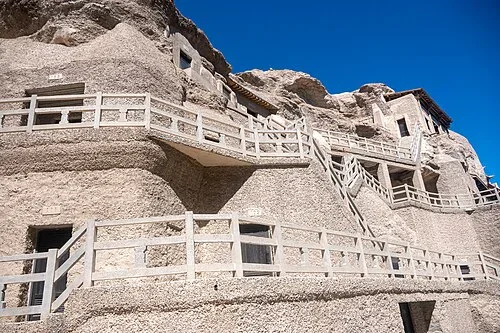 The Desert Oasis and Cliffside Sanctuary
The Honeycomb Cliff Face of Mingsha Mountain
A Tang dynasty book preserves the story of how this cliff was chosen. In the year 366, a wandering monk named Le Zun came to this place. He saw golden light on the rock face, brilliant as if a thousand Buddhas had appeared. He took it for a sign and cut the first meditation cave here. Another account, in an older geography of the region, puts the vision a few years earlier, in 353. However the date is told, a second monk, Faliang, soon joined him. By the time of the Northern Liang dynasty, a small community of monks lived at the foot of the cliff. The rock itself explains the site's shape. It is a soft gravel conglomerate, easy to hollow but useless for carving. So the caves were dug, plastered and painted rather than sculpted. The cliff runs for more than a kilometer and a half along the base of the dunes. Seven hundred and thirty-five caves survive, stacked in tiers and linked by outside walkways like the ones threading this face.
xiquinhosilva · CC BY 2.0
03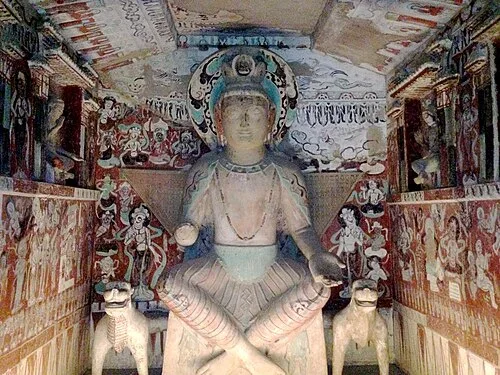 Early Dynasties: Gandhara Roots and Cultural Fusion
Cave 275: A Northern Liang Maitreya
The three oldest decorated caves still surviving here date to the Northern Liang dynasty, built between 419 and 439. Cave 275 is one of them, and its centerpiece is a seated Maitreya, the Buddha of the future. His legs cross at the ankles, and his crown rises in three disks. That pose and that crown carry the imprint of Kushan art, from a Buddhist culture far to the west. The painted friezes around him share their style with the Kizil Caves of Central Asia. In these early rooms, the painting techniques, the compositions and even the costumes came from India and Central Asia. A distinct Dunhuang style had not yet emerged. The cave plans were borrowed too, adapted from Indian models. Some are halls built for circling a sacred center. Others are monastic cells with side chambers just big enough for one seated meditator.
Listen in the appBairuilong · CC BY-SA 4.0
04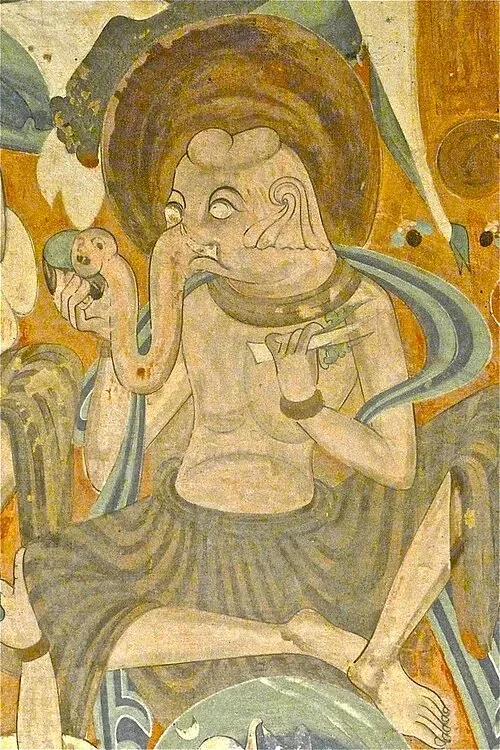 Early Dynasties: Gandhara Roots and Cultural Fusion
Cave 285: The Elephant-Headed God on a Buddhist Wall
An elephant-headed god sits among the Buddhist figures of Cave 285. This is Vinayaka, the deity better known in India as Ganesha, son of Shiva. An inscription inside the cave precisely dates its murals to the late 530s, in the Western Wei dynasty. That date makes the cave a rare fixed point, and a showcase of how many worlds met at Dunhuang. Buddhist deities share the space with Hindu gods like Shiva. Chinese Daoist figures, the primordial pair Fuxi and Nuwa, appear in the same rooms. The reason is geography. Artists here served patrons carrying images from India, Central Asia and China. As Western Wei went on, Chinese elements grew stronger in the painting. But in this cave, several religions' worlds still share the same walls.
Listen in the appUnknown author · Public domain
05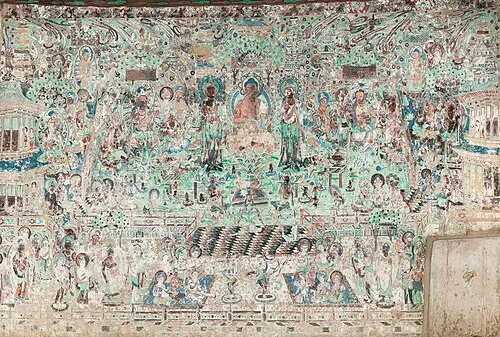 High Tang Splendor: Paradises, Music, and Aristocratic Donors
Cave 220: The Western Paradise Illustrated
During the Tang dynasty, painters at Mogao found a new way to teach scripture. They turned the sutras, the written teachings, into vast complete paintings covering whole walls. The south wall of Cave 220 carries one of the finest. It shows the Western Paradise, the heaven of the Pure Land school, a form of Buddhism that grew popular in the Tang era. The mural was painted in 642 and paid for by the Zhai family, a wealthy local clan. It measures over five meters wide. At its center, Amitabha Buddha sits cross-legged in a great pool, under a tree of treasure. Bodhisattvas stand on lotus blossoms around him, and pavilions rise at the pool's corners. Nine lotus flowers branch from a single stem below, standing for nine paths by which souls are reborn into paradise. The scene brims with inexhaustible food, music and auspicious beasts, everything scripture promised. A monk of the Zhai family, Daohong, presided over the work. By custom the painter's name does not appear on the wall, though family records say he was the workshop's most skilled master.
Listen in the appUnknown author · Public domain
06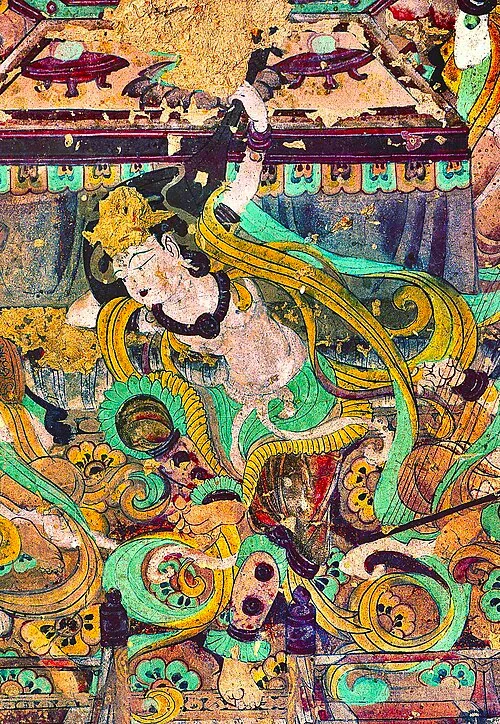 High Tang Splendor: Paradises, Music, and Aristocratic Donors
The Dancer with the Pipa Behind Her Back
Paradise in these murals is not silent. Orchestras of court musicians play, dancers whirl on ornamental carpets, and celestial beings drift overhead. The dancer here holds her pipa, a pear-shaped lute, behind her back, playing it mid-spin. Such scenes imagine the sound of paradise itself. Alongside the performers fly the apsaras, the celestial beings that became the signature motif of Dunhuang art. They began as muscular Indian spirits. Over the centuries they turned weightless, propelled by nothing but long ribbons and scarves streaming behind them. Apsaras already wheel across Western Wei ceilings, like those of Cave 285. The half-clothed, ribbon-borne figure was itself a departure. In Chinese painting, figures were normally shown fully clothed, so these drifting bodies marked a break with local convention.
Listen in the appUnknown author · Public domain
07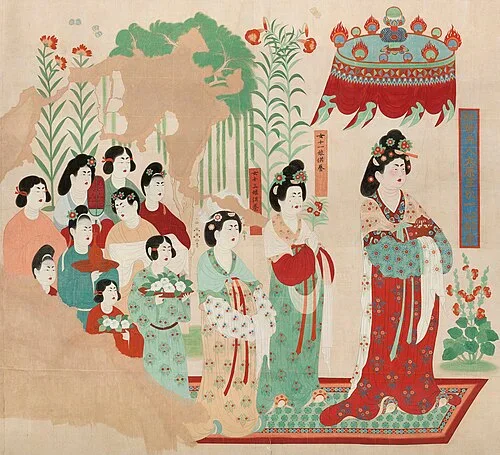 High Tang Splendor: Paradises, Music, and Aristocratic Donors
The Governor's Wife Offering Worship
Caves cost money, and the wealthy families of Dunhuang wanted credit. Many built family caves, dedicated spaces that displayed their devotion and bound the clan together. Inscriptions and donor portraits on the walls focused on exactly that, family ties and social standing. This painting shows what elite patronage looked like. Madam Wang of Taiyuan, wife of the governor of Jinchang Prefecture, leads a procession of worshippers. She is followed by her two daughters and nine maidservants, each ranked by dress and position. The mural stood in Cave 130, painted in the mid-eighth century. Its later history is a lesson in fragility. Later painting covered it for centuries, and when it was peeled back in the 1940s, sunlight badly damaged the original. What survives is a careful copy made by Duan Wenjie, a former director of the Dunhuang Academy. In later caves, donor portraits grew ever grander. The ruling Zhang and Cao families had themselves painted full length in court dress, advertising alliances with kingdoms like Khotan and the Uyghurs.
Listen in the appOriginal author is unknown, restored and copied by Duan Wenjie in 1959. · Public domain
08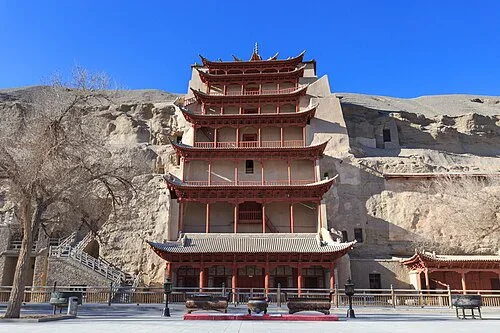 Cave 96: The Nine-Story Pagoda and Colossal Maitreya Buddha
The Nine-Story Building
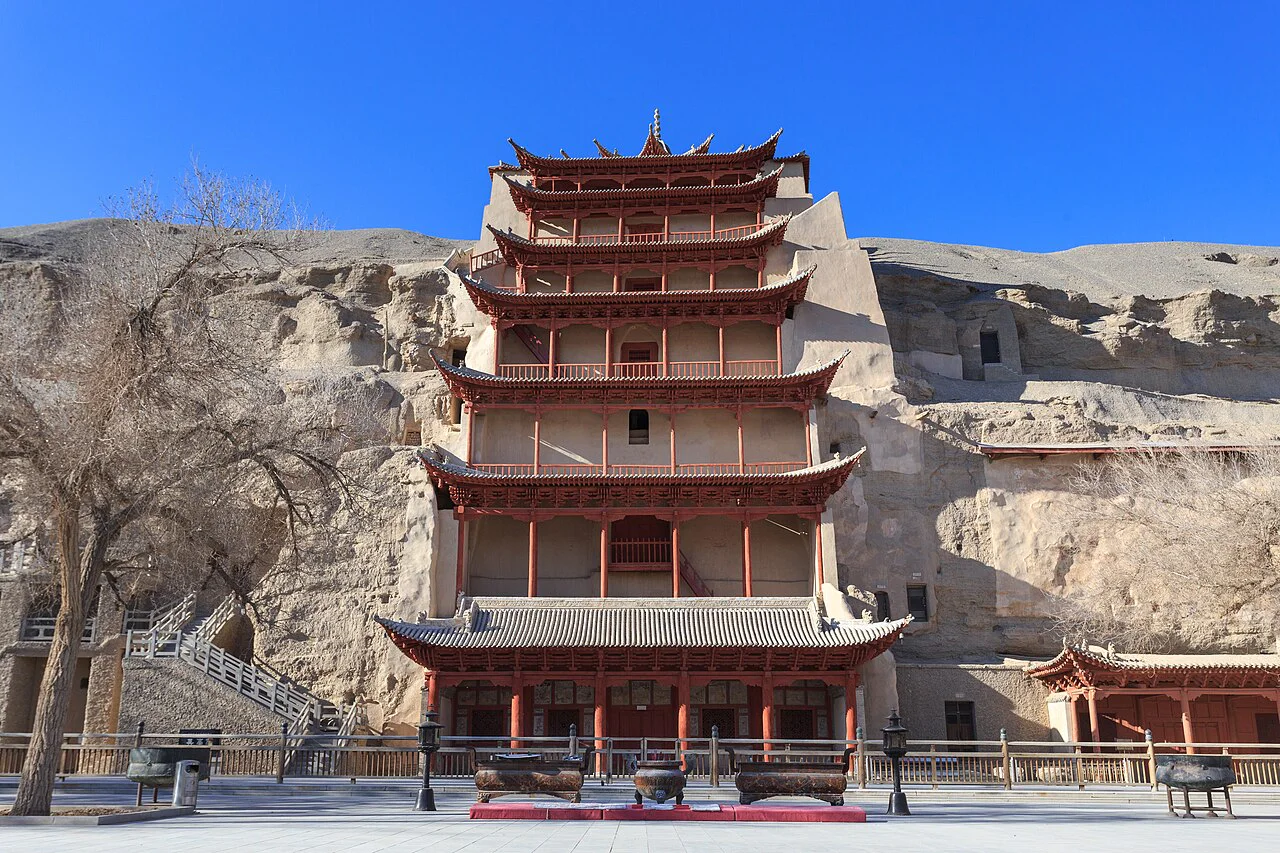
The red timber building clinging to the cliff is the Nine-Story Building, the unmistakable face of Dunhuang. It shelters Mogao's tallest cave, and its story begins with an empress. In 694, Empress Wu Zetian ordered giant Buddha statues built across her empire. A year later, work began on the colossal figure inside this cave. She was a female monarch ruling in her own name, and commissions on this scale burnished her authority. The wooden building itself was first raised in the Tang dynasty as a four-story porch. It has been repaired at least five times and is no longer the original structure. One storey was added in the late ninth century. Two further storeys followed in a restoration near the end of the nineteenth century, and twentieth-century work brought it to its present nine. Most caves here once had wooden porches built out from the cliff. Only five survive, and this is by far the most prominent.
Listen in the appPhoto: Zhangzhugang · CC BY-SA 4.0
09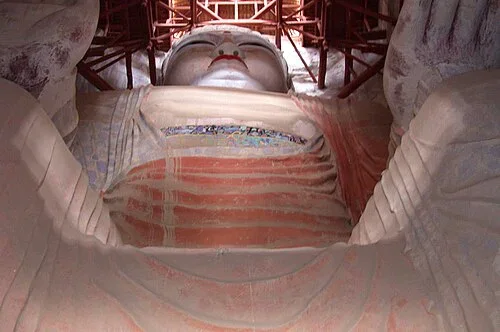 Cave 96: The Nine-Story Pagoda and Colossal Maitreya Buddha
The Great Maitreya Buddha of Cave 96
Inside this building sits the Great Buddha of Cave 96, a Maitreya about thirty-five and a half meters tall. Like nearly every statue at Mogao, it was built up rather than carved. Sculptors raised wooden frames, padded them with reed, and modelled the figures in clay stucco before painting them. About two thousand four hundred of these clay sculptures survive across the site. The very largest statues needed more, and have a stone core inside. This Buddha's own body tells a story of repair. An earthquake damaged it, and restorers worked on it many times over the centuries. Each campaign changed the clothing, the colour and the gestures. Only the head still looks as it did in the Early Tang, when the statue was first raised.
Listen in the appDavid Tansey · CC BY 2.0
10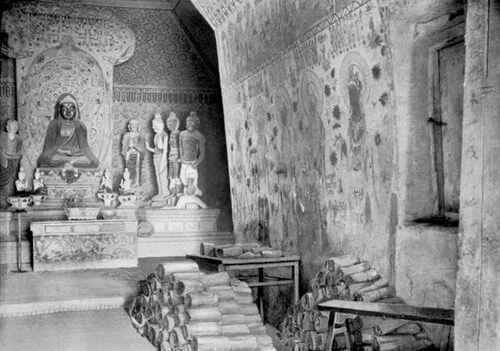 Caves 16 and 17: The Secret Archive of the Library Cave
Cave 16: The Hall of Abbot Hongbian
Cave 16 is a grand assembly hall cut into the cliff in the late Tang period. The monk Hongbian built it. He came from the wealthy Wu family, one of the leading clans of Dunhuang, and rose to high rank in the local Buddhist establishment. When he died in 862, a small chamber off the entrance to this hall was made into his memorial cave. That chamber may even have served as his retreat while he lived. Some of the manuscripts later found inside it still bear his seal. The hall keeps its ceremonial layout, with an altar and sculptures at the far end and tall painted walls rising on either side. Near the entrance, bundled scrolls are heaped in piles. Those bundles are the beginning of the next part of the story.
Listen in the appAurel Stein · Public domain
- 11
The Library Cave Manuscripts, Photographed in 1907
The walled-up cave of fifty thousand manuscripts, the priest who found it, and the explorers who carried it away.
- 12
Cave 158: The Great Nirvana Buddha
Cave 158's sixteen-meter reclining Buddha, and the Tibetan years that sheltered Mogao from an emperor's persecution.
- 13
Cave 61: The Panorama of Mount Wutai
A thirteen-meter painted map of Mount Wutai, bringing a distant sacred mountain to the desert.
- 14
The Stele of Sulaiman
A 1348 stele in six scripts, raised by a Mongol prince, at the close of a thousand years of building.
莫高窟
Frequently asked questions
How much does the guide cost?
Free app download. Listed guide price: $1.99. Guide price shown in the app. Audio guide only. Venue admission is separate.
Can I listen without internet?
Yes. Download the guide’s audio, images, and maps in the app before your visit. Your downloaded content is then available offline.
Can I listen in my language?
This audio guide is available in 15 languages, including English.
Do I need to follow a schedule?
No. This is a self-guided experience. Choose your stops, pause whenever you like, and return to a story at your own pace.
At your own pace
Explore 莫高窟.
Download Stanza, then search for “莫高窟”.
Free app download · Guide price shown in the app
Keep exploring
Audio guides — China
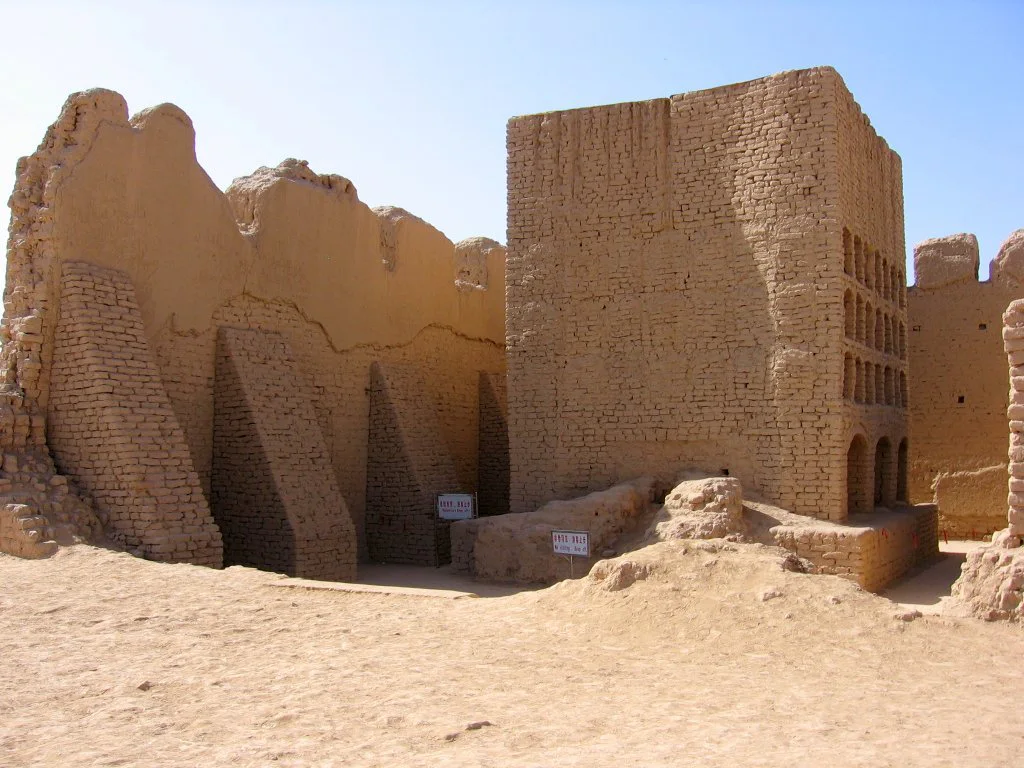
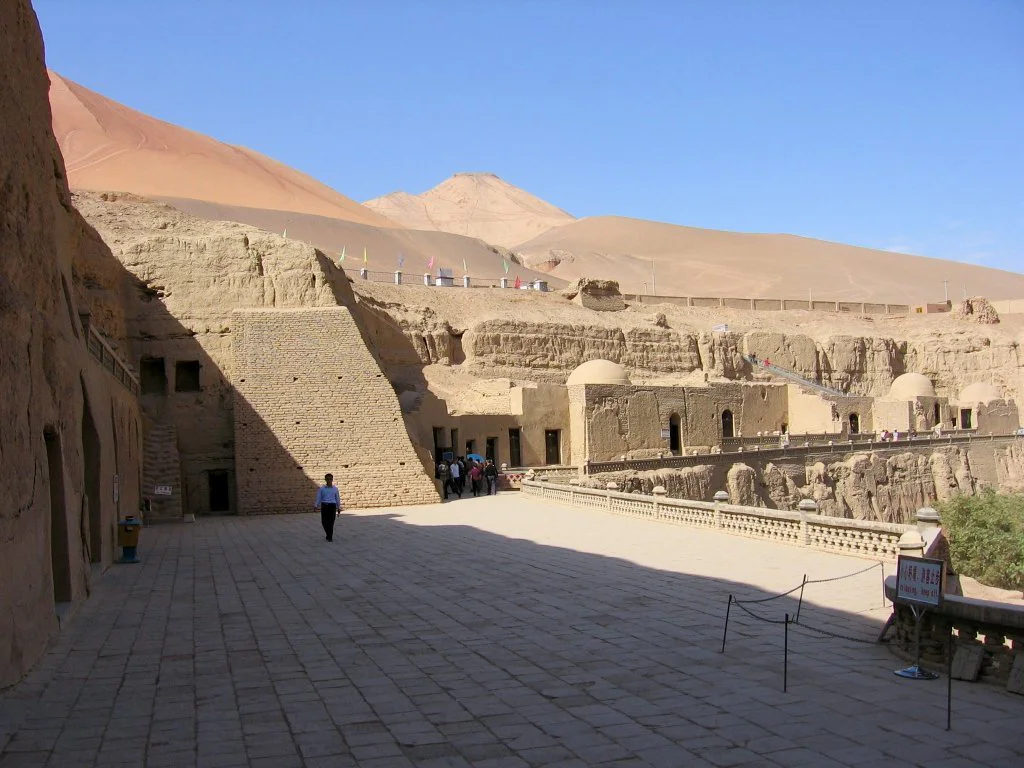
Yalquntagh
高昌國
Content & sources
Colegota · CC BY-SA 2.5 es
Turpan
柏孜克里克千佛洞
Content & sources
Photo: File Upload Bot (Colegota) · CC BY-SA 2.5 es
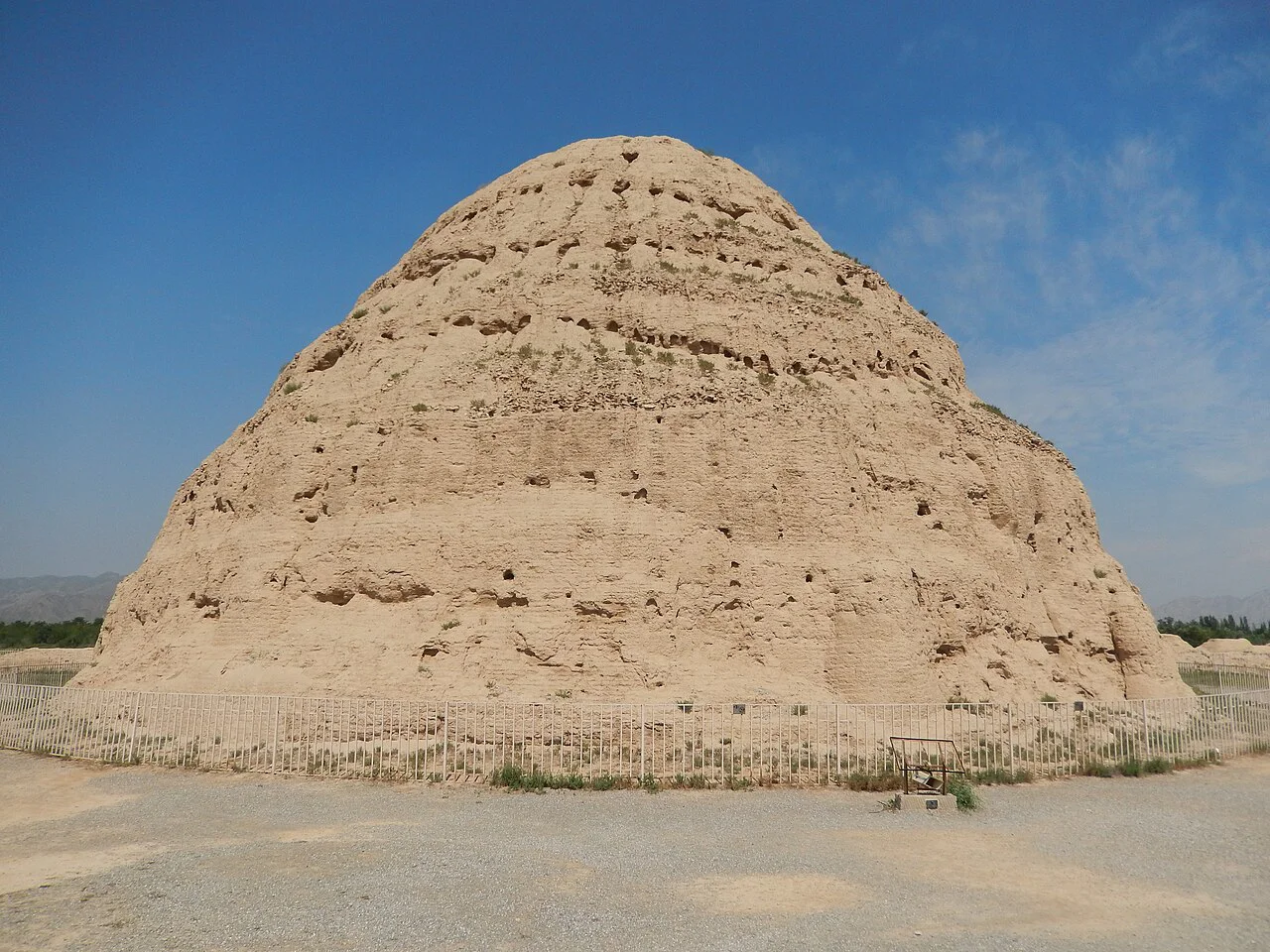
Yinchuan
西夏陵
Content & sources
Photo: BabelStone · CC BY-SA 3.0
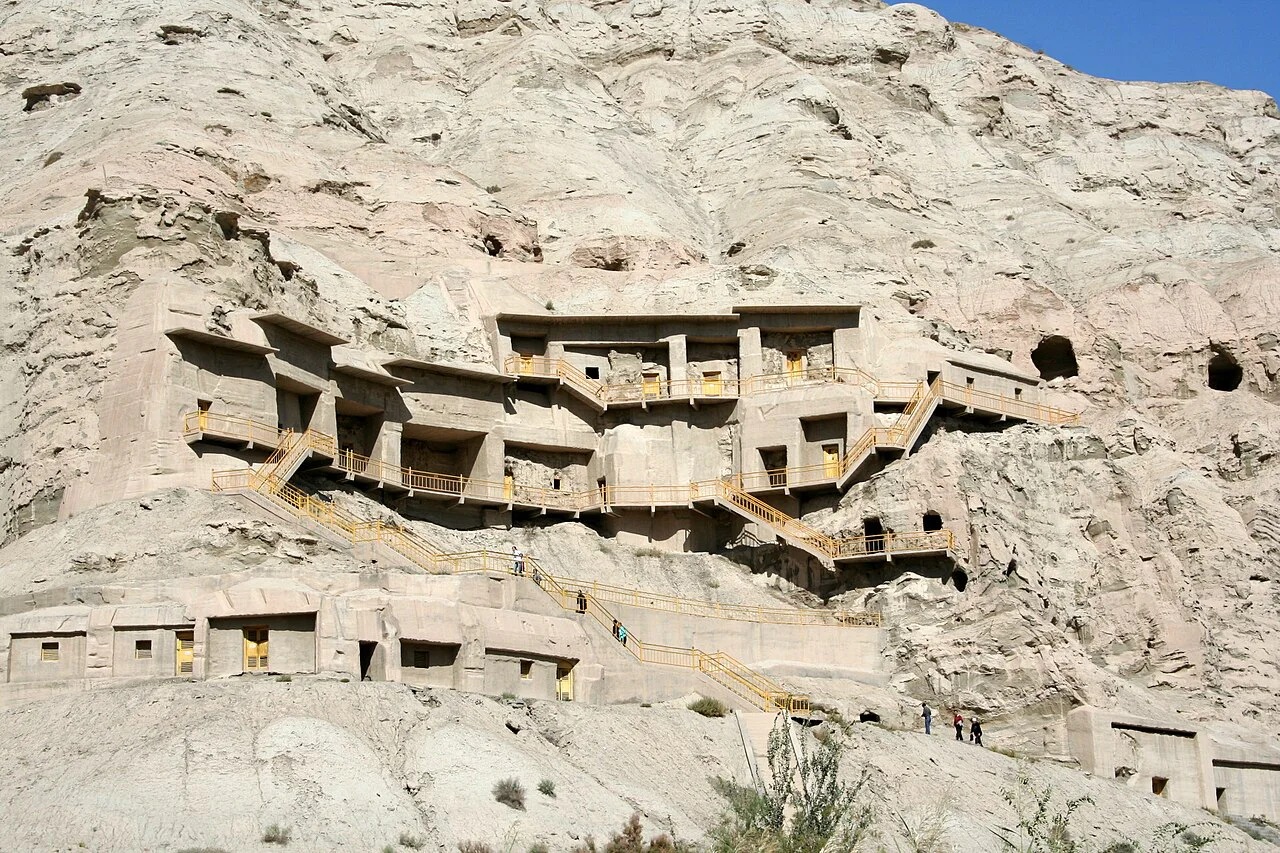
Baicheng County
克孜尔千佛洞
Content & sources
Photo: Rolfmueller · CC BY-SA 3.0
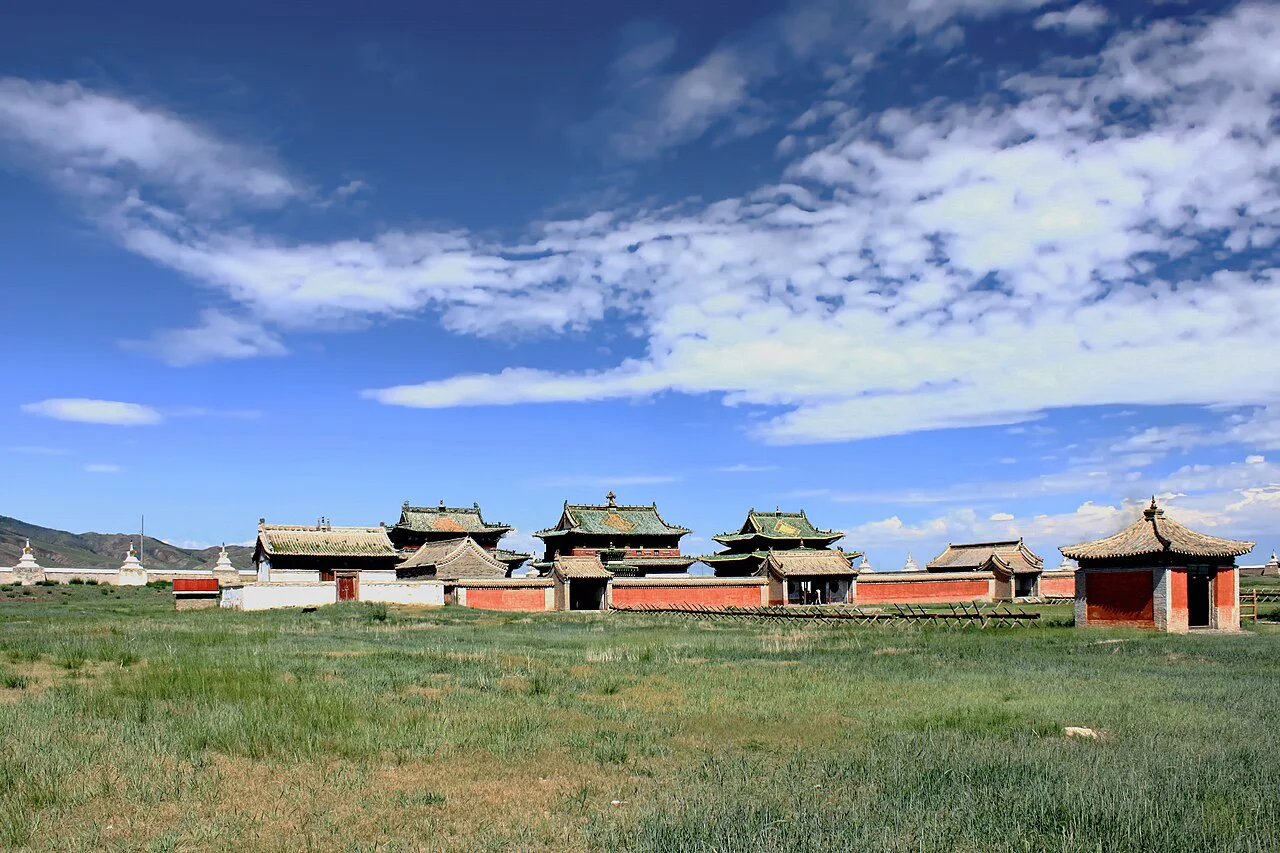
Kharkhorin
Erdene Zuu Monastery
Content & sources
Marcin Konsek · CC BY-SA 4.0