Stanza · Audio guide
柏孜克里克千佛洞 Audio Guide
A place to remember. A story to take with you.
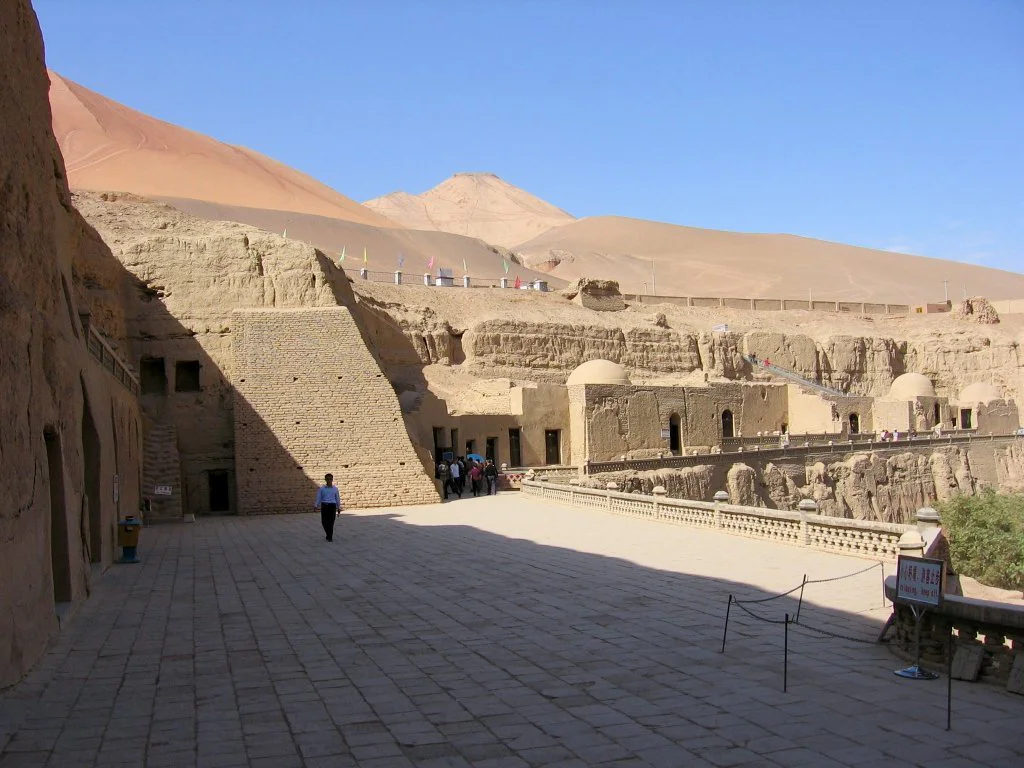
The Bezeklik Thousand Buddha Caves is a complex of Buddhist cave grottos dating from the 5th to 14th century. Most of the surviving caves date from the West Uyghur kingdom around the 10th to 13th centuries.
Download Stanza, then search for “柏孜克里克千佛洞”.
About the tour
One guide. Your kind of visit.
The Bezeklik Thousand Buddha Caves is a complex of Buddhist cave grottos dating from the 5th to 14th century. Most of the surviving caves date from the West Uyghur kingdom around the 10th to 13th centuries.
Ready when you are.
- 01Get the free Stanza app.
iOS & Android
- 02Find your guide.
“柏孜克里克千佛洞”
- 03Download before you go.
Works offline
Audio guide / 13 narrated stops
Inside the guide
Get to know a few of the stories before you go. Open a stop to read more.
01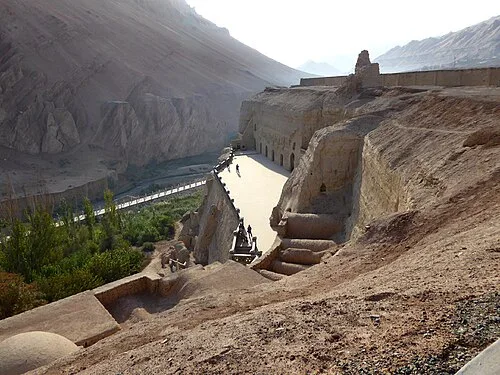 Upper Canyon Overlook & The Flaming Mountains Oasis
Bezeklik Thousand Buddha Caves: Cliff Approach Overview
Bezeklik is a Buddhist cave complex cut into the western cliff of the Mutou Valley, in the Flaming Mountains near Turpan. Its name is a Uyghur word, usually taken to mean a place of beautiful decoration. The cliff runs more than a thousand metres from north to south. Seventy-seven rock-cut caves are set high in its face. A railed path drops from the top of the rock toward a terrace of cave openings. Most of the surviving caves date from the West Uyghur kingdom, roughly the tenth to the thirteenth century. In that period the site served as a royal Buddhist monastery.
Hiroki Ogawa · CC BY 3.0
02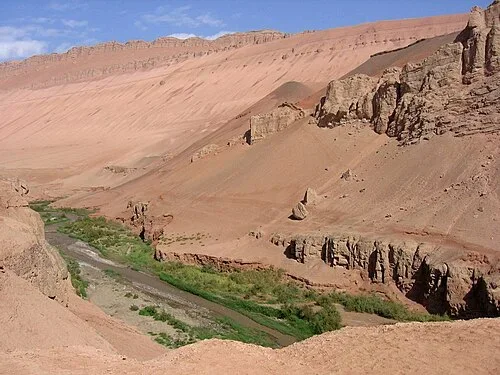 Upper Canyon Overlook & The Flaming Mountains Oasis
Mutou Valley Gorge and Green Riverbed
Red and ochre slopes rise above a narrow green strip along the floor of the Mutou Valley. Trees and shrubs line the riverbed. In the Tang dynasty, when this area was West Prefecture, the valley had another name. A Tang-period guidebook to the district called it the Ningrong Valley. Its writer described steep cliffs rising in three tiers, with a cave monastery set among them. That monastery was also called Ningrong.
User:Colegota · CC BY-SA 2.5 es
03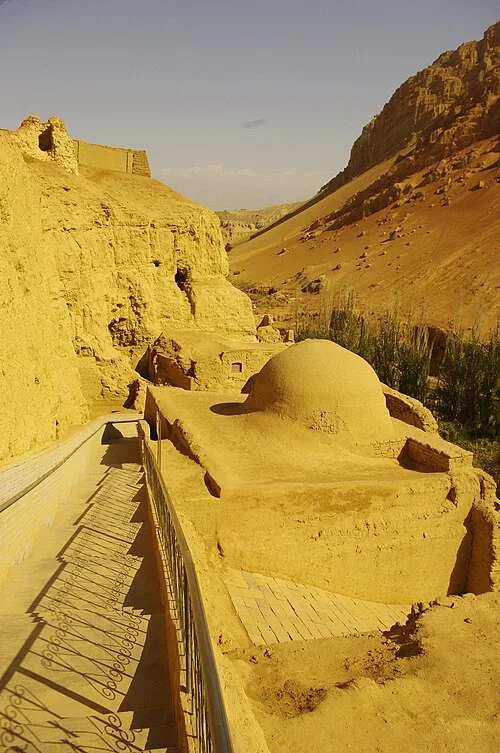 Cliffside Staircase & Mud-Brick Domed Stupas
Cliff-Foot Forecourt and Earthen Dome
Archaeologists dug the ground in front of the caves as rescue work, tied to a project to reinforce the cliff. They cleared more than fifty features. Nearly twenty of them were caves. The rest included dwelling spaces and stupas, the domed Buddhist monuments. The team published its findings in 2012. The railed walkway is a modern visitor route. The rounded earthen dome beside it is built of earth, not carved from rock. Whether it is a stupa is still not settled.
Listen in the appPhoto: W0zny · CC BY-SA 3.0
04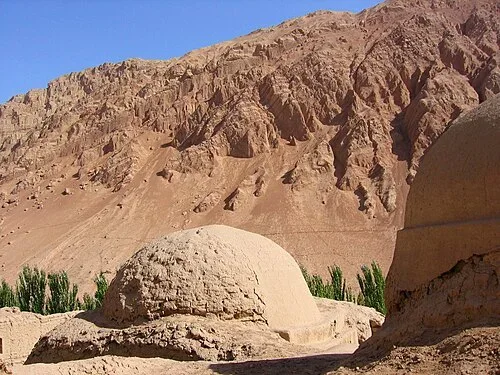 Cliffside Staircase & Mud-Brick Domed Stupas
Domed Mud-Brick Central Halls
The older caves were built around a central pillar. Later builders reshaped that plan into a square hall with a dome over it. A passage ran outside the hall, so worshippers could walk around it. The method combined timber-frame techniques from the Central Plains of China with local earth building. Cave Fifteen is a clear example. Its hall has a dome made entirely of earthen bricks. Cave Fifteen dates from the tenth and eleventh centuries, a period of Uyghur prosperity. The two rounded domes of Cave Fifteen and its neighbour stand against a steep rocky slope, with poplars growing behind them.
Listen in the appPhoto: File Upload Bot (Colegota) · CC BY-SA 2.5 es
05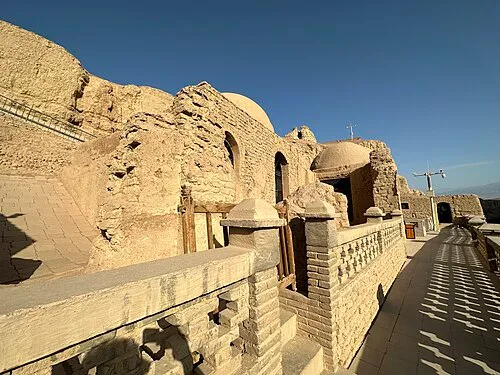 Northern Cave Terrace: Caves 14 and 15
Caves 14 and 15: Domed Hall and Walkway
The murals of Cave Fifteen were not painted on bare rock. They were painted on walls that had been built up, not carved. The corridors around its hall have tunnel-shaped roofs, and their inner walls carry a long run of scenes from the life of the Buddha. The most complete of these scenes was originally on the side wall of the rear corridor. Today it is in the Hermitage Museum in Saint Petersburg.
Listen in the appPhoto: HaziiDozen · CC BY-SA 4.0
06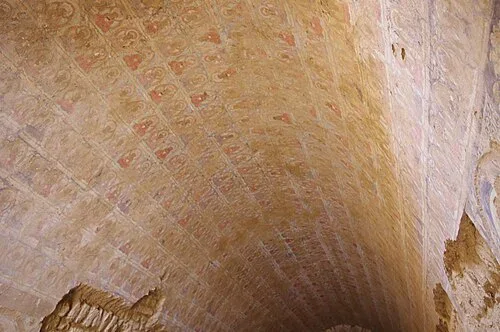 Northern Cave Terrace: Caves 14 and 15
Vaulted Ceiling of Repeated Buddha Paintings
Most of the caves here are rectangular, with round-arched ceilings. Those ceilings are often split into four sections. Each section carries a painted Buddha. Seen as a whole, the ceiling looks covered with hundreds of them. This vault is a good example of that type, its grid of small red and ochre figures repeating across the curve. That repetition is why the caves are called the Thousand Buddha Caves.
Listen in the appPhoto: W0zny · CC BY-SA 3.0
07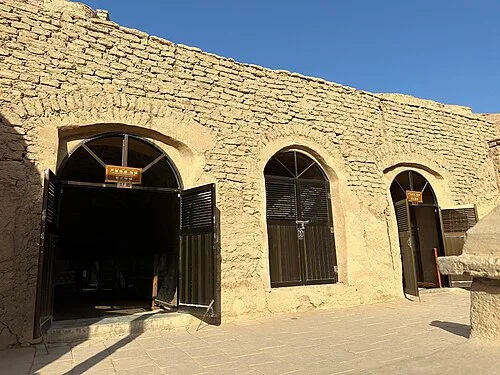 Central Sanctuaries: Caves 16 and 17
Caves 16 and 17 Façade: Tang Period and the Yang Xigu Stele
In the late eighth century, a Tang official named Yang Xigu carried out building work at this monastery. He held the title Great Protector of Beiting, a frontier post in the northwest. A stone stele found in 1984 among the ruins of Cave Eighty tells his story. Its dates run from 786 to 790, and it says he built halls, winter kitchens and corridors. He also cut more caves below the existing ones. The arched wall here is the kind of work the stele lists, though this particular wall cannot be tied to him. He also planted grapevines below the caves. Cave Sixteen belongs to this same Tang period.
Listen in the appPhoto: HaziiDozen · CC BY-SA 4.0
08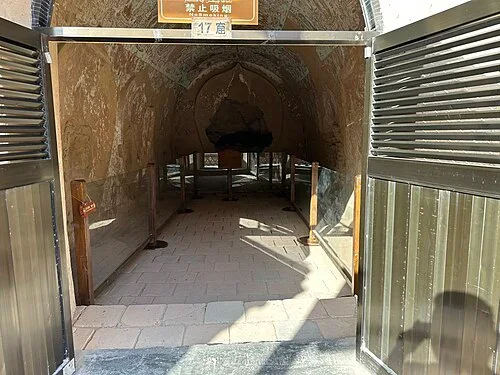 Central Sanctuaries: Caves 16 and 17
Cave 17 Entrance: Protected Walls and Later Iconoclasm
Glass panels and metal shutters now protect the walls of Cave Seventeen's entrance. Across the site, many of the temples were damaged by the local Muslim population, whose religion forbids images of living beings. Statues were destroyed. Some paintings were defaced, and others were smeared with mud. Eyes and mouths were often gouged out, because of a local belief that the figures might otherwise come alive at night. Pieces of murals were also broken off and used as fertilizer. The scholar Michael Dillon considered Bezeklik an example of religiously motivated iconoclasm. One account says the Buddhist Uyghurs of Turfan were converted to Islam by conquest, in a holy war waged by Khizr Khoja, a ruler of the Chagatai Khanate. Khizr Khoja ruled in the late fourteenth century. Another account describes Islam spreading gradually into Turfan, and the Buddhist temples slowly falling into decline.
Listen in the appPhoto: HaziiDozen · CC BY-SA 4.0
09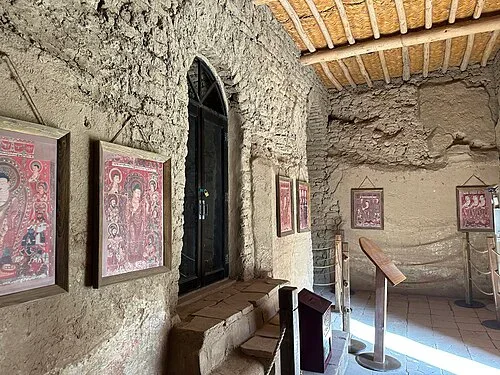 Cave 20: The Royal Uyghur Temple & Plundered Masterpieces
Cave 20: Royal Temple and the Removed Murals
Cave Twenty was also made in the tenth and eleventh centuries. It was a royal temple built around a large central hall. A corridor ran around that hall, and its walls held fifteen painted panels. For a long time the cave lay buried in sand, and the sand kept its paintings in good condition. Then Albert von Le Coq, the German explorer, cut most of the murals from the walls and took them to Germany. Large pieces were fixed to the walls of the Ethnological Museum in Berlin. Other European and Japanese explorers also carried off murals, and those pieces now sit in museums around the world. Today the cave holds framed panels of Buddhist figures on its walls, under a ceiling of poles and matting. Part of the murals in Berlin was destroyed in the bombing of the Second World War.
Listen in the appPhoto: HaziiDozen · CC BY-SA 4.0
10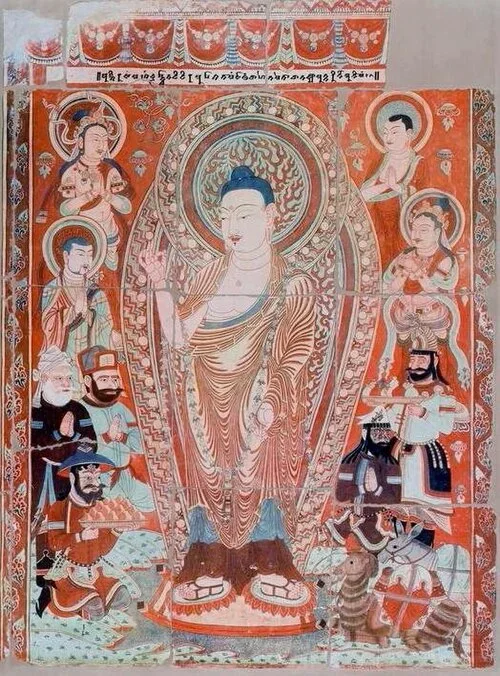 Cave 20: The Royal Uyghur Temple & Plundered Masterpieces
Praṇidhi Vow Scene: The Buddha's Past-Life Promise
Praṇidhi means a vow or promise. In these scenes, Shakyamuni is shown in a past life, making that promise. The large murals of this kind are the ones that best represent the caves. This one comes from Cave Twenty. This panel shows the Buddha standing at the centre, with a large halo behind his head. Other figures are placed above him on each side. At lower left, kneeling figures bring tribute. The explorer who first studied these murals took the kneeling figures for Persians. Modern scholars identify them instead as Sogdians, an eastern Iranian people who lived in Turfan under Tang and then Uyghur rule.
Listen in the appUnknown author · Public domain
- 11
Uyghur Princes in Court Dress
Three Uyghur princes in patterned red robes, painted as donors, holding flower stems.
- 12
Excavated Wooden Key, Rule and Timber Parts
Small wooden finds from the caves, and the dating clues that still leave the site's start open.
- 13
Cliff Walkway Above the Valley
A walkway above the valley, and the mixed community whose murals fill the caves.
柏孜克里克千佛洞
Frequently asked questions
How much does the guide cost?
Free app download. Listed guide price: $0.99. Guide price shown in the app. Audio guide only. Venue admission is separate.
Can I listen without internet?
Yes. Download the guide’s audio, images, and maps in the app before your visit. Your downloaded content is then available offline.
Can I listen in my language?
This audio guide is available in 15 languages, including English.
Do I need to follow a schedule?
No. This is a self-guided experience. Choose your stops, pause whenever you like, and return to a story at your own pace.
At your own pace
Explore 柏孜克里克千佛洞.
Download Stanza, then search for “柏孜克里克千佛洞”.
Free app download · Guide price shown in the app
Keep exploring
Audio guides — China
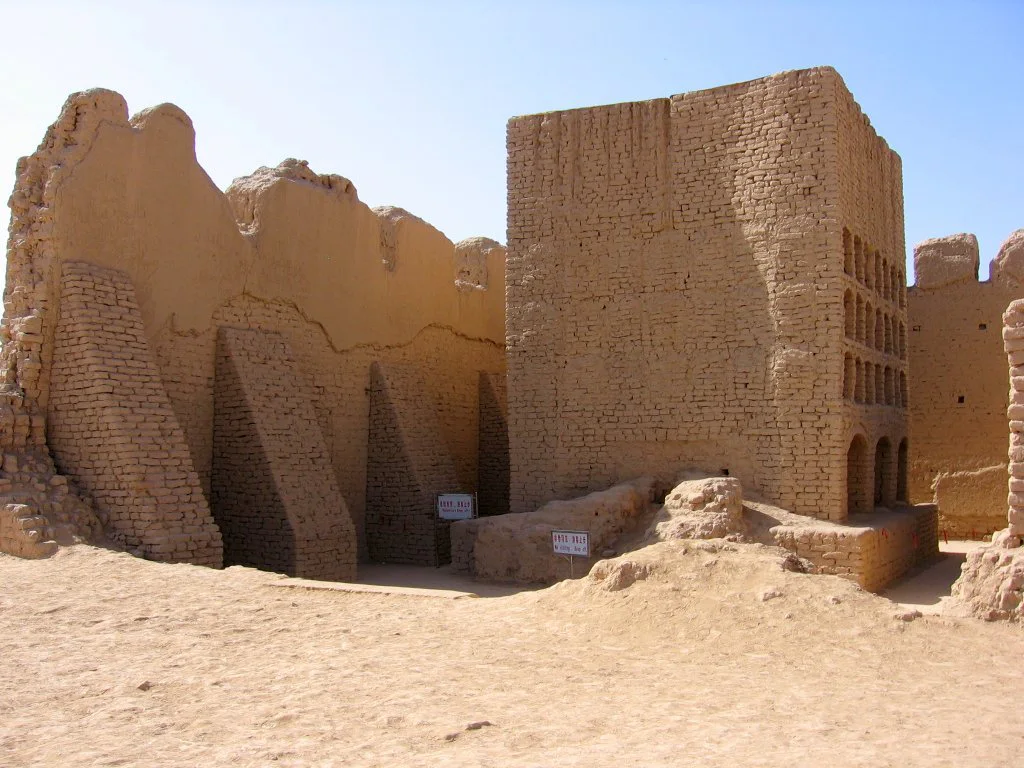
Yalquntagh · 11 km
高昌國
Content & sources
Colegota · CC BY-SA 2.5 es
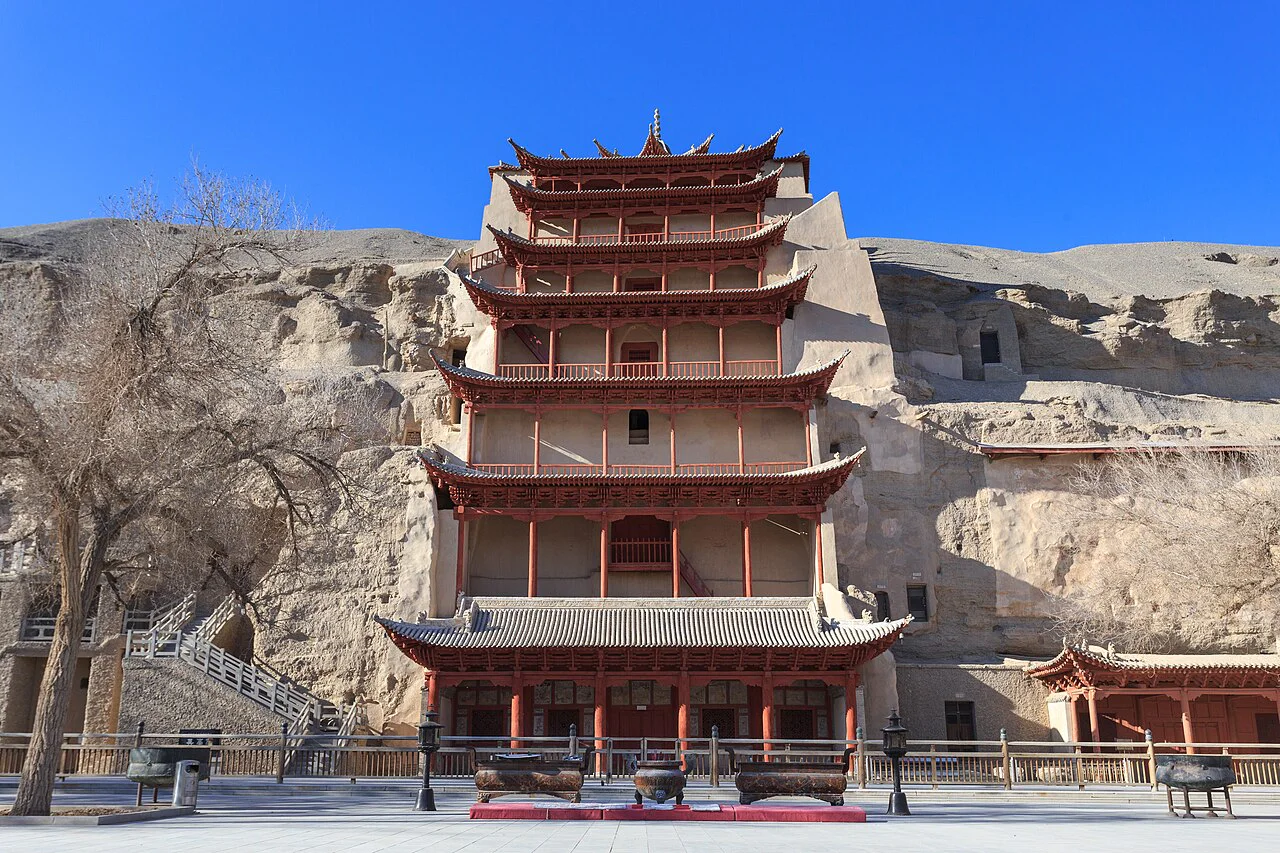
Dunhuang City
莫高窟
Content & sources
Photo: Zhangzhugang · CC BY-SA 4.0
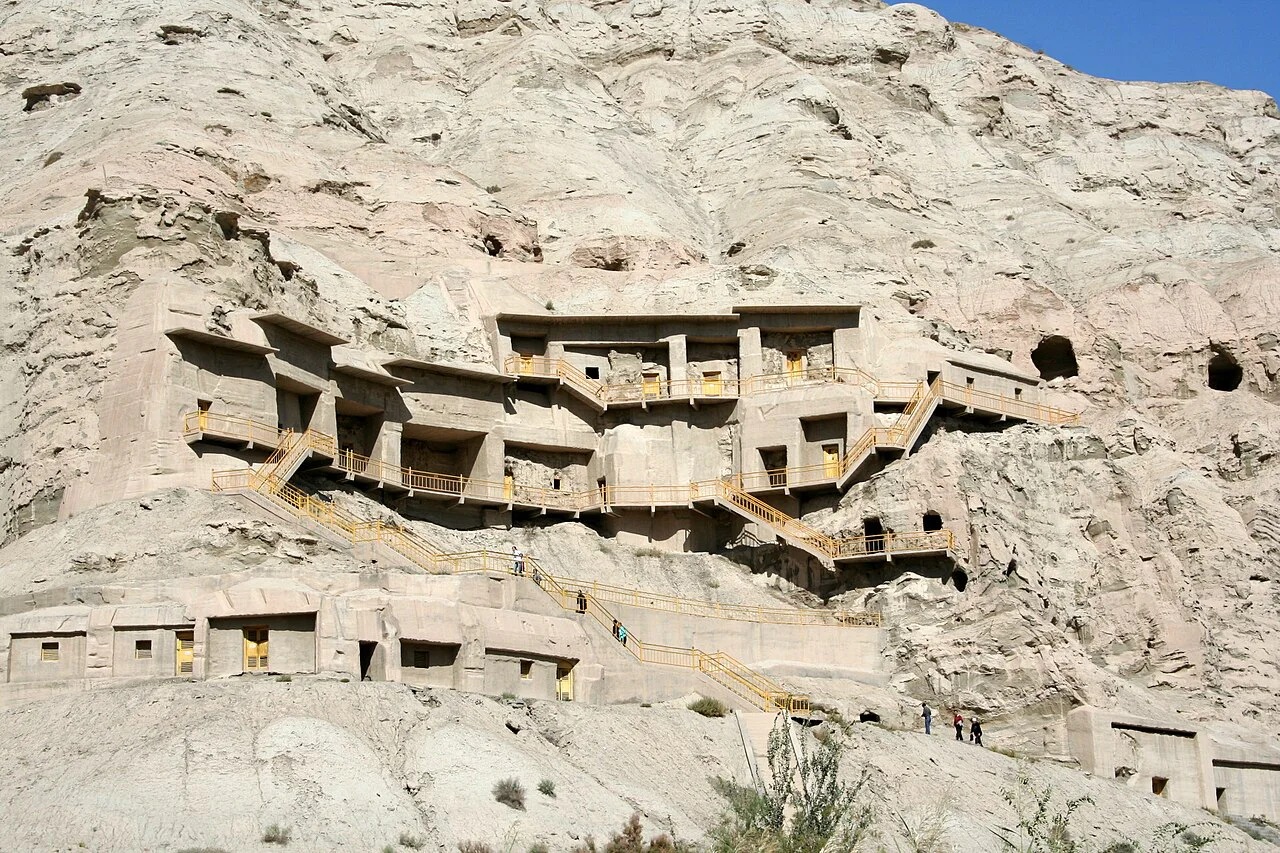
Baicheng County
克孜尔千佛洞
Content & sources
Photo: Rolfmueller · CC BY-SA 3.0
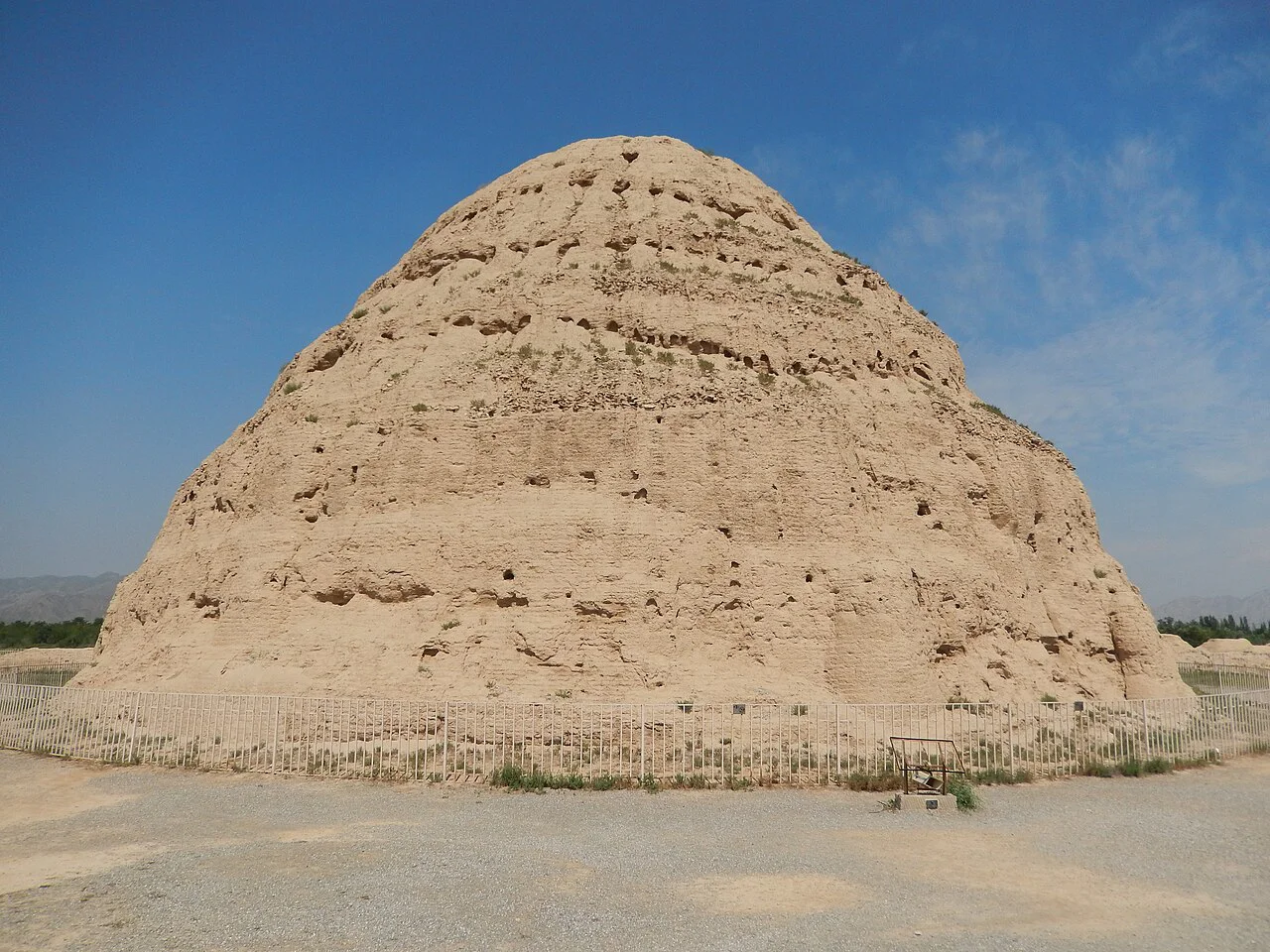
Yinchuan
西夏陵
Content & sources
Photo: BabelStone · CC BY-SA 3.0
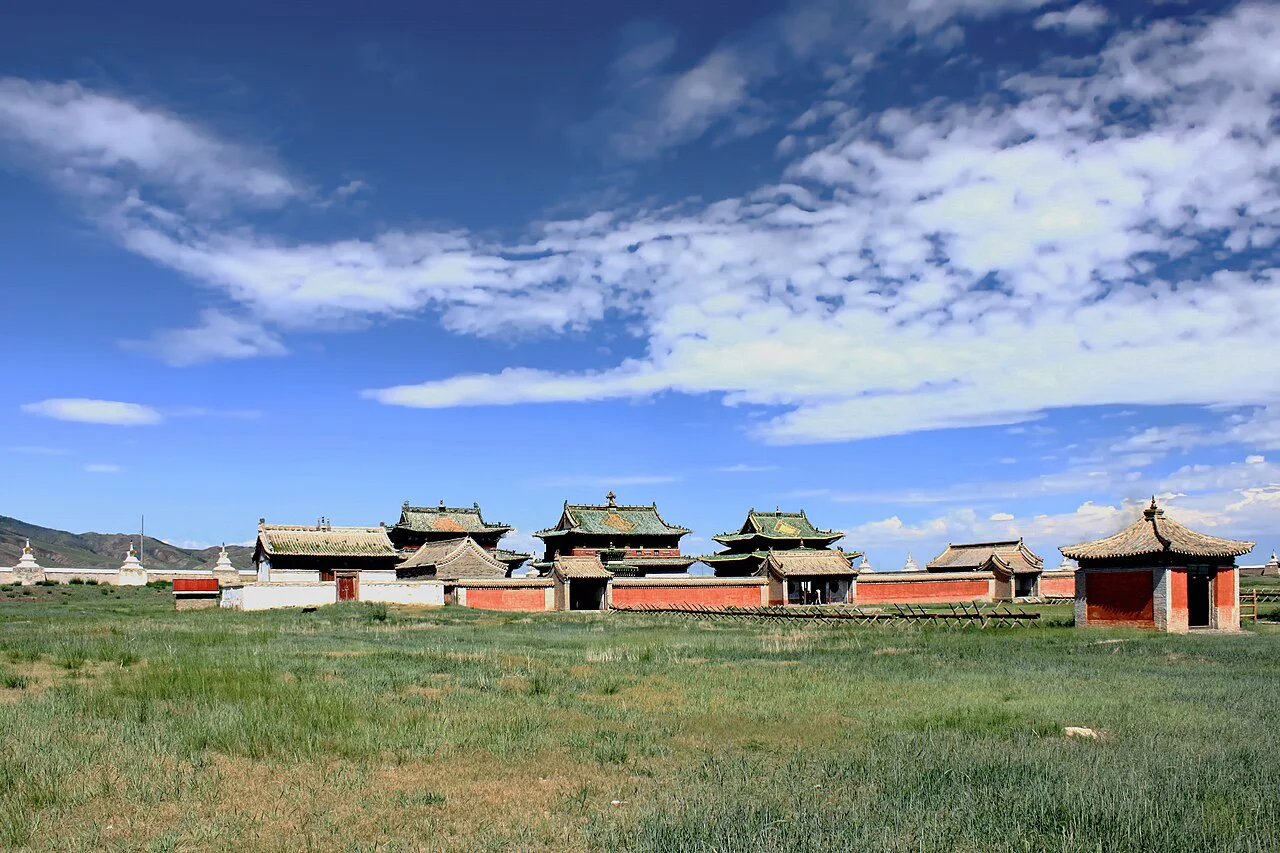
Kharkhorin
Erdene Zuu Monastery
Content & sources
Marcin Konsek · CC BY-SA 4.0