Languages
15颐和园 Audio Guide
颐和园 is an archaeological site in Haidian District, China. Explore it with Stanza's guided offline audio tour — narrated in 15 languages.

Quick Facts
38
Stops
15
Languages
100%
Offline
📍 Haidian District, China · 39.9975°N, 116.2689°E
About 颐和园
The Summer Palace is a vast ensemble of lakes, gardens, and palaces that served as the imperial retreat during the Qing dynasty. It is recognized as a masterpiece of Chinese landscape garden design.
This self-guided audio tour features 38 narrated stops organized across 7 sections. As a palace, 颐和园 offers a unique cultural experience in the heart of Haidian District, China.
The Stanza audio guide is available in 15 languages and works entirely offline — download the complete tour including audio narration, maps, and images before your visit. As you walk through 颐和园, GPS-triggered narration plays automatically at each point of interest.
Last updated:
What you will hear
Hall of Benevolence and Longevity
The main administrative hall where the Empress Dowager Cixi and Emperor Guangxu received foreign envoys and handled state affairs.
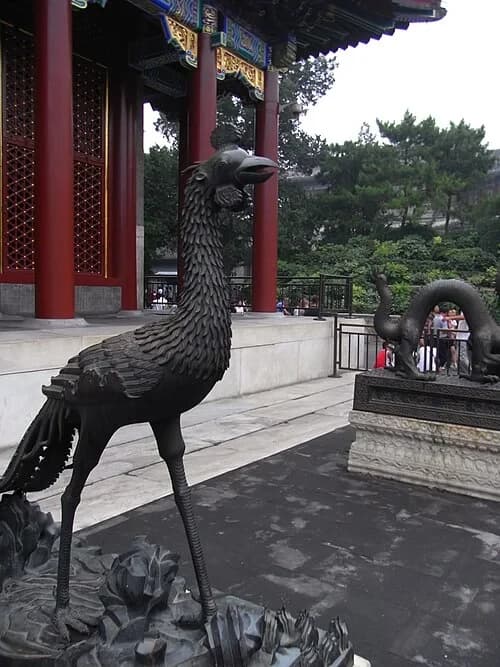
Bronze Phoenix
Historically, the dragon representing the Emperor was the primary symbol, while the phoenix representing the Empress was secondary in size and placement. However, this bronze phoenix reveals a bold statement of power. On the explicit orders of Empress Dowager Cixi, the phoenix was placed in a position of equal, and in some contexts superior, prominence to the neighboring dragon. This was a visual signal to the entire court and visiting officials about who truly held the reins of government. The artistry of the piece is exceptional, particularly in the delicate bronze work of the tail feathers. They were crafted with such precision that they appear to be splaying and swaying in a gentle breeze. This bird, known as the fenghuang, was said to appear only in places of peace and prosperity. By elevating its status here, Cixi not only asserted her own authority but also claimed her reign was a time of auspicious harmony for the empire, placing herself at the very center of the nation's symbolic order.
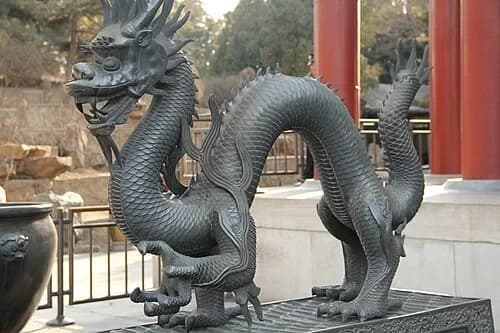
Imperial Bronze Dragon
Notice the fierce posture and detailed scales of this bronze dragon. In Chinese culture, the dragon is a benevolent water-god responsible for controlling the rain and ensuring a successful harvest. To understand its political significance, look at the feet and count the claws. You will find five on each foot. In imperial China, the five-clawed dragon was a symbol reserved exclusively for the Emperor and his immediate family. Any commoner or lower-ranking official caught using this specific design faced the penalty of execution. The dragon is depicted in a dynamic pose, clutching a 'pearl of wisdom' in its claw, representing the pursuit of spiritual energy and prosperity. While dragons are often portrayed as destructive monsters in Western folklore, this figure represents wisdom and protection. Its presence here served as a constant reminder to those visiting the court that the Emperor held the Mandate of Heaven, acting as the bridge between the celestial and earthly realms, holding the fate of the harvest in his hands.
The Qilin Statue
A mythical creature guarding the entrance to the imperial quarters, believed to bring prosperity and peace.
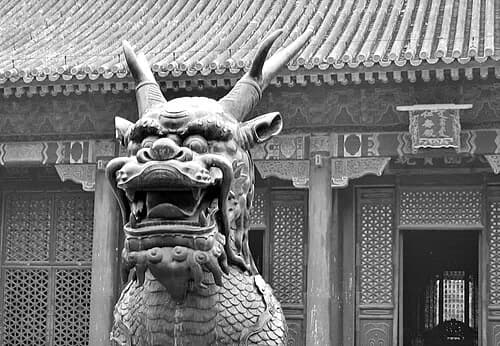
Kylin Statue
This statue depicts the Qilin, a fantastic composite creature that serves as a 'mythical chimera.' It features the head of a dragon, the antlers of a deer, the scales of a fish, and the hooves of an ox. According to ancient Chinese tradition, a Qilin only manifests itself during the rule of a truly sage leader or upon the birth of a great philosopher. By placing this figure prominently within the Summer Palace, the Qing court was making a bold public claim regarding their own virtue and legitimacy. Notice the 'pearl' the creature is playing with, which symbolizes truth, purity, and the pursuit of wisdom. Legend holds that the Qilin was so gentle and compassionate that it would refuse to even step on a single blade of grass, lest it cause harm to any living thing. Its presence here was intended to cast an aura of benevolence over the imperial residence, suggesting that the power wielded within these walls was balanced by a deep respect for natural and moral law, welcoming an era of peace.
Garden of Virtue and Harmony (Deheyuan)
The largest imperial theater in China, built specifically for the entertainment of the Empress Dowager Cixi.
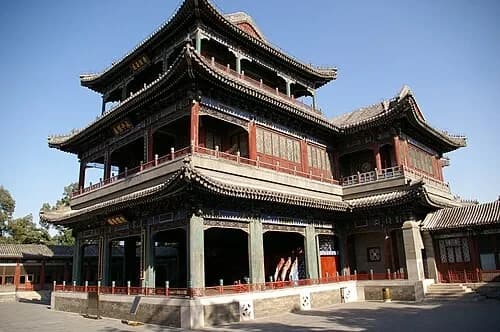
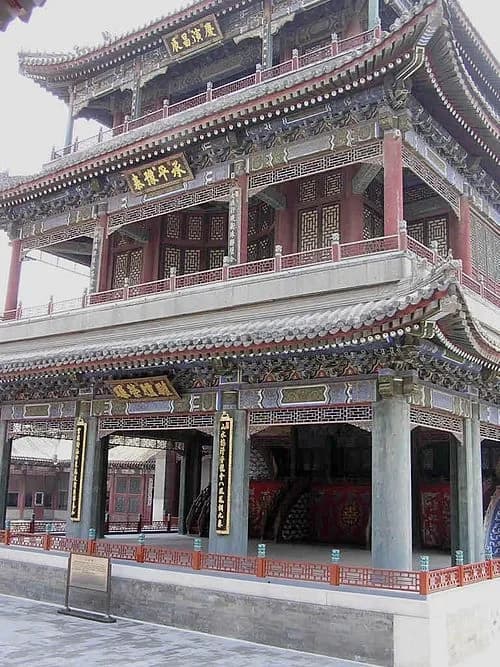
Garden of Virtue and Harmony
This massive three-story structure served as the primary venue for theatrical performances within the Summer Palace. Empress Dowager Cixi was a devoted enthusiast of Peking Opera, often spending her days watching plays, writing her own scripts, and even coaching the actors on their delivery. The scale of the theater allowed for incredibly complex productions. On special occasions, dozens of actors would perform simultaneously across all three levels, creating a vertical spectacle unlike anything seen in common theaters. The building located directly behind the stage served as a residence for a dedicated troupe of eunuch actors who were kept on call twenty-four hours a day to provide entertainment whenever the Empress desired. If you look up at the top floor, you are seeing the area reserved for 'celestial' characters. Actors portraying gods or spirits would descend from this level to the main stage below, signifying their arrival from heaven to interact with the mortal world during the drama. This vertical integration made it the most advanced theater of its era in East Asia.
Grand Stage
The Grand Stage was a marvel of high-tech engineering for the late nineteenth century. Beneath the wooden floorboards lies a sophisticated system of trapdoors and pulleys. These mechanisms allowed actors to suddenly 'fly' through the air or vanish in an instant, delighting the imperial audience. Even more remarkably, the stage was built over deep wells and water tanks. During performances involving water spirits or legendary floods, the crew could pump actual water onto the stage to create realistic splashes and flowing streams. Empress Dowager Cixi typically watched these elaborate productions from the comfort of a heated hall positioned across the courtyard. She was known to use binoculars to carefully scrutinize the performances, catching every subtle facial expression or minor mistake made by her favorite actors. This scrutiny ensured that the quality of the imperial opera remained the highest in the land. The stage remains a rare example of how traditional art and innovative mechanical design converged to serve the whims of the Qing court, creating a theater like no other.
Emperor's Study
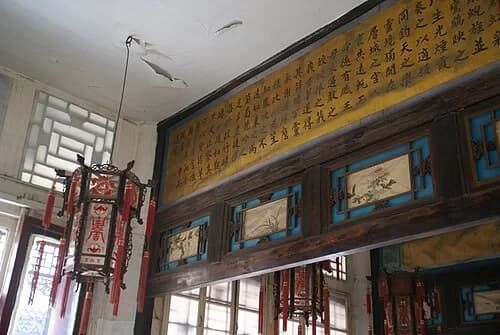
Decorated with traditional lanterns and calligraphic scrolls, this room appears to be a peaceful retreat for a scholar. However, it was actually part of a 'golden cage' for Emperor Guangxu. Following his failed attempt to modernize the Chinese government during the 'Hundred Days' Reform' in 1898, he was placed under house arrest here by his aunt, the Empress Dowager Cixi. He spent his final years surrounded by the highest luxuries the empire could provide, yet he was effectively a prisoner, unable to step outside the courtyard without explicit permission. On the desk, you can still see traditional inkstones, which are potent symbols of the scholarly life he was forced to embrace while his political power was systematically stripped away. This room witnessed the quiet frustration of a ruler who wished to change his country but found himself trapped by the very traditions he sought to evolve. The quiet atmosphere here today belies the intense political tension that once filled the air as the dynasty approached its final, tumultuous years.
Hall of Jade Billows
The living quarters of Emperor Guangxu, which famously became his place of confinement after the failed Hundred Days' Reform.

Yiyun Hall
This site provides a stark contrast to the beauty of the surrounding gardens. When Empress Dowager Cixi confined Emperor Guangxu to house arrest, her measures were extreme. She ordered the back doors and windows of this residence to be bricked up, physically cutting off the Emperor from any communication with the outside world. This architectural modification transformed a royal residence into a literal, isolated prison. The isolation extended to his personal life as well. His favorite concubine, known as the Pearl Consort, was forcibly separated from him and kept elsewhere in the palace grounds; she eventually met a tragic end during a later conflict. Today, the heavy silence of this courtyard serves as a somber reminder of the internal power struggles that paralyzed the imperial court. While the rest of the Summer Palace was designed for pleasure and longevity, this specific hall bears the scars of a family divided by ambition and a nation on the brink of collapse. It remains one of the most historically significant residential complexes in the grounds.
Yiyun Hall
Originally the library of the Emperor, this hall later served as the residence for the Empress Longyu.
Yiyun Hall
Originally commissioned by the Qianlong Emperor, this hall was built to safeguard his vast collection of scrolls, books, and rare manuscripts. As you observe the building, note the interesting architectural transition from the solid, heavy stone foundations to the lighter, airier wooden galleries that sit above. This design provided both stability and a sense of elegance befitting a royal archive. In the later years of the dynasty, the building's function changed. It became the residence for Empress Longyu, the wife of the imprisoned Emperor Guangxu. The atmosphere during that time was incredibly tense, as the royal couple lived in separate 'prisons' located just a short distance from one another, yet were largely prevented from meaningful contact. Outside, notice the intricate stone railings that line the path. These barriers separate the formal palace structures from the vast expanse of the lakefront, providing a scenic but highly structured boundary that defined the limits of the royal residents' daily movements between their quarters and the water's edge.
Hall of Joyful Longevity
The primary residence of Empress Dowager Cixi, offering the most beautiful views of Kunming Lake.

Hall of Joyful Longevity
The lotus holds a special place in Chinese philosophy because it grows out of the dark mud at the bottom of the lake but rises to the surface to bloom, remaining perfectly clean and unstained. During the peak of summer, Empress Dowager Cixi would frequently take boat rides through these very plants to escape the stifling heat of the Forbidden City. This entire lake is a feat of massive human engineering; it is completely man-made. The vast amounts of soil dug out to create this basin were piled up behind you to form Longevity Hill, creating the dramatic landscape you see today. If you look closely at the water near the shore, you might notice wooden poles protruding from the surface. These are the remnants of what were once elaborate floating piers and decorative platforms used for imperial parties and performances. These water-based celebrations allowed the court to enjoy the breeze and the floral scenery while remaining separated from the common world, often featuring music that carried across the calm surface.
The Blue Iris Stone
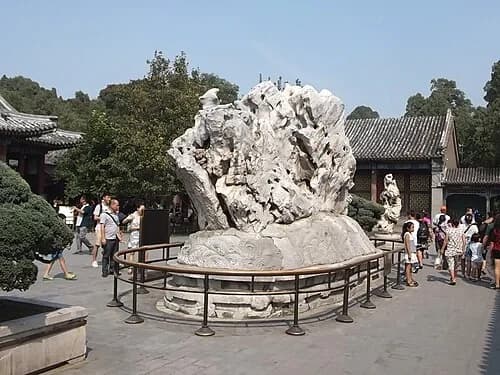
A massive, 5-meter long decorative rock known as the 'Losing-Family Stone' due to the ruinous cost of transporting it.
Blue Iris Stone
This massive rock, with its weathered holes and unusual folds, is known as the 'Losing-Family Stone.' In the Ming Dynasty, a government official became so consumed by the desire to move this rock to his own private garden that he spent his entire fortune on the transport, eventually going bankrupt and ruining his family's reputation. Years later, the Qianlong Emperor discovered the stone abandoned by the side of a road and, undeterred by the legend, spent an even greater sum to bring it here. The rock was so enormous that workers had to tear down the palace gates just to fit it into the courtyard. In traditional Chinese aesthetics, a rock is valued more highly if it is distorted, asymmetrical, and filled with natural holes, as these features suggest the raw, untamed power of nature. This stone is considered a masterpiece of garden design, representing a mountain range in miniature and serving as a focal point for contemplation within the palace grounds, where its twisted form is framed by the surrounding architecture.
Want to hear the rest?
Download the Stanza app to unlock all 38 stops and the complete guided audio tour.
Frequently Asked Questions
How long does the 颐和园 audio tour take?
The 颐和园 audio guide includes 38 narrated stops. Most visitors spend 45 minutes to 1.5 hours exploring the complete tour, though you can listen at your own pace and skip or revisit any stop.
Is the 颐和园 audio guide available in my language?
Stanza supports 15 languages: English, Spanish, French, German, Italian, Portuguese, Russian, Japanese, Chinese, Korean, Arabic, Hindi, Polish, Dutch, Hebrew. Check the guide in the app to confirm the languages currently available for this tour.
Can I use the audio guide offline at 颐和园?
Yes! Download the complete 颐和园 tour — including all audio, maps, and images — before your visit. The Stanza app works completely offline, so you don't need WiFi or mobile data at the venue.
How much does the 颐和园 audio guide cost?
The Stanza app is free to download. Free and paid audio guides are available; current prices are shown in the app.
How do I use the Stanza audio guide at 颐和园?
Download the free Stanza app, search for "颐和园", and download the tour. When you arrive at the venue, the app uses GPS to detect your location and automatically plays the relevant narration as you move between points of interest — completely hands-free.
What makes the Stanza audio guide different from other 颐和园 tours?
Stanza offers GPS-triggered narration that plays automatically as you walk through 颐和园 — no need to manually select stops. The tour is available in 15 languages, works fully offline, and includes 38 expertly narrated stops with images and historical context.
What other audio guides are available near 颐和园?
Stanza offers multiple audio guides in Haidian District, China and nearby areas. After downloading the app, browse the map to discover all available tours near 颐和园. Each guide can be downloaded for offline use.