Languages
15Παλαμήδι Audio Guide
Παλαμήδι is a landmark in Municipal Unit of Nafplio, Greece. Explore it with Stanza's GPS-triggered offline audio guide — available in 15 languages.
Quick Facts
18
Stops
15
Languages
100%
Offline
📍 Municipal Unit of Nafplio, Greece · 37.5619°N, 22.8042°E
About Παλαμήδι
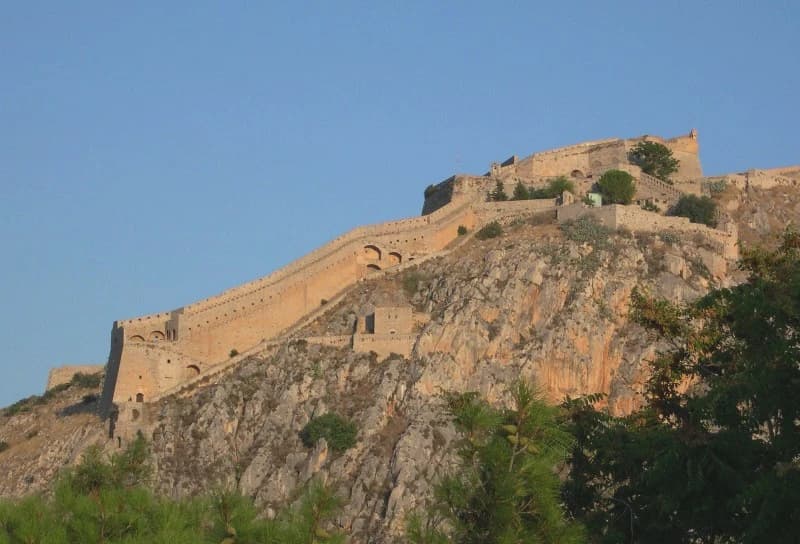
Palamidi is a historic Venetian fortress located on a high hill overlooking the city of Nafplio. It is renowned for its impressive defensive architecture and its challenging climb of nearly a thousand steps.
Παλαμήδι is also known as Fortress of Palamidi, Φρούριο Παλαμηδίου, Παλαμήδι.
This self-guided audio tour features 18 narrated stops organized across 9 sections. As a fortress, Παλαμήδι offers a unique cultural experience in the heart of Municipal Unit of Nafplio, Greece.
The Stanza audio guide is available in 15 languages and works entirely offline — download the complete tour including audio narration, maps, and images before your visit. As you walk through Παλαμήδι, GPS-triggered narration plays automatically at each point of interest.
Last updated:
What you will hear
The Monumental Ascent (The 999 Steps)
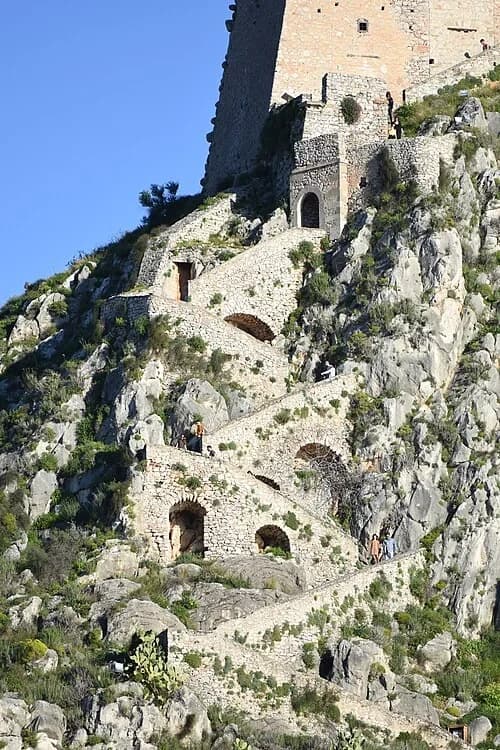
Start the journey with the famous staircase. Use the zigzag view to establish the scale and the view looking down to show the elevation gain.
The 999 Steps
While local tradition famously refers to this climb as the '999 steps,' the actual count is a slightly more manageable 857. This impressive staircase was built to provide access to the fortress, which sits 216 meters above sea level on a steep limestone ridge. As you begin the climb, observe the zig-zagging masonry of the staircase. This design was not just a practical way to manage the incline; it served a vital defensive purpose, forcing any attacking force to constantly change direction and exposing them to fire from the walls above. The sheer height offered the defenders a massive tactical advantage over the town and harbor below. The stone path you follow is the primary artery connecting the coastal settlement with the massive military complex crowning the hilltop. A slow pace allows for an appreciation of how the walls of the staircase integrate with the rugged natural terrain of the cliffside. Each turn reveals a new perspective of the surrounding landscape, emphasizing the effort required to secure this dominant position.
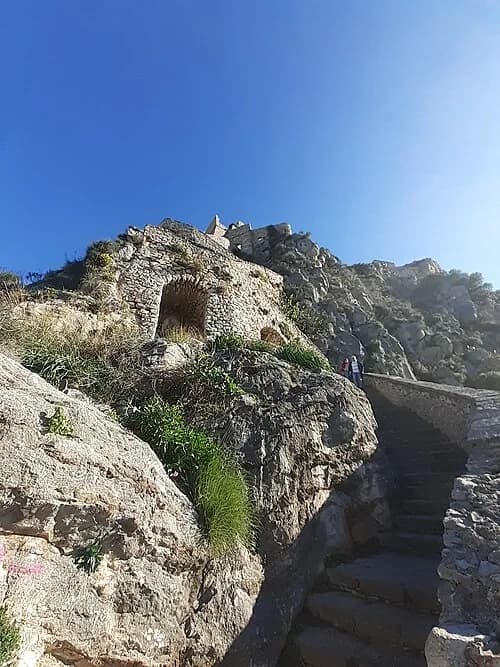
The Vertical Ascent
The stone steps here have been carved directly into the natural limestone of the cliff face, demonstrating a masterful integration of man-made structure and raw rock. Along the route, the climb is punctuated by narrow, arched portals. These were not merely decorative; they functioned as critical defensive checkpoints. In times of siege, these gates could be barred, creating a series of bottlenecks that a garrison could defend with minimal manpower. Each archway marks a transition higher up the mountainside, offering changing perspectives of the Argolic Gulf. The engineering required to transport materials and carve this path in such a short timeframe remains an impressive feat of eighteenth-century construction. The steepness of the terrain meant that every slab of stone had to be expertly placed to ensure stability against the forces of nature and the weight of thousands of marching boots. This vertical path was once the only way to supply the soldiers stationed above, making the climb as much a logistical necessity as a defensive feature.
The Main Entrance Gate
Arrival at the entrance. The relief carving above the gate is a key Venetian architectural detail.
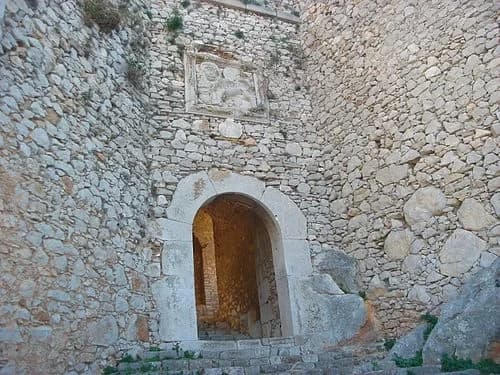
The Gate of Saint Mark
The sheer scale of Palamidi is even more impressive when considering its rapid construction. This massive complex was built in its entirety between 1711 and 1714, a feat achieved through the collaboration of expert military minds. The overall design is credited to the Venetian engineer Antonio Giancix, who envisioned a system of independent bastions that could defend one another. The actual execution of this ambitious plan fell to the French military engineer Pierre de la Salle. Together, they transformed the rugged hilltop into one of the most advanced defensive structures of the Baroque era. This particular gate, named after the patron saint of Venice, allowed for the movement of troops and supplies into the heart of the complex. The precision of the masonry and the strategic placement of the portal demonstrate the high level of military science employed here. Despite the speed of its creation, the fortress utilized local stone and sophisticated architectural principles to ensure longevity. The gate stands as a point of entry into a world of strictly regulated military life, where every stone served a tactical purpose.
Bastion of Agios Andreas and the Fortress Church
The spiritual heart of the fortress. This area combines military architecture with the small garrison church.
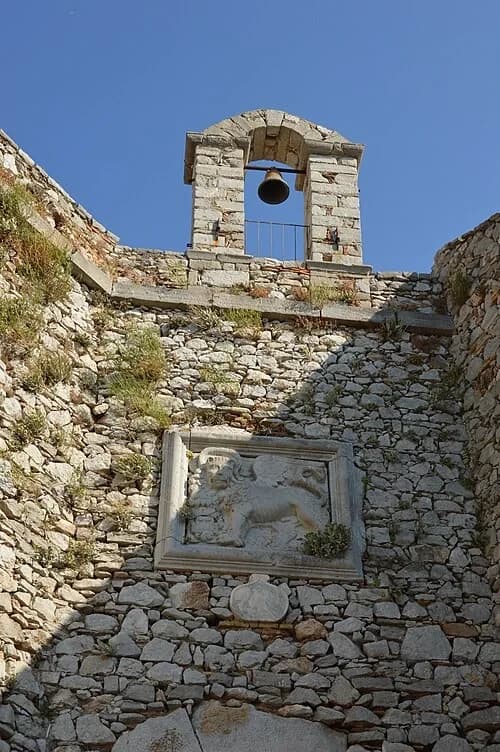
The Bell Tower of Saint Andrew
Near the center of the complex sits the Agios Andreas Bastion, which uniquely houses a small church. The stone belfry rising above the ramparts is a distinctive landmark within the fortress skyline. This church provided a necessary spiritual space for the soldiers who lived and worked within this isolated military environment. It served as a place of prayer and community, a quiet contrast to the harsh realities of garrison life. The bastion itself is named after Saint Andrew, following the tradition of dedicating military structures to patron saints for protection. While the rest of the fortress is dedicated to the machinery of war—cannon ports, thick walls, and high watchtowers—this area offered a brief reprieve. The architecture of the belfry is simple and functional, blending with the rugged masonry of the surrounding fortifications. It remains one of the few structures within Palamidi that suggests a life beyond tactical defense and strategic surveillance, though even here, the thick stone walls serve as a constant reminder that this was first and foremost a place of battle.
The Lion of Saint Mark
A specific stop for the signature Venetian symbol, proving the fortress's origins during the second Venetian occupation.
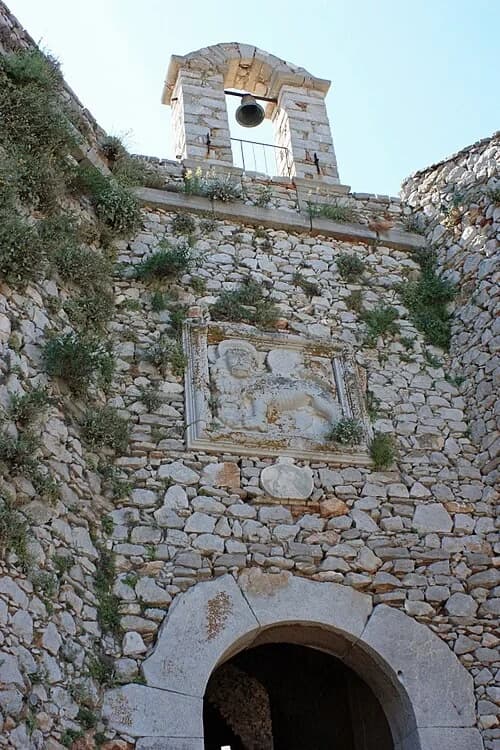
Venetian Relief Carving
Embedded in the wall is a relief carving of the Lion of Saint Mark. Though the features have been weathered by centuries of exposure, the figure of the winged lion remains clearly recognizable. In Venetian heraldry, this lion represented the power and authority of the Republic. Its placement on the walls of Palamidi was an intentional act of branding, ensuring that any visitor or potential attacker knew exactly who held this strategic high ground. The lion often holds a book, which, when open, traditionally symbolized a time of peace, and when closed, indicated a time of war. Here, the lion stands as a 'signature' left by the builders, marking the territorial claim of Venice over the Peloponnese. Similar carvings are found throughout the former Venetian maritime empire, from Crete to the Adriatic coast. This specific relief is integrated directly into the stone blocks of the bastion, demonstrating that it was planned as a fundamental part of the fortress's exterior identity. It links the mountain peaks of Greece directly to the naval power of the Venetian Republic.
Bastion of Miltiades
One of the most massive bastions, showcasing the baroque military style and the sheer scale of the 1711-1714 construction.
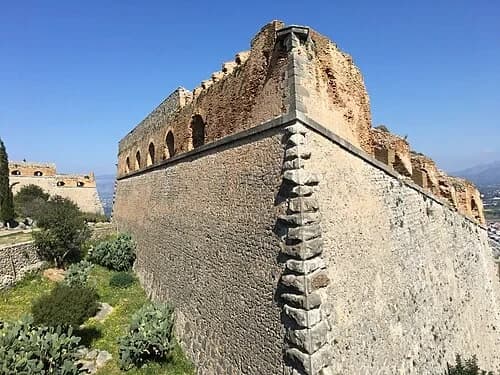
The Miltiades Bastion Walls
The Miltiades Bastion is the largest of the six bastions within the fortress complex and is a prime example of Baroque military engineering. It is characterized by its sheer size and the precision of its 'ashlar' masonry. Observe the corners of the walls, where large, rectangular stone blocks are fitted together with exceptional accuracy. This technique provided structural integrity against both natural erosion and the impact of heavy artillery. The Miltiades bastion was designed to be virtually self-sufficient; it contained its own barracks and water supply, meaning it could continue to hold out even if other parts of the fortress were breached. Its massive walls and elevated position made it the anchor of the northern defense line. The scale of the work required to build such a structure on this rocky terrain is significant. The engineers used the natural contours of the hill to enhance the walls, creating a multi-layered defensive system. The bastion’s name, like others in the complex, pays homage to ancient Greek heroes, reflecting the cultural layers of the site's long history.
The Prison of Theodoros Kolokotronis
A crucial historical stop. The small, dark cell where the Greek revolutionary hero was held in 1833.
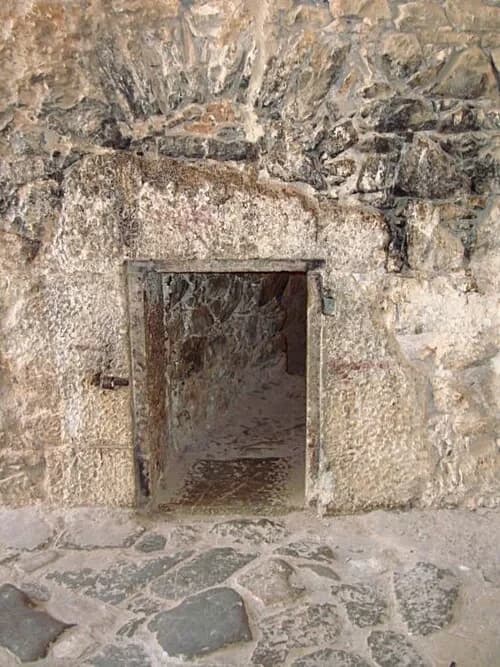
Entrance to the Dungeon
As you move through the fortress, the tone shifts at this low, heavy stone doorway. This entrance marks the transition from the grand military bastions to the prison area. After the Greek Revolution, the fortress's role changed from a frontline military post to a site for the incarceration of high-profile political figures and prisoners of war. The transition into this space is physically felt as the open air and wide views of the ramparts give way to the enclosed, somber environment of the dungeon. The thick walls, designed to keep enemies out, were equally effective at keeping prisoners in. The doorway itself is built with massive blocks, suggesting the security and permanence of the cells beyond. This part of Palamidi serves as a reminder that fortresses often outlive their original military purpose, becoming places where the victors of new conflicts settled accounts with the vanquished. The cold, dark interior stands in sharp contrast to the sun-drenched masonry of the parade grounds located just steps away.
Bastion of Themistocles
Focus on the defensive watchtowers and the strategic design by Antonio Giancix and Pierre de la Salle.
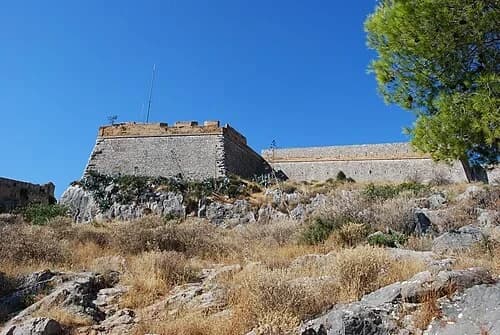
The Phocion Bastion
The layout of Palamidi is composed of six distinct bastions, each functioning as an independent fortress within the larger complex. These units are named after legendary figures from ancient Greece, such as Phocion, Leonidas, and Themistocles. Notice how the bastions are terraced at different heights along the ridge. This staggered arrangement was a deliberate strategic choice by the engineers Giancix and de la Salle. It allowed the higher bastions to provide covering fire for the lower ones, creating a mutually reinforcing defensive system. If one bastion were to fall, the others could still hold out and even fire down upon the captured area. This 'bastion-system' architecture was the pinnacle of Baroque military design, ensuring that there were no blind spots along the fortress perimeter. The Phocion bastion overlooks the southern approaches and demonstrates the sophisticated geometry used to maximize lines of sight and minimize vulnerable areas. Walking between these massive stone structures highlights the complex planning required to coordinate such a large-scale defensive network across the uneven mountain terrain of the Nafplio ridge.
The Southern Ramparts and Natura 2000 Habitat
Highlighting the natural environment and the 'Leonidas' bastion, surrounded by the local flora of the protected habitat.
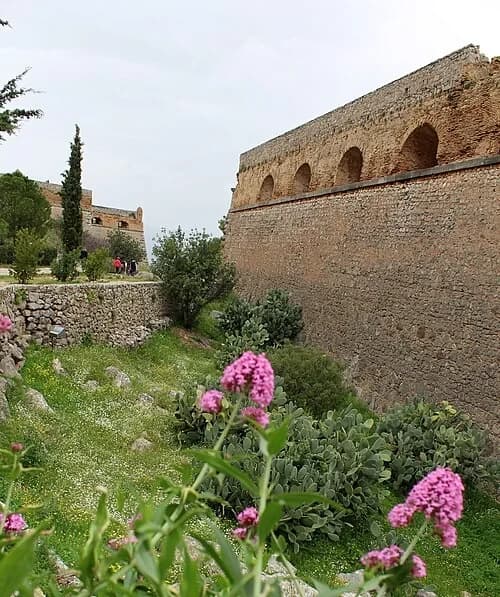
Flora of the Fortress
The area surrounding the Palamidi fortress is a protected Natura 2000 habitat covering 3.7 square kilometers. Over the centuries, nature has slowly reclaimed the spaces between the bastions. Pink wildflowers bloom in the crevices of the walls, and clusters of prickly pear cacti grow in what were once dry defensive moats. These hardy plants thrive in the dry, sun-baked soil of the limestone ridge. The presence of this flora adds a layer of natural beauty to the stark military architecture, softening the appearance of the heavy stone ramparts. The ecosystem here supports various local bird species and small reptiles that find shelter among the ruins. The dry moats, which were originally designed to prevent infantry from reaching the base of the walls, now act as protected corridors for local vegetation. This balance between the man-made stone structures and the resilient plant life creates a unique environment where the historical legacy of the fortress is now framed by a peaceful and thriving natural landscape that changes with the Greek seasons.
The Sea Watch: View of the Argolic Gulf
The strategic reason for the fortress. From here, visitors can see the sea and the Bourtzi island fortress.
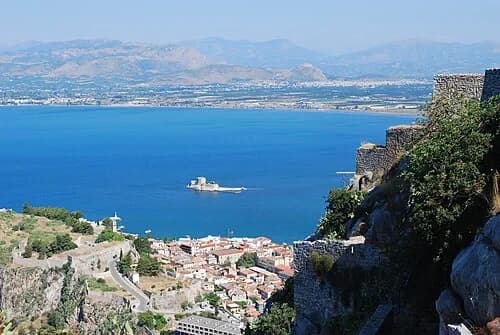
The Siege of 1822
The peaceful view across the Argolic Gulf today belies the intense struggle that occurred on these heights during the Greek War of Independence. In the winter of 1822, the fortress was a formidable prize, held by Ottoman forces and considered nearly impregnable due to its elevation and massive walls. However, on the night of November 30, a group of Greek revolutionaries led by Staikos Staikopoulos achieved a significant breakthrough. They successfully scaled the walls and captured the bastion of Agios Andreas in a surprise attack. This victory was a turning point, as the fall of Palamidi essentially forced the Ottoman garrison in the town below to surrender. The bay below served as a theater of war where naval blockades and skirmishes were common throughout the conflict. This victory eventually turned Nafplio into a central hub for the provisional Greek government. Today, the town is known as the first capital of modern Greece, a status it owes largely to the events of that November night. The capture of these ramparts provided the strategic advantage needed to solidify the Greek position in the Peloponnese during the final stages of the revolution.
Want to hear the rest?
Download the Stanza app to unlock all 18 stops and full GPS-guided navigation.
Frequently Asked Questions
How long does the Παλαμήδι audio tour take?
The Παλαμήδι audio guide includes 18 narrated stops. Most visitors spend 45 minutes to 1.5 hours exploring the complete tour, though you can listen at your own pace and skip or revisit any stop.
Is the Παλαμήδι audio guide available in my language?
Stanza supports 15 languages: English, Spanish, French, German, Italian, Portuguese, Russian, Japanese, Chinese, Korean, Arabic, Hindi, Polish, Dutch, Hebrew. Check the guide in the app to confirm the languages currently available for this tour.
Can I use the audio guide offline at Παλαμήδι?
Yes! Download the complete Παλαμήδι tour — including all audio, maps, and images — before your visit. The Stanza app works completely offline, so you don't need WiFi or mobile data at the venue.
How much does the Παλαμήδι audio guide cost?
The Stanza app is free to download. Free and paid audio guides are available; current prices are shown in the app.
How do I use the Stanza audio guide at Παλαμήδι?
Download the free Stanza app, search for "Παλαμήδι", and download the tour. When you arrive at the venue, the app uses GPS to detect your location and automatically plays the relevant narration as you move between points of interest — completely hands-free.
What makes the Stanza audio guide different from other Παλαμήδι tours?
Stanza offers GPS-triggered narration that plays automatically as you walk through Παλαμήδι — no need to manually select stops. The tour is available in 15 languages, works fully offline, and includes 18 expertly narrated stops with images and historical context.
What other audio guides are available near Παλαμήδι?
Stanza offers multiple audio guides in Municipal Unit of Nafplio, Greece and nearby areas. After downloading the app, browse the map to discover all available tours near Παλαμήδι. Each guide can be downloaded for offline use.