Languages
15Ανάκτορο των Μαλίων Audio Guide
Ανάκτορο των Μαλίων is an archaeological site in Vrachasi Municipal Unit, Greece. Explore it with Stanza's guided offline audio tour — narrated in 15 languages.
Quick Facts
41
Stops
15
Languages
100%
Offline
📍 Vrachasi Municipal Unit, Greece · 35.2935°N, 25.4922°E
About Ανάκτορο των Μαλίων
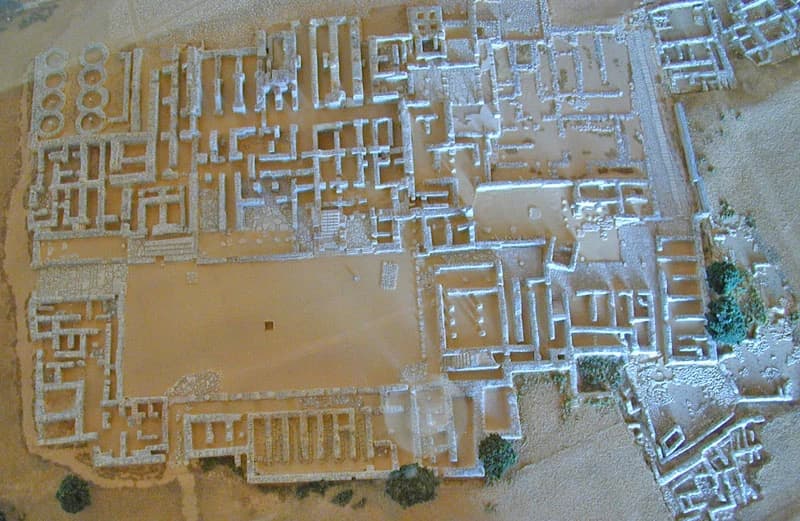
The Palace of Malia is a significant Minoan archaeological site located on the island of Crete, famous for its grand courtyard and complex architectural layout. It is considered one of the three largest Minoan palaces discovered on the island.
This self-guided audio tour features 41 narrated stops organized across 7 sections. As a archaeological site, Ανάκτορο των Μαλίων offers a unique cultural experience in the heart of Vrachasi Municipal Unit, Greece.
The Stanza audio guide is available in 15 languages and works entirely offline — download the complete tour including audio narration, maps, and images before your visit. As you walk through Ανάκτορο των Μαλίων, GPS-triggered narration plays automatically at each point of interest.
Last updated:
What you will hear
The Kernos
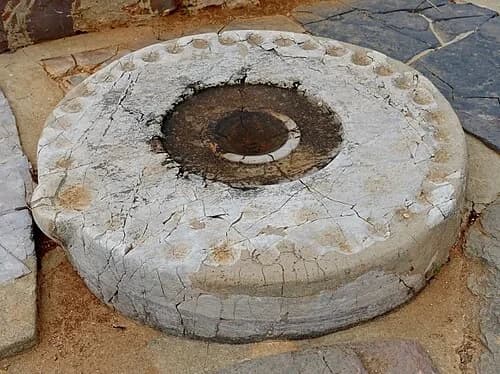
This unique stone offering table, featuring 34 small cup-like depressions, is the most iconic ritual artifact found at Malia.
Kernos
One of the most intriguing and celebrated features of the Malia palace is this 'Kernos.' It is a large, circular stone disc meticulously carved with thirty-four small, cup-like depressions around its perimeter, surrounding a larger central hole. Archaeologists believe this object played a vital role in Minoan religious life, specifically in 'panspermia' rituals. During these ceremonies, the small cups were likely filled with a variety of agricultural products—a little bit of every kind of seed, grain, or liquid like honey and wine. These collective offerings were dedicated to the gods to ensure a bountiful harvest and general fertility for the community. The central hole might have held a larger liquid offering or a central plant. Its location here, accessible yet significant, underscores the importance of agrarian success to the Minoan state. The stone is worn from centuries of exposure, yet the regularity of the carved cups remains clearly visible. It stands as a physical link to the ancient rituals that once took place under the Cretan sun, serving a purpose that remained unchanged for centuries.
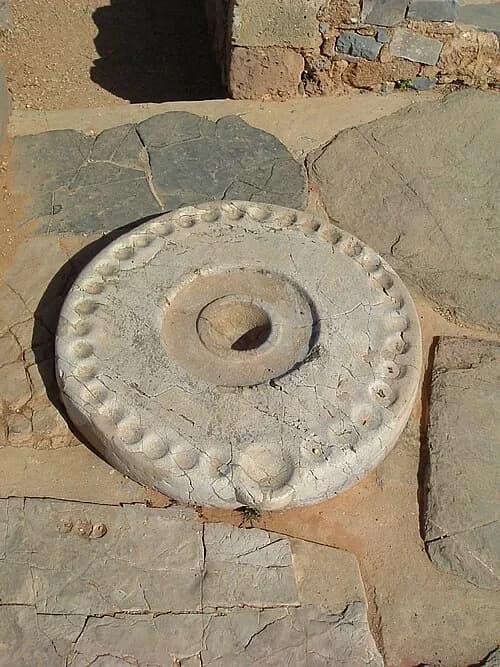
Ritual Depressions
Looking closely at the Kernos, the precision of the circular depressions is striking. Each small bowl was carved directly into the stone with remarkable consistency, reflecting the skill of Minoan stone masons. This level of craftsmanship for a ritual object indicates its high status within the palace's religious hierarchy. Interestingly, the location of the Kernos near the entrance and the edge of the Central Court provides a clue about its social function. Its position suggests that these agricultural rituals might not have been restricted to the elite dwelling within the palace walls. Instead, it is likely that the common people of the surrounding town were allowed, or even expected, to participate in these public offerings. By placing such an important ritual device in a transition space, the palace administrators bridged the gap between royal religious practice and the daily needs of the farming community. The worn edges of the stone tell a story of frequent use and long-standing tradition. Notice the varying depths of the cups, possibly intended for different types of offerings ranging from solids to liquids.
Central Court
The heart of the palace, this vast open area was used for major public gatherings and religious rituals, including bull-leaping festivals.
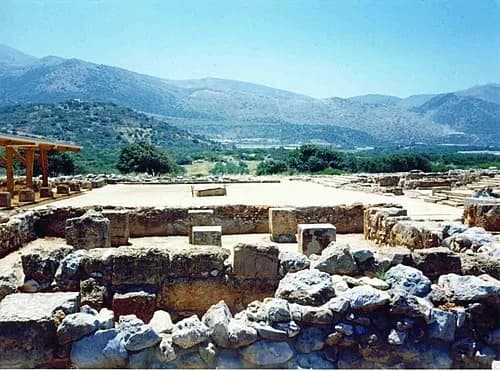
Central Court
The heart of the palace is the Central Court. This massive rectangular space measures roughly 48 meters long and 23 meters wide, making it the primary hub for almost all palace activities. Its large, open design served a multi-functional role in Minoan life. On some days, it might have functioned as a busy marketplace where goods from across Crete and the Mediterranean were traded. On others, it transformed into a consecrated ritual arena for grand religious festivals. While no direct physical evidence of bull-leaping has been found at Malia specifically, many archaeologists believe that such spectacles likely took place in the Central Courts of all major palaces. The flat surface provided an ideal stage for both athletes and priests. Surrounding this court were the most important wings of the palace, including the administrative offices, religious shrines, and royal living quarters. This layout ensured that everyone working in or visiting the palace would regularly pass through this central space. The scale of the court was intended to impress, reinforcing the organization of the Malia elite. The surviving paving stones show where heavy traffic once wore down the surface.
The Loggia
A raised platform overlooking the Central Court, where the king or high officials likely appeared during ceremonies.
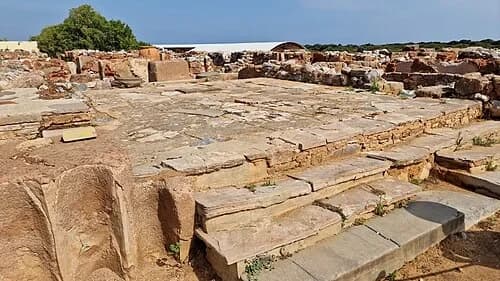
The Ceremonial Platform
Looking closely at the area around the Loggia, you can see the attention to detail in its construction, particularly the well-preserved paved floors. This was not a purely functional space; it was designed for ceremony. The proximity of the Loggia to the religious wings of the palace was intentional, as it allowed priests and officials easy access to move between sacred inner rooms and the public-facing platform. This specific spot functioned as the 'interface' of the Minoan state—the place where the high-level administration of the palace met the common people gathered in the Central Court. It was here that laws might have been proclaimed or blessings given. The stonework here is particularly fine, intended to reflect the prestige of the people who occupied the space. The transition from the simple paving of the court to the refined stonework of the platform signaled to everyone present that they were entering a more significant zone. Even in its current state, the relationship between the platform and the open court below reveals much about how the Minoans organized their social and political interactions. The platform’s height allowed for clear visibility even at the back of the court.
Pillar Crypt
A dark, subterranean chamber featuring two square pillars, used for private religious rituals and libations.
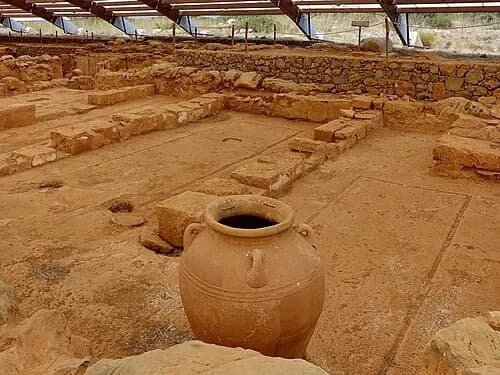
Pillar Crypt
The Pillar Crypt is a characteristic feature of Minoan palatial architecture found across Crete. This subterranean or semi-subterranean chamber is dominated by two massive square pillars standing in its center. Unlike the bright, open courts outside, these rooms were likely dark, cool, and quiet, designed for private and somber religious rituals. The space was primarily used for libations—the ritual pouring of liquid offerings like wine, oil, or honey. You can often find small channels or basins carved into the floor near the pillars to collect these sacred liquids. The pillars themselves weren't just structural supports; they were often objects of worship. In other palaces, similar pillars are inscribed with deeply significant religious symbols, most notably the 'labrys' or double-headed axe, which was a primary symbol of Minoan spiritual authority. The heavy, enclosed atmosphere of the crypt would have created a sense of intimacy and reverence for the few who were allowed to enter. It represents the more mystical and hidden side of Minoan religion, contrasting sharply with the public spectacles held in the Central Court. The massive stone blocks of the walls were built to last, preserving this sacred space for thousands of years. Small niches in the walls may have held oil lamps to light the rituals.
West Magazines
The palace's primary storage wing, where large jars (pithoi) held oil, wine, and grain, reflecting the site's role as an administrative center.
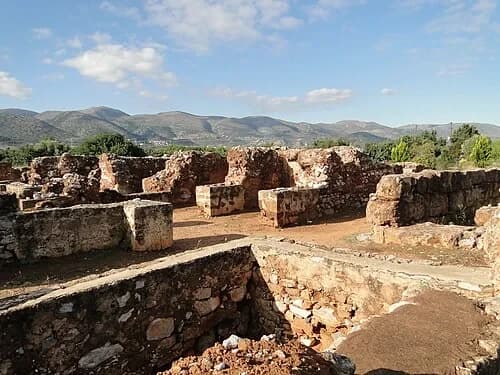
Palace Economy
The layout of the storage corridors here provides a glimpse into the logistics of an ancient empire. You’ll notice how the walls are exceptionally thick, a deliberate engineering choice to provide natural insulation. By keeping the temperature constant, the Minoans could preserve perishable goods like oil and wine for much longer periods. The narrowness of the passages was also functional, allowing for easier organization and security. Archaeologists have discovered numerous clay administrative seals in areas like this, which were used by officials to mark and track the inventory within each jar. These seals acted like ancient barcodes, identifying the source, quantity, and owner of the goods. This level of record-keeping indicates a complex society with a centralized authority capable of managing the massive output of the surrounding farmlands. The magazines were a hive of activity, with workers constantly moving heavy jars and scribes recording data on clay tablets. This industrial side of the palace was just as important as the ceremonial courts, providing the material foundation for the civilization's growth. The well-worn stones of the corridor floors bear witness to the thousands of people who once labored here to sustain the palace’s wealth.
Hypostyle Crypt
A monumental civic hall located north of the palace, likely used for meetings of the city elders or council.
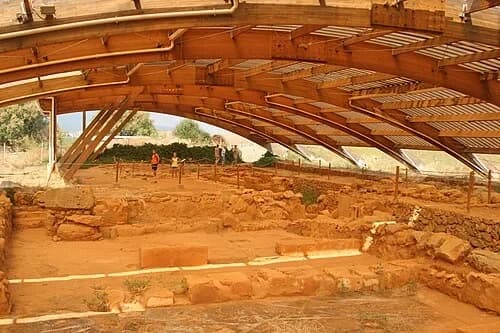
Hypostyle Crypt
Located just north of the main palace, the Hypostyle Crypt is one of Malia's most unique structures. It is a large, partially underground hall, a design that would have kept it naturally cool during the intense heat of summer. Inside, rows of pillars once supported the ceiling, creating a grand, structured interior space. Archaeologists suggest this hall had a civic function, possibly serving as a meeting place for a city council or a group of elders. This is a crucial detail because it implies that Malia possessed a sophisticated system of local governance that existed alongside the royal administration in the palace. The location of such a significant political space outside the palace walls hints at a society where power was not entirely centralized. It suggests a collaborative form of decision-making that involved the broader community. The crypt's scale and subterranean nature would have lent any proceedings an air of gravity, essential for the political life of a thriving Bronze Age city.
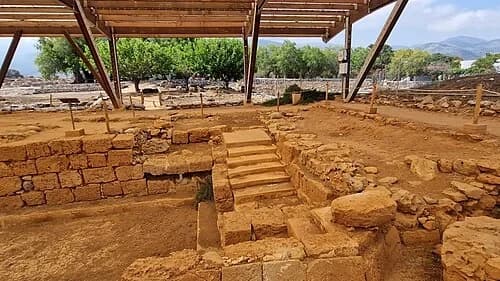
The Council Steps
To enter the crypt, you must descend this impressive staircase. Notice the exceptional quality of the masonry; the stones are cut and fitted with a precision that matches the finest work found within the palace itself. This high standard of construction reinforces the idea that this was an important public building. Inside the hall, stone benches were once arranged along the walls. These benches suggest that the space was designed for comfort during long sessions of debate or collective decision-making. The layout encourages face-to-face interaction, which is consistent with the function of a council chamber. The architecture itself seems to have been designed to facilitate dialogue and governance. As you look at these steps, you can imagine the leaders of the city descending into the cool depths of the hall to discuss trade, law, or religious matters. The permanence of the stone construction reflects a desire for stability and order in the city's political life, marking this as a place of lasting communal significance.
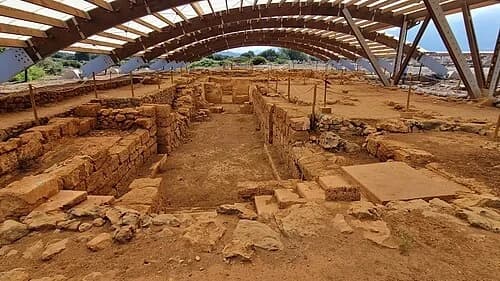
Civic Architecture
The presence of the Hypostyle Crypt as a standalone building provides valuable insight into the urban planning of Malia. It shows that the town was not merely a random cluster of houses around a palace, but a structured city with dedicated spaces for political and social life. This separation of the civic 'council house' from the royal residence indicates a developed sense of public architecture. It reflects a society that valued organized governance and provided the physical infrastructure to support it. To preserve these important ruins, a modern protective roof has been installed. This is necessary because the soft sandstone used by the Minoans is highly susceptible to erosion from rain and wind. Without this shelter, the fine details of the masonry and the benches would eventually vanish. The roof allows researchers to study the layout of this ancient political hub while protecting it for future visitors. This building remains one of the best examples of Minoan civic life, demonstrating that their civilization was as much about the community as it was about the kings.
North Entrance
This entrance is marked by a paved processional way and large pithoi, serving as the gateway from the northern town to the palace.
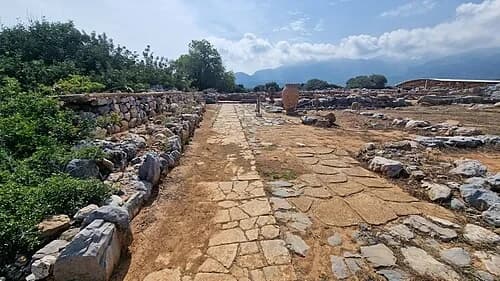
The North Entrance
The North Entrance served as a critical gateway, connecting the palace directly to the busy town and the harbor located just a short distance away. Notice the well-preserved paved path that leads into this area. This was likely a main thoroughfare, bustling with porters, merchants, and officials. Goods arriving by sea—such as exotic raw materials, luxury items, or bulk food supplies—would have been transported along this road to be processed and stored in the palace magazines. The scale and quality of the paving suggest that this was a high-traffic area designed to withstand the heavy wear of daily commerce. This entrance highlights Malia's identity as a maritime trading hub. The palace wasn't just an isolated royal residence; it was a central node in a vast network of Mediterranean trade. Standing here, you are at the intersection of local town life and international commerce, where the wealth of the Aegean was brought into the heart of the Minoan administration for recording and redistribution.
Want to hear the rest?
Download the Stanza app to unlock all 41 stops and the complete guided audio tour.
Frequently Asked Questions
How long does the Ανάκτορο των Μαλίων audio tour take?
The Ανάκτορο των Μαλίων audio guide includes 41 narrated stops. Most visitors spend 45 minutes to 1.5 hours exploring the complete tour, though you can listen at your own pace and skip or revisit any stop.
Is the Ανάκτορο των Μαλίων audio guide available in my language?
Stanza supports 15 languages: English, Spanish, French, German, Italian, Portuguese, Russian, Japanese, Chinese, Korean, Arabic, Hindi, Polish, Dutch, Hebrew. Check the guide in the app to confirm the languages currently available for this tour.
Can I use the audio guide offline at Ανάκτορο των Μαλίων?
Yes! Download the complete Ανάκτορο των Μαλίων tour — including all audio, maps, and images — before your visit. The Stanza app works completely offline, so you don't need WiFi or mobile data at the venue.
How much does the Ανάκτορο των Μαλίων audio guide cost?
The Stanza app is free to download. Free and paid audio guides are available; current prices are shown in the app.
How do I use the Stanza audio guide at Ανάκτορο των Μαλίων?
Download the free Stanza app, search for "Ανάκτορο των Μαλίων", and download the tour. When you arrive at the venue, the app uses GPS to detect your location and automatically plays the relevant narration as you move between points of interest — completely hands-free.
What makes the Stanza audio guide different from other Ανάκτορο των Μαλίων tours?
Stanza offers GPS-triggered narration that plays automatically as you walk through Ανάκτορο των Μαλίων — no need to manually select stops. The tour is available in 15 languages, works fully offline, and includes 41 expertly narrated stops with images and historical context.
What other audio guides are available near Ανάκτορο των Μαλίων?
Stanza offers multiple audio guides in Vrachasi Municipal Unit, Greece and nearby areas. After downloading the app, browse the map to discover all available tours near Ανάκτορο των Μαλίων. Each guide can be downloaded for offline use.