Stanza · Audio guide
Karni Mata Temple Audio Guide
A place to remember. A story to take with you.
Karni Mata Temple is a Hindu temple located in Deshnoke, Rajasthan. It is a prominent pilgrimage site renowned for the numerous holy rodents known as kābā that live within the temple.
Download Stanza, then search for “Karni Mata Temple”.
About the tour
One guide. Your kind of visit.
Karni Mata Temple is a Hindu temple located in Deshnoke, Rajasthan. It is a prominent pilgrimage site renowned for the numerous holy rodents known as kābā that live within the temple.
Ready when you are.
- 01Get the free Stanza app.
iOS & Android
- 02Find your guide.
“Karni Mata Temple”
- 03Download before you go.
Works offline
Audio guide / 8 narrated stops
Inside the guide
Get to know a few of the stories before you go. Open a stop to read more.
01 Outer Marble Entrance Gate
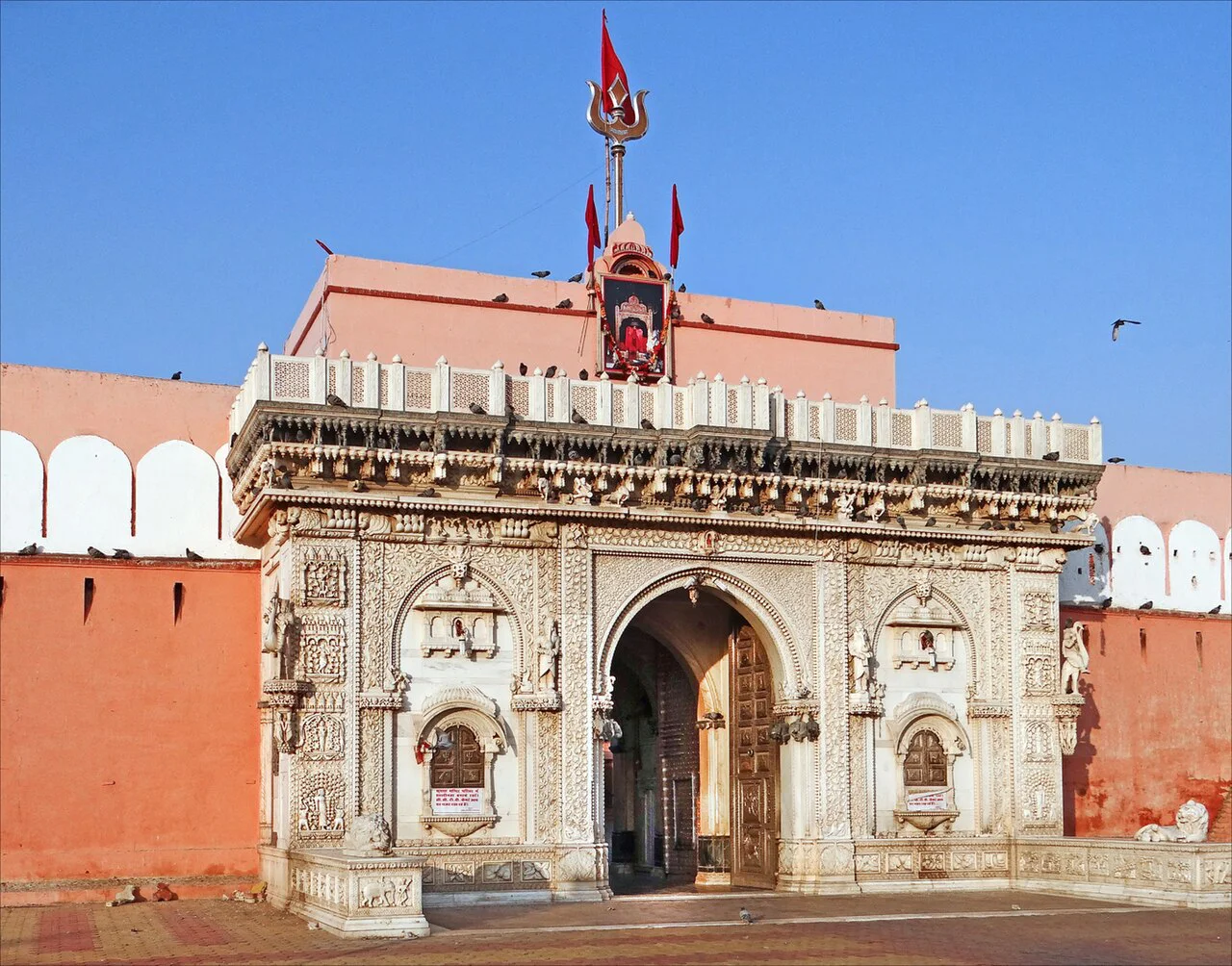
The Marble Entrance at Deshnoke
Welcome to Deshnoke, thirty kilometres south of Bikaner in Rajasthan, and to one of the strangest holy places in India. This is the temple of Karni Mata, known across the country and far beyond it as the Temple of Rats. The rats here are called kaba, and they are considered holy, cared for by the temple's own devotees. Pilgrims come for blessings, and curious travellers come from all over the world. The marble gate and facade in their present grandeur were completed in the early twentieth century by Maharaja Ganga Singh of Bikaner, in the Rajput style. But the shrine itself is far older. It was first constituted around 1530, after the passing of Karni Mata, beginning with just the inner sanctum and its dome. Everything else grew around it, added by devotees century after century. Karni Mata herself was a revered mystic, and the story goes that she blessed the founding of Bikaner. What the rats meant to her is a story for a little later.
Jean-Pierre Dalbéra from Paris, France · CC BY 2.0
02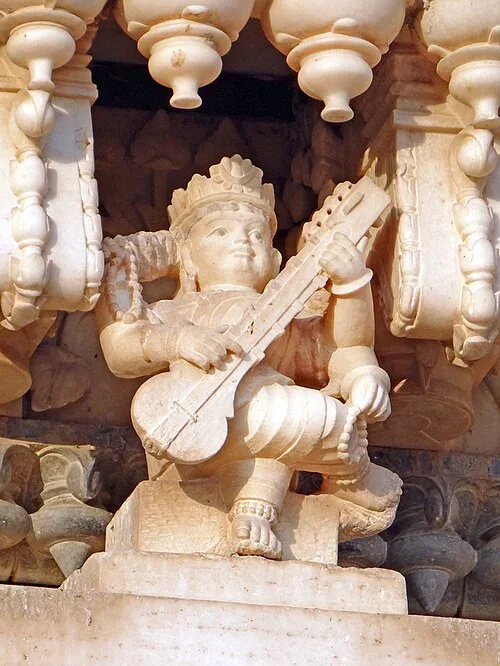 Outer Marble Entrance Gate
Carved Marble of the Facade
A crowned musician sits carved in marble, playing a long-necked vina, with beaded garlands and hanging bells carved all around. Work like this belongs to the wider Rajput tradition of temple carving, and the facade here is full of it. Each generation of patrons left its own work in stone and marble. The additions did not stop long ago, either. In 1999, Kundan Lal Verma of Hyderabad extended parts of the temple with more marble work. So the carving on this facade spans nearly five centuries of devotion, from the sixteenth-century shrine to work finished within living memory. Nobody knows who the sculpted musician was meant to be, only that he has been playing his vina here ever since.
dalbera from Paris, France · CC BY 2.0
03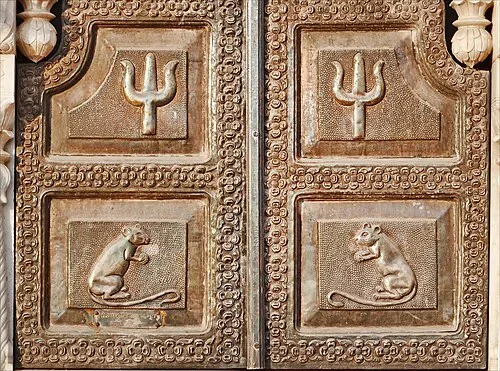 Silver Door Entranceway
The Silver Doors
Two motifs repeat across these silver panels: the trident of the goddess, and rats. Both were built into the doors themselves. Maharaja Ganga Singh had solid silver doors made for the temple's marble facade. Across the doorway hang more silver doors, their panels worked with scenes from the legends of the Goddess. The rats on the metal are not decoration alone. They stand for the kaba, the holy rodents who live throughout the temple, and the panels make the temple's law visible at its very entrance. That law says this: anyone who accidentally steps on a kaba and kills it must replace it with a rat made of solid silver or gold. It is the kind of rule that tells you, before you even enter, exactly whose home this is.
Listen in the appGünther Jontes · CC BY 4.0
04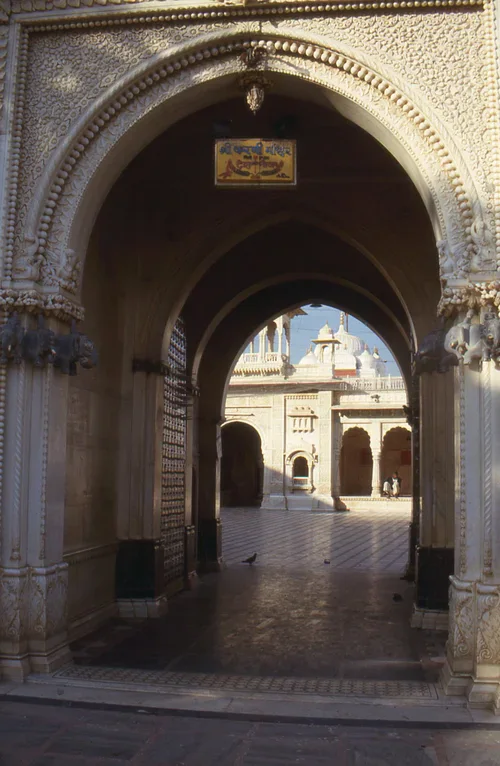 Silver Door Entranceway
Through the Gateway
Through this deeply carved archway, the temple opens out in a chain of arches toward a courtyard and domed buildings beyond. Before anyone passes through, there is a rule: all footwear comes off. Every visitor walks in barefoot, and slowly, across marble floors that thousands of rats cross freely. The rule is practical as much as reverent. It protects the animals, and it signals from the first step how they are treated here. The complex itself is low and open, a set of marble plazas and courtyards arranged around the domed sanctum at its heart. There are no grand towers to climb, just shaded halls and flat stone under an open sky. It is a building made to be lived in, by people and by rats alike.
Listen in the appGünther Jontes · CC BY 4.0
05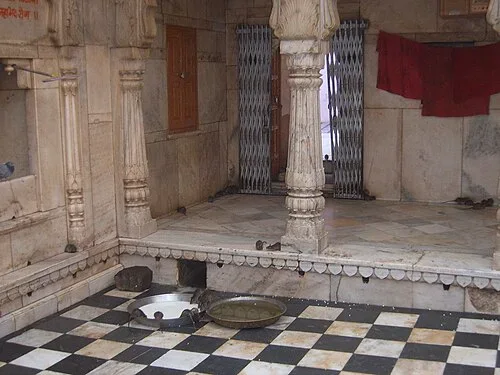 Central Marble Courtyard and Home of the Kābā
The Courtyard of the Kaba
Among the carved columns of this courtyard sit metal trays and bowls, and they are not for people. The temple is home to roughly twenty thousand kaba, the sacred rats, and they move freely through the whole complex. They live in the main temple, in the kitchen, beside the massive iron pots used to make halwa, in the side rooms, and out on the rooftop. Each spot offers them something different to eat. The day starts early. The temple opens at four in the morning, and the priests perform the Mangla-Aarti and offer food in worship. Then come the offerings for the rats: cheese and sweets, and bowls of milk set out around the temple. The kaba here have grown used to people. They eat from visitors' hands, and they share the same plate as the Charan workers in the kitchen. Food a rat has nibbled is eaten as a high honour.
Listen in the appVberger · Public domain
06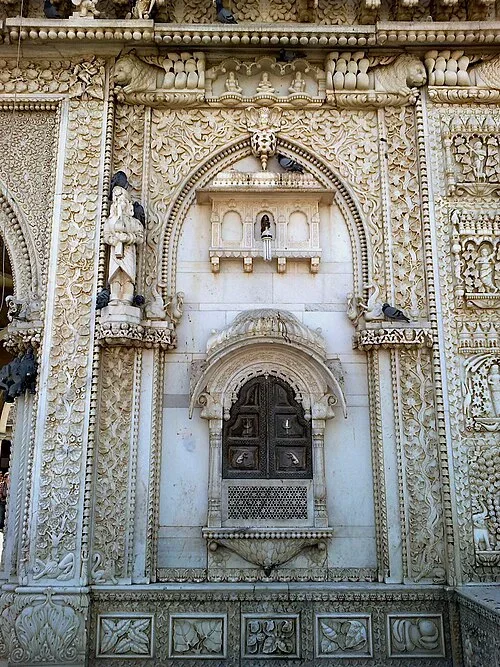 Central Marble Courtyard and Home of the Kābā
Why the Rats Are Kin
The story begins with a drowning. Lakshman, the youngest son of Karni Mata's sister, drowned in the Kapil Sarovar tank at Kolayat while bathing. His mother pleaded with Karni Mata to bring him back. Karni Mata carried the boy's body in her hands to the place where the inner sanctum stands today, shut the doors, and ordered that they not be opened. Then she went to Yamraj, the god of death, and demanded the boy's life back. Yamraj asked her how the cycle of rebirth could work then, by what law it would move. Her answer set the law of this temple: wherever I live, they will live, and when they die, they will stay with me. She chose the form of the rat. When her Charan people die, they are reborn as kaba in the temple, and when the kaba die, they are born again as people. Among the thousands of rats, a few are white, believed to be manifestations of Karni Mata herself and her four nephews. Sighting one is a special blessing, and visitors offer prasad, a sweet holy food, hoping to bring one out.
Listen in the apprene boulay · CC BY-SA 3.0
07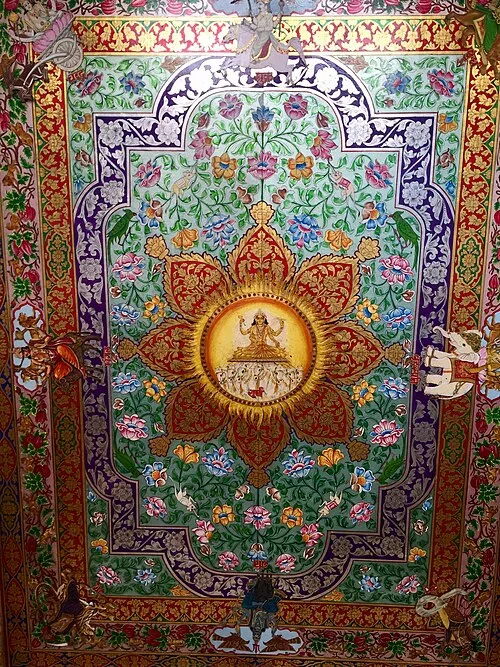 Inner Sanctum Precinct
The Sanctum and Its Keeper
At the centre of this painted ceiling, a goddess sits enthroned inside a lotus mandala, ringed by flowers and figures in gold and green. It points the way to the heart of the temple, the garbhagriha, where the murti of Karni Mata is enshrined. Around her, worship runs daily. Charan workers conduct the puja and the aarti, receive offerings from visiting pilgrims, clean the inner spaces, watch the entrance and the CCTV room, and care for the kaba. Above them all stands the baridari, the Head Priest. He is elected from the Depavat lineage, descended from Karni Mata herself, a family that now counts more than five hundred households. The baridari is the only person allowed into the innermost sanctum, and for his month in office he may not step beyond the temple boundary. Day and night, he lives inside with the rats.
Listen in the appPhoto: Katyayninaila · CC BY-SA 4.0
08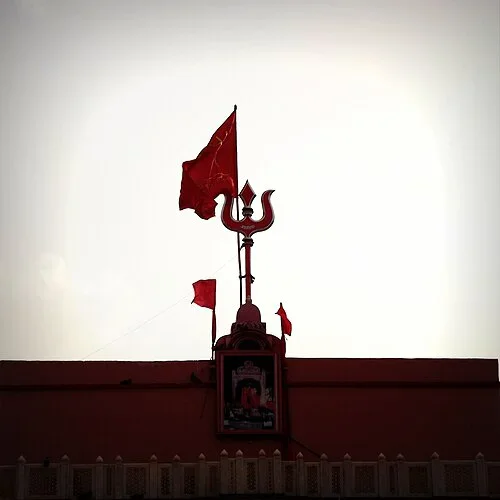 Temple Roof and Sacred Oran Environment
The Trident Above and the Protected Land
Above the temple roof rises a red trident, the emblem of the goddess, with red flags streaming beside it against the sky. From up here, the story turns outward, to the land around Deshnoke. Karni Mata herself established the Oran, a sacred grove and pasture whose perimeter runs forty-two kilometres. Within it, no being may be harmed, and no tree may be cut for fuel. The protection she gave the rats inside the temple extends, out there, to every living thing. Twice a year, devotion fills that landscape. During Navratri, tens of thousands of people walk the Oran Parikrama, circling the sacred ground on foot to reach the temple. A temple that began as one domed shrine now guards a whole countryside.
Listen in the appPhoto: Dilkashd · CC BY-SA 4.0
Karni Mata Temple
Frequently asked questions
How much does the guide cost?
Free app download. Listed guide price: $0.99. Guide price shown in the app. Audio guide only. Venue admission is separate.
Can I listen without internet?
Yes. Download the guide’s audio, images, and maps in the app before your visit. Your downloaded content is then available offline.
Can I listen in my language?
This audio guide is available in 15 languages, including English.
Do I need to follow a schedule?
No. This is a self-guided experience. Choose your stops, pause whenever you like, and return to a story at your own pace.
At your own pace
Explore Karni Mata Temple.
Download Stanza, then search for “Karni Mata Temple”.
Free app download · Guide price shown in the app
Keep exploring
Audio guides — India
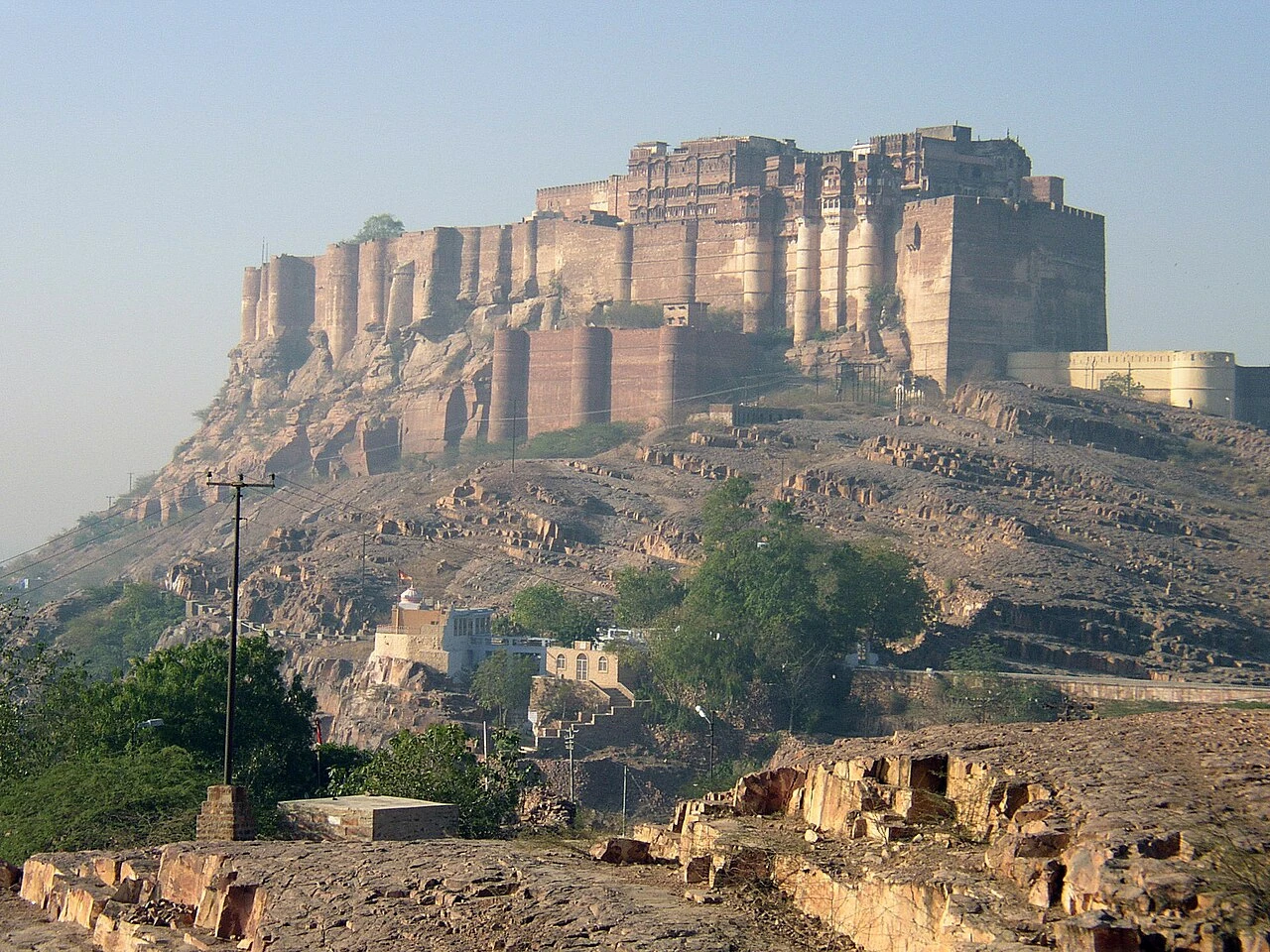
Jodhpur
Mehrangarh Fort
Content & sources
Photo: Knowledge Seeker · Public domain
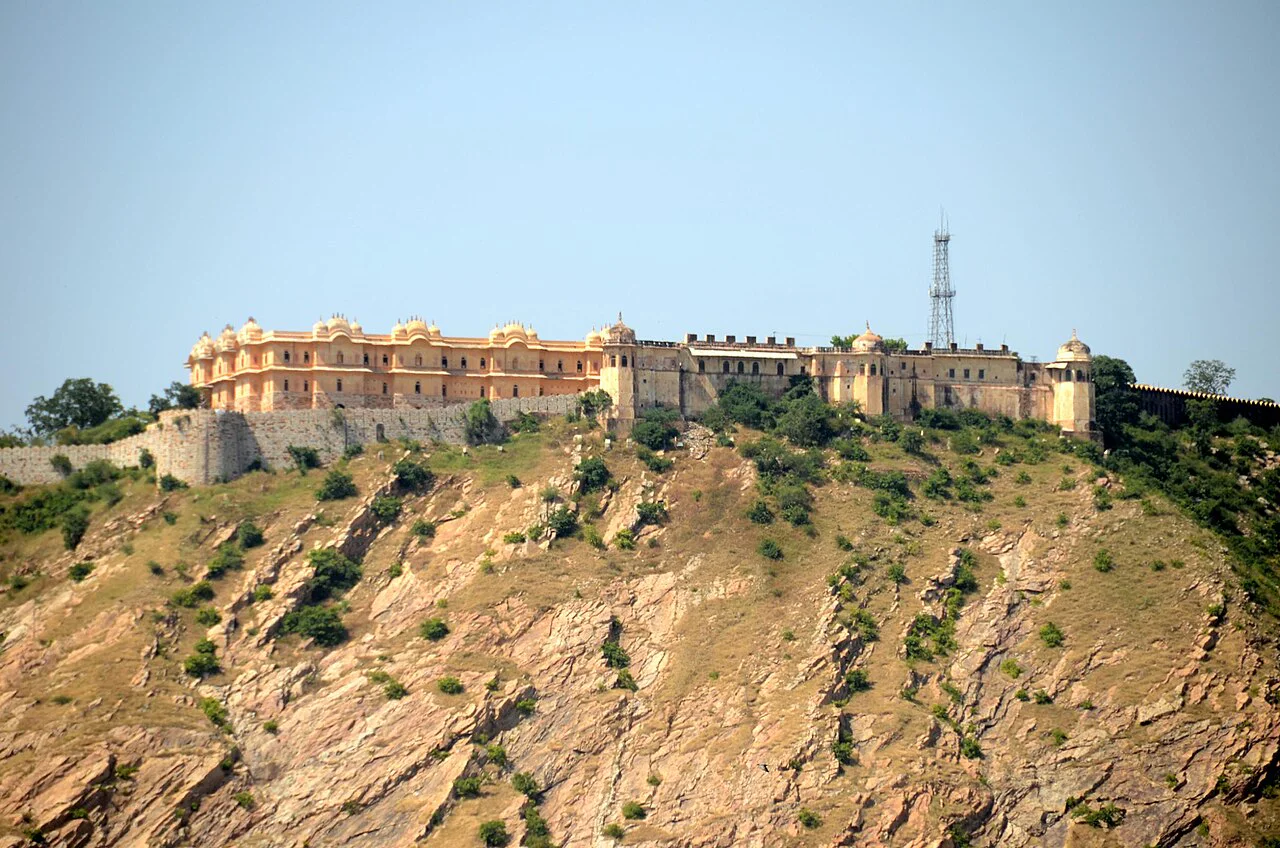
Jaipur
Nahargarh Fort
Content & sources
Photo: Yoge cool · CC BY-SA 4.0
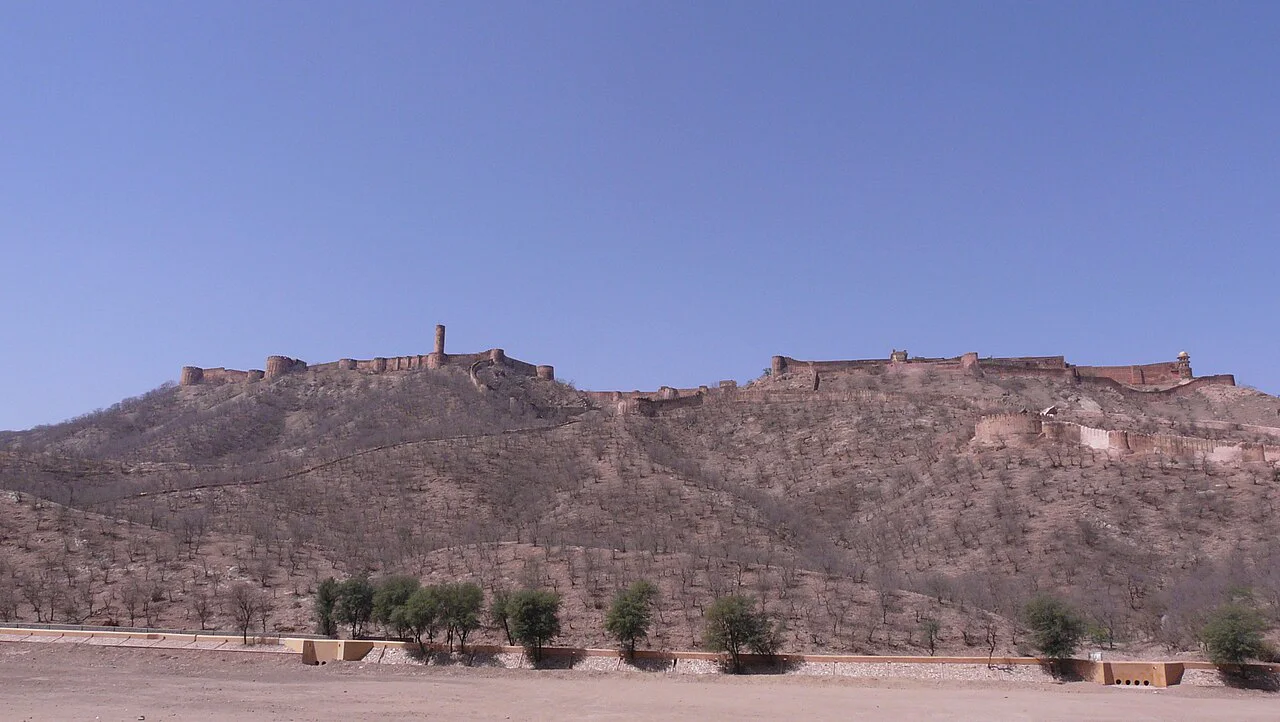
Jaipur
Jaigarh Fort
Content & sources
Ashwin Kumar from Bangalore, India · CC BY-SA 2.0
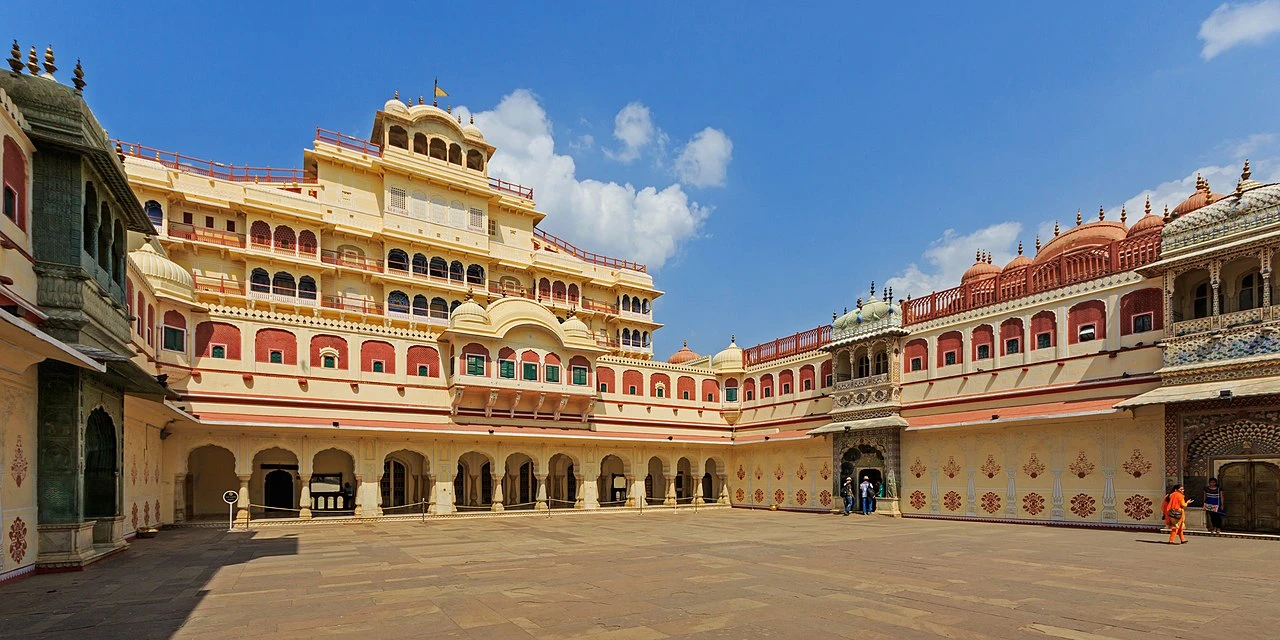
Jaipur
City Palace
Content & sources
Photo: A.Savin · FAL
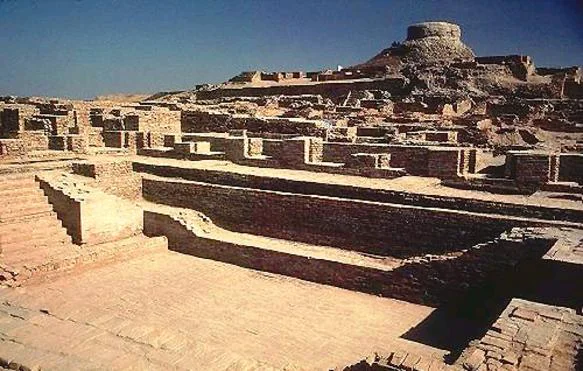
Haji Mashori
Mohenjo-daro
Content & sources
The original uploader was M.Imran at English Wikipedia. · CC SA 1.0