Stanza · Audio guide
Vikramashila Audio Guide
A place to remember. A story to take with you.
Vikramashila was a Buddhist monastic university situated in modern-day Bihar, India. It was founded by King Dharmapala between the late eighth and early ninth centuries.
Download Stanza, then search for “Vikramashila”.
About the tour
One guide. Your kind of visit.
Vikramashila was a Buddhist monastic university situated in modern-day Bihar, India. It was founded by King Dharmapala between the late eighth and early ninth centuries.
Ready when you are.
- 01Get the free Stanza app.
iOS & Android
- 02Find your guide.
“Vikramashila”
- 03Download before you go.
Works offline
Audio guide / 13 narrated stops
Inside the guide
Get to know a few of the stories before you go. Open a stop to read more.
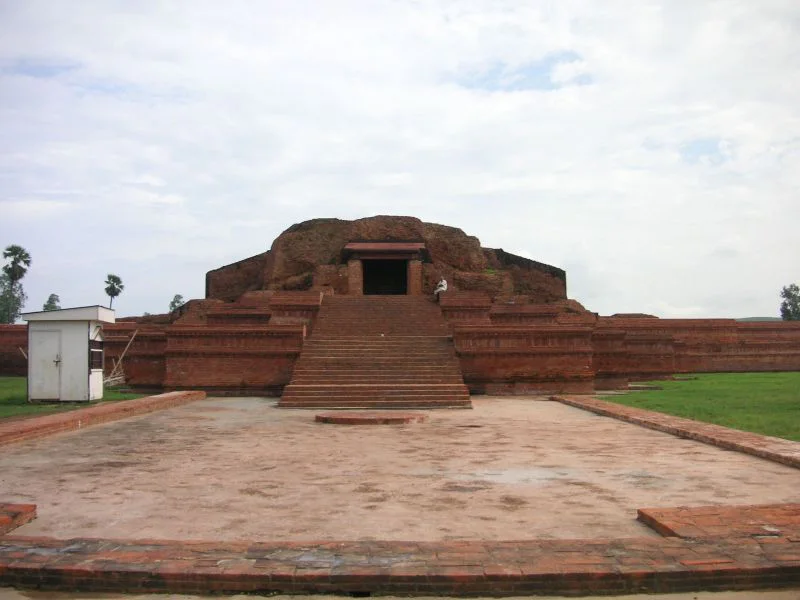
01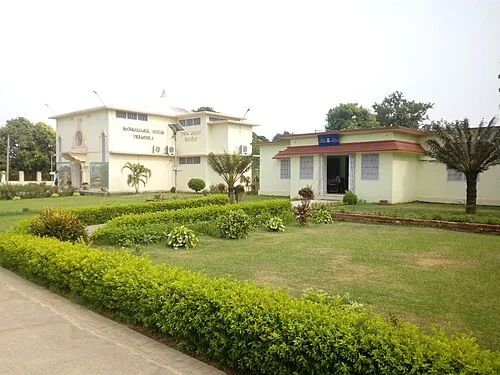 Arrival and Archaeological Museum
Vikramshila Museum and Site Entrance
Vikramashila was a Buddhist monastic university in what is now Bihar, in eastern India. Its ruins lie near the village of Antichak, close to Kahalgaon in Bhagalpur district. The Pala king Dharmapala founded it in the late eighth or early ninth century. He reigned from 783 to 820 CE. A mahavihara was a great monastery, and Vikramashila was one of the three most important in India in its day. The other two were Nalanda and Odantapuri. It prospered for about four centuries. Its scholars were often invited to foreign lands to spread Buddhist learning. Among its subjects, Buddhist tantra was the most important. Much of what we know of it comes from Tibetan writers. The Vikramshila Museum stands at the entrance to the excavations. It holds monuments, carved figures, utensils, coins, weapons and jewellery dug from the ruins.
Photo: Anuragkashyap15 · CC BY-SA 4.0
02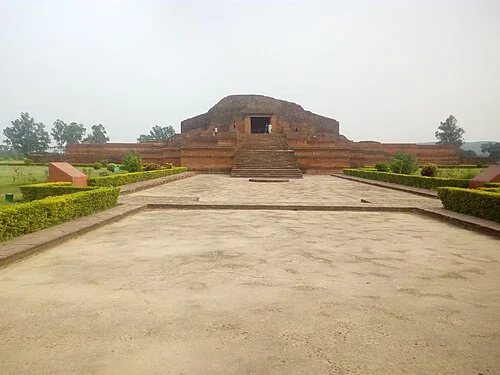 Northern Entrance and Avenue of the Scholars
The Northern Approach to the Central Stupa
This paved path leads north toward the central stupa, and it is a good place to meet the men who guarded Vikramashila's gates. The monastery had six gates, and at each one stood a gate scholar, called a dvarapala, or gate protector. In the ranks of the monastery they came just below the abbot. The fullest list comes from Tāranātha, a Tibetan monk and historian of the sixteenth and seventeenth centuries. He describes the monastery at its peak, under King Chanaka, who reigned from 955 to 983. Ratnākaraśānti held the eastern gate, and Prajñākaramati the southern. Ratnavajra and Jñānaśrīmitra held the two central gates. The northern gate belonged to Naropa. He had entered the great university of Nalanda at the age of twenty-eight, rose to be its abbot, and spent twelve years with his teacher Tilopa. He took part in many debates, and gained the title Guardian of the Northern Gate.
Listen in the appPhoto: Anuragkashyap15 · CC BY-SA 4.0
03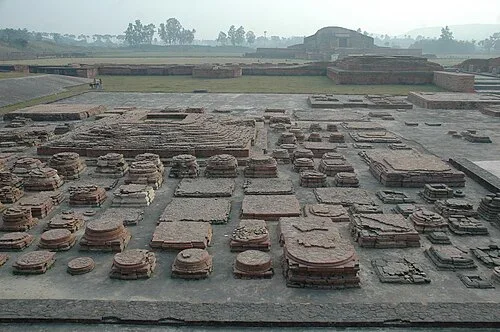 The Monastic Cells and Quadrangle
The Excavated Monastery Plan
Excavation has uncovered much of Vikramashila's plan. The plan shows a huge square monastery, with a stupa in the middle. It also shows a library building and a cluster of votive stupas. Votive stupas are miniature stupas that devotees raised in thanks for a wish fulfilled. Patna University excavated first, from 1960 to 1969. The Archaeological Survey of India then worked at the site, from 1972 to 1982. Somapura, at Paharpur in Bangladesh, is very alike in plan. King Dharmapala founded that monastery too. At Somapura the centre is a temple, not a stupa. Vikramashila is larger, and its outer wall has fort-like projections. Several great monasteries grew up in Pala times. Tibetan writers count five of them as one network, and Vikramashila was the leading one. Historians think the state oversaw all five, and that they coordinated with one another. Scholars often moved easily from one of these monasteries to another.
Listen in the appPhoto: ShubhamShaswat · CC BY-SA 3.0
04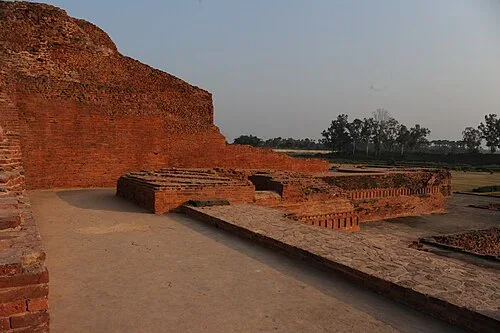 The Monastic Cells and Quadrangle
The Enclosure Wall and Monastic Quarters
The monks' residence was a huge square, each side about three hundred and thirty metres long. Its walls are still thick red brick, with a low stepped platform at their foot. Two hundred and eight cells stood along its four sides. There were fifty-two on each side, all opening onto a common verandah. Vikramashila had more than a hundred teachers. About a thousand students studied with them. They studied grammar, philosophy, logic and metaphysics. The modern scholar Sukumar Dutt thought the teachers here were organised in clearer ranks than at other monasteries. One account says the rulers of Bengal gave degrees to students who finished their studies.
Listen in the appPhoto: Ayan Sadhu 70 · CC BY-SA 4.0
05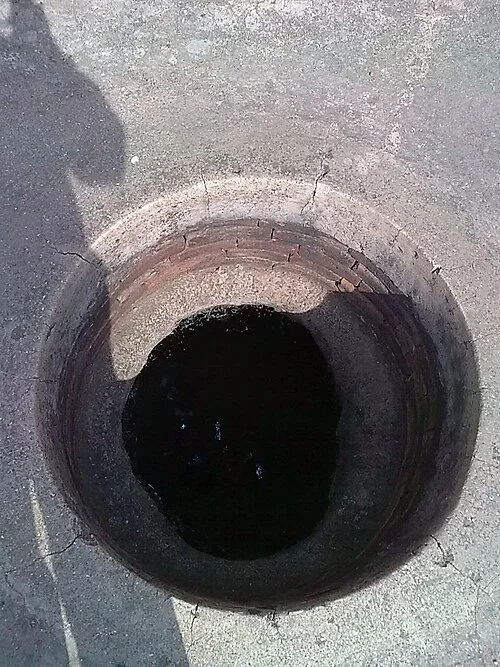 Subterranean Chambers and Storage Pots
Brick-Lined Underground Vessel
Beneath some of the cells of this monastery, archaeologists noticed brick-arched underground chambers. They were probably meant for monks to meditate in confinement. Vikramashila was a centre of Vajrayana, the tantric form of Buddhism, and it employed tantric preceptors, senior teachers of those texts. The first was Buddhajñānapāda, who served in the reign of Dharmapala. Dīpaṁkarabhadra followed him. Next came Jayabhadra, a monk from Sri Lanka, active in the early to middle ninth century. He was the first prominent commentator on the Cakrasamvara tantra. Śrīdhara came after him, then Bhavabhaṭṭa, also a commentator on the Cakrasamvara. Later Durjayachandra, another commentator on that tantra, worked with the renowned Tibetan translator Rinchen Zangpo. Durjayachandra's commentary became especially important for the Sakya school of Tibetan Buddhism.
Listen in the appDeepak Kumar Sharma · CC BY-SA 3.0
06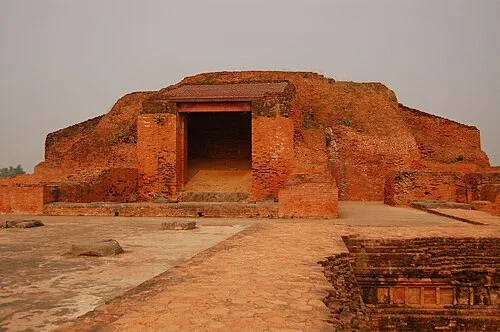 The Monumental Cruciform Stupa
The Central Cruciform Stupa
A stupa is a solid sacred structure. Many were raised over the remains or belongings of the Buddha or of a distinguished monk, or to mark an event linked with them. Others, like this one, were built simply as places of worship for the monks. It stands in the middle of the great square monastery, made of brick laid in mud mortar, and rises about fifteen metres from the ground. Seen from above, its plan is a cross. On each of the four compass directions a chamber juts out from the main body, with a pillared antechamber, and in front of each stands a separate pillared hall called a mandapa. Where the university stood was long a matter of debate. One view placed it at a mound called Bateshwarnath, on the Ganges about three miles east of Kahalgaon. Others looked near Sultanganj, because under British rule a Buddha statue had been found in a village there. Excavation then uncovered this monastery and its cross-shaped stupa.
Listen in the appSaurav Sen Tonandada · Public domain
07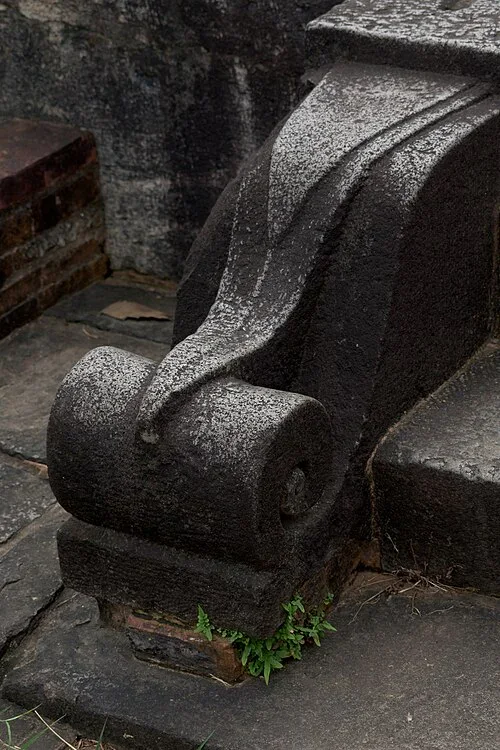 The Monumental Cruciform Stupa
Carved Scroll-Form Detail on the Stupa Ascent
The stupa rises in two terraces, one above the other. The lower terrace stands about two and a quarter metres above the ground. The upper terrace rises about the same height again. Steps on the north side give access to the stupa. Each terrace has a walkway running all the way round the monument. The lower walkway is about four and a half metres wide. The upper one is narrower, about three metres across. The walls of both terraces are decorated with mouldings and terracotta plaques.
Listen in the appPhoto: Spotplayerx · CC BY-SA 4.0
08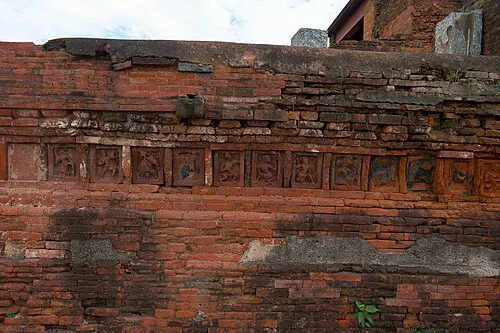 Terracotta Relief Galleries
Terracotta Panel Band in the Brickwork
Buddhist and Hindu deities share the same brick walls with human figures. The walls carry terracotta plaques, small panels of baked clay. They come from the Pala period, which ran from the eighth to the twelfth centuries. They show how skilled terracotta work had become in that period. Avalokiteshvara is one of the Buddhist deities shown. Hindu gods such as Vishnu appear as well. Beside them are ascetics, yogis, preachers and drummers. Animals appear too, among them elephants, deer and lions.
Listen in the appPhoto: Spotplayerx · CC BY-SA 4.0
09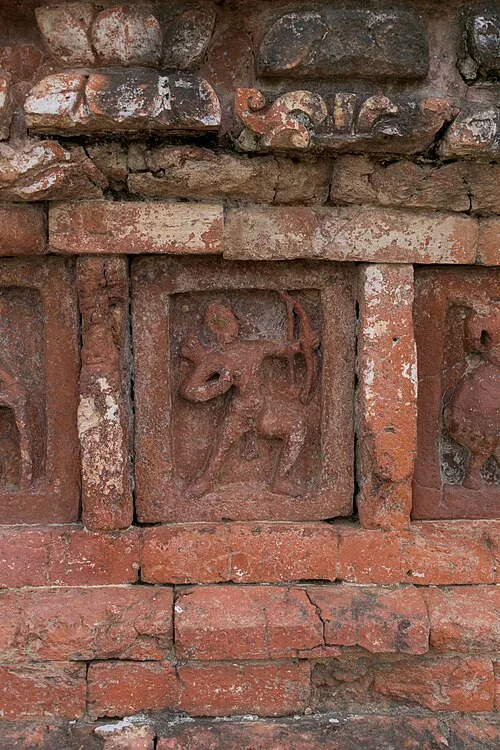 Terracotta Relief Galleries
Terracotta Plaque of a Figure with a Bow
Not every plaque on these walls shows a god. Some show hunting and everyday social scenes, and this panel, with a standing figure holding a bow, belongs to that worldly side. The craftsmen also modelled snake charmers, and a crowd of animals: monkeys, horses, wild boar, panthers, wolves and birds. Among the Hindu figures on the walls are Parvati, the half-male, half-female form called Ardhanarisvara, and the monkey god Hanuman. Terracotta plaques very like these also decorate Somapura, at Paharpur in Bangladesh.
Listen in the appPhoto: Spotplayerx · CC BY-SA 4.0
10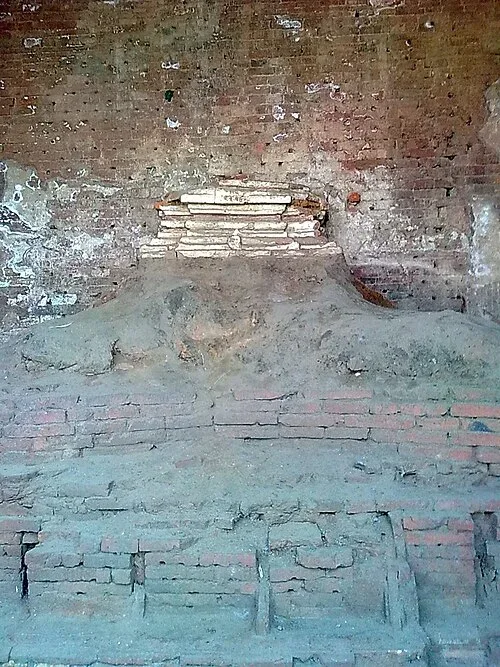 The Cardinal Shrines
Brick Pedestal in a Stupa Chamber
Each of the stupa's four chambers once held a colossal seated Buddha. These figures were made of stucco, a plaster-like material. Three of them were still in place when they were found. The figure on the north side was damaged, and a stone image may have replaced it. All the stucco figures are broken above the waist. Brick pedestals like this one carried the figures. Traces of red and black paint mark the pedestals. The walls and floor of the chamber were plastered with lime.
Listen in the appDeepak Kumar Sharma · CC BY-SA 3.0
- 11
Path to the Manuscript Library
A library cooled by water from a nearby reservoir, and the handful of manuscripts that name the monastery.
- 12
Pillared Mandapa Remains
An abbot of Vikramashila counted among the founders of Tibetan Buddhism's Sarma traditions.
- 13
Broken Pillars Among the Ruins
The raid that ended Vikramashila, and the broken pillars left lying on the grass.
Vikramashila
Frequently asked questions
How much does the guide cost?
Free app download. Listed guide price: $0.99. Guide price shown in the app. Audio guide only. Venue admission is separate.
Can I listen without internet?
Yes. Download the guide’s audio, images, and maps in the app before your visit. Your downloaded content is then available offline.
Can I listen in my language?
This audio guide is available in 15 languages, including English.
Do I need to follow a schedule?
No. This is a self-guided experience. Choose your stops, pause whenever you like, and return to a story at your own pace.
At your own pace
Explore Vikramashila.
Download Stanza, then search for “Vikramashila”.
Free app download · Guide price shown in the app
Keep exploring
Audio guides — India
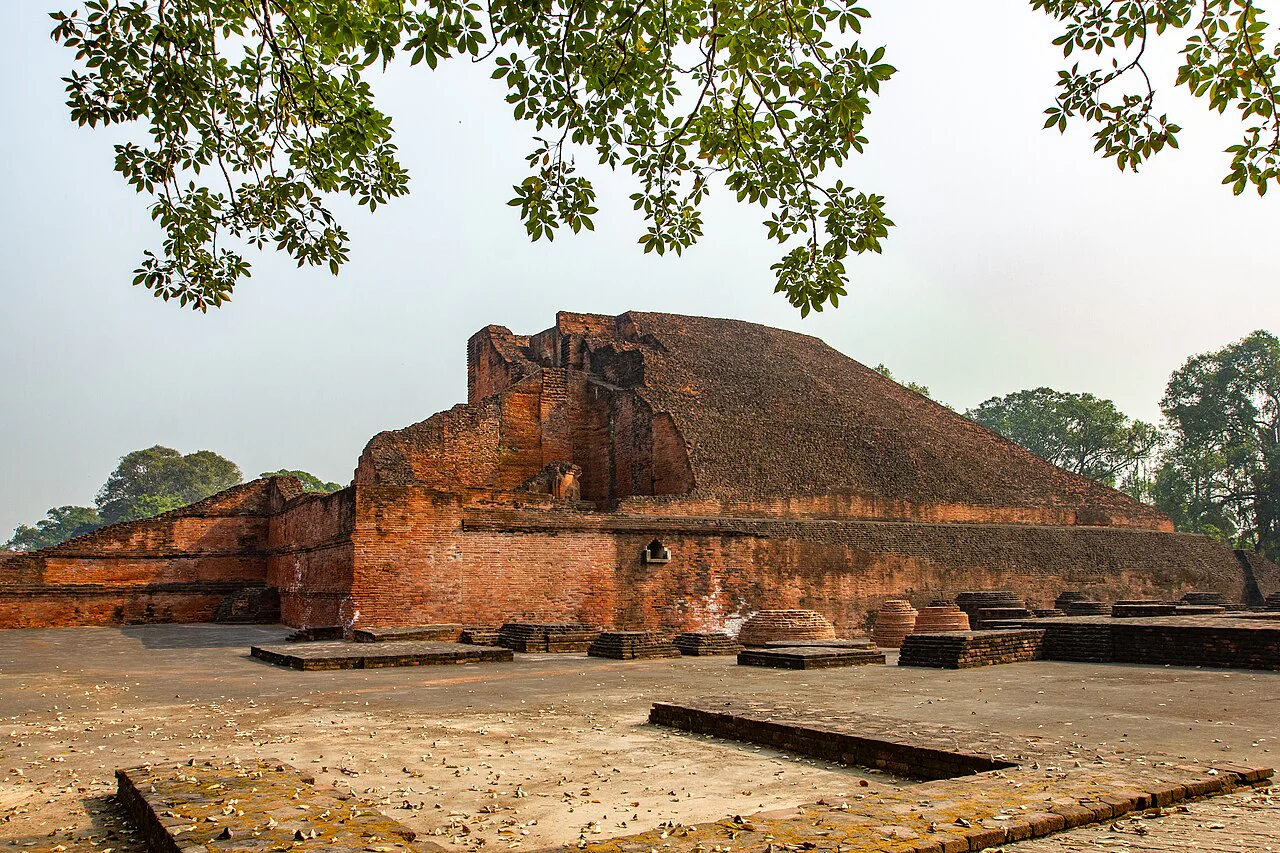
Nalanda
Nalanda mahavihara
Content & sources
Photo: Uphogaphy · CC BY-SA 4.0
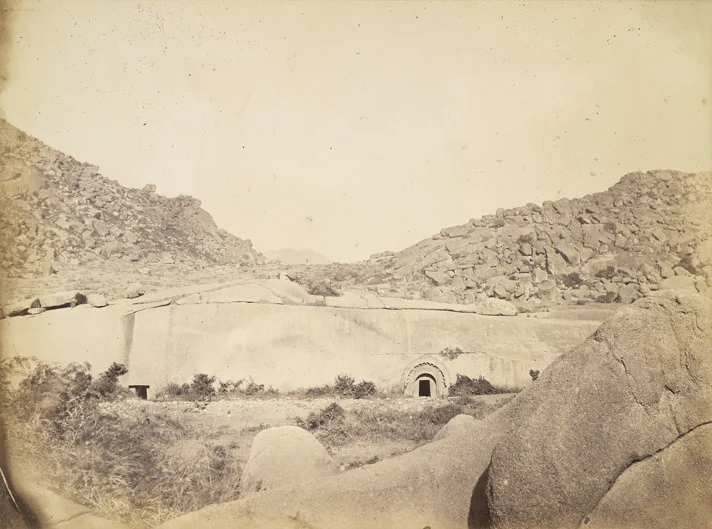
Makhdumpur
Barabar Caves
Content & sources
Thomas Fraser Peppé · Public domain
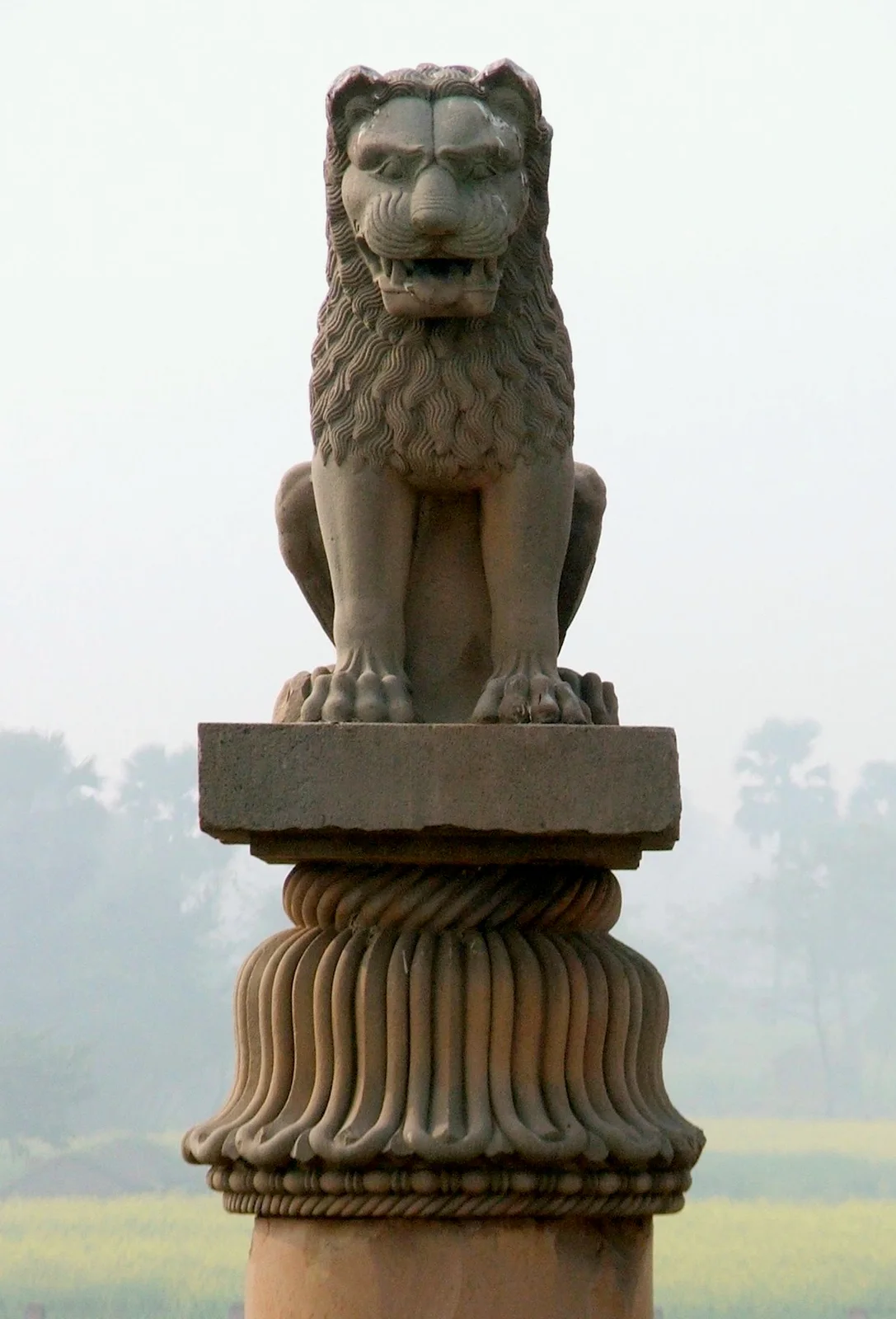
Vaishali
Vaishali
Content & sources
mself · CC BY-SA 2.5
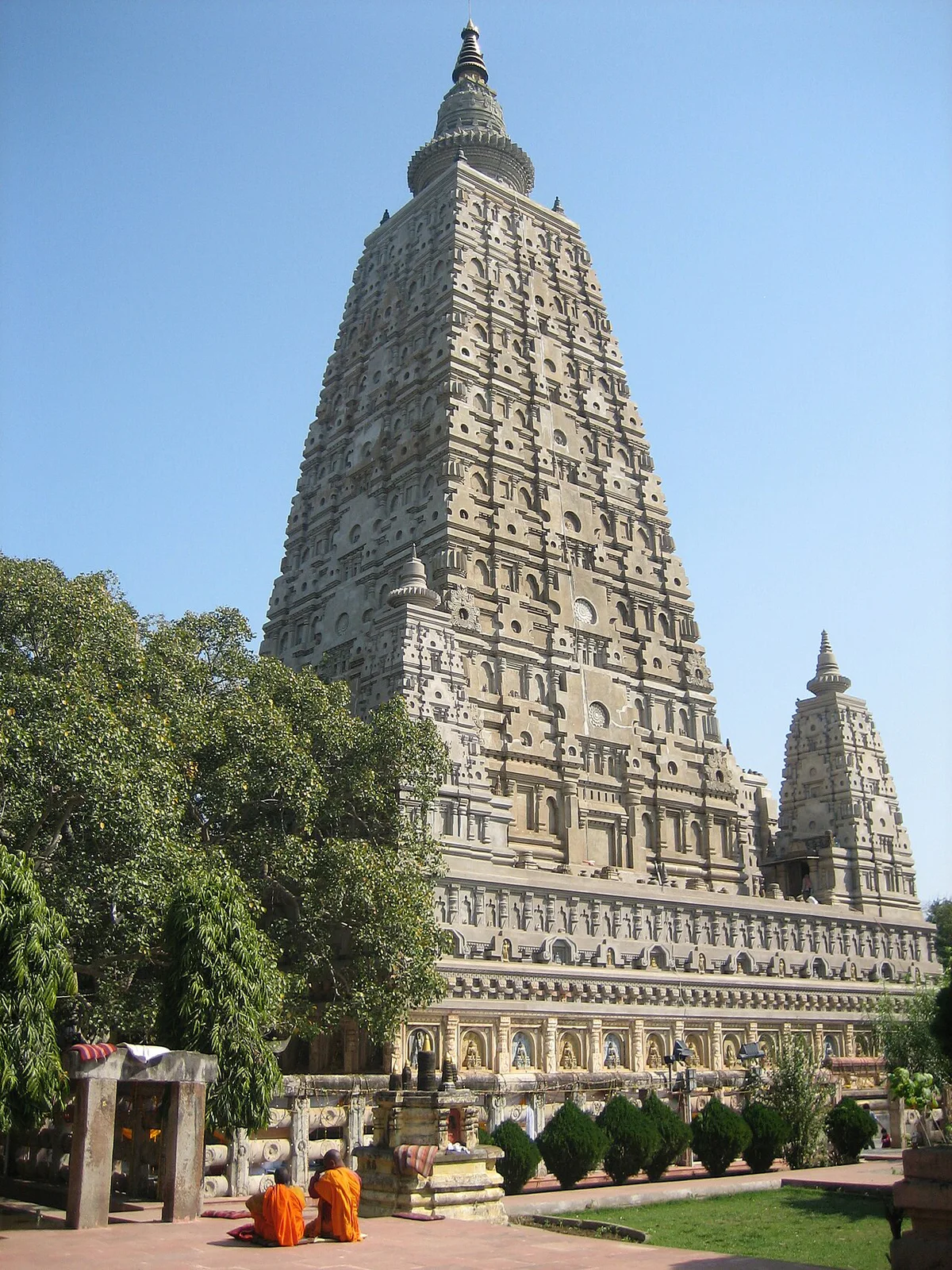
Bodh Gaya
Mahabodhi Temple
Content & sources
Photo: Bpilgrim · CC BY-SA 2.5
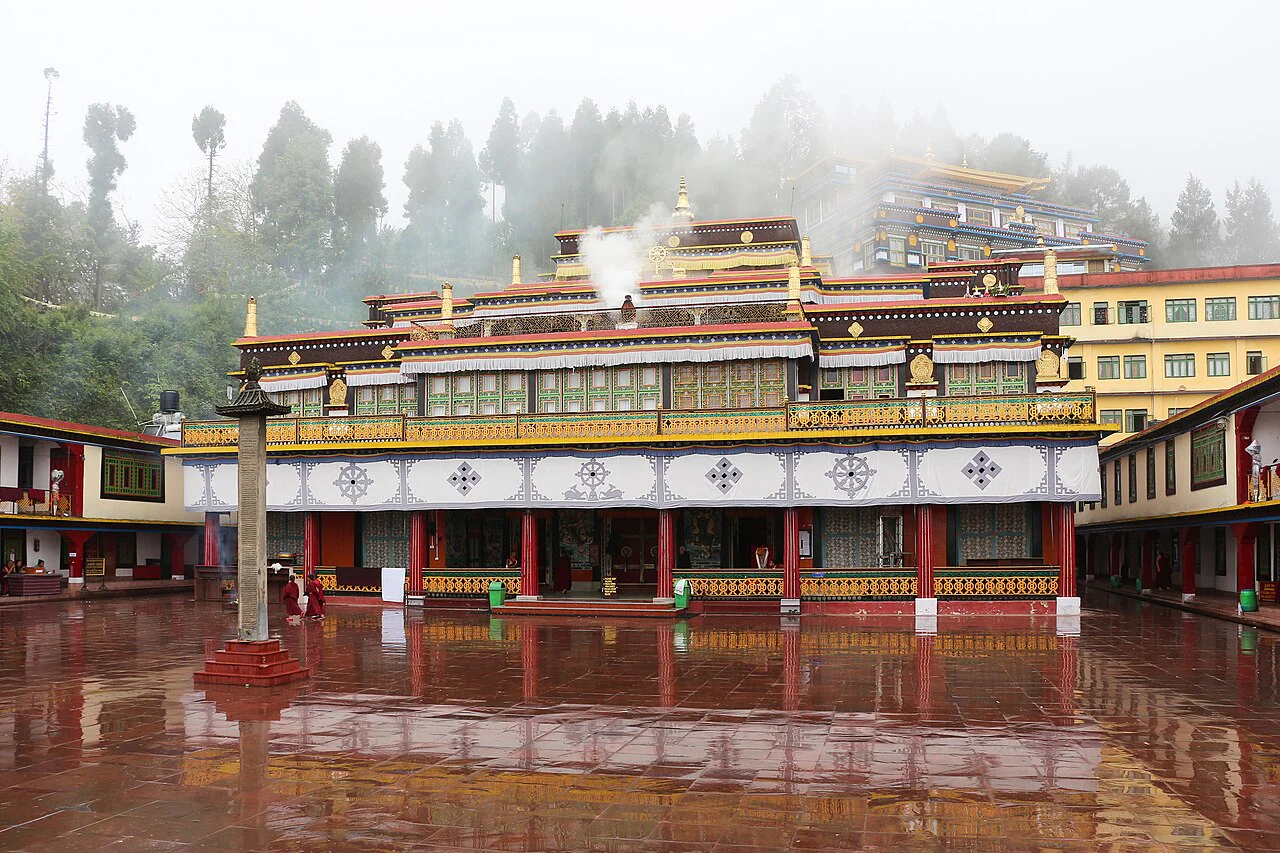
Singtam
Rumtek Monastery
Content & sources
Bernard Gagnon · CC BY-SA 4.0