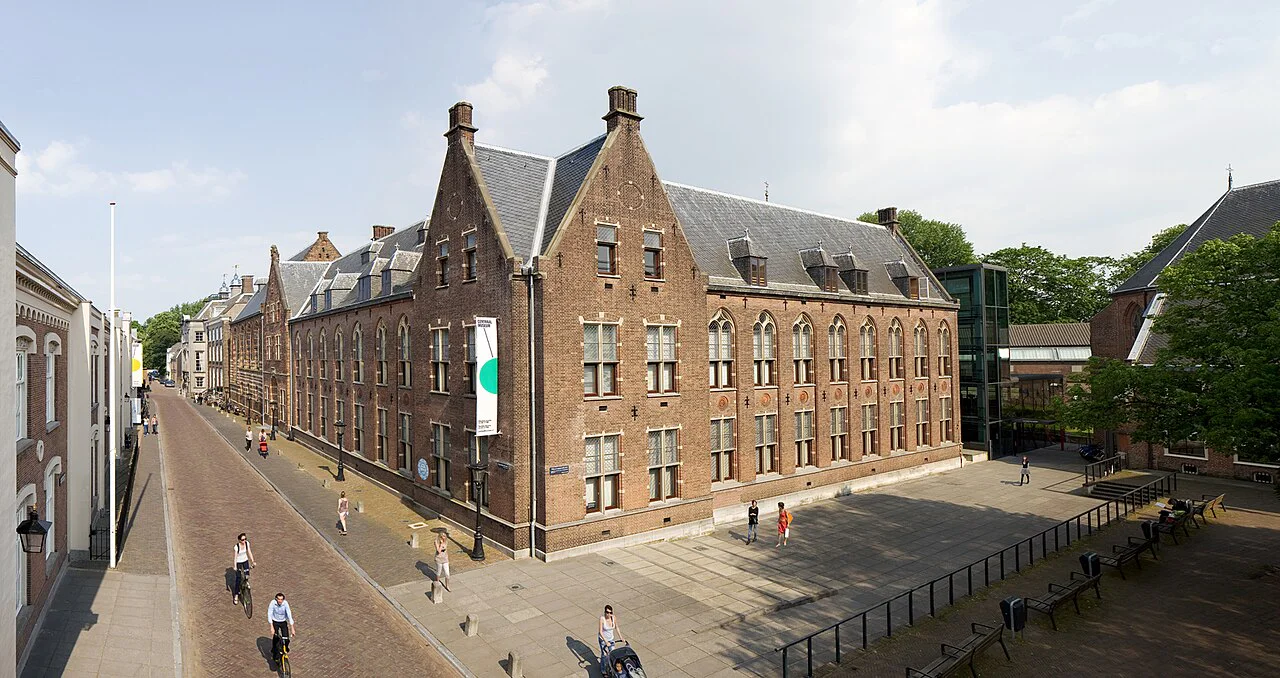
 Stanza / Audio guide
Content & sources
Stanza · Audio guide
Centraal Museum Audio Guide
A place to remember. A story to take with you.
The Centraal Museum is the main museum in Utrecht, Netherlands, founded in 1838, with a wide-ranging collection mainly of works produced locally. Its collection of paintings by Joachim Wtewael is the largest…
Download Stanza, then search for “Centraal Museum”.
About the tour
One guide. Your kind of visit.
The Centraal Museum is the main museum in Utrecht, Netherlands, founded in 1838, with a wide-ranging collection mainly of works produced locally. Its collection of paintings by Joachim Wtewael is the largest anywhere in the world, and it also holds significant paintings by the Utrecht Caravaggisti Gerard van Honthorst and Hendrick ter Brugghen.
The Centraal Museum guide tells the stories of 63 artworks, including The Procuress (Gerard van Honthorst), Bouquet of flowers with two Lizards (Roelant Savery), The Staircase of the London Residence of the Painter (Pieter Christoffel Wonder), The Lute player (Dirck van Baburen), Memorial tablet for the lords of Montfoort (Unknown Artist), The Temptation of Saint Anthony (Hieronymus Bosch), Mars Asleep (Hendrick ter Brugghen), and Self-portrait (Theo van Doesburg). Every artwork is free to hear in the Stanza app until 1 January.
Ready when you are.
- 01Get the free Stanza app.
iOS & Android
- 02Find your guide.
“Centraal Museum”
- 03Download before you go.
Works offline
Audio guide / 63 artworks
Inside the guide
Get to know a few of the stories before you go. Open a stop to read more.
01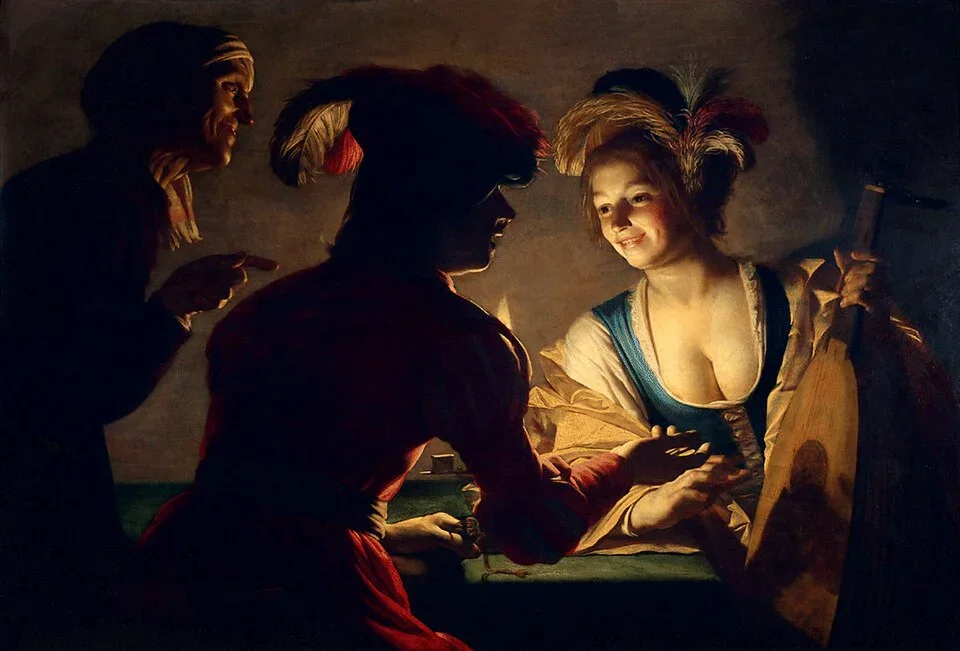
The Procuress
One tooth pokes out past the old woman's closed mouth, on the left of the painting. She is the matchmaker, keeping an eye on what the two younger ones are doing. The young man holds his purse in his left hand, where it can hardly be missed. He may be the customer. The old woman points him out with pleasure, and his other hand gestures toward the girl's lute. She points to that same lute, her neckline bare in the candlelight. In Dutch, luit can also mean a woman's genitals, and that is the vulgar meaning here. The lute stands for prostitution and lust. Under its elegant surface, the picture shows illicit love and condemns it. The candle on the table picks out her colorful, feathered clothes. Gerard van Honthorst had spent ten years in Italy painting night scenes, with strong contrasts of light and dark. The same young woman appears in other paintings he made.
Listen in the appGerard van Honthorst · Public domain
02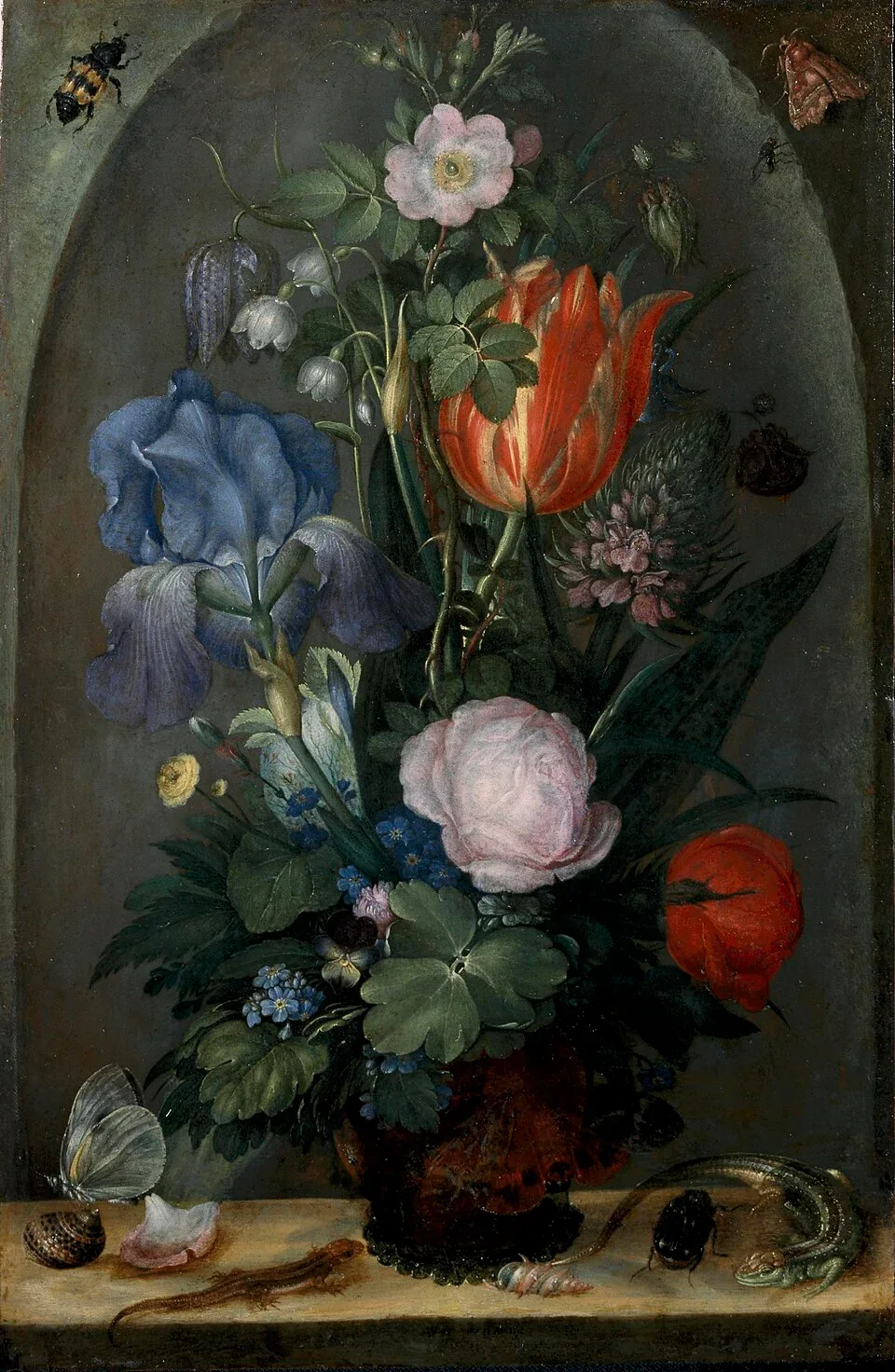
Bouquet of flowers with two Lizards
For most of its life, nobody could say what year this was painted. Low and right of centre, Roelant Savery signed his name and added a date. The last figure was hard to read. For a long time it was read as a one, or as a four. Only in 1982 did someone make it out as a three, and the year is 1603. Everything about the bouquet says it was painted from life. But those flowers never stood together. The tulip flowers in spring, the iris in early summer, the rose in high summer. Around them are small insects and two sand lizards, and on the stone ledge lie a snail shell and a seashell. The first Dutch painter to take up flower pieces was Lodewijck van den Bosch, from Den Bosch. He painted flowers as if standing in a glass of water, with such care that they seemed natural, and added little beasts and flies around them. No painting that is certainly his survives. The artist also painted a second bouquet, almost identical to this one. Between them, the two pictures are the earliest dated flower still lifes from the Northern Netherlands.
Listen in the appRoelant Savery · Public domain
03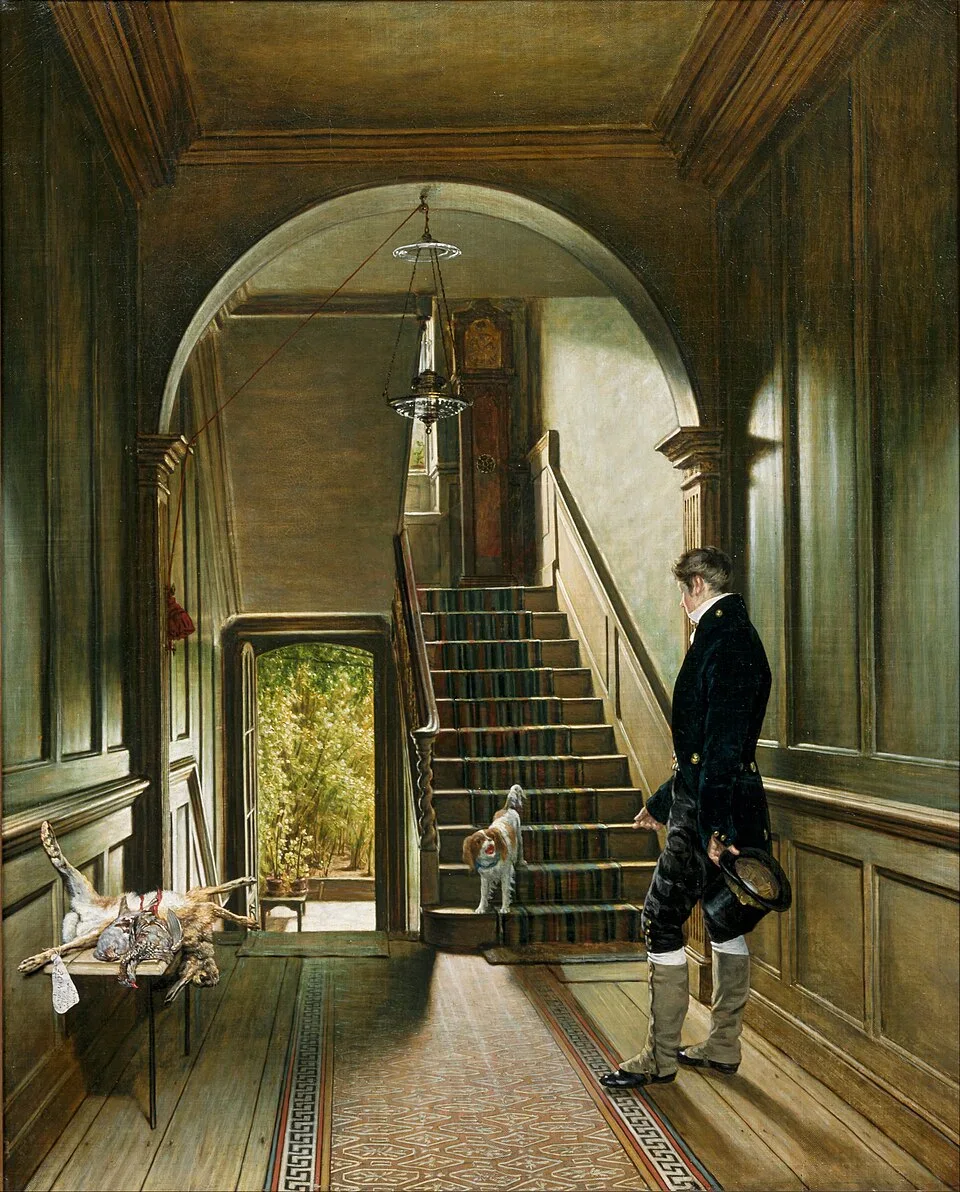
The Staircase of the London Residence of the Painter
What are a clock, an open garden door and some game animals doing on the staircase of a painter's own London house? Pieter Christoffel Wonder, a Dutch painter working in England, painted this staircase in 1828. The open door and the game animals stand for the pleasures of country life and retirement. Against that, the clock and the stairs stand for the timed machinery of government, for politics as a calling above the rest. The figure is identified as Viscount Goderich, Prime Minister only between August 1827 and January 1828. His months in office were unhappy ones. By the year this was painted, he had already left office.
Listen in the appPieter Christoffel Wonder · Public domain
04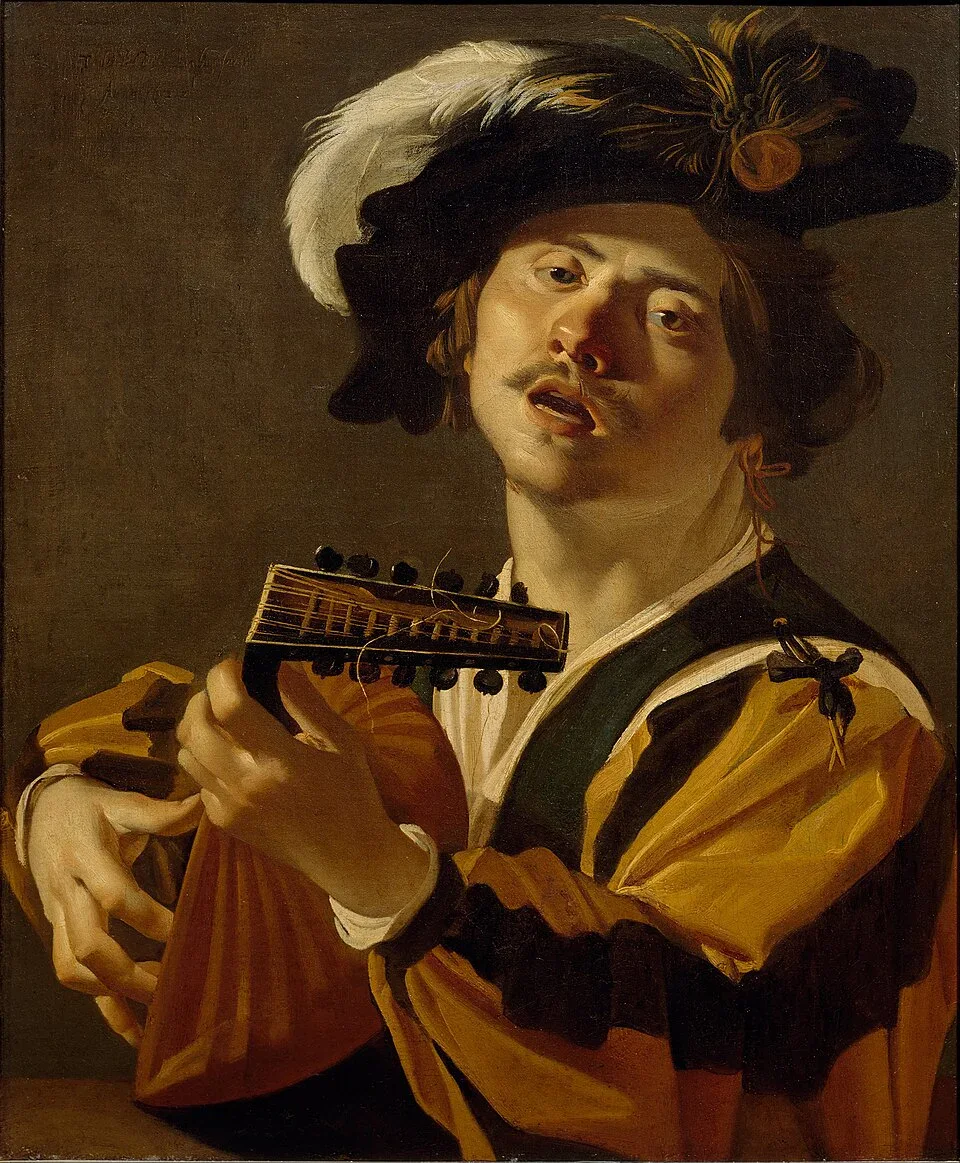
The Lute player
Baburen came home to Utrecht from Rome. He had come to know Caravaggio's lute player. He wanted that way of painting for Utrecht, with one musician close up, filling the picture, seen from the waist up. Here the man sings straight at you with his mouth open, accompanying himself on a lute. The lute points out of the picture, painted so short it seems to come toward you. The curling strings and his flaxen moustache make him feel real, as does the black bow on his earring. His costume has orange and black bands that already looked out of date then. It is an old stage costume, the sort town musicians wore. The lute may be out of date too, with four double strings and one single string instead of the five strings usual in the seventeenth century. Soon other painters in Utrecht and other Dutch cities were painting musicians this way. In 1955 it was bought with The Merry Drinker by Hendrick ter Brugghen. The two were even given matching frames and labels, four and five. Yet the drinker was probably painted a few years later, and it was cropped at the top, so their original sizes were different. Whether this painting once had another made to go with it is still not known.
Listen in the appDirck van Baburen · Public domain
05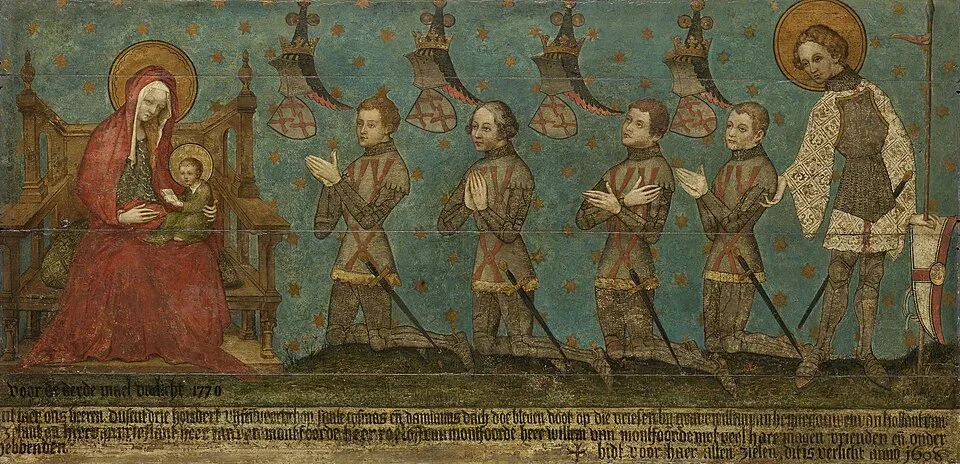
Memorial tablet for the lords of Montfoort
The fighting is over, and three of these four men are dead. They fell at the Battle of Warns, beside William the Fourth, Count of Holland, their commander. Saint George is holding the fourth, a man named Hendrik. The hold is there to show he was the only one of the four to survive. They were the lords of Montfoort, shown between Mary with her child and Saint George. A member of the family had it made for the Mary altar, in the church of Saint John at Linschoten, to remember them. No one knows who painted it. It is among the earliest paintings from the Netherlands that still survive. Above the four men, their coats of arms were added later. Each one has three mill irons from the Van Rode family arms, the family all four came from.
Listen in the appAnonymous (Low Countries)Unknown author · Public domain
06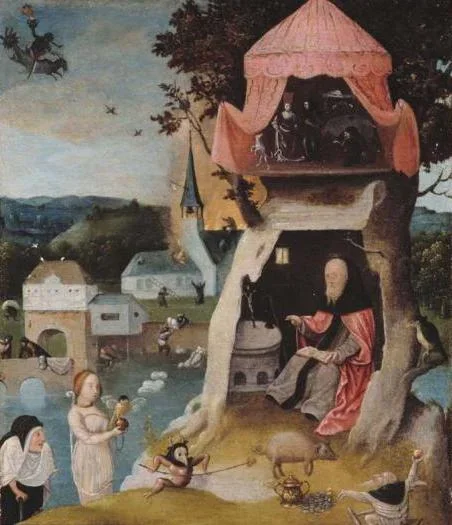
The Temptation of Saint Anthony
This painting came out of the ground. In 1830, workers digging away one of Utrecht's city walls found it buried there. How it got there, nobody knows. And the picture does not give it away. Anthony sits calm inside a hollow tree, a Bible on his lap, his pig at his feet. All around him, devils tempt him with money and gold. On the left, a woman dressed as a nun offers him a young girl. In the background, a monastery is burning. High above, a demon rides a creature with a goat's head and a fish's body, holding a pot of fire. This is the demon who must have set that fire. Perhaps it hung in a church or monastery, and someone buried it to keep it safe when religious images were being smashed. There were several monasteries around the city. Whatever the truth, the city of Utrecht bought it that same year. The painter was not Bosch. This panel is a copy, made by one of his followers, and we do not know his name.
Listen in the appFollower of Hieronymus Bosch · Public domain
07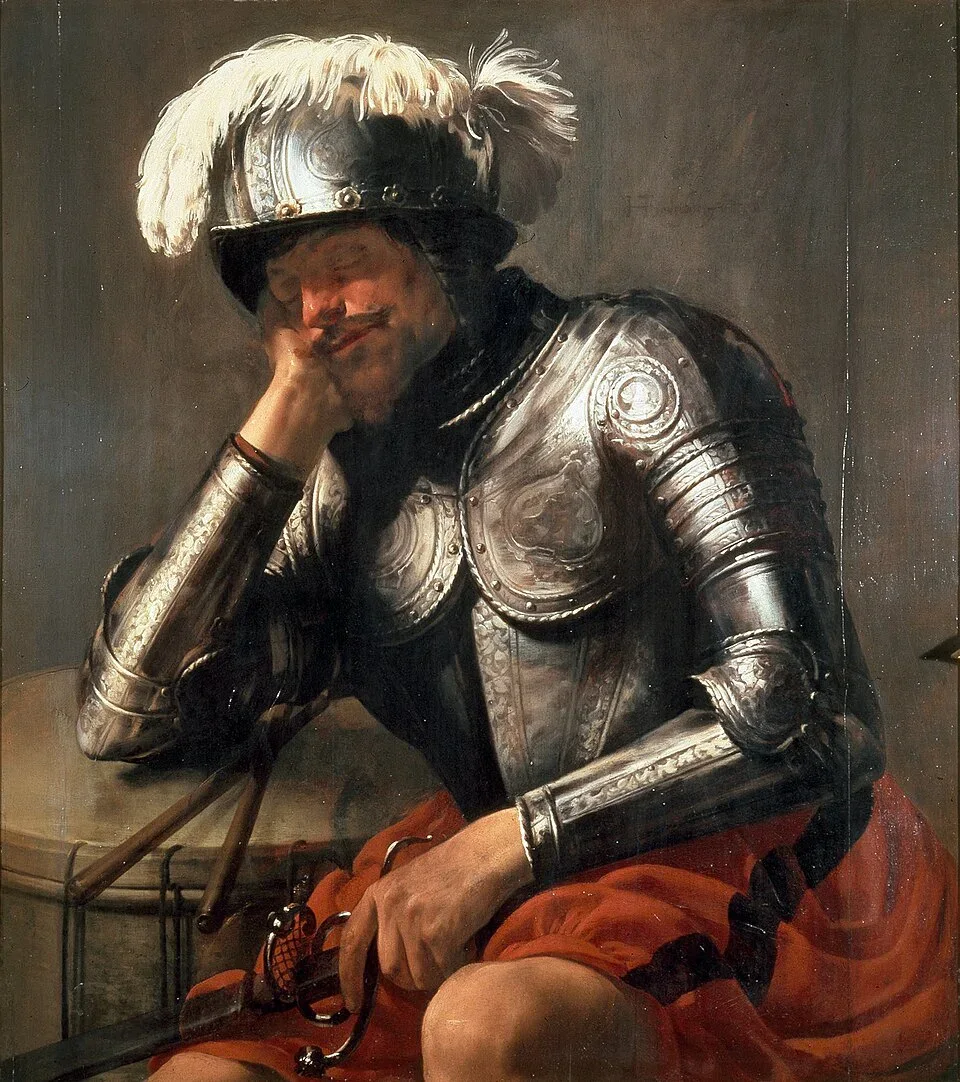
Mars Asleep
A soldier sleeps in his armor. He has taken the armor off his legs, yet he still holds his sword, and his other arm rests on a drum. He props himself on one elbow, and a shadow falls across his eyes. In the theory of humors of the seventeenth century, that pose was the classic sign of the melancholic temperament. The man is commonly taken for Mars, the god of war. Ter Brugghen painted this in the middle of the Eighty Years' War with Spain. In 1629, after a series of defeats, Spain offered peace to the United Provinces. The Dutch were split. Radical Protestants refused to lay down their arms, while the economic elite wanted the fighting to end. A sleeping god of war could carry the hope that the war would stop and peace return. On the left of his breastplate is a lion, a patriotic symbol of the Netherlands. Its outline follows the shape of the country. Around 1650, when it was framed, wooden panels were added to its sides, making it larger.
Listen in the appHendrick ter Brugghen · Public domain
08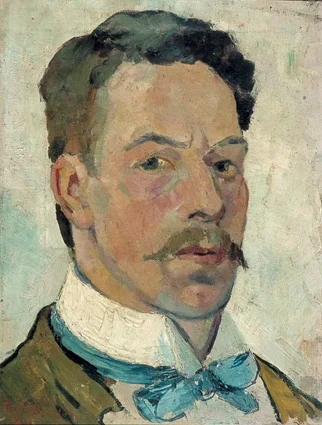
Self-portrait
The man in this portrait wanted to be taken seriously as a thinker. He was thirty, and after fourteen years of painting Theo van Doesburg had almost nothing to show for it. In all that time, apart from a portfolio in 1910, he had sold almost nothing. To pay his way, he wrote articles about art. He had even spoken out against cubism and abstract painting. Then in 1913 he read Kandinsky's autobiography, and his whole view changed. He came to believe an artist should take part in culture and help shape it, rather than live apart from the world. This portrait is the first sign of that change. For the face, he used a photograph of Kandinsky from that same book. He borrowed another man's likeness to show the man he now saw himself as, a confident citizen of the world, a thinker, a philosopher. In earlier self-portraits he had painted himself as an honest, hardworking craftsman. In the bottom left he signed his name and the year, 1913. It was the start of a long search for a way to give form to inner life. That search led, in time, to the De Stijl movement.
Listen in the appTheo van Doesburg · Public domain
09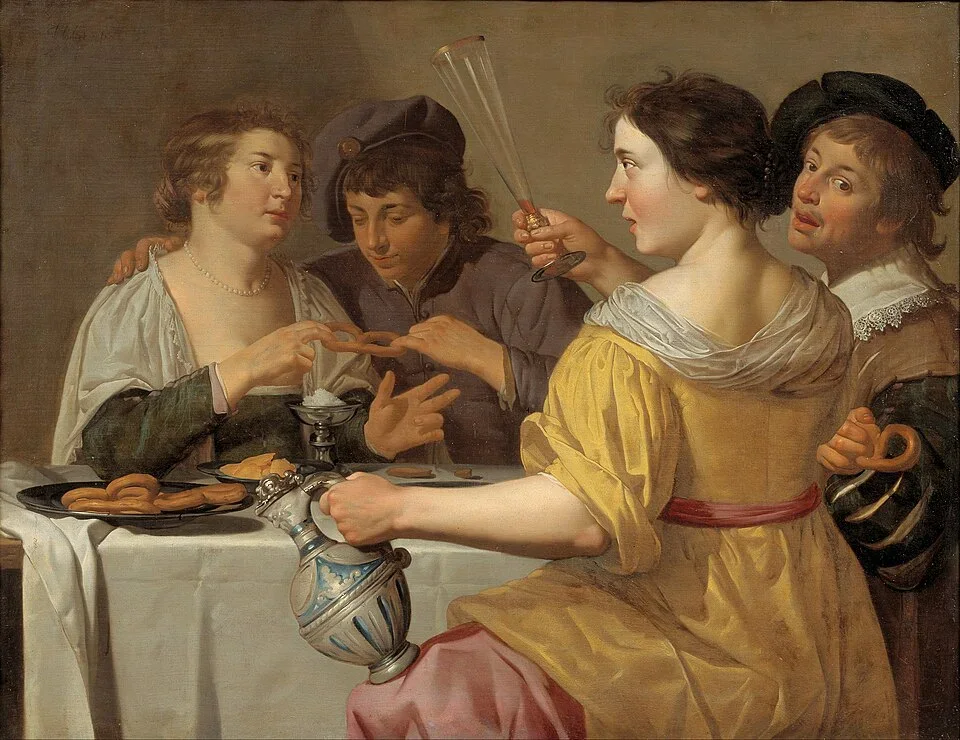
Pulling the Pretzel
Four people sit at a table with pretzels, pulling one apart. Whoever gets the longer end wins. On the table lie the remains of a pretzel already broken. The woman pulls with two fingers, which gives her an advantage. The man at her side uses only his little finger, following the rules, and he sees what she does. It does not seem to bother him. He lays a loving arm around her shoulder. The couple opposite react differently. The woman raises her glass in anger. The man beside her looks out at you, holding a pretzel in two fingers to point out the trick. Pretzels were eaten in Lent, and in the middle of Lent lovers visited one another to break a pretzel together. There is also an old saying about pulling the longest end. Perhaps the painter joined that lovers' game to the saying.
Listen in the appJan van Bijlert · Public domain
10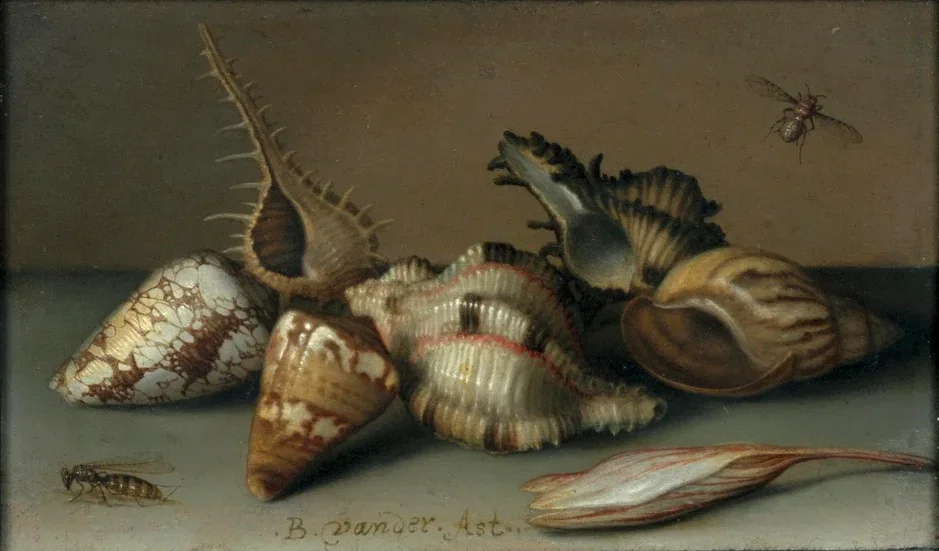
Still Life with Shells and an Autumn Crocus
Six shells rest on a stone plinth, with an autumn crocus at the lower right and a wasp at the lower left. A carrion fly is at the upper right, and both insects were added to liven up the still life. Those shells came from far away. The first and fifth came from the Indo Pacific, the fourth from the Caribbean. The large one at the right is from an African land snail. In the seventeenth century, wealthy Europeans filled cabinets of curiosities with objects like these. Shells were very popular, and collectors paid steep prices for the exotic ones. One Haarlem collector, Jan Govertsz. van der Aer, was so proud of his shells that he had himself painted with them three times. Painters took the hint. Balthasar van der Ast made only about ten true shell still lifes, and this one is among the smallest. It was sold in 1944 to a collection Adolf Hitler was building for a museum in Linz. After the war the Allies seized it as looted art and handed it back to the Dutch in 1946.
Listen in the appBalthasar van der Ast · Public domain
- 11
Portraits of the Inhabitants at St Jobsgasthuis in Utrecht
Jan van Bijlert · c. 1630
- 12
Reclining nude
George Hendrik Breitner · c. 1887
- 13
The self-sacrifice of burgomaster Van der Werf
Gustaaf Wappers · 1829
- 14
Utrecht ship
Unknown Artist · 997–1030
- 15
Girl with Buttercups
Theo van Doesburg · 1914
- 16
Sacks
Theo van Doesburg · 1912
- 17
Still Life.
Theo van Doesburg · 1906
- 18
Mouvement héroïque
Theo van Doesburg · 1916
- 19
Portrait of Christian Leibbrandt
Theo van Doesburg · 1908
- 20
Landscape at Twilight
Theo van Doesburg · c. 1904
- 21
The Smeetoren, Bartholomeusgasthuis, and Geertekerk in Utrecht
L.B. Backer · 1822
- 22
Portrait of David Martens
Jacob Adriaensz Backer · 1641
- 23
An Alchemist
Justus van Attevelt · 1640
- 24
Self-portrait
August Allebé · c. 1856
- 25
Adoration of the kings: the Wise Men present their gifts to the Christ-child
Jan van Bijlert · 1630
- 26
Still Life of Fruit
Balthasar van der Ast · 1623
- 27
the Colosseum at Rome
Jacob van der Ulft · c. 1660
- 28
River Landscape
Jacob Gerritsz. van Bemmel · 1650
- 29
The entombment
Dirck van Baburen · 1617–1621
- 30
Young Man with a Jew's Harp
Dirck van Baburen · 1621
- 31
The Seven Acts of Mercy
Joost Cornelisz Droochsloot · 1620–1650
- 32
Nymphs and satyr in a Landscape
Manner of Cornelius van Poelenburgh · c. 1640
- 33
Still Life with Rose and Iris
Balthasar van der Ast · 1650
- 34
A woman with a cock
Johannes Baeck · 1654
- 35
Portrait of a man (Lodewijk van Deyssel)
Theo van Doesburg · c. 1906
- 36
Abstract Church
Theo van Doesburg · 1914
- 37
Portrait of a Woman in Profile
Theo van Doesburg · c. 1906
- 38
De gortteller
Pieter van Beeck · 1650
- 39
Phantasy Harbor Scene with St. Mary's Church in Utrecht
Anthonie Beerstraaten · 1661
- 40
Winter landscape
Louis Apol · 1900
- 41
Rotslandschap met waterval in Noorwegen
Andreas Achenbach · 1853
- 42
Bouillon en een glas port
Alexander Hugo Bakker Korff · 1865
- 43
The Letter
Alexander Hugo Bakker Korff · 1873
- 44
By the Fireplace
Alexander Hugo Bakker Korff · 1870
- 45
Shepherd with a Flute
Jan van Bijlert · 1625
- 46
Interior
Sybrand van Beest · 1671
- 47
Dog
Theo van Doesburg · 1899
- 48
Two Dogs
Theo van Doesburg · 1899
- 49
Landscape with Windmill and Church
Theo van Doesburg · 1900
- 50
Portrait of a Woman with White Collar
Theo van Doesburg · 1900
- 51
Portrait of a Man
Theo van Doesburg · 1904
- 52
Goose market and landscape
Joost Cornelisz Droochsloot · c. 1615
- 53
Portrait of a Man
Justus van Attevelt · 1657
- 54
Floréal
Auguste Donnay · 1892–1893
- 55
Portrait of Agnita Feis with Veil
Theo van Doesburg · c. 1906
- 56
Landscape with stone bridge with a view of the Wittevrouwenpoort in Utrecht
Jacob Gerritsz. van Bemmel · 1654
- 57
Wood-Path with Cottage
Theo van Doesburg · c. 1904
- 58
Waterside at Night
Theo van Doesburg · c. 1904
- 59
Portrait of a Man in Profile
Theo van Doesburg · 1906–1907
- 60
Seascape with Ships
Theo van Doesburg · 1910
- 61
Margaretha Maria de Roodere (c. 1625-1666)
Gerard van Honthorst · 1652
- 62
Calling of Saint Matthew
Hendrick ter Brugghen · 1621
- 63
Granida and Daifilo
Gerard van Honthorst · 1625
Centraal Museum
Frequently asked questions
How much does the guide cost?
Free app download. Free until 1 January. Listed guide price: $0.99. Audio guide only. Venue admission is separate.
Can I listen without internet?
Yes. Download the guide’s audio, images, and maps in the app before your visit. Your downloaded content is then available offline.
Can I listen in my language?
In English for now. More languages soon.
Do I need to follow a schedule?
No. This is a self-guided experience. Choose your stops, pause whenever you like, and return to a story at your own pace.
Which artworks are in the Centraal Museum audio guide?
63 artworks, including The Procuress (Gerard van Honthorst), Bouquet of flowers with two Lizards (Roelant Savery), The Staircase of the London Residence of the Painter (Pieter Christoffel Wonder), The Lute player (Dirck van Baburen), Memorial tablet for the lords of Montfoort (Unknown Artist), The Temptation of Saint Anthony (Hieronymus Bosch), Mars Asleep (Hendrick ter Brugghen), and Self-portrait (Theo van Doesburg). The full list is on this page.
Is this the museum’s official audio guide?
No. Stanza is an independent audio guide app and is not affiliated with Centraal Museum. Museum admission is separate.
At your own pace
Explore Centraal Museum.
Download Stanza, then search for “Centraal Museum”.
Free app download · Guide price shown in the app
Keep exploring
Nearby audio guides
Utrecht · 2 km
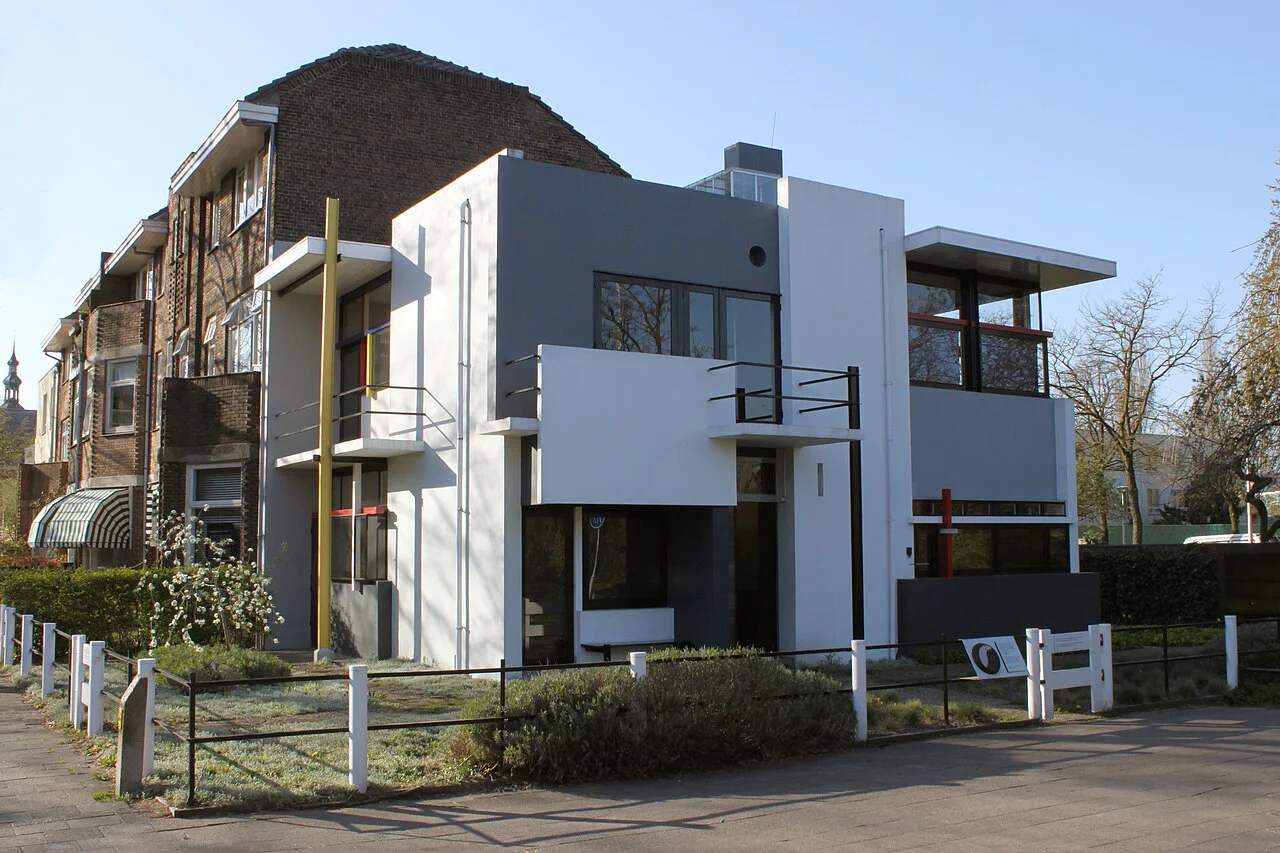
Rietveld Schröderhuis
Content & sources
User:Husky · CC BY 3.0
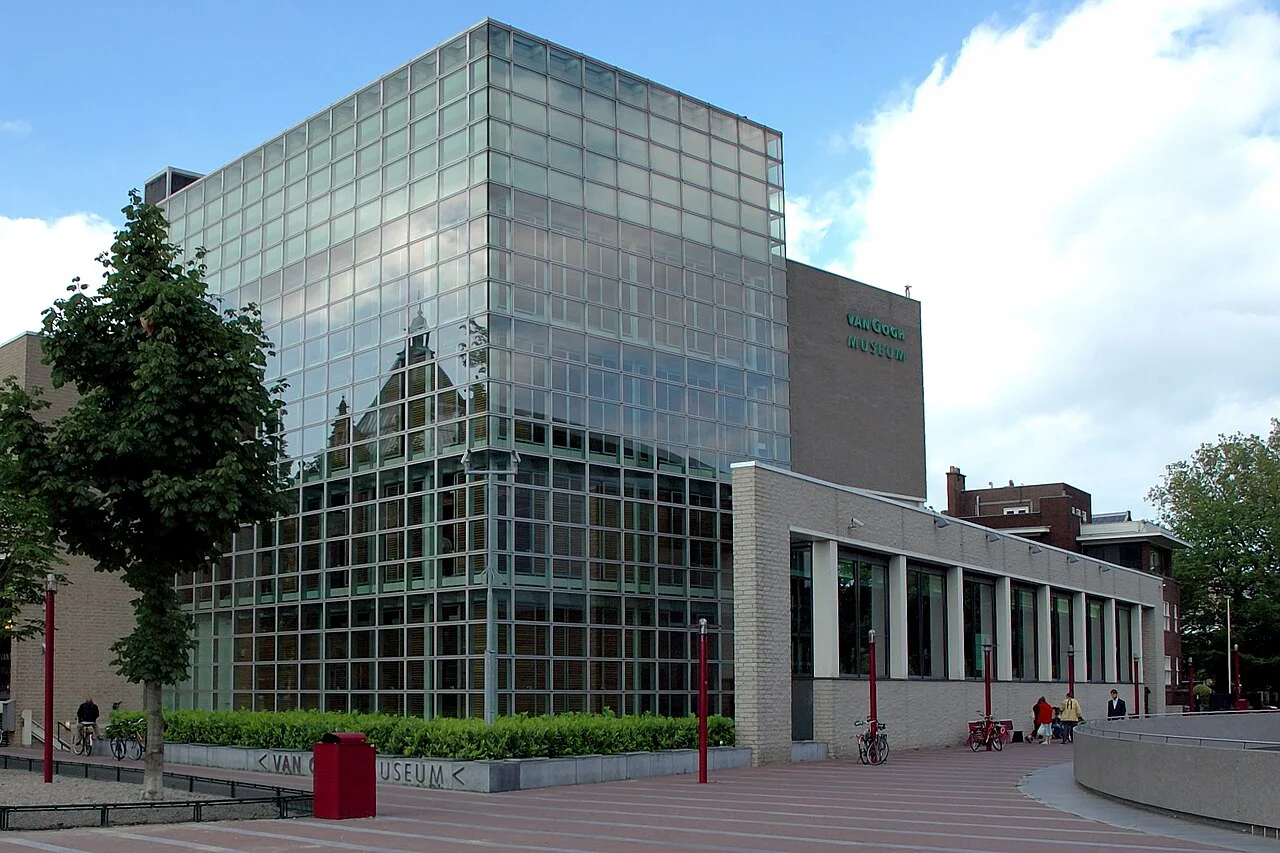
Amsterdam · 35 km
Van Gogh Museum
Content & sources
Warrox · CC BY 2.5
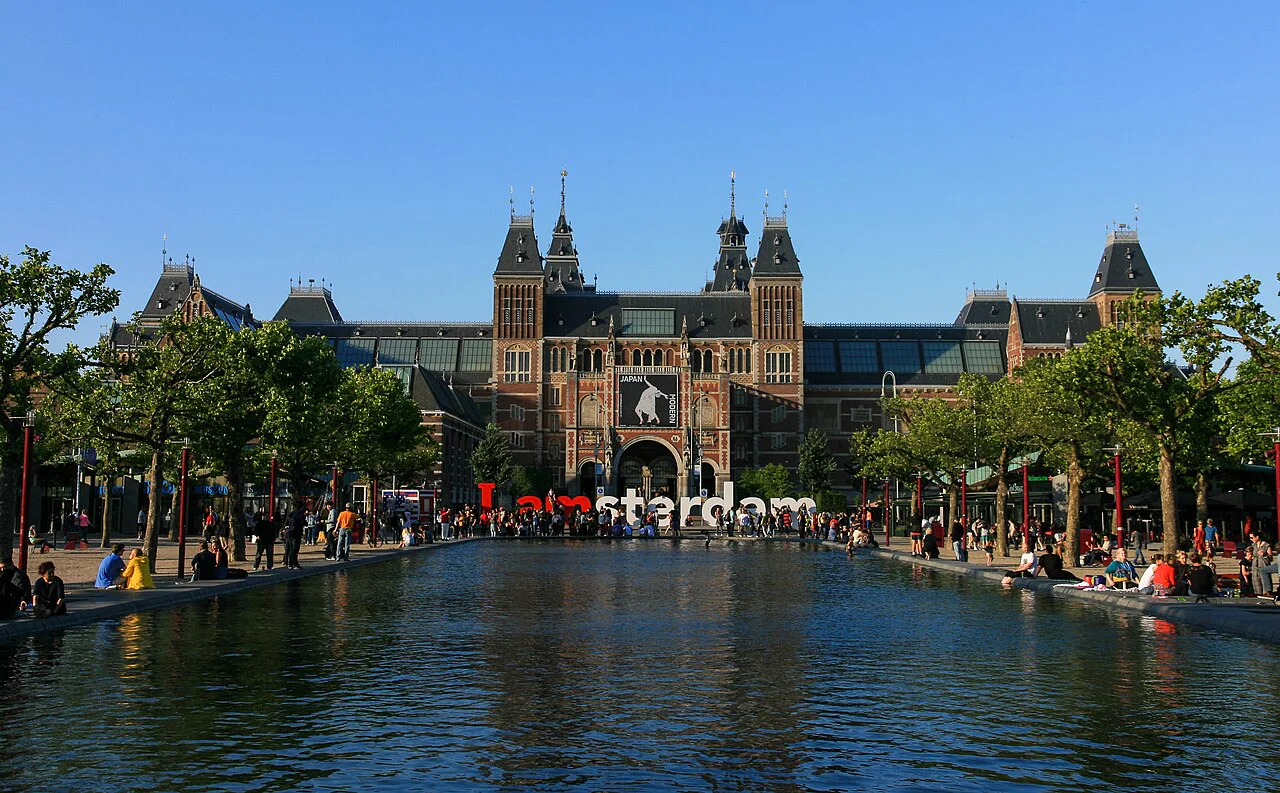
Amsterdam · 35 km
Rijksmuseum
Content & sources
Marco Almbauer · CC BY-SA 3.0
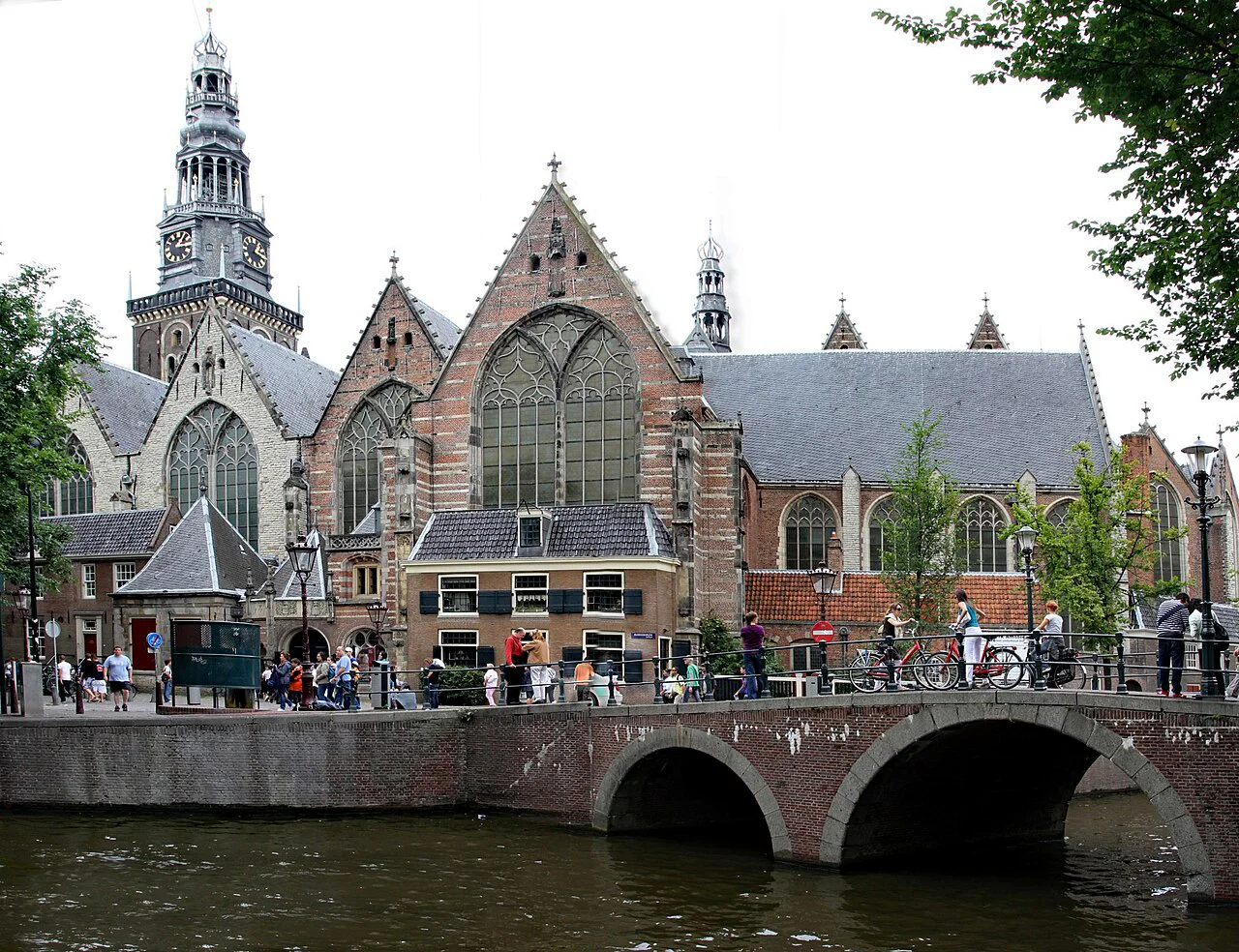
Amsterdam · 36 km
Oude Kerk
Content & sources
Gerd Eichmann · CC BY-SA 4.0
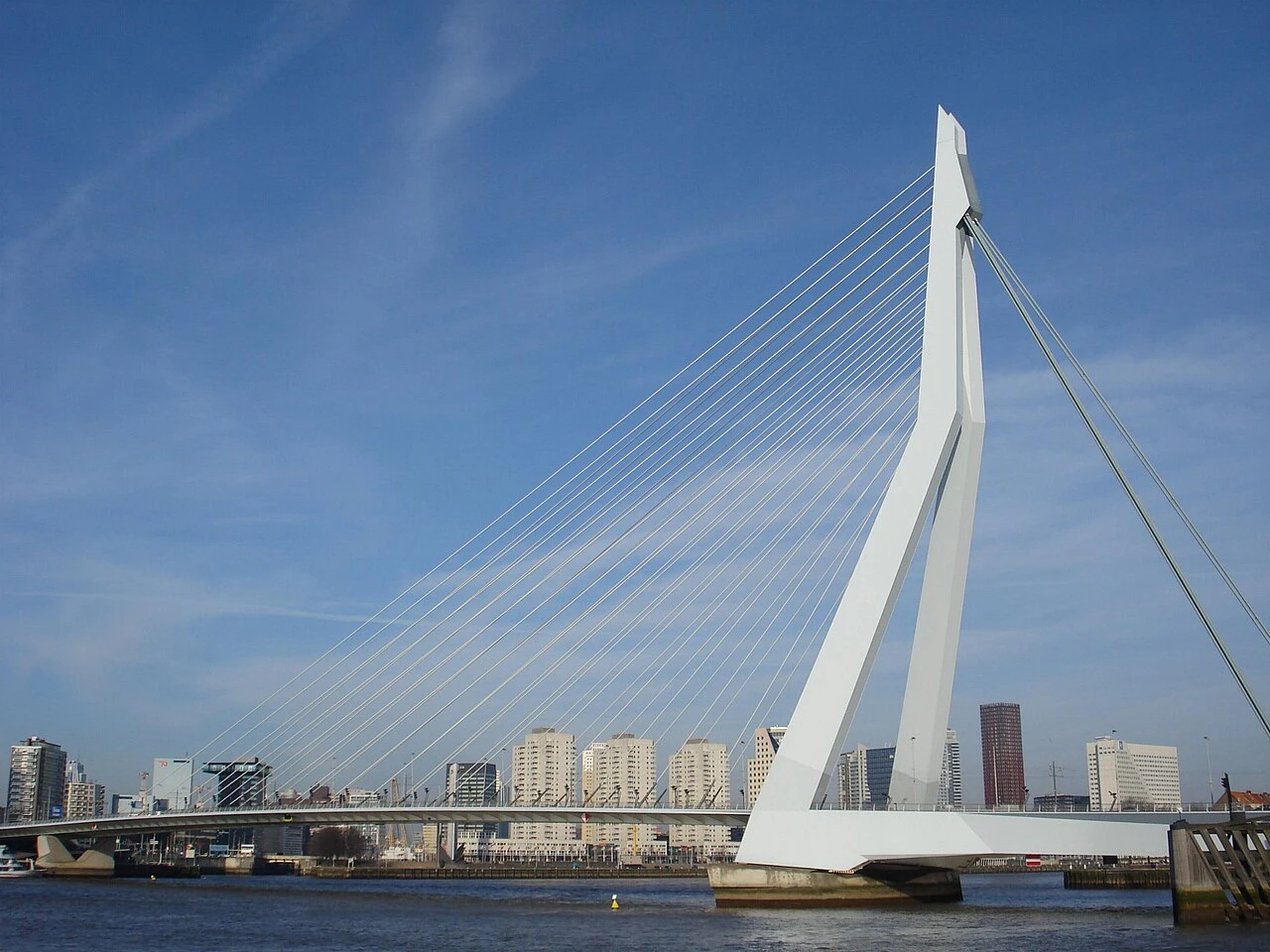
Rotterdam · 48 km
Erasmusbrug
Content & sources
F.Eveleens · CC BY 3.0
Art museums
More art museum audio guides
Amsterdam · 73 artworks
Van Gogh Museum
Content & sources
Warrox · CC BY 2.5
Amsterdam · 386 artworks
Rijksmuseum
Content & sources
Marco Almbauer · CC BY-SA 3.0
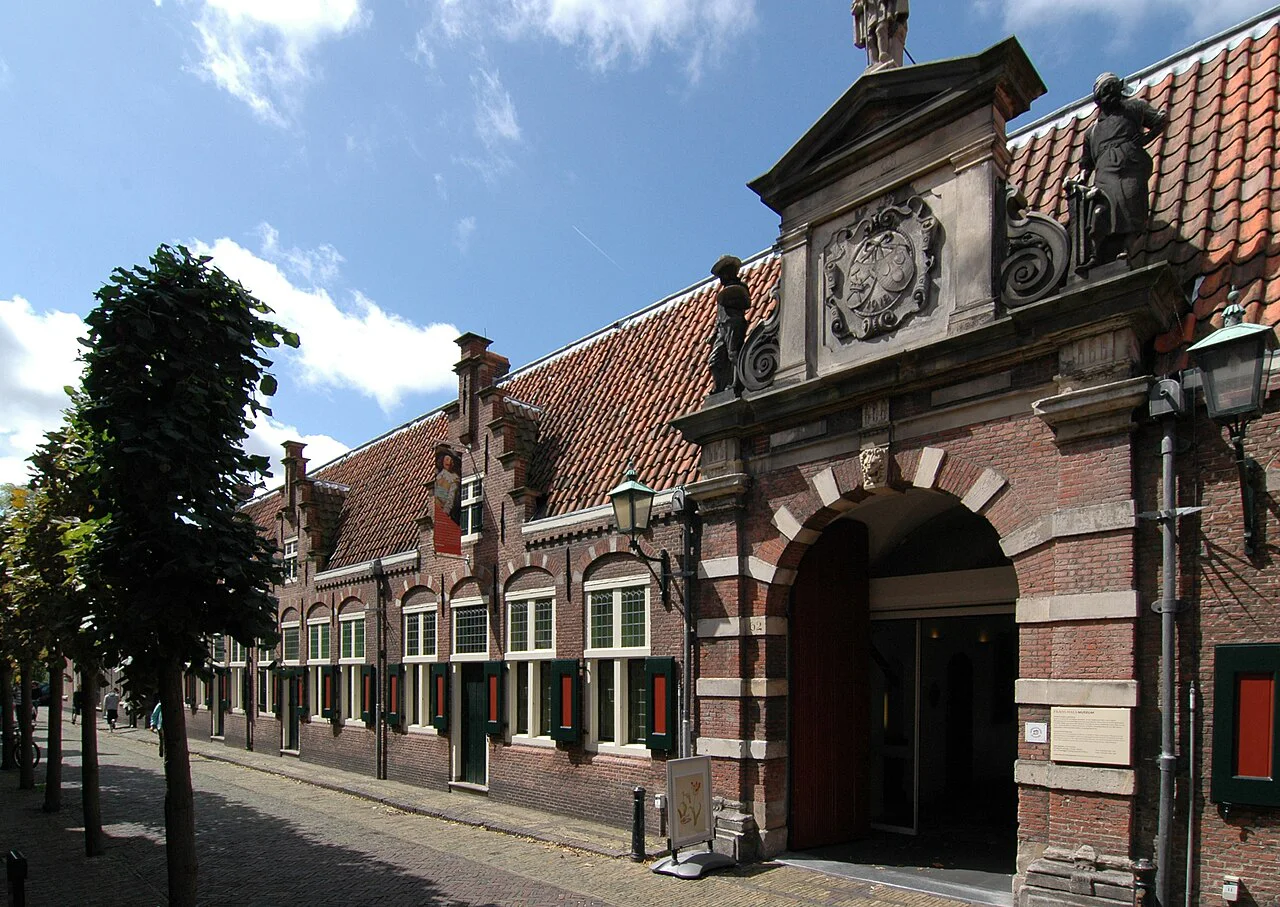
Haarlem · 45 artworks
Frans Hals Museum
Content & sources
Mcke · CC BY-SA 3.0
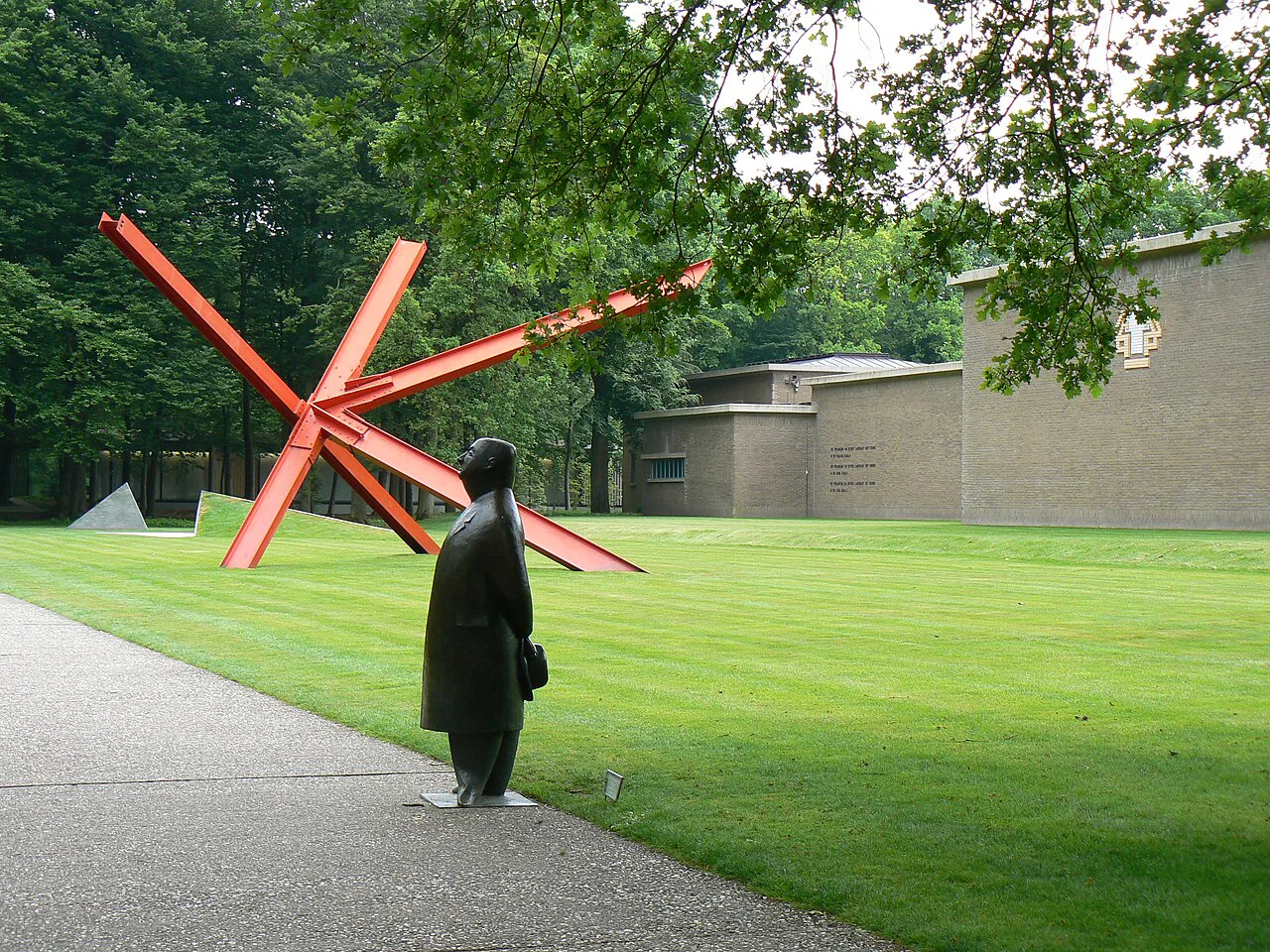
Otterlo · 60 artworks
Kröller-Müller Museum
Content & sources
Photo: Gerardus · Public domain
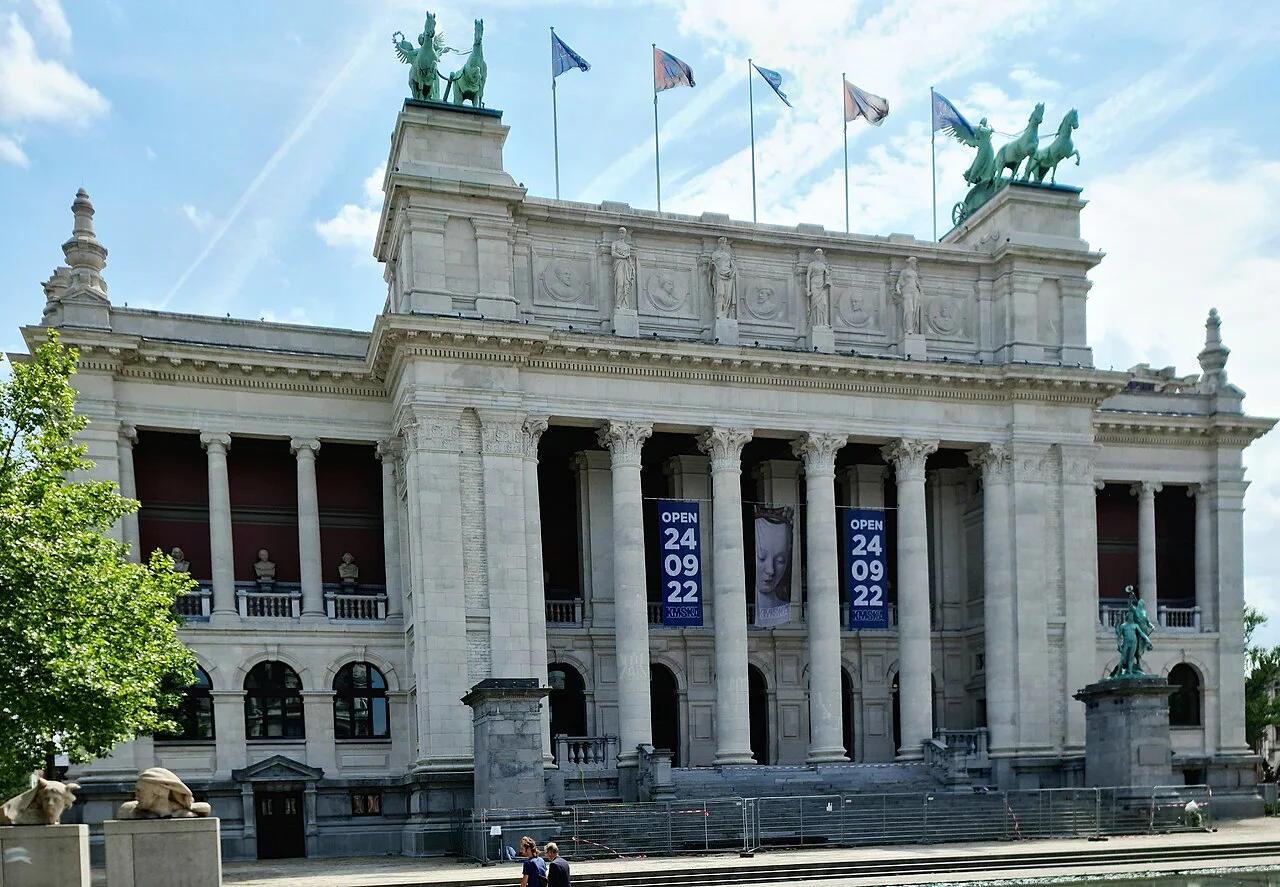
Antwerp · 146 artworks
Koninklijk Museum voor Schone Kunsten Antwerpen
Content & sources
Photo: Ricardalovesmonuments · CC BY-SA 4.0
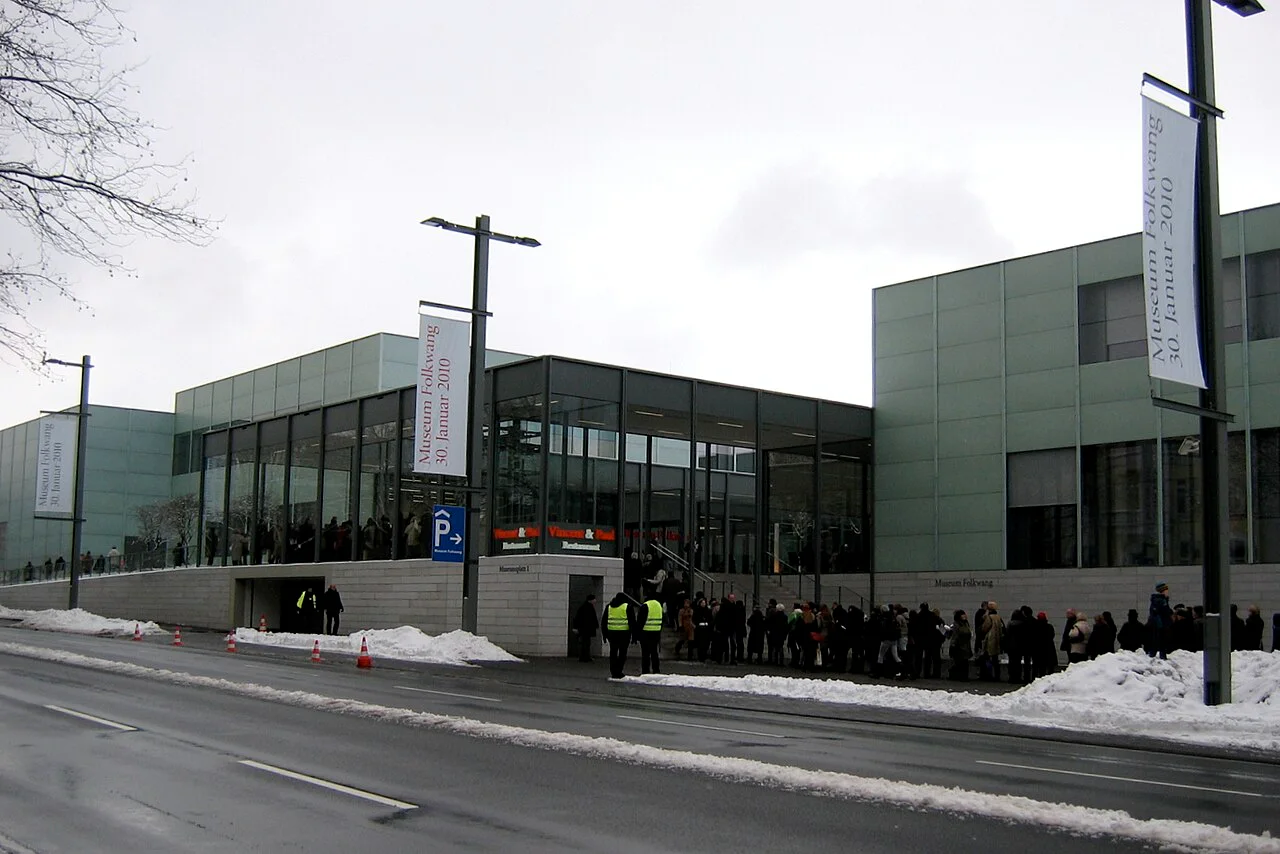
Essen · 16 artworks
Museum Folkwang
Content & sources
Julius1990 · CC BY-SA 3.0