Stanza · Audio guide
Catedral de GironaAudio guide
A place to remember. A story to take with you.
The Girona Cathedral is a Roman Catholic church located in Girona, Catalonia, Spain. It is known for having the widest Gothic nave in the world.
Download Stanza, then search for “Catedral de Girona”.
About the tour
One guide. Your kind of visit.
The Girona Cathedral is a Roman Catholic church located in Girona, Catalonia, Spain. It is known for having the widest Gothic nave in the world.
Ready when you are.
- 01Get the free Stanza app.
iOS & Android
- 02Find your guide.
“Catedral de Girona”
- 03Download before you go.
Works offline
Audio guide / 26 narrated stops
Inside the guide
Get to know a few of the stories before you go. Open a stop to read more.
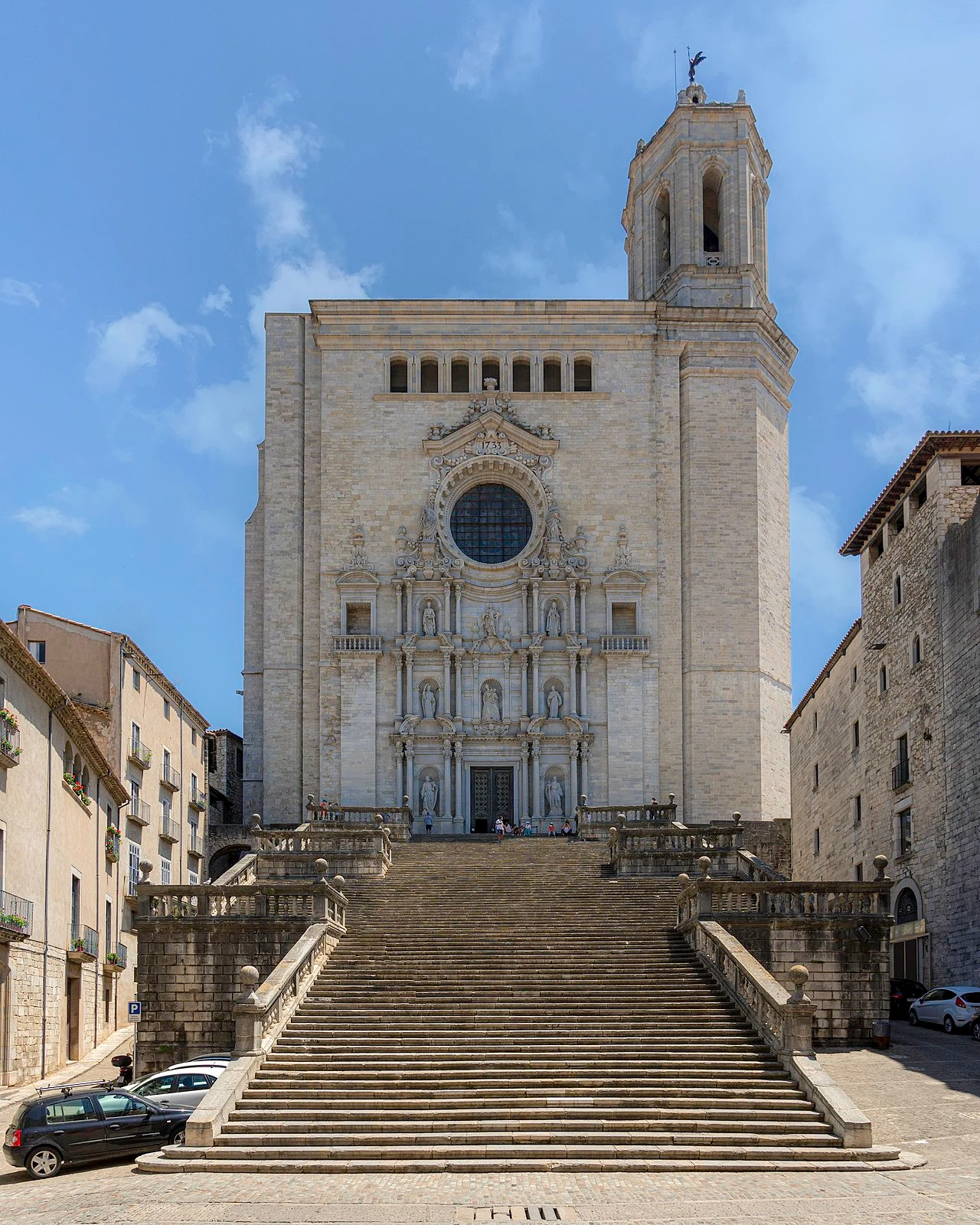
01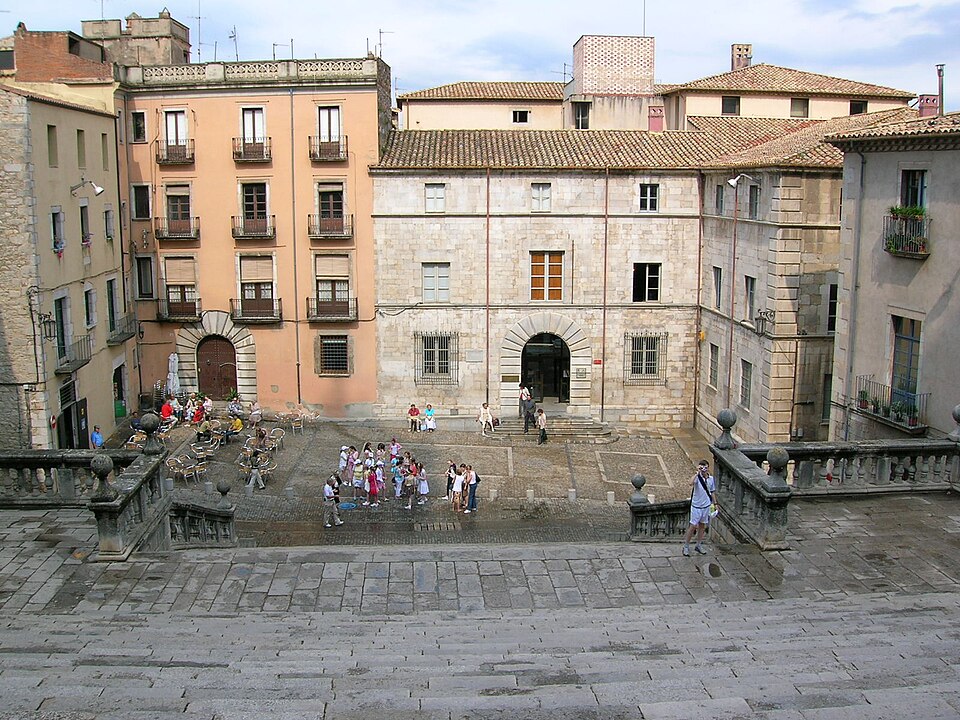 The Monumental StaircaseThe 90 Steps
Welcome to the monumental stairway of Girona Cathedral. These 90 steps form one of the most iconic entrances in Europe, a grand ascent that has stood for centuries as both a physical and spiritual challenge for pilgrims. While the cathedral's history begins as far back as 1015, this dramatic approach was completed much later, creating a sense of anticipation as you climb toward the facade. Modern visitors may recognize this location from a global perspective, as it served as the filming site for King’s Landing in the television series Game of Thrones. The scale of the entrance reflects the immense proportions of the building itself, which measures 55 meters in total length. For the medieval traveler, each step was meant to be a moment of reflection, transitioning the soul from the earthly concerns of the city below to the divine space waiting at the top. The sheer width and elevation of the stairs provide a panoramic view of the surrounding historic quarter, underscoring the cathedral's role as the architectural heart of the city.
Tony Grist · Public domain
02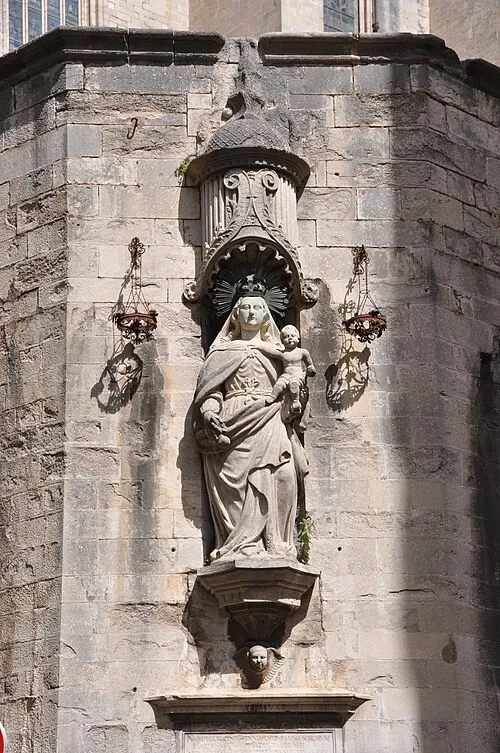 The Monumental StaircaseOur Lady of the Pear
Located on the exterior of the building, this late 18th-century sculpture offers a relatable, human moment amidst the grand architecture. Known locally as 'La Pera' or Our Lady of the Pear, the statue depicts the Virgin Mary holding a small piece of fruit while cradling the Christ Child. Unlike the imposing sculptures found on the main facade, this figure is crafted with a softness and approachability meant to inspire personal devotion. Notice the delicate way the Virgin holds the pear, presenting it to the infant. The child’s reaction is equally lifelike, reaching toward the fruit with a natural curiosity that bridges the gap between the divine and the everyday. For centuries, parishioners have stopped here for a brief prayer before entering the massive interior. The presence of such a domestic detail as a piece of fruit was common in late Baroque and Neoclassical religious art, designed to make sacred figures feel more present and accessible to the common people of Girona.
Catalan Art & Architecture Gallery (Josep Bracons) from Barcelona, Catalonia · CC BY-SA 2.0
03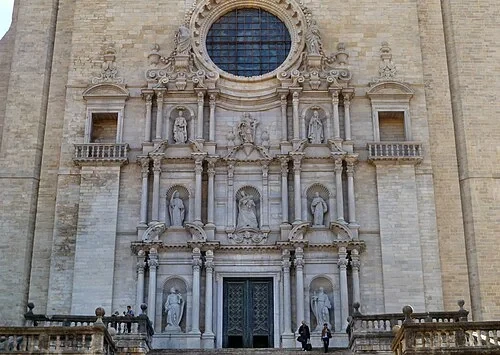 The Baroque Facade and Main EntranceThe Baroque Facade
The massive facade you see functions almost like a theatrical mask. While much of the church behind it is purely Gothic, this grand entrance was completed in the 18th century, representing the final major structural phase of a project that spanned seven centuries. It is organized into three distinct tiered levels, featuring an array of sculptures and columns that demonstrate the ornate preferences of the Baroque era. This tiered design creates a sense of verticality that complements the soaring interior, even though the styles differ significantly. The central niche and surrounding figures were intended to display the wealth and continuity of the church in Girona. By the time this facade was finished, the cathedral had evolved from its Romanesque roots through its Gothic peak to this final Baroque flourish. Looking at the layers of stonework, you can see how different generations of architects and masons left their mark, resulting in a building that serves as a chronological record of European architectural history.
Listen in the appGeorges Jansoone (JoJan) · CC BY 3.0
04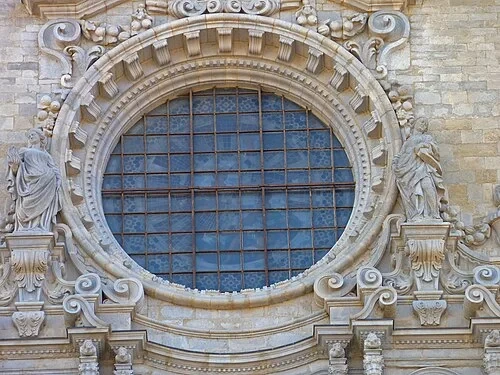 The Baroque Facade and Main EntranceThe Great Rose Window
Set high within the central part of the facade is the Great Rose Window, a hallmark of Gothic and Baroque religious design. Its elaborate stone tracery forms a complex web that supports the heavy glass panes, creating a geometric masterpiece that dominates the upper section of the wall. In the Middle Ages and the centuries that followed, these circular windows were essential for their symbolic and practical functions. They were designed to flood the traditionally dark interiors with what was described as 'divine' light, filtered through colored glass to create an ethereal atmosphere during services. The placement of this window ensures that during the late afternoon, the setting sun casts a vibrant spectrum of colors across the floor of the nave. This specific window was part of the later additions to the building, intended to provide visual balance to the massive stone front. Its circular form represented the perfection of the divine, a contrast to the sharp angles and heavy verticality of the surrounding columns and sculptures.
Listen in the appGeorges Jansoone (JoJan) · CC BY 3.0
05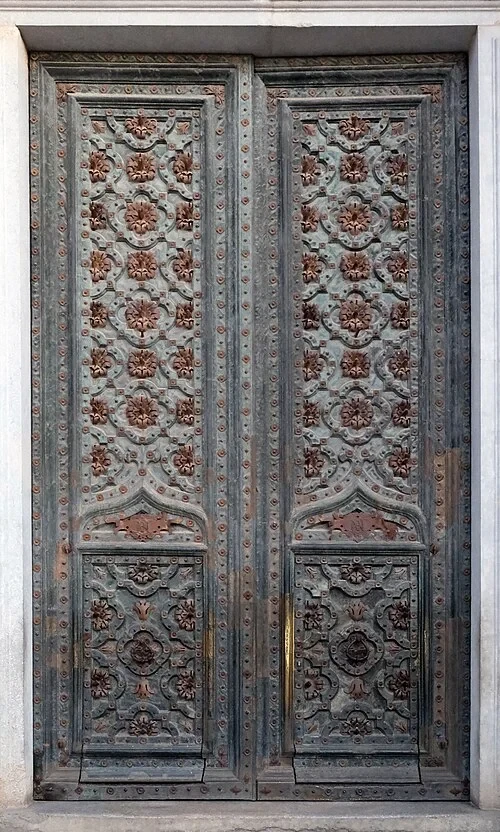 The Baroque Facade and Main EntranceThe Threshold of Silence
Passing through these doors marks a significant transition from the bustling streets of Girona to the world’s widest Gothic interior. The doors themselves are remarkable for their heavy metalwork and repetitive geometric patterns. Notice the craftsmanship required to create the hundreds of floral and star-shaped rivets that hold the metal plating in place. These decorations were not merely for show; they reinforced the wood against the elements and provided a imposing sense of security for the cathedral's treasures. The repetitive nature of the patterns reflects a traditional medieval and early modern approach to decoration, where geometry was often linked to theological concepts of order. The sheer weight of these panels requires massive hinges and a sturdy frame, grounding the visitor before they experience the sudden lift and openness of the nave inside. Once you move past this threshold, the sound of the city fades, replaced by the hushed acoustics of a space designed to echo the choral music and prayers of the last several hundred years.
Listen in the appPhoto: Kallerna · CC BY-SA 4.0
06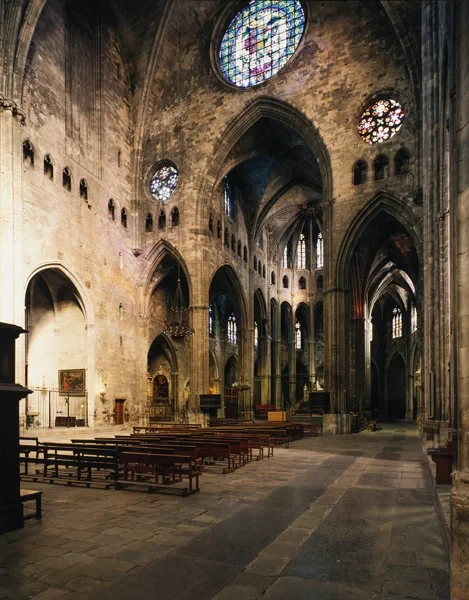 The Widest Gothic Nave in the WorldThe Record-Breaking Nave
The space before you holds a singular world record: this is the widest Gothic nave in existence, spanning exactly 22.98 meters across. This architectural feat was the subject of a major controversy in 1417. The traditional style of the time favored three parallel aisles supported by rows of internal columns. However, the master builder Guillermo Bofill insisted on a radical single, massive hall. He argued that a single nave would provide an unobstructed view of the high altar for all worshippers and create a sense of unprecedented space. His plan was so daring that a council of twelve master builders was summoned to debate its safety, as many feared such a wide roof would collapse under its own weight. Bofill eventually won the argument, and the result is the awe-inspiring, weightless environment you see today. By eliminating the interior columns, he achieved a vast, open volume of air that was revolutionary for the 15th century and remains one of the most significant engineering achievements of the Middle Ages.
Listen in the appPhoto: PMRMaeyaert · CC BY-SA 4.0
07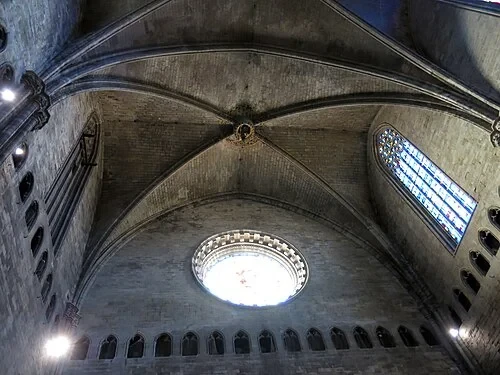 The Widest Gothic Nave in the WorldThe Gothic Vaults
Gaze upward to the ceiling, which hangs 34 meters above the floor. These are cross-ribbed vaults, the engineering marvel that made the record-breaking width of this nave possible. In Gothic architecture, these ribs act like a stone skeleton, channeling the massive weight of the vaulted roof away from the center and down into the thick exterior walls and buttresses. This design was incredibly daring for the 15th century, especially given the 22.98-meter span between the walls. If you look at the intersections of the ribs, you will see decorative bosses that serve both as structural anchors and artistic focal points. The builders had to be incredibly precise; even a small error in the angle of the ribs could have caused a catastrophic failure. The result is a ceiling that seems to float effortlessly, despite being made of thousands of tons of stone. This sense of verticality and openness was intended to draw the eyes of the faithful upward, toward the heavens, emphasizing the scale of the divine compared to the individual.
Listen in the appPhoto: Enfo · CC BY-SA 4.0
08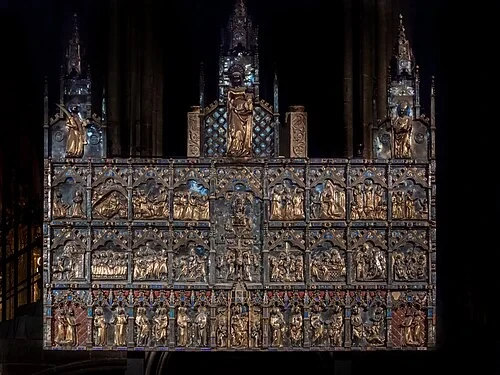 The High Altar and Silver RetableThe High Altar
The high altar is dominated by a silver and enamel retable, a stunning 14th-century masterpiece that serves as the visual and spiritual heart of the cathedral. This object is a clear demonstration of the immense wealth and religious power the church held in Girona during the Middle Ages. Crafted by skilled silversmiths, the retable is divided into several compartments, each filled with detailed religious imagery. During a medieval mass, the flickering light from hundreds of candles would have caught the polished silver and vibrant enamel, creating a shimmering effect that would have seemed miraculous to the worshippers in the nave. The altar is also home to the 'Chair of Charlemagne,' further emphasizing its importance as a place of both religious ritual and ecclesiastical authority. The survival of such a significant work in precious metal is rare, as many such items were melted down for currency during wars or social upheavals. It remains one of the finest examples of Gothic metalwork in the Mediterranean region.
Listen in the appPhoto: Ermell · CC BY-SA 4.0
09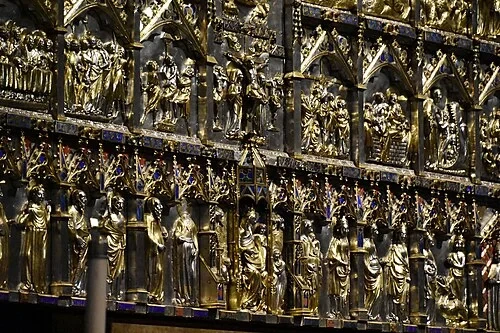 The High Altar and Silver RetableMasterpiece in Silver
Looking closely at the retable, the level of detail is extraordinary. Each panel features scenes from the life of Christ and the Virgin Mary, meticulously hammered into thin sheets of silver using a technique known as repoussé. Tiny, expressive faces and delicate gestures bring the biblical narratives to life in a way that would have been easily understood by a medieval audience. Each scene is framed by miniature Gothic arches and pinnacles, mimicking the architecture of the cathedral itself. The use of enamel adds touches of rich color, which would have stood out brilliantly against the metallic background. Notice the precision of the folds in the characters' robes and the small architectural details in the background of the panels. This level of craftsmanship took years to complete and required a collaborative effort between master smiths and theologians to ensure the stories were told correctly. It is not just an object of worship, but a pinnacle of medieval decorative art, preserving the aesthetic values and technical skills of the 1300s.
Listen in the appRichard Mortel from Riyadh, Saudi Arabia · CC BY 2.0
10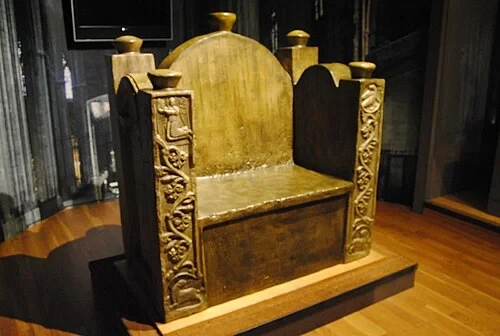 The Chair of CharlemagneThe Throne of Charlemagne
While local tradition and its name suggest a connection to the famous Emperor Charlemagne, this marble chair actually dates to the 11th century. It is a rare example of a Romanesque throne, carved from a single, massive block of local marble. In the early days of the cathedral, this chair was used by bishops during the most important ceremonies to visually represent their authority over the diocese. Its heavy, solid form is characteristic of the Romanesque period, prioritizing stability and power over the delicate ornamentation seen in later Gothic works. The throne is positioned near the high altar, the most sacred part of the church, reinforcing the link between the bishop's leadership and the divine. Despite its age, the marble remains remarkably well-preserved, showing only the smooth wear of nearly a thousand years of use. It stands as a physical link to the original Romanesque cathedral that stood on this site before the massive Gothic expansion, reminding us of the building's ancient foundations.
Listen in the appPhoto: Histanna · CC BY-SA 4.0
Catedral de Girona
Frequently asked questions
How much does the guide cost?
Free app download. Listed guide price: $1.99. Guide price shown in the app. Audio guide only. Venue admission is separate.
Can I listen without internet?
Yes. Download the guide’s audio, images, and maps in the app before your visit. Your downloaded content is then available offline.
Can I listen in my language?
Stanza supports 15 languages. Check the app for the languages available for this guide.
Do I need to follow a schedule?
No. This is a self-guided experience. Choose your stops, pause whenever you like, and return to a story at your own pace.
At your own pace
Explore Catedral de Girona.
Download Stanza, then search for “Catedral de Girona”.
Free app download · Guide price shown in the app
Keep exploring
Nearby audio guides
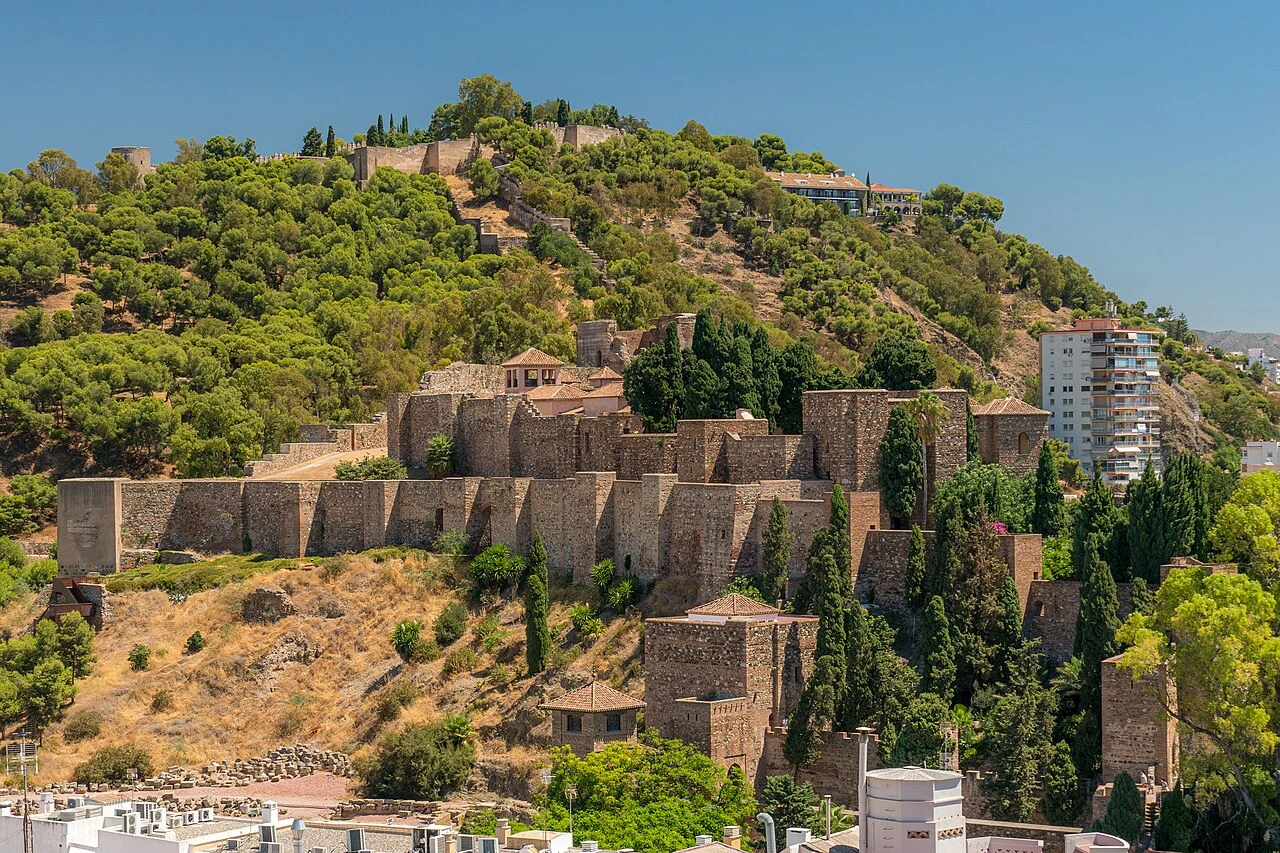
Málaga
Alcazaba de Málaga
Content & sources
Photo: Fernando · CC BY-SA 4.0
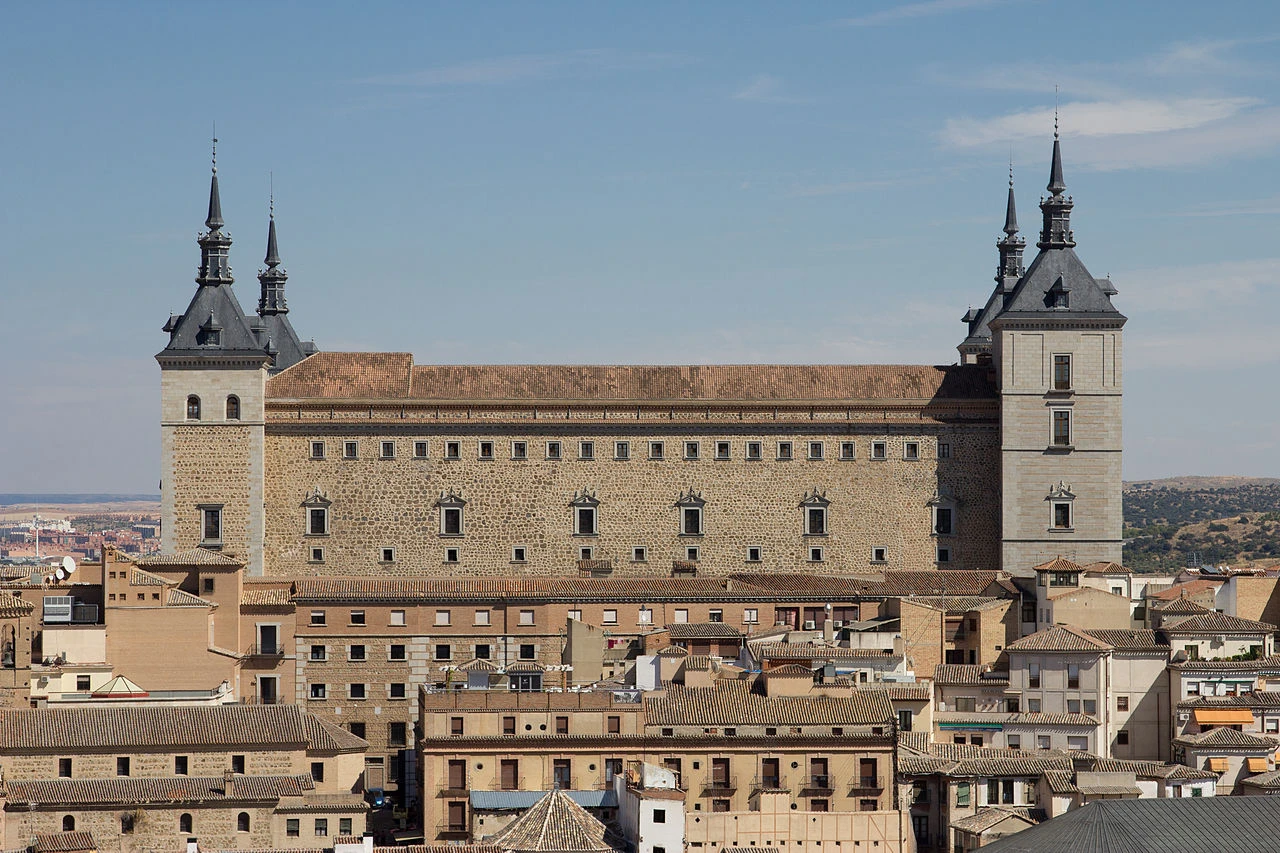
Toledo
Alcázar de Toledo
Content & sources
Carlos Delgado · CC BY-SA 3.0 es
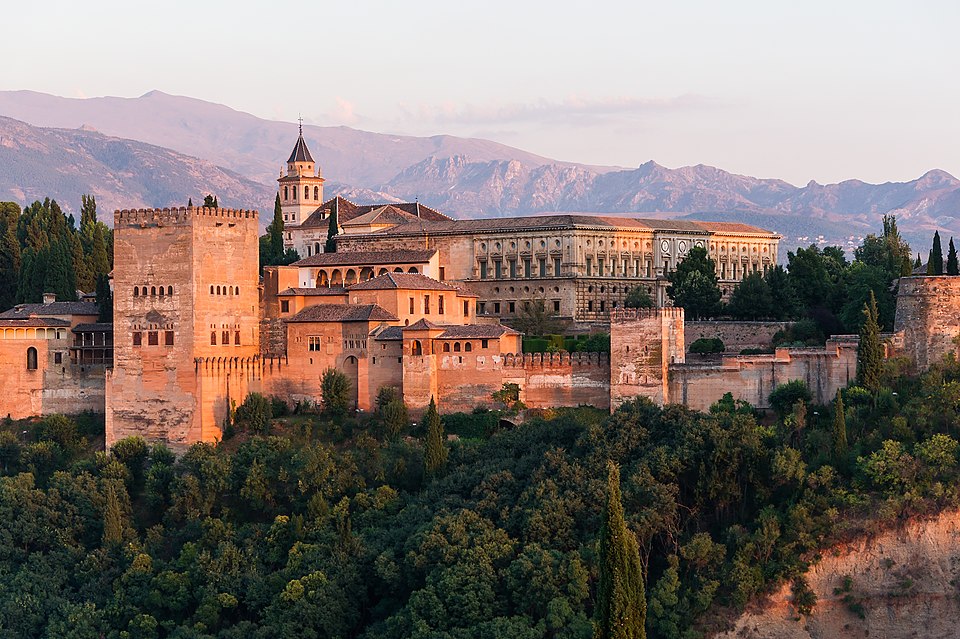
Alhambra
Content & sources
Photo: Jebulon · CC0
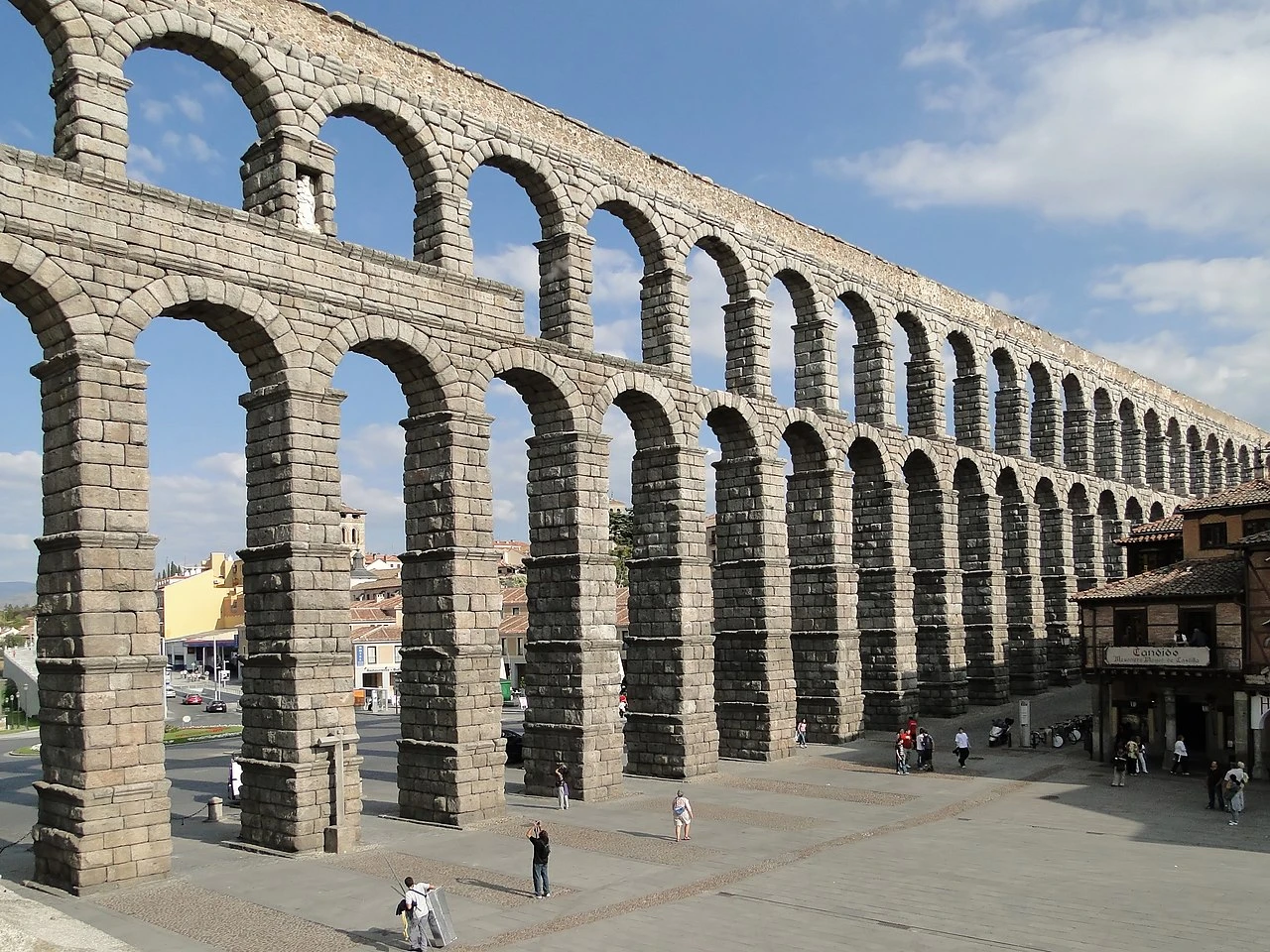
Segovia
Aqueduct of Segovia
Content & sources
Bernard Gagnon · CC BY-SA 3.0