Languages
15Westminster Abbey Audio Guide
Westminster Abbey is a landmark in City of Westminster, United Kingdom. Explore it with Stanza's GPS-triggered offline audio guide — available in 15 languages.
Quick Facts
33
Stops
15
Languages
100%
Offline
📍 City of Westminster, United Kingdom · 51.4994°N, -0.1274°E
About Westminster Abbey
Westminster Abbey is a large, Gothic abbey church in London, England. It serves as the traditional place of coronation and burial site for English and later British monarchs.
Westminster Abbey is also known as Collegiate Church of St Peter at Westminster.
This self-guided audio tour features 33 narrated stops organized across 9 sections. As a church, Westminster Abbey offers a unique cultural experience in the heart of City of Westminster, United Kingdom.
The Stanza audio guide is available in 15 languages and works entirely offline — download the complete tour including audio narration, maps, and images before your visit. As you walk through Westminster Abbey, GPS-triggered narration plays automatically at each point of interest.
Last updated:
What you will hear
The North Transept Entrance
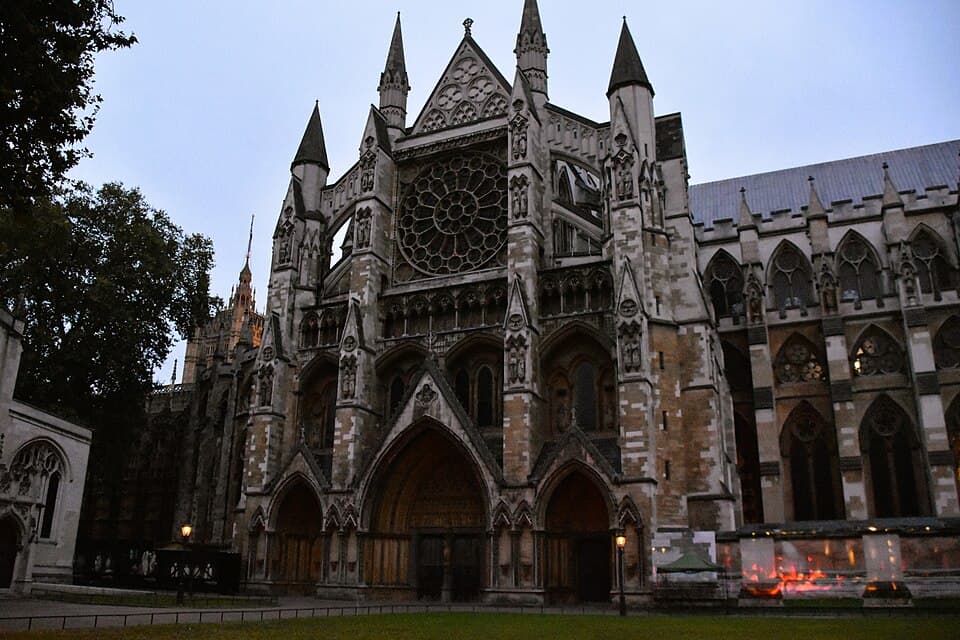
The starting point for visitors, showcasing the grand Gothic facade and the entrance known as Solomon's Porch.
Solomon's Porch Entrance
Welcome to one of the most significant architectural statements in the Abbey. As you stand before the North Transept entrance, you are looking at a facade traditionally known as Solomon's Porch. This grand gateway serves as a testament to the ambitious vision of King Henry III, who began a massive Gothic rebuild of the Abbey in 1245. Henry drew heavy inspiration from the majestic French cathedrals he admired, particularly the coronation church at Reims, aiming to create a structure that could rival the greatest religious buildings in Europe. While the foundations of this sacred site reach back to the 11th century and the reign of Edward the Confessor, the Gothic facade you see today represents the Abbey's unique status as a 'Royal Peculiar.' Unlike most churches that fall under the jurisdiction of a bishop or archbishop, a Royal Peculiar is accountable only to the Sovereign. This direct link between the monarch and the Abbey is palpable in the scale and grandeur of the North Porch, which was designed to overwhelm visitors with a sense of both royal and religious power as they entered the heart of England's spiritual life. It serves as a reminder that this is not just a place of worship, but a royal church built to the glory of the crown.
The Sculpted North Porch
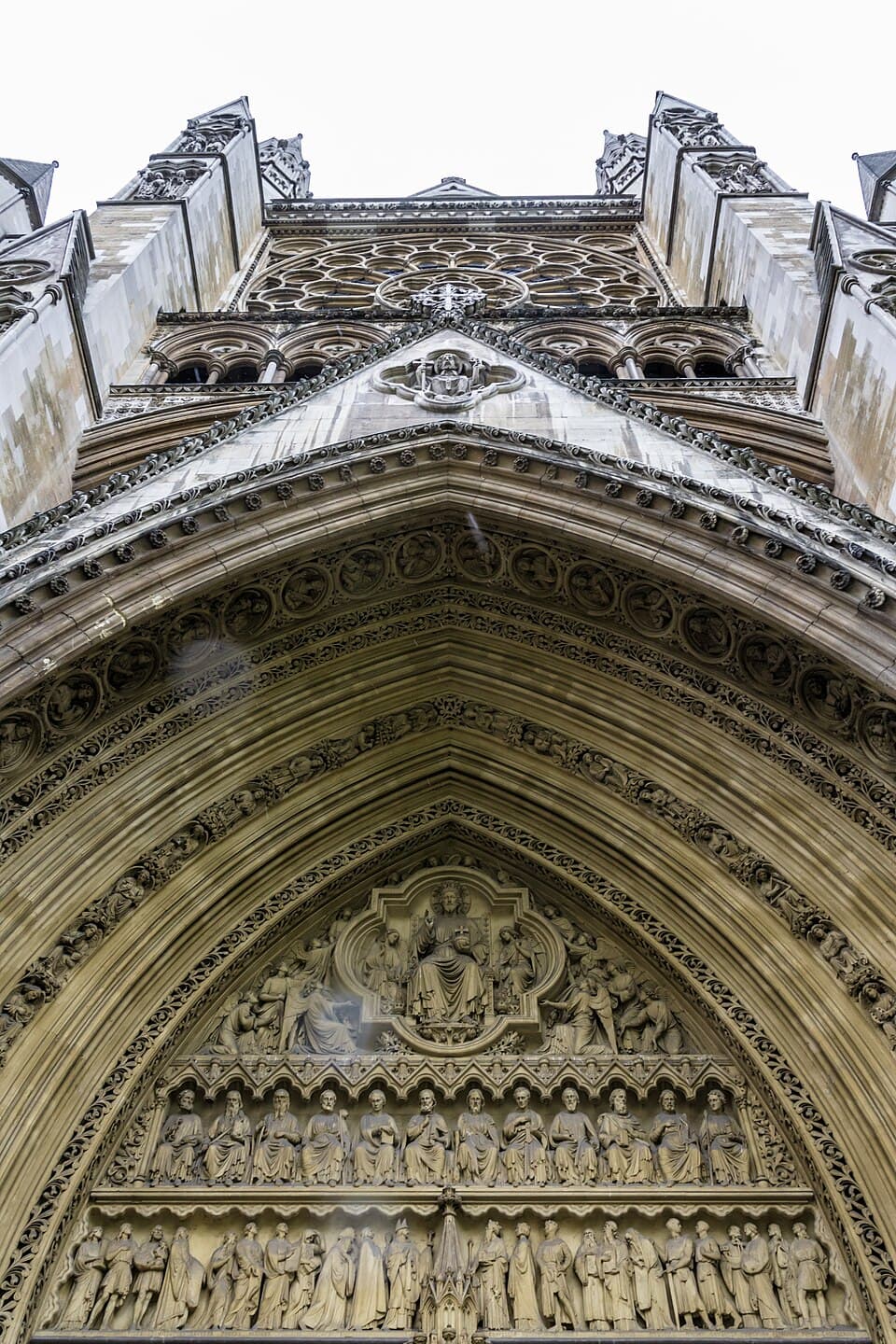
Focusing on the area immediately above the entrance doors, you can see the incredibly detailed stonework of the North Porch. This elaborate display of sculpture is characteristic of the 13th-century Gothic style, which utilized every available surface to convey religious narratives and royal power. The facade is designed with multiple layers of pointed arches, creating a sense of depth and invitation that leads the eye toward the sacred interior. Within these arches, rows of seated figures populate the portal, representing kings, saints, and biblical patriarchs who oversee the threshold of the Abbey. These figures were intended to act as a bridge between the secular world outside and the spiritual realm within, reminding those who passed beneath them of the historical and divine continuity of the English church. The intricate carving extends beyond the human figures to include foliage, mythical creatures, and complex geometric patterns, all meticulously worked into the stone. In the Middle Ages, many of these figures would have been brightly painted, creating a vivid, multi-colored entrance that would have appeared even more striking to the medieval visitor than the weathered stone we see today. The portal remains a powerful example of how architecture was used to inspire awe and devotion before a visitor even stepped inside.
The Nave and Grave of the Unknown Warrior
The highest Gothic vault in England and the site of national mourning at the West Door.
Grave of the Unknown Warrior
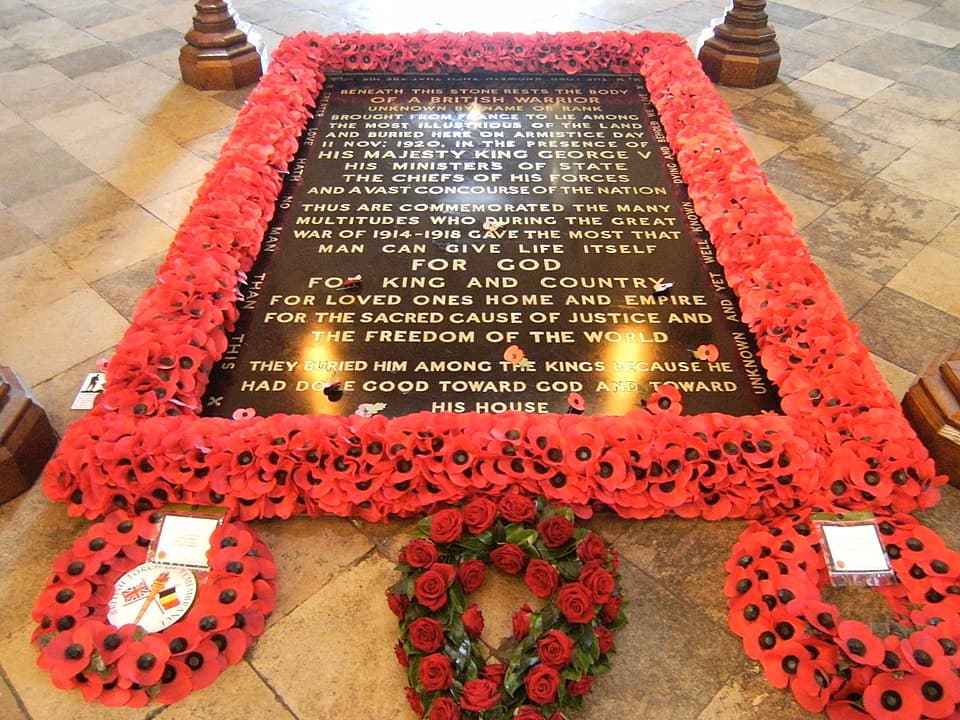
Located near the West Door, you will find a spot of immense solemnity: the Grave of the Unknown Warrior. This slab of black marble is the only grave in the entire Abbey that visitors are strictly forbidden to walk upon, a mark of deep respect for the sacrifice it represents. The story behind it began in 1920, shortly after the end of the First World War. To honor the hundreds of thousands of British soldiers whose bodies were never identified or recovered, the remains of an unidentified soldier were brought back from a French battlefield. He was buried here with full military honors, in soil brought from France, to represent all the 'unknown' who gave their lives. The grave quickly became a focal point for national mourning, allowing families who had no grave to visit a place where they could feel connected to their lost loved ones. The inscription, which is composed of brass from melted-down wartime ammunition, emphasizes that he is buried among kings because he 'had done good toward God and toward his home.' Even today, the grave remains a site of living tradition; every royal bride who marries in the Abbey has her bouquet placed on the stone after the ceremony, a practice started by the Queen Mother in 1923 to honor her brother who was killed in the war.
Scientists' Corner and the Choir Screen
A tribute to human discovery, anchored by the monument to Sir Isaac Newton on the ornate choir screen.
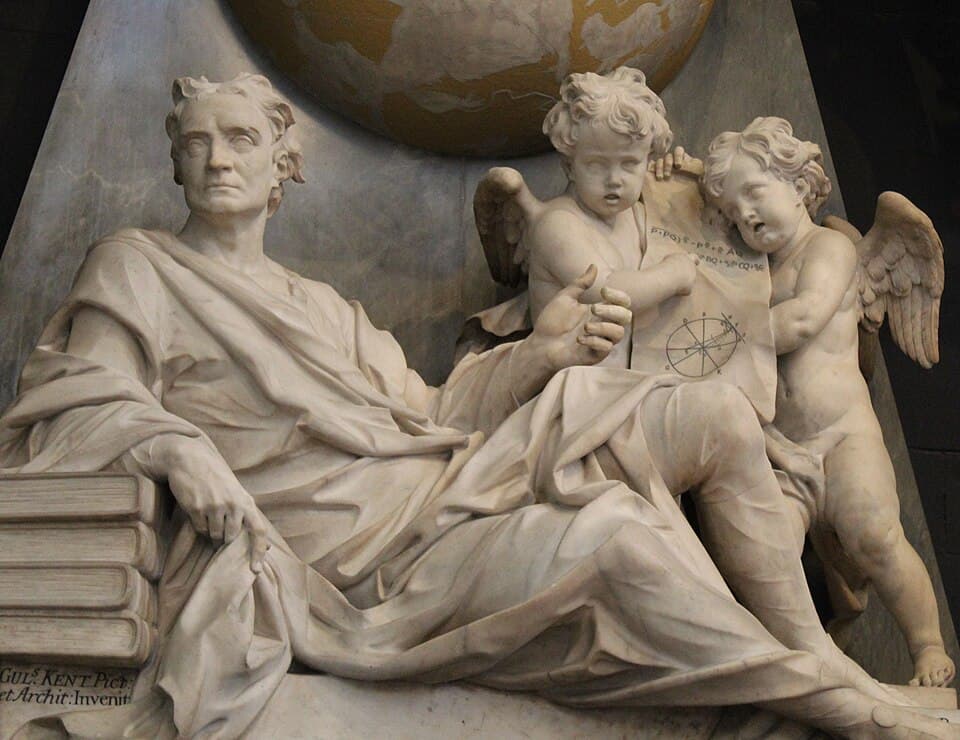
Symbols of Enlightenment
Looking closely at the lower portion of the Newton memorial, you will notice a group of cherubs engaged in what might seem like unusual activities for a church. Rather than playing harps or singing, these figures are holding mathematical diagrams and scientific instruments. One cherub points to a scroll featuring Newton's famous prism experiments, while others handle a reflecting telescope and a mathematical formula. These decorative elements are a wonderful reflection of the 18th-century Enlightenment period. During this era, there was a growing belief that the study of the natural world through science and reason was not a challenge to religious faith, but rather a way of uncovering the divine order of the universe. By incorporating these 'Symbols of Enlightenment' into a funeral monument within the Abbey, the creators were making a bold statement about the compatibility of intellectual discovery and spiritual devotion. The cherubs represent the youthful curiosity and human ingenuity that Newton championed. Their presence here, carved with great delicacy and playfulness, serves to humanize the great scientist while emphasizing that the laws of physics and mathematics were seen as part of a grander, sacred design that was perfectly at home within this medieval cathedral. It is a unique artistic marriage of faith and the dawning age of reason.
The High Altar and Cosmati Pavement
The sacred heart of the Abbey where every coronation since 1066 has culminated.
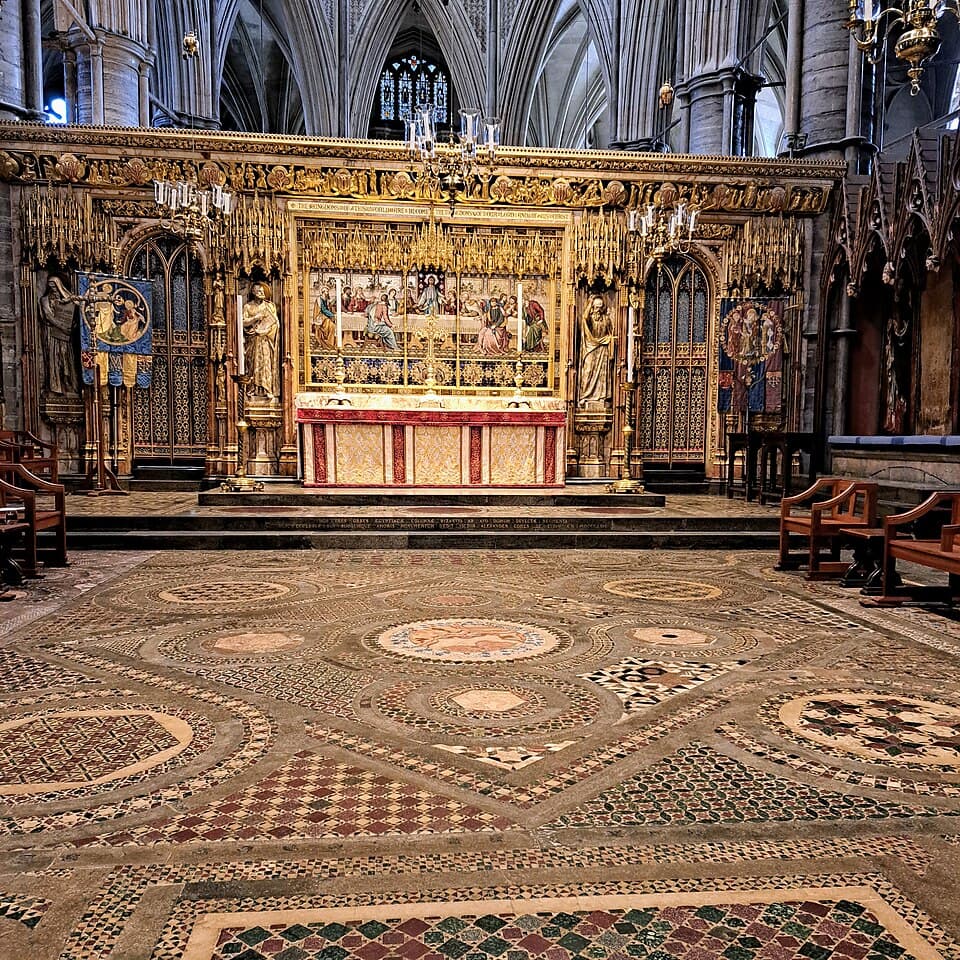
The Cosmati Pavement
The floor in front of the High Altar is the famous Cosmati Pavement, an incredibly rare and complex mosaic laid in 1268. This is the exact spot where the monarch is seated during the most sacred part of the coronation ceremony. The pavement is made from thousands of pieces of colored glass, purple and green porphyry, and various types of marble, all set into a bed of dark Purbeck stone. Its design is based on the 'Ptolemaic' view of the universe, with the central circle representing the earth and the surrounding patterns illustrating the movement of the planets and the stars. Beyond its beauty, the pavement was designed as a kind of medieval prophecy. An inscription around the central circle—now mostly worn away but recorded in historical texts—suggested that the entire design represented the 'duration of the world,' which medieval scholars calculated would last for nearly 20,000 years. The intricate interlaced circles and triangles were meant to reflect the eternal nature of the divine. Because it is so fragile, this floor is usually kept covered to protect it from the thousands of visitors who walk through the Abbey each day, only being fully revealed for special occasions like coronations or major royal services, when its vibrant colors and deep symbolic meaning can be appreciated in their full glory.
Poets' Corner
The literary heart of the Abbey, where the greatest writers of the English language are commemorated.
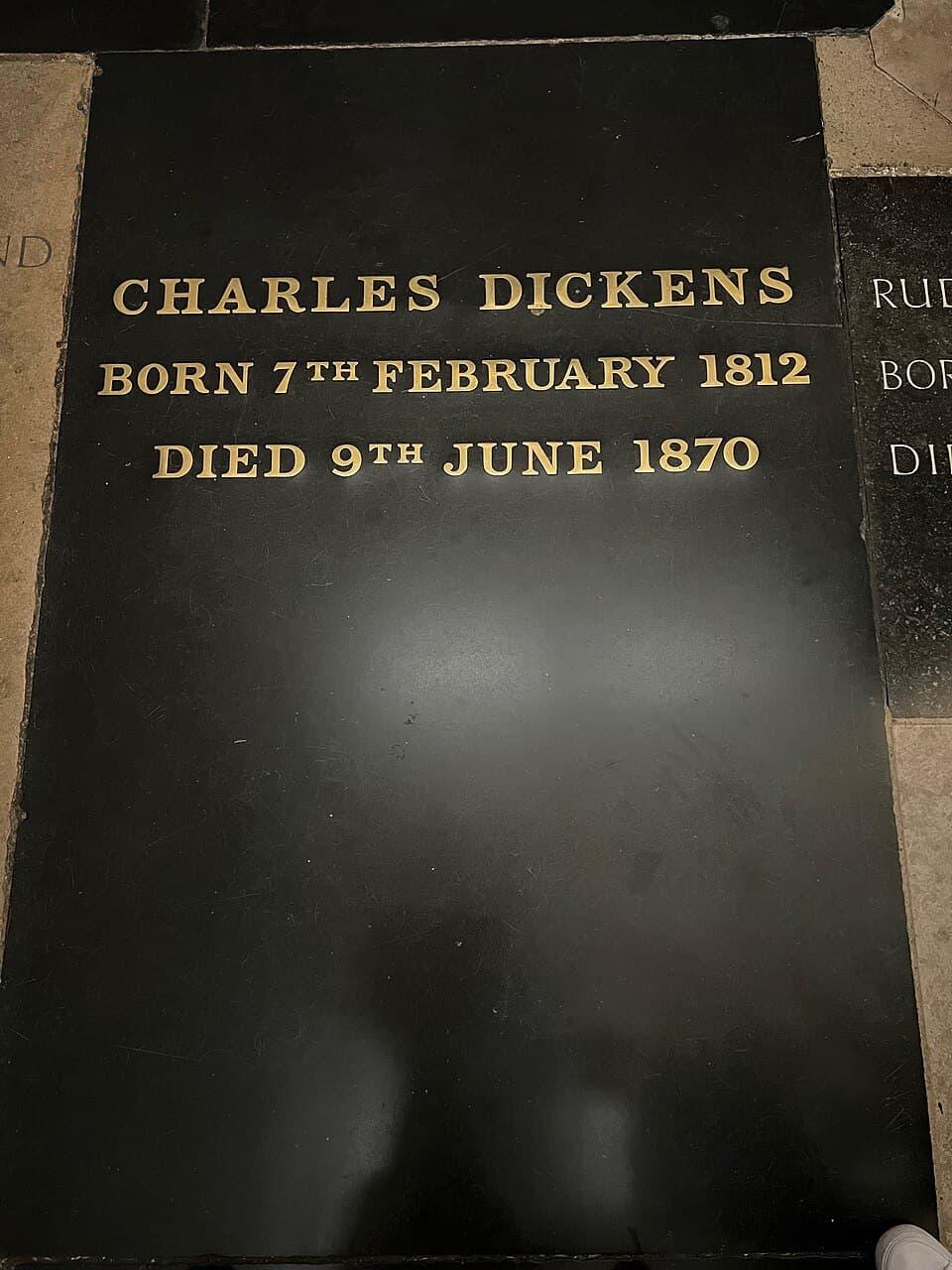
Dickens' Humble Grave
As you walk through Poets' Corner, look down to find a remarkably modest floor stone inscribed with the name of Charles Dickens. Its simplicity stands in stark contrast to the towering, elaborate monuments that line the surrounding walls. This humble marker reflects Dickens' own wishes; in his will, he explicitly requested a private, quiet burial in Kent without any public announcement or grand ceremony. However, when he died in 1870, the public outcry was so immense that the Dean of Westminster and the government felt he must be buried in the nation's premier church. They compromised by giving him a burial in the early morning to avoid massive crowds, but his final resting place remains here in the center of the literary world he helped shape. The unassuming nature of the grave serves as a powerful reminder of Dickens’ focus on the common man and his personal preference for substance over show, even as he was elevated to the status of a national hero by a mourning public.
The Great Cloisters and Memorials
The former center of monastic life, now home to monuments of national service.
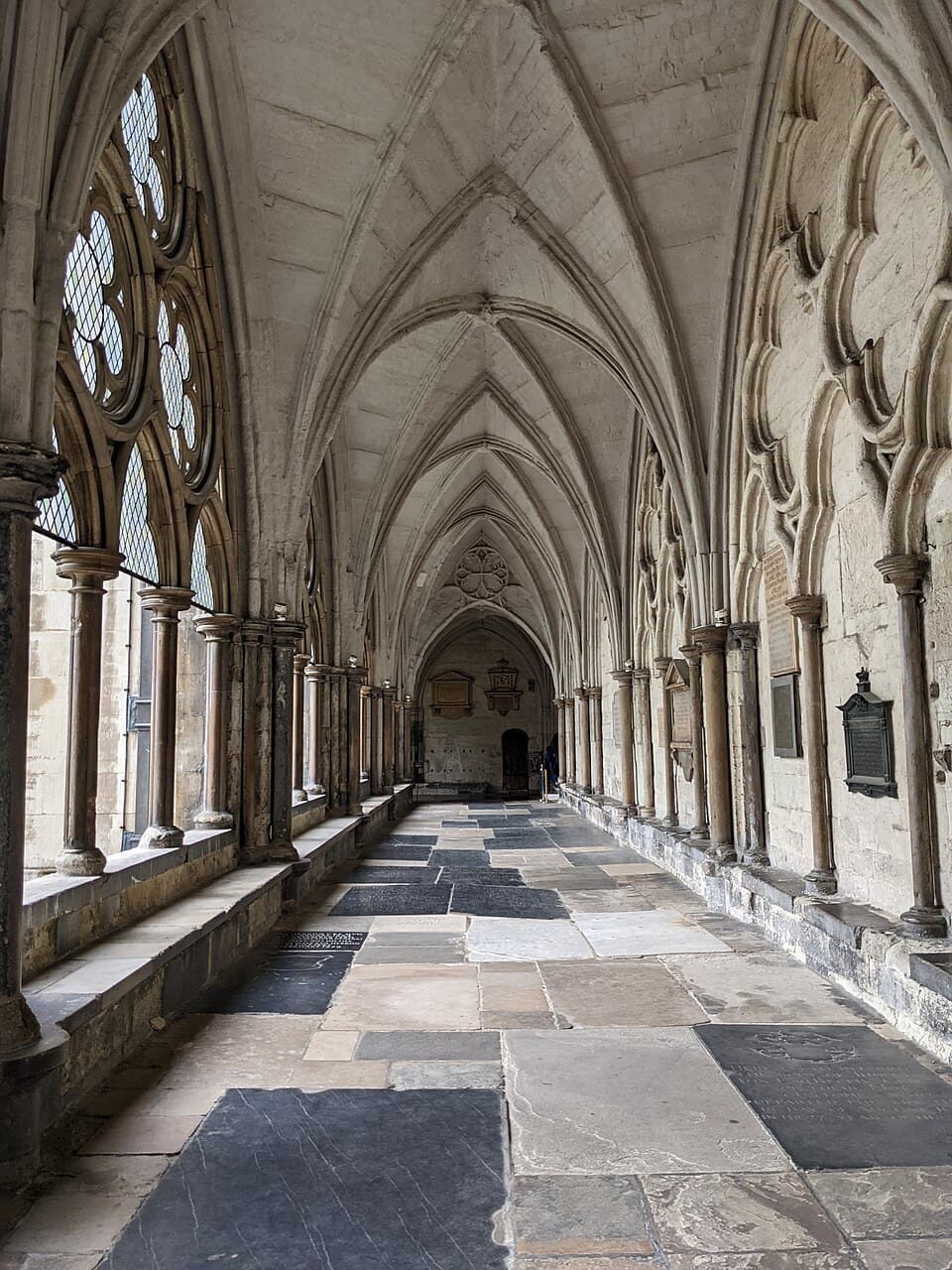
The Monks' Walk
As you move through this long, vaulted passage known as the Monks' Walk, notice how the atmosphere changes. The air feels noticeably cooler here, and the sounds of the modern city or even the main church fade away. This was a primary route for the Benedictine monks as they moved between different parts of the monastery, such as the Chapter House or the Refectory where they ate. Pay close attention to the stones beneath your feet. The floor is noticeably uneven, worn down by centuries of footsteps. Many of these stones are actually grave markers; it was a common practice for monks and residents of the Abbey to be buried in the floors of the walkways they used every day. This simple, functional space provides a direct sensory link to the medieval past. Imagine the silence—broken only by the soft rustle of robes—as generations of monks walked these same stones in contemplation, bound by the strict rules of their order and the rhythmic cycle of prayer that defined their monastic lives.
The Chapter House
An octagonal room with a central pillar where monks met and the early Parliament once sat.
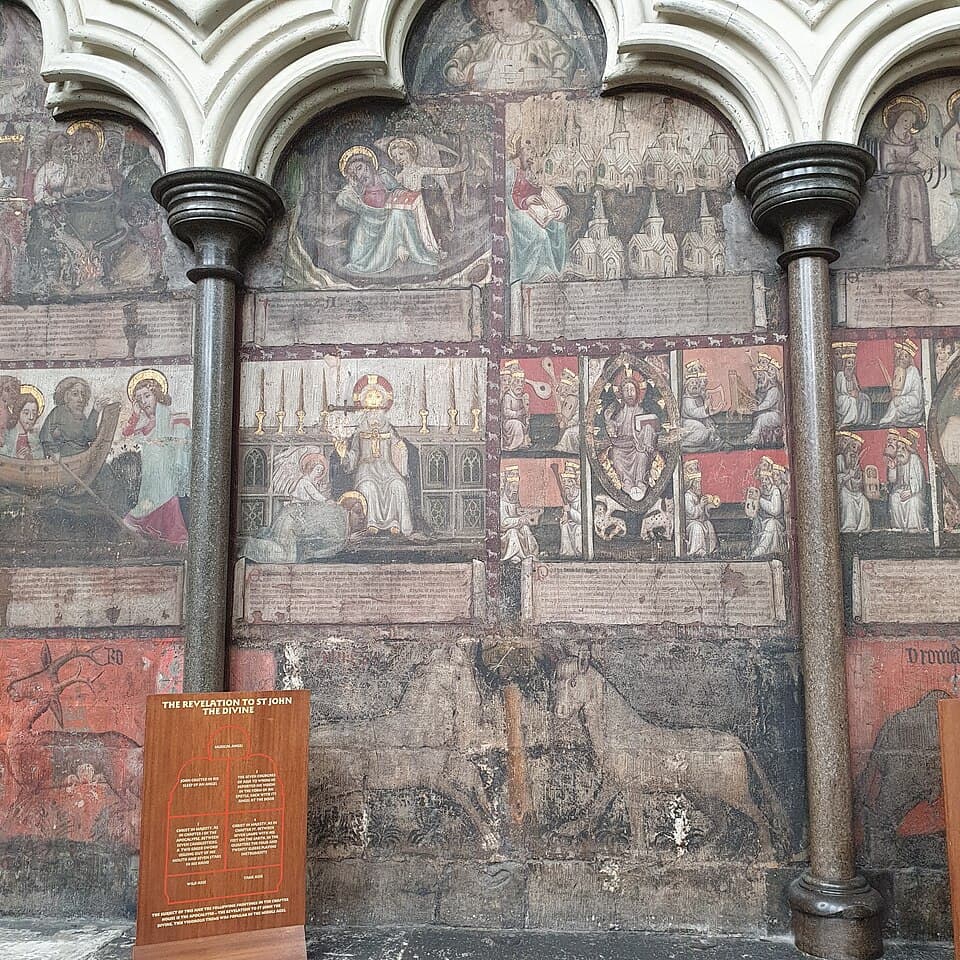
Visions of the Apocalypse
Along the lower sections of the walls in the Chapter House, you can see the remains of a series of faded 14th-century paintings. Although the colors have softened significantly over the centuries, they depict dramatic and complex scenes from the Book of Revelation, the final book of the Bible. When they were first created, these images would have been vibrantly colored and highly detailed, intended to be 'read' like a visual storybook. As the monks sat in their daily meetings, these 'Visions of the Apocalypse'—depicting the cosmic struggle between good and evil, the rise of the beast, and the ultimate victory of the divine—served as a constant moral reminder. They were designed to inspire both awe and a healthy sense of spiritual discipline. Despite their current state, these rare survivals offer a precious glimpse into the medieval mindset, where the walls of a room were not just structural but were active participants in the education and spiritual life of the community, teaching lessons on faith and endurance.
The Queen's Diamond Jubilee Galleries
The Abbey's museum located high above the floor in the medieval triforium.
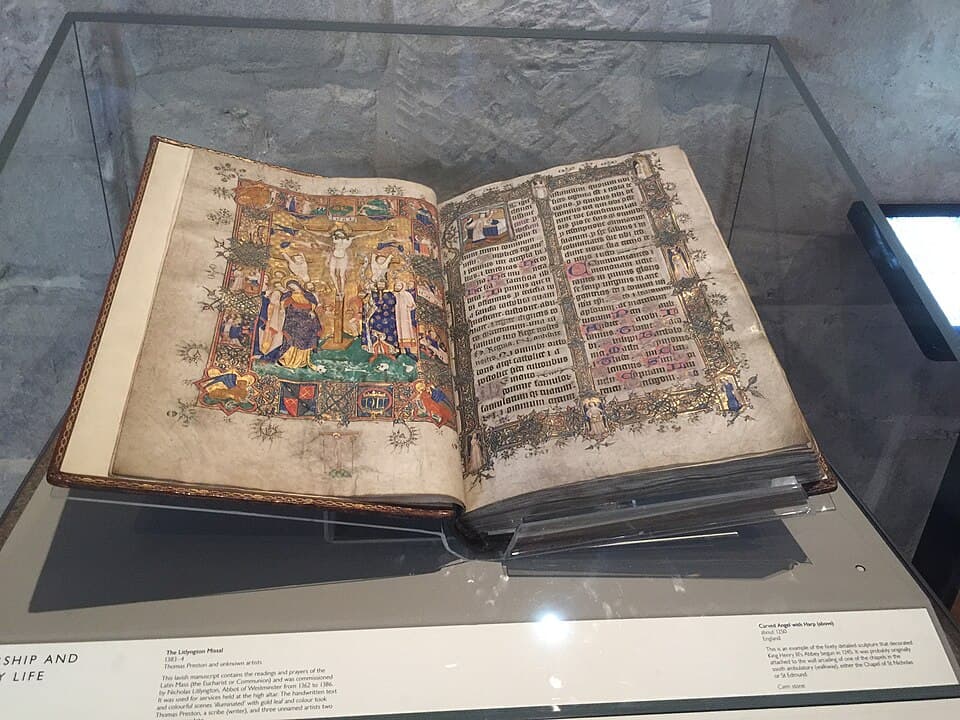
Litlyngton Missal
1384
On display here is one of the most precious treasures in the Abbey’s collection: the Litlyngton Missal. This illuminated manuscript was commissioned in 1383 by Nicholas Litlyngton, the Abbot of Westminster at the time. A missal is a book containing all the prayers, chants, and readings used by the priest during the celebration of the Mass throughout the year. This particular volume was intended for use at the Abbey’s High Altar, and its lavish decoration reflects its central role in the monastery's spiritual life. Look closely at the intricate illustrations and the vibrant colors; the use of genuine gold leaf and expensive pigments like lapis lazuli—brought from as far away as Afghanistan—is a clear indication of the immense wealth and prestige of Westminster Abbey during the Middle Ages. Beyond its beauty, the missal is a vital historical document, providing a direct record of the specific religious rituals and traditions that have been practiced within these walls for over six hundred years, serving as a testament to medieval devotion and craftsmanship.
The West Front and Coronation Chair
The final stop of the tour, featuring the 700-year-old Coronation Chair and the statues of 20th-century martyrs.
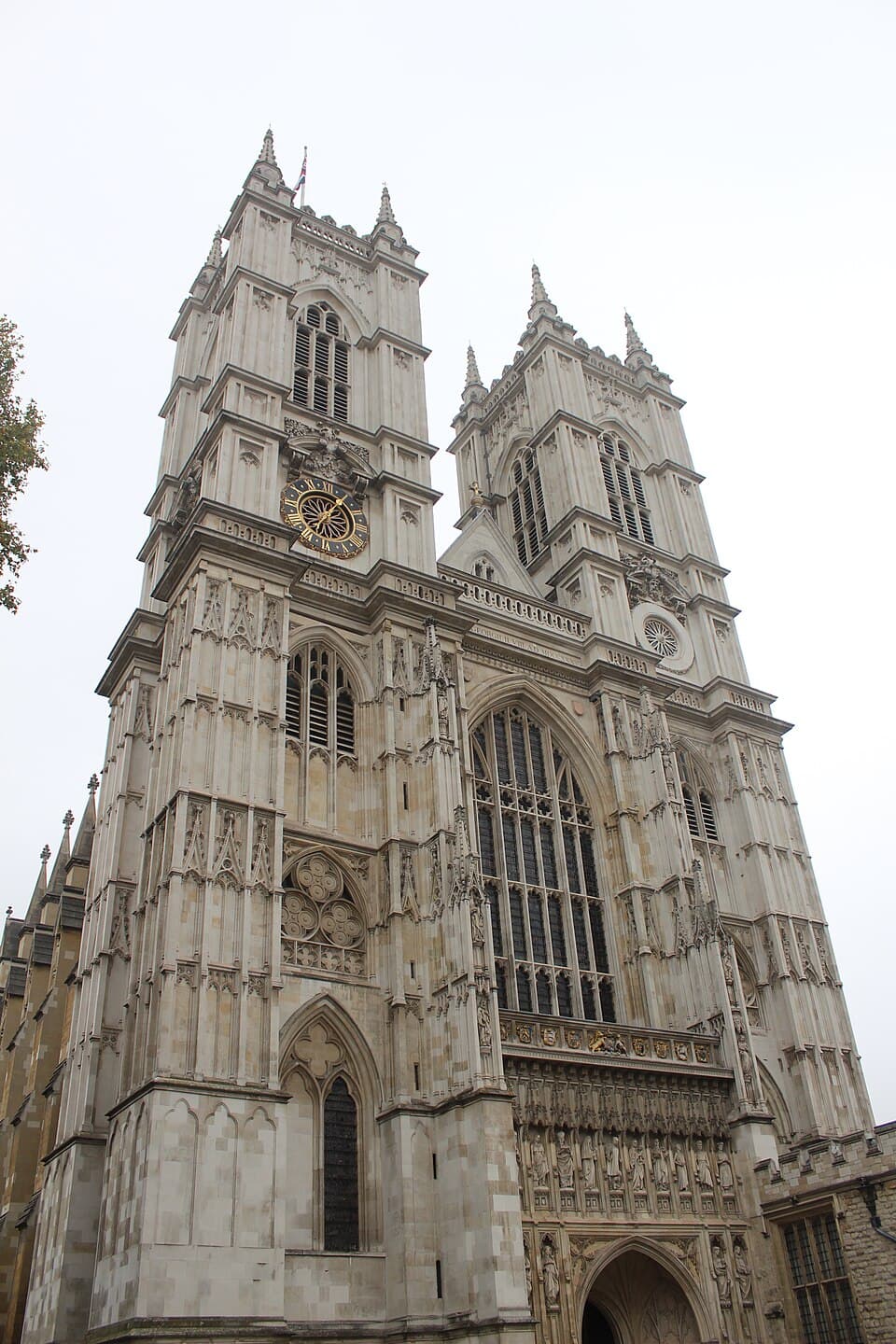
The Western Facade
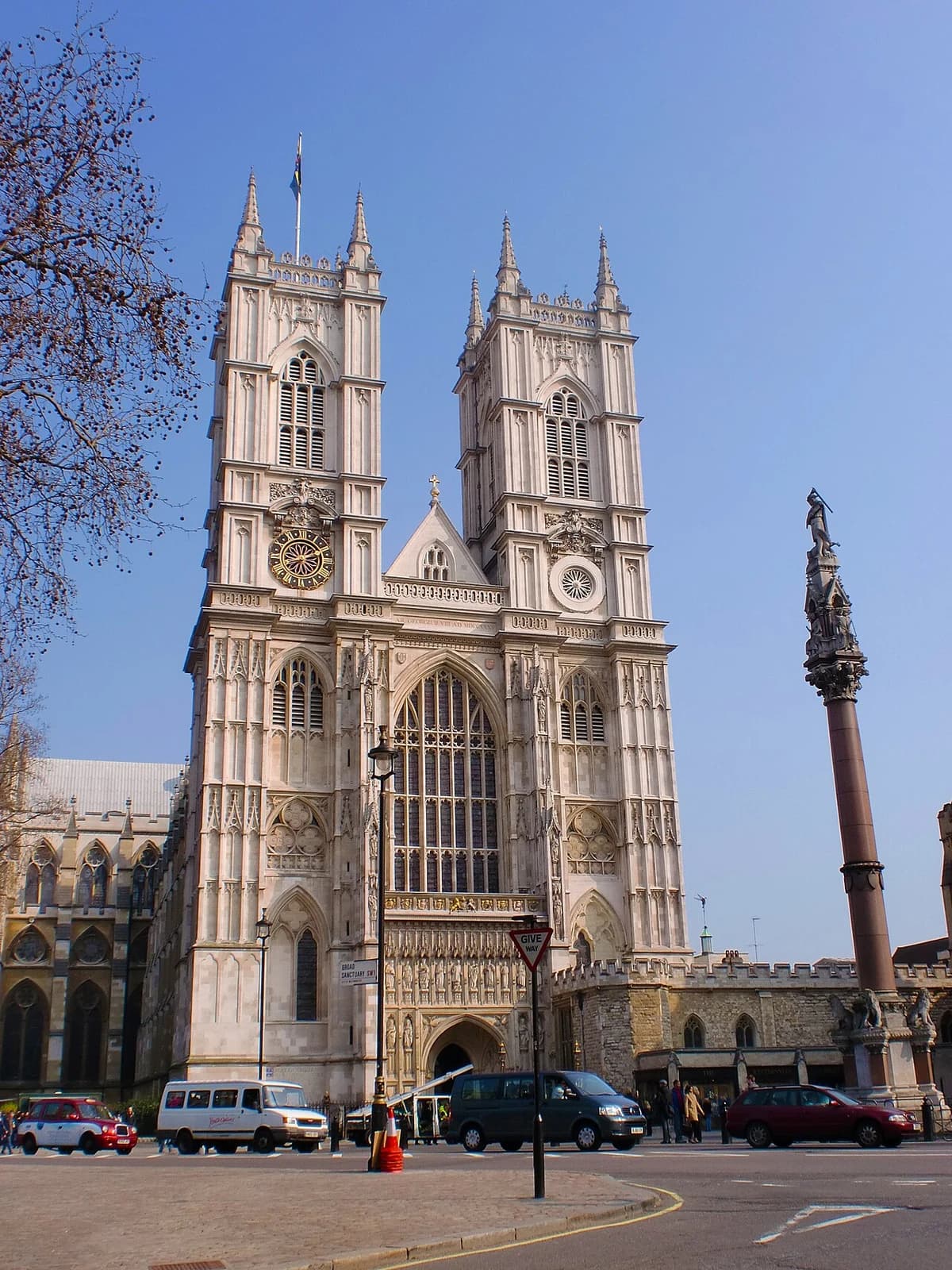
The two massive towers reaching toward the sky at the Abbey's entrance seem as if they have always been there. However, while much of the building reflects medieval craftsmanship, these twin towers were actually completed in 1745. Designed by Nicholas Hawksmoor, they were intended to provide a grand, symmetrical finish to the western facade. This project successfully blended contemporary Baroque sensibilities with the existing Gothic structure, creating the iconic silhouette known worldwide today. Within these towers hangs a ring of ten bells. While the Abbey has a long history of bell-ringing, this specific set was cast in 1971. These bells are not used for everyday services; their deep, resonant tones are reserved for the most significant national occasions. They ring out for major royal events, such as weddings and jubilees, and toll solemnly for royal funerals. The sound of these bells has provided a sonorous backdrop to many of the most pivotal moments in modern British history, connecting the ancient walls of the Abbey to the contemporary life of the nation.
Want to hear the rest?
Download the Stanza app to unlock all 33 stops and full GPS-guided navigation.
Frequently Asked Questions
How long does the Westminster Abbey audio tour take?
The Westminster Abbey audio guide includes 33 narrated stops. Most visitors spend 45 minutes to 1.5 hours exploring the complete tour, though you can listen at your own pace and skip or revisit any stop.
Is the Westminster Abbey audio guide available in my language?
Stanza supports 15 languages: English, Spanish, French, German, Italian, Portuguese, Russian, Japanese, Chinese, Korean, Arabic, Hindi, Polish, Dutch, Hebrew. Check the guide in the app to confirm the languages currently available for this tour.
Can I use the audio guide offline at Westminster Abbey?
Yes! Download the complete Westminster Abbey tour — including all audio, maps, and images — before your visit. The Stanza app works completely offline, so you don't need WiFi or mobile data at the venue.
How much does the Westminster Abbey audio guide cost?
The Stanza app is free to download. The current listed price for the Westminster Abbey audio guide is $1.99; app-store region and currency may affect the final price.
How do I use the Stanza audio guide at Westminster Abbey?
Download the free Stanza app, search for "Westminster Abbey", and download the tour. When you arrive at the venue, the app uses GPS to detect your location and automatically plays the relevant narration as you move between points of interest — completely hands-free.
What makes the Stanza audio guide different from other Westminster Abbey tours?
Stanza offers GPS-triggered narration that plays automatically as you walk through Westminster Abbey — no need to manually select stops. The tour is available in 15 languages, works fully offline, and includes 33 expertly narrated stops with images and historical context.
What other audio guides are available near Westminster Abbey?
Stanza offers multiple audio guides in City of Westminster, United Kingdom and nearby areas. After downloading the app, browse the map to discover all available tours near Westminster Abbey. Each guide can be downloaded for offline use.
Nearby Audio Guides
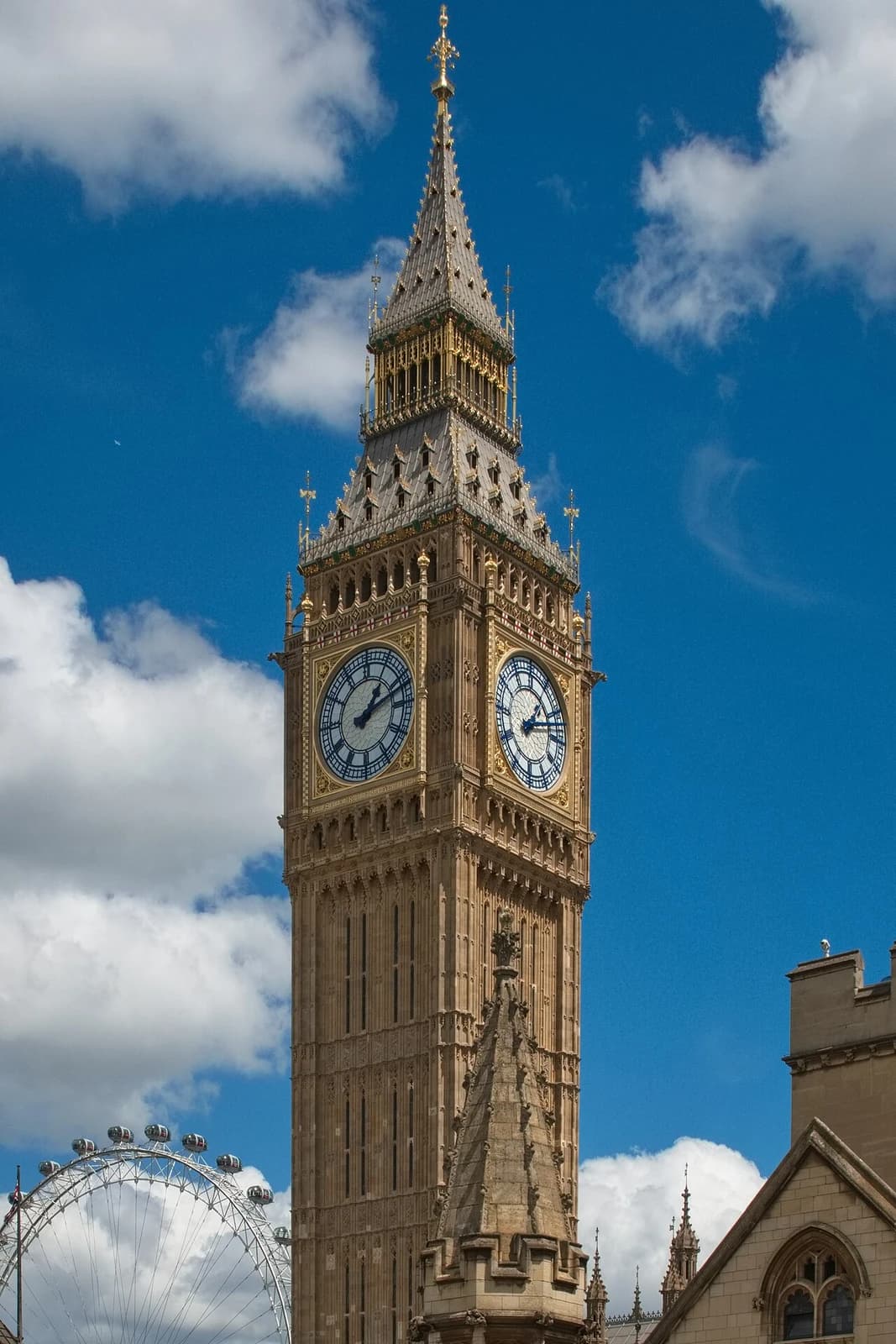
Big Ben
City of Westminster, United Kingdom
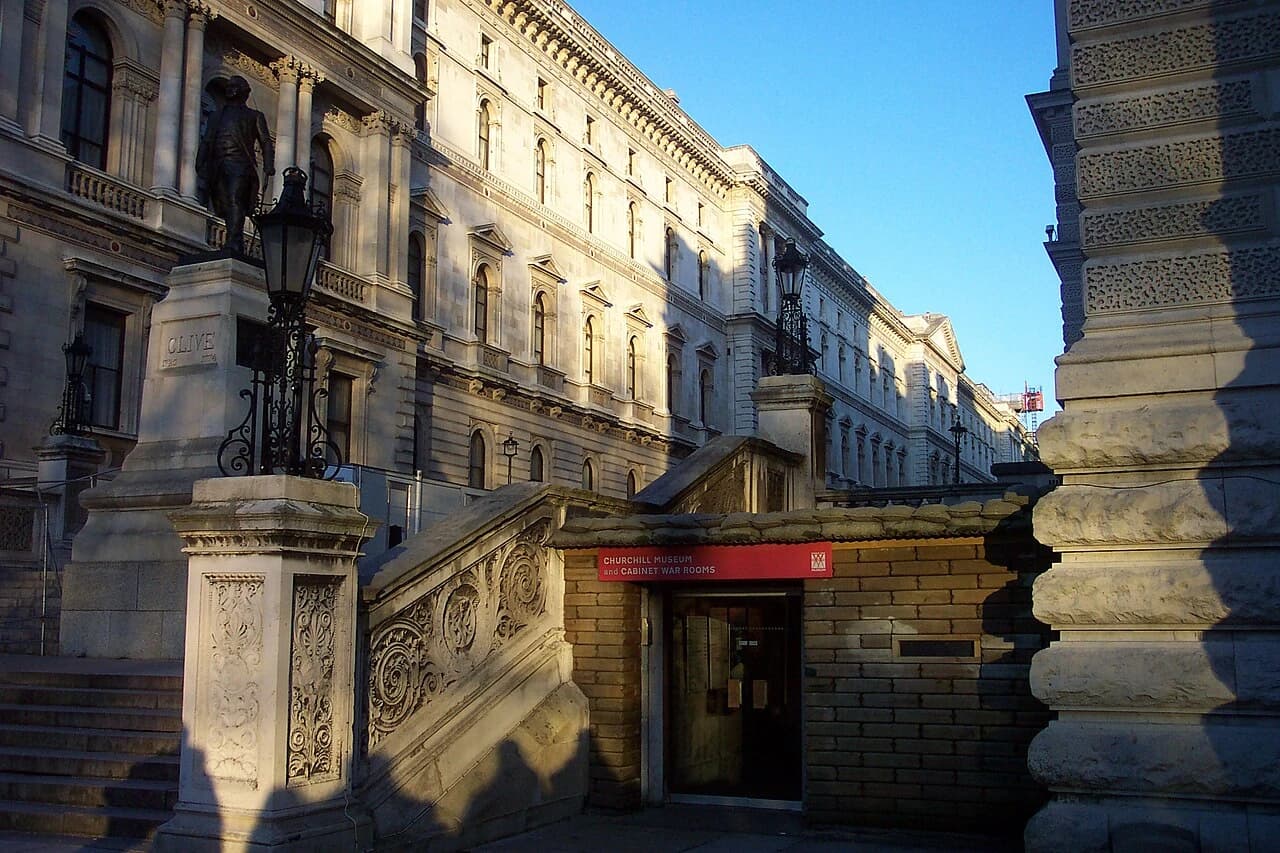
Churchill War Rooms
City of Westminster, United Kingdom
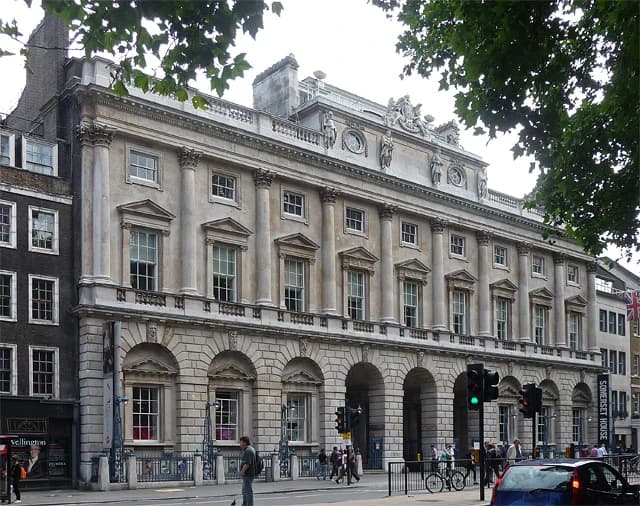
Courtauld Institute of Art
City of Westminster, United Kingdom
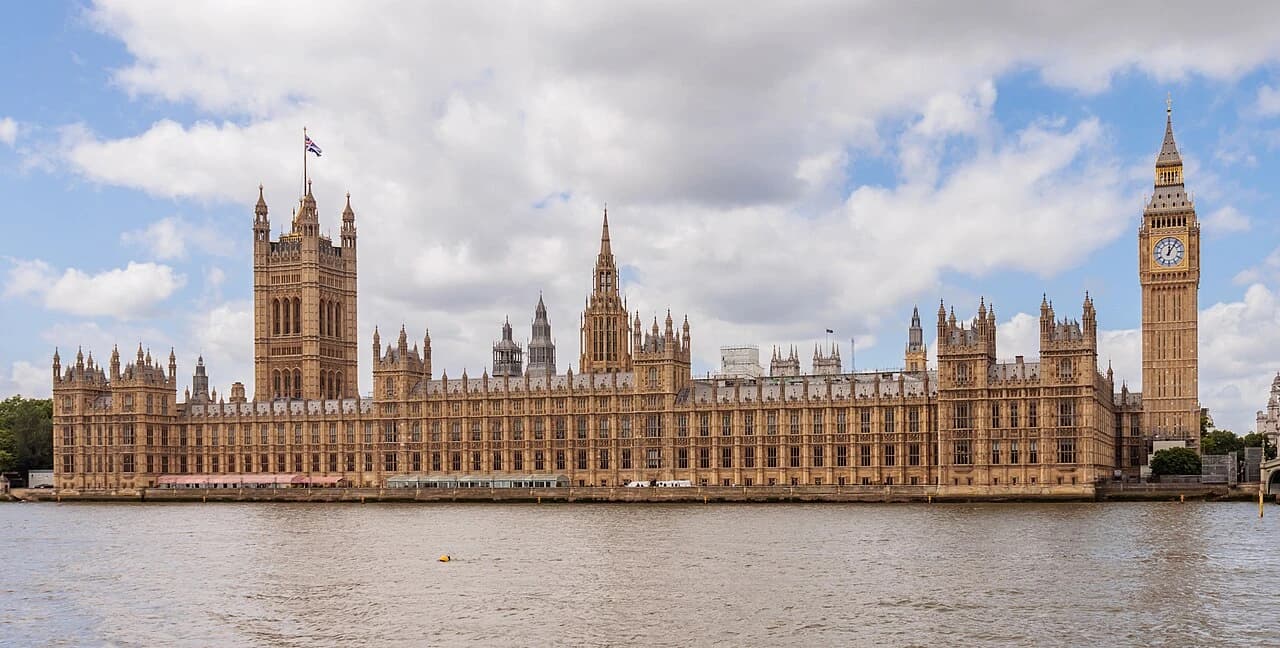
Palace of Westminster
City of Westminster, United Kingdom
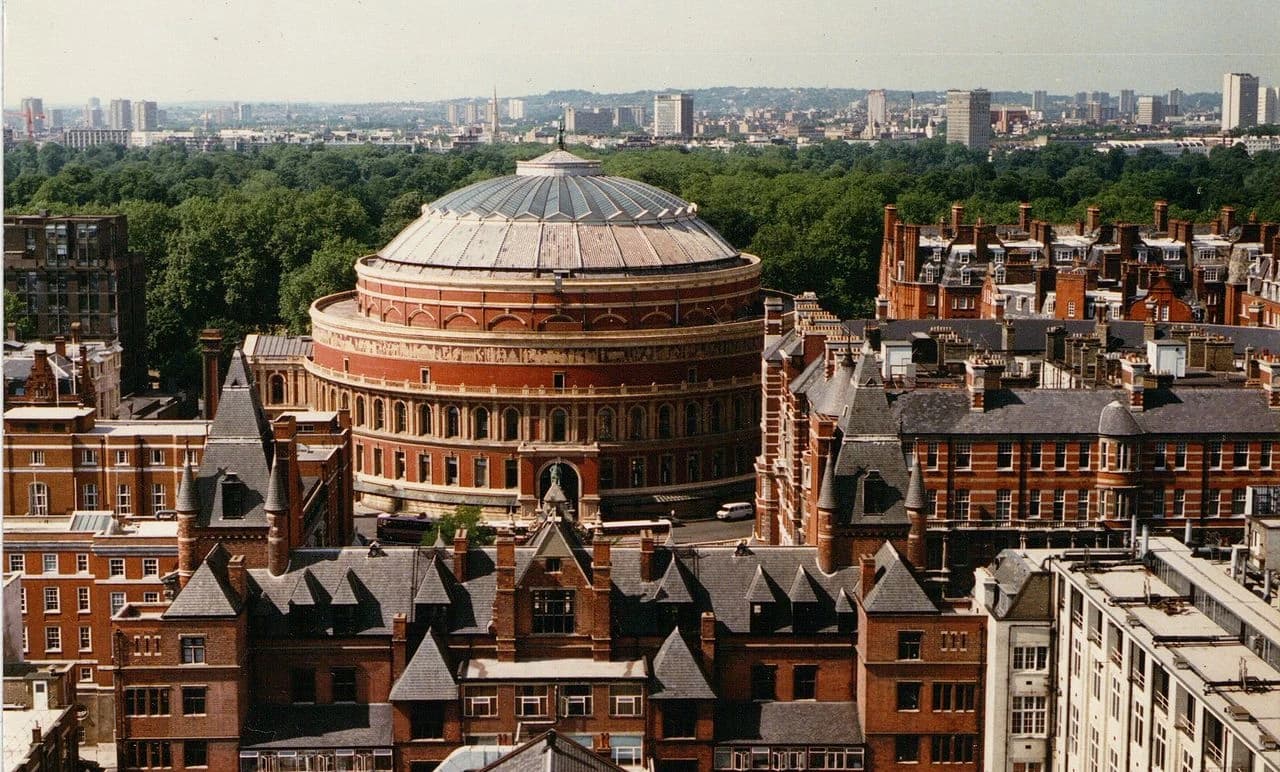
Royal Albert Hall
City of Westminster, United Kingdom
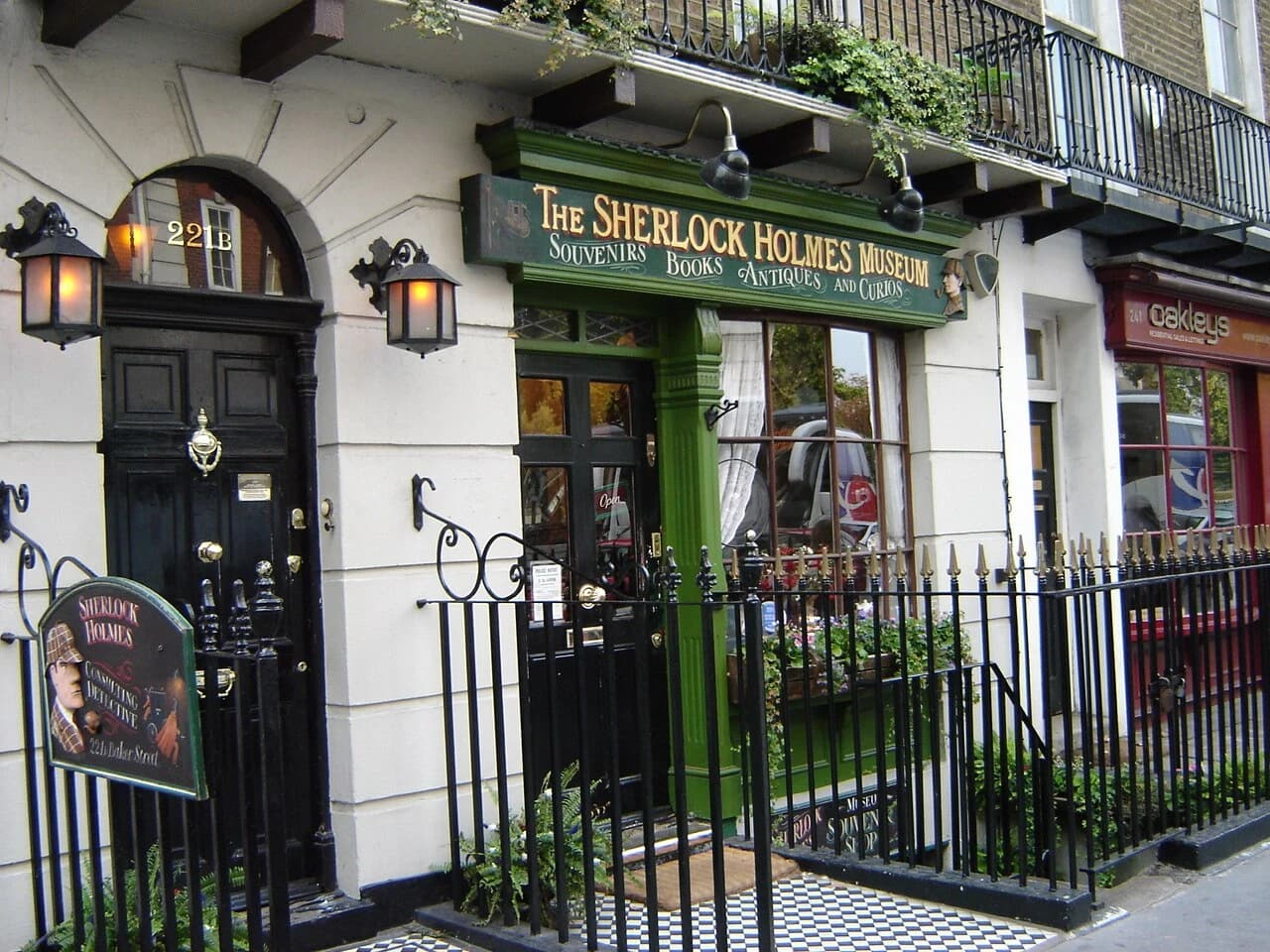
Sherlock Holmes Museum
City of Westminster, United Kingdom