Languages
15Osborne House Audio Guide
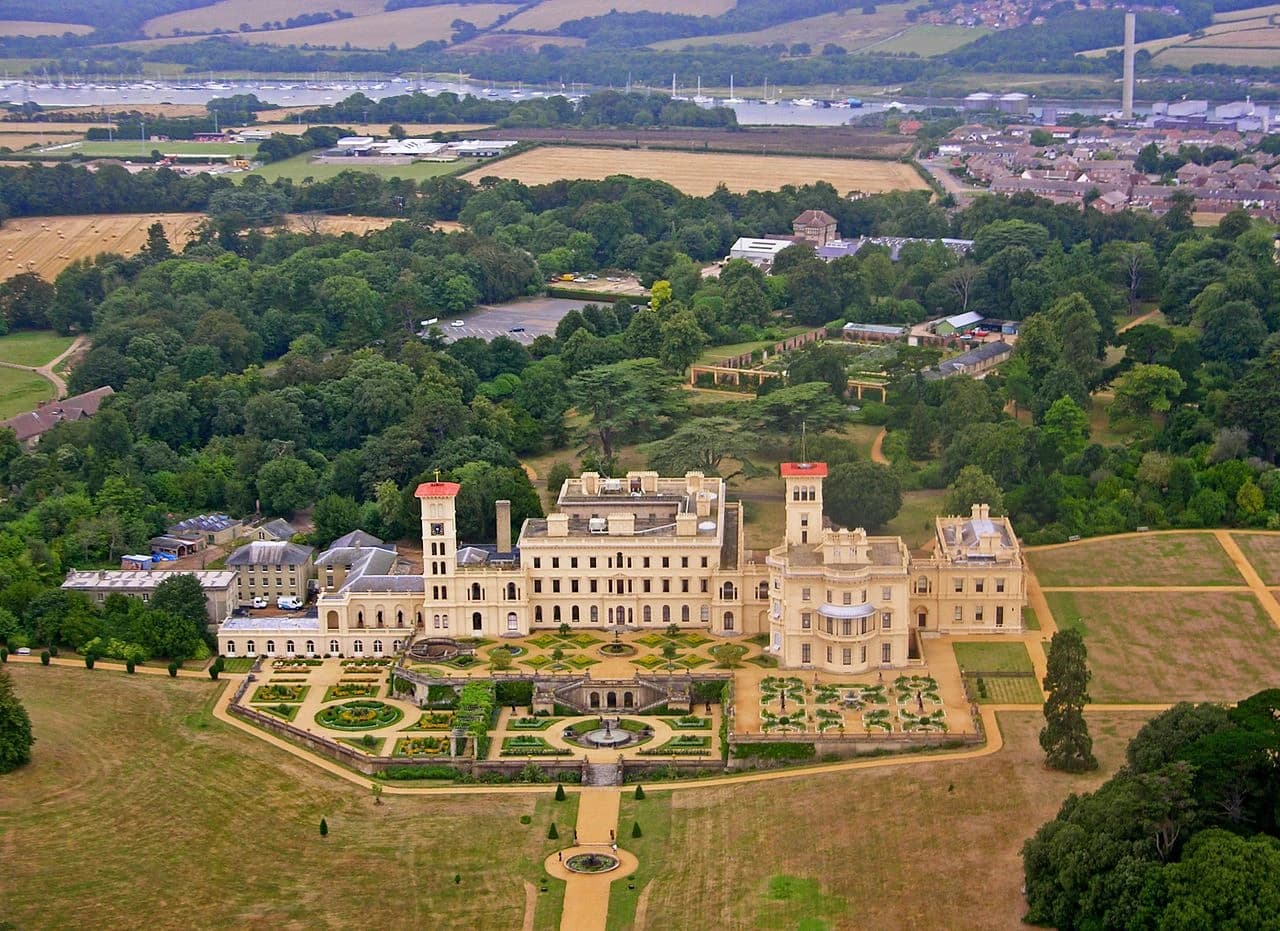
Osborne House is a museum in East Cowes, United Kingdom. Explore it with Stanza's visual scanner and offline audio guide — available in 15 languages.
Quick Facts
25
Stops
15
Languages
100%
Offline
📍 East Cowes, United Kingdom · 50.7505°N, -1.2700°E
About Osborne House
Osborne House is a former royal residence built for Queen Victoria and Prince Albert on the Isle of Wight. It serves as a significant historic house museum showcasing the royal family's private life in the 19th century.
Osborne House is also known as Osborne.
This self-guided audio tour features 25 narrated stops organized across 8 sections. As a house museum, Osborne House offers a unique cultural experience in the heart of East Cowes, United Kingdom.
The Stanza audio guide is available in 15 languages and works entirely offline — download the complete tour including audio narration, maps, and images before your visit. As you walk through Osborne House, GPS-triggered narration plays automatically at each point of interest.
Last updated:
Artworks on display
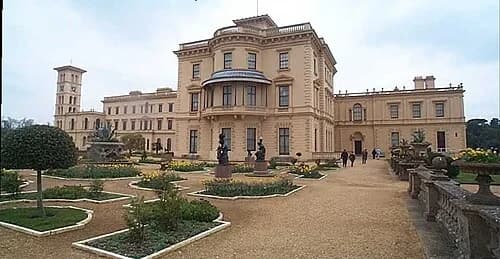
The Terrace Gardens and Clock Tower
Focuses on the Mediterranean atmosphere Albert created. Includes the patio view, the clock tower, and the iconic stone lions.
The Mediterranean Terrace
Prince Albert viewed the house and its surrounding grounds as a single, unified work of art. To bridge the gap between the building and the natural landscape, he designed a series of formal Mediterranean terraces. The parterre you see in the foreground, with its neatly clipped hedges and colorful flowerbeds, follows a precise geometric pattern. These terraces provided a controlled environment where the royal family could enjoy the fresh sea air and walk together in peace, shielded from the prying eyes of the press by the clever topography of the estate. Albert took a personal interest in every detail, selecting the bronze statues and the central fountain to enhance the classical atmosphere. These sculptures often depict figures from Greek and Roman mythology, reinforcing the Italian theme. The sound of the water and the fragrance of the seasonal flowers transformed this space into a sensory retreat. It is easy to imagine the Queen and Prince walking here in the evening, discussing their family or matters of state while looking out toward the sea, which stretches out beyond the stone balustrades.
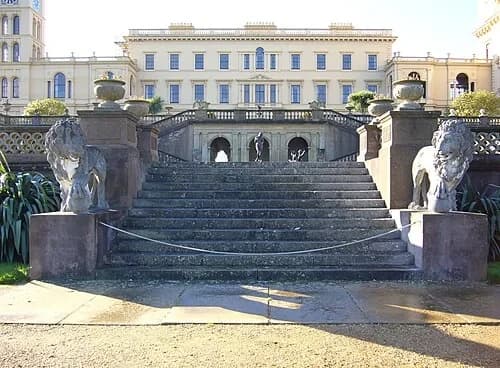
The Stone Guardians
Flanking the steps that lead down toward the lower gardens are two massive stone lions. These figures are unmistakable symbols of British strength and the power of the monarchy. However, in the context of Osborne House, their presence feels more protective than aggressive. They act as silent sentinels, guarding the private family spaces of the lower terraces. Over the years, the elements have softened the edges of the stone, giving these statues a weathered, ancient appearance that blends perfectly with the surrounding masonry. From this vantage point, the lions frame a perfect view of the house's grand, symmetrical facade. Notice the detailed carving of their manes and the resting, yet alert, posture they hold. While the rest of the house emphasizes comfort and informal Italian style, these stone guardians serve as a subtle reminder of the status of the residents. They mark the boundary between the formal parterres and the more natural, sloping landscapes that lead down to the private beach, representing the intersection of royal duty and domestic peace.
The Billiard Room
A space for informal royal leisure and court interaction.
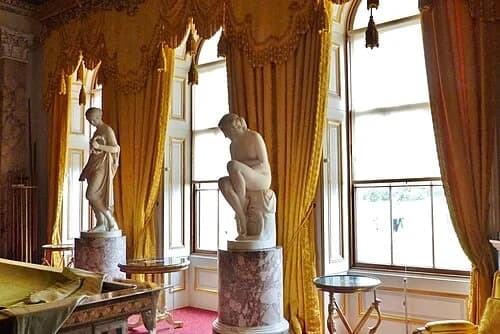
The Billiard Room
The Billiard Room was the center of evening leisure at Osborne. After dinner, Prince Albert and his male guests would often retire here to play, while Queen Victoria would frequently sit in the adjacent room, working on her correspondence or listening to music. The room is dominated by the large, heavy billiard table, a classic feature of Victorian gentlemanly recreation. However, look beyond the masculine function of the game to see the delicate artistic touches that define the space. The windows are framed by heavy, golden-yellow silk curtains, and several white statues stand on plinths around the perimeter. These figures were personally selected by the royal couple, showcasing their shared passion for classical sculpture. This room illustrates the unique atmosphere of Osborne: it was a place for 'private' relaxation, yet that relaxation was still conducted amidst formal decor and high art. The presence of these statues in a room dedicated to a game like billiards shows that, for Victoria and Albert, art was not something reserved for galleries; it was an essential part of their everyday domestic life.
Queen Victoria's Bedroom
The most intimate part of the house, where the Queen spent her final hours. Includes the deathbed painting for context.
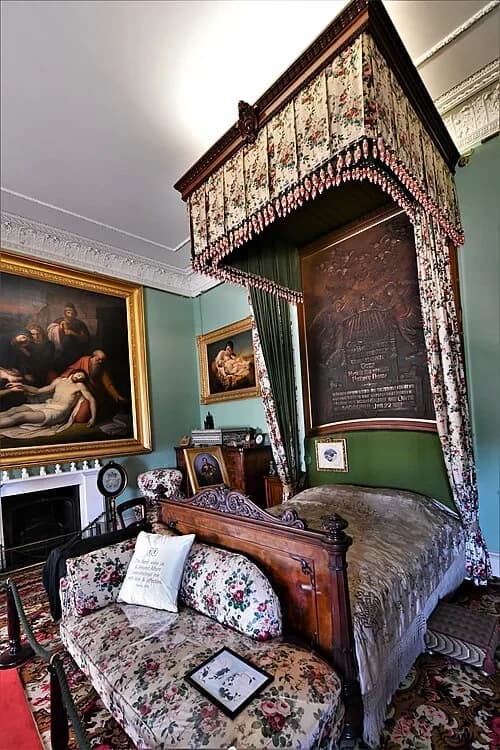
The Queen's Bedroom
There is a somber, reverent atmosphere in this bedroom, which was the most private sanctum of the Queen. It was here, on January 22, 1901, that Queen Victoria died at the age of 81, surrounded by her children and grandchildren. The room is filled with domestic details that reflect her profound devotion to Prince Albert. Above the bed hangs a large portrait of him, and after his death in 1861, Victoria ordered that his rooms and their shared spaces be kept exactly as they were during his lifetime. For forty years, his clothes were laid out every morning, and fresh water was brought to his washstand. The bed itself features an elaborate floral canopy, a soft contrast to the heavy weight of the history that unfolded here. This space was not designed to impress visitors; it was a place of memory and mourning. The quiet, personal objects scattered about—small portraits, books, and mementos—emphasize the humanity of a monarch who ruled over a quarter of the globe but spent much of her life focused on the husband she had lost.
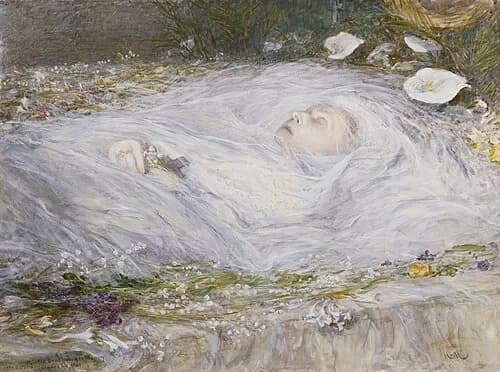
Queen Victoria on Her Deathbed
Hubert von Herkomer · 1901 · watercolor paint, gouache paint, pencil
Following the Queen's death in January 1901, the artist Hubert von Herkomer was summoned to Osborne House to capture her final image. This painting provides a visual record of the scene in the bedroom you just visited. It depicts the Queen lying in state, her features peaceful, surrounded by an abundance of white flowers, including lilies and carnations. The work is deeply poignant, marking not just the passing of a woman, but the end of the Victorian Age—a period of unprecedented change and expansion for Britain. By capturing her in this way, Herkomer emphasized the monarch's humanity and the deep sense of loss felt by her family and the nation. The soft, almost ethereal quality of the light in the painting creates a reflective mood. This image was part of a tradition of memorializing the royal family through art, providing a way for the public to share in the grief of the household. It stands as a final tribute to a woman who had been the face of an empire for over sixty-three years.
The Royal Nursery Suite
Highlights the domestic focus of Osborne as a home for Victoria and Albert's nine children.
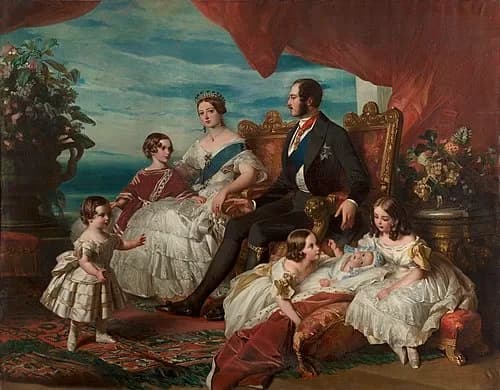
The Royal Family in 1846
Enrico Belli · 1861 · canvas, oil paint
This famous portrait, painted in 1846, captures the young Queen Victoria and Prince Albert with their first five children. At the time this was painted, the construction of Osborne House was just beginning, and the royal couple was eager to establish their new home as a haven for family life. The painting was carefully composed to project an image of the 'ideal' Victorian family. It shows a scene of domestic harmony, with the parents focused on their children rather than the trappings of power. Images like this were widely reproduced and played a crucial role in managing the monarchy's public image, presenting them as a model of virtue that every British family could aspire to. Notice the informal poses and the lack of crowns or robes of state. Instead, they are dressed in fine but contemporary clothing, set against a backdrop that suggests the comfort of a private home. This portrait captures a moment of optimism and growth for the royal family, just as they were creating the island sanctuary that would define their private lives for the next half-century.
The Durbar Room
The centerpiece of the Indian-inspired wing, showcasing the British Raj's influence.
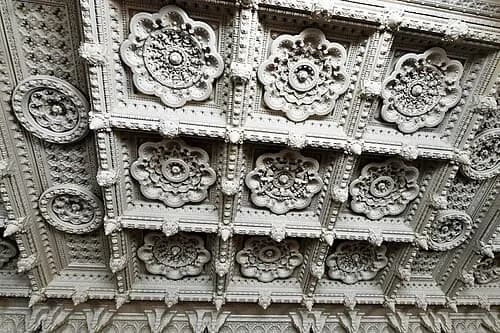
The Durbar Ceiling
Look up at the ceiling of the Durbar Room to see one of the most remarkable examples of Indian craftsmanship in Europe. The entire ceiling is covered in deeply recessed, coffered panels, each filled with intricate plaster carvings. This extraordinary work was created using 'plaster of Paris,' a technique that allowed the craftsmen to achieve a level of detail that would have been impossible in stone or wood. A team of Indian specialists worked for months to execute the designs envisioned by Bhai Ram Singh. The patterns are a blend of traditional Indian geometric motifs and delicate floral elements, creating a sense of exotic richness and infinite complexity. This ceiling was intended to do more than just decorate the room; it was designed to leave guests in awe of the cultural sophistication and wealth of India. Every flower and line was carefully hand-finished, ensuring that even from far below, the textures and shadows create a dynamic visual effect. It remains a powerful symbol of the Queen's personal fascination with Indian culture and her desire to showcase the artistry of her subjects within her own private residence.
The Durbar Corridor and Indian Portraits
Explores Victoria's fascination with India through portraits of her Indian subjects and the Munshi.

Portrait of the Munshi
In 1887, Abdul Karim arrived at Osborne House to serve as a waiter during the Golden Jubilee. However, he quickly transitioned from servant to a central figure in the Queen’s later life. Known as 'The Munshi,' he became Victoria's personal teacher, instructing her in the Hindustani language. This portrait captures him in a dignified pose, wearing a fine white and gold turban and sporting a dark beard while looking down at a book, reflecting his intellectual role. His presence was exceptionally rare for the time, as the Queen treated him with a level of intimacy that shocked her court. Members of the royal household and politicians were scandalized by his influence, often attempting to undermine him through formal complaints. Victoria remained unmoved, fiercely defending Karim and according him many privileges, including personal quarters and the right to bring his family to England. Through him, she maintained a personal connection to her role as Empress of India, a title she held with pride. This relationship survived for over a decade, ending only with the Queen’s death in 1901. Karim’s personal quarters were located near the royal suite, a sign of his unique status.
The Swiss Cottage Exterior
The unique educational center where the royal children learned practical life skills.
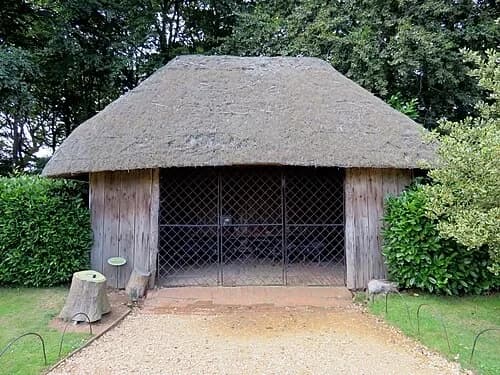
The Children's Tool Shed
Surrounding this small, thatched-roof tool shed are the individual garden plots that once belonged to the nine children of Victoria and Albert. Each child was assigned their own piece of land and was expected to cultivate it themselves as part of a larger lesson in the value of manual labor. The shed itself is a simple wooden structure with a thick thatch, featuring a wire mesh door that allows you to peek inside at the equipment kept there. The children used scaled-down, miniature tools—shovels, rakes, and hoes—to grow a variety of vegetables and flowers. However, the lesson didn't end with the harvest. In a unique exercise in economics, Prince Albert acted as their customer, purchasing the produce at current market rates. This taught them to understand the relationship between effort and reward, as well as the basic principles of commerce. They had to keep accounts and manage the money they earned, giving them a rare perspective on the lives of their subjects who worked the land. The shed stored their personal equipment, each item marked to show its owner. Each child’s plot was numbered, corresponding to their birth order.
Victoria Fort and Albert Barracks
The miniature military installation where the royal sons learned about defense and engineering.
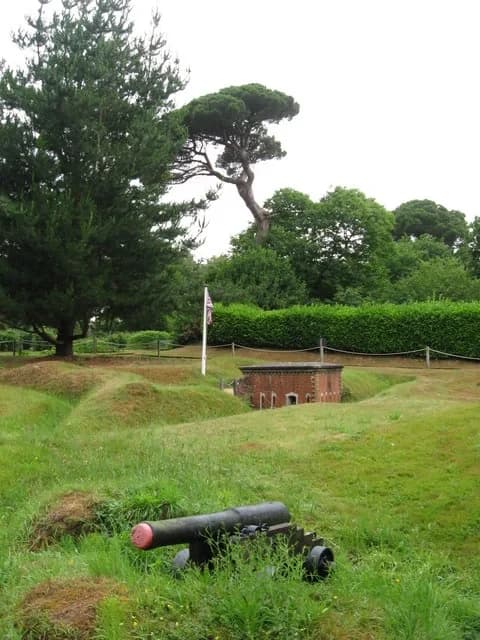
The Albert Barracks
Education at Osborne extended beyond domestic and agricultural skills into the realm of national defense. The royal sons were expected to eventually take on leadership roles in the British military, and the Albert Barracks provided their early training. This area includes a miniature brick fort and functional defensive features. In the grassy landscape, you can see a small cannon mounted on a carriage, which the princes used to practice artillery drills. Under the guidance of instructors, they would dig miniature trenches, construct earthwork defenses, and learn the strategic principles of fortification. This wasn't merely a game; it reflected the serious military responsibilities that came with their titles. Prince Albert took a keen interest in these exercises, often observing the boys as they worked through tactical problems. The site highlights the duality of their upbringing: while the Swiss Cottage taught them the humility of manual labor, the barracks prepared them for the command they would one day exercise. It stands as a fascinating glimpse into the purposeful childhood designed to mold the future defenders of the British Empire. The brickwork of the miniature fort remains largely intact near the woodland edge.
Want to hear the rest?
Download the Stanza app to unlock all 25 artworks and the visual scanner feature.
Frequently Asked Questions
How long does the Osborne House audio tour take?
The Osborne House audio guide includes 25 narrated stops. Most visitors spend 45 minutes to 1.5 hours exploring the complete tour, though you can listen at your own pace and skip or revisit any stop.
Is the Osborne House audio guide available in my language?
Stanza supports 15 languages: English, Spanish, French, German, Italian, Portuguese, Russian, Japanese, Chinese, Korean, Arabic, Hindi, Polish, Dutch, Hebrew. Check the guide in the app to confirm the languages currently available for this tour.
Can I use the audio guide offline at Osborne House?
Yes! Download the complete Osborne House tour — including all audio, maps, and images — before your visit. The Stanza app works completely offline, so you don't need WiFi or mobile data at the venue.
How much does the Osborne House audio guide cost?
The Stanza app is free to download. Free and paid audio guides are available; current prices are shown in the app.
How do I use the Stanza audio guide at Osborne House?
Download the free Stanza app, search for "Osborne House", and download the tour. When you arrive at the venue, the app uses GPS to detect your location and automatically plays the relevant narration as you move between points of interest — completely hands-free.
What makes the Stanza audio guide different from other Osborne House tours?
Stanza offers GPS-triggered narration that plays automatically as you walk through Osborne House — no need to manually select stops. The tour is available in 15 languages, works fully offline, and includes 25 expertly narrated stops with images and historical context.
What other audio guides are available near Osborne House?
Stanza offers multiple audio guides in East Cowes, United Kingdom and nearby areas. After downloading the app, browse the map to discover all available tours near Osborne House. Each guide can be downloaded for offline use.