Languages
15Windsor Castle Audio Guide
Windsor Castle is a landmark in Windsor, United Kingdom. Explore it with Stanza's GPS-triggered offline audio guide — available in 15 languages.
Quick Facts
28
Stops
15
Languages
100%
Offline
📍 Windsor, United Kingdom · 51.4838°N, -0.6048°E
About Windsor Castle
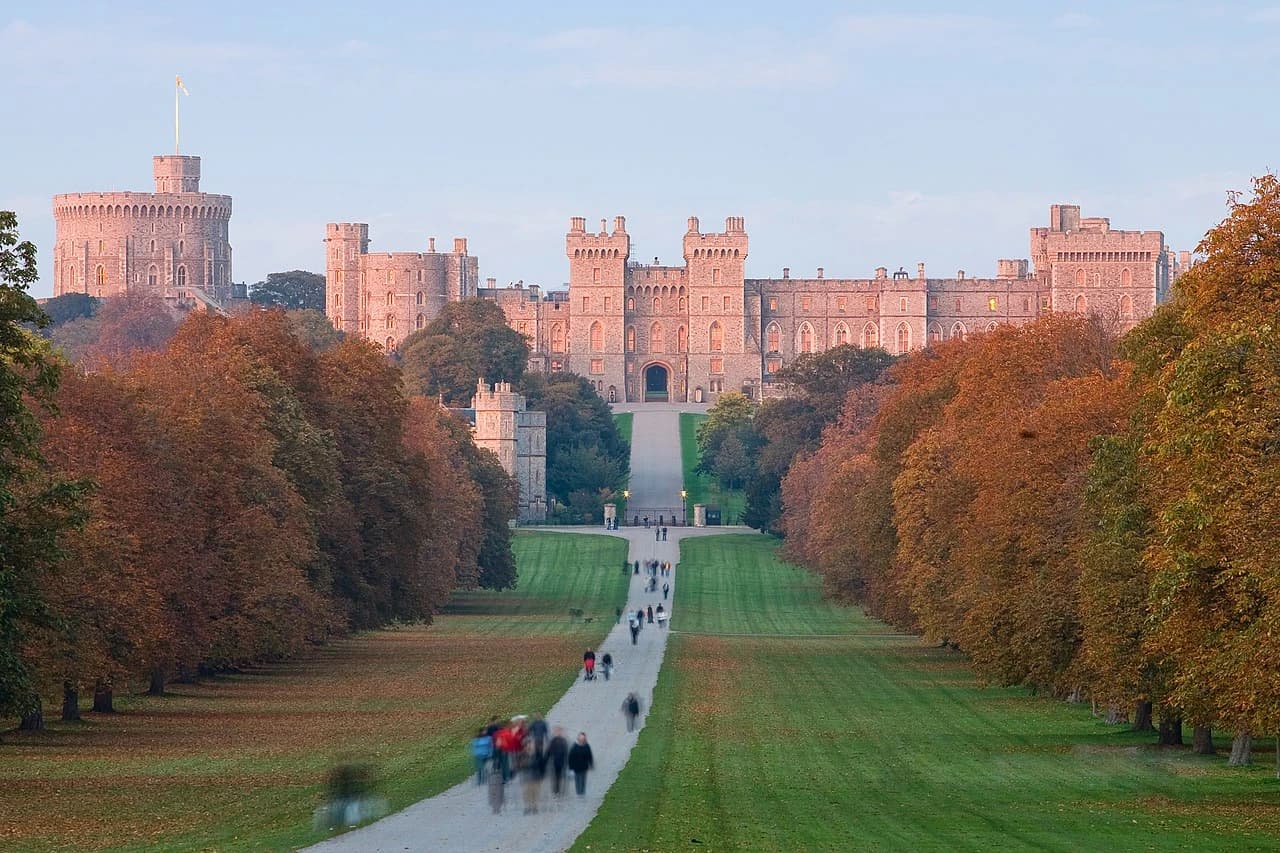
Windsor Castle is a royal residence in the English county of Berkshire. It is the longest-occupied palace in Europe and a principal residence of the British monarch.
This self-guided audio tour features 28 narrated stops organized across 8 sections. As a castle, Windsor Castle offers a unique cultural experience in the heart of Windsor, United Kingdom.
The Stanza audio guide is available in 15 languages and works entirely offline — download the complete tour including audio narration, maps, and images before your visit. As you walk through Windsor Castle, GPS-triggered narration plays automatically at each point of interest.
Last updated:
What you will hear
The Long Walk and Iconic Approach
Starting at the famous tree-lined avenue that provides the most dramatic view of the castle from the Great Park.
The Copper Horse
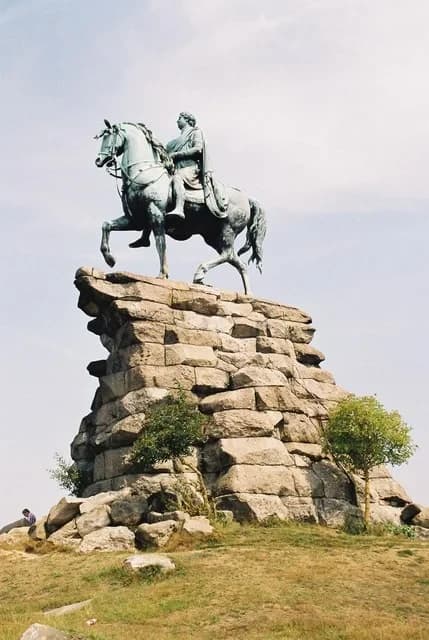
Elevated against the sky on a rough-hewn, craggy stone base, this monumental statue is known as the Copper Horse. It depicts King George III, a monarch who reigned during a period of significant expansion and change for Britain. Notably, the king is shown in the style of a Roman emperor, draped in classical attire and riding his horse without the use of stirrups. This artistic choice was intentional, designed to create a visual and symbolic connection between the British monarchy and the perceived authority and permanence of the ancient Roman Empire. The choice of a rugged, unpolished base adds to the statue's imposing presence, making the bronze figure seem to emerge naturally from the landscape of the Great Park. Positioned at the end of the Long Walk, the statue serves as a focal point that gazes back toward the castle. It captures a moment in the nineteenth century when the royal family sought to reinforce their historical legitimacy through classical imagery. The scale of the work ensures it is visible from great distances, asserting a royal presence over the thousands of acres of parkland that surround the castle walls.
Henry VIII Gateway
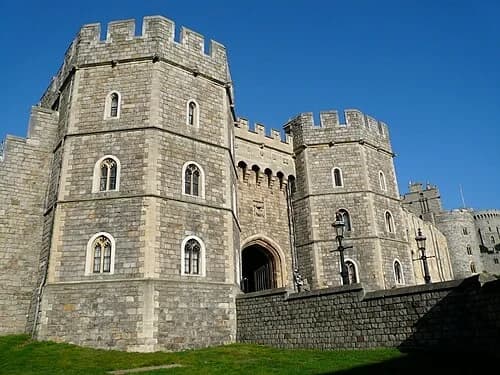
The main visitor entrance to the Lower Ward, built in the early 16th century.
Henry VIII Gateway
The origins of Windsor Castle trace back to the 1070s, when William the Conqueror commissioned a ring of fortresses around London. This specific entrance, known as the Henry VIII Gateway, was constructed much later, in the early sixteenth century. Its weathered stone and defensive battlements are characteristic of Tudor architecture, blending military necessity with royal prestige. Despite its medieval appearance, this gateway is part of a continuous phased project. The castle we see today is the result of over nine centuries of constant building, destruction, and renovation. Every monarch who resided here left their mark, resulting in a complex architectural puzzle that spans nearly a millennium of English history. The gatehouse features the traditional crenelations at the top, which provided cover for archers and defenders in centuries past. As you look at the heavy masonry, consider how this site evolved from a strategic timber fort into the grand stone complex that stands today. While the gate serves as a physical barrier, it also represents a timeline of architectural styles, where medieval foundations support the grander, more ornamental additions of the Renaissance and beyond.
St George's Chapel
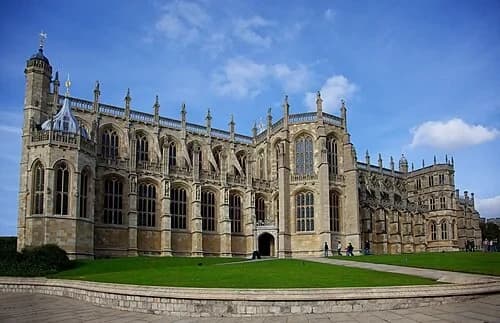
A masterpiece of English Perpendicular Gothic architecture and the spiritual home of the Order of the Garter.
St George's Chapel
1475
St George's Chapel is one of the most significant religious and ceremonial spaces in England. Completed in the early sixteenth century, it is a definitive example of the Perpendicular Gothic style, characterized by its emphasis on verticality and light. The exterior is defined by slender vertical lines, expansive windows, and delicate flying buttresses that extend from the walls to support the high roof. These features give the massive stone structure a surprisingly light, almost skeletal appearance. Beyond its architectural beauty, the chapel is the spiritual home of the Order of the Garter. Founded in 1348 by Edward III, this is the oldest order of chivalry in Britain, and its traditions are still observed here today. The chapel is a place of deep historical resonance, housing the remains of many notable figures from the nation's past. Its design reflects the wealth and power of the monarchs who patronized its construction, creating a space intended to inspire awe through its scale and intricate detail. The surrounding stone carvings and heraldic symbols further emphasize its role as a sacred monument dedicated to the intersection of faith, monarchy, and the ancient traditions of knighthood.
The Quire
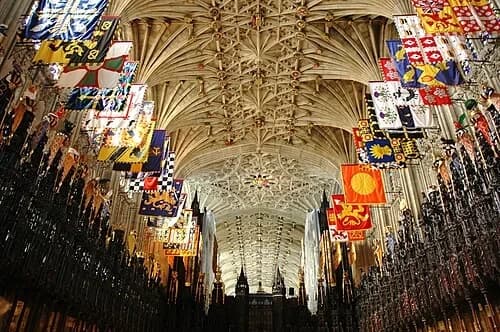
Inside the chapel, the Quire represents the pinnacle of ceremonial grandeur. Above the rows of dark, expertly carved wooden stalls, a vibrant display of heraldic banners hangs in the air. Each banner belongs to a current Knight or Lady of the Garter, representing the noble families of the realm. Below these banners, the stalls are decorated with carved wooden plates and crests that have accumulated over centuries. This space is not only a site for religious service but also a royal mausoleum of immense historical importance. Beneath the floor and within the surrounding monuments lie the remains of several iconic monarchs. Most notably, this is the final resting place of Henry VIII and his third wife, Jane Seymour. Nearby is the tomb of the executed King Charles I, whose body was brought here quietly following his trial in 1649. The atmosphere in the Quire is one of solemnity and tradition, where the visual weight of the banners and the history of the tombs create a powerful sense of continuity. The craftsmanship of the woodwork and the historical significance of those buried here make it one of the most historically dense spaces in the entire castle complex.
Military Knights' Lodgings
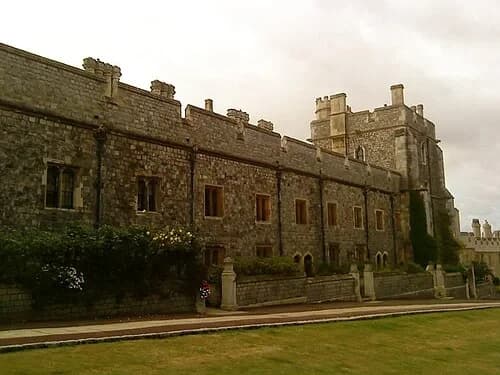
A row of 16th-century houses where the veterans of the Order of the Garter reside.
Military Knights' Lodgings
Tucked away in the Lower Ward is a uniform row of stone houses that dates back to the mid-sixteenth century. These are the lodgings of the Military Knights of Windsor, a small group of retired army officers who live within the castle walls. Originally known as the Poor Knights, this institution was established by King Edward III to provide a home for veterans who had fallen on hard times after serving the Crown. In exchange for their housing, the knights were tasked with praying for the Sovereign and the Order of the Garter. Today, their role is primarily ceremonial, as they represent the military presence within the castle during important state occasions. The quiet, residential character of this street offers a sharp contrast to the grand scale of the nearby chapel and the imposing defensive towers. Each house is a modest yet well-preserved example of Tudor-era architecture, contributing to the sense of a small, self-contained community living within the larger fortress. The presence of the Military Knights ensures that the link between the monarchy and the armed forces remains visible in the daily life of the castle, upholding a tradition of royal service that has lasted for centuries.
The Norman Gate
The strategic gatehouse leading from the Lower Ward to the Middle Ward.
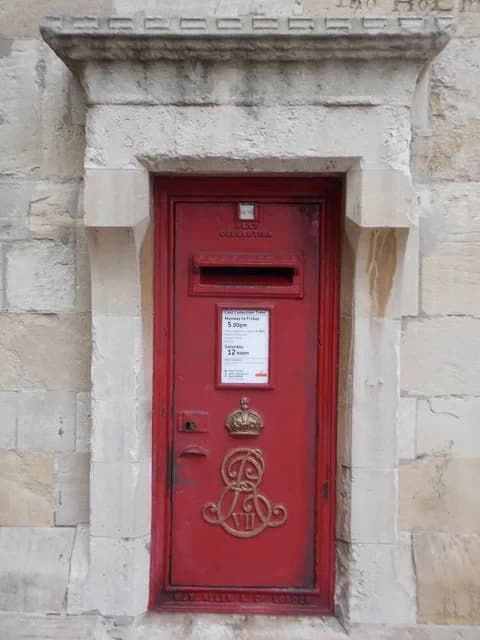
Edward VII Postbox
This traditional red postbox, embedded in the ancient stone, is more than a convenience for residents; it is a piece of historical evidence. Look for the 'ER VII' cypher on the front, which indicates it was installed during the reign of King Edward VII in the early 1900s. This artifact provides a perfect opportunity to discuss a major turning point in the history of the British monarchy. During World War I, anti-German sentiment was high across Britain. At the time, the royal family's dynastic name was Saxe-Coburg and Gotha, reflecting their German ancestry. In 1917, King George V made the strategic decision to abandon the German name and adopt the much more English-sounding House of Windsor, taken directly from this castle. This was a masterstroke of public relations, distancing the crown from the enemy while rooting the dynasty in a hallmark of national strength and longevity. Since then, the castle and the family have shared the same name. This postbox remains a functioning part of the castle’s infrastructure, used daily by the people who live and work within these walls, standing as a meaningful link between the Victorian era and the modern royal family.
The Round Tower
The iconic heart of the castle, built on William the Conqueror's original 11th-century motte.
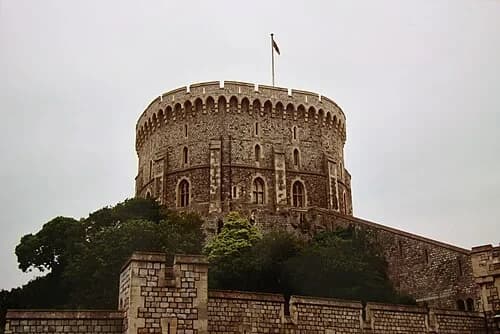
The Medieval Keep
While the foundations of the Round Tower are ancient, much of what we see today is the result of nineteenth-century romanticism. During the reign of George IV, the architect Jeffry Wyatville was tasked with modernizing the castle. One of his most dramatic changes was to add thirty feet of height to the top of the Round Tower. This addition was purely for visual effect; it was not required for defense or extra space, but rather to make the building look more like the idealized version of a medieval castle. To complete the look, Wyatville added the protruding galleries at the top, known as machicolations. Historically, these were used to drop stones or boiling liquids on attackers, but here they serve as an architectural flourish. This renovation transformed the squat, practical keep into the soaring landmark that dominates the view today. It reflects a period when the British monarchy wanted to emphasize its deep historical roots through architecture that felt ancient, even if it was relatively new. This blend of authentic medieval masonry and nineteenth-century Gothic Revival additions is what gives Windsor its unique and dramatic character. The tower now houses the Royal Archives, preserving the very history it celebrates.
The Moat Garden
A lush, terraced garden created in the dry moat surrounding the Round Tower.
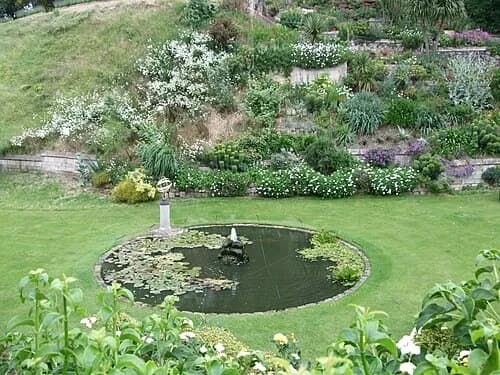
The Moat Garden
Tucked away at the base of the Round Tower is a green sanctuary that serves a very different purpose today than it did in the castle's early years. This area was originally a dry moat, a final line of defense meant to deter attackers from scaling the central motte. However, in the seventeenth century, the defensive necessity faded, and the space was converted into a private tiered garden. The towering stone walls of the keep create a unique microclimate here, protecting a wide variety of plants from the harsh winds and trapping warmth within the sunken hollow. You can see how the landscaping follows the natural curve of the hillside, leading down to a modest central fountain that provides a gentle sound to this quiet corner. Many of the residents within the castle walls, including the Governor and local clergy, have tended these patches over the centuries. It represents a softer side of the fortress, where the same walls that once rained down arrows now nurture delicate floral displays.
Upper Ward Quadrangle
The grand courtyard surrounded by the State Apartments and Royal Private Apartments.
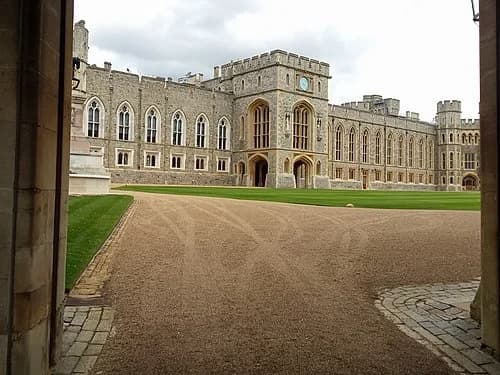
The Upper Ward Quadrangle
The Quadrangle serves as the formal heart of Windsor Castle, but it hasn't always looked this organized. In the Middle Ages, this area was a chaotic Upper Ward, filled with irregular timber-framed buildings and bustling with the noise of a military garrison. That all changed during the seventeenth and nineteenth centuries when the space was cleared and modernized to reflect the changing tastes of the monarchy. The surrounding wings now showcase a blend of baroque and neoclassical styles, with a focus on rhythmic symmetry that was entirely absent in the earlier fortress. Looking around the three sides of the courtyard, the uniform windows and grand arched entrances demonstrate how architect Jeffry Wyatville unified the disparate historical elements into a cohesive whole. This open space is frequently used for ceremonial purposes today, including the mounting of the guard. The transition from a cramped, defensive ward to this airy, grand plaza marks the point where Windsor truly ceased to be just a castle and became a world-class palace.
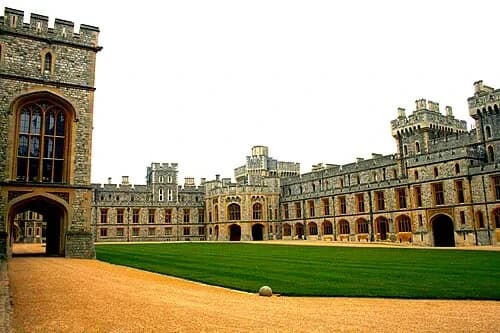
The Private Apartments
The series of tall, formal windows lining the eastern side of the Quadrangle belongs to the Private Apartments, the working home of the British monarch. While visitors can explore the grand state rooms, this wing remains strictly off-limits to the public to maintain the privacy of the royal family. During World War II, this part of the castle played a vital role in national security. The young Princesses Elizabeth and Margaret were moved here for safety during the Blitz, and the roof above these very rooms was heavily reinforced with extra layers of concrete and steel to withstand potential air raids. Despite the danger, the family often treated life here with a sense of wartime normalcy, even as the castle's art treasures were removed to secret vaults. Today, the apartments combine historic grandeur with modern domestic life. While the exterior displays the same grey stone as the rest of the fortress, the interiors are tailored for comfort and state business.
Want to hear the rest?
Download the Stanza app to unlock all 28 stops and full GPS-guided navigation.
Frequently Asked Questions
How long does the Windsor Castle audio tour take?
The Windsor Castle audio guide includes 28 narrated stops. Most visitors spend 45 minutes to 1.5 hours exploring the complete tour, though you can listen at your own pace and skip or revisit any stop.
Is the Windsor Castle audio guide available in my language?
Stanza supports 15 languages: English, Spanish, French, German, Italian, Portuguese, Russian, Japanese, Chinese, Korean, Arabic, Hindi, Polish, Dutch, Hebrew. Check the guide in the app to confirm the languages currently available for this tour.
Can I use the audio guide offline at Windsor Castle?
Yes! Download the complete Windsor Castle tour — including all audio, maps, and images — before your visit. The Stanza app works completely offline, so you don't need WiFi or mobile data at the venue.
How much does the Windsor Castle audio guide cost?
The Stanza app is free to download. The current listed price for the Windsor Castle audio guide is $3.99; app-store region and currency may affect the final price.
How do I use the Stanza audio guide at Windsor Castle?
Download the free Stanza app, search for "Windsor Castle", and download the tour. When you arrive at the venue, the app uses GPS to detect your location and automatically plays the relevant narration as you move between points of interest — completely hands-free.
What makes the Stanza audio guide different from other Windsor Castle tours?
Stanza offers GPS-triggered narration that plays automatically as you walk through Windsor Castle — no need to manually select stops. The tour is available in 15 languages, works fully offline, and includes 28 expertly narrated stops with images and historical context.
What other audio guides are available near Windsor Castle?
Stanza offers multiple audio guides in Windsor, United Kingdom and nearby areas. After downloading the app, browse the map to discover all available tours near Windsor Castle. Each guide can be downloaded for offline use.