Languages
15Empire State Building Audio Guide
Empire State Building is a landmark in New York, United States. Explore it with Stanza's GPS-triggered offline audio guide — available in 15 languages.
Quick Facts
22
Stops
15
Languages
100%
Offline
📍 New York, United States · 40.7483°N, -73.9856°E
About Empire State Building
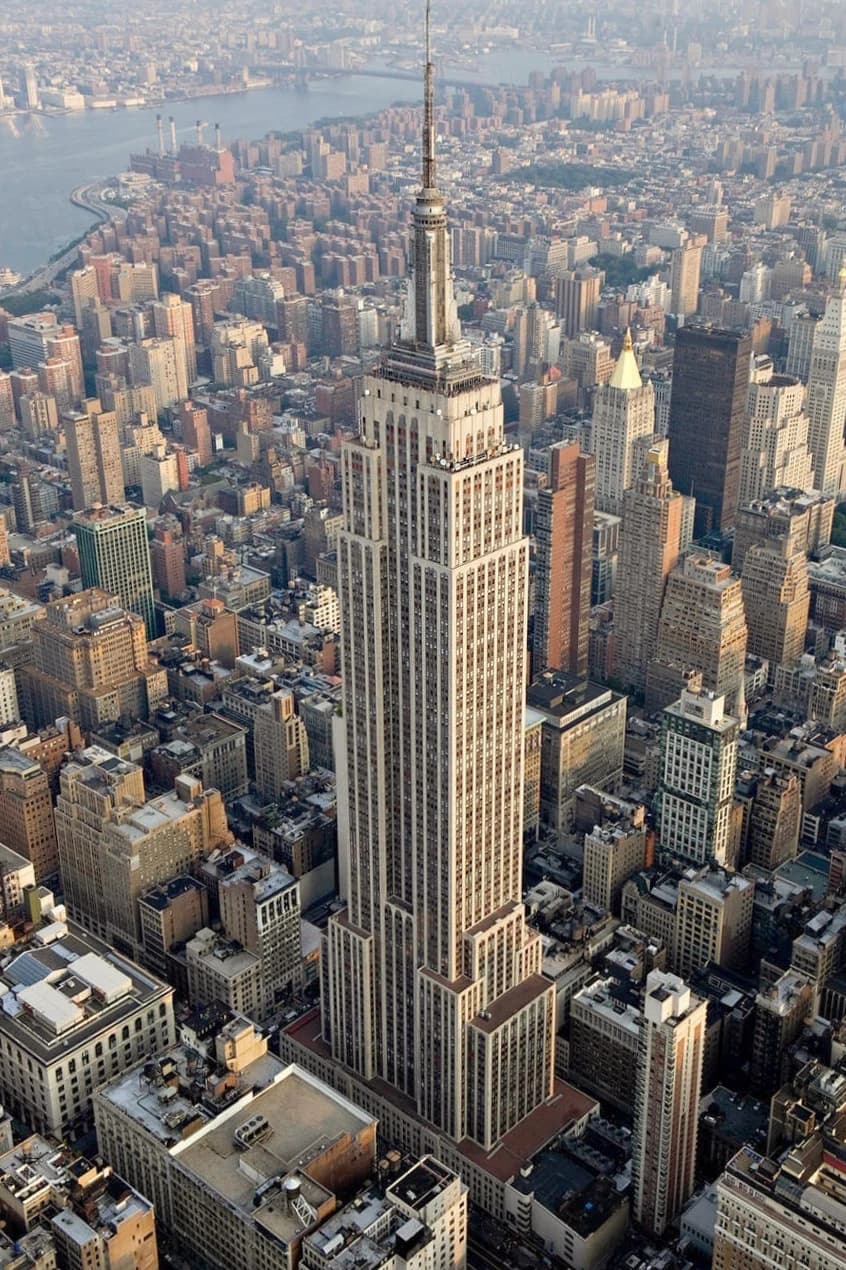
The Empire State Building is an iconic 102-story Art Deco skyscraper in Midtown Manhattan, New York City. It is a major tourist attraction, featuring observation decks with panoramic views of the city.
Empire State Building is also known as 350 5th Avenue, 350 Fifth Avenue.
This self-guided audio tour features 22 narrated stops organized across 8 sections. As a tower, Empire State Building offers a unique cultural experience in the heart of New York, United States.
The Stanza audio guide is available in 15 languages and works entirely offline — download the complete tour including audio narration, maps, and images before your visit. As you walk through Empire State Building, GPS-triggered narration plays automatically at each point of interest.
Last updated:
What you will hear
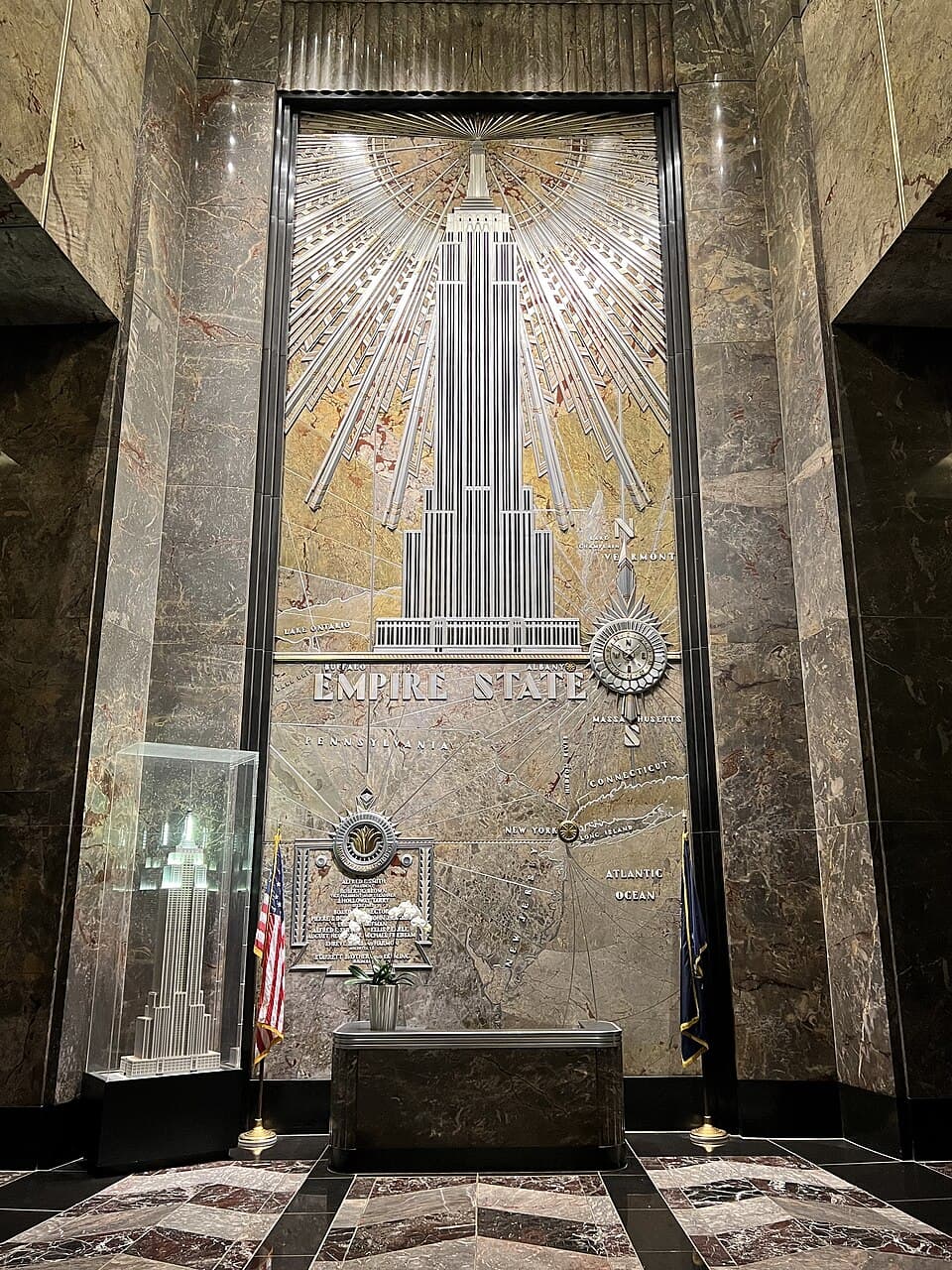
The Art Deco Lobby
Covering the landmarked lobby mural and the geometric ornamentation that defines the building's 1930s aesthetic.
The Golden Relief
As you step inside, the landmarked lobby reveals one of its most stunning features: the grand mural of the building itself. This aluminum relief shows the tower superimposed over a map of New York and its surrounding states, highlighting its dominant presence in the region. The ceiling and walls shimmer with a combination of gold and aluminum leaf, creating a warm, celestial glow that reflects the building's prestige. Notice the vibrant 'rays' emanating from the spire of the building in the relief. These stylized lines represent the sun, a powerful symbol intended to position the Empire State Building as the center of the world—a 'limestone giant' from which all energy and progress radiate. This mural isn't just decoration; it is a statement of intent from the 1930s, celebrating the marriage of art, industry, and geography. The use of modern metals alongside traditional gold leaf exemplifies the Art Deco movement's desire to honor the past while racing toward a sleek, technological future. It provides a sense of arrival and grandeur, welcoming visitors into the heart of a vertical city that was designed to be the ultimate address in Manhattan.
The Historic Mail Chutes
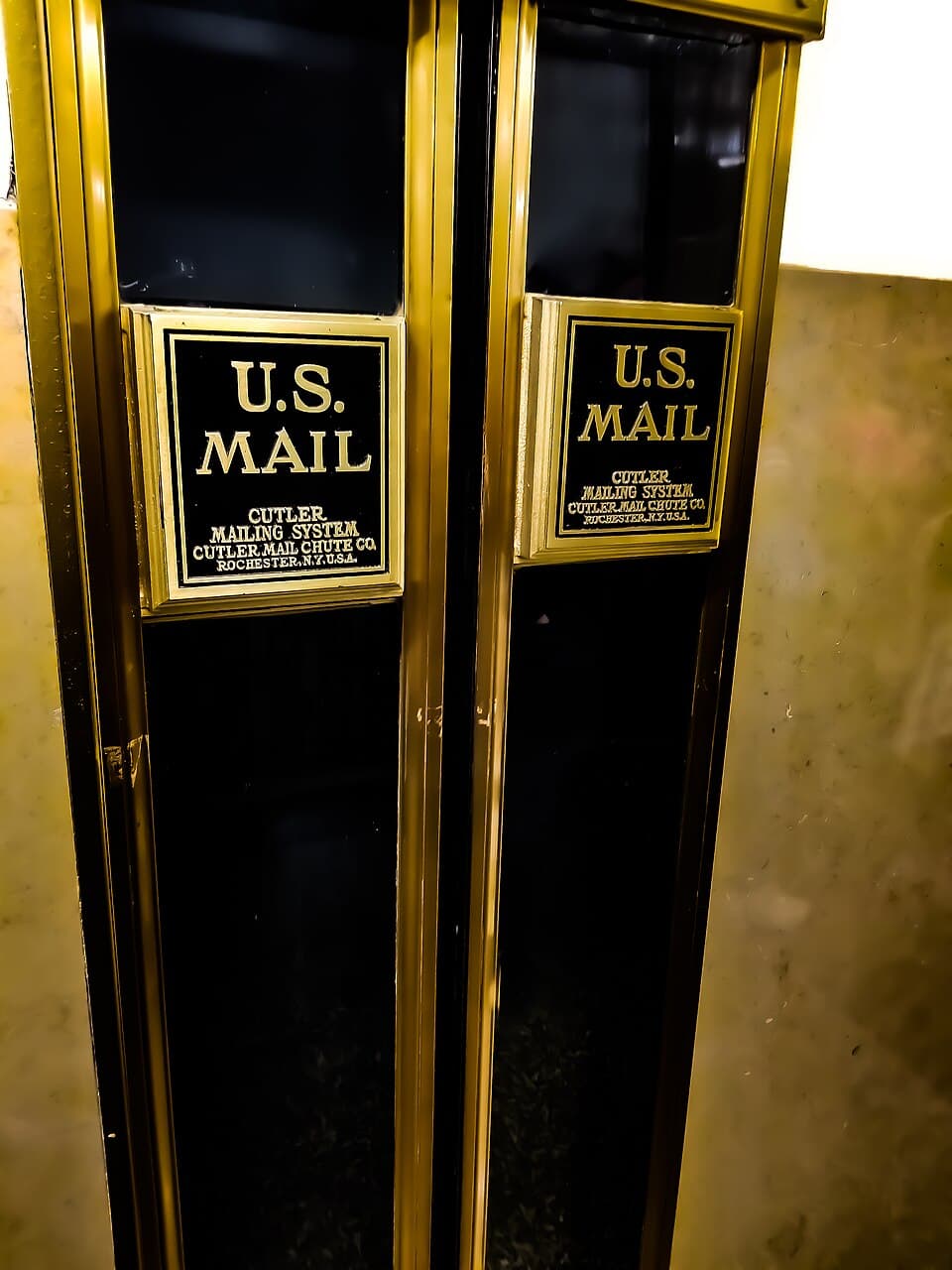
In the 1930s, staying connected meant moving paper, and the Empire State Building was equipped with the height of technology: the Cutler Mail Chute. These original polished brass chutes run through the core of the building, allowing tenants on the upper floors to drop their letters directly into a central mailbox at the ground level. It was a cutting-edge efficiency for a structure designed to house upwards of 20,000 tenants, effectively functioning as a vertical city with its own internal postal system. Notice the elegant, serifed 'U.S. Mail' lettering and the rich, golden hue of the brass. This wasn't merely a functional tool; it was an integral part of the building's aesthetic. Even something as mundane as mailing a letter was treated with a sense of importance and style. While digital communication has replaced the need for such systems today, these chutes remain as a tangible link to the building's bustling past. They represent a time when the speed of business was limited by the speed of gravity, yet the ambition of the people inside knew no such bounds.
Museum: The Site and the Sky Boys
Exploring the pre-history of the site (Waldorf-Astoria) and the legendary Mohawk ironworkers who built the tower in 410 days.
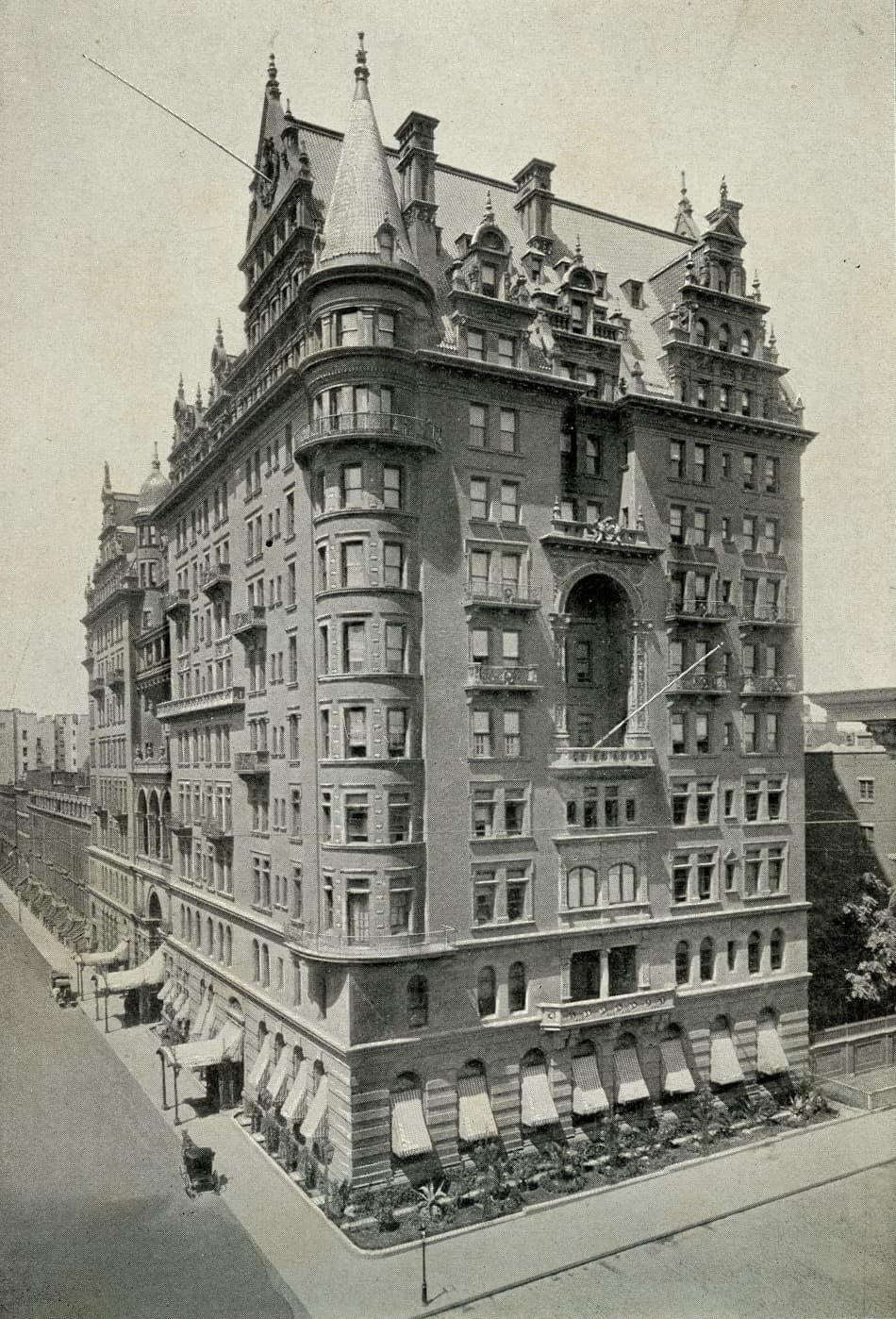
Site of the Waldorf-Astoria
Before the limestone giant rose above 34th Street, this site was occupied by the original Waldorf-Astoria Hotel. The image here shows that grand Victorian structure, a palace of old-world luxury that served as the social heart of New York for decades. However, by the late 1920s, the city's appetite for height and modernity was growing. In 1929, the hotel was cleared to make room for the construction of the Empire State Building. This transition represents a pivotal moment in New York’s history—the shift from the ornate, horizontal elegance of the 19th century to the sleek, vertical ambition of the industrial 20th century. The contrast is striking: where there were once ballrooms and heavy masonry, there would soon be steel rivets and high-speed elevators. Clearing such a massive, prestigious site was a bold statement that the future had arrived. The site itself has always been prime real estate, but its transformation from a luxury hotel into the world’s tallest office building solidified its place as the definitive center of Manhattan’s commercial and cultural life.
Museum: A Cinematic Icon
Highlighting the building's role in global pop culture, from King Kong to modern cinema.
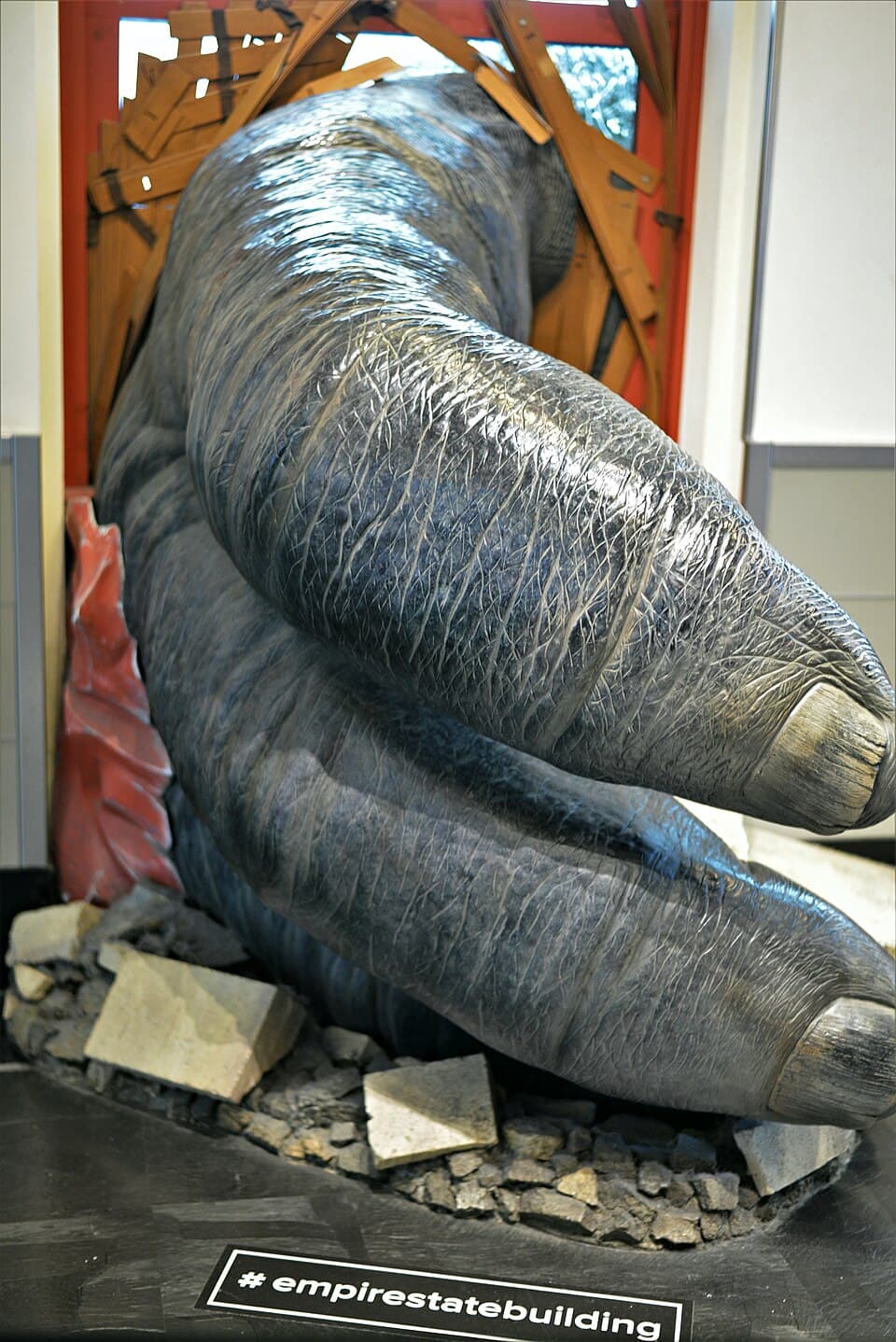
A Giant's Grip
Few cinematic images are as enduring as King Kong clutching the spire of this very building. This interactive exhibit brings that legendary moment to life, featuring massive fingers that appear to break through the walls of the tower. When the film 'King Kong' premiered in 1933—just two years after the building opened—it instantly cemented the Empire State Building’s status as a global icon. The tower wasn't just an office building anymore; it was a character in one of the most famous stories ever told. Since then, it has become a staple of pop culture, but the association with Kong remains the most potent. For the 50th anniversary in 1983, the building's owners even commissioned a giant, 84-foot inflatable King Kong to be attached to the spire, a feat that captured the world's imagination despite the challenges of high winds and technical glitches. This exhibit allows you to feel the scale of that cinematic giant and appreciate how the building has transcended its physical structure to become a living piece of Hollywood history, a place where fantasy and reality meet in the heart of New York.
80th Floor: The Observatory Experience
Focusing on the building's history, including the dramatic 1945 B-25 bomber crash and technical legacy.
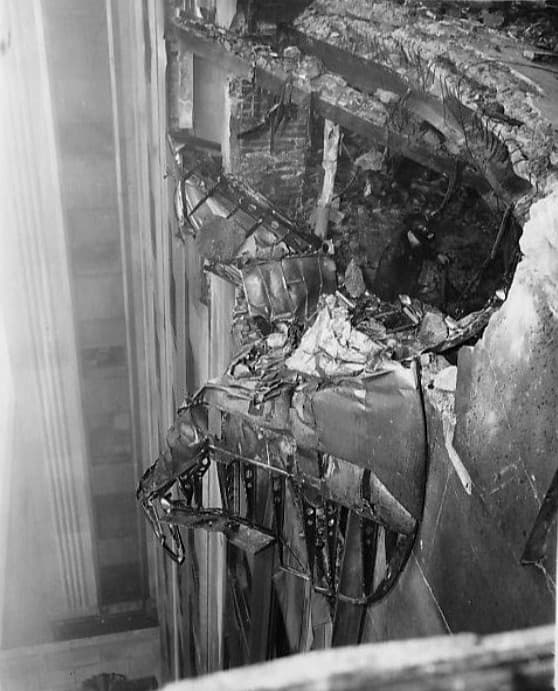
1945 Empire State Building B-25 crash
On the morning of July 28, 1945, the Empire State Building faced one of its most harrowing challenges. A B-25 Mitchell bomber, piloted by a veteran of World War II, became lost in a thick, blinding fog over Manhattan. At approximately 200 miles per hour, the plane crashed directly into the 79th floor of the building. The impact created a massive hole and sent fuel burning through the stairwells. However, the building’s structural integrity was so robustly over-engineered that it withstood the shock without failing. In a display of incredible resilience that mirrored the spirit of the city, the building was cleaned, inspected, and reopened for business just two days later. This event stands as the ultimate proof of the tower's strength. While many feared such a catastrophe would topple a skyscraper, the Empire State's massive steel frame and masonry held firm. It is a sobering but inspiring chapter in the building's history, highlighting not just the danger of the era's aviation but the unparalleled craftsmanship of the men who riveted this giant together to last for centuries.
86th Floor: The Open-Air Observatory
The main attraction: the world's most famous observation deck with its 360-degree outdoor promenade.
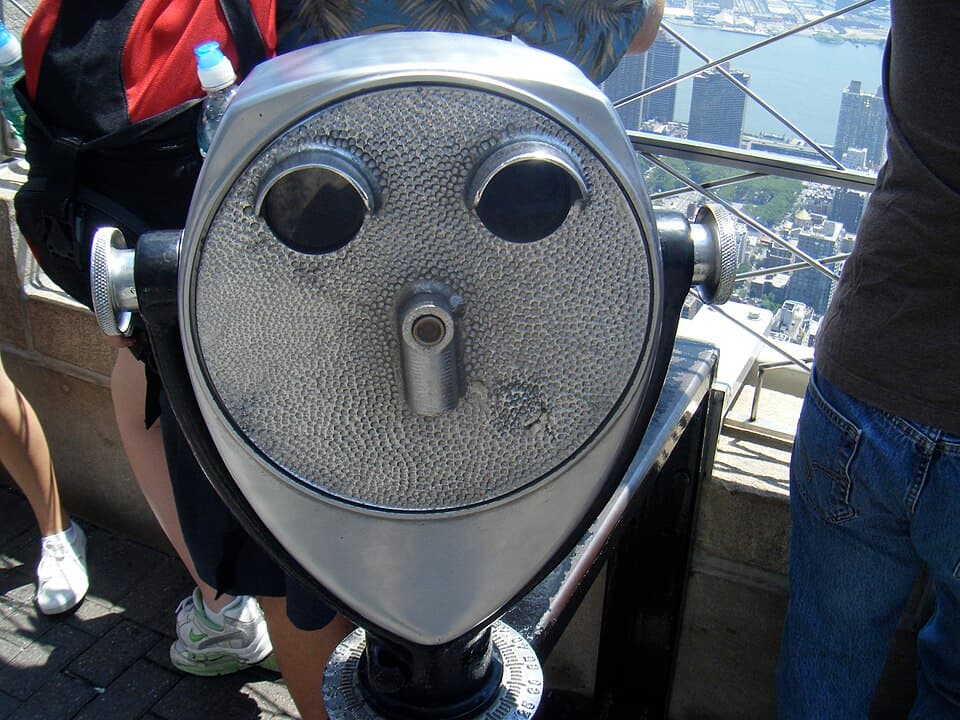
The High-Power Binoculars
These iconic, coin-operated binoculars are as much a part of the 86th-floor experience as the view itself. For decades, visitors have dropped a coin into these silver machines to bring the tiny details of the city below into sharp focus. From this height, the perspective is truly grand; on a clear day, you aren't just looking at New York. You can actually see across five different states: New York, New Jersey, Pennsylvania, Connecticut, and Massachusetts. Use these high-power lenses to spot famous landmarks, from the Statue of Liberty in the harbor to the George Washington Bridge to the north. They allow you to bridge the gap between the monumental scale of the skyline and the intimate life of the streets below. You might see a tiny yellow taxi crawling through Midtown or the intricate carvings on a neighboring skyscraper that are invisible from the sidewalk. These binoculars have witnessed millions of 'wow' moments, serving as a personal window for travelers from every corner of the globe who come here to see the world from the top of the most famous building in it.
Panoramic Views of the City
Focusing on the landmarks visible from the 86th floor, including the 'Race to the Sky' rival, the Chrysler Building.
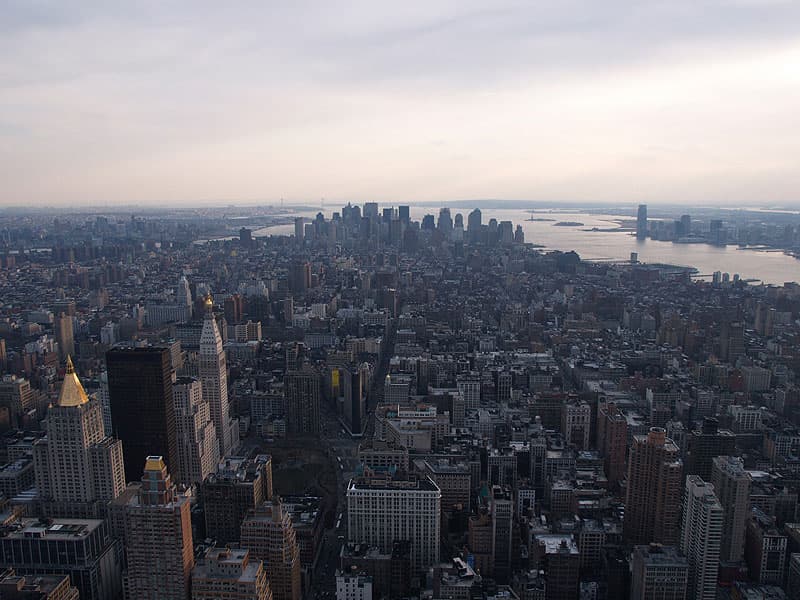
The Southern Panorama
Looking southward, the dense urban landscape of Manhattan stretches out toward the harbor. In the far distance, you can see the gleaming spire of One World Trade Center, marking the site of the Financial District. When this building opened in 1931, the view was remarkably different. Many of the skyscrapers you see today didn't exist, yet this tower has remained the steady anchor of Midtown for nearly a century. The skyline is constantly evolving, with slender glass towers rising all around, but the presence here feels permanent and solid. That feeling is backed by engineering: the entire structure weighs an estimated 365,000 tons. To support such immense weight, the building is anchored directly into the bedrock that lies deep beneath the city streets. It is this sturdy geological foundation that allowed architects to dream of such heights in the early 20th century. As you scan the horizon, imagine the sheer force of gravity being transferred through the steel frame into the earth, holding this icon steady against the wind. From this vantage point, you can truly appreciate the scale of the city's growth and the enduring legacy of the skyscraper that first mastered these heights.
The Spire and the 102nd Floor
Ascending into the iconic spire, originally intended as a mooring mast for zeppelins.
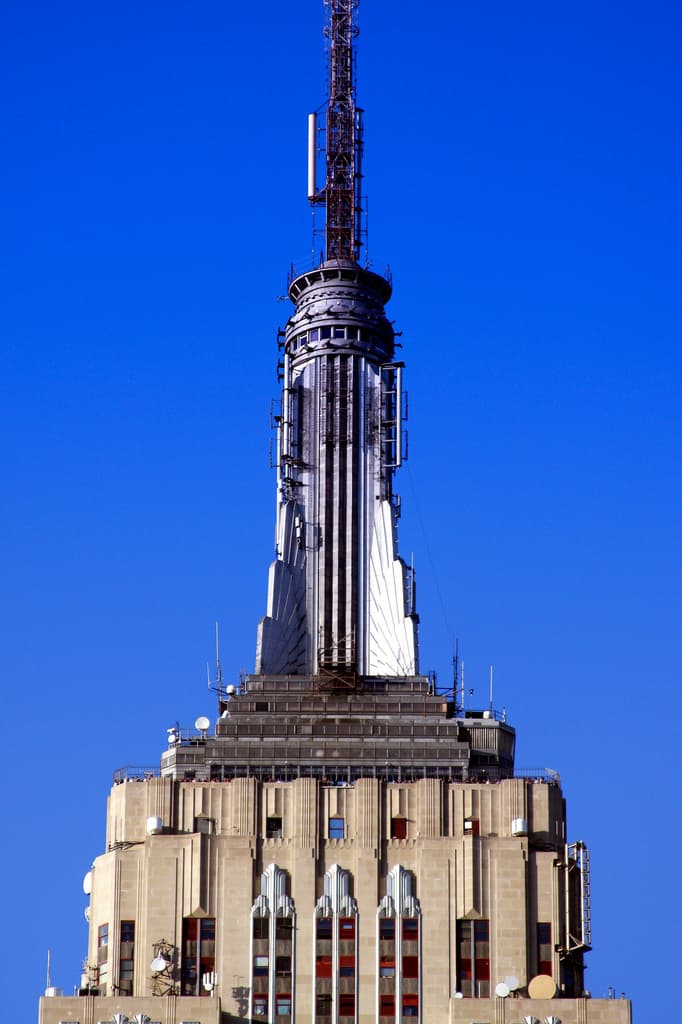
The Zeppelin Mast
Above the 86th floor, the tower narrows into a spire that was originally conceived for a very unusual purpose. In the 1930s, the dream was for trans-Atlantic airships, or zeppelins, to dock right here at the top of the building. The plan was for these giant dirigibles to pull alongside and tie up to what was then called a 'mooring mast.' Passengers were meant to disembark and check in on the 102nd floor, which was designed as a high-altitude terminal. From there, they would take an elevator down to the streets of New York in just minutes. It sounded like the future of travel, but the reality of physics intervened. The high winds and powerful updrafts common at this altitude made docking a massive, gas-filled airship nearly impossible. Attempting to hold a 700-foot-long vessel steady while tethered to a single point was extremely dangerous for both the ship and the building. After a few trials, including one where a small blimp successfully stayed moored for only a few minutes, the project was abandoned. Today, while the zeppelins are gone, the structure remains, serving as a soaring reminder of a time when the sky seemed the limit for human ingenuity.
Tower Lights and Night Sky
Learning about the world-famous LED lighting system that changes colors for holidays and events.
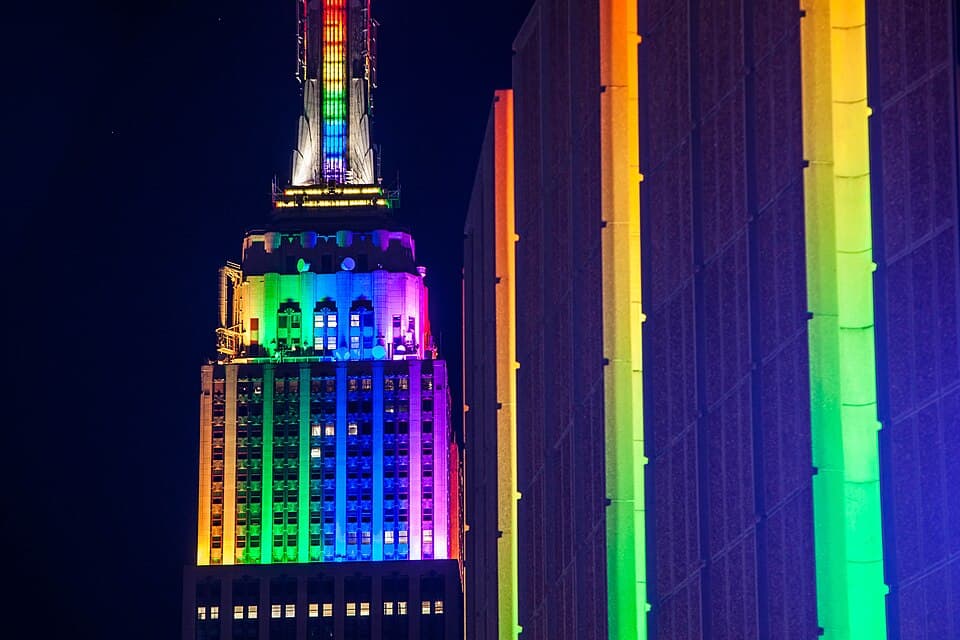
The Tower Lights
In the evening, the top of the building transforms into a beacon visible for miles. While the building has been lit since the 1960s, a major upgrade in 2012 introduced a computer-controlled LED system. This technology allows for an incredible range of sixteen million colors and the ability to change patterns almost instantaneously. This isn't just decoration; it’s a form of communication for the entire city. The colors are carefully chosen to mark various occasions. You might see red, white, and blue for national holidays, green for St. Patrick's Day, or the colors of a local sports team after a big victory. The building also lights up to show solidarity with global events or to raise awareness for important causes. On many nights, the tower even performs choreographed 'light shows' synced to music broadcast on local radio stations. This dynamic display has turned the skyscraper into more than just a landmark; it’s a living part of the New York conversation. Whether it is a soft white glow on a quiet night or a vibrant rainbow during Pride, the lights reflect the collective mood and spirit of the city's inhabitants.
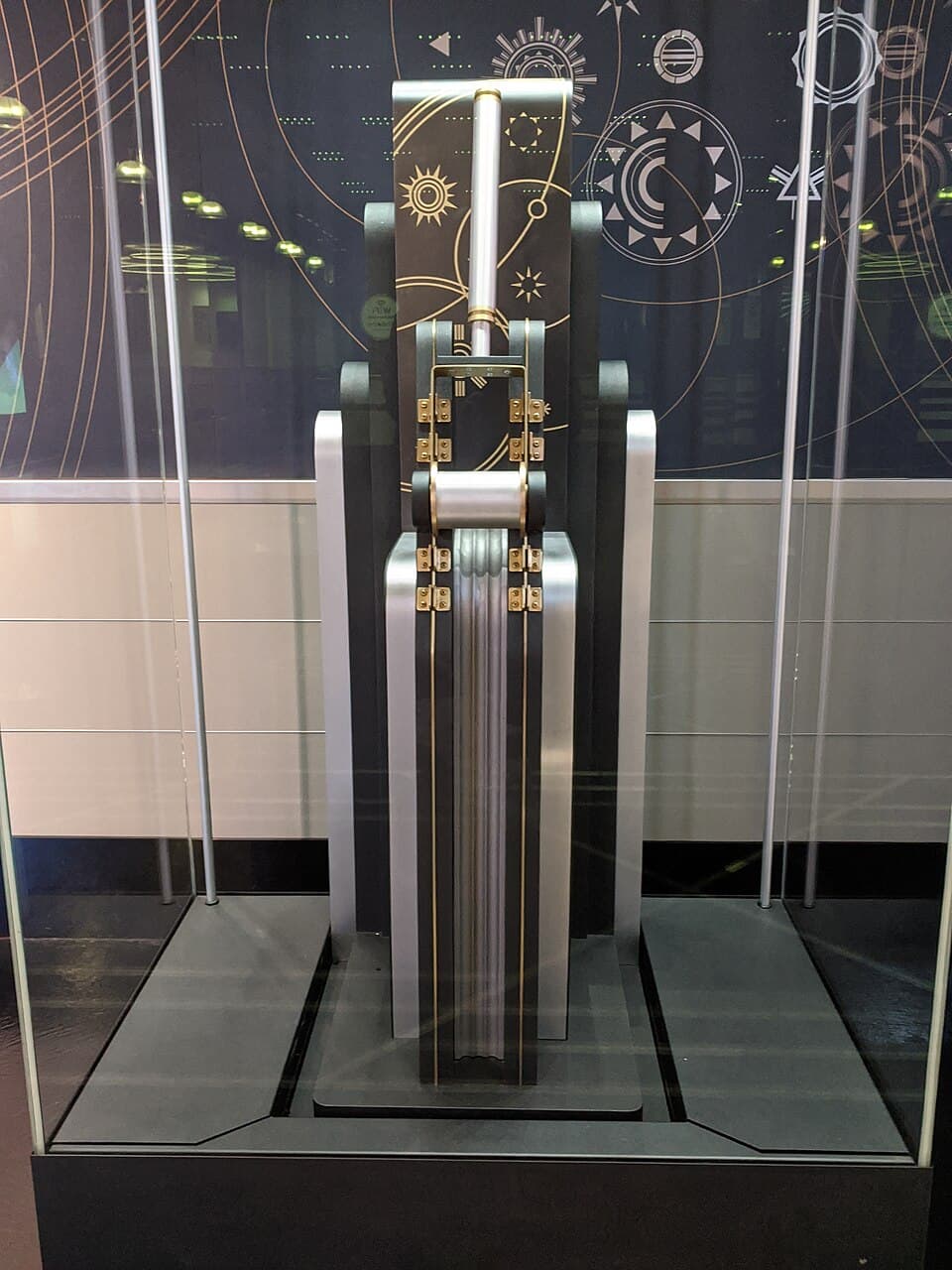
The Lighting Switch
Here you can see a ceremonial version of the switch used to activate the tower’s world-famous lights. For decades, it has been a tradition to invite celebrities, dignitaries, and community leaders to visit the building and 'flip the switch' for special lighting events. These ceremonies are often held to mark the beginning of a specific celebration or awareness campaign. Take a moment to look at the design of the handle and the base. Even in a functional prop like this, the influence of the Art Deco style is unmistakable. The clean, vertical lines and the stepped, geometric base mirror the architectural silhouette of the building itself. This consistency in design reflects the 1930s obsession with 'machine-age' aesthetics, where even industrial tools were treated with artistic care. While the actual lights are now controlled by sophisticated computer programs, this physical switch remains a powerful symbol of the human connection to the building. It represents the moment when a single person’s action can light up the night for millions of people across the metropolitan area, continuing a legacy of public engagement that spans generations.
Want to hear the rest?
Download the Stanza app to unlock all 22 stops and full GPS-guided navigation.
Frequently Asked Questions
How long does the Empire State Building audio tour take?
The Empire State Building audio guide includes 22 narrated stops. Most visitors spend 45 minutes to 1.5 hours exploring the complete tour, though you can listen at your own pace and skip or revisit any stop.
Is the Empire State Building audio guide available in my language?
Stanza supports 15 languages: English, Spanish, French, German, Italian, Portuguese, Russian, Japanese, Chinese, Korean, Arabic, Hindi, Polish, Dutch, Hebrew. Check the guide in the app to confirm the languages currently available for this tour.
Can I use the audio guide offline at Empire State Building?
Yes! Download the complete Empire State Building tour — including all audio, maps, and images — before your visit. The Stanza app works completely offline, so you don't need WiFi or mobile data at the venue.
How much does the Empire State Building audio guide cost?
The Stanza app is free to download. The current listed price for the Empire State Building audio guide is $2.99; app-store region and currency may affect the final price.
How do I use the Stanza audio guide at Empire State Building?
Download the free Stanza app, search for "Empire State Building", and download the tour. When you arrive at the venue, the app uses GPS to detect your location and automatically plays the relevant narration as you move between points of interest — completely hands-free.
What makes the Stanza audio guide different from other Empire State Building tours?
Stanza offers GPS-triggered narration that plays automatically as you walk through Empire State Building — no need to manually select stops. The tour is available in 15 languages, works fully offline, and includes 22 expertly narrated stops with images and historical context.
What other audio guides are available near Empire State Building?
Stanza offers multiple audio guides in New York, United States and nearby areas. After downloading the app, browse the map to discover all available tours near Empire State Building. Each guide can be downloaded for offline use.