Languages
15Grand Central Terminal Audio Guide
Grand Central Terminal is a landmark in New York, United States. Explore it with Stanza's GPS-triggered offline audio guide — available in 15 languages.
Quick Facts
27
Stops
15
Languages
100%
Offline
📍 New York, United States · 40.7528°N, -73.9772°E
About Grand Central Terminal
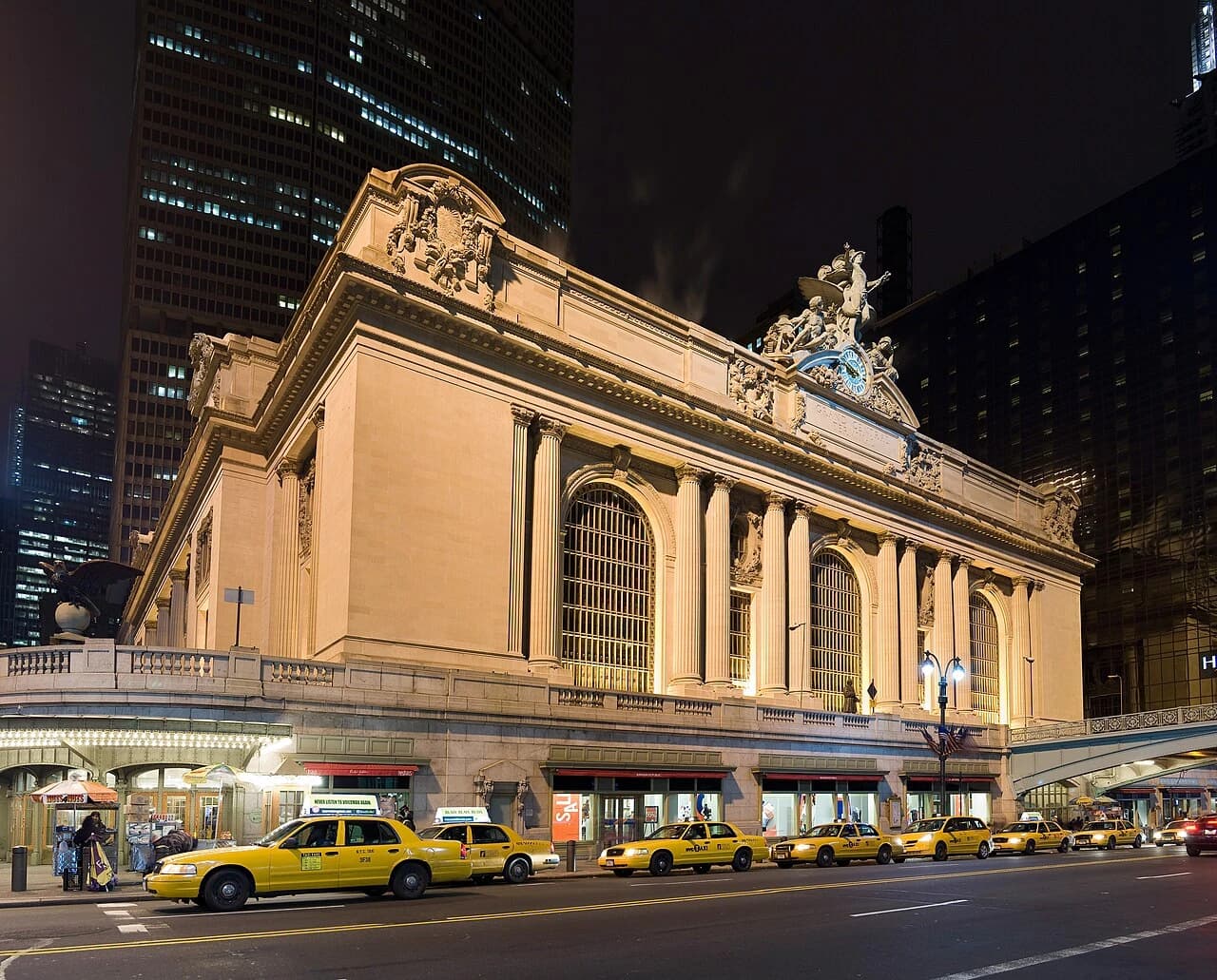
Grand Central Terminal is a historic Beaux-Arts railway terminal in New York City. It serves as a major commuter rail hub and a prominent tourist attraction.
Grand Central Terminal is also known as Grand Central Station, Grand Central, GCT.
This self-guided audio tour features 27 narrated stops organized across 9 sections. As a railway station, Grand Central Terminal offers a unique cultural experience in the heart of New York, United States.
The Stanza audio guide is available in 15 languages and works entirely offline — download the complete tour including audio narration, maps, and images before your visit. As you walk through Grand Central Terminal, GPS-triggered narration plays automatically at each point of interest.
Last updated:
What you will hear
The 42nd Street Facade and Park Avenue Viaduct
The tour begins outside to appreciate the Beaux-Arts exterior and the engineering of the viaduct. I've selected night and day shots to show the Tiffany clock and the 'Glory of Commerce' sculpture group.
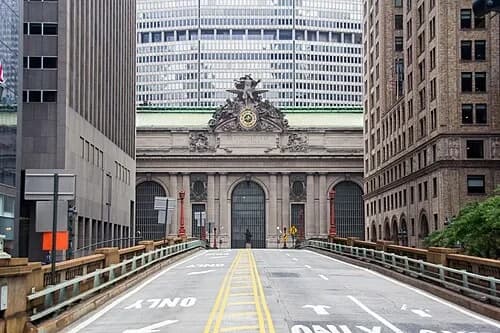
The Park Avenue Viaduct
As you observe the area surrounding the terminal, notice how the traffic of Park Avenue doesn't stop at the building’s walls but instead rises and flows around it. This is the Park Avenue Viaduct, a brilliant engineering feat that integrates the station directly into the city's street grid. Before this structure was completed, the terminal acted as a massive barrier, cutting off the flow of North-South traffic in Midtown. The solution was to build this bridge-like structure that lifts vehicles up to the second-story level, guiding them along the eastern and western sides of the building. This design allowed the architects to maintain the grand, uninterrupted facade while ensuring the city remained functional. The viaduct is supported by sturdy steel and masonry, finished to match the aesthetic of the main terminal. It effectively wraps the station in a ribbon of movement, highlighting the terminal's role as a hub of connectivity. By elevating the street, the designers also created a unique perspective for drivers, who get a close-up view of the limestone carvings and massive windows as they pass by. This seamless integration of rail, pedestrian, and vehicle traffic was revolutionary for its time and remains a vital component of Manhattan’s urban flow today.
The Main Concourse Architecture
Entering the Concourse, this stop focuses on the scale and light of the terminal. I included the famous 'rays of light' historical photo to contrast with the modern view.
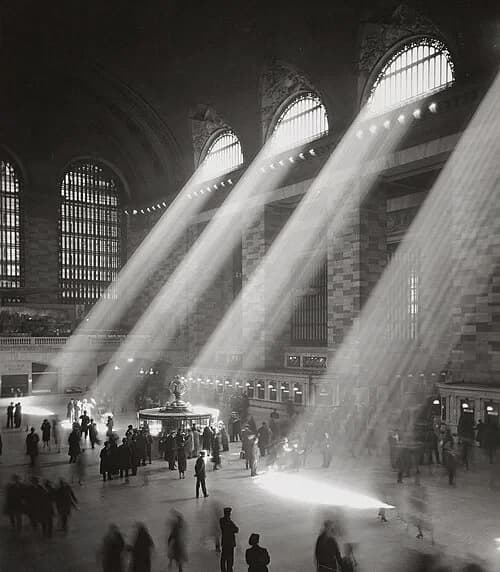
The Lost Rays of Sunlight
In many historical records of this room, you will see a striking image taken in 1929 by photographer Hal Morey. It depicts solid, cathedral-like beams of sunlight streaming through the high arched windows, cutting through the dust and steam of the concourse to hit the floor in perfect diagonal lines. For decades, this was a signature visual experience for anyone arriving in New York on a bright morning. However, if you look at those same windows today, you will notice that this dramatic effect has almost entirely disappeared. The reason lies in the evolution of the city outside. During the mid-20th century, the construction of massive skyscrapers like the MetLife Building directly adjacent to the terminal blocked the sun's natural path. The light that once flooded the room in thick rays is now diffused and indirect, shadowed by the dense concrete forest of Midtown. While the windows still provide natural illumination, the era of the 'solid' sunbeams is a memory preserved only in black-and-white photography. This change serves as a quiet reminder of how the growth of the modern city has physically altered the interior atmosphere of its historic landmarks, shifting the environment from one of open sky to one enclosed by the urban canyon.
The Celestial Ceiling
This stop highlights the Paul César Helleu masterpiece. I've included a detail of the zodiac and the 'spot' which represents the black brick of nicotine mentioned in the stories.
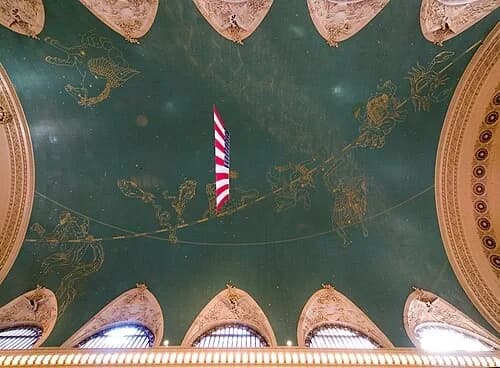
The Celestial Ceiling
The artistic centerpiece of the Main Concourse is undoubtedly the celestial ceiling. Painted on a vast, curved surface, it depicts the Mediterranean winter sky with approximately 2,500 stars, 60 of which are individually illuminated with light bulbs. The mural features gold-leaf constellations set against a background of deep Mediterranean blue. However, if you are an amateur astronomer, you might notice something strange: the constellations are actually painted backwards. Orsa Major, Orion, and the others appear in an inverted layout. When this mistake was discovered shortly after the terminal opened in 1913, the Vanderbilt family reportedly defended the error by claiming the ceiling was intended to be seen from a 'God's eye view'—looking down from the heavens rather than looking up from the earth. More practical historians suggest a simpler explanation: the painters likely held the astronomical charts upside down or backwards while working on the scaffolding. Despite this inversion, the ceiling remains one of the most beloved features of the building. It creates an artificial sky that provides a sense of openness and wonder, contrasting with the subterranean reality of the train tracks below. The mural has been restored multiple times, most significantly in the late 1990s, to preserve the brilliance of the gold leaf and the signature blue hue.
The Information Booth Clock
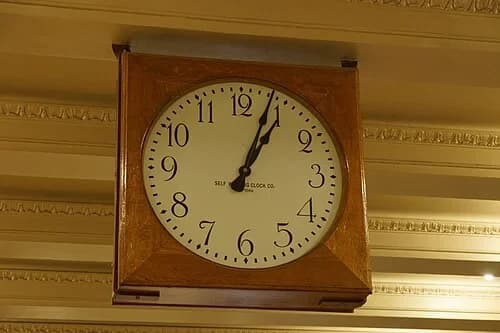
The central meeting point of GCT. I included the primary clock and the original damaged face to tell the story of its preservation.
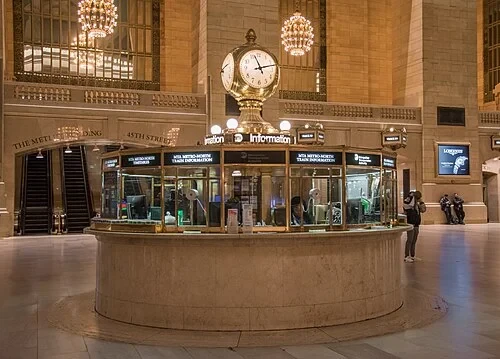
The Information Booth
In the center of the Main Concourse stands the Information Booth, arguably the most common meeting point in all of New York City. While the booth itself is a hub for travel assistance, your attention should be drawn to the magnificent four-sided brass clock perched on its roof. This iconic timepiece was designed by the Seth Thomas Clock Company and has been a fixture of the concourse since the terminal opened. One of the most remarkable features of this clock is its four faces, which are made of solid opal. Because of the size and quality of the opal used, the clock is considered an incredibly valuable artifact, with conservative estimates placing its worth between 10 and 20 million dollars. It is more than just a luxury item, however; it is the functional heart of the station. For over a century, the phrase 'meet me at the clock' has served as the universal shorthand for friends, families, and travelers navigating the city. The brass casing and the elegant Roman numerals match the Beaux-Arts aesthetic of the surrounding room. Despite the prevalence of digital watches and smartphones, this analog clock remains the definitive authority for time in the terminal, its soft white glow guiding thousands of departures every single day.
Vanderbilt Hall
The former main waiting room. I used a historical photo to show its original purpose and a modern one for its current use as an event space.
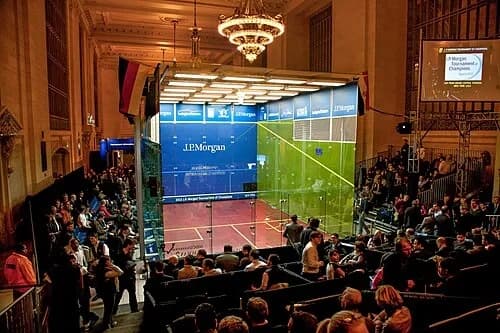
Tournament of Champions
Vanderbilt Hall has moved far beyond its original role as a waiting room, becoming one of New York's most prestigious and versatile event spaces. In a testament to the building's adaptability, this grand hall now hosts a rotating calendar of public and private events that bring a different kind of energy to the terminal. Every year, a massive glass squash court is erected in the center of the room for the Tournament of Champions, drawing the world’s top-ranked players and hundreds of spectators who watch the matches against the backdrop of Beaux-Arts architecture. During the winter months, the space transforms into a bustling Christmas market, filled with local artisans and holiday shoppers. The ability of such a historic room to accommodate these modern uses is a key reason why Grand Central remains so vital to the life of the city. It is no longer just a place to pass through on the way to a train; it is a destination in its own right. The hall’s high ceilings and marble finishes provide a spectacular setting for these activities, proving that the vision of the original architects created a space flexible enough to survive and thrive more than a century after its doors first opened. This ongoing transformation ensures that the terminal continues to serve as a 'Palace for the People' in the 21st century.
The Whispering Gallery and Oyster Bar
Moving to the lower level, this stop covers the acoustic phenomenon and the terminal's oldest restaurant.
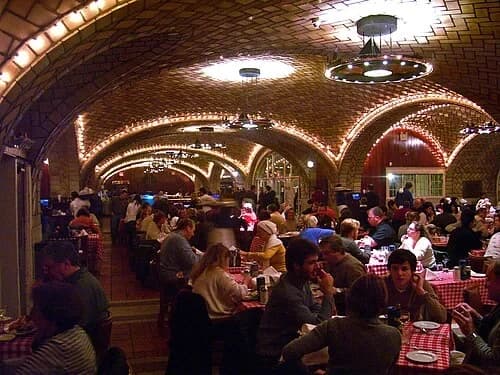
The Grand Central Oyster Bar
The Oyster Bar is the oldest tenant in the building, welcoming diners through its doors on the same day the terminal opened over a century ago. When looking inside, you see the characteristic low-vaulted ceilings covered in cream-colored tiles arranged in a distinctive herringbone pattern. This specific design creates an intimate atmosphere that contrasts with the grand scale of the concourse upstairs. The red-and-white checkered tablecloths have become a signature visual element of the space. While it feels timeless, the restaurant faced a major challenge in 1997 when a massive fire broke out, causing significant damage. However, a meticulous restoration brought back the original beauty of the tiled vaults and woodwork. Today, it remains one of the city's most famous seafood destinations, continuing its tradition of serving fresh oysters and pan roasts to commuters and tourists alike. The subterranean location was intentionally chosen to be near the suburban train platforms, making it a convenient stop for the thousands of people who pass through every day.
The Dining Concourse and Transit Art
Focuses on the evolution of the lower level into a hub and includes the 'As Above, So Below' artwork POI.
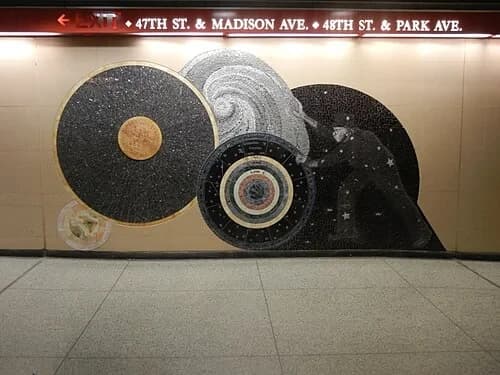
As Above, So Below
Ellen Driscoll · 1998
In the North Passage, a vibrant mosaic mural created as part of the Arts for Transit program serves as a visual bridge between the subterranean walkways and the famous celestial ceiling of the Main Concourse. This artwork, titled As Above, So Below, uses thousands of tiny tiles to depict various mythological figures, celestial bodies, and animals, mirroring the constellations found high above the station floor. This continuity of theme helps unify the different levels of the terminal, bringing a sense of grandeur to the more utilitarian transit tunnels. The mosaic’s style is contemporary yet respectful of the building’s historic roots, using a palette that complements the architectural tones of the station. By placing high-quality art in a high-traffic corridor, the terminal continues its tradition of making public spaces feel like galleries. These figures represent an interpretation of the same stars and myths that have watched over travelers here since the building's inception. Notice the depth of color and the way the different circles interact to tell a larger story about time and space.
The Dining Concourse
Descending to the lower level brings you to the Dining Concourse, a space that has undergone a significant transformation since the terminal's early days. Originally, this area was primarily used for luggage handling and storage, far removed from the public-facing elegance of the floor above. Today, it functions as a bustling food hub featuring a wide variety of vendors catering to both commuters and visitors. Beyond the food, this level provides access to the terminal's vast rail network. Grand Central holds the record for the most platforms and tracks of any railroad station in the world, with 44 platforms serving 67 tracks across its two levels. The layout was a marvel of efficiency when it was built, utilizing a series of ramps instead of stairs to help passengers move quickly between the two levels. This design principle remains effective today, managing the flow of tens of thousands of people every hour. While the Dining Concourse is modern in its function, the architecture maintains the station's characteristic arched forms, ensuring that even the lower level feels like an integral part of the grand design.
The Campbell Bar
A hidden gem that was once a tycoon's office. This stop highlights the luxury and history of John W. Campbell.
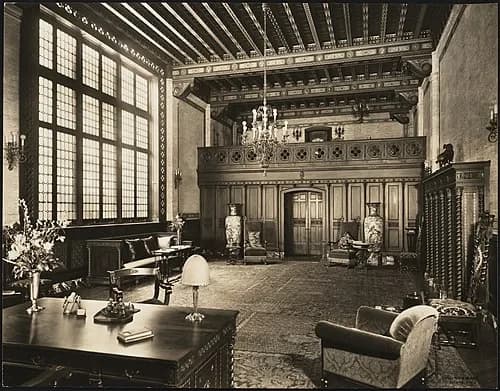
A Tycoon's Private Office
During the 1920s, the space now known as the Campbell Apartment was the private office of John W. Campbell, a successful financier and member of the New York Central Railroad board. Campbell spared no expense in outfitting his workspace, commissioning custom-made rugs and bringing in a variety of European antiques. One of the room's most distinctive features was his massive desk and a chair that many described as his throne, reflecting his status and power. He used this setting to entertain high-society guests and conduct business right in the heart of one of the world's busiest buildings. Legend has it that he would even invite a piano player to perform during his evening hours to maintain the palace-like atmosphere. The room remains largely as it was during his tenure, preserving the custom woodwork and the overall sense of tycoon-era grandeur. It provides a rare look into the private lives of the wealthy individuals who shaped the early twentieth century, showing how they integrated their personal style into the infrastructure of the city. The black and white photography of the era captures the formal, imposing nature of the office.
Grand Central Madison
The newest addition to the terminal (2023). This stop shows the modern architecture and the Kiki Smith mosaics.
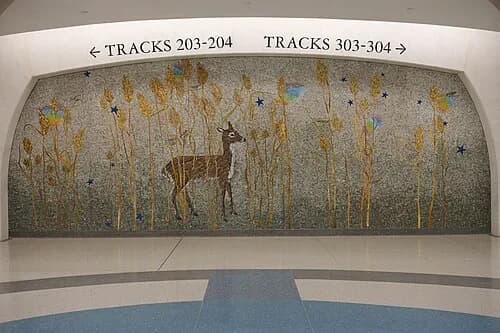
The Presence
Within the sleek, modern corridors of the new Madison expansion, you encounter an artwork titled The Presence. This large-scale glass mosaic features a white-tailed deer standing amidst a field of tall foliage and stars. The piece uses a rich variety of colors and textures, with the shimmering glass catching the light as travelers pass by. It was commissioned to provide a calming, natural contrast to the sterile surfaces of the deep-level concourse. The imagery of the deer and the surrounding plants offers a momentary escape from the urban environment, grounding the modern transit hub in the beauty of the natural world. This choice of subject matter is a subtle nod to the terminal's history, where motifs of nature—like the Vanderbilt acorns—have long been integrated into the building’s fabric. The precision of the mosaic work is remarkable, with thousands of individual pieces carefully placed to create the subtle gradients of the deer’s coat and the delicate shapes of the leaves. It serves as a visual anchor in the long tunnels, reminding passengers of the world waiting for them above ground.
Want to hear the rest?
Download the Stanza app to unlock all 27 stops and full GPS-guided navigation.
Frequently Asked Questions
How long does the Grand Central Terminal audio tour take?
The Grand Central Terminal audio guide includes 27 narrated stops. Most visitors spend 45 minutes to 1.5 hours exploring the complete tour, though you can listen at your own pace and skip or revisit any stop.
Is the Grand Central Terminal audio guide available in my language?
Stanza supports 15 languages: English, Spanish, French, German, Italian, Portuguese, Russian, Japanese, Chinese, Korean, Arabic, Hindi, Polish, Dutch, Hebrew. Check the guide in the app to confirm the languages currently available for this tour.
Can I use the audio guide offline at Grand Central Terminal?
Yes! Download the complete Grand Central Terminal tour — including all audio, maps, and images — before your visit. The Stanza app works completely offline, so you don't need WiFi or mobile data at the venue.
How much does the Grand Central Terminal audio guide cost?
The Stanza app is free to download. The current listed price for the Grand Central Terminal audio guide is $2.99; app-store region and currency may affect the final price.
How do I use the Stanza audio guide at Grand Central Terminal?
Download the free Stanza app, search for "Grand Central Terminal", and download the tour. When you arrive at the venue, the app uses GPS to detect your location and automatically plays the relevant narration as you move between points of interest — completely hands-free.
What makes the Stanza audio guide different from other Grand Central Terminal tours?
Stanza offers GPS-triggered narration that plays automatically as you walk through Grand Central Terminal — no need to manually select stops. The tour is available in 15 languages, works fully offline, and includes 27 expertly narrated stops with images and historical context.
What other audio guides are available near Grand Central Terminal?
Stanza offers multiple audio guides in New York, United States and nearby areas. After downloading the app, browse the map to discover all available tours near Grand Central Terminal. Each guide can be downloaded for offline use.