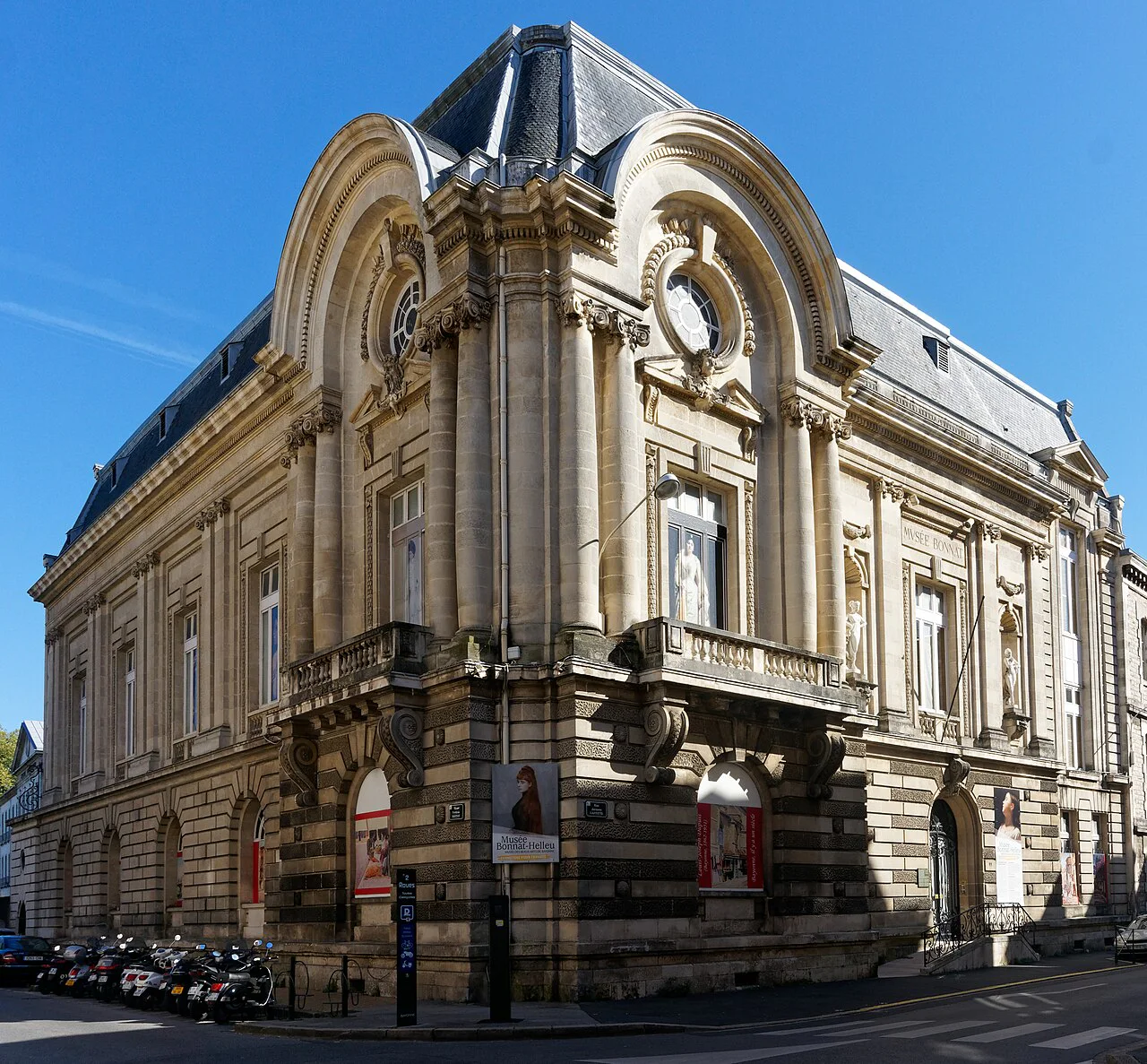
Stanza · Audio guide
Musée Bonnat-Helleu Audio Guide
A place to remember. A story to take with you.
The Musée Bonnat-Helleu is an art museum in Bayonne, Nouvelle-Aquitaine, France. It was created in 1901 when Bayonne-born painter Léon Bonnat gave his extensive personal collections of art, notably an…
Download Stanza, then search for “Musée Bonnat-Helleu”.
About the tour
One guide. Your kind of visit.
The Musée Bonnat-Helleu is an art museum in Bayonne, Nouvelle-Aquitaine, France. It was created in 1901 when Bayonne-born painter Léon Bonnat gave his extensive personal collections of art, notably an exceptional drawing collection, as well as many of his paintings to the City of Bayonne, and later donations made its holdings one of the largest collections of art in southern France.
The Musée Bonnat-Helleu guide tells the stories of 28 artworks, including The Half-Length Bather (Jean-Auguste-Dominique Ingres), The Sweet Landscape (Pierre Puvis de Chavannes), Hercules's dog discovers tyrian purple (Peter Paul Rubens), Portrait of the duc de Benavente (El Greco), Francisco Téllez-Girón, 10th Duke de Osuna (Francisco Goya), Portrait of Léon Bonnat (Edgar Degas), Saint Jerome as Cardinal (El Greco), and Job (Léon Bonnat). Every artwork is free to hear in the Stanza app until 1 January.
Ready when you are.
- 01Get the free Stanza app.
iOS & Android
- 02Find your guide.
“Musée Bonnat-Helleu”
- 03Download before you go.
Works offline
Audio guide / 28 artworks
Inside the guide
Get to know a few of the stories before you go. Open a stop to read more.
01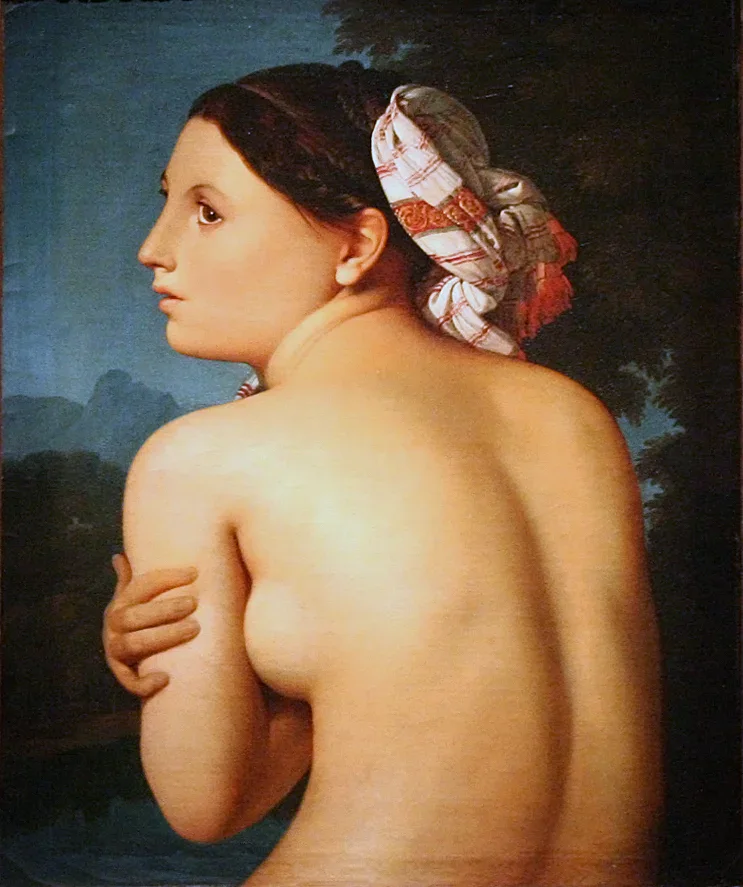
The Half-Length Bather
You never quite see her face. She has turned her back to you, and when she looks back over her shoulder, only a sliver of it shows. What she thinks of the person watching her, you are never told. Her arms cross over her chest, her back curves in, and she seems uneasy, as if trying to avoid a gaze from behind her. She is right at the front of the picture, so close you feel you could reach out and touch her. Her back is smooth without a flaw, almost unreal, and there is a faint red in her cheek. The turban gathered into her black braided hair is something else entirely. It is painted as if you were looking at a photograph. Every fold and edge is there, the red and white pattern, and Ingres wrote his name in tiny letters inside the white of it. Next to that realism, her body is flattened and stretched, the jaw nearly gone, only the lashes of one eye showing. It was one of his first female nudes. He painted it in Rome and submitted it as proof of what he had learned there.
Listen in the appJean-Auguste-Dominique Ingres · Public domain
02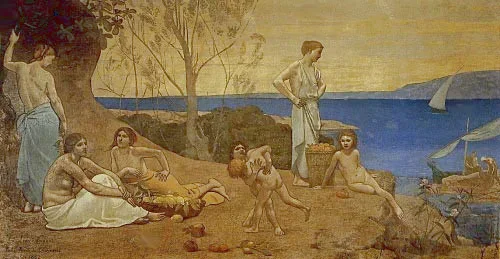
The Sweet Landscape
Four young women and three children are at ease on a point of land high above the sea. They are almost without clothes, enjoying the time together. Several sailboats are out on the water beyond them. There is almost no sense of depth, so the figures and the sea seem to rest on one flat surface. That was deliberate. The aim was an ideal beauty, with no trace of the passing moment. The colouring gives the whole scene a mystical feeling, the kind the French Symbolists were after. Puvis de Chavannes showed the picture at the Salon in 1882. His friend Léon Bonnat had a portrait of Puvis on display there too. The two painters simply traded. Bonnat kept the idyll by the sea, and Puvis took home the portrait of himself. Bonnat hung it on the staircase of his private house on rue de Bassano in Paris. Eventually it left that staircase and came to rest here in Bayonne, in the museum that now bears his name.
Listen in the appPierre Puvis de Chavannes · Public domain
03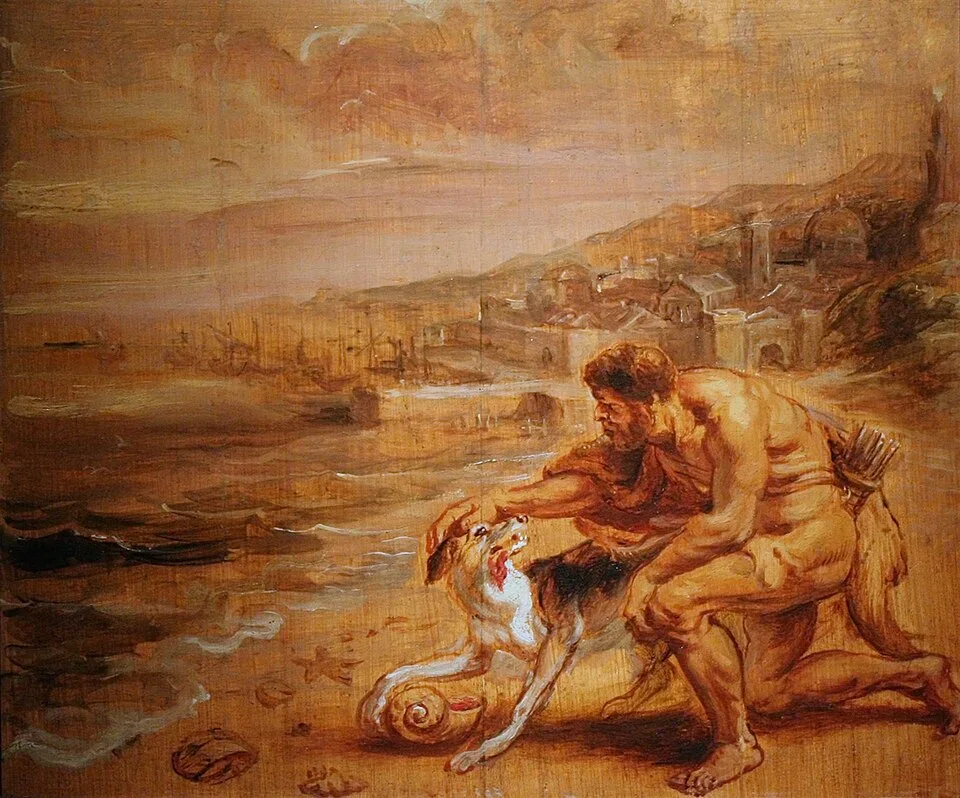
Hercules's dog discovers tyrian purple
This began as a working sketch, one of dozens Rubens made to plan a decoration. The decoration was for a hunting lodge near Madrid, the Torre de la Parada. King Philip the Fourth of Spain wanted a whole cycle about Hercules. Theodoor van Thulden later painted the finished picture from this sketch. On the beach, Hercules's dog has a mouth stained purple. A writer named Julius Pollux tells the story. Hercules and the dog were walking the shore on their way to court a nymph named Tyros. The dog bit a sea snail, and its blood left the stain. When she saw the color, the nymph asked for a gown dyed the same. That is how Tyrian purple began. Purple clothed emperors and had come to stand for royalty and divinity. The Habsburgs ruled Spain, and their wealth came from the conquest of Peru. The scene also carries an old warning to stay within the Pillars of Hercules, a limit the Habsburgs had sailed beyond. The shell in the picture is large and smooth, more like a nautilus than the spiny murex that made the dye. It is not the shell from the story.
Listen in the appPeter Paul Rubens · Public domain
04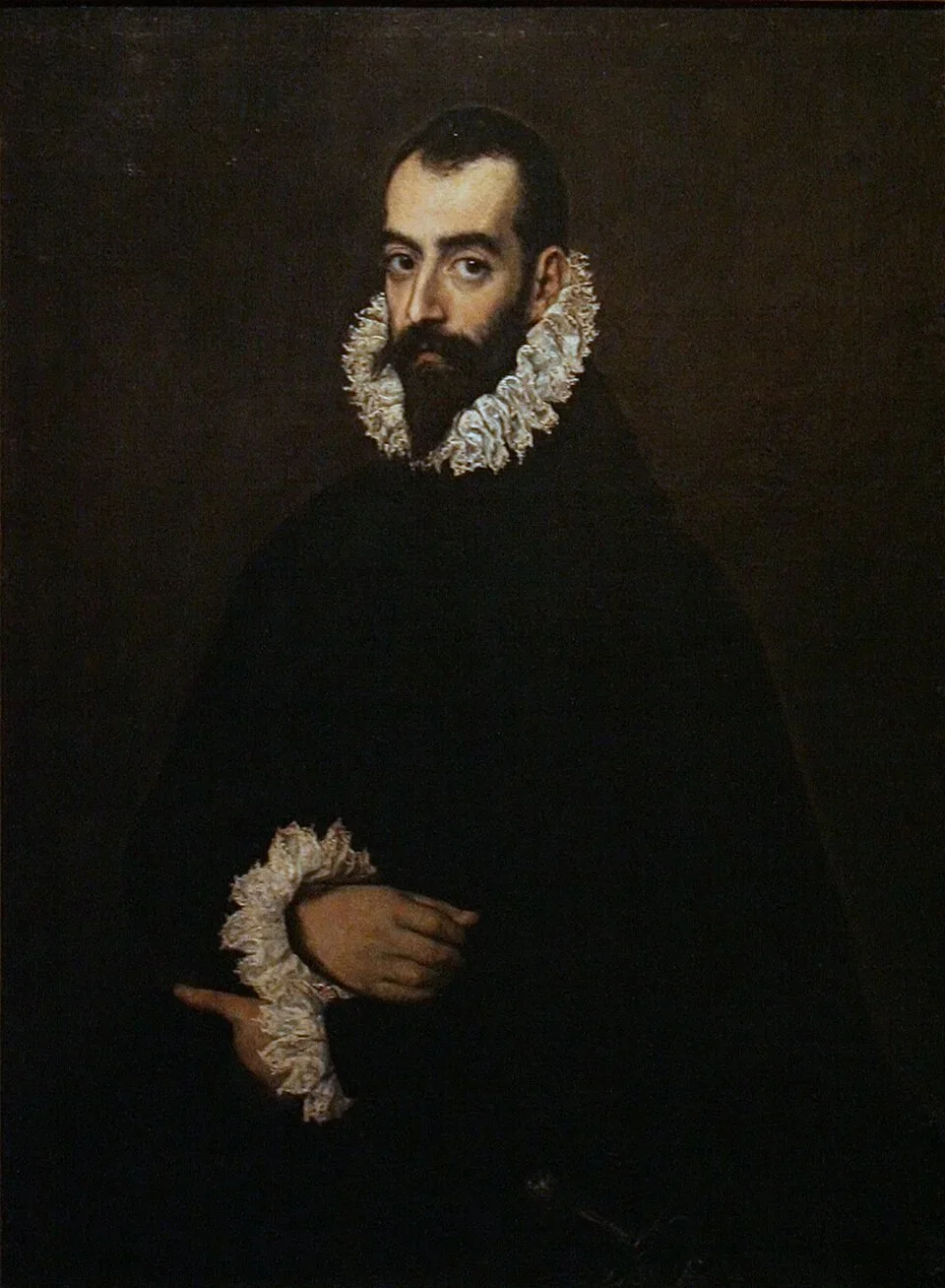
Portrait of the duc de Benavente
Who is the man looking straight at you with those wide eyes? His clothes answer first. A heavy white lace ruff sits at his throat, with white cuffs at his wrists. Everything else is black, his cape merging into the dark behind him. Low on the right, you can just make out a sword, its dark handle almost lost against the black. He also wears pieces of armor from Philip the Second's own collection, an unusual thing in a nobleman's portrait. Taken together, these mark him as a Grandee of Spain, a man of the highest military rank in the Spanish army. He is probably Juan Alonso Pimentel de Herrera, the Duke of Benavente. He was viceroy of Valencia, and in 1603 Philip the Third named him viceroy of Naples, a city he defended against Turkish raids. El Greco gave him much the same bearing as in his earlier portrait, the Gentleman with his Hand on his Chest.
Listen in the appEl Greco · Public domain
05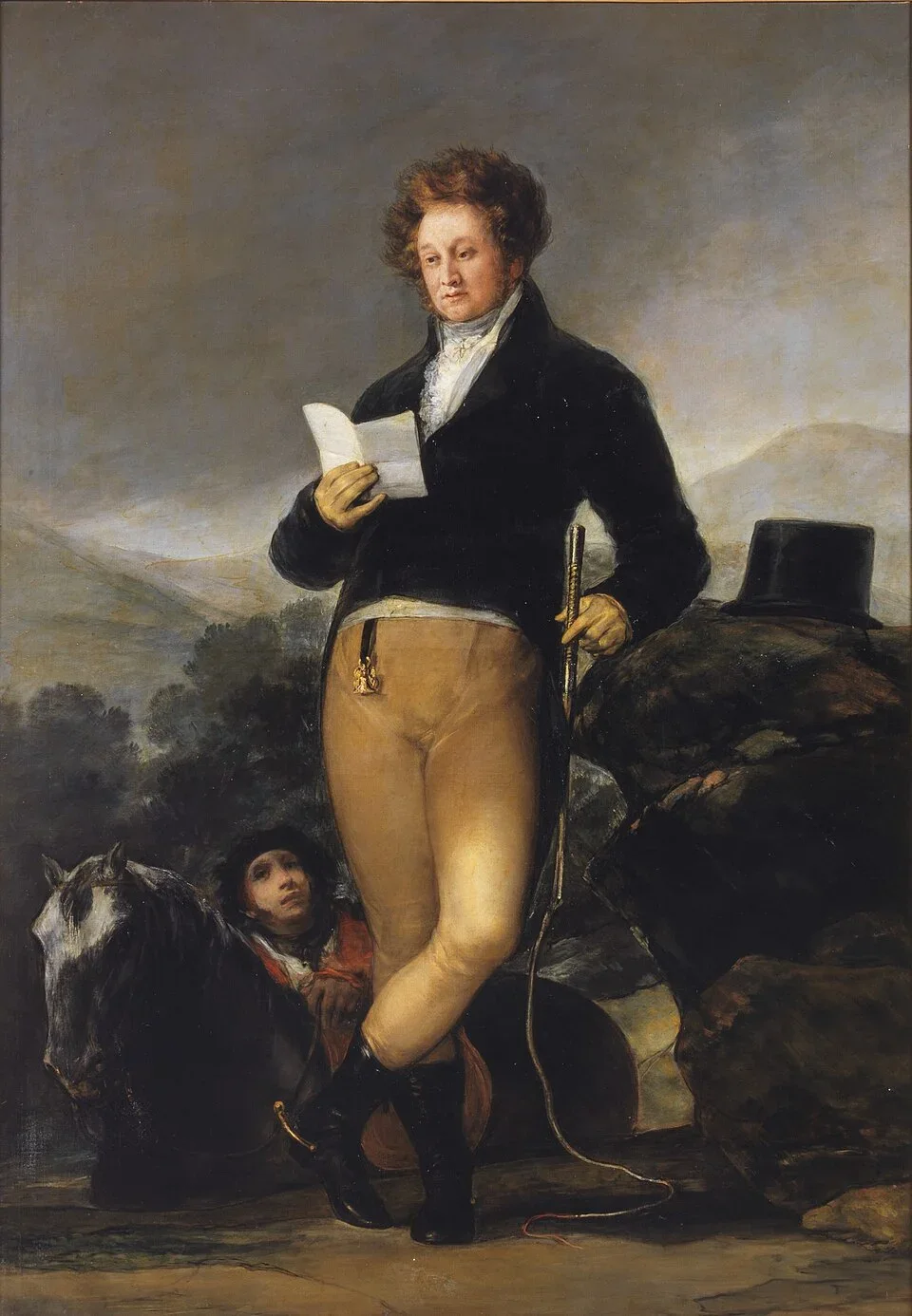
Francisco Téllez-Girón, 10th Duke de Osuna
A letter in his right hand holds the whole of his attention. His face shows sadness and resignation as he reads it. This is Francisco, the tenth Duke de Osuna. He was thirty one when, in 1816, he asked Francisco Goya to paint him. He is shown as a horseman, a whip in his left hand, one leg crossed over the other. He leans on a rock where he left his hat. The painter set the viewpoint low, so the young man looms larger. A servant below leads his horse and looks at him with admiration. But in 1808 Francisco travelled with Ferdinand the Seventh to Bayonne to meet Napoleon, and that journey cost the Spanish monarchs their throne. During the war he went to Cadiz and backed the constitution. When Ferdinand the Seventh restored absolute rule, Francisco lost his office. His health was failing, yet he was refused permission to leave Madrid. He died in 1820. His parents were leading figures of the Spanish Enlightenment, and for years the painter worked for them, painting their portraits and children. Now he painted their son. This portrait, like one of the duke's sister, was the last he made for the aristocracy. He painted it in August, but the ten thousand reals went unpaid until the next April. What the letter says, we never learn.
Listen in the appFrancisco Goya · Public domain
06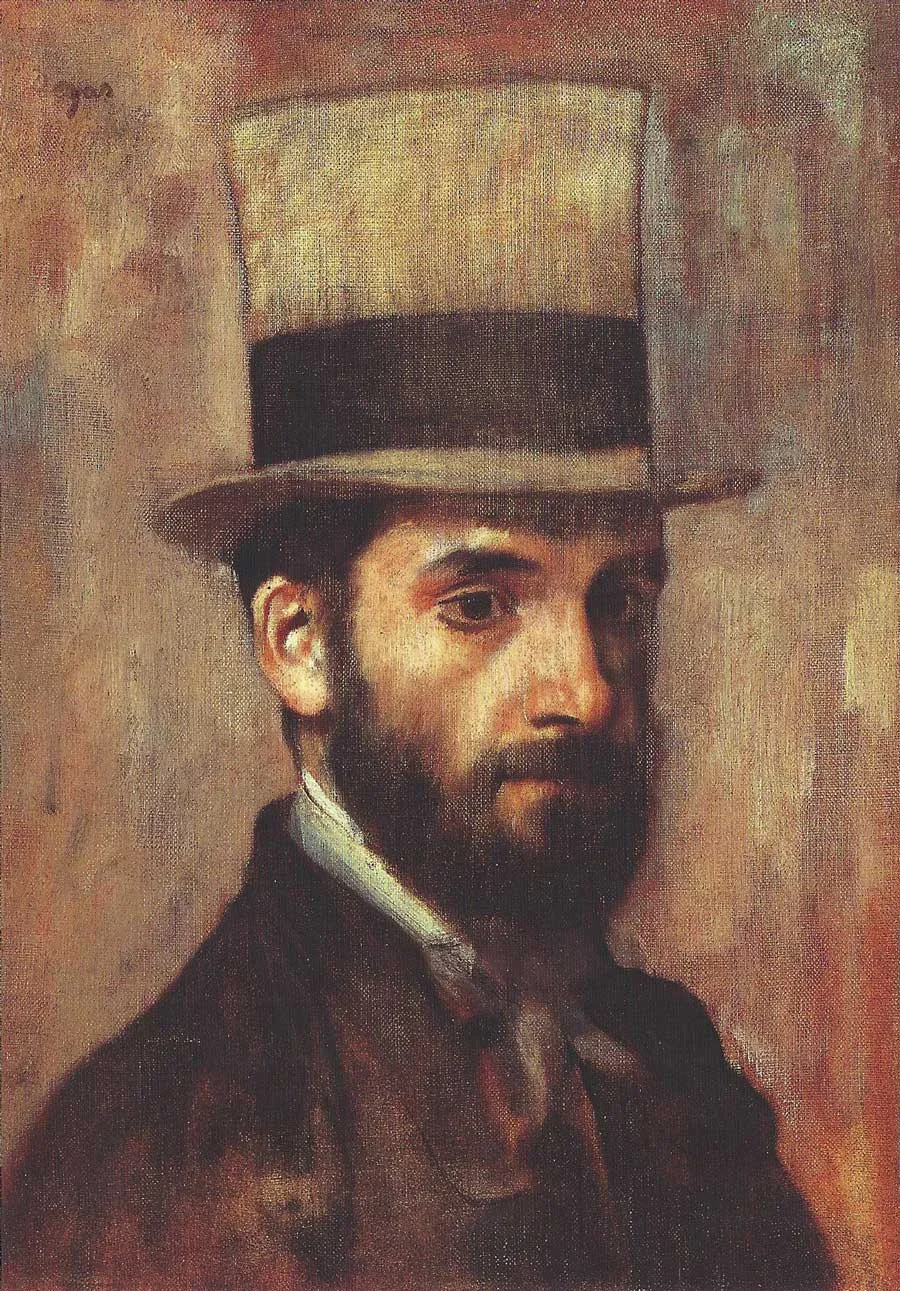
Portrait of Léon Bonnat
A young man in a top hat, shown from his right at three quarters, head and shoulders against an ocher background edging into red. Nothing in the way he is shown makes more of him than there is. That was on purpose. This is Léon Bonnat, a painter himself, and the man who painted him, Edgar Degas, had been his friend since their youth. Both painted portraits, but they wanted opposite things from them. Bonnat was practically the official portraitist of the Third Republic. His sitters held still in almost photographic poses, and he smoothed them into something far more flattering than life. The Salons rewarded him for it. His friend wanted none of that. Degas wanted the person set down as they really were, caught spontaneously, with no styling added. And that is what he gave Bonnat. In 1922, the sitter himself left this portrait to the public collections. It went to the museum in Bayonne that now bears his name.
Listen in the appEdgar Degas · Public domain
07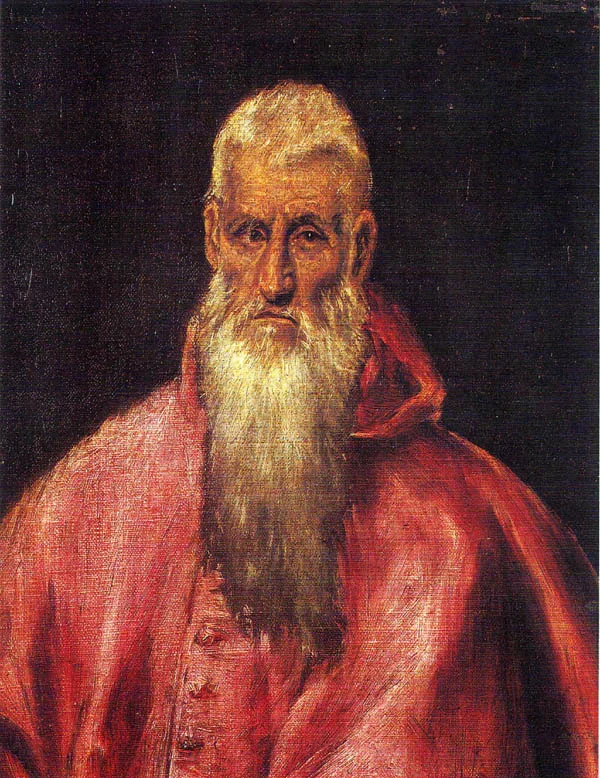
Saint Jerome as Cardinal
A few years ago this painting was restored, and the artist's monogram came back into view, just by the man's right shoulder. An old man with a white beard and white hair, shown from the chest up in the purple of a cardinal. The background behind him is almost black. This is Jerome, an early Christian priest. El Greco painted him in Toledo. He was Greek, and he signed his pictures in Greek letters. He wrote out his whole name, often adding a word meaning Cretan, the place he came from. That mark near the shoulder is how he put his name to it. We still do not know who sat for this portrait, though the face may be Gaspar de Quiroga y Vela, shown as Jerome.
Listen in the appEl Greco · Public domain
08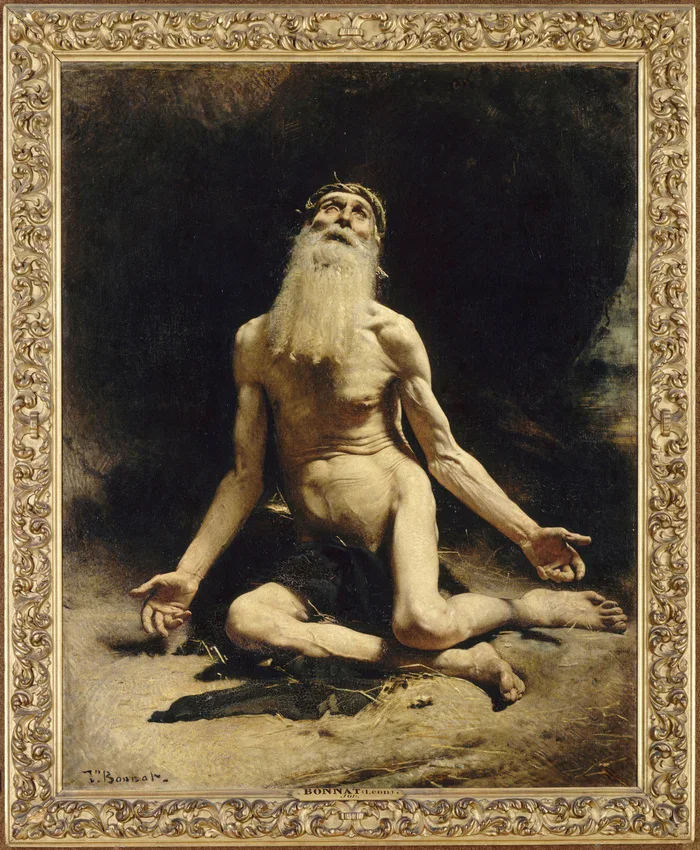
Job
Why? That is the question this man is asking, and he asks it with his whole body. An old man with a long white beard, sitting naked on a heap of manure. Misery has left him thin. A rope is wound around his head like a crown. His eyes are raised to Heaven, his arms held wide, as if he is begging God to explain why he has to suffer. This is Job, from the Book of Job. He had a family and everything he owned, and disaster after disaster took it all, to test whether his faith would hold. Léon Bonnat painted him in 1880 and showed the picture at the Salon in Paris that same year. He kept it in his studio, and between 1886 and 1887 he gave it to public collections. It went to the art museum he was allowed to found in Bayonne, the town where he was born. In 2025 it was brought here, to the Bonnat Helleu.
Listen in the appLéon Bonnat · Public domain
09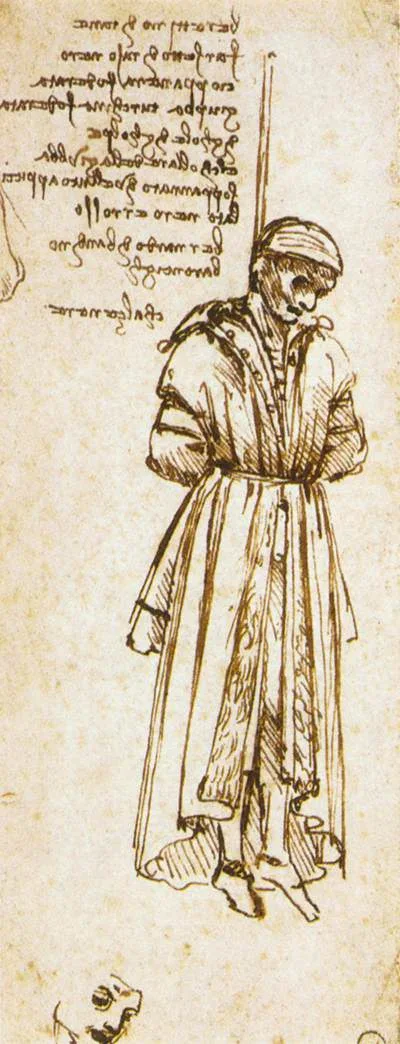
Study of the Hanged Bernardo di Bandino Baroncelli
No one is sure why this drawing was made. A man hangs here, hands tied, feet bare, sadness on his face. The upper corner holds notes on what he wore, even a blue cloak lined with fox fur. The lower corner has the head again, alone, and that face shows resignation. It looks like preparation for a painting. Or perhaps the sight of this man was shock enough to make someone draw him. The man is Bernardo di Bandino Baroncelli. One Sunday in April 1478, during mass, he and Francesco de' Pazzi stabbed Giuliano de' Medici, Lorenzo's younger brother. The Pazzi family wanted to break Medici rule in Florence. Other families hostile to the Medici backed them. Pope Sixtus the Fourth did too, quietly. The murderers escaped. The plan to seize the Palazzo Vecchio failed when armed citizens took to the streets, roused by the bell La Vacca. Within days, dozens were put to death. Bernardo hid in the cathedral bell tower, fled Florence and sailed from Italy. The next year the Medici learned he was in Constantinople and sent envoys with gifts for the sultan. Turkish officials seized him and brought him back to Florence in chains. On the twenty-eighth of December 1479, he was hanged in a window of the Palagio del Capitano. Leonardo was among those watching, and drew this on the spot that same day.
Listen in the appLeonardo da Vinci · Public domain
10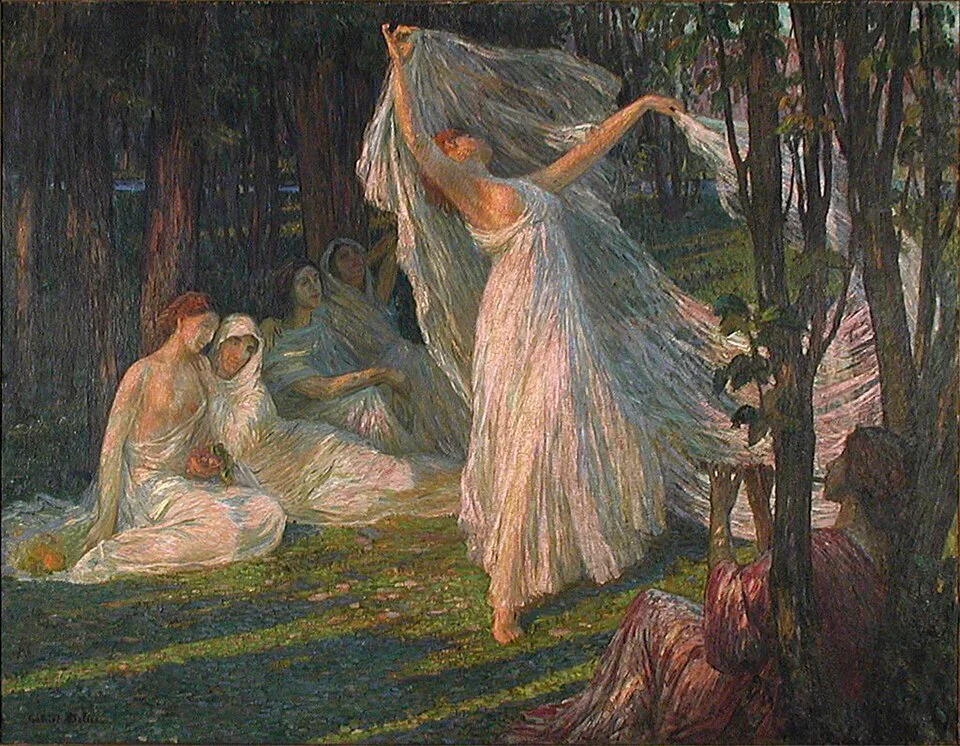
The Dance. In the Sacred Woods
A woman is caught in the middle of her dance, in an idyllic landscape, with a mythological air, like something from another age. Gabriel Deluc painted that dance in all its movement and color. He drew on the symbolist painters Puvis de Chavannes and, above all, Henri Martin. The scene also brings to mind the dancing of Loïe Fuller and Isadora Duncan. That vitality is what pulled the viewers when the painting appeared at the Paris Salon in 1910. Baron Rothschild was drawn to it too, though for the freedom and cheerfulness of the composition. He bought the canvas, then gave it to the city of Bayonne. And at the right, seated in the foreground, a second woman plays a flute. The dance is happening to the sound of her playing.
Listen in the appGabriel Deluc · CC BY-SA 4.0
- 11
Giotto guarding the goats
Léon Bonnat · 1850
- 12
Cleopatra
Domenico Beccafumi · c. 1508
- 13
Sophonisba
Domenico Beccafumi · c. 1508
- 14
Study of a Nude Man
Théodore Géricault · 1812–1817
- 15
Portrait of Loulia Cahen d'Anvers, by Léon Bonnat
Léon Bonnat · 1891
- 16
Alice Helleu in a White Dress
Paul César Helleu · c. 1900
- 17
Alice Helleu Reading on the Beach of Deauville
Paul César Helleu · 1892–1896
- 18
Portrait of Paul César Helleu
John Singer Sargent · c. 1880
- 19
Ribera - Desperate Woman Tearing Her Hair, 1638
Jusepe de Ribera · 1638
- 20
Portrait of Madame Léopold Stern, by Léon Bonnat
Léon Bonnat · 1891
- 21
Young girls at the piano
Gabriel Deluc · 1906
- 22
Vouet - Roman Charity, circa 1626, CM 169
Simon Vouet · c. 1626
- 23
The Resurrection of Lazarus oder The Raising of Lazarus
Léon Bonnat · 1857
- 24
Portrait of the Painter Johann Heinrich Füssli, by Thomas Lawrence
John Jackson, Thomas Lawrence · 1825–1830
- 25
Saint Martin, by the Master of Bonnat
Maître Bonnat · c. 1475
- 26
Idyll
Léon Bonnat · 1890
- 27
Barocci - Head of Saint Mary Magdalene, RF 1997 3
Federico Barocci · 16th century
- 28
Abduction of a Woman
Albrecht Durer · 1495
Musée Bonnat-Helleu
Frequently asked questions
How much does the guide cost?
Free app download. Free until 1 January. Listed guide price: $0.99. Audio guide only. Venue admission is separate.
Can I listen without internet?
Yes. Download the guide’s audio, images, and maps in the app before your visit. Your downloaded content is then available offline.
Can I listen in my language?
In English for now. More languages soon.
Do I need to follow a schedule?
No. This is a self-guided experience. Choose your stops, pause whenever you like, and return to a story at your own pace.
Which artworks are in the Musée Bonnat-Helleu audio guide?
28 artworks, including The Half-Length Bather (Jean-Auguste-Dominique Ingres), The Sweet Landscape (Pierre Puvis de Chavannes), Hercules's dog discovers tyrian purple (Peter Paul Rubens), Portrait of the duc de Benavente (El Greco), Francisco Téllez-Girón, 10th Duke de Osuna (Francisco Goya), Portrait of Léon Bonnat (Edgar Degas), Saint Jerome as Cardinal (El Greco), and Job (Léon Bonnat). The full list is on this page.
Is this the museum’s official audio guide?
No. Stanza is an independent audio guide app and is not affiliated with Musée Bonnat-Helleu. Museum admission is separate.
At your own pace
Explore Musée Bonnat-Helleu.
Download Stanza, then search for “Musée Bonnat-Helleu”.
Free app download · Guide price shown in the app
Keep exploring
Audio guides — France
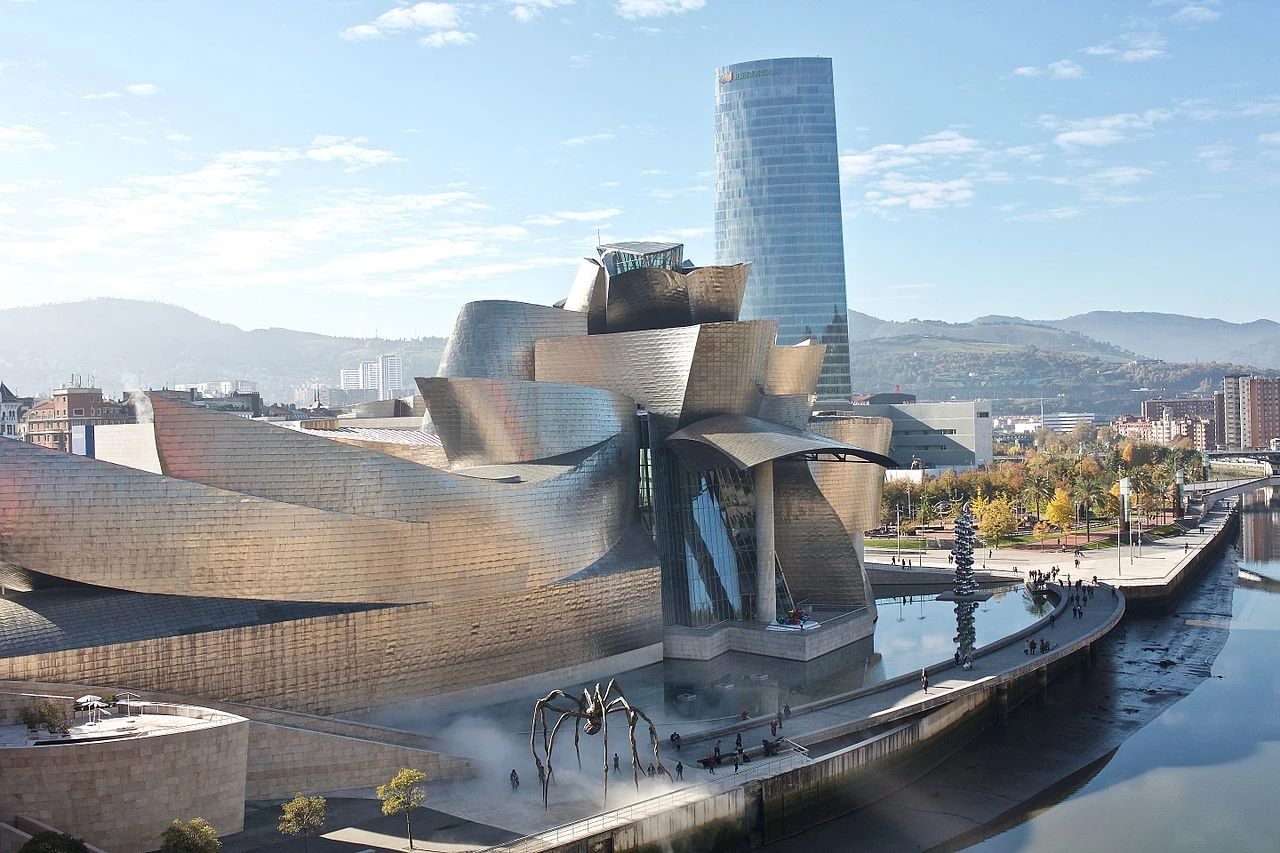
Bilbao · 121 km
Guggenheim Museum Bilbao
Content & sources
Naotake Murayama · CC BY 2.0
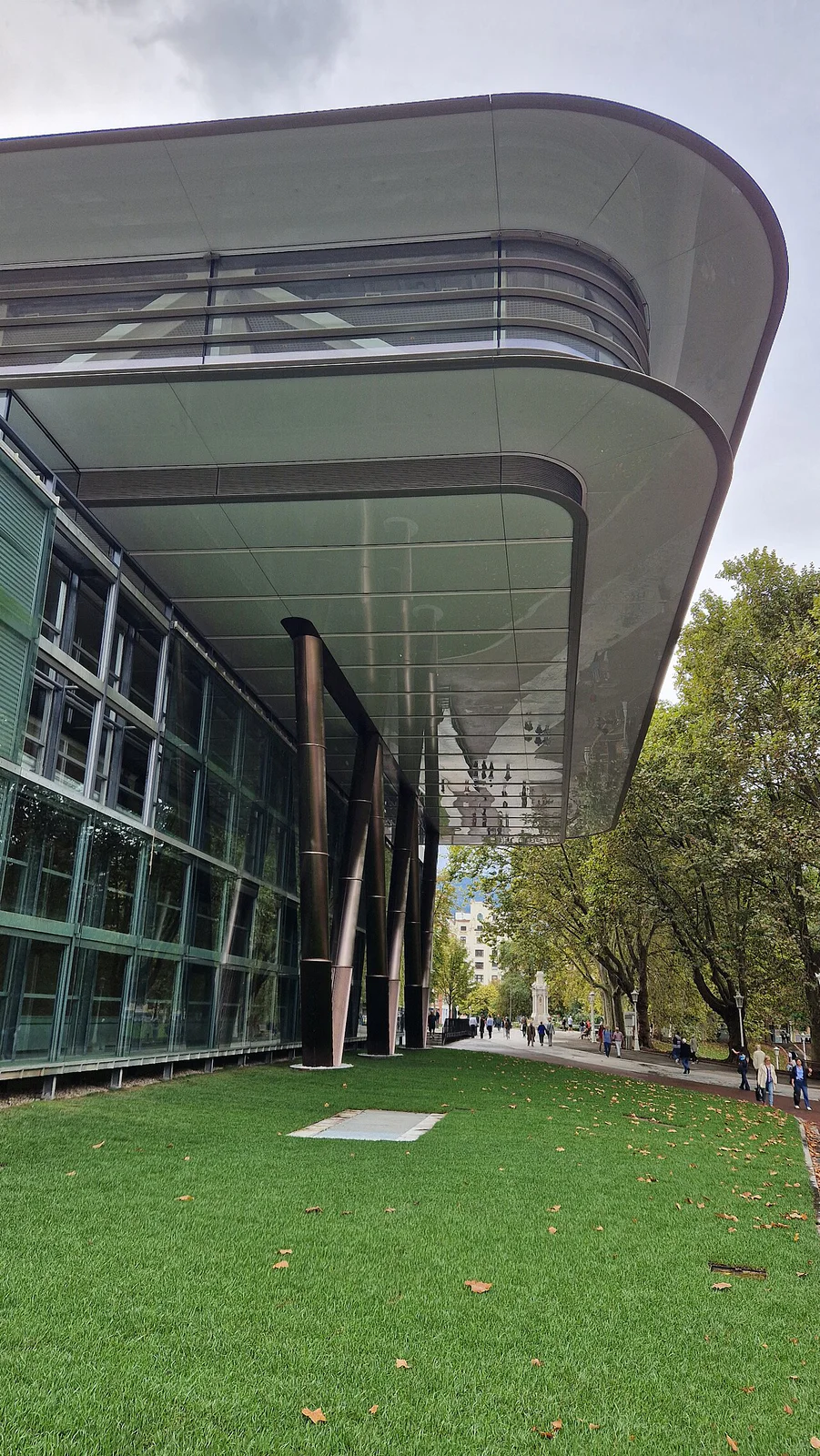
Bilbao · 121 km
Museo de Bellas Artes de Bilbao
Content & sources
Photo: Xabier · CC0
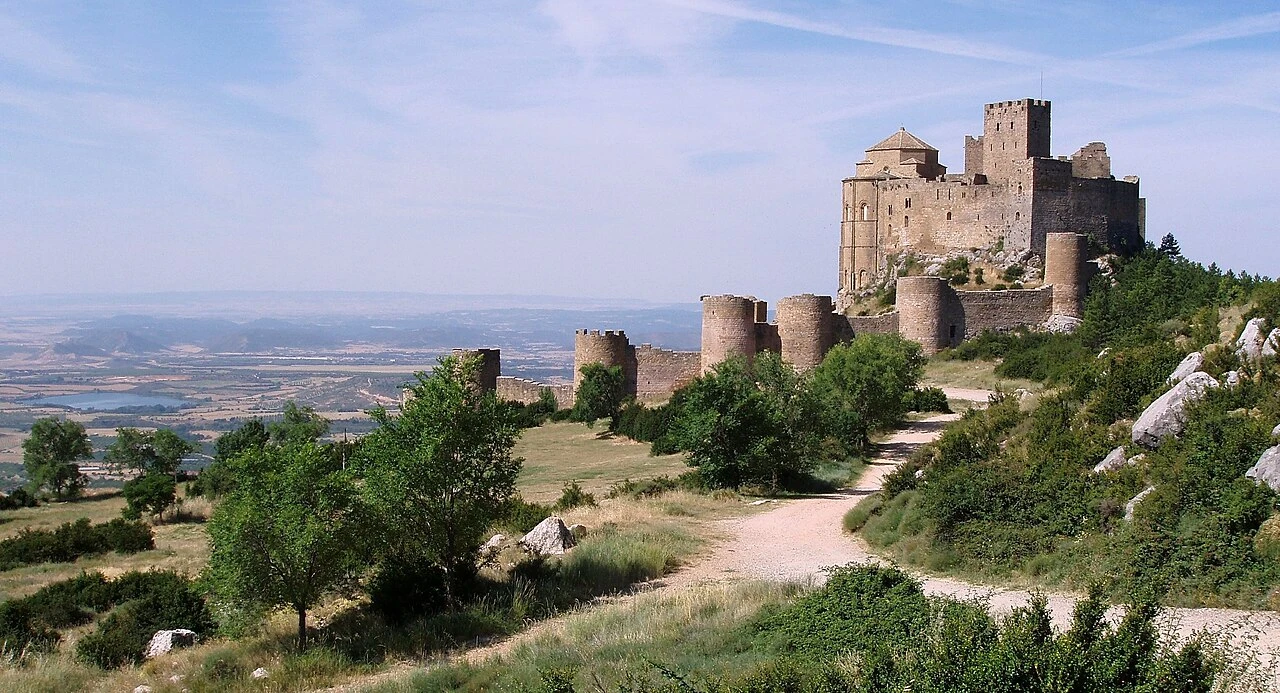
Loarre · 147 km
Castillo de Loarre
Content & sources
Josue Mendivil · CC BY-SA 2.0
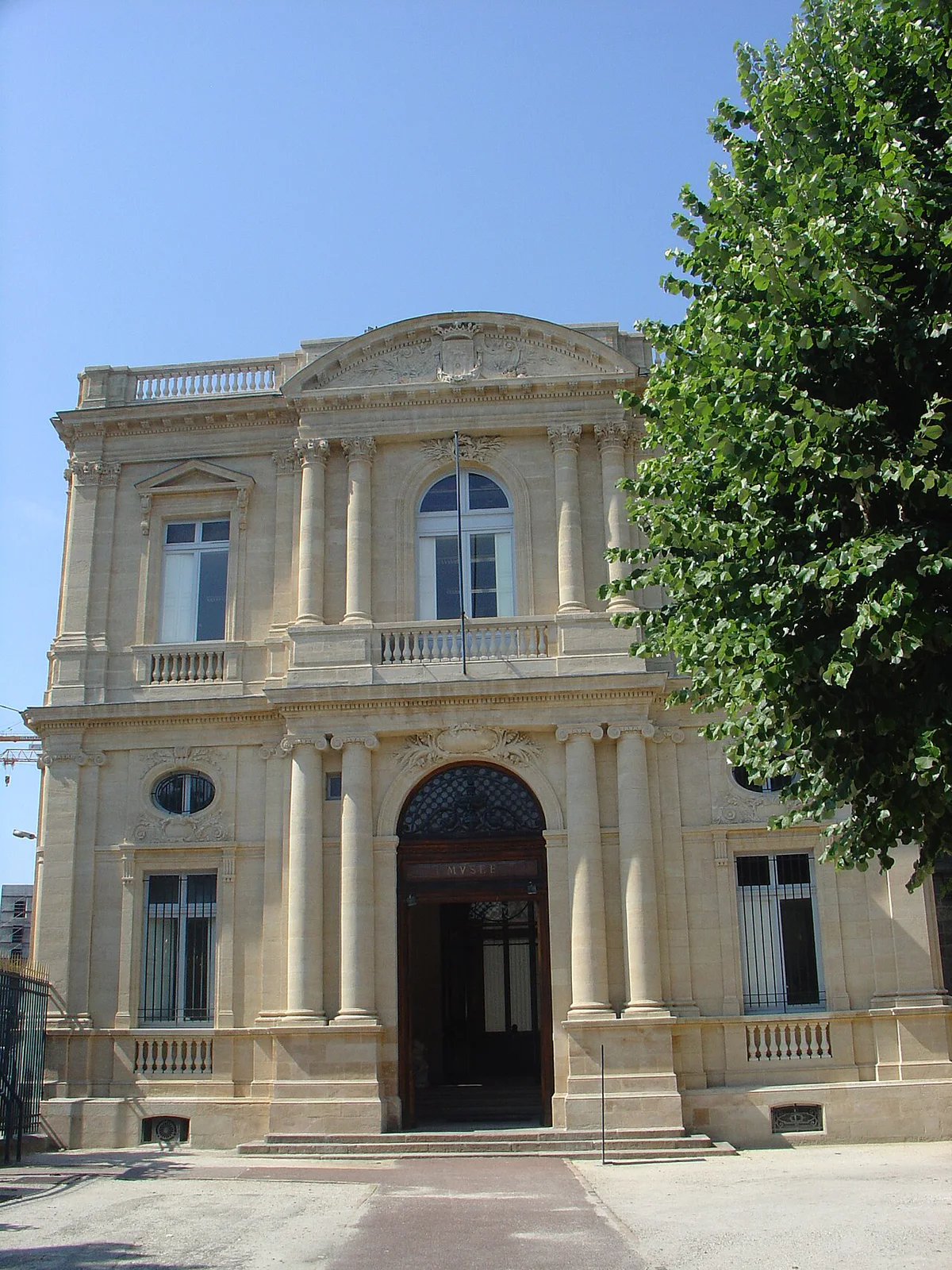
Bordeaux
Musée des Beaux-Arts de Bordeaux
Content & sources
Photo: Michel BUZE · CC BY-SA 3.0
Art museums
More art museum audio guides
Bilbao · 43 artworks
Museo de Bellas Artes de Bilbao
Content & sources
Photo: Xabier · CC0
Bordeaux · 44 artworks
Musée des Beaux-Arts de Bordeaux
Content & sources
Photo: Michel BUZE · CC BY-SA 3.0
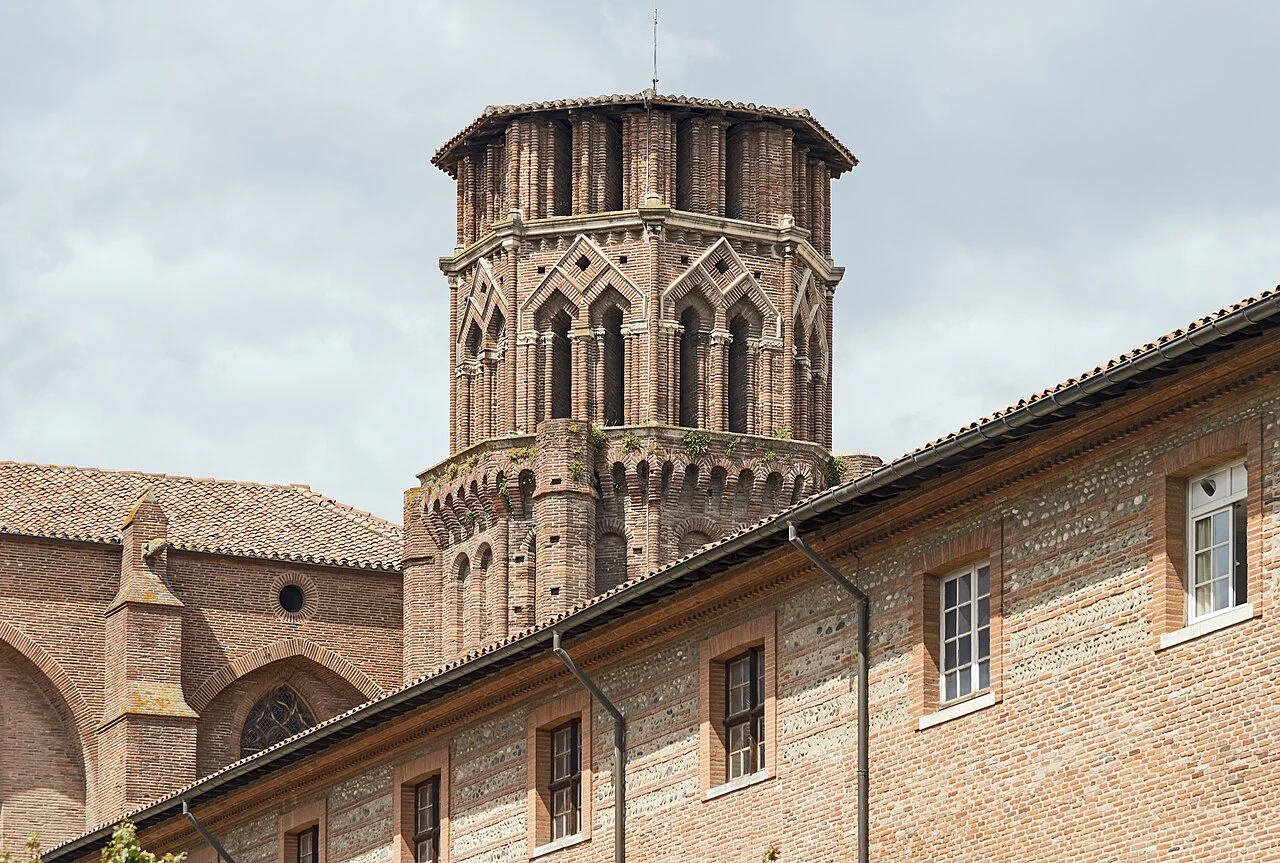
Toulouse · 89 artworks
Musée des Augustins de Toulouse
Content & sources
Didier Descouens · CC BY-SA 4.0
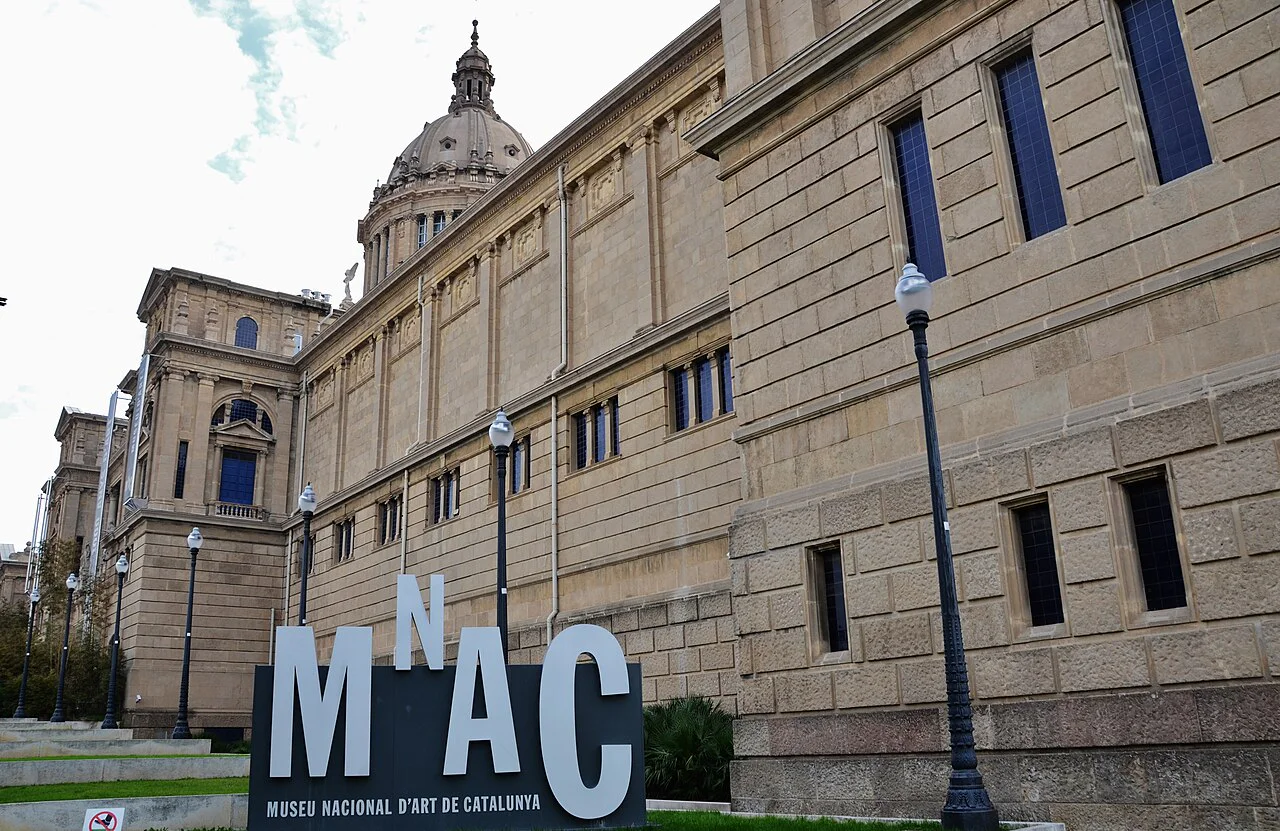
Barcelona · 252 artworks
Museo Nacional de Arte de Cataluña
Content & sources
MARIA ROSA FERRE ✿ from Vilafranca del penedes, Catalunya · CC BY-SA 2.0
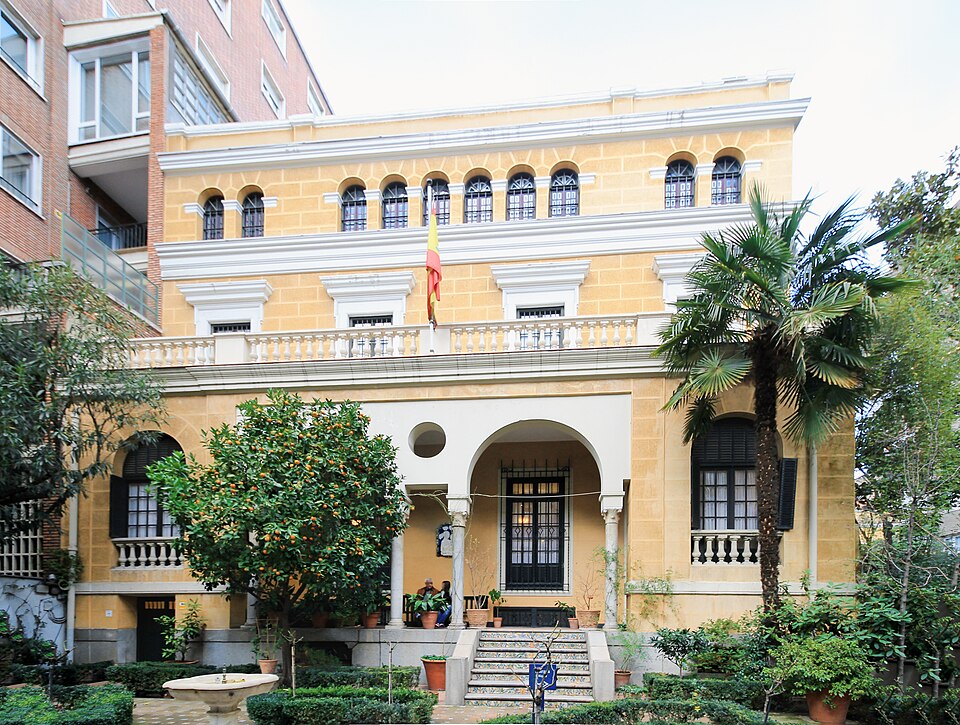
Madrid · 35 artworks
Sorolla Museum
Content & sources
Luis García (Zaqarbal) · CC BY-SA 3.0 es
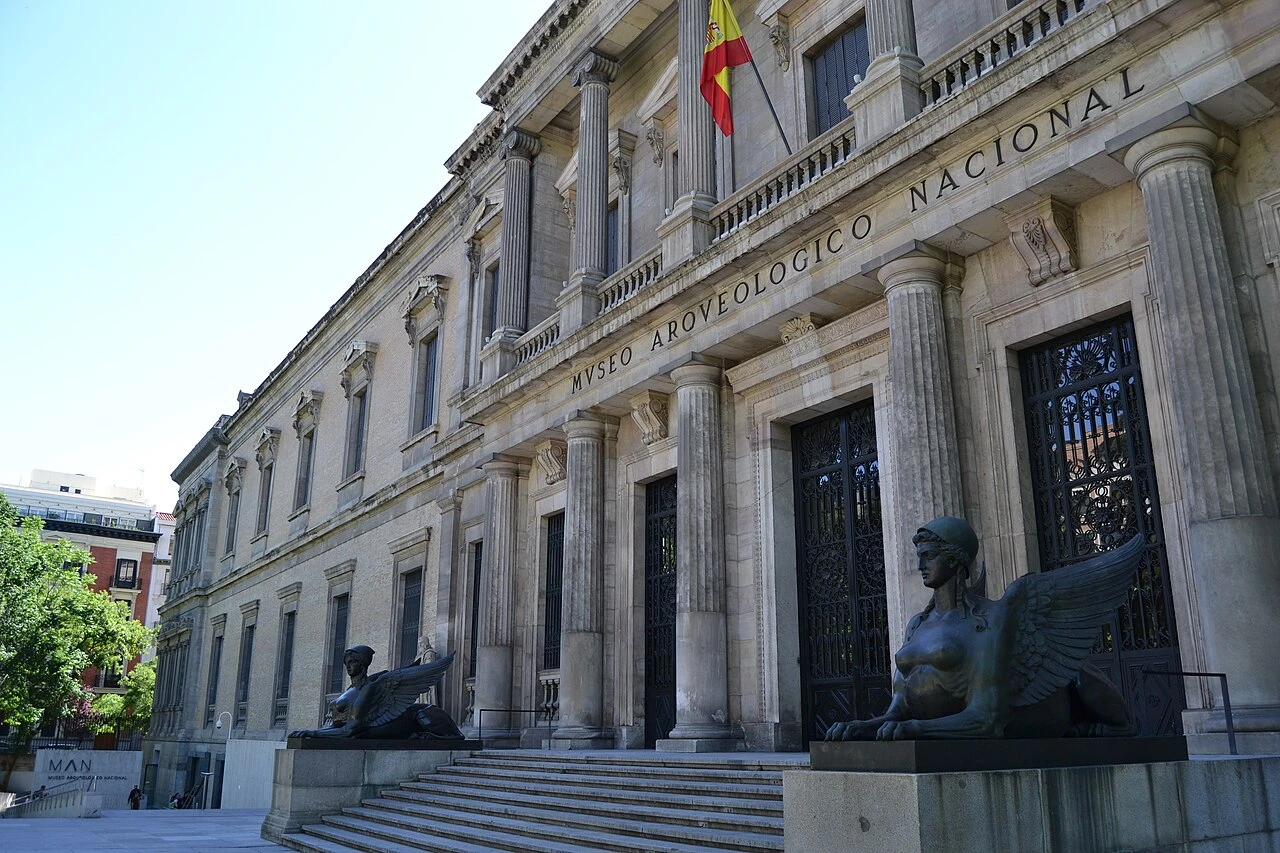
Madrid · 96 artworks
National Archaeological Museum of Spain
Content & sources
Emilio J. Rodríguez Posada · CC BY-SA 2.0