Stanza · Audio guide
Musée des Beaux-Arts de Bordeaux Audio Guide
A place to remember. A story to take with you.
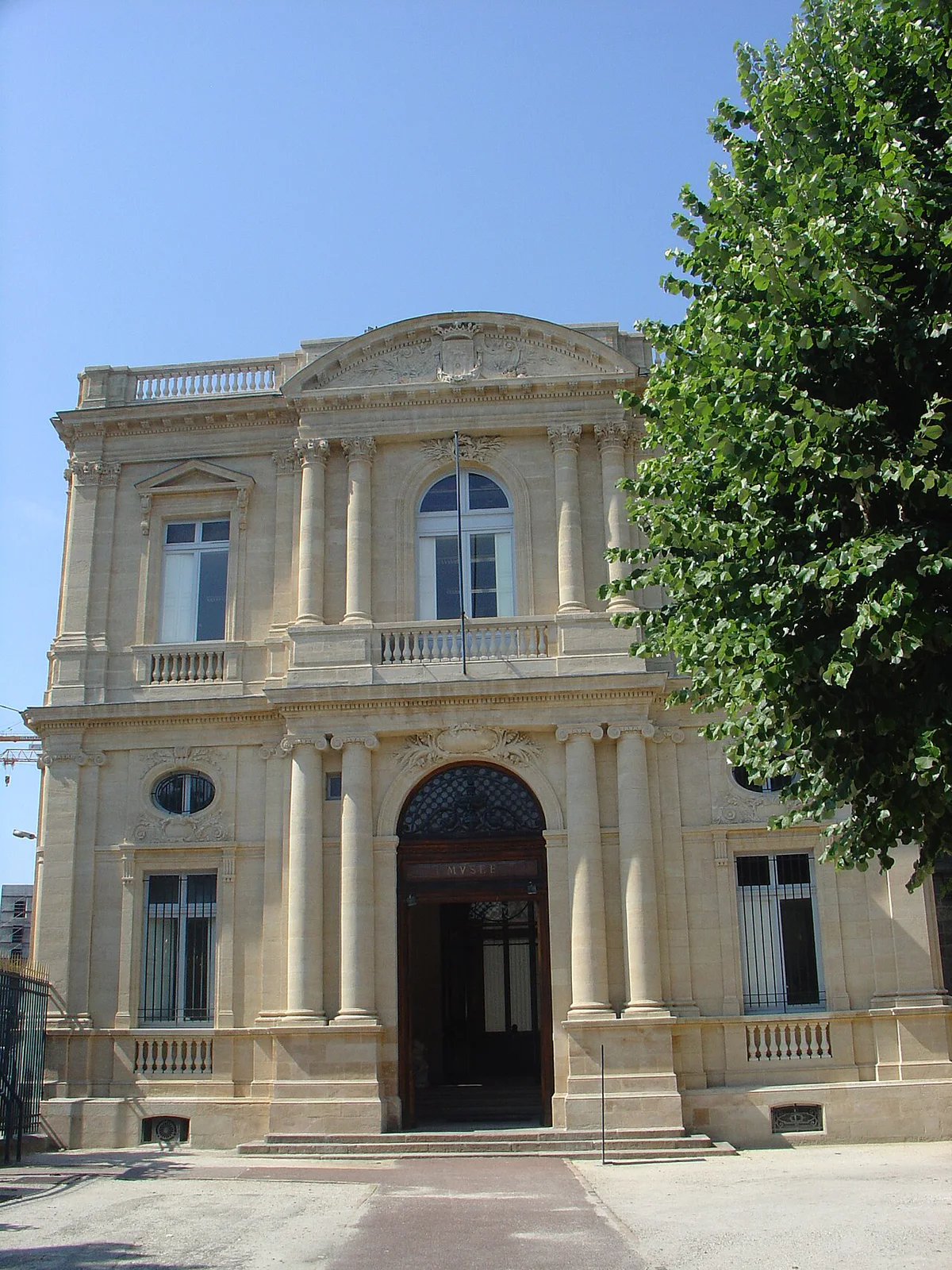
The Musée des Beaux-Arts de Bordeaux is the fine-art museum of the city of Bordeaux, France, and is housed in a dependency of the Palais Rohan in central Bordeaux. Its collections include paintings…
Download Stanza, then search for “Musée des Beaux-Arts de Bordeaux”.
About the tour
One guide. Your kind of visit.
The Musée des Beaux-Arts de Bordeaux is the fine-art museum of the city of Bordeaux, France, and is housed in a dependency of the Palais Rohan in central Bordeaux. Its collections include paintings, sculptures and drawings from the 15th to the 20th century, with paintings forming the largest collection and works by French, Flemish and Dutch painters as its strong points.
The Musée des Beaux-Arts de Bordeaux guide tells the stories of 44 artworks, including Greece on the Ruins of Missolonghi (Eugène Delacroix), Tarquin and Lucretia (Titian), The Embarkation of the Duchess of Angoulême at Pauillac (Antoine-Jean Gros), Landscape of Cagnes (Pierre-Auguste Renoir), The Ploughing Lesson (François-André Vincent), The Strawberries (Pierre-Auguste Renoir), Young Spanish Woman, by Henri Matisse (Henri Matisse), and Mozart expiring (Rinaldo Carnielo). Every artwork is free to hear in the Stanza app until 1 January.
Ready when you are.
- 01Get the free Stanza app.
iOS & Android
- 02Find your guide.
“Musée des Beaux-Arts de Bordeaux”
- 03Download before you go.
Works offline
Audio guide / 44 artworks
Inside the guide
Get to know a few of the stories before you go. Open a stop to read more.
01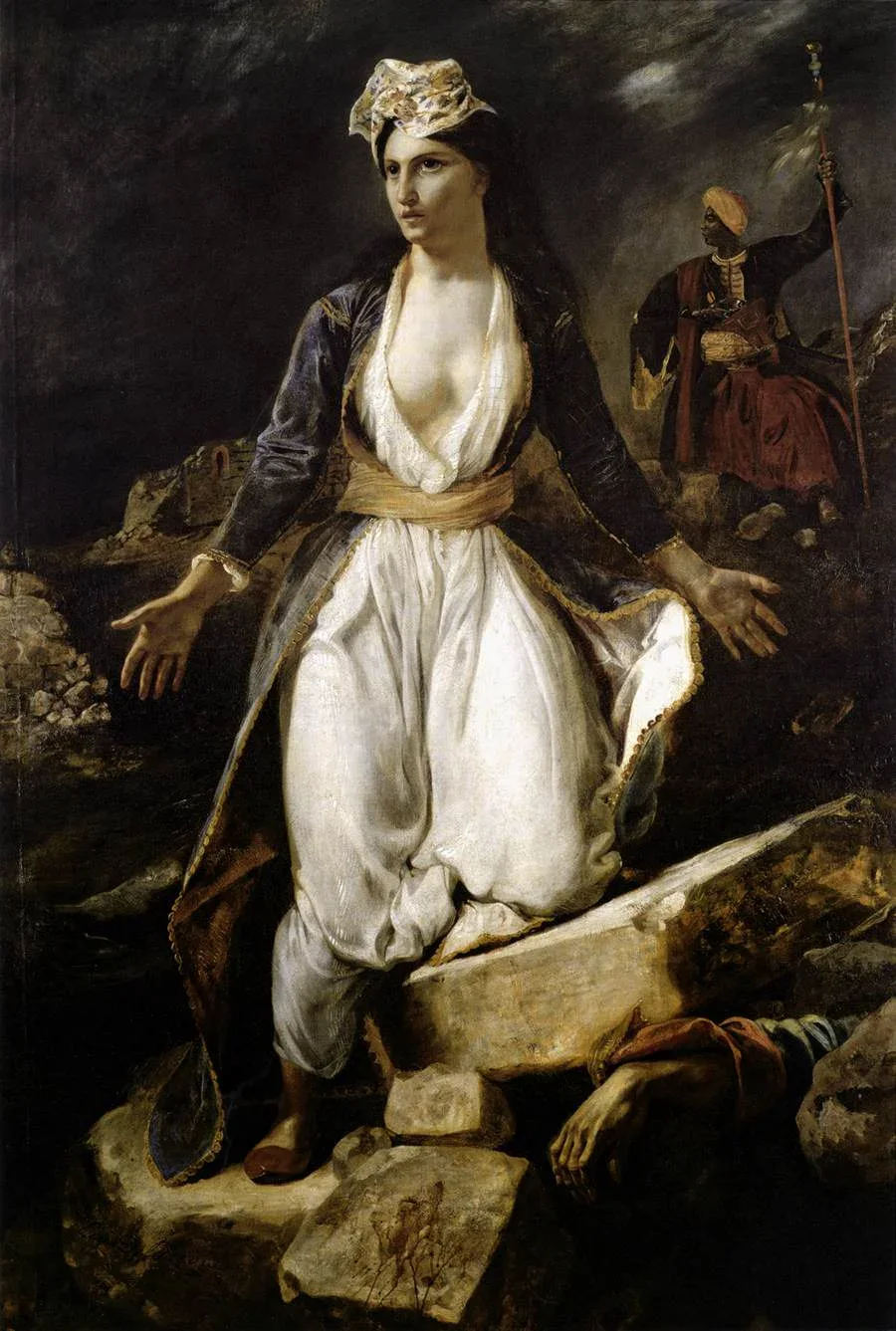
Greece on the Ruins of Missolonghi
The painter never set foot in Greece. He knew the place only through books. Above all, he knew it through Lord Byron. Byron went to Missolonghi in 1824 to help the insurgents. He died there of fever, not in battle. And yet here she is, a woman in Greek dress, kneeling on broken stone. Her arms are spread wide, her hands empty. She is Greece herself, both victim and heroine of the scene. Under her feet, the hand of a dead insurgent emerges from the rubble. Behind her, a soldier in a turban plants a flag against heavy black clouds. This is Missolonghi after the siege. The defenders held out almost a year. Disease and famine decided it, and Turkish forces got in on the night of April the twenty-second, 1826. Three days later the last defenders fired at the mines, and the explosion killed Greeks and Turks alike. The broken stone and that hand are what is left of it. The Paris Philhellenic Committee put the painting on show at Lebrun's gallery and charged admission, and the money was to go to the Greek insurgents.
Listen in the appEugène Delacroix · Public domain
02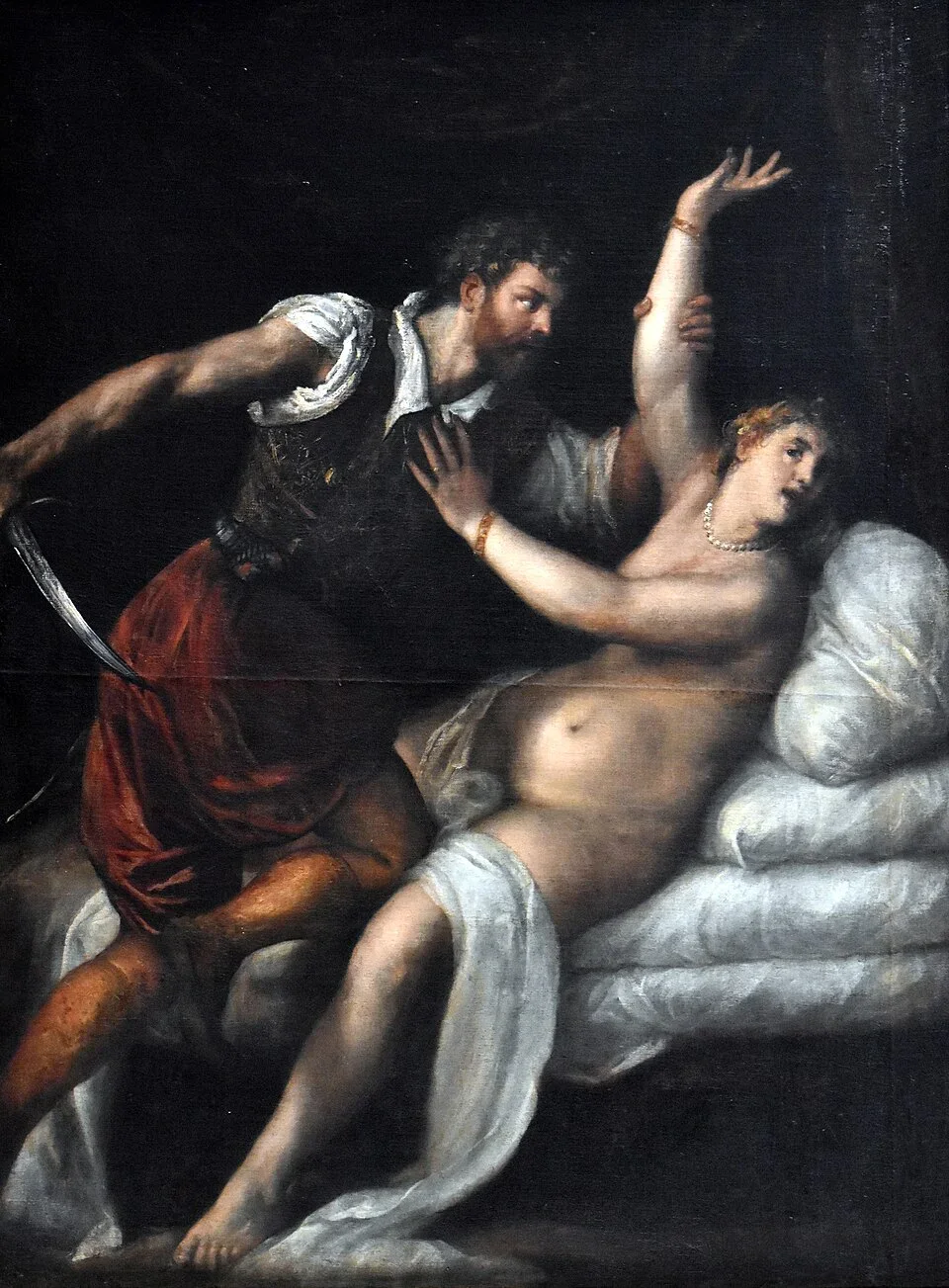
Tarquin and Lucretia
The scene spills right out of its frame. The linen on the bed and the curtains behind run past the edge, as though more of it lies beyond what you can see. The painter chose that on purpose. The moment comes from Roman history. Tarquin was a son of the last king of Rome, and here he has seized Lucretia's forearm and holds a dagger at her. He is on the left, she is on the right, and a diagonal between them holds the whole scene under tension. He is in red, the colour of passion and aggression. She lies naked on white sheets, and the white stands for her innocence. Light falls on her body and her frightened face while the back stays dark. Titian and his workshop painted this more than once. In the other version, now in Cambridge, a third figure pulls a curtain aside on the left to watch.
Listen in the appTitian · Public domain
03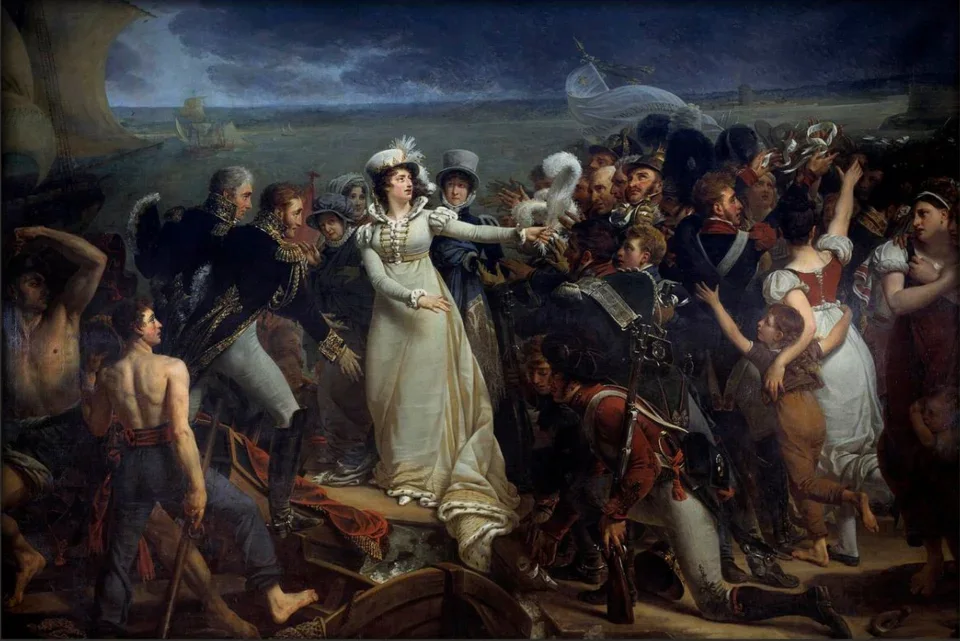
The Embarkation of the Duchess of Angoulême at Pauillac
The Duchess of Angoulême is leaving to spare Bordeaux from destruction. Napoleon has escaped from Elba, much of the royal family has fled, and her attempt to rally royalists has failed. She is the only child of Louis the Sixteenth and Marie Antoinette to survive, and the reigning king, Louis the Eighteenth, is her uncle. In the painting she is still giving something away. She had given white ribbons to the people who escorted her from Bordeaux. Now they gather them up and compete for them, showing their regret and their attachment. When the ribbons run out, she takes the plume from her own head and scatters it over the ground she is leaving. She embarked at Pauillac in April 1815 for Spain, then England, before joining her uncle in Ghent. Gros, known for pictures of Napoleon, was asked in 1816 by the Count de Pradel to paint this for a gallery at the Tuileries. It was shown at the Salon in 1819, and Louis the Eighteenth bought it in 1820. In the distance the fortress of Blaye faces Pauillac, and a fort stands in the middle of the river. Those three points guarded the entrance to the Gironde, the waterway she took out of France.
Listen in the appPhoto: Lord Cornwallis · Public domain
04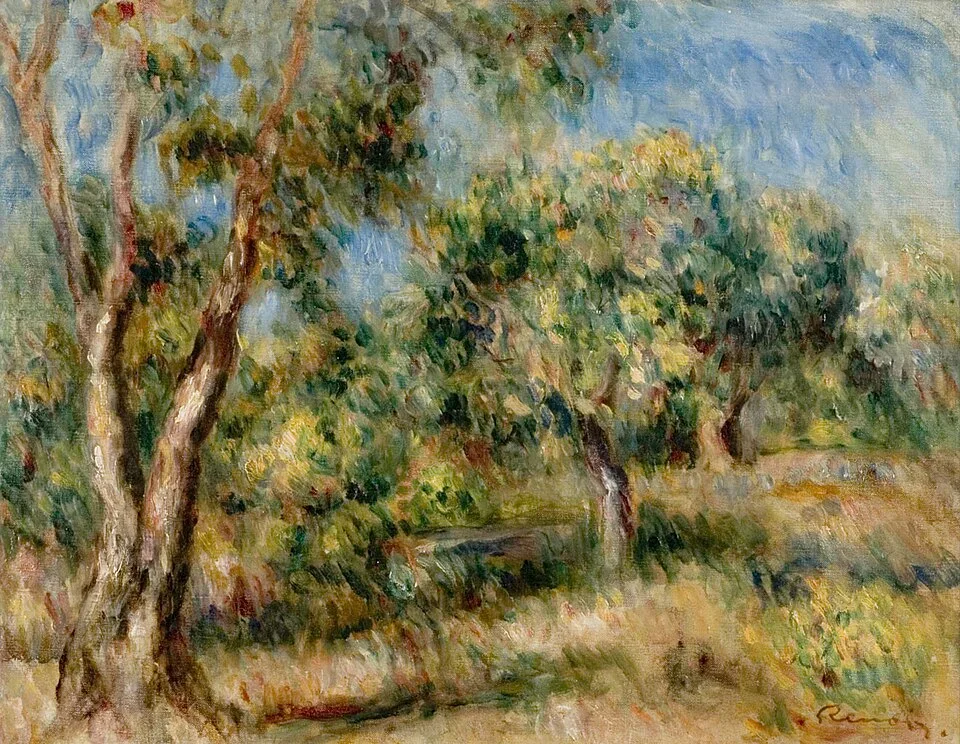
Landscape of Cagnes
A few trees, and that is the whole scene. They stand at Cagnes-sur-Mer in the Alpes-Maritimes, the town where Renoir lived, and he painted them there in the Impressionist style. So this landscape shows a corner of the place he called home. It came to the public as a bequest from Albert Marquet, who died in 1947, and the next year it entered the public collections. But it barely moved. It stayed with Marquet's widow, in her keeping, until her own death. It is part of the Musée d'Orsay collections in Paris. Yet it has not been in Paris for a long time. Since 1982 it has been here in Bordeaux, on loan from the Orsay, which still owns it.
Listen in the appPierre-Auguste Renoir · CC BY-SA 4.0
05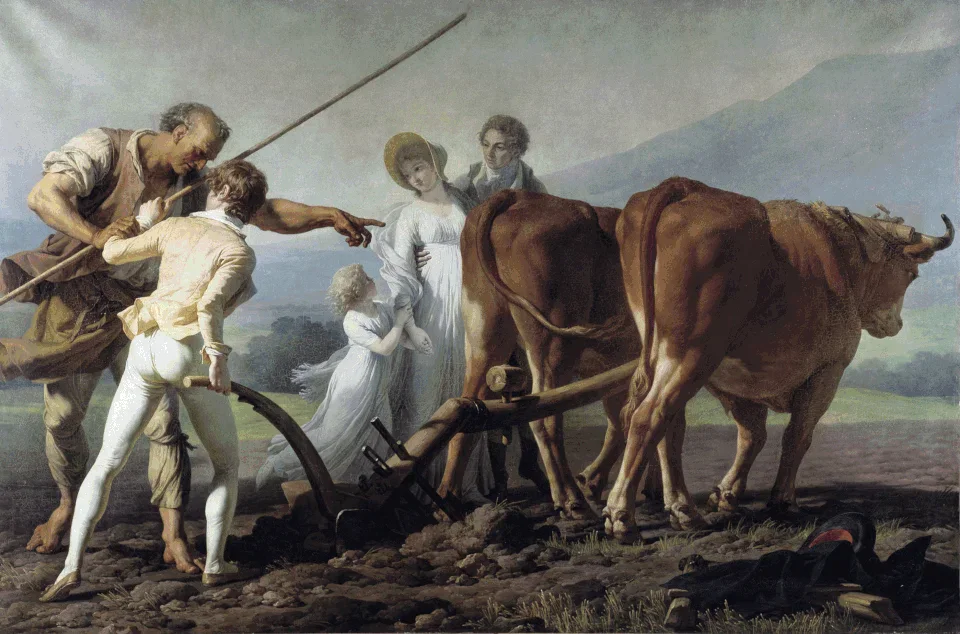
The Ploughing Lesson
A farmer points one finger straight ahead, toward the two oxen that fill the right half of the picture. The boy, with his back to us in the left third, is learning to guide them. But this is no farm boy. He is Jean-Bernard Boyer-Fonfrède, son of a wealthy family, and his father François-Bernard ordered the painting. After the French Revolution, knowing how to farm was thought to matter a great deal. François-André Vincent, who often painted historical scenes, took on this one moment of ordinary life. It was painted for the family's townhouse in Toulouse and shown at the Salon in Paris. And in the middle distance stand the boy's sister, his mother and his father, painted in to witness the lesson.
Listen in the appFrançois-André Vincent · Public domain
06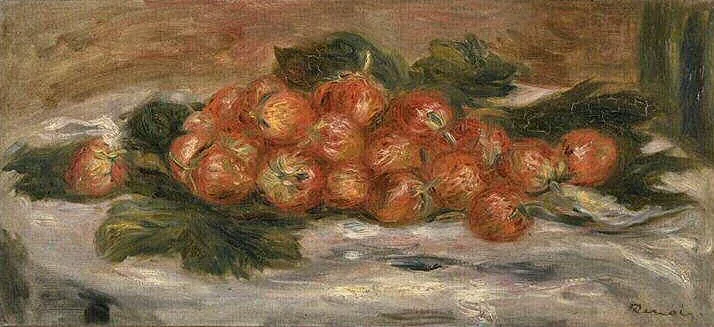
The Strawberries
Most people would walk past the little signature in the bottom right corner. It is Renoir's, on a small painting of wild strawberries on a white cloth. The white is what lets their yellow and red show, and each berry is painted with great care. He painted it in 1908, and it went first into the collection of Eugène Blot. In 1933 it was sold to Frédéric Lung. In 1961 Lung left it to the national museums, and it came here to Bordeaux. Later it was shown in Rome in 1999, and in Osaka in the year 2000.
Listen in the appPierre-Auguste Renoir · Public domain
07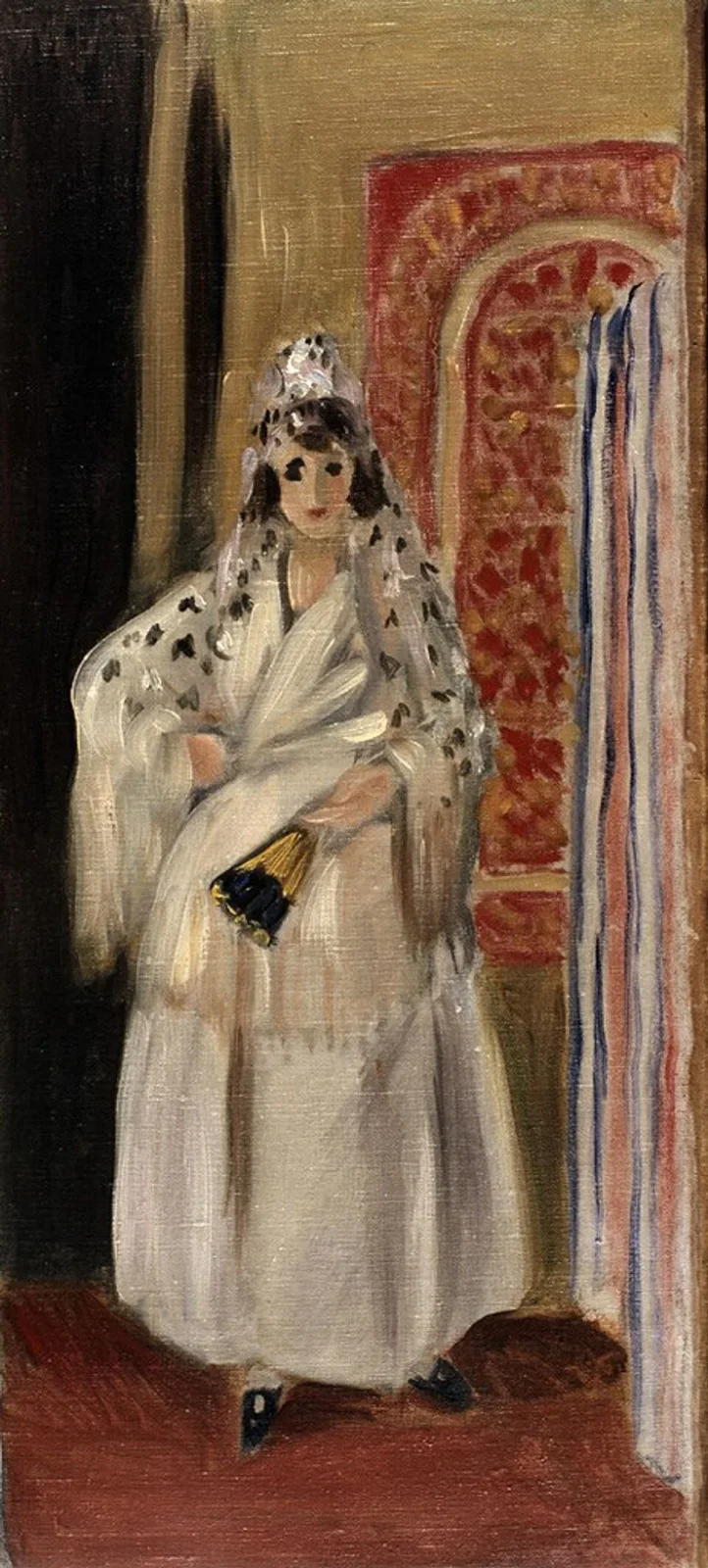
Young Spanish Woman, by Henri Matisse
A young woman in traditional Spanish dress stands in a decorated room, a fan in her hand. Matisse painted her in 1921. The painting was left to the national collection of modern art in Paris by Albert Marquet, and Paris still owns it. You would expect to find it there. Instead it has been here in Bordeaux since 1961, on loan.
Listen in the appHenri Matisse · Public domain
08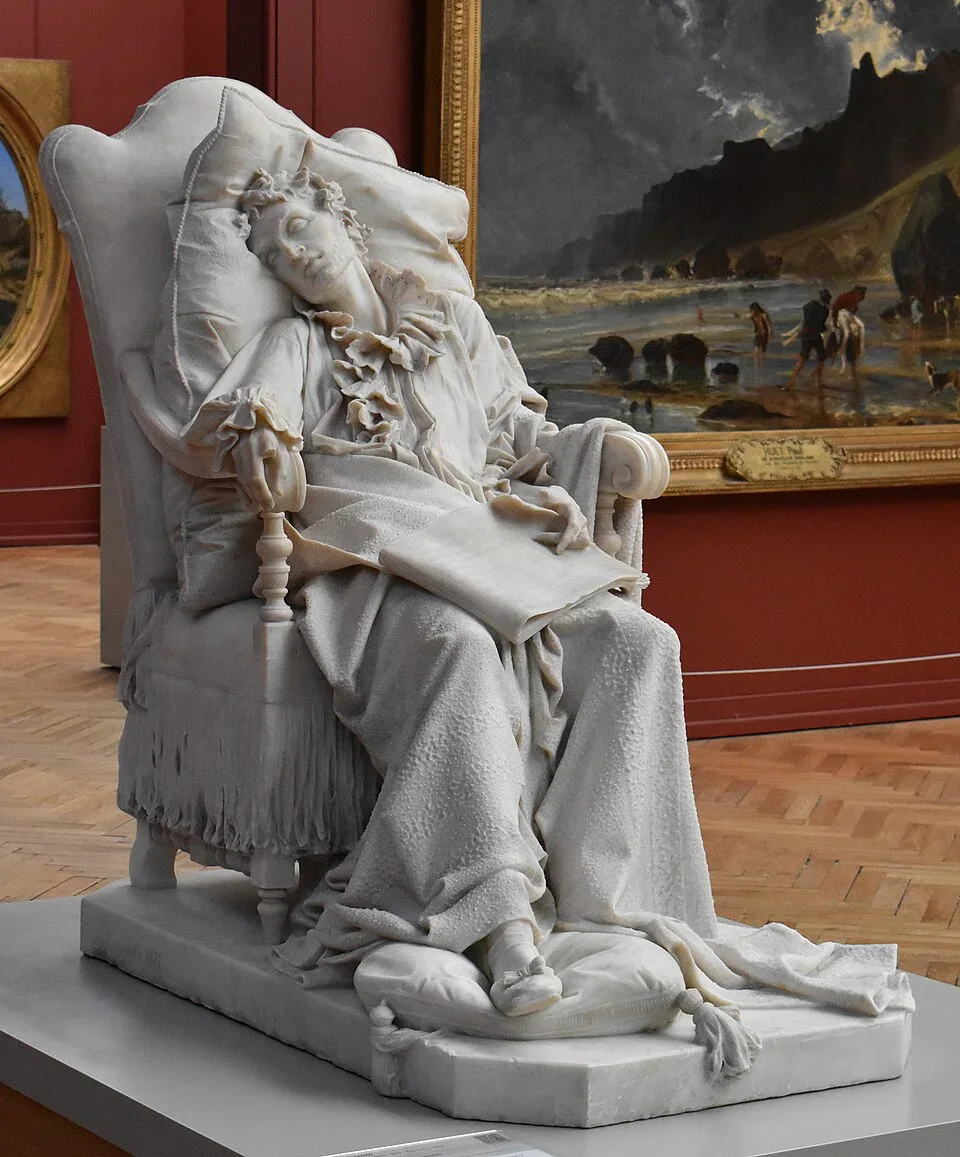
Mozart expiring
Rinaldo Carnielo wanted the last moments of Mozart, and he wanted it to look like dying. He had read a biography of the composer. He loved The Marriage of Figaro and Don Giovanni, and he thought sculpture should keep the end of the man who wrote them. After his father died and he had a large family to support, he went to hospitals to study people near death and corpses. That study is in the face. Mozart sits in an armchair with his head on a cushion. His face is thin, his eyes half closed and his mouth a little open. One hand rests on the armrest. The other lies across his knees, hiding a manuscript that is probably his Requiem. The plaster went to the World's Fair in 1878. The Italian delegation would not present it as Italian, because the subject was too gloomy, so it appeared among the French works. In 1879 the French state bought the marble for the national music conservatory. Then the Grand Théâtre de Bordeaux refused it. A dying man, they felt, did not belong in a house of pleasure and festivities. That refusal brought it here. The thick blanket over his legs and his flat shoes with bows are cut into the marble with all their texture.
Listen in the appPhoto: Tylwyth Eldar · CC BY-SA 4.0
09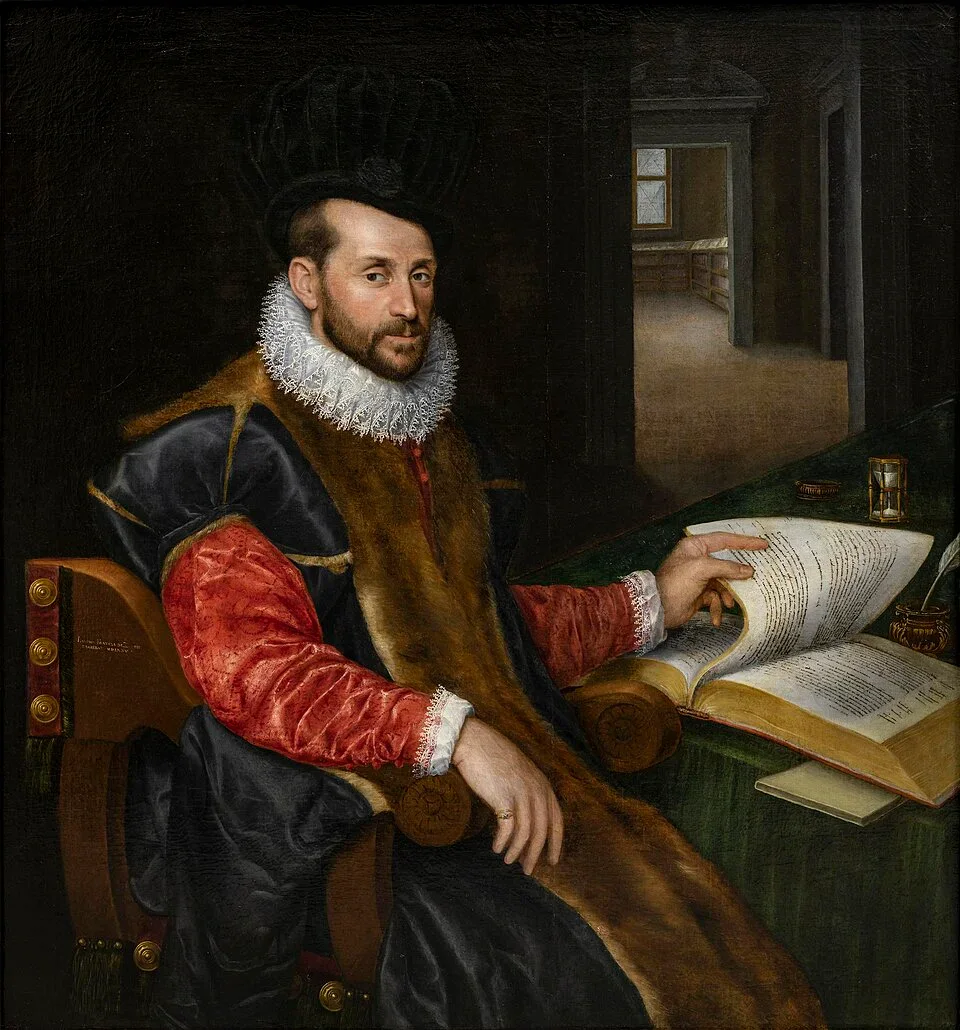
Portrait of a Sitting Man Leafing Through a Book
A man in a dark velvet robe edged with fur sits at a desk. His left hand turns the page of an open book. Red sleeves and a lace collar complete the outfit. On the little finger of his right hand is a ring that probably carries his family's arms. For a long time he was taken for a senator of the Orsini family. Under the book lies a notebook. Beside it are a pen, an inkwell and an hourglass. Through the opening behind him lies what may be a library, or a cabinet of curiosities. Together these suggest a scholar from Bologna, a cultivated man involved in intellectual work. He is perhaps linked to Cardinal Gabriele Paleotti. Lavinia Fontana, whose family was close to the cardinal, moved in those humanist and church circles. It was painted on a private commission, one of many from nobles and clergy.
Listen in the appLavinia Fontana · Public domain
10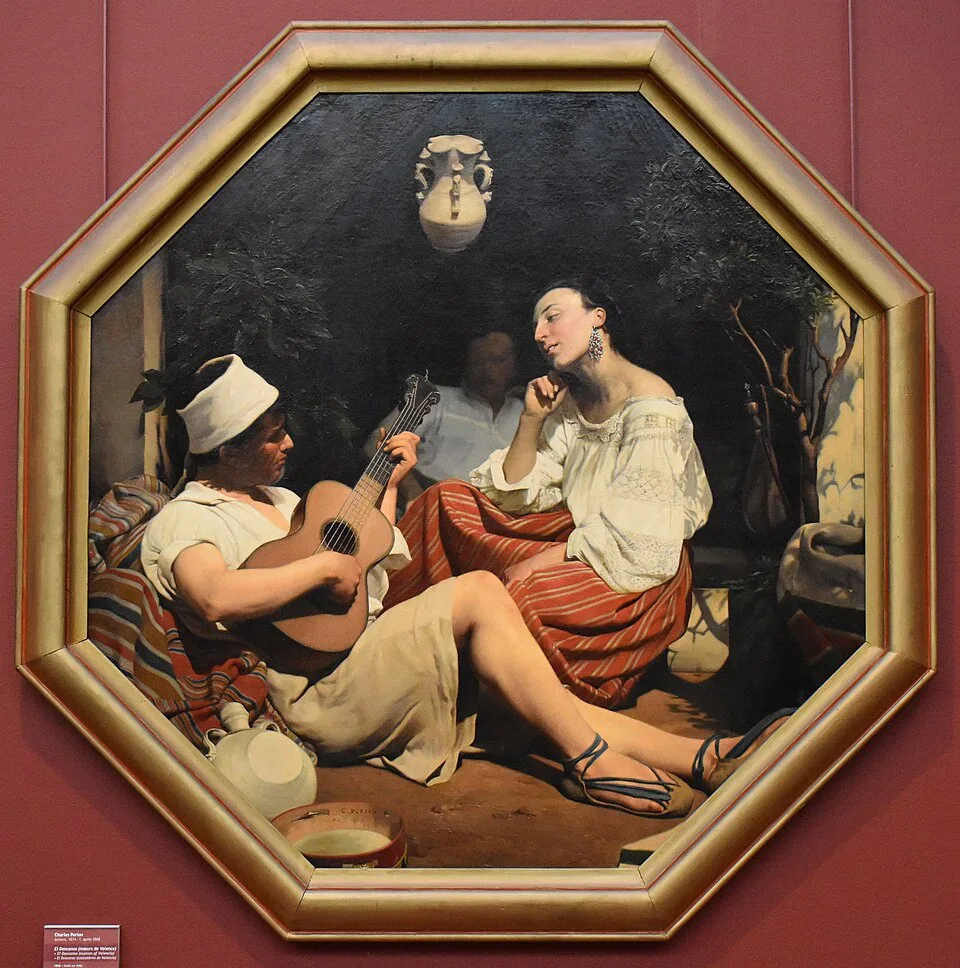
Charles Porion - The Rest (Customs of Valencia) 01
A man leans back against a divan, his guitar still in his hand. Beside him a young woman has turned her head to listen, and a jug hangs above them both. Behind them the shape of another man seems to emerge from the dark. The hexagonal frame draws you into the patio, and the whole scene seems within reach. But this is an imagined Spain. Charles Porion drew on Spanish imagery, as his teacher Ingres had. Warm light falls on the two faces, and almost nothing in the scene moves. Porion also stepped into his own picture. One of the men here is his portrait. Inside the tambourine at the lower left he signed his name. He also wrote España 1856, Spain and the year.
Listen in the appPhoto: Tylwyth Eldar · CC BY-SA 4.0
- 11
Life Class at the École des Beaux-Arts
Albert Marquet · 1898–1899
- 12
Portrait of Cecilia de Madrazo Fortuny
Giovanni Boldini · 1882
- 13
Louis XVI
Nicolas Raggi · 1829
- 14
Threshing Wheat in the Camargue - Rosa Bonheur
Rosa Bonheur · 1864
- 15
Portrait of a Little Girl
Mary Cassatt · 1879
- 16
The Apostle
Raoul Larche · 1902
- 17
A Singer Accompanying Himself on the Lute
Hendrick ter Brugghen · 1624
- 18
View of a part of the port and the quays of Bordeaux known as Chartrons and Bacalan
Pierre Lacour the Elder · 1804–1806
- 19
Enthroned Madonna and Child between Saints Jerome and Augustine, four angels, and two cherubs
Pietro Perugino · 1500
- 20
Bartolomé Esteban Murillo - Saint Anthony of Padua Adoring the Christ Child 02
Bartolomé Esteban Murillo · c. 1675
- 21
Charles V Picking up Titian's Paintbrush
Pierre-Nolasque Bergeret · 1808
- 22
Drunken Bacchus and Cupid
Jean-Léon Gérôme · 1850
- 23
Jean-Léon Gérôme - Bacchante with Grapes 01
Jean-Léon Gérôme · c. 1892
- 24
Act of Devotion by Captain Desse, of Bordeaux, towards The Columbus, a Dutch Ship
Théodore Gudin · 1829
- 25
L'Atelier à Marseille
Albert Marquet · 1916
- 26
Portrait of Marie de' Medici
Anthony van Dyck · 1631
- 27
Diana Bathing
Jean-Baptiste Camille Corot · 1855
- 28
Portrait of a man with his hand on his heart
Frans Hals · 1632
- 29
Summer, Ceres
Jean-François Millet · 1864–1865
- 30
Veronese - Holy Family with Saint Dorothy, Bx E 36
Paolo Veronese · 16th century
- 31
Palma il Vecchio - Portrait of a Man Holding a Letter and a Glove 02
Palma Vecchio · c. 1515–1525
- 32
The Mirror
Henri Gervex · c. 1880
- 33
Tintoretto at the Deathbed of his Daughter
Léon Cogniet · c. 1843
- 34
The Inconsolable
Jean-Baptiste Greuze · c. 1780
- 35
Portrait of Cornelis Janson van Ceulen (1593-1661), Elizabeth Beck (?-1670) and Cornelis Janson van Ceulen (1634-1715)
Adriaen Hanneman · c. 1660
- 36
The Forest of Fontainebleau
Narcisse Virgilio Díaz · 1867
- 37
Charity, Genoa, late 18th c. (3573849508)
Pierre Le Gros the Younger · late 18th century
- 38
Portrait of Lord Rokeby
Joshua Reynolds · 18th century
- 39
Sainte-Eulalie Church, Bordeaux
Jean-Paul Alaux · 1831
- 40
Tobias restoring his father's sight
Louis Boullogne · 17th century
- 41
NorthcoteDevergondee
James Northcote · 1796
- 42
Trajan trying to compel Saint Eustace to worship the statue of Jupiter
Giambattista Pittoni · 1722
- 43
Laying Venus
Gaspare Diziani · 1714
- 44
Bordeaux - The Seated Virgin with the Child Sitting on Her Right Knee
Unknown Artist · 16th century
Musée des Beaux-Arts de Bordeaux
Frequently asked questions
How much does the guide cost?
Free app download. Free until 1 January. Listed guide price: $0.99. Audio guide only. Venue admission is separate.
Can I listen without internet?
Yes. Download the guide’s audio, images, and maps in the app before your visit. Your downloaded content is then available offline.
Can I listen in my language?
In English for now. More languages soon.
Do I need to follow a schedule?
No. This is a self-guided experience. Choose your stops, pause whenever you like, and return to a story at your own pace.
Which artworks are in the Musée des Beaux-Arts de Bordeaux audio guide?
44 artworks, including Greece on the Ruins of Missolonghi (Eugène Delacroix), Tarquin and Lucretia (Titian), The Embarkation of the Duchess of Angoulême at Pauillac (Antoine-Jean Gros), Landscape of Cagnes (Pierre-Auguste Renoir), The Ploughing Lesson (François-André Vincent), The Strawberries (Pierre-Auguste Renoir), Young Spanish Woman, by Henri Matisse (Henri Matisse), and Mozart expiring (Rinaldo Carnielo). The full list is on this page.
Is this the museum’s official audio guide?
No. Stanza is an independent audio guide app and is not affiliated with Musée des Beaux-Arts de Bordeaux. Museum admission is separate.
At your own pace
Explore Musée des Beaux-Arts de Bordeaux.
Download Stanza, then search for “Musée des Beaux-Arts de Bordeaux”.
Free app download · Guide price shown in the app
Keep exploring
Audio guides — France

Montignac-Lascaux · 140 km
Grotte de Lascaux
Content & sources
EU · Public domain
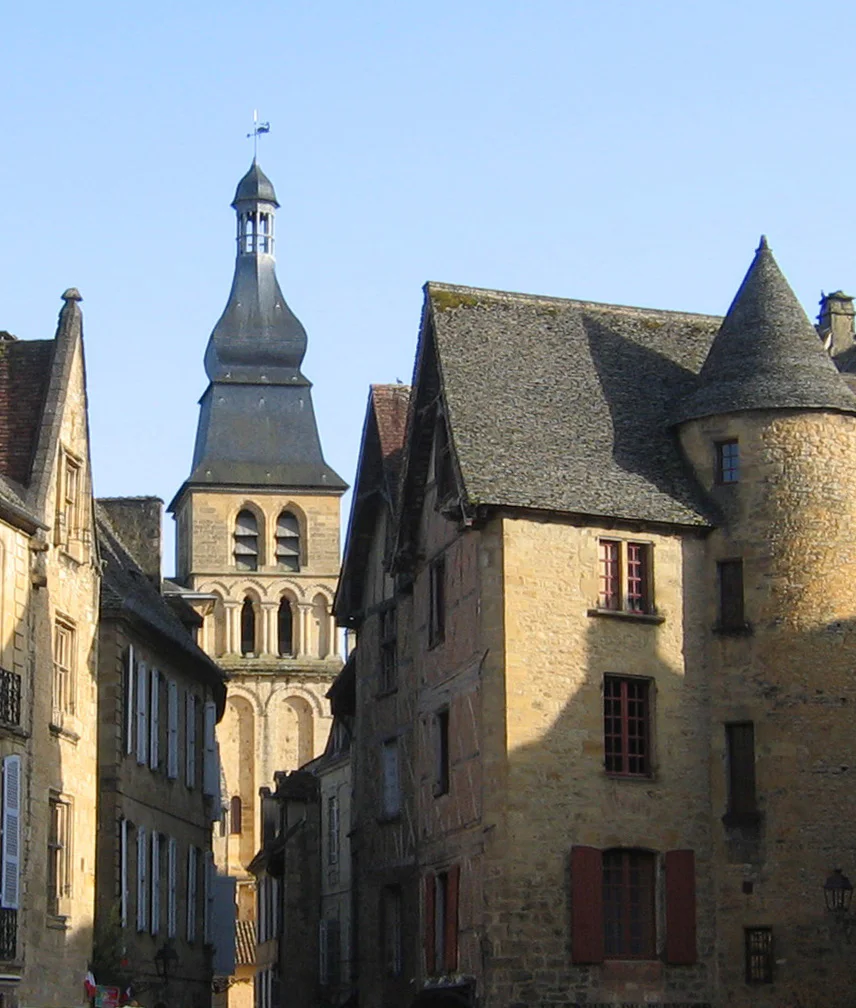
Sarlat-la-Canéda · 142 km
Cathédrale Saint-Sacerdos de Sarlat
Content & sources
Gilbert Bochenek · Public domain
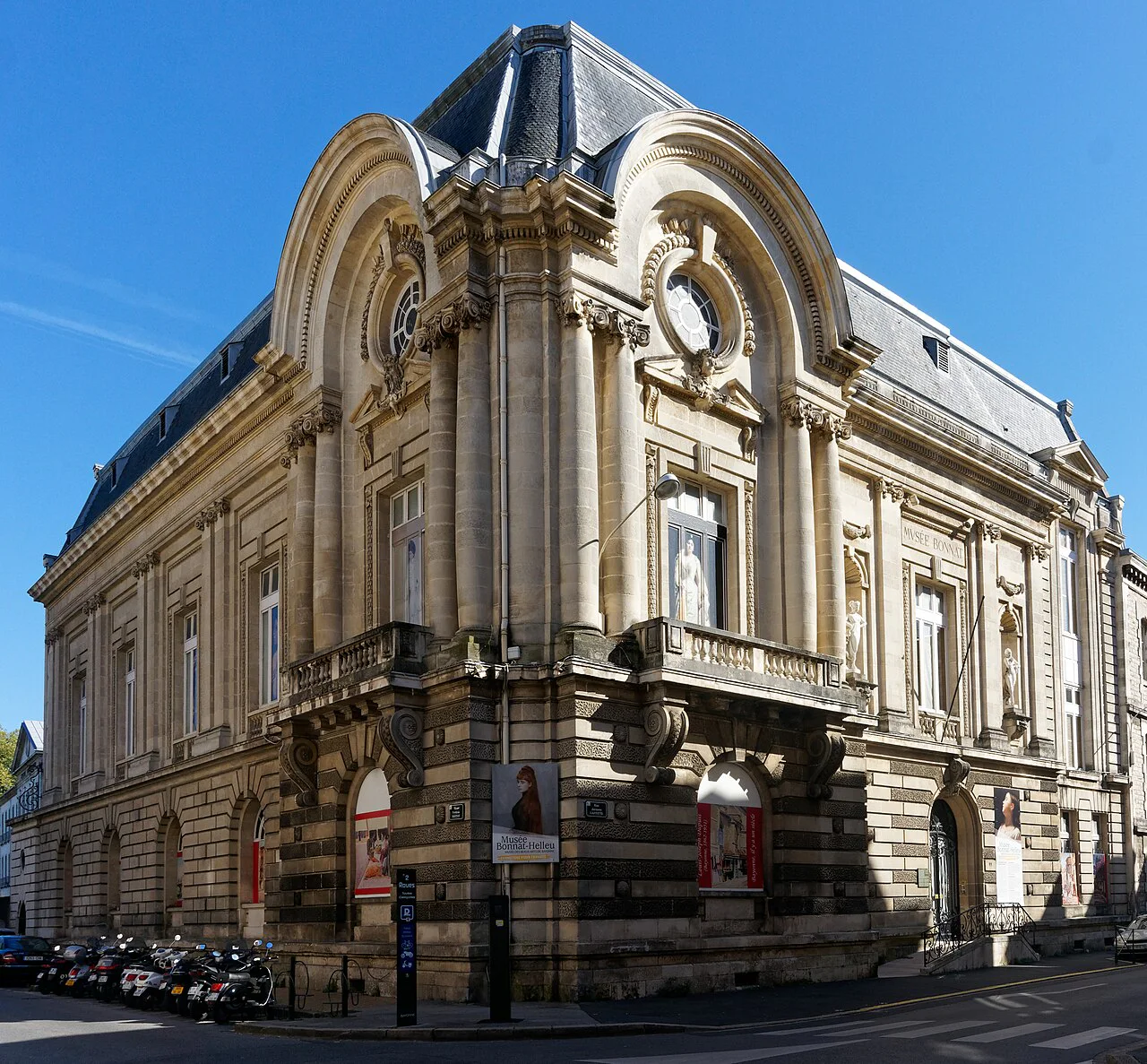
Bayonne
Musée Bonnat-Helleu
Content & sources
Photo: Jvillafruela · CC BY-SA 4.0
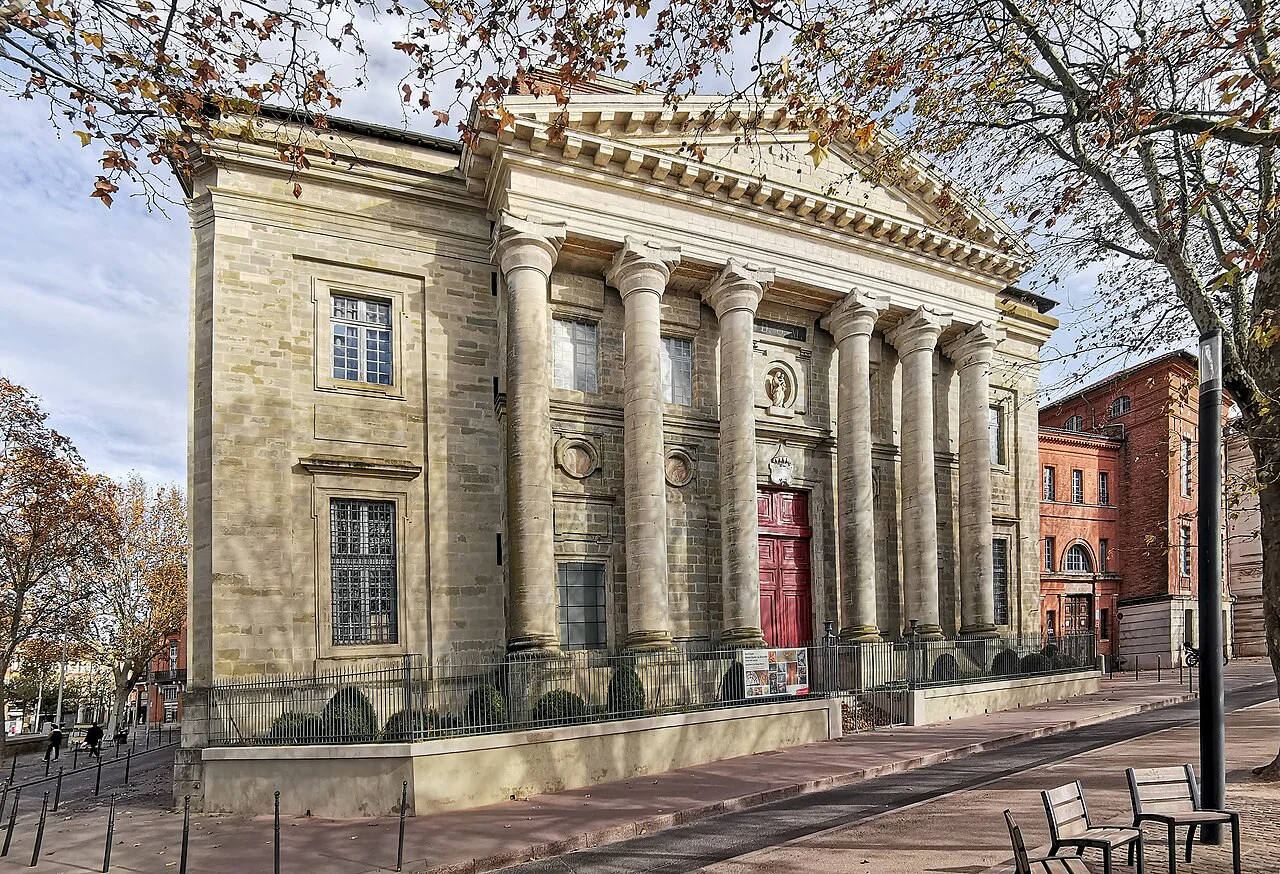
Toulouse
Basilique Notre-Dame de la Daurade
Content & sources
Didier Descouens · CC BY-SA 4.0
Art museums
More art museum audio guides
Bayonne · 28 artworks
Musée Bonnat-Helleu
Content & sources
Photo: Jvillafruela · CC BY-SA 4.0
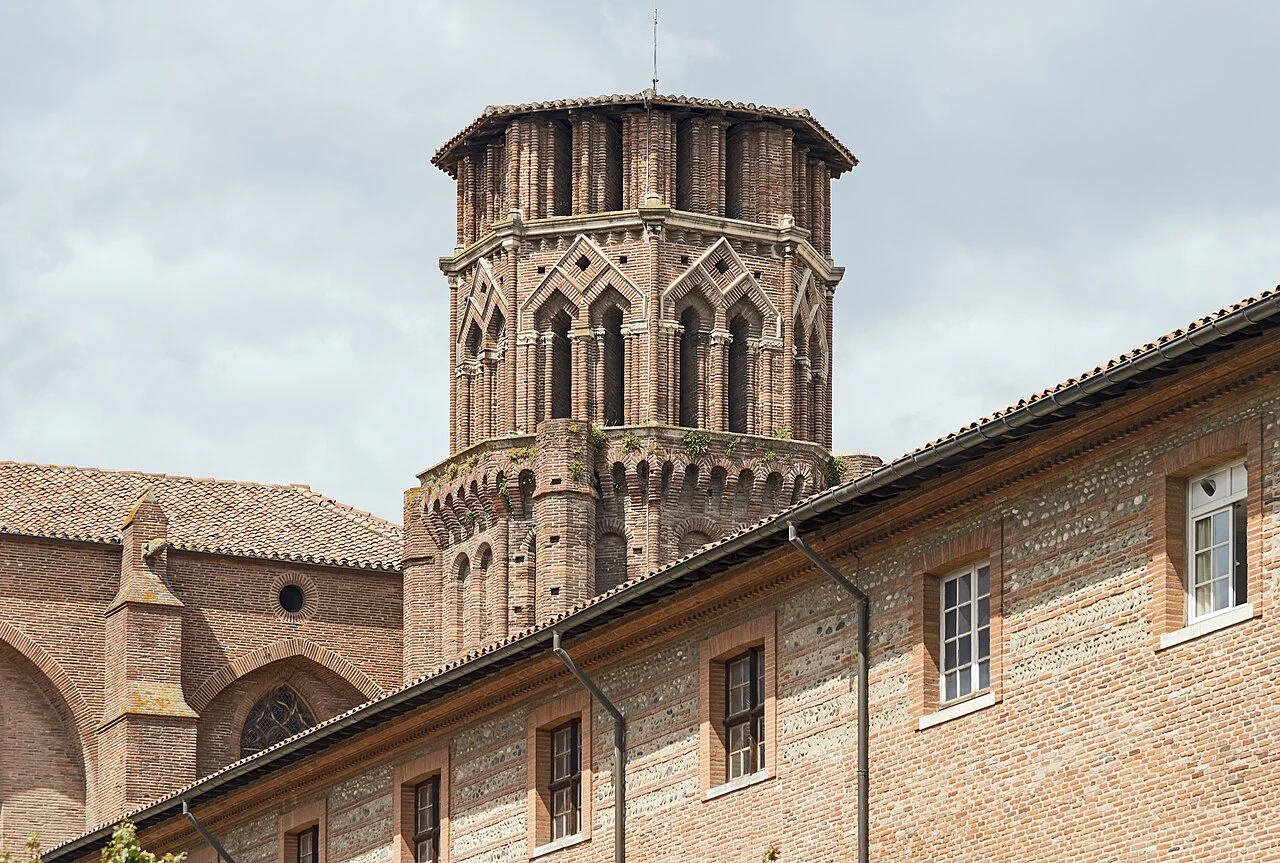
Toulouse · 89 artworks
Musée des Augustins de Toulouse
Content & sources
Didier Descouens · CC BY-SA 4.0
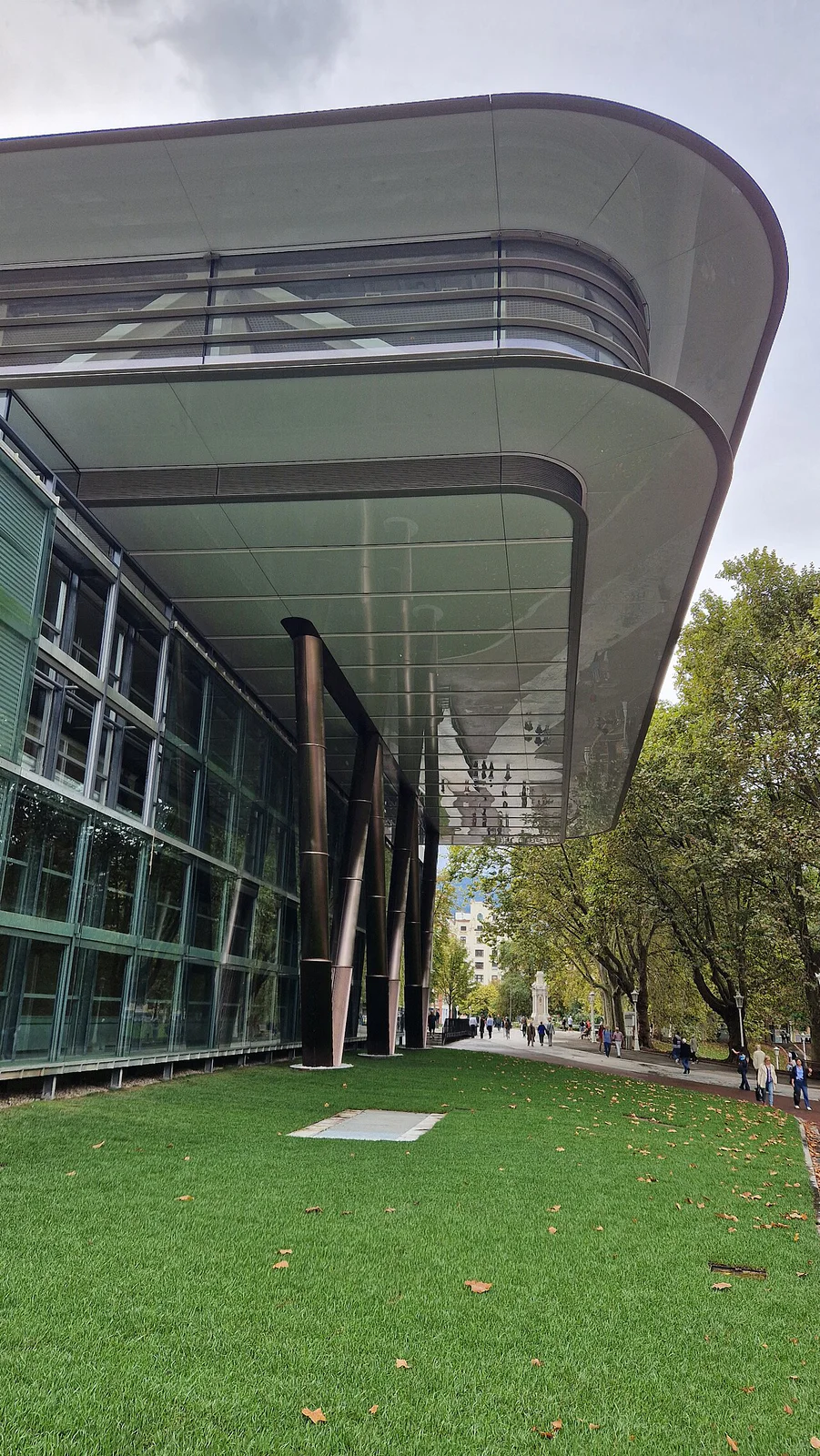
Bilbao · 43 artworks
Museo de Bellas Artes de Bilbao
Content & sources
Photo: Xabier · CC0
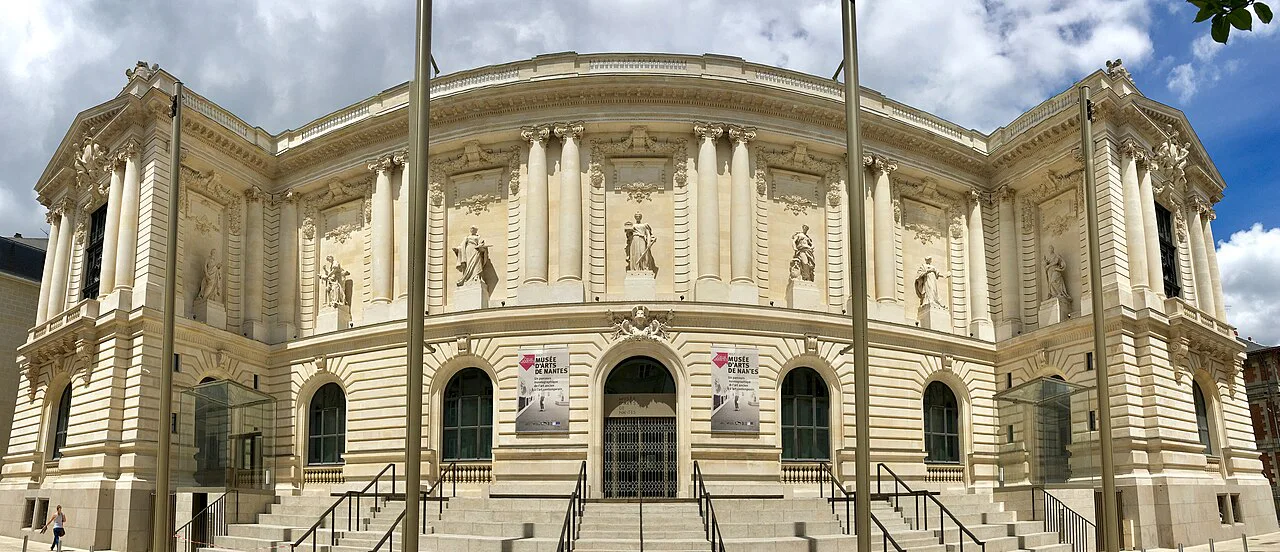
Nantes · 57 artworks
Musée d'Arts de Nantes
Content & sources
Vincent Valentin · CC BY-SA 4.0
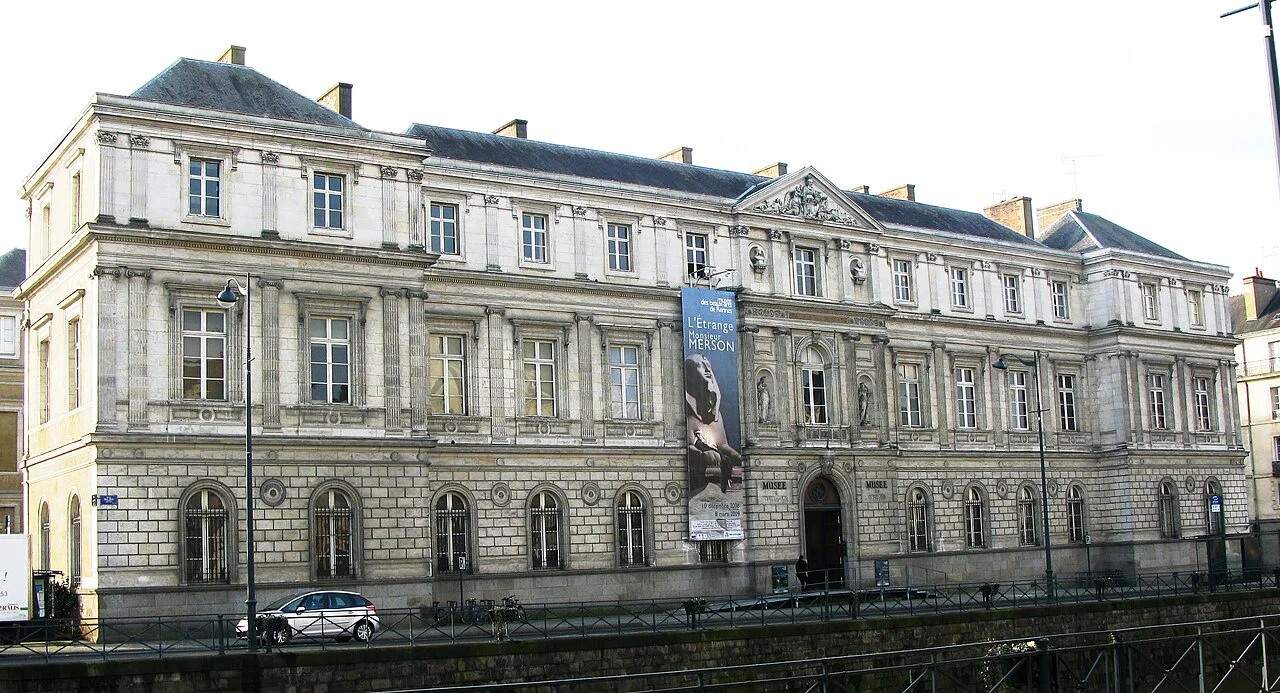
Rennes · 27 artworks
Musée des Beaux-Arts de Rennes
Content & sources
Photo: XIIIfromTOKYO · CC BY-SA 3.0
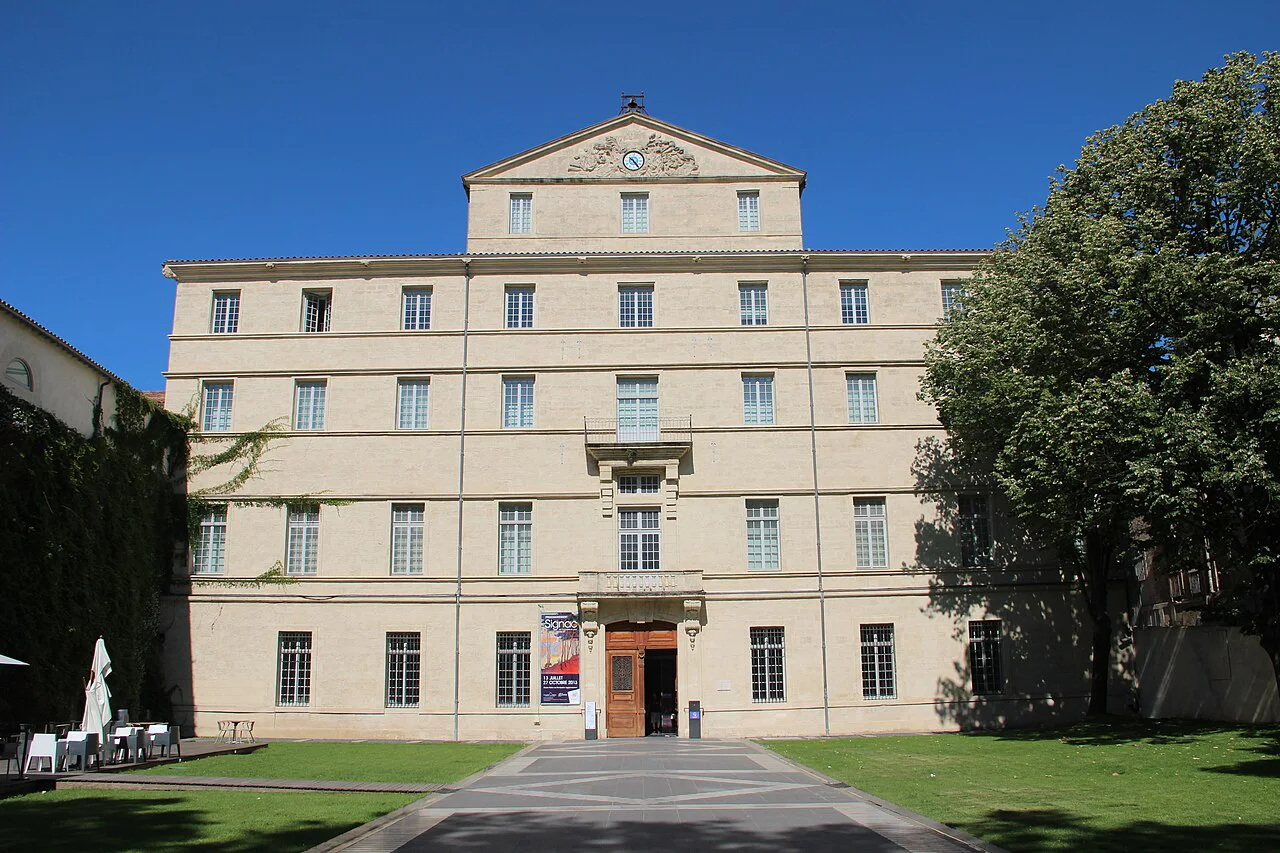
Montpellier · 84 artworks
Musée Fabre
Content & sources
Björn S. · CC BY-SA 3.0