Stanza · Audio guide
Basilique Notre-Dame de la Daurade Audio guide
A place to remember. A story to take with you.
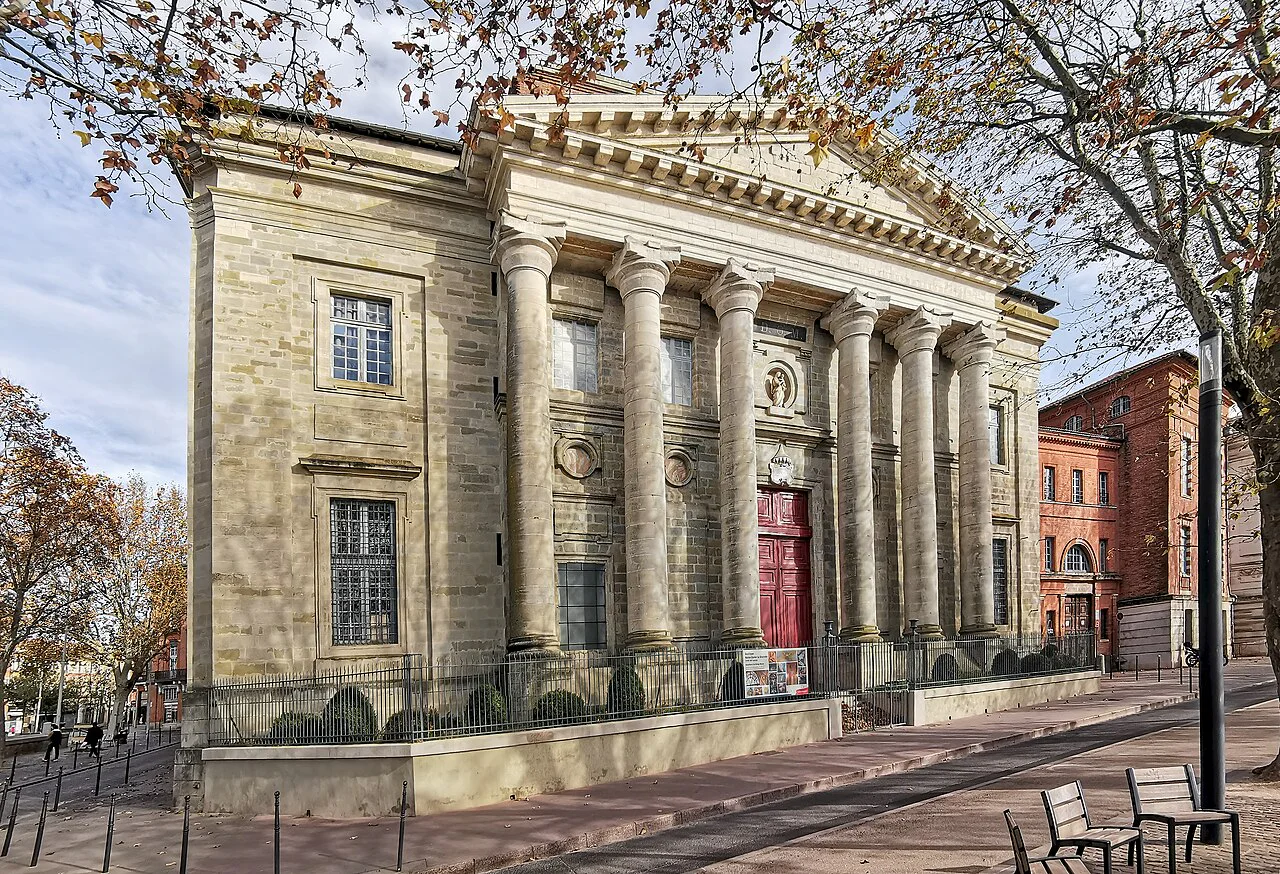
Notre-Dame de la Daurade is a basilica located in Toulouse, France. It was established in 410 following the conversion of a pagan temple dedicated to Apollo into a Christian site.
Download Stanza, then search for “Basilique Notre-Dame de la Daurade”.
About the tour
One guide. Your kind of visit.
Notre-Dame de la Daurade is a basilica located in Toulouse, France. It was established in 410 following the conversion of a pagan temple dedicated to Apollo into a Christian site.
Ready when you are.
- 01Get the free Stanza app.
iOS & Android
- 02Find your guide.
“Basilique Notre-Dame de la Daurade”
- 03Download before you go.
Works offline
Audio guide / 9 narrated stops
Inside the guide
Get to know a few of the stories before you go. Open a stop to read more.
01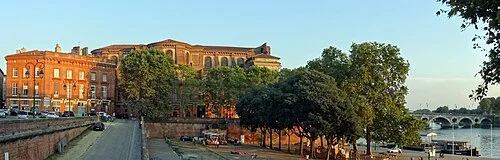 The Neoclassical Facade and Quay ViewThe Basilica and the Garonne Quays
Welcome to the Basilique Notre-Dame de la Daurade, one of the oldest Christian sites in Toulouse. The basilica stands directly on the Garonne, and the river explains its strange shape. In 1761 the medieval church was demolished to make way for the city's new riverside quays. A replacement was begun, but its plans were rotated and shifted in 1773 so the building would line up with the quays. That rotation left the choir of the original basilica, built on the vestiges of a Roman temple, under today's transept. The new church was only truly finished in 1883, more than a century after the demolition. From across the river the building reads as a calm classical front, with a deliberately low roofline where a bell tower would usually rise.
Photo: Don-vip · CC BY-SA 3.0
02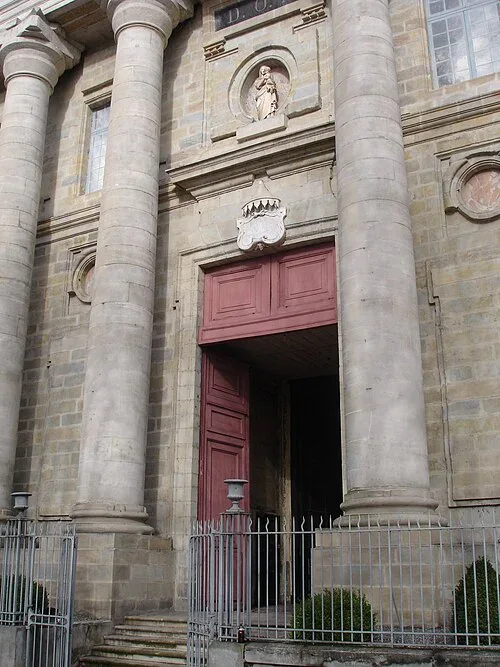 The Neoclassical Facade and Quay ViewThe Portal and the Nougaro Bells
The grand portal, with its towering columns and classical pediment, announces the neoclassical ambition of the rebuild. Unusually for a basilica, the facade carries no bell tower at all; the bells hang in a low structure on the roof. In 2018, as part of the restoration, seven bells were tuned so their notes play the opening of Claude Nougaro's song Toulouse, written in 1967 and long treated as the city's unofficial anthem. Three of them were cast in public on the quay, a few dozen steps from the church. During the pouring, the mould of the middle bell leaked and thirty kilograms of molten bronze escaped. The leak was sealed in a hurry, but the metal ran short for the largest bell, named Maria Dauratae. She had to be melted down and cast again at the Paccard foundry in Annecy.
Pinpin (talk · contribs) · CC BY-SA 3.0
03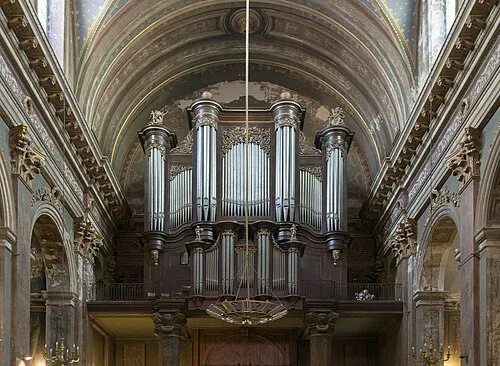 The Nave and Golden LegacyThe Nave and Tribune Organ
Inside, the church opens into a single wide nave under a painted dome. The view from the organ gallery at the back takes in the whole sweep of the space. The great tribune organ fills that gallery with tiered pipes and gilded detail. Both the basilica and this organ enjoy protection: the church has been listed as a historic monument since 1963, and the organ is separately classified. A second, smaller organ serves the choir near the altar. A long programme of cleaning and restoration has brought the painted surfaces of the interior back to their colours.
Listen in the appDidier Descouens · CC BY-SA 4.0
04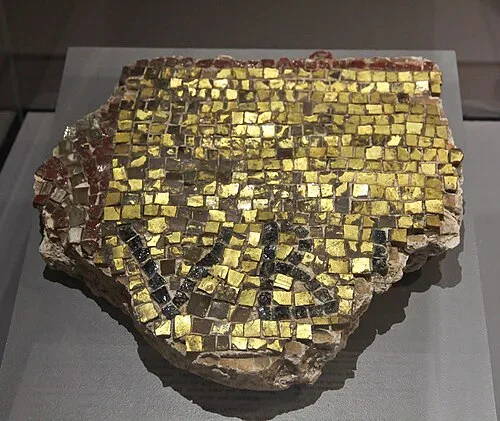 The Nave and Golden LegacyFragment of the Golden Mosaic
One battered fragment of gold tesserae survives from the church that gave this place its name. In the fifth or sixth century a church stood here, its apse covered in golden mosaics. That brilliance produced the name Deaurada, meaning covered in gold, which became la Daurade. The church rose on the vestiges of a twelve-sided Roman temple, probably dedicated to Apollo. The Visigoths, who followed Arian Christianity, used it before it passed into Catholic hands after the Battle of Vouillé in 507. In the ninth century it became a Benedictine monastery. The fragment keeps its gold-faced squares and the traces of a lettered inscription, the last visible piece of that lost decoration.
Listen in the appFrédéric Neupont · CC BY-SA 4.0
05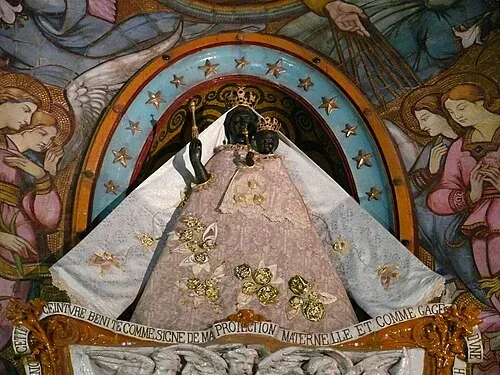 Altar of the Black MadonnaThe Black Madonna
Under a canopy studded with golden stars, a dark statue of the Virgin stands crowned and dressed in a rich gown. She is the Black Madonna of Toulouse, and she is a copy of a copy. An earlier brown Virgin, darkened by hosts of candles, was known from the sixteenth century onward as Notre-Dame La Noire. Revolutionaries seized that statue and burned it on the Place du Capitole in 1799. In 1807 a new statue was carved from the memories people kept of the burned one. She stands about two metres tall. Devotion to her belongs especially to pregnant women. To renew her worn wardrobe, the parishioners have appealed to the great French couture houses, so her gowns follow the fashions.
Listen in the appThis illustration was made by Peter Potrowl. Please credit this with : © Peter Potrowl in the immediate vicinity of the image. A link to my website sitemai.eu would be much appreciated but isn't mandatory. An email to Peter Potrowl would be appreciated too. Do not copy this image illegally by ignoring the terms of the license below, as it is not in the public domain. If you would like special permission to use, license, or purchase the image please contact me Peter Potrowl to negotiate terms. More free pictures in my website. Donations are accepted here and here. · CC BY-SA 3.0
06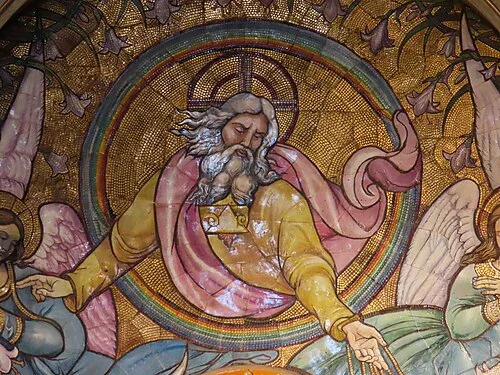 Altar of the Black MadonnaShrine Mosaic Decoration
The shrine glows in gold and ceramic, a mosaic arch of angels framing the altar where the Black Madonna is honoured. The ceramic decoration at her altar is the work of Gaston Virebent, a Toulouse ceramicist. Her reputation as a protector runs deep in the city. In 1672 she was credited with saving the Saint-Michel quarter from a fire. And in 1727, during a severe flood of the Garonne, the capitouls, the city's magistrates, had her statue carried in procession along the river to ask for the city's protection.
Listen in the appPhoto: Rémih · CC BY-SA 4.0
07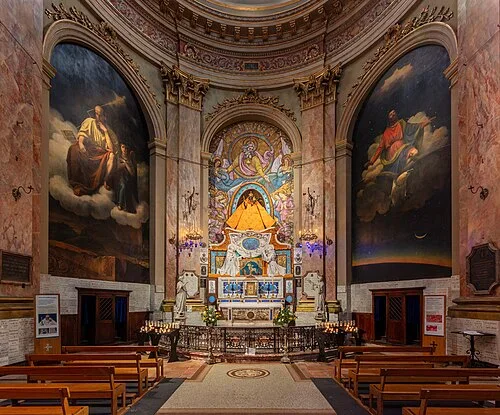 The Choir and Joseph Roques PaintingsThe Choir and High Altar
The choir curves around the high altar in a seven-sided sanctuary, its niches set with columns. The plan still carries the trace of the 1773 rotation: the choir of the primitive basilica now lies under the transept. Here the church keeps its strongest bond with the city. Every 3 May, at a morning mass, the trophies of the Académie des Jeux floraux are blessed: gold and silver flowers, destined for the academy's winning poets, then carried solemnly to its session. The ashes of the Toulouse poet Pierre Goudouli rest in the basilica, and one of the bells cast in 2018 bears his name, Peire Garona.
Listen in the appDiego Delso · CC BY-SA 4.0
08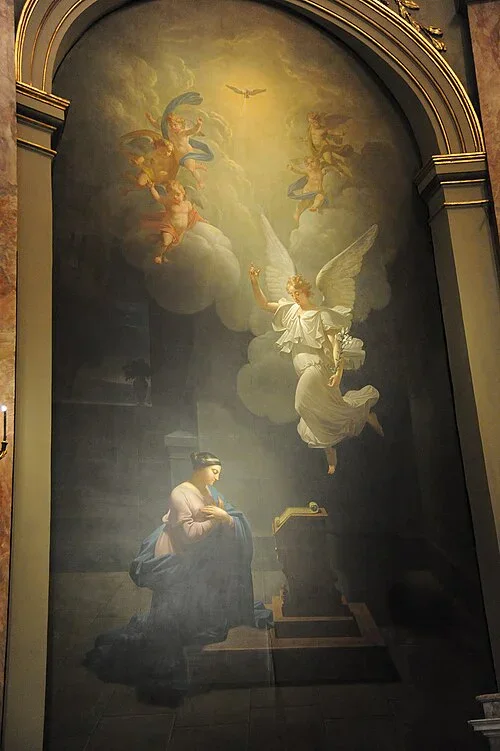 The Choir and Joseph Roques PaintingsThe Annunciation — Joseph Roques
Seven monumental canvases line the curved walls of the choir, painted between about 1810 and 1820 by the Toulouse painter Joseph Roques. Together they tell the life of the Virgin: her Presentation, her Immaculate Conception, the Annunciation, the Nativity, the Assumption, the Visitation and the Purification. A church dedicated to Mary deserves a gallery of her story. This canvas shows the Annunciation. An angel sweeps down from the clouds carrying a lily, while Mary kneels at her prie-dieu below. Above them a dove descends in a shaft of light, and cherubs tumble through the golden clouds.
Listen in the appPhoto: Frédéric Neupont · CC BY-SA 4.0
09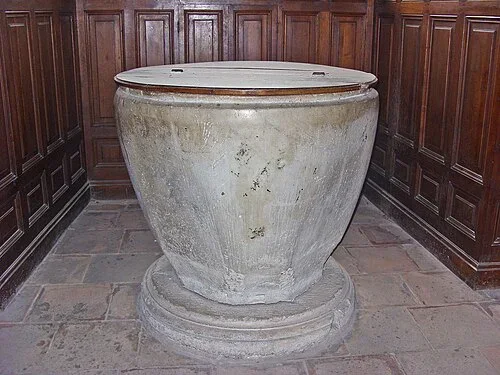 The Baptistery and Ancient SanctuaryThe Baptismal Font
A massive stone font stands on its plain base against wooden panelling, a bowl for baptism on this site since the earliest Christian era. The basilica's oldest recorded role was as a refuge. In 584, the chronicler Gregory of Tours wrote, Princess Rigunth, daughter of King Chilperic, took refuge in the basilica of Sainte-Marie in Toulouse, generally identified with the Daurade, when news reached her of her father's assassination. Before her, the wife of Duke Ragnowald had already claimed sanctuary here, pursued by the same king. Both episodes show that a right of asylum was recognised at this altar from the early Middle Ages. From a Roman temple to a royal refuge, this ground has sheltered Toulouse for some fifteen hundred years.
Listen in the appDidier Descouens · CC BY-SA 4.0
Basilique Notre-Dame de la Daurade
Frequently asked questions
How much does the guide cost?
Free app download. Listed guide price: $0.99. Guide price shown in the app. Audio guide only. Venue admission is separate.
Can I listen without internet?
Yes. Download the guide’s audio, images, and maps in the app before your visit. Your downloaded content is then available offline.
Can I listen in my language?
This audio guide is available in 15 languages, including English.
Do I need to follow a schedule?
No. This is a self-guided experience. Choose your stops, pause whenever you like, and return to a story at your own pace.
At your own pace
Explore Basilique Notre-Dame de la Daurade.
Download Stanza, then search for “Basilique Notre-Dame de la Daurade”.
Free app download · Guide price shown in the app
Keep exploring
Audio guides — France
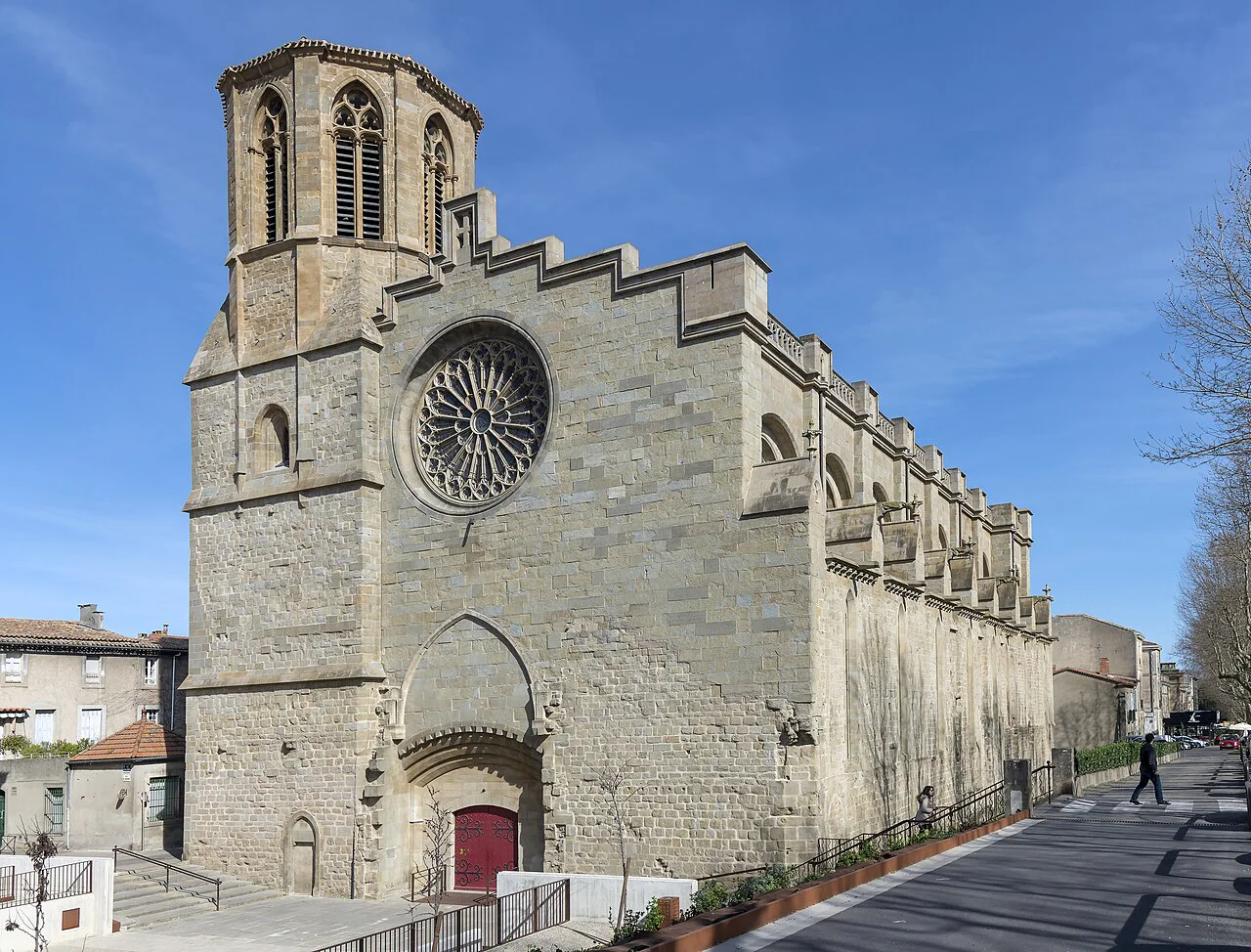
Carcassonne · 85 km
Cathédrale Saint-Michel de Carcassonne
Content & sources
Didier Descouens · CC BY-SA 4.0
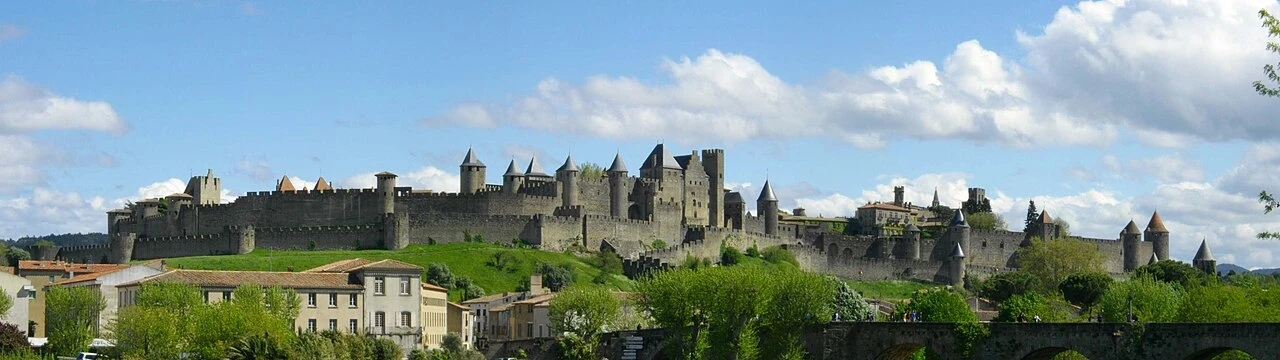
Carcassonne · 87 km
Cité de Carcassonne
Content & sources
Photo: Jondu11 · CC BY-SA 4.0
Sarlat-la-Canéda · 144 km
Cathédrale Saint-Sacerdos de Sarlat
Content & sources
Gilbert Bochenek · Public domain
Montignac-Lascaux
Grotte de Lascaux
Content & sources
EU · Public domain