Stanza · Audio guide
Grotte de Lascaux Audio guide
A place to remember. A story to take with you.
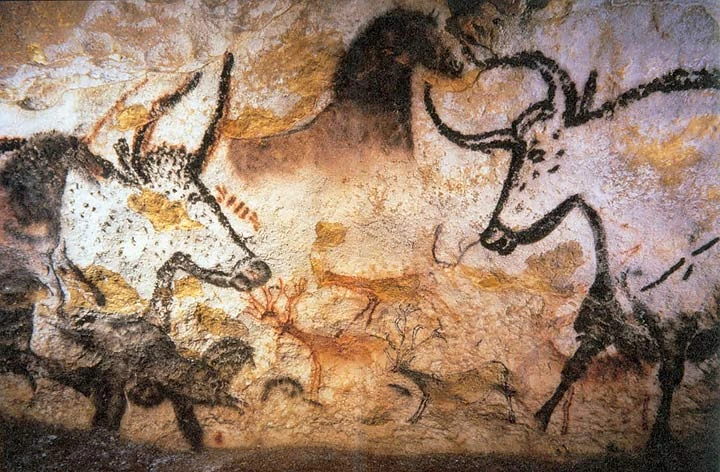
Lascaux is a world-famous cave complex in southwestern France renowned for its extensive collection of Paleolithic cave paintings. It is one of the most significant archaeological sites in the world regarding…
Download Stanza, then search for “Grotte de Lascaux”.
About the tour
One guide. Your kind of visit.
Lascaux is a world-famous cave complex in southwestern France renowned for its extensive collection of Paleolithic cave paintings. It is one of the most significant archaeological sites in the world regarding prehistoric art.
Ready when you are.
- 01Get the free Stanza app.
iOS & Android
- 02Find your guide.
“Grotte de Lascaux”
- 03Download before you go.
Works offline
Audio guide / 14 narrated stops
Inside the guide
Get to know a few of the stories before you go. Open a stop to read more.
01 The International Centre EntranceThe Snøhetta Facade
Welcome to the Lascaux IV International Centre for Parietal Art. Before descending into the prehistoric underground, look at the striking building that houses this facsimile. Designed by the architectural firm Snøhetta, the structure resembles a tectonic fissure slicing directly through the Montignac hillside. This 150-meter-long concrete ribbon is designed to look like a physical fracture in time, guiding you downward into the earth. The board-marked concrete walls mimic the horizontal layers of the local limestone cliffs, bridging the modern exterior with the subterranean world inside. While you prepare to step into this replica, the original cave remains strictly sealed just 800 meters up the hill. Discovered in 1940, the authentic cavern is closed to the public to protect its exceptionally fragile environment from decay.
Photo: JanManu · CC BY-SA 4.0
02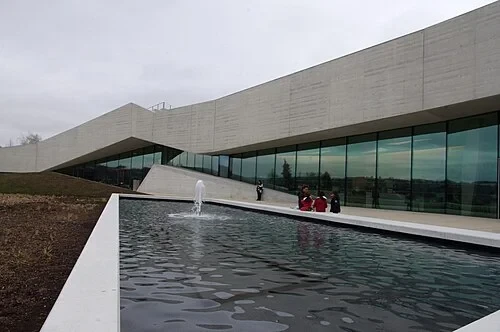 The International Centre EntranceThe Reflecting Pool
Stretching along the entrance pathway, a long, still reflecting pool serves a vital architectural purpose. The designers conceived this mirror-like water as a physical and mental threshold. It acts as a barrier of quiet, separating the busy highway of the modern valley from the prehistoric silence waiting inside. As you pass beside it, notice how the sky and surrounding trees reflect on the dark, placid surface. This visual play emphasizes the connection between the outdoor Dordogne landscape and the dark, underground world you are about to enter. The water slows down your pace, encouraging a moment of pause before leaving the modern day behind. By grounding the building in its natural context, the pool helps transition your senses from the bright, active exterior to the quiet contemplation required for the ancient art inside.
Photo: Traumrune · CC BY-SA 3.0
03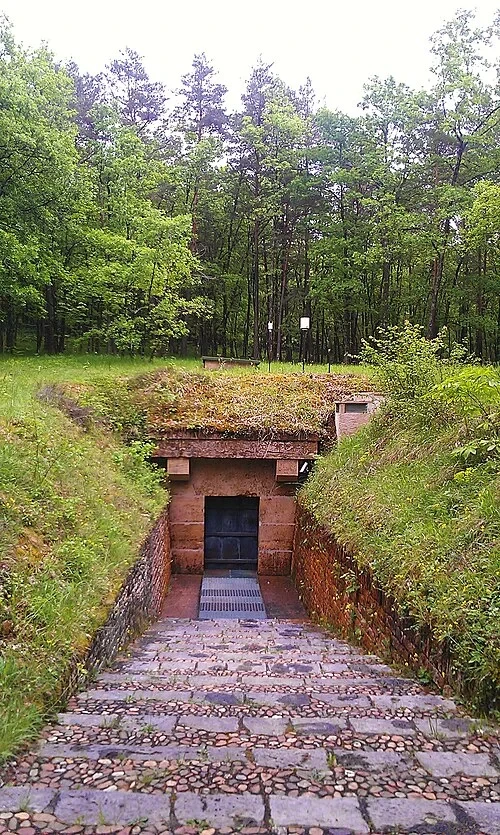 The Discovery and Conservation SiteThe Original Cave Entrance
In September 1940, four local teenagers and their dog, Robot, made a discovery that changed our understanding of human history. While exploring the forested hillside above Montignac, the dog chased a rabbit down a narrow shaft left by a fallen pine tree. Squeezing through the tight opening after their pet, the boys slipped down into the darkness to find themselves surrounded by thousands of magnificent painted animal figures. Following its opening to the public in 1948, Lascaux quickly became a global sensation. However, popularity brought unintended consequences. The breath of over a thousand daily visitors introduced high levels of carbon dioxide and humidity into the sealed chamber. This dramatic change in climate triggered the growth of destructive green algae and white mold, which began to consume the delicate prehistoric paintings. To halt this environmental crisis, authorities ordered the permanent closure of the original cave in 1963, preserving the ancient masterworks in a strictly regulated environment.
Listen in the appEthan Doyle White · CC BY-SA 3.0
04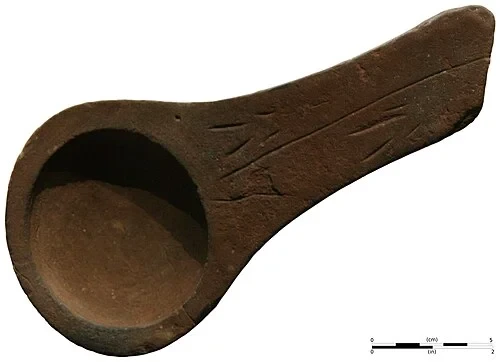 The Prehistoric WorkshopPaleolithic Sandstone Lamp
Recovered directly from the dark floor of the cavern, a sandstone grease lamp reveals how Paleolithic artists solved the problem of working in absolute darkness. The artifact features a distinct spoon-like shape, with a shallow bowl carefully hollowed out of the rock and a long handle incised with simple geometric lines. To use the device, prehistoric artists filled the stone reservoir with melted deer fat and floated a wick made of juniper or moss inside. This fuel source generated a remarkably warm, smokeless, and flickering flame. Walking through the pitch-black limestone passages with such a light would have transformed the environment. The undulating contours of the cave walls combined with the moving firelight to make the painted animals appear to breathe and run in the shifting shadows. Over one hundred of these portable lamps have been found throughout the cave system, proving that artificial light was highly developed and essential for the creation of this subterranean gallery.
Listen in the appPhoto: Sémhur · CC BY-SA 4.0
05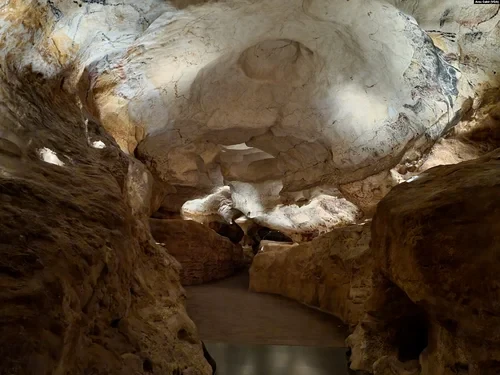 The Immersive Cave FacsimileThe Simulated Descent
Entering the facsimile chamber, you will immediately notice the air turning cool and damp. The temperature here is kept at a constant 13 degrees Celsius, precisely mimicking the subterranean climate of the real cave. This replica goes far beyond visual imitation; it is designed to reproduce the actual internal volume and atmospheric conditions of Lascaux. To achieve this level of accuracy, specialized engineers utilized millimetric 3D laser scans to capture every crease, bump, and crevice of the original limestone walls. Artists then applied hand-painted mineral pigments onto the reconstructed surfaces, matching the texture and color of the stone. This physical transition serves to prepare your senses for the ancient art of the Upper Paleolithic. By stepping away from the modern outdoor climate, your eyes adjust to the dim light and your skin feels the chill, bringing you closer to the physical reality experienced by the creators seventeen thousand years ago.
Listen in the apparzu çakır · Public domain
06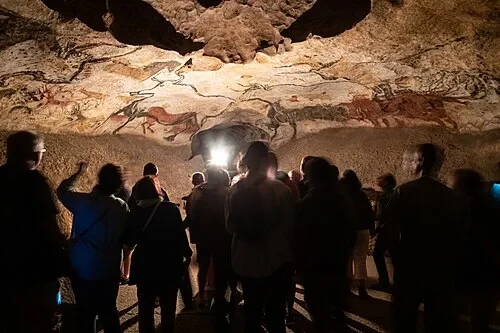 The Hall of the BullsEntering the Hall of the Bulls
Surrounding you now is the spectacular Hall of the Bulls, widely considered the largest and most impressive gallery in the entire cave system. Spanning nearly thirty meters in length, this massive chamber functioned as the natural sanctuary of Lascaux. On the soaring, curved limestone ceiling, colossal animal shapes sweep across the rock face, creating a sense of dynamic movement. Rather than a single creation, this chamber represents a collective effort spanning thousands of years. Multiple generations of prehistoric artists returned to this exact space, painting over existing layers and adding their own drawings to the walls. The sheer scale of the animals, some of which are several meters long, demonstrates a profound mastery of proportions and composition in a challenging, uneven space. The natural contours of the rock were deliberately integrated into the designs, using the cave's physical shape to give the painted herds a three-dimensional appearance.
Listen in the appElke Wetzig (User:Elya) · CC BY-SA 4.0
07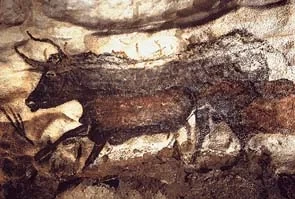 The Hall of the BullsBlack Bull
Dominating the wall of the gallery, the figure known as the Great Black Bull measures more than five meters from its head to its tail. This massive depiction holds the distinction of being the single largest animal drawing ever discovered in Paleolithic cave art. The creature is rendered in a highly dynamic, forward-charging stance, conveying immense weight and power. Look closely at the head to see the horns drawn in what archaeologists call 'twisted perspective.' In this style, the bull's body is depicted in profile, yet both horns are turned to face the viewer directly, a common artistic convention of the period. Beneath the dark pigment of the bull's belly, fainter shapes are visible. These are several smaller, reddish horses that were painted on the rock at an earlier date, showing how later artists utilized the exact same stone canvas to layer their work over previous creations.
Listen in the appOriginal uploader was Coen.vromans at nl.wikipedia · Public domain
08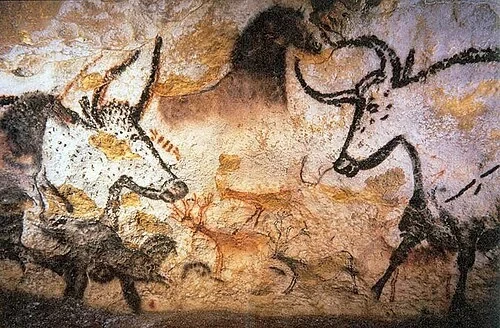 The Hall of the BullsAurochs, Horses and Deer
Standing on the far left of the group is a strange, enigmatic beast popularly known as the 'Unicorn' due to the two long, straight horns protruding from its forehead. Its unusually blocky body and feline-like facial features match no known living animal from the Ice Age. This has led researchers to speculate that the painting represents a mythical creature or perhaps a human shaman disguised in an animal pelt. Beside this figure, a diverse herd of animals stretches across the wall. To create these rich, warm colors, Paleolithic artists gathered local iron oxides to produce red and yellow ochre. They ground these natural minerals into a fine powder, mixed them with cave water, and applied them to the stone. In many sections, they even blew the dry pigment directly onto the wet rock face through hollow bones, a technique that created soft, feathered outlines and filled the animal shapes with vibrant, enduring color.
Listen in the appEU · Public domain
09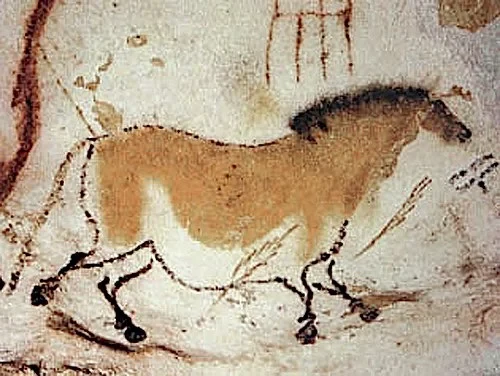 The Axial DiverticulumHorse
Renowned for its delicate execution, this horse is popularly referred to as the 'Chinese Horse' because its elegant linework and plump, rounded proportions recall the style of classical Chinese drawings. The artist defined the heavy, dark mane using manganese pigment, contrasting with the warm ochre of the body. A noticeably swollen belly suggests the painting depicts a pregnant mare, reflecting the prehistoric focus on fertility and the natural cycles of wildlife. Just above the animal's back, look for a peculiar grid-like symbol. This geometric mark consists of nested rectangles, a motif that appears repeatedly throughout Lascaux and other European caves. Despite decades of study, these abstract signs remain completely undeciphered. Archaeologists do not know if they represent tribal markers, traps, maps, or an early form of notation, leaving this geometric symbol as one of the great mysteries of the Paleolithic world.
Listen in the appPhoto: Hohum · Public domain
10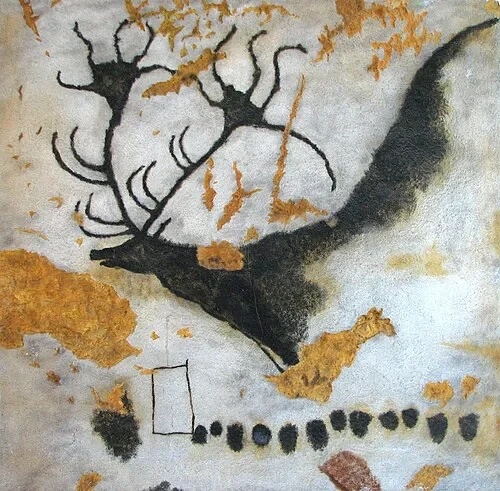 The Axial DiverticulumLascaux Cave Paintings
Depicted here is the Megaloceros, an extinct species of giant deer that roamed the icy plains of Europe during the Upper Paleolithic. The animal is instantly recognizable by its towering, elaborate antlers. To bring this creature to life, the ancient artist skillfully integrated the natural topography of the cave. By painting the deer's chest over a physical bulge in the limestone wall, the creator gave the figure actual three-dimensional volume and realistic depth. Below the animal's belly, a distinct horizontal line of dark, stenciled dots runs across the rock. These precise geometric markings have puzzled researchers for generations. Theories suggest they could represent hunting tallies, territorial boundaries, or symbolic markers indicating seasonal migration paths. By combining realistic animal anatomy with abstract symbols, the painters left behind a complex visual language that bridged the physical and spiritual worlds of their time.
Listen in the appHTO · Public domain
Grotte de Lascaux
Frequently asked questions
How much does the guide cost?
Free app download. Listed guide price: $1.99. Guide price shown in the app. Audio guide only. Venue admission is separate.
Can I listen without internet?
Yes. Download the guide’s audio, images, and maps in the app before your visit. Your downloaded content is then available offline.
Can I listen in my language?
This audio guide is available in 15 languages, including English.
Do I need to follow a schedule?
No. This is a self-guided experience. Choose your stops, pause whenever you like, and return to a story at your own pace.
At your own pace
Explore Grotte de Lascaux.
Download Stanza, then search for “Grotte de Lascaux”.
Free app download · Guide price shown in the app
Keep exploring
Audio guides — France
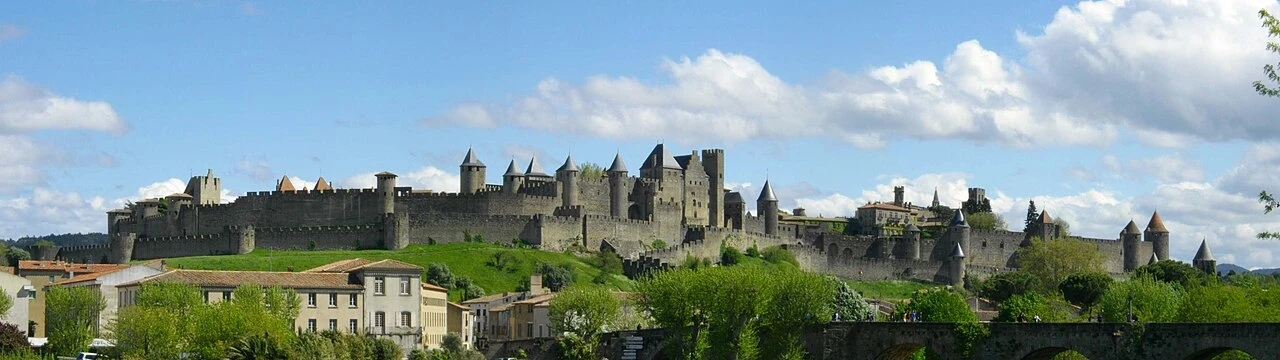
Carcassonne
Cité de Carcassonne
Content & sources
Photo: Jondu11 · CC BY-SA 4.0
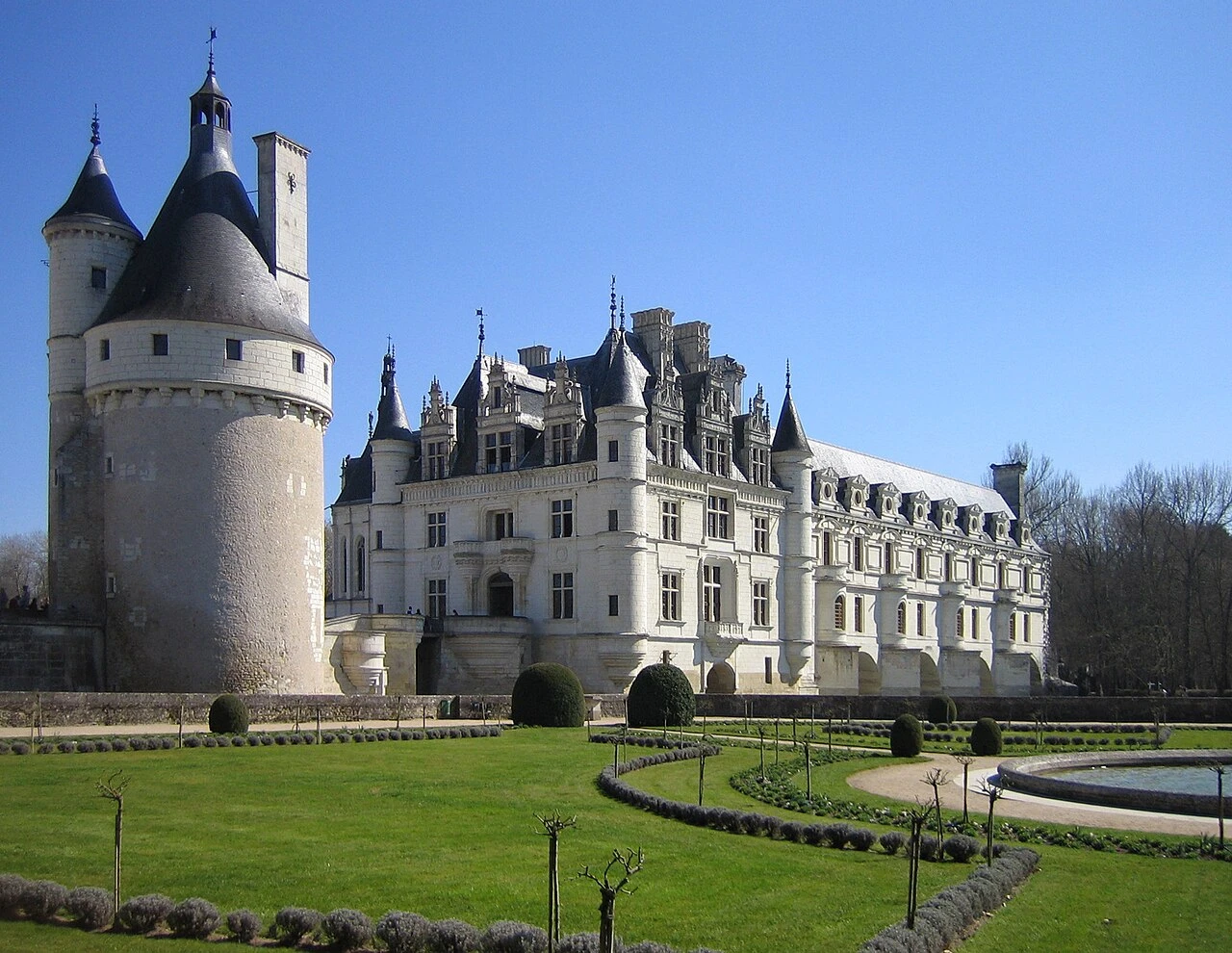
Chenonceaux
Château de Chenonceau
Content & sources
Photo: Manfred Heyde · CC BY-SA 3.0

Amboise
Château d'Amboise
Content & sources
Photo: W. Bulach · CC BY-SA 4.0
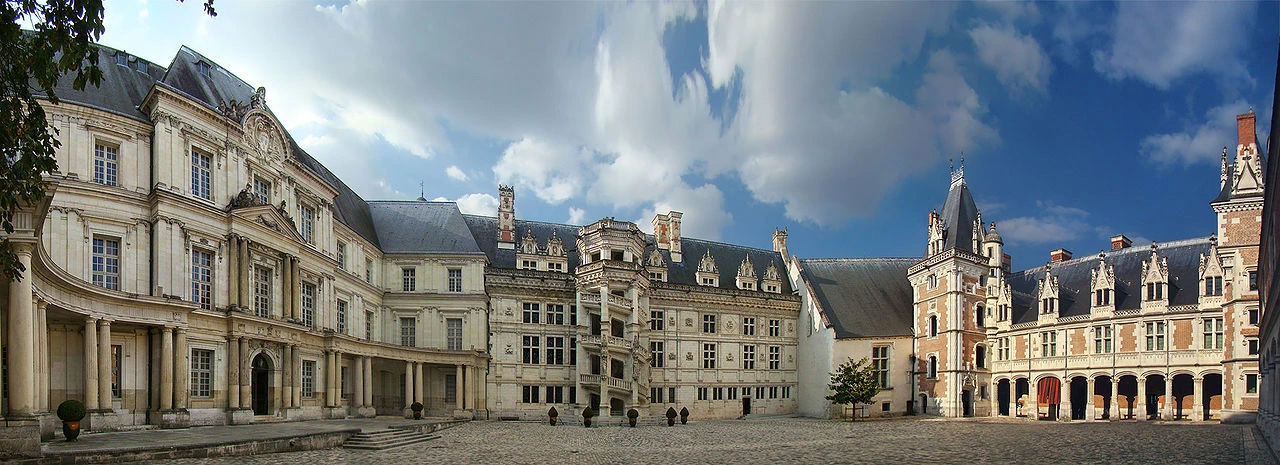
Blois
Château de Blois
Content & sources
Photo: Tango7174 · CC BY-SA 4.0