Stanza · Audio guide
Château de BloisAudio guide
A place to remember. A story to take with you.
A historic royal château located in Blois, France, it served as a residence for several French kings and is renowned for its diverse architectural styles.
Download Stanza, then search for “Château de Blois”.
About the tour
One guide. Your kind of visit.
A historic royal château located in Blois, France, it served as a residence for several French kings and is renowned for its diverse architectural styles.
Ready when you are.
- 01Get the free Stanza app.
iOS & Android
- 02Find your guide.
“Château de Blois”
- 03Download before you go.
Works offline
Audio guide / 31 narrated stops
Inside the guide
Get to know a few of the stories before you go. Open a stop to read more.
01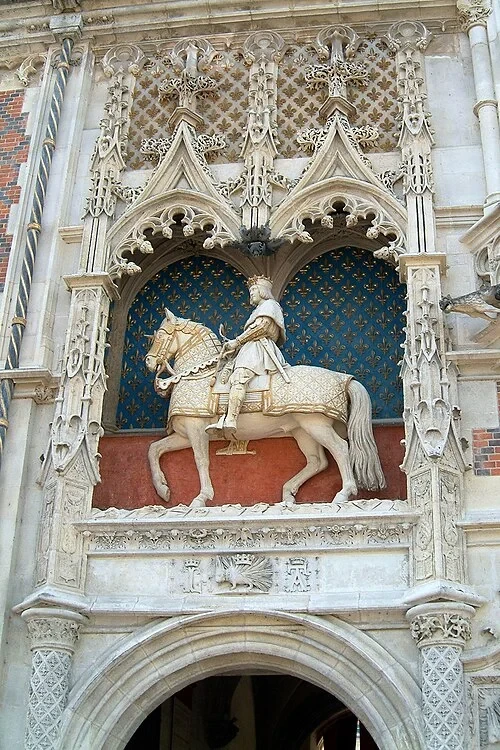 Main Entrance and the Louis XII WingEquestrian Statue of Louis XII
Welcome to the Château de Blois. Looking up at the main portal, you will see King Louis XII, the monarch who moved the French royal court here in 1498. This figure captures the king on horseback, positioned within a richly decorated stone niche. Notice the surrounding frame; it showcases a stylistic transition where the sharp, vertical lines of the late Gothic period begin to meet the delicate, symmetrical ornaments of the early Renaissance. While it looks ancient, this statue is actually a 19th-century recreation. The original was a casualty of the French Revolution, pulled down and destroyed as a symbol of the monarchy. Architect Félix Duban later commissioned this copy to restore the facade's historical character. Louis XII chose Blois as his primary residence, sparking a building boom that transformed the city and established this site as the political heart of France for over a century. The intricate carvings of fleur-de-lys and pilasters surrounding the king hint at the decorative splendor you will find inside the courtyard.
Christophe.Finot · CC BY-SA 2.5
02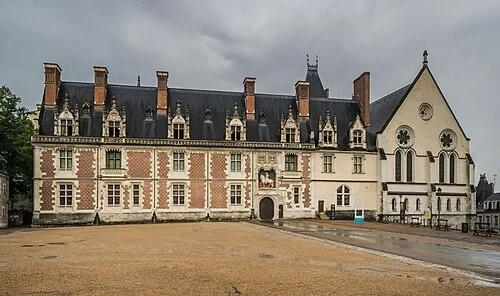 Main Entrance and the Louis XII WingThe Louis XII Wing
The facade of the Louis XII wing, constructed between 1498 and 1503, introduces a distinct architectural rhythm to the château. Its most recognizable feature is the use of red brick patterned with white stone, a hallmark of the French pre-Renaissance style. Unlike earlier medieval fortresses designed primarily for defense, this wing reflects the changing needs of a royal court seeking comfort and prestige. You can see this transition in the windows; they are large and numerous, designed to flood the interior rooms with light rather than serve as narrow slits for archers. Despite these modern touches, certain elements like the steep roofs and tall chimneys maintain a link to the Gothic past. The building marks the beginning of the castle’s transformation from a grim defensive stronghold into a site for royal display. The colorful masonry served as a vibrant backdrop for court life, providing a much more welcoming environment than the grey stone walls of the older fortifications. The decorative dormer windows along the roofline further emphasize this new focus on architectural ornamentation and light.
Krzysztof Golik · CC BY-SA 4.0
03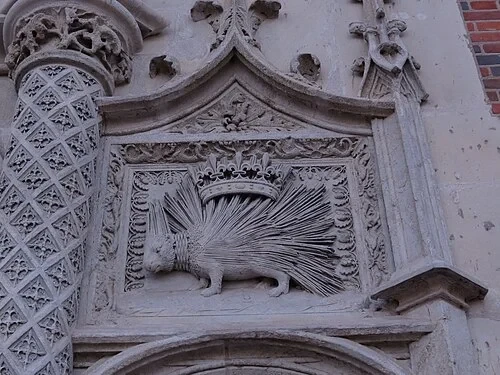 Main Entrance and the Louis XII WingThe Royal Porcupine
Carved into the stone above doorways and on pilasters, you will find the porcupine, the personal emblem of King Louis XII. This prickly creature is often shown wearing a royal crown, its body covered in long, sharp quills. During this era, royal families chose animals to represent their power and temperament. The porcupine was more than just a curious choice; it carried a direct message to the king's enemies. Accompanying the emblem was the Latin motto, 'Cominus et eminus,' which translates to 'From near and far.' This suggested that the king, much like a porcupine believed to shoot its quills, could strike his rivals from any distance. It was a symbol of both defensive resilience and offensive reach. Notice the level of detail in the carving—the individual spines and the intricate crown reflect the skill of the artisans employed by the court. By placing this symbol throughout the wing, Louis XII made his presence and his authority felt in every corner of the residence, reinforcing his status as a monarch who was both protected and formidable.
Listen in the appPhoto: Johan Allard · CC BY-SA 4.0
04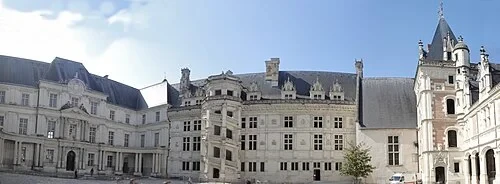 The Courtyard: A Timeline of French ArchitectureThe Courtyard Panorama
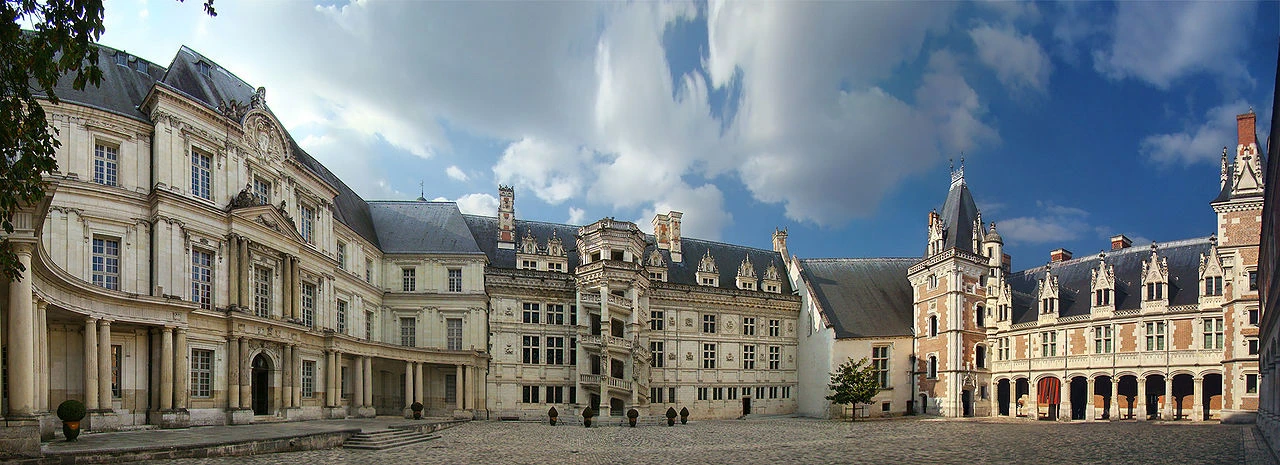
Once inside the courtyard, the full scale of the Château de Blois becomes clear. You are standing at the center of an architectural timeline that spans four centuries. Each of the four wings surrounding you represents a different era and style of French design. The oldest section is the 13th-century medieval hall, which you can identify by its massive, unadorned stone walls. Moving clockwise, you see the Louis XII wing, which blends Gothic structures with early Renaissance flourishes. Next is the François I wing, a masterpiece of the high Renaissance with its famous external staircase. Finally, the classical wing, commissioned by Gaston d'Orléans in the 17th century, displays the sober, symmetrical lines influenced by Greek and Roman architecture. It is rare to see such diverse styles coexisting so closely. This layout was not a grand plan but rather the result of successive royals wanting to leave their unique mark on the site. Each monarch sought to outdo their predecessor, resulting in this fascinating patchwork of stone and brick that chronicles the evolution of royal taste and power.
Listen in the appPhoto: Temporalior · CC BY-SA 3.0
05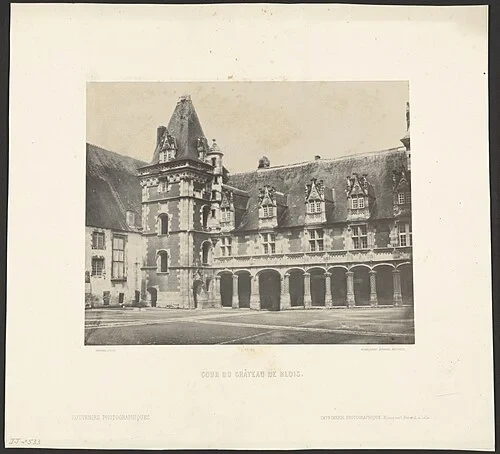 The Courtyard: A Timeline of French ArchitectureRestoring the Past
The image here shows the château during the massive restoration efforts led by architect Félix Duban, which began in 1845. After the French Revolution, the building had fallen into a state of severe neglect and was even used as a military barracks. Duban’s work was part of a broader movement in the 19th century to rediscover and preserve France's national heritage. However, this was what historians call a 'Romantic' restoration. Instead of purely preserving what remained, Duban and his team aimed to recreate the 'ideal' version of a royal residence. This meant that while they studied historical records, they weren't afraid to add vibrant colors, elaborate patterns, and new carvings that matched 19th-century perceptions of Renaissance splendor. Much of the polychrome decoration and the richly painted interiors you see today are the result of Duban’s vision. He blended documented historical facts with a flair for drama to ensure the building would once again feel like the seat of a king. This restoration arguably saved the structure from demolition, though it reflects the tastes of the 1840s as much as it does the 1540s.
Listen in the appFrancois Alphonse Fortier · CC0
06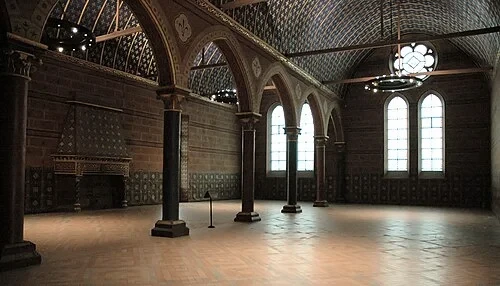 The Salle des États (The Medieval Hall)The States General Hall
The States General Hall is the oldest surviving part of the château, dating back to the early 13th century. Measuring roughly 30 by 18 meters, it remains the largest secular Gothic room in France. Its sheer scale is intended to impress, featuring a double-nave structure supported by a row of central pillars. Originally, this was the great hall of the Counts of Blois, used as a hall of justice where legal disputes were settled and administrative matters handled. Its name comes from a later, more significant function: it was the site of the meetings of the 'three estates'—the clergy, the nobility, and the commoners. These assemblies were called by the king to discuss taxation and national policy during times of crisis. The architectural style here is much simpler than the later Renaissance wings, focusing on sturdy masonry and vaulted ceilings. Even without the gold leaf found elsewhere, the room’s proportions create a sense of solemnity and ancient power. The layout served as a model for royal halls across the country, providing a grand stage for the exercise of feudal authority and early French parliament.
Listen in the appPhoto: MFSG · CC BY-SA 2.0 de
07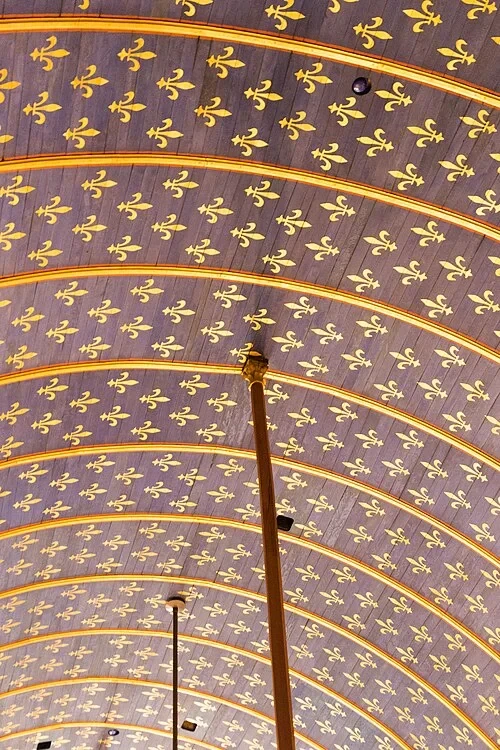 The Salle des États (The Medieval Hall)A Sea of Fleurs-de-Lys
The barrel-vaulted ceiling above you is covered in a staggering 6,720 individual fleurs-de-lys. These golden lilies were meticulously hand-painted during the 19th-century restoration by Félix Duban. The fleur-de-lys is perhaps the most iconic symbol of the French monarchy, representing purity and the divine right of the king to rule. By covering the entire ceiling in this pattern, the architects transformed the room into a totalizing expression of royal identity. Every inch of the space speaks to the presence of the crown. While the original medieval ceiling was likely decorated, the intensity of the blue and gold seen here is a product of the Romantic restoration era, intended to evoke a sense of boundless royal wealth. The repetitive pattern creates a mesmerizing effect, drawing the eye upward and emphasizing the height of the vault. It serves as a visual reminder that in this hall, the king’s authority was absolute, sanctioned by heaven. The sheer labor involved in painting these thousands of icons reflects the dedication of the 19th-century artisans who sought to bring the castle's royal history back to life.
Listen in the appPhoto: Pymouss · CC BY-SA 4.0
08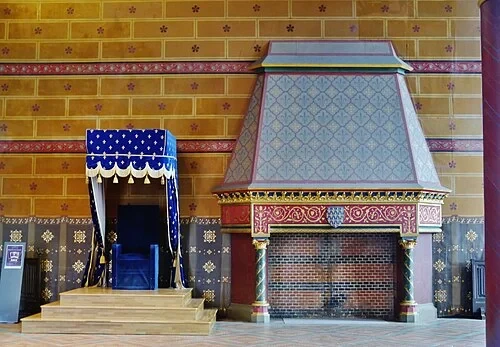 The Salle des États (The Medieval Hall)Throne and Fireplace
In the center of the hall, you will see a reconstructed ceremonial setup that includes a grand polychrome fireplace and a throne sheltered by a blue canopy. These elements were not original medieval pieces but were designed and installed by Félix Duban during the 1845 restoration. Duban aimed to give visitors a tangible sense of how the space was used during royal audiences. The fireplace is decorated with vivid reds, blues, and golds, reflecting the medieval love for bright color in interior design. Next to it, the throne sits on a raised dais, reinforcing the social hierarchy of the court where the king was literally elevated above his subjects. The blue canopy is adorned with more golden lilies, creating a 'royal tent' effect within the room. This arrangement wasn't meant to be historically accurate in every minute detail; rather, it was a piece of theatrical reconstruction intended to stir the imagination and evoke the vanished grandeur of the medieval court. It provides a focal point for the massive hall, illustrating where the monarch would have received dignitaries and conducted the business of the realm.
Listen in the appPhoto: Zairon · CC BY-SA 4.0
09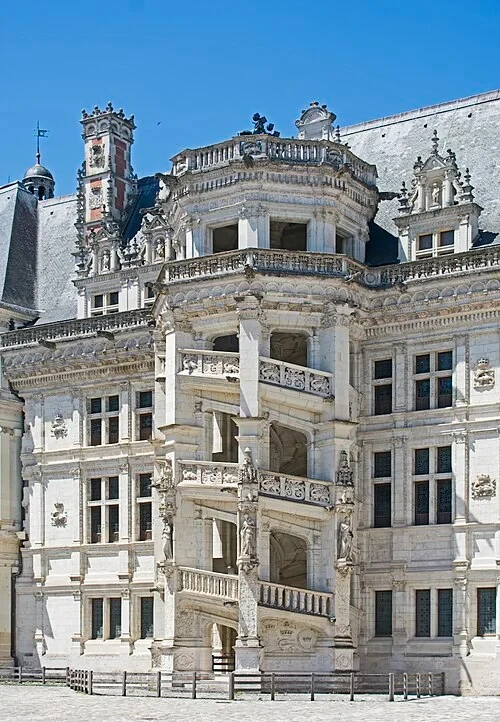 The Monumental Staircase of François IThe François I Staircase
The François I staircase is the undeniable architectural highlight of the courtyard, built between 1515 and 1524. Its octagonal shape and open-air design were revolutionary for the time, breaking away from the dark, enclosed spiral stairs of the Middle Ages. This structure was designed for more than just moving between floors; it was a stage for the social life of the court. Because the stair is open to the courtyard, people ascending or descending could see everyone below, and, more importantly, be seen by them. It allowed for grand arrivals and the display of fashion and status. The staircase is jutted out from the main facade, creating a sculptural centerpiece that draws the eye. Notice the intricate balustrades and the niches designed to hold statues. The geometry of the staircase reflects the Renaissance obsession with proportion and classical influence, yet the verticality still hints at Gothic roots. It stands as a monument to the king’s ego and the vibrancy of courtly life, where every movement was a public performance. This staircase transformed a simple necessity into a masterpiece of Renaissance social engineering and artistic expression.
Listen in the appPhoto: Ymblanter · CC BY-SA 4.0
10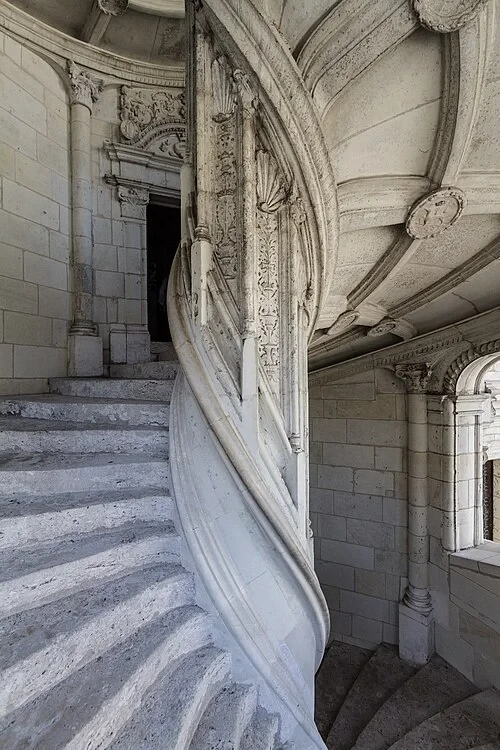 The Monumental Staircase of François IClimbing the Renaissance
Inside the staircase, the craftsmanship of the Renaissance artisans becomes even more apparent. As you climb, look closely at the central pillar around which the steps wind; it is decorated with delicate pilasters and intricate stone carvings that seem to grow organically from the masonry. The underside of the steps is equally impressive, featuring vaulted ceilings that resemble the interior of sea shells. These 'shell' vaults were a popular motif in the early 16th century, symbolizing birth and beauty. The open design of the staircase allows light to flood the interior, but as you move higher and circle the pillar, the play of shadows and light changes constantly, creating a dynamic visual experience. The transition between levels is seamless, designed to feel elegant and effortless. Notice how the decorative themes evolve as you reach different floors, often featuring royal symbols and floral patterns. The stonework is remarkably fine, demonstrating the high level of funding and skill available to King François I. This climb was intended to be a pleasant experience for the courtiers, a far cry from the cramped and utilitarian stairways found in earlier fortresses.
Listen in the appBenh LIEU SONG from Torcy, France · CC BY-SA 2.0
Château de Blois
Frequently asked questions
How much does the guide cost?
Free app download. Listed guide price: $2.99. Guide price shown in the app. Audio guide only. Venue admission is separate.
Can I listen without internet?
Yes. Download the guide’s audio, images, and maps in the app before your visit. Your downloaded content is then available offline.
Can I listen in my language?
Stanza supports 15 languages. Check the app for the languages available for this guide.
Do I need to follow a schedule?
No. This is a self-guided experience. Choose your stops, pause whenever you like, and return to a story at your own pace.
At your own pace
Explore Château de Blois.
Download Stanza, then search for “Château de Blois”.
Free app download · Guide price shown in the app
Keep exploring
Nearby audio guides
Nîmes
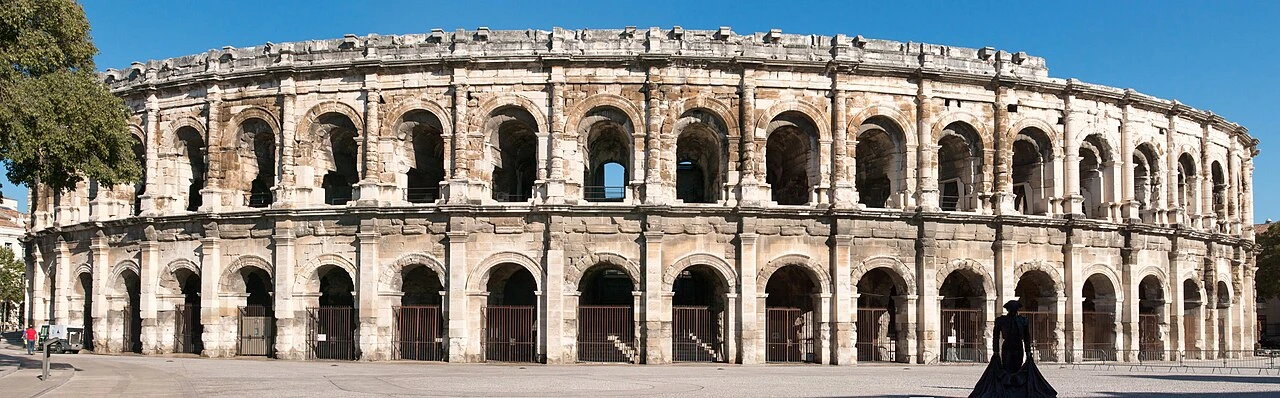
Amphitheater of Nîmes
Content & sources
Daniel VILLAFRUELA. · CC BY-SA 3.0
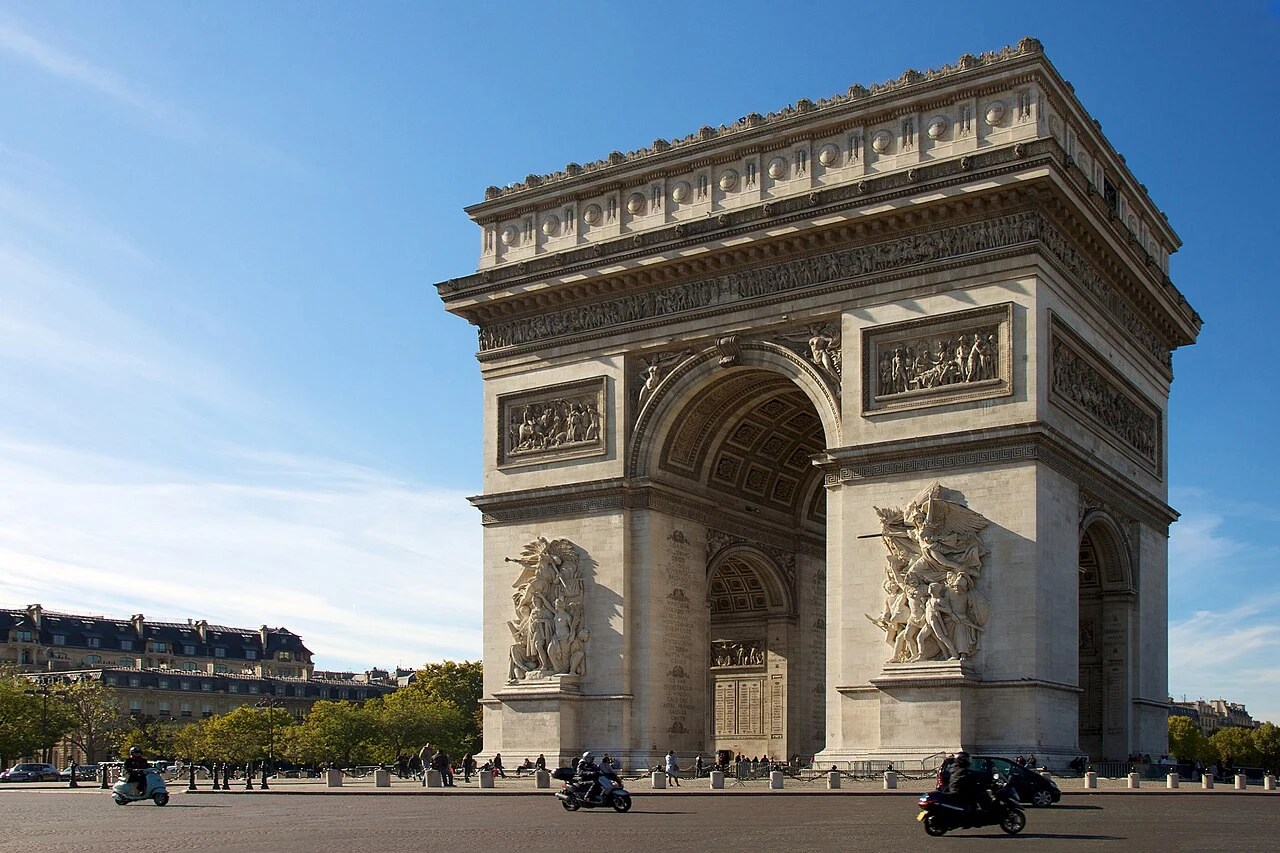
Paris
Arc de Triomphe de l'Étoile
Content & sources
Jiuguang Wang · CC BY-SA 2.0
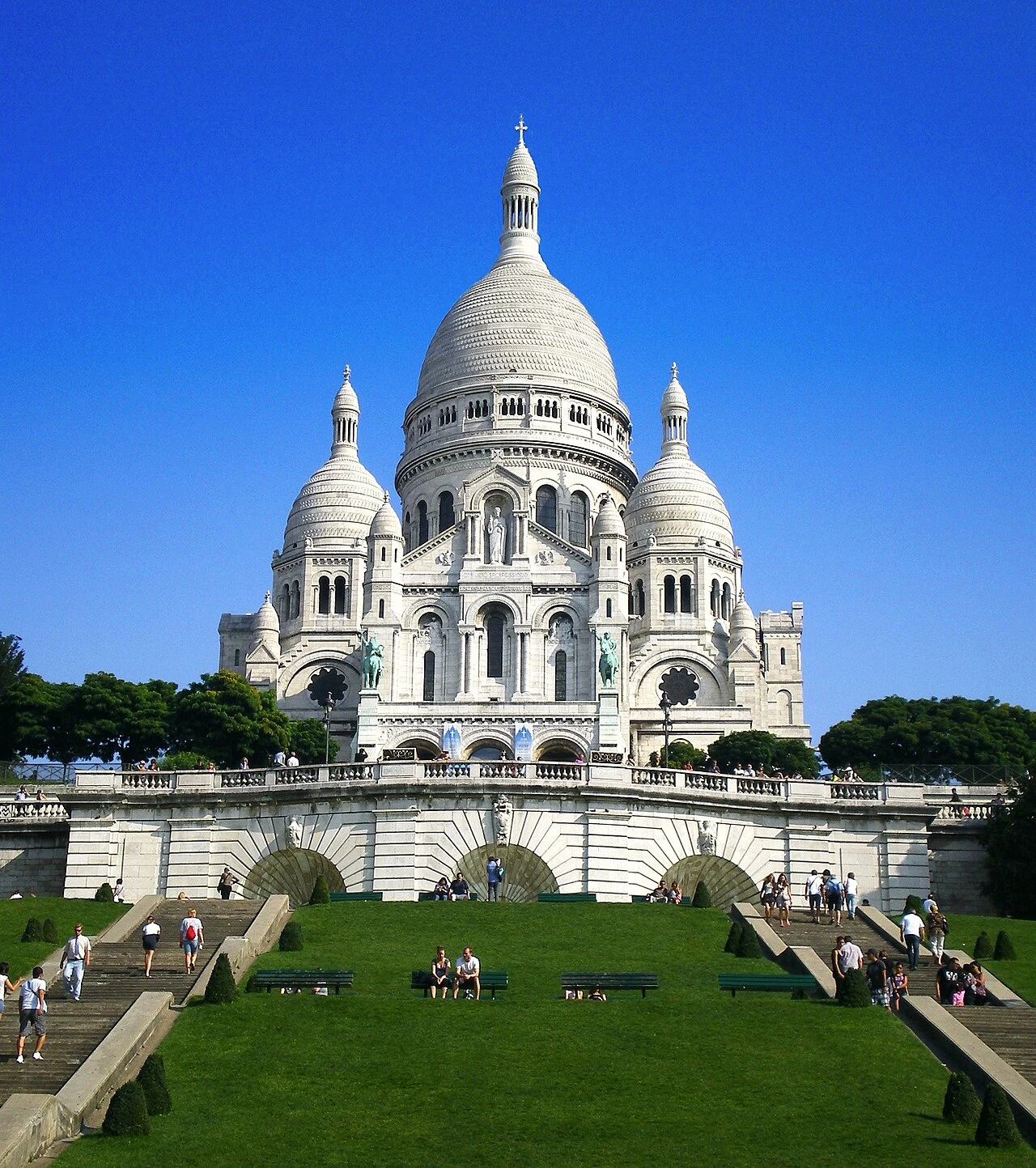
Paris
Basilique du Sacré-Cœur de Montmartre
Content & sources
Tonchino · CC BY-SA 3.0
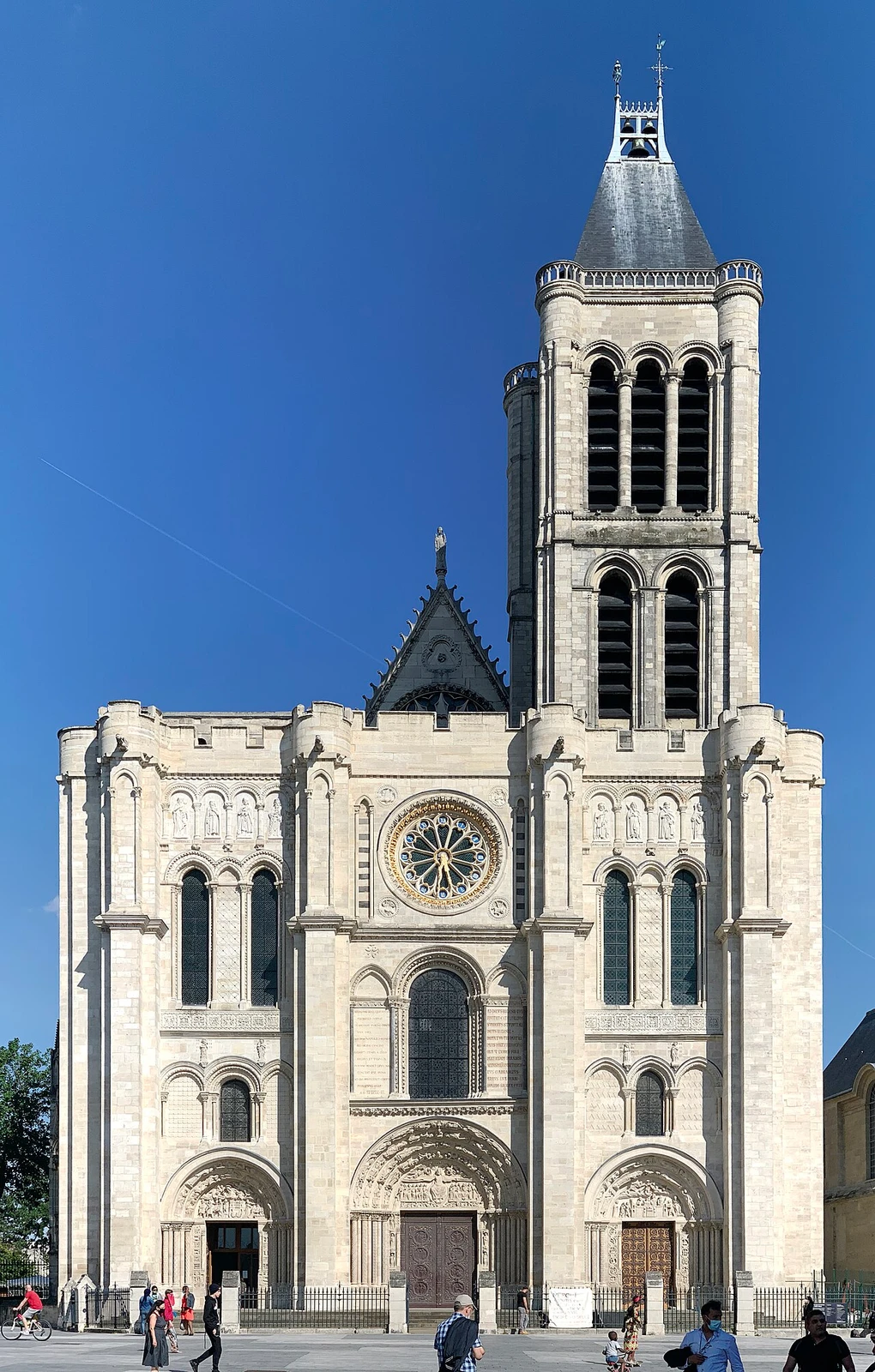
Saint-Denis
Basilique royale de Saint-Denis
Content & sources
Photo: Chabe01 · CC BY-SA 4.0