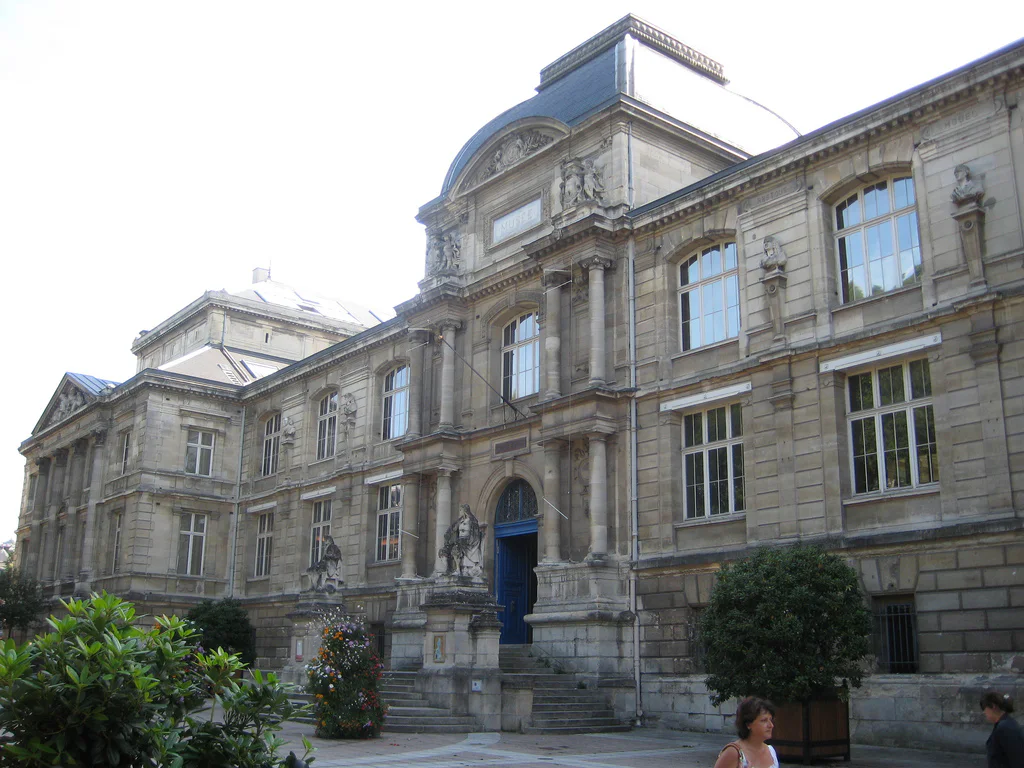
Stanza · Audio guide
Musée des Beaux-Arts de Rouen Audio Guide
A place to remember. A story to take with you.
The Musée des Beaux-Arts de Rouen is an art museum located in Rouen, France. Established by Napoléon Bonaparte in 1801, it houses collections of paintings, sculptures, drawings and objets d'art.
Download Stanza, then search for “Musée des Beaux-Arts de Rouen”.
About the tour
One guide. Your kind of visit.
The Musée des Beaux-Arts de Rouen is an art museum located in Rouen, France. Established by Napoléon Bonaparte in 1801, it houses collections of paintings, sculptures, drawings and objets d'art.
The Musée des Beaux-Arts de Rouen guide tells the stories of 45 artworks, including Christ at the Column (Caravaggio), La Belle Zélie (Jean-Auguste-Dominique Ingres), Democritus (Diego Velázquez), La justice de Trajan (Eugène Delacroix), Joan of Arc is interrogated by The Cardinal of Winchester in her prison (Paul Delaroche), Self-portrait (Eugène Delacroix), Le Pont aux Anglais, soleil couchant (Robert Antoine Pinchon), and The Bath of Diana (François Clouet). Every artwork is free to hear in the Stanza app until 1 January.
Ready when you are.
- 01Get the free Stanza app.
iOS & Android
- 02Find your guide.
“Musée des Beaux-Arts de Rouen”
- 03Download before you go.
Works offline
Audio guide / 45 artworks
Inside the guide
Get to know a few of the stories before you go. Open a stop to read more.
01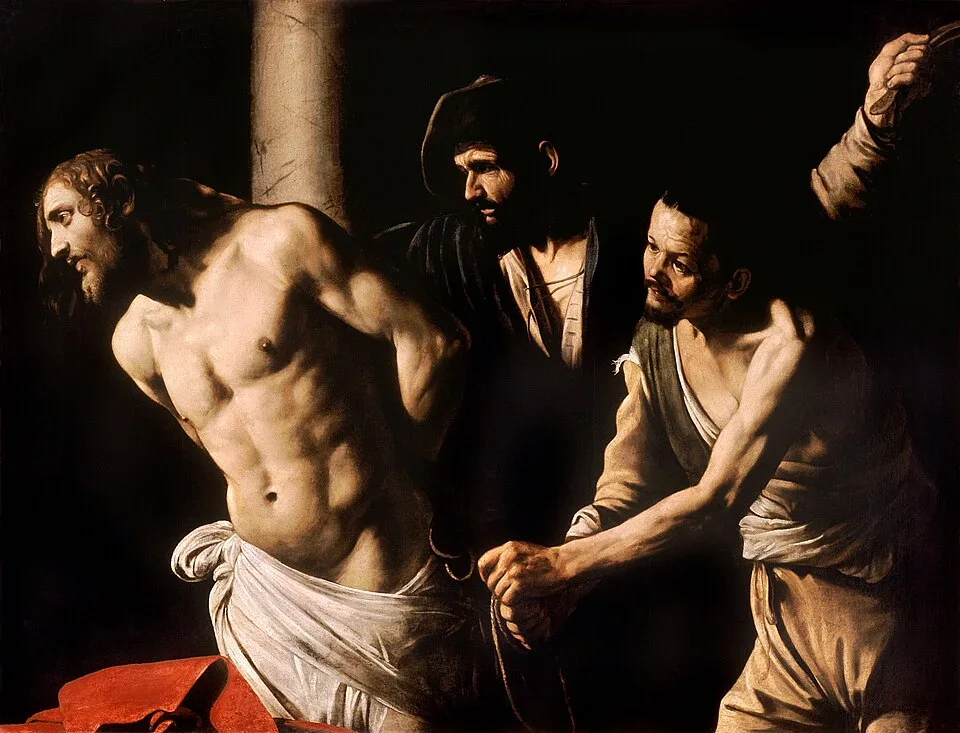
Christ at the Column
A red cloak lies thrown on the ground, and it seems to stand for a kingship taken away. The scene is Christ, at the moment before the whipping begins. Two men are fastening him to a tall column. That instant of tension, before any blow lands, is the heart of the picture. Both men have marked faces and rough hands, and their clothes are poor and worn. They are ordinary men at their work, not monsters. Light comes from the left and divides the scene into two halves, and the movement of the figures follows it. The column is not the centre of the story. Its marbling looks like wounds, while Christ's body is still whole, so it reads more as a sign of who he is. Christ's face is turned toward the very edge of the picture. He is cut off from the others, isolated in his suffering, gazing into nothing. You are left between him and the men at their work. Caravaggio painted this between 1606 and 1607, probably during his first stay in Naples, soon after killing a man in a duel and fleeing Rome. He painted the same subject again soon after, with a completely different arrangement. Rouen bought the painting in 1955 as a work by Mattia Preti, and it was not until 1959 that Roberto Longhi recognized it as Caravaggio's.
Listen in the appCaravaggio · Public domain
02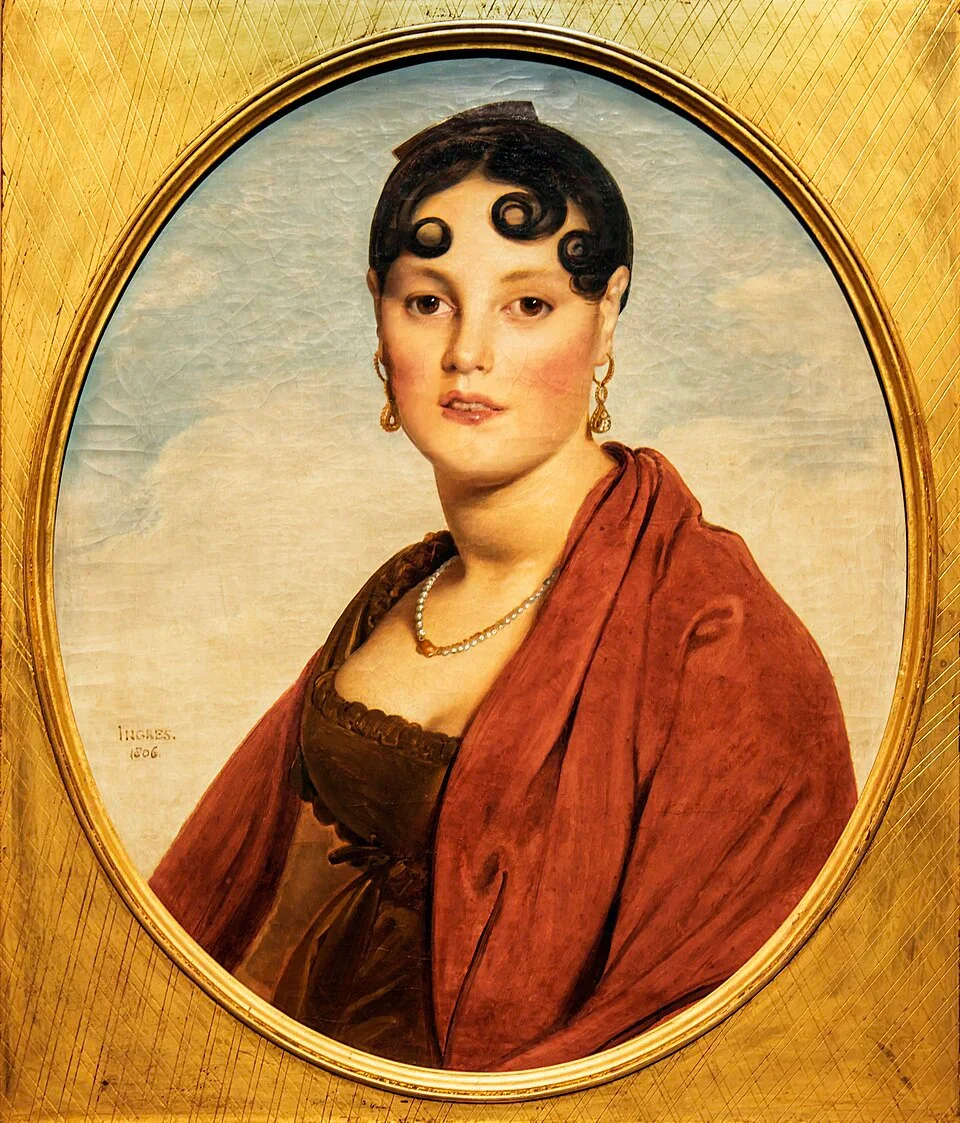
La Belle Zélie
Who is this woman? Her face is all the answer here. The oval shape, the almond eyes slightly parted, the flushed cheeks. Three thick curls of black hair fall over her forehead. Ingres gave her the Greek features he gave many of his women, and she resembles the harem women in his later pictures. But none of that tells you her name. Ingres signed and dated the canvas in the lower left, and still we do not know who she is. When it reached Rouen, it had no title at all. Someone guessed she was a Madame Aymon, yet that name is in none of the lists he kept of his own work. So in Rouen they called her La Belle Zélie, after a popular song of the eighteen seventies. The name suited a faint hint of vulgarity in her. He painted her just before his first stay in Rome, among the earliest portraits he made.
Listen in the appDidier Descouens · Public domain
03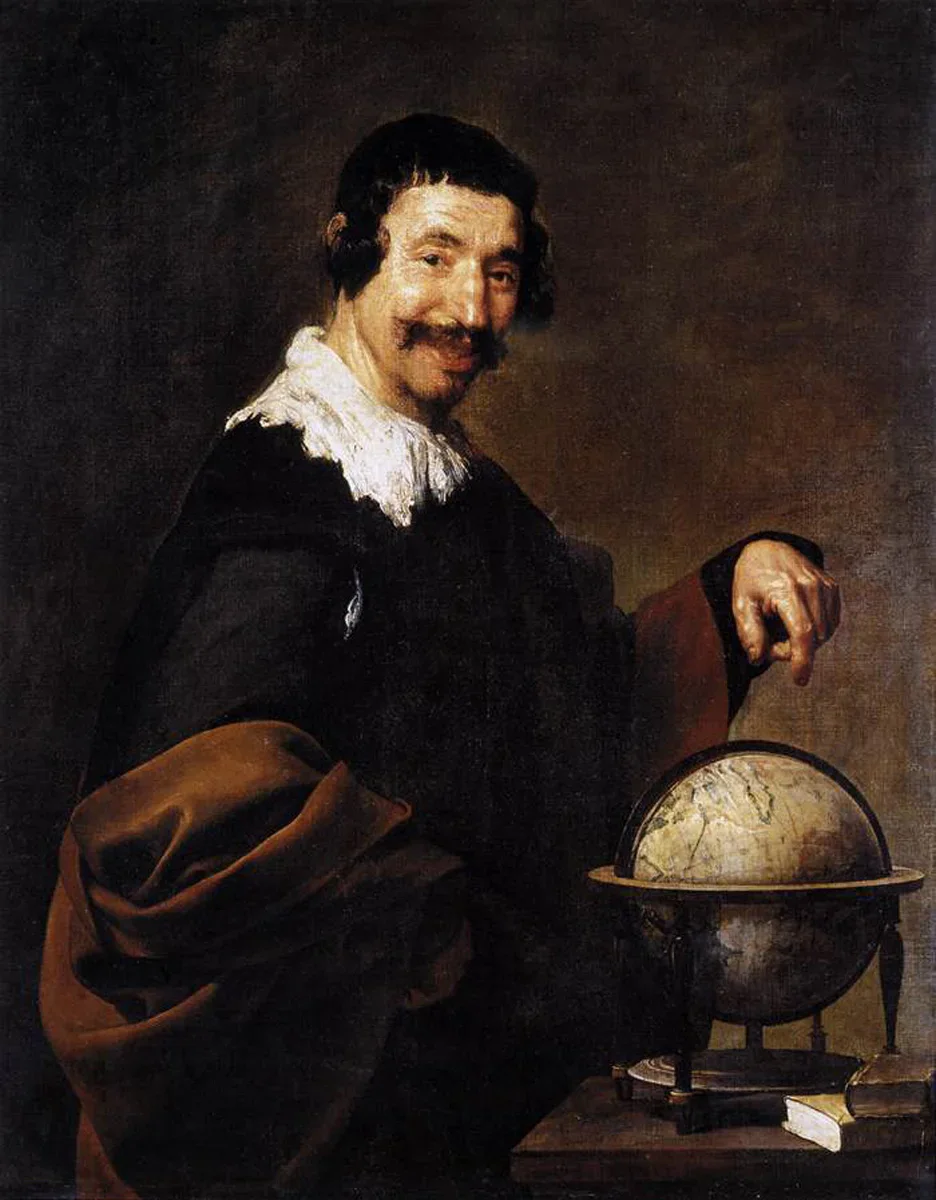
Democritus
The man smiling straight at you was first painted as a laughing drinker. He probably began with the face of Pablo de Valladolid, a jester at Philip the Fourth's court. Copies made before the change show no globe at all, and a wine cup in his gloved left hand. Velázquez, who painted at that court, came back to this painting years later and turned the drinker into a sage. The change shows in the hand resting on the globe. Beneath the paint, that hand once turned upward, holding something, perhaps a crystal ball or a vase. The globe itself was added at that point. So the smile now belongs to Democritus. He taught that a cheerful, moderate life was the way to happiness, and he laughs at the world set before him as a globe. The head and hand are painted more freely than the clothes, with very fluid paint. Two closed books, the colour of parchment, rest on the table, and they give this portrait the feel of a still life as well.
Listen in the appDiego Velázquez · Public domain
04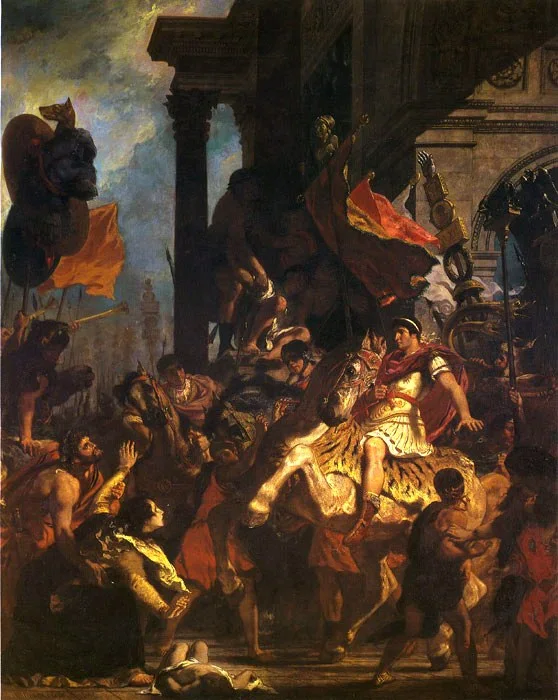
La justice de Trajan
No one knows for certain how this subject reached Delacroix. His friend Frédéric Villot probably suggested it. What you see is a widow who has come to the emperor, asking for justice for her husband, who was murdered. The story comes from Dante, from the tenth song of Purgatory. Trajan was about to leave for the Dacian Wars. The widow stopped him, and he put off his departure to give her justice himself. The painting was meant for Bordeaux. But Delacroix asked that it be sent to Rouen instead, to honor the memory of his friend Géricault.
Listen in the appEugène Delacroix · Public domain
05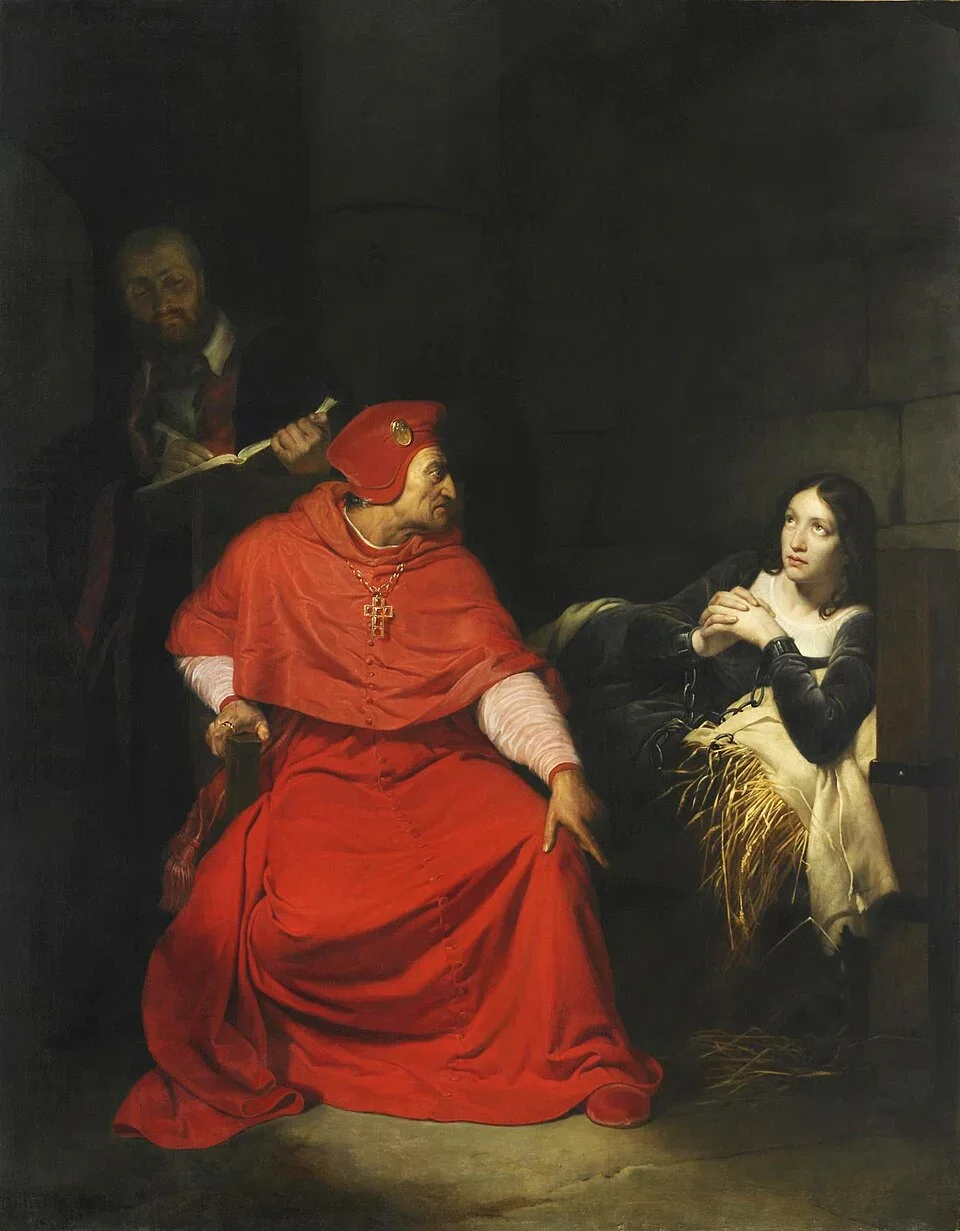
Joan of Arc is interrogated by The Cardinal of Winchester in her prison
The man in red was never Joan's questioner. It was the first scene from history Delaroche ever painted. A British dealer in Paris asked for a story both countries would know. For that shared subject, he put a different man in the chair. In 1431 Joan was handed to the French church court and questioned by Pierre Cauchon, the bishop of Beauvais. He pressed her on why she had taken up arms for the King of France. For two weeks she held her answers while her health gave way. But that man is Cardinal Henry Beaufort of Winchester, better known to the English public from Shakespeare's Henry the Sixth. He fills the picture with red, the only strong colour in it. One hand grips his chair, the other points down. Joan is huddled to the right, sick in bed, her wrists chained, her fingers crossed, her eyes raised. A third figure stands in the dark, writing it all down. Cauchon, who really questioned her, is nowhere in the picture.
Listen in the appPaul Delaroche · Public domain
06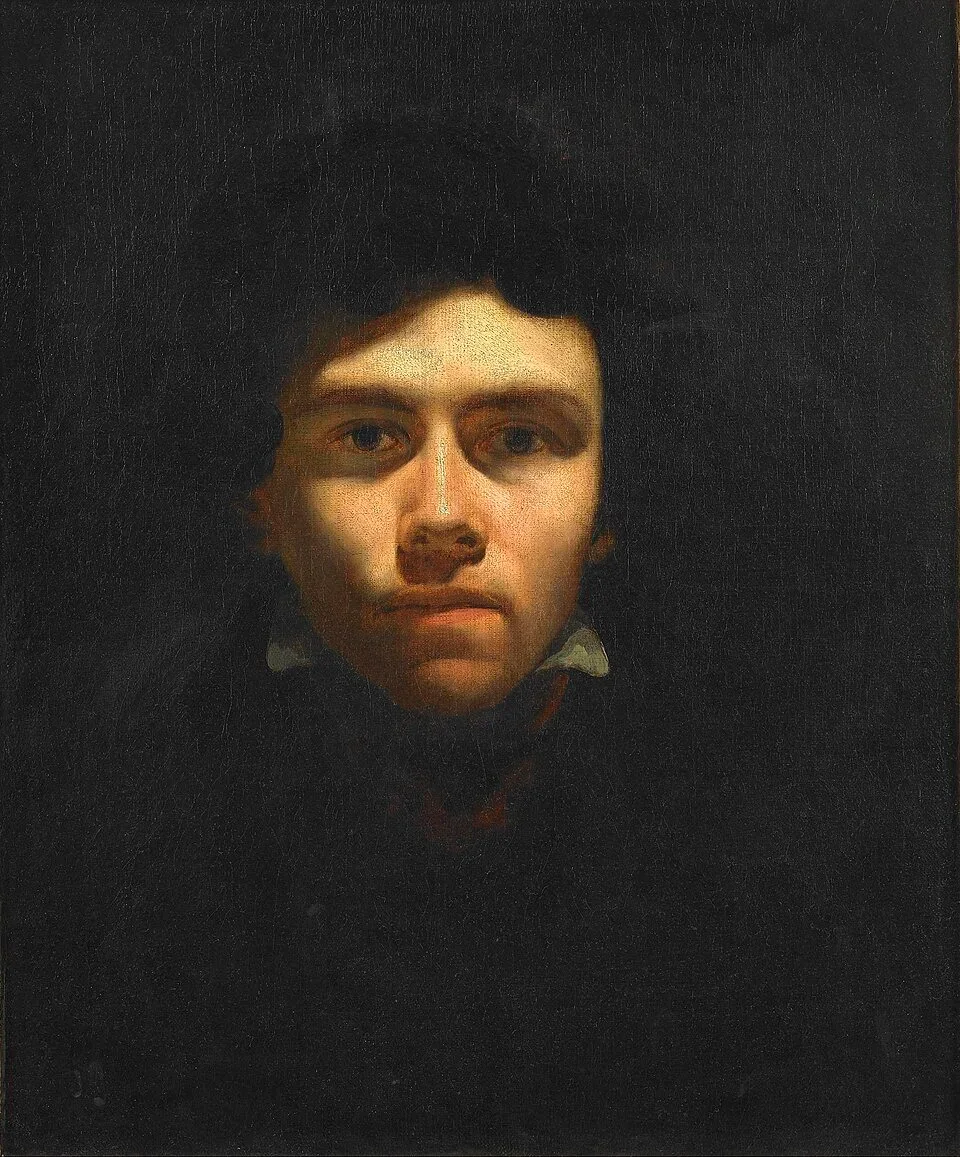
Self-portrait
For years this young face was said to be the work of another painter. In 1892 it was sold as a portrait by Géricault, a friend of the sitter. It came here the next year still carrying that name. The sitter is eighteen. There is no signature and no date to settle who painted it. Not long ago, the surface was looked at more closely. An earlier version lay underneath, worked more freely in the hair and at the neck, and lit more gently. Delacroix began that first version. The picture in front of you was finished by another, still unidentified hand, which seems to have given the face its deep shadow. Light comes from above and to the right. The face comes forward out of a dark ground that hides the outline of the head and upper body. Apart from the face, you can make out a white shirt collar and a red scarf. The hair and the dark jacket merge into the black. The gaze is fixed and hard, straight at you. The same look turns up in a portrait of him by another painter, and in a self-portrait printed a few years later.
Listen in the appEugène Delacroix · Public domain
07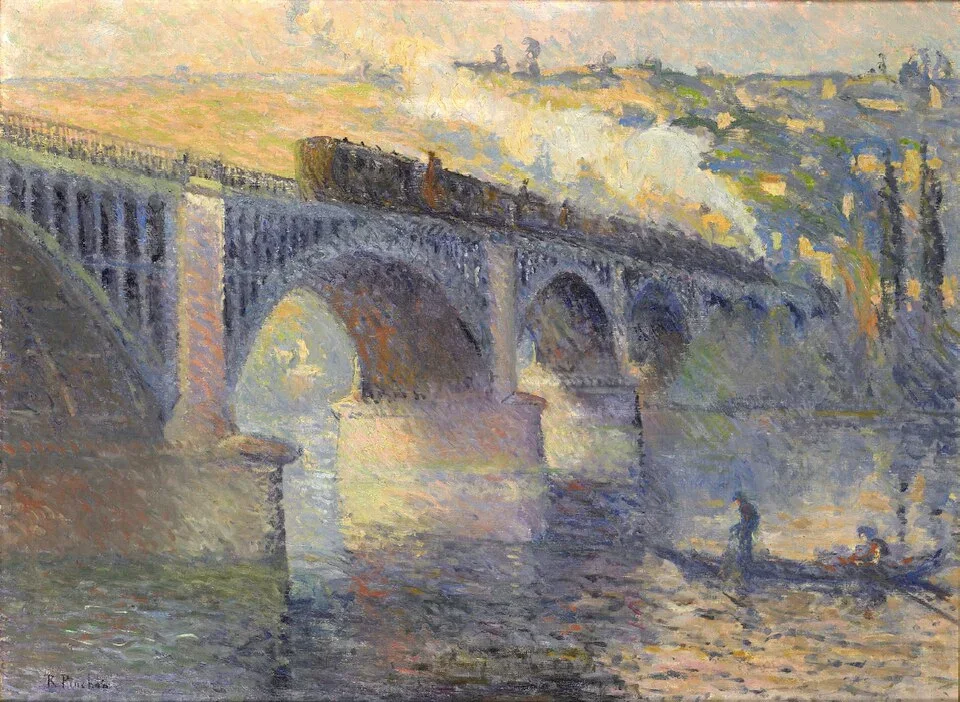
Le Pont aux Anglais, soleil couchant
A bridge fills the picture, its arches receding toward the right. Under it a boat passes with two people. The sun is off to the left, outside the frame, and its golden light falls across the scene. A locomotive and its cars come over the bridge, trailing steam behind them. The steam runs toward the right, following the receding arches, and it pulls your eye along with it. This is a railway bridge, built to carry the line from Paris to Le Havre. Pinchon made that speeding train his salute to the industrial world arriving then. So many English workers helped build it that people called it the English Bridge. It opened in 1847, and its wooden arches were replaced with iron in 1856. Those are the arches in this picture. He painted the whole scene out in the open air.
Listen in the appRobert Antoine Pinchon · Public domain
08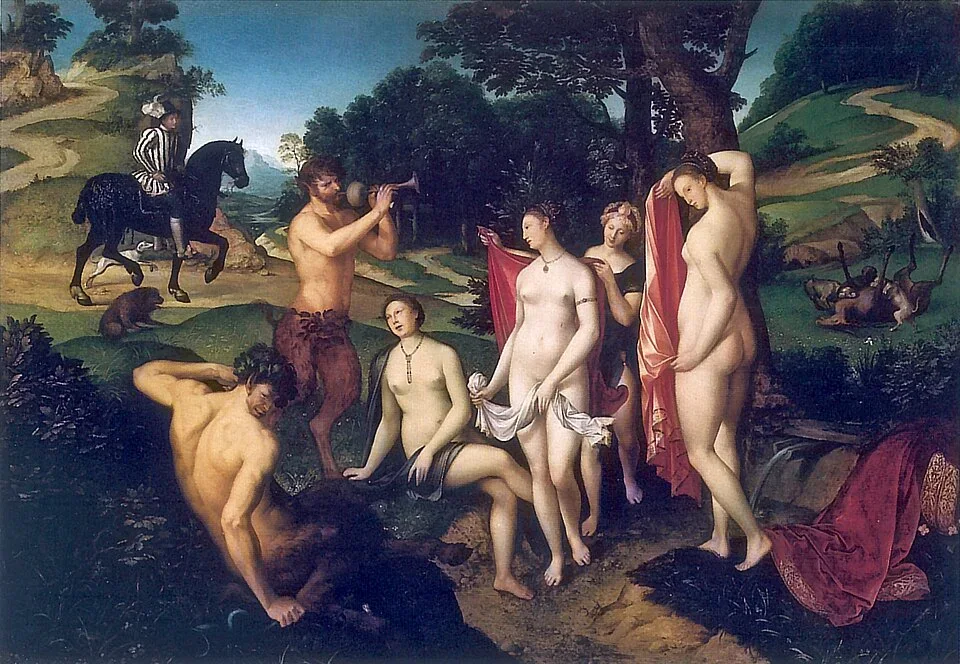
The Bath of Diana
Someone at the French court wanted to mock the people who ran it. A goddess at her bath was the way to do it. Diana, the goddess of chastity, bathes deep in the woods. Two satyrs court her, her nymphs around her. But the nymphs may stand for real women. The seated one seems to be Catherine de Medici, mourning her husband Henry the Second. The standing one seems to be Diane de Poitiers, the king's mistress. The one holding a wedding veil seems to be Mary Stuart, newly married to Francis the Second and new to this family. The painting is attributed to François Clouet, known for his portraits of the French ruling family. Catholics and Protestants were tearing the court apart. The painting treats the king's mistress badly, and the Guise family too, who backed the Catholic side. That is why it was probably made for someone on the Protestant side. In the background, a man on a black horse, an imagined portrait of Henry the Second, seems to have killed a stag. Other dogs tear it apart. It calls to mind Actaeon, who saw Diana bathing, was turned into a stag, and was devoured by his own hounds. Who gave the order is still not known.
Listen in the appFrançois Clouet · Public domain
09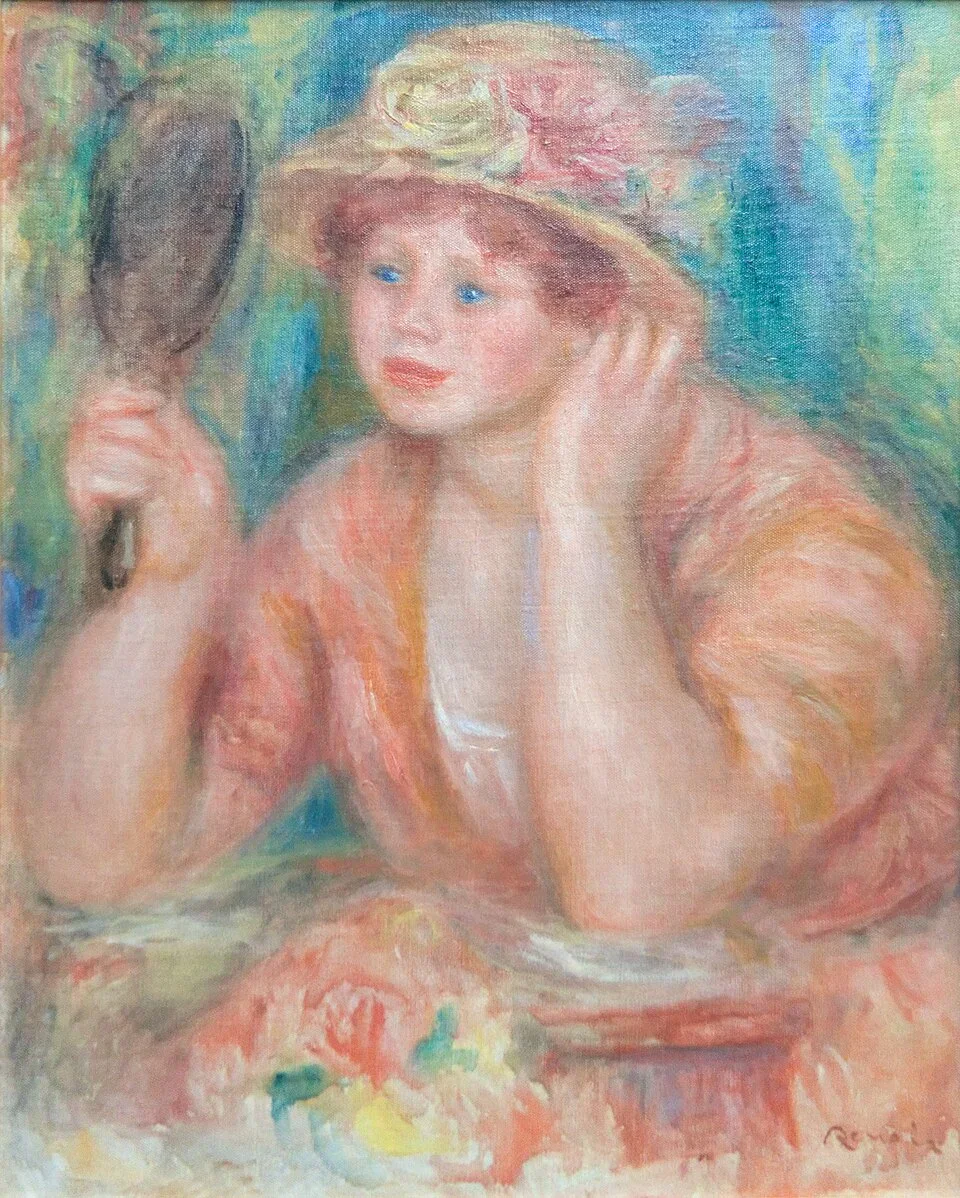
Young Woman at the Mirror
The young woman looks at herself in a hand mirror. That face belongs to Catherine Hessling. Henri Matisse introduced her to Renoir, and around 1915 he painted her like this. She would later marry Jean, the painter's son. She wears a hat with flowers.
Listen in the appPierre-Auguste Renoir · CC0
10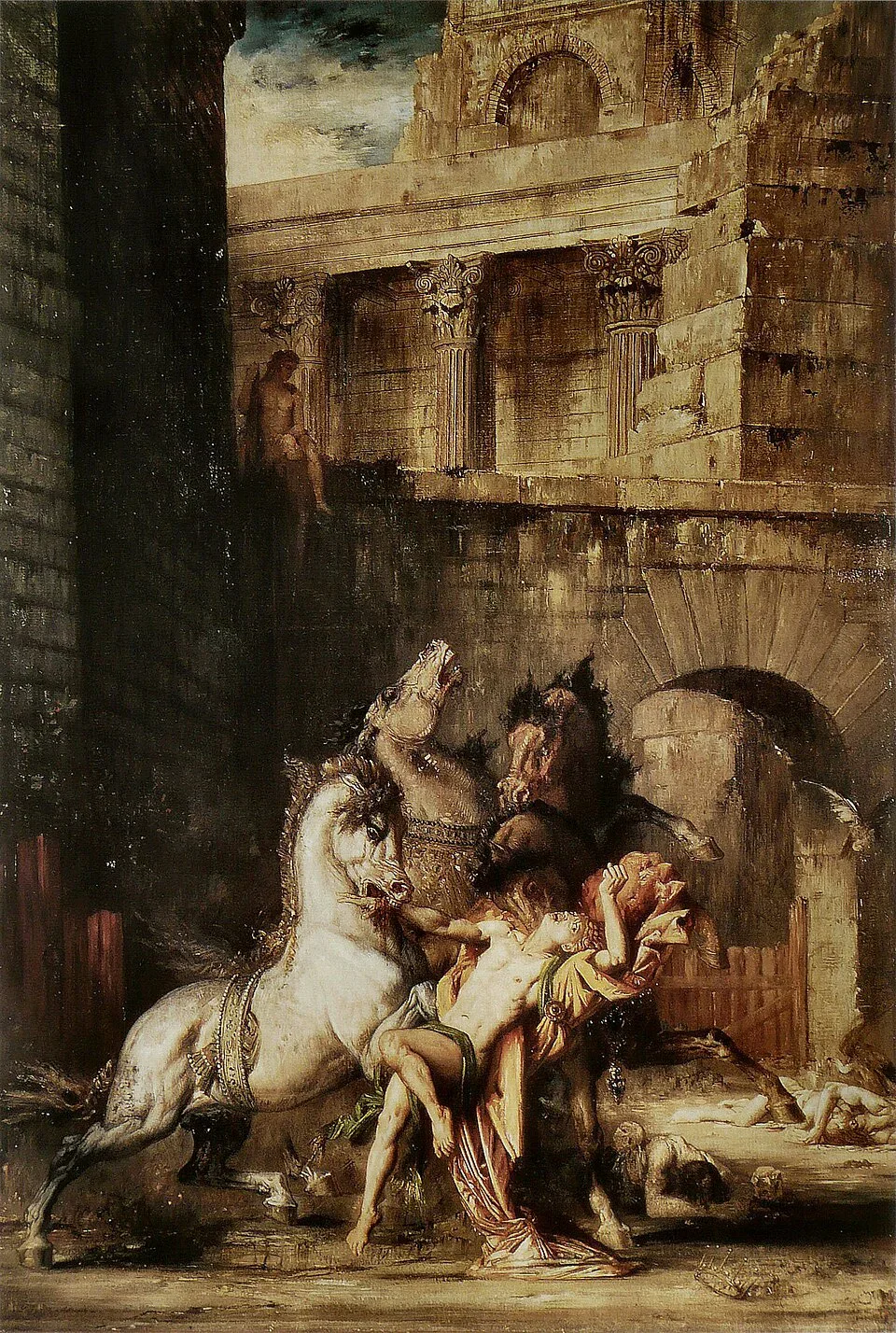
Diomede devoured by his horses
Three horses hold a king hanging between their jaws. They have him by the arm and by the neck, and the bloody meal has begun. His pale face shows a grimace of terror. White corpses lie here and there on the stable floor, food for the vultures. Yet the one who set this in motion sits apart, high on the wall, with Corinthian columns behind him. Hercules does nothing. He only watches. Moreau placed him there as a judge, not an executioner. The gentle hero people called on to guard the roads had finished his task. These were Diomedes' mares, and they ate men. Hercules had taken them and thrown the king to them. He stays only to be sure the guilty man cannot escape. Red cloth holds the king still and makes him like an open wound. The background is held in shadow, and the pale horses and bodies stand out against it. He did not think it a success. In a letter to the curator in Rouen, he said he wished he could answer their call with a more important, more successful painting.
Listen in the appGustave Moreau · Public domain
- 11
Joan of Arc Imprisoned in Rouen
Pierre Révoil · 1819
- 12
Poppy Field. Around Giverny
Claude Monet · 1885
- 13
Bouquet de Chrysanthèmes
Pierre-Auguste Renoir · c. 1884
- 14
La Place du Chenil à Marly, effet de neige
Alfred Sisley · 1876
- 15
San Pietro Polyptych (Adoration of the Magi)
Pietro Perugino · 1496–1499
- 16
Andromaque
Georges Rochegrosse · 1883
- 17
Virgin among the Virgins
Gerard David · c. 1509
- 18
Le Geôlier
Jacques-Louis David · c. 1794
- 19
In a Café
Gustave Caillebotte · 1880
- 20
Pont Boieldieu, Rouen, Sunset, Smoke
Camille Pissarro · 1896
- 21
Chez soi
Louise Catherine Breslau · 1885
- 22
Guercino - King David, 90-001800
Guercino · 1617–1620
- 23
Joan of Arc Benouville Rouen Museum
François-Léon Benouville · 1859
- 24
Venus and Cupid
Lavinia Fontana · 1592
- 25
Landscape at Cagnes
Félix Vallotton · 1921
- 26
Gérôme: The Artist's Father and Son at the Doorway (1866) 458.6
Jean-Léon Gérôme · c. 1866
- 27
Niagara Falls
Hippolyte Sebron · 1857
- 28
The Painter Monkey
Jean-Baptiste-Henri Deshays · 1750
- 29
Homage to Clovis II
Albert Maignan · 1883
- 30
Cheval Cabré au Tapis de Selle Rouge
Théodore Géricault · 1812–1816
- 31
Jean-Baptiste Alexandre at the Crucifix
Amedeo Modigliani · 1909
- 32
Portrait of Paul Alexanders
Amedeo Modigliani · 1913
- 33
Gray Horse
Théodore Géricault · 1812
- 34
A Game Of Cards
Judith Leyster · 17th century
- 35
Portrait of Paul Valéry
Jacques-Émile Blanche · 1923
- 36
Good Samaritan
Luca Giordano · c. 1650
- 37
The Course of the Seine by Raoul Dufy
Raoul Dufy · 1937
- 38
Court-Agnes
Joseph-Désiré Court · 1864
- 39
Adoration of the shepherds
Pieter Aertsen · c. 1555
- 40
Self-portrait
Marie Bracquemond · c. 1870
- 41
San Pietro Polyptych
Pietro Perugino · c. 1497
- 42
San Pietro Polyptych
Pietro Perugino · c. 1497
- 43
Portrait of Jacques-Émile Blanche
John Singer Sargent · c. 1886
- 44
Category:Hercule terrassant l'hydre de Lerne by Pierre Puget
Unknown Artist · 1659–1660
- 45
Quayside merchants of Rouen
Jean-Baptiste Camille Corot · 1834
Musée des Beaux-Arts de Rouen
Frequently asked questions
How much does the guide cost?
Free app download. Free until 1 January. Listed guide price: $0.99. Audio guide only. Venue admission is separate.
Can I listen without internet?
Yes. Download the guide’s audio, images, and maps in the app before your visit. Your downloaded content is then available offline.
Can I listen in my language?
In English for now. More languages soon.
Do I need to follow a schedule?
No. This is a self-guided experience. Choose your stops, pause whenever you like, and return to a story at your own pace.
Which artworks are in the Musée des Beaux-Arts de Rouen audio guide?
45 artworks, including Christ at the Column (Caravaggio), La Belle Zélie (Jean-Auguste-Dominique Ingres), Democritus (Diego Velázquez), La justice de Trajan (Eugène Delacroix), Joan of Arc is interrogated by The Cardinal of Winchester in her prison (Paul Delaroche), Self-portrait (Eugène Delacroix), Le Pont aux Anglais, soleil couchant (Robert Antoine Pinchon), and The Bath of Diana (François Clouet). The full list is on this page.
Is this the museum’s official audio guide?
No. Stanza is an independent audio guide app and is not affiliated with Musée des Beaux-Arts de Rouen. Museum admission is separate.
At your own pace
Explore Musée des Beaux-Arts de Rouen.
Download Stanza, then search for “Musée des Beaux-Arts de Rouen”.
Free app download · Guide price shown in the app
Keep exploring
Nearby audio guides
Rouen · 1 km
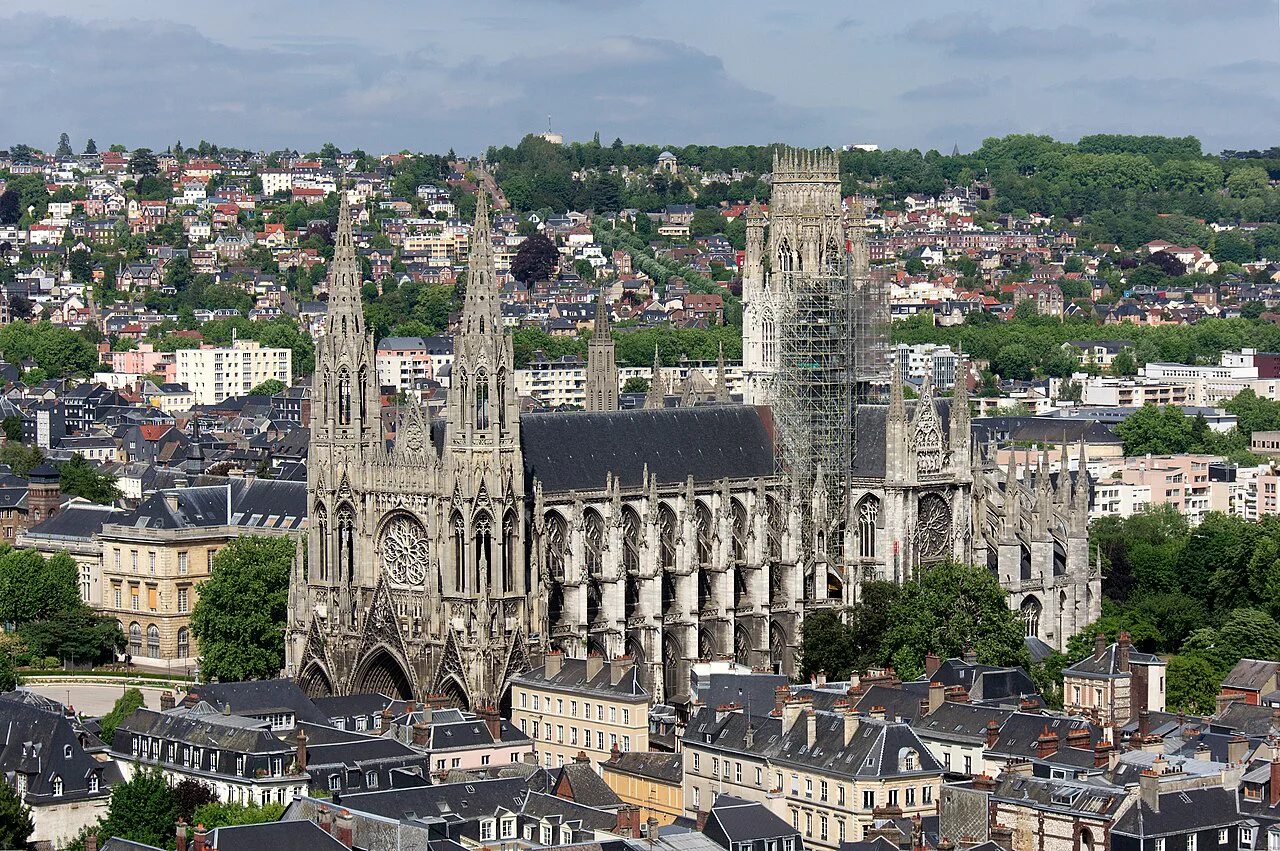
abbatiale de Saint-Ouen de Rouen
Content & sources
Frédéric BISSON · CC BY 2.0
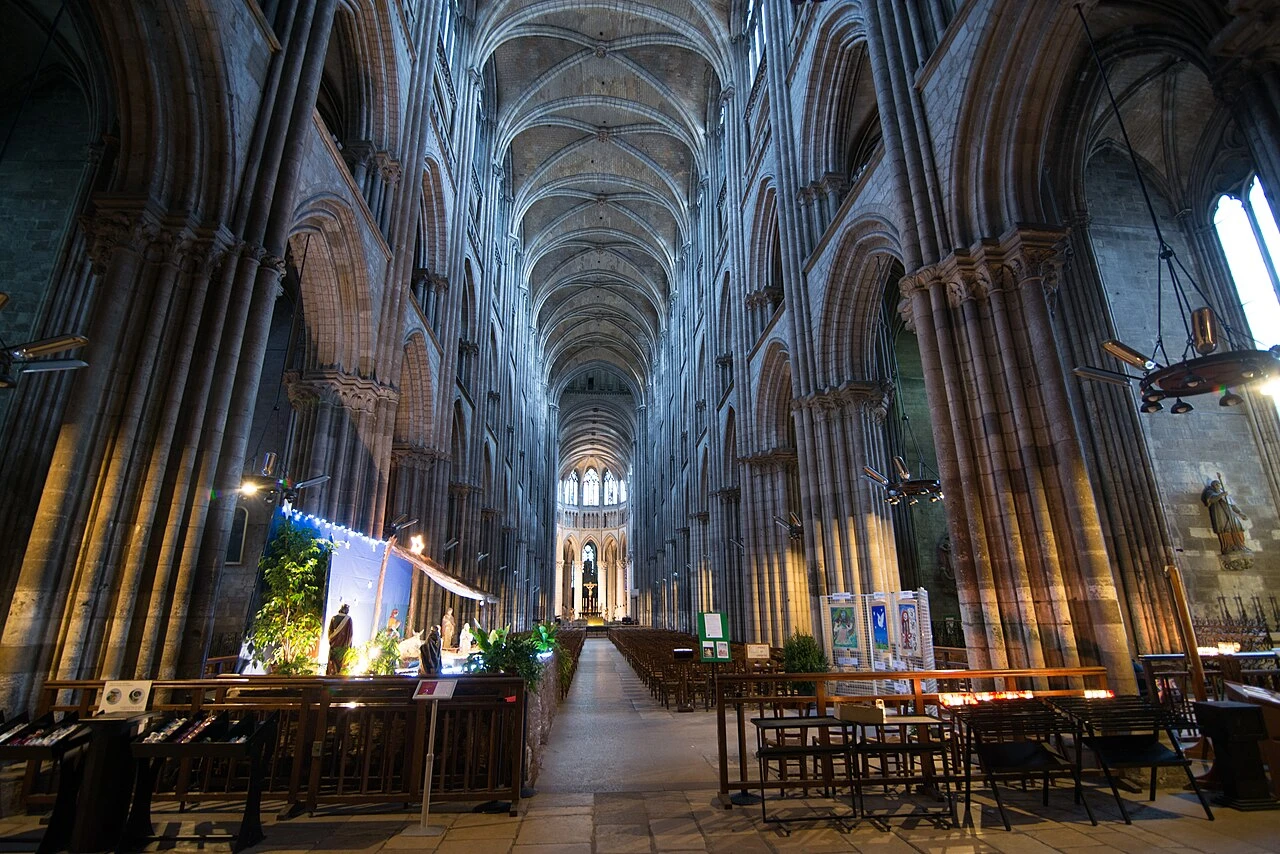
Rouen · 1 km
Rouen Cathedral
Content & sources
Jorge Láscar from Melbourne, Australia · CC BY 2.0
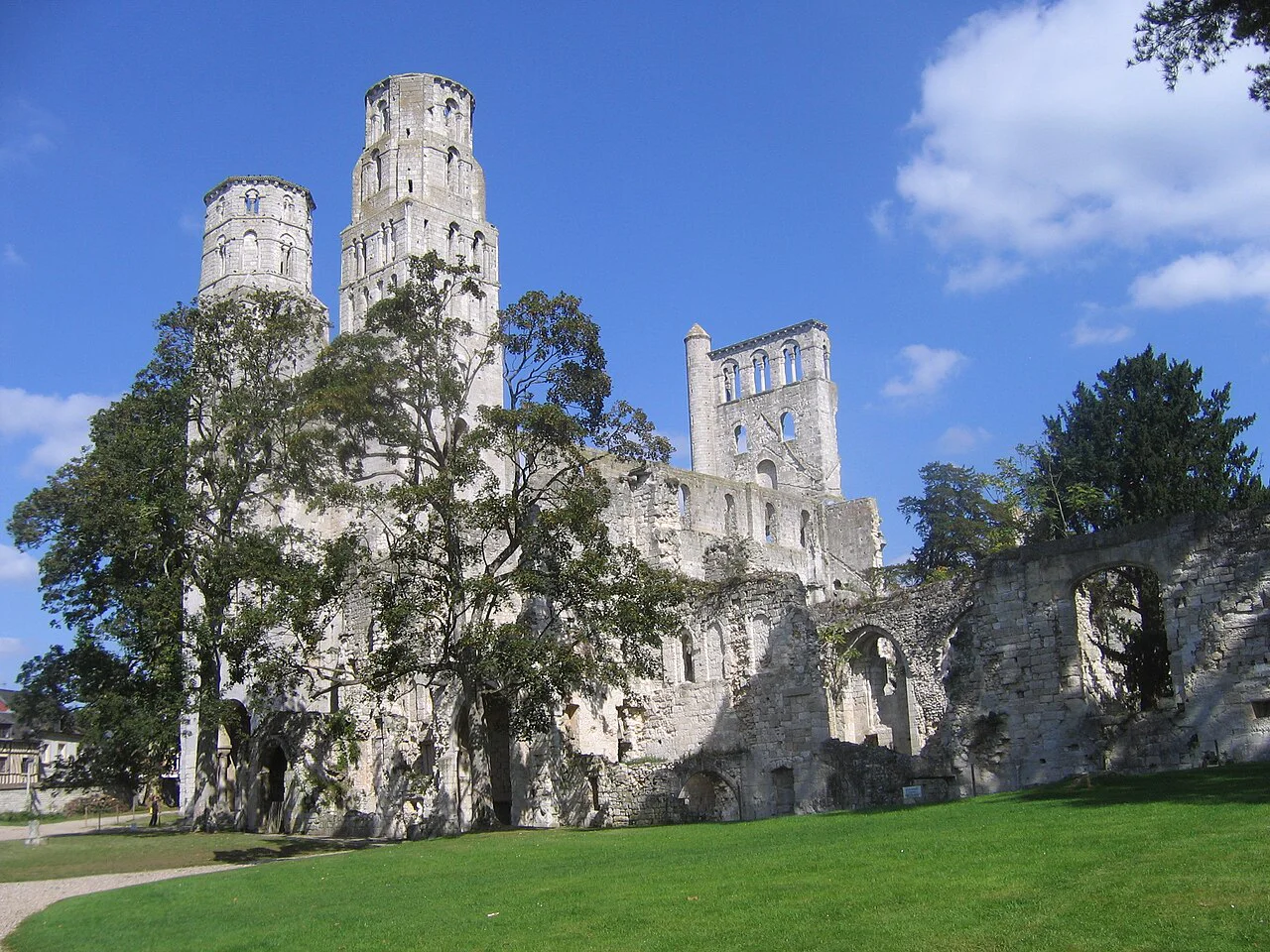
Jumièges · 20 km
Abbaye de Jumièges
Content & sources
Franz Golhen · Public domain
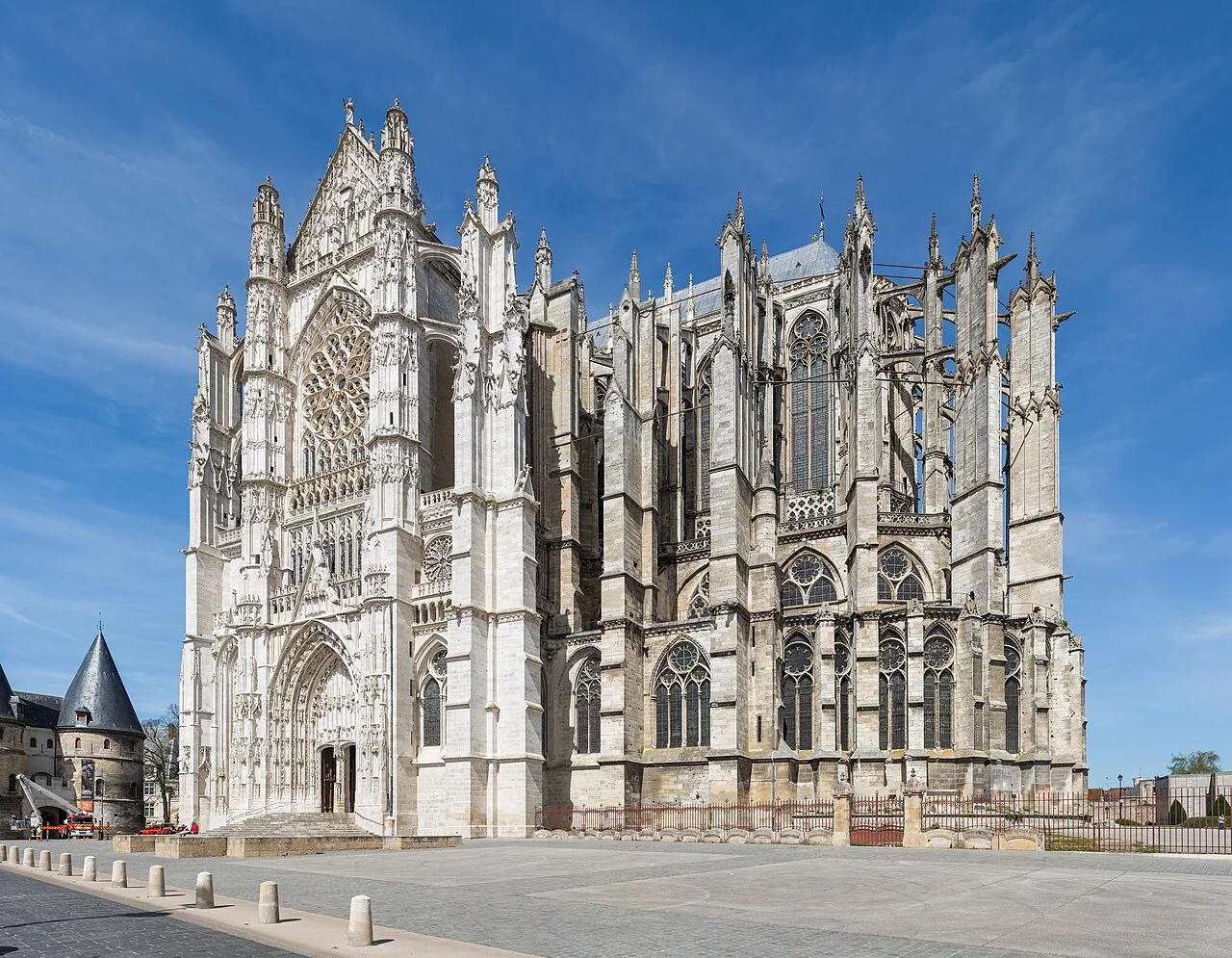
Beauvais · 71 km
Cathédrale Saint-Pierre de Beauvais
Content & sources
Photo: Diliff · CC BY-SA 3.0
Art museums
More art museum audio guides
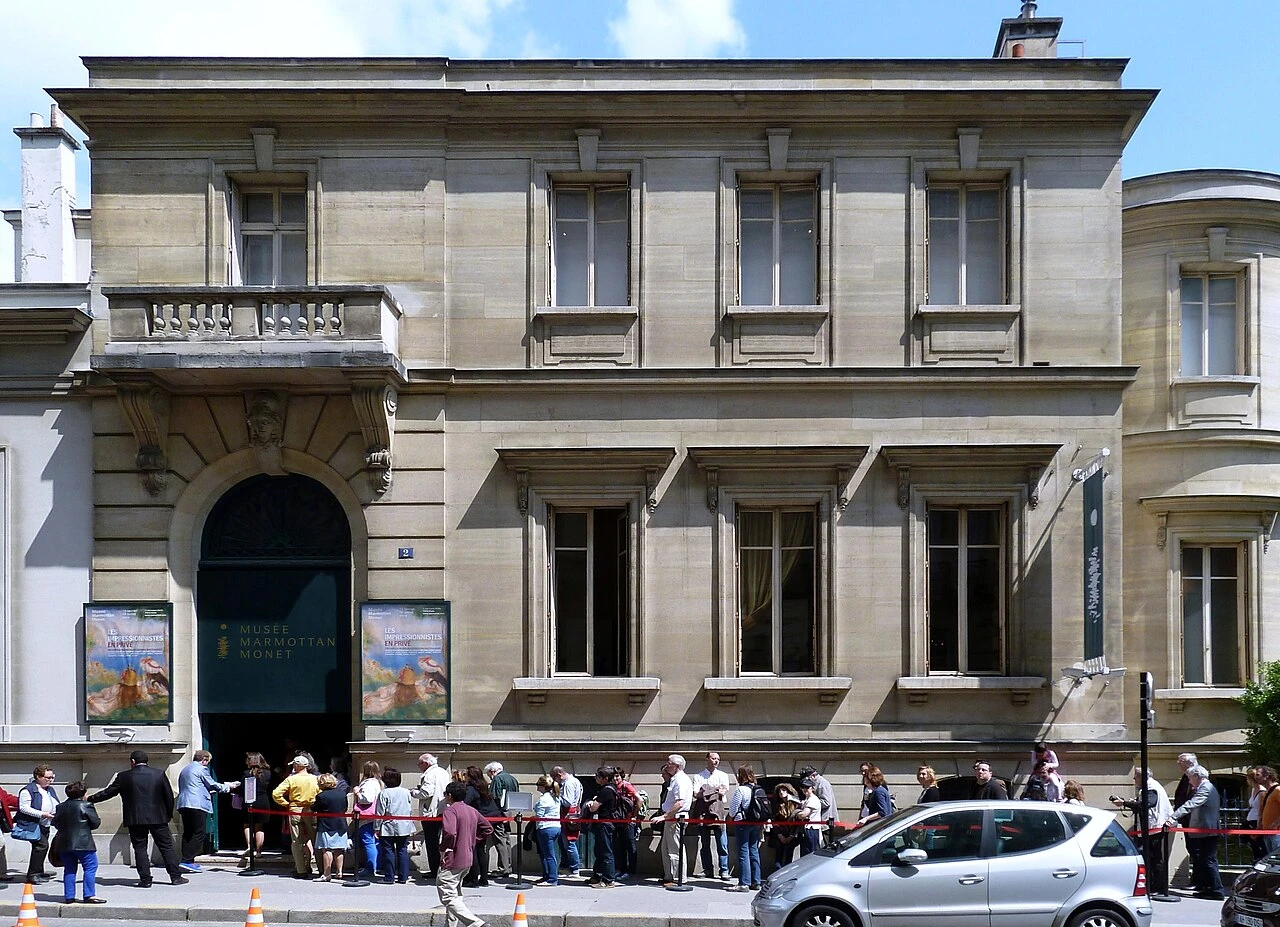
Paris · 25 artworks
Musée Marmottan Monet
Content & sources
PIERRE ANDRE LECLERCQ · CC BY-SA 4.0
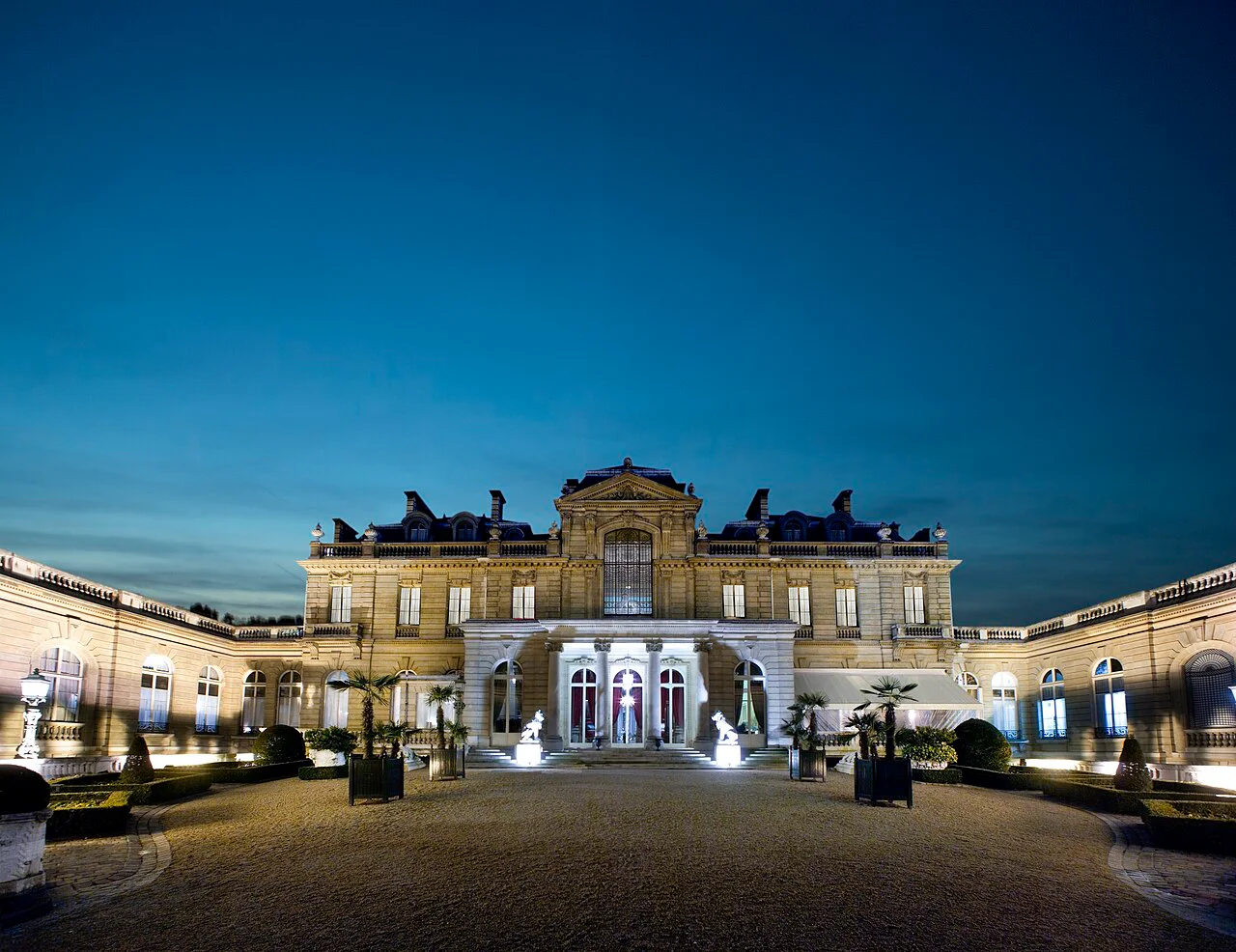
Paris · 24 artworks
Musée Jacquemart-André
Content & sources
Christophe Recoura · CC BY-SA 3.0
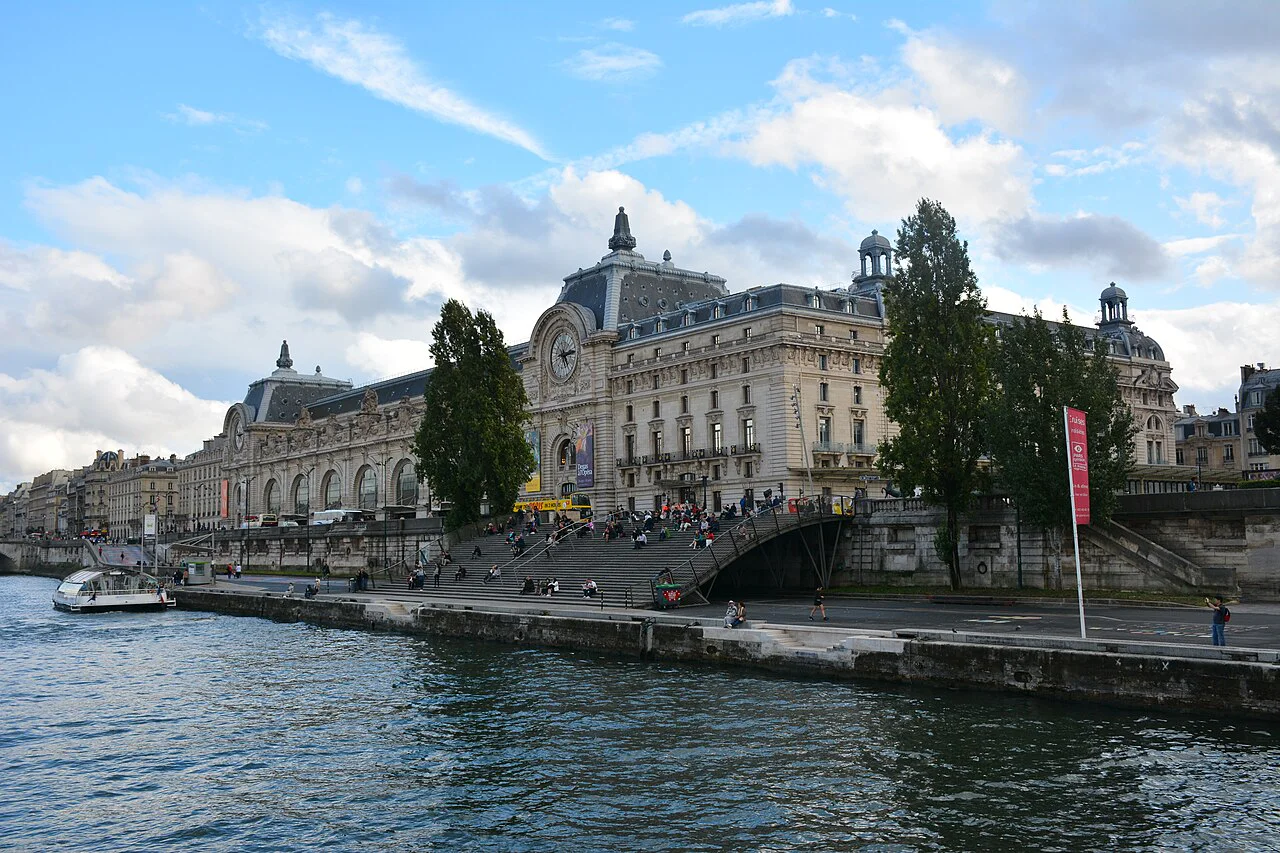
Paris · 205 artworks
Musée d'Orsay
Content & sources
Cheng-en Cheng from Taichung City, Taiwan · CC BY-SA 2.0
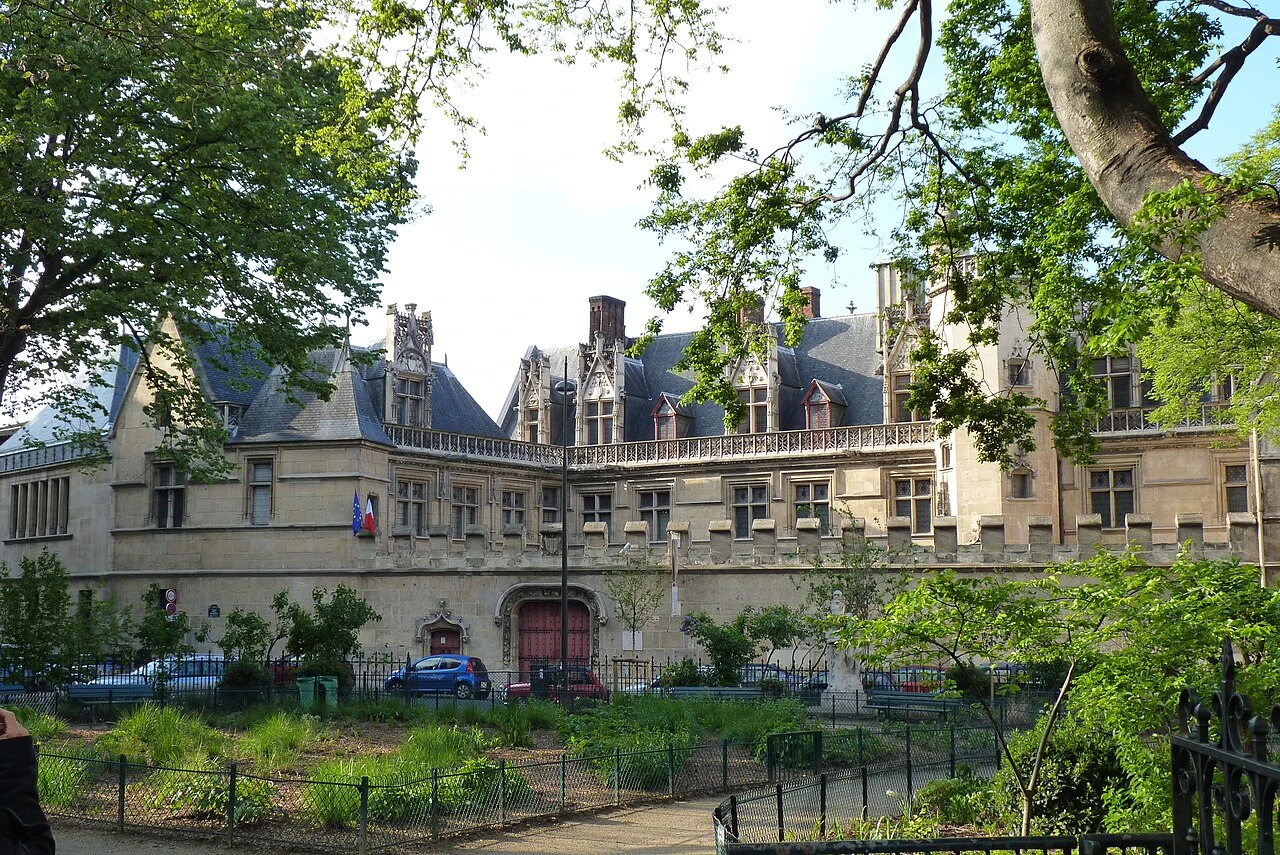
Paris · 29 artworks
Cluny Museum
Content & sources
ctj71081 · CC BY-SA 2.0
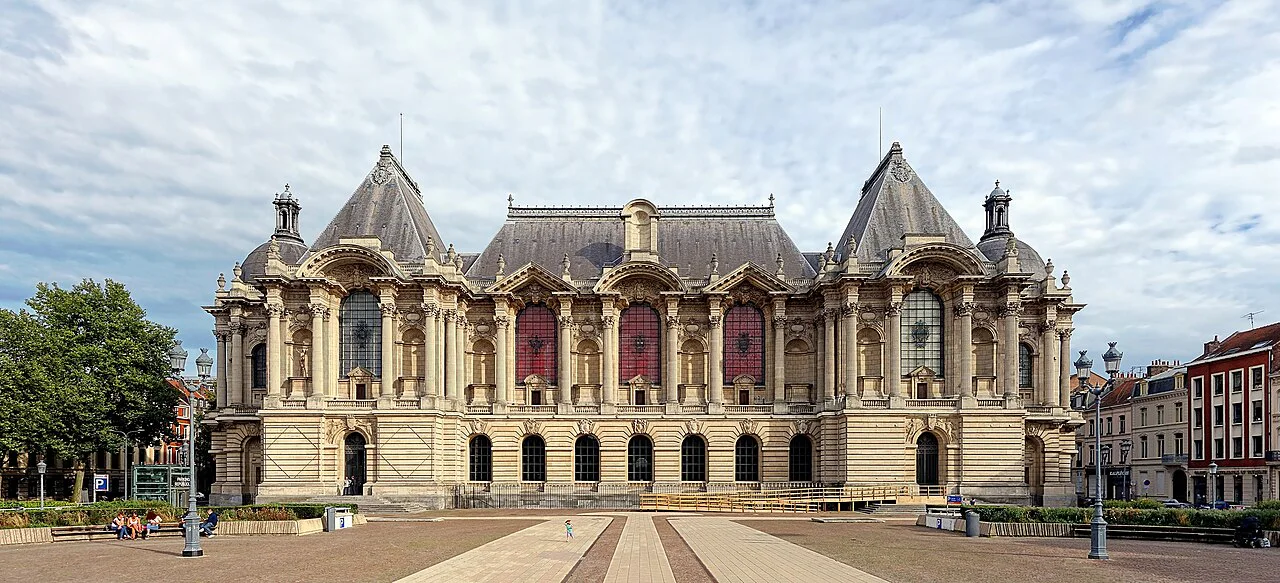
Lille · 96 artworks
Palais des Beaux-Arts de Lille
Content & sources
Photo: Velvet · CC BY-SA 3.0
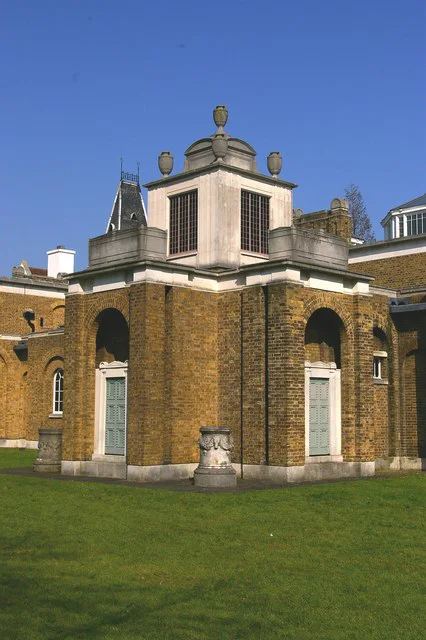
London · 24 artworks
Dulwich Picture Gallery
Content & sources
Julian Osley · CC BY-SA 2.0