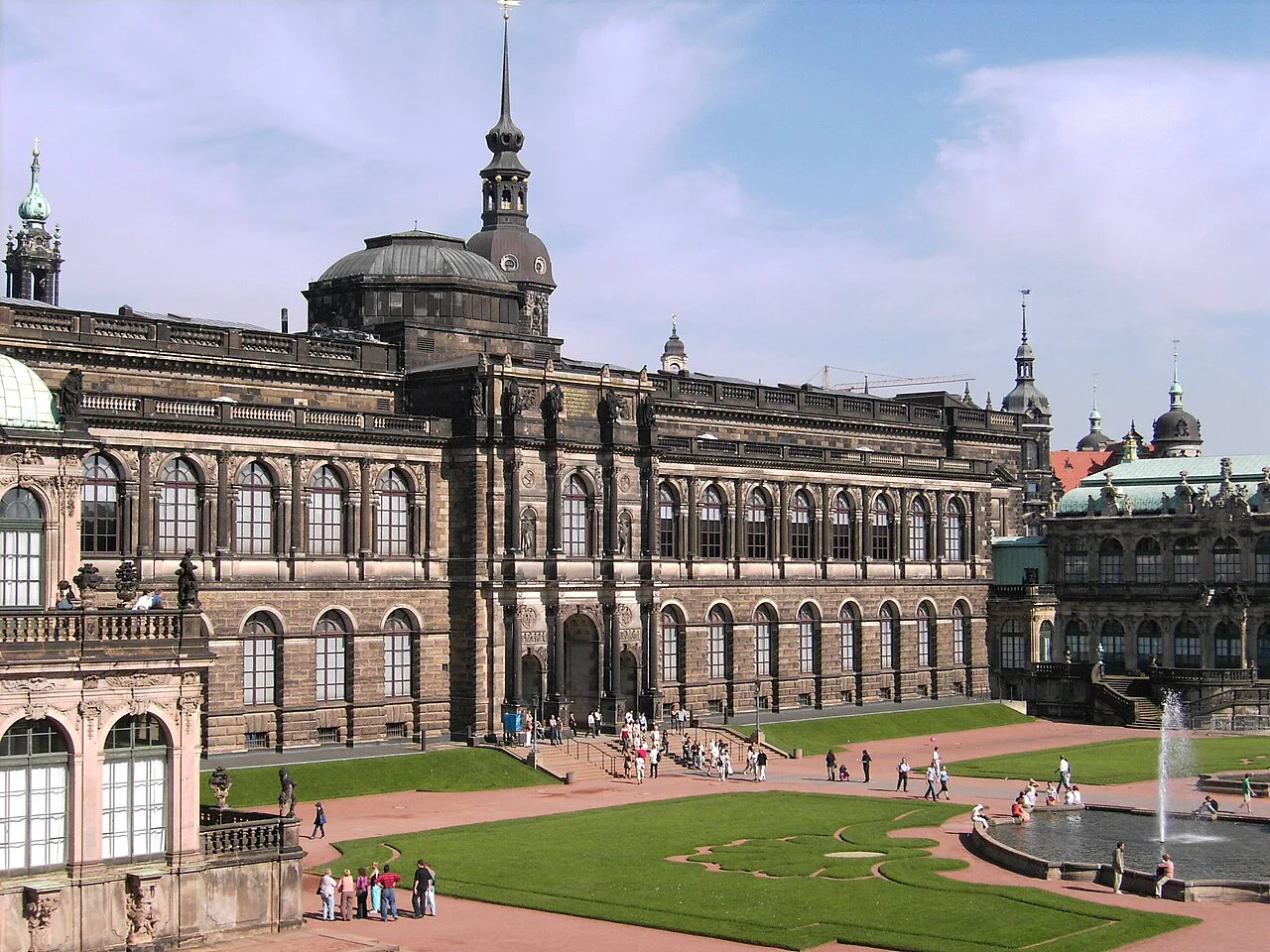
Stanza · Audio guide
Gemäldegalerie Alte Meister Audio Guide
A place to remember. A story to take with you.
The Gemäldegalerie Alte Meister in Dresden displays around 750 paintings from the 15th to the 18th centuries. It includes major Italian Renaissance works as well as Dutch and Flemish paintings.
Download Stanza, then search for “Gemäldegalerie Alte Meister”.
About the tour
One guide. Your kind of visit.
The Gemäldegalerie Alte Meister in Dresden displays around 750 paintings from the 15th to the 18th centuries. It includes major Italian Renaissance works as well as Dutch and Flemish paintings.
The Gemäldegalerie Alte Meister guide tells the stories of 162 artworks, including Sleeping Venus (Giorgione, Titian), Sistine Madonna (Raphael), Girl Reading a Letter at an Open Window (Johannes Vermeer), The Tribute Money (Titian), Seven Sorrows Polyptych (Albrecht Durer), Rembrandt and Saskia in the parable of the Prodigal Son (Rembrandt), Dresden Triptych (Jan van Eyck), and The Rape of Ganymede (Rembrandt). Every artwork is free to hear in the Stanza app until 1 January.
Ready when you are.
- 01Get the free Stanza app.
iOS & Android
- 02Find your guide.
“Gemäldegalerie Alte Meister”
- 03Download before you go.
Works offline
Audio guide / 162 artworks
Inside the guide
Get to know a few of the stories before you go. Open a stop to read more.
01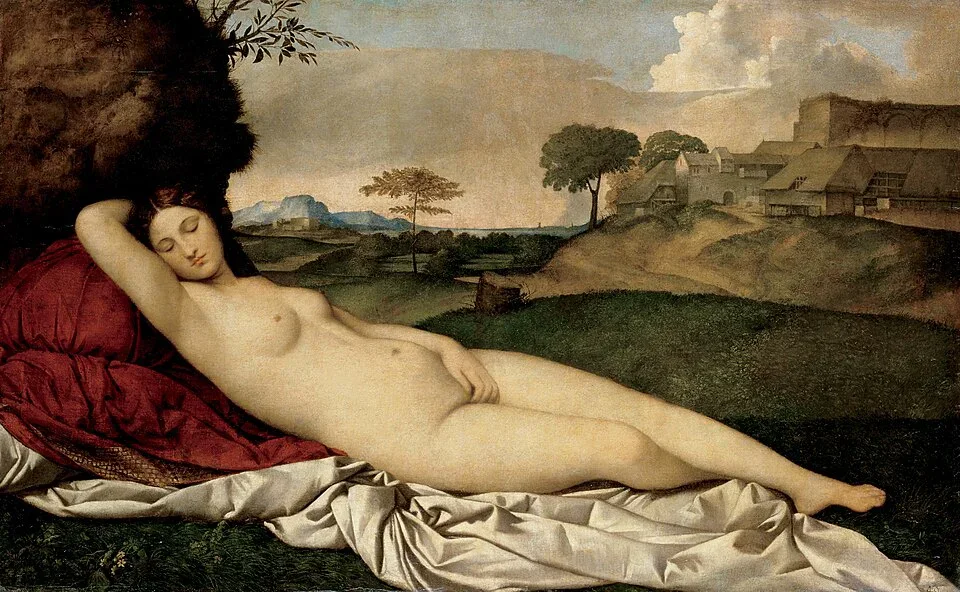
Sleeping Venus
She is the earliest reclining nude we know of in Western painting, and no single nude this large had been painted before. There she lies, naked, stretched across the whole width of the painting, one arm behind her head. Her body makes one long, gentle slope, and its curves answer the rolling hills behind her. Giorgione began the picture and died in 1510, leaving it unfinished. Titian finished the landscape and sky, and the woman herself is now credited to him as well. How much of her is really Giorgione's is uncertain. There was a Cupid at her feet once, painted out in the nineteenth century after people damaged it by touching it. X-rays still find it beneath the paint. Who painted it kept changing for centuries. Bought for Augustus the Strong as a Giorgione, it was called a Titian by 1722, and a copy a century later. It was recognised as the lost Giorgione again only in the nineteenth century. After the Second World War it passed briefly into the hands of the Soviet Union.
Listen in the appTitian / Giorgione · Public domain
02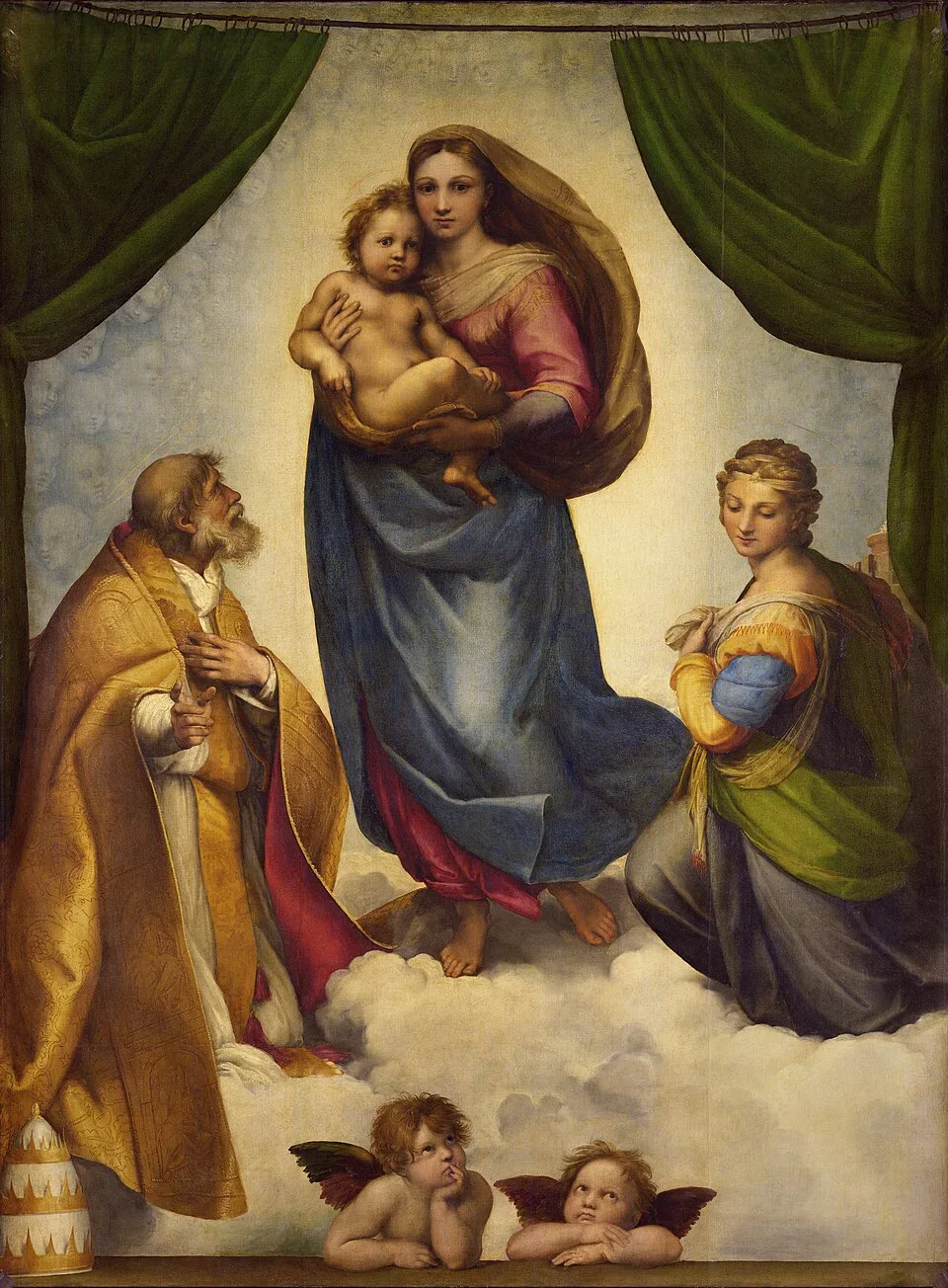
Sistine Madonna
From a distance, the space behind the figures looks like cloud. Up close, it is the heads of countless angels. That space is not cloud at all. It is a vision coming toward you. Julius the Second wanted a picture for the church of San Sisto in Piacenza. Raphael painted it between 1512 and 1514. Julius meant it to honor an uncle of his, an earlier pope named Sixtus. He also wanted to mark a victory over the French, with Piacenza newly part of the Papal States. The church kept the relics of Saints Sixtus and Barbara, so both had to be in it. The saint on the left carries Julius's own face. That saint points out of the picture. Where he points, a great crucifix once hung opposite the altar. The mother and child look that way too, and their faces seem to know what that cross will mean for him. The painting was probably meant for Julius's tomb. In 1754 the monks sold it to Augustus the Third, king of Saxony, to repair their convent, and a copy took its place. It went to Dresden, was taken to Moscow after the war, and came back in 1955. At the bottom of the picture, at the saint's feet, sits his papal tiara. It rests right on the edge, where the painted world meets our own.
Listen in the appRaphael · Public domain
03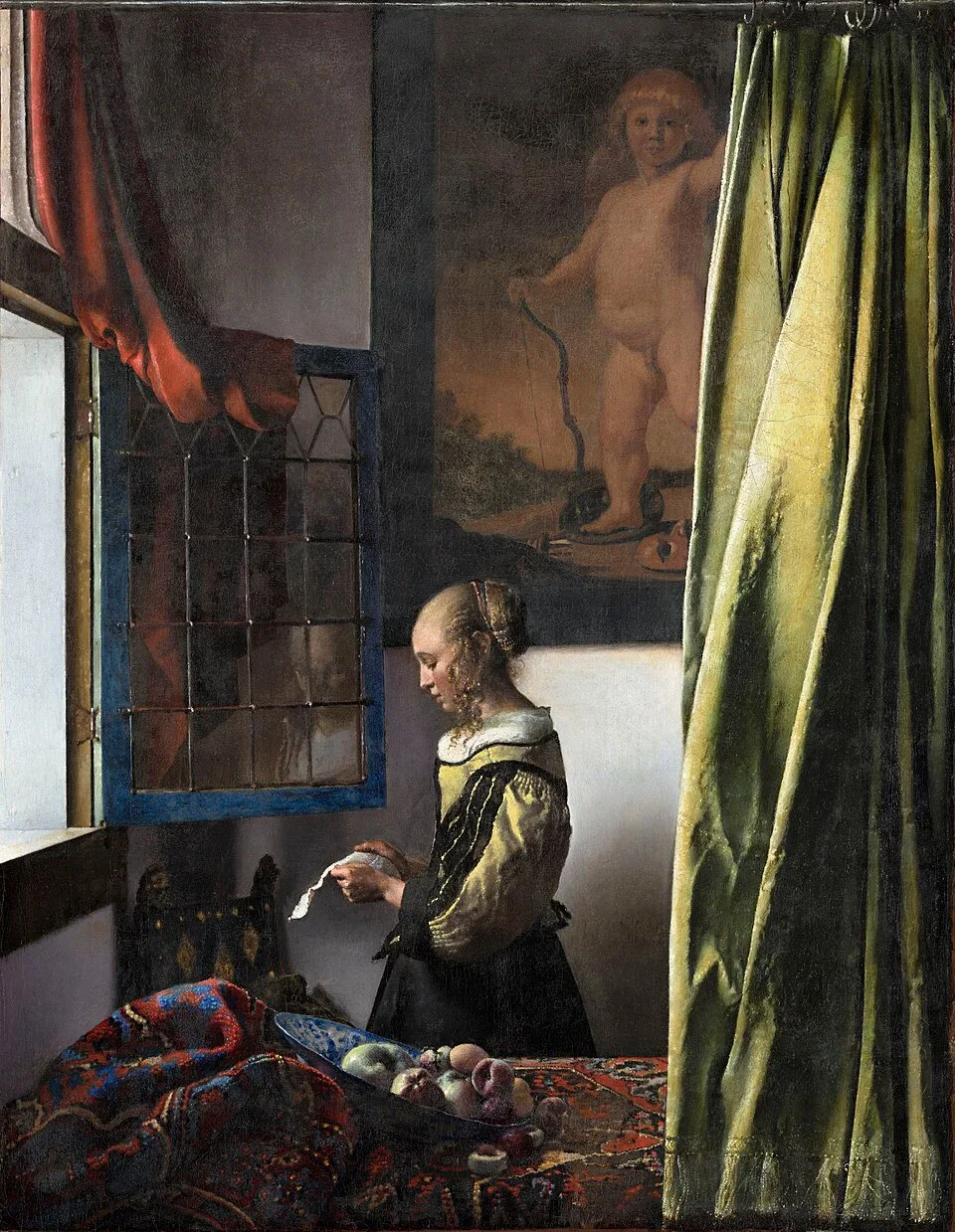
Girl Reading a Letter at an Open Window
She stands at an open window with a letter in her hand, turned away from you. The letter has all of her attention, and she holds it firmly. You make out her face only in the window glass, reflected there. For nearly three hundred years, that was all anyone saw. Behind her, a bare wall. Then tests showed an image on it. As the covering paint came away, under a scalpel and microscope, a Cupid appeared. Vermeer had painted it there himself. Someone painted it out long after his death, and the wall stayed blank. Now the wall has its Cupid back. Cupid is the god of desire, and his presence points to the letter in her hand. It may be a love letter. The Cupid resembles a picture he may have owned, and no one knows whether that original still exists, or where it has gone.
Listen in the appJohannes Vermeer · Public domain
04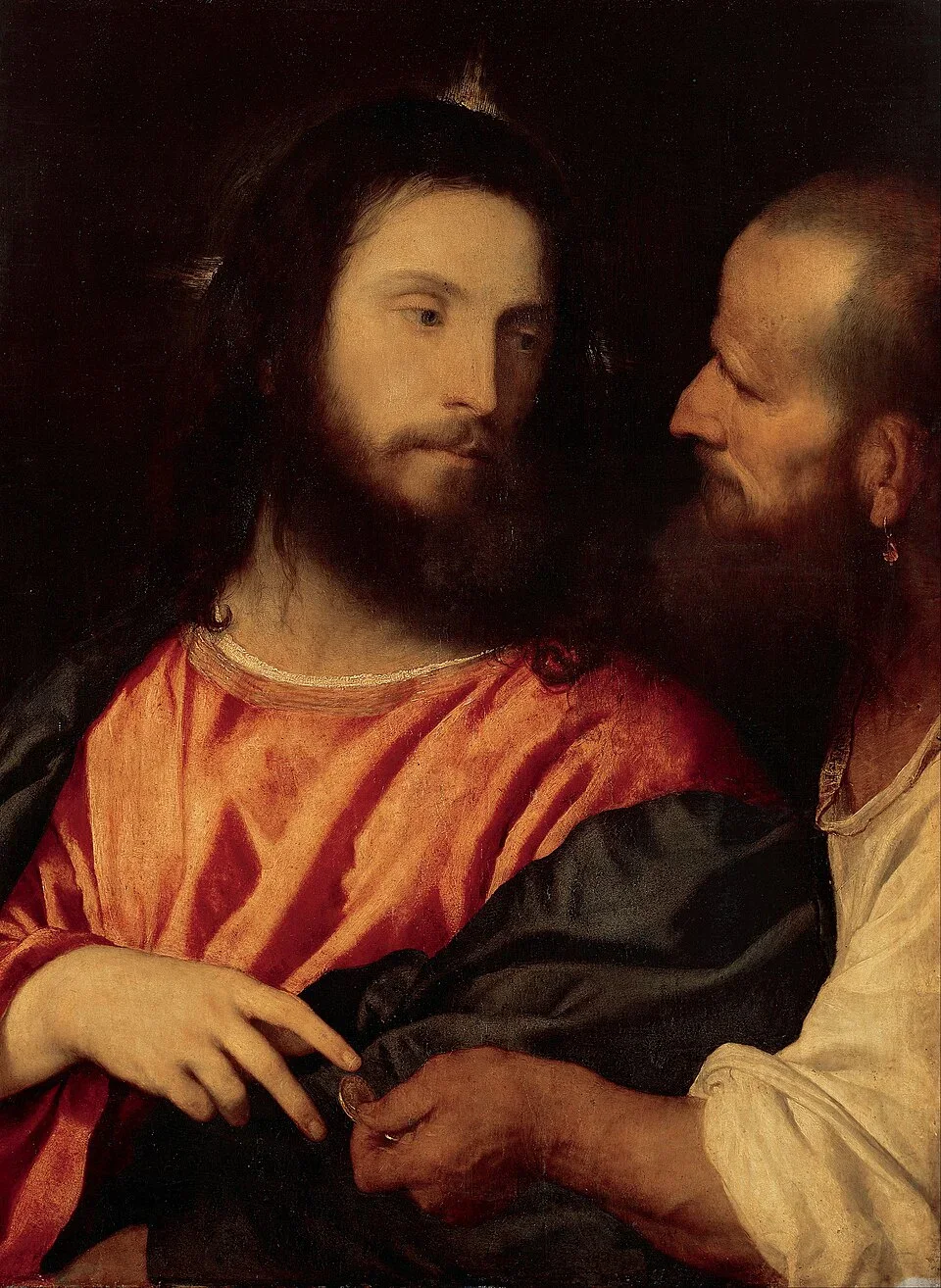
The Tribute Money
After the Second World War this panel was taken from Dresden to Moscow by the Red Army. Water badly damaged it, and the Russian painter Pavel Korin carefully restored it. In 1955 it came back to Dresden. The faces of Christ and a Pharisee are close together, and a coin is being shown to Christ. The question was whether the Jews should pay taxes to the Roman emperor. Christ's answer was to give the emperor what belongs to the emperor, and to God what belongs to God. The scene was rare, and this may be the first time it was painted. Alfonso d'Este, Duke of Ferrara, asked for it. His lands lay partly in the Holy Roman Empire and partly in the Papal States. He answered to both the Pope and the Holy Roman Emperor. The papacy had excommunicated him and wanted to absorb the Duchy of Ferrara. The trap in the gospel was one he had lived in for years. Probably, for Alfonso, that answer meant the papacy should attend to church matters and stop expanding its territory. He even had part of those words on his own gold coins. It was made for the door of Alfonso's cupboard of medals and coins. Titian, in his late twenties, put his name on the trim of the Pharisee's collar. It is the earliest painting he signed.
Listen in the appTitian · Public domain
05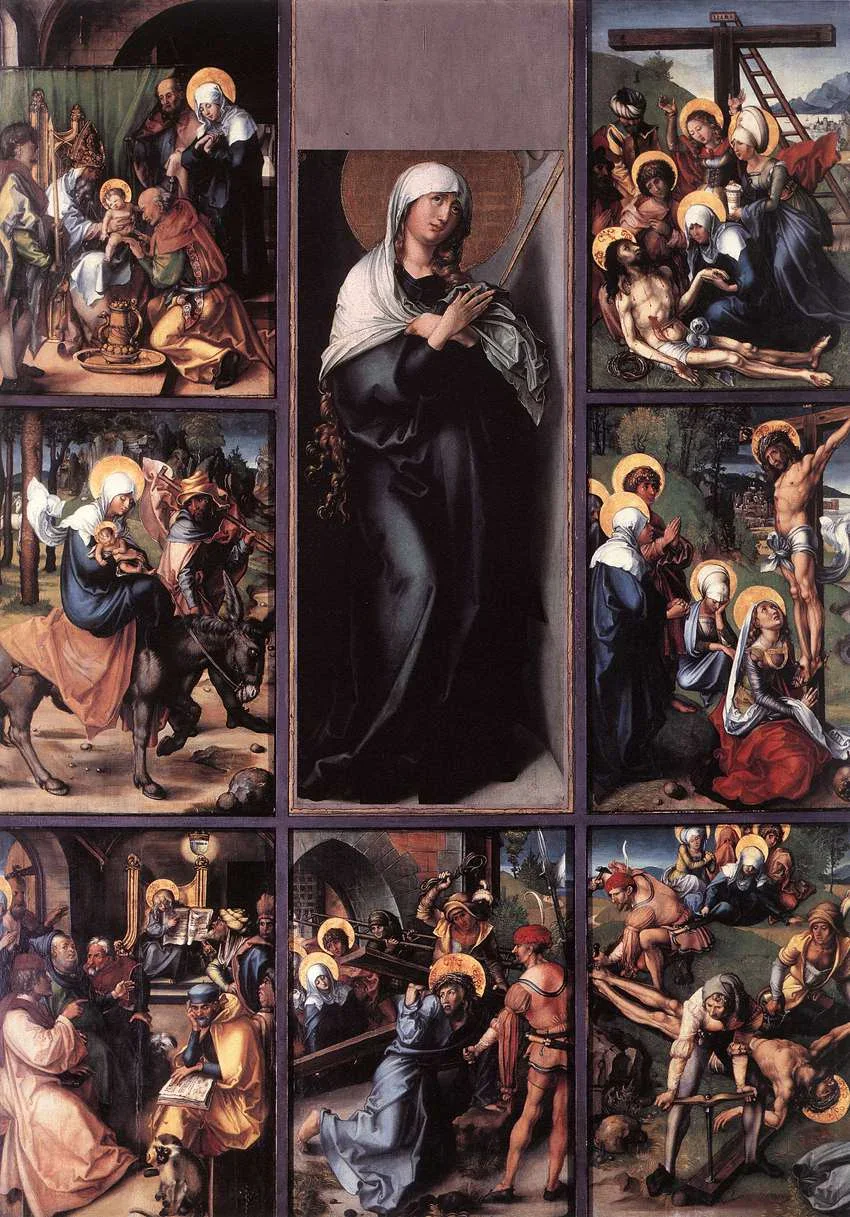
Seven Sorrows Polyptych
Christ has carried his cross, and now the nails go in. In the next scene he hangs on the cross, and in the last, he is mourned. These are the seven sorrows of the Virgin, the moments from Christ's life that brought Mary grief. All seven were once part of a single altarpiece. Frederick the Third, Elector of Saxony, ordered it not long after he met Dürer in Nuremberg in April 1496. He probably wanted it for the church of his palace at Wittenberg. In the sixteenth century the altarpiece was pulled apart. The central picture, the Sorrowing Mother, went to Munich. The rest stayed at Wittenberg until 1640, when they moved to the prince's art chamber. Today only that central picture is credited to Dürer. The surrounding panels are thought to be the work of pupils painting from his drawings. They were repaired in the middle of the twentieth century and their condition improved, but it still is not clear who painted them.
Listen in the appAlbrecht Dürer · Public domain
06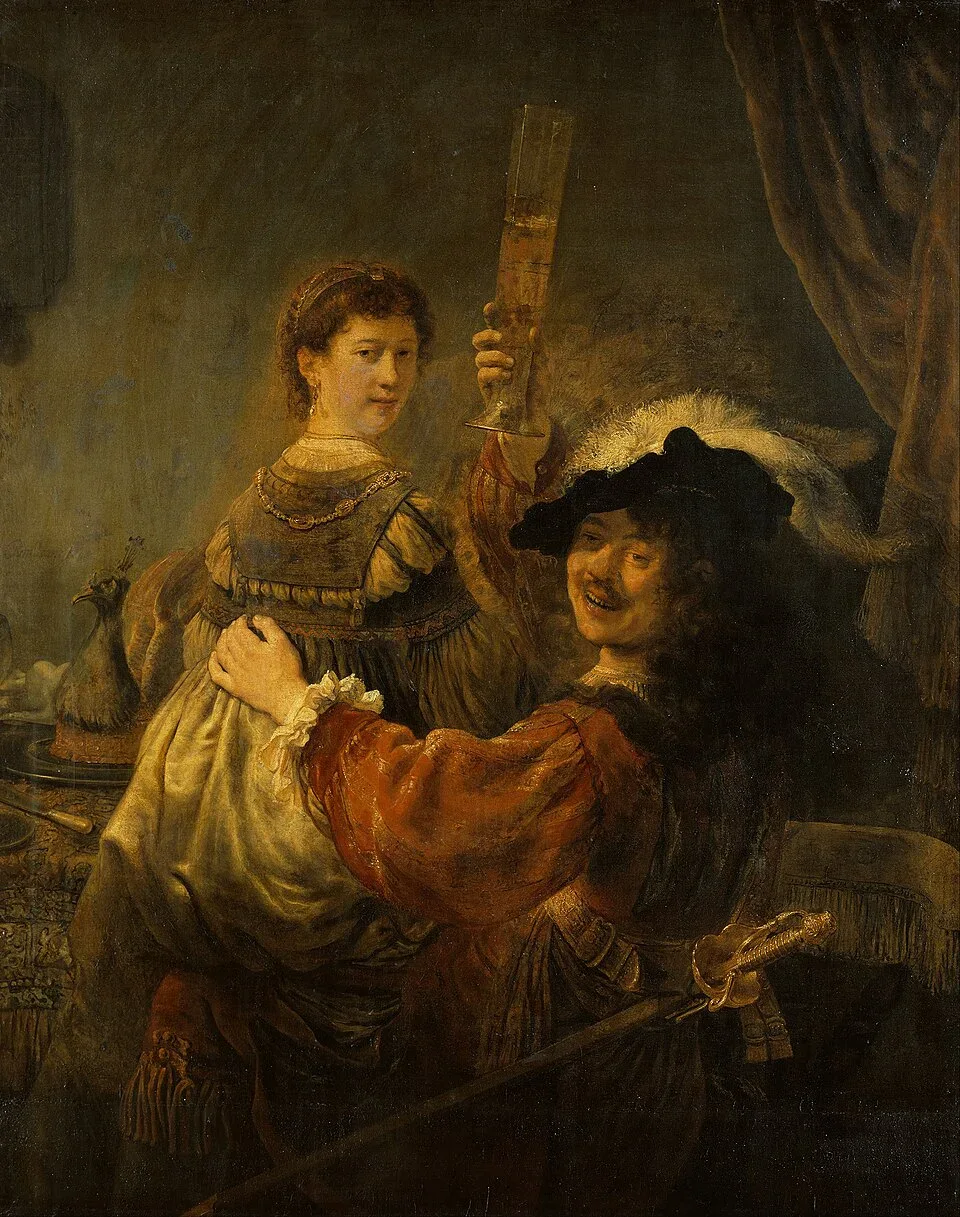
Rembrandt and Saskia in the parable of the Prodigal Son
Nobody knows why he changed this painting. It began as a wide tavern scene with several people. Then, in 1638, Rembrandt cut away the left side and painted over part of it, leaving just two figures. What is left does not explain it. The man sits in fine clothes, a red jacket with puffed sleeves, a velvet cap with feathers, a sword at his belt. He holds a beer glass high in his right hand and lays his left on the back of the woman on his knees. She turns toward you, pearls in her ear and in her hair. Behind them, on a table, is a cake shaped like a peacock. An X-ray shows what he covered up. The woman first played a musical instrument, which then stood for a life of sin. He painted that out but kept the beer and the peacock cake. The two are Rembrandt and his wife Saskia, acting out the prodigal son living wildly before he comes home. It was a familiar moral story in the Protestant world. He returned to this parable all his life, right up to a painting he finished in the year he died. After the war the painting was taken to the Soviet Union. It came back in 1955. On the way home it was shown in Moscow and then in Berlin before the gallery opened again in 1956.
Listen in the appRembrandt · Public domain
07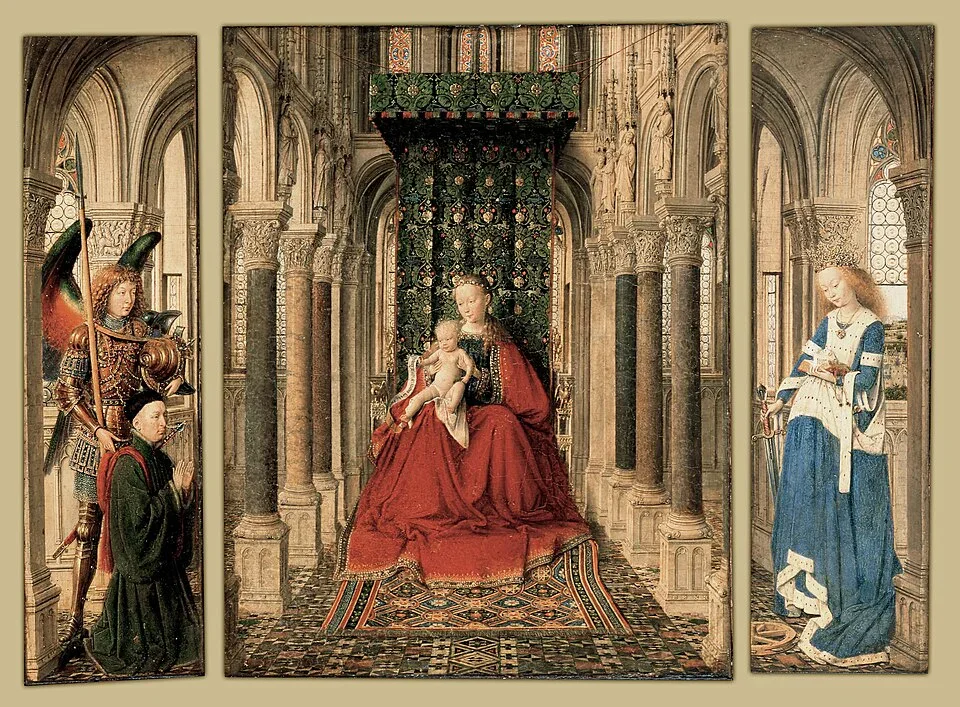
Dresden Triptych
Under the frame of the middle panel, Jan van Eyck left words that no one read for centuries. They say he made and completed me in the year 1437, and end with his motto, as I can. The word completed was a bold thing to put on a painting. Master painters kept workshops of assistants, and with that word he was perhaps saying the design and the making were his own. It is the only painting that is not a portrait where he used that motto. The frame was removed during a restoration in the last century, and in 1959 the signature was confirmed. Until then, its date was uncertain, placed anywhere from the 1420s to the late 1430s. It had even been called the work of his brother Hubert, and a Dresden inventory from 1754 listed it as a painting by Albrecht Dürer. Mary is enthroned where the altar would stand, in a church whose columns run away on both sides, an oriental carpet spread before her. Fitting all that depth into something so small was a step beyond his earlier paintings. When the wings are shut, an Annunciation appears in grey, the angel and Mary painted to look like statues in niches. It is a subject for Lent.
Listen in the appJan van Eyck · Public domain
08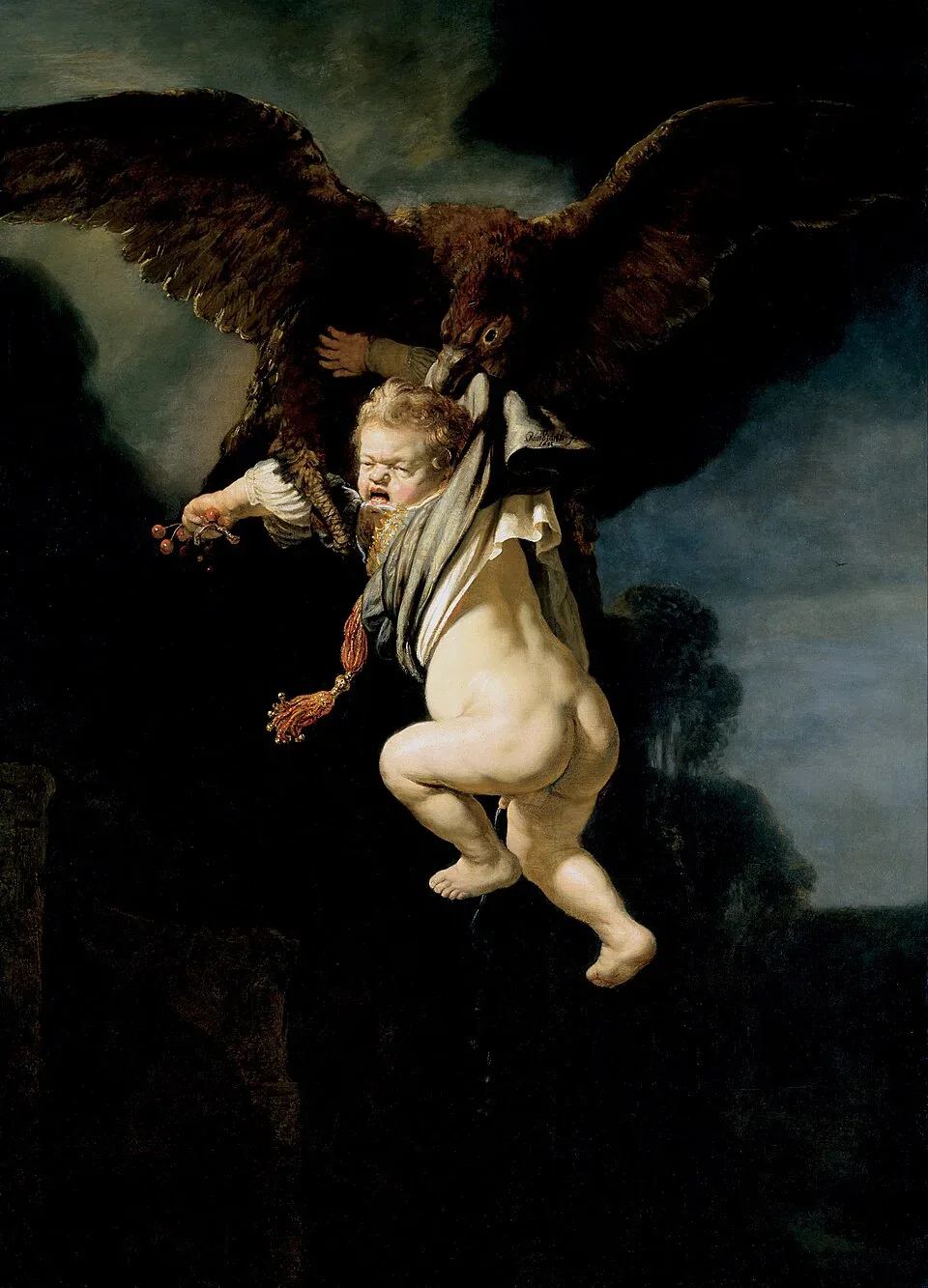
The Rape of Ganymede
The boy still holds a few cherries in his left hand. Cherries once stood for innocence and desire. Here they are leftovers, uneaten, because the eagle came and took him. But this is no beautiful youth. It is a round, crying child, turned almost away from you, his light blue dress ridden up, wetting himself with fright. The eagle holds his clothes in its beak and his left arm in its talons, and lifts him up into the air. In the old tale, Ganymede was a shepherd, the son of the king of Troy. Zeus admired his beauty, became an eagle, and carried him to Olympus to serve the gods. Other painters showed a handsome young man caught in the eagle's wings. Rembrandt painted a frightened child instead. Protestant painters of the Baroque could see Ganymede as a beloved child taken from life too soon. In the 1670s Nicolaes Maes even painted a whole series of Ganymedes as deathbed portraits of children.
Listen in the appRembrandt · Public domain
09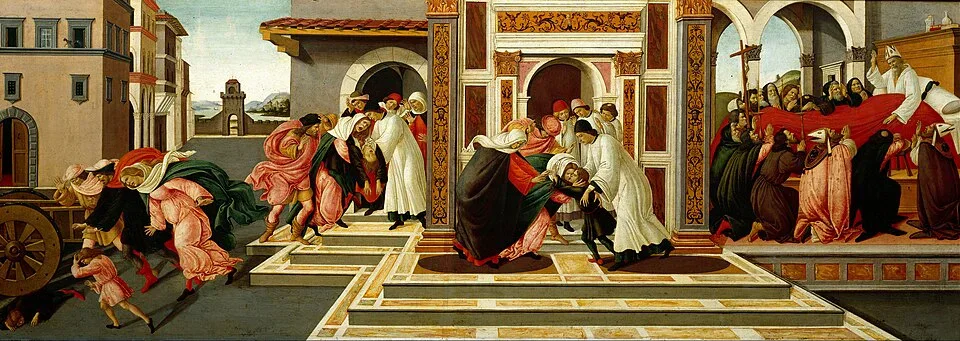
Last Miracle and the Death of Saint Zenobius
A child has been run over by a cart in the street. His mother, a widow, carries his lifeless body toward the church, and farther along the same boy is standing beside her again. But the moment he comes back to life is not in the picture. Botticelli leaves out the prayer, and the saint who said it. Zenobius never appears in the rescue. Only his deacon goes in and out of the house. The saint shows up once, at the far right, with hair turned gray, blessing the people kneeling around his bed. He is dying. This is one of four panels about the life of an early bishop of Florence. They may have been made to line the walls of a single room, perhaps for a wedding. The family thought to have ordered them claimed descent from the saint's father and kept what was said to be his bishop's ring. That pride may be why his story was chosen for a marriage. The four panels did not stay together. Two are in London, one is in New York, and this one entered the museum in Dresden in 1868.
Listen in the appSandro Botticelli · Public domain
10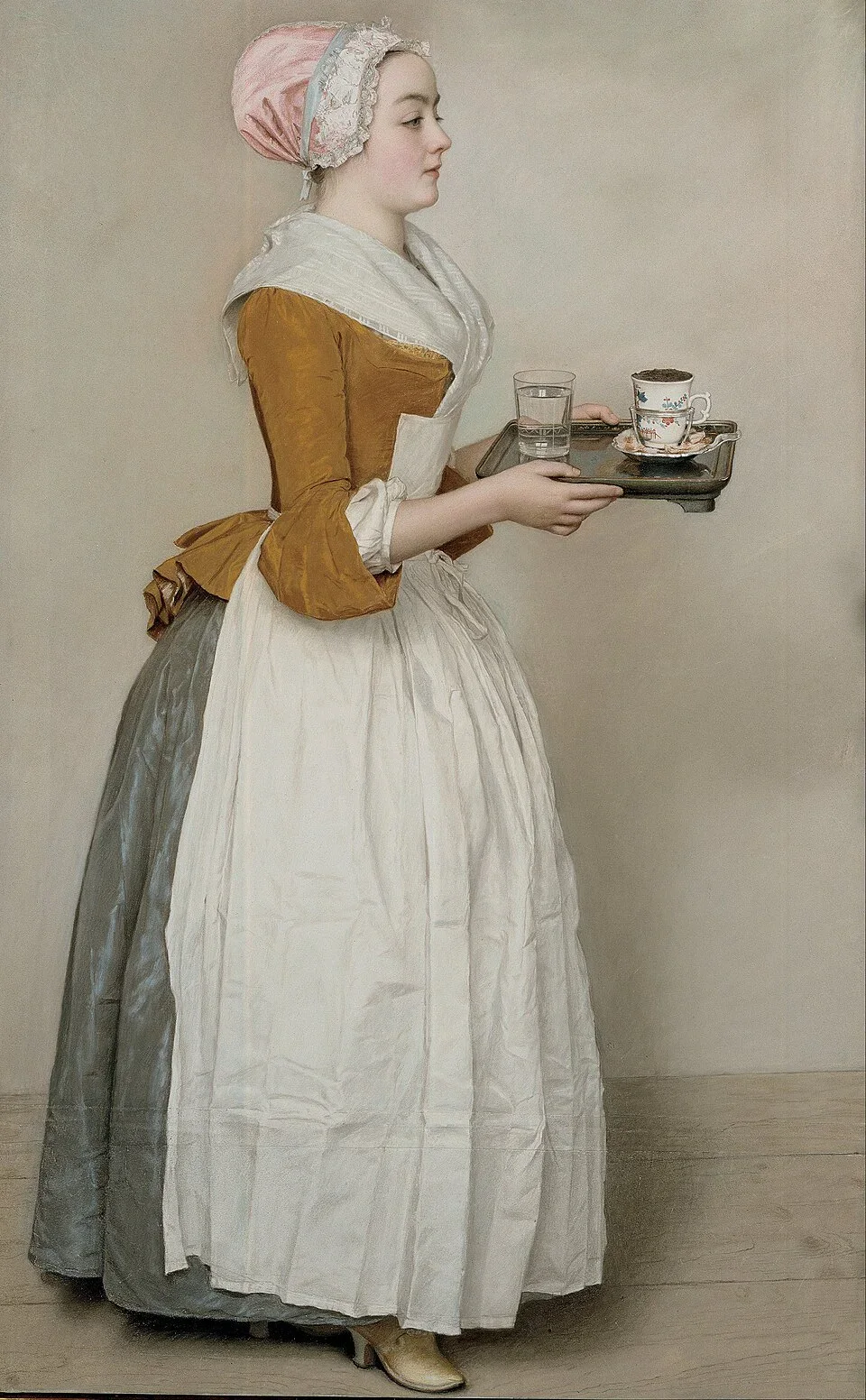
The Chocolate Girl
Jean-Étienne Liotard wanted pastel to rival oil paint. The proof is the glass of water on the tray the girl carries. The glass magnifies the pattern along the tray's rim. Even the slight shift in that pattern, caused by water bending the light, is there. The part of her hand behind the glass is reversed, exactly as it would be. The cross of a window is reflected in it, from a window on the opposite wall. And yet there are almost no shadows, only a pale wall and plain floorboards behind her. The writer Algarotti bought the pastel in Venice in 1745 for Augustus the Third, king of Poland and elector of Saxony. Years later he wrote that even the Chinese, who dislike shadows, could enjoy a picture like this. He put it on a level with a Holbein, only in pastel.
Listen in the appJean-Étienne Liotard · Public domain
- 11
Dresden Altarpiece
Albrecht Durer · 1496
- 12
Portrait of Bernhart von Reesen
Albrecht Durer · 1521
- 13
Madonna and Child with Four Saints
Titian · 1515–1520
- 14
Nativity
Antonio da Correggio · 1528–1530
- 15
Christ Healing the Blind
El Greco · 1567–1570
- 16
The Wedding of Samson
Rembrandt · 1638
- 17
The Judgement of Paris
Peter Paul Rubens · 1636
- 18
Bathsheba at Her Toilet
Peter Paul Rubens · c. 1635
- 19
Saint Sebastian
Antonello da Messina · 1475–1479
- 20
The Sacrifice of Isaac
Andrea del Sarto · 1527–1529
- 21
The Empire of Flora
Nicolas Poussin · 1630–1631
- 22
Portrait of a Lady in White
Titian · 1556–1561
- 23
Madonna with St. Francis
Antonio da Correggio · 1514–1515
- 24
San Sebastiano Madonna
Antonio da Correggio · c. 1524
- 25
The Deliverance of Arsinoe
Jacopo Tintoretto · 1556
- 26
Madonna of Saint George
Antonio da Correggio · 1530–1532
- 27
Madonna of the rose
Parmigianino · 1530
- 28
Dresden From the Right Bank of the Elbe Below the Augustus Bridge
Bernardo Bellotto · 1748
- 29
Resting Venus
Palma Vecchio · 1518–1520
- 30
Portraits of Henry IV of Saxony and Catherine of Mecklenburg
Lucas Cranach the Elder · 1514
- 31
The Lace-Maker
Gabriel Metsu · 1661–1664
- 32
Mercury and Argus
Peter Paul Rubens · 1635–1638
- 33
Saskia as Flora
Rembrandt · 1641
- 34
Don Juan Mateos
Diego Velázquez · 1632–1634
- 35
Drunken Silenus
Anthony van Dyck · 1619–1620
- 36
Holy Family with St. Elizabeth and St. John the Baptist as a Child
Andrea Mantegna · 1495–1505
- 37
Presentation of the Virgin Mary at the Temple
Giovanni Battista Cima da Conegliano · 1496–1500
- 38
Saint Roderick
Bartolomé Esteban Murillo · c. 1650–1655
- 39
Madonna Enthroned with Saint Matthew
Annibale Carracci · 1588
- 40
Landscape with Boar Hunt
Peter Paul Rubens · 1615–1620
- 41
Saint Roch Distributing Alms
Annibale Carracci · 1587–1595
- 42
Charles de Solier, Sieur de Morette
Hans Holbein the Younger · 1534–1535
- 43
Manoah's Sacrifice
Rembrandt, Abraham van Dijck · 1641
- 44
Drunken Hercules
Peter Paul Rubens · 1613
- 45
Magdalen in the Desert
Antonio da Correggio · 1623
- 46
The Madonna with Saint Stephen and John the Baptist
Parmigianino · 1540
- 47
Nativity
Lucas Cranach the Elder · c. 1515–1520
- 48
The Mystical Marriage of Saint Catherine
Andrea del Sarto · c. 1512–1513
- 49
Dresden from the Right Bank of the Elbe, above the Augustusbrücke
Bernardo Bellotto · 1747
- 50
Young Woman with a Pearl Necklace
Willem Drost · c. 1654
- 51
Bust of a Young Woman Smiling, possibly Saskia van Uylenburgh
Rembrandt · 1633
- 52
Diana returning from the Hunt
Peter Paul Rubens · 1615–1616
- 53
Portrait of a man in a Yellowish-gray Jacket
Frans Hals · 1633
- 54
The Lion and Leopard Hunt
After Peter Paul Rubens · 1617–1618
- 55
The Prayer of St. Bonaventura about the Selection of the New Pope
Francisco de Zurbarán · c. 1629
- 56
Sleeping Venus with Cupid
Nicolas Poussin · 1630
- 57
The Jewish Cemetery
Jacob van Ruisdael · 1653–1655
- 58
Bacchus and Ariadne
Caesar van Everdingen · c. 1655–1660
- 59
The Evangelist Matthew
Guercino · c. 1615
- 60
Dorinda, Silvio and Linco
Guercino · 1647
- 61
Preciosa
Willem van Mieris · 1709
- 62
Bouquet in a basket
Juan de Arellano · c. 1670–1675
- 63
Salome with the head of St John the Baptist at Herodes table
Lucas Cranach the Younger · 1537
- 64
Mark the Evangelist
Guercino · c. 1615
- 65
Luke the Evangelist
Guercino · c. 1615
- 66
John the Evangelist
Guercino · c. 1615
- 67
St Catherine Altarpiece
Lucas Cranach the Elder · 1506
- 68
The Legend of the King's Sons
Francesco Bacchiacca · c. 1523
- 69
Dancing or Furious maenad
Unknown Artist · -50
- 70
Africa
Rosalba Carriera · c. 1720
- 71
Hunter in a Winter Landscape with Dogs
Jan Wildens · 1624
- 72
Self-portrait of the artist with his wife Isabella de Wolff in the inn
Gabriel Metsu · 1661
- 73
A Woman Washing Her Hands
Gerard ter Borch · c. 1655
- 74
Mucius Scaevola
Hans Baldung Grien · 1531
- 75
A Lady in her Chamber
Gerard ter Borch · c. 1654
- 76
The Painter in his Studio
Frans van Mieris the Elder · 1659–1669
- 77
Salome with the head of John the Baptist
Bartolomeo Veneto · 1515–1530
- 78
Jupiter and Mercury at Philemon and Baucis
Adam Elsheimer · 1609–1610
- 79
The Madonna of the Cuccina Family
Paolo Veronese · c. 1571
- 80
Breakfast Table with Blackberry Pie
Willem Claesz. Heda · 1631
- 81
Pan and Syrinx
Nicolas Poussin · 1637
- 82
Raphael's Cherubs
Raphael · 1513–1514
- 83
The Feast of Love
Jean-Antoine Watteau · 1717–1719
- 84
Jacob and Rachel
Palma Vecchio · c. 1520–1525
- 85
At the tax collector's office
Jan Matsys · 1539
- 86
The Letter Writer
Caspar Netscher · 1665
- 87
The Waterfall
Nicolaes Pieterszoon Berchem · c. 1665
- 88
Music-making Couple
Caspar Netscher · 1666
- 89
Marriage at Cana
Jan Steen · 1650
- 90
The Poultry Seller
Gabriel Metsu · 1662
- 91
The Young Woman selling Poultry
Gabriel Metsu · 1662
- 92
Expulsion of the money changers from the temple
Lucas Cranach the Elder · 1510
- 93
Cavalry in front of a Burning mill
Philips Wouwerman · 1655–1669
- 94
Agony in the Garden
Lucas Cranach the Elder · c. 1520
- 95
Saint Anthony with Child Jesus
Pier Francesco Mazzucchelli · 1599
- 96
Saint Jerome
Anthony van Dyck · c. 1618–1620
- 97
The Tinker
Frans van Mieris the Elder · c. 1650–1655
- 98
Diana and Actaeon
Jacob Jordaens · c. 1640
- 99
The Waterfall before the Mountain Castle
Jacob van Ruisdael · c. 1665–1670
- 100
Engagement between British and Dutch Ships, after 1673
Ludolf Bakhuizen · 1690
- 101
Bathsheba bathing
Franciabigio · 1523
- 102
View of the Amsterdam Town Hall
Gerrit Adriaenszoon Berckheyde · 1670–1675
- 103
Saint Agnes
Jusepe de Ribera · 1635–1641
- 104
Augustus II the Strong in Armour
Louis de Silvestre · 1718
- 105
Ariadne Abandoned by Theseus
Angelica Kauffmann · 1761
- 106
The Annunciation
Francesco del Cossa · 1470
- 107
Diogenes
Jusepe de Ribera · 1637
- 108
Madonna and Child
Bartolomé Esteban Murillo · 1670–1680
- 109
Large Still-life with a Lady and a Parrot
Frans Snyders · 17th century
- 110
Stag Hunt in a Wood with a Marsh
Jacob van Ruisdael · c. 1665–1670
- 111
Dismissal of Hagar
Jan Steen · c. 1655–1657
- 112
Mother and Child
Jan Steen · c. 1652
- 113
A tooth-drawer holding up a tooth after extracting it from a patient
Gerrit Dou · 1672
- 114
The Banishment of Hagar
Adriaen van der Werff · c. 1696–1697
- 115
Officer Reading a Letter
Gerard ter Borch · c. 1657–1658
- 116
Flight to Egypt
Albrecht Durer · c. 1496
- 117
Old Woman with a Basket of Coal
Peter Paul Rubens · 1618–1620
- 118
Hero and Leander
Peter Paul Rubens · c. 1605
- 119
Portrait of a Knight of the Order of Christ, probably Francisco de Andrade Leitão
Diego Velázquez · c. 1635
- 120
Portrait of Antoine, bastard of Burgundy (1421–1504)
Hans Memling · c. 16th century
- 121
The Moat of the Zwinger in Dresden
Bernardo Bellotto · 1749–1753
- 122
Santi Giovanni e Paolo and the Scuola di San Marco
Giovanni Antonio Canal · c. 1725
- 123
The Frauenkirche in Dresden
Bernardo Bellotto · 1749–1753
- 124
The Kreuzkirche in Dresden
Bernardo Bellotto · 1747–1756
- 125
The New Market in Dresden from Moritzstraße
Bernardo Bellotto · 1750
- 126
The Ruins of the old Kreuzkirche, Dresden
Bernardo Bellotto · 1765
- 127
View of Verona and the River Adige from the Ponte Nuovo
Bernardo Bellotto · 1747–1748
- 128
Portrait of a Boy
Pinturicchio · 1485–1500
- 129
The Wedding at Cana
Paolo Veronese · 1571–1572
- 130
Resting Herd
Paulus Potter · 1652
- 131
Portrait of Thomas Godsalve and his Son John
Hans Holbein the Younger · 1528
- 132
The Morning (Aurora with Apollo's horse)
Battista Dossi · 1544
- 133
Portrait of a scholar (Archimedes?)
Domenico Fetti · 1620
- 134
The Dentist
Gerard van Honthorst · 1622
- 135
Portrait of a Man in Armour with a Red Scarf
Anthony van Dyck · 1625–1627
- 136
Joseph and Potiphar's Wife
Carlo Cignani · 1678–1680
- 137
Elector Friedrich August II of Saxony, as King Augustus III of Poland (1696-1763)
Workshop of Pietro Rotari · 1755
- 138
Maurice, Comte de Saxe, Marshal of France
Maurice Quentin de La Tour · 1748
- 139
Porträt der Queen Maria Josepha (1699-1757), Wife of King Augustus III of Poland
Pietro Rotari · 1755
- 140
Lady in a Red Dress
Giovanni Battista Moroni · c. 1560
- 141
Setting out on the Hunt
Philips Wouwerman · 1660–1665
- 142
In Praise of Herring
Joseph de Bray · 1656
- 143
The Cardsharps
Valentin de Boulogne · 1620s
- 144
Village Festival at Inn "De Halve Maan"
David Teniers the Younger · 1641
- 145
Johann the Steadfast, Elector of Saxony
Lucas Cranach the Elder · 1526
- 146
Portrait of a man with a black cap in his hand
Barthel Beham · 1525–1530
- 147
Entrance to the Grand Canal: Looking East
Giovanni Antonio Canal · c. 1725
- 148
Grand Canal: Looking North-East toward the Rialto Bridge
Giovanni Antonio Canal · c. 1725
- 149
Grand Canal: Looking from Palazzo Balbi
Giovanni Antonio Canal · c. 1726
- 150
Grand Canal: Looking North from Near the Rialto Bridge
Giovanni Antonio Canal · c. 1726
- 151
San Giacomo di Rialto
Giovanni Antonio Canal · 1725–1726
- 152
The Grand Canal in Venice with the Rialto Bridge
Giovanni Antonio Canal · c. 1725
- 153
Christ wearing the Crown of Thorns, supported by Angels
Annibale Carracci · 1585–1587
- 154
A Glass of Flowers and an Orange Twig
Abraham Mignon · 1660s
- 155
Still-Life with Hare and Birds on a Ring
Adriaen van Utrecht · 1646–1649
- 156
A fish counter
Abraham van Beijeren · 1655
- 157
The Monastery
Jacob van Ruisdael · 1650–1655
- 158
The apostle Peter
Giuseppe Nogari · 1743
- 159
View of the Neumarkt in Dresden from the Jüdenhofe
Bernardo Bellotto · 1749–1751
- 160
Pirna Seen from the Harbour Town
Bernardo Bellotto · 1753–1755
- 161
The Viola da Gamba Player
Bernardo Strozzi · c. 1635
- 162
Elector Friedrich III of Saxony, 1498
Adriano Fiorentino · 1498
Gemäldegalerie Alte Meister
Frequently asked questions
How much does the guide cost?
Free app download. Free until 1 January. Listed guide price: $1.99. Audio guide only. Venue admission is separate.
Can I listen without internet?
Yes. Download the guide’s audio, images, and maps in the app before your visit. Your downloaded content is then available offline.
Can I listen in my language?
In English for now. More languages soon.
Do I need to follow a schedule?
No. This is a self-guided experience. Choose your stops, pause whenever you like, and return to a story at your own pace.
Which artworks are in the Gemäldegalerie Alte Meister audio guide?
162 artworks, including Sleeping Venus (Giorgione, Titian), Sistine Madonna (Raphael), Girl Reading a Letter at an Open Window (Johannes Vermeer), The Tribute Money (Titian), Seven Sorrows Polyptych (Albrecht Durer), Rembrandt and Saskia in the parable of the Prodigal Son (Rembrandt), Dresden Triptych (Jan van Eyck), and The Rape of Ganymede (Rembrandt). The full list is on this page.
Is this the museum’s official audio guide?
No. Stanza is an independent audio guide app and is not affiliated with Gemäldegalerie Alte Meister. Museum admission is separate.
At your own pace
Explore Gemäldegalerie Alte Meister.
Download Stanza, then search for “Gemäldegalerie Alte Meister”.
Free app download · Guide price shown in the app
Keep exploring
Nearby audio guides
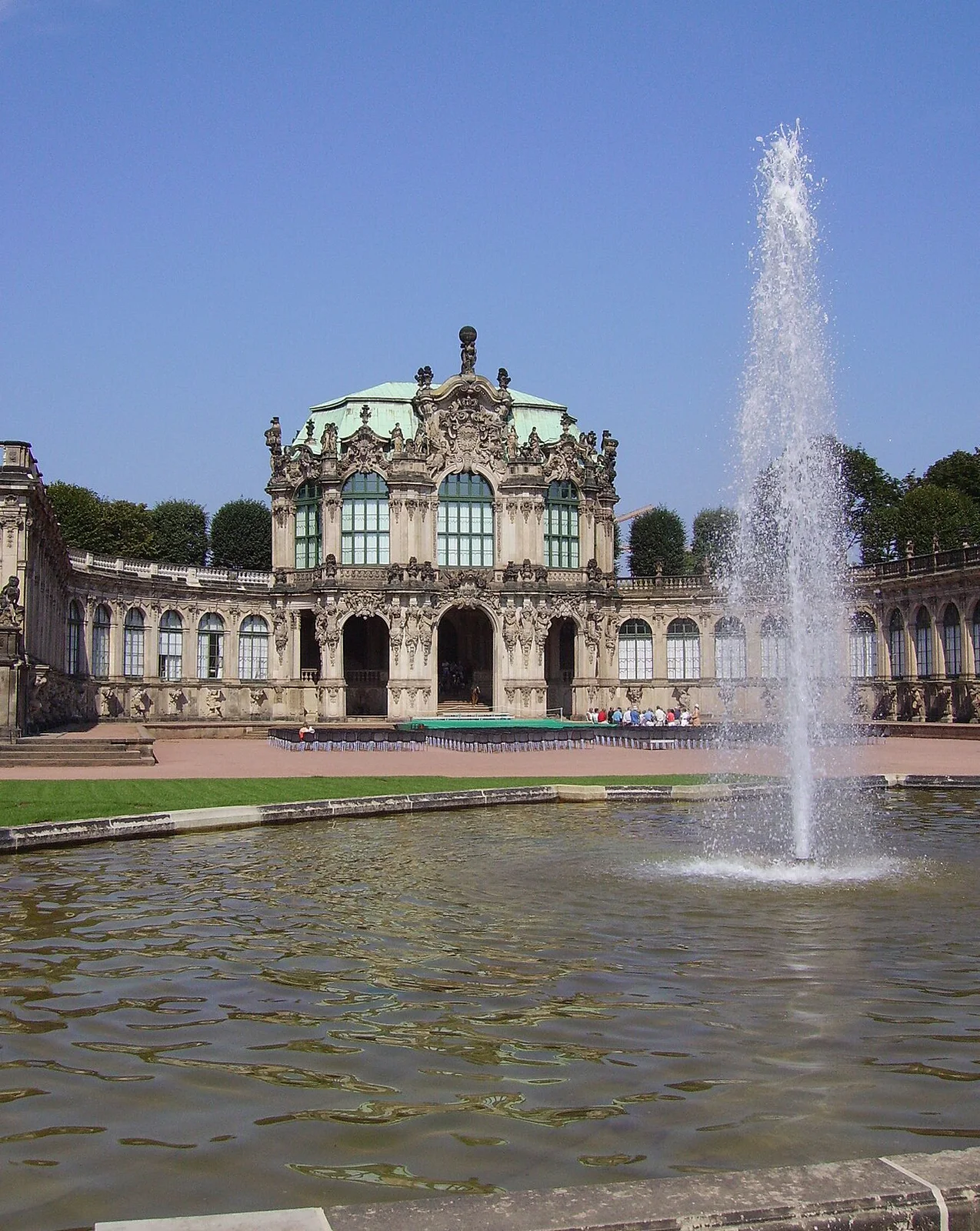
Dresden · 1 km
Zwinger
Content & sources
--Immanuel Giel 11:54, 22 September 2005 (UTC) · CC BY-SA 3.0
Dresden · 1 km
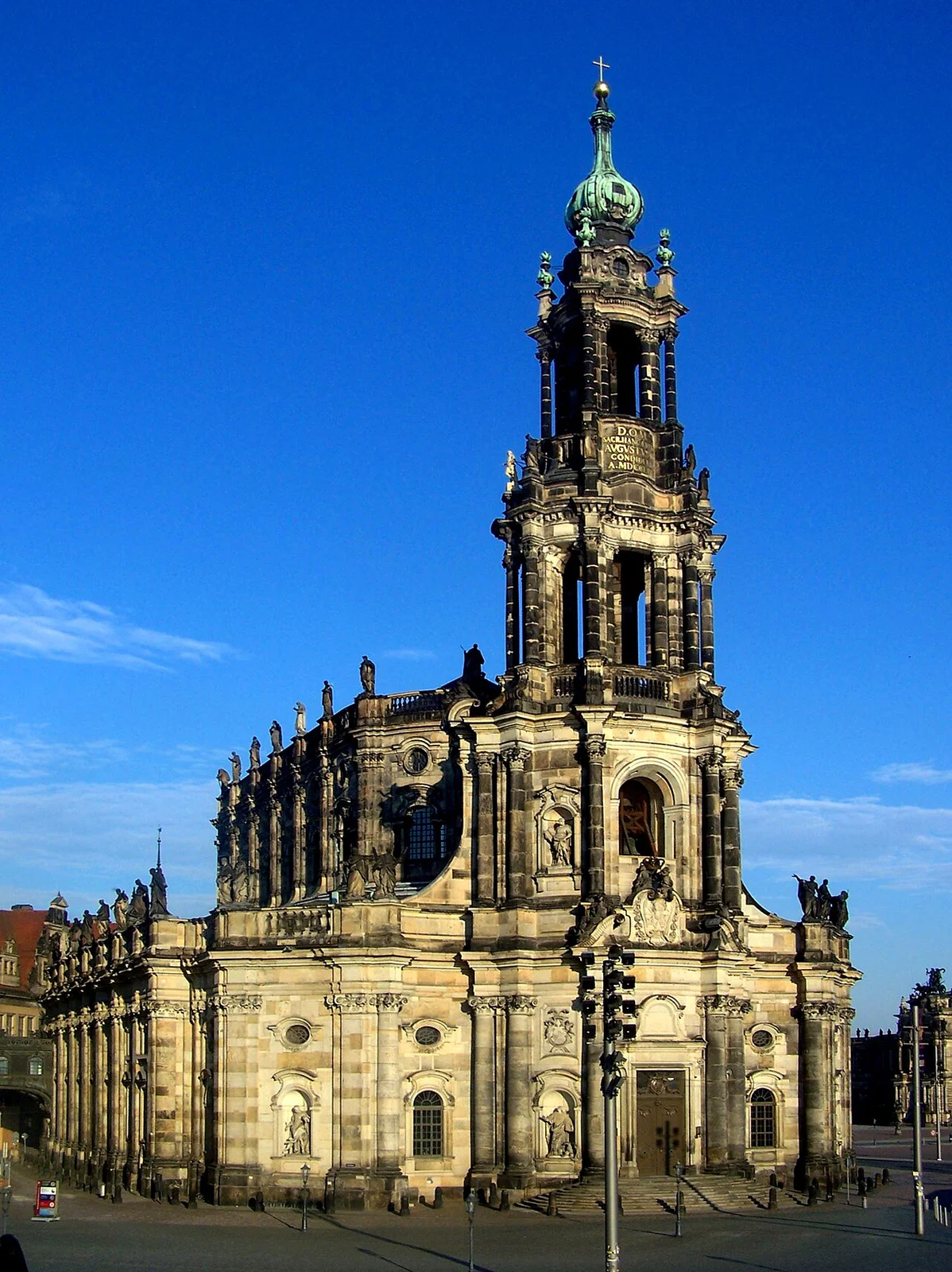
Katholische Hofkirche
Content & sources
Photo: X-Weinzar · CC BY-SA 3.0
Dresden · 1 km
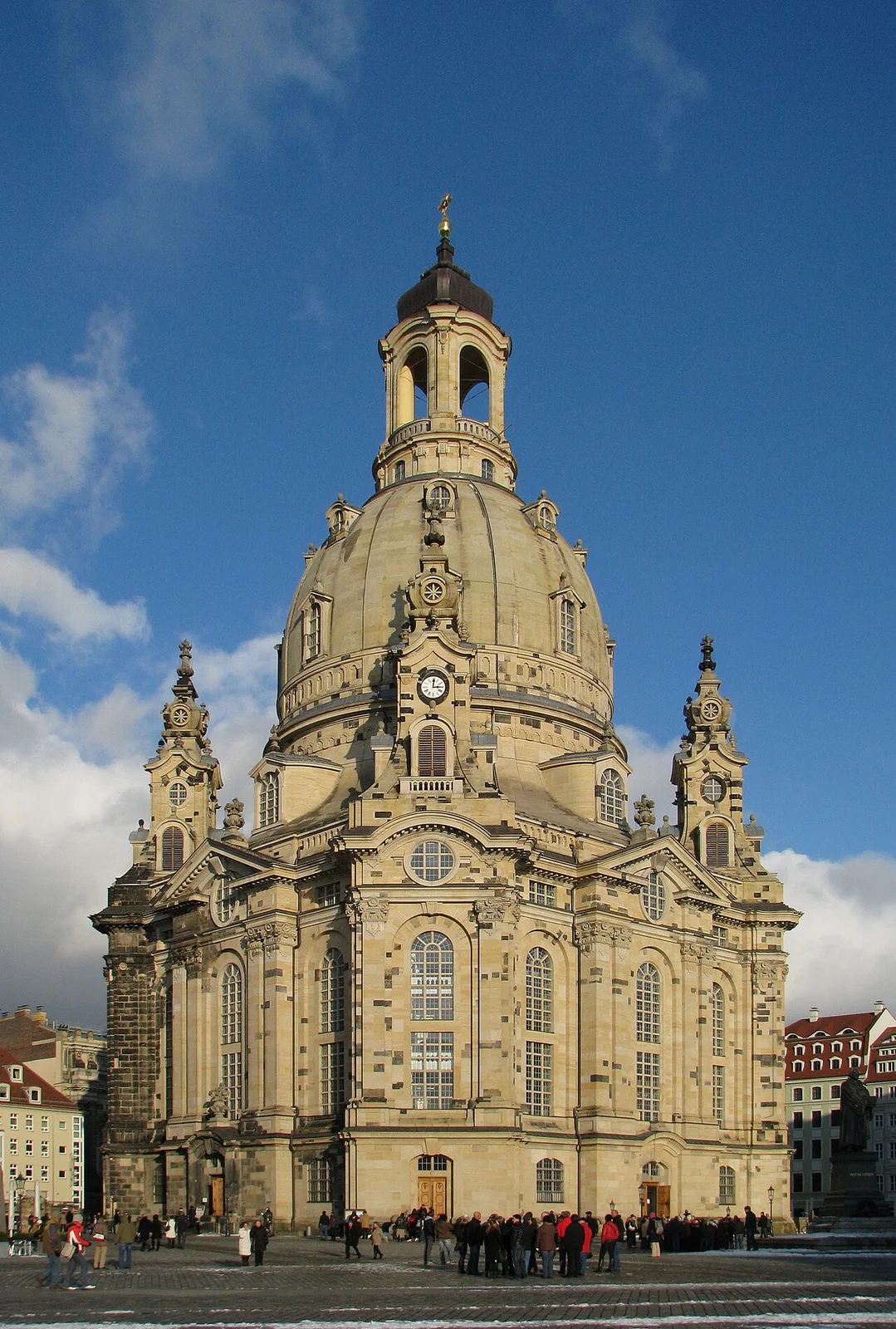
Frauenkirche
Content & sources
Netopyr · CC BY-SA 3.0
Leipzig · 97 km
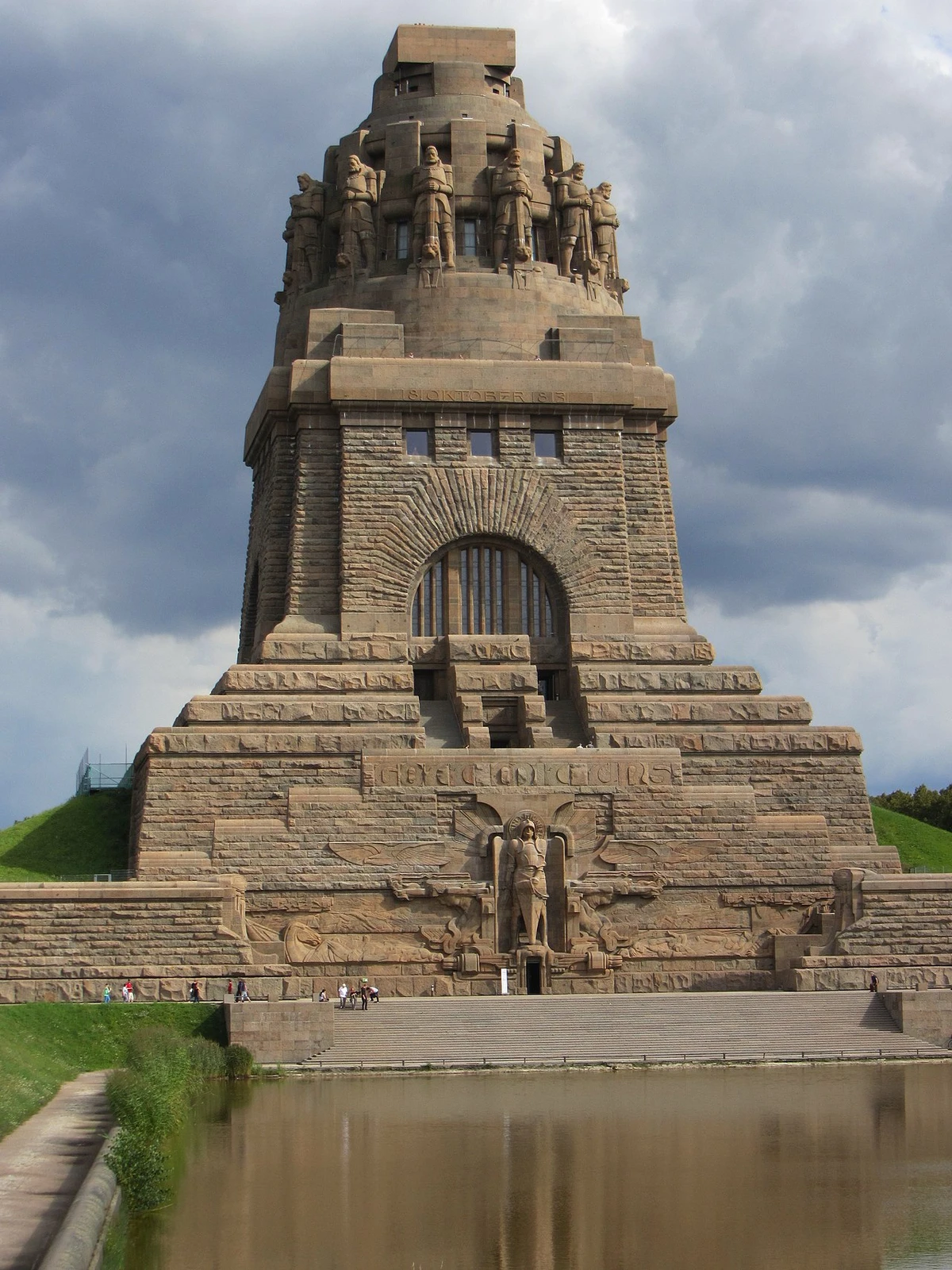
Völkerschlachtdenkmal
Content & sources
Photo: Paolchen · CC BY-SA 3.0 de
Art museums
More art museum audio guides
Berlin · 218 artworks
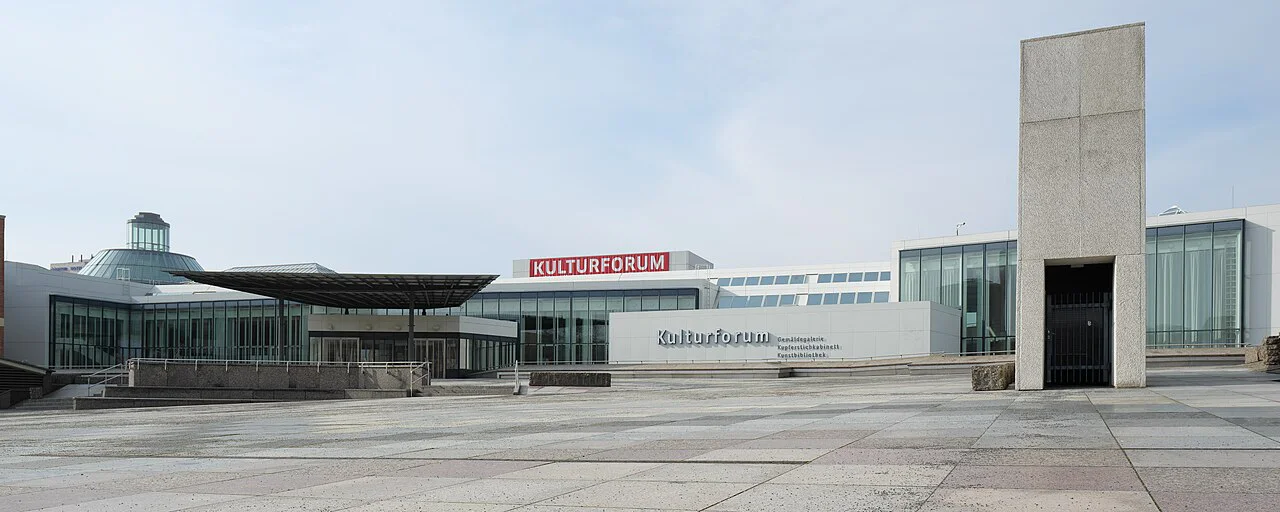
Gemäldegalerie, Berlin
Content & sources
Photo: Membeth · CC0
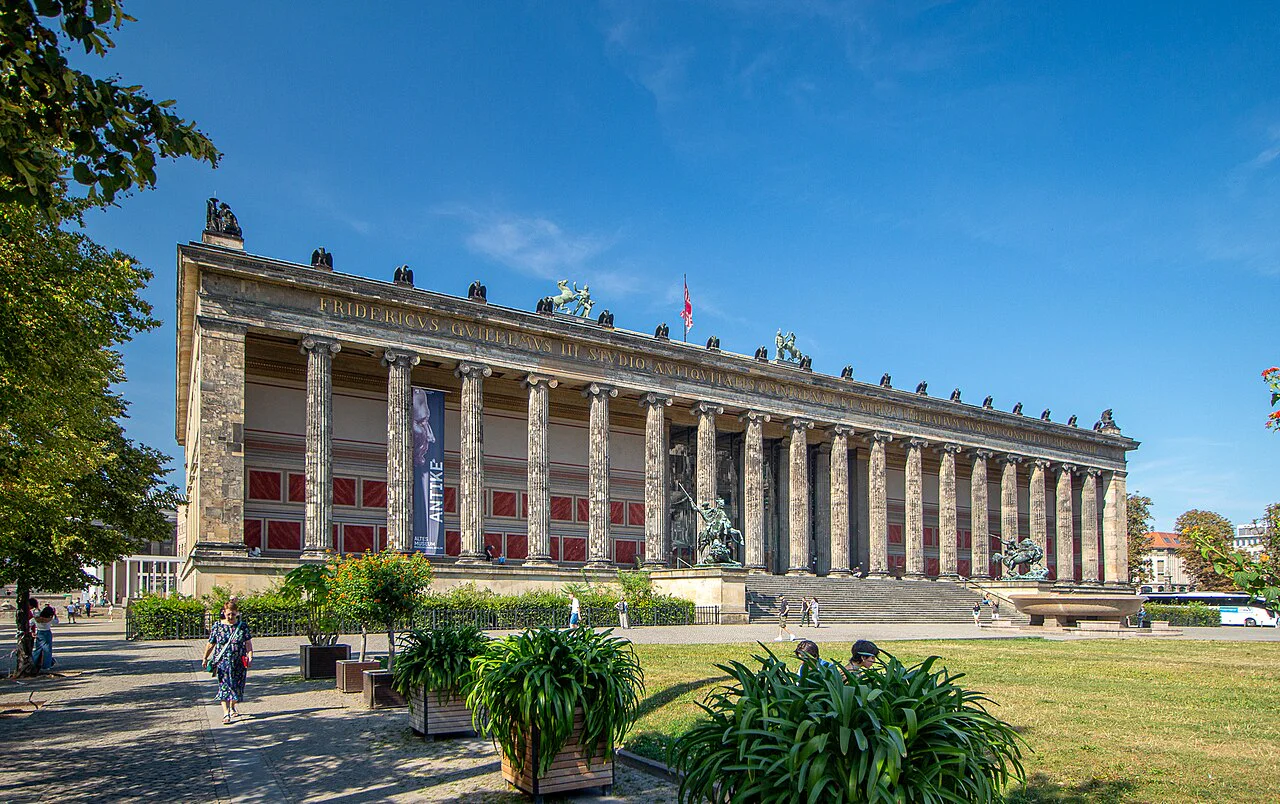
Berlin · 47 artworks
Altes Museum
Content & sources
Vit · CC BY-SA 4.0
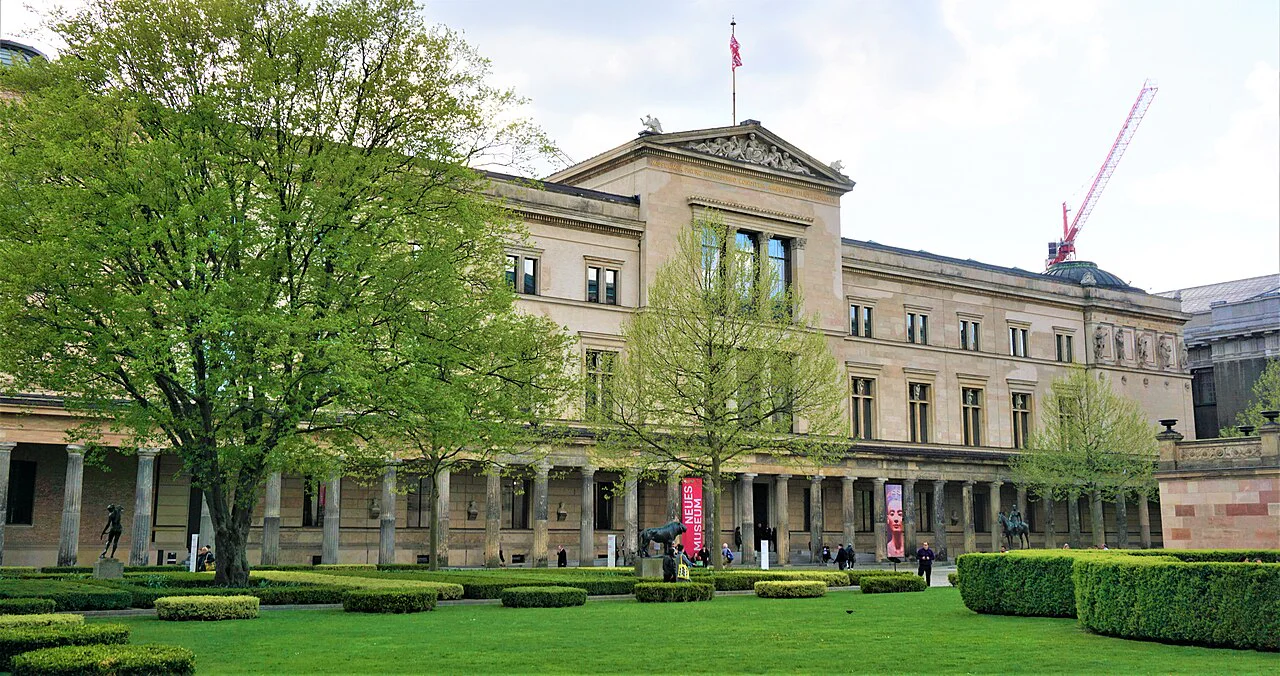
Berlin · 34 artworks
Neues Museum
Content & sources
Photo: Joyofmuseums · CC BY-SA 4.0
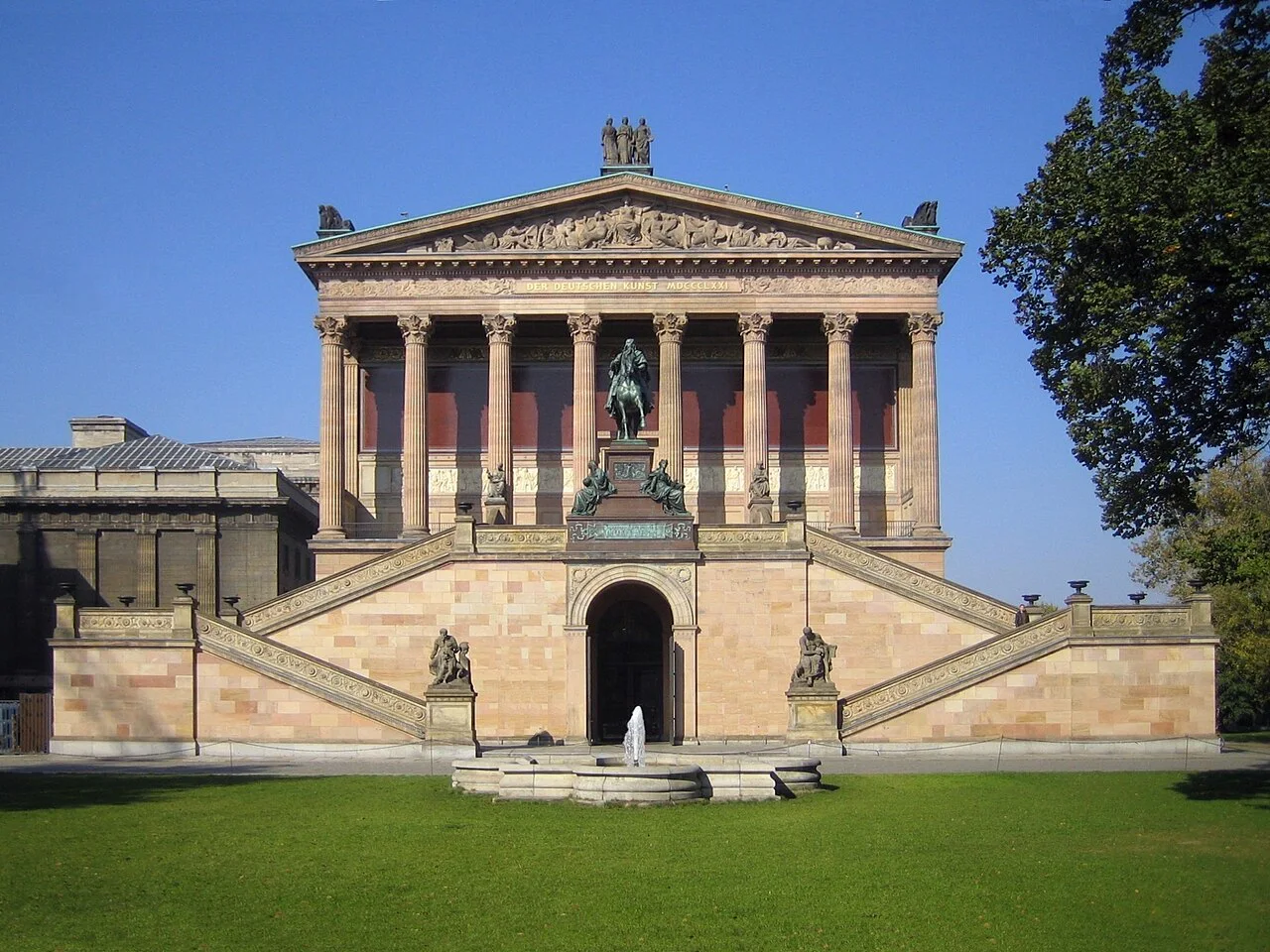
Berlin · 123 artworks
Alte Nationalgalerie
Content & sources
Manfred Brückels · Public domain
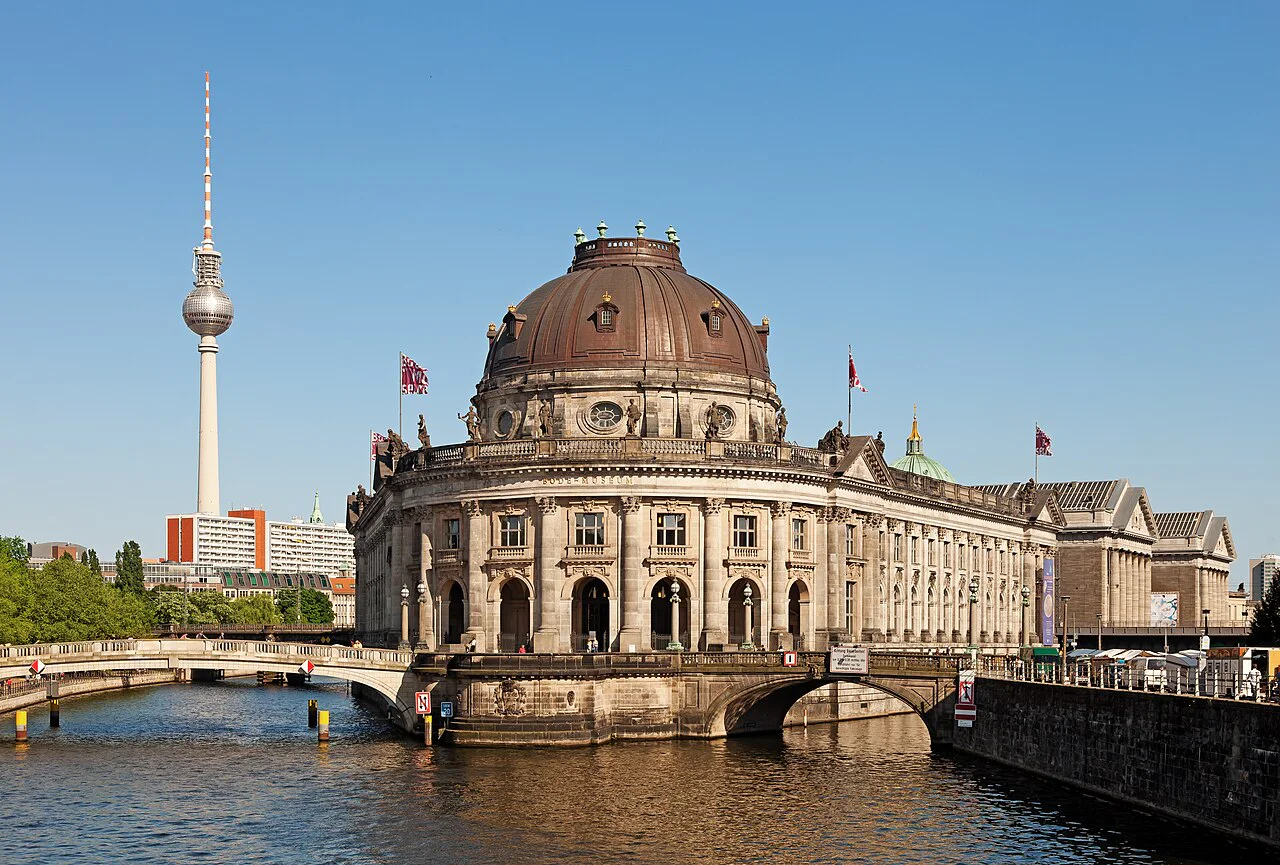
Berlin · 38 artworks
Bode-Museum
Content & sources
Thomas Wolf, www.foto-tw.de · CC BY-SA 3.0
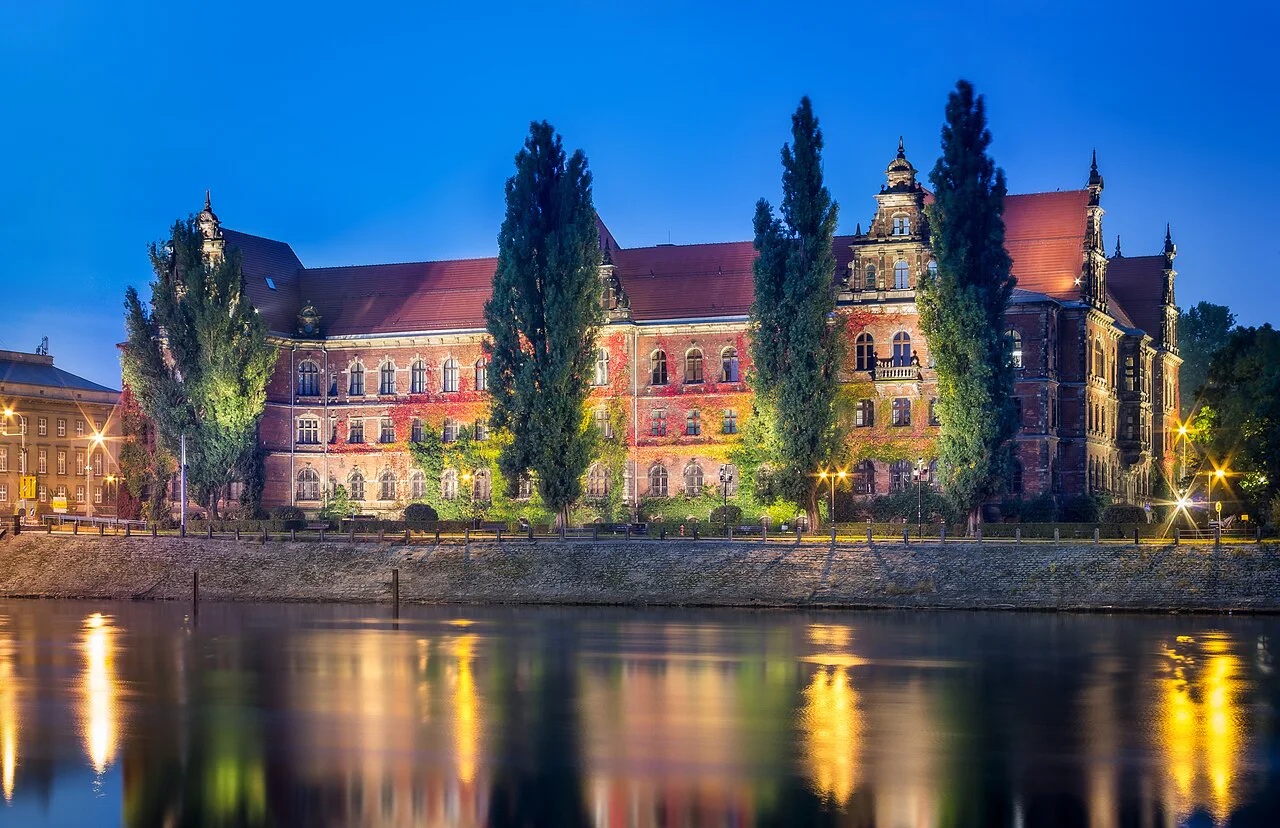
Wrocław · 44 artworks
Muzeum Narodowe we Wrocławiu
Content & sources
Photo: Jar.ciurus · CC BY-SA 3.0 pl