Stanza · Audio guide
Palace of CasertaAudio guide
A place to remember. A story to take with you.
A former royal residence located in Caserta, Italy. It is one of the largest palaces in the world and was built for the Bourbon kings of Naples.
Download Stanza, then search for “Palace of Caserta”.
About the tour
One guide. Your kind of visit.
A former royal residence located in Caserta, Italy. It is one of the largest palaces in the world and was built for the Bourbon kings of Naples.
Ready when you are.
- 01Get the free Stanza app.
iOS & Android
- 02Find your guide.
“Palace of Caserta”
- 03Download before you go.
Works offline
Audio guide / 25 narrated stops
Inside the guide
Get to know a few of the stories before you go. Open a stop to read more.
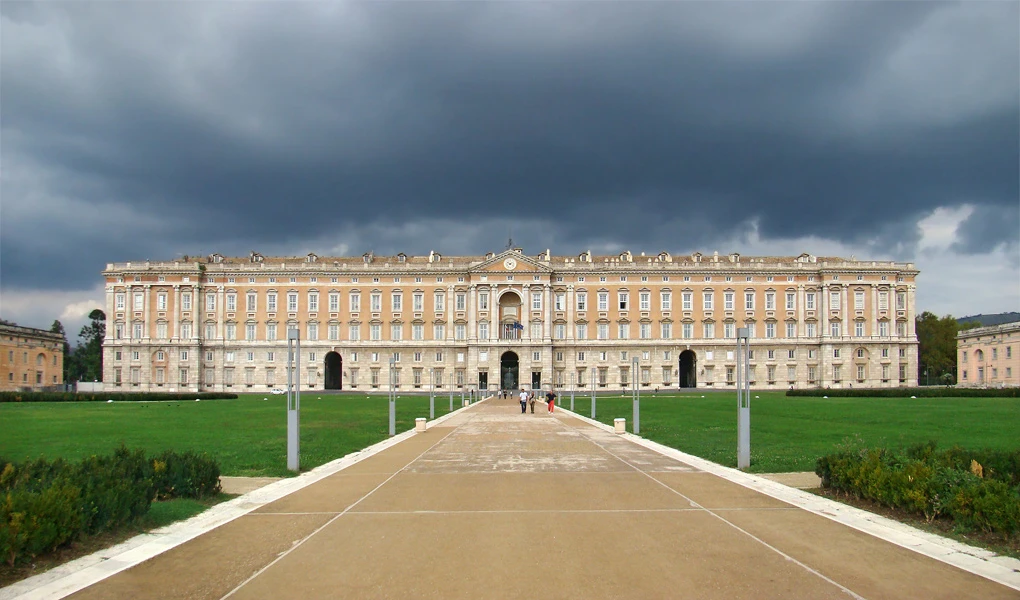
01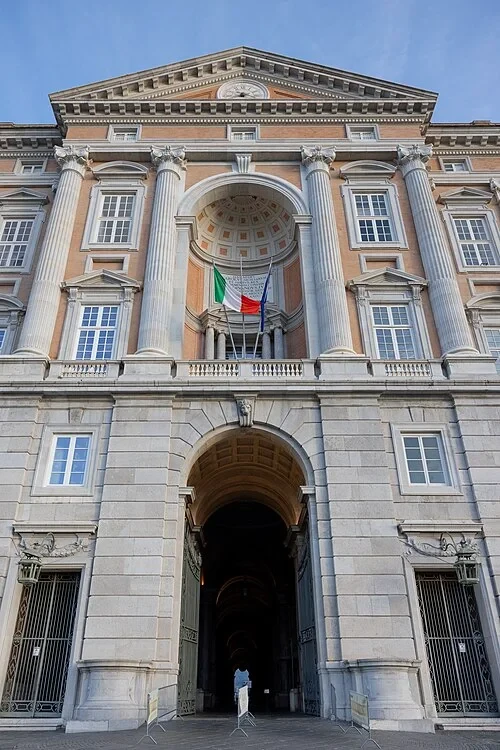 Main Entrance and the Telescope EffectThe Main Facade
Welcome to the Palace of Caserta. Standing before the southern facade, the sheer scale of the building is immediately apparent. This is the largest royal residence in the world by volume, exceeding two million cubic meters. Construction began on a symbolic date: January 20, 1752, which marked the thirty-sixth birthday of King Charles of Bourbon. The king envisioned a palace that would rival the grandeur of Versailles in France and the Royal Palace of Madrid in Spain, serving as the ultimate center of political power for the Kingdom of Naples. This facade alone features 245 of the building's 1,742 windows, arranged in a repetitive, rhythmic pattern across four stories. The central portion is emphasized by grand columns and a classic pediment, a design by the renowned architect Luigi Vanvitelli. The choice of this inland site was strategic; it protected the court from naval attacks while providing ample room for the massive gardens and infrastructure needed to support a royal court. As you look through the central entrance, consider that the building contains four internal courtyards and over 1,200 rooms, representing the peak of the Bourbon dynasty's influence in Italy.
Photo: Marco Del Torchio 95 · CC0
02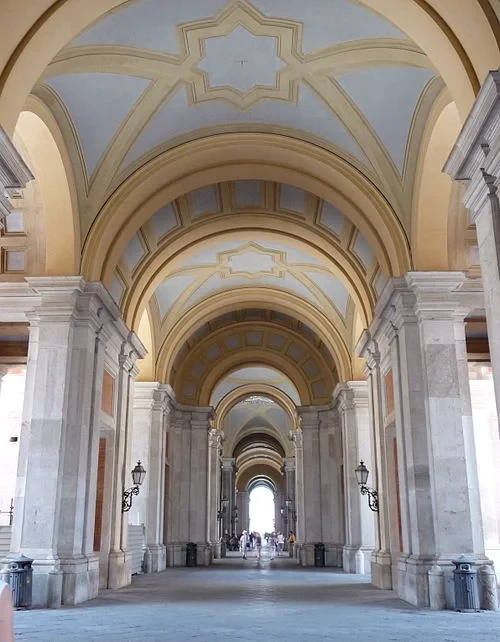 Main Entrance and the Telescope EffectThe Telescope Gallery
The central axis of the ground floor is known as the 'Cannocchiale' or Telescope Gallery. Architect Luigi Vanvitelli designed this long, vaulted corridor to serve as a dramatic optical illusion. By aligning the central entrance perfectly with the park's main axis, he created a visual line that stretches three kilometers toward the Great Cascade on the horizon. This alignment was deeply rooted in the philosophy of the Enlightenment, symbolizing order, reason, and control over nature. However, it also served a specific political purpose. The sightline was intended to make the Bourbon king appear as the literal center of the universe, with the power of the monarchy radiating outward into the landscape. The repetitive arches of the gallery frame the view, drawing the eye naturally toward the distant water. The play of light coming from the far end creates a sense of depth that makes the palace feel even larger than its physical dimensions. This monumental passage connects the world of the court to the world of the gardens, ensuring that visitors always felt the reach of the king’s influence, whether they were indoors or exploring the vast grounds.
Marcok / it.wikipedia.org · CC BY 2.5
03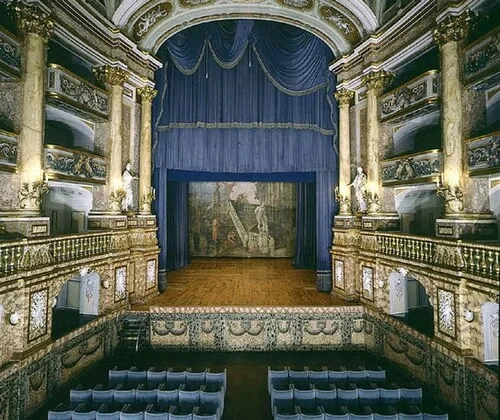 The Royal Court TheaterThe Royal Court Theater
The Royal Court Theater represents the height of 18th-century courtly culture and is the only section of the palace that was entirely completed and decorated under the direct supervision of Luigi Vanvitelli himself. The auditorium follows a classic horseshoe shape, a design perfected in Italy to ensure optimal acoustics and visibility for the audience. Five tiers of boxes rise above the floor, richly decorated with carvings and gilding. These seats were strictly partitioned by social rank, reflecting the rigid hierarchy of the Bourbon court. One of the most innovative features is the stage's unique design. The back wall of the stage was constructed with massive doors that could be opened directly to the gardens behind the palace. This allowed performers to use the actual park and its fountains as a real backdrop for operas and plays, creating a seamless blend of artifice and nature. While the rest of the palace took decades to finish, this theater was inaugurated in 1769 for a royal wedding, serving as a venue for the lavish entertainments that defined court life.
Listen in the appPhoto: P.Metastasio · CC0
04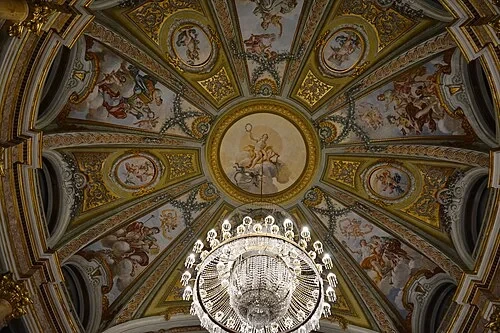 The Royal Court TheaterThe Theater Ceiling
The vaulted ceiling of the Royal Court Theater features a central fresco depicting the god Apollo. In Greek and Roman mythology, Apollo was the patron of music, poetry, and the arts, making him an appropriate figure to oversee this space. The painting is surrounded by intricate 18th-century stucco work, featuring delicate floral motifs and figures that add a three-dimensional depth to the architecture. The vibrant colors have remained remarkably preserved, offering a glimpse into the original splendor of the theater's debut. This ceiling served as a public declaration of the Bourbons' role as patrons of high culture. Opera and drama were central to the social life of the court, serving as both entertainment and a means of displaying wealth and sophistication. The combination of the fresco and the gold-leaf detailing creates a luminous effect when the theater is lit, focusing the audience's attention on the grandeur of the monarchy above them. Each element, from the painted clouds to the sculpted moldings, reinforces the idea that the royal family lived in a world elevated by divine inspiration and artistic excellence.
Listen in the appPhoto: MentNFG · CC BY-SA 4.0
05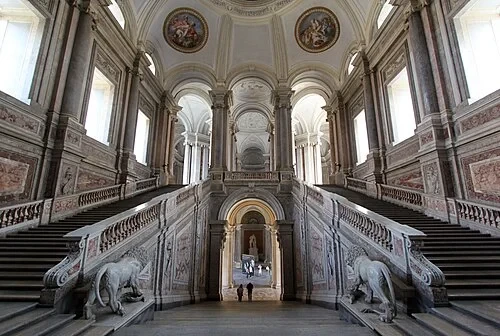 Grand Staircase of HonorGrand Staircase of Honor
The Grand Staircase of Honor is an architectural achievement featuring 116 wide steps divided into a double ramp that converges at a central landing. The layout is intentionally theatrical; as guests ascended from the ground floor toward the Royal Apartments, the sheer volume of the space and the towering columns were designed to make them feel increasingly small compared to the grandeur of the Bourbon monarchy. Light floods in from large windows, illuminating the varied tones of the stone and the intricate carvings. For modern visitors, this staircase might look familiar because its otherworldly atmosphere caught the eye of filmmaker George Lucas. He used it as the filming location for the Royal Palace of Naboo in the Star Wars prequel films. Standing at the base and looking up, the symmetry and scale provide a sense of the absolute authority the Bourbons sought to project. The transition from the dark, vaulted ground-floor gallery to this soaring, sun-drenched space was a calculated psychological journey for every diplomat and courtier who entered these walls centuries ago.
Listen in the appCarlo Pelagalli · CC BY-SA 3.0
06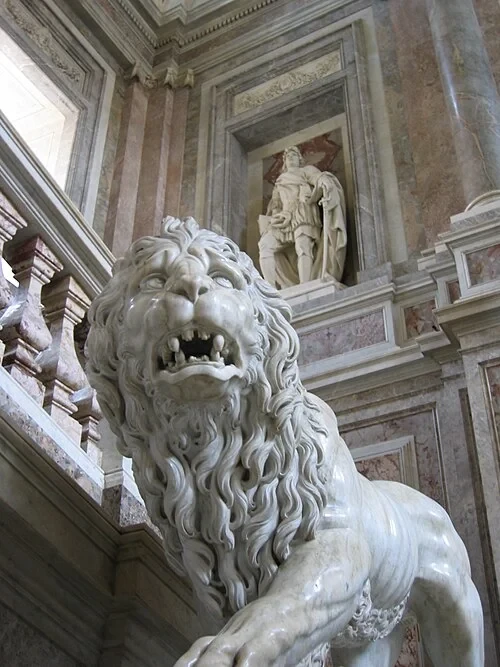 Grand Staircase of HonorGuardian of the Stairs
At the lower landing of the Grand Staircase, two massive stone lions stand guard, flanking the entrance to the upper levels. These figures were carved from white marble to symbolize the strength, courage, and majesty of the Bourbon dynasty. Each lion is depicted in a powerful, watchful pose, serving as a symbolic checkpoint for any visitor aspiring to enter the Royal Apartments. The craftsmanship is evident in the detailed carving of the manes and the muscular definition of the bodies, showcasing the skill of the sculptors employed by the court. In the language of 18th-century heraldry, the lion was a direct representation of the king himself. By placing them here, the architect ensured that the first thing a guest encountered when beginning their ascent was an emblem of royal power. The smooth, polished surface of the stone contrasts with the more rugged textures of the surrounding masonry, drawing the eye toward these sentinel figures. They mark the transition between the public spaces of the ground floor and the increasingly exclusive and protected areas where the royal family conducted the business of the state.
Listen in the appGothEric · CC BY-SA 2.0
07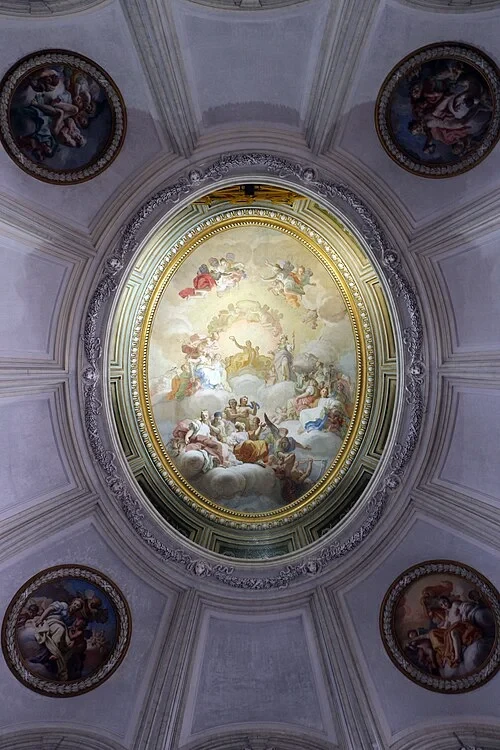 Grand Staircase of HonorAllegory of the Seasons
Hovering above the Grand Staircase is a magnificent frescoed dome depicting the 'Palace of Apollo.' The central figure of the sun god is surrounded by allegorical representations of the four seasons, linking the passage of time to the eternal nature of the monarchy. While the painting is visually striking, the dome holds a clever architectural secret. It is actually a false ceiling, constructed with a hidden hollow space between the inner and outer structures. During the height of the Bourbon court, musicians were stationed in this concealed area, playing instruments while the king and his guests ascended the stairs. Because the musicians were out of sight, the music seemed to emanate from the heavens themselves, filling the entire stairwell with 'invisible' sound. This was a peak example of Baroque theatricality, using architecture and art to create an immersive experience for those within the palace. The dome's design also helped to distribute the sound evenly, ensuring that the music remained at a consistent volume as guests transitioned between floors, further heightening the sense of royal wonder.
Listen in the appPhoto: Sailko · CC BY 3.0
08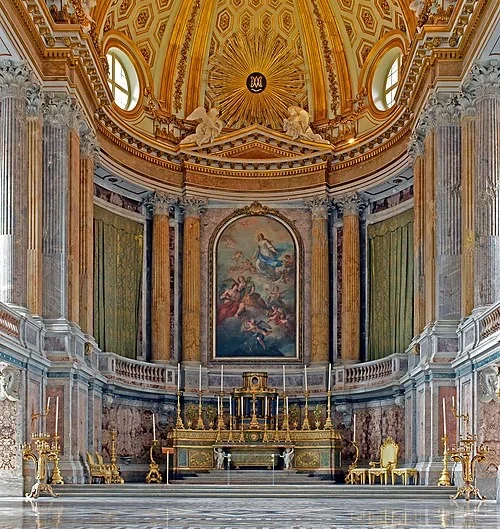 The Palatine ChapelPalatine Chapel
The Palatine Chapel serves as the spiritual heart of the Palace of Caserta. Architect Luigi Vanvitelli drew inspiration from the royal chapel at Versailles when designing this space, creating a long, narrow nave lined with tall columns. The decoration is exceptionally lavish, featuring an extensive use of polychrome marble on the altar and the walls. The variety of colors and patterns in the stone was meant to reflect the wealth and global reach of the Bourbon kingdom. Despite its current appearance, the chapel suffered significant damage during the Second World War. Allied bombing in 1943 struck the palace, nearly destroying this sacred space. Following the war, it underwent a painstaking restoration process to return it to its original 18th-century splendor, with craftsmen carefully matching the marble and gilding to historical records. The chapel was used for major state religious ceremonies, from royal weddings to baptisms. Its location within the palace complex ensured that the king could attend Mass daily without leaving the security of his residence, reinforcing the relationship between the Bourbon crown and the Catholic Church.
Listen in the appPhoto: Livioandronico2013 · CC BY-SA 4.0
09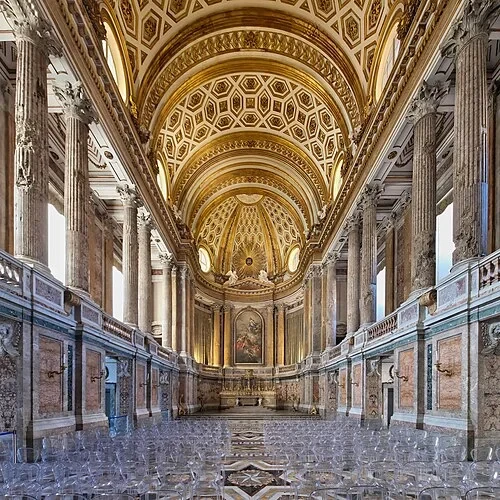 The Palatine ChapelThe Chapel Gallery
Looking down the length of the Palatine Chapel, you can appreciate the rhythmic placement of the columns and the height of the vaulted ceiling. This architectural repetition creates a sense of solemnity and order. The floor is a masterpiece of geometric precision, featuring intricate patterns of inlaid marble in contrasting colors. These designs helped to guide the eye toward the main altar at the far end. This upper gallery level was the designated space for the royal court during services. While the courtiers and officials gathered in the nave below, the king and his family observed the religious ceremonies from a private balcony positioned high above the floor. This spatial arrangement mirrored the social order of the time, with the monarch literally elevated above his subjects even during worship. The high windows allow natural light to filter down, illuminating the polished surfaces of the marble and highlighting the gold accents along the cornices. From this vantage point, one can truly grasp the scale of the chapel and its role as a grand stage for the religious life of the Bourbon court.
Listen in the appPhoto: NateBergin · CC BY 4.0
10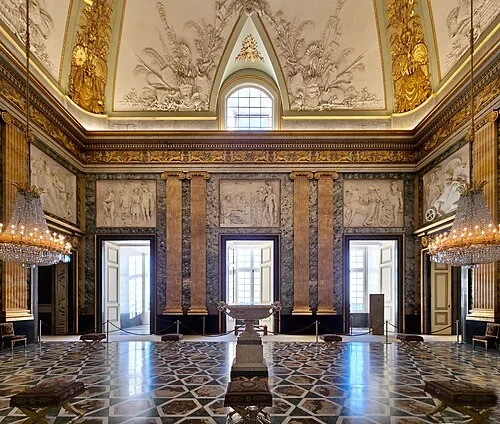 The Hall of MarsThe Hall of Mars
Moving into the 'New Apartment' wing, the style shifts to the more restrained Neoclassical aesthetic favored in the early 19th century. The Hall of Mars served as a guard room, and its decoration is themed around military strength and heroic virtue. Unlike the earlier rooms filled with frescoes and gilding, this space features a more sober, heroic look. The walls are decorated with large relief carvings depicting scenes from Homer’s Iliad, emphasizing the ancient roots of martial valor. Mars, the god of war, is the central figure of the room's iconography, symbolizing the defense and power of the kingdom. The columns and architectural details here are more angular and austere, reflecting the change in artistic tastes during the Napoleonic era and the subsequent Bourbon restoration. This room was where the palace guards were stationed to monitor access to the king’s private quarters. The choice of Neoclassical themes was a deliberate attempt to link the Bourbon dynasty to the perceived glory and stability of the Roman Empire, projecting an image of an enduring and disciplined state.
Listen in the appPhoto: NateBergin · CC BY 4.0
Palace of Caserta
Frequently asked questions
How much does the guide cost?
Free app download. Listed guide price: $1.99. Guide price shown in the app. Audio guide only. Venue admission is separate.
Can I listen without internet?
Yes. Download the guide’s audio, images, and maps in the app before your visit. Your downloaded content is then available offline.
Can I listen in my language?
Stanza supports 15 languages. Check the app for the languages available for this guide.
Do I need to follow a schedule?
No. This is a self-guided experience. Choose your stops, pause whenever you like, and return to a story at your own pace.
At your own pace
Explore Palace of Caserta.
Download Stanza, then search for “Palace of Caserta”.
Free app download · Guide price shown in the app
Keep exploring
Nearby audio guides
Cassino
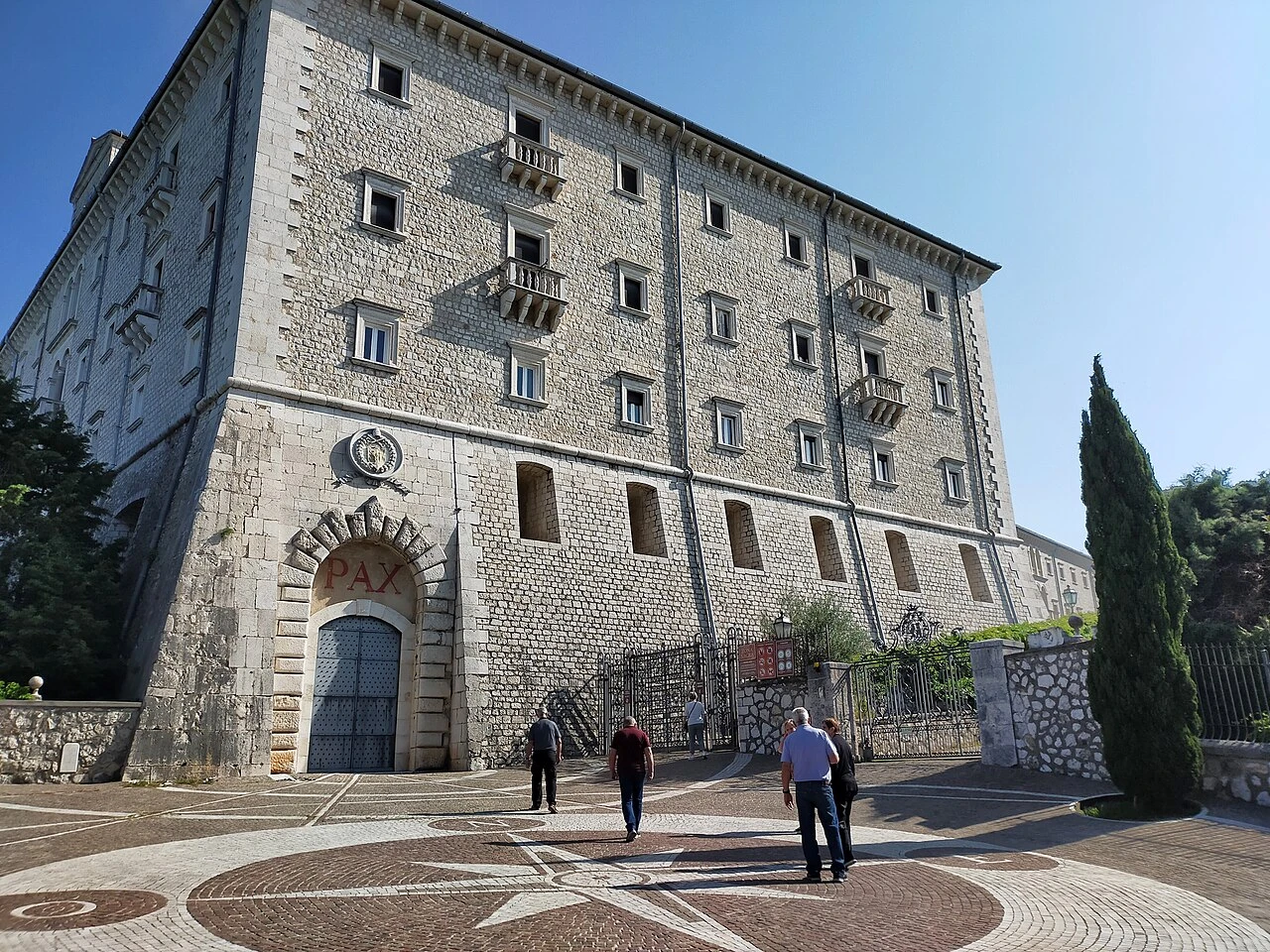
Abbey of Monte Cassino
Content & sources
Photo: Marica Massaro · CC BY-SA 4.0
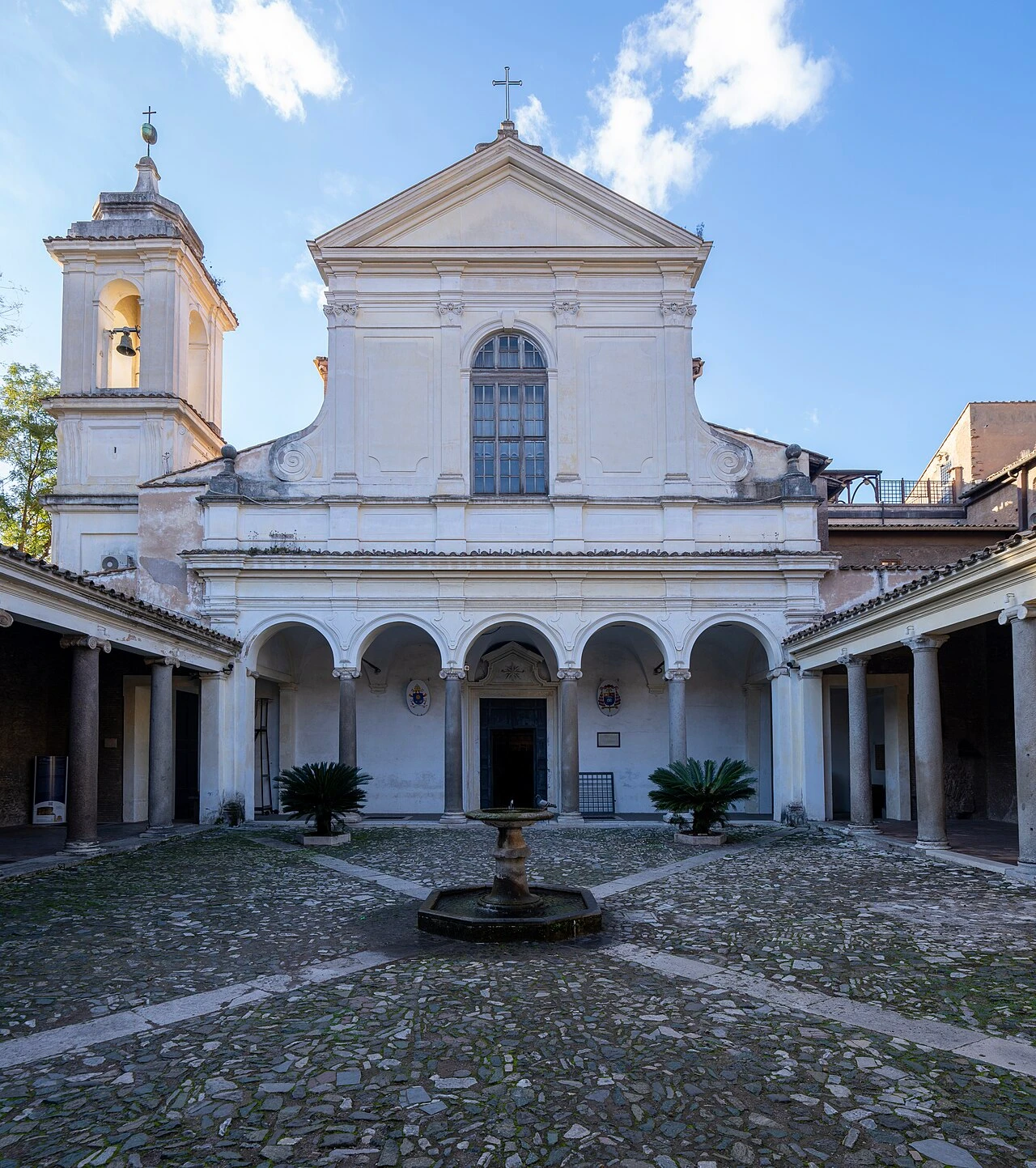
Rome
Basilica di San Clemente
Content & sources
Photo: Labicanense · CC BY-SA 4.0
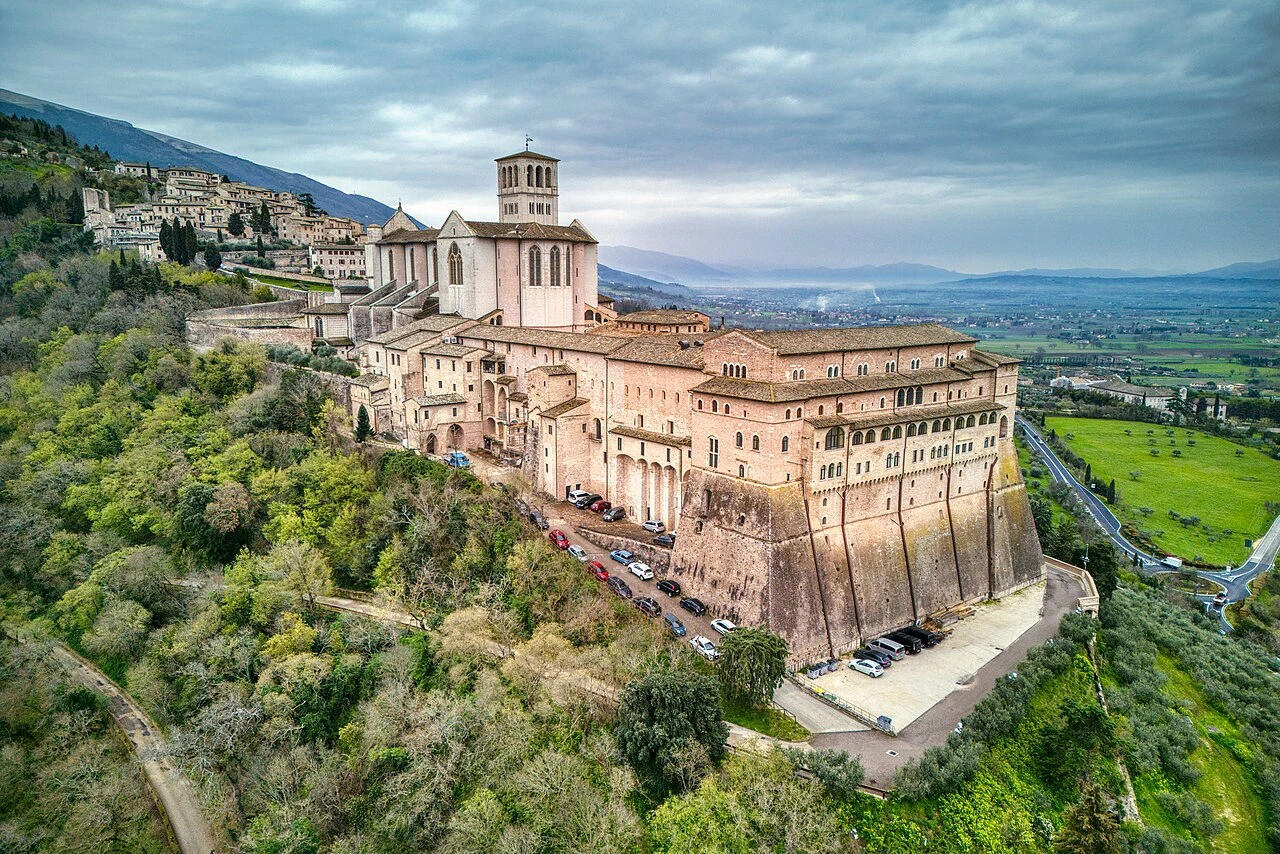
Assisi
Basilica di San Francesco
Content & sources
Hagai Agmon-Snir حچاي اچمون-سنير חגי אגמון-שניר · CC BY-SA 4.0
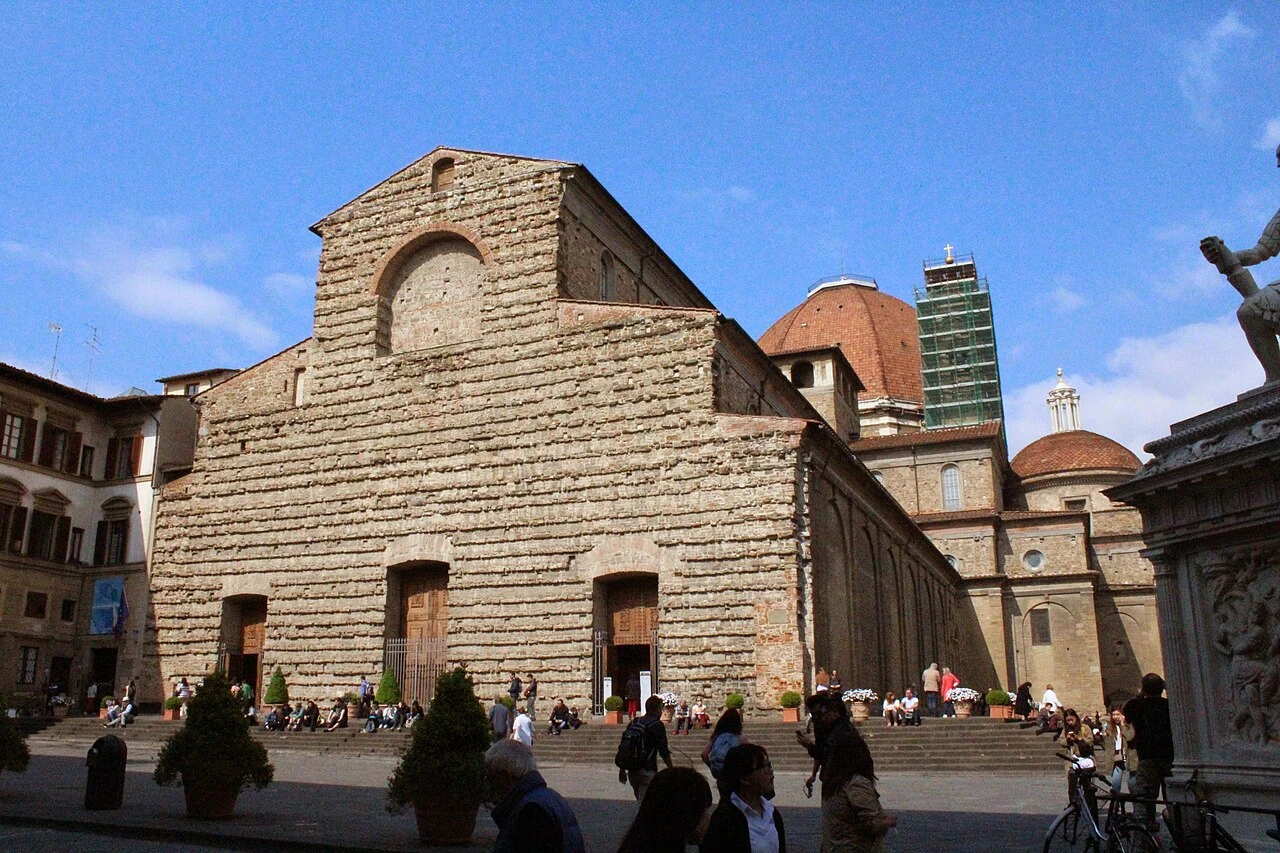
Florence
Basilica di San Lorenzo
Content & sources
Nelson Pérez · CC BY-SA 3.0